Month: June 2025

Speed table debate continues

Speed table debate continues

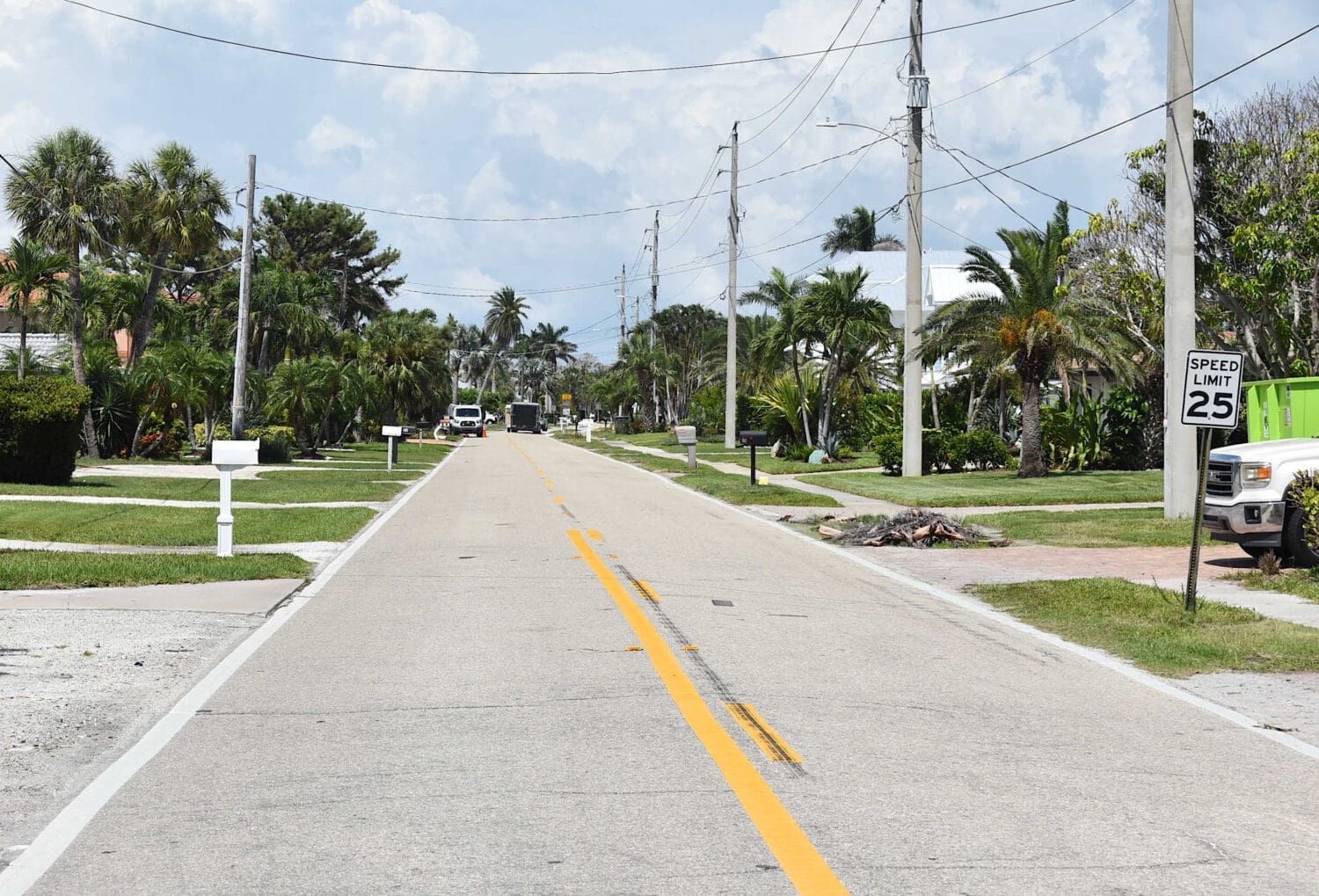
HOLMES BEACH – The pending installation of three speed tables along the 500 block of Key Royale Drive remains a topic of debate even though an executed work agreement is already in place.

On April 22, Holmes Beach commissioners voted 4-1 to approve a $233,000 agreement with Superior Asphalt for the multi-street street resurfacing project presented by Public Works Director Sage Kamiya. The commission-approved work agreement includes approxi­mately $24,000 for three asphalt speed tables to be installed along Key Royale Drive between Marina Drive and the Key Royale Bridge. Key Royale Drive is not among the streets to be resurfaced. Commissioner Carol Whitmore opposed the inclusion of the speed tables.

In recent weeks, the mayor and commissioners received several speed table-related emails, some expressing support and some opposition.
Speed table debate continues
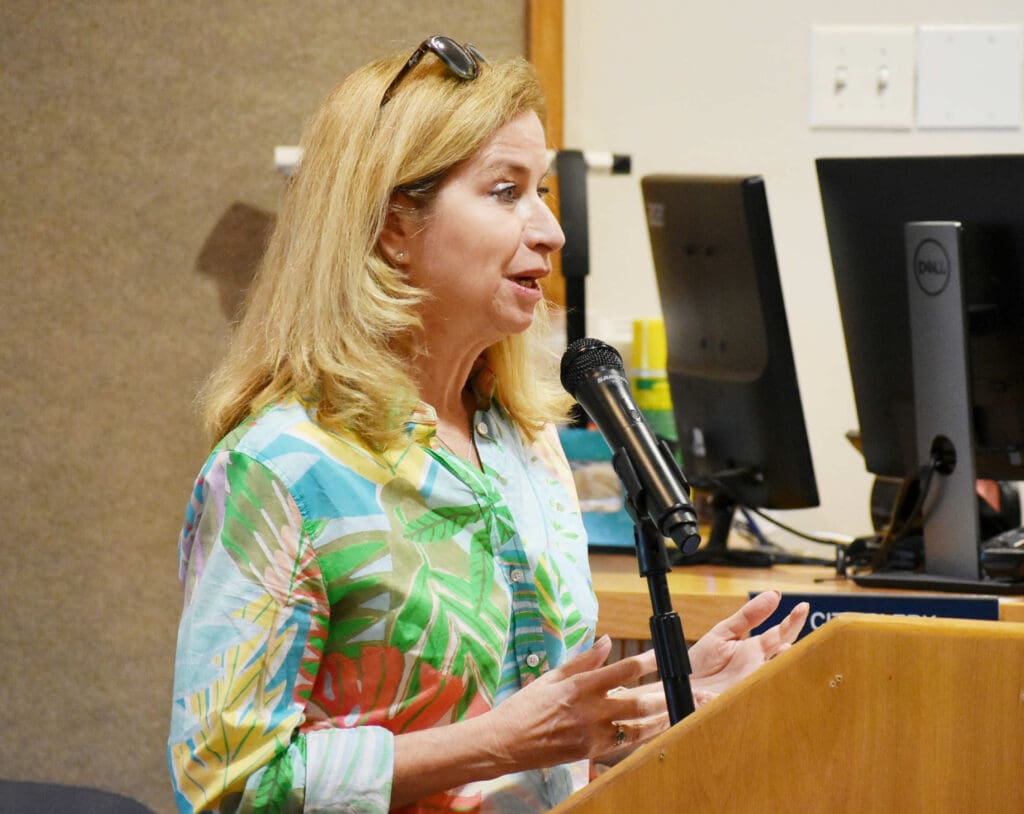
Key Royale resident Mary Kate Scott suggested installing a temporary speed table first. – Joe Hendricks | Sun

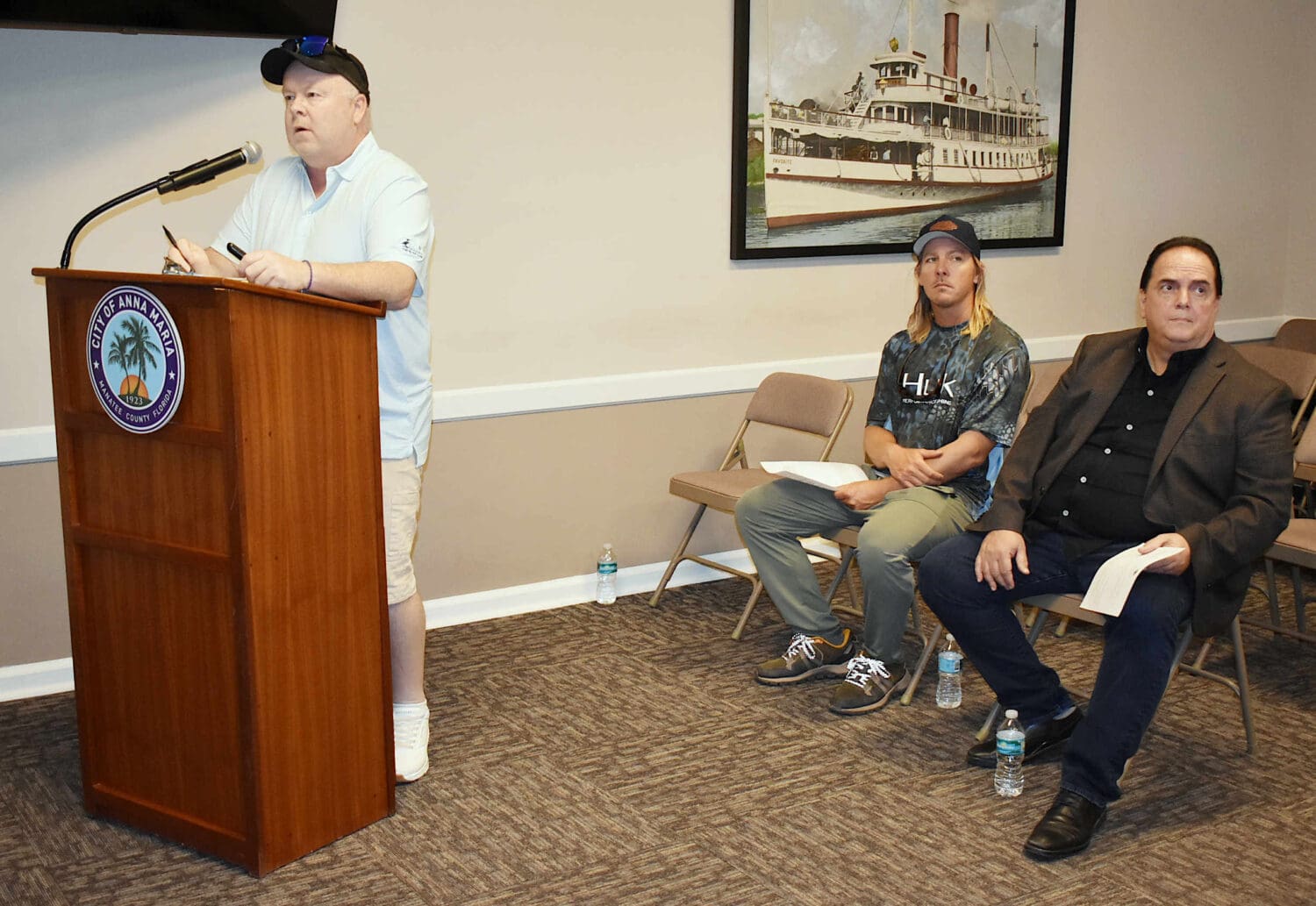
The speed tables were not on the June 10 city commission meeting agenda, but a speed table discussion ensued when Key Royale resident Mary Kate Scott mentioned the speed tables after expressing her support for the city’s proposed purchase of the Gloria Dei Lutheran Church property. To date, Scott is the only resident to provide public comment on the speed tables dur­ing a city commission meeting.

“I’m personally not in favor, but I’m also not a traffic engineer and therefore may not be the best person to opine,” Scott said. “However, given it was not unanimous, and there is some discussion on these speed bumps, maybe we could consider an implementation adjustment. What if we could have a tempo­rary speed bump installed and see if that has the desired impact? See what the community thinks and if it’s going as planned make it more permanent.”
Speed table debate continues
Mayor Judy Titsworth supports the Key Royale Drive speed tables. – Joe Hendricks | Sun

Mayor Judy Titsworth refer­enced a temporary speed table installed along Key Royale Drive several years ago when Carmel Monti was mayor.

“It was noisy, it was terrible and nobody liked it,” she said.

Titsworth referenced the permanent asphalt speed tables more recently installed along Sixth Avenue. She said those speed tables work well at the posted 25 mph speed limit.

The speed table debate started as a streetside parking debate. In February, the mayor, commission and city staff discussed limiting streetside parking only to the north side of the 500 block of Key Royale Drive due to complaints received about work vehicles and other vehicles parking in the street, creating visibility issues and narrowing the travel lanes. The mayor, commissioners and city staff later concluded stricter enforcement of the existing parking regulation that requires parking with all tires off the pave­ment would sufficiently address those streetside parking concerns.

On March 20, Titsworth, Kamiya and Police Chief Bill Tokajer met with a group of 500 block residents who expressed concerns about speeding rather than parking and that led to the proposed speed tables.

“Ever since I’ve been the mayor, people on that street have been complaining about the speeding,” Titsworth said during the June 10 meeting.

She noted the speed limit signs that indicate how fast a vehicle is traveling have not curbed speed­ing on Key Royale Drive.

“The neighbors keep saying it’s not working. You have to do something for us,” she said. “It’s a long straight stretch of road and a lot of people use it.”

Regarding the speed tables, Com­missioner Terry Schaefer said, “This decision was not made quickly.”

Schaefer said he and the other commissioners rely on the insights provided by Tokajer and Kamiya as the city’s traffic experts. He also shared his belief that passing over a speed table at 25 mph won’t cause stress on a vehicle.

“I know it’s not what you had hoped to hear, but I think this is a worthy and rightful approach,” Schaefer told Scott.

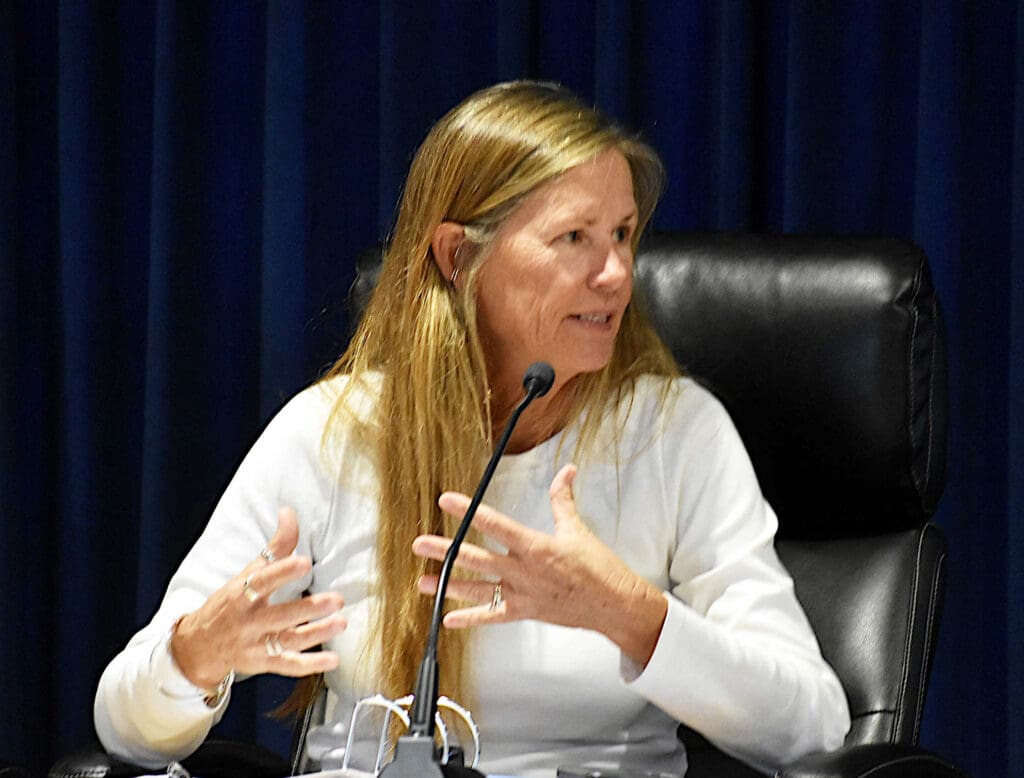
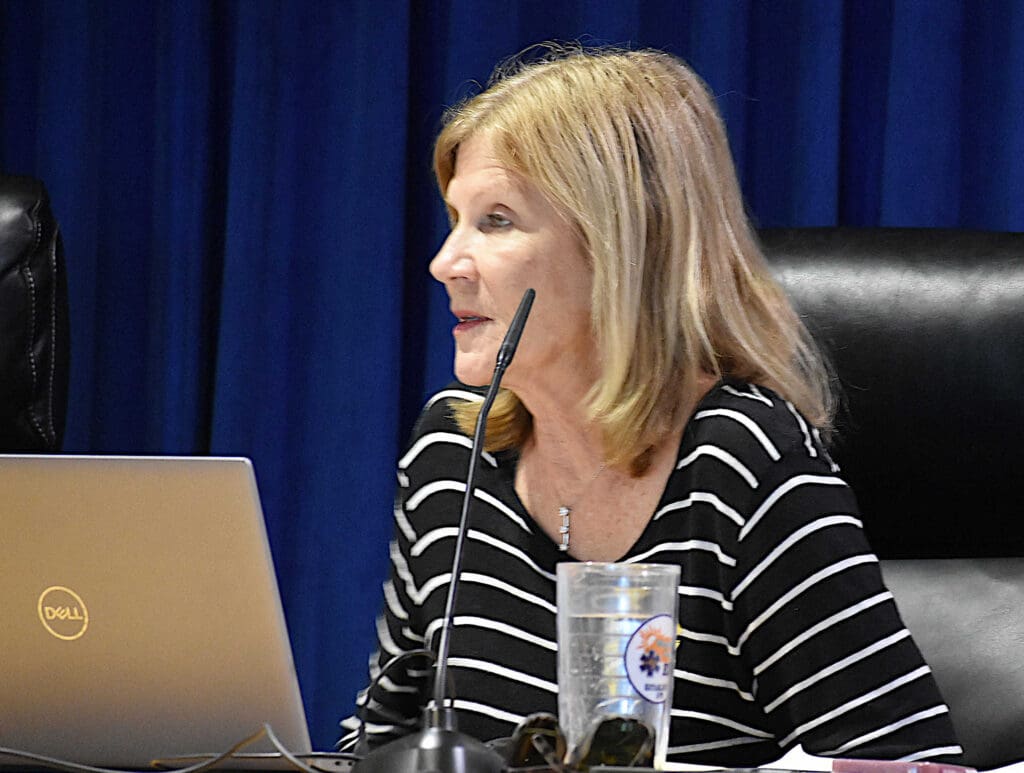
“I 100% don’t support this action,” Whitmore said.

In response to a question from Whitmore, Scott said there are 344 homes in the Key Royale commu­nity. Represented by the Key Royale Resident Owners Association, that community lies entirely north of the Key Royale Bridge and the bridge is the only way in and out of the neighborhood that’s surrounded by water. The homes along the 500 block of Key Royale Drive are not part of the Key Royale Resident Owners Association.
Speed table debate continues
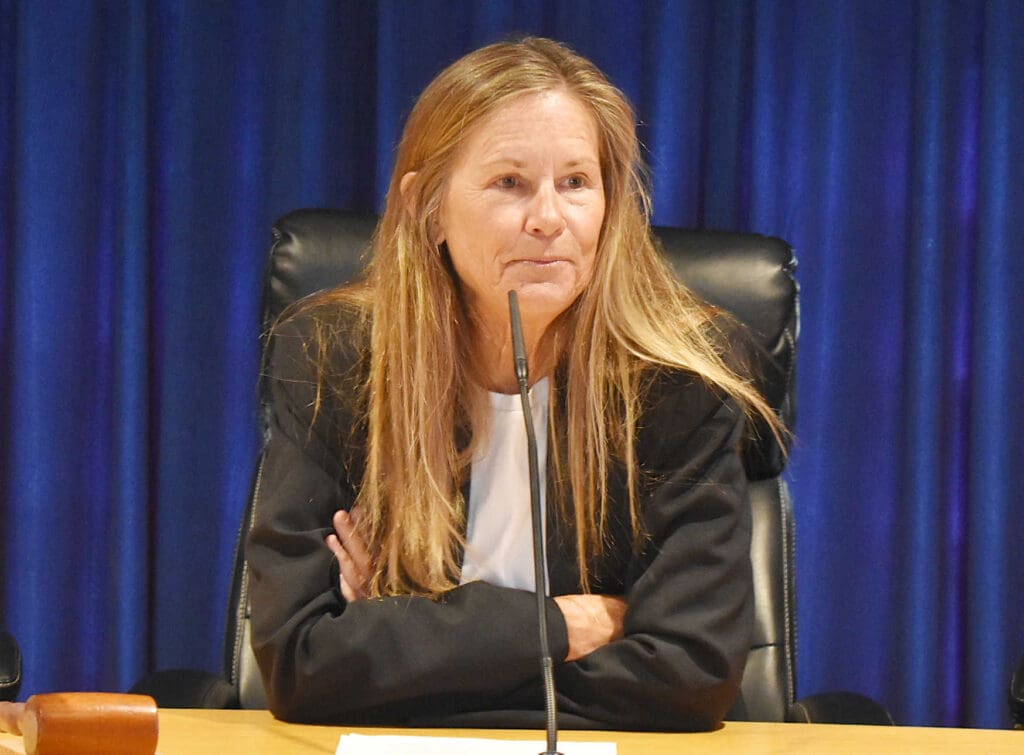
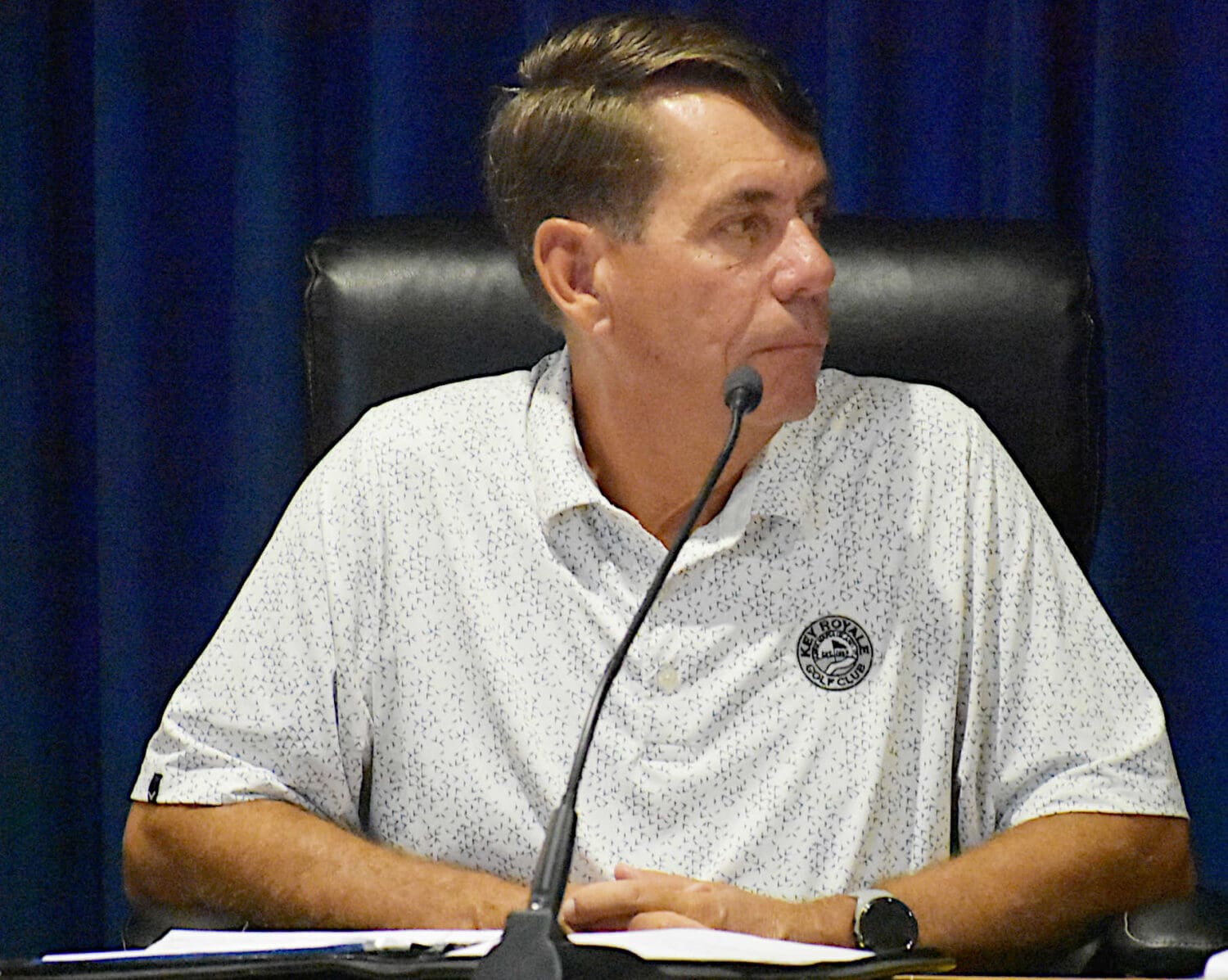
Commissioner Carol Whitmore opposes the Key Royale Drive speed tables. – Joe Hendricks | Sun

Whitmore said she understands why some residents want speed tables, but she also understands why some Key Royale residents don’t, and she doesn’t feel the Key Royale residents were given an opportunity to share their speed table concerns at a city commission meeting.

Titsworth said the president of the Key Royale Resident Owners Association sent an email to association members encouraging them to email the mayor and commissioners about the speed tables.

“He also has a sports car that’s about 6 inches off the ground. He’s concerned about that,” Titsworth said. “Everybody has their concerns, but I have to look at public safety.”

Titsworth said the 500 block residents requested the speed tables and that was also the case with the Sixth Avenue speed tables

“Now we have residents on Second Avenue that are also asking for it,” she said.

“52nd Street too,” Tokajer added.

Commissioner Steve Oelfke said he recently drove down Sixth Avenue to experience those speed tables.

“It’s uncomfortable at 25 miles per hour,” he said.

Regarding the Key Royale Drive speed tables, Oelfke said, “I would hope that if speed tables are put in that it’s not quite as aggressive as those because that was pretty significant. Sixth Street is a cut-through. I wouldn’t consider it a thoroughfare, whereas this is a thoroughfare.”

Whitmore said she’s not aware of a serious or fatal accident ever occurring along Key Royale Drive.

“I think we’re overreacting. We’ve got to have some data. We can’t just do it because some neighbors are asking for it,” Whitmore said, bringing the impromptu speed table discussion to an end.

When contacted later about the anticipated speed table installation date, Titsworth said, “We have executed the contract for the speed tables along with other asphalt work throughout the city and we are waiting on a date from the contractor.”

Related coverage:
Speed tables planned for Key Royale Drive
Bradenton Beach commissioners discuss beach hole ordinance

Bradenton Beach commissioners discuss beach hole ordinance

BRADENTON BEACH – City com­missioners discussed the current city ordinance prohibiting the digging of holes on public beaches at the June 5 meeting.

“This was brought up by (Manatee County Natural Resources Director) Charlie Hunsicker a couple of weeks ago at the coalition of Barrier Island Elected Officials meeting,” Mayor John Chappie said.

Holmes Beach has since passed a city ordinance prohibiting digging holes on beaches within the city’s limits.

“One of the things that was brought up to me is that it would be nice to have all of the three cities with a very similar if not the same ordinance,” Chappie said. “People don’t know when they’re crossing into different cities.”

The Holmes Beach ordinance pro­hibits removal of sand or shell and digging on the beach and states in part, “No person shall possess on or about the sandy Gulf beach a metal shovel of the type customarily sold in a hardware store (not a children’s toy) unless part of a (permitted) construction project.”

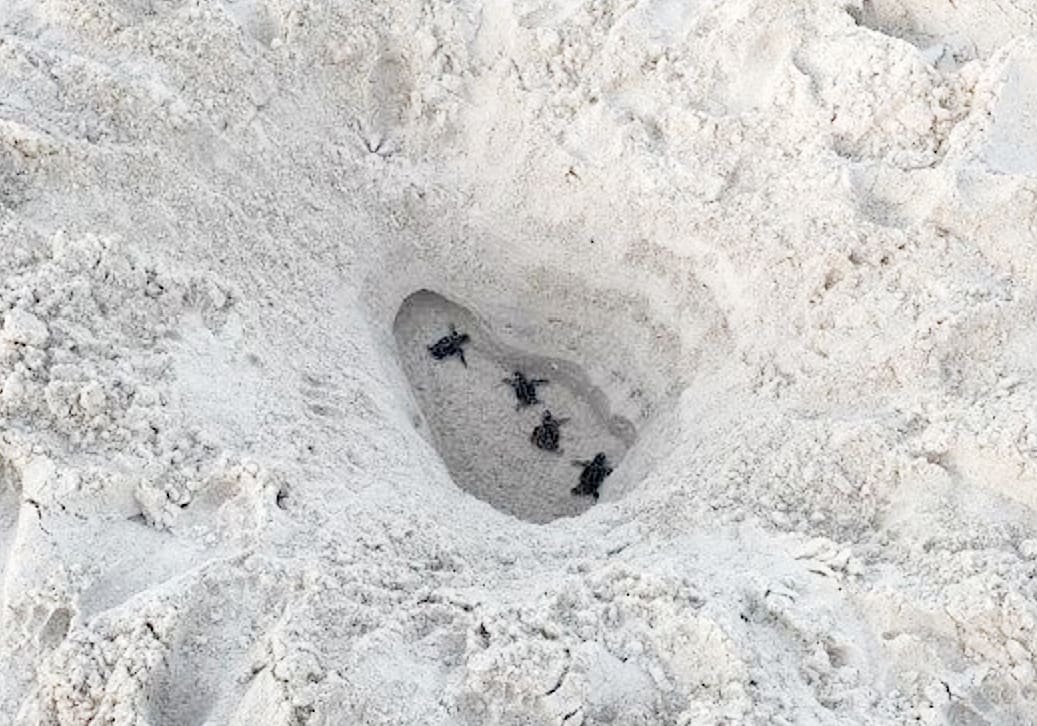
Chappie said the Bradenton Beach prohibition does not apply to kids digging with small beach shovels but is intended to prevent injuries to people and entrapment of sea turtles caused by larger holes.

“This is dealing with having big garden shovels out there or as somebody phrased it, as ‘an over­excited father with his kids digging a huge hole’ and then they don’t fill them back in and somebody could trip and get hurt,” he said.

Chappie said he recently received an email from a man who wrote that his wife was in the hospital after falling into a large hole at the beach.

“She hurt herself pretty badly apparently, so I think it is needed,” he said.

City Attorney Ricinda Perry said the city already has a city ordinance on the books which prohibits digging on the beaches and beach accesses.

Perry referred to Sec. 46-36 – Removal of Natural Re­sources – under city ordinance number 08-404 which has been in place since 2008.

“No person in a park shall dig, remove or displace any beach sand, whether submerged or not, or any soil, rock, stone, tree, shrub or plant, down timber or other wood or material, or make any excavation by tool, equipment, blasting, or other means or agency,” that section states.

The ordinance states, “Park means a park, golf course, playground, beach, recre­ational center or any other area in the city, owned or used by the city, and devoted to active or passive recreation.”

“If you look at it, I don’t see the need to do anything more,” Perry said. “We have something on the books that prevents this from happening.”

The 2008 Bradenton Beach ordinance doesn’t limit or specify the depth of a hole that can be dug in the beach sand. The Manatee County, Holmes Beach and Anna Maria ordinances limit the depth of a hole dug in the beach sand to 1 foot.

Penalties and enforcement

“If a code enforcement officer from the county or somebody from the city is around at the right time and place, that’s when enforcement is going to happen, but our guys are not going to be out there looking for it,” Chappie said.

Commissioner Scott Bear asked if the city could assess fines for violations.

Perry said there is nothing in Holmes Beach’s proposed ordinance that provides for fines but said she and Bradenton Beach Police Chief John Cosby have been discussing city-wide penalties and modifications as they relate to code enforcement and traffic violations.

“If you don’t write it in the ordinance then it’s subject to difficulty applying a penalty for it,” Perry said. “The penalty that’s in the code that’s applicable is any person violating the provisions of this article shall be subject to expulsion from the park.”

She said the city has concurrent jurisdiction on the beaches with Manatee County.

“If they (Manatee County) have an ordinance with a fine associated with it, then we can have that particular fine be applicable,” Perry said.

A person convicted of violation of this code could receive a fine of not more than $500, she said.

“The way I see this, the city could issue a ticket like we do with turtle lighting issues and some other irreversible harm and add this to the ticket book for removal of sand, but it can’t exceed $500 per incident.”

Cosby said city fines and possible increases will be discussed at a Wednesday, June 25 city budget meeting.

Related coverage:
Anna Maria adopting ordinance prohibiting beach holes
Beach hole concerns deepen


City Pier Grill operators hope to renegotiate lease

City Pier Grill operators hope to renegotiate lease

ANNA MARIA – The City Pier Grill & Bait Shop operators want to renegotiate their lease before com­mitting to another five years in the city-owned City Pier building that’s currently closed due to damage caused by Hurricanes Helene and Milton in 2024.

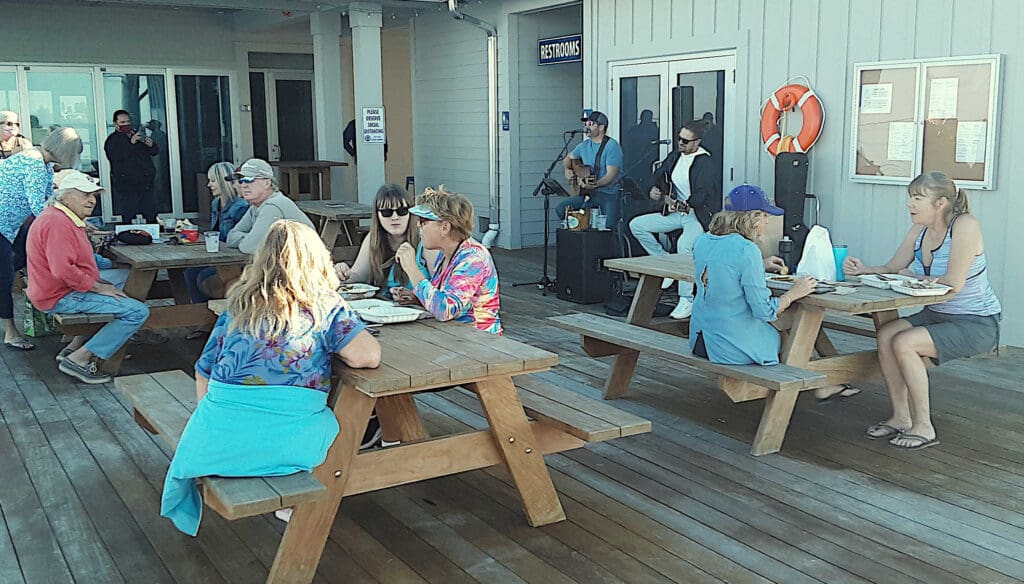
Operating as GSM Partners LLC in a pier building leased from the city of Anna Maria, pier tenants Brian Seymour, Vic Mattay and Nick Graham opened the City Pier Grill & Bait Shop on Dec. 10, 2020. Their initial five-year lease with the city expires on Dec. 31.

Seymour, Mattay and Graham attended the June 12 city commission meeting. Their desired lease consid­erations include a lower rental rate, a roof structure for the City Pier Grill side of the T-end deck area, higher capacity electrical service and discon­tinuing the 10 p.m. pier closures.

Seymour, Mayor Mark Short and the city commissioners spent about 40 minutes discussing the seven-page presentation GSM Partners provided regarding their current and future pier tenancy.

City Pier Grill operators hope to renegotiate lease
The City Pier Grill has occupied the city-owned pier building on the left since 2020. – Joe Hendricks | Sun

Seymour said GSM Partners has the option to extend the current lease for 15 months to account for the time lost to the hurricane-related pier closure.

“Not knowing until the pier is almost rebuilt, to reinvest for a 15-month exten­sion probably would not provide for a successful ROI (return on investment) and would not warrant continuing operations on the City Pier,” according to the group’s Power Point presentation.

Seymour said he and his partners are paying $400 per square foot to lease the city-owned pier space and $40 per square foot to lease the privately-owned space on Pine Avenue occupied by the Anna Maria General Store and Dips Ice Cream.

Seymour hopes to renegotiate a lease that offers a “more equitable” monthly rate and includes credits for days lost due to mandatory pier closures related to hurricanes, tropical storms and other unforeseen circumstances. The restaurant operators’ lease payments are suspended while the pier is closed.

Seymour said on average they lost 104 days a year to inclement weather during the first four years of their pier tenancy; and the entire fifth year due to the hurricane damage and pier closure. Seymour said those lost days and revenue fluctuations make it more challenging to recruit and retain staff members and also negatively impact the musicians who provide the City Pier Grill’s live entertainment.

Commissioner John Lynch said many Anna Maria Island business owners face the same weather-related challenges and they don’t receive rent reductions. Seymour said he doesn’t expect credits for days lost to normal rainy, cold and windy weather.

Isolated with no walkway that provides pedestrian access, the pier buildings currently have no power, utility or water service. Seymour said he and his partners have no idea how much it will cost to restore their leased space to its pre-hurricane condition.

He said the City Pier Grill was sup­posed to receive 800 amps of electrical power and the city only provided 400 amps. He said more power is needed to fully accommodate the restaurant equip­ment and other technological needs.

Seymour and his partners want the city to install a roof structure over the currently uncovered seating area at the T-end of the pier using the $75,000 previously budgeted, but not spent, to install shade sails over the uncovered deck area used by City Pier Grill patrons and others. Seymour doesn’t believe shade sails are a good option at the end of the pier.

City Pier Grill operators hope to renegotiate lease
The City Pier Grill operators would like a roof installed over the uncovered portion of the pier’s T-end deck area. – Joe Hendricks | Sun

The pier tenants want the roof structure to include drink rails on the north and west sides of the open-air structure. Seymour said the current seating capacity is 65 to 80 seats, depending on whether the benches are counted as seats. He said the drink rail stools would add 40 more seats and the increased seating would help provide liquor service in addition to the current beer and wine offerings.

Lynch and Commissioner Chris Arendt questioned how the proposed roof structure and drink railings would impact fishing from the T-end of the pier.

Additional concerns

Seymour said generations of pier users used to enjoy fishing on the pier late at night and a lot of people complain about the pier not being open 24 hours a day like it was before the previous mayor and commission decided the pier would close and the main gate would be locked at 10 p.m.

Seymour said making his staff responsible for closing the pier and restrooms, clearing the pier of occupants and locking the gate at 10 p.m. subjected his staff to confronta­tions with the public, some of which included threats of violence.

When the pier reopens in the summer or fall of 2026 as currently expected, Seymour and his partners want the public works department and/or the Manatee County Sheriff’s Office to take over those responsibili­ties. They also want the city and the sheriff’s office to provide greater enforcement of the pier rules that include no smoking, no bicycles, no animals and no jumping or diving off the pier. Seymour said asking his staff to enforce those rules subjected them to additional confrontations.

Seymour and his partners want more transparency regarding the costs shared with the city that include pressure washing the pier, lighting maintenance, parking area mainte­nance and more. They would also like the same sign allowances given to Mote Marine. Seymour said Mote Marine was allowed to place a sign on the side of their leased building that faces the Anna Maria shoreline and the City Pier Grill was not.

Commission Chair Charlie Salem thanked Seymour, Mattay and Gra­ham for the insights they provided.

“It’s a lot to think about. I appreciate all the time and effort you put into this,” Salem said, noting the commission will try to do what is best for the city and the city’s pier tenant, whoever that may be.

Seymour didn’t seek a commission vote but he said he and his partners need a commitment soon regarding the roof structure and the renegotia­tion of the lease. He also noted they must give the city six months’ notice if they plan to vacate the pier space.

Related coverage: 
Mayor seeks TDC support for pier replacement project


Pines Trailer Park post-Helene timeline

Pines Trailer Park post-Helene timeline

BRADENTON BEACH – Here is a timeline of events that have transpired at the Pines Trailer Park since Hurricane Helene struck last fall.

2024

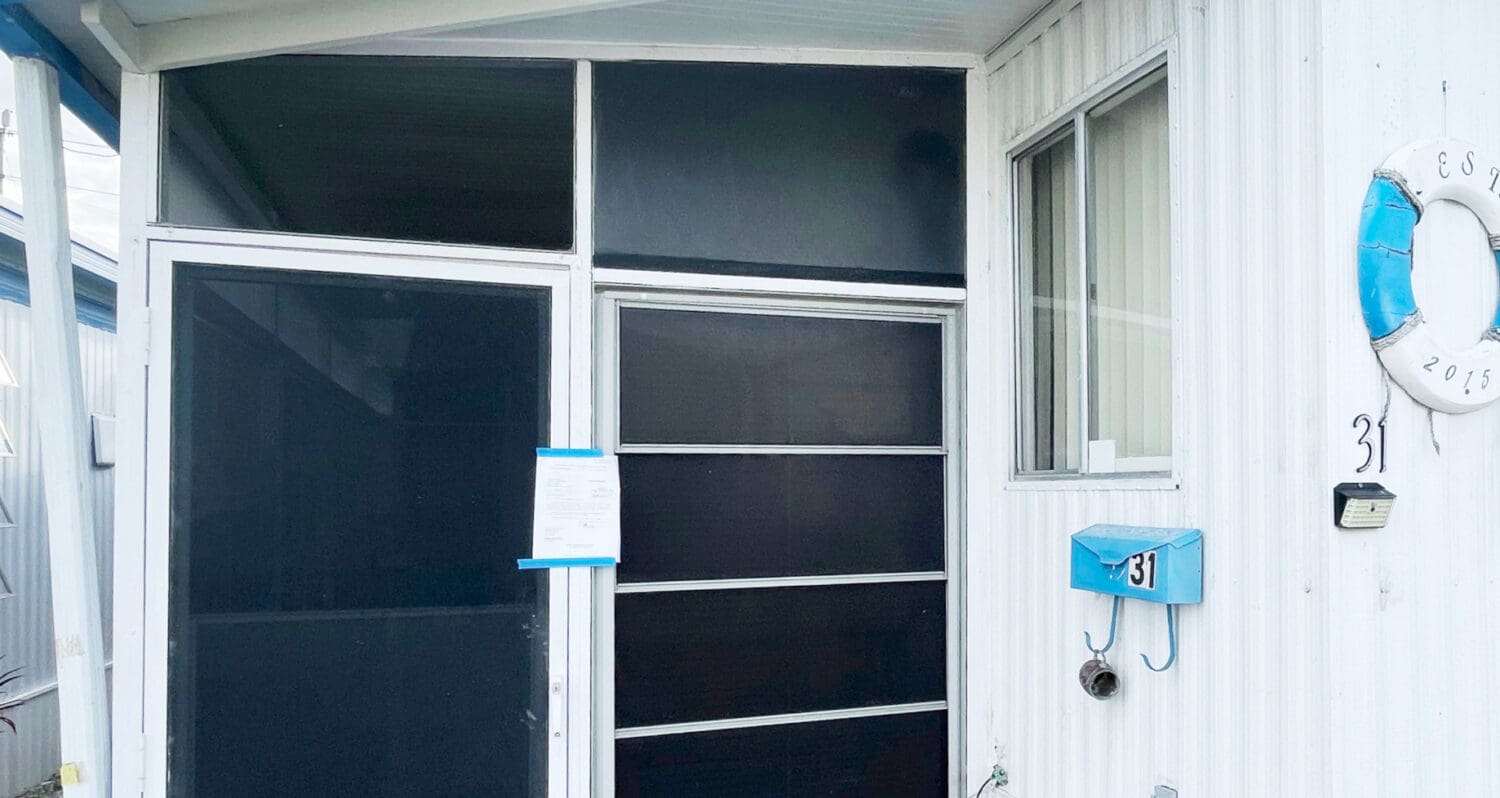
  • On Sept. 26, storm surge from Hurricane Helene caused water intrusion into the 86 Pines Trailer Park mobile homes.
  • On Oct. 17, city building officials said that FEMA guidelines re­lated to hurricane-related water intrusion would classify the properties as having major damage. Pines residents were told that FEMA regulations state that if the cost to repair a mobile home to its pre-storm state is 50% or more of the structure’s value, then the entire structure must be brought into current floodplain compliance. The city’s floodplain ordinance requires mobile homes to be elevated to 12 feet.
  • On Oct. 29, fire code and setback regulations were outlined by West Manatee Fire Rescue District Fire Marshal Rodney Kwiatkowski, who stated that all new mobile home instal­lations must follow setback guidelines between structures.
  • At a Nov. 7 Bradenton Beach city commission meeting, Pines Park Investors LLC manager Shawn Kaleta said, “The units obviously took on water. There are fire separation issues, there’s mold, there’s structural stabil­ity, there’s elevation of the buildings, there’s all these questions. I’ve made a commitment to the residents from our side to keep the park there whatever it can be inside the code. I think that’s a vital part of the community, having residents and having everybody in that community as it exists. I think it’s an important piece of the community to achieve that.”
  • On Dec. 9, Pines residents received good news from then-City Building Official Darin Cushing when 83 of the 86 Pines Trailer Park owners received a notice from the city that they could repair their hurricane-damaged mobile homes with the proper permits. Some residents remained hesi­tant to move forward with repairs, however, saying questions about the Pines ownerships’ intent for the park were still unanswered.

“We previously provided you with a notice that your prop­erty may have been affected by flooding due to Hurricanes Helene and Milton, and that a second, more thorough inspection would be performed to gather data critical to making a formal determination as to whether the cost of repairs necessary to re­store your building to its pre-damage condition might rise to an amount constituting ‘substantial damage’ as defined in the City’s Flood Damage Prevention Ordinance 21-538,” Cushing’s letter stated. Following the results of that second inspection, and with a review of the data, as well as a review of the property values, repairs could be made with the applicable permits, according to the letter. “The data suggests that costs to perform repairs and restoration will not constitute a substantial damage repair,” Cush­ing’s letter stated.

  • In early December, the parking lot for Pines Trailer Park residents at 201 First St. N. was converted into a public paid parking lot without notice to residents. Pines residents who required parking had paid $750 per year to park in the lot. A representative for Pines Park Investors LLC told The Sun that residents could continue to park in the lot until Dec. 31 and said a letter would be going out.

2025

  • On Jan. 4, Pines Park Investors notified homeowners of their decision to close the park. The reasons given were financial chal­lenges, restoration and compliance, resident concerns and safety and long-term viability.
  • In a Jan. 27 letter to the Pines Trailer Park HOA, park ownership offered to sell the mobile home park to the resi­dents for $75 million. Pines Park Investors LLC had purchased the 2.78-acre waterfront mobile home property on Aug. 5, 2023 from The Jackson Partnership LLLP for $16.25 million.
  • The Pines Trailer Park Homeowners As­sociation filed a lawsuit on March 28 against park owners Pines Park Investors LLC asking in part for an injunction against the park closure and threatened evic­tions.
  • Pines Park Investors LLC filed a motion for the court to dismiss the lawsuit filed against them in March by the Pines Trailer Park Homeowners Associa­tion. A hearing on that motion is scheduled for Monday, July 28.

Related coverage:
92-year-old Pines resident talks about eviction

Sea turtle false crawls on the rise

Sea turtle false crawls on the rise

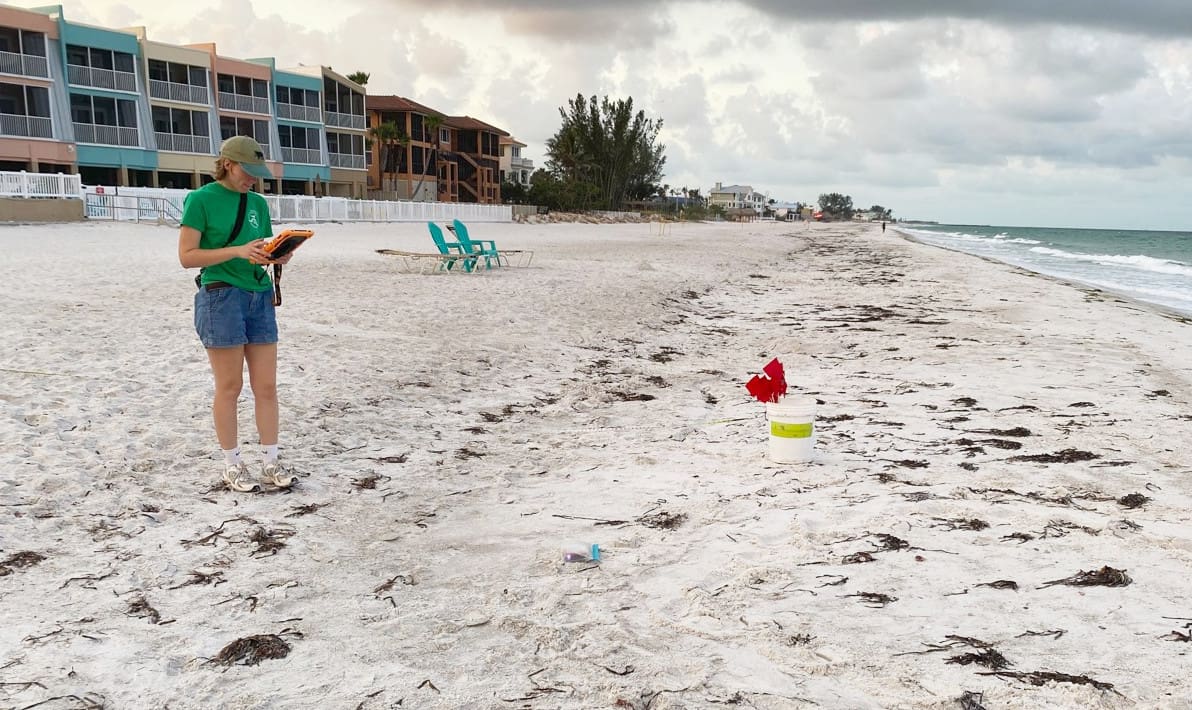
ANNA MARIA ISLAND – Anna Maria Island Turtle Watch and Shorebird Monitoring reported sea turtle nesting was a little slower this week than last week, and while it’s unclear whether any records will be broken, they are expecting a good year.

Turtle Watch volunteers report seeing a lot of false crawls this season. There have been 357 so far with the season officially beginning on May 1. The record was 831 in 2010.

“False crawls are what we call it when a turtle comes up on the beach but turns around without nesting. There’s no way to truly identify why a turtle false crawled, but sometimes they are spooked by people walking on the beach at night,” Turtle Watch Executive Director Kristen Mazzarella wrote in a June 18 email update.

Sea turtle false crawls on the rise
Turtle Watch volunteers find a loggerhead false crawl at Bean Point. -Karen Anderson | Submitted

Turtle Watch conducts their patrols in the morning so as not to disturb nesting turtles and recommends that people stay off the beach at night during nesting season.

“Even the most conscientious person can inadvertently spook a turtle that is coming onto the beach to nest,” Mazzarella wrote. “If you are on the beach at night, please remember not to use white lights on the beach (this includes cell phones and flash photography) and if you use a red light, point it directly at the ground. If you come across a sea turtle, stay at least 20 feet away from the turtle, out of her line of sight.”

NESTING NEWS:

Turtle nests laid: 209 (Record: 543 in 2019)
False crawls: 357 (Record: 831 in 2010)
Nests hatched: 0 (Record: 453 in 2022)
Hatchlings produced: 0 (Record: 35,850 in 2022)
Hatchling disorientations: 0
Adult disorientations: 17
Nests remaining on beach: 209
Source: Anna Maria Island Turtle Watch and Shorebird Monitoring

Jack crevalle - the ultimate underappreciated adversary

Jack crevalle – the ultimate underappreciated adversary

Jack crevalle are often underappreciated but are one of the toughest targets an angler will encounter. These tenacious juggernauts are not sought after by most anglers.

The majority of jacks are caught by anglers fishing for trout, redfish, snook and other species. Small jack crevalle are even considered “trash” fish by many anglers. Once they hook one over 5 pounds, they usually have a new apprecia­tion of these “bulldogs” of the sea.

During the summer months, it’s not uncommon to see large schools of big jack crevalle along local beaches when tarpon fishing. They cruise in packs, pursuing schools of baitfish. While even small jacks can put up a feisty battle, larger members of the species are incredibly challenging.

A big jack on the west coast will run about 15-20 pounds and can put up an awe-inspiring fight. It’s not uncommon for a 10- to 15-pound fish to wage a long battle even on a 12-weight fly rod used for tarpon.

Over the years, I’ve come to appreciate these marauders, and while I don’t usually target them, I never turn down a cast at a big fish. When you encounter large schools of fish, the best choice of lures is a popper. There’s something about the disturbance on the surface that drives them wild. Catching one on a fly meant for a tarpon is another challenge, but there’s a trick to enticing them.

On numerous occasions, I have fished the edges of a school of feeding jacks only to have them inspect and turn down my flies. After a little experimenting, I found the “secret” was to toss the fly into the center of the school and to strip as fast as possible. The fact that the fly is surrounded by jacks seems to kick in competition and the fly is usually taken after only a couple of strips. Once the hook is set, jack crevalle make long head-shaking runs before settling into a circling pattern where they use their wide bodies to put up as much resistance as possible. The battle is usually won when the angler is able to get their heads out of the water, robbing them of much of their power. Even after an exhausting battle, they are easily revived and seem relatively unscathed by the experience.

On occasion, local anglers will encoun­ter big jacks schooled under local bridges to the Gulf. They will attack a plug, popper or other noisy lure with a ferocity that’s awe inspiring but are tough to control before they can make a run under the structure and are lost on the barnacle-studded bridge pilings.

A trick anglers can employ is having a fellow angler toss a hook-less ‘teaser” under the bridge to pull them away from the structure. Then it’s possible to get them under “control” before they can reach structure. Jacks don’t have teeth, so a heavy leader isn’t necessary, but they don’t seem to be particularly leader shy. When one is hooked, it needs to be fought just like a tarpon, with maximum pressure from the time of the take until they are ready to land. When they travel the beach, they are usually in large schools; while inshore, they are more likely to roam in pairs or small schools.

If you think jacks aren’t worth the effort, cast a popper to a school of big fish sometime and try to keep it away from them. I guarantee you’ll have a new appreciation for this underappreci­ated predator.

Challenges of selling condos

Florida is condo heaven. If you’re interested in condo living, Florida offers condos in all price ranges, in all locations and with a variety of amenities and floor plans. The condo selling challenges we’re facing in Florida is both a good and bad thing.

The bad thing is that condo associa­tions are now being held to a standard of disclosure that they previously never had to prove. Many associations now have to pass milestone structural inspections by a qualified contractor and inspector. They need to disclose their financial position and disclose adequate funds in their reserves to meet future necessary repairs.

This is also a good thing. Knowing an association is structurally sound and that it has adequate funding for the future can make units more attractive to potential buyers. Buyers will likely not get scared off by associations that can prove their structural integrity and financial soundness.

In addition, special assessments have become the boogie man of condos in recent years. Some of these assessments have to do with the age of the buildings or repairs mandated by the state, as well as the fact that previous boards neglected to fully fund their reserves. Other assess­ments are for unplanned expenses like storm repairs and increases in insurance.

The best way to handle special assessments that have already been voted on by the condo board or even one that may come up in the near future is to be fully transparent. Hiding the fact that special assessments are looming will not only discredit sellers but will send buyers running. There are no mandates dictating who pays for special assessments. However, sellers need to be prepared to cover any special assess­ments already voted on and leave future assessments as a negotiating point. The idea is to make buyers feel comfortable with their investment.

The Florida condo market is taking a hit on all sides. The median price of a condo in the state was down 9% in April from a year earlier compared to the single-family home market, which had a 3% drop in April per Redfin.

That said, in my opinion, the condo market will return once the state struc­tural mandates are fulfilled and reserves are replenished. Buyers love condo living and, remember, owning a single-family home does not relieve you of repairs, structural expenses and increased insurance costs. The difference is you’re not spreading out the financial shortfall with 50 or 100 other owners, it’s all on you. If you add up dollar to dollar what the cost of single-family homeownership is compared to paying condo HOA fees, you will be surprised how close they are.

Whether you’re selling a condo or single-family home now, more than ever you need to be transparent and disclose everything and anything about the property. This includes any facts or conditions about the property that may have a substantial impact on the value or desirability of the property that may not be visibly obvious.

Any potential claims, court proceed­ings and – as discussed – pending special assessments all need to be disclosed. Disclosure can be in the form of a written disclosure form or a verbal disclosure. I strongly encourage everyone to disclose on one of the disclosure forms available as an additional measure of transpar­ency. You’ll be happy to know that you are not required to disclose if a homicide, suicide or death took place on the property and if in your view the property is haunted, crazy as that sounds.

Like any real estate investment, condos can be good or bad, and like any prop­erty, pricing competitively to the market is the most important thing followed closely by transparency.

April 2025 tourist tax collections

Manatee County’s 6% tourist development tax (resort tax) is collected from hotel, motel, resort, condo and other short-term vacation accommodations rented for six months or less.

Amounts shown were collected in April and paid to the Manatee County Tax Collector’s Office in May. A third of the tax revenues are spent on marketing and almost 17% is spent on beach renourishment.

In Anna Maria, April tourist tax revenues increased from $419,643 in 2024 to $540,675 in 2025 – a $121,032 (28.8%) increase.

In Bradenton Beach, April tourist tax revenues decreased from $136,217 in 2024 to $109,202 in 2025 – a $27,015 (19.8%) decrease.

In Holmes Beach, April tourist tax revenues increased from $800,053 to $814,966 – a $14,913 (1.8%) increase.

In unincorporated Manatee County (the areas located outside of the six chartered municipalities), April tourist tax revenues increased from $1,082,630 in 2024 to $1,208,377 in 2025 – a $125,747 (11.6%) increase.

In Manatee County as a whole, April tourist tax revenues increased from $2,915,894 in 2024 to $3,286,690 in 2025 – a $370,796 (12.7%) increase.

Tourist development taxes are also collected in Bradenton, Palmetto and the Manatee County portion of Longboat Key.

In 2024, Manatee County’s annual tourist development tax revenues topped $30 million for the first time.

Tourist development tax revenues are controlled by the Manatee County Commission and are sometimes shared with local municipalities to help fund tourism-related projects and enhancements first reviewed by the Manatee County Tourist Development Council.

To anonymously report a rental owner who may not be paying the tourist tax, call 941-741-4809 or visit the county’s tourist tax evader webpage.

Source: Manatee County Tax Collector

City hosts hurricane preparedness workshop

City hosts hurricane preparedness workshop

HOLMES BEACH – During the city’s town hall-style Hurricane Preparedness Workshop, members of the city’s emergency operations team spent nearly two hours sharing information about hurricane prepara­tion, response and recovery.

Held at Holmes Beach City Hall on June 6, the workshop was livestreamed and the archived video can be viewed at the city website.

After thanking the 25 or so audience members in attendance, Mayor Judy Titsworth said, “If I’ve learned any­thing from our past two hurricanes, it is you can never be too prepared.”

City hosts hurricane preparedness workshop
Mayor Judy Titsworth is in charge of the city’s hurricane preparations. – Joe Hendricks | Sun

Regarding mandatory evacuation orders, she said, “I know how hard it is to leave your home and not know the condition of it while you’re waiting to get back on the Island. We are going to continue to do everything we can to get you back on the Island as soon as possible.”

She said the debris removal costs and damage to city assets from Hur­ricanes Helene and Milton total nearly $8 million, but the city expects to be reimbursed for most of that.

“Hurricanes are inconvenient. They’re messy and they expose the character and resiliency of all affected,” she said. “Hurricane pre­paredness is a price you pay for living on this Island and there isn’t a better place I would rather be.”

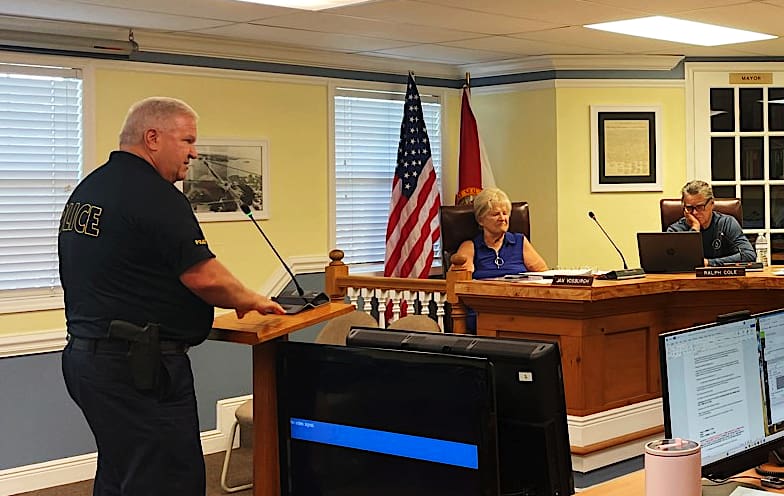
Police Chief Bill Tokajer made it clear that he and his officers will not remain on the Island during the next major hurricane. He and several officers stayed during Hurricane Helene and became trapped inside the police department by the storm surge that Kamiya said reached 7 feet in some areas.

City hosts hurricane preparedness workshop
The storm surge pole by the city skate park illustrates how high the recent storm surges were. – Joe Hendricks | Sun

Tokajer stressed the need to follow evacuation orders. He said once the winds hit a certain speed (35-55 mph depending on the agency), calling 911 will get you on a waiting list but no one’s coming to get you until the winds die down.

Tokajer advises making an evacuation plan and an evacuation kit ahead of time. An evacuation kit should include food, water, prescription drugs, batteries, flashlights, sanitary products, phone chargers, back-up power supplies and other supplies needed to survive a week or two without replenishment. He also suggests withdrawing cash ahead of time because ATM and credit card transactions may not be possible if the power’s out.

“Don’t wait. Stock up early on supplies,” he said.

City hosts hurricane preparedness workshop
Plan ahead when preparing a disaster kit. – HBPD | Submitted

Tokajer recommends putting insurance documents and other important documents on a thumb drive, along with photos of your household appliances and other belongings they may have to be replaced.

In addition to the city website and the city and police department Facebook pages used to share hurricane informa­tion in the past, the city has implemented the city-specific TextMyGov messaging system. Send a text to 91896 that says “HOLMESBEACH” and enter “YES” in response to the confirmation message.

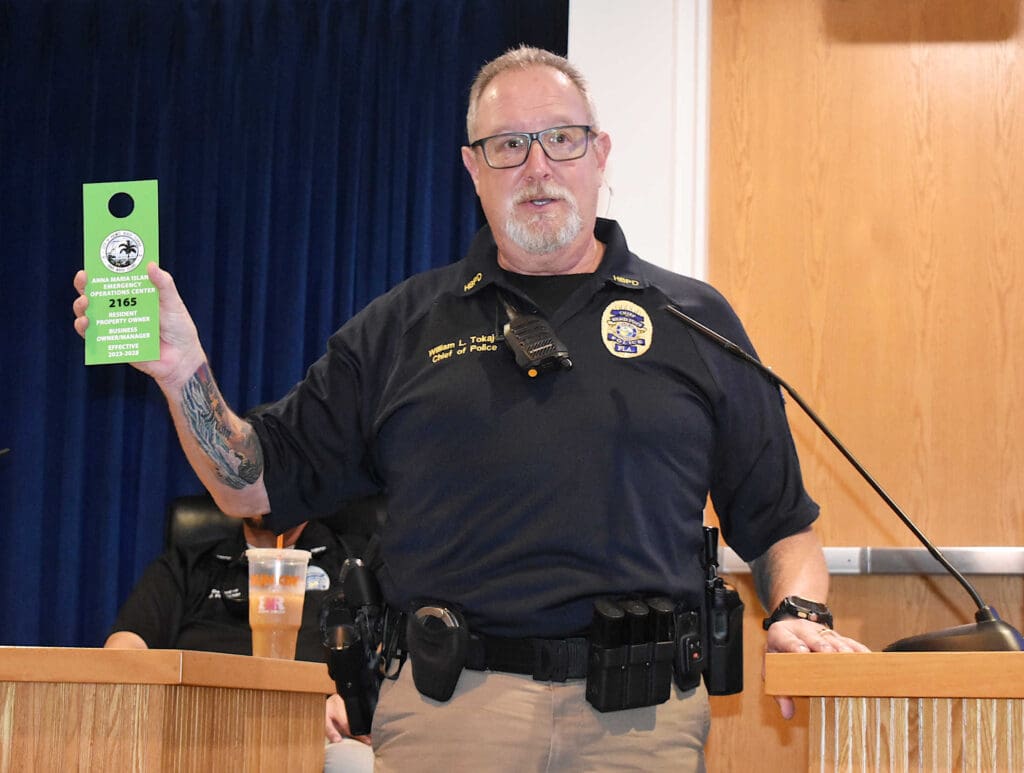
When returning to the Island after an evacuation order has been lifted – but while reentry restrictions and checkpoints remain in place – residents, property owners and business owners will need a valid reentry hang tag. Holmes Beach residents, property owners and business owners can obtain reentry tags at the police department’s front counter, inside the city hall building.

City hosts hurricane preparedness workshop
Police Chief Bill Tokajer displayed a city-issued reentry tag. – Joe Hendricks | Sun

Tokajer advises not leaving electric cars, golf carts, e-bikes and other electric vehicles in garages and ground-level storage areas where they could come in contact with saltwater and start a fire.

West Manatee Fire Rescue Fire Inspec­tor Cierra Price also stressed the importance of removing electric vehicles from the path of a potential saltwater storm surge.

“If you’ve ever seen a lithium (battery) fire, they’re really hard to put out. Don’t park them in your garage. Your house will catch on fire,” she said.

City hosts hurricane preparedness workshop
Fire Inspector Cierra Price represented the West Manatee Fire Rescue District. – Joe Hendricks | Sun

Price advises residents and property owners to disable their fire alarms and home security systems before evacuating to help prevent false alarms. She said the West Manatee Rescue Fire district responded to 92 false alarms in October 2024, around the time Hurricane Milton struck, and the monthly average is between seven and 20.

“You’re now taking emergency services to a false alarm when we could be responding to an actual emergency,” she said.

Price said during mandatory evacuations and emergency declarations residents and property owners are allowed by law to disable their fire alarm panels by shutting off the power and removing the backup batteries.

Public Works Director Sage Kamiya said his department’s first post-storm priority is clearing the city streets, followed by the removal of household and landscaping debris placed in the streetside city rights of way.

Titsworth said drywall, roofing and other construction materials are not supposed to be placed streetside for free debris removal and should be removed by the contractors or subcontractors doing the repairs.

Code Compliance Chief James Thomas said those caught illegally disposing of trash and debris after a hurricane will be ticketed and fined.

City hosts hurricane preparedness workshop
Code Compliance Chief James Thomas spoke about improper debris disposal. – Joe Hendricks | Sun

Building Official Neal Schwartz said there is a lot of confusion about FEMA’s 50% substantial damage rule and how that’s applied to individual properties.

“We do not make a determination if a property is 50% damaged or not. That is up to the homeowner/contractor that is going to fill out the required 50% cost breakdown from FEMA,” he said.

City hosts hurricane preparedness workshop
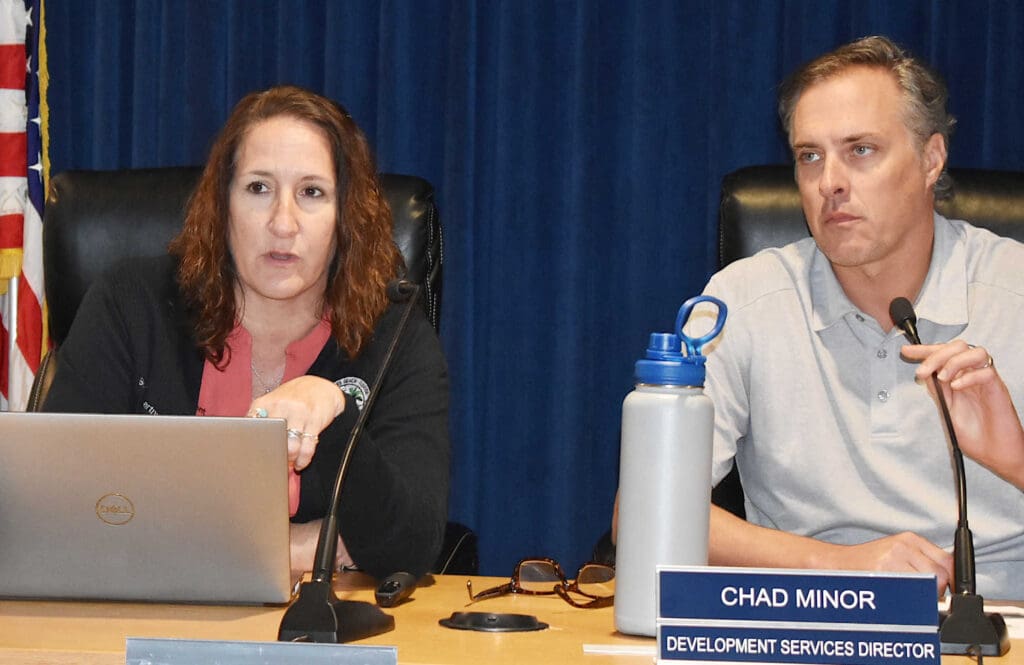
Kim Charron and Chad Minor spoke about repair permitting requirements. – Joe Hendricks | Sun

“This is why we require permits for all storm recovery work,” Development Services Coordinator Kim Charron added. “We have to track any repair costs and submit it to FEMA. Any repairs for storm damage have to be documented with a building permit.”

Development Services Director Chad Minor said hurricane repairs and restorations done without a permit can still be remedied.

“There is a way to get it done right,” he said. “Come in and talk to us. We can assist with those issues. We can right the ship.”

Below are the presentations given during the hurricane preparedness workshop:

Holmes Beach Police Department

WMFR Lithium-Ion battery information

Holmes Beach Public Works Department 

Holmes Beach Building and Code Compliance Department

Holmes Beach storm surge information

Separating hurricane debris

FEMA – How to prepare for a hurricane

FEMA – National Florida Insurance Program Resources

Related coverage:
AMI Sun Hurricane Guide 2025


City declares local state of emergency in advance of July 4 weekend

City declares local state of emergency in advance of July 4 weekend

BRADENTON BEACH – In the aftermath of large holiday crowds on the Island and at the request of Police Chief John Cosby the city commission approved a declaration of a local state of emergency for July 4-6.

“It’s not that there’s anything wrong, but we’re trying to be proactive,” Cosby said. “I need to be able to put people on call and pay out some extra overtime and there are some requirements in our emergency ordinance so I would like to activate that.”

According to the city’s emer­gency ordinance, the commission may approve “Performance of public work and taking whatever prudent action is necessary to ensure the health, safety and welfare of the community.”

Cosby noted that on Memorial Day a lot of people were trying to get to the Island and were disregarding “no parking” signs.

“We’re ticketing and they’re laughing at our $75 ticket so that’s something we are going to discuss at the budget meeting,” he said.

The declaration states, “As Mayor of the City of Bradenton Beach, pursuant to the authority vested in the office of the mayor by virtue of Article II, Section 3, of the charter of the city of Bradenton Beach in order to ensure compliance with emergency preparedness declare a state of local emergency that will continue for three days… This local state of emergency includes all of the city of Bradenton Beach.”

“I appreciate everything you do and I know these holidays are extremely rough on your guys,” Mayor John Chappie said. If there’s anything we can do to help you and your police officers we will do that.”

The motion passed unanimously.

Commissioners pursue palm tree removal

Commissioners pursue palm tree removal

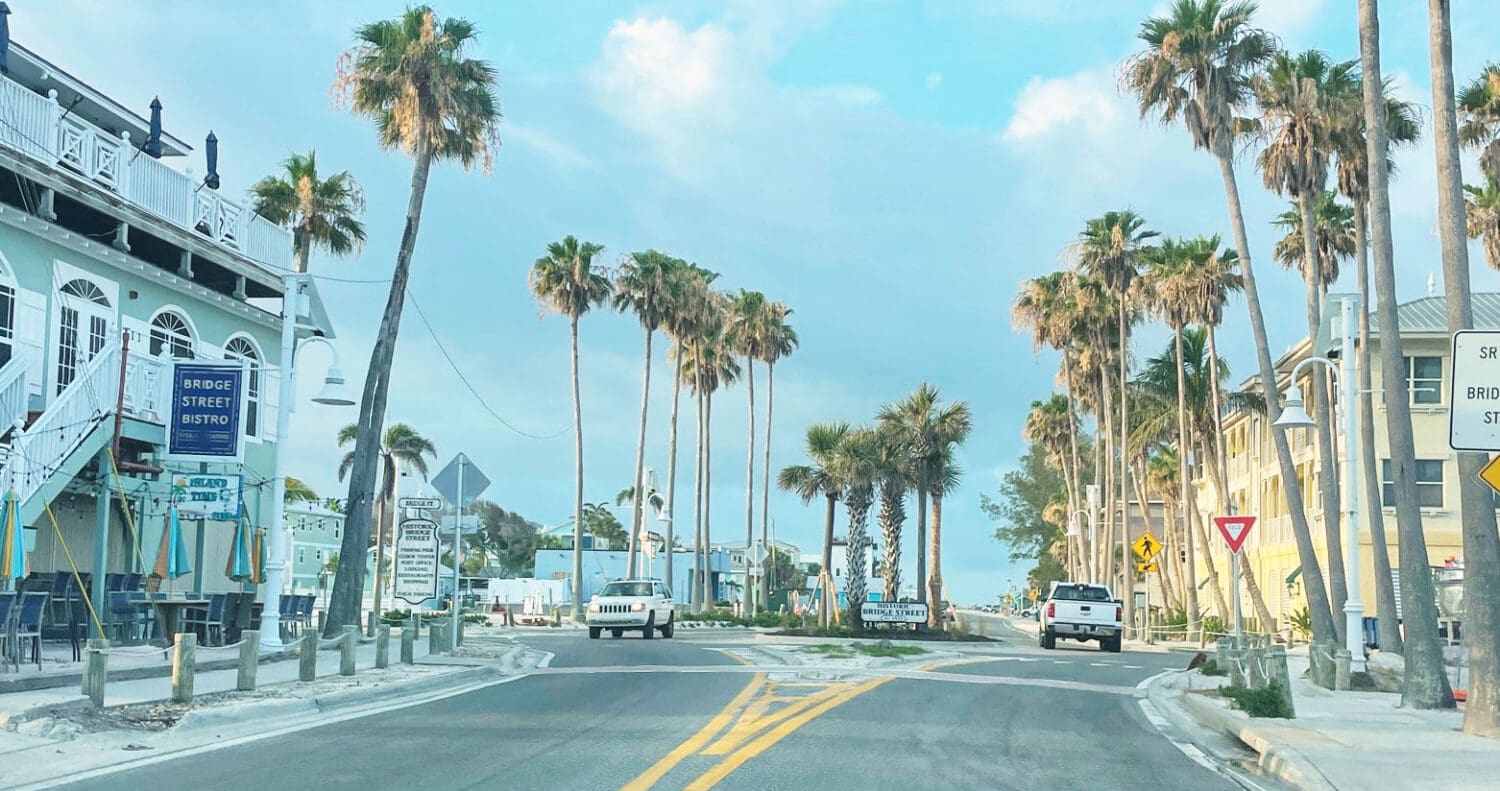
BRADENTON BEACH – A new look may be coming to the roundabout at Bridge Street and along Gulf Drive.

Mayor John Chappie said at a June 5 city commission meeting that the Washingtonian palms there have become too expensive to trim due to their height and he is exploring options to remove and replace them.

“In talking with Chief (John) Cosby with regards to the location of the Washingtonians, it’s becoming very expensive to trim these a couple times a year,” Chappie said. “It would be nice to get rid of them instead of spending the money we have to spend to trim them.”

The discussion also included some palm trees on Cortez Road.

“A lot of the cost comes in terms of traffic because I’ve got to put two of­ficers out there and it takes up to a week usually to trim them and we’re spending between $6,000 and $8,000 a year to trim those trees,” Cosby said.

Gulf Drive is a state road and is under the scope of influence of the Florida Department of Transportation (FDOT), but Cosby said the city is responsible for the tree maintenance and would be liable for any damage caused by the trees to cars or pedestrians.

Chappie said he has had discussions with Darryl Richard, the FDOT Region One landscape architect, to ask if the agency would be agreeable to the removal of the trees and replacing them with approved palms.

In 2024, the city planted coconut palms in the roundabout and they had to be removed due to FDOT regulations that prohibited them as an unapproved tree species.

“I won’t make that mistake again,” Chappie said.

“One of the things FDOT is concerned about is clear trunk space, because of the location so cars can see,” Chappie said. “Believe it or not, those Washing­tonians were small 30-40 years ago.”

Cosby recommended planting smaller trees to replace the 40-foot-tall and higher Washingtonians that could be trimmed by city public works employees and would not necessitate road closure.

“I would like them to be standing on a ladder with a pole saw, and then you can reach them,” Cosby said. “So, 20 to 30 feet would be perfect. I’d like to be able to go trim them from the sidewalk, so I don’t have to shut the road down. It’s next to impossible to shut that road down for maintenance of trees.”

Cosby said two of the Washingtonians were lost in the hurricanes and city crews cut those out.

“It’s becoming so cumbersome,” Cosby said. “We used to rent the lift and by the time we were said and done we were $8,000. That’s just not worth it. You don’t see anything. You have to look way up to see so if you are driving by and you’re trying to promote the aesthetics of the area, there’s nothing to see.”

Chappie said some of the suggested species of palms would be sabal palms, thatched palms and cabbage palms.

“They’re not 40 feet tall and that’s where the cost is, you can’t trim them unless you’re blocking off the street,” he said.

With regard to the palms that are along the Cortez Bridge, Chappie noted that 1% of the cost of the new bridge has to be spent on landscaping.

“If the commission is OK with the removal, we’ll put it on the agenda for the next CRA (Community Redevelop­ment Agency) meeting,” Chappie said.

“I think it’s a good idea to remove them and reevaluate what to plant with something that we can keep in house and manage ourselves,” Commissioner Deborah Scaccianoce said. “It makes more sense financially.”

Commissioner Jan Vosburgh said she is in favor of doing things as maintenance-free as possible.

“You don’t have to have the same species, you can do a mixture,” City Attorney Ricinda Perry said. “I think the issue is, chief and I were talking, we have the contractor ready to go but rather than have the expense of the trimming, we’d like to take money for the removal.”

Cosby asked the commission to put out a request for proposal to have a professional horticulturist or landscape planner make recommendations about which trees to plant.

“We also need to include irrigation. Nothing is going to grow properly without that, and we have a truck, we can water, but with the amount of traffic that’s on Bridge Street we’re blocking the road to water,” Cosby said.

He said there are already two water meters on Bridge Street.

“We just have to extend the line out and run it,” Cosby said. “Some of that will have to be dug up and it would be a good time to talk about redoing, or getting rid of those brick crosswalks. All the ribbon curb that holds them in place is shot. We could probably combine this into one project and really do a very good rejuvenation of that area. And maybe add a little color.”

Perry said CRA approval is necessary to use CRA funds for the new palms.

Commissioners unanimously came to a consensus to have Cosby obtain a cost for the tree removal and bring it back for approval at the first meeting in July.

“I would definitely like to get them gone before hurricane season,” Cosby said.

Clean Water Committee evolving

Clean Water Committee evolving

HOLMES BEACH – With two new members and a relatively new chairperson, the Clean Water Ad Hoc Committee remains committed to their primary objective: “To research means by which to sustain and improve upon the condition and purity of the natural waters and drinking water around Anna Maria Island.”

On May 27, city commissioners appointed Anna Maria resident Scott MacGregor and Longboat Key Public Works Director Charles Mopps as the committee’s newest members.

Clean Water Committee evolving
Scott MacGregor was appointed to the committee on May 27. – Joe Hendricks | Sun

According to his application, MacGregor is a retired marine biology teacher and a boat captain for the past 15 years. When addressing the city commission, he said, “I’m looking forward to serving on the committee and I was very interested in the meeting that I attended a couple weeks ago. Hopefully, my background – marine biology and being a captain – will serve the committee well.”

According to his application, Mopps’ water-related community ac­tivities include serving as a Sarasota Bay Estuary Program board member, a director of the Florida Shores and Beach Preservation Association board and a member of the Sarasota County Coastal Advisory Committee. His application says he can share with the Clean Water Committee information he’s learned from other organiza­tions and he can share information from the committee meetings with Longboat Key town officials and the town-affiliated “green team.”

Comprised of Holmes Beach residents, Anna Maria residents and a Longboat Key town employee, the reconfigured committee meets next on Wednesday, June 18 at 9 a.m.

City Commissioner Terry Schaefer serves as the commission’s Clean Water Committee liaison. Before making the motion to appoint MacGregor and Mopps, Schaefer said when the committee was formed in 2021, membership was not limited to Holmes Beach residents. He said the goal has always been to include members from all three Anna Maria Island cities and the town of Longboat Key. He praised the “incredible backgrounds and expertise” that past, present and future members have to offer.

Clean Water Committee evolving
Sarasota Bay Estuary Program Executive Dave Tomasko addressed the committee on May 14. – Joe Hendricks | Sun

On May 14, founding member and original committee chair Ron Huibers participated in his final meeting, which included a detailed and informative presentation given by Sarasota Bay Estuary Program Executive Director Dave Tomasko. Tomasko stressed the need for the city of Bradenton to address its sewage discharges into the Manatee River and the need for state legislators to provide the $22 million Bradenton needs to replace its wastewater treatment facilities.

Tomasko also stressed the need to protect the seagrasses that support manatees and other marine life and enhance water quality in Anna Maria Sound – the body of water east of Holmes Beach that carries an “impaired” designation from the Florida Department of Environmental Protection.

Huibers left the committee without accomplishing his top priority: the city’s purchase of an aquatic skimmer that could be used to remove algae blooms and dead fish from the Holmes Beach waterways and canals.

In January, Huibers voluntarily re­linquished the chairperson’s position and nominated committee member Dr. Jennifer Miller as his successor.

Clean Water Committee evolving
Dr. Jennifer Miller addressed the TDC members on April 21. – Joe Hendricks | Sun

As the new committee chair, Miller appeared before the Manatee County Tourist Development Council (TDC) on April 21 and provided a concise overview of the committee’s efforts, priorities and the importance water quality plays in attracting tourists to Anna Maria Island and Manatee County.

McDaniel returning as Rotary Club president

McDaniel returning as Rotary Club president

ANNA MARIA ISLAND – Jim McDaniel will serve as the next president of the Rotary Club of Anna Maria Island.

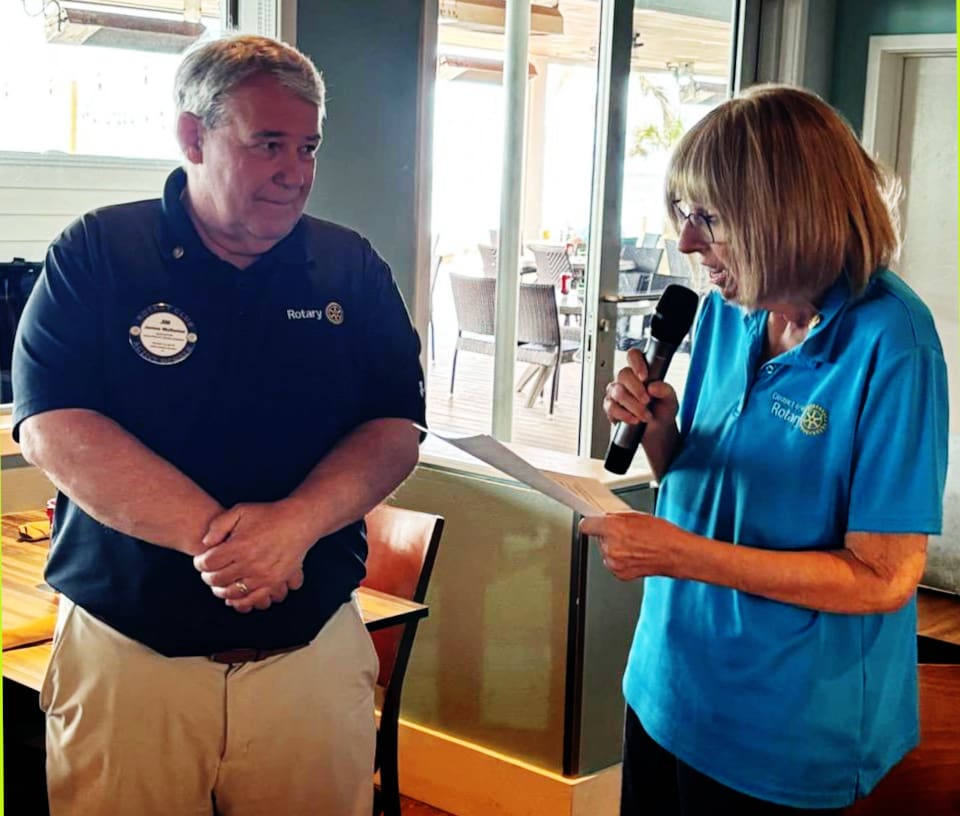
Succeeding current president Laurie Beppler and serving a one-year term that begins on July 1, McDaniel was installed as incoming president during the club’s June 3 board meeting at the Beach House restaurant in Bradenton Beach. McDaniel previously served as the club president from July 1, 2022 through June 30, 2023.

McDaniel returning as Rotary Club president
Jim McDaniel was installed as incoming club
president by President Laurie Beppler on June 3. – AMI Rotary Club | Submitted

On June 7, while attending the Rotary District 6960 annual confer­ence at the Westin Cape Coral Resort at Marina Village in Cape Coral, the Rotary Club of Anna Maria Island received the Small Club of the Year award for the club’s post-hurricane relief efforts in Cortez in the wake of Hurricanes Helene and Milton in 2024. Several club members received Disaster Relief Champion awards and Slicker’s Eatery owner Bob Slicker, who was unable to attend the confer­ence, won the prestigious districtwide Service Above Self award.

McDaniel returning as Rotary Club president
Jim and Susan McDaniel, Judy Rupp and Laurie Beppler were joined by Rotary Club District 6960 Governor Kelsey Sola after receiving their awards. – AMI Rotary Club | Submitted

“It’s a testament to the group and its willingness to dive in and make good things happen,” McDaniel said.

During his previous stint as club president, McDaniel and Slicker helped the Rotary Club of Anna Maria Island raise more than $100,000 to support the war-related humanitarian efforts in Ukraine while also assisting 10 other club causes. The AMI Rotary Club supports several events and activities associated with Anna Maria Elementary School and the club’s inaugural Reel for Rotary fishing tournament that recently raised $25,000 for the continued support of the Cortez community.

Described by McDaniel as “The little club with big ideas, making a difference locally and globally,” the Anna Maria Island Rotary Club is part of the Rotary International organization whose motto is “Service above self” and its seven areas of focus are promoting peace, fighting disease, providing clean water, sanitation and hygiene, saving mothers and children, supporting education, growing local economies and protecting the environment.

For information about club membership and Rotary Club activities, contact McDaniel at Jim.mcdaniel2012@gmail.com.

Single-family home elevator systems have risks

Single-family home elevator systems have risks

By Rodney Kwiatkowski
West Manatee Fire Rescue

In an era where residential elevators are increasingly common in single-family oc­cupancies, homeowners must recognize the potential safety risks these systems pose, particularly during emergen­cies.

While elevators enhance accessibility and convenience, they also present unique challenges for both occupants and first responders. Without proactive planning, these systems can transform from assets to liabilities, especially in high-stress situations such as medical emergencies or fires.

One of the most critical, yet often overlooked, aspects of home elevator safety is the proper placement and avail­ability of elevator keys. These keys are not only essential for daily maintenance but also serve as vital tools during emergency response. Homeowners within the West Manatee Fire Rescue (WMFR) district are encouraged to con­sult with the Fire Marshal’s Office about the best practices for key placement, ideally in a secure yet easily accessible location known to both the homeowner and WMFR. This proactive approach ensures that first responders have immediate access during emergencies, mitigating the risks associated with delays.

Unlike commercial elevators, which typically use standardized keys, such as the drop key or lunar key, many private home elevator systems utilize proprietary keys specific to the manufacturer or installer. This proprietary nature can severely limit access for first responders during critical incidents and can delay life-saving interventions or potentially cause significant damage to the home.

Homeowners with proprietary keys are asked to coordinate with their elevator manufacturer or installer to obtain additional copies. Keeping these keys read­ily available and informing WMFR of their existence and location can dramatically improve response times and safety outcomes.

In summary, while single-family home elevator systems offer unparal­leled convenience, they require diligent safety planning. West Manatee Fire Rescue emphasizes the importance of homeowners coordinating with the Fire Marshal’s Office regarding elevator key placement to reduce risks to personal safety, property damage and ensure a coordi­nated emergency response. Homeowners must recog­nize that a simple key, often proprietary, can mean the difference between a quick rescue and a costly tragedy.

Proactive communication and planning are essential for safeguarding both residents and first responders in the face of elevator-related emergencies.