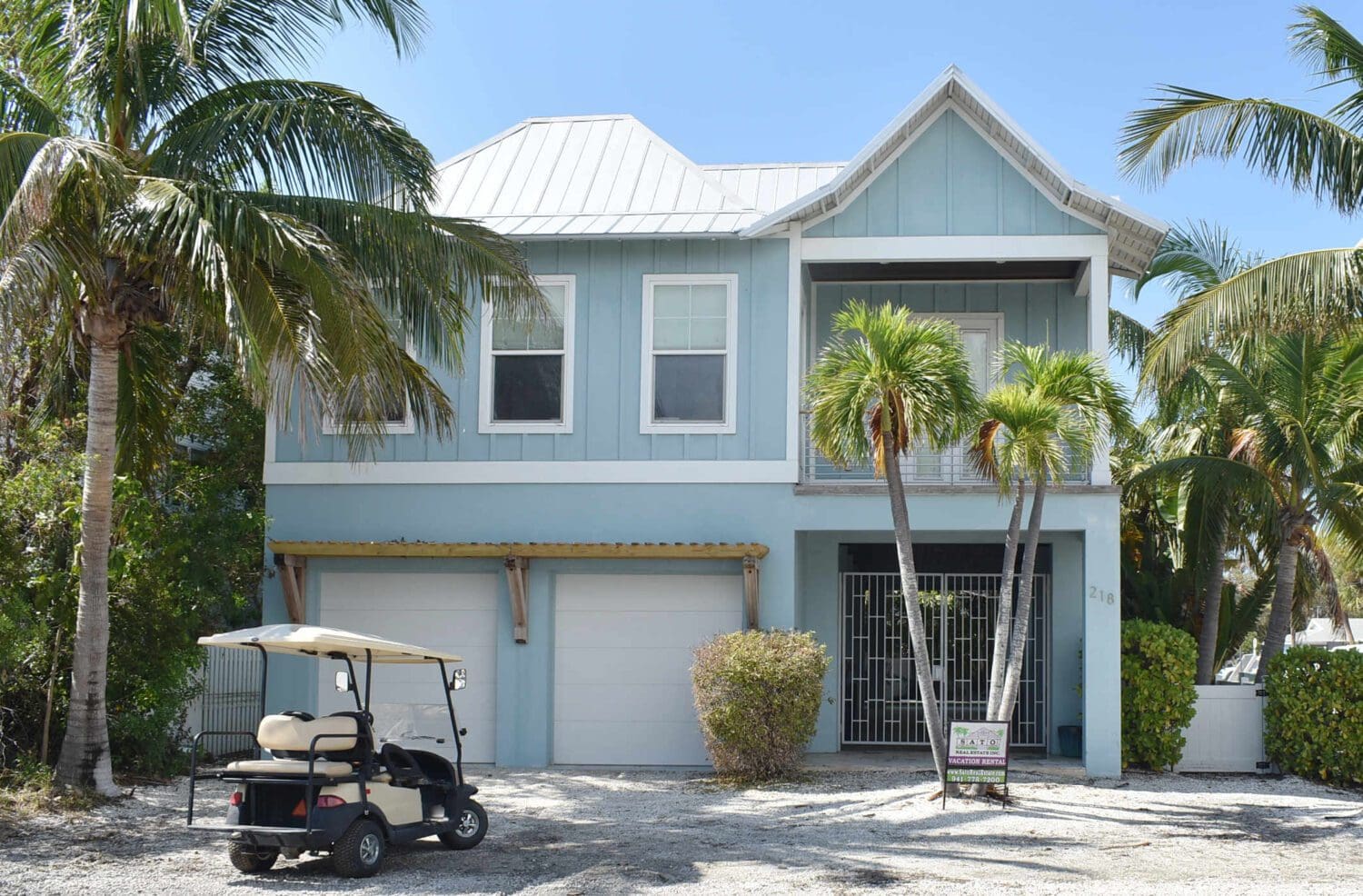
Manatee County’s 6% tourist development tax (resort tax) is collected from hotel, motel, resort, condo and other short-term vacation accommodations rented for six months or less.
The amounts shown were collected for May and paid to the Manatee County Tax Collector’s Office in June. A third of the tax revenues are spent on marketing the county as a tourist destination and almost 17% is spent on beach renourishment.
In Anna Maria, May tourist tax revenues increased from $318,188 in 2024 to $406,297 in 2025 – an $88,109 (27.6%) increase.
In Bradenton Beach, May tourist tax revenues decreased from $112,803 in 2024 to $93,365 in 2025 – a $19,438 (17.23%) decrease.
In Holmes Beach, May tourist tax revenues increased from $660,167 in 2024 to $620,641 in 2025 – a $20,474 (3.41%) increase.
In unincorporated Manatee County (the areas located outside of the six chartered municipalities), May tourist tax revenues increased from $770,194 in 2024 to $917,906 in 2025 – a $147,712 (19.17%) increase.
In Manatee County as a whole, May tourist tax revenues increased from $2,520,318 in 2024 to $2,520,318 in 2025 – a $349,445 (16.09%) increase.
Tourist development taxes are also collected in Bradenton, Palmetto and the Manatee County portion of Longboat Key. The revenues are controlled by the Manatee County Commission and can be shared with local municipalities to help fund tourism-related projects and enhancements.
BRADENTON – C&D Properties of AMI has not appealed a judge’s ruling in favor of the West Manatee Fire and Rescue District’s (WMFR) right to levy annual assessments on short-term vacation rental properties at a higher commercial rate rather than a lower residential rate.
The 2024 lawsuit pertained to two condo units 101 67th St. in Holmes Beach owned by C&D Properties. On May 22, 12th Judicial Circuit Court Judge Edward Nicholas issued his written order in favor of WMFR, followed by his final order on May 29. C&D Properties then had 30 days to file an appeal and did not.
On July 2, WMFR issued a written statement that addressed the lawsuit.
“The West Manatee Fire and Rescue District has prevailed on all counts in a legal challenge brought by a short-term residential property owner over the district’s higher non-ad valorem assessment rates for such properties. The plaintiff did not appeal the ruling and the appeal period has now expired,” according to the statement. “The plaintiff argued that the district’s imposition of a higher ‘commercial’ assessment rate on short-term vacation rental properties was an unlawful regulation and preempted by Florida Statutes. The court rejected those claims, upholding the district’s authority to increase assessments based on property usage – particularly where such use demands higher service levels and resource allocation from the fire department.
“Florida’s Fire Prevention Code requires elevated life safety standards, inspections and enforcement from fire departments for short-term rentals compared to traditional single-family residential properties. The court confirmed the district lawfully applied its special assessment powers to equitably apportion costs among properties requiring more extensive fire and safety services,” according to the statement.
The statement notes the higher commercial rate is also applied to residentially-zoned assisted living facilities and daycare centers that are also subject to stricter fire code standards.
“Importantly, the court found that the district’s assessments did not constitute a regulation and did not prohibit or limit vacation rental operations, nor regulate the duration or frequency of such rentals,” according to the statement.
“The Fire Commission has never opposed short-term vacation rentals within the district,” Fire Chief Ben Rigney said in the statement. “The Fire Commission believes property owners have the right to choose how they use their homes. However, if they opt to operate a vacation rental, they should bear the additional costs for the inspections and life safety enforcement required by the Florida Fire Prevention Code.”
WMFR is an independent special fire control district that operates three fire stations and serves Anna Maria, Bradenton Beach, Holmes Beach and the unincorporated areas of Cortez, Palma Sola and northwest Bradenton.
ANNA MARIA – Prior to the approach of Hurricane Milton, Mayor Dan Murphy and city commissioners decided they would not enact a vacation rental moratorium.
Unlike the city of Holmes Beach, the cities of Anna Maria and Bradenton Beach are not enacting short-term vacation rental moratoriums. At the request of Gov. Ron DeSantis, the Florida Department of Business and Professional Regulation (DBPR) has issued an executive order pertaining to short-term rentals.
On Wednesday, the Holmes Beach City Commission enacted a 45-day vacation rental moratorium ordinance that took effect immediately regarding current and pending vacation rental stays. The moratorium does not prevent vacation rental owners and management companies from renting their properties to displaced residents and other Hurricane Helene victims, and city officials encourage doing so.
On Monday, the Anna Maria City Commission reached a unanimous consensus not to enact a vacation rental moratorium. On Thursday, the Bradenton Beach Commission reached a similar decision.
Anna Maria discussion
On Sept. 30, Murphy told city commissioners he received a call from Holmes Beach Police Chief Bill Tokajer earlier that day informing him the city of Holmes Beach was considering enacting a vacation rental moratorium and inquiring whether the city of Anna Maria had similar intentions.
“I don’t think it’s the right thing to do,” Murphy said. “If we were to pass such an ordinance, the state of Florida will call up all the abuses of power like they did after COVID, and they could potentially take away our ability to pass emergency ordinances in the future.”
He also said, “We would be meddling in the real estate business by forbidding vacation rentals.”
Murphy said he discussed a potential moratorium with Sen. Jim Boyd and Boyd suggested contacting the attorney general’s office first.
“If you pass something like that, forbidding vacation rentals, you’re going to get second-guessed all the way to the courthouse, not only by the state but by the realtors,” Murphy said when recapping his conversation with Boyd.
Participating by phone, City Attorney Becky Vose said, “I think it is wrought with all kinds of perils. Probably the biggest one that jumped out at me was the liability of the city for lawsuits for damages because cities, under the Florida Statutes, are not allowed to prohibit vacation rentals. You can do some regulation of them but not outright prohibit them. It’s one thing if the Island were closed, but if the Island’s open and you prohibit people from renting a vacation rental, I think we’d have a really good chance of losing in court; and there might be some serious financial consequences.”
Continuing, Vose said, “If it were to be construed as overreaching by the city, then it’s going to come back and bite us through the legislature. They have a history of coming back and biting us when they perceive we’re doing something that impinges upon vacation rentals, or businesses in general. From a legal standpoint, I think it’s a really bad idea.”
Participating by phone, Commissioner Kathy Johnson said, “I think it would expose us to Bert Harris lawsuits.”
Participating by phone, Commissioner Jon Crane said, “We just can’t put an iron curtain around the city.”
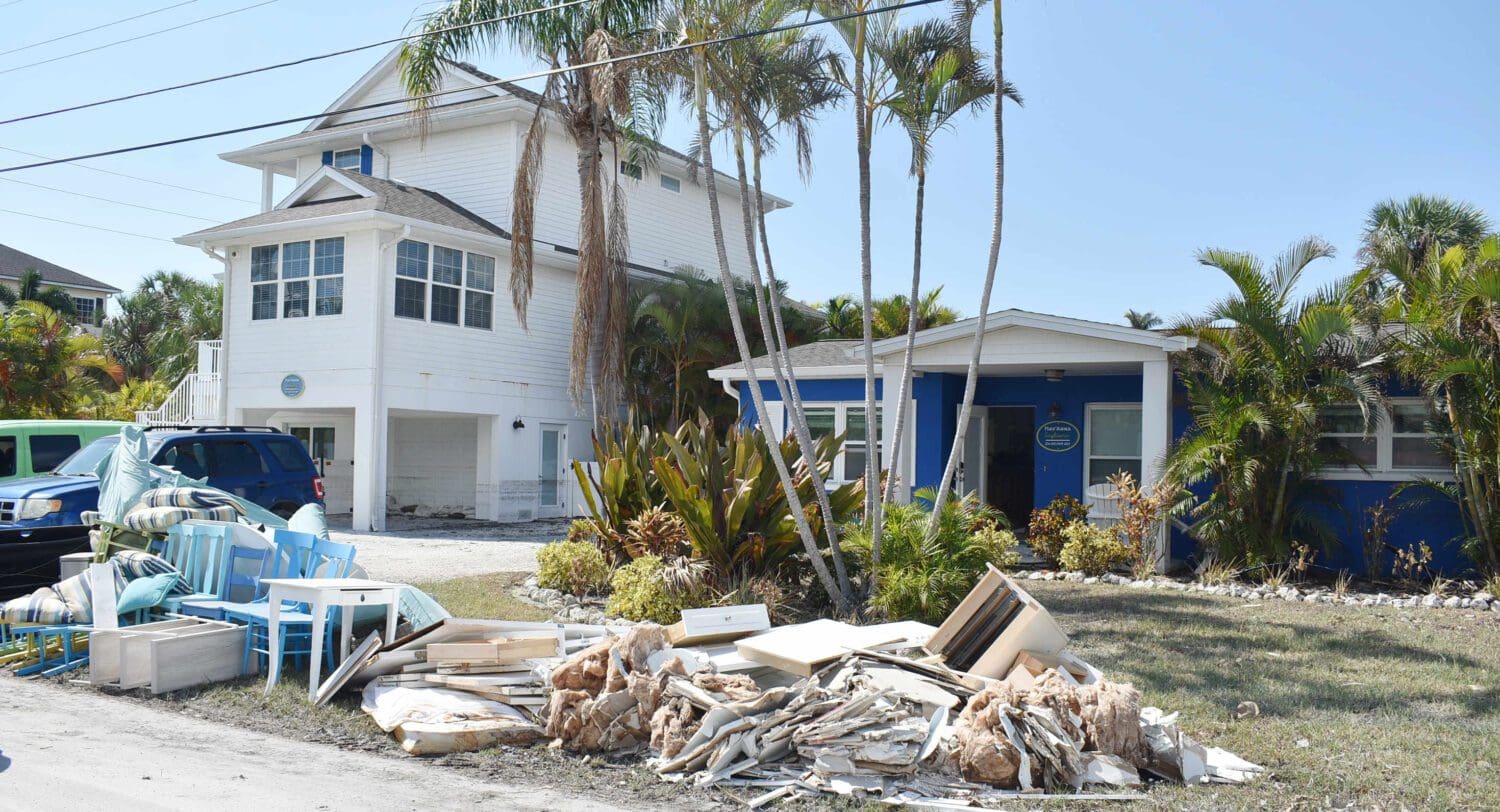
The cleanup and restoration work has begun at these vacation rental properties in Anna Maria. – Joe Hendricks | Sun
Commissioner Charlie Salem agreed and expressed additional concerns about hampering the economic recovery of Anna Maria’s tourist-reliant business and vacation rental community.
“Maybe a prohibition isn’t the best way to do that. I understand the sentiment behind it and I understand the risk as well,” he said.
Instead, Salem suggested using the city website and Facebook page to inform potential tourists of the realities they may encounter during the ongoing recovery process.
Salem, whose home was damaged, said, “It is not a fun place to be right now. Anybody thinking about a vacation here should consider that.”
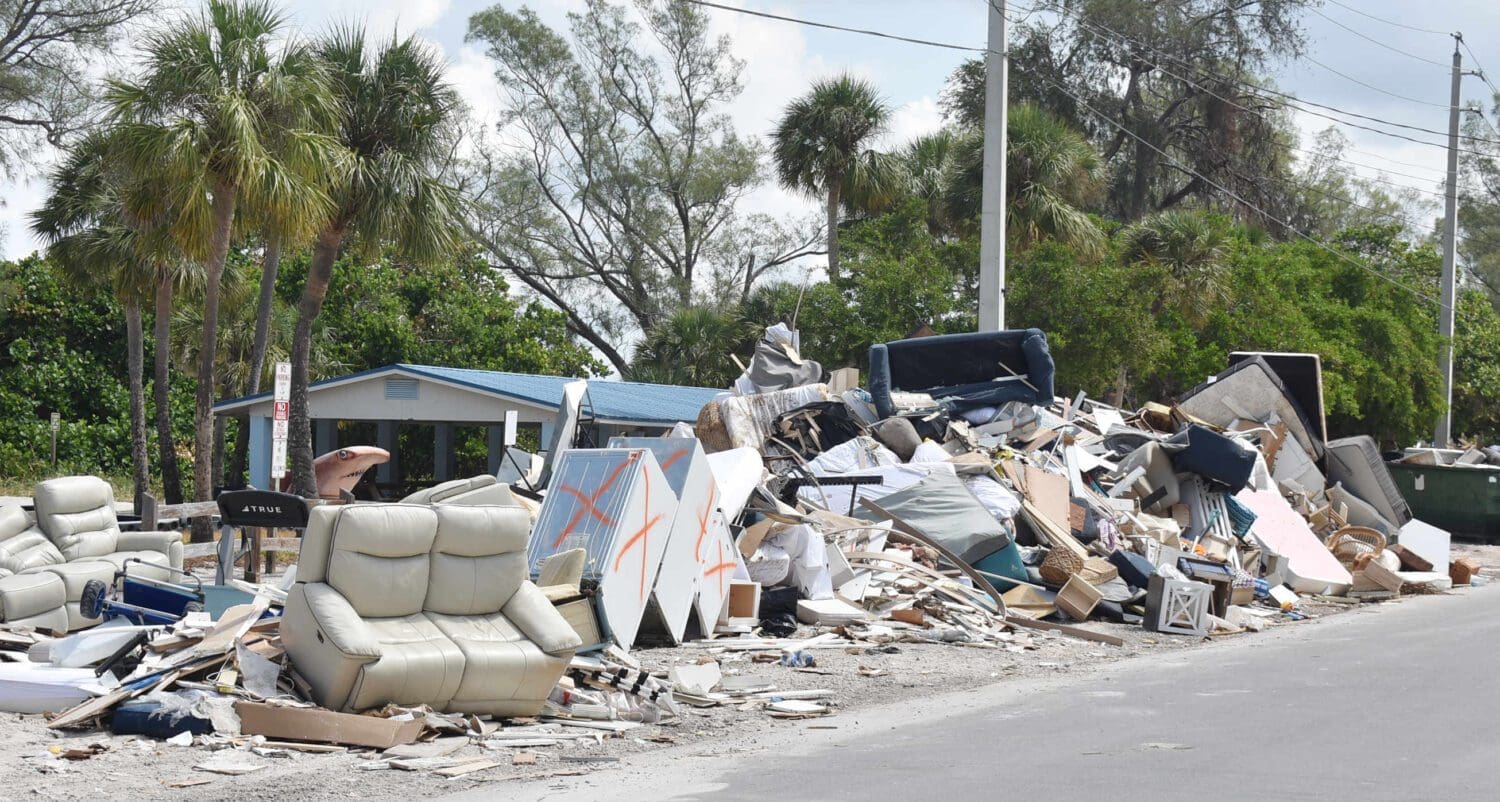
Hurricane debris lines the Anna Maria streets as the exhaustive debris removal efforts continue. – Joe Hendricks | Sun
Salem said it’s important to provide potential vacationers with credible information about what to expect when visiting Anna Maria during the recovery process.
Commissioner Mark Short agreed and said, “As long as we stick to the facts of what’s going on no one can accuse us of chasing people away. We’re simply stating here’s what it is.”
Short said it’s counterintuitive to allow someone from Bradenton to visit Anna Maria while prohibiting someone from New York, or any other destination, from doing the same thing.
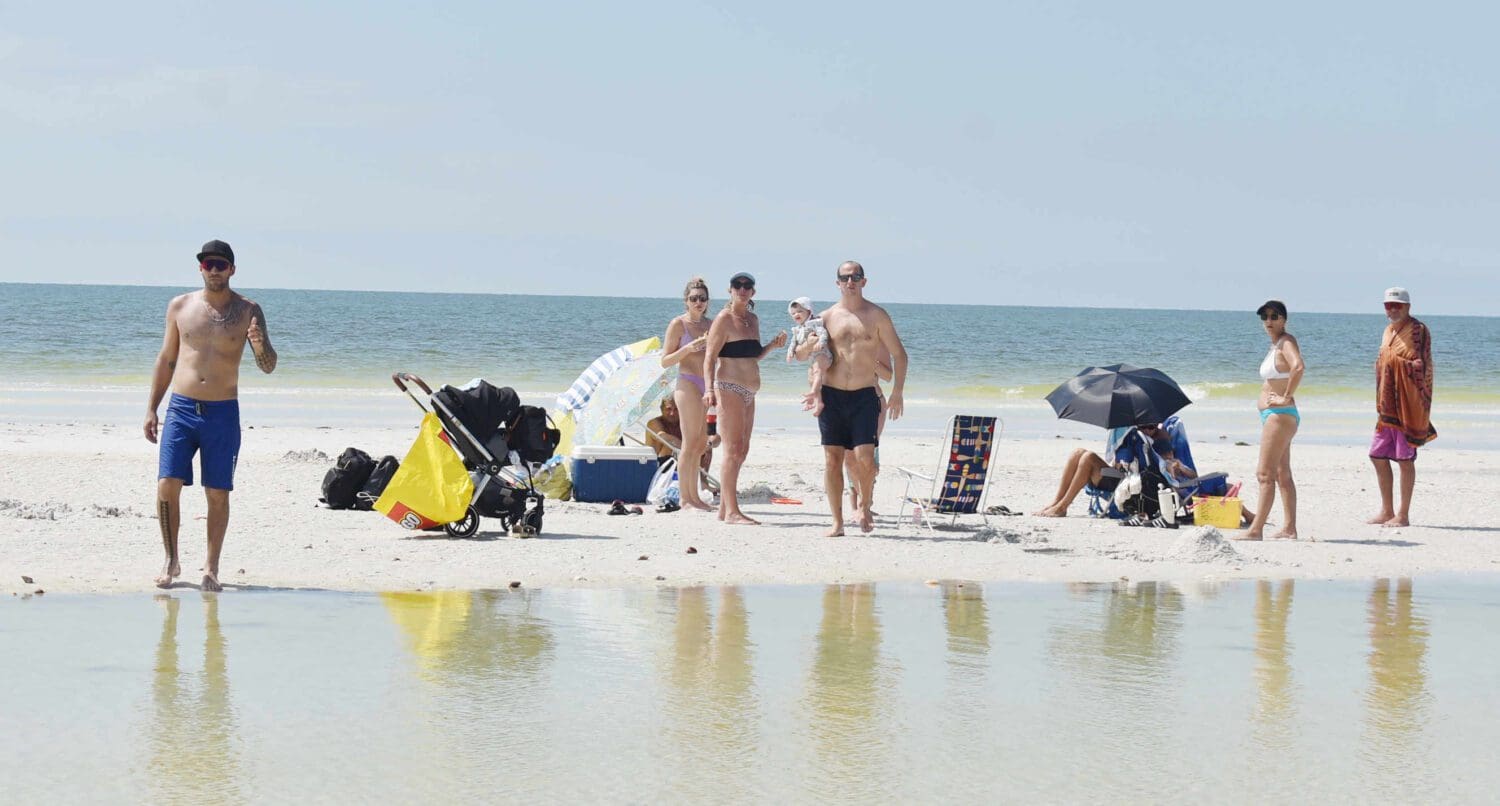
Hurricane debris was piling up at the makeshift collection center at Bayfront Park. – Joe Hendricks | SunOn Thursday, a Manatee County Sherrif’s Office deputy told these vacationing beachgoers they had to leave what remains of the Bean Point beach. – Joe Hendricks | Sun
The city of Anna Maria’s Facebook page now contains a status update that notes the city is still under a state of emergency and several factors need to be taken into consideration before traveling to Anna Maria at this time.
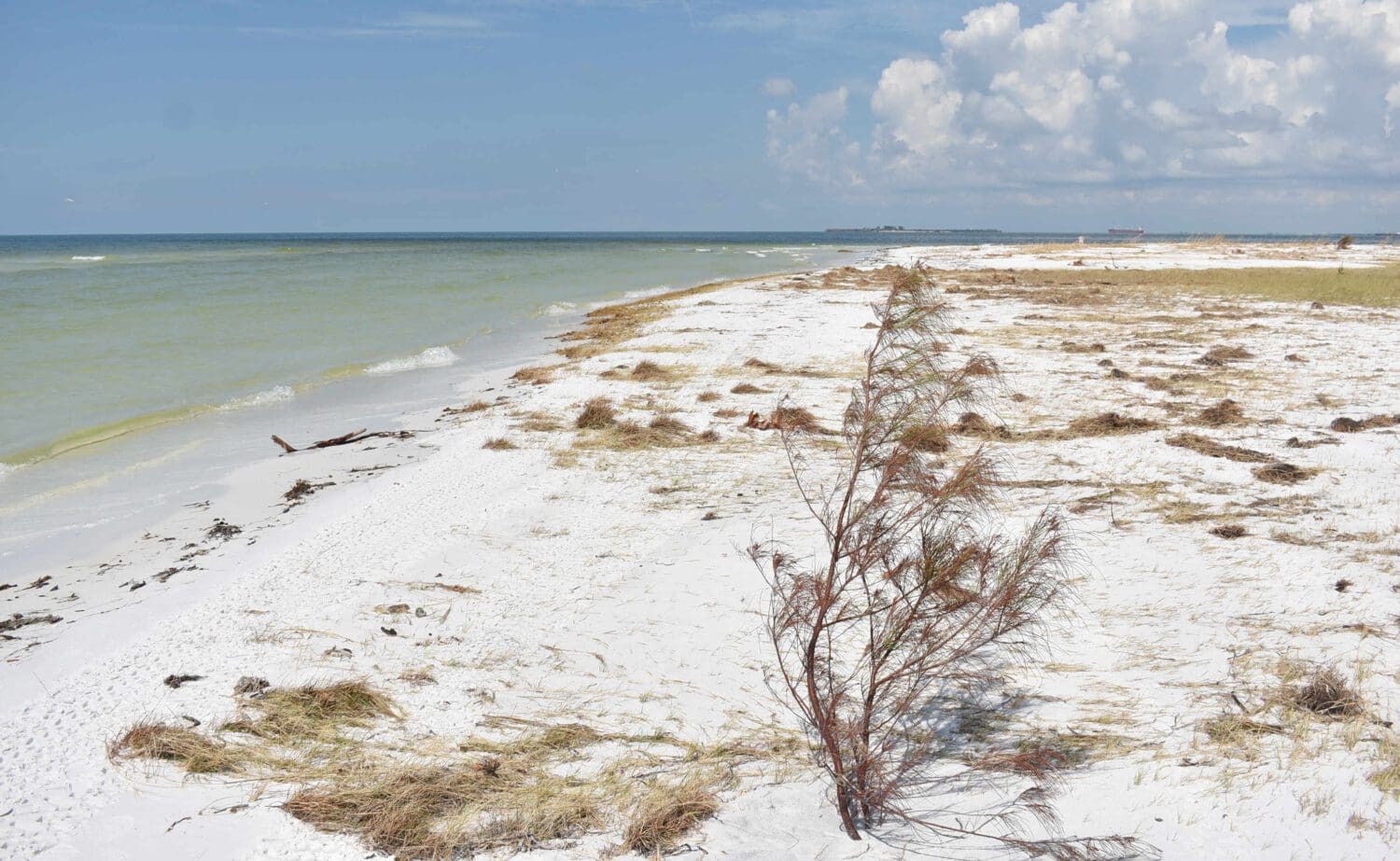
The beach at Bean Point suffered significant storm erosion. – Joe Hendricks | Sun
Those factors include limited access to the city due to a nightly curfew that remains in effect in Holmes Beach, traffic delays when entering the Island, restaurant and business closures, contaminated swimming pools, closed beaches and congested and debris-laden roadways.
“We hope to have our city back to normal soon!” the Facebook message says.
State order
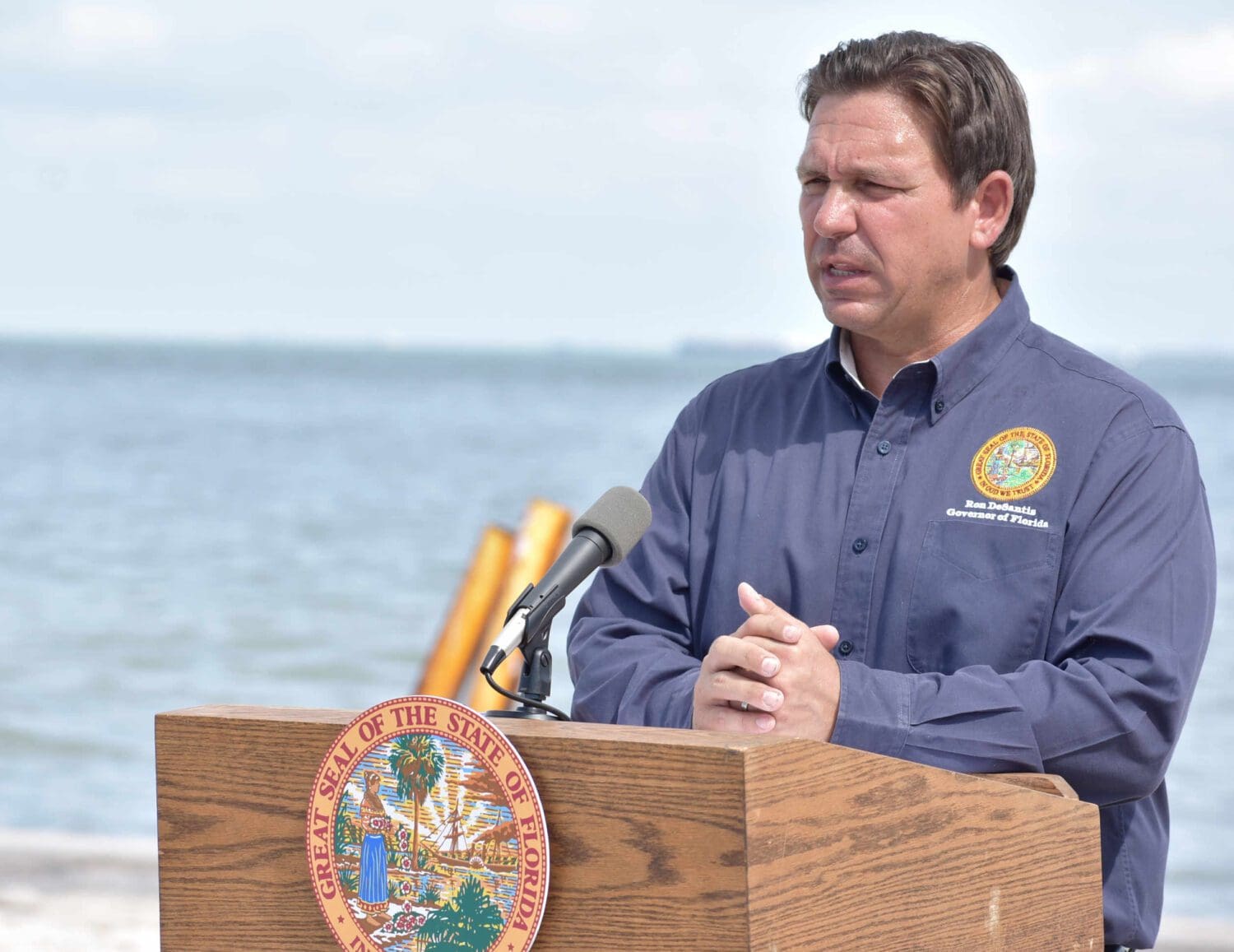
Late Thursday morning, Gov. Ron DeSantis held a press conference in Anna Maria in front of the heavily damaged Rod & Reel Pier. During the press conference, he announced the Florida Department of Business and Professional Regulation (DBPR) was issuing an executive order pertaining to short-term vacation rentals.
“We understand that housing is a challenge. If you had four feet of water in your house, even if it’s not a total loss, you’ve got to gut that drywall and there’s a rehab process,” DeSantis said.
Gov. Ron DeSantis discussed vacation rentals during his visit to Anna Maria on Thursday. – Joe Hendricks | Sun
“Today, I am announcing that I am taking executive action to temporarily lift time restrictions on rentals and we’re directing municipalities and counties to do the same. We have regulations – some of them local, some of them state – that require rentals to be greater than or less than 30 days depending on the locality. The bottom line is you may need less than 30 days if you’re rehabbing your home. Maybe you need a little bit more. If you are a victim of Hurricane Helene, those stipulations are lifted and you can rent what you need regardless of any arbitrary rules. This will help provide immediate housing for those who need it,” DeSantis said of the executive order applicable to all counties declared to be in a state of emergency due to Hurricane Helene.
In response to a question posed by The Sun regarding the Holmes Beach moratorium, DeSantis said, “If someone’s got a rental in Holmes Beach and you lost your home you have a right to enter into that agreement and do a 15-day rental or a 30-day rental or whatever you need. But it is limited to the people that were displaced from their homes. Obviously, these local municipalities have certain authority to do it how they want to do it for the general public, but for our storm victims, we want to give them as many options as possible.”
Another media member asked DeSantis what message should be sent to vacationers still planning or considering a visit to the Island.
“We want the economy to get back going,” DeSantis said. “We want people to be able to come. There may be some areas where it may be a little more challenging, but the goal needs to be to get people back up and get the tourism flowing again. There was a lot of storm surge and there’s been a lot of damage and they’re cleaning it up, but this is a beautiful part of the state. There are local issues I think they can work that out however they see fit. The state of Florida’s open for business.”
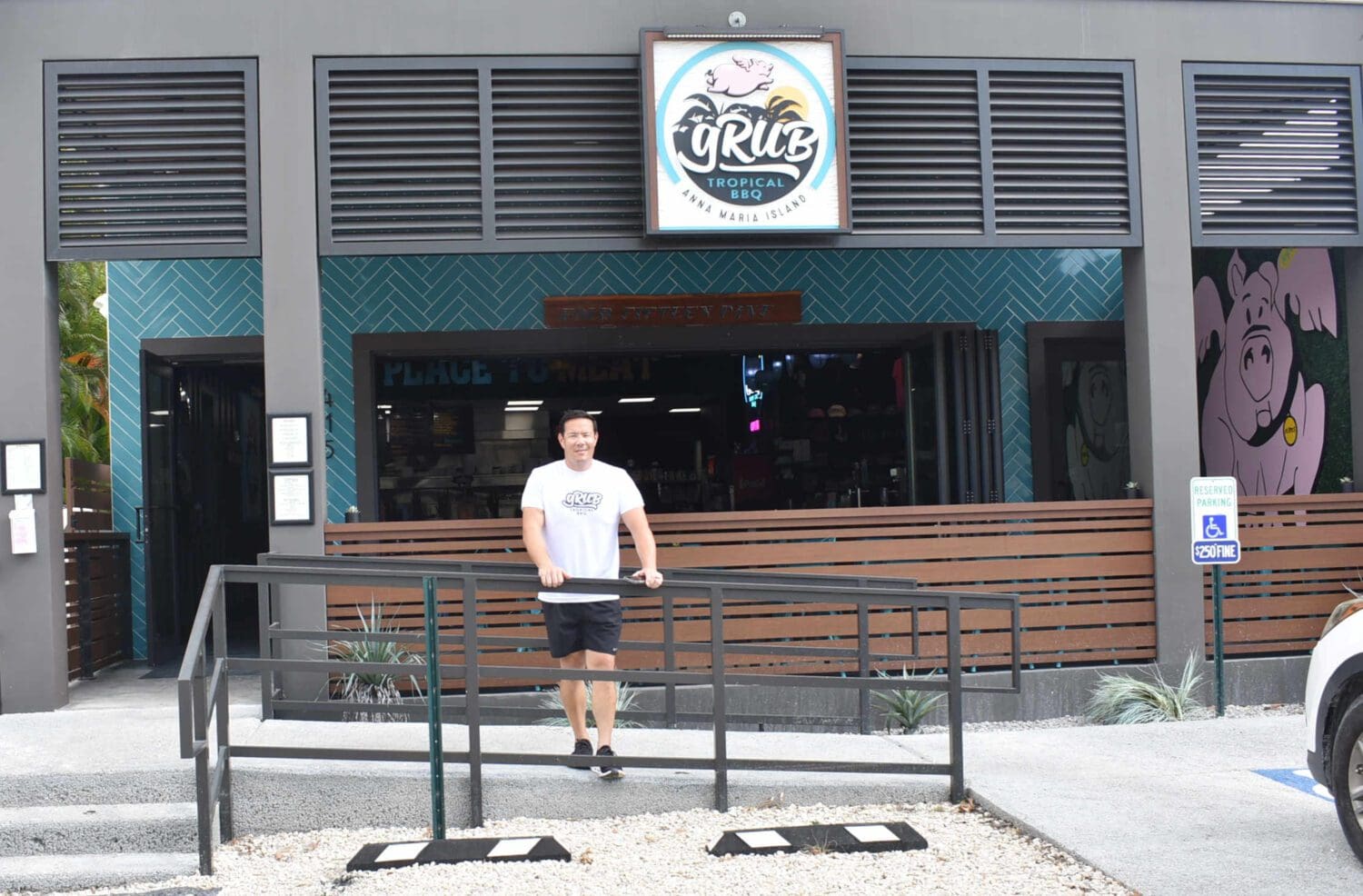
The Anna Maria General Store and Deli on Pine Avenue is open again. – Joe Hendricks | SunThe gRub Tropical Barbeque restaurant on Pine Avenue is open again. – Joe Hendricks | Sun
Holmes Beach curfew
When speaking to the Sun Thursday afternoon, Tokajer noted the city of Holmes Beach still has a nightly curfew in effect and a curfew checkpoint at the entry to the city via Manatee Avenue. The curfew is expected to remain in effect until the moratorium is lifted.
Tokajer said vacation rental guests headed to Anna Maria or Bradenton Beach are free to enter through Holmes Beach between 7 a.m. and 7 p.m. but if they leave the Island and try to return after the curfew takes effect at 7 p.m. they will not be allowed through the Holmes Beach curfew checkpoint without a re-entry tag issued by one of the Island cites.
BRADENTON BEACH – City officials are compiling a list of priorities for the Florida Legislature’s 2025 session that starts on March 4.
When fully compiled, the list of Bradenton Beach’s legislative priorities will be shared with the Florida League of Cities and the city’s contracted lobbying firm.
According to the legislative priorities document discussed during the Sept. 19 city commission meeting, the mayor and commission’s first priority is to preserve the city’s home rule rights and the right to self-government, and to oppose any legislation that attempts to eliminate or reduce those rights. The second priority is to oppose any legislative efforts to preempt short-term vacation rental regulation to the state.
“Home rule is why no two cities are alike,” according to the priorities list. “Strong home rule powers ensure that government stays close to the people it serves. Intrusion on home rule from the state or federal government undermines the constitutional right of citizens to govern themselves.”
The city supports legislation that protects and enhances the quality of our natural waters, addresses sea-level rise and supports the Florida Department of Environmental Protection’s Florida Forever conservation and recreation lands acquisition program. Bradenton Beach officials support legislation that provides funding for projects that help prevent and mitigate the negative environmental and economic impacts of red tide and other harmful algae blooms.
Property insurance reform is another top priority and the city supports a state effort to address increasing insurance rates, limiting the claim duration process and the unsubstantiated cancellation of insurance policies.
Bradenton Beach officials also would like more equitable sharing of the county’s tourist development tax revenues. The priorities list notes that a substantial portion of the county’s tourist development tax revenues are generated in Bradenton Beach and elsewhere on Anna Maria Island. Manatee County currently levies a 5% tourist tax on all short-term resort and vacation rental stays and county voters are now being asked to increase the tax to 6%.
State law restricts how the tourist tax revenues received by a city are spent. Tourist tax revenues can be used for city projects that enhance tourism but cannot be used for law enforcement or projects that enhance streets and roads, drainage and other infrastructure components.
The list notes that Bradenton Beach has a residential population of approximately 1,200 people, but during weekends, holidays and other peak periods, the population can swell to 30,000 people with the influx of beachgoers and other visitors.
The commission supports the Florida Legislature revising the population requirements that currently allows some municipalities, but not others, to use tourist development tax revenues for police services and infrastructure improvements.
The city wants the Legislature to protect public rights-of-way by addressing the Advanced Wireless Infrastructure Deployment Act it adopted in 2017. The state act allows wireless providers to place small cell phone transmitters and other wireless devices on utility poles located in city rights of way. The act prevents local authorities from prohibiting, regulating or charging for the placement of small wireless facilities in public rights-of-way except as specified in the bill that caps the rate for device placement at $150 per year.
The commission opposes legislation that would restrict or eliminate the tax revenues generated by the city’s local business tax.
Commissioners support the Florida League of Cities’ legislative priority pertaining to state funding for mental health initiatives, facilities and programs.
City Attorney Ricinda Perry recommended adding two more priorities to the list: one pertaining to complete streets project funding and one in support of state funding that would help cities enhance their cybersecurity measures.
We inadvertently became involved with city issues a decade ago. We attended almost every Holmes Beach Commission meeting and work session for several years. We have attended some Anna Maria, Manatee County and WMFD meetings as well and continue to stay educated. With this ever-evolving landscape of quality of island life, our mantra has evolved into “Preservation of Neighborhoods.”
We recently Googled Holmes Beach zoning and discovered a highly prioritized real estate website. A section specifically referencing HB R-2 to R-4 zones perked our interest: “The typical buyer for these zones is someone who would like to rent the property weekly for most of the time. Warning! If you plan on living in the property or visiting for multiple months be aware that it can be noisy.”
Until recently our immediate block in an R-2 zone consisted of 100% permanent residents; even with new construction, we remain predominantly permanent, full-time residents with a strong neighborhood watch. This may be a rarity, however, we had never seen documented numbers for the percentage of residences versus TPLEs (commercial rentals) per zone. (Transient Public Lodging Establishments are clearly defined in state statute.) We proceeded with public records requests from the county appraiser, city, and WMFD. Curiously, none has a count of the number of TPLEs per zone.
After re-reading our entire Comprehensive Plan and Municode Zoning sections multiple times, we know without reservation that the intent is for preservation of residential character. It is not mentioned just casually; it is staunchly entrenched repeatedly.
Many people locally and statewide have worked diligently towards preservation of residential character. Home Rule initiatives, neighborhood initiatives, and initiatives with city, county and state governments have sought to protect our neighborhoods.
We are not naive. We have followed numbers and trends as well as the imminent prospects of consolidation or dissolution of the island cities. However, there are coastal cities which have successfully preserved their character. These cities properly reference their residential zones, respect their guiding documents, enforce prescribed ordinances and encourage resident input.
We encourage upholding guiding documents in efforts to preserve intended residential character and hope that others respect that initiative by encouraging permanent residents as well. Our communities, our beloved AME, our churches, our quality of life, and even retention of our island cities depend on it.
MANATEE COUNTY – Property owners in West Manatee Fire Rescue’s district will notice a change on their tax bills this fall if commissioners vote to pass a proposed rate increase.
At an April 16 budget workshop, district staff recommended a 7.4% increase for the coming fiscal year beginning on Oct. 1. If approved, the rate increase would bring in an estimated $740,236 in revenue for the district.
WMFR uses a non-ad valorem rate system based on the size of a building on a property or a flat rate if the land is vacant. Currently, the base rate for a residential property is $219.94 with an additional charge of $0.1297 per square foot above 1,000 square feet. For a 2,000-square-foot home, the total rate for the 2023-24 tax year was $349.64. With the proposed rate increase, the residential base rate would be $236.22 with a per-square-foot rate of $0.1393 for buildings over 1,000 square feet. The total proposed rate for a 2,000-square-foot home would be $375.51 with the rate increase, a difference of $25.87.
The commercial base rate for 2023-24 was $546.61 with a per-square-foot rate of $0.2367 over 1,000 square feet, bringing the total for a 2,000-square-foot building to $783.31. With a 7.4% increase, the base rate would increase to $587.06 with a $0.2542 per-square-foot increase, bringing the total to $841.27 for a 2,000-square-foot building, a difference of $57.96.
A new change coming this fiscal year is that transient public lodging establishments in the district, known as short-term vacation rentals, will be charged as commercial properties instead of residential ones to help cover the cost of the fire safety inspection program instituted this year. District staff estimates that the increase in revenue from this change will bring in $613,686.
WMFR staff predicts that total assessment revenue for the 2024-25 fiscal year will come in around $11,357,114, a difference of $1,353,922 over the 2023-24 year’s $10,003,191.
If approved by commissioners, the increase in assessment rates would be used to cover increases in firefighter compensation, necessary replacements of vehicles and equipment and the fire safety inspection program.
TALLAHASSEE – Gov. Ron DeSantis will decide the fate of proposed vacation rental legislation that seeks to preempt vacation rental regulation to the state.
Supported by the Florida Senate and House of Representatives, the legislation proposed in the matching House and Senate bills and now known collectively as CS/SB 280 would preempt vacation rental regulation, including vacation rental advertising, to the Florida Department of Business and Professional Regulation (DBPR). DeSantis can sign the legislation into state law, allow it to become state law unsigned or veto it.
If DeSantis supports the state preemption, local and county governments, including those on Anna Maria Island, will lose some local vacation rental regulation authority and enforcement powers. If adopted as state law, local governments could still conduct annual health and safety regulation inspections, require an annual vacation rental registry and continue levying “reasonable” registration and inspection fees. The enrolled bill does not define “reasonable.”
Sen. Nick DiCeglie sponsored SB 280. – FlSenate.gov | Submitted
Sponsored by Sen. Nick DiCeglie (R-Indian Rocks Beach), the Senate, on Feb. 1, voted 27-13 in favor of adopting SB 280 as it was written at that time.
State Rep. Philip Griffitts Jr. sponsored HB 1537. – MyFloridaHouse.gov | Submitted
On Wednesday, March 6, the House members voted 60-51 in favor of the amended committee substitute version of SB 280 after adopting a lengthy amendment presented by Rep. Philp Griffitts Jr. (R-Panama City Beach), the sponsor of the original House bill, HB 1537. Rep. Will Robinson Jr. (R-Bradenton) voted in favor of the bill which was then sent to the Senate seeking Senate concurrence with the House-amended committee substitute version of CS/SB 280.
State Rep. Will Robinson Jr. supports the state preemption of vacation rental regulation. – MyFloridaHouse.gov | Submitted
While debating the House-amended bill on March 7, Sen. Bobby Powell (D-West Palm Beach) proposed a Senate amendment to the House amendment that would have grandfathered in any local vacation rental regulations adopted before July 1, 2024. After a spirited debate between supporting and opposing senators, 16 members supported Powell’s amendment and 24 rejected it.
Sen. Jim Boyd voted in favor of the vacation rental legislation. – FlSenate.gov | Submitted
After further debate, the Senate members voted 23-16 in favor of adopting the House-amended version of CS/SB 280, thus creating identical matching bills to send to DeSantis. Sen. Jim Boyd (R-Bradenton) and Sen. Joe Gruters (R-Sarasota) opposed Powell’s amendment and supported the final adoption of the bill. The 2024 legislative session ended on March 8.
Bill language
On Feb. 23, Griffitts told The Sun his primary goals were to create a statewide vacation rental registry database and to better ensure short-term vacation rentals are properly registered and all applicable taxes and fees are paid. Griffitts said it was unlikely that House members would adopt the Senate bill that then differed significantly from the House bill. However, on March 6, Griffitts presented the House members with a lengthy proposed amendment to the Senate bill, which the House adopted by a slim nine-vote margin.
The proposed state law would establish vacation rental occupancy limits set forth by the state. – Joe Hendricks | Sun
If enacted as state law, CS/SB 280 would require vacation rental owners, managers and operators to comply with a maximum overnight occupancy that doesn’t exceed two persons per bedroom, plus an additional two persons in one common area; or more than two persons per bedroom if there is at least 50 square feet per person, plus an additional two persons in one common area, whichever’s greater.
Adopted in 2015, Anna Maria’s vacation rental ordinance limits total occupancy to eight persons for any vacation rental home or unit built after that city ordinance took effect. In response to more than 100 Bert Harris claims filed within one year of the city vacation rental ordinance adoption, the city commission granted legitimate Bert Harris claimants additional two-plus-two occupancy exemptions that exceed eight occupants.
Florida cities could still enact local vacation rental registration programs if the new law is enacted. – Joe Hendricks | Sun
Similar to local vacation rental ordinances, CS/SB 280 would require the vacation rental owner/operator/manager to designate a representative who can respond to complaints or emergencies by phone, or in person, 24 hours a day, seven days a week. That designated individual would also receive any violation notices issued by a local municipality or DBPR.
During the March 7 Senate debate, DiCeglie acknowledged only nine DBPR staff members would be assigned to oversee the state’s vacation rental regulation, but local governments would still be expected to assist with those efforts.
The proposed law would require local governments to issue written notices of violations of local laws, ordinances or regulations that don’t apply solely to vacation rentals but occur at a vacation rental property, including noise violations.
The proposed law would allow local governments to suspend a local rental registration for up to 30 days for one or more violations on five separate days during a 60-day period, up to 60 days for one or more violations on five separate days during a 30-day period and up to 90 days for one or more violations after two prior suspensions.
The proposed law would allow local governments to revoke or refuse renewal of a vacation rental registration if a vacation rental registration has been suspended three times.
The legislation states that as of Jan. 1, 2026, local governments must use the state’s vacation rental information system to notify DBPR of any local suspensions. DiCeglie acknowledged the state’s registration database would not be fully operational until 2026.
Mayor’s concerns
On March 8, Anna Maria Mayor Dan Murphy said he hopes to travel to Tallahassee to meet with DeSantis in person.
“I want to tell him what the implications of that bill would be for the city of Anna Maria,” Murphy said, noting he doesn’t know if DeSantis supports the legislation.
In 2020, DeSantis told a group of reporters he was not sure the state should be micromanaging vacation rentals, as reported by FloridaPolitics.com and others.
In past years, Murphy’s made several trips to Tallahassee to lobby state legislators and he’s disappointed that due to unforeseen circumstances he wasn’t able to get to Tallahassee while the legislature was still in session.
“I don’t think we did an adequate job of getting to the senators and explaining to them the implications. This bill shouldn’t have happened. Of all the vacation rental bills that have come across in recent years, this is probably the worst. The biggest impact is we’re going to have party houses and go back to the days of 25 people in a house. I’m exceptionally disappointed with the state legislature. I find it hard to believe that they couldn’t be more sensitive to the needs of their constituents,” Murphy said.
Murphy said the proposed square footage-related occupancy provision would be virtually impossible to enforce and enforcement of vacation rental advertising, including occupancy limits, would be preempted by the state.
When asked what the city could still do in terms of enforcement, Murphy said, “I’m still sorting that out.”
While awaiting DeSantis’ decision, the city will utilize its HomeRuleFlorida.com website to engage in an email-based opposition campaign directed at DeSantis.
TALLAHASSEE – The Florida Legislature’s efforts to preempt vacation rental regulation to the state took a significant step forward when the Florida Senate passed Senate Bill 280 on Feb. 1.
After previously passing through two Senate committees, the bill passed the full Senate 27-13.
If enacted as state law, the proposed legislation would further limit the ability of Florida cities, towns and counties to regulate vacation rentals and vacation rental advertising at the local level.
The preemption of vacation rental regulation to the state would impact all three Anna Maria Island cities to varying degrees.
Sen. Jim Boyd (R-Bradenton) and Sen. Joe Gruters (R-Sarasota) were among the 27 senators who supported the bill, originally introduced by Sen. Nick DiCeglie (R-St. Petersburg). Ten Democrats opposed SB 280, joined by three Republicans.
Sen. Nick DiCeglie introduced SB 280. – www.FlSenate.gov | Submitted
Originally introduced by State Rep. Philip Griffitts Jr. (R-St. Petersburg), the House companion bill, HB 1537, successfully passed through the House Regulatory Reform & Economic Development Subcommittee on Feb. 1 by a 10-4 vote. State Rep. Will Robinson Jr. (R-Bradenton) supported the bill.
State Rep. Philip Griffitts Jr. introduced HB 1537. – www.MyFloridaHouse.gov | Submitted
If HB 1537 successfully passes through the Ways & Means Committee and the Commerce Committee, it will then be brought to the House floor for a vote by the entire House before the 60-day legislative session ends on March 8.
In order to become state law, matching Senate and House bills must be adopted by the two governing bodies. If the final versions of the two bills are not identical, the legislation fails. If the identical bills are passed by their respective bodies, the legislation will be sent to Gov. Ron DeSantis to sign into law, to approve without signing or to veto.
As of Feb. 2, the Senate and House bills were not identical matching bills. The Senate-approved version of SB 280 contains two-plus-two occupancy limits not yet included in HB 1537.
The adopted Senate bill states the vacation rental owner or operator must “State and comply with the maximum overnight occupancy of the vacation rental which does not exceed either two persons per bedroom, plus an additional two persons in one common area; or more than two persons per bedroom if there is at least 50 square feet per person, plus an additional two persons in one common area, whichever is greater.”
As of Feb. 2, the House bill simply said the vacation rental owner/operator must “State the maximum occupancy of the vacation rental based on the number of sleeping accommodations for persons staying overnight in the vacation rental.”
Fees and taxes
The Legislature’s efforts to preempt vacation rental regulation to the state are partially driven by a stated desire to better address the collection of vacation rental registration and licensing fees and the collection of taxes levied on transient public lodging entities, including those on the Airbnb and VRBO advertising and rental platforms.
Several Florida counties levy tourist or resort taxes on short-term lodging stays. Manatee County levies a 5% tourist development tax on short-term lodging stays.
SB 280 and HB 1537 address at great length vacation rental advertising/rental platforms and the collection of fees and taxes.
In January, the independent, non-partisan Florida TaxWatch organization published a 16-page report titled, “The Impact of Unlicensed Vacation Rentals on Florida’s Economy.”
“In November 2023, an average day had an estimated minimum of 25,457 unlicensed vacation rentals with available listings, which is 19% of all available listings for that month,” the report says.
The report estimated Florida had an estimated minimum of 49,280 unlicensed vacation rental properties at that time.
“Tax evasion by unlicensed vacation rentals worsens the tax burden on dutiful, taxpaying residents and businesses,” the report says. “The loss of registration costs, required once per year, would be between $1.8 million and $6.9 million. If the unlicensed vacation rentals continued to operate in the years to follow, the state would see a loss of licensing fees between $1.2 million and $5.5 million. Collectively, local communities can lose up to $32,000 in local option transient taxes within a single day. If the unlicensed vacation rentals filed for a homestead exemption in the absence of permanent residency, up to $21.3 million in property taxes could be lost to fraud.”
Anna Maria concerns
During the Jan. 25 Anna Maria City Commission meeting, City Attorney Becky Vose voiced her concerns.
She said the Senate bill would still allow the city to inspect vacation rentals during the initial registration process but would not allow follow-up inspections in future years. She noted the annual inspections help identify violations and non-compliance issues that arise after the initial inspection takes place.
Regarding the city’s annual inspection fees, Vose said, “It would cap the initial application fee at $150 and cap all subsequent renewal fees at $50, which would transfer the bulk of the cost of regulation and registration of vacation rentals to the taxpayers of the city, which is totally unfair.”
Anna Maria imposes an occupancy-based annual registration fee established each year by a city-approved city resolution. The fee is based on the estimated cost of administering, regulating and enforcing the city’s vacation rental ordinance. The fee is $84.17 per allowed occupant, according to the city’s vacation rental ordinance. The fee for the owner of a two-bedroom vacation rental permitted to have two guests per bedroom plus two additional guests is $505. The annual fee for a 12-occupant vacation rental is $1,010 and the annual fee for a 16-occupant vacation rental is $1,346.
Vose also expressed concerns about the state’s ability to enforce the vacation rental regulations as a whole.
Mayor Dan Murphy recently said capping registration fees would significantly impact the city’s ability to regulate vacation rentals. During past discussions, he said the city’s enforcement of online vacation rental advertising is the city’s only means to regulate vacation rental occupancy. The city doesn’t have the authority to enter vacation rentals to count occupants.
Commission Chair Mark Short encourages concerned citizens to visit the Home Rule Florida website, www.HomeRuleFl.com, to express their opinions to state legislators.
ANNA MARIA ISLAND – Vacation rental company Airbnb is employing artificial intelligence to help reduce the number of properties rented for the exclusive purpose of throwing a party.
The purpose of the technology is to help owners of vacation rentals managed by Airbnb to avoid the hassle of dealing with renters whose primary purpose is to have a disruptive party.
On Anna Maria Island, noise ordinances are in place in Anna Maria, Holmes Beach and Bradenton Beach. Police in all three cities respond to multiple potential noise violations every week.
“I think it’s a great idea,” Bradenton Beach Police Lt. Lenard Diaz said.
Last week when The Sun spoke to Diaz, his department had three written reports regarding his officers responding to noise complaints. Those numbers climb significantly around holidays.
Damage to homes is also a concern for owners, many of whom live outside Florida and can’t respond immediately to problems with renters.
Airbnb’s AI and machine learning, which learns the patterns of renters who may be potential party risks, block some renters from procuring properties. One of the key components involves blocking one- and two-night rental reservations that are tagged as high-risk. In addition to the length of the trip, AI also looks at the distance from the destination and whether the booking is last minute. Airbnb has also instituted mandatory anti-party attestation that makes it clear that parties are banned and, if the rule is broken, suspension or removal from the platform could result.
“While disruptive parties are rare, we want to try to reduce the risk of them even more,” said Naba Banerjee, head of trust and safety at Airbnb. “Our AI anti-party system is an important tool in helping us to do that.”
The anti-party system was launched before Halloween last year in the U.S. and Canada and saw significant results. Airbnb says there was a decrease in reports of disruptive parties compared to previous years when the system was not in place. In Florida, 11,300 bookings were blocked during the initial launch in 2022. AI is unique and it learns more the longer it is in use, so the technology is expected to become exponentially more efficient. Numbers for Halloween 2023 are not yet available, but the company expects similar, if not better results than last year.
Airbnb says it has also implemented a dedicated portal for law enforcement, as well as a neighborhood portal where neighbors of rental properties can report concerns, at www.airbnb.com/neighbors.
Other steps the company is taking include a 24-hour safety line for hosts to contact Airbnb’s safety team, as well as a free noise sensor for hosts in the U.S. and Canada.
BRADENTON – West Manatee Fire Rescue’s board and staff are moving forward with beginning an annual inspection program for vacation rentals in the district that will reclassify the properties as commercial for fire district purposes.
Commissioners voted unanimously during an Aug. 15 meeting to move forward with the plans, despite some concerns stated by the public.
Under the new program, the district will assess vacation rental properties, also called transient public lodging establishments, as commercial properties, regardless of their zoning. District staff also will annually inspect these properties for life safety, looking for items such as fire alarms, carbon monoxide alarms, fire extinguishers and proper egress from each bedroom in case of an emergency.
Fire Marshal Rodney Kwiatkowski said that after sending a letter in July to over 12,000 people in the district describing the new program, he said he’d received 12 written responses and 87 phone calls from the public, each one of which he said had been amicably resolved. A few more people stepped up during the public hearing to voice their concerns and questions about the new initiative.
One man said he only wanted to rent his property for one year. Kwiatkowski said that for the one year he rents the property, it will be assessed as a commercial property, however, when he stops renting the property, it will revert to a residential property in the eyes of the district and be assessed as such.
Kwiatkowski said the new assessment rate and inspections are allowed under the Florida Fire Code. Under the questioning of district attorney Maggie Mooney, he added that the district’s classification of properties does not affect those by any governing municipality and does not change property from residential to commercial for county or city property tax purposes.
Attorney Aaron Thomas stepped up to the mic, stating that he was representing the ownership of more than 500 rental properties in the district. Thomas said that he feels there is sufficient case law to argue against the district assessing vacation rental properties as commercial and suggested that his clients may seek legal action if the district pursues the change.
The district charges property owners a non-ad valorem assessment rate which appears on TRIM notices each fall. The rate consists of a base rate that is adjusted based on the size of the building on a property, not the value. On average, a commercial property owner, as defined by the district, will pay about $200-300 a year more than a residential owner, depending on the size of the structure.
ANNA MARIA – City officials are concerned about ground-level storage spaces in vacation rental homes being illegally converted and used as additional bedrooms.
Mayor Dan Murphy addressed these concerns with the city commission on Aug. 3.
“New single-family homes are being built with storage areas included. It appears some of these storage areas conveniently could be converted into bedrooms. Storage areas should not be converted into bedrooms,” Murphy said, noting that it violates state and city building codes and FEMA flood insurance regulations.
According to the notice of violation the city issued on Aug. 1, the vacation rental home in violation is located at 614 Gladiolus St. and is owned by Windemere residents Jose and Judith Calderon.
According to the violation notice, the home was inspected as a vacation rental on July 24 and the city inspector discovered a ground floor garage/ storage area had been enclosed and converted into a bedroom and/or habitable area. The notice also states the enclosed room is labeled as a bedroom on the sketch required as part of the city’s vacation rental registration program.
According to the notice, the property is currently in violation of several city and state building code regulations.
The notice of violation states the owners had until noon on Aug. 4 to apply for a city-issued demolition permit to bring the property into compliance with its previously issued building permit.
The homeowners were scheduled to meet with the city building official Monday afternoon.
When addressing the commission, Murphy noted the city’s annual vacation rental registration program requires an annual inspection of each dwelling to be used as a vacation rental. While the state preempts the regulation of vacation rentals to itself, the city has the authority to enforce state building codes, he said.
“A bedroom on the ground floor is a violation of Florida Building Code,” Murphy said in regard to new construction. “It was also done without a permit, which is also a violation of the Florida Building Code. They cannot use this as a vacation rental. We have notified them they have the alternative of getting a demolition permit to demolish that,” Murphy told the commission.
“This is not the only one. There are others we suspect,” he added. “As we do these vacation rental inspections, we expect to come across more. Our position is going to be the same: You cannot rent the house out as a vacation rental because you failed the inspection.”
Murphy said any vacation rentals homeowners found to have unpermitted additional bedrooms, bathrooms or living spaces found to violate state, city and/or FEMA regulations will be told they have to demolish the illegal space in order to use the dwelling as a vacation rental.
Murphy said violating FEMA regulations could result in flood insurance rates increasing for property owners citywide.
“That affects all of us,” Commissioner Mark Short said.
Commissioner Charlie Salem asked if contractors who illegally install unpermitted ground-level bedrooms, bathrooms and living spaces could also be penalized.
In response, Murphy said, “That’s a bridge I don’t want to cross yet. Where we are is enforcing it against the homeowner. Some people have done this themselves; other people probably have used a contractor. I don’t know how far I can go legally in finding out who did the work, but I do know who owns the property. That’s cut and dry.”
MANATEE COUNTY – Property owners located in West Manatee Fire Rescue’s district recently received some mail they likely weren’t expecting from the fire department.
District leaders sent out a letter to all property owners in the district, spanning Anna Maria Island, Cortez and unincorporated Manatee County in west Bradenton, notifying them of an upcoming public hearing to discuss increases in assessment rates. The good news for property owners is that unless you own a vacation rental property in the district, your rates won’t increase much.
While most residential property owners will be looking at an average $13 increase in non-ad valorem assessment rates in the coming 2023-24 fiscal year from the fire department, owners of vacation rentals will be looking at a more significant increase to the tune of a few hundred dollars depending on the size of the unit.
The change for vacation rentals comes by way of the Florida Fire Code, which allows for districts like West Manatee to classify vacation rentals as commercial properties operating in residential districts, even if the property is zoned residential. The reason for the change in WMFR’s district is to allow fire inspectors to inspect vacation rental properties – seen as businesses despite their location – for safety and compliance with fire prevention measures such as placement of fire extinguishers, plans for egress and placement of fire alarms. The inspections are slated to begin with the new fiscal year on Oct. 1.
Fire Marshal Rodney Kwiatkowski said that vacation rental owners should not be concerned about needing high-ticket items such as sprinkler systems. He also said that the district will be working with other organizations already conducting safety inspections, such as the Holmes Beach Code Compliance division, to make sure that efforts are not duplicated.
Changing the classification for the district of vacation rental properties also changes how those properties are taxed for services by the district. While the zoning for the properties is not changing, under the fire code they’re now viewed as commercial rather than residential properties, triggering an increase in rates. The increase in funding allows WMFR to complete the staffing needed for the new inspection program, including the hiring of a new fire inspector and assistant for the Fire Prevention Bureau.
The public hearing is scheduled for Tuesday, Aug. 15 at 6 p.m. at the district’s administration building, 701 63rd St. N.W. in Bradenton. The public is invited to attend and speak in person or over Zoom.
BRADENTON BEACH –The West Manatee Fire Rescue (WMFR) district has informed city officials about its plan to conduct annual safety inspections of short-term vacation rentals.
WMFR Fire Marshal Rodney Kwiatkowski presented the district’s inspection plans to the Bradenton Beach City Commission on April 20. WMFR Fire Chief Ben Rigney also attended the meeting.
When addressing the commission, Kwiatkowski noted the vacation rental industry is booming nationwide.
“It’s estimated that every 44 seconds there’s an accident at a vacation rental property,” he said.
He then referenced recent news stories pertaining to fires that occurred at vacation rentals, including the March 8 fire at the Bird’s Nest apartment building in Bradenton Beach, where three of the units serve as short-term rentals.
Kwiatkowski said one of the Bird’s Nest guests was showering when the fire occurred and
was able to safely escape because he heard the fire alarm.
“This is what we’re trying to accomplish,” Kwiatkowski said.
Kwiatkowski said eight of the 11 structure fires that occurred on Anna Maria Island during the past three years occurred at short-term vacation rentals.
He noted the state defines a short-term vacation rental as a dwelling or dwelling unit rented to guests more than three times in a calendar year for periods of less than 30 days, or advertised as such. Kwiatkowski said the district’s pending inspection program would only pertain to short-term vacation rentals and not to longer term, seasonal or annual rentals.
Kwiatkowski said the state of Florida’s Uniform Fire Safety Standards mandate that local fire jurisdictions protect health, safety and welfare in certain types of structures, including transient public lodging establishments (short-term vacation rentals).
“All such local authorities shall enforce, within their fire safety jurisdiction, the uniform fire safety standards for those buildings,” according to the state statute.
Kwiatkowski said transient public lodging establishment inspections are allowed according to Florida’s Uniform Fire Safety Standards and the Florida Fire Prevention Code. He also noted state law allows the state fire marshal to deny, refuse to renew, suspend or revoke the certificate of a fire safety inspector who fails to properly enforce the state’s applicable fire codes.
Kwiatkowski said there’s a long list of items inspectors will be looking at. The list includes properly functioning smoke alarms and fire extinguishers placed in proper locations, safe electrical components, primary and secondary means of getting in and out of the vacation rental unit, emergency lighting and more. He said WMFR will work with impacted property owners to help them get to where they need to be in terms of fire and life safety measures.
Commissioner Ralph Cole asked if vacation rental inspections are a new state mandate.
Kwiatkowski said the state statute has been in place for several years and was in place when he became the fire marshal in 2019. He said the COVID-19 pandemic and other events delayed the district’s implementation of a vacation rental inspection program. Kwiatkowski said other fire districts statewide are implementing similar programs.
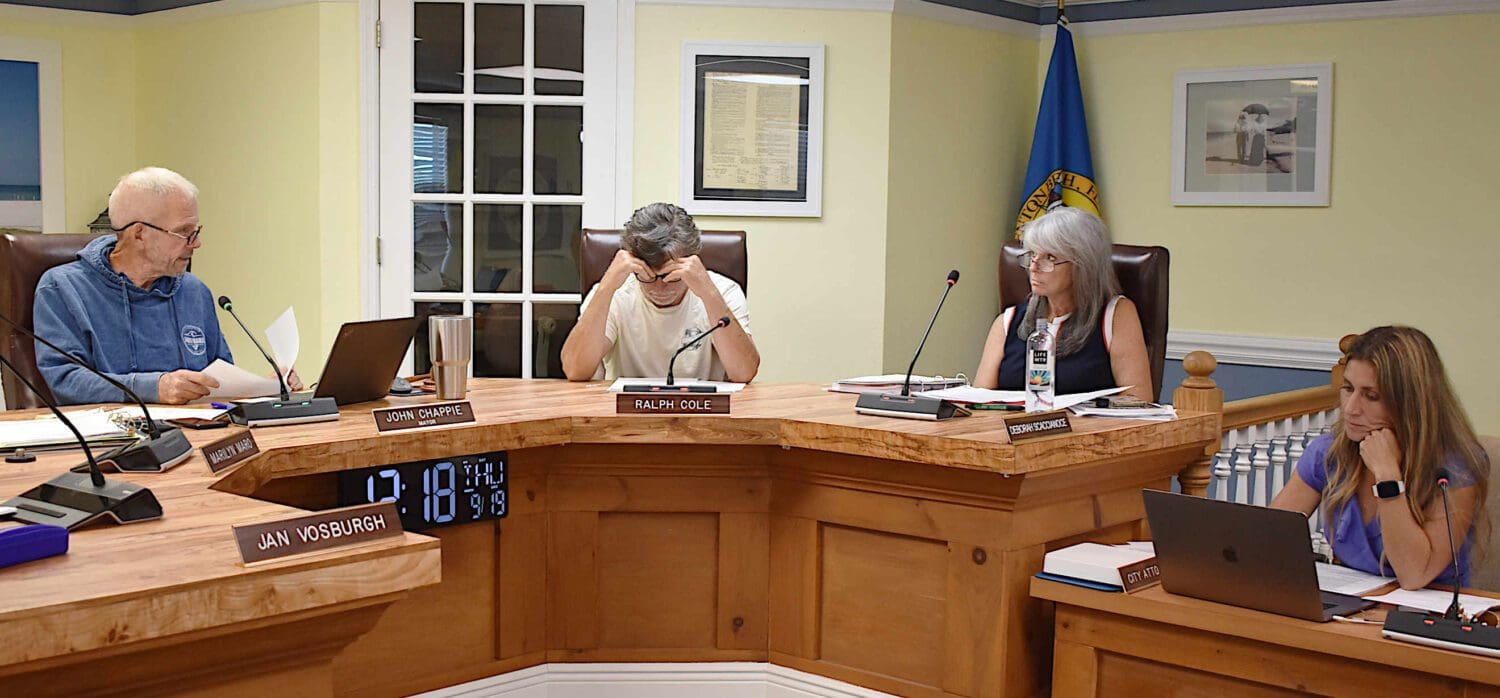
Mayor John Chappie offered the use of the city commission chambers for a stakeholders’ meeting with potentially impacted vacation rental owners and others.
Additional info
Later in the week, Kwiatkowski was asked how many short-term vacation rentals operate on Anna Maria Island.
“We have identified approximately 2,700 legally operating vacation rentals throughout our district. Roughly 2,400 of those are on Anna Maria Island. I suspect there are a great number more operating that aren’t registered through the Department of Business and Professional Regulations as they are required to be. We are committed to identifying every vacation rental in our district and ensuring they are compliant. Safety is not an optional amenity. It is the foundation to a healthy business and community and profitable business and safety are not mutually exclusive,” Kwiatkowski said, noting the inspection program will begin Oct. 1.
“Regarding additional staffing, WMFR will hire two additional fire and life safety inspectors and an administrative assistant to help with the additional workload. After the two additional hires, our Fire and Life Safety Bureau will consist of four fire and life safety inspectors, an administrative assistant and myself,” he added.
Kwiatkowski is scheduled to make a similar presentation to the Anna Maria City Commission on Thursday, April 27. In late January, Kwiatkowski discussed the district’s vacation rental inspection plans during a Code Compliance town hall meeting held in Holmes Beach.
HOLMES BEACH – Another bill in the Florida House of Representatives is proposed to undo local vacation rental regulations, pushing control to the state.
House Bill 105 is designed to preempt local restrictions on vacation rentals pertaining to sanitation standards, inspections, duration or frequency of rentals and any prohibitions of vacation rentals.
All local vacation rental ordinances that were in place on or before June 1, 2011 are exempt from the restrictions of the bill concerning the prohibition of vacation rentals and regulations regarding the frequency and duration of rentals.
In Holmes Beach, city leaders are concerned about the bill because it would effectively do away with the city’s vacation rental certificate ordinance and regulations, which were passed in 2016. Local governments would be able to require the owners and operators of vacation rentals to maintain the name of a designated contact and information for someone responsible for each unit.
Inspections related to enforcement of the Florida Fire Code would not be impacted, such as those planned by officials at West Manatee Fire Rescue to begin this fall to address potential life safety issues. Inspections of units related to the enforcement of the Florida Building Code would also be exempt.
City Attorney Erica Augello said the city’s lobbyist is working diligently to oppose the passage of the bill, which is currently in the state Regulatory Reform and Economic Development Subcommittee in the House. The House bill has also been referred to the Local Administration, Federal Affairs and Special Districts Subcommittee.
If the new bill passes in committees, it would need to make it through a vote on the Florida House floor before going to the Senate to go through the same approval process to reach Gov. Ron DeSantis’s desk for final approval before it becomes law. The bill states it would take effect on July 1. As of press time for The Sun, no vote had been recorded for the bill.
ANNA MARIA – City officials and their allies are gearing up to oppose the newest attempts by the Florida Legislature to preempt more local short-term vacation rental regulations to the state.
This year, the Legislature is considering Senate Bill 714 and House Bill 833. Senator Nick DiCeglie (R-St. Petersburg) sponsored SB 714 and State Rep. Wyman Duggan (R-Jacksonville) sponsored HB 833.
In addition to limiting local government’s ability to register, inspect and regulate short-term vacation rentals, the proposed legislation seeks to give the state the exclusive regulation of online advertising platforms such as Vrbo and Airbnb.
The proposed legislation would also impact Florida cities financially by cap- ping the annual vacation rental registration fee that can be charged.
“Local governments may charge a fee of no more than $50 for processing an individual registration application or $100 for processing a collective registration application,” according to SB 714.
Commission reaction
Commissioners discussed SB 714 at the Feb. 23 Anna Maria City Commission meeting.
“It pretty much makes us a gatekeeper for people to register a vacation rental,” Mayor Dan Murphy said. “Even with that, you could do blanket registrations. If you’ve got 75 homes in our city, you can just do one blanket registration. It takes away the registration fee we use to enforce our (vacation rental) ordinance. It takes away our being able to regulate the advertising program, which is key to enforcing occupancy.”
This year, the city of Anna Maria is charging an annual registration fee of $84.17 per occupant allowed in accordance with the city’s vacation rental ordinance. This year’s annual fee for four-occupant vacation rentals is $336, with a six-occupant vacation rental fee of $505 and a 12-occupant vacation rental fee of $1,010. The registration fees are projected to generate approximately $415,000 for vacation rental enforcement during the 2022-23 fiscal year.
“It totally guts everything,” City Attorney Becky Vose said. “It’s a horrendous statute. Hopefully, it won’t pass.”
“What this amounts to for people who live in Anna Maria is a tax increase be- cause the money that’s collected through these registration fees is only collected
in order to enforce these regulations. It’s going to have to be made up somewhere else,” Commissioner Charlie Salem said. “This problem stretches over the bridge. We hear more stories about vacation rentals popping up in Palma Sola, west Bradenton and Bradenton. So, this problem, while it’s been acute on the Island, is coming to a neighborhood in Manatee County. The residents of Manatee County and their representatives should be really concerned. It basically amounts to residents funding vacationers’ activities, and I don’t think that’s what their intent is.”
Murphy noted the city has been fighting this annual legislative battle for the past six years. To combat these latest efforts, the city will again rely on its contracted lobbyist and the city-owned www.Hom- eRuleFl.com website that provides concerned citizens with issue-specific form letters that target key state legislators.
Privacy choicesWe use Google Analytics to understand readership and improve the website. Analytics cookies are optional and can be accepted or declined.Privacy Policy