
Tag: Suncoast Waterkeeper

Resilience Incubator launches

On June 27, I had the pleasure of attending the ribbon-cutting ceremony in Sarasota for the new offices of Suncoast Waterkeeper and 10 other leading non-profit organizations that are joining forces as a resilience incubator to ramp up their efforts to bring services to Sarasota and Manatee County. Representatives from the various organizations were joined by numerous elected officials to officially launch the partnership and offer tours of the brand-new collaboration and facility.

“This partnership marks a turning point for the Sarasota region. By working together as the Resilience Incubator, we can address our community’s most urgent needs more effectively than ever before,” Executive Director of Rebuilding Together Tampa Bay Joe Garcia said. “This is more than just a collaboration, it’s a commitment to a brighter, healthier and more resilient future for everyone in Sarasota.”

“We are thrilled to be part of this innovative effort. Together, as the Resilience Incubator, we can have a greater impact on ensuring clean and safe water for all, while enhancing our ability to protect this vital resource for future generations,” added Abbey Tyrna, executive director of Suncoast Waterkeeper.

Amber Whittle, executive director of Southface Sarasota, added, “We are excited that our dream to partner with these change-making organizations to create a more resilient community has become a reality. By coming together, we generate more awareness of climate resilience for our community and can make a real impact for the people of Sarasota and surrounding communities.”

“By combining our strengths under the Resilience Incubator, we can collaborate and utilize resources in the most effective way possible benefiting the well-being of our community members,” said Matt Sauer, of the Charles and Margery Barancik Foundation.

Scott Bush, CEO of Suncoast Blood Centers and landlord for the building, remarked, “I am excited to see this space utilized in this unique and unprecedented way.”

Resilience Incubator launches
Dr. Abbey Tyrna, executive director of Suncoast Waterkeeper, addresses attendees at the ribbon-cutting ceremony. – Rusty Chinnis | Sun

The collaboration represents an enormous effort to address Sarasota’s most pressing needs with efficiency and impact. By uniting their resources and expertise, these organizations can better tackle critical issues head-on and create lasting positive change in the community. The new unified approach will focus on:

• Protecting Our Waters: Strengthening our efforts to protect and preserve our local waters for the benefit of all while safeguarding these vital resources for future generations.

• Sustainability: Promoting eco-friendly practices and initiatives to create a more environmentally responsible community.

• Hurricane Preparedness and Resilience: Enhancing our readiness and response to natural disasters, ensuring the safety and well-being of our community members.

• Education and Youth Development: Providing robust educational programs and opportunities for youth to thrive and succeed.

• Affordable Housing: Addressing housing challenges by creating accessible and affordable living options.

• Mental Health Services: Expanding access to crucial mental health resources and support, promoting overall well-being.

The following organizations will be housed in the Resilience Incubator located at 1760 Mound St. in Sarasota: Community Harvest SRQ, Elizabeth Moore/Suncoast Stargazers, Florida Veterans for Common Sense Fund Inc., Minorities in Shark Sciences, Rebuilding Together Tampa Bay, The Recycling Partnership, Sarasota Bay Watch, Southface, Southeast Sustainability Directors Network, Suncoast Waterkeeper and Sunshine Community Compost.

Having been involved in advocacy since the 1980s, I’ve been aware of the many local nonprofits and their good works and wondered how their impact could be enhanced if there was an opportunity to join forces to effect the changes necessary to assure a sustainable environment and community for future generations. This is exactly what the Resilience Incubator has been designed to do. Join in at www.suncoastwaterkeeper.org.
Anna Maria discusses mangrove regulations

Anna Maria considers regulating mangroves

ANNA MARIA – Building Depart­ment General Manager Dean Jones is leading the city’s efforts to join Holmes Beach, Bradenton Beach and Longboat Key in adopting and self-enforcing local mangrove regulations.

The multi-municipality regulatory efforts were first discussed during the April 17 Coalition of Barrier Island Elected Officials (CBIEO) meeting in Longboat Key. During that meeting, Anna Maria Mayor Dan Murphy proposed that the four barrier island municipalities work together to establish a local mangrove regulation program that would supersede the regulations currently enacted and enforced by the Florida Department of Environmental Protection (FDEP).

Jones also attended the meeting and on April 25, at Murphy’s request, he provided the Anna Maria City Commission with an overview of the mangrove regulation and enforce­ment efforts to be pursued.

Anna Maria discusses mangrove regulations
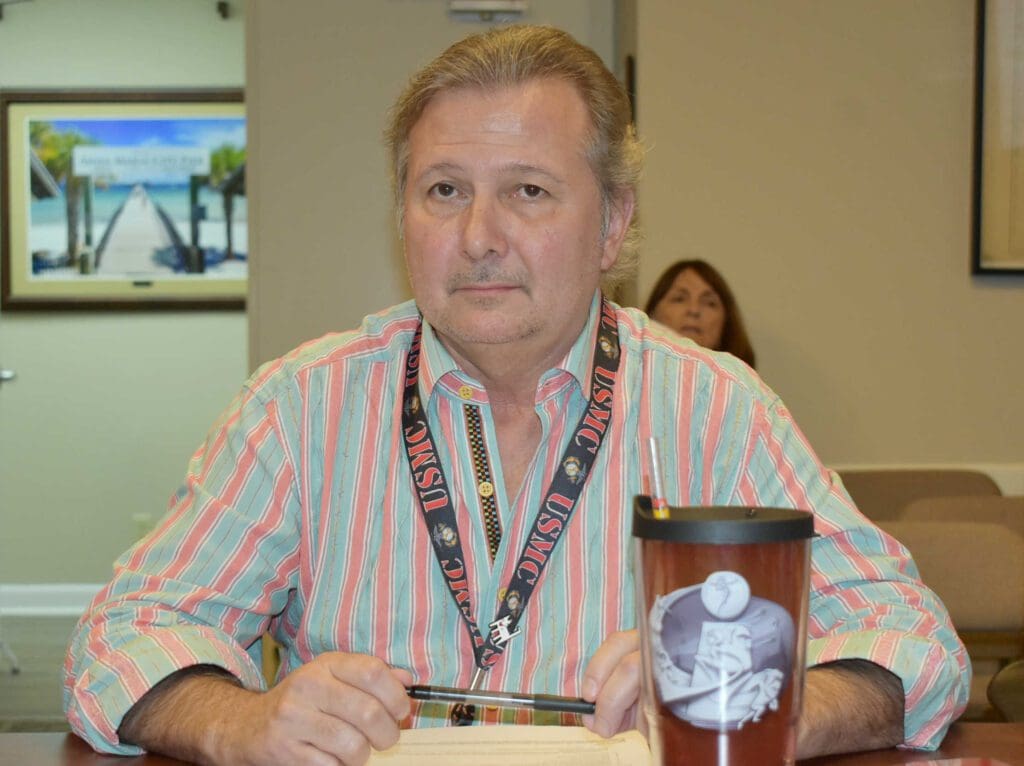
Building Department General Manager Dean Jones is leading Anna Maria’s pursuit of local mangrove regulations. – Joe Hendricks | Sun

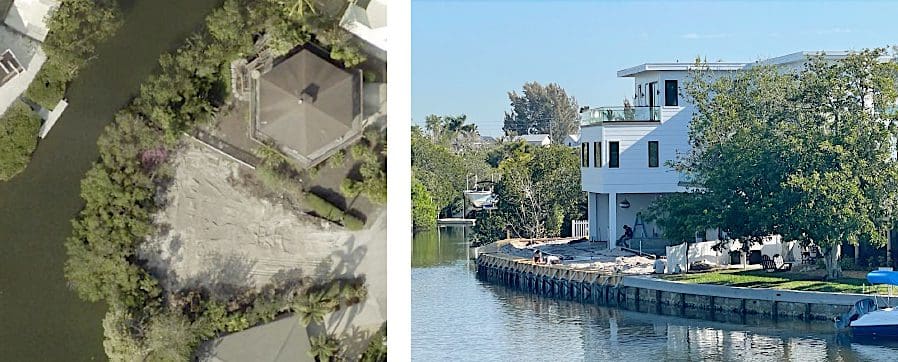
Jones’ presentation referenced a much-publicized mangrove removal event that occurred in late 2023 at a canal-side home at 111 Gull Drive in Anna Maria. The presentation included photos of the property before and after the mangroves were removed to make way for a new seawall.

“Part of what brought this process about was the fact that mangroves had been destroyed by a homeowner from out of state that felt they needed a seawall and didn’t really understand how important mangroves are to our ecosystem,” Jones said.

Another presentation slide listed the five Florida counties, one Florida city and one Florida town that have enacted their own local mangrove regulation and enforcement programs since 1996. Jones said of those seven, only Sarasota County’s mangrove program remains active.

Commissioner Charlie Salem asked Jones why the other mangrove enforcement programs faded away.

Jones said some people he spoke with didn’t even know who started their local mangrove programs and whether they ended due to a lack of resources or a lack of interest.

“The good thing is DEP will allow us to enforce our own mangrove ordinances, but we have to make sure we have the resources to do so,” Jones said.

Jones said he’ll be working in unison with Holmes Beach Planning and Zoning Administrator Chad Minor, Bradenton Beach Building Official Darin Cushing and Longboat Key Planning, Zoning and Building Director Allen Parsons.

Regarding FDEP requirements for local mangrove enforcement, one presentation slide said, “To receive delegation, a local govern­ment must demonstrate that it has sufficient resources and procedures for the adequate administration and enforcement of a delegated mangrove-regulatory program. This does not preclude a delegated local government from imposing stricter substantive standards or more demanding procedural requirements for mangrove trimming or alteration outside of riparian mangrove fringe areas.”

The presentation listed several next steps to be taken. Interlocal agreements must be established with all four participating municipalities and uniform guidelines must be adopted to provide continuity regard­ing administration and enforcement, including the fines and penalties levied on violators.

The municipalities must meet educational requirements and administrative guidelines and enforcement and communication protocols must be developed between the four municipalities to help intercept possible violations before they occur, or in the early stages of the occurrence.

“We need to have continuity across all the cities if we’re going to make this work,” Jones said. “Mangroves are a huge part of our ecosystem. When we remove them, bad things happen. The water gets worse and the wildlife goes away. We have the ability to protect our mangroves locally. We don’t have to let what happened at 111 Gull happen again. We can have some control over it.”

After noting that he also attended the CBIEO meeting, Salem thanked Murphy for his leadership and he suggested gathering more information about Sarasota County’s mangrove regulations and enforcement efforts.

During public input, Anna Maria resident Wayne Patterson thanked Jones and said, “I live right around the corner from that last decimated mangrove effort.” He asked how the city regulates mangroves in conjunction with property owners’ desire to install seawalls.

Commissioner Mark Short noted the city commission adopted a seawall ordinance a couple of years ago that states any new seawall installed must be installed landward of any mangroves that border the property – and doing so doesn’t reduce the total lot coverage allowed.

Patterson noted that didn’t happen at 111 Gull.

“They were removed before the permit for the seawall was applied for,” Short said. “Currently the city has no remedies. We always thought DEP would be the ones to remedy the situation. In my opinion, they’re not doing their job.”

Murphy then said, “At 111 Gull he had a permit from DEP. He did not have a seawall permit yet, but he had a permit to pull out all those mangroves. That’s what we’re trying to do here to preclude that from happening again. Otherwise, it’s going to keep happen­ing,” Murphy said.

“Until we have local control,” Jones added.

Salem then said, “Because DEP doesn’t recognize man-made canals as part of this protection, that’s why they were allowed to remove those mangroves. We would be able to prohibit that kind of removal in those man-made canals.”

When asked what happens if one or more of the barrier island municipalities can’t agree on the mangrove regula­tions and enforcement measures later proposed, Murphy said, “We move right on. We need to get something done. In that meeting there was a pretty thorough understanding of what we needed to do and why we needed to do it. If somebody decides to back out, they’re on their own and the other cities will move forward.”

PAST PRESENTATION

This is not the first time the city of Anna Maria has inquired about estab­lishing a local mangrove enforcement program. In 2020, FDEP representa­tive Hannah Westervelt and the Anna Maria Commission participated in a mangrove trimming workshop.

During the workshop, Westervelt said, “Any local government can get the delegation of authority to regulate trim­ming and alteration of mangroves, but a local agency has to demonstrate they have the resources and the procedures in place. To establish that local program, you have to submit a written request for delegation to the department.”

Related coverage: 

Mayors propose to regulate mangroves

Feds issue approval for mangrove removal

Mayors propose to regulate mangroves

Mayors propose to regulate mangroves

LONGBOAT KEY – The mayors of the three Anna Maria Island cities and Longboat Key are considering making a joint application to the Florida Department of Environmental Protection (FDEP) to obtain local control over mangrove regulations.

The discussion took place at the Coalition of Barrier Island Elected Officials (BIEO) meeting on April 17 at Longboat Key Town Hall, and followed a presentation by Suncoast Waterkeeper Executive Director Dr. Abbey Tyrna.

Tyrna began her presentation by displaying a 1940s-era aerial photo of the north end of Anna Maria Island, which showed a lagoon lined with mangroves.

“I wanted to show you this because later you’re going to see where mangroves were removed from a place that is now on what they call a manmade canal,” she said. “From the 1940s you can see there were a lot of naturally-occurring mangroves.”

In the 1990s, a large amount of mangroves were removed during a period of development, she said.

“Most of that was occurring on the Sarasota Bay side of things,” she said. “At the time mangroves decreased by 26%.”

She said that number has increased exponentially with further development.

“Canals are a particular focus, because the mangroves are vulnerable right now to development,” she said. “Older homes are developed, out with them goes not only the older home, but also the mangrove area.”

Any mangrove in a canal system can be removed under the 1996 Mangrove Trimming and Preservation Act, she said.

“So the state will allow that removal” in Manatee County, Tyrna said, adding that it’s different in Sarasota County, because officials there have opted to accept the delegation of enforcement of the 1996 Mangrove Trimming and Preservation Act. The county does not allow mangroves to be removed on manmade canals without mitigation.

Tyrna then displayed a photo of a home at 111 Gull Drive in Anna Maria prior to its development and the subsequent removal of 116 feet of mangroves, which was allowed under an FDEP seawall exemption.

“You’ve probably seen 111 Gull Drive in the news,” Tyrna said. “Here’s 111 Gull Drive before the development with the mangroves lining the shoreline.”

She then showed a photo of the Gull Drive property following the mangrove removal there under an FDEP seawall exemption.

“You can see all the trees that used to line the coast are now gone,” she said. “This isn’t happening in a vacuum. There are property listings where it says ‘on a manmade canal. Mangroves will be removed.’ That means there is a lack of understanding about how beneficial they are.”

Tyrna said mangrove removal is a crisis occurring throughout the Suncoast in the rivers and bays. Suncoast Waterkeeper in the last year received 18 violation reports about the removal of mangroves.

“We need strong local policies that protect our wetland systems,” Tyrna said. “The good news is, local governments can actually take delegation and enforcement of the 1996 Mangrove Trimming and Preservation Act.”

She listed municipalities that have done so, which included Sarasota County and Sanibel.

“Sanibel is a barrier island much like your own and has a great robust program that puts education at the forefront of its delegation,” she said.

At the conclusion of Tyrna’s talk, Anna Maria Mayor Dan Murphy asked what the first steps would be if a municipality, or all the towns on the Island, wanted to accept delegation of mangrove enforcement.

Tyrna suggested Murphy speak to Sanibel and Sarasota County officials and refer to the state statute which outlines the delegation application process.

Hannah Westerveldt from the FDEP mangrove division will be giving a presentation at a Longboat Key work meeting on Monday, May 20, according to Town Manager Howard Tipton.

“We could continue the conversation then,” he said.

“I wonder if we could do this under the auspices of the barrier islands (BIEO), where we band together,” Murphy said, noting that while Anna Maria likely couldn’t afford to set up the program alone, the four cities coming together could be a viable option.

“One of us could house the function and others could, through an interlocal agreement, avail themselves of that,” Longboat Key Mayor Ken Schneier said.

Schneier asked Tyrna to send him program information from Sarasota County and said he would distribute it to Murphy, as well as to Holmes Beach Mayor Judy Titsworth and Bradenton Beach Mayor John Chappie.

“This is in our own backyard. The scalping (of the mangroves) is not going to stop,” Murphy said. “It’s going to continue until we do something about it.”

“We really need to have the mangrove replacement remedy available,” Schneier said.

Tyrna said local governments that have delegation authority have the ability to be stricter than the state regulations.

“The state is the floor, you have all the way up to the ceiling,” Tyrna said.

Salon fundraiser meets with success

 Reel Time: Salon fundraiser meets with success

Salon (noun) – a conversational gathering of notables held at the home of a prominent person.

On Saturday afternoon, Suncoast Waterkeeper held its Suncoast Salon fundraiser at the Sarasota home of Anna Maria residents Bill and Debbie Partridge. The event was a sellout and attracted some of the area’s most ardent protectors of the Sarasota Bay watershed, including the event sponsors, Beachside Management, The Mikki and Walter Frank Family Charitable Fund, Manatee Community Foundation, Whistanfox LLC and the Gulf Coast Community Foundation. The event was held on the lawn behind the oldest home on Sarasota Bay and was greeted with fabulous weather, a full moon and a beautiful sunset. Tents were placed on the lawn and themed with the organization’s work to protect the Sarasota Bay watershed. The event was catered by Harry’s Continental Kitchen and a wonderful evening of music was provided by The Hedges. The Salon aimed to spark intrigue, excitement and increase commitment to the area’s natural resources. This invite-only event created a unique opportunity for clean water supporters to engage on important local issues and speak to local leaders.

The mission at Suncoast Waterkeeper (SCWK) is to protect and restore the waters on the Florida Suncoast for the benefit of all through community and stakeholder engagement, environmental monitoring, advocacy and responsible legal action. Our goal is clean water for all.

SCWK has curtailed sewage spills, stopped industrial pollution, informed the public about the safety of recreational waters and tackled one of the largest local environmental disasters of our time – Piney Point. Since 2019, the organization’s members have settled eight Clean Water Act citizen suits; five acted against municipalities illegally spilling over 1 trillion gallons of sewage and three aimed to stop industrial facilities from illegally discharging heavy metal-laden stormwater. Combined, the suits contributed more than $500,000 for environmental projects and hundreds of millions of dollars to improve infrastructure.

The salon proved a wonderful opportunity for like-minded protectors of Sarasota and Manatee waters to get together for an evening of discussion, food, music and camaraderie on Sarasota Bay. It also raised funds for the organization to continue its efforts to protect the area’s eco-system and economy. To help with the mission, join the organization, volunteer and donate at www.suncoastwaterkeeper.org.

Suncoast Waterkeeper’s vision expands

Reel Time: Suncoast Waterkeeper’s vision expands

Suncoast Waterkeeper (SCWK) has seen phenomenal growth over the last several years. In that time, they have hired an accomplished wetlands scientist as executive director, hired a marketing and communication specialist, acquired a Waterkeeper boat, and launched their Mangrove Rangers and Eyes on The Suncoast initiatives, which encourage and provide resources for citizens to report illegal mangrove trimming, pollution, fish kills and algae blooms. The organization is being funded by various local charities and foundations.

Dr. Abbey Tyrna, an experienced educator and scientist, joined Suncoast Waterkeeper in 2022. She grew up in Cape Coral and focused her education on learning about wetlands and protecting Florida waters. Tyrna has a doctorate in geography from Pennsylvania State University, where her research focused on measuring the effects of development on wetlands. Before joining SCWK, she worked with the Sarasota County government and the University of Florida to help bring scientific knowledge and expertise to the public as the water resources agent for UF/IFAS Extension and Sustainability. Before receiving her doctorate in 2015, Tyrna earned a master’s in environmental science from LSU in 2008, concentrating on wetland science and management, and a bachelor’s in environmental studies from Florida State University in 2001. SCWK has tackled many significant pollution problems, which have curtailed over 1 trillion gallons of polluted water from entering our bays and driven hundreds of millions of dollars in infrastructure investments. Not resting on her laurels, Tyrna, working with Communications Specialist Samantha Wassmer, is seeking to expand investments in SCWK operations to take on the water quality threats prevalent across our bays and waterways.

To do this, SCWK will launch a new campaign, Love Your Bays Consciously, to recruit, manage and train volunteers in Manatee and Sarasota counties with the goal of proactively and reactively tackling the ever-growing threats to clean water. Through the campaign, SCWK will seek partnerships with bayfront communities, marinas, boat storage facilities, Realtors and local businesses. There are three actions necessary for joining Love Your Bays Consciously – protect aquatic habitats, reduce pollution and help your community.

From this effort, they expect:

• Increased adoption of clean water behaviors – success would entail a noticeable increase in the number of waterfront homes, boaters and marinas actively posting information about clean water behaviors and implementing these best practices. This could be documented through surveys, interviews or direct observation of adopted behaviors;

• Growth in engagement – the success of the Love Your Bay Consciously campaign would be evident through an increase in the number of volunteers actively engaging with residents and visitors to promote clean water behaviors. This could be measured by tracking volunteer participation rates, the number of individuals reached through outreach efforts and feedback collected from those engaged;

• Effective pollution monitoring and reporting – the project’s success would also be reflected in the effectiveness of the special team of ambassadors trained to spot, monitor and report pollution incidents. This could be documented through the number of pollution events reported, the timeliness of reporting and the responsiveness of relevant agencies to address reported incidents; and

• Progress towards environmental goals – ultimately, the success of the project would contribute to progress towards the overarching goal of achieving fishable, swimmable and drinkable waters for all. This could be assessed by monitoring water quality indicators over time, tracking improvements in the health of aquatic ecosystems and gathering feedback from community members on their perceptions of water quality.

To be a part of these exciting programs, consider donating during this year’s 2024 Giving Challenge taking place April 9-10. Matched donations will allow SCWK to expand its outreach efforts and increase the number of community members adopting best practices. This increased funding will also enable the organization to tackle complex challenges with greater resources and effectiveness, ultimately leading to a healthier and more sustainable environment for generations to come. Consider joining Suncoast Waterkeeper at www.suncoastwaterkeeper.org/membership.

Reel Time: New Year’s resolutions

New Year’s resolutions are an annual ritual. It’s a time to look back and reflect on what matters most, how we feel about our lives, and what changes might improve our situation. It’s also a time to consider what positive actions and fresh adventures might be planned for the new year. Anglers can glean some valuable insight by reviewing their year in fishing, examining what they learned from their days on the water, what their experiences revealed and assessing how this knowledge might lead to improved success and enjoyment in 2024.

I’m not suggesting that we write down hard and fast resolutions that don’t give any wiggle room. Instead, think back on even the small things that when done differently might have had a bigger impact than you ever imagined. An example might be remembering when you hooked a nice fish only to lose it to a failed knot, that tell-tale squiggle on the end of your line where the hook used to be attached. This resolution might read, “Always remember to carefully tie my knots, inspecting and testing them before I start fishing.” The same applies to sharpening hooks, checking the drag, and inspecting the line for nicks and abrasions. Reflections like this can be the start of a general review of all your rigging, the state of your tackle and lures and the condition of the line you have on your reels.

Tackle and organization are certainly places to start but extend that same thinking to other equipment like your boat and motor, waders, push pole and trolling motor. Experience teaches us that it’s the little things that we overlook that come back to haunt us. On the water, consider thinking out of the proverbial box by altering your routine strategy. Many anglers go fishing with a plan and never deviate from it. They start at one spot and hit all the usual holes during the day. A different option is to try planning to fish in places you’ve never explored before. I’ve done this and been amazed at how many areas there are that have proven to be productive. Looking at the same place with new eyes can be revealing.

New Year's resolutions
A concerned Anna Maria resident reported this illegal, after-hours mangrove destruction at 111 Gull Drive, now under investigation by city, state and federal agencies. – Submitted

Also, consider trying a new destination. There are lots of beautiful and productive fishing adventures within a few hours’ drive of Anna Maria Island, both north and south. Drive two hours north and you can explore the Chassahowitzka National Wildlife Refuge and, just north of there, Homosassa, Crystal River and Withlacoochee Bay. Less than two hours south and you can discover Charlotte Harbor and Pine Island Sound. Don’t want to go that far? Anyone with a boat can leave Anna Maria Island and be fishing in fresh water in less than an hour. The Manatee River and Braden River provide anglers with a variety of fish from tarpon to catfish, redfish to bass. Both rivers also have numerous launch sites for boats, kayaks and paddleboards.

It might even prove useful to review how you approach fishing. If you’re a fly caster, look at ways you might improve your casting and consider learning how to cast with your non-dominant hand. Anglers who use conventional tackle might want to try artificial lures instead of always relying on live bait. No matter how long you’ve been fishing or what your level of competency there’s always room for improvement. A general review of tackle, techniques and the opportunities available to you can only improve your enjoyment of fishing moving into 2024.

Lastly and even more important, consider getting involved in protecting the resource that determines our fishing today and in the future. Fishermen have the most to lose by not addressing the degradation of our local waters and habitat. There are so many ways to make a difference no matter your circumstance. Keep an eye out and report illegal mangrove trimming and pick up trash on the water. Employ enlightened self-interest by vetting your local, state and national politicians on how they voted on matters that affect the water we drink and swim in and the fish we pursue. If we vote party line rather than on the issues that affect our fishing, we’re working against our self-interest. Write letters, attend commission meetings and join and donate to organizations like Sarasota Bay Watch, Vote Water and Suncoast Waterkeeper who work to protect our watery world. A resolution to act this year will protect what we value most for today and future generations. Happy New Year!

New way to report mangrove violations

New way to report mangrove violations

SARASOTA – Environmental advocacy organization Suncoast Waterkeeper has a new program for citizens to report potential mangrove trimming violations.

Altering mangroves without a permit and excessive trimming of both dead and live mangroves may be reported at https://www.suncoastwaterkeeper.org/eyes_on_the_suncoast

Suncoast Waterkeeper also invites volunteers to “Become a Mangrove Ranger and help us inventory vulnerable mangroves,” according its website. “One of the most important ecosystems on our coasts is mangrove forests. Unfortunately, mangroves in Manatee County are under enormous development pressure. Using drones annually, we aim to map the extent and health of mangroves in vulnerable areas. We need your help!”

The organization is assembling three to five teams of four people to map mangroves. Each team will consist of a licensed drone pilot, a boat owner, a spotter (no experience necessary) and a data manager.

A training meeting will be held on Saturday, Jan. 20 from 9:30-11 a.m. at the Bahia Mar West Marina, 6918 14th St. W. Bradenton. Attendees will be assigned to a team and will be given instructions and a location for conducting the first mangrove mapping project, along with scheduling the first drone flight.

More details are available at https://www.suncoastwaterkeeper.org/mangrove_rangers

Before you trim

Mangrove trimming applications must be submitted to the Florida Department of Environmental Protection (FDEP) prior to mangrove trimming or alteration.

The 1996 Mangrove Trimming and Preservation Act defines a mangrove as any specimen of the species – white, red or black mangrove. The law doesn’t distinguish between living and dead mangroves so the same trimming regulations apply to each.

“Mangroves are important for many reasons, and mangrove trimming is regulated under the Mangrove Act,” according to the FDEP website. “Mangroves serve as a key ecological component in several ecosystems, including serving as a nursery for many game and sport fisheries.”

SW_ERP@FloridaDEP.gov is the southwest Florida email address to apply for mangrove trimming applications.

The full text of the Mangrove Trimming and Preservation Act is available at https://floridadep.gov/sites/default/files/mtpa96_0.pdf

Citizens who would like to report potential violations directly to the FDEP may do so at https://www.surveygizmo.com/s3/4931167/Citizen-Concern-Form.

Cleaning up the Sister Keys

Reel Time: Cleaning up the Sister Keys

Suncoast Waterkeeper teamed up with Sarasota Bay Watch last weekend when they conducted their 2023 Annual Sister Keys Cleanup. The event was a collaboration of the two non-profit organizations, the Town of Longboat Key and Mar Vista Dockside Restaurant. Close to 50 volunteers worked for four hours on the island and around the mangrove fringes collecting trash and recyclable items. This year’s harvest was especially large, fueled by the storm surge that hit the area during Hurricane Idalia. One of the most unusual items in the cleanup’s 15-year history was uncovered during the event, an 18-foot wooden “sharpie” sailing craft. John Hoover made another impressive find when he uncovered a blown glass sphere. In all, volunteers collected over 1,000 pounds of trash from the islands.

The Sister Keys were originally slated for development in the early 60s as the Shangri Isle Club and were once again threatened in 1989 when they went up for sale at $1 million. That spurred a group of citizens to form the Sister Keys Conservancy to buy and preserve the islands as a nature preserve. The Town of Longboat Key purchased the islands in 1994 with a stipulation that the keys would never be developed.

The islands underwent a million-dollar mitigation in 2007 that removed all invasive species, planted native flora and created a 2-acre wetland. Today, mature mangroves dominate the waterways and are rich with crustaceans, minnows, juvenile finfish and wading birds. Native species planted on uplands, first created from the dredging of the Intracoastal Waterway in the late 1800s, have matured, making the islands one of the best examples of a thriving native marine environment in coastal Florida.

The cleanup is part of a continuing two-pronged effort to clear the islands of trash and prevent the resurgence of invasive species.

Kayakers and those without a boat were ferried to the island by volunteer boaters Benny Parrish, Mark McBride and Tim Thurman.

Back at the Longboat Key Boat Ramp, event volunteers loaded the debris to be retrieved by the town’s public works employees. All plastics and cans were collected in separate green bags provided by SBW and recycled. The volunteers were treated to a box lunch and beverages provided by the Mar Vista Dockside Restaurant and the Chiles Group, who have been supporters of the event from the beginning.

The Sister Keys Clean Up is just one of many projects that SBW is involved in. In 2021, SBW planted clams in the bay in an ongoing restoration effort. Other cleanups are conducted at various locations throughout the bay, including an annual monofilament cleanup and more.

Suncoast Waterkeeper is a Sarasota-based advocacy non-profit committed to protecting and restoring Florida Suncoast’s waterways through enforcement, fieldwork, advocacy and environmental education for the benefit of the communities that rely upon these precious coastal resources. Their efforts have been responsible for major initiatives to hold municipalities responsible for mandates established in the landmark 1982 Clean Water Act. SCWK also conducts bi-monthly water testing of inland coastal waters. For more information on the groups’ missions and to become a member, visit their websites, www.sarasotabaywatch.org and www.suncoastwaterkeeper.org.

Sister Keys clean-up set for Nov. 4

Reel Time: Sister Keys clean-up set for Nov. 4

Sarasota Bay Watch (SBW) is conducting its annual Sister Keys clean-up on Saturday, Nov. 4. The event is a collaboration with Suncoast Waterkeeper, the Town of Longboat Key and Mar Vista Dockside Restaurant. Volunteers will work for four hours on the island and around the mangrove fringes collecting trash and recyclable items. After the event, volunteers will load the collected debris into a truck provided by the Town of Longboat Key Public Works for disposal. All plastics and cans will be collected in separate green bags provided by SBW and recycled. The volunteers will then be treated to a box lunch courtesy of the Mar Vista Dockside Restaurant, a longtime supporter of the event.

The Sister Keys were originally slated for development in the early 60s as the Shangri Isle Club and were once again threatened in 1989 when they went on sale for $1 million. That spurred a group of citizens to form the Sister Keys Conservancy in an attempt to buy and preserve the islands as a nature preserve. Longboat Key purchased the islands in 1994 with a stipulation that the keys would never be developed.

The islands underwent a million-dollar mitigation in 2007 to remove all invasive species. Native flora was planted and a two-acre wetland was created. Today mature mangroves dominate the waterways, which are rich with crustaceans, minnows, juvenile finfish and wading birds. Native species planted on uplands created from the dredging of the Intracoastal Waterway in the late 1800s have matured, making the islands one of the best examples of a thriving native marine environment in coastal Florida. The clean-up is part of a two-pronged ongoing effort to clean the islands of trash and support the resurgence of invasive species. The Longboat Key Marine division will be patrolling the Intracoastal Waterway to slow boaters. Kayakers and those without a boat will be ferried to the islands by volunteers.

The Sister Keys clean-up is just one of many projects that SBW is involved in. In recent years, SBW has planted over 1,000,000 clams in the bay and recently obtained a restoration lease in Sarasota Bay, a first of its kind, in its ongoing restoration effort. Other clean-ups (including underwater) are conducted at various locations throughout the bay, as well as an annual monofilament cleanup and much more.

Suncoast Waterkeeper (SCWK) is a Sarasota-based non-profit committed to protecting and restoring the Florida Suncoast’s waterways through enforcement, fieldwork, advocacy and environmental education for the benefit of the communities that rely upon these precious coastal resources. Their efforts have been responsible for major initiatives that hold municipalities responsible for mandates established in the landmark 1982 Clean Water Act. SCWK also conducts bi-monthly water testing of inland coastal waters. To learn more about the work of these organizations and join the effort, check out their websites at www.suncoastwaterkeeper.org and www.sarasotabaywatch.org.

The event is limited to the first 40 registrants, so reserve your spot today.

Suncoast Waterkeeper to host ‘Value of Wetlands’ panel

Development and the environment can be compatible. While I know that might seem like an antithetical statement, when greed and power don’t cloud the big picture, it becomes obvious that sustainable growth and a healthy ecosystem must co-exist. In coastal communities like Manatee County, wetlands have never been more important to the health and economy of the region. Rising sea levels, more powerful storms and mushrooming harmful algae blooms like red tide and lyngbya make the point. The time for quick action has never been more urgent and, if you’re not on the water like local anglers, the collapse of the Indian River Lagoon on the east coast and images of starving manatees serve as the proverbial “canary in the coal mine.” Unfortunately, at a time screaming for enlightened leadership, the Manatee County Board of County Commissioners (BOCC) voted 6-1 to roll back wetland protection, with Commissioner George Kruse dissenting. The move is a not-so-veiled attempt at payback to developers that financed their campaigns. The BOCC members claim there is no science supporting buffers and state minimum standards will protect the local environment.

Suncoast Waterkeeper (SCWK), reacting to the attempt, convened a panel of experts to explain the detrimental effects on coastal water quality, drinking water quality, habitat and coastal resiliency within Manatee County. In a statement posted to their website, social media and mailed to local news outlets and members, they encourage citizens to get involved in an issue that is sure to impact the lives of countless generations of Manatee County citizens.

Join the discussion on Tuesday, Sept. 26 from 6-7:30 p.m. at the Bradenton Woman’s Club and learn the facts from scientists who study wetlands and water quality in our region. The BOCC claims insufficient science to support the language currently in the comprehensive plan, so SCWK is asking researchers who study these issues to give the public facts. Go to www.suncoastwaterkeeper.org/save_our_welands to learn how you can get involved and protect our vital coastal resources. You can also sign their petition and sign up to volunteer. Volunteers will be given scientific information presented by panelists to read into the record at the Oct. 5 county commission meeting. In the words of Abbey Tyrna, SCWK’s executive director, let’s flood them with facts!

Reel Time: Vote water

Readers of this column have heard me recommend checking a politician’s voting record before casting a vote for them. Why? All too often they will tell you what you want to hear to get your vote but never follow through on that commitment. This past week that assessment rang all too true when Manatee County Commissioners Kevin Van Ostenbridge and James Satcher, along with four other commissioners (Mike Rahn, Jason Bearden, Amanda Ballard and Ray Turner), voted to gut Manatee County’s wetland protections. While all are culpable in betraying the public trust, Satcher, Van Ostenbridge and Ballard stand out in my mind since Van Ostenbridge and Satcher’s campaign flyers (mentioned during the meeting by Commissioner George Kruse, the lone dissenter) specifically mentioned protecting the environment.

In a meeting that Suncoast Waterkeeper Executive Director Abbey Tyrna and I had with Ballard soon after her election, she expressed concern with the welfare of children. When it came time to vote they all held the interests of the developers that funded their campaigns over that of the citizens and children of Manatee County.

First Place
Outdoor and Recreation
2024

I spoke at the meeting and was present for five hours as citizen after citizen made eloquent speeches about why this was such a bad idea. Not one person spoke in favor of the amendment and almost no discussion of the matter was held, except for Kruse’s objections. And when the vote was taken, they voted 6-1 in favor of gutting wetland protections. In what appears to me to be the height of hypocrisy, Van Ostenbridge started the meeting with the pronouncement that he was concerned with government overreach and the taking of property before leading the commission to do just that. He’s participating in government overreach by not following his oath of office to the citizens of Manatee County and taking by reducing the filtering capacity of lands adjacent to water bodies that will directly affect the quality of life of current and future citizens.

Just recently the commission voted on a zoning change that will pave the way for a massive East Manatee County development by developer Carlos Beruff. Corbit Creek, a stream that feeds into nearby Lake Manatee Reservoir, runs through that property. Kruse was once again the lone dissenter. If this change is made by the commission, it could reduce the builder’s setback to a stream feeding directly into the county’s water supply, a water body that is currently suffering from an algae bloom that’s affecting the smell and taste of every Manatee County citizen’s water.

If that wasn’t bad enough, Rob Brown, the county’s recently retired environmental protection division manager with the natural resources department, reminded the commission that this change would also affect phosphate mining in Manatee County. Mosaic is the largest landowner in Manatee County and much of that land is wetlands. These changes could have a profoundly negative effect on lands disturbed by mining.

Once again, vet who you vote for. Don’t pay attention to what they promise if elected, check their voting records on issues that affect the public good, or we and future generations will suffer the consequences.

You can voice your concerns to the Manatee County commission online.

Finally, this isn’t (or shouldn’t be) a political issue. It’s not about Democrats or Republicans, it’s about our children’s future and that of generations of future Manatee County citizens.

Suncoast Waterkeeper urges protection of wetlands

In a recent column, I reported how state rules and regulations passed during the DeSantis legislative session limited the protection of local waters at a time when the threat to water quality and habitat destruction has never been graver. Now, according to Suncoast Waterkeeper (SCWK) Executive Director Abbey Tyrna, that threat has come to Manatee County.

In a statement, SCWK responded to newly-proposed changes in the Manatee County Comprehensive Plan with the following:

“Manatee County has proposed removing policies of the comprehensive plan and sections of the land development code to allow for the destruction of our wetlands and wetland buffers. We’re taking action to ensure that another threat to our quality of life, local economy and waterways don’t become a reality. These changes would create permanent damage. Once wetlands are gone, they are gone for good.

“Wetlands are protected ecosystems because they perform a wide variety of important functions, chief among them is their ability to clean polluted water. This function alone should have the county commission and its appointed planning commission fighting to protect these valuable ecosystems in the face of increasingly harmful algae blooms including red tide and lyngbya. Wetlands do more than enhance water quality, they protect us from flooding, provide habitat for Florida fish and wildlife, and replenish our dwindling groundwater supplies.

Suncoast Waterkeeper urges protection of wetlands
Dr. Abbey Tyrna, executive director of Suncoast Waterkeeper and a wetland scientist, addresses the Manatee County planning board. – Rusty Chinnis | Sun

“So why would Manatee County Commission want to push changes that would destroy wetlands in the face of these threats? The answer is simple: They want more developable land to put corporate profits before our quality of life, our local economy and water quality.

“It is time to take action to make sure these changes do not become a reality. Will you join us in protecting our wetlands? Add your name to our petition that we are sending to the Manatee Board of County Commissioners online. Together we’ll protect what makes the Suncoast special.”

In what many described as a surprise decision, the Manatee County Planning Commission voted 4-2 on Aug. 10 not to recommend the proposed changes to the commission. At that meeting, Tyrna, as well as many local citizens, including past Commissioner Joe McClash, gave powerful testimony that swayed the majority of the board to vote the proposal down. That deprives the commission of the cover of their planning board. Unfortunately, they are not required to abide by that decision and could vote for the changes. That’s why SCWK, the Manatee County League of Women Voters, ManaSota-88, Speak Out Manatee, the Sierra Club, East Manatee Preservation and Kids for Clean Water are encouraging voters (you) to turn out at this Thursday’s commission meeting, which will be held at the Honorable Patricia M. Glass Chambers at the Manatee County Administration Building, 1112 Manatee Ave. W. in Bradenton. The meeting starts at 9 a.m.

If we, the citizens of Manatee County, don’t speak out, our children and future generations (who have no voice in this decision) will suffer the consequences of our inaction.

Florida Sea Grant needs boaters’ help

Florida Sea Grant needs boaters’ help

If you’re a boater, Sea Grant can use your help. If you are a reader of this column, you know that our waters are suffering from too many nutrients, the various forms of insults that lead to devastating red tide events and other harmful algae blooms (HABS). Florida Sea Grant has launched a survey for the recreational boating community to address discharges from vessels, one of those problems.

According to Victoria Gambale, Clean Vessel Act education coordinator, “This survey is part of a needs assessment that will help determine what educational programming and resources are developed and implemented. It will also be used with other data to determine what and where additional sewage waste disposal resources (pump outs and port-a-potty dump stations) are needed.”

This survey is for anyone who boats recreationally in Florida. The boater can own or rent, and the boat does not need to have a head for the boater to participate in the survey. Although the survey’s primary target is recreational boaters, any commercial boater who serves recreational purposes (like charters, sightseeing tours, etc.) can also participate in the survey.

The survey is estimated to take about 10 minutes or less and is anonymous – they don’t ask for your name, address, phone number, or email. They do ask for your home zip code for analysis purposes.

Information the survey asks for includes questions about your boat, sewage discharge laws, your opinion about pump out and dump station equipment, where you dispose of sewage waste, where you find boating information, standard demographic questions and a few others.

This survey has an “if-then” logic model, so you’re not asked questions that are irrelevant to you. For example, if your boat has an installed toilet with a holding tank, you won’t be asked about port-a-potty dump stations.

Your response is confidential and only accessible to project researchers at the University of Florida. Your response will only be shared once compiled with other respondents.

As part of a comprehensive needs assessment, Florida Sea Grant is also looking at boating infrastructure in the state. More specifically, they are looking to determine how many recreational boats have direct access to the water in each county. They are then comparing that to how many sewage disposal resources (pump outs and port-a-potty dump stations) are available.

U.S. Fish and Wildlife Service’s Clean Vessel Act Technical Guidelines recommend “As a general guide, at least one pump out station and dump station should be provided for every 300 to 600 boats over 16 feet length overall.” Florida Sea Grant will be using this study to determine if this general guideline is still appropriate, and, if not, to develop a new guideline to target counties in Florida that do and do not meet the guideline.

Based on the results of the needs assessment, they will focus efforts to promote the installation of sewage disposal resources where they are most needed.

Data collection for the study will be completed by June 2024 or earlier, depending on participation rates. Once all the data is collected, it will be reviewed for quality control and analysis. When that is completed, the results will be written up in a report. It is expected that the report will be available by September 2024. The report will be published on Florida Sea Grant’s Clean Boating webpage.

If you’d like to be notified when the report is available or would like more information, please email Gambale at v.gambale@ufl.edu or call 352-562-1134.

Boater survey promotional materials include a poster, postcard and social media graphics and text if you would like to spread the word about the survey.

To keep our waters healthy, we need the help of everyone who enjoys these natural wonders and whose livelihoods depend on them. Most importantly we owe it to future generations so that they too can enjoy their bounty, both spiritually and economically.

Suncoast Waterkeeper opposes fish farm

In a press release last week, Suncoast Waterkeeper and a coalition of ocean advocates announced their opposition to what they called a bait-and-switch permit application for the Velella Epsilon industrial finfish aquaculture facility 40 miles off the Sarasota coast. The press release explains, “Florida fishermen; homeowner association leaders; business owners; community and clean water advocates; other concerned residents, and visitors to the Gulf coast gathered today to protest a “bait-and-switch” on the terms of an Environmental Protection Agency (EPA) permit that was issued for wastewater discharge from the Velella Epsilon industrial finfish aquaculture facility. The open cage fish farm operation is planned for construction about 40 miles off the Sarasota County, Florida coast. Ocean Era, the company that requested the permit, recently informed EPA that it plans to swap out both the kind of fish to be raised and the type of facility to be constructed.”

Groups challenging the permit in ongoing litigation included Food & Water Watch, Center for Food Safety, Healthy Gulf, Recirculating Farms, Sierra Club, Suncoast Waterkeeper and Tampa Bay Waterkeeper. The parties sent a letter to the EPA on June 7 urging the agency to void the existing permit and do an entirely new impact assessment, with a public comment period. The letter states:

  • “…on May 10, 2023, Ocean Era expressly acknowledged that it does ‘not intend to implement the project as currently permitted (i.e., with almaco jack or a SPM net pen system)’ and instead requested to alter both the species of fish proposed to be raised by Ocean Era (changing from almaco jack to red drum) and the type of net pen system utilized for the facility (changing from a swivel-point mooring system to a grid mooring system).
  • “Accordingly, we hereby call upon EPA to exert its jurisdiction and authority under the Clean Water Act to revoke NPDES Permit FL0A00001 in its entirety, in light of Ocean Era’s explicit admission that it will not — indeed, as a practical matter, it cannot — implement the project as currently permitted.”
Suncoast Waterkeeper opposes fish farm
Justin Bloom, founder of Suncoast Waterkeeper, addresses attendees at the fish farm press conference. – Samantha Wassmer | Submitted

Attending the press conference, Justin Bloom, founder and board member of Suncoast Waterkeeper, stated, “Notwithstanding the major changes to the project proposal, this permit is flawed and not adequately protective of the environment and our coastal communities that rely on clean and healthy waters. The new changes are equivalent to an entirely new project and make it clear that the permitting agencies should require a new permit proposal.”

Also present was Dr. Neal Schleifer, vice president of the Siesta Key Condominium Council (SKCC), representing over 90 associations and 7,000 residences.

“The changes should result in revocation of the permit, which is widely opposed by residents and local municipalities as a danger to the environment and local economy,” Schleifer said. “The changes introduce new issues and question the credibility of previous company information. Imagine the potential problems if this facility existed during Hurricane Ian or the subsequent massive red tide outbreak.”

Dr. Larry Allan, Manatee-Sarasota Sierra Club steering committee member and wildlife photographer, repeated what so many in the crowd said in some form or another.

“It’s not aquaculture I oppose in general, but the proposed placement of this project – no matter what kind of fish or what kind of open cage – just offshore from an area plagued with annual red tide blooms makes absolutely no sense for anyone,” Allan said.

While the lawsuit is currently on hold pending an EPA review of the Velella Epsilon project changes, Marianne Cufone, director of recirculating farms, steering committee member of the Don’t Cage Our Oceans coalition and a Florida attorney on the lawsuit, was in Washington, D.C.  at the time of the event discussing offshore finfish farming bills.

“EPA should withdraw the permit it issued for the Velella Epsilon industrial finfish aquaculture facility and do a full environmental review of the new plans, including meaningful opportunities for public input, to fully consider all the potential impacts and alternatives,” she said.

If you would like more information on the pending permit and project, contact Justin Bloom at 917-991-7593 or bloomesq1@gmail.com, Casey Streeter at 239-333-8832 or casey@floridawatermen.org, Cris Costello at 941-914-0421 or cris.costello@sierraclub.org and  Shane Tan at shane.tan@berlinrosen.com.

Reel Time: Suncoast Waterkeeper launches ‘Eyes on the Suncoast’

The waters on the Suncoast need the protection of those who love them. You can help Suncoast Waterkeeper (SCWK) do that with a new program the nonprofit launched recently by keeping your “Eyes on the Suncoast” and reporting what you see.

Whether you’re boating, biking, swimming, fishing or walking, everyone on or near the water can help SCWK remind residents and visitors why the Suncoast’s marine ecosystem is worth protecting. Suncoast Waterkeeper can’t be everywhere at once, that’s why your contributions are vital to their efforts.

Suncoast Waterkeeper launches 'Eyes on the Suncoast'
You can help Suncoast Waterkeeper by report- ing conditions such as this light-colored plume in area waters. – Rusty Chinnis | Sun

SCWK has designed a platform that makes it easy for you to submit and share what you see. Sharing what you see using your phone, social media and the hashtag #eyesonthesuncoast can be invaluable in efforts to preserve water quality and habitat.

Here are two ways you can report what you see:

1. Use the form on their website for bad conditions or pollution reports only. The form will let you post an image, add a description and give the location of the report.

2. Post to Facebook or Instagram. Here is the perfect place to post what you love about the Suncoast and why it’s important to help organizations like SCWK keep it sustainable. A YouTube video walks you through the process on the webpage. Follow these four easy steps to post to your social media platform:

• Upload a picture;

• Include a description of what you’re reporting;

• Provide the latitude and longitude for your location using your phone’s compass or by dropping a pin on a map app; and

• Add #eyesonthesuncoast.

Need a couple of tips on what to report?

Post the things that inspire and amaze you – wildlife sightings, clear/clean water, a special sunrise and/or sunset, healthy seagrass or marine scenery.

Post the things we need to be aware of like trash/debris, excessive mangrove trimming, including dead mangroves, fish kills, dead or sick aquatic animals, discolored, foamy
or foul-smelling water, sewage spills, algae blooms, gas, oil or grease spills, runoff from construction sites, direct pollution or chemical spills, invasive species as well as other concerns.

If you have questions, visit Suncoast Waterkeeper online.

Don’t underestimate the impact that your contributions can make.

As Margaret Mead, the famous cultural anthropologist said, “Never doubt that a small group of thoughtful committed individuals can change the world. In fact, it’s the only thing that ever has.”