Suncoast Waterkeeper is calling all residents to stand up for clean water. In just two weeks, communities everywhere will unite for Giving Tuesday, a day built on gratitude, generosity and collective action. At Suncoast Waterkeeper, that spirit fuels the work we do every single day to protect the waters that define our home.
Your support drives real, measurable impact. It helps Suncoast Waterkeeper:
• Test 19 bayfront sites weekly for bacteria;
• Monitor nutrients each month to track pollution trends;
• Expand our PFAS sampling to uncover hidden threats;
• Defend vital habitats like mangroves and seagrass that keep our coast resilient;
• Engage residents to become informed voices for clean water; and
• Take responsible legal action when our waterways and communities are put at risk.
This builds the foundation for safer beaches, healthier ecosystems and a future where our waterways remain places of joy, recreation and connection.
As Giving Tuesday approaches, Suncoast Waterkeeper hopes you will include us in your giving plans. Your gift, no matter the size, helps safeguard the Suncoast and ensures our clean water work stays strong.
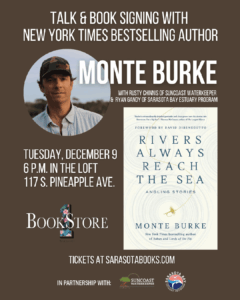
Anyone who supports Suncoast Water and makes a donation by midnight on Dec. 2 can enter to win a free copy of Rivers Always Reach The Sea: Angling Stories by New York Times bestselling author Monte Burke, plus a ticket to his talk at Bookstore1 on Tuesday, Dec. 9. Join Burke and Suncoast Waterkeeper for an inspiring evening about angling, conservation and the stories that connect us to our waterways.
Give early, support clean water and don’t miss your chance to win. Suncoast Waterkeeper has become the premier environmental organization in the region and has made a huge impact in protecting our waters and holding polluters accountable. Recent legal action by SCWK has the City of Bradenton under a consent order for the massive amounts of sewage that they have been releasing into the Manatee River due to an aging and failing infrastructure. Rusty Chinnis is chairman of Suncoast Waterkeeper
BRADENTON – Dr. Abbey Tyrna, executive director of Suncoast Waterkeeper (SCWK), spoke to the Palma Sola Scenic Highway committee on Nov. 12 about the water quality in Palma Sola Bay.
Tyrna presented a graph showing that from 2001-11 the water quality on the north side of the Palma Sola Causeway exceeded the acceptable threshold of state water quality standards 20 times. In 2024 alone, however, in that same body of water, the threshold was exceeded 20 times.
“So we went from 20 exceedances in an 11-year period to 20 exceedances last year, so the question was what was happening here,” Tyrna said.
Palma Sola DNA source tracking results show elevated levels of horse DNA several times between April 2024 and August 2025; human DNA in July 2024 and bird DNA in April, September and October 2025.
“So, what has changed? I don’t think the number of birds has changed because what I’ve learned is that birds are actually declining,” Tyrna said.
She said the best way to figure out what is happening is through DNA testing.
“What we can see is what’s in our water samples and is detectable has been horses, humans and birds, so what can we say is causing enterococci levels in Palma Sola Bay? We can say all of them,” Tyrna said. ”If you want to know how much humans matter, how much horses matter, that’s impossible to know. There are no tests for that right now. So, we can never get there, and we should never try. And all we can do is a qualitative analysis in a robust lab. We certainly can’t do much about birds, we can do something about humans and we can do something about horses.”
Enterococci normally inhabit the intestinal tract of humans and animals. The presence of enteric bacteria can indicate fecal pollution, which can come from stormwater runoff, pet and wildlife waste products and human sewage spills. If these bacteria are present in high concentrations in recreational waters and are ingested while swimming or enter the skin through a cut or sore, they may cause illness or infections, according to the SCWK website.
“According to studies conducted by the EPA, enterococci have a greater correlation with swimming-associated gastrointestinal illness in marine and fresh waters than other bacterial indicator organisms, and are less likely to die off in saltwater. If an enterococci result exceeds 70 cells per 100 milliliters of marine water sampled, then an advisory should be issued for the sampling site,” the SCWK website states.
SCWK conducts regular monitoring of bacterial levels at 11 area recreational sites. The Benchmark EnviroAnalytical lab examines the samples for enterococci. The results are posted weekly on Suncoast Waterkeeper social media feeds.
“When one use supersedes another use, we find that to be a problem. This is why we advocate for a permit and signage system,” Tyrna said. “Suncoast Waterkeeper’s goal is to clean up the water.”
Tyrna said one of the horse ride providers at Palma Sola Bay has taken a best management practice approach to cleanup by using a boat with a paddle that brings horse manure into a net and out of the water.
“Whether or not that’s going to reduce our readings remains to be seen,” Tyrna said.
Tyrna speculated that some of the human readings could be related to sewage and possibly derelict boats.
“You don’t find a pump-out boat going to the derelict vessels so it’s logical,” she said.
Philanthropy in Sarasota and Manatee counties is a well-organized network of foundations and active donors with a strong focus on community resilience, enhancing nonprofits’ capacity to grow and responding to local challenges.
Two of the main nonprofits that work to protect the waters and marine habitat of the area, Sarasota Bay Watch and Suncoast Waterkeeper, have both been able to make a larger impact thanks to grants from local foundations like the Barancik Foundation, the Manatee Community Foundation, the Community Foundation of the Gulf Coast, the Mote Scientific Foundation and the Community Foundation of Sarasota County (CFSC).
In April, CFSC awarded $322,450 to 29 nonprofit organizations to enhance operations, support technology upgrades and strengthen strategic planning in the region.
The Charles & Margery Barancik Foundation played an important role in capacity building for Sarasota Bay Watch and awarded a two-year, $200,000 grant to Suncoast Waterkeeper. In addition, the Mote Scientific Foundation (not related to Mote Marine Laboratory) has been the driving force behind Suncoast Waterkeepers’ ongoing water quality testing.
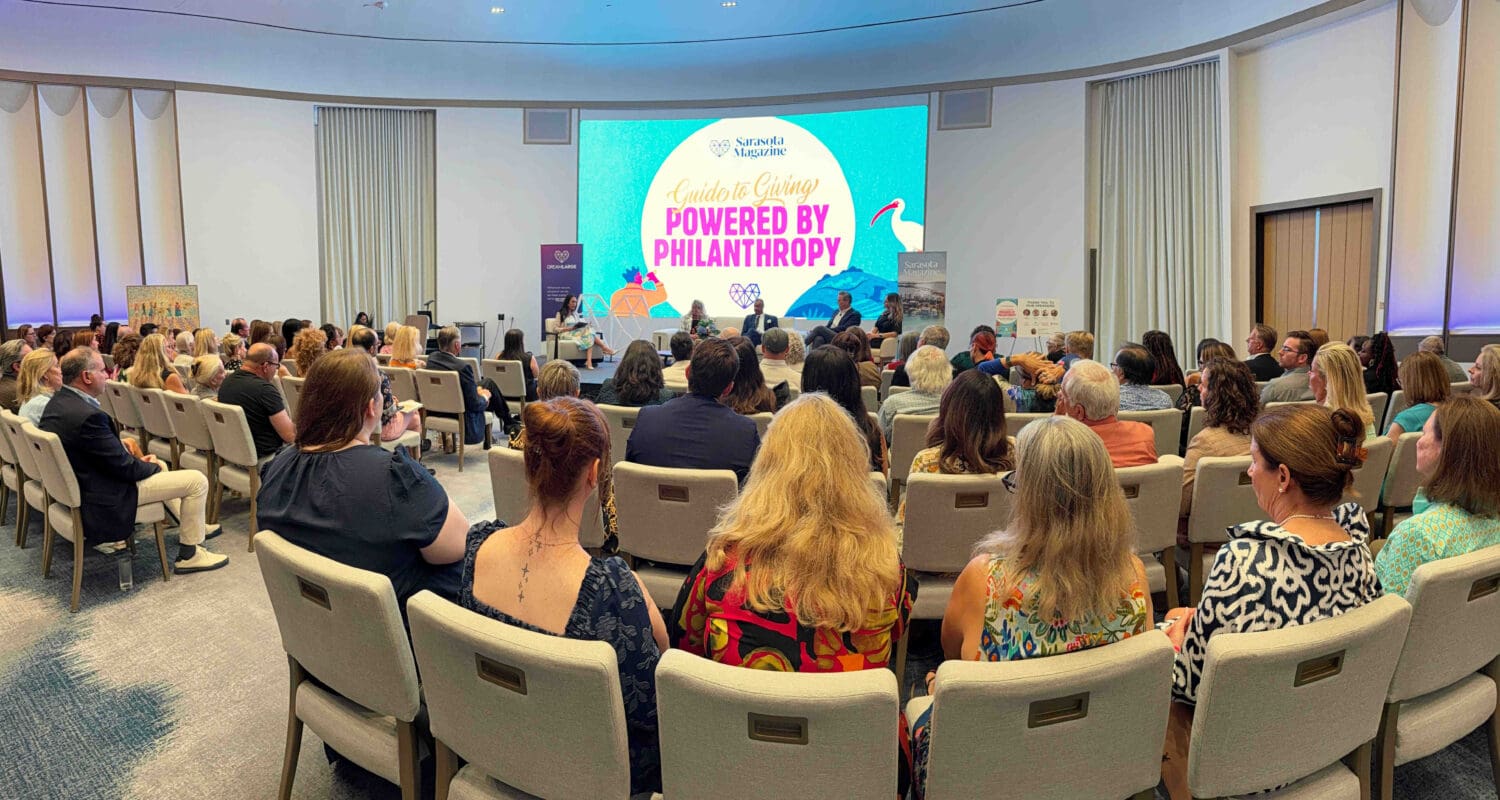
Last week I had the pleasure of attending an event at the new St. Regis Resort on Longboat Key that was organized by Sarasota Magazine. Sarasota Magazine supports local philanthropic works by highlighting the work of nonprofit organizations, fundraising events and community initiatives across Sarasota and Manatee counties. Through its editorial features and digital outreach, the magazine amplifies the work of nonprofits, raising awareness of their missions, highlighting donor opportunities and celebrating impactful partnerships. By doing so, Sarasota Magazine helps connect the philanthropic community with causes in arts, education, health, environment and human services, enhancing visibility for organizations that might otherwise struggle for recognition.
The St. Regis was the perfect venue for this event. Hotel Manager Kara Hardiman welcomed guests and pointed out that their commitment to the larger community was best summed up by a quote from Lora Whitney (Whitney Beach): “We are determined to create a space of sanctuary that celebrates the natural beauty of our region at the same time as it encourages education, exploration and implores us to slow down and make memories with each other.”
Besides expressing pride in being part of a women-led management team, the resort commissioned a painting by Lauren Marshall entitled, “Matriarchs of The St. Regis Longboat Key Resort.” The painting honors (and they named their exquisite suites after) women who were in their words “… trailblazers whose impact shaped the region’s cultural, scientific and philanthropic landscape.” They include Caroline Astor, the undisputed queen of New York society in the gilded age and Eugenie Clark, the pioneering marine biologist who founded Mote Marine Laboratory in 1955 and broke barriers for women in science. Others include Lora Whitney, Marie Selby, Mable Ringling, Irene Colson (a vital figure in Sarasota’s early African American community), and Katherine Klauber, the president and general manager of the Colony Beach Resort, now home to the St. Regis.
The resort features an “Under the Sea Lagoon” – a 500,000-gallon saltwater habitat containing reef fish, rays and other marine animals, guided by a staff of resident marine biologists/aquarists who educate guests about the ecosystem. Their children’s club, called the Reef Rangers, offers a “marine explorer camp” where younger guests engage with aquatic life and learn about local marine environments and species.
A highlight of the evening was a panel discussion among the leaders of local foundations that centered on the challenges facing nonprofits and the area’s most vulnerable citizens they serve due to federal funding cuts. A part of the discussion centered around strategies to continuing serving the needs of environmental nonprofits that support the basis of the region’s appeal, and those most in need. The evening was an inspiration and a terrific opportunity to get to know and mingle with the region’s most engaged philanthropists.
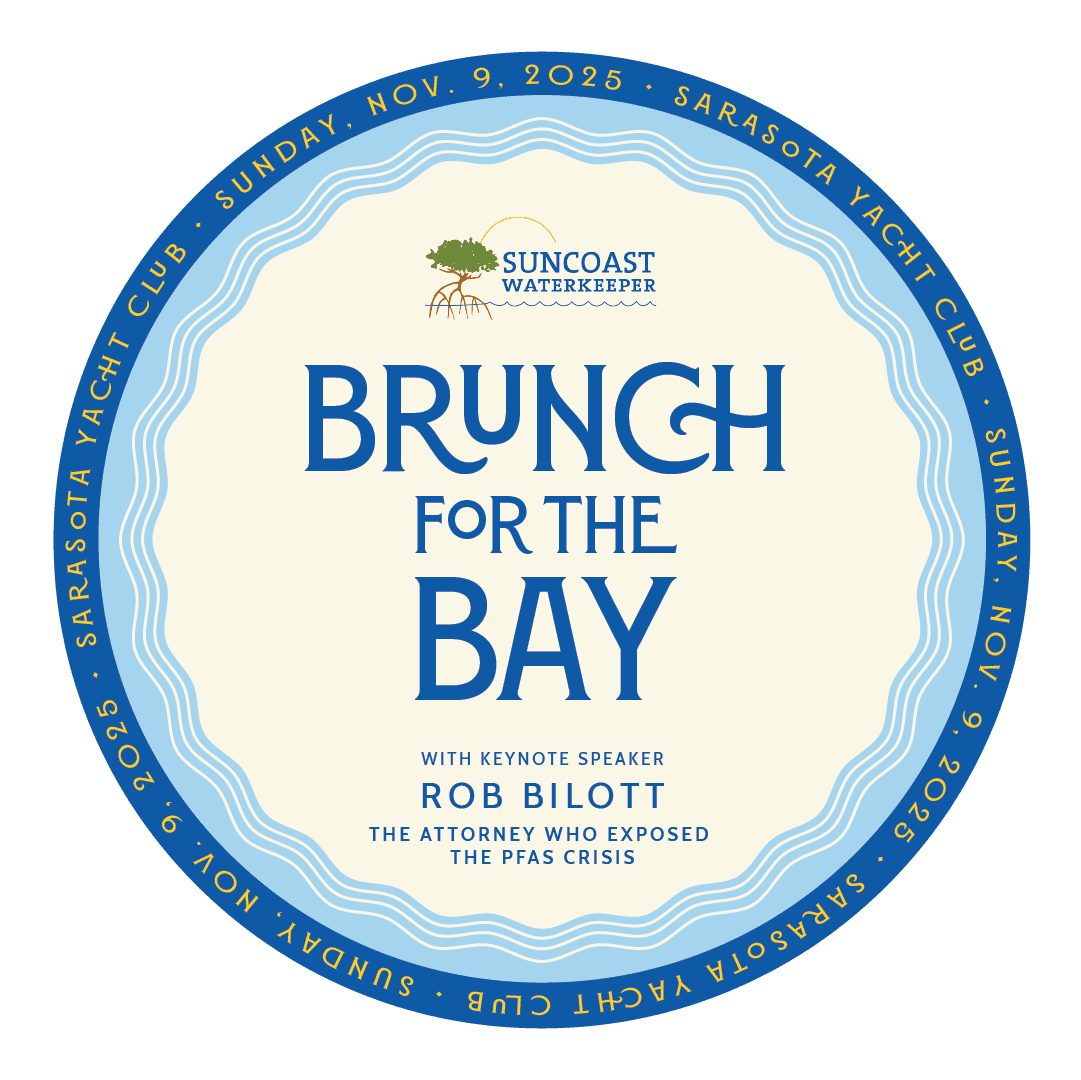
Suncoast Waterkeeper’s (SCWK) annual fundraising event, Brunch for The Bay, is coming to the Sarasota Yacht Club on Sunday, Nov. 9 from 11 a.m. to 2 p.m. Don’t miss this opportunity to support SCWK’s clean water mission and meet and hear from one of the world’s environmental “rock stars.”
This year’s keynote speaker, Rob Bilott, is known worldwide as the attorney who took on chemical giant DuPont and uncovered the dangers of PFAS contamination. His “David and Goliath” story was depicted in the 2019 feature film, “Dark Waters.” Bilott has dedicated his career to protecting communities from the toxic threat of “forever chemicals.” At Brunch for the Bay 2025, he will present “Uncovering the Global Threat of PFAS ‘Forever Chemicals’ Contamination.”
One of the notable sponsors of this year’s event is the Holmes Beach Clean Water Ad Hoc Committee. The group serves as an advisory committee to the City Commission. It was conceived by Mayor Judy Titsworth, whose family (the Holmes in Holmes Beach) has been on Anna Maria Island for generations. Titsworth’s idea comes from a lifetime of seeing the changes firsthand that so few of us late arrivals appreciate.
In her own words, she explains the concept behind the committee and the life experiences that led to its formation: “The Clean Water Committee’s vision is to ensure waters will meet the designated human uses for drinking, shellfish harvesting or swimming and fishing, while sustaining healthy natural ecosystems that support natural processes and resilient native plant and animal communities. Growing up on the Island in a house on the bay gave me a most remarkable childhood. My sister and I spent most of our days outside playing in the bay and along the natural shorelines. The bay isn’t what it was back then and much of the marine life has drastically diminished due to the impacts from development, pollution from stormwater runoff, Piney Point and sewage spills. The clean water committee is a recommending ad hoc board that I developed to assist in identifying solutions to improve our water quality by reducing our impacts. We greatly support the efforts made by Suncoast Waterkeeper in educating the public about the adverse conditions of our waters, holding polluters accountable and their commitment to water quality testing and documenting the effects that the pollutants have on seagrasses and marine life.”
There’s never been a better time to help support the clean water mission of the committee and Suncoast Waterkeeper. Meet like-minded advocates, enjoy a great meal overlooking Sarasota Bay at the area’s premier Yacht Club and be inspired to join and advance this critical mission. Get your tickets before they sell out.
SARASOTA – Suncoast Waterkeeper filed a formal Notice of Intent to Sue U.S. Recycling Company on Oct. 3 for alleged ongoing violations of the federal Clean Water Act at its industrial facility located at 1310 Industrial Court.
The environmental watchdog organization claimed that U.S. Recycling has unlawfully discharged polluted stormwater and other contaminants into Hog Creek and Sarasota Bay, waterways that are protected for recreation, wildlife and shellfish harvesting.
“Protecting Sarasota Bay and its tributaries is at the heart of our mission,” said Dr. Abbey Tyrna, executive director of Suncoast Waterkeeper. “When industrial pollution threatens those waters and regulatory enforcement falls short, it’s our duty to act. This notice is about safeguarding the health of our community and the integrity of the bay.”
According to a press release issued by Suncoast Waterkeeper, “The notice outlines numerous alleged violations of the Clean Water Act and the National Pollution Discharge Elimination System (NPDES) permit issued by the Florida Department of Environmental Protection (FDEP). Among these violations are failure to develop and/or implement a proper Storm Water Pollution Prevention Plan (SWPPP), failure to monitor and report discharges as required by law, and the release of non-stormwater pollutants into nearby drainage channels.”
“Sampling conducted by Suncoast Waterkeeper found elevated levels of pollutants such as aluminum, iron, total suspended solids (TSS), and chemical oxygen demand (COD) that exceeded federal guidelines for industrial facilities,” according to the press release. “These pollutants can harm fish and wildlife, degrade water quality, and pose risks to human health. According to research on similar concrete crushing plants in the U.S., it is likely that this operation is harming the Bay with pollutants beyond what the preliminary sampling from Suncoast Waterkeeper revealed.”
Hog Creek, which receives runoff from the U.S. Recycling facility, is listed by the State of Florida as an impaired water body and flows into Sarasota Bay.
“The Clean Water Act allows citizens and environmental organizations to enforce the law when regulatory agencies fail to do so,” the release stated.
Suncoast Waterkeeper intends to file suit in federal court no sooner than 60 days after the notice date unless U.S. Recycling takes immediate and effective action to correct violations, according to the press release.
“U.S. Recycling is just one of many industrial facilities in the region that fail to comply with regulations that are designed to protect the environment,” said Justin Bloom, Suncoast Waterkeeper founder and environmental attorney. “Actions like this are geared towards attaining compliance and ensuring accountability. Recycling concrete is an important activity in a growing community like ours, but it has to be done in a way that protects the environment and the community that relies on clean air and water.”
The 2024 hurricane season took a heavy toll on mangroves across Sarasota and Manatee counties, according to the data from Suncoast Waterkeeper’s second year of the Mangrove Rangers program.
“One of the most striking findings came from a protected site in Sarasota Bay. Last year, it was used as our model site, scoring as one of the healthiest mangrove forests in the region. After the hurricanes, however, nearly half of its canopy was lost, dropping its health score from 90 to 59,” according to the Suncoast Waterkeeper August newsletter. “The health score is composed of two indices: One for canopy volume and one for leaf health. The loss of canopy at the protected site demonstrated that there isn’t a forest out there protected from Mother Nature and her increasingly powerful storms. However, it also demonstrates the ability of this coastal forest to serve as the initial defense against powerful winds and waves that are weakened by these majestic trees before reaching inland.”
Two new monitoring sites in Palma Sola Bay, located in protected areas, were introduced.
“Protected Site 7 ranked among the top performers, indicating strong ecosystem functions such as erosion control, improved water quality, serving as a fish nursery and providing a bird rookery. Site 7 resilience in the absence of trimming or development pressure was evident by its health score. The second protected site, Site 6, exhibited signs of strain, characterized by low canopy volume, which may be attributed to its proximity to a busy road and exposure to the 2024 hurricanes,” according to the newsletter.
The results highlight challenges along with hope for mangrove recovery.
“As storms intensify and development pressures grow, protecting mangroves is more critical than ever. These trees are not just coastal vegetation; they serve as a frontline defense for our communities and a vital lifeline for local biodiversity and the economy,” the newsletter stated. “The Tampa Bay Regional Planning Council (2023) estimates that flood protection benefits from the remaining mangrove systems in Manatee County amount to $54.3 million per year.”
In 2024, Suncoast Waterkeeper (SCWK) launched its Mangrove Rangers program to train local volunteers as community scientists using drones to survey and map the health of these essential coastal “forest” in vulnerable areas of Manatee County. SCWK realized the importance of educating the public and policy makers on the fact that mangroves continue to face strain from unchecked development, habitat destruction, and rising sea levels.
Mangroves are essential nurseries for most commercial and recreational fisheries, are habitat for birds, maintain water quality, sequester carbon and protect coastal properties against wind, storm surges and waves generated by hurricanes. Despite their importance, mangroves continue to be strained by unsustainable coastal growth, habitat destruction, and rising sea levels.
With the generous support of the Charles & Margery Barancik Foundation, the program is now entering its second year, and the Rangers are now sharing the data from their surveys.
“Mangrove forests are among the most vital and productive ecosystems on the Suncoast.
Recognizing their importance, state law protects mangrove trees, but protection on paper is not enough,” explains Dr. Abbey Tyrna, executive director and waterkeeper of Suncoast Waterkeeper. “These ecosystems are under mounting pressure from development, seawall construction, sea level rise and increased runoff. Ongoing, consistent monitoring is crucial for understanding how mangroves respond to these threats and for ensuring their continuing health for future generations.”
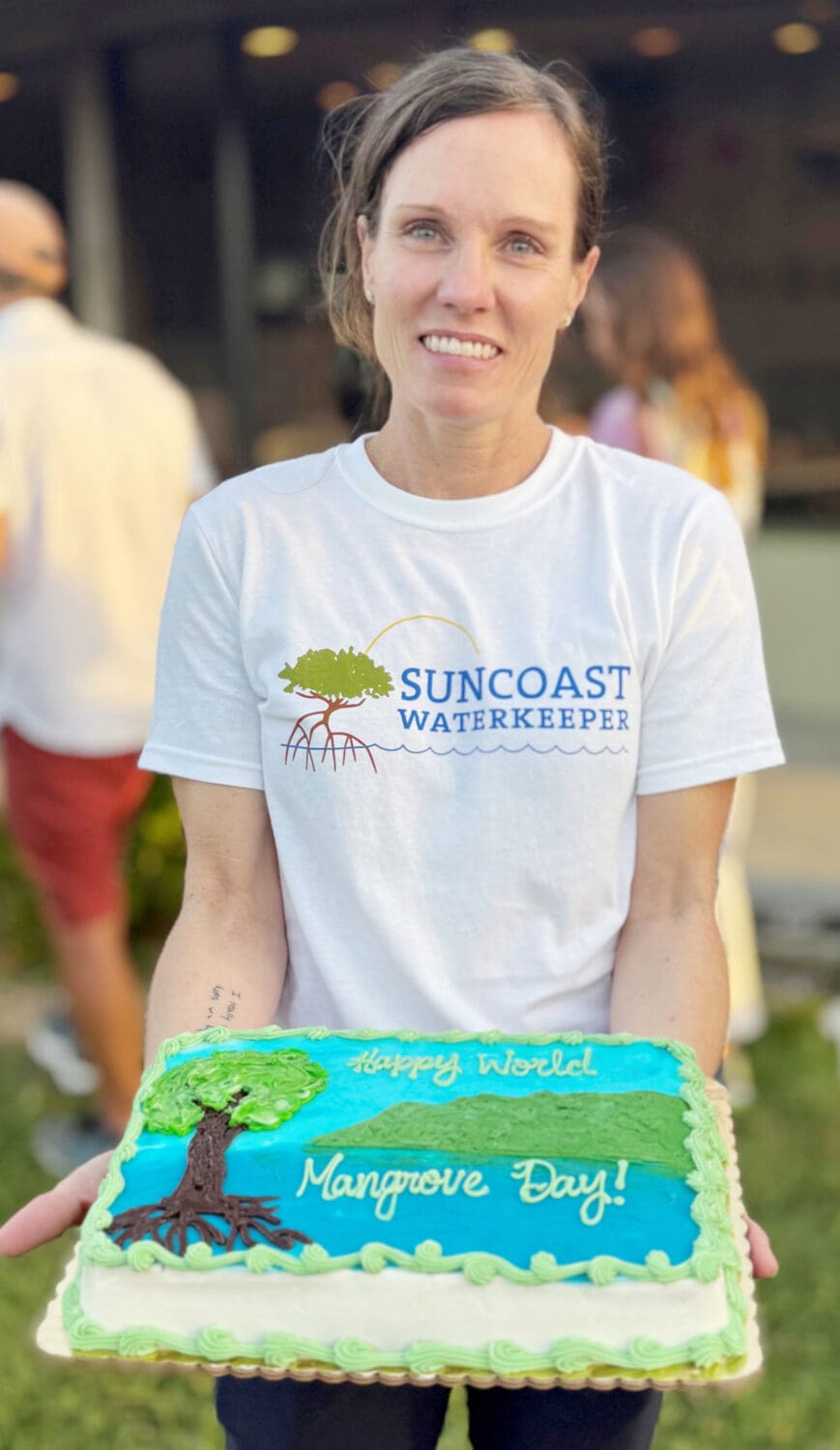
The data was unveiled on July 26 on World Mangrove Day at a celebration party for volunteers at the Sarasota Sailing Squadron on City Island. The data, which revealed the reduced function of trimmed mangroves, offer residents, advocates and policymakers an updated picture of the health, vulnerability and extent of mangroves in Manatee County.
The hope is that by establishing real, localized data on mangrove forests, everyone can better understand what is being lost and help enact laws that better protect what remains. According to SCWK’s research, Manatee County has already lost many acres of mangroves, which are often replaced with seawalls, fill and turfgrass. While Florida’s Mangrove Trimming and Preservation Act of 1996 has curbed violations, significant gaps remain in protecting these ecosystems from further degradation.
For the Mangrove Rangers, this data is part of a broader push to move from reactive enforcement to proactive conservation and securing the future of Manatee County mangroves before it’s too late.
This program and its findings should be a wake-up call for local anglers on the importance of getting involved in protecting this critical habitat that is essential to preserving the future of fishing for future generations, i.e., our children and grandchildren. To learn more about the Mangrove Rangers Program, visit and consider joining and becoming a part of this forward looking work.
Learn more about the program at the Suncoast Waterkeeper website.
In response to the impact of Hurricanes Helene and Milton to the local recreational fishing industry, Suncoast Waterkeeper and Tampa Bay Waterkeeper have launched grants of up to $1,000 to help cover lost income and recovery expenses.
The grants are designed to provide financial aid to local recreational fishing professionals impacted by the 2024 hurricanes. The grant is funded by the International Game Fish Association’s Worldwide Anglers Relief Fund and eligible captains and guides can apply for competitive grants of up to $1,000 to help cover lost income and recovery expenses.
“On Florida’s Gulf Coast, our waters are more than scenery, they are a lifeline. Following the 2024 hurricane season, which brought widespread damage, many who depend on healthy waters for their livelihoods are still struggling to recover,” according to a press release from Suncoast Waterkeeper and Tampa Bay Waterkeeper.
“The recreational fishing industry plays a vital role in safeguarding our local waters, often serving as the first line of defense by reporting pollution incidents,” Suncoast Waterkeeper Executive Director Dr. Abbey Tyrna said. “We’re proud to support this community and give back to those who faced economic hardship during the 2024 hurricane season.”
Applications are open until Saturday, Aug. 2. Grant recipients will be announced on Friday, Aug. 15. The online application is available at the WARF website.
Recreational fishing industry professionals impacted by Hurricanes Helene and Milton in 2024, including charter captains, operating within the Suncoast and Tampa Bay regions are eligible, with priority given to those who work fulltime in the recreational fishing industry.
Required documentation includes a valid U.S. Coast Guard captain’s license, proof of insurance, a completed W-9 form and verified proof of trip cancellations or revenue loss (e.g., booking records, customer statements).
“Charter captains are the tip of the spear when it comes to our coalition of water quality advocates in Tampa Bay,” said Justin Tramble, executive director of Tampa Bay Waterkeeper. “This industry took a significant and unfortunate hit during last season’s historic hurricane season. We are honored to stand with our partners to support our community.”
The Worldwide Anglers Relief Fund was established in 2017 in partnership with Costa Sunglasses. Since its inception, the fund has distributed over $305,000 to fishing communities impacted by natural disasters across the U.S., Caribbean and Central America, helping local guides recover and rebuild, according to the press release.
“Suncoast Waterkeeper and Tampa Bay Waterkeeper share a united mission to protect and restore the waters of the region to ensure fishable, swimmable and drinkable water for all,” according to the press release. “Together, these Waterkeeper organizations are committed to supporting and giving back to the fishing community that has been heavily impacted by natural disasters, standing alongside those who support and depend on healthy waters.”
The waters on Florida’s Gulf Coast are more than the scenery, wildlife and beaches, they are also a lifeline for fishing guides. Following the 2024 hurricane season, which brought widespread damage from Hurricanes Helene and Milton, many who depend on healthy waters for their livelihoods are still struggling to recover.
In response, Suncoast Waterkeeper and Tampa Bay Waterkeeper are teaming up to provide much-needed financial aid to local recreational fishing professionals impacted by these storms. Thanks to a grant from the International Game Fish Association’s Worldwide Anglers Relief Fund, eligible captains and guides can apply for competitive grants of up to $1,000 to help cover lost income and recovery expenses.
“The recreational fishing industry plays a vital role in safeguarding our local waters, often serving as the first line of defense by reporting pollution incidents,” said Dr. Abbey Tyrna, executive director of Suncoast Waterkeeper. “We’re proud to support this community and give back to those who faced economic hardship during the 2024 hurricane season.”
Application details:
Open: July 26 – Aug. 2
Who’s eligible: Recreational fishing industry professionals impacted by Hurricanes Helene and Milton in 2024, including charter captains, operating within the Suncoast and Tampa Bay regions. Priority will be given to those who work full-time in the recreational fishing industry.
Required documentation: A valid U.S. Coast Guard captain’s license, proof of insurance, completed W-9 form, verified proof of trip cancellations or revenue loss (booking records, customer statements).
“Charter captains are the tip of the spear when it comes to our coalition of water quality advocates in Tampa Bay,” said Justin Tramble, executive director of Tampa Bay Waterkeeper. “This industry took a significant and unfortunate hit during last season’s historic hurricane season. We are honored to stand with our partners to support our community.”
Grant recipients will be announced on Aug. 15. Funds will be awarded based on the applicant’s primary service area, either the Tampa Bay or Suncoast region.
This effort is made possible by the Worldwide Anglers Relief Fund (WARF), established in 2017 in partnership with Costa Sunglasses. Since its inception, WARF has distributed over $305,000 to fishing communities impacted by natural disasters across the U.S., Caribbean and Central America, helping local guides recover and rebuild. Suncoast Waterkeeper and Tampa Bay Waterkeeper share a united mission to protect and restore the waters of the region to ensure fishable, swimmable, and drinkable water for all.
Together, these Waterkeeper organizations are committed to supporting and giving back to the fishing community that has been heavily impacted by natural disasters, standing alongside those who support and depend on healthy waters.
To learn more about and join the work of Suncoast Waterkeeper and Tampa Bay Waterkeeper, visit their websites at https://www.suncoastwaterkeeper.org/ and https://www.tampabaywaterkeeper.org/
With summer fast approaching, there’s time on the horizon when we have the freedom from school schedules, extracurricular activities and many of our daily routines and have the time to fish more and to get involved in worthwhile projects.
We’re blessed here to have a community of organizations, anglers and individuals who care for and appreciate this amazing place we call home. If you have some time on your hands and/or are looking for ways to help protect, defend and nourish our local waters and habitat, here are a few of the organizations that have that mission and provide those opportunities. Add these links to a list of your favorites to join and check in regularly to see and get involved in their good works. Getting involved not only provides a sense of “doing the right thing” but can offer an opportunity to meet others with similar interests. Here is a list of a few of the major players in our watershed and a link to their websites.
Suncoast Waterkeeper’s (SCWK) mission is to protect and restore the waters on the Florida Suncoast for the benefit of all through community and stakeholder engagement, environmental monitoring, advocacy, and responsible legal action. Their priorities are to ensure that appropriate laws are being followed and to take corrective action when they are not. SCWK’s work is supported by science, the appropriate statutes and environmental ethics, while always seeking to prevent environmental damage wherever possible. The main focus of the group is scientific environmental monitoring, community engagement, advocacy, and, when necessary, taking responsible legal action.
Sarasota Bay Watch (SBW) is dedicated to restoring coastal ecosystems through citizen participation. You can become an active participant by joining as a member and volunteering in Sarasota Bay Watch’s ongoing effort to protect and restore this valuable natural resource. SBW believes a sustainable ecosystem to be one that most closely resembles its natural state absent human influences, and to the greatest extent possible, one that maintains its balance of species and habitat quality in harmony with human communities. This requires both the education and active stewardship of our human communities. SBW works towards its mission with youth education, cleanups, clam restoration and much more.
Suncoast Aqua Ventures (SAV) stated mission is to keep our coastal and underwater ecosystems free from human trash and debris. They initiate and participate in numerous cleanups throughout the year to promote this cause. In the past SAV hosted the Gene Cloud Memorial Spearfishing Tournament. Those events raised over $82,000 to benefit All Children’s Hospital and Shriners Hospital for Children. Their efforts are now focused entirely on cleanup events. They partner with numerous organizations like Keep Manatee Beautiful, Sarasota Bay Watch, Sarasota Bay Estuary Program and Suncoast Reef Rovers with their planned cleanup events.
Oyster River Ecology (ORE) serves Manatee, Sarasota, Hillsborough and Pinellas Counties on Florida’s Gulf Coast. ORE’s mission is to restore ecosystems and preserve ecological functions while increasing the understanding of the natural systems on which we all rely. ORE is a results-focused 501(c)(3) non-profit organization of ecologists, restoration practitioners, and environmental educators. They are dedicated to habitat (primarily oysters) restoration, stewardship, beautification and understanding the environment to benefit the quality of life for humans and wildlife alike, both now and for generations to come. ORE’s focus is on high quality impactful projects that make a meaningful difference for the future of our area. This can range from multi-million dollar large-scale restoration (such as oyster restoration in the Manatee River) projects to backyard bioswales. ORE provides planning, design and implementation expertise to complete meaningful projects.
This is just a snapshot of the work being done by these organizations and I encourage you to explore their websites for a full picture of their missions, events and ways you can get involved while accomplishing meaningful work, meeting new, like-minded individuals and having some summer fun!
My first experience fishing with a guide was when I moved to the Suncoast and met Bobby Lee, a neighbor and avid angler. Lee had been chartering for Capt. Scott Moore and would invite me to join him on multiple occasions. It was Moore who showed me a whole new universe of fishing and ignited the flame that burns bright to this day. It was also Moore who sparked my advocacy when our worries about the state of gamefish populations led us to form the Manatee Chapter of The Florida Conservation Association (FCA) with another local guide, Capt. Jim O’Neill.
A writing career was fostered through my work with the FCA. Fishing guides became a trusted source for ideas, techniques and information that I share with my readers to this day. Guides were valued colleagues when my advocacy moved from the fish to the habitat and waters that sustain them. Like his father, Scott, Capt. Justin Moore has a passion for fishing and a conservation ethic he inherited from his dad and G.B. Knowles (the first outdoor editor of The Anna Maria Island Sun). He and other local guides have been “eyes on the water” for Suncoast Waterkeeper and have helped protect acres of mangroves and seagrass habitat.
Now many of these dedicated watermen are suffering from many factors not of their making. If you haven’t fished with a guide, this is an excellent time to experience some of the dedication, expertise and humor that I have found invaluable for four decades.
Recently, I was talking to Anna Maria guide Capt. Dave White about these challenges and asked him to put his feelings down in his own words. He responded, “The charter fishing industry is undeniably a ‘feast or famine’ profession, heavily influenced by unpredictable variables. Challenges such as red tide, shifting weather patterns, economic instability, FWC regulations, major hurricanes and even global events like COVID-19 have all left their mark, often threatening our livelihood. Yet, for many of us who call this coast home, giving up isn’t an option. Commercial fishermen and charter guides remain steadfast, clinging to a way of life that embodies the spirit of resilience and connection to the sea. For the true ‘lifers’ of the area, this work is more than just a profession – it’s a tradition, a passion and a legacy worth preserving. Of course, as in any industry, there are those who come and go, drawn in by the allure but unprepared for the reality. But for those who stay, the connection to our waterways and estuaries runs deep. By choosing local guides, practicing sustainable fishing, and protecting our natural resources, you help ensure this cherished way of life endures for generations. Together, we can safeguard the waterways and traditions that define our coastal heritage.”
These professionals take you to places you might never venture to on your own and have the knowledge to make memories that last a lifetime. A guided fishing trip is a win-win-win experience for the angler, guide and the waters they love and work to protect.
The effects of the 2024 hurricane season have been all too apparent to Anna Maria Island residents since the passing of Hurricanes Helene and Milton in a two-week period in late September and early October.
The devastation broke the record for the shortest amount of time between two major hurricanes in Florida. Collapsed buildings, mountains of sand and huge piles of debris lining local neighborhoods and coastal highways have served as constant reminders. Since then, local municipalities, along with FEMA, deployed over 1,000 incident management personnel, while other federal and state agencies deployed 1,200 additional search and rescue personnel. This herculean effort by relief workers has been impressive as the piles of debris have largely been removed.
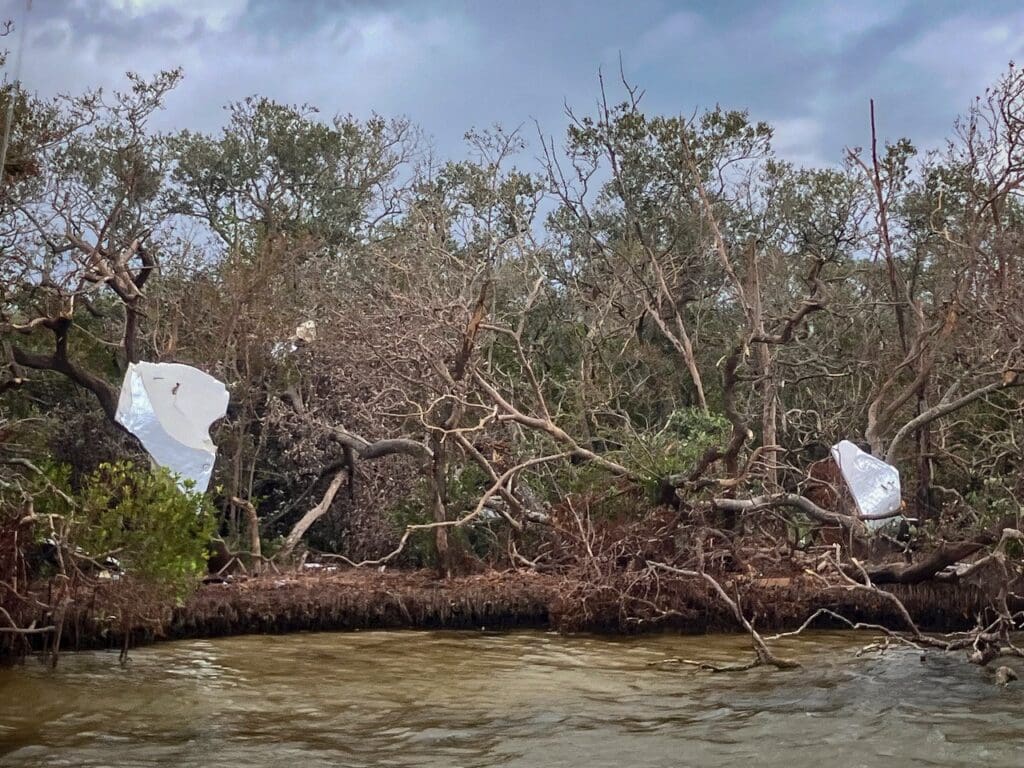
Unfortunately, those storm surges and winds pushed massive amounts of detritus into local waters, littering grass flats and choking local mangrove forests with the shattered remnants of island life. Now local environmental non-profits and concerned citizens, watermen and sportsmen are banding together to clean up area waters. On Saturday, Dec. 14 from 8:30 a.m. to 12:30 p.m., you can join Suncoast Waterkeeper, Suncoast Aqua Ventures, the Sarasota Bay Estuary Program, the Tampa Bay Estuary Program, Tampa Bay Waterkeeper, the Organized Fishermen of Florida and Sarasota Bay Watch in a crucial cleanup of marine debris in our waterways and mangroves.
TERRA CEIA BAY AND MANATEE RIVER
The cleanup will focus on the waters of the Manatee River out of Blenker Boatworks and Marina at the mouth of the Manatee River in Bradenton and Terra Ceia Bay at Tropic Isles Marina on Terra Ceia Bay in Palmetto. Organizers are calling for help from kayakers, shallow draft boat owners and shoreline helpers. The cleanup will focus on mangroves, so volunteers are encouraged to wear protective clothing, eyewear and shoes. Lunch, gloves and other collection supplies will be provided to participants, who are being asked to bring a reusable water bottle. Exact meet up locations will be provided to participants via email after registration. Sign up to participate at https://bit.ly/dec_14_cleanup.
The wind damaged mangroves will regenerate leaves. It will be up to volunteers to remove debris. Capt. Justin Moore | Submitted
As I’ve reported through the years, our local waters have been increasingly stressed by loss of habitat, sewage releases, storm water runoff and what I’ve described as “death by a thousand cuts.” While we often hear how fragile our marine resources are, the fact is they are extremely resilient, to a point! To recover from these insults and the natural disasters that are becoming more common, we must understand these critical issues and their importance to our health and the economy and work to protect them. Lending a helping hand and supporting these organizations in the field and through the legislative process has never been more important.
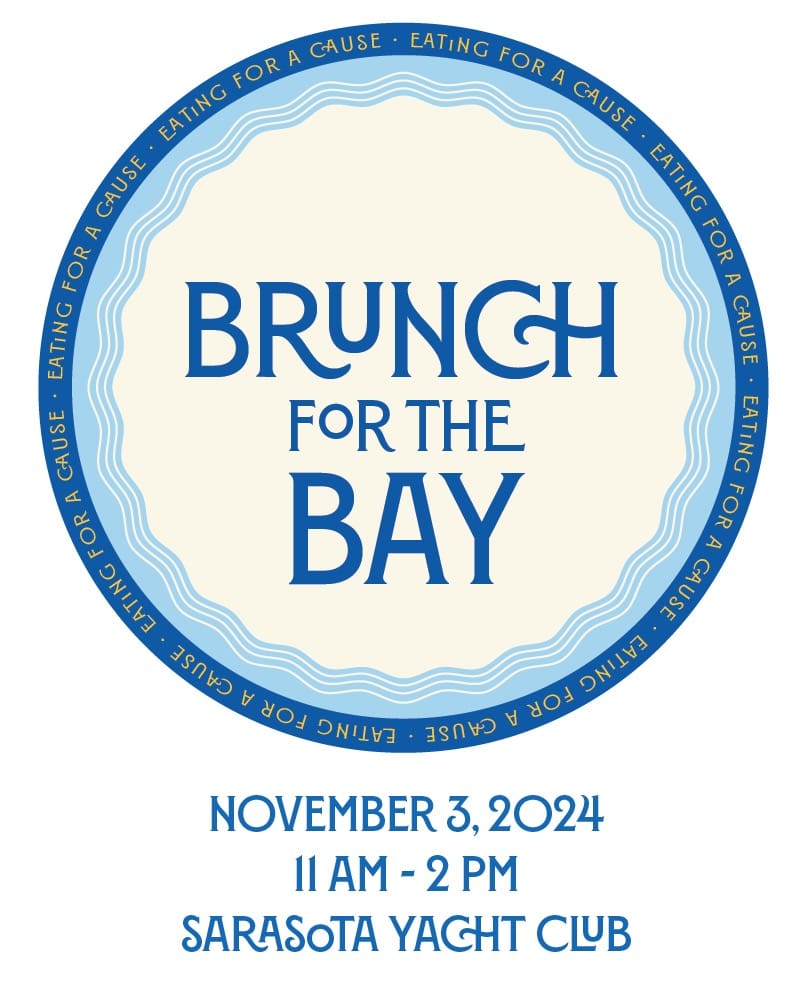
Brunch for The Bay will feature speakers that will address current threats to our island environment.
Suncoast Waterkeeper is holding its annual brunch for the bay fundraiser at a different venue this year. Get ready for an inspiring and impactful event featuring a powerhouse lineup of expert speakers at the Sarasota Yacht Club! Here’s what you can look forward to on Sunday, Nov. 3 at 11 a.m.
Justin Bloom, Esq. – Founder of Suncoast Waterkeeper and leader of the Sick of Sewage campaign, Justin will reveal how grassroots action has begun to turn the tide on pollution (including their suit against the City of Bradenton) and share critical lessons learned from the 2024 hurricane season.
Dr. Gary Mitchum – Associate Dean of USF’s College of Marine Science, Dr. Mitchum will shine a spotlight on extreme weather events and sea level rise, offering insights on what the Suncoast can expect now and in the future.
Dr. Colin Polsky – Founding Director at FAU’s School of Environmental, Coastal and Ocean Sustainability, will explain how the Florida Wildlife Corridor is a vital model for intentionally designing regional spaces for climate resilience.
Alexis Meschelle – Executive Director of Organized Fishermen of Florida, Alexis will talk about her work to ensure commercial fishermen and women are represented at all levels of government. She will discuss the impact of extreme weather events on Florida fishermen, their livelihood and the fisheries we depend on.
Don’t miss this opportunity to engage with leading voices on climate action, water protection, and environmental resilience. This fundraising brunch will also include delectable food, drinks, and the chance to connect with fellow advocates committed to protecting and preserving the waters of our beloved Suncoast!
Suncoast Waterkeeper’s mission is to ensure the Suncoast has swimmable, drinkable and fishable water for all. Their mission, which has never been more important, is to defend our coastline through advocacy, monitoring, community engagement and legal action.
This is an excellent opportunity to learn about Suncoast Waterkeeper’s work, get involved and help ensure that current and future generations can enjoy a healthy environment. Let’s join forces and fight for our beautiful coastline! If we don’t do it, who will?
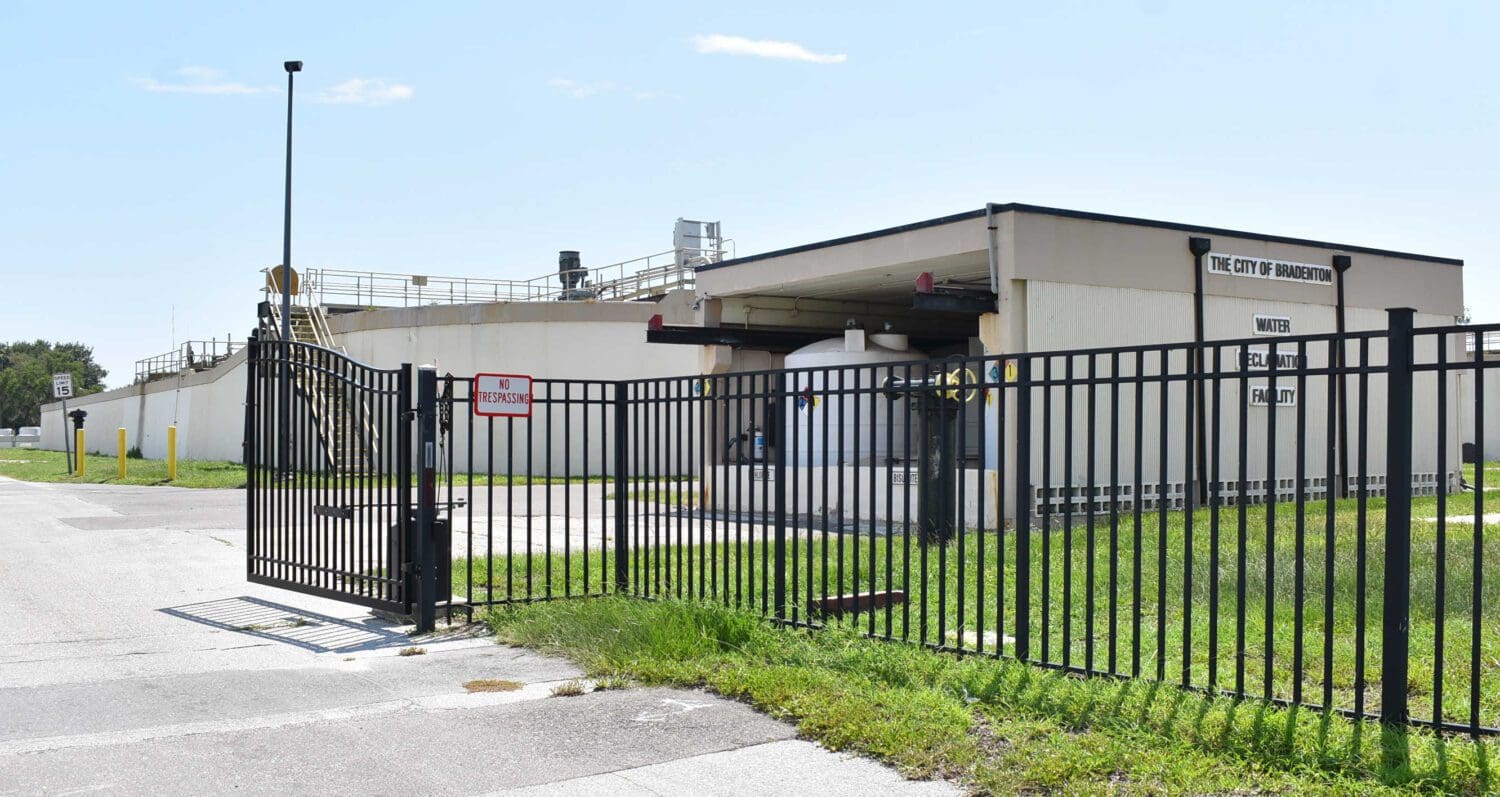
BRADENTON – During and after what was then Tropical Storm Debby, the city’s water reclamation facility discharged an estimated 25 million gallons of raw and partially treated sewage into the Manatee River, according to department officials.
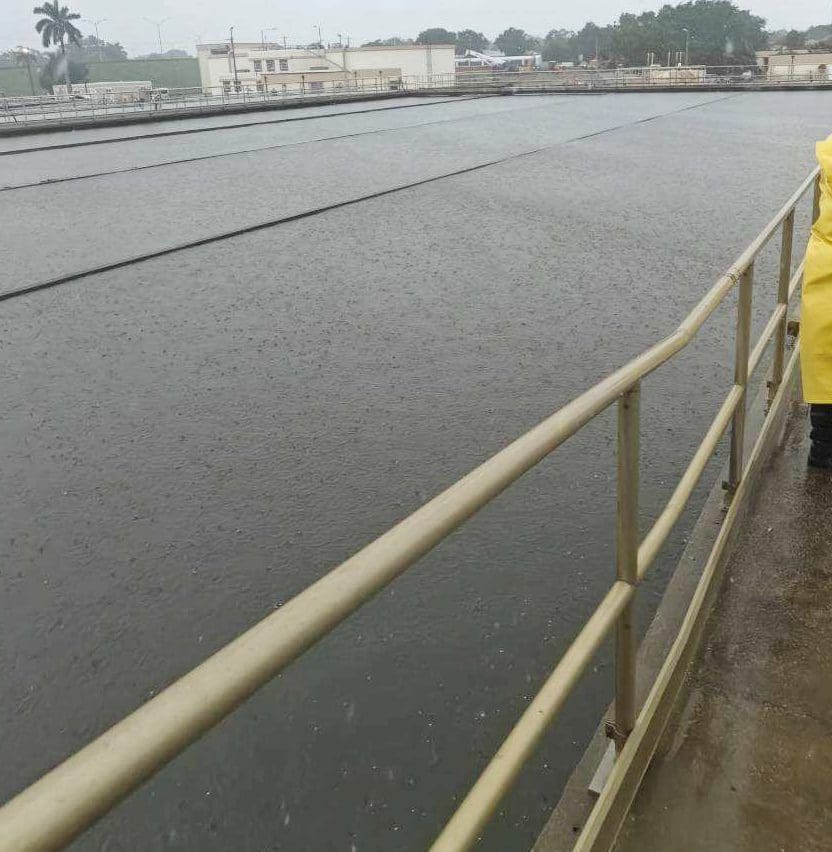
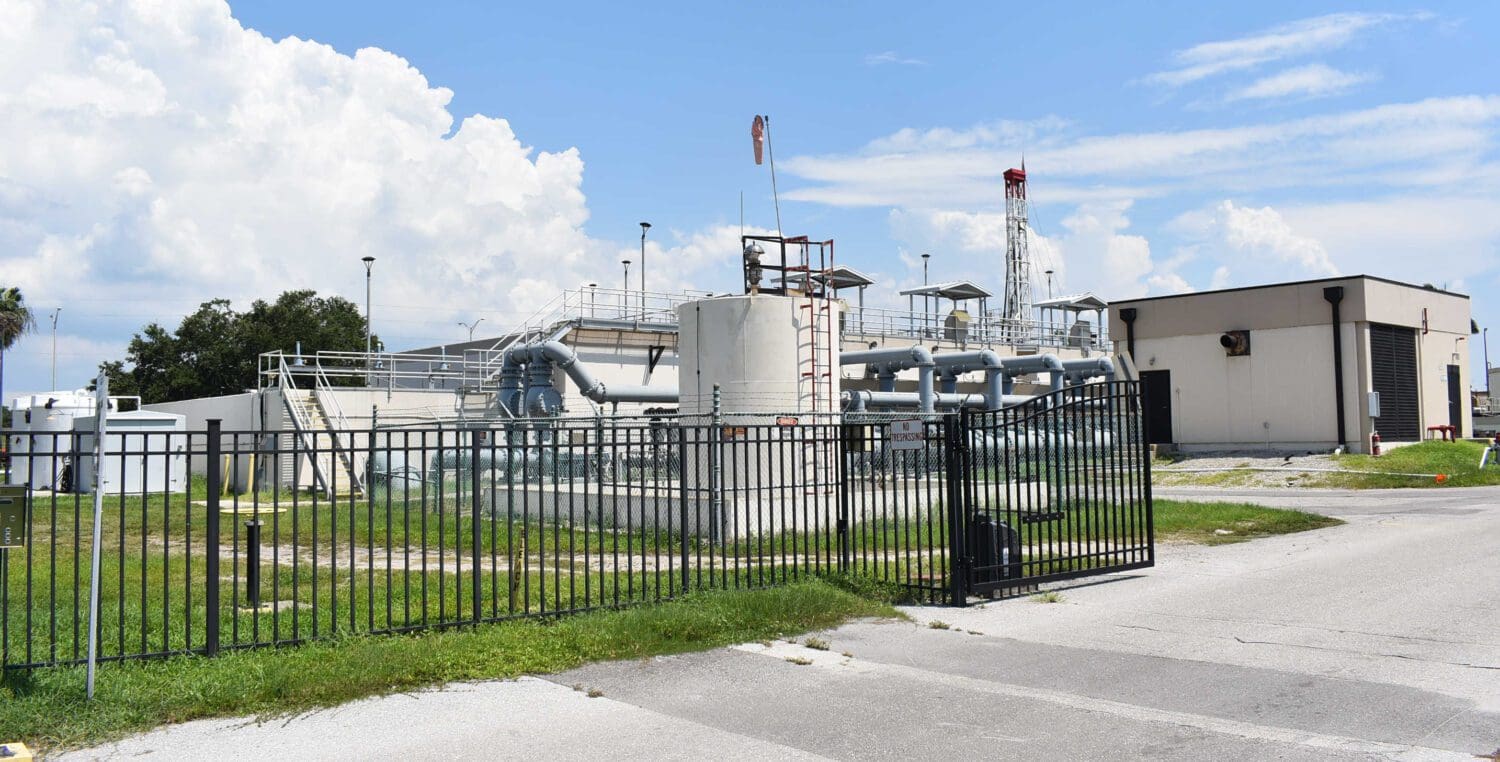
The neighboring city of Sarasota discharged nearly 18 million gallons of raw and partially treated sewage into that city’s stormwater system, which connects to Sarasota Bay, according to department officials.
In total, the Bradenton and Sarasota water reclamation facilities discharged nearly 43 million gallons of sewage into local waterways.
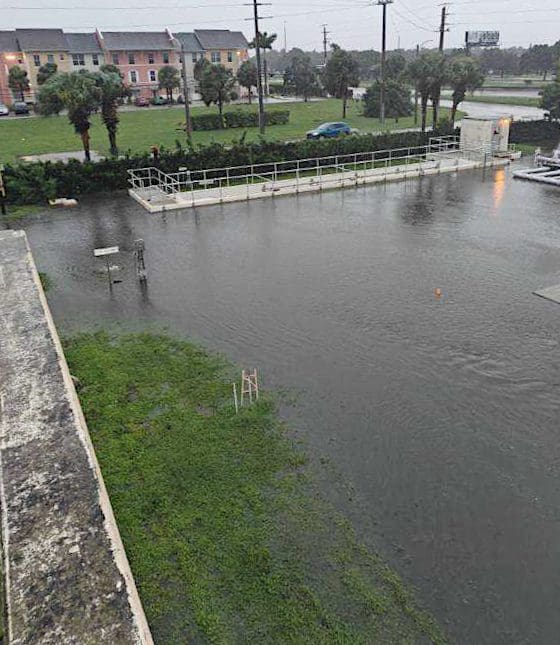
The rain associated with Tropical Storm Debby exceeded the Bradenton water reclamation facility’s storage capacities. – City of Bradenton | Submitted
Despite the influx of sewage into waters surrounding Anna Maria Island, the enterococcus bacteria levels in most areas were deemed “good” when last tested by the Florida Department of Health (FDOH) on Aug. 13.
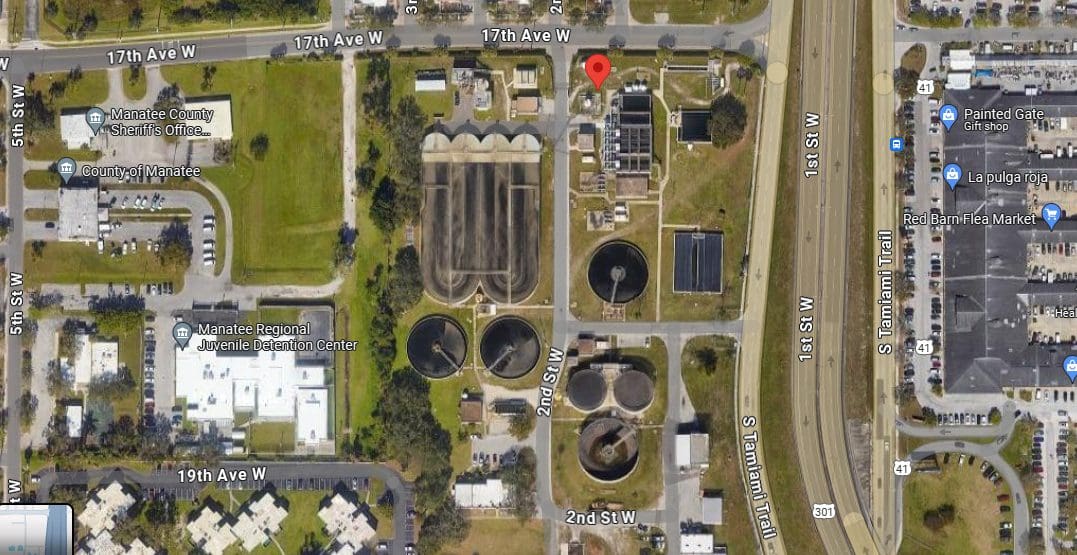
The Bradenton water reclamation facility is located across the street from the Red Barn Flea Market. – Google Maps | Submitted
According to the city’s report, “It’s estimated that the total volume bypassed from 08/04 – 08/07 was 25MG (million gallons).”
When contacted by The Sun on Aug. 12, Suncoast Waterkeeper board member and attorney Justin Bloom said, “According to the city’s own records, in which they’re reporting sewage spills to FDEP (the Florida Department of Environmental Protection), they discharged, directly to the Manatee River 25 million gallons of sewage between August 4th and August 7th. Suncoast Waterkeeper is concerned about the impact this significant amount of sewage will have on the Manatee River.”
The Bradenton water reclamation facility was overwhelmed by rain associated with Tropical Storm Debby. – City of Bradenton | Submitted
The mouth of the Manatee River empties into Tampa Bay near the northern tip of Anna Maria Island.
The city’s report states, “The event was caused by the heavy rain and high flow associated with Hurricane Debby and was unavoidable. As with utilities state-wide, the WRF staff did everything possible to not have to bypass, but with between 17-19 inches of rain during the storm it was unavoidable.”
The city’s report also includes the following information:
“On 08/04, the aerators were taken offline at 2 p.m. in anticipation of high flow.
On 08/04, the WRF experienced extremely high flow into the plant beginning around 17:00. By 18:30, the aerators, headworks, clarifiers, and filters began overflowing and bypass began.
On 08/05, the WRF bypassed the filters and wet well due to continual heavy rain and high flow.
Manatee River spill sample collection began on 08/06.
On 08/06, the plant experienced random high flow events causing the outfall and clear well to overflow.
On 08/08, two aerators were turned back online.”
In addition, report notes: “Sample collection is ongoing, preliminary results from 08/06 have been received but no official laboratory report has been. The city will continue to update FDEP as data is received and upon the conclusion of sampling.”
Bradenton’s water reclamation facility features numerous wastewater treatment and storage components. – Joe Hendricks | Sun
In an email exchange with Bradenton resident and concerned citizen Ernie Vanderwalt, FDEP Southwest District Office Director Kelley Boatwright acknowledged the sewage discharge.
“Department staff confirmed that the city of Bradenton had sanitary sewer overflows that total approximately 25,000,000 gallons due to Hurricane Debby. Staff are tracking the reports, evaluating the data, and will determine next steps,” Boatwright stated in his Aug. 12 email to Vanderwalt.
Sarasota overflow
According to the incident description report provided by the city of Sarasota, “During the event, approximately 6.243 million gallons of raw wastewater was discharged to Sarasota Bay. In addition, approximately 11.483 million gallons of partially treated effluent was discharged to Sarasota Bay. Samples will be collected.”
According to the incident description, “The city of Sarasota’s advanced wastewater treatment plant was severely impacted by excessive flow from Hurricane Debby. Operations staff did everything in their power to control the flow coming into the facility. Due to the incredible flow volume coming to the plant, up to 44.29 MGD (million gallons daily) in a single day, plant staff were unable to prevent spills from the headworks at the treatment plant. Staff made every effort to contain and control the spill, but the volume was too significant to avoid the mixture of rainwater and untreated sewage entering the stormwater collection system.”
Water quality tests
According to the FDOH website, “Enterococci are enteric bacteria that normally inhabit the intestinal tract of humans and animals. The presence of enteric bacteria can be an indication of fecal pollution, which may come from stormwater runoff, pets and wildlife and human sewage. If they are present in high concentrations in recreational waters and are ingested while swimming, or enter the skin through a cut or sore, they may cause human disease, infections or rashes.”
FDOH analyzes water samples for total bacteria counts and rates the results as good, moderate or poor.
Good: 0–35.4 enterococci per 100 milliliters of marine water
Moderate: 35.5–70.4 enterococci per 100 milliliters of marine water
Poor: 70.5 or more enterococci per 100 milliliters of marine water
If the results indicate poor water quality, FDOH issues public notices and may post warning signs at impacted beaches that state swimming or other water activities are not recommended.
According to FDOH water quality testing results, the enterococcus levels in the water at Bayfront Park in Anna Maria were listed as good for Aug. 7, 11 and 13. Before Tropical Storm Debby, the enterococcus levels at Bayfront Park tested poor on July 22, July 29 and July 31. FDOH issued a water quality notice for Bayfront Park on July 31 but has not issued any additional Bayfront Park notices.
On Aug. 7, 11 and 13, the enterococcus levels at Manatee Beach in Holmes Beach were listed as good. When tested on Aug. 7, 11 and 13, the enterococcus levels at Coquina Beach North, Coquina Beach South and Cortez Beach (all in Bradenton Beach) were all listed as good.
When tested on Aug. 7, 11 and 13, the enterococcus levels at the Broadway Beach Access in Longboat Key were listed as good.
When tested on Aug. 7, 11 and 13, the enterococcus levels at Palma Sola Causeway South were listed as poor on each of those days, and also on July 29 and July 31. FDOH advisories were issued on July 31 and Aug. 7, 11, and 13.
According to FDOH, several locations in Sarasota were tested on Aug. 12 and the enterococcus levels at those locations were listed as good.
On Facebook, some Island residents and visitors reported strong odors and possible human waste discovered in the waters along some Anna Maria Island beaches.
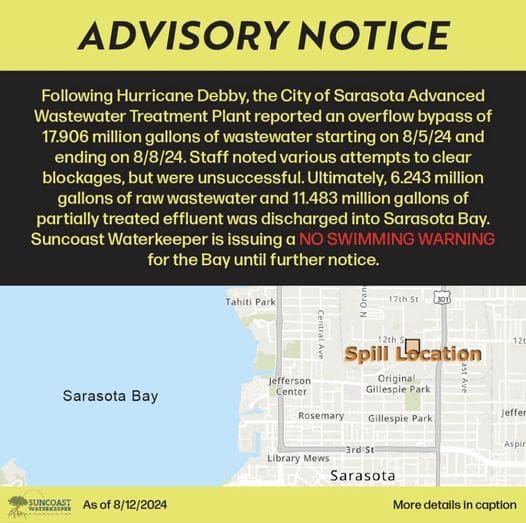
On Aug. 12, the Suncoast Waterkeeper organization issued a “No Swimming” warning for Sarasota Bay that was to remain in effect until further notice.
On Aug. 12, The Suncoast Waterkeeper organization issued a no-swim advisory for Sarasota Bay. – Suncoast Waterkeeper | Submitted
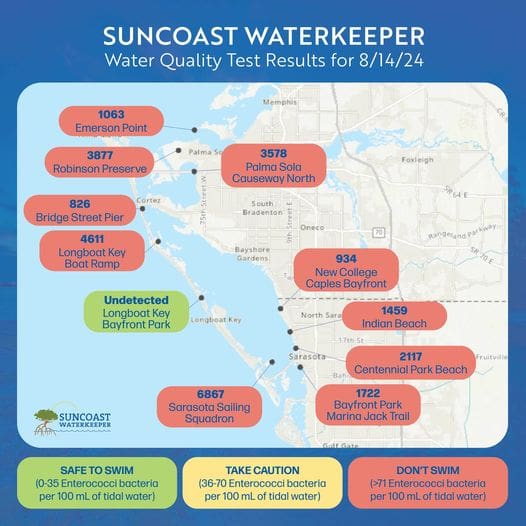
On Aug. 16, Suncoast Waterkeeper posted a Facebook message that said, “On August 14th, the enterococci survey was conducted during a falling tide. Salinity levels ranged from 18-29 ppt. The impact from Debby was still evident in the water quality on Wednesday and will likely continue throughout the weekend.”
Suncoast Waterkeeper released this water quality test results map on Aug. 16. – Suncoast Waterkeeper | Submitted
The Aug. 16 Facebook post was accompanied by a water quality test result graphic that indicated 10 locations in Bradenton, Anna Maria Island and Sarasota that Suncoast Waterkeeper considered to be “Don’t Swim” areas, including the Bradenton Beach City Pier on Bridge Street, Palma Sola Causeway North, Robinson Preserve and the Longboat Key boat ramp.
As of Aug. 19, The Sun was unable to obtain any additional water quality testing results from FDEP.
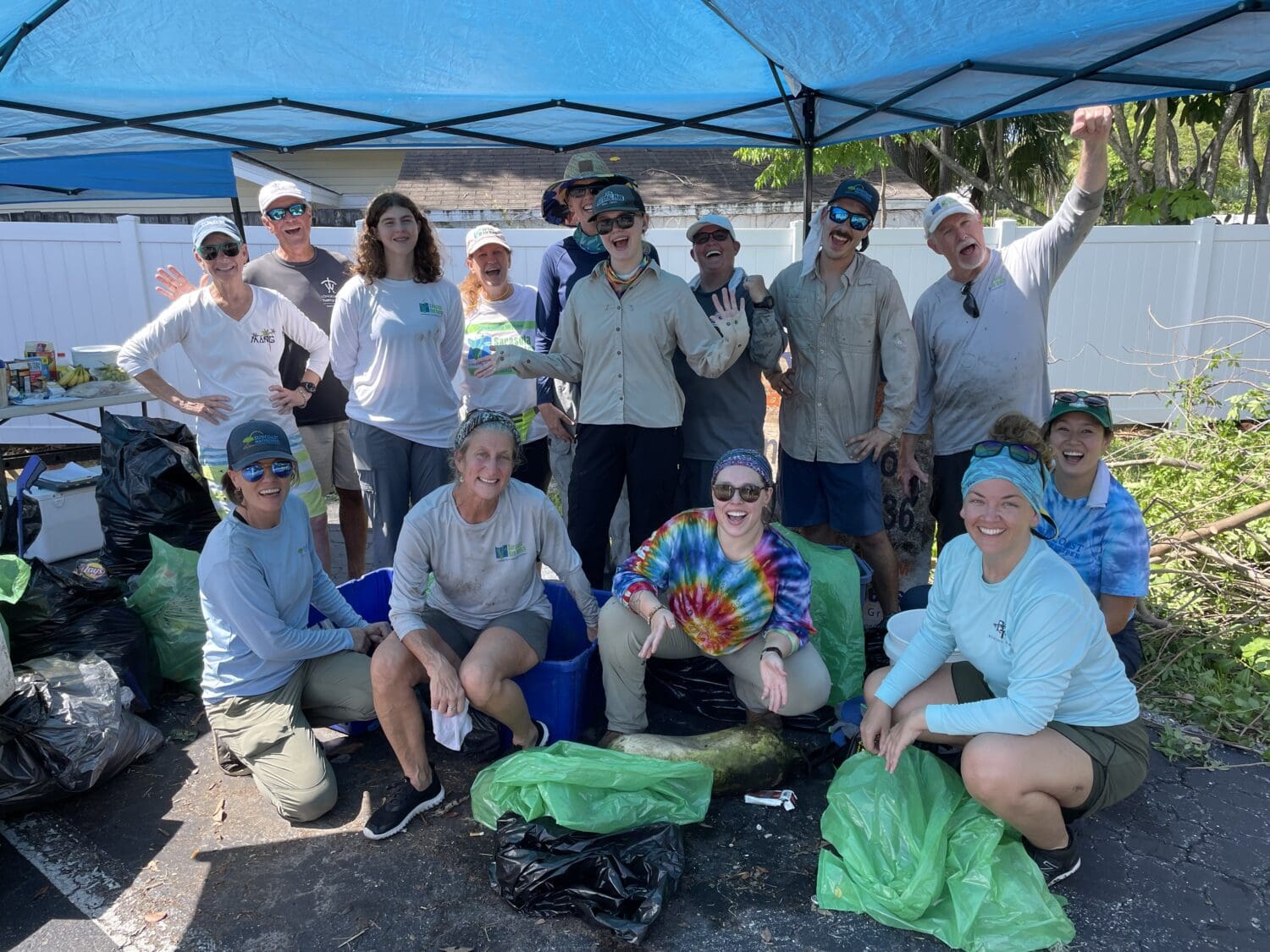
It was a fantastic way to spend a Sunday! On July 28, Sarasota Bay Watch was the lead organization in the new Resilience Incubator’s first community cleanup at Hudson Bayou in Sarasota. With the help of Suncoast Waterkeeper, 35 Incubator volunteers manned 13 kayaks and one jon boat. With the additional efforts of 10 shoreline volunteers, the group collected 604 pounds of trash and 1,200 pounds of invasive trees and bushes for a haul of 1,804 pounds total. Sarasota Bay Watch’s Executive Director Ronda Ryan described the event as “a gift of environmental stewardship to celebrate our shared home.” After the cleanup, volunteers gathered to sort the debris and recyclable items, have lunch provided by South Face and enjoy the camaraderie.
Executive Director Dr. Abbey Tyrna explained the creation of the Incubator at the event’s ribbon cutting.
“Justin (Bloom, Suncoast Waterkeeper founder) often reminisces about the early days when local environmental nonprofits worked hand-in-hand to drive real change. Today, we face a multitude of environmental challenges that demand even stronger collaboration. This is why Justin enthusiastically embraced Amber’s vision of creating a shared space for small non-profits, aptly named the Resilience Incubator.
“But what is resilience? Resilience is the ability of a system to recover from stressors or disturbances. It is built through strategies like diversifying resources, enhancing ecosystem functions, increasing social cohesion, adapting and strengthening built structures, and closing the loop on waste.
“The Resilience Incubator aims to build social-ecological resilience, ensuring our community can sustainably meet its needs while preserving the ecosystems we rely on. Together, we are creating a future where both our community and environment can thrive, facing today’s threats and preparing for tomorrow’s challenges.
Suncoast Waterkeeper is committed to this mission and, with community support, we can make a lasting impact. Join us in building a resilient future for all.”
To get involved, stop by the Resilience Incubator’s offices above the blood bank on Mound Street in Sarasota and consider joining Suncoast Waterkeeper, Sarasota Bay Watch or any of the other nonprofits working to make our home more resilient.