

Tag: FWC

New law in effect to reduce derelict vessels

New law in effect to reduce derelict vessels

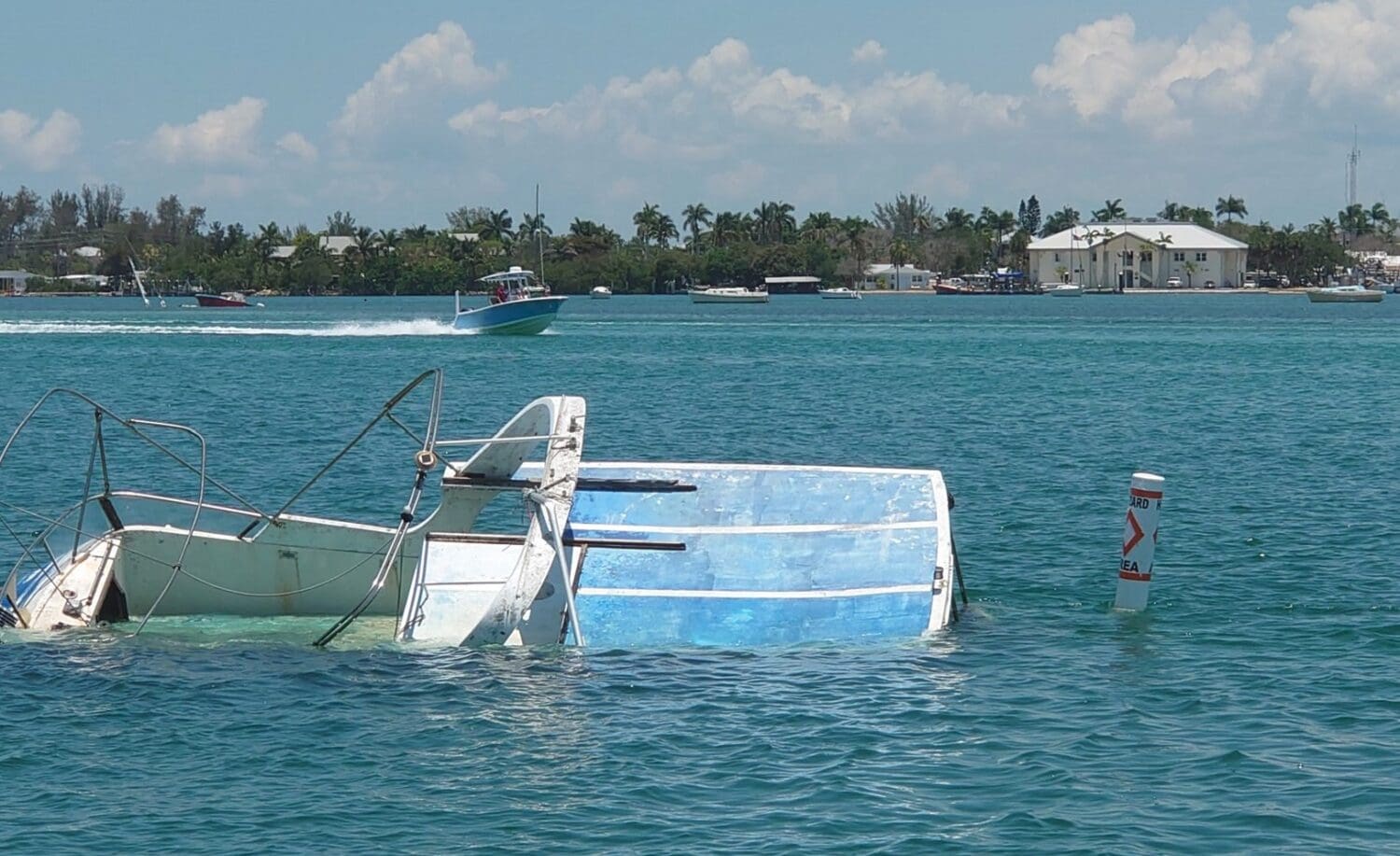
TALLAHASSEE – New legislation effective statewide on July 1 is designed to help reduce the number of at-risk and derelict vessels across the state and improve enforcement tools for Florida Fish and Wildlife Conservation Commission (FWC) officers and partner agencies.

The FWC “is preparing to implement a new law aimed at strengthening vessel account­ability and enhancing protections for Florida’s waterways. Senate Bill 164 was signed into law by Gov. Ron DeSantis on June 19,” according to a June 27 press release.

Local boat captains have expressed concern about sunken and unreg­istered boats south of the Cortez Bridge, and in May 2024, marine law enforcement agencies issued more than 20 citations for multiple unregistered and derelict vessels.

A derelict vessel is any vessel that is that is left in a wrecked, junked or substantially dismantled condition upon waters of the state. Derelict vessels pose risks to navigation, marine life, seagrass beds and public safety. Vessels at risk of becoming derelict include those taking on water without an effective way to dewater; those with spaces meant to be enclosed that remain open to the elements; those listing due to water intrusion, those that have broken loose or may break loose from anchor or those tied to an unlawful or unpermitted structure or mooring.

Key provisions of the new law include:

  • Clarified Ownership Standards: The definition of “vessel owner” is clarified, and a valid vessel title will now serve as prima facie (presumed) evidence of ownership;
  • Stronger Requirements for At-Risk Vessels: Vessel owners must now complete an Effective Means of Propulsion (EMP) evaluation upon request by law enforcement. If an officer has reason to believe the vessel lacks an effective means of propulsion and the owner is present, the evaluation must be conducted immediately or within 48 hours if notified otherwise;
  • Public Nuisance Vessel Designation: A vessel may now be declared a public nuisance – subject to removal like a derelict vessel – if the owner receives three citations related to any at-risk conditions within a 24-month period, including unpaid citations or failure to appear in court.

Expanded Noncriminal Infractions: Violations such as expired registration and long-term anchoring may now be addressed through mailed noncriminal citations from law enforcement;

  • More Flexible Use of Removal Funds: Derelict Vessel removal funding may now be used not only for removing derelict vessels but also for preventive removals under the Vessel Turn-In Program and for public nuisance vessels;
  • Harsher Penalties for Repeat DV Offenders: First offense, first-degree misdemeanor; second offense, third-degree felony and third offense, second-degree felony; and
  • No Liveaboard on Derelict Vessels: It is now a first-degree misdemeanor to live aboard a vessel that has been declared derelict by the court.

Additional requirements, including an annual electronic permit issued by FWC for vessels anchoring longterm, will go into effect on July 1, 2026. The penalty for unauthorized long-term anchoring will consist of fines ranging from $100 to $500.

“If a vessel owner receives three violations within a two-year period, the vessel may be declared a public nuisance and removed as if it were derelict. Some exemptions apply and include vessels that are government-operated, construc­tion vessels, actively engaged in commercial or recreational fishing, docked at a public or private facility or moored at permitted moorings,” according to the FWC release.

“We have seen increasing suc­cess in our efforts to combat the ongoing derelict vessel problem in Florida’s waters,” said Capt. Travis Franklin, leader of the FWC Derelict Vessel Removal and Prevention Program. “This new legislation enhances our ef ­forts to not only remove derelict vessels but also prevent at-risk vessels from becoming derelict. ”

The FWC has removed nearly 200 vessels through the Vessel Turn-In Program and is taking applications from at-risk vessel owners. For more informa­tion, call 850-488-5600 or visit the FWC website.

FWC cites three for alleged poaching

FWC cites three for alleged poaching

LONGBOAT KEY – The vigilance of three local charter captains has resulted in multiple citations against three men for the alleged poaching of marine life in local waters.

Capt. Joey Sweet, of Sweet Sunset Dolphin Tours, Capt. Katie Scarlett Tupin, of Capt. Katie Scarlett Boat Tours, and Capt. Kathe Fannon, of Capt. Kathe and First-Mate Pup-Pup Charters, had long noticed a depletion of marine life at local sandbars and suspected that poachers were to blame. They reported their suspicions to the Florida Fish and Wildlife Conservation Commission (FWC), resulting in several citations.

According to FWC incident reports, Linh Ha, 51, of 3401 24th St. W., Bradenton, Loc Nguyen, 55, of 3230 44th Drive E., Bradenton, and Hai Nguyen, 51, of Rockford, Ill., were charged by Florida Fish and Wildlife Conservation Commission (FWC) officers on July 1 at Jewfish Key.

“The three individuals were identified to FWC officers by a vessel passing by stating they were keeping over the bag limit of shellfish,” according to the FWC report. “Upon performing a resource inspection, we found all three suspects to be over the allowable bag limit for marine life species (20 max per person/day) as well as over the bag limit for each species (2 per species/per person per day.) The subjects were in possession of 25 tulip snail, 24 crown conch, 9 fighting conch, 2 lightning whelk and 2 horse conch.”

FWC cites three for alleged poaching
Florida Fish and Wildlife Conservation Commission officers photographed what they said were illegal catches of marine life at Jewfish Key on July 1. – Submitted | FWC

Each man was charged with violation of the Florida Administrative Code Pertaining to Southwest Florida Shells-Harvest of Live Shellfish in Manatee County; Permitted Harvest of Shells which states: “A person may not harvest in Manatee County more than two live shellfish of any single species per day or possess in or on the Florida waters within Manatee County that are seaward of the mean high water line more than two live shellfish of any single species.”

They were also charged with Violation of Florida Administrative Code Pertaining to Marine Life-Recreational Bag Limit which states: “A person may not harvest in Manatee County more than two live shellfish of any single species per day.”

The FWC report states that at approximately 5:30 p.m. on July 1, officers were patrolling the area of Jewfish Key and received a report of three men taking excessive marine life from the north end of the sandbar.

“We observed three subjects matching the complainant’s description near a red and white personal watercraft (PWC) wading along the Jewfish Key sandbar,” according to the report. “The subjects had several hand-nets full of various species of marine life and additional marine life in the footwell of the PWC.”

Hai Nguyen was also found to have no saltwater fishing license and was issued a warning.

Since the other two men were licensed, four of the tulip snails, crown conch and fighting conch were returned to Loc Nguyen and Ha. Two lightning whelk and one horse conch were returned to Loc Nguyen, as they fell within bag limits. The remainder of the organisms were returned to state waters alive, according to the FWC.

The three men are required to appear in Manatee County Court on Wednesday, Aug. 2 at 9 a.m.

According to an FWC press release, officers have received multiple reports since summer began of individuals harvesting marine organisms near Longboat Pass in the Jewfish Key area of Manatee County.

“Over the course of the Independence Day weekend, FWC officers increased patrols in the area and performed resource inspections on multiple vessels,” the press release states. “The violations included the harvest of more than two live shellfish species per day, harvest of more than 20 individual tropical marine life species per day, the possession of undersized stone crab, the possession of egg-bearing stone crab, the possession of whole-condition stone crab, the possession of stone crab during closed season, and fishing without a valid saltwater fishing license.”

“I feel like we are just scratching the surface,” Sweet said. “We’re still seeing a lot of the same activity. Hopefully, people will take notice. I was told by the FWC that if anyone sees something, they should take down the numbers on the boats and report it.”

Call the FWC Wildlife Alert Hotline at 888-404-FWCC (888-404-3922).

National Safe Boating Week raises awareness

National Safe Boating Week raises awareness

ANNA MARIA ISLAND – National Safe Boating Week, May 20-26, was an annual reminder for boaters to prioritize safety while enjoying Florida’s waterways.

According to the Florida Fish and Wildlife Conservation Commission (FWC), the state leads the nation with over 1 million registered vessels.

“Unfortunately, each year FWC officers respond to far too many tragic boating accidents that could have been prevented. There were hundreds of accidents reported last year involving almost 2,000 individuals,” FWC Boating and Waterways Section Leader Major Rob Beaton said in a recent FWC press release.

According to the organization, 54% of all vessel accidents in 2022 involved collisions, with the primary causes being improper lookout and operator inexperience. FWC encourages boaters to pay attention to their surroundings, always maintain 360-degree awareness and to take a boater safety course.

In 2022, 70% of operators involved in fatal boating accidents had no formal boater education.

“We know that an educated boater is safer on the water,” Beaton said. “Everyone can benefit from taking a boating safety course, it makes for a safer and more enjoyable experience for everyone on board.”

FWC encourages boaters to always wear United States Coast Guard-approved life jackets while on the water, as well as to avoid impaired boating.

“FWC officers are always on the lookout for impaired operators and these operators will face arrest if found to be operating under the influence of alcohol or drugs,” Beaton said.

To report dangerous boating activity, the public can submit anonymous tips by texting 847411 (Tip411) with the keyword “FWC” followed by the location and any information about the violation or call 888-404-FWCC (3922).

For a summary of Florida’s boating regulations, available courses and boating safety tips, visit FWC online.

City proclamation

During the May 25 Anna Maria City Commission meeting, Mayor Dan Murphy read aloud a city proclamation that said in part, “Safe boating begins with boating safety education and vessel preparation. The United States Coast Guard estimates human error or poor judgment accounts for most boating accidents. Basic safety precautions, such as taking a boating safety course, wearing life jackets, staying sober while boating, getting a free vessel safety check to confirm a vessel meets USCG safety requirements and carrying communication equipment can help ensure that boaters stay safe.”

More tips

Anna Maria resident David Haddox is the commander of the Anna Maria Island Sail & Power Squadron, and he provided The Sun with some additional insights.

He said Florida led the nation last year with 457 boating injuries and 70 boating fatalities.

More than 70% of the boating fatalities involve boats that are 21 feet long or shorter. Drowning is the most common cause of boating fatalities (64%) and four of five boater drownings involve boaters not wearing life jackets. At 27%, trauma was the second most common cause of boater fatalities.

Haddox encourages boat operators to wear an engine cut-off switch lanyard so that if the operator falls overboard, the boat will stop instead of motoring away or circling and causing death or injury by propeller strike.

“At the beginning of every trip, brief everyone on board about safety issues – where the fire extinguishers are and how to use them; how to stop and restart the engine; how to make a VHF radio mayday call; where the first aid kit is and where the anchor is,” he advises.

Haddox recommends taking America’s Boating Course. The next one offered by the local squadron begins Monday, June 5 at 6 p.m. and pre-registration is required.

“A state-approved boating safety course like ours is required for any boat operator born on or after Jan. 1, 1988,” Haddox noted.

Visit the AMI squadron online or contact them at 941-477-7845 or at AMISailPowerSquadron@gmail.com. America’s Boating Course is also available online.

Injured gator captured near Rod and Reel Pier

Injured gator captured near Rod & Reel Pier

ANNA MARIA – An injured alligator came ashore near the Rod & Reel Pier on Oct. 8. After being trapped and removed, the gator was later euthanized due to its broken leg.

Dep. Patrick Manning of the Manatee County Sheriff’s Office Anna Maria Unit was among those to respond that day.

“We received a call about an alligator on the beach,” Manning told The Sun. “The day prior, we received a call from some construction crews in the area of the 800 block of North Shore Drive and they said they saw it. Three deputies, including myself, went up there but we could not locate it that day.

“The next day, a beachgoer called and said they saw it. I wasn’t shocked that it had come ashore, but it was kind of a shock to see it up on the rocks. The tide was very high, so I wasn’t concerned about people walking up to it at that time,” Manning said.

Through the county dispatcher, Manning reached out to the Florida Fish and Wildlife Conservation Commission (FWC) and provided the state agency with photos and video of the gator in its current location.

“Initially, they weren’t receptive to retrieving the reptile until I explained to them that when the tide goes out it’s near a beach access and a lot of people walk from Bean Point to the Rod & Reel to use the restroom or grab a beverage,” Manning said.

Manning said an FWC-contracted trapper showed up within 20-25 minutes and made quick work of capturing the injured gator.

“He said the reptile had a broken leg and he was going to take it to a facility where it could be rehabbed and released. The sheriff’s office doesn’t simply decide to pull out a gun and eliminate a native species of Florida. You try to find a way to get it to where it belongs,” Manning said, noting the gator may have been displaced from its freshwater habitat during Hurricane Ian.

Afterwards, the trapper changed his mind.

“Upon removing the 7-foot 9-inch alligator, the contracted nuisance alligator trapper realized it was injured and euthanized it,” said Tammy Sapp, of the FWC communications team.

“Maybe it was in saltwater for too long and was in worse shape and they couldn’t rehab it,” Manning said.

“While the American alligator prefers freshwater lakes and slow-moving rivers and their associated wetlands, they are seen in brackish water habitats occasionally. Alligators can swim in and tolerate saltwater for short periods of time, but it is not their preferred habitat,” Sapp said.

“Serious injuries caused by alligators are rare in Florida. FWC places the highest priority on public safety and administers a Statewide Nuisance Alligator Program (SNAP). The goal of SNAP is to proactively address alligator threats in developed areas, while conserving alligators in areas where they naturally occur.

“SNAP uses contracted nuisance alligator trappers throughout the state to remove alligators believed to pose a threat to people, pets or property. People with concerns about an alligator should call FWC’s toll-free Nuisance Alligator Hotline at 866-FWC-GATOR (866-392-4286), and we will dispatch a contracted nuisance alligator trapper to resolve the situation. FWC also works to keep Floridians and visitors informed, including providing advice about living with alligators,” Sapp said.

Rescued manatee calf, mom released

Rescued manatee calf, mom released

CORTEZ – When Gale Tedhams was visiting her mother at a Cortez Road condo last May, she immediately recognized the signs of a manatee calf in distress.

“There was a mother and baby in the canal behind the (Mount Vernon) condo,” she said. “You could see boat strike injuries and the baby couldn’t dive to nurse.”

Tedhams, who volunteers at the Bradenton Beach-based Wildlife Education and Rehabilitation Inc., called Mote Marine and the Florida Fish and Wildlife Conservation Commission (FWC) to see if someone could help.

“They told me they knew about them and have been trying to get them for two weeks, but by the time they got to them they were already gone,” Tedham said. “About 30 people (from FWC) came out in a boat and stretched a net around them and were able to take mom and the baby. The mom was huge.”

The calf had an infection and the mother and calf were kept together and brought to SeaWorld Orlando for treatment. SeaWorld has a rehabilitation center for treating wildlife that is ill, injured or orphaned, including manatees, sea turtles, birds and other marine animals.

On Aug. 3, the mother and calf were released back into the water at the Palma Sola Causeway Boat Ramp.

“They brought them down (from Orlando) in a huge box truck,” Tedhams said. “They were laying in the back. Once they were put in the water, they just swam right off together.”

In a recent study, FWC researchers found that one out of every four adult manatee carcasses analyzed showed evidence of 10 or more watercraft strikes.

“With only 4% of adult manatees devoid of watercraft-related scars, it appears exceedingly rare for an adult manatee to not be struck multiple times in its life,” according to the FWC website.

Manatees and the law

Manatees are protected by the Marine Mammal Protection Act of 1972, the Endangered Species Act of 1973 and the Florida Manatee Sanctuary Act of 1978.

It is illegal to feed, harass, harm, pursue, hunt, shoot, wound, kill, annoy or molest manatees. According to the FWC, “Examples of illegal activities include: Giving food or water to manatees, or using food or water to attract manatees, separating a mother and calf, disturbing manatee mating herds, or pursuing or chasing manatees either while swimming or with a vessel.”

Call the FWC’s Wildlife Alert Hotline: 888-404-FWCC (3922), #FWC on cell phones, or text Tip@MyFWC.com to report manatee deaths, injuries, harassment, accidents, or orphaned or distressed manatees.

Help rid Island waters of lionfish

Help rid Island waters of lionfish

ANNA MARIA ISLAND – The Florida Fish and Wildlife Conservation Commission (FWC) is seeking help from divers, anglers and commercial harvesters to remove lionfish from Gulf of Mexico waters.

Anyone is welcome to join the lionfish challenge, a summer-long tournament open to participants from anywhere in the state of Florida. In divisions for recreational and commercial divers, participants will compete for several prizes including dive equipment, a Yeti cooler and more, and for the title of Lionfish King and Queen or Commercial Champion.

Lionfish are an invasive marine reef fish species that have the potential to harm native wildlife and habitat. The fish are native to the Indo-Pacific and were first identified off the coast of Florida in Broward County in 1985. They are now found in large numbers on both coasts of Florida. Since their introduction, lionfish populations have exploded and they are well established in Florida waters.

Lionfish reproduce quickly, compete with native species for habitat and food and have no natural predators in the waters surrounding the Island. The fish are highly venomous, and according to the FWC, lionfish are the most harmful marine invader to date.

The FWC has been one of the lead organizations to initiate procedures to not only evaluate the extent of the invasion, but also support control efforts and initiate removal incentive programs.

Anyone interested in learning how to harvest lionfish should start with the following information:

WHAT: The most effective way to remove lionfish is by divers using spearfishing equipment.

WHERE: Although lionfish can be found in a variety of habitats, they are most commonly spotted on high relief structure in offshore waters. The state of Florida keeps data on all public reef sites located around the state.

HOW: Lionfish are easily harvested using a pole spear and a containment device. A pole spear is a very simple spearing device that consists of a short pole shaft (usually made of aluminum or Fiberglas), a removable multi-prong spear tip and a rubber band. A containment device is necessary for preventing a lionfish sting and for storing lionfish during a dive.

Do not grab a lionfish with bare hands. The venom of the fish is a neuromuscular toxin that’s similar to cobra venom, and is delivered through spines on its back. Despite that, if properly prepared, lionfish is edible and served at restaurants throughout Florida.

For more information on the tournament, visit the Reef Rangers website.

The Florida Fish and Wildlife Conservation Commission is seeking the aid of divers, anglers and commercial harvesters to remove lion fish from Florida waters.

Red tide reaches Manatee waters

ANNA MARIA ISLAND – For the first time since red tide emerged several weeks ago in surrounding counties, Manatee County registered high levels of red tide in water samples at the Longboat Pass boat ramp on July 12, according to Friday’s Florida Fish and Wildlife Conservation Commission weekly report.

Levels were very low at the Rod and Reel Pier in Anna Maria, at Key Royale in Holmes Beach and at the Palma Sola Bay Bridge in Bradenton on July 12. Levels ranged from background to high concentrations in 18 samples collected from Manatee County waters.

The FWC also reported high concentrations of red tide in areas of Pinellas, Hillsborough and Sarasota counties.

Respiratory irritation was reported in Manatee County at Coquina Beach and Manatee Beach, and in Sarasota, Pinellas and Lee counties.

Red tide-related fish kills were reported over the past week in Manatee, Sarasota, Pasco, Pinellas, Hillsborough and Lee counties.

Some scientists claim that the discharge of 215 million gallons of nutrient-rich wastewater from the Piney Point fertilizer plant in March and April could be feeding the algae bloom.

Red tide produces a neurotoxin called brevetoxin that can cause respiratory irritation, coughing, and more serious illness for people with severe or chronic respiratory conditions such as asthma, emphysema or COPD, according to the Florida Department of Health. Health officials recommend that people experiencing symptoms stay away from the water, go inside to an air-conditioned space, or wear masks, especially during onshore winds.

Consuming shellfish exposed to red tide can cause neurotoxic shellfish poisoning. Health officials also warn against swimming near dead fish, and advise keeping pets away from dead fish and seafoam, which can contain high concentrations of algae. Pets are not allowed on Anna Maria Island’s beaches, but are allowed on the Palma Sola Causeway on Manatee Avenue.

Great blue herons’ nest in jeopardy

Great blue herons’ nest in jeopardy

ANNA MARIA – Seana and Jeff Long are concerned about a great blue herons’ nest located in one of several backyard Australian pine trees at 315 Iris St., across the canal from their family home.

As part-time Anna Maria residents, the Longs divide their time between Seattle and a shared family home on Jacaranda Road that sits across the canal from the home where the great blue herons currently live.

Seana Long said that Sinclair Stewart, the longtime owner and occupant of the Iris Street home, passed away earlier this year after time spent at a nursing home. Long said a member of the extended Stewart family recently told her the property has been sold and the new owner already has plans in mind for the property.

“We’ve known the family for 20 years. The new owners are going to knock the house and the trees down to put in a house with a pool,” Long said last week while standing on her canalside deck.

Great blue herons’ nest in jeopardy
This home at 315 Iris St. is expected to be demolished to make room for a new home with a pool. – Joe Hendricks | Sun

Long does not know who purchased the property; and that information is not yet available at the Manatee County Property Appraiser’s website or the Manatee County Clerk of the Court website.

“I’ve been panicked since I got back on the Island and found out my neighbors were selling. It’s a huge nest and it’s been there for quite some time. We’ve been in this home for 20 years and these birds have shared this canal with us for a long time. The blue herons have been our ‘neighbors’ for at least the last 10 years. They’re great blue herons according to my college roommate’s husband, who is an ornithologist. I’m very concerned about their habitat and their home, and I think they have fledglings,” Long said.

Great blue herons’ nest in jeopardy
This great blue heron is adored by some of its human neighbors. – Joe Hendricks | Sun

Long said the Iris Street property also has two ground-mounted perches that Sinclair Stewart used for his trained ospreys.

“We know from the sellers that the plans are to tear out all those Australian pines and put in a pool. That would destroy the birds’ home. We have to do something to save these birds. I’m not saying keep the trees, I’m saying save the birds’ home. If that means keeping the trees a little bit longer, then yes, the new owners need to be inconvenienced,” Long said.

“It’s the natural flora and fauna of this Island that makes it such a treasure,” she added.

Great blue herons’ nest in jeopardy
The front door of the existing Iris Street home features the likeness of a large bird. – Joe Hendricks | Sun

Long wondered if a man-made nesting tower could be erected similar to the man-made nesting tower the city of Anna Maria, FPL and Volt Power partnered to erect on a vacant lot on Lakeview Drive in December 2019. That nesting tower immediately provided a new habitat for a pair of ospreys that had been displaced by a tree removal.

Long questioned whether the Migratory Bird Treaty Act provides these great blue herons with any short or long-term protections.

Fish and Wildlife Service response

On Monday, U.S. Fish & Wildlife Service Public Affairs Specialist Jennifer Koches provided a written response to several questions posed by The Sun.

Koches confirmed that great blue herons are among the more than 1,000 bird species protected by the Migratory Bird Treaty Act.

“Active migratory bird nests are protected, and authorization is required to intentionally take an active migratory bird nest. An active nest is a nest with viable eggs and/or chicks present. No permit is needed to destroy an inactive nest – a nest without viable eggs or chicks – provided the nest is not retained in possession. The nest must be torn down and left on the ground or be disposed of,” according to Koches.

“Great blue herons can nest as early as November/December in some parts of Florida, but typically we consider January the beginning of nesting season. Some great blue herons do migrate, others are year-round residents. However, an individual bird is protected if the species is listed, regardless of biological migratory behaviors,” according to Koches.

“If a property owner wishes to remove an inactive migratory bird nest, we recommend removing the nest and, if appropriate, the nesting substrate, such as the tree, prior to eggs being laid. If eggs and/or chicks are present in the nest, we recommend waiting until chicks fledge. For great blue herons, that is about 90-120 days from when eggs are laid to chicks fledging. A permit is required for the purposeful take of an active migratory bird nest,” according to Koches.

FWC response

On Wednesday, Dec. 9, The Sun received a similar email response from Florida Fish and Wildlife Conservation Commission Public Information Officer Bryce Phillippi.

“All wild north American avifauna are protected by the Migratory Bird Treaty Act. Florida’s native bird species are further protected by Rule 68A-16 of the Florida Administrative Code,” Phillippi wrote.

“The Migratory Bird Treaty Act prohibits the take (including killing, capturing, selling, trading and transport) of protected migratory bird species without prior authorization by the Department of Interior U.S. Fish and Wildlife Service at any time of year. Active nests (that include eggs or dependent chicks) are also protected. These conditions are adopted in the Florida Administrative Code under Rule 68A-16,” Phillippi wrote.

“Great blue herons nest starting in January through mid-summer. Nest building or courting can begin in late December. Most great blue herons in Florida are resident and will remain here year-round. Some individuals from northern populations may migrate to Florida in the winter,” Phillippi wrote.

More information about the Federal Migratory Bird Treaty Act is available at the USFWS website.

Abandoned sailboat removal still awaited

Abandoned sailboat removal still awaited

ANNA MARIA – Mayor Dan Murphy is frustrated with the lack of action regarding the removal of a derelict sailboat southeast of the new City Pier.

The large, multi-hulled, partially sunken sailboat has been grounded in that location since mid-December.

On Thursday, Oct. 1, Murphy sent city commissioners and County Administrator Cheri Coryea an email update on the removal process that involves the Florida Fish and Wildlife Conservation Commission (FWC) and the West Coast Inland Navigation District (WCIND).

“We still do not have a date for removal of the derelict vessel in the water near South Bay (Boulevard) and the pier. I have asked our lobbyist (Chip Case) to escalate this issue to Gov. DeSantis’ office for resolution. I feel an inquiry from his office is necessary to clear up a bureaucratic mess of no one being responsible for removal, and no sense of urgency among any of the officials involved,” Murphy’s email said.

Earlier that day, Murphy emailed FWC Public Information Officer Adam Brown in response to a phone conversation they had the previous day.

“Per our discussion, it is my understanding that although money has been allocated for this project, FWC still does not have a firm date as to when the derelict vessel can be removed. Please be advised and pass on to those involved in this process that this is a very serious matter and the vessel, since December of 2019, has continued to pose a threat to our pier and our beaches in the city of Anna Maria. It would appear that the vessel is now leaking oil and fuel into Tampa Bay and contaminating our beach. Please provide us with a firm date of removal,” Murphy said in his email to Brown.

Abandoned sailboat removal still awaited
The city of Anna Maria is still trying to get this abandoned sailboat removed. – Joe Hendricks | Sun

When contacted by The Sun via email late Thursday afternoon, Brown wrote, “I received notification yesterday from the West Coast Inland Navigation District that a removal bid was accepted and approved by the FWC Division of Boating Waterways. A final approval from the FWC legal office is needed to allow WCIND to remove the vessel.  Once we receive that approval, WCIND will contact us with a date and time of removal.

“Regarding the derelict vessel investigation, the FWC does not remove derelict vessels from area waterways. After a law enforcement investigation involving the FWC’s Division of Law Enforcement or local law enforcement agency is complete, we work with municipalities and navigational districts to assist them with derelict vessel removal grant funding, but removal is ultimately performed by the area municipality or district, if they so choose, and if the vessel owner does not remove it themselves,” Brown’s email to The Sun said.

“The derelict vessel adjudication and removal process can be lengthy and can include multiple court hearings and court orders in order to finally remove a vessel from state waters. The FWC makes every effort to work with the vessel owners to have them either remove the vessel from state waters themselves or return it to non-derelict status to minimize the cost to taxpayers,” Brown wrote.

When previously contacted by The Sun on Sept. 16, Brown said, “I’ve reached out to our derelict vessel coordinator and was told the required 35-day waiting period necessary to give the registered owner an opportunity to remove the vessel will have elapsed on Friday, Sept. 18. With that being the case, we have also reached out to staff with WCIND (West Coast Inland Navigation District) and confirmed that they too are aware of this timeframe and are taking the proper steps to proceed with removal if the registered owners have not taken action before Friday. Sometimes the bidding process for removal and the removal itself can take some time, but I feel confident this is something that will take priority and I hope you will see movement beginning next week.”

Derelict sailboat removal expected soon

Derelict sailboat removal expected soon

ANNA MARIA – The large sailboat that’s been grounded offshore near the Anna Maria City Pier since mid-December is expected to be removed as early as this week.

Florida Fish and Wildlife Conservation Commission (FWC) Public Information Officer Adam Brown provided an update on the pending vessel removal by email on Wednesday, Sept. 16.

“I’ve reached out to our derelict vessel coordinator and was told the required 35-day waiting period necessary to give the registered owner an opportunity to remove the vessel will have elapsed on Friday, Sept. 18. With that being the case, we have also reached out to staff with WCIND (West Coast Inland Navigation District) and confirmed that they too are aware of this timeframe and are taking the proper steps to proceed with removal if the registered owner has not taken action before Friday. Sometimes the bidding process for removal and the removal itself can take some time, but I feel confident this is something that will take priority and I hope you will see movement beginning next week,” Brown wrote in his email response.

Brown said he also spoke with Anna Maria Mayor Dan Murphy earlier in the week about the long-anticipated vessel removal.

During the Thursday, Sept. 10 Anna Maria City Commission meeting, Chair Carol Carter said derelict and liveaboard vessel concerns were discussed at the ManaSota League of Cities meeting she participated in earlier that day.

“We had another public inquiry about issues regarding unsafe liveaboard concerns on derelict vessels,” Carter said.

Carter said Bradenton Beach resident Barbara Baker manages three condominium associations that are having issues with unsafe liveaboard vessels and has contacted state Rep. Will Robinson Jr. and former state Rep. and current Florida Senate candidate Jim Boyd about these concerns.

Derelict sailboat removal expected soon
Derelict and liveaboard vessels south of the Bridge Street Pier in Bradenton Beach have long been a source of community concern. – Joe Hendricks | Sun

Carter said the ManaSota League of Cities members who represent the Manatee and Sarasota County communities plan to add derelict and liveaboard vessel concerns to their list of the League’s 2021 legislative priorities.

“I made comments about our one derelict vessel that has not been moved for nine months or so, even though the mayor tells me there’s plenty of money available. I think there may be some legislation coming up at the next session with regards to these kinds of things because there are many coastal communities in Florida that are affected. We’re bringing to light how much of an issue it is. It affects public safety and it also affects the water quality,” Carter said.

Murphy said during the conversations he had in July with WCIND and FWC officials, he was told the money was earmarked and the vessel would be removed within the next 30 days or so.

Bird nesting discovered in trees slated for woodchipper

Heron nest halts construction

HOLMES BEACH – Construction workers received a surprise Jan. 13. As they were pulling the branches from an Australian pine at a residential construction project on 56th Street, a nest was revealed, complete with a nesting bird and at least two fledglings.

Mayor Judy Titsworth first observed the destruction of the tree and the nest inside of it, sending photos to code compliance officers. She presented the photo she took of the nest in the partially destroyed tree during the Jan. 14 commission meeting. The bird and its fledglings are believed to be great blue herons, a federally protected species under the United States Migratory Bird Treaty Act.

First Place
Environmental
Writing
2022

Officer James Thomas said that a state biologist with the Florida Fish and Wildlife Conservation Commission (FWC) is leading the investigation into the nest and what the options are for the birds and the property owners. He added that the property owners and their construction workers are working with the city and with FWC to reach a good conclusion for both themselves and the birds.

Since there are fledglings, the bird and its nest cannot be relocated, said Officer Robyn Evangelisto. The worst-case scenario for the property owners, she added, is that the construction on the property remain halted until the nest is abandoned, possibly in a few weeks.

Prior to the destruction of the tree, she said that the property owners and their construction crew had no knowledge of the nest.

Evangelisto said that the city’s code compliance officers are following the lead of the FWC investigators with regard to the nesting bird. Until the green light is given by FWC, construction remains halted at the site since it is illegal to disturb the nesting birds.

To assist FWC investigators, Evangelisto said that she was launching the city’s drone to take video and photos of the bird and any fledglings. She said at least two baby birds have been spotted in the nest.

“They’re very cute,” she said of the fledglings during a Jan. 17 conversation with The Sun. “We want the biologist to tell us what can and cannot happen there and that’s still to be determined.”

Net ban at 25: Still stings, still opposed

Net ban at 25: Still stings, still opposed

CORTEZ – Red tide, blue-green algae, global warming, sea rise, sewage spills and oil spills combined don’t antagonize commercial fishermen as much as one single, 25-year-old subject.

On election day in 1994, Florida voters passed a state constitutional amendment banning Florida commercial fishermen from using gill nets.

The law made any commercial fisherman in the state an outlaw who used a gill net to catch mullet, as fishing families had done for generations.

Since then, they have lived the words of Winston Churchill: “Never give in. Never give in. Never, never, never. In nothing, great or small, large or petty – never give in, except to convictions of honor and good sense. Never yield to force. Never yield to the apparently overwhelming might of the enemy.”

One “enemy” is the Florida Fish and Wildlife Conservation Commission (FWC), which has so much power it is not legally obligated to extend due process of law to fishermen, says Ronald Crum, a Panacea bait shop owner who has a pending lawsuit against the state agency.

Next week, the case is set to come before Florida Second Circuit Court Judge Kevin J. Carroll in Tallahassee.

If Crum wins, he says it could be the beginning of the end of the net ban.

Net ban at 25: Still stings, still opposed
The Cortez Fishermen’s Memorial depicts a fisherman hauling in a gill net. – Cindy Lane | Sun

“If we win in the state court, we should finally have due process. If we don’t – and the FWC has argued that we don’t – we go to federal court with court rulings and FWC arguments that we don’t have due process,” Crum said. “How do you think that will look to a federal judge – Americans without any right to due process under the United States Constitution? The judge could eviscerate the FWC.”

The issue in the case is whether the FWC’s authority is constitutional or statutory, he said, adding that he believes it is statutory and subject to court rulings, which provide checks and balances on the agency.

Previous cases have indicated the FWC is immune from judicial rulings, he said.

No appeal, no amendment

A 2012 case ended in a stalemate.

Crum, the Wakulla Commercial Fishermen’s Association and mullet fishermen Jonas Porter and Keith Ward sued the FWC, arguing that its rules enforcing the net ban violate the equal protection rights of commercial fishermen, and cause the unwanted bycatch the ban is designed to prevent.

Leon County Circuit Judge Jackie Fulford found in favor of the commercial fishermen and lifted the net ban, ruling it a “legal absurdity” that FWC rules enforcing the ban allow small stretch mesh nets that catch and kill juvenile fish while prohibiting the larger mesh nets that let juvenile fish survive to reproduce.

Her ruling was appealed and stayed by the Florida Attorney General’s office, then reinstated, then appealed and stayed again before being reversed by the First District Court of Appeal, whose ruling the plaintiffs challenged at the Florida Supreme Court in 2014.

The high court declined to accept jurisdiction, ending the appeals.

Cortez commercial fisherman Mark Coarsey, the former president of Fishing for Freedom’s Manatee County chapter, which disbanded in March, led the local group for five years, working on the case and in other ways to regain and preserve the rights of commercial fishermen.

Net ban at 25: Still stings, still opposed
Cortez commercial fisherman Mark Coarsey demonstrates how legal-size mullet are caught, while mullet too small to be caught swim through the mesh of outlawed gill nets. – Cindy Lane | Sun

For years, he demonstrated at the Cortez Commercial Fishing Festival how legal-size mullet were once caught in now-illegal gill nets, while mullet too small to be caught swam through the mesh, saving the resource, Coarsey said.

“Legal nets have lots of bycatch,” Crum said. “Ninety-eight fish die for every two that go to market due to the net ban.”

Last year, Coarsey appeared with several members of the group at a meeting of the Florida Constitution Revision Commission (CRC) in St. Petersburg, requesting that a proposed constitutional amendment be placed on the November 2018 ballot to reverse the gill net ban.

The CRC did not approve the amendment, leaving voters no opportunity to vote on the issue.

A bad taste

When the net ban went into effect in 1995, “I was 45 years old and looking for a job for the first time,” said James ‘Wyre’ Lee, of Cortez Bait and Seafood. “It was nasty.”

The nastiness, fishermen say, is that when scientific evidence of mullet overfishing was disputed, recreational fishing groups and environmentalists published a photograph of a dolphin in a net with the slogan, “Ban the Nets – Save Our Sealife,’’ the inference being that commercial fishermen commonly caught dolphins in gill nets.

Net ban at 25: Still stings, still opposed
Many Cortez fishermen cite the Bible as their authority to net fish. On a wall in the fishing village is a mural depicting Jesus walking on the bank of the Sea of Galilee, saying to two fishermen, Peter and his brother Andrew, “Come, follow me,” as they cast a net into the sea. – Cindy Lane | Sun

The photograph “was staged by a Florida Marine Patrol officer who was busted” a decade later, says Cortezian Mark Taylor, former president of the Organized Fishermen of Florida, who lost his wholesale seafood trucking business after the net ban.

Voters were misled, he said. For example, they did not know that Cortez commercial fishermen pioneered habitat restoration in the state by drafting a proposal to use funds from gill net permit fees to pay for two full-time employees at the Florida Department of Environmental Protection.

“We were devastated because we couldn’t use our nets,” said Mary Fulford Green, 94, whose family was one of the founding families of Cortez.

“That’s when the price of fish became prohibitive for ordinary people to eat,” she said. “If you can afford a $1,500-a-week vacation rental, you can afford a $19.95 shrimp dinner. Ordinary people can’t afford that. People on Social Security can’t afford that.”

“People didn’t vote in ‘94 to hurt commercial fishermen,” Crum said. “They voted to limit gill net fishing, but it’s overkill.”

Local gulls sick, dying

ANNA MARIA ISLAND – Island resident Jeannie Bystrom, who frequently rescues pelicans tangled in fishing line, found 23 dead laughing gulls on a recent trip to Passage Key, north of the Island.

It’s the latest place where gull deaths have been reported this month, along with deaths on Anna Maria Island and Lido and Siesta Keys in Sarasota.

Local gulls sick, dying
This gull was found dead on Passage Key last week along with 22 others. – Jeannie Bystrom | Submitted

“It could be a virus or botulism or red tide,” Bystrom said, adding that terns and sandpipers on the uninhabited Passage Key looked healthy, although she found one dead pelican tangled in fishing line.

Bystrom took one sick seagull to Ed Straight at Wildlife Inc. Education and Rehabilitation in Bradenton Beach, but the gull later died, Straight said. Two others were recovering this afternoon, including one found stumbling across Gulf Drive by a Sun reporter.

Save Our Seabirds had seven laughing gulls recovering this afternoon at its rehab facility on City Island in Sarasota; 10 others have died there since the first of the month.

The gulls are lethargic and dehydrated, and may have eaten from a single contaminated source, a technician said.

The FWC asks that anyone seeing a sick or dead gull report it on their wild bird surveillance website.

Sad as it is, population collapses happen in nature from time to time, said Charlie Hunsicker, director of Manatee County’s Parks and Natural Resources Department. Like a forest fire paves the way for new growth, the die-off may be nature’s way of repairing a problem, he said.

The Florida Fish and Wildlife Conservation Commission (FWC) is doing necropsies on several birds and expects results in the next week or two, according to Michelle Kerr of the FWC’s Fish and Wildlife Research Institute in St. Petersburg.

The FWC asks that anyone seeing a sick or dead gull report it on their wild bird surveillance website.

The project, a partnership with the Florida Department of Health, was initiated to support surveillance for bird die-offs and aids in monitoring for Avian Influenza and West Nile Virus.

After a hiatus, red tide appeared in local waters last week in background concentrations at Manatee Beach and Longboat Pass, according to the FWC. Elsewhere in Florida, background to medium concentrations were found in 10 samples off Lee County and background to high concentrations were found in 15 samples collected off Collier County.

Fecal bacteria were found in the water at Bayfront Park in Anna Maria and south Palma Sola Bay this week, according to the Florida Department of Health.

Blue-green algae and red tide found in local waters

Red tide, blue-green algae persist in local waters

Updated Friday, May 17, 2019 – ANNA MARIA ISLAND – Red tide and blue-green algae persist in local waters, according to today’s reports from state and federal environmental agencies.

Very low concentrations of red tide documented on May 13 are predicted to remain at least until Monday, May 20, according to today’s report from the University of South Florida/Florida Fish and Wildlife Conservation Commission Collaboration for the Prediction of Red Tides.

Red tide, blue-green algae persist in local waters
The red tide forecast through May 20 shows low concentrations on the southern half of Anna Maria Island.

No fish kills or respiratory irritation were reported in today’s Florida Fish and Wildlife Conservation Commission (FWC) report.

Report algae blooms to DEP at 855-305-3903 or online.

Report fish kills to FWC at 800-636-0511.

Red tide was found in water samples at the Coquina Beach South boat ramp on May 13 in very low concentrations, according to the FWC.

The report was the first sign of red tide since February, when a bloom disappeared that originated in October 2017 in Southwest Florida, appearing in Island waters in August 2018.

Background concentrations of the algae that causes Florida red tide, Karenia brevis, have no discernable effects on people or marine life. However, in very low concentrations and above, red tide cells emit a neurotoxin when they bloom that can cause shellfish closures and respiratory irritation in people, especially those with asthma, COPD or emphysema. In low concentrations and above, red tide can be deadly to marine life.

Red tide, blue-green algae persist in local waters
The FWC shows Manatee County as the only place in the state with detectable levels of red tide.

Scientists say that salinity, currents, temperature and light play a part in the formation of red tide blooms, as do nutrients from Florida’s natural phosphate and limestone deposits, Caribbean seawater brought to Florida’s west coast on the Loop Current, the Mississippi River, Saharan dust blown across the Atlantic Ocean to Florida’s waters, and fertilizer and animal waste runoff.

Blue-green algae tests negative for toxins

Blue-green algae also remains present in local waters but has tested negative for toxins, according to the Florida Department of Environmental Protection (DEP).

Blue-green algae was detected in water samples in Anna Maria Island canals, Holmes Beach bayside and Palma Sola Bay on May 9. Tests released on Thursday, May 16 show that in all three locations, the “filamentous cyanobacteria (Lyngbya-like)” growths are not toxic.

The algae is not the same blue-green algae species that plagued Lake Okeechobee for several months last year, microcystis aeruginosa, according to DEP.

However, non-toxic blooms can harm the environment by depleting oxygen levels in the water column and reducing the amount of light that reaches submerged plants, according to DEP.

Some blue-green algae can produce toxins that can make people and pets sick if swallowed, and can cause skin and eye irritation if contacted, according to DEP, which advises beachgoers and their pets to stay out of the water if algae is visible as specks or mats, or if the water is discolored pea-green, blue-green or brownish-red.

Toxins also can be inhaled. If people or animals splash or if boats create wakes in water bodies with blue-green algae, the cyanotoxins in the algae can release into the air. The toxins mix with water droplets and spray, making them easily inhaled by people and animals, according to the Florida Department of Health (DOH).

For some people, blue-green algae can cause rashes, stomach cramps, nausea, diarrhea and vomiting. People who are very sensitive to smells can experience respiratory irritation. Sometimes, high exposures of toxin can affect the liver and nervous system, according to DOH.

The World Health Organization considers toxin levels under 10 micrograms per liter to represent a low-level risk for adverse health outcomes from short-term recreational exposure; however, they advise that certain sensitive populations, including children, the elderly and immunocompromised individuals may still be at risk even at low concentrations and should avoid any exposure.

Filamentous cyanobacteria (blue-green algae) are found worldwide and are a natural part of freshwater, brackish, and marine environments in Florida, according to Mara Gambineri, director of communications at DEP.

The growth of blue-green algae typically increases in the spring and summer months when water temperatures and daylight hours increase, she said.

Filamentous cyanobacteria are photosynthetic organisms, like plants, meaning they can convert sunlight into energy. To do so, they need nutrients like carbon, nitrogen and phosphorus from their environment. Higher levels of these nutrients in the water and sediment can lead to higher levels of filamentous cyanobacteria growth, according to DEP.

For this and other reasons, Florida law bans the use of phosphorus and nitrogen fertilizers during the rainy season, June 1 through Sept. 30.

Other factors that contribute to blooms include warm temperatures, reduced water flow and lack of animals that eat algae, Gambineri said.

Blooms of filamentous cyanobacteria can form brownish floating blobs or mats that begin to decay and emit a foul, rotten egg odor caused by the production of hydrogen sulfide gas and other organic breakdown byproducts, she said.

A different type of growth, Lyngbya majuscule, was detected in water samples from Sarasota Bay at Whitfield Avenue in south Manatee County on May 8; no toxins were found.

Patchy red tide forecast at high levels

High levels of patchy red tide are predicted through at least Monday, Nov. 26 around Anna Maria Island, with medium levels to the north and south of the Island, according to the University of South Florida/Florida Fish and Wildlife Conservation Commission (FWC) Collaboration for Prediction of Red Tides.

The Nov. 23 FWC report shows high concentrations of red tide in water samples collected on Nov. 19 at Longboat Pass boat ramp in Sarasota Bay. Medium levels were found on Nov. 19 at Cortez Beach in Bradenton Beach and the Rod and Reel Pier in Anna Maria, with medium levels at School Key on Nov. 20, high levels at Mead Point in lower Tampa Bay on Nov. 20 and low levels at the Palma Sola Bay bridge on Nov. 19.

Respiratory irritation was reported Nov. 13-19 at Coquina Beach (Bradenton Beach) and Nov. 15-17 at Manatee Beach (Holmes Beach).

Fish kills also were reported in Manatee County over the past week.

Background concentrations of red tide cause no anticipated effects. Low levels can cause respiratory irritation, shellfish harvesting closures and possible fish kills. Medium levels can cause respiratory irritation, shellfish harvesting closures and probable fish kills. High levels can cause all of the above, plus water discoloration.

Red tide is a type of algae that emits a neurotoxin when it blooms. Deadly to fish, sea turtles, marine mammals and shorebirds that feed on affected fish, red tide makes shellfish unfit to eat, and can cause respiratory irritation in people, especially those with asthma, COPD or other respiratory diseases.

The toxic algae bloom has been present in the southwest Gulf of Mexico for the past year, reaching Anna Maria Island in early August. It was detected in Florida’s Atlantic Ocean waters in October.

Related coverage

Holmes Beach officials responding to fish floating in canals