Tag: Reel Time

Reel Time: The Price of Inattention

I first wrote an article with a similar title more than four and a half years ago, but I thought it was appropriate to revisit that topic given the constant challenges facing anglers and the waters that we fish.

Those anglers who have fished the waters of Sarasota and Tampa Bay (and all the connected bays) for decades have seen firsthand the decrease in water quality, loss of habitat and the resultant degrading of local fisheries. 

Don’t get me wrong, we still have some excellent fishing and the habitat that has been referred to as “fragile” turns out to be extremely resilient. That’s the good news, but only if anglers stay engaged in protecting “the goose that laid the golden egg.” 

The problem lies in the perception of anglers and residents who recently relocated here, and this is nothing new. When we’re new to an area (now or four decades ago), we experience what is referred to as “the new normal,” or the “shifting baseline” – a phenomenon in which each generation accepts a degraded or altered condition as “normal” because they compare it only to what they have personally experienced, and not to historical conditions.

This became clear to me only recently, when I read Jack Davis’ Pulitzer Prize-winning book “The Gulf: The Making of an American Sea,” a book described as a work that powerfully illustrates shifting baselines – how each generation accepts a diminished Gulf as “normal.” 

I vividly remember accounts (paraphrased) by early settlers of flocks of birds so abundant they would darken the midday sky, and mullet so thick you could almost walk across the bay on their backs.

This is not intended to make anglers nostalgic for what has been lost, but to realize we can enjoy our angling adventures even more by working to protect and improve what we love, so future generations of anglers can have some of the opportunities we enjoy. 

Reel Time is, and I intend it to continue to be, a way to share the adventures of angling, help introduce new tackle and techniques, explore destinations and introduce children and new residents to this amazing resource that surrounds us. A vital part of that mission also needs to explore the challenges that face us and share ways to protect it.

Reel Time: Why Mullet Jump

Reel Time: Why Mullet Jump

While I was sitting by the bay the other day a mullet jumped right in front of me. That’s not unusual if you spend anytime near the water, and it elicited memories of stories I’ve heard over the years that sparked my curiosity. 

The first explanation I remember was from the longtime outdoors editor of the Bradenton Herald, Jerry Hill (from the late 1970s until his passing in 2009). A man with a vibrant sense of humor, Hill explained how mullet were vegetarians and eating all those veggies caused them to be flatulent. Releasing that gas was what propelled them out of the water.

Humor aside, I decided to do a search and came up with probable causes: it helps them supplement their oxygen (the theory being they spend a lot of time in warm, cloudy, oxygen-poor water); jumping helps them shed parasites, avoid predators and maybe even helps them see where they were going! 

Since I was seeing them jump in clear, cold water I discounted the supplementing O2 theory. I reached out to some commercial fishermen and anglers that I know and respect to get their takes. A highly respected guide who is by nature very observant (he also commercially cast netted) told me he thought it served the purpose of helping them digest their food, since mullet are one of the only fish with a gizzard. Additionally, he suggested it helped them communicate, as he has observed that males and female jumped at different times, especially when they were in spawning populations.

When I called a Cortezian friend who grew up in the village and asked him, he responded, “You want me to ask a Cortezian why mullet jump?” We had a good laugh over that and hung up. The next day he called to say he had reached out to the oldest and most knowledgeable commercial fisherman in Cortez and got a response. The explanation he offered was that after a lifetime of observing and pursuing them, he believed they jumped to communicate. 

Amazingly, I got this call while I was sitting by the bay – and as if the mullet were privy to this conversation, a number of them started to jump right in front of me. 

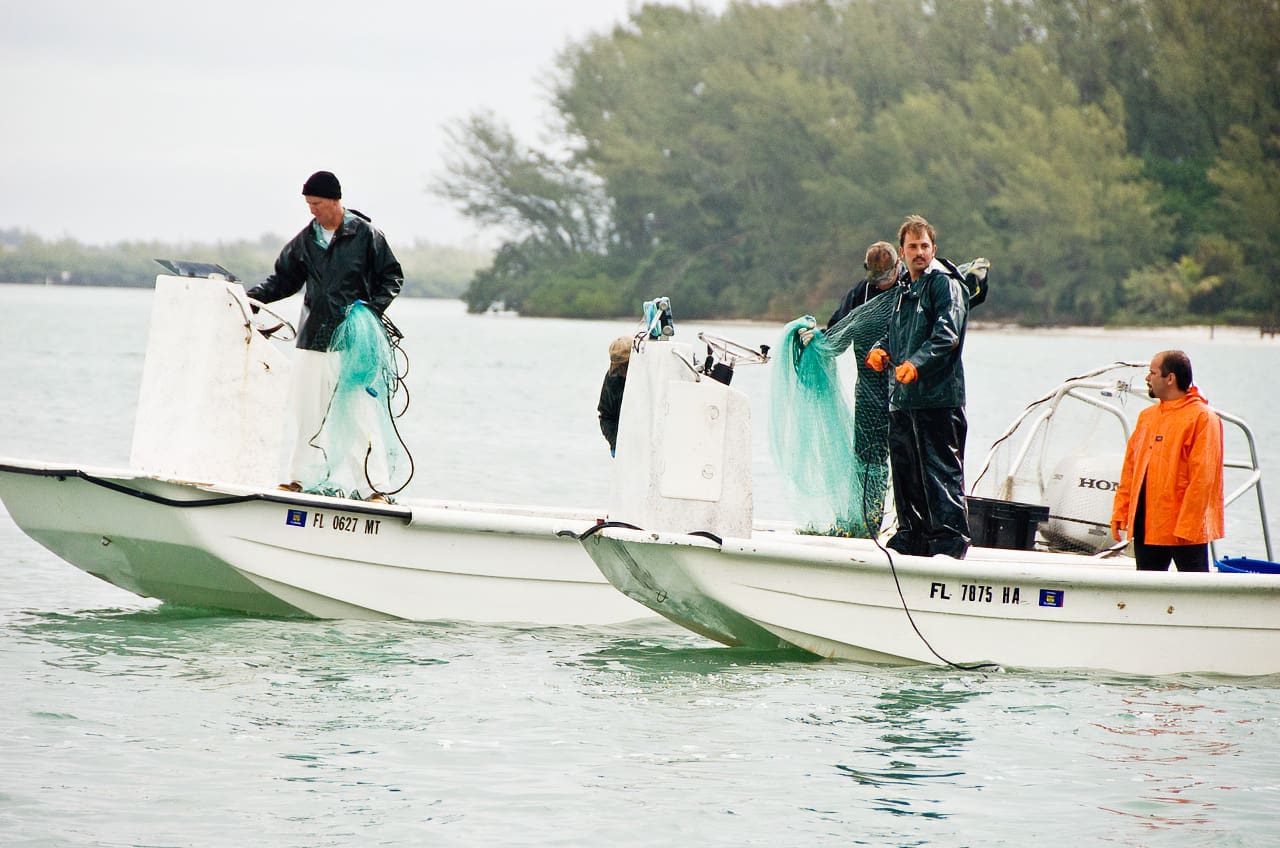
When I looked up, I saw a boat with two commercial cast netters approaching about two hundred yards in the distance. As the boat came closer the mullet stopped jumping, as if they had alerted the school and were hiding as the boat closed in. A coincidence? Maybe. But I’m guessing that if we want to know for sure we’ll have to ask a mullet!

Do you have a theory? Have you spoken to a mullet recently? Feel free to share a comment at this week’s Reel Time column posted on the Anna Maria Island Sun Facebook page.

Reel Time: A New Winter Strategy

Reel Time: A New Winter Strategy

Winter can have a chilling effect on local anglers and limit their quarry, but those who know how to mine the riches of any season turn their attention to the species that actually thrives in cold water.

The best example locally are known for their bait stealing prowess and the stripes they dress in. Sheepshead, while shunned by some anglers, are hard fighting, challenging to hook and excellent to eat. Savvy anglers’ target sheepshead around structures like bridges, hard bottoms, oyster bars and dock pilings, where they feed on barnacles, crabs and other crustaceans. They know to use small, stout, sharp hooks; and for best success, they (tongue in cheek) advise to set the hook a split-second before they bite!

As a fly angler, I’ve caught a few sheepshead over the years, all accidentally while fishing for other species. The times I’ve seen them and actually made a presentation, they never seemed to respond to my efforts.

When Ryan Gandy, the new executive director of the Sarasota Bay Estuary Program, recently mentioned he targeted them with a tiny fly I was slightly skeptical and all ears. Last week, Gandy and his son, Kyle, joined me for a day on the water and a chance for him to show me his technique.

Reel Time: A New Winter Strategy
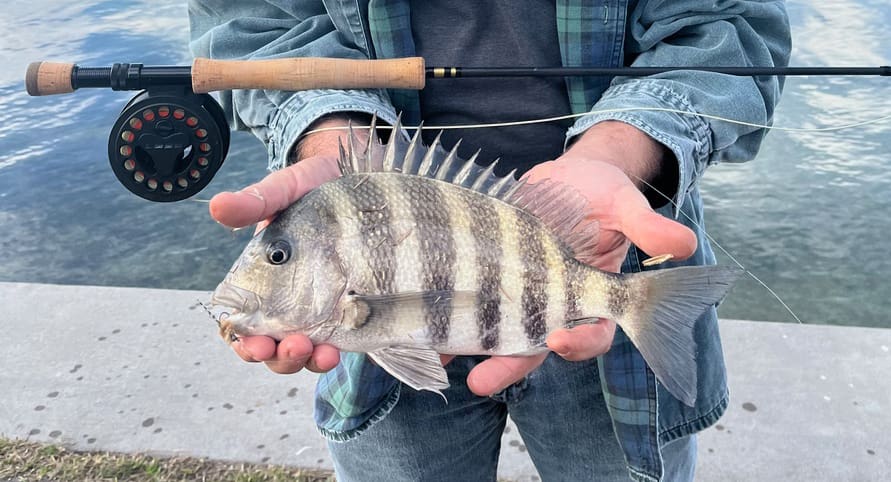
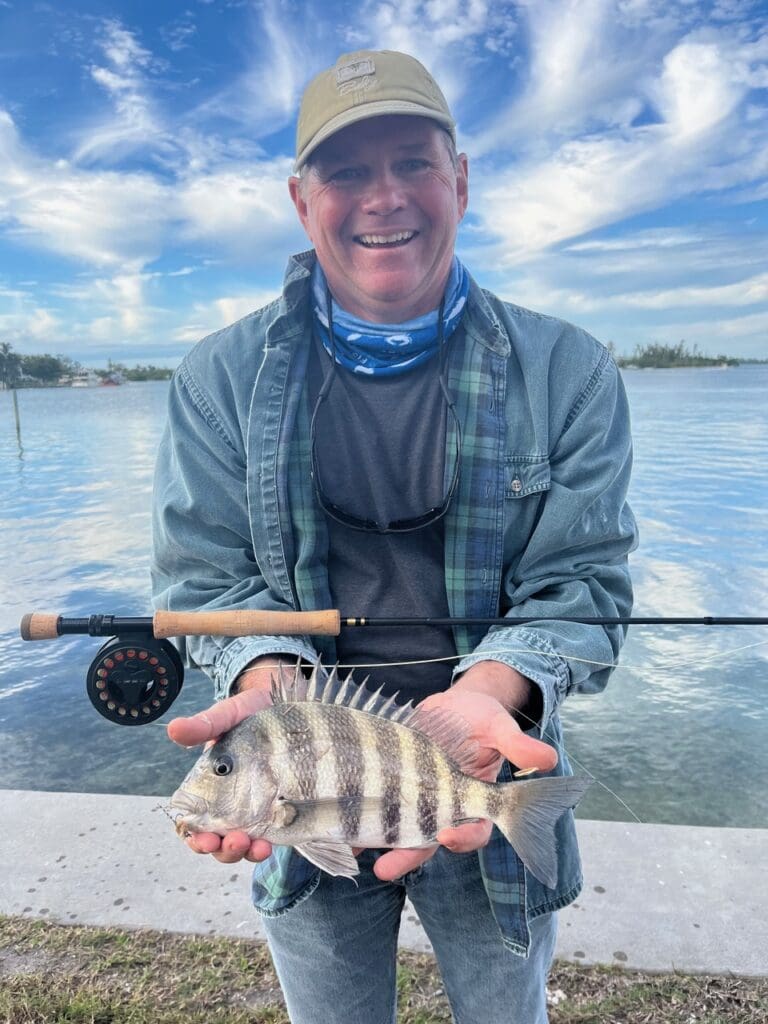
Ryan Gandy with proof that his fly fishing concept works. – Rusty Chinnis | Sun

We started the day fishing the edge of Long Bar Point in Sarasota Bay, but a south wind had roiled the water, making it off-color and hard to spot fish. The tide was low and incoming all day, so we moved north where the water along the eastern shoreline was clear. For the next four hours, we were plagued by scudding clouds that made spotting fish hard, but we still managed three redfish and a trout.

The sheepshead we did find were spooky, and most were not seen until we were so close Gandy had to make a roll cast presentation. While we did get a few follows, the sheepshead that seemed interested were spooked by the boat before making a commitment.

After fishing a number of spots, I mentioned that I had seen some sheepshead in shallow water just off a seawall near where I launched the boat, so we decided to try and make that a learning opportunity.

Luckily, the sheepshead were obliging; and after two casts, Gandy got a take and landed a sheepshead just as he had predicted. In the process, I was given a first-hand demonstration of his technique. Key to his strategy was making a cast close enough so the sheepshead could spot the fly, but not too close to avoid spooking them. He mentioned what good eyesight they had and how they could spot a fly at a distance.

He demonstrated this by casting about three feet past the intended target and then slow stripping it until the sheepshead spotted it. When the fly was spotted, it rushed over to inspect the perceived prey and that’s when the next critical move, or lack thereof, was employed. Stopping the fly and letting it sink to the bottom mimicked a crab trying to hide from a predator it knew it couldn’t outrun. When the sheepshead rushed over and tipped up on to the fly, Gandy moved it with a small strip. Doing this allowed him to determine if the fly had been taken; and if not, would mimic a crab that had been discovered and was attempting to flee. This happened twice, and on the third strip the sheepshead was hooked.

This was a perfect opportunity to see his strategy in practice; and it reminded me of how a fly angler teases a permit, which is one of the hardest fish to entice to a fly. It also made me aware that sheepshead are predators; and, like when fishing for permit, patience and persistence are key.

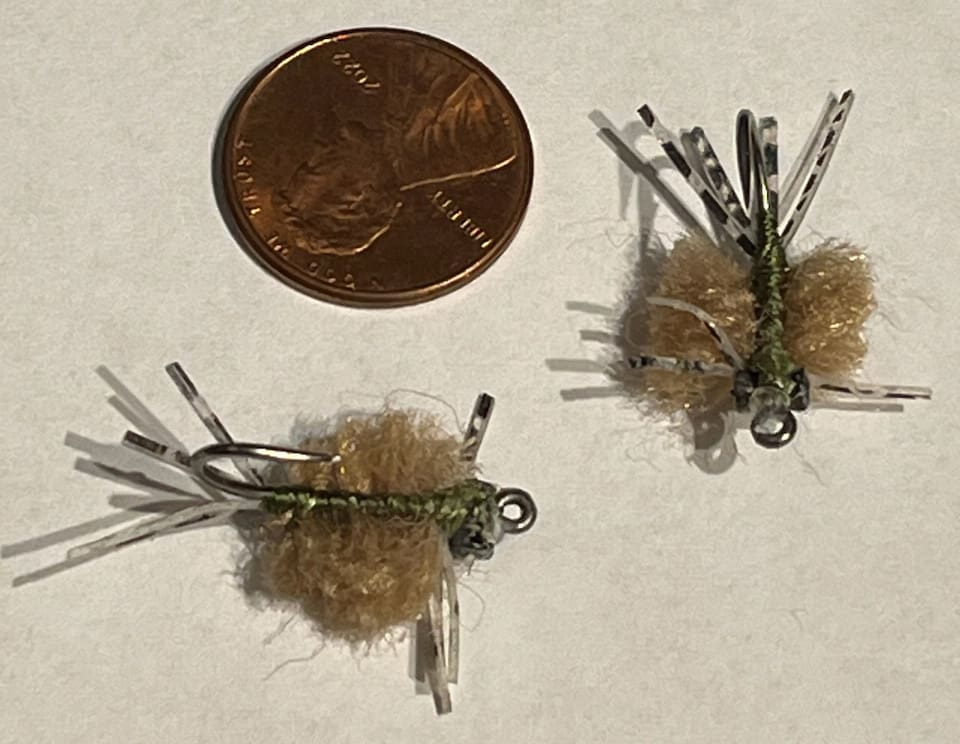
Gandy ties a small version of the Merkin (a time-tested permit fly) on a #4 hook. Other flies, like the Alphlexo crab, are also effective.

Reel Time: A New Winter Strategy
A penny gives perspective on the size of Gandy’s sheepshead merkin. – Rusty Chinnis | Sun

It great to get insight on a new angle on sight fishing after so many years of fly fishing. If you haven’t been targeting sheepshead with a fly, I encourage you to give this technique a shot. I saw it in action and can’t wait to give it a try. Use your senses, experiment, be persistent and you can experience a whole new challenge during our cooler winter months.

Resolutions that bear fruit

Resolutions that bear fruit

New Year’s resolutions are an annual ritual that goes back over 4,000 years. The earli­est known resolutions come from the ancient Babylonians. During their Akitu New Year festival (held in March), people made promises to the gods – such as returning borrowed tools, paying debts or settling disputes to earn divine favor for the coming year. Failure to keep these vows was believed to invite bad fortune.

In modern times, resolutions are a time to look back and reflect on what matters most, how we feel about our lives and what changes might improve our situ­ation. It’s also a time to consider what positive actions and fresh explorations might be planned for the new year.

Anglers can glean some valuable insight by reviewing their year in fishing, examining what they learned from their days on the water, what their experiences revealed and assess how this knowledge might lead to improved success and enjoyment in 2026.

While many resolutions are made and forgotten rather quickly (think losing weight or exercising more), a look back on the small things that yielded big results can make a significant difference in your enjoyment on the water in the new year.

Tackle and organization are promising places to review, including equipment like your boat and motor, waders, push pole and trolling motor. Experi­ence teaches it’s the little things that we overlook that come back to haunt us.

An example might be remem­bering to carefully tie knots, inspecting and testing them before fishing. The same applies to sharpening hooks, checking the drag and inspecting line for nicks and abrasions.

Another resolution you might consider is to expand your horizon – the proverbial “stepping outside the box.” That could mean exploring spots you’ve never fished locally, like the Manatee and Braden Rivers, or exploring a little further north and south. Some of my favorite destinations include Chassahow­itzka National Wildlife Refuge, Homosassa, Crystal River and Waccasassa Bay to the north and Charlotte Harbor and Pine Island Sound to our south.

An even more important resolution that is in every angler’s interest is getting involved in protecting and restoring the resource that sustains our passion and determines the fishing success of future generations. Fishermen have the most to lose by not working to protect and restore local waters and habitat.

This can be as simple as picking up trash on the water or keeping an eye out for and reporting illegal mangrove trimming. Most importantly it’s critical that we vet local, state and national politicians on how they voted on matters that affect the water we drink and swim in and the fish we pursue. If we vote the party line rather than on the issues that affect our fishing future we’re working against our own self-interest.

Take the time to write letters, attend commission meetings and join and support organizations like Suncoast Waterkeeper, Oyster River Ecology, Sara­sota Bay Watch, and VoteWater. These organizations work to protect and restore our marine ecosystem. A resolution to act this year will help protect what we value most for today’s and future generations. Failure to act will, as the Babylonians predicted, bring bad fortune.

Happy New Year!

Reel Time: Rebuilding oyster habitat

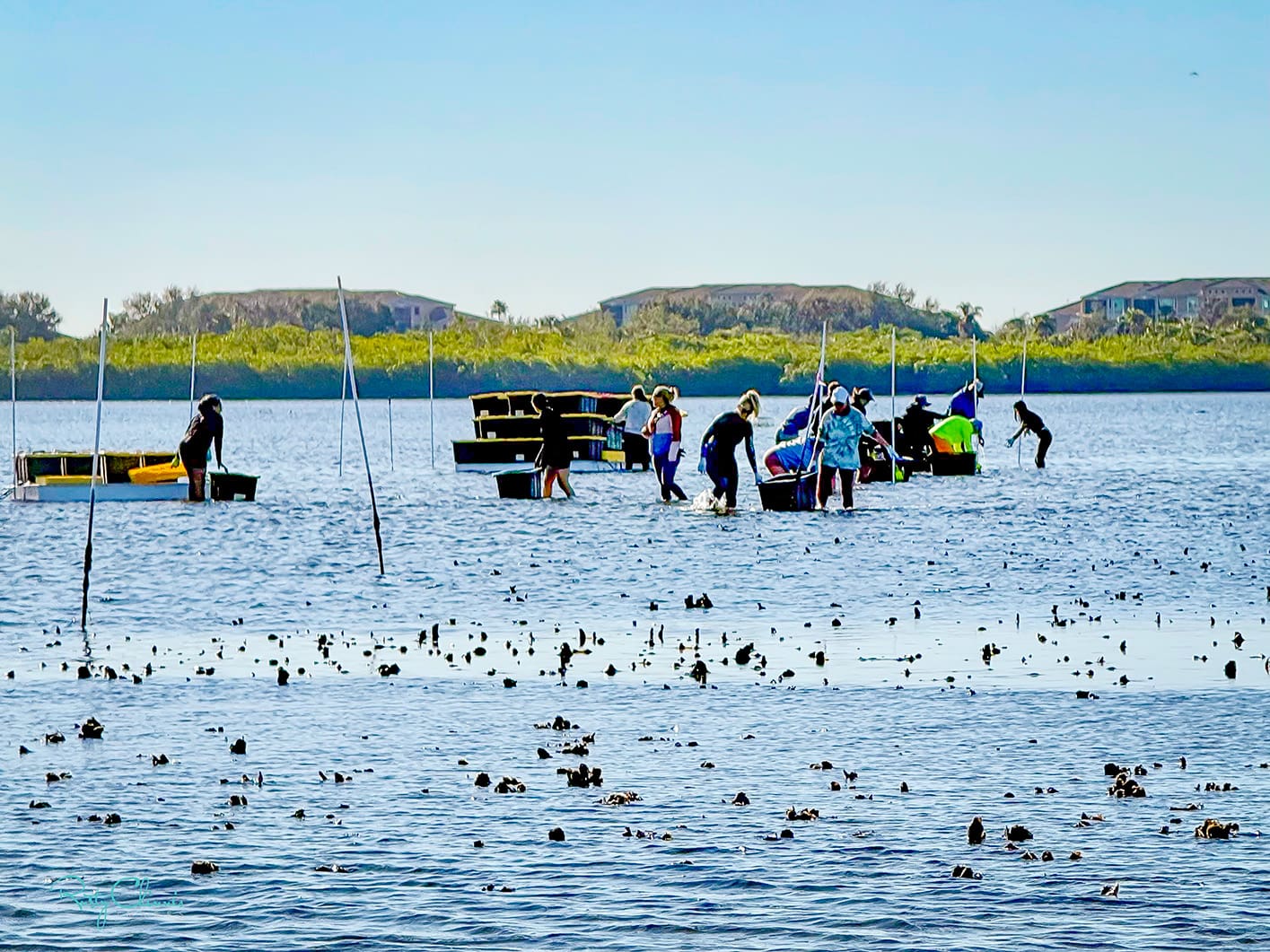
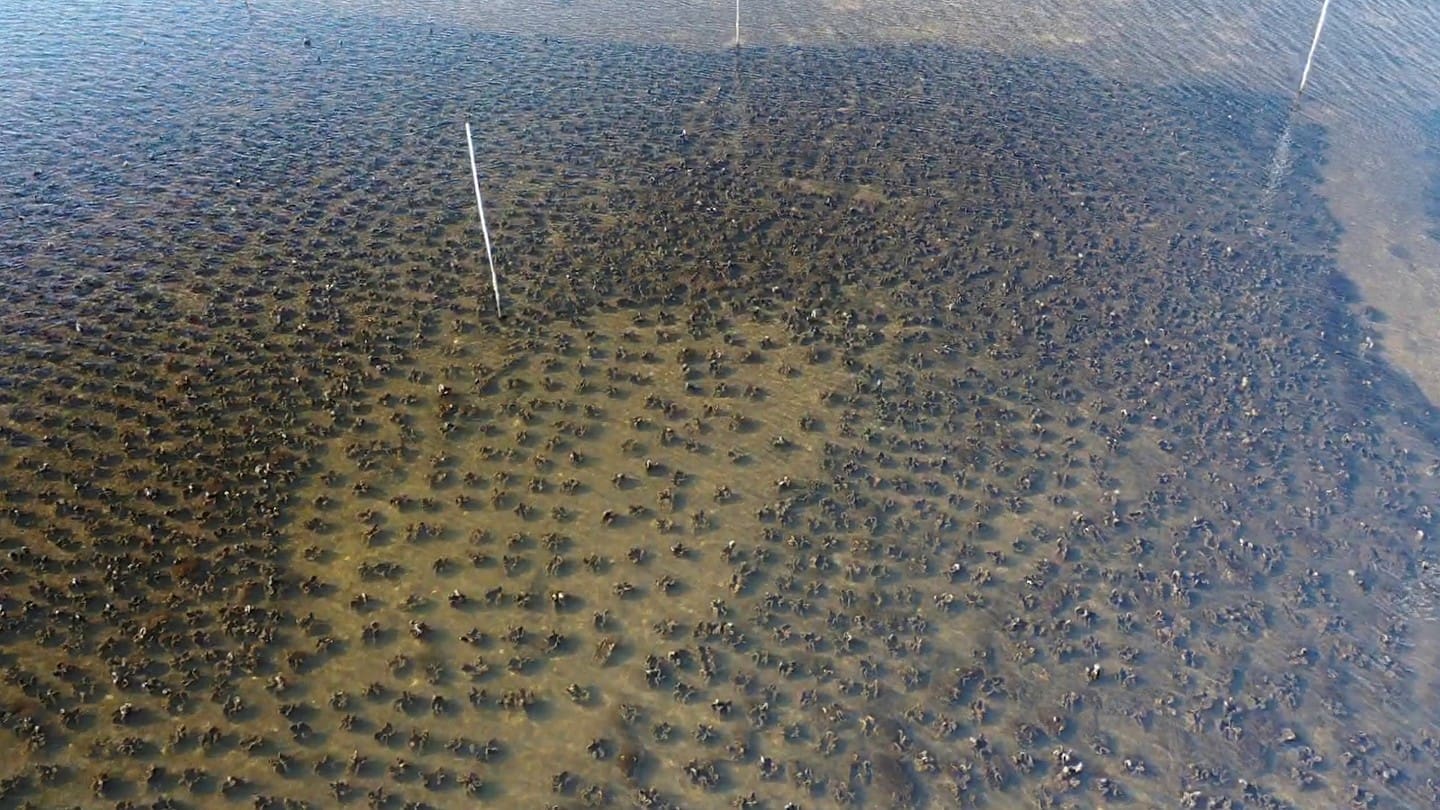
On Dec. 20, Oyster River Ecology (ORE) board member Rob Brown and I participated in an ORE rag pot installation in the upper Manatee River near Redfish Point. The volunteer event, a partnership with the Tampa Bay Estuary Program (TBEP), was a hands-on restoration work day that focused on rebuilding oyster habitat in the Manatee River.

The event, scheduled from 8 a.m. to noon at the Eileen Reef near Parrish, brought together volunteers passionate about marine conservation and ecosystem recovery. In an hour and 15 minutes, the volunteers installed approximately 2,000 rag pots that mimic the complex habitats that oysters form naturally, helping to enhance local reef structure, improve water quality through filtration and support diverse aquatic life.

The rag pots were the brainstorm of ORE Founder and Executive Director Damon Moore and provide a cost-effective and ecologically friendly reef substrate that establishes new surfaces for oyster larvae to settle and grow. The oyster rag pots (ORPs) are made by dipping cotton rags in a cement mixture and shaping them into pot-like forms.

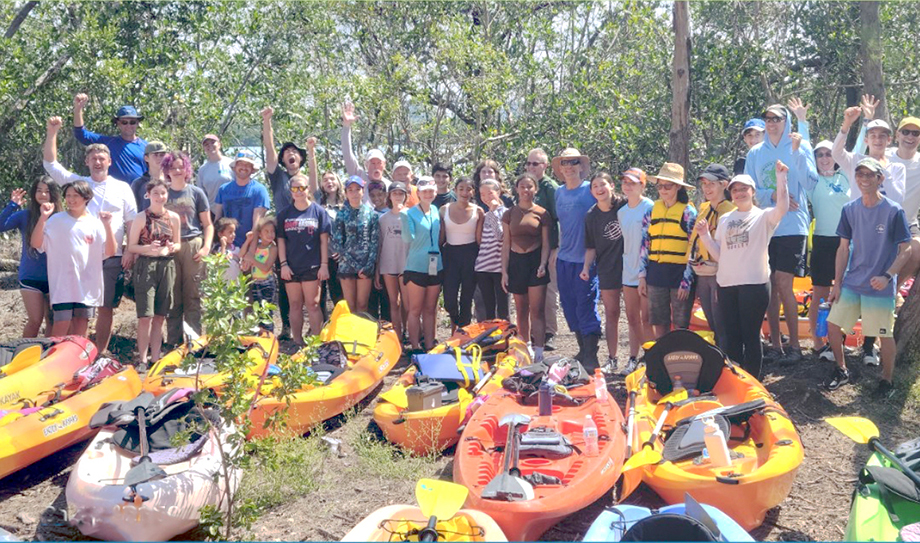
Volunteers launched kayaks along the river in Parrish and paddled approximately half a mile to the reef site. Once there, they received training and were divided into small teams led by ORE staff. Teams worked within pre-marked zones to install the ORPs at 1-foot intervals, a process that maximizes habitat coverage while minimizing disturbance to the river bottom.

The event was scheduled to coincide with an extremely low tide which ensured a water level (about 6–18 inches) that was more accessible and safer for volunteers to work in the tidal flats. Work included carrying materials, placing the rag pots and collecting tools and materials before paddling back to shore.

Besides restoration work, the installation day served as a community-building experience. Following the installation, volunteers gathered for a tailgate lunch provided by TBEP that offered volunteers a chance to celebrate their achievement, connect with fellow conservationists and learn more about ORE’s efforts to enhance the local marine environment.

Oyster River Ecology’s efforts are part of a broader movement to restore degraded oyster reefs, habitats that once flourished along Florida’s coasts but have been diminished by overharvesting, pollution and habitat loss. ORE’s mission is to engage volunteers in practical, science-based restoration techniques like rag pot installation. ORE not only helps rebuild vital marine ecosystems but also educates and empowers the community to take part in meaningful environmental stewardship.

To learn more about ORE’s mission, discover insight into local history (the Manatee River was originally named the Oyster River) and to be part of this game-changing movement, visit ORE’s website.

Reel Time: We protect what we love

Several years ago, I remember watching a tribute to the late John Lewis, the Black American politician and civil-rights leader. Lewis encouraged people to speak up and act when they see wrongs that need to be righted. While Lewis will be remembered for his bravery in the face of incredible hostility and hatred centered on human rights, his message, I believe, speaks to the threat facing local waters and the habitat that supports it.

Coastal habitats plays a pivotal role in the lives of everyone that resides and works on the Suncoast, from construction workers in Lakewood Ranch to the charter fishing guides that support their families and our passion as anglers. That’s why it’s so important that we protect these irreplaceable treasures so that future generations might have the same opportunities we’ve had.

You’ve read in this column about the pressures on our fisheries and the insults to water quality and habitat that underpin our passion and our economy. It’s critical that we support organizations like Suncoast Waterkeeper, Oyster River Ecology and Sarasota Bay Watch that are addressing these issues. Through outreach, education and advocacy these organizations defend communities against the threats to clean water and habitat. Suncoast Waterkeeper, founded by Sarasota environmental attorney Justin Bloom, has been effective in forcing municipalities from St. Petersburg to Sarasota to adhere to the laws set down in the landmark Clean Waters Act. The legislation, signed into law in 1972, establishes the basic structure for regulating discharges of pollutants into the waters of the U.S. and regulating quality standards for surface waters. Locally the law has allowed Suncoast Waterkeeper to force municipalities to address and redress the release of wastewater that has raised nutrient levels in local waters to dangerous levels.

Fortunately, it’s not too late to save these precious resources. Sarasota County, in a settlement with Suncoast Waterkeeper, just had a ribbon-cutting ceremony dedicating a $210 million dollar advanced wastewater system.

We all need to do our part by voting for proposals and leaders (both locally and federally) that support habitat protection and enhancement, as well as clean water. You can check a candidate’s voting record at the non-partisan League of Conservation Voters. For someone with no voting record, it’s enlightening to explore what interests are supporting their campaigns.
Join with Suncoast Waterkeeper to help with local clean water initiatives at www.suncoast waterkeeper.org. Learn about Sarasota Bay Watch and their work at www.sarasotabaywatch.org, and to learn about restoration at scale (17 acres of oysters), visit Oyster River Ecology. If we don’t step up, who will?

Reel Time: Double digits

Fly anglers generally don’t need to catch a lot of fish to consider a trip satisfying. Permit legend Del Brown said it best when I interviewed him in the Florida Keys. He told me never to let the number of fish you catch determine your enjoyment of the day. That was great advice, and while numbers aren’t so important, fly anglers do want to catch that “special” fish. For some fly anglers, it might be a tarpon over 100 pounds, a permit over 30 pounds or a bonefish over 10 pounds.

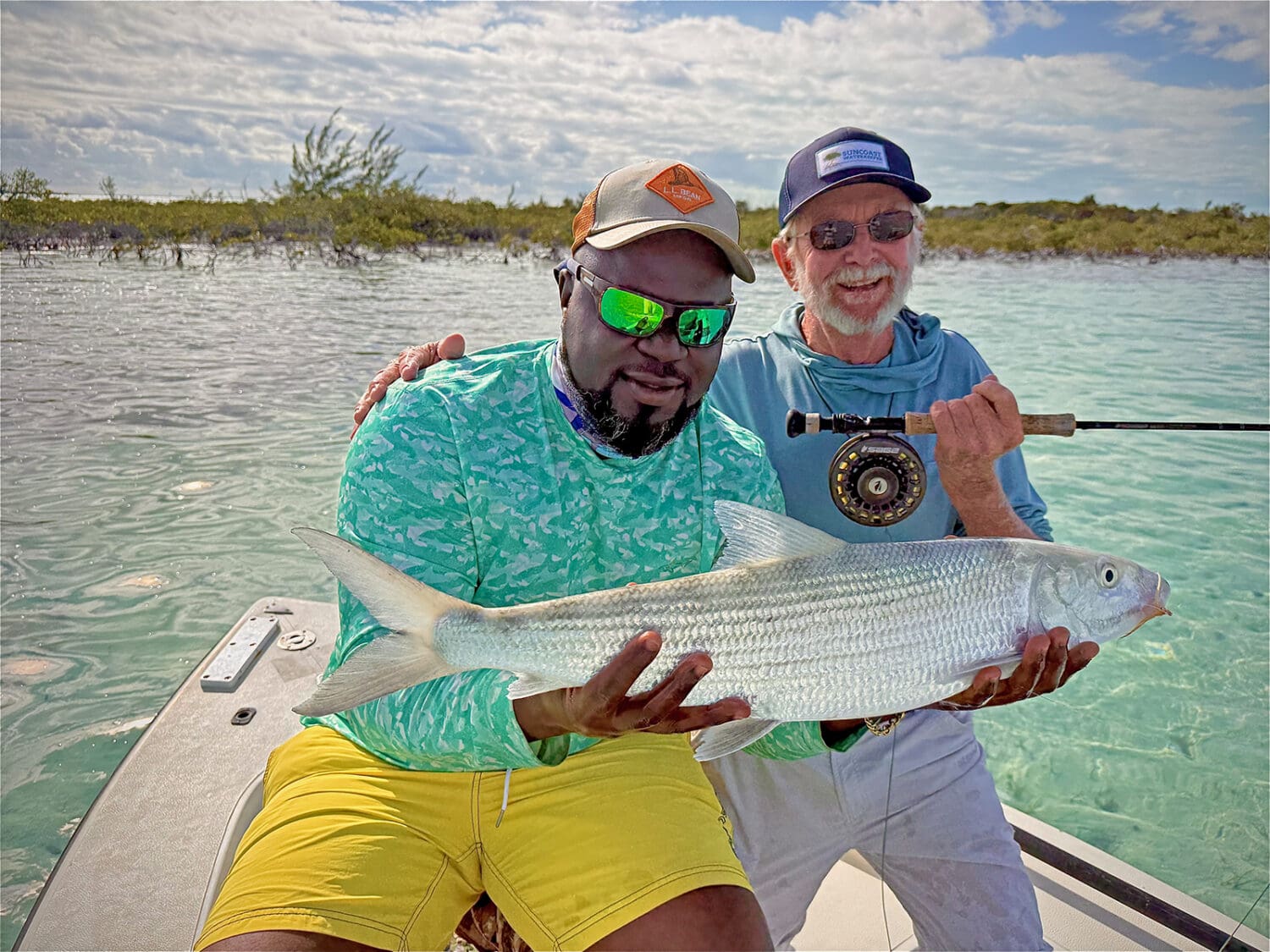
In my opinion the “holy grail” is landing a bonefish over 10 pounds. I’ve landed a few tarpon over 100 pounds, and a permit that pushed 40 pounds, but I had never managed to land a bonefish over 10 pounds. That all changed this past November when I fished the Middle Bight of Andros with Capt. Harry Neymour on a trip to Frankie’s Two Boys Inn.

Neymour’s roots run deep in the lore of bonefishing. His father, Charlie, uncle, Frankie, and grandfather, Ivan, have guided fly anglers in the waters near Behring Point for generations. Harry represents the new generation of the renowned family of fishing guides. On our fourth day of a six day trip, Harry and I were joined by Tampa angler and friend Leigh West.

As we rounded the bend from Cargill Creek onto the flats near Behring Point, Harry made the decision to head south and fish a small island in the middle bight, one he hadn’t fished in over a year. The weather was perfect with a 10-mph northeast breeze in a cloudless sky. Harry poled the boat along the edge of Big Lloyd Cay and after spotting and missing a couple of smaller fish, I heard Harry whisper, “Massive bonefish, 60 feet, one o’clock.”
As I swung my rod in that direction two large bonefish materialized about 40 feet away. Taking a deep breath, I raised my rod to the side to avoid spooking them and after one false cast, launched my fly, which landed about 15 feet from the cruising bones. As the fish approached, I waited for Harry to give me the word to start stripping. While I could see the fish, the Bahamian guides know just when to start a strip to make sure it’s close enough for the bonefish to see but not close enough to spook them. As the fish approached, it was hard to resist starting a strip, but I waited for Harry’s instructions. “Strip, strip, stop.”

There’s nothing more exciting than hearing those words and watching as the bonefish spots the fly and rushes over to inspect the perceived prey. “Strip, strip, stop – he’s got it!” came rapid fire as I did a strip strike and watched as the bone raced away, line and water flying from the spool. In short order, the bonefish was well into my backing as it suddenly changed course and headed for the mangrove shoreline. I applied as much pressure as I dared and used the drag and the rod to keep the fish out of the mangroves. Fortunately, the tide was just low enough to prevent the bonefish from running in or around the twisted roots and after several failed attempts it raced away from the structure towards deeper water. Then it was just a matter of applying constant pressure and working the fish to the boat. As I held my rod high, Harry reached down and expertly lifted the bonefish into the boat, proclaiming it to be close to 13 pounds. Finally, I had my first double-digit bonefish!

If you haven’t fished the Bahamas, I highly recommend the experience. While I’ve had the pleasure to fish multiple locations throughout the Bahamian archipelago, I can’t think of any place I would recommend for new and experienced anglers than Frankie’s Two Boys Inn. While you’re there make sure to ask for a day with Capt. Harry Neymour!

Reel Time: Winter fishing- slow and low

When winter arrives with cold winds and plunging water temperatures, it’s time to change your angling strategies. While winter fishing can be challenging, there are opportunities for some excellent action if you use your senses and think like a fish. While there are no “magic bullets,” awareness and persistence really pays dividends when the thermometer begins to plunge.


The most popular species (snook, redfish and trout) will often concentrate in areas where the surrounding waters are more moderate. Snook are most sensitive to the changing water temperature and will migrate to rivers, canals and protected channels. Explore areas where dark bottom absorbs the heat of the sun and warms the surrounding water. Shallow bays and bayous that heat up quickly on sunny days and flush warm water on late afternoon outgoing tides can be particularly productive. Even the seawalls that line residential areas can warm up the water and attract fish on cold days. It doesn’t take much of a temperature difference to attract fish. You’ll know these areas because they’ll feel warm to you as well as to fish.

When fishing a particular area, pay attention to the exposure that receives the most sun during the day. Areas protected from a cold north wind will be more desirable to fish. The wind moves the water, keeping it from absorbing the sun’s rays and warming. A combination of sun exposure, depth and the color of the bottom will all figure into the warm water equation.

When the weather prevents the sun from warming the water, look for deeper pockets to harbor fish. The deeper areas warm more slowly, but they also cool more slowly. Channels, holes under big boats in canals, deep pot holes on the flats and boat basins are all potential refuges for fish during cold weather. Rivers and creeks are also good sanctuaries depending on the conditions.

While many local species are negatively affected by the cold water, many, like trout and redfish, have a high tolerance. Others actually thrive on it. The best example is the sheepshead. These fish, while shunned by some anglers, are hard fighting, challenging to hook and excellent to eat. Target sheepshead around structure where they feed on barnacles. One way to attract sheepshead is to scrape barnacles from pilings on an outgoing or incoming tide. A small live shrimp is hard for them to turn down; fiddler crabs are also prime baits. A small, stout and sharp hook is necessary for their tough mouths and you have to be quick setting the hook. It’s often said that you need to set the hook a split second before they bite!

Once you find the ideal conditions, remember to slow your presentation. Lures and bait fished slowly, and close to the bottom, (low and slow) will generally draw more strikes than a quick retrieve. Use your senses, experiment and be persistent, and you can experience some very good fishing during our cooler winter months.

Help protect our waters on Giving Tuesday

Suncoast Waterkeeper is calling all residents to stand up for clean water. In just two weeks, communities everywhere will unite for Giving Tuesday, a day built on gratitude, generosity and collective action. At Suncoast Waterkeeper, that spirit fuels the work we do every single day to protect the waters that define our home.
Your support drives real, measurable impact. It helps Suncoast Waterkeeper:
• Test 19 bayfront sites weekly for bacteria;
• Monitor nutrients each month to track pollution trends;
• Expand our PFAS sampling to uncover hidden threats;
• Defend vital habitats like mangroves and seagrass that keep our coast resilient;
• Engage residents to become informed voices for clean water; and
• Take responsible legal action when our waterways and communities are put at risk.
This builds the foundation for safer beaches, healthier ecosystems and a future where our waterways remain places of joy, recreation and connection.
As Giving Tuesday approaches, Suncoast Waterkeeper hopes you will include us in your giving plans. Your gift, no matter the size, helps safeguard the Suncoast and ensures our clean water work stays strong.
Anyone who supports Suncoast Water and makes a donation by midnight on Dec. 2 can enter to win a free copy of Rivers Always Reach The Sea: Angling Stories by New York Times bestselling author Monte Burke, plus a ticket to his talk at Bookstore1 on Tuesday, Dec. 9. Join Burke and Suncoast Waterkeeper for an inspiring evening about angling, conservation and the stories that connect us to our waterways.
Give early, support clean water and don’t miss your chance to win. Suncoast Waterkeeper has become the premier environmental organization in the region and has made a huge impact in protecting our waters and holding polluters accountable. Recent legal action by SCWK has the City of Bradenton under a consent order for the massive amounts of sewage that they have been releasing into the Manatee River due to an aging and failing infrastructure.
Rusty Chinnis is chairman of Suncoast Waterkeeper

Reel Time: Fall is in the air

Fall is in the air. Most of our windows and doors are open and we’ve turned off the A/C, the time change has turned the lights on earlier and made the afternoon light fade all too soon. The changes ushered in by cooler temperatures and shorter days produce some of the best nearshore and offshore piscatorial pursuits. As water temperatures drop, schools of bait migrate inshore with pelagic species like kingfish, Spanish mackerel, false albacore (little tunny), cobia and tripletail hot on their tails.

Now is a great time to have tackle in order, a well-stocked rod rack and a time to keep a keen eye cast towards the sky for diving birds and breaking fish when you’re on the water. All these fall species will take live bait, lures or flies and can be caught on spinning, bait casting or fly tackle. Except for larger king mackerel and cobia most can be landed with light tackle, which adds to the challenge.

Rigging will depend on the species you’re targeting. Since it’s possible to encounter so many different species in a single outing, multiple outfits are a good idea. Rigging options include wire, monofilament, long shanked hooks or a combination. It’s possible to catch a kingfish or Spanish mackerel without wire but your odds aren’t good. Most species shy from wire, especially in clear water and when the sun is high. That’s the time to switch to a long shank hook or a heavy (60 pound) monofilament leader. Even then it’s possible to get cut off, but the action can more than make up for the possibility.

When using wire, an 8- to 12-inch trace can be tied to monofilament using an Albright Special knot (best) or a swivel. If you use a swivel, use black as opposed to a silver one to prevent fish from mistaking it for forage. American Fishing Wire and Orvis make an extremely flexible wire that can be knotted to your lure, hook or fly like monofilament; it also provides greater flexibility and less stretch than monofilament. Umpqua makes a product that’s ideal for fly anglers. Their Re-Twistable Haywire Twist wire is reusable and will allow you to change flies in a snap. This is the quickest and most painless system to rig wire for toothy fish. It’s safe to switch to wire under low light conditions like early morning, overcast days and late in the day.

One of the most effective ways to find schooling fish in the fall is to look for surface action and diving birds in the inshore Gulf waters. But don’t assume fish aren’t present if there are no outward signs of them. Predators can often be found around structure, reefs and wrecks that attract bait.

When you find feeding fish, you can approach them by trolling, drifting or with the use of a trolling motor. Whatever method you employ, never let your boat pass through or get too close to the action. With more and more boats and anglers pursuing feeding fish, they are likely to sound and move away. The best bet is to stay outside the action but within casting distance. If trolling, make wide turns so only your lures pass through the action.

Live bait anglers target schooling fish in several ways. By anchoring upcurrent from a likely area they may deploy a chum bag and then toss wounded live baits to draw fish into casting range. This can be an extremely effective method. Those that prefer artificial lures find spoons particularly effective as well as jigs like the DOA CAL or the Berkley Gulp. One of the most exciting and effective types of lures are top water models like the MirroLure Top Dog, the Heddon Zara Spook or Rapala Saltwater Skitter Pop. Not only is the strike visual and often explosive, but their action can attract target species.

Fly fishing is also an effective and exciting way to target fall species from cobia to tripletail, Spanish mackerel and even kingfish. The same rigging applies and top water flies like the Crease fly or Garthside Gurgler can produce some memorable strikes. Clouser Deep Minnows are also a great choice for Spanish mackerel and false albacore. This is a good time of the year to have a 10- or 11-weight rod rigged with a big black fly should a migrating cobia make an appearance.

Whatever your fishing style, take advantage of the great action you’ll find in area waters this fall. If you’re new to the game, consider hiring a guide. This is a great way to learn the ropes and a great value when shared with a friend.

Reel Time: Partners grants good for bay

Sarasota Bay Partners grants are competitive awards for projects in the Sarasota Bay watershed that promote habitat and water quality restoration, environmental education, community involvement and stewardship to improve the overall quality of Sarasota Bay and its tributaries.
Stormwater runoff, sewage spills, leaking septic tanks and a thousand other insults threaten the health of Sarasota Bay. Add to this warming temperatures, rising sea levels and altered weather patterns, all of which will continue to impact our natural and built environments.
I’m often asked what an individual or a group can do to be part of the solution instead part of the problem. One way to make a difference is to take advantage the Sarasota Bay Estuary Programs Bay Partners grants. The SBEP was formed with the aim to protect Sarasota Bay and its environment, the economic engine of the region and the reason most of us live here. Local actions like this help prepare our communities and estuary for these changing conditions. There are many opportunities to engage. These include but are not limited to:
• Planting shade trees in highly paved urban areas;
• Installing rain gardens and bioswales to filter runoff from impervious surfaces;
• Diverting gutter downspouts from impervious surfaces to planter boxes, garden beds or other permeable areas, or to rainwater harvesting systems like rain barrels and cisterns; and
• Implementing living shorelines or seawall modifications that will allow mangroves to migrate upslope.
Recently, Banyan Bay on Longboat Key took advantage of a grant to turn an area they had nicknamed the “swamp” into a vibrant area that beautified the grounds, created a natural pollinator garden for birds and insects and helped protect Sarasota Bay, which fronts the property.
The project was led by residents Dr. Jeff and Terri Driver. Their experience and the outcome are best expressed in Terri’s words: “We had some uncertainty about whether our proposed project would fit the requirements for a grant from SBEP Partners. A friend recommended we call SBEP and simply ask if they would look at our space and situation and see if it was appropriate for a grant proposal. On a very tight timeline and on short notice (because the proposal was due in about two and 1/2 weeks, SBEP grant manager Darcy Young visited our property and evaluated our proposed site, agreeing that it was exactly what would help Sarasota Bay if re-planted to native species. SBEP was very helpful in response time and providing guidance to complete our grant application. SBEP recommended a couple of native plant nurseries, but Annie Schiller at Florida Native Plant Nursery was very responsive. On very short notice, Annie visited, evaluated our proposed renovation area and very quickly provided a list of plant species and number to be planted specific to our wet and dry areas. She also reminded us about mulch requirements. We called Annie the morning our proposal was due to make changes, and Florida Native Plants Nursery provided updated estimates two hours before our proposal was due. They were very responsive to changes. Once we received the grant (yay!), Florida Native Plant Nursery brought the plants in and helped with recommended placement. Our community members planted all 134 plants, creating a new native forest at The Banyan Bay Club.”
On Feb. 27, members of the press and the association attended a ribbon-cutting ceremony to dedicate the new space and celebrate their investment in protecting Sarasota Bay while improving the condominium grounds, a true win/win experience.
Although the next grant deadline is March 2, now is an excellent time to plan how you can take advantage of this program and make a difference while enhancing your place in the bay’s watershed. For more information and to apply for a grant, go to https://sarasotabay.org/get-involved/apply-for-a-grant/.

seagrass

Reel Time: The importance of seagrass

The seagrass beds that carpet Sarasota Bay harbor a tremendous array of life, a critical and diverse ecosystem that is out of sight to most except on lunar low tides.

Seagrasses are actually underwater flowering plants that serve a number of important functions. They produce oxygen, bind sediments and baffle wave action while cleansing the water column. Seagrass roots, their leaves and the epiphytes and microalgae that cling to them clean water by converting dissolved nutrients into plant matter. Besides giving us clean and clear water, seagrasses are home to the organisms that provide food and shelter for fish, crustaceans, shellfish and wading birds. They also are food sources for manatees, sea turtles and various fish and crustaceans. Because they flower, seagrasses require sunlight and are limited to clear, shallow waters.

Of the 52 species of seagrasses worldwide, only seven are found in Florida. Three main species are found on Florida’s southwest coast. They include turtle grass (Thalassia testudinum), shoal grass (Halodule wrightii) and manatee grass (Syringodium filiforme). The historical loss of these species has been extensive throughout Florida. Tampa Bay has lost 81% of its historical seagrasses, Sarasota Bay 35% and Charlotte Harbor 29%. Poor watershed management (stormwater runoff and sewage disposal), dredge and fill operations and scarring from boat propellers have taken a heavy toll on Florida’s seagrasses.

Through the elimination of small, poorly-maintained regional sewage systems and the work of organizations like the Sarasota Bay Estuary Program, Tampa Bay Estuary Program and Tampa Bay Watch, programs were instituted that began to turn the tide on water quality.

Anglers, from experience, are aware of the importance of these prolific, shallow beds. They experience firsthand the myriad interactions that produce fertile fisheries. They may not understand the intricate web of existence that proceeds from the microscopic level to the fish on the end of their line, but they reap the benefits nonetheless. Government scientists (NOAA) consider seagrasses to be of such importance that they have adopted a “no net loss” policy to manage them. Despite this pronouncement, seagrasses remain under assault.

Preventing the loss of valuable seagrasses must be a high priority. Watershed management, replanting, avoidance of direct impacts to existing grasses, and mitigation are avenues to reach those goals.

Mitigation involves the replacement of seagrasses impacted by residential and commercial development. Unfortunately, the literature reveals that the effectiveness of mitigating seagrass damage is considered, even among the leading wetland scientists, as marginal at best.

In recent years, seagrass rebounded in Sarasota Bay. Unfortunately, that trend reversed after the red tide of 2018. While it is a foregone conclusion that development will continue to impact coastal areas and their seagrass resources, it’s critical that decisions are made that will demand accountability and smart development while protecting the quality of our most valuable local resources. Enlightened citizens, anglers and their interest groups must take part in this decision-making process.

Cost considerations often eclipse concerns for seagrasses, but research reveals the true value of these resources. A study (Virnstein and Morris 1996) conducted in the Indian River Lagoon estimated the value of seagrass to be $12,500 per acre, per year, based solely on economic values derived from recreational and commercial fisheries. In the last few years, the effects of rampant development, antiquated and failing infrastructure and associated stormwater runoff are feeding red tide events and algae blooms, and threatening the very existence of the bay’s seagrass system.

Groups like Suncoast Waterkeeper and Tampa Bay Waterkeeper, with the Sarasota Bay Estuary Program, alarmed at the prospect of a potential collapse of the bay (like the one that has plagued the Indian River Lagoon), have sprung into action to alert the public through education, effective policy and in the case of the Waterkeeper groups, hold governments accountable under the rules of the Clean Water Act of 1972. It is imperative that citizens let leaders know they will hold them responsible to protect the resources that form the basis of our quality of life as well as the local economy. Next week: “Where Did The Grass Go?”

The promise of philanthropy

The promise of philanthropy

Philanthropy in Sarasota and Manatee counties is a well-organized network of foundations and active donors with a strong focus on community resilience, enhancing nonprofits’ capacity to grow and responding to local challenges.

Two of the main nonprofits that work to protect the waters and marine habitat of the area, Sarasota Bay Watch and Suncoast Waterkeeper, have both been able to make a larger impact thanks to grants from local foundations like the Barancik Foundation, the Manatee Community Foundation, the Community Foundation of the Gulf Coast, the Mote Scientific Foundation and the Community Foundation of Sarasota County (CFSC).

In April, CFSC awarded $322,450 to 29 nonprofit orga­nizations to enhance operations, support technology upgrades and strengthen strategic planning in the region.

The Charles & Margery Barancik Foundation played an important role in capacity build­ing for Sarasota Bay Watch and awarded a two-year, $200,000 grant to Suncoast Waterkeeper. In addition, the Mote Scientific Foundation (not related to Mote Marine Laboratory) has been the driving force behind Suncoast Waterkeepers’ ongoing water quality testing.

Last week I had the pleasure of attending an event at the new St. Regis Resort on Longboat Key that was organized by Sarasota Magazine. Sarasota Magazine supports local philanthropic works by highlighting the work of nonprofit organizations, fundraising events and com­munity initiatives across Sarasota and Manatee counties. Through its editorial features and digital outreach, the magazine amplifies the work of nonprofits, raising awareness of their missions, highlighting donor opportunities and celebrating impactful partnerships. By doing so, Sarasota Magazine helps connect the philanthropic community with causes in arts, education, health, environment and human services, enhancing visibility for organizations that might other­wise struggle for recognition.

The St. Regis was the perfect venue for this event. Hotel Manager Kara Hardiman welcomed guests and pointed out that their commitment to the larger community was best summed up by a quote from Lora Whitney (Whitney Beach): “We are determined to create a space of sanctuary that celebrates the natural beauty of our region at the same time as it encour­ages education, exploration and implores us to slow down and make memories with each other.”

Besides expressing pride in being part of a women-led management team, the resort commissioned a painting by Lauren Marshall entitled, “Matriarchs of The St. Regis Longboat Key Resort.” The paint­ing honors (and they named their exquisite suites after) women who were in their words “… trail­blazers whose impact shaped the region’s cultural, scientific and philanthropic landscape.” They include Caroline Astor, the undisputed queen of New York society in the gilded age and Eugenie Clark, the pioneering marine biologist who founded Mote Marine Laboratory in 1955 and broke barriers for women in science. Others include Lora Whitney, Marie Selby, Mable Ringling, Irene Colson (a vital figure in Sarasota’s early African American community), and Katherine Klauber, the president and general manager of the Colony Beach Resort, now home to the St. Regis.

The resort features an “Under the Sea Lagoon” – a 500,000-gallon saltwater habitat containing reef fish, rays and other marine animals, guided by a staff of resident marine biologists/aquarists who educate guests about the ecosystem. Their children’s club, called the Reef Rangers, offers a “marine explorer camp” where younger guests engage with aquatic life and learn about local marine environments and species.

A highlight of the evening was a panel discussion among the leaders of local foundations that centered on the challenges facing nonprofits and the area’s most vulnerable citizens they serve due to federal funding cuts. A part of the discussion centered around strategies to continuing serving the needs of environmental nonprofits that support the basis of the region’s appeal, and those most in need. The evening was an inspiration and a terrific opportunity to get to know and mingle with the region’s most engaged philanthropists.

Join water warriors for an inspiring brunch

Join water warriors for an inspiring brunch

Suncoast Waterkeeper’s (SCWK) annual fundraising event, Brunch for The Bay, is coming to the Sarasota Yacht Club on Sunday, Nov. 9 from 11 a.m. to 2 p.m. Don’t miss this opportunity to support SCWK’s clean water mission and meet and hear from one of the world’s environmental “rock stars.”

This year’s keynote speaker, Rob Bilott, is known worldwide as the attorney who took on chemical giant DuPont and uncovered the dangers of PFAS contamination. His “David and Goliath” story was depicted in the 2019 feature film, “Dark Waters.” Bilott has dedicated his career to protecting communities from the toxic threat of “forever chemicals.” At Brunch for the Bay 2025, he will present “Uncovering the Global Threat of PFAS ‘Forever Chemicals’ Contamination.”

One of the notable sponsors of this year’s event is the Holmes Beach Clean Water Ad Hoc Committee. The group serves as an advisory commit­tee to the City Commission. It was conceived by Mayor Judy Titsworth, whose family (the Holmes in Holmes Beach) has been on Anna Maria Island for generations. Titsworth’s idea comes from a lifetime of seeing the changes firsthand that so few of us late arrivals appreciate.

In her own words, she explains the concept behind the committee and the life experiences that led to its formation: “The Clean Water Com­mittee’s vision is to ensure waters will meet the designated human uses for drinking, shellfish harvesting or swimming and fishing, while sus­taining healthy natural ecosystems that support natural processes and resilient native plant and animal communities. Growing up on the Island in a house on the bay gave me a most remarkable childhood. My sister and I spent most of our days outside playing in the bay and along the natural shorelines. The bay isn’t what it was back then and much of the marine life has drastically diminished due to the impacts from development, pollution from storm­water runoff, Piney Point and sewage spills. The clean water committee is a recommending ad hoc board that I developed to assist in identifying so­lutions to improve our water quality by reducing our impacts. We greatly support the efforts made by Suncoast Waterkeeper in educating the public about the adverse conditions of our waters, holding polluters account­able and their commitment to water quality testing and documenting the effects that the pollutants have on seagrasses and marine life.”

There’s never been a better time to help support the clean water mission of the committee and Suncoast Waterkeeper. Meet like-minded advo­cates, enjoy a great meal overlooking Sarasota Bay at the area’s premier Yacht Club and be inspired to join and advance this critical mission. Get your tickets before they sell out.

I look forward to seeing you there.

Rules change regarding derelict vessels

Rules change regarding derelict vessels

“Derelict” boats in local waters have been a problem that I’ve been questioned about over the years.

Being on the water myself for almost four decades, it’s been disheartening to see the numbers of these boats steadily increase. They are unsightly for sure but the damage they do to the local grass flats is hidden from the view of most casual boaters.

This wasn’t the case for Capt. Justin Moore, who knows the importance of the grass flats and sees the damage derelict boats do in real time. A boat anchored on a grass flat from a distance might be floating on a high tide but often is resting on and killing grass on a low tide.

The next high tide floats it again, it shifts with the wind, and it settles in a new spot. Last week Moore sent me a video of several “derelict” boats that had recently shown up on the grass flats just off Cortez Key, known in the village of Cortez as Kitchen Key.

The timely video showed the damage and encouraged me to investigate. What I found out was heartening and something I want to pass along. Florida law has defined “derelict” vessels broadly in the past and legislation has made it egregious to address these vessels. But recent legislation enacted this year (Senate Bill 164) introduced stronger requirements around anchoring, long-term mooring permits, clearer authority for law enforcement and greater flexibility for removal funds.

Rules change regarding derelict vessels
Senate Bill 164 addresses “at risk” vessels. – Rusty Chinnis | Sun

Now the law defines these vessels as “at risk,” so those which might not yet be derelict but show signs that they may become so can be addressed. Vessels can be considered at risk when they:

  • Are taking on water without the ability to de-water;
  • Have open or unsealed enclosed spaces;
  • Have broken loose from anchor or are a mooring risk;
  • List because of water intru­sion; or
  • Lack effective propulsion.

The “at-risk” category lets FWC and other law enforcement intervene earlier to prevent more serious deterioration.

As the FWC website explains, “Recent legislative changes (effective as of July 1, 2025) strengthened the tools available to FWC. These include:

  • Clarified ownership defini­tions: A valid vessel title now acts as prima facie evidence of ownership;
  • Enhanced requirements for “effective means of propulsion” evaluations if requested by law enforce­ment;
  • Public nuisance designa­tions: three citations within 24 months for any at-risk condition can allow a vessel to be declared a public nuisance, which allows removal as if derelict;
  • Noncriminal infractions expanded (e.g., anchoring long term, expired registrations) to allow mailed citations;
  • Penalties for repeat offenses escalated: Misdemeanor to felony depending on the num­ber of offenses.

FWC has several programs aimed at preventing vessels from becoming derelict, as well as removing ones already in bad condition:

  • Vessel Turn-In Program (VTIP): Allows owners of at-risk vessels (with at least one warn­ing or citation) to voluntarily surrender the vessel. FWC then disposes of it at no cost to the owner. This aims to reduce future derelict vessel numbers and legal exposure for owners;
  • Derelict Vessel Removal Grant Program: Provides fund­ing (100% reimbursement) to local and county governments for removing derelict vessels;
  • Rapid Removal Grants: Cases that meet certain criteria and need more urgent removal can access a faster track for grants;
  • Block Grant Option: For local governments that have demonstrated capacity (e.g., removed many vessels over past years), FWC allows block grants so they can remove eligible vessels without individual pre-approval for each removal.

FWC law enforcement (along with state, county and local officers) conducts investiga­tions and inspections. When an at-risk vessel is identified, owners may receive warnings or citations. If conditions persist, the vessel may be declared a public nuisance or derelict, trig­gering removal actions. The law also provides penalties (fines, potential criminal charges) for abandonment or intentional improper disposal.

Ryan Gandy, the incom­ing executive director of the Sarasota Bay Estuary Program, provided me a link to file a report, and I was pleasantly surprised when I made a call and was promptly connected with a case officer who promised to visit the site and report back. It appears that we finally have some resources that take these nuisance vessels seriously.

On its website, the FWC clarifies the process: “Overall, FWC’s approach is multi-pronged: Defining and dis­tinguishing between “at-risk” and “derelict” vessels; using preventive programs (especially voluntary surrender under VTIP) to reduce the number of vessels sliding into dereliction; leveraging grants (including block grants) to assist local governments; strengthening legal tools and enforcement; and tightening ownership/title responsibilities. The aim is to protect waterways, navigation, habitat, safety and keep state and local costs down by inter­vening earlier when possible.”

If you know of any vessels that might fall under these definitions, I encourage you to report them. Our marine habitat and the quality of our fishery depend on citizens taking action!