
Tag: Reel Time

It’s tarpon time off Anna Maria Island

It’s tarpon time off Anna Maria Island

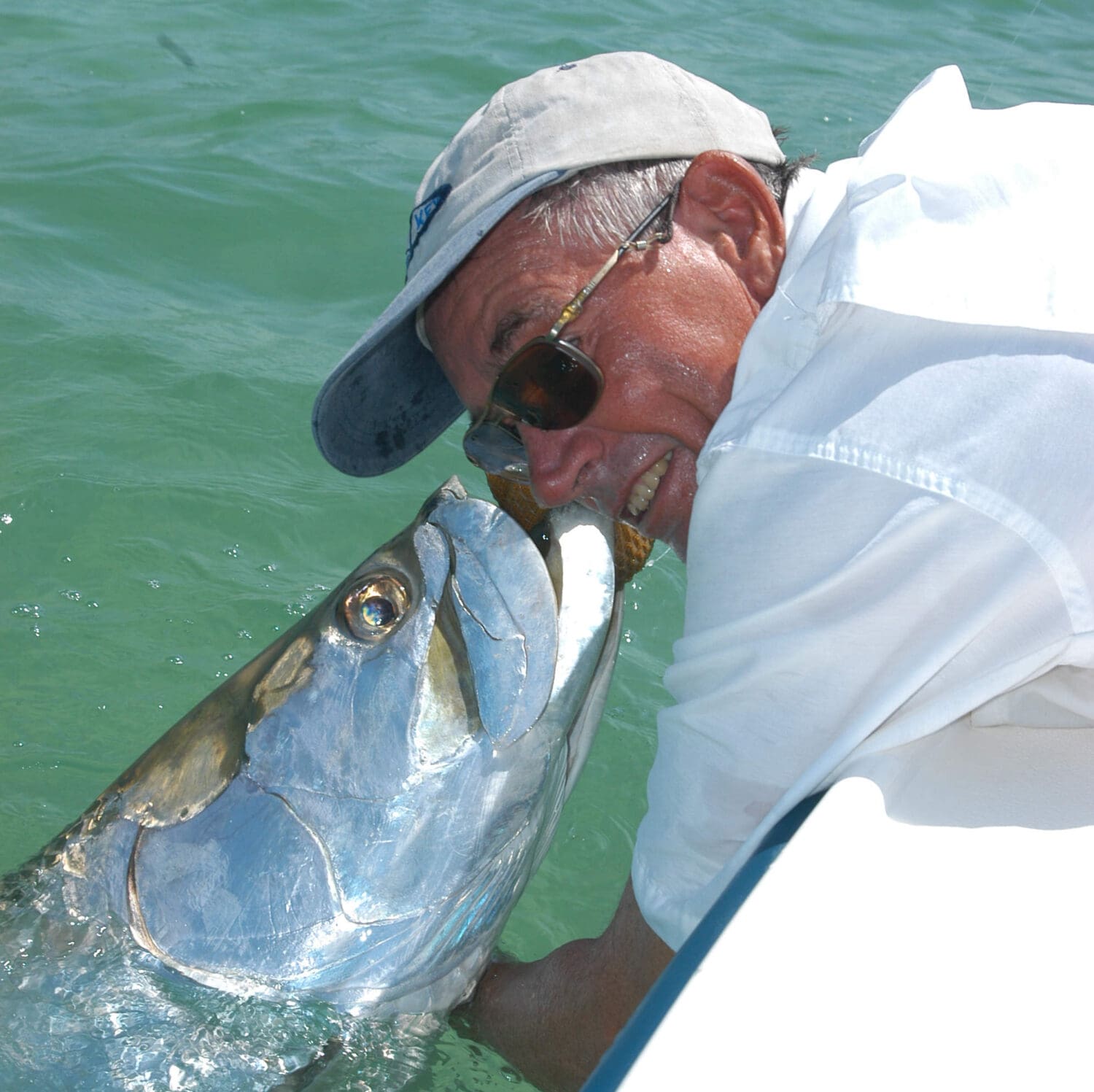
Tarpon are one of the premier gamefish that swim local waters and are a noble adversary on any tackle. The fish that frequent our beaches during the months of May through August can weigh over 200 pounds and average from 80-100 pounds.

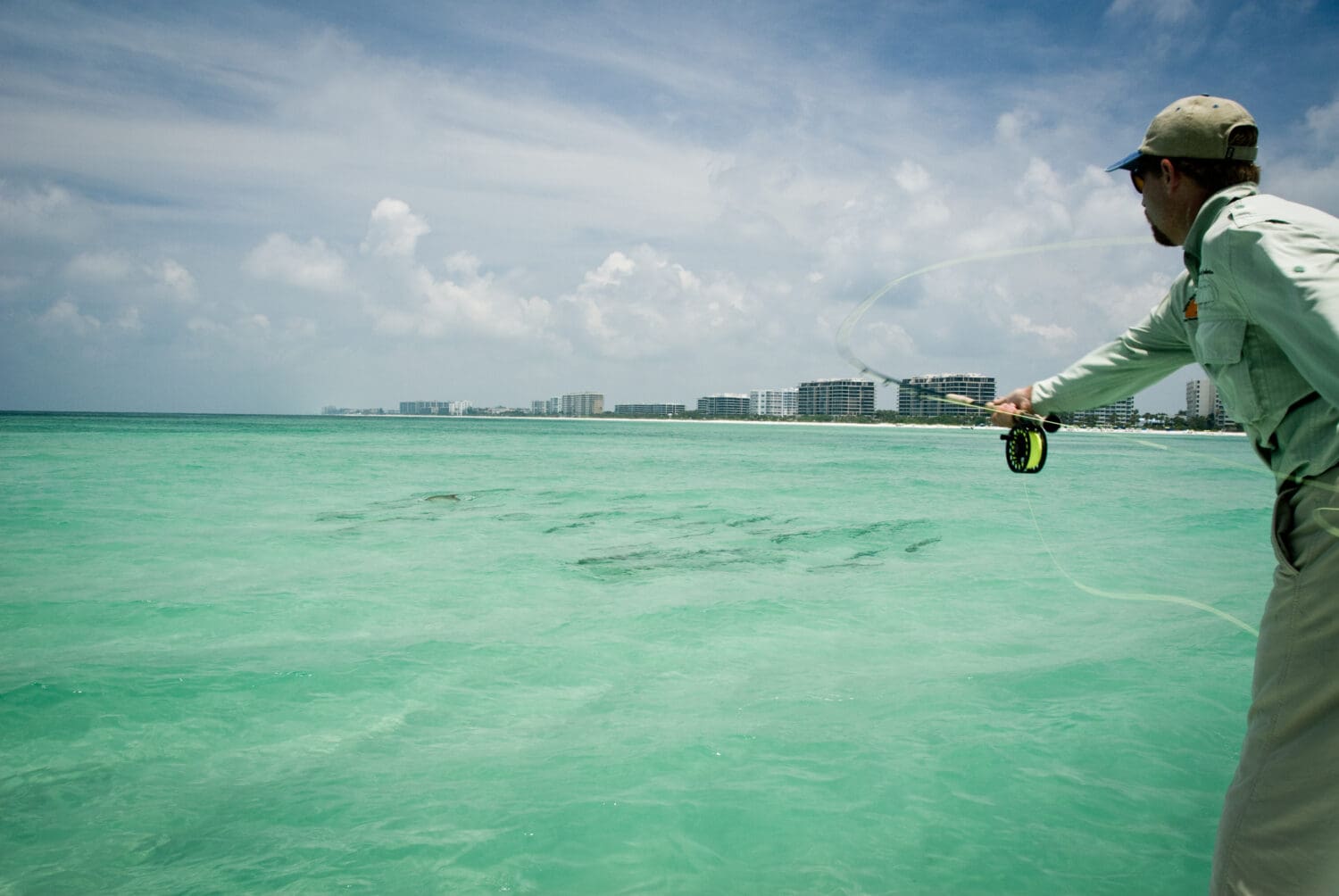
We are blessed with some of the best tarpon fishing in the world, and the local bars and inshore waters host some of the finest fly and spin fishing to be found anywhere. This isn’t a game of numbers and, to the anglers who pursue tarpon, it’s the hunt and the action that keeps them on the bow for hours in the hot summer sun.

Tackle should match the size of the quarry and most anglers opt for a 20- to 30-pound spin outfit and an 11- to 12-weight fly rod, line and reel. A heavy bite tippet is required because of the size of tarpon and their rasp-like mouth. Fly anglers generally use 60- to 80-pound tippet, while spin anglers choose 80- to 100-pound test.

While it might seem like a difficult task to land a tarpon on the fly, or any tackle for that matter, an angler who knows the limits of his/her tackle can actually land a tarpon in a surprisingly short time. The key is to apply maximum pressure from the hookup and never let up.

Too many anglers baby their tarpon in a misguided attempt to land them. The truth is that the longer you fight a tarpon the better chance you have of losing it.

A properly (IGFA-approved) tied tarpon leader used by fly fishers usually runs between 10-12 feet and is tapered to properly deliver the fly. The leader includes a class tippet (weakest link) from 16-20 pounds that is doubled at both ends to soften the (shock) impact to the class tippet and bite tippet.

Key to the whole equation is to have a very sharp hook as tarpon have extremely tough mouths. Conventional leaders vary from angler to angler, but a doubled standing line tied to a leader and then to the bite tippet with a blood knot or Albright Special is recommended.

Flies vary from the classic splayed feather Key’s style to more complex designs like the Toad, and various baitfish imitations. Some fly anglers are not concerned with actually landing a tarpon, preferring to just enjoy the hunt, the hookup and the jumps that usually follow the hook set. They use light bite tip­pets, which allow the tarpon to work through the leader with their abrasive mouths.

The key to landing tarpon on the fly is accuracy. The fly must be placed perfectly, move in a precise direction relative to the fish and be at the proper (fishes’) depth. Even when all of these factors come together, there’s still about a 50% chance that the tarpon will reject the fly.

The go-to bait for spin anglers is a live crab. Small blue crabs can be purchased from many bait shops and pass crabs can be dipped from the local passes on a falling tide. Other effective baits include pinfish, threadfin herring and pilchards. Artificial lures like the DOA Bait Buster and the 4- and 6-inch shrimp, jigs and even topwater plug can be effective.

Patience is a critical factor when fishing for tarpon, especially when fly fishing. The most successful anglers find the edge of a sandbar or other underwater feature that tarpon track, anchor in casting range and wait. Sometimes tarpon come at a steady rate, but just as often there are long periods of time when the only thing to look at is the water and the bottom. This really separates the great anglers from the good anglers. There are times when you need to move, but knowing when and where is a skill that is developed if never mastered.

Sister Keys cleanup celebrates 15 years

Sister Keys cleanup celebrates 15 years

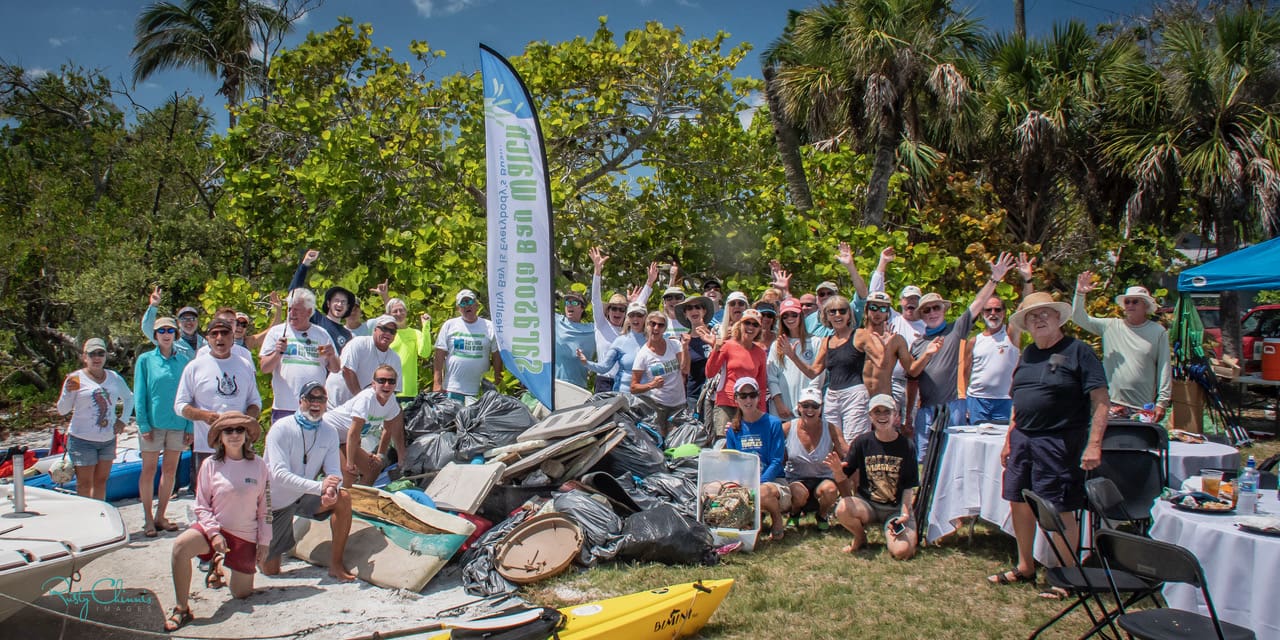
Suncoast Waterkeeper teamed up with Sarasota Bay Watch this past weekend for the Annual Sister Keys Cleanup.

The event, held yearly since 2010, was a collaboration of the two non-profit organizations, the Town of Longboat Key Police and Public Works, Reef Innovations and the Mar Vista Dockside Restaurant.


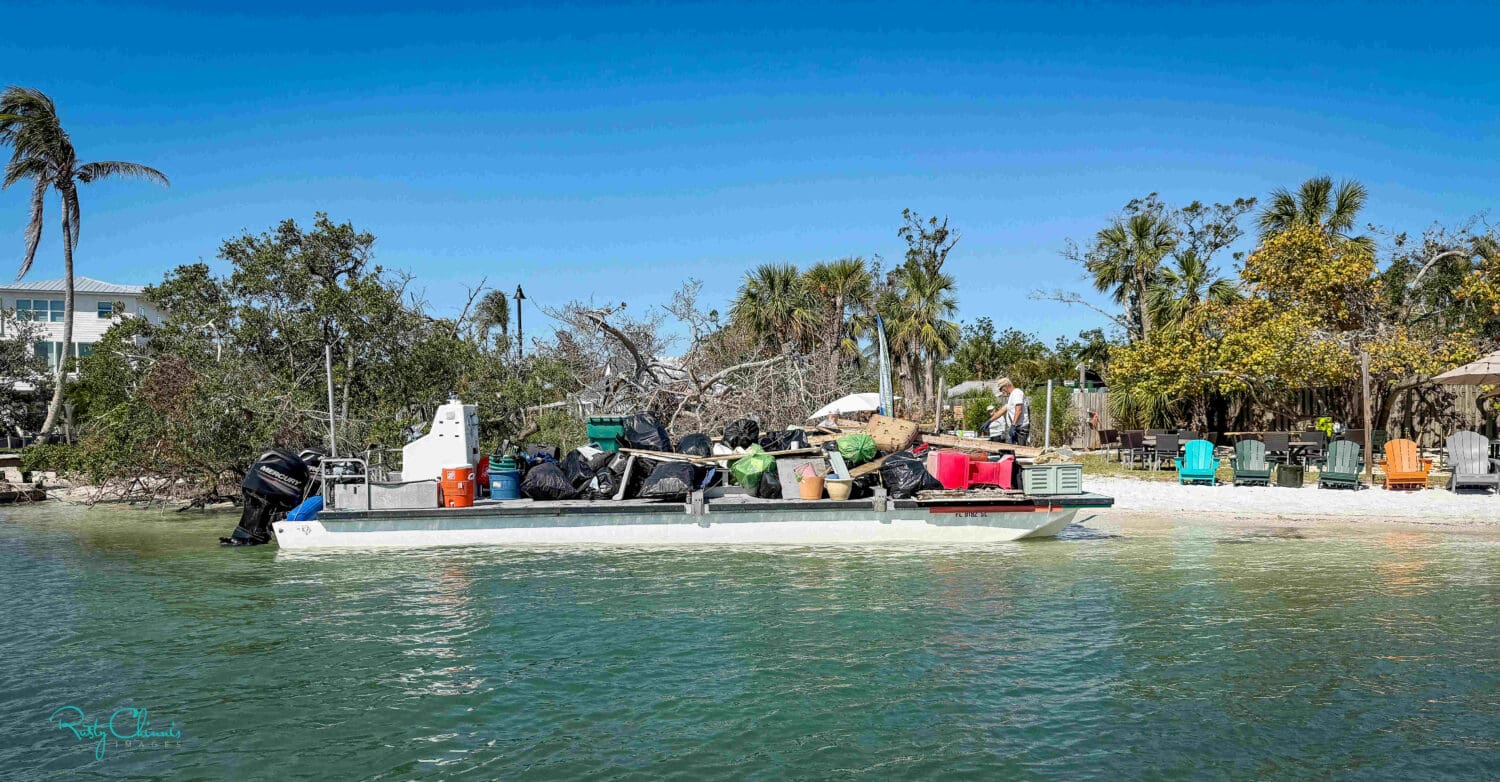
Close to 50 volunteers worked for four hours on Sister Keys and around the mangrove fringes collecting a massive amount of trash and recyclable items, much of it from Hurricane Helene, which swept over the island with an estimated 4-foot storm surge.

This year’s harvest was the largest ever with over 400 pounds of insulation, numerous trash and recycling bins, lumber and a large picnic table. The total weight of debris came to over 2 tons.

The Sister Keys were originally slated for development in the early 60s as the Shangri Isle Club and were once again threatened in 1989 when they went on sale for $1 million. That spurred a group of citizens to form the Sister Keys Conservancy in an attempt to buy and preserve the islands as a nature preserve. The Town purchased the islands in 1994 with a stipulation that the keys would never be developed.

The islands underwent a million-dollar mitigation in 2007 that removed all invasive species, planted native flora and created a 2-acre wetland. Today, mature mangroves dominate the waterways and are rich with crustaceans, minnows, juvenile finfish and wading birds. Native species planted on uplands, first created from the dredging of the Intracoastal Waterway, have matured, making the islands one of the best examples of a thriving native marine environment in coastal Florida.

The cleanup is part of a con­tinuing effort to clean the islands of trash and the resurgence of invasive species.

Kayakers and those without a boat were ferried to the island by the Suncoast Waterkeeper patrol boat and volunteer boaters David and Lori Price and Jim Costa.

Back at the Mar Vista, volunteers loaded the debris into a dump truck provided by the Town of Longboat Keys Public Works Department, which clears and marks the trails on Sister Keys in advance of the cleanup as part of their annual invasive plant sweep. The event was hosted by the Mar Vista Dockside Restaurant and volunteers were treated to a hosted box lunch. The restaurant, now under the owner­ship of Beachside Hospitality, agreed to keep hosting the event, continuing a multiyear tradition started by the Chiles Group.

The efforts of Sarasota Bay Watch and Suncoast Water­keeper have been responsible for major initiatives that educate the public on the importance of a healthy bay and hold munici­palities responsible to mandates established in the landmark 1982 Clean Water Act. SCWK also conducts bi-monthly water testing of inland coastal waters.

For more information on the groups’ missions and to become a member, visit their websites, www.sarasotabaywatch.org and www.suncoastwaterkeeper.org.

Choose lines, leaders wisely

Choose lines, leaders wisely

It might not be the sexiest part of fishing, but lines and leaders are an integral part of a successful equa­tion. The choices of line are varied, including variations of monofilament, braid and fluorocarbon.

While fluoro­carbon, monofilament and braided lines were created to spool reels, monofilament and fluorocarbon along with wire are most often used as leader material. Each has its advan­tages and disadvantages, and you’ll want to choose them based on how they perform in different fishing scenarios.

Monofilament has been around for decades and is the most commonly used line. It has many advantages and a few disadvantages. Chief among its advantages are affordability and the fact that it sinks slowly and is more forgiving (stretches), making it less likely to break when shocked. Its disadvantages include the fact that it is less durable, stretches and has a larger diameter.

Braided lines have made significant inroads since their introduc­tion in the early 90s. They are constructed of a special blend of polyethylene fibers. Some brands are wound loosely while others are fused. Braided lines are extremely durable, with no stretch. The unfused lines are generally suppler, while the fused ones are stiffer but less likely to wrap around guides and form knots during casting, one of the disadvantages of braided lines. When using braid, it’s important to be aware that no loops form on your reel, a sure sign of trouble to come. To avoid loops in braided lines after a cast you should raise the rod tip to tighten the line before retrieving.

Braided lines are much stronger than mono lines, so pound for pound they have a much smaller diameter. In order to get the line to spool on the reel like mono it is necessary to choose a matching diameter, which will be much stronger than the equivalent an angler is used to. Most anglers choose to go with a matching line test (i.e., smaller diameter line) and add a base of mono on the spool. That way you don’t have to use extra braid that will never see the light of day. The major advantage of braided lines is the lack of stretch, which makes it easier to feel a bite and to set the hook on a fish. This is a big advantage when bottom fishing and targeting fish with subtle bites.

Fluorocarbon lines are expensive, and most anglers use them for leaders. Its most important advantage over monofilament is being less visible in the water. In addition, it is denser, sinks faster and is more abrasion resistant. It’s important to carefully seat all knots after wetting them and this is especially true with fluorocarbon.

Wire leaders are used for toothy fish like Spanish mackerel, king mackerel and barracuda that can easily cut mono or fluorocarbon line. Traditional wire leader is hard to tie and kinks easily. While still being used, most anglers opt for wire that can be tied. These wires don’t kink readily and don’t require any other hardware like swivels.

Most choices are common sense. If you’re fishing shallow water or light floating flies and lures you may want to opt for monofilament, which sinks slowly. If you’re interested in get­ting your offering down quickly, fluorocarbon would be a better choice. Fluorocarbon would also be a better choice for wary species like permit and bonefish. Choose your lines and leaders carefully and regularly check all knots and connections, they’re a key component to your fishing success.

Practice always key to fly casting mastery

Practice always key to fly casting mastery

I’ve mentioned in articles recently the importance of practice for anglers who want to learn and/or improve their fly casting.

There are many sources of instruction on fly casting, and good technique learned early will hold you in good stead. By far the best advice is to get instruction by a certified casting instructor. You can find instructors in your area by going to the Fly Fishers International website. This organization gives a comprehensive test both in writing and in the field so you can be sure these instructors are vetted. The site also has lots of instructional videos.

Once you’ve had a lesson on the basics you’ll need to practice to benefit from the instruction. Between lessons it can be helpful to get refresher tips from online videos. A word of caution is in order when searching for videos. Make sure you’re sourcing videos by tested professionals, of which there are many. There are also many others that might give instructions that are confusing or possibly incorrect.

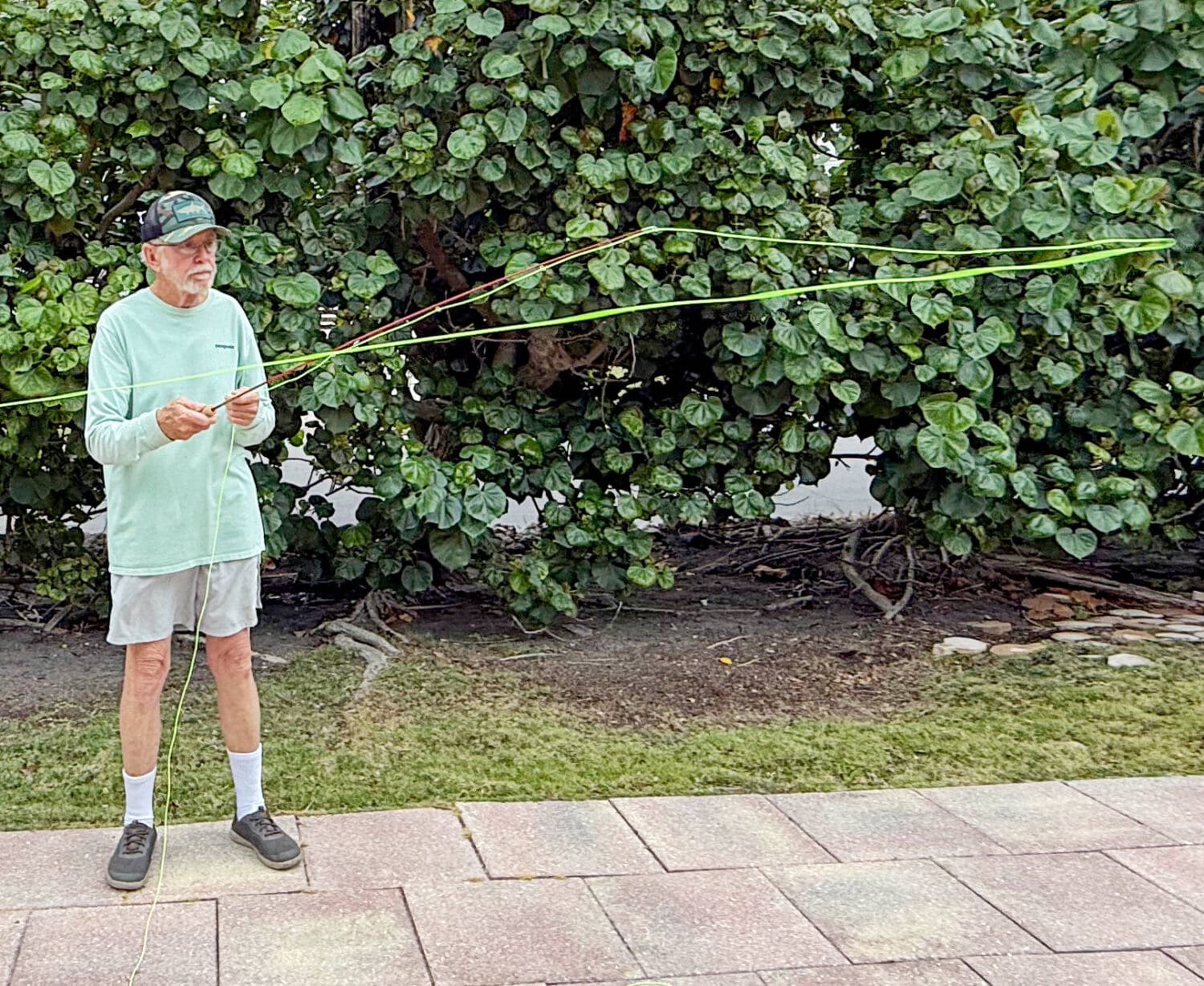
And while videos are good for reviewing the fundamentals, you’ll never become a good caster if you don’t physically practice. Science has proven that it’s the repetitive “correct” motion of a cast that builds the pathways in the brain that eventually make casting skills “second nature” just like golf, tennis, biking, soccer and those times you fell repeatedly before mastering walking upright!

World renowned casters like Lefty Kreh and Doug Swisher (now deceased) and Joan Wolfe have created excellent videos that will stand the test of time. Some excellent current casting instruction videos by trusted sources like Orvis and Rio can also be found online.

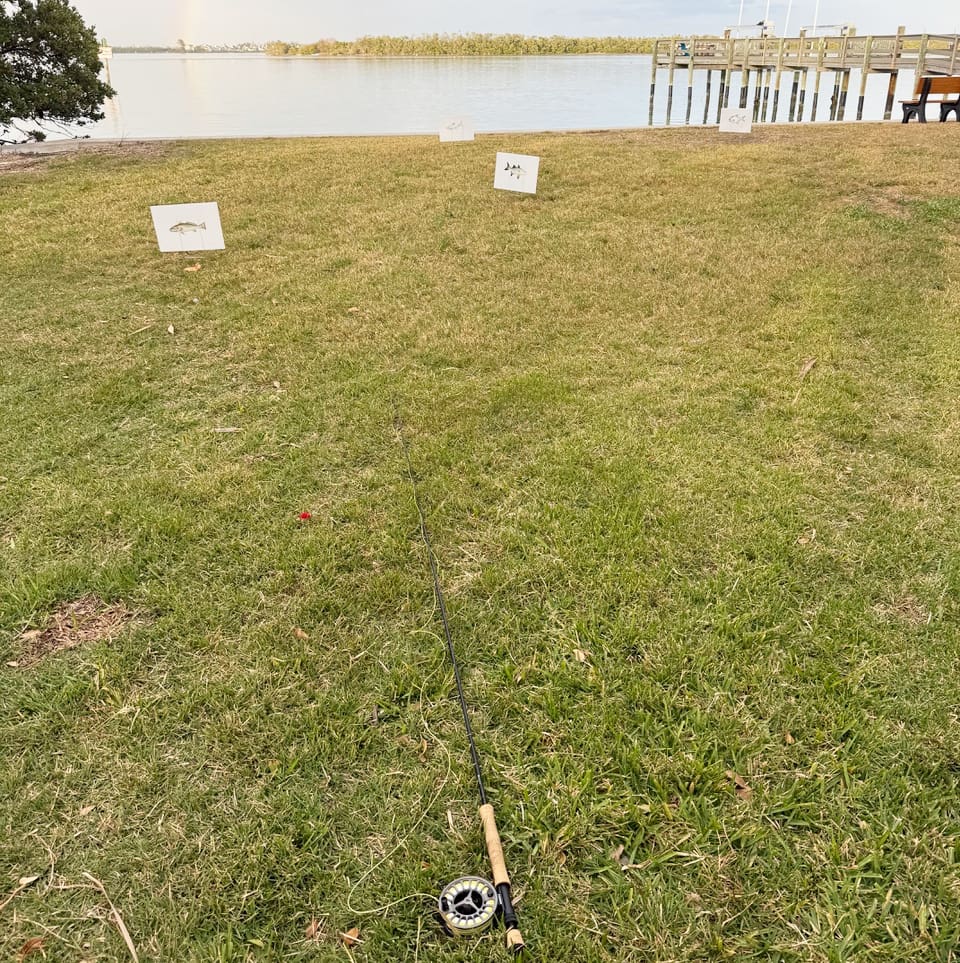
For those on the go who might not be able to carry a fly rod around or who have limited space to practice, consider purchasing a Redington Form Rod. The rod offers beginners and veteran fly casters the opportunity to tighten and tune their casting and improve form. The rod is perfect for the angler on the go, as it can easily be broken down and thrown into your tote or luggage.

Practice always key to fly casting mastery
The Redington Form Game Rod is an excellent choice for fly anglers on the go. – Submitted

The practice rod comes with its own custom tapered RIO® fly line, appropriately weighted to the rod for a more accurate experience. See a certified instructor, review the basic cast occasionally online and practice, practice, practice. Doing this with purpose will greatly enrich your fishing experience, whether it’s in fresh or salt water.

Saltwater fly fishing basics: Tackle

Saltwater fly fishing basics: Tackle

It’s one of the fastest growing segments of the angling industry, a test of the mettle of angler and tackle. Fly fishing dates back to very early times, but its popularity has skyrocketed in recent years.

Fly fishing in the salt dates back to the early 1940s when anglers like Joe Brooks, John Alden Knight, Ted Williams and Jimmie Albright began perfecting techniques to take bonefish, tarpon and permit in the Florida Keys. It’s a short history, but one rich in tradition.

Anglers have discovered that flies can take the gamut of saltwater spe­cies. When I first started fly fishing, I remember local guides telling me, “Bring your fly rod along in case the fish are in a feeding frenzy.” Now, many local guides prefer to fish fly anglers and realize that they are happy to get opportunities to pres­ent flies to fish and it’s not always about the number of fish caught.

Choosing tackle

Before buying tackle, it’s useful to understand the nomenclature of the sport. While spinning and bait-casting tackle are rated according to the breaking strength of the line, fly fishing outfits are rated according to the weight of the line used.

With conventional tackle, the weight of a lure or live bait propels the line and offering to their target, while in fly fishing, it’s the weight of the line propelled by the flex of the rod that carries the line, leader and fly to the target.

The weight system (rod, line and reel) generally starts with a #2, suit­able for panfish and trout in small freshwater streams, to a #14, which is used for giant bluefin tuna and marlin. The most versatile outfit for fly fishing in Florida saltwater is a 7,8 or 9 weight. The line and rod are generally matched although a reel can be rated for multiple weights, for example 7-9. If you’re pursu­ing larger fish like cobia or king mackerel, a 10 weight would be the best choice. You’ll want to step up to an 11 weight or 12 weight if you’re pursuing the tarpon that frequent our area from May through July and often run over 100 pounds.

A reputable tackle dealer like AMI Outfitters on Anna Maria is a must when purchasing fly tackle. You need the kind of salt resistant tackle that will survive the rigors of the ocean and bays, and while you don’t have to buy the most expensive tackle on the market, good quality gear is a must.

Try different outfits and buy the one that feels “good in hand” and is the best quality you can afford. Next week, we’ll discuss the basic cast and the importance of practice.

Get involved in keeping Sarasota Bay healthy

Get involved in keeping Sarasota Bay healthy

Spring is a great time to enjoy our coastal waters while work­ing to keep them healthy. Two upcoming events in April provide a terrific opportunity to do this vital work and meet others who share the passion.

The first of these events is the 8th Annual Reef and Beach Clean Up scheduled for April 5-6 at Sea Breeze Park in Terra Ceia. This event was previ­ously scheduled last September but postponed due to impacts from Hurricane Helene. The event combines environmental steward­ship with friendly competition.

Hosted by Suncoast Aqua Ven­tures, this year’s event promises to be bigger and better than ever, offering participants a chance to win cash prizes while making a tangible impact on our coastal environment. Suncoast Aqua Ventures is a community-driven organization dedicated to preserv­ing and protecting Florida’s coastal and underwater environ­ments through hands-on clean-up events, educational programs and advocacy.

The Reef and Beach Clean Up is not your typical beach clean-up. This unique event turns trash collection into a competitive sport, with cash prizes awarded in several categories, including Most Recyclables, Most Tires, Most Anchors and Most Shoes. Whether you’re a land lover or a certified SCUBA diver, there’s a way for everyone to participate. Those with access to a boat can clean up underwater, ensuring our reefs are as pristine as our beaches and mangrove coastlines.

Since its inception in 2016, Suncoast Aqua Ventures has mobilized over 2,200 volunteers who have collectively removed an astonishing 182,000 pounds of trash from our beautiful coastline and underwater environments. What began as a small local effort has blossomed into a movement that has brought together commu­nity members, environmentalists and outdoor enthusiasts from all walks of life.

Cheryl Huntsinger, President of Suncoast Aqua Ventures, reflects on the origins of the event: “We started this organization after witnessing the sheer amount of human debris littering our coast­lines and underwater habitats. We knew something had to be done, and what better way to tackle the problem than by bringing people together in a fun, competitive family-friendly environment? It’s incredible to see how much we’ve ac­complished in just a few short years.”

The 8th Annual Reef and Beach Clean Up is more than just a day of trash collec­tion—it’s a celebration of community, conservation and the power of collective action. Whether you’re here for the competition or to enjoy a day by the water, your participa­tion helps protect our coastal environment for future generations. To register, visit https://suncoastaquaven­tures.com/event/8th-annual-reef-beach-cleanup/.

The second event just a week later on Saturday, April 12, is the Annual Sister Keys Cleanup. Since 2009, Sarasota Bay Watch has been dedicated to caring for our “adopted islands” – the stunning Sister Keys.

This event invites you to be a part of this important mission to protect and maintain the natural diversity of this incredible space. Whether you’re passionate about marine life, conservation, or simply love spending time on the water, your help ensures that Sister Keys remains a thriving sanctuary for genera­tions to come. We’re looking for enthusiastic volunteers!

Whether you prefer to walk the shoreline collecting debris, captain a boat to ferry volunteers, or capture the action as a photographer, there’s a role for everyone! Boaters will transport volun­teers to the cleanup site, as well as haul collected trash. Have a kayak? Bring it along and paddle your way to the cleanup site. Your support makes a huge difference!

Continuing a tradition first started in 2009 by the Chiles Group, previous owners of Mar Vista on Longboat Key and the Beach House and Sandbar restaurants on Anna Maria Island, Beachside Hospitality will provide a complimentary boxed lunch after the cleanup.

If you’ve never been to the Mar Vista, come and see what true coastal dining is all about while enjoying the new look and an unparalleled view of the Sister Keys. Come make a difference, enjoy the great outdoors, and connect with others who share a passion for conservation!

For more information, call Ronda Ryan at 941-232-2363 and register at sarasotabaywatch.org.

Spring fever? Go for cobia

Spring fever? Go for cobia

The first day of spring is March 20, and as local water temperatures warm with the approach of spring, local anglers need to be alert for cobia in area waters.

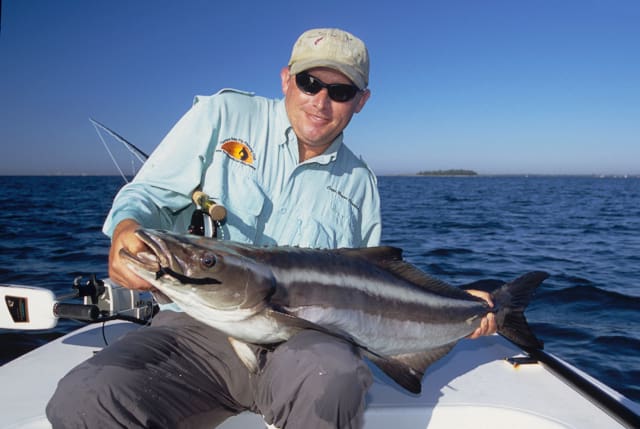
Often mistaken for shark, whose shapes and coloration they resemble, cobia are long and streamlined with a broad, flattened head. Their upper body is brown with a dark lateral line that extends through the eye to the tail. The brown color transitions to white on the belly.

Cobia range up to 6 feet long and can weigh more than 100 pounds. While most anglers target cobia in the Gulf, they range widely throughout local bays, particularly near local passes. Cobia spawn in the spring and early summer and feed on crabs, small fishes and squid.

The recreational and commercial bag limits for cobia in Gulf state wa­ters is one fish per person or two cobia per vessel per day. The minimum size limit is 36” to the fork of the tail.

Cobia have a way of surprising anglers, so it’s wise to have a rig ready should you encounter one. Fly anglers who target cobia opt for at least a 10-weight outfit, although it’s pos­sible to land smaller cobia on lighter outfits.

A favorite fly is a black bunny tied to resemble a small eel, one of their favorite foods. Anglers fishing conventional tackle most often use live baitfish and live crabs, another of their favorite foods. Cobia will also hit a variety of plugs and lures that imitate baitfish.

When fishing this spring, inspect any floating objects you come across like flotsam and buoys as well as structure including markers and artificial reefs.

Cobia are worthy adversaries for local anglers. They can show unexpectedly and be hard to target but put up a terrific battle. Smaller cobia make great table fare but make sure you limit your catch and carefully release any cobia you don’t intend to eat fresh.

In praise of seabirds

In praise of seabirds

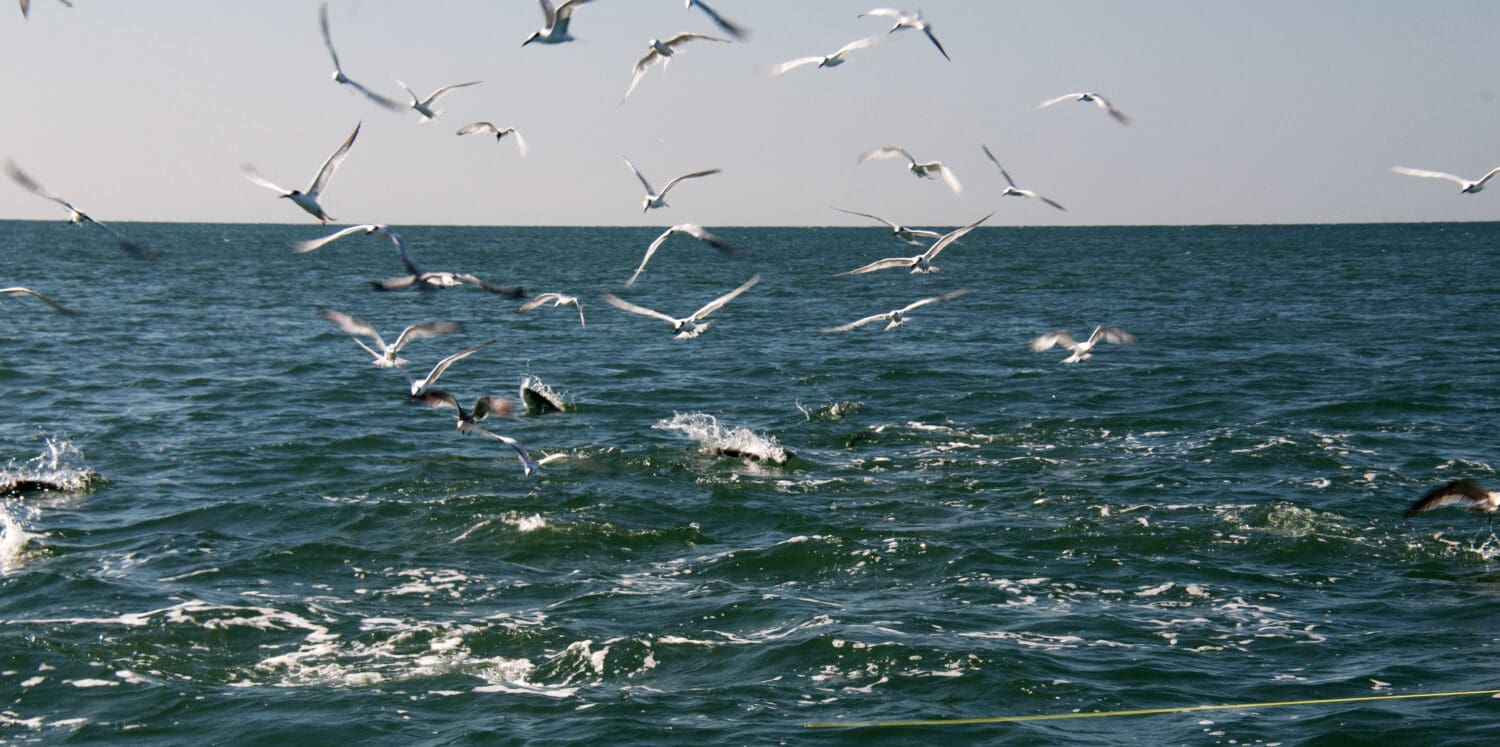
Seabirds are an angler’s friend. Besides being an integral part of the marine ecosystem and beautiful to behold, they help us locate fish.

An observant angler notices where birds congregate on a low tide. They know the birds are feeding on marine organisms that fish will seek out when the flat is covered with water on a rising tide. They point us to schooling fish, often indicating action much farther away than we can see. Anglers who fish the coastal waters of Florida will invariably come into contact with the seabirds that inhabit local waters.

The encounter can be deadly to seabirds if anglers don’t know the basics of caring for them.

Birds can become entangled in fishing line and take it back to their roosts. The birds are also put in harm’s way when they come into contact with fishing line that careless anglers leave in the mangroves from an errant cast.

If a bird is hooked while fishing, it’s important to bring it to the boat with a properly set drag to prevent the line from breaking. This can be a death sentence for the birds when they return to a mangrove roost trailing line. If a bird becomes hooked or entangled in your line while fishing, work them to the boat carefully as you would a big fish, then throw a towel over their head to calm them and grab them securely by the beak while removing the hook. Care should be taken with all birds, especially ones that have sharp beaks. They don’t know you are trying to help them. Handle birds carefully as they have very light, hollow bones. Cautiously remove the line from their body, wings and feet and check them thoroughly before releasing them. If you see a hooked or tangled bird in an active rookery during nesting season, it’s important not to approach them as their young may be startled and fall from the nest.

You can reduce the chance of hooking birds by following a few simple rules. First, never feed birds, as this will teach them to look for a handout, a practice that annoys anglers and is dangerous to the birds. Second, while you’re fishing, be aware of birds that might be targeting your bait or lure. It’s easy to pull the lure out of harm’s way at the last second a gull or tern dives on it. If they do become hooked, a barbless hook is easier to remove from the bird and the angler.

Taking care of the wildlife that inhabits our coastal estuaries is every angler’s responsibility. If you see a bird in distress and can’t help it, call Save Our Seabirds at 941-388-3010 or Audubon Coastal Island Sanctuaries at 813-623-6826.

The honorable harvest

Reel Time: The honorable harvest

While reading a chapter in “Braiding Sweetgrass” by Robin Wall Kimmerer this morning, I came across the chapter entitled, “The Honorable Harvest.” Kimmerer, an American scientist, ac­claimed author and Native American member of the Potawatomi Nation, speaks about the tenets which guided the way her people historically interacted with the natural world. It made me think about how we as fishermen treat fish and the natural world that sustains them and us. Their values included never taking more than was needed, harvesting in a way that minimizes harm, being grateful for the gifts of the earth and sustaining the resource for future generations.

We live in a very different world today where most people buy their fish from refrigerated cases or frozen, wrapped in plastic and sitting in grocery store freezers. As fishermen, we still harvest our catch from the natural world much as the first Americans did.

Can we also honor our harvest, and how might we do that? We can easily take only what we need to feed ourselves and our family, minimize harm by the way we handle the fish we release, and be grateful for the gifts of the sea.

We can work to sustain the resource today and for future generations in these ways and by joining with others who appreciate and value of the natural world. A few of the most active and effective local organizations include Suncoast Waterkeeper, Oyster River Ecology, Sarasota Bay Watch and Suncoast Aqua Ventures. Suncoast Waterkeeper’s mission is to defend our coastline through advocacy, water quality, community engagement and legal action. In addition to an active water quality monitoring program and habitat protec­tion efforts, in the summer of 2024, SCWK instituted an initiative to protect and preserve our local bays through the “Love Your Bays Consciously” campaign.

This campaign is a year-long effort to recruit, manage and train volunteers to proactively and reactively tackle ever-growing threats to clean water in our local bays. Their stated aim is, “Together, we can create a future where clean water and thriving ecosystems are the norm, not the exception.”

Oyster River Ecology’s mission is to improve water quality, restore oyster habitats and increase the public’s understanding of natural systems. One way they ac­complish this is by engaging the public, including youth, through hands-on experiential learning projects. A good example is the creation of Oyster Rag Pots that are made by volunteers and installed in areas where ORE has attained permits to restore large areas of oyster reef, the largest being a 10-acre site in the Manatee River east of I-75.

Sarasota Bay Watch is dedicated to restoring coastal ecosystems through citizen participation. You can become an active participant by joining as a member and volunteering in Sarasota Bay Watch’s ongoing effort to protect and restore this valuable natural resource. Their goal is to initiate innovative and effective action grounded in selfless and comprehen­sive planning to assure the sustainability of Sarasota Bay, its stakeholders and all its inhabitants. They aim to establish collaborative relationships with other environmental organizations, scientists and NGOs. They strive to forge partnerships that allow Sarasota Bay Watch to accomplish its goals while enhancing the effectiveness of every person and group that benefits from the natural assets of the bay system.

Suncoast Aqua Ventures is focused entirely on cleanup events. They work to keep our coastal and underwater ecosystems free from human trash and debris. They initiate and participate in several cleanups throughout the year to promote this cause.

Through these and other efforts, including letter writing, attending governmental meetings and advocation for the environment, it’s possible to honor the harvest today and into the future for the benefit of the fish and the natural marine world that sustains our passion.

Anatomy of a fishing rod

Reel Time: Anatomy of a Fishing Rod

All fishing rods, whether a spinning rod, a fly rod or a casting rod, share the basic components – blank, guides, reel seats and handles. So why is one rod more expensive than another?

A rod’s blank is constructed from a product known as prepreg. This material is impregnated with resin and wrapped around a mandrel (which is removed after the blank is formed), giving the rod its basic round shape. This “blank” holds the guides, ferrules, handle, reel seat and fighting butt.

Prepreg has fibers that have a unidirectional (straight) orientation. The fibers can be made of different materials including fiberglass, graphite, boron or Kevlar. Some rods are made from a prepreg that has additional fibers that run around or at an angle to the unidirectional fibers. This gives the rod additional strength and influences flex, stiffness and affects its price.

A rod’s scrim refers to a lightweight material that forms an additional lining under the primary fibers and helps in working the material when it is wrapped around the mandrel. Scrim can be straight or woven and adds what is known as “hoop strength” to the finished rod.

The butt section is the cork part of the rod behind the reel seat that is held either in the non-dominant hand or fits into a fighting harness when playing a fish, while the handle is where the dominant hand is placed. The reel seat secures the reel to the rod. The fixed hood is the metal receiver where one end of the reel foot is placed. The sliding hood is the rear receiver that holds the other end of the reel foot. The locking ring is a nut that puts pressure on the sliding hood and holds the reel securely in place. The guides hold the line along the length of the blank. The ferrules connect sections of a two- or four-piece rod. The tip, as the name implies, is the section at the top of the rod.

You may also encounter the term “taper.” A rod’s taper refers to the diameter of a rod from the butt to the tip. The taper affects the rod’s action. Most rods have either a fast action (stiff) or a slow action (flexible).

When you’re shopping for a new outfit, knowing the parts and construction of a rod will help you make an informed decision. The most important part of the rod and the one that most affects its price and your buying decision is the blank.

The materials and the method of construction of the blank determines its price. The least expensive rods are made from fiberglass while the expensive ones are constructed with graphite, boron and Kevlar. While fiberglass may be good for a beginner, the more expensive rods are a better choice for the seasoned angler. They are lighter, more responsive and less prone to break. But don’t let price determine your selection. There are a lot of very good rods on the market today that can be purchased at a good price point.

The one thing to avoid is cheap equipment. It’s OK to buy a lower price point outfit if you’re a beginner, but choose an outfit that will make a good second rod when you upgrade. An informed decision can positively affect your angling efficiency and enjoyment.

Reel Time: Harbingers of spring

The signs of spring are in the air, even though the official start of the season is a month away. I heard the first whippoorwill this past week and bait is starting to school in Sarasota Bay, welcome signs to winter weary anglers.

This doesn’t mean that there won’t be another cold snap, and if the calendar says spring isn’t here yet, we know it’s just around the corner. Experience tells the savvy angler that fish have their own special calendar, one that consists of the angle of the sun, temperature of the water and the length of the days. When water temperatures rise into the 70s, fish come out of their winter haunts, even if it’s winter one day and spring the next.

It’s a time to keep an eye on the Gulf, looking for the first snook in the surf and for wheeling, diving seabirds as they forage on schools of baitfish that will begin to gather off the beaches in a seasonal primal ritual.

Anglers know from experience that schools of little tunny, Spanish mackerel, cobia and kingfish won’t be far behind. It could be just a matter of days before they will be swarming the bait schools, wrecks, reefs and hard bottom just off the beaches.

In the bay, trout, redfish and snook will also be roaming the flats in search of pilchards, shrimp and glass min­nows to replenish themselves from their winter fast. Spring is the time when local anglers have a host of pis­catorial choices and some of the best conditions to pursue them. Of course, it can all seem like just an illusion as another front riles the Gulf, sending chill winds and muddy water into the bay, and forcing anglers to put on a sweatshirt. It’s the kind of weather that plays with the emotions of fishers. But hope springs eternal, and we know from experience that it won’t be long before the run is on. That’s why it’s time to be prepared, flies tied and tackle ready for that day when it’s no longer a question of when it will happen, but what species we’ll fish for!

I like this time of year even if it can be exasperating. One day the flats and Gulf can be barren and the next the action red hot. That’s why it is so important to be ready for just about anything. Having rigs on board that can handle a big cobia and wire leaders in case kings make an appear­ance can make the difference between frustration and success. Anglers who are vigilant, prepared and persistent will be rewarded. Whatever your fish­ing style or whether you like fishing the Gulf of Mexico or local bays, take advantage of this swing time and you’ll be rewarded.


Marine debris cleanup effort planned

The effects of the 2024 hurricane season have been all too apparent to Anna Maria Island residents since the passing of Hurricanes Helene and Milton in a two-week period in late September and early October.

The devastation broke the record for the shortest amount of time between two major hurricanes in Florida. Collapsed buildings, mountains of sand and huge piles of debris lining local neighbor­hoods and coastal highways have served as constant reminders. Since then, local municipalities, along with FEMA, deployed over 1,000 incident management personnel, while other federal and state agencies deployed 1,200 additional search and rescue personnel. This herculean effort by relief workers has been impressive as the piles of debris have largely been removed.

Unfortunately, those storm surges and winds pushed massive amounts of detritus into local waters, littering grass flats and choking local mangrove forests with the shattered remnants of island life. Now local environmental non-profits and concerned citizens, watermen and sportsmen are banding together to clean up area waters. On Saturday, Dec. 14 from 8:30 a.m. to 12:30 p.m., you can join Suncoast Waterkeeper, Suncoast Aqua Ventures, the Sarasota Bay Estuary Program, the Tampa Bay Estuary Program, Tampa Bay Water­keeper, the Organized Fishermen of Florida and Sarasota Bay Watch in a crucial cleanup of marine debris in our waterways and mangroves.

TERRA CEIA BAY AND MANATEE RIVER

The cleanup will focus on the waters of the Manatee River out of Blenker Boatworks and Marina at the mouth of the Manatee River in Bradenton and Terra Ceia Bay at Tropic Isles Marina on Terra Ceia Bay in Palmetto. Organizers are calling for help from kayakers, shallow draft boat owners and shoreline helpers. The cleanup will focus on mangroves, so volunteers are encouraged to wear protective clothing, eyewear and shoes. Lunch, gloves and other collection supplies will be provided to participants, who are being asked to bring a reusable water bottle. Exact meet up locations will be provided to participants via email after registration. Sign up to participate at https://bit.ly/dec_14_cleanup.

The wind damaged mangroves will regenerate leaves. It will be up to volunteers to remove debris. Capt. Justin Moore | Submitted

As I’ve reported through the years, our local waters have been increas­ingly stressed by loss of habitat, sewage releases, storm water runoff and what I’ve described as “death by a thousand cuts.” While we often hear how fragile our marine resources are, the fact is they are extremely resilient, to a point! To recover from these insults and the natural disasters that are becoming more common, we must understand these critical issues and their importance to our health and the economy and work to protect them. Lending a helping hand and support­ing these organizations in the field and through the legislative process has never been more important.

Successful trip planning

Planning any fishing trip can be a challenge given the peculiarities of weather and the idiosyncrasies of fish. Add a few thousand miles, a different language and an exotic species or two and some serious planning is advis­able.

Chances are you’ve been looking forward to this trip for a long time and finally you’ll have the opportunity to do nothing but eat, fish, sleep, and repeat for a week or more. More than likely it’s taken a tremendous amount of time and money to get this opportu­nity, so it makes good sense to develop a plan to assure that you have the best possible chance of success.

Deciding where to go and when are the first decisions you’ll make. While it’s not impossible to book your own trip, knowing the best time, tides and lodging can be daunting. In addition, juggling the details of plane reserva­tions, transfers, accommodations and guides can increase the challenge of putting together a self-guided trip.

A knowledgeable outfitter or travel host can provide you with the experi­ence and insider information that will allow you to immerse yourself in the experience instead of the details. Even when using an outfitter, you’ll need to do some research to ensure you’ve matched your angling needs and ex­pectations to your chosen destination. There are a lot of resources online, including some great groups on Facebook, but you’ll need to vet those sources.

When choosing an outfitter or destination host, be aware that know­ing what you want from your trip and asking the right questions is important to fulfill your expectations. Some of the best fishing is available at sites that have the least amenities. If you require a certain level of service or are traveling with non-fishers, you’ll want to research locations that offer specific conveniences as well as good fishing.

While you won’t want to plan your trip based on second-hand information, you’ll find it can be helpful to talk to others who have made the trip you’re planning. Ask the outfitter or host for several references and question them carefully. Make sure they have been to the location recently and at the time of the year you plan to visit.

In foreign countries, you’ll be hard-pressed to replace items you forgot to pack, particularly fishing tackle. This is one case when it’s probably better to pack more than you think you’ll need, at least within reason. Making a packing list and checking it before your departure will pay dividends.

Most destinations provide lists that you can use to make sure you don’t forget anything important. While their recommendations are a good place to start, customizing your travel list can help ensure that you have what you need while streamlining the amount of baggage you take.

Many tropical fishing destinations are very near the equator, so anglers need to pay special attention to the sun. Long-sleeved pants and shirts with sun protection are advisable, along with a high SPF waterproof sunscreen.

Polarized glasses with glare guards and a fishing hat with a dark underbrim are mandatory and a second pair of each should accom­pany you. For many of my fishing adventures, I’ve used a full-face mask and gloves for sun protec­tion.

Recently I started wearing a fishing hoodie with thumb holes that protect my face, hands and wrists. I find hoodies much more comfortable and invested in several that have bamboo fibers woven into them. Invest in a good pair of flats wading boots and a sling or fanny pack with a water bottle holder and you’ll be good to go.

You can be a consummate planner and still fail to properly plan if you aren’t comfortable with your cast. Pay special attention to casting into the wind and being able to place an accurate 40-foot cast. Practicing these skills well in advance on grass will greatly increase the pleasure of your adventure.

The success or failure of any fishing adventure will vary due to conditions beyond your control but being mindful of the things you do have control over can make or break your trip. Be prepared, practice casting, do your homework up front, ask good questions from knowl­edgeable sources, and be flexible. The time and effort you expend in planning the trip will pay dividends of tight lines and lasting memories.

Reel Time: Bahamas fishing

Reel Time: Bahamas fishing

Fishing the Bahamas or any other destination always seems to offer challenges as well as rewards. This annual trip to the Bahamas has checked both those boxes. The trip had a damp element at the beginning, when a tropical disturbance dropped a record amount of rain on south Florida the night after we departed Fort Lauderdale. The ride was bumpy as gusts of wind from the advancing front buffeted the Makers airplane and resulted in a sprint to the door of the Andros Town International Airport. The first two days proved challenging as wind, clouds and high tides resulted in neither myself nor my partner, Anna Maria resident Bill Partridge, landing a single bonefish. The last two days proved to be a totally different experience as winds calmed, the sun made an appearance and we were able to each land between 15-18 fish. More on this trip next week!

Reel Time: Join the 2023 EcoSummit

On Dec. 5-6, the Science and Environment Council, the region’s network of 43 leading science-based environmental organizations, will offer the community a two-day summit at Van Wezel Hall in Sarasota that will explore solutions for balancing growth with nature and reducing our impacts.Join the 2023 EcoSummit

Since 1930, the population of Sarasota and Manatee counties has grown from 35,000 to 891,000 people. The growth has resulted in significant degradation, fragmentation and loss of natural habitats and the fish and wildlife they supported. The summit will offer the public a lively, thought-provoking and entertaining experience that will include lectures, panel discussions, storytelling, film and music.

Dozens of national, regional, and local experts will share the stage with local storytellers and Americana songwriter Karen Jonas and her band. Australian documentary filmmaker and regenerative environmental leader Damon Gameau will be the summit’s keynote speaker and will screen his film, “2040.”

Florida’s favorite storyteller and author, Carl Hiaasen, journalist Craig Pittman, and local dolphin whisperer Randy Wells will contribute to an unforgettable and entertaining evening of Florida stories.

U.S. News and World Report ranked the Sarasota metro area as the second fastest-growing place in America in 2023-24. Ongoing challenges with impaired waters, recurrent algal blooms and declining fish and wildlife make it clear that we cannot continue to grow the same way we have in the past.

This is particularly important to convey to voters who will need to elect leaders who understand that our economy and quality of life depend on a healthy, resilient natural environment. A recent decision by the Manatee County Commission to reduce wetland buffers, a move in the opposite direction, points to the urgency of informing the public. Nature cleans our air and water, supports fish and wildlife, promotes public health and drives our economy.

An important book by Florida author Jack Davis, “The Gulf, the Making of an American Sea” (winner of the 2018 Pulitzer Prize for history), is highly recommended to show residents what has been lost and the importance of protecting what we still have. Floridians whose families have lived here for generations know this story well. For four years running, participants in Sarasota County’s annual Citizen Opinion Survey have identified population growth and development as the county’s biggest issue.

We’ve done it before. Since the 1970s, our region has often led the state with bold, community-driven environmental initiatives. Residents rallied to protect South Lido Beach Park, Emerson Point, Sister Keys and Casperson Beach. We banned phosphate mining in Sarasota County and adopted the first summer ban on fertilizer use. We established Sarasota Bay, Tampa Bay and Charlotte Harbor as estuaries of national significance and empowered three National Estuary Programs to protect and restore them. We protected the Myakka River and more recently the Little Manatee River as state-designated Wild and Scenic Rivers. In November 2020, 71.34% of Manatee County voters agreed to increase property tax by .15 mills and authorized purchasing $50 million in bonds to acquire, improve and manage land to protect drinking water sources and water quality, preserve fish and wildlife habitat, prevent stormwater run-off pollution and provide parks.

Our communities overwhelmingly support our natural environment, and we have exceptional environmental organizations with highly qualified and dedicated people who work to conserve and restore it. Now it’s more critical than ever that we elect leaders who listen to the will of the people. I highly recommend this summit as a learning experience and a call to action. See you there.