
Tag: fly fishing

Reel Time: Make the wind your friend

Reel Time: Make the wind your friend

Whether stalking bonefish in the Bahamas, poling a flat in Florida for tailing redfish, wading into the Northeast surf for stripers, or casting for sea-run rainbows on the West Coast, anglers spend the majority of their time in anticipation. When we do get on the water, we face the unpredictable forces of weather that can throw hurricanes, fronts, windstorms, clouds and various adverse conditions at us.

If you want to catch permit on a fly, you’ll need the advantages a windy day provides. While the world of fishing in general, and fly fishing in particular, present us with many challenges, it’s these challenges that make success all the sweeter. That’s why we hunt gamefish with imaginative mixtures of feathers, fur, synthetic and tinsel. The excitement of making a presentation to a gamefish you’ve stalked, enticing it to take a fly, and then connecting with your prey through graphite and cork makes all the preparation, time, money and past disappointments worthwhile.

With so many challenges facing a fly angler there is good reason to be as well prepared as possible. Too many anglers wait for months to take the “trip of a lifetime,” encounter willing targets under less than ideal conditions (most often the case) and find their casting proficiency severely tested. The old saying that “luck is opportunity meeting preparedness” is especially true for fly fishers. Why not develop the mindset from the beginning that everything we do (on the water and off) contributes to turning odds into opportunities?

Preparation comes in many forms, and the most important components are practiced throughout the year. That means having tackle in top form, as well as knowing how to tie proper knots and flies that imitate your prey’s food. Casting skills are developed over a lifetime, and practice should not be saved for fishing trips, or even the days leading up to a trip. If you can’t get your fly to the fish, all other factors are rendered moot. The best practice is on grass, throwing to targets placed at different distances and angles. Don’t make the mistake of judging your casting ability by how long a line you can throw. Learn to make a tight (in saltwater), accurate, 40-foot cast first, and then work on distance.

While I’ve been blessed to learn from some top fly casters, I’ve found the best instructor of all is having a compelling reason. That’s what leads successful fly fishers to learn the basics and practice.

One of the first and most important lessons I’ve learned is to see the wind as friend, not foe. If you’re new to the game, don’t put off a fly fishing trip because the wind is blowing. On my first trip to the Bahamas, I was face to face with a large school of bonefish just 40 feet away, into a 25 mph headwind! All those days of avoiding the wind meant that I didn’t have the skills to get the job done! Now I appreciate the windy days because I know that if I can be successful then, I’ll be golden on the nice days. Wind-generated waves provide windows into the water and fish are far less spooky and more readily take a fly. If you can make a short, accurate cast into a 15-knot wind, you’ll excel on those rare “perfect” days.

Practiced fly anglers who are mentally prepared and visualize their outcome (just like top athletes) have a definite advantage. They’re primed when opportunity presents itself as “luck.” The next time you have a chance to go fishing, don’t let the wind dissuade you; make the wind your friend. It will pay dividends in your fishing future.

Reel Time: Fishing with Captain Nick Angelo

Fishing has always presented challenges. For me, 2020 proved the most challenging in recent memory. Consider the inherent conditions that combine in mysterious ways to affect fish behavior: wind, weather, tides and moon phases. Add to that dwindling habitat and water quality combined with the COVID-19 pandemic and it seems we’re weathering a perfect storm of poor fishing and fishing opportunities.

Nature Coast redfish
Captain Nick Angelo with a “Nature Coast” redfish. – Rusty Chinnis | Sun

Fortunately, there are some bright spots. Last week I experienced one when I traveled to Crystal River to fish the Nature Coast with Captain Nick Angelo. I first met Angelo over a decade ago through a mutual friend when we fished for tarpon off Anna Maria and Longboat Key. In the ensuing years, I had kept track of him but hadn’t connected on the water. After a phone conversation in December, we made a plan to reconnect and fish his home waters, an area aptly named the Nature Coast. Stretching from the Chassahowitzka National Wildlife Refuge near Homosassa north to Waccasassa Bay, the coastline is sparsely populated and is fed by several wild rivers and numerous springs. It’s one of the few places in Florida where you feel you’ve gone back in time. Its relative remoteness and shallow Gulf water are studded with oyster bars and limestone outcroppings, a magnet for many species, including the redfish we targeted on fly.

I booked a room at the Hampton Inn in Crystal River where I reserved a first-floor room next to the back entrance. Through the Hilton Honors App (Hilton owns the Hampton Inn chain) I was able to check in and out and access the hotel and room with a digital key, avoiding human contact, a challenge during the ensuing pandemic.

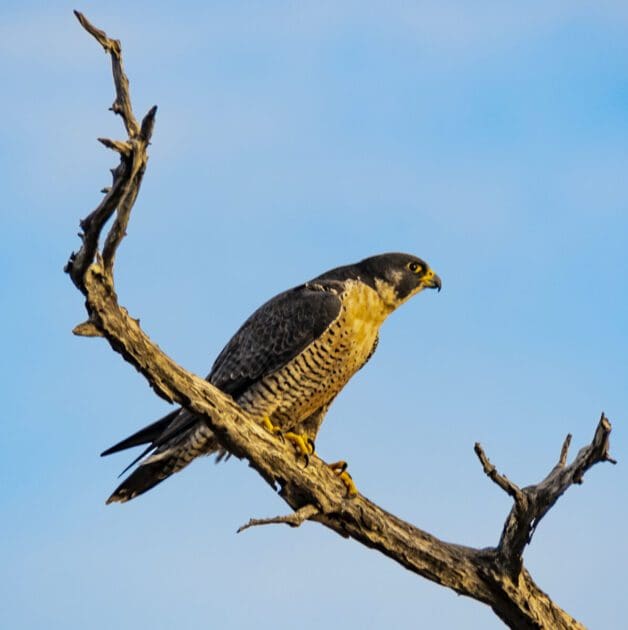
While the weather wasn’t perfect, we still had two excellent days sight-fishing big redfish in less than 2 feet of water. Since we were both avid photographers, we kept our cameras at hand and were rewarded with images of bald eagles and a peregrine falcon. During our first day, an unusually low tide kept us from fishing the exposed mangrove shorelines Angelo prefers. Instead, we fished creek mouths and the edges of oyster bars. That proved to be a winning strategy and it wasn’t long before Angelo positioned me for a cast to a big redfish sitting in about 6 inches of water.  My first cast was off target but the fish didn’t spook and on my next presentation, the fish inhaled the fly on the second strip. In my world, I consider this the “apex of angling,” watching a fish pushing 35 inches open its mouth and turn on its side to take the fly! We had numerous shots and hookups that day and I was impressed with the stamina of the fish that made numerous long runs well into the backing.

The tide wasn’t as low on our second day and we were able to work the edges of the area’s extensive mangrove islands. Angelo prepped me to concentrate on sunken mangrove roots that extended out from the shoreline. His words proved prophetic, and it wasn’t long before we were encountering groups of fish just as he had predicted. Once again we were able to feed individual fish and took turns casting and poling. Besides the obvious pleasure of sight casting to large redfish, I reveled in the isolation of the place. In two full days, we saw only two airboats and two other skiffs, both at a considerable distance.

If you haven’t experienced this part of Florida, I highly recommend it. It’s a place where you can immerse yourself in nature and excellent fishing opportunities. This is truly a special place, but it’s an area where you’ll want the expertise of an experienced guide. The many oyster bars and limestone reefs are a magnet for fish but can also destroy the boat of the uninitiated!

You can contact Captain Nick Angelo by phone at 813-230-8473 or by visiting his website.

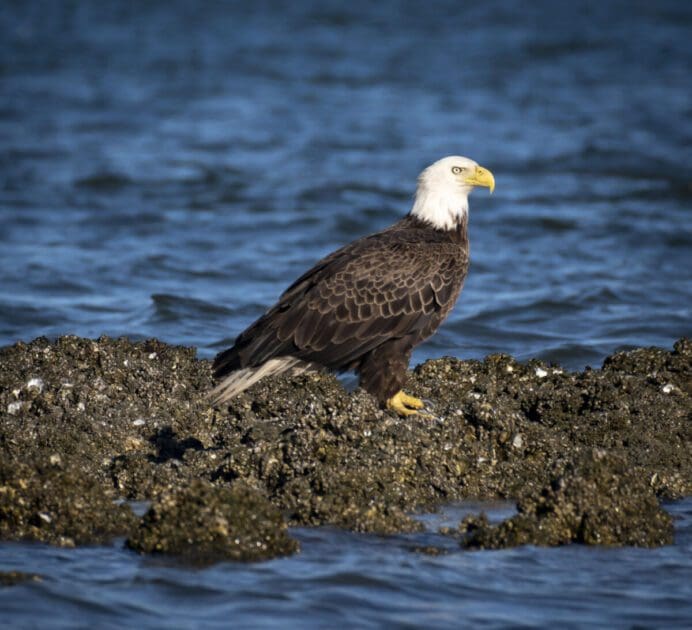
Bald eagle - Rusty Chinnis | Sun

Bald eagle - Rusty Chinnis | Sun

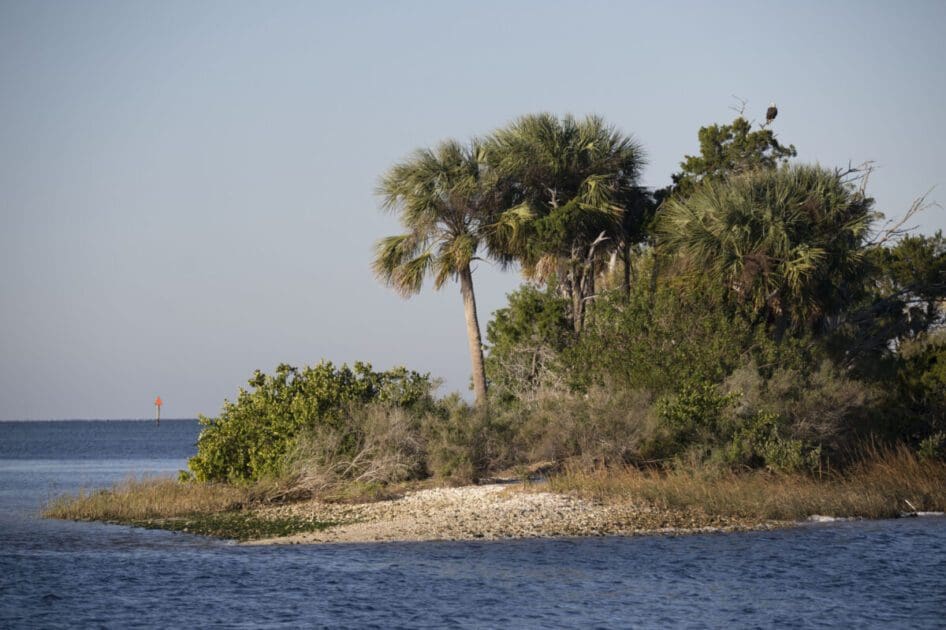
Eagle Island - Rusty Chinnis | Sun

Eagle Island - Rusty Chinnis | Sun

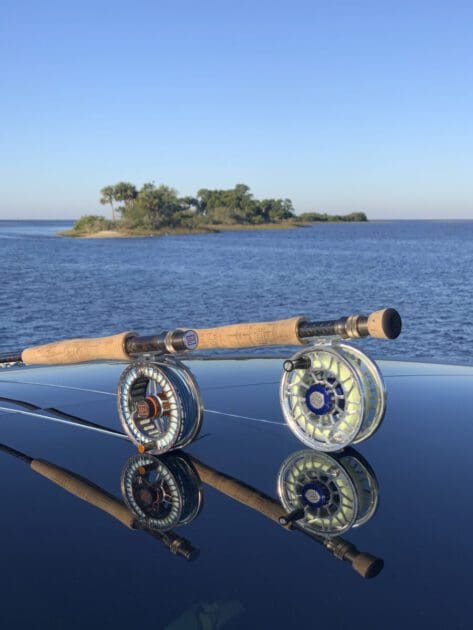
Fly reels - Rusty Chinnis | Sun

Fly reels - Rusty Chinnis | Sun

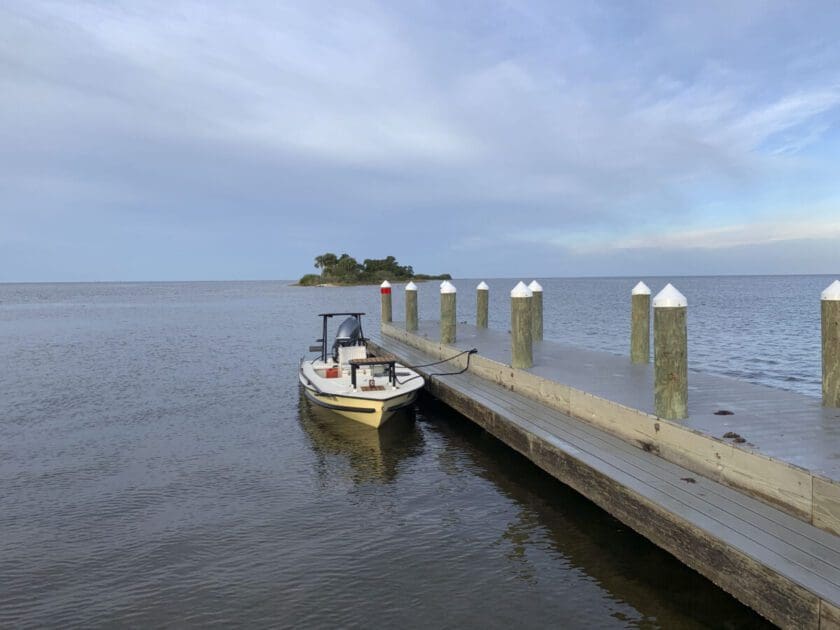
Ready to explore - Rusty Chinnis | Sun

Ready to explore - Rusty Chinnis | Sun

Peregrine falcon - Rusty Chinnis | Sun

Peregrine falcon - Rusty Chinnis | Sun

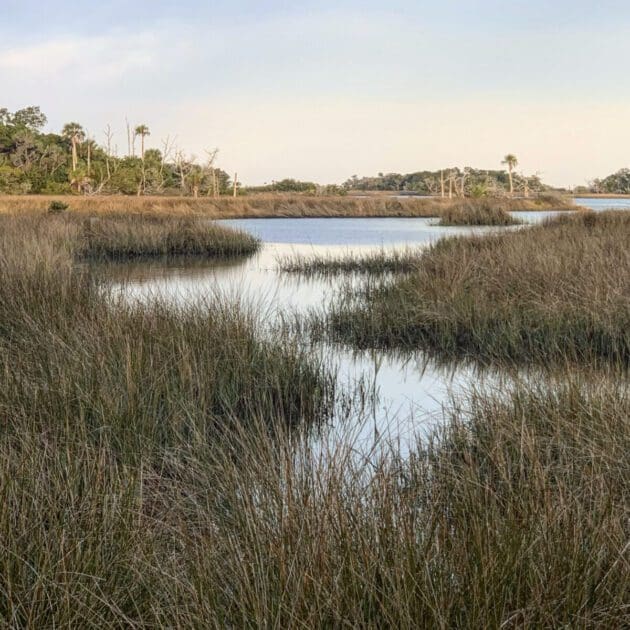
Withlacoochee Bay - Rusty Chinnis | Sun

Withlacoochee Bay - Rusty Chinnis | Sun


Reel Time: Learning to fly

I often joke that I took up fly fishing so I wouldn’t catch many fish, and it seems to be working pretty well. While uttered in jest, I wouldn’t suggest that anyone take up fly fishing to catch more fish. Still, I haven’t run into any seasoned fly anglers that decided to go back to fishing with live bait.

Hunter Parrish with a nice fly-fishing catch. – Rusty Chinnis | Sun

Fly fishing is first and foremost fly casting, and that’s what appealed to me – that and the thrill of casting to an individual target and working a fly to fool them into hitting. Adding to the satisfaction of a sight-fished tarpon, redfish or tripletail is tying the fly that fools them. Committing to catching fish on the fly is challenging, no doubt about it, and even the most accomplished fly angler started with the basics and a dose of frustration.

This past week I had the pleasure of having longtime friends Benny and Hunter Parrish on the boat. The father and son duo are both committed to learning the art of fly casting. Hunter recently relocated to Ft. Collins, Colorado, where he’s catching the “fever” on western trout streams. Benny has had an interest in fly fishing for years, but it was this past summer while fishing with Hunter in Colorado that he discovered the most important element, a compelling reason – the opportunity to share this art with his son.

The day after Thanksgiving when we planned our outing, we were greeted with the best weather we’ve seen locally in more than a month – bright blue skies, light winds and clear Gulf waters. We started the morning running crab trap lines off Anna Maria Island as we made our way north towards the mouth of Tampa Bay. About halfway there, we ran across a really nice tripletail laying on its side with its nose right on a crab trap line. Coming off plane, I dropped the trolling motor and headed back towards the float as Hunter got ready with his 8-weight outfit and shrimp fly. The fly was rigged with a weed guard to prevent a hookup on the float or line. Tripletail are ambush feeders and lay on their sides to mimic seaweed that’s often trailing from the floats. Unlike most species, you need to strip the fly right into their face for the best chance at a bite.

Hunter got a take on the first cast but missed it, so we motored back around for another pass. This time the tripletail wouldn’t move off the line to take the fly, so I had Hunter make a cast that brought the fly right to its face. Even fish reluctant to feed can’t resist just having to open their mouth for an easy meal. It took a couple of casts but when the fly entered the “sweet spot,” the fight was on. The tripletail made a strong run when it felt the hook and jumped clear of the water before making another run. It was a team effort as Hunter worked on line management issues as the fish ran back towards the boat and loose fly line wrapped around angler and boat. Our luck held and after getting the fish back on the line, we were able to land it.

We saw a couple of smaller tripletail that day but were unable to get them to bite. Continuing with our plan, we poled the edges of a flat on Egmont Key where we found schools of snook. Once again, Hunter was on the bow and made a perfect cast to a group of cruising snook. As the fly passed in front of the fish, one 24-inch snook broke from the ranks and attacked the baitfish pattern. This time Hunter cleared the line as the snook made its first run and then played the fish on the line, enjoying several strong runs and jumps. We fished the school a little longer, but the tide changed and they lost interest in biting, so we decided to call it a day.

While this was a great day of catching, it had its share of frustrations as father and son both struggled at times with the new tackle. I assured them that every fly caster has experienced the same and it’s sort of a “rite of passage” learning experience.  It’s what every angler experiences if they are committed to learning to fly.

Reel Time on the Road: Montana’s Big Hole and Beaverhead Rivers

Reel Time on the Road: Montana’s Big Hole and Beaverhead Rivers

When Robert Redford introduced fly fishing to popular American culture in the 1992 movie, “A River Runs Through It,” he also introduced them to the storied trout streams and rivers of Montana. Although I had been a fly fisher for some time this, like so many other anglers, was my introduction to this beautiful part of the world. Since then, over the years I have had the pleasure to fish many of the iconic trout rivers and streams in Montana, Idaho and Wyoming.

While I was always enthralled with the scenery that a float trip opened up to anglers, it was a trip to Oregon last year that expanded my horizons. My wife Chris and I were on the Deschutes River when we found out that you couldn’t fish from the boat there. The fishing consisted of stops to wade for trout and steelhead. What that trip taught me was to take breaks from fishing during a float to sit back and really appreciate the scenery.

When I had the opportunity to take a trip to Montana and experience some famous rivers I had never fished, I signed on. My friend, Captain Rick Grassett, has been leading trips to Montana every year for the past two decades and this year I joined him on the trip. This was an opportunity to fish the Beaverhead and the Big Hole Rivers near Dillon, Montana. The group was hosted by Dave King of King Outfitters and stayed at the Hansen Ranch, a working cattle ranch, an hour southwest of Dillon. Over five days we fished various sections of both rivers as well as a day on a private section of the Beaverhead that included a spring creek. Not only did we have wonderful fishing, but we were also treated to some spectacular scenery and wildlife only available during a float. I did my share of catching wild rainbow, brown and cutthroat trout but also took breaks to just sit back and take in the scenery and the moose, wild turkeys and mule deer that were visiting the river to drink.

We fished dry flies with nymph droppers which gave us a chance at explosive surface strikes from aggressive trout but also allowed us to explore the deeper sections of the river where trout feed on various stages of insects that develop there. My largest trout, a 22” brown, was taken on the private section of the Beaverhead and attacked my hopper imitation with a vengeance. We were alternately guided by King and Dan Allen on our drifts and they provided excellent instruction in reading the river and working the fly line to deal with the various seams and back eddies, to create a natural drift for our flies.

The days of fishing were the highlight of the trip followed closely by the appetizers and meals we enjoyed back at the lodge courtesy of Annie Waltz Kubicka. Kubicka prepared food that combined eye and palate appeal, a consistent topic of conversation and praise from the group.

If you haven’t experienced the fishing and scenery along one of America’s wild rivers, I highly recommend it. Grassett runs yearly trips to Montana. For more information and to experience this fantastic fishery, contact him at 941-350-9790. Contact King Outfitters at 406-596-0209 or visit his Facebook page at King Outfitters. Next week Yellowstone and the Madison River Valley.

Reel Time: Charleston and the Low Country

Charleston, South Carolina, is a city that’s been on my list to visit for a very long time. The first week in August my wife Chris and I spent four days there exploring the Old City on bikes. While we were there we also sampled some of Charleston’s top restaurants and were introduced to the rich fishing opportunities on a coast resplendent in vast oyster-studded estuaries.

Charleston was founded in 1670 as Charles Town, honoring King Charles II of England. Charleston adopted its present spelling with its incorporation as a city in 1783 at the close of the Revolutionary War.

The city has a past steeped in history, including the birthplace of the Civil War and the infamous honor of being the city where nearly half of all Africans were brought to America as slaves. Today, Charleston is known for its well-preserved architecture, distinguished restaurants and hospitable people.

Charleston is a popular tourist destination, having received numerous accolades, including America’s Most Friendly City by Travel & Leisure in 2011 and in 2013 and 2014 by Conde Nast Traveler, and also the most polite and hospitable city in America by Southern Living magazine. In 2016, Charleston was ranked the World’s Best City by Travel & Leisure.

We stayed at the King Charles Inn in Charleston’s center city, a well-preserved historic district on a peninsular separated by the Ashley River to the west and the Cooper River to the east. Referred to locally as The Peninsula, the location allowed us easy access to the historic city center with its storied architecture and world-famous culinary destinations.

One of the highlights of the trip was an opportunity to explore the Low Country fishing with local guides Captain Mark Phelps and Captain Rob Glasser. I was introduced to Glasser by my friend and tackle representative Rick Hess. As it turned out Glasser was best friends with another acquaintance Captain Mark Phelps, whom I had originally met when he started his guide business in Sarasota in the late 90s.

Phelps has established himself as one of the area’s top guides and is based in at Isles of Palms Marina just north of Charleston. Phelps is well equipped to explore the riches the area possesses, both inshore and offshore. His Shore Thang Charters business is outfitted with a Hell’s Bay Guide, 18-foot flats boat for exploring the fertile inshore waters and a 25-foot Latitude Tournament boat for fishing the Atlantic Ocean.

Reel Time Charleston
Captain Mark Phelps holds a spadefish that fell for his match the hatch fly. – Rusty Chinnis | Sun

Depending on the weather, time of year and current fishing opportunities clients have the chance to explore the low country estuaries for trout, redfish, flounder, sheepshead and a plethora of other species in addition to a wide range of offshore pelagic species, including but far from limited to king mackerel, Spanish mackerel, bluefish, cobia, amberjack, tarpon, tripletail and sailfish.

The day we fished we were greeted with early morning thunderstorms and rain showers. That didn’t dissuade Phelps, who started us fishing inshore points at the beginning of a falling tide aboard the Latitude with its large protective T-top. During the first couple of hours, we bounced from one area to another avoiding the rain and lightning, while connecting with some quality trout with seven and eight weight fly rods.

As soon as the storms cleared the area, we headed into the Atlantic where we fished a nearshore wreck for bluefish and spadefish on flies. The action was consistent as schools of blues attacked both baitfish flies and topwater poppers with abandon. That day I added spadefish to my list of fly caught species, thanks to some coaching from Phelps. The spadefish frequent the reef and rise to the surface to feed on jellyfish that float by. Phelps has developed a fly that mimics a piece of jellyfish and easily fools the spades. The trick is to set the hook fast as these hard fighting fish quickly reject the fly.  Phelps described the fight as “catching a two to eight plus pound bluegill on fly,” a characterization that wasn’t an overstatement.

We got our fill in two hours as the low country heat pushed into the low 90s glad for the protection of the T-top. If the weather had been better, Phelps would have headed further offshore. The day before he had led clients to a catch of amberjack, king mackerel, Spanish mackerel, spadefish, dolphin (mahi-mahi) and black sea bass.

Regardless of the weather, it was a terrific introduction to an area that boasts some of the most varied fishing opportunities anywhere. Depending on the season, Phelps can lead clients to a variety of fishing experiences from tailing redfish in the inshore Spartina grass beds to sailfish and amberjack in the offshore waters. While Phelps specializes in light tackle fly fishing he’s well equipped with the latest spin tackle as well.

Contact Phelps at 843-475-1274 or visit his website.

More Reel Time:

Reel Time: Scallop Search Aug. 24

Reel Time: Grant boosts SBW clam restoration effort

Reel Time: Cameras – catch and release digitally

Reel Time: Dragonfly on the Soque

Reel Time: Dragonfly on the Soque

The mountains of northeast Georgia hold a special appeal for fly fishers and are one of my favorite destinations.

The countryside along the Sautee Valley was a verdant green and veils of mist floated over the rolling foothills as I made my way to Batesville and a rendezvous with my guide, Phil Culver. The early morning air was fragrant with the smell of honeysuckle, privet and wild roses and was, I hoped, an auspicious start to a day of fishing the Soque (pronounced so-qwee) River.

Today Culver was introducing me to a special stretch of the Soque run by Dragonfly, one of the top stretches of the river that regularly yields jaw-dropping double-digit rainbow and brown trout. Dragonfly’s section of the river is one of the South’s best trout fishing destinations, attracting neophyte anglers as well as seasoned fly fishers and past presidents.

We arrived at the river at 8 a.m., donned waders and rigged 5-weight rods for the day’s fishing. After crossing the river on a wooden bridge, we worked our way along a sinuous shoreline that was lined with blooming mountain laurel. After hiking about a quarter of a mile, we entered the river just downstream from a deep seam that undercut a bank and was in deep shade.

Culver carefully fished two small nymphs along the edge of the bank, then drifted them along and under the branch-covered bend. On his third cast he made a quick hook set when his indicator disappeared from the water’s surface and a deep bend in his rod telegraphed that he had a quality fish on.

The rainbow trout revealed its beautiful namesake colors in a jump before making several stubborn attempts to rub the fly free on the bottom. After a number of dogged attempts to lose the fly and two more jumps, we were able to net the trout, take a few quick pictures and release it.

The weather was clear and warm with a bluebird sky and, although the fishing was tough, we were both able to land and release a number of quality fish before we took a break and went to the Batesville Country Store for lunch. One of the pleasures of fishing the Soque is having breakfast before fishing and taking a lunch break at the store. Besides having excellent food, the ambiance fits perfectly with a day on the river.

The afternoon warmed into the 80s, but the temperature along the river was moderated by the shade and the cold flowing water. On days when the fish are not in the mood to bite, having a guide like Culver pays dividends. His 15 years’ experience on the river and a lot of fly changes yielded a number of fish for both of us. When we worked a particular section that he knew held a lot of fish, it would have been easy to doubt him had I not been able to see them with my own eyes. At the end of the day, it was, in a way, even more satisfying to have coaxed a number of fish to the fly when they were not in the mood to feed.

We had been near the end of the season when rising water temperatures prompt owners to begin limiting fishing in order to prevent stressing the big fish. I already have plans to return in October, when cooling waters turn on the trout’s feeding instincts. To experience the fantastic fishing on the Soque contact Phil Culver at 706-768-8922. Check out Dragonfly’s website or call Dave Sutton at 706-768-8800.

More Reel Time:

Reel Time: Stripers on the Hooch

Reel Time: Exploring the Ten Thousand Islands

Reel Time: Sister Keys cleanup scheduled

Exploring the Ten Thousand Islands

Reel Time: Exploring the Ten Thousand Islands

It was one of those mornings where time almost stands still, where we wish it would. A light, cool, late spring breeze ruffled the water’s surface as it swirled and eddied around mangrove islands festooned with oyster and barnacle-studded roots.

The morning light was deep and golden and the reflections on the water’s surface enhanced the magic as it moved inexorably towards the Gulf. Moments later, the reverie was broken as a tarpon rolled on the surface along one of the mangrove edges. Putting down the camera, I picked up my fly rod and made a cast to the bubbles that signaled the movements of the submerged tarpon. Counting to 10, I let the fly sink before beginning a staccato retrieve intent on keeping the fly deep in the water column.

On my third strip, the fly suddenly stopped and I set the hook with a coordinated movement of line and rod hands. Moments later a 40-pound tarpon erupted on the water’s surface in an aerial display that was accentuated by the serene surroundings. In a characteristic fight, the fish spent the next few minutes more in the air than the water before spitting the hook in a spectacular scaled rattling leap. It was “a Palm Beach release,” a perfect scenario made even better when a fat, 20-plus-inch trout inhaled the fly as I was retrieving it back to the boat. Two fish on one cast – not a bad way to begin a day deep in Florida’s Ten Thousand Islands.

It had been a challenging early spring as every trip I had planned was interrupted by fronts coursing from the north. Fortunately, my guide, Captain John Hand of Redfish Landing Guide Service in nearby Everglades City, was able to reschedule me. I spent two days with Hand exploring an amazing diversity of habitats. On the first day, after the two fish in one cast episode, Hand took me to a basin deep in the mangroves where I had multiple shots at laid up tarpon, some well over 100 pounds. This is one of the most demanding and sought-after scenarios in fly fishing, one that requires a pinpoint cast to a target that is sometimes only seen as a ghost-like apparition. The cast is even more challenging as the angler has to determine which end of the fish is which, often not apparent in the off-color water.

While I wasn’t able to connect on a number of opportunities, just the experience of casting to triple digit fish in an area that resembled a farm pond was rewarding. In just over two hours we saw and cast to a dozen tarpon, several cruising sharks and a tripletail.

On the second day, the wind was up at the approach of yet another front so we elected to fish north amid the protection of the mangrove islands. Although the tarpon proved elusive we connected with a number of snook on eight-weight outfits along the mangrove-ringed islands. Towards the end of the day I did manage to have an almost perfect presentation to a large laid up tarpon. Unfortunately, I made my cast to the wrong end of the fish and watched as the tarpon spooked and swam away. We were scheduled to fish the next day but the forecast of 20-25 mph winds with the approaching front caused us, wisely, to reconsider.

Captain John Hand fishes the saltwater from Marco Island south to the Everglades and has his Hell’s Bay Guide customized with an innovative leaning post that is both comfortable and stabilizing for his anglers. He targets mainly redfish, snook, tarpon and trout but also takes advantage of the myriad variety of other species that swim these rich coastal waters. Anglers looking for a different experience can explore the freshwater canals that crisscross the Everglades with Hand. He has explored these areas and divined the habits of a broad range of species, from baby tarpon to black and peacock bass.

If you haven’t explored this part of Florida, you couldn’t find a better guide than Hand to introduce you. He can be reached by calling 239-842-7778.

Reel Time Homosassa, river of fishes

Reel Time: Homosassa, river of fishes

The great American artist Winslow Homer (1836-1910) was enamored with Homosassa. Homer regularly traveled to Florida, the Bahamas and Cuba during the winter months and this wild, spring-fed coast was high on his list of destinations. The name itself is derived from a Seminole Indian name, “river of fishes.” Fortunately, the natural beauty that attracted his artistic talent and the fish that he pursued (another passion) can still be found there. In 1904, Homer painted at least 11 watercolors during a stay. In a letter to his brother Arthur, Homer described Homosassa as, “The best fishing in America as far as I can find.”

More recently the area was known as a fly fishing mecca for anglers who found large numbers of trophy tarpon in the late 60s, 70s and 80s. While the tarpon fishing waned in the latter part of the 1900s (it’s on the rebound again) the region runs deep with redfish, trout, cobia, grouper and hundreds of other species. A quick look at a map makes it clear why this region has been and remains such a magnet for gamefish and the anglers that pursue them. It’s still one of Florida’s most pristine areas with thousands of islands, clear spring-fed rivers and a habitat rich in marine life.

While the upland areas have not been spared the unavoidable development that is changing the face of large portions of Florida, the coastal habitat is protected by the Chassahowitzka National Wildlife Refuge. The Refuge comprises about 31,000 acres along the Gulf coast from the Homosassa River south to Raccoon Point, including the mouth of the Chassahowitzka River. Spanning 12 miles along the Gulf of Mexico, it was established in 1943 to protect waterfowl and migratory birds, as well as marine life including the West Indian manatee.

While there are well-marked channels that access the Gulf, the flats that line the Gulf of Mexico are not for the uninitiated or the faint of heart, being studded with limestone outcroppings that can break a motor in half or take the bottom out of a wayward boat. These same hard bottom flats and ledges attract a plethora of gamefish including a surprisingly robust population of snook.

On a recent trip I had the pleasure of fishing with two of the area’s top guides – Captain Jimmy Long whose family has been in the area for six generations, and Captain Jim Farrior a “relative” newcomer from Lakeland who has lived in the area since 1993 and fished and hunted the area since the late 70s. Both Farrior and Long are well-versed in the lore of the “Silver Mermaid.”

During my visit, I stayed at McRae’s on the Homosassa River. Alex “Gator” McRae, my host’s father, was born on the property and the family still lives there in the home (former hotel) where Winslow Homer slept when he visited. McRae’s is the perfect accommodation for visiting anglers, situated right on the river with an adjacent public ramp, restaurant, tackle shop, dock space and downstream from the Homosassa Springs Wildlife Park. The park is a mecca for cold-stressed manatees as well as tourists, divers and sweat and salt drenched anglers who can enjoy a cool dip in the spring’s constant 76-degree water year-round.

On our first day, we encountered large numbers of snook and small schools of redfish that refused to bite. Although the fishing was challenging the natural beauty of the area captivated this angler/photographer. It’s refreshing to find a place less than a three-hour drive from home where you encounter few anglers and miles of natural coastline that’s changed little since Homer’s time.

On our second day, our fortunes changed. While the snook still proved elusive the redfish and trout were eager to take a well-placed fly. During the afternoon we encountered large schools of 10-15-pound jack crevalle that viciously attacked our topwater poppers. The fishing was about as good as it gets as school after school of large jacks crisscrossed the flats. Making it even more exciting, the water was crystal clear allowing us to see and get positioned for the jacks well in advance. We had planned to fish a third day but the weather turned rainy and windy with an approaching front.

The experience left me eager to return and further explore the region’s bounty. The amenities and hospitality of McRae’s provided me with a “home port” for a return trip I’m planning this summer. If you want an experience of the timeless beauty of an area that’s aptly named the Nature Coast, Homosassa should be a top priority! Captain Jimmy Long can be reached at 352-422-1303 or check out his website. Contact Captain Jim Farrior at 352-422-1992. Book your stay at McRae’s of Homosassa by calling 352-628-2602 and check out their website and their live river cam. It’s a trip that you’ll remember and will keep you coming back.

More Reel Time:

Reel Time: Mentors chart course

Reel Time: Clear water hides looming problem

Reel Time: Innovators – Architects of modern saltwater fly tackle, part 2

Reel Time: Mentors chart course

Fly fishermen and fishermen, in general, are always seeking ways to improve their enjoyment of the sport. And while that ultimately boils down to learning ways to be more successful at catching fish, it’s not really numbers that drive a fly fisher’s passion. It’s more personal than that. If it were a numbers game, we would still be fishing with live bait and waiting for the fish to find us. Our path to success is paved with mentors and milestones that redefine our personal passage through a life of fly-fishing. It’s experiencing and seeking to understand the natural world and the fish that swim its waters that makes the fly fishing journey so special.

I first picked up a fly rod over 30 years ago, and over three decades I’ve had many memorable days on the water. When I look back, some of my fondest memories are not about the fish that I’ve caught but the people I’ve met along the way, the personalities I’ve encountered, and the friendships fostered. Fly fishers seem to possess a quality that attracts, entertains and enlightens us. No matter where you are in your evolution as a fly angler, I’m sure you’ve had or will have the same experiences.  Over my years of fishing, one of the most charismatic individuals I’ve encountered in my time fly-fishing was a Belizean named Lincoln Westby.

I met Westby over a decade ago on a blustery morning in March outside my motel in Hopkins, Belize. Due to a strong cold front that had blown through the day before, my transfer to his Blue Horizon Lodge had been delayed. When he asked if I was going to the lodge, I wasn’t sure if he was a guide, the owner, or merely a taxi driver. Little did I know that this unassuming man would, in less than a week, teach me more about permit fishing than I had assimilated in over 10 years of stalking this “holy grail” of fly fishing.

Westby’s spry demeanor and sparkling eyes belied his six-plus decades. A Belizean by birth, he has fished the coastal waters of Belize since he was a child. He began his fishing career as a commercial diver and fisherman before following his brothers Joel and David as guides to American spin anglers in the late 60s. Except for a stint in the British Army from 1961 to 1967, and two years working on a research ship in Bermuda, he has dedicated his life to learning the ways of the permit, tarpon and bonefish. After working as a guide and manager at nearly every lodge on the Belize coast, Westby had the passion to have his own lodge. With the help and counsel of Will Bauer (now deceased), a longtime permit angler and former Belize lodge owner, the vision of the Blue Horizon Lodge was born.

Reel time Lincoln Westby
Lincoln Westby poses with a permit he enticed to the fly after five refusals. – Rusty Chinnis | Sun

Westby and his common-law wife Pearline leased a small mangrove island from the government with an option to buy. The island was inundated with water on high tides and it took over six months and more than 10,000 boatloads of sawdust and sand to create enough upland to build the first building. Finally, in 1997, Bauer brought the first group of anglers to the lodge and Westby’s dream became a reality.

On my trip to the Blue Horizon, I had the good fortune to pick a week when Bauer was at the Lodge, and I was able to fish with Westby on six consecutive days. Each day, I was immersed in an endless world of multi-dimensional coral patch reefs that hosted school after school of permit. And while there were few spells of more than forty-five minutes between fish, it was Westby’s intimate knowledge of the terrain and the permit that held me spellbound.  I fished four and one-half days, (and spent a day observing and photographing Bauer and Westby) and landed five permit. The number of opportunities was phenomenal, and while these permit were less pressured than in other locations I’ve fished, that didn’t change their basic nature.

Westby fished by the tides (high rising, high and high falling) and not by time. Keen eyes allowed him to slow motor along the edge of flats looking for fish.   A mentor takes you to a new level, reminds you of the complexity of the natural world, and feeds your desire to learn.   On the day I photographed Westby, he left the boat to stalk a school of feeding permit and I was able to experience a master at work. He made a high looping cast that sent the fly softly to the water’s surface just two feet short of the feeding fish. Not once, but five times, the permit rushed the fly only to turn off at the last minute. Each time Westby waited (when I would have attempted to set the hook) until the fish had just turned off the fly, and then gave a three-inch strip that teased the fish back to the fly. On the fifth look, the permit took the fly.

If I had to condense the knowledge I learned in my days with Westby into a short paragraph, it would be that permit are moody, and every presentation and opportunity will be influenced by many factors. The angler must judge the mood of the fish, know where the fly is at all times, and take into account the tides, weather, availability of food, wind, the structure of the bottom, sun angle and much more. Permit fishing is incredibly demanding, and therein lies its appeal. Quantum leaps in fly fishing can be built up with years of experience, or on occasion, by having the good fortune to learn from a mentor. It keeps it fresh and vital and makes us keen for our next adventure.

More Reel Time:

Reel Time: Clear water hides looming problem

Reel Time: Innovators – Architects of modern saltwater fly tackle, part 2

Reel Time: Innovators – The architects of modern saltwater fly tackle

Reel Time: Innovators – The architects of modern saltwater fly tackle

No two people are more knowledgeable about the origins of modern saltwater fly tackle than Lefty Kreh (passed in 2018) and Flip Pallot. I was fortunate a few years ago to interview these two living legends about the early days of saltwater fly fishing, and the development of the tackle we enjoy today.

The modern saltwater fly angler has a problem, just like his predecessor in the early days of the sport. Back in the late ’50s and early ’60s, when competitive anglers were discovering the remarkable variety of saltwater species from Miami to Key West, their problem was finding dependable tackle. Today’s anglers, on the other hand, are hard-pressed to keep up with all the innovations in tackle. There are literally hundreds of rods, reels, lines, and gadgets available. Exotic rod labeling systems denote rod stiffness and flex. Fly reels feature advanced sealed drag systems with space-age materials and are filled with computer designed fly lines which are available in mind-bending quantities. In short, saltwater anglers today have to figure out what to use, anglers in the ’60s had to find something to use.

Less than fifty years ago, there was essentially no specialized equipment available to the pioneers in the field. The innovations that we enjoy today are the results of their determination and love of the sport, combined with a healthy dose of competitive spirit.      Flip Pallot grew up fishing the waters of South Florida from Miami, to the Florida Keys. He witnessed first hand the fabulous angling opportunities and experienced the advancement of fly tackle beginning in the late ’50s.

Lefty Kreh came to Miami in October of 1964 to run the Metropolitan South Florida Fishing Tournament (MET). He helped the local pioneers realize the potential of fly fishing in saltwater while contributing to their awareness of casting to angling success. Both men lived, fished, and experimented with the anglers who fostered the innovations that have led to our modern tackle.

Reel Time Flip and Lefty
Lefty Kreh & Flip Pallot were best friends and are fly fishing legends. – Rusty Chinnis | Sun

Kreh and Pallot both agreed that the MET was the driving force behind most of the advancements. The MET was the brainstorm of the Miami Beach Rod & Reel Club. The tournament was established in 1935 to promote local angling opportunities and would send pictures of prize-winning anglers to papers throughout the nation in the hopes of convincing people to move to south Florida. The MET was the only public record keeping body in its day.

Several fishing clubs, including the Tropical Anglers, the Miami Sport Fishing Club, and the Miami Beach Rod & Reel Club, were composed of blue and white collar workers who competed every 6 months in three divisions: spin, plug, and fly. There were no cash prizes at the time, but winners received press and appeared on television. Most of the techniques and tackle developed in the “Hey Days,” from 1960-70, were the result of competition between these anglers. Florida Keys guides like George Hommell, Stu Apte, Jimmy Albright, Cecil Keith, and Jack Brothers, advanced their methods of locating and catching saltwater game fish using the ideas and innovations provided by the light tackle clubs, their competitions, and clinics.

Many of the local club members including Pallot, Norman Duncan, Norm Jansik, John Emory, and Chico Fernandez would come to Lefty’s house and practice casting in the street. The first rod the anglers used was a resin impregnated bamboo rod from Orvis called a “G2AF Shooting Star.” The first fiberglass rod they used (as a fly rod blank) was developed by Henry Orr, and was known as the “Spinmaster.”

Lee Cuddy was one of the most influential innovators of saltwater fly rods during the ’60s and ’70s. Kreh, Pallot and other fly anglers would frequent his rod component store, J. Lee Cuddy’s, on Coral Way in Miami. Cuddy supplied the anglers the raw materials (blanks, reel seats, guides and cork) they used to build rods. Kreh, Pallot, John Emory (who worked at the store), and other local competitive anglers in the area, would constantly build and experiment with rod designs.

Since there were no pre-made rods available, anglers had wrapping machines and would build their own rods from blanks made by US Fiberglass. Kreh and Pallot remember how they would take a blank, wrap the guides, glue the individual cork rings, turn and sand them on lathes, and head to the street to try them out. It was a common practice to make a few casts, find the rod too whippy, or a guide that trapped line, and immediately break them apart and rebuild them. By constantly experimenting with different guides, blanks, and other components, they essentially advanced the technology of rod building. Many of the spin and plug casting rods they built gave them ideas that they incorporated into fly rods. Companies like Shakespeare and Fenwick were aware of these pioneering anglers, who competed for twelve months of the year and had representatives like Ben Hardesty work closely with them, making the new innovations in rod design available to the angling public.

More Reel Time:

Reel Time: Release program promotes fishery recovery

Reel Time: Pothole savvy, Part 2

Reel Time: Fly fishing strategy – pothole savvy

Reel Time: Fly fishing strategy – pothole savvy

Fly fishing is a sport that rewards the angler who carefully considers his prey and pays attention to the conditions and terrain that they inhabit. For anglers who regularly fish the flats, potholes are a prime area where every species of inshore fish can be targeted. Potholes provide an advantage to both the angler and the fish that can be exploited to the angler’s advantage. Potholes are generally defined as clear sandy depressions in grass flats that are devoid of vegetation. Their contours attract both fish and the prey they feed on. In reality, of course, most potholes are a combination of sand and grass. If you carefully examine them, you’ll find sand in the deepest section and grass on the borders.

Fish that take up station in these depressions are often found on the grass perimeter where they are less visible to prey. Quite often fish will wander between holes, staying just inside the edges or seams. At other times they can be seen right over the sand in the middle of the hole.

Not all potholes are created equal. Some will be almost perfectly round and shallow, while others are oblong and deep. Many of these depressions are man-made, but others are created by tidal action or even scouring by boats. Extreme low tides are excellent for scouting areas to fish. When the bottom is exposed the topography can be closely examined. Look for birds feeding on a flat with potholes. The same food they’re feeding on will attract game fish when the flat is covered with water.

Potholes can be fished either from the boat or wading. If the water is clear, fish on a shallow flat can be very spooky. Gin clear water in the winter and spring often necessitates getting into the water for a stealthier approach. When fishing from a boat, a long accurate cast is a real asset. There will be times when the wind is up and the water is off color and a cast of 40 feet or less will be all that’s required.

More often than not, an accurate 60-plus-foot cast will be needed for any measure of success.

When poling a flat, both the angler and the guide must be as quiet as possible. It’s important to make sure the pole doesn’t hit the side of the boat and enters and exits the water without making a splash. Pole extremely slowly in very shallow water as fish are sensitive to the pressure wave a boat pushes.

Many anglers are not aware, but simply moving your feet on the deck or platform can spook fish. Another mistake rooky anglers make is rocking the boat with their casts. When fish are spotted, take time to plan your attack and don’t let a high waving rod alert your prey to your presence. Keep the rod low and behind you so you can launch a quick side arm cast.

As you scan the flats and potholes, pay attention to any movement on the periphery of your vision. Fish that are stationed over grass on a pothole may give their presence away with only a shadow or subtle movement of their mouth or fins.

Reel Time: Fly fishing strategy - pothole savvy
Try using Google Earth to find and explore potholes when you’re not on the water. – Google Earth

Wading gives you an advantage but a stealthy approach is equally as important. Small flats with potholes can be completely blown if you motor too close, slam hatch lids, or toss an anchor. Advance quietly, poling at least the last 100 yards to the area you intend to fish. Stakeout or anchor well away from the action. Slip into the water and approach potholes slowly. Move too fast and your body will create a pressure wave that the fish will sense.

If the visibility isn’t great, or you’re fishing early or late, and can’t see fish, target the edges where grass and sand meet. The edge seams are perfect ambush spots for the predators you’re targeting. Start with presentations about 2 feet outside the sandy area.

Make sure you target the deep grassy ends of the potholes. These areas can be very productive and always warrant a couple of casts. After working the edges of the holes and the seams, begin casting into the sandy areas. Fan the hole with casts to cover them completely and vary your retrieve.  If a quick strip doesn’t produce, try slowing down and working the fly close to the bottom.

Next week we’ll look at some additional strategies and see how conditions in the winter can improve your odds as we move into spring.

More Reel Time:

Reel Time: New dimensions in trolling motors

Reel Time: Clams restored to Manatee County waters

Reel Time: Push poles – a must in skinny water

Reel Time: Trade show features fishing gear

On Wednesday, July 11, I attended ICAST, the International Convention of Allied Sportfishing Trades held in Orlando, Fla. I made the trip with Steve Traves, owner of AMI Outfitters, and Capt. Casey Lamb, of Longboat Key. The convention which is the largest fishing trade show was held in two mammoth conference halls at the Orange County Convention Center. The event held over four days showcased the latest innovations in fishing gear, accessories and apparel.

Open to qualified members of the sportfishing trade, which included retailers, exhibitors and media, it was an excellent opportunity for me to get some hands-on experience with new fly rods, reels, clothing and accessories that wouldn’t be available to anglers until after the show, and, in some cases, not until the 2019 season. The show is roughly divided between companies aligned with fly fishing and those whose main focus is conventional angling.

I spent the majority of the day in the fly fishing section with forays to visit Mark Nichols, of DOA Lures, and to ogle some of the extensive offerings of clothing, sunglasses and other unconventional tackle.  I took the opportunity to test and compare new fly rod designs. Over the course of the day, I cast rods by Hardy, Sage, Orvis, Thomas and Thomas and RL Winston.

I made a point of casting each company’s high-end fly rod to compare their claims and determine which I considered the best. There were many impressive designs, but Hardy’s new Wraith and Zephrus rods impressed both Traves and me. In addition to casting the new rod, I was able to learn about the technical design from Hardy Rod Ambassador and friend Andy Mill. The new rods feature strong, ultralight, slim blanks designed to help reduce fatigue and slice through the wind.

While casting with the rods, I tried a number of fly lines. Two standouts were by Rio and Cortland’s. Both companies have numerous lines designed for different fishing scenarios such as short accurate casts and wind.

I had the pleasure of once again spending some time discussing fly line designs with Cortland President Jim Wilson and Regional Sales Manager Frank Catino. I remembered last year when Wilson had personally demonstrated the Cortland line and was eager to share with them my experience with a Cortland line this tarpon season.

Reel Time AMI Outfitters
Steve Traves, of AMI Outfitters, casts a Hardy Zephrus fly rod with Andy Mill, Hardy Ambassador and winner of five Gold Cup Invitational Fly Tournaments. – Rusty Chinnis | Sun

During the day, I once again sat in on a couple of meetings with Traves and enjoyed learning about some new and innovative products coming this year and next from Simms Fishing Products, an industry-leading company that has a comprehensive line of fishing products including clothing, waders, packs, boots, and accessories. Other standouts were Fish Pond, a manufacturer of innovative travel packs and accessories; Tibor Reels, a small Florida based company that produces exquisite hand-tooled fly reels, arguably the industry’s best; and Renzetti Vices, another Florida-based company that manufactures the industry leading rotating fly tying vice.

I spent the majority of the show in the fly fishing arena but made a point of previewing some innovations in conventional tackle. It was an eye-opening experience as I went row after row through hundreds of exhibitors. The products ran the gamut from boats, motors, tackle, accessories, clothing, kayaks, paddleboards, chairs, destinations and included a drone that can lift an 8-pound bait and drop a sonar unit to locate fish.

One of the other pleasures of attending the ICAST trade show was the opportunity to reconnect with old associates and acquaintances. I ended up running into a number of friends and colleagues I hadn’t seen in years.

We left as the show closed for the day. It was a delightful and productive day, one that resulted in new contacts and exposure to a wealth of new products.

Related Coverage

Protecting and preserving the Gulf

Sarasota Bay Watch restoring clams

The evolution of Homosassa tarpon fishing

Reel Time: The apex of angling

Tarpon could be said to be angling’s Holy Grail. I’ve heard top Keys guides refer to catching a tarpon on fly as the apex of angling. While most Floridians think that it was crystalline blue water and white sugar sand beaches, coupled with the mild winters that attracted people to the state in the first place, it was actually anglers seeking tarpon.

As early as the late 1800s tarpon tournaments were hosted on Useppa Island.  In those days anglers with button down suits and ties fished from rowboats towed to Boca Grande and Captiva passes. Anglers are no longer wearing suits and rowboats have given way to technical skiffs and tower boats, but great schools of tarpon still invade local waters in May, June and July.

reel time Tarpon Time
The spectacular jumps of tarpon have held anglers spellbound since the 1800s. – Rusty Chinnis | Sun

Ninety miles to the north the Gulf flats that front the sleepy town of Homosassa were and are home to some of the most prolific tarpon fisheries in the world. Homosassa’s love affair with tarpon could be said to have started in 1882 when Anthony Weston Dimock hooked a tarpon in the Homosassa River.

“At first I thought the wonderful being was a mermaid,” Dimock recounted. “As I noted her fierce display of activity and strength, I pitied the merman who came home late without a better excuse than a meeting of the lodge.”

Winslow Homer, (1836-1910) the great American sporting artist, also came under the spell of Homosassa. In 1904, Homer painted at least 11 watercolors during a stay there. In a letter to his brother Arthur, Homer described Homosassa as, “The best fishing in America as far as I can find.” In the 21st century, many have experienced a love affair with the mermaids of Homosassa. While the history of the region runs deep with redfish, trout, cobia, grouper and hundreds of other species, it is the tarpon that have made Homosassa a legendary fly fishing destination. A quick look at a map makes it clear why this region has been such a magnet for tarpon and the anglers that pursue them. It’s still one of Florida’s most pristine areas with thousands of islands, clear spring-fed rivers and a habitat rich in marine life.

While Homosassa has been the place most mentioned in tarpon lore, it was actually a large area from Crystal River to Pine Island, near Bayport where the anglers fished. The greatest concentrations of tarpon were located between Chassahowitzka’s Black Rock and the flat known as Oklahoma near Pine Island.

It was Black Rock, Lower Rack, Upper Rack (dilapidated net drying racks) and Oklahoma that dominated discussions both on and off the water. The first anglers that pursued tarpon from Crystal River to Pine Island used conventional tackle, but they undoubtedly led the way for fly anglers who discovered one of the world’s greatest fly fisheries. Eustace Locklear, a native of Homosassa and a man remembered by everyone who fished the area with a fly, learned to fish for tarpon from Jonnie Elmer, of Crystal River. Elmer caught his tarpon by trolling the river with an inboard boat.

Although anglers have been fishing for tarpon since the 1800s, it was Harold LeMaster and Kirk Smith, of St Petersburg’s L&S Lure Company (MirrOLure), and Dee Mitchell, their friend and doctor, that can be credited (unintentionally) with introducing the fly fishing world to Homosassa.

The three anglers regularly fished plugs for tarpon near Honeymoon Island. On a day when the tarpon weren’t showing, they topped off their tank and headed north in search of fish. When they reached the area north of Pine Island they ran into schools of tarpon that would forever change the history of fly fishing.

Fly fishing legend Lefty Kreh was introduced to Homosassa by Mitchell, LeMaster, and Smith after he moved to Largo from Miami in 1971. Kreh became the outdoor editor of the St. Petersburg Times after heading the prestigious MET Tournament in Miami. By all accounts, Kreh caught the first tarpon on a fly in the Homosassa area. Kreh introduced these anglers to fly fishing.

“LeMaster wanted to learn how to cast, although he always preferred plug casting,” says Kreh, who remembers him being a good caster and led him to a 100-pound tarpon on fly at Homosassa.

LeMaster and Smith also introduced Clearwater homebuilder and rod maker Gary Marconi to Homosassa during the early 1970s. Marconi fly fished the area with his college buddy Norman Duncan from Miami. Duncan, the creator of the Duncan Loop, was one of Florida’s original saltwater fly fishers.

Marconi made Captain Dan Malzone aware of the area’s phenomenal tarpon fishing. Marconi was building fly rods for Malzone in the early 1970s when he learned that Malzone had built a house on Pine Island, south of Chassahowitzka.

“Marconi turned white as a sheet when he realized where the house was,” says Malzone. “I had built a house overlooking one of the area’s most famous flats, one that Marconi and Duncan had been secretly fishing for several years.

“He then asked me when the house would be ready, and when I told him May, he said that would be perfect. As it turned out we slept in the house with no furniture along with Marconi and his friends Neil Sigeartsen and Pete Centerrno.”

To say the fishing was spectacular is a bit of an understatement according to Marconi, who kept a log book in the early days. His best day, April 29, 1975, shows that he and Duncan jumped 56 tarpon by noon.

Captain Dale Perez, a Tampa native and Keys guide, heard about Homosassa from Duncan.

“Captain Steve Huff and I were having breakfast at Stout’s in Marathon when Norman Duncan came in and showed us a picture of a huge tarpon he had caught in Homosassa,” says Perez. Duncan was one of the early anglers who made the Keys guides aware of Homosassa’s fly fishing potential.

Perennial tarpon angler Tom Evans remembers a day soon after this encounter when he was fishing with Huff in the Keys.

“The weather was terrible,” Evans relates, “and Huff asked me if I wanted to go check out a place on the west coast of Florida that he had heard about.” We spent two days there and had terrible weather,” says Evans. “Despite the conditions, we saw enough big tarpon to realize the area’s potential.”

Stu Apte was another angler who had heard about Homosassa well before it became a destination.

“Ray Donesberger, one of my best clients, had stopped by Homosassa on his way to the Keys to fish. While he was there he went out with Eustace Locklear and four other anglers.

“When Locklear spotted a school of tarpon he would position the boat with a paddle and cast a MirrOLure to the fish. He had given everyone a number and when he hooked up he would set the hook and say Number one, your turn.”

Apte next heard about the area from Lefty Kreh.

“He’s the one that really lit my fire,” says Apte. “I made my first trip to Homosassa in the early ’70s.”

Apte never guided at Homosassa, choosing instead to share poling and fishing with his good friend Captain Ralph Delph. One of Apte’s fondest memories is the day he landed two world records on one day.