Tag: fishing

Reel Time: Harbingers of spring

The signs of spring are in the air, even though the official start of the season is a month away. I heard the first whippoorwill this past week and bait is starting to school in Sarasota Bay, welcome signs to winter weary anglers.

This doesn’t mean that there won’t be another cold snap, and if the calendar says spring isn’t here yet, we know it’s just around the corner. Experience tells the savvy angler that fish have their own special calendar, one that consists of the angle of the sun, temperature of the water and the length of the days. When water temperatures rise into the 70s, fish come out of their winter haunts, even if it’s winter one day and spring the next.

It’s a time to keep an eye on the Gulf, looking for the first snook in the surf and for wheeling, diving seabirds as they forage on schools of baitfish that will begin to gather off the beaches in a seasonal primal ritual.

Anglers know from experience that schools of little tunny, Spanish mackerel, cobia and kingfish won’t be far behind. It could be just a matter of days before they will be swarming the bait schools, wrecks, reefs and hard bottom just off the beaches.

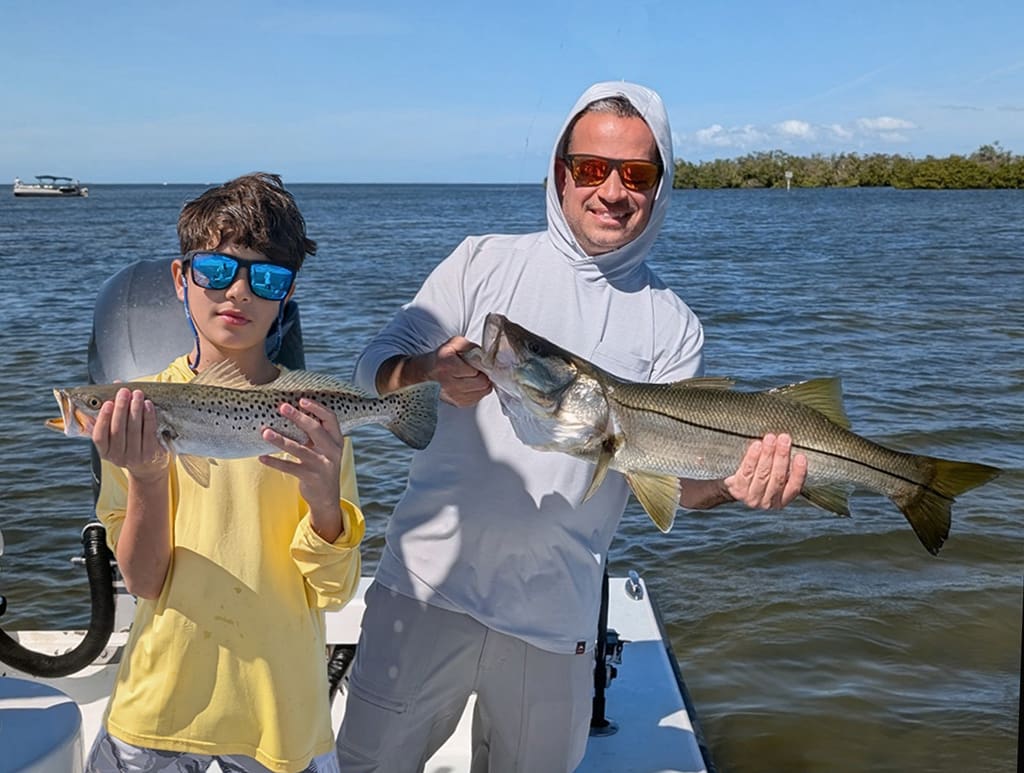
In the bay, trout, redfish and snook will also be roaming the flats in search of pilchards, shrimp and glass min­nows to replenish themselves from their winter fast. Spring is the time when local anglers have a host of pis­catorial choices and some of the best conditions to pursue them. Of course, it can all seem like just an illusion as another front riles the Gulf, sending chill winds and muddy water into the bay, and forcing anglers to put on a sweatshirt. It’s the kind of weather that plays with the emotions of fishers. But hope springs eternal, and we know from experience that it won’t be long before the run is on. That’s why it’s time to be prepared, flies tied and tackle ready for that day when it’s no longer a question of when it will happen, but what species we’ll fish for!

I like this time of year even if it can be exasperating. One day the flats and Gulf can be barren and the next the action red hot. That’s why it is so important to be ready for just about anything. Having rigs on board that can handle a big cobia and wire leaders in case kings make an appear­ance can make the difference between frustration and success. Anglers who are vigilant, prepared and persistent will be rewarded. Whatever your fish­ing style or whether you like fishing the Gulf of Mexico or local bays, take advantage of this swing time and you’ll be rewarded.


Fishing for fun

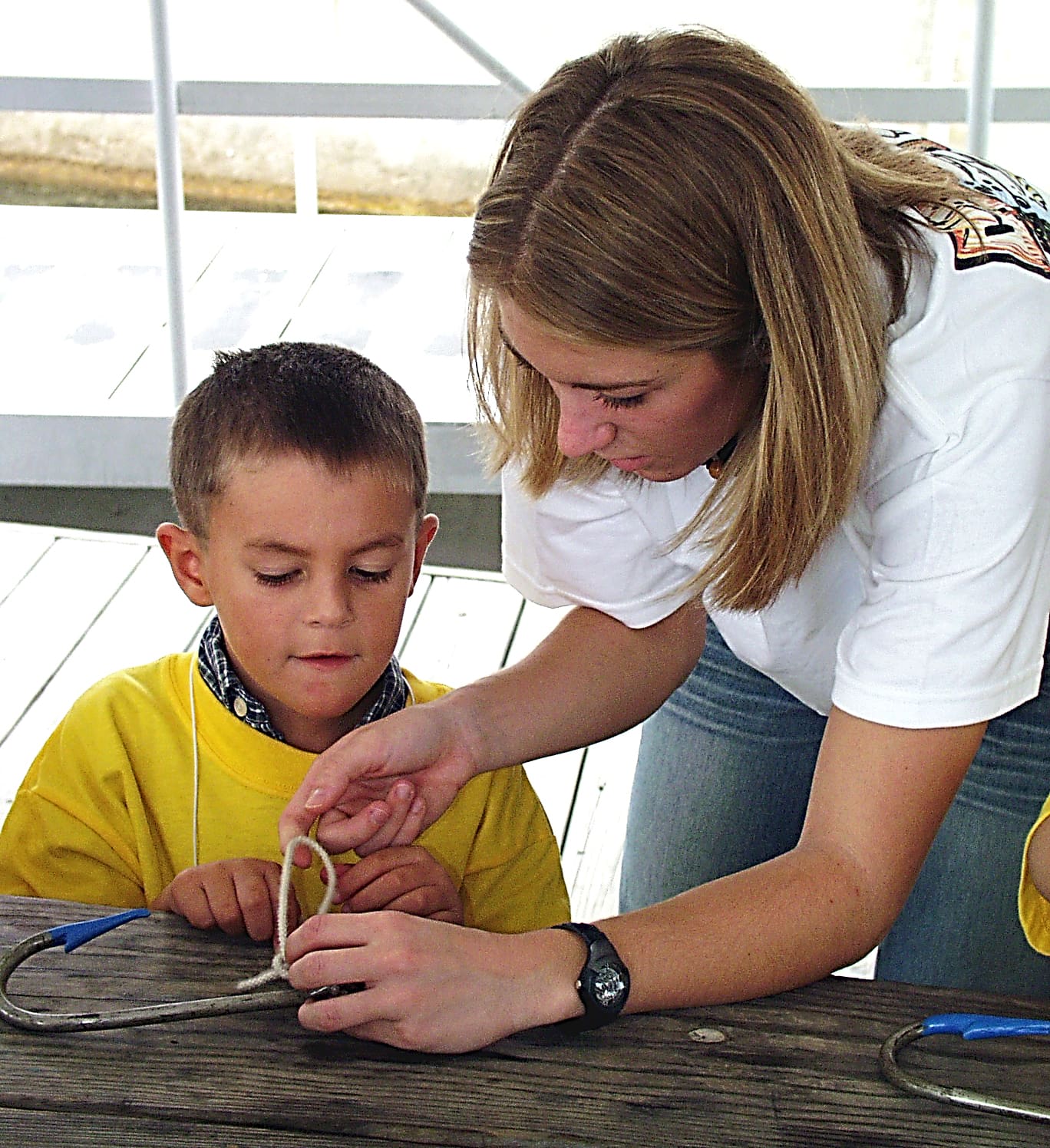
When we introduce children to fishing, we should make the experience uncomplicated and as much fun as possible. Creating unrealistic expectations can discourage young anglers and be the difference between kindling a passion for fishing or an aversion to the activity. The basics of fishing are easy to teach and don’t require expensive equipment. If there’s a cardinal rule to getting kids interested in fishing, it’s to keep them engaged. Children are naturally curious; they love to play in and on the water and are fascinated by the creatures they find there. Catching fish isn’t their main objective and you shouldn’t make it the focus of an outing. It’s important to plan a trip that includes other activities like swimming, wildlife identification and snorkeling as well as fishing. Being on the water provides an excellent opportunity to teach kids about their environment and boating safety skills. It’s important to let kids be a part of the adventure and getting them involved is a great way to interject a lesson in responsibility. Let them drive the boat even if they’re just sitting on your lap while you steer. Introduce them to navigating the Intracoastal Waterway and give them things to be in charge of such as making sure everyone knows where the safety equipment is.

Fishing for fun
Learning about fishing doesn’t have to be limited to the water. Knot tying skills are an important component. – Rusty Chinnis | Sun

Don’t start children out with cheap fishing rods and reels. Provide them with decent equipment that’s light and manageable. An ultra-light rig with 6-pound test line is a great way to start. Try and think like a kid when fishing. Children would rather catch a dozen pinfish in a half hour than wait hours for a chance at a bigger or better fish. Action is paramount; kids are easily bored and distracted. Consider starting kids fishing with a small popping cork that they can watch for signs of action. If you can start teaching kids that the enjoyment of the adventure isn’t measured by the number or size of fish you catch, you’ll teach them an important lesson that many fishermen never learn. If you can make the experience interesting for them, even if they don’t catch anything they are more likely to want to do it again. Kids might be more interested in collecting shells, counting crabs or looking for manatees or dolphins than fishing, so be sensitive to what’s bringing them pleasure.

It’s also important to emphasize safety, bending down barbs and making them aware of fish with sharp teeth and stingers like catfish and stingrays. These first experiences on the water are very important and you should consider a plan of action in advance in case the fishing isn’t great. The last thing you want to do is bore kids by sitting on a spot too long. Keep your eyes and ears open and if you’re lucky, you might learn a lesson or two from them!

Bradenton man loses leg to flesh-eating bacteria

Bradenton man loses leg to flesh-eating bacteria

BRADENTON – A 66-year-old Braden­ton resident had his leg amputated on Nov. 11 after coming in contact with flesh-eating bacteria (vibrio vulnificus) at a time when confirmed vibrio vulnificus cases are on the rise statewide.

The man came in contact with the flesh-eating bacteria while wading and fishing in Sarasota Bay, near the IMG Academy Golf Club along El Conquistador Parkway in Bradenton.

According to a family member, the longtime Bradenton resident went fishing in Sarasota Bay on Nov. 3 and his shoe or boot rubbed his skin on the back of his leg raw, creating an open wound near his Achilles tendon. The man fished in that location again on Nov. 5.

On Nov. 9, he began experiencing uncontrollable diarrhea, vomiting, severe leg pain and skin discoloration between his ankle and his knee. After being hospital­ized, his leg was amputated on Nov. 11. As of Friday, Nov. 15, he was recovering but he remained unconscious and faces a long recovery process, the family member said.

CASES INCREASE

According to the Florida Department of Health (FDOH) website that is updated every Friday, vibrio vulnificus is a naturally occurring bacteria found in warm, brackish saltwater. The flesh-eating bacteria enters the body through the direct ingestion of contaminated water or through open wounds, cuts or scrapes.

Confirmed cases of vibrio vulnificus increased after Hurricane Helene passed through Florida in late September.

According to the FDOH website, “In 2024, Citrus, Hernando, Hillsborough, Lee, Pasco, Pinellas and Sarasota Counties experienced unusual increase due to the impacts of Hurricane Helene. In 2022, Collier and Lee Counties experienced unusual increase due to the impacts of Hurricane Ian.”

According to FDOH, 81 cases of vibrio vulnificus have been confirmed in Florida so far in 2024, with 16 reported deaths. In 2023, 46 cases were confirmed statewide, with 11 deaths.

In 2022, there were 74 confirmed cases and 17 deaths.

There’s been one confirmed case of vibrio vulnificus in Manatee County in 2024 and two in Sarasota County, with no vibrio-related deaths in either county. In 2023, there was one confirmed and fatal case in Manatee County and six cases and two fatalities in Sarasota County. This year, Pinellas County leads Florida with 15 confirmed cases and three deaths.

FDOH INSIGHTS

On Friday, FDOH Communications Director Jae Williams provided some additional insights and information about the flesh-eating bacteria.

Williams said the increase in confirmed 2024 cases and deaths is specifically correlated to Hurricane Helene. He noted there was also a spike in reported cases in 2022 after Hurricane Ian.

“Hurricanes bring a ripe environment for vibrio. They bring storm surge and rain and then we have that brackish water that vibrio needs. Hurricanes bring a lot of contamination and it’s not just debris and household materials. We have sewage lines ruptured and garbage cans spilling over. There’s a lot of opportunity for this standing water to become contaminated. When the storm surge recedes and the rain goes away, you still have standing water baking in the Florida sun for several days. That’s where vibrio’s able to develop. Vibrio is not necessarily in floodwater, but it’ sin contaminated water. Regardless of the contamination source, it’s warm, shallow, brackish, stagnant water. That’s where you’re going to find it. You’re not going to find it in the middle of the Gulf ,the middle of Lake Okeechobee or in the middle of a moving river,” Williams said.

“With hurricanes, not only is the environ­ment more conducive to vibrio, but people often find themselves needing to wade through standing floodwater. There are many reasons to stay out of floodwater… but the scariest would be vibrio,” Williams said.

Regarding the Bradenton man, Williams said, “If he was fishing in the (first) week of November, that would not be attributed to either of the hurricanes. Unfortunately, this is just one of those regular cases we see throughout the year.”

Williams said Florida averages about 35 confirmed vibrio vulnificus cases and 10-12 deaths per year. FDOH doesn’t test Florida waters for vibrio vulnificus or issue vibrio vulnificus advisories when a confirmed case is reported because the harmful but short-lived bacteria usually washes away or dissipates before the area can be tested.

“There’s no way for us to go back and find it,” Williams said, noting that each confirmed case is reported to the health department. “Vibrio vulnificus is a reportable disease in Florida. If a health care facility diagnoses someone with vibrio vulnificus, that facility is required by law to report that to the Department of Health.

“It’s rare, but it’s scary and its serious. It’s unfortunate that this man’s leg was amputated, but he’s very lucky they got it before he died,” Williams said. “If you wade in standing water and develop severe flu-like symptoms, get medical attention immediately.”

Williams was asked if vibrio presents a risk to dogs and other animals.

“Certainly,” he replied. “If they ingest it or have open wounds, they are at risk the same way a human would be. Pets shouldn’t be in shallow, standing water either.”


 

Reel Time: On the road

Reel Time: On the road

When my wife, Christine, and I got an invitation to fish a part of Colorado we had never visited, we jumped at the chance. Our good friend, Jimmy Harris, owner of Unicoi Outfitters in Helen, Georgia, invited us and three other couples to join him and his wife, Kathy, at his daughter and son-in-law’s newly-constructed Sanctuary on The Mesa in Placerville, Colorado. Located just a short distance between Ridgeway and Telluride, the home sits on a mesa with stunning views of the Uncompahgre Mountains in the distance.

Since we were making the long trip from Florida, we decided to travel two weeks early and visit Durango, Colorado. Located on the south side of the scenic San Juan Mountain Range and accessible by the famous “Million Dollar Highway,” SR 550, Durango had been recommended by several fishing friends from Florida and we were not disappointed.

Eager to explore the fishing in the Durango area, I started searching YouTube for suggestions when I had the idea to see if there might be another casting instructor in the area. A quick search of the Fly Fishers International website put me in touch with Berris Samples, an instructor in Durango. When I contacted Samples, he graciously invited me to float the San Juan River just over the border in New Mexico. We met in the outskirts of Durango where I parked my car and joined Samples for the drive south.

We started the day wading a section of the river where we caught and released several rainbow trout from 12-16 inches. There was no question that there were bigger fish in the section of river as they would swim almost to our wading boots as we stirred up nymphs from the bottom. Catching them was another story, but I did hook a rainbow that I estimated to be over 20 inches. The big fish took the small nymph pattern I was fishing along the bottom, but the hook pulled on the first run.

In the afternoon, we floated a section of the river, stopping at a couple of spots to wade. Once again, we saw large fish working the riffles and runs but they weren’t in a feeding mode. Of the several drift boats we saw that afternoon, we only saw two fish landed. Still, the float was totally enjoyable with scenic vistas at every turn. The two weeks we spent in Durango were memorable, with side trips to historic Mesa Verde National Park and a train trip on the vintage Durango to Silverton Train. Durango is highly recommended, surrounded by stunning wilderness areas, soaring mountains and spectacular canyons.

Brigadoon

Brigadoon

The legend of Brigadoon is the story of a mythical village in the Scottish Highlands. It’s a tale of a place that became enchanted long ago and has remained unchanged and invisible to the outside world except for one special day when it can be seen and visited by outsiders. Those lucky outsiders then spend an enchanted day immersed in joy and celebration. This past May, I had the good fortune of spending a day on the enchanted waters of the Brigadoon Lodge, not in Scotland but in the highlands of Northeast Georgia and not far from where we vacation in Sautee Nacoochee.

I first experienced this stretch of water when a trip I planned with my friend Bob Seegar, who had relocated from Longboat Key to Blue Ridge, Georgia, and his grandson, David, was unexpectedly canceled. Fortunately, a friend who lives nearby saved the day when he hooked us up at the lodge through a friend who oversees the guides there.

The lodge sits on a beautiful tract of land where the storied Soque River runs through the Chattahoochee National Forest. It’s one of a few tracts of private land along the river that’s designated non-navigable and where no public access is allowed. It’s appeared in many magazines and hosted the likes of President Jimmy Carter and Ted Turner, founder of Turner Broadcasting System.

On this occasion, Seegar and I were joined by our friend, Michael Riter. The two had arrived at our cabin the night before when we dined at the nearby Harvest Habersham, a new farm-to-table restaurant that serves some of the most delicious and unique dishes I’ve ever tasted.

The next morning, we drove the winding and scenic route 197 that follows the Soque through the Blue Ridge foothills to the Brigadoon Lodge. We were met there by our guide, Doc, and fitted with waders and boots for our day on the river. Over eight hours, we fished several of the river’s “beats” where we all landed numerous large rainbow trout on a fly. We fished mostly nymph patterns under a strike indicator but were also treated to some of the mix of native and stocked trout on dry flies. It was truly an immersive experience that with a slight narrowing of the eyes became the Brigadoon of lore. If you’re ever in the area, a trip to this beautiful river and lodge is unforgettable.

Explore the options at www.brigadoonlodge.com.

Watch the video: https://youtu.be/EewyBNpjGCc?si=ARpe9_pRydEB15Jj

Carpe diem

Carpe diem

The sound wasn’t exactly deafening but it enveloped me as I stepped out of the car at the boat ramp. Located on the South Carolina side of Lake Russell, an impoundment of the Savannah River, the forest that surrounded the border between Georgia and South Carolina was humming with the sound of cicadas. These insects, known as Brood XIX, have a 13-year life cycle and provide a rare opportunity for fly anglers in the Southeast. Their numbers, truly biblical in proportion, have been estimated in the trillions and when some inevitably fall into the water, carp rise to feed on them.

My wife, Chris, and I had just arrived in Sautee on a yearly vacation to northeast Georgia when I got the call from Unicoi Outfitters owner Jimmy Harris to join him and store manager Wes McElroy to fish for carp. While I was aware of fly anglers targeting carp, this was the first time I had ever had the opportunity and I jumped at the chance. Readers of this column will have heard of McElroy and Harris, both of whom have provided me with some unique opportunities over the years, including fishing for stripers in the Chattahoochee and Lake Lanier and shoal bass on several local rivers. This trip was going to be special.

The weather this spring has been particularly wet, and while I was concerned about the forecast 80% chance of rain, I’ve learned never to cancel a trip based on the weather guessers. As it turned out, it never rained a drop while we were on the water, and we experienced one of the most beautiful days of the trip. McElroy is an excellent fly angler and fly tier and he extensively researches every species he pursues. For this trip, he had tied two dozen flies that almost perfectly matched the brood that would litter the water and bring carp to the surface to feed. We began by slowly moving along the edges of the lake looking for cruising carp. During the first hour, the carp seemed concentrated in certain areas, and we only boated a couple of fish. As the day wore on and the forest warmed, the cacophony intensified, and carp began to rise at almost every cove we visited. The next challenge for me was to time the strike after a carp had taken my fly, a task that proved a bit perplexing. I’m familiar with waiting a split second after a snook hits a top water fly but carp take this patience to a new level. The trick turned out to be to strike only after they had inhaled the fly and turned away. It was such a long wait that we joked about getting a hit, having lunch and then setting the hook. For the balance of the afternoon, we took turns throwing at carp and had some incredible action. In the end, we boated close to 20 fish ranging up to 10 pounds. We left the lake late that afternoon satiated with the action and relived the day on our way back to Clarksville.

If you’re ever in the area, make a point of visiting one or both of Unicoi Outfitters’ excellent shops and inquire about the fishing. There is excellent trout fishing nearby on their private water at Nacoochee Bend as well as other local rivers and lakes. Plan a trip by visiting their website at www.unicoioutfitters.com. Check out the action in this YouTube video: https://youtu.be/zHYhls4VXxY?si=dWGT4hSftCup34US

Try a beach fishing adventure

Are you an accidental angler? Someone who might not be passionate about fishing but who has always wondered what all the hype is about? Maybe you’re an avid freshwater angler from the north unfamiliar with the salt. Whatever your situation, if you want to get a taste of some of the area’s best summer angling with no hassle, beach fishing for snook with Capt. Steve Herich of Beach Fishing Adventures is a terrific option.

Capt. Steve has been fishing almost all his life.

“I started in Canada, fishing freshwater with my uncle Hop. He taught me how to catch frogs and crawfish for bass and how to fillet fish when I was 9 years old. I also fished a lot as a kid with my grandpa in Lake Isabella in California for bluegill and the nearby Kern River for rainbow trout,” he said. “In Florida, I’ve been fishing the local beaches since 1992 and always loved it. I had a boat at one time and went out with friends on their boats, but always gravitated back to shore. After leaving my 17-year insurance career here in Sarasota, I was ready to try something new. In 2011, my old friend Harry was fishing with me one day and an older lady walked up with questions about fishing since her grandsons were visiting and liked to fish. Harry spoke up and said Steve can show you how to fish and the lady booked me the next day. The rest is history and Beach Fishing Adventures was born officially in 2012. It’s been my full-time career since then and I love the opportunity to show folks that you can catch great fish and make wonderful memories, all with no boat in sight.”

Try a beach fishing adventure
Capt. Steve Herich holds a snook that fell for live bait while fishing the beach. – Rusty Chinnis | Sun

I recently had the opportunity to fish with Capt. Steve on the beach near my home on Longboat Key. When I arrived on a beautiful early spring morning, Capt. Steve was busy catching bait from a local pier. After hellos, I took over the bait catching duties. While he prepared the tackle for the day’s fishing, I baited a spinning rod with small pieces of shrimp. Action was fast and in only a few minutes we had a baitwell brimming with small pinfish and whiting. I was impressed with the captain’s homemade rolling beach cart that he had built specifically for fishing the beach. It was equipped with large tires to handle the often soft sands and equipped with rod holders and space for his bait and tackle.

We began fishing around a rock riprap structure along the beach. Capt. Steve approached the structure and quietly entered the water until he had a view of the whole perimeter where he spotted a snook to target. Reaching into the baitwell he hooked a small pinfish through the lips and made a cast to the outside of the structure. He then slowly maneuvered the bait into the path of the snook. Moments later he was hooked up to a 28-inch snook that made a hard run to the structure. Backing up while working the fish away from the structure, I watched as he expertly played the fish to the beach. We then moved farther down the beach where some trees had fallen into the water, providing the perfect habitat for snook. Unfortunately, the beach was filling up with tourists and they were in the water where the snook were congregated. We fished the area anyway and managed a couple of halfhearted strikes before deciding to move back up the beach. At another rock outcropping on the Gulf, Herich spotted a group of fish and made a cast in their direction. Almost as soon as his bait hit the water it was blasted by what turned out to be a fat sea trout.

Herich decided it was getting too crowded and suggested we move to another spot further to the south on Longboat. Unfortunately, I had an obligation and couldn’t join him, but about an hour later he texted me pictures of another fat trout and two snook he had landed. Not bad for a three-hour stint on a Saturday morning. I highly recommend Capt. Steve. He’s personable, prepared and passionate, a perfect fit for anglers wanting to try their hand at catching some of the area’s most iconic fish. The fact you won’t need tackle, any experience, or a boat is icing on the proverbial cake. Book a trip with Herich by visiting his website, www.beachfishingadventures.com. You won’t be disappointed.

Check, check and double check!

Reel Time: Check, check and double check!

How many times have you arrived at the boat ramp to find you left something important behind? How about forgetting to put the drain plug in before launching the boat? Not often, I hope, but if you’re like me, there are a ton of other small items that might get overlooked, like a boat towel for the floor, ice or food and drink.

Unfortunately, this happens to me all too often. It took way too long, but eventually, I decided to create a checklist and consult it every time before ever leaving the house. Each angler’s list will be somewhat different, but I offer you a look at mine in case you want some ideas to get started. I’ve found this to be a living checklist, meaning there’s always something you’ll need to add or subtract. I printed two copies of mine, laminated them and keep one in the glove box of the car and one in the boat. I save a copy as a Word file and periodically update it. Here’s a look at my evolving list.

BOATING CHECKLIST

DAY BEFORE

• Check to make sure boat batteries are charged;

• Check to make sure there is adequate fuel;

• Make sure winch battery is adequately charged.

BEFORE LEAVING GARAGE

• Sunscreen applied and extra available;

• Make sure trolling motor handle isn’t elevated;

• Remove leaning posts from overhead storage;

• Remove wheel chock;

• Remove push pole and install on boat;

• Bring a boat towel.

BEFORE LEAVING FOR RAMP

• Check that trailer is secure;

• Make sure plug is in boat drain;

• Plug in and test trailer lights.

FISHING AND OTHER GEAR

• Stripping basket;

• Fly boxes, pliers, cable to charge phone;

• Rods and reels, leaders, hooks, hook sharpener;

• All barbs bent down on hooks before use.

BEFORE LAUNCHING

• Double check drain plug;

• Remove safety chain;

• Loosen winch cable.

RETURNING TO RAMP AND BEFORE BACKING INTO GARAGE

• After backing trailer to retrieve boat, tighten winch cable;

• Remove leaning posts;

• Make sure safety chain is secure;

• Flush engine;

• Before backing into garage make sure trolling motor is in upright position but not too high;

• Secure wheel with chock;

• Open all hatches.

A checklist can be a valuable asset considering the energy that’s required to get to your destination and start fishing. I’ve employed a checklist for traveling for years but it’s proving more valuable all the time!

Cortez fishing village gallery

Cortez net - Cindy Lane | Sun

Cortez net - Cindy Lane | Sun

Cortez net camp - Cindy Lane | Sun

Cortez net camp - Cindy Lane | Sun

Cortez docks - Cindy Lane | Sun

Cortez docks - Cindy Lane | Sun

Cortez Rural Graded School - Cindy Lane | Sun

Cortez Rural Graded School - Cindy Lane | Sun

Cortez fleet at A.P. Bell Fish Co. - Cindy Lane | Sun

Cortez fleet at A.P. Bell Fish Co. - Cindy Lane | Sun

Cortez musician Soupy Davis - Cindy Lane | Sun

Cortez musician Soupy Davis - Cindy Lane | Sun

The Burton/Bratton store at the Florida Maritime Museum in Cortez was moved from the west end of the fishing village and restored. - Cindy Lane | Sun

The Burton/Bratton store at the Florida Maritime Museum in Cortez was moved from the west end of the fishing village and restored. - Cindy Lane | Sun

Cortez shrimp net - Cindy Lane | Sun

Cortez shrimp net - Cindy Lane | Sun

Cortez Cultural Center - Cindy Lane | Sun

Cortez Cultural Center - Cindy Lane | Sun

Cortez crab traps - Cindy Lane | Sun

Cortez crab traps - Cindy Lane | Sun

Making crab traps in Cortez - Cindy Lane | Sun

Making crab traps in Cortez - Cindy Lane | Sun

Cortez crab traps - Cindy Lane | Sun

Cortez crab traps - Cindy Lane | Sun

Cortezian Wyman Coarsey - Cindy Lane | Sun

Cortezian Wyman Coarsey - Cindy Lane | Sun

Cortez knot - Cindy Lane | Sun

Cortez knot - Cindy Lane | Sun

Cortez shrimp boat - Cindy Lane | Sun

Cortez shrimp boat - Cindy Lane | Sun

Cortez Fishermen's memorial - Cindy Lane | Sun

Cortez Fishermen's memorial - Cindy Lane | Sun

Cortez crab traps - Cindy Lane | Sun

Cortez crab traps - Cindy Lane | Sun

Cortez picnic - Cindy Lane | Sun

Cortez picnic - Cindy Lane | Sun

Cortez shrimper Wally Lewis - Cindy Lane | Sun

Cortez shrimper Wally Lewis - Cindy Lane | Sun

Cortez barn - Cindy Lane | Sun

Cortez barn - Cindy Lane | Sun

Cortez docks - Cindy Lane | Sun

Cortez docks - Cindy Lane | Sun

Cortez crab traps - Cindy Lane | Sun

Cortez crab traps - Cindy Lane | Sun

A net shed on the edge of the FISH Preserve in Cortez. - Cindy Lane | Sun

A net shed on the edge of the FISH Preserve in Cortez. - Cindy Lane | Sun

Cortez fish house - Cindy Lane | Sun

Cortez fish house - Cindy Lane | Sun

The Pillsbury boat works at the Florida Maritime Museum was relocated from Snead Island in Palmetto. - Cindy Lane | Sun

The Pillsbury boat works at the Florida Maritime Museum was relocated from Snead Island in Palmetto. - Cindy Lane | Sun

Related coverage

A century of Cortez

Snapshots of Cortez

The village that mullet built

Climate change in Cortez

The future – a memory?

Luck is when opportunity meets preparedness

Reel Time: Luck is when opportunity meets preparedness

Whether you’re fishing local water, stalking bonefish in the Bahamas, poling a flat in Charlotte Harbor for tailing redfish, or any number of angling scenarios, we anglers spend the majority of our time fantasizing about making the perfect cast to a hungry fish under ideal conditions. When we do get on the water, we face the unpredictable forces of wind and weather that can throw hurricanes, fronts, windstorms, clouds and various adverse conditions at us.

While the world of fishing in general and fly fishing, in particular, presents us with many challenges, it’s surmounting these odds that makes success all the sweeter. That’s why we hunt gamefish with imaginative mixtures of feathers, fur, synthetics and tinsel. The excitement of making a presentation to a gamefish you’ve stalked, enticing it into taking a fly, and then connecting through graphite and cork makes all the preparation, time, money and past disappointments worthwhile.

With so many odds facing a fly angler, there is good reason to be as well prepared as possible. Too many anglers wait for months to take the trip of a lifetime and find their casting proficiency severely tested. The old saying that “luck is opportunity meeting preparedness” is especially true for fly fishers. Why not develop the mindset from the beginning that everything we do, on the water and off, contributes to turning odds into opportunities?

Preparation comes in many forms, and the most important components are practiced throughout the year. That means having tackle in top form, as well as knowing how to tie proper knots and flies that imitate your prey’s food. Casting skills are developed over a lifetime, and practice should not be saved for fishing trips, or even the days leading up to a trip. If you can’t get your fly to the fish, all other factors are moot. The best practice is on grass, throwing to targets placed at different distances and angles. Don’t make the mistake of judging your casting ability by how long a line you can throw. Learn to make a tight (in saltwater), accurate 40-foot cast first and then work on distance.

While I’ve been blessed to learn from some top fly casters, I’ve found the best instructor of all is having a compelling reason to fly fish. That’s what leads successful fly fishers to learn the basics and practice. One of the first and most important lessons I’ve learned is to see the wind as a friend, not a foe. If you’re new to the game, don’t put off a fly-fishing trip because the wind is blowing. On my first trip to the Bahamas, I was face to face with a large school of bonefish just 40 feet away, into a 25-mph headwind. All those days of avoiding the wind meant that I didn’t have the skills to get the job done. Now I appreciate the windy days because I know that if I can be successful on windy days, I’ll be golden on the nice days. Wind-generated waves provide windows into the water and fish are far less spooky and more readily take a fly. If you can make a short, accurate cast into a 15-20-knot wind you’ll excel on those rare perfect days. Practiced fly anglers who are mentally prepared and visualize their outcome (just like top athletes) have a definite advantage. They’re primed when the opportunity presents itself as luck. The next time you have a chance to go fishing, don’t let the wind dissuade you, make the wind your friend. It will pay dividends in your fishing future.

EcoSummit an enduring success

EcoSummit an enduring success

I hope you had the opportunity to attend the 2023 EcoSummit in Sarasota this past week. In case you missed it, I wanted to share some of the excellent presentations that were given and provide you with some resources to get a glimpse of what was one of the most well-planned, presented and attended environmental events I’ve had the pleasure of attending.

On Monday morning, Dec. 4, Suncoast Waterkeeper board member Rob Brown and I took summit organizers Dave and Jennifer Shafer, lead sponsor Elizabeth Moore, her daughter Grace, and award-winning Australian documentary filmmaker and EcoSummit Keynoter Damon Gameau and his daughter Velvet, 9, on Suncoast Waterkeeper’s patrol boat.

That night, the event kicked off with a screening of Gameau’s film 2040 (watch it on Prime Video). The premise of the movie is Gameau’s imagining what the future might look like for his then-4-year-old daughter if climate change solutions are brought to scale and the problem is solved. In choosing what to feature in the film, Gameau limited it to solutions that are already available or have the potential to contribute to reversing climate change by the year 2040. The movie was screened at the Bay Nest at Bay Park in Sarasota and was very well attended.

The next two days of the summit featured a list of speakers who presented a diverse spectrum of ideas, solutions and ways to be involved in and live a sustainable life, now and in the future. One of the highlights of the event was an evening with best-selling author Carl Hiaasen, who was joined by environmental journalist and author Craig Pittman and dolphin researcher Randy Wells. It was a humorous and entertaining evening that featured a standing ovation by the sellout crowd in the Roskamp Auditorium at the Van Wezel Performing Arts Center. During the three days, attendees were serenaded by the excellent music of the Karen Jonas band.

Here’s a round-up of resources from the organizers to help you keep the momentum going.

There were 497 guests, including 54 speakers, over the two-day event from across the U.S. and as far as Australia and Mongolia! Speaker bios can be found in the EcoSummit Program.

If you are interested in doing more in your community, use the EcoSummit Next sign-up form to indicate your areas of interest and they will get you connected! Sign up at bit.ly/2023ecosummit-next.

If you’re interested in taking steps to help build a green, healthy and sustainable future for you, your family and your community, they recommend 24 local sustainability solutions and have organized them as action steps. Choose the solutions that make the most sense for you and pledge to make them happen. Also, visit their greenlivingtoolkit.org for curated expert advice.

This year’s event was the second organized by the Science and Environment Council’s founders, Dave and Jennifer Shafer, and the turnout proved the effectiveness of the group’s mission and the interest of the public in a sustainable future for our children and future generations.

Try fishing by bike

Reel Time: Try fishing by bike

Two of my favorite activities are riding my bike and fishing. Often, my fishing adventures involved a boat. While I still fish more from a boat, biking allows me a way to get in some excellent fishing without having to do the work of getting the boat in and out of the water. This option has opened a new avenue for getting in some fishing and a ride.

For anglers who don’t have easy access to a boat, a bike can take you to some excellent angling opportunities. A good example is Robinson Preserve in Manatee County. The park is a treasure for walkers, bikers, kayakers and anyone who enjoys the outdoors. It also provides access to Perico Bayou and Tampa Bay. In addition, it also holds a maze of canals that, based on recent observations, hold some terrific fishing. On a bike ride to the park recently, I encountered several anglers who had used their bikes to access the bridges that span the preserve’s canals and outlets to Tampa Bay. When I reached a favorite spot for a water break near the bay, I saw two anglers far out on a shallow flat I’ve fished many times from my boat. Nearby, leaning against a picnic table were their two bikes with rod holders. I took some pictures along the shoreline and, eventually, the two anglers waded to shore nearby. They had experienced a productive morning of fishing, seen no other anglers and landed some nice redfish and trout.

Although it doesn’t take more than a medium-light spinning rod rigged with an artificial lure to get in the game, I saw other bikers transporting live shrimp and even cast nets for catching bait. My preferred rig is an 8-pound spinning outfit or 8-weight fly rod with a 25- or 30-pound leader. I’m confident in the flies, plugs and jigs I fish, so that’s what I use and what I catch fish on. I double my standing line with a Bimini twist or a spider hitch and then tie my leader to the double line with a blood knot. After tying on a fly, topwater plug or jig with a non-slip mono loop, I stick a spool of leader and a couple of extra flies or lures in my pocket, and I’m good to go.

This time of the year is perfect for the wade fishing opportunities a bike provides access to. All you’ll need is a pair of wading boots or old tennis shoes and a change of pants for the ride home. Bikes can quickly get you to the places you’d find hard to reach, even by boat. You can plan your outing by consulting access points (Google Maps) online, then pack your gear and use your bike to explore some of the area’s less accessible fishing gems.

Try using your bike to expand your fishing horizons. Whether it’s a quick ride to a local pass or one of many local parks near Anna Maria Island, you’ll be surprised at the opportunities it will open up for you.

Reel Time: Giving back

I consider myself extremely lucky to have spent the last 40-plus years on an island in an area celebrated as the Suncoast. As an ardent angler, I’ve explored the bays, estuaries, islands and Gulf and feel incredibly blessed for the opportunities I’ve had. Like other anglers, I share the desire to “give back,” to work to protect this incredibly rich and diverse habitat after experiencing our effects on its health over time.

When I arrived here in 1981 the waters of the Suncoast were beginning to recover from decades of unregulated dredge and fill projects, stormwater runoff, overfishing and inadequate sewage systems. Over four decades I saw bag and size limits created to protect fish stocks and watched as waters begin to recover as insults were addressed. Seagrass was growing back and there was cause for hope and celebration. Red tides and algae blooms still occurred, and nitrogen levels increased, but we seemed to be on a hopeful track.

Reel Time: Giving back
Hudson Fisher caught his first redfish in Longboat Pass with his grandfather, Michael Riter, also known as Pickle. Will his children have the same opportunity? – Submitted | Michael Riter

Unfortunately, all that was so laboriously gained over half a century has been lost in just the last six years. Seagrass beds disappeared, lyngbya blooms, late summer occurrences since the 1980s, exploded in early spring and blanketed the already stressed grass beds and left shorelines lined in anoxic milky white water. Populations of some fish species plummeted and businesses suffered.

One of the advantages anglers have living in and fishing an area over time is the ability (given your eyes and mind are open) to gain insight into the seemingly inexorable changes that occur around you over time. As I’ve worked with like-minded individuals to protect mangroves, fish stocks and the waters of our bays and Gulf, I always wondered why harmful algae blooms, a/k/a red tides, were reported by the Spaniards in the 16th and 17th centuries. There wasn’t overpopulation to throw the system off balance. The answer to that question came to me as I read the accounts of those same Spaniards, Cuban fishermen and indigenous Indians in Jack Davis’ Pulitzer Prize-winning book “The Gulf, The Making of an American Sea.” In those pages, I learned about accounts relating to instances of the skies turning dark as thousands of seabirds passed overhead on a cloudless day, of fish schools so thick that it wasn’t much of an overstatement that you could walk their backs across broad stretches of the inland bays.

Suddenly it became clear to me (caveat, I’m no scientist) that the same red tides that polluters discount with “it’s natural” (like cancer’s normal is my retort) may have been nature’s way of attempting to keep the waters balanced. Before man left his scars on the ecosystem, the explosion of life was kept in check by this organism that’s triggered by excess nitrogen. It dawned on me that harmful algae blooms may function like forest fires in a natural system. Now the same marker nitrogen, produced by human activity, triggers longer and more intense outbreaks that track population growth.

Every time I’m at the beach and see young children splashing in the surf with gleeful enthusiasm and fishing the local piers I have to wonder, what kind of world will we leave these kids? My experiences, the lessons I’ve learned, and the camaraderie of friends on the Suncoast have been an incentive to give back for all we’ve been given. To be sure in these strange and uncertain times these efforts can verge on being depressing. That’s why I have to constantly remind myself of the words of the Dalai Lama, “If you work to save the world and the world is lost, no regrets.”

Florida Sea Grant needs boaters’ help

Florida Sea Grant needs boaters’ help

If you’re a boater, Sea Grant can use your help. If you are a reader of this column, you know that our waters are suffering from too many nutrients, the various forms of insults that lead to devastating red tide events and other harmful algae blooms (HABS). Florida Sea Grant has launched a survey for the recreational boating community to address discharges from vessels, one of those problems.

According to Victoria Gambale, Clean Vessel Act education coordinator, “This survey is part of a needs assessment that will help determine what educational programming and resources are developed and implemented. It will also be used with other data to determine what and where additional sewage waste disposal resources (pump outs and port-a-potty dump stations) are needed.”

This survey is for anyone who boats recreationally in Florida. The boater can own or rent, and the boat does not need to have a head for the boater to participate in the survey. Although the survey’s primary target is recreational boaters, any commercial boater who serves recreational purposes (like charters, sightseeing tours, etc.) can also participate in the survey.

The survey is estimated to take about 10 minutes or less and is anonymous – they don’t ask for your name, address, phone number, or email. They do ask for your home zip code for analysis purposes.

Information the survey asks for includes questions about your boat, sewage discharge laws, your opinion about pump out and dump station equipment, where you dispose of sewage waste, where you find boating information, standard demographic questions and a few others.

This survey has an “if-then” logic model, so you’re not asked questions that are irrelevant to you. For example, if your boat has an installed toilet with a holding tank, you won’t be asked about port-a-potty dump stations.

Your response is confidential and only accessible to project researchers at the University of Florida. Your response will only be shared once compiled with other respondents.

As part of a comprehensive needs assessment, Florida Sea Grant is also looking at boating infrastructure in the state. More specifically, they are looking to determine how many recreational boats have direct access to the water in each county. They are then comparing that to how many sewage disposal resources (pump outs and port-a-potty dump stations) are available.

U.S. Fish and Wildlife Service’s Clean Vessel Act Technical Guidelines recommend “As a general guide, at least one pump out station and dump station should be provided for every 300 to 600 boats over 16 feet length overall.” Florida Sea Grant will be using this study to determine if this general guideline is still appropriate, and, if not, to develop a new guideline to target counties in Florida that do and do not meet the guideline.

Based on the results of the needs assessment, they will focus efforts to promote the installation of sewage disposal resources where they are most needed.

Data collection for the study will be completed by June 2024 or earlier, depending on participation rates. Once all the data is collected, it will be reviewed for quality control and analysis. When that is completed, the results will be written up in a report. It is expected that the report will be available by September 2024. The report will be published on Florida Sea Grant’s Clean Boating webpage.

If you’d like to be notified when the report is available or would like more information, please email Gambale at v.gambale@ufl.edu or call 352-562-1134.

Boater survey promotional materials include a poster, postcard and social media graphics and text if you would like to spread the word about the survey.

To keep our waters healthy, we need the help of everyone who enjoys these natural wonders and whose livelihoods depend on them. Most importantly we owe it to future generations so that they too can enjoy their bounty, both spiritually and economically.

Become a Florida-friendly angler

Become a Florida-friendly angler

If you’re new to Florida or need a refresher course in the basic practices of ethical angling, the Florida Sea Grant program has just the course for you – the Florida Friendly Angler Program.

With feels-like temperatures in the triple digits every day, this is a good time to prepare for cooler weather in the comfort of your home.

The free course is open to anyone, especially anglers looking to up their game. The course teaches skills and practices that help fish and the environment, a win-win for our fisheries, according to Florida Sea Grant. You will learn about three topics essential for any angler who wants to protect fisheries and the environment:

1. Best Practices for Fish Handling and Release,

2. Environmental Ethics for Anglers and

3. Introduction to Fisheries Management and Giving Back.

The course is self-paced and you can take as long as you need to complete it, but why wait? In just under two hours, you can be a fully certified Florida Friendly Angler. You will receive a certificate and a weatherproof decal if you provide a mailing address. Share this opportunity with friends and on social media using the tag #FloridaFriendlyAngler. After registering, you will be sent a confirmation email with details about how to log on. Check your spam folder if you do not see the email.

Today more than ever, it’s critical that anglers know how to properly handle the fish they catch so that those that don’t come home to dinner with you can grow up and help create the next generation of gamefish. Getting involved in protecting the environment so that future generations of anglers have some of the same opportunities we’ve had is more urgent than ever as the area grows exponentially.

The Florida Friendly Angler Program was created through a partnership with the Florida Fish and Wildlife Conservation Commission, UF/IFAS Extension and Florida Sea Grant. For questions about the program, email course administrators Michael Sipos at Sipos624@ufl.edu or Savanna Barry at Savanna.barry@ufl.edu.