Tag: FEMA

Leffis Key Preserve remains closed pending FEMA review

Leffis Key Preserve remains closed pending FEMA review

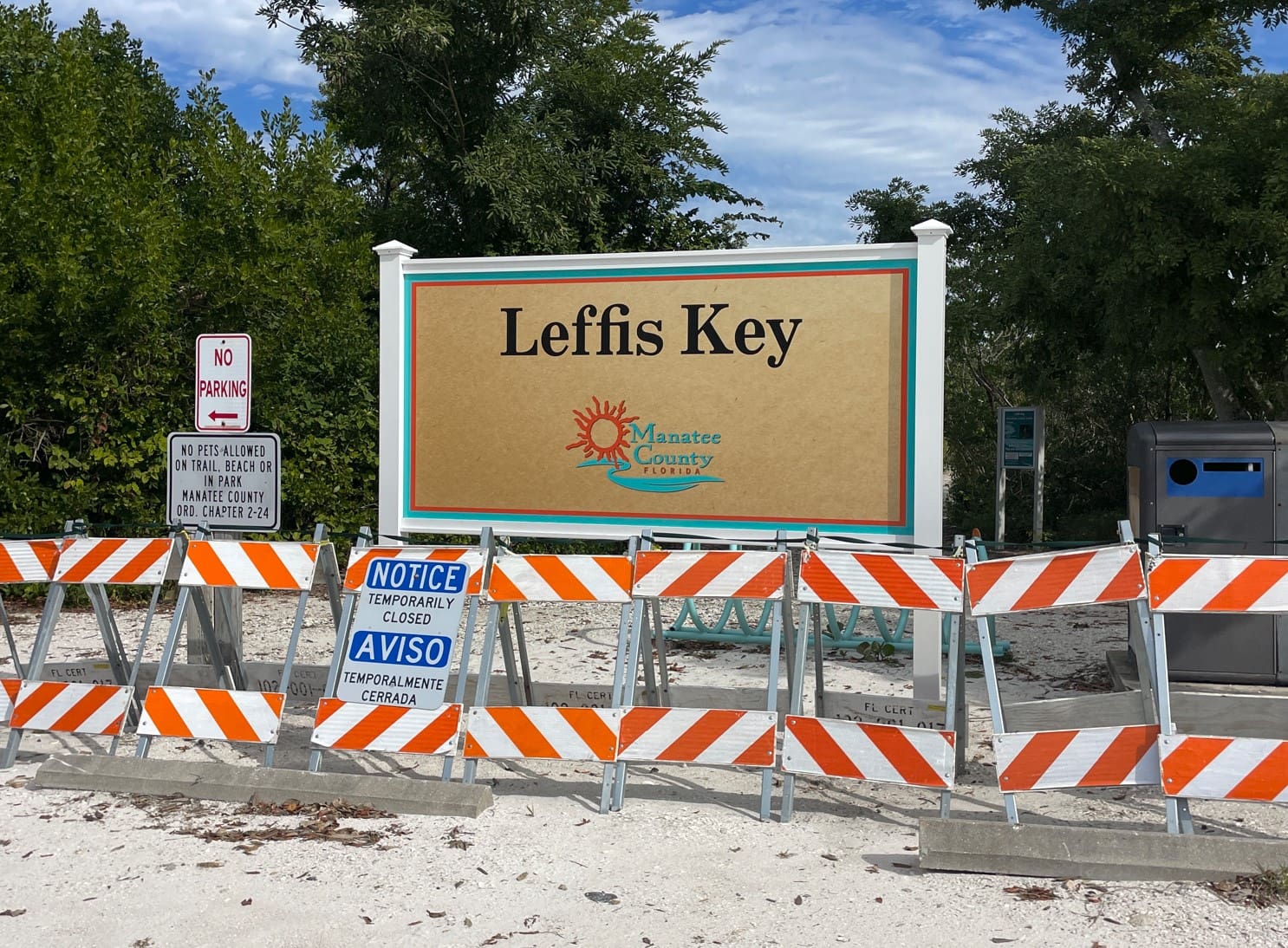
BRADENTON BEACH – Manatee County’s Leffis Key Preserve remains closed following damage from the 2024 hurricanes and a county spokesperson said the timeline for reopening is dependent on an ongoing review by the Federal Emergency Management Agency (FEMA).

Manatee County Deputy County Administrator Bryan Parnell responded to a resident’s email request for information about reopening the 21-acre preserve at 2351 Gulf Drive S., across from Coquina Beach, writing, “The county is actively working through the federal FEMA approval process to secure funding for the necessary repairs. Because these repairs were not completed under an emergency authorization, FEMA’s review timeline is longer and is still underway. We are currently finalizing the project’s scope of work and confirming the budget needed to move forward.”

Parnell wrote that the county shares in the community’s frustration over how long the process is taking.

“The county has completed many post-storm repairs across our preserves using in-house crews, but Leffis Key requires a full redesign and specialized construction, making it more complex than other projects,” he wrote.

Once FEMA provides a final determination, the county will share a timeline for reopening, according to Parnell.

In addition to the acres of trails, Leffis Key has a 26-foot-high hill where one can get a panoramic view of Sarasota Bay and the Gulf.

“The hill was planted with native dune and coastal ridge plants such as sea oats, beach elder, dune sunflower, southern red cedar, green buttonwood, sea grape, gumbo limbo, Hercules’ club, Jamaica dogwood and strangler fig,” according to Manatee County’s website. “In addition, over 20,000 marsh grass plants, such as smooth cordgrass, saltwater cordgrass and salt jointgrass were installed along the banks of the tidal ponds. The plant installation was accomplished with volunteer labor that included hundreds of school children, local environmental clubs and citizens.”

Site amenities include footpaths that circle and scale the hill, benches and 1,500 linear feet of boardwalks that meander through the mangrove forest, with strategically placed viewing platforms penetrating the open water, according to the Manatee County website.

City hosts hurricane preparedness workshop

City hosts hurricane preparedness workshop

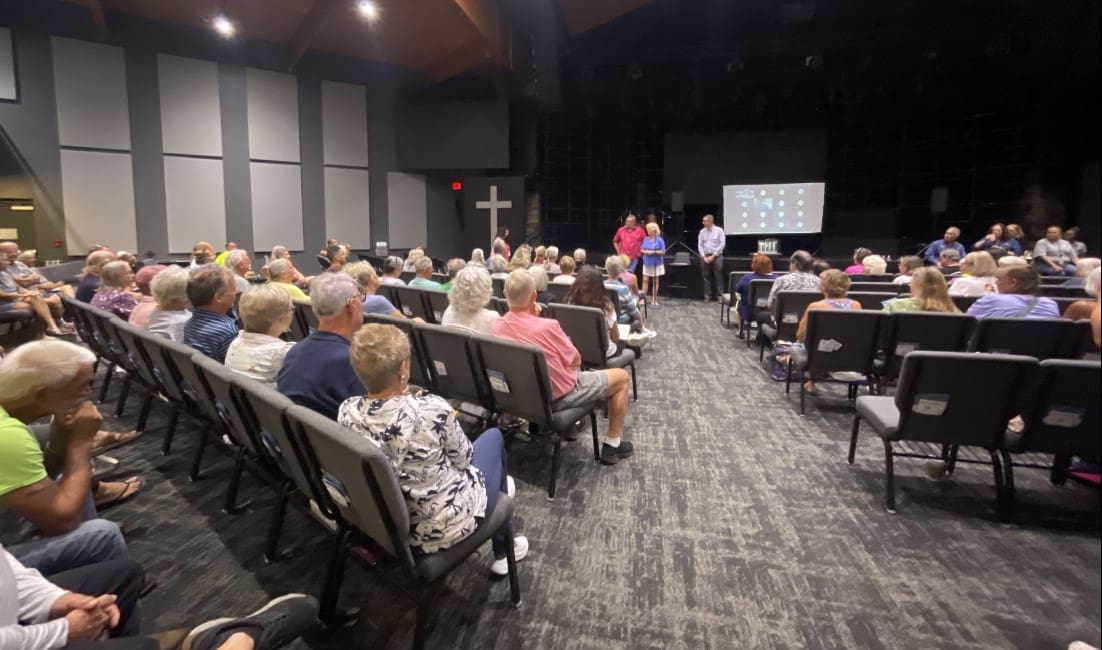
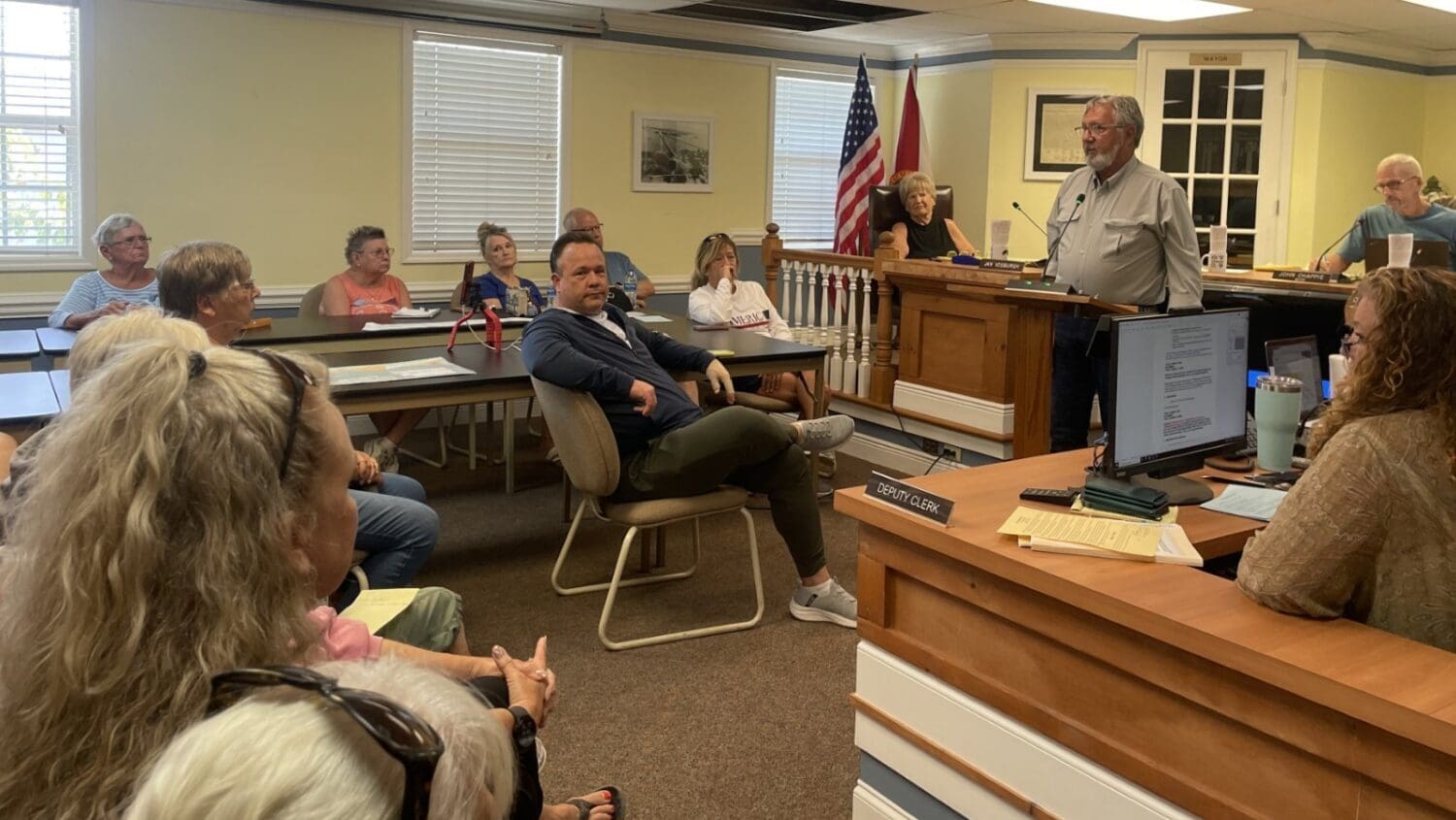
HOLMES BEACH – During the city’s town hall-style Hurricane Preparedness Workshop, members of the city’s emergency operations team spent nearly two hours sharing information about hurricane prepara­tion, response and recovery.

Held at Holmes Beach City Hall on June 6, the workshop was livestreamed and the archived video can be viewed at the city website.

After thanking the 25 or so audience members in attendance, Mayor Judy Titsworth said, “If I’ve learned any­thing from our past two hurricanes, it is you can never be too prepared.”

City hosts hurricane preparedness workshop
Mayor Judy Titsworth is in charge of the city’s hurricane preparations. – Joe Hendricks | Sun

Regarding mandatory evacuation orders, she said, “I know how hard it is to leave your home and not know the condition of it while you’re waiting to get back on the Island. We are going to continue to do everything we can to get you back on the Island as soon as possible.”

She said the debris removal costs and damage to city assets from Hur­ricanes Helene and Milton total nearly $8 million, but the city expects to be reimbursed for most of that.

“Hurricanes are inconvenient. They’re messy and they expose the character and resiliency of all affected,” she said. “Hurricane pre­paredness is a price you pay for living on this Island and there isn’t a better place I would rather be.”

Police Chief Bill Tokajer made it clear that he and his officers will not remain on the Island during the next major hurricane. He and several officers stayed during Hurricane Helene and became trapped inside the police department by the storm surge that Kamiya said reached 7 feet in some areas.

City hosts hurricane preparedness workshop
The storm surge pole by the city skate park illustrates how high the recent storm surges were. – Joe Hendricks | Sun

Tokajer stressed the need to follow evacuation orders. He said once the winds hit a certain speed (35-55 mph depending on the agency), calling 911 will get you on a waiting list but no one’s coming to get you until the winds die down.

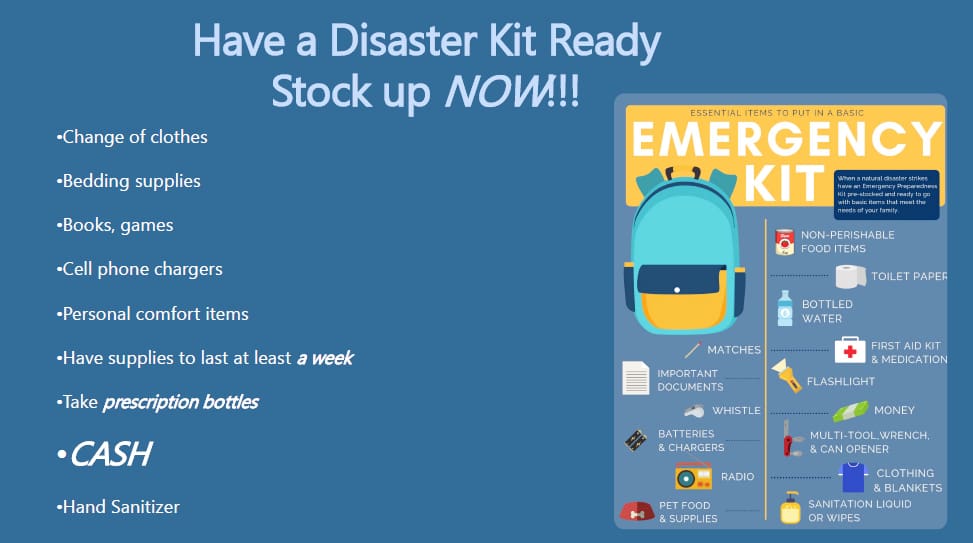
Tokajer advises making an evacuation plan and an evacuation kit ahead of time. An evacuation kit should include food, water, prescription drugs, batteries, flashlights, sanitary products, phone chargers, back-up power supplies and other supplies needed to survive a week or two without replenishment. He also suggests withdrawing cash ahead of time because ATM and credit card transactions may not be possible if the power’s out.

“Don’t wait. Stock up early on supplies,” he said.

City hosts hurricane preparedness workshop
Plan ahead when preparing a disaster kit. – HBPD | Submitted

Tokajer recommends putting insurance documents and other important documents on a thumb drive, along with photos of your household appliances and other belongings they may have to be replaced.

In addition to the city website and the city and police department Facebook pages used to share hurricane informa­tion in the past, the city has implemented the city-specific TextMyGov messaging system. Send a text to 91896 that says “HOLMESBEACH” and enter “YES” in response to the confirmation message.

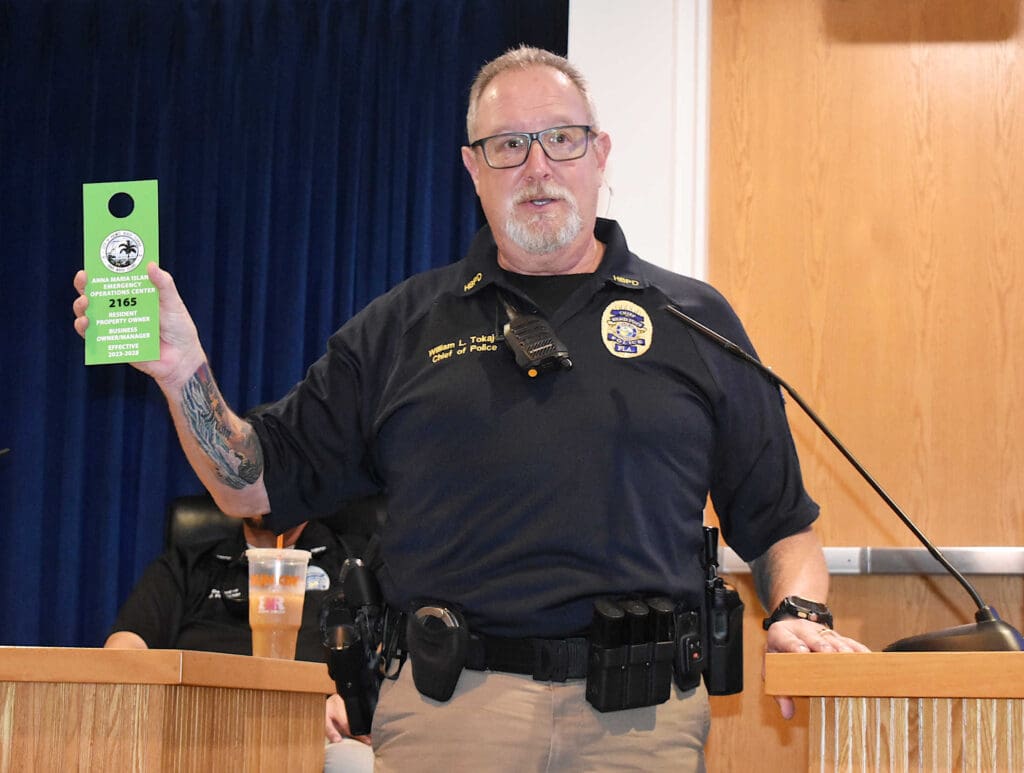
When returning to the Island after an evacuation order has been lifted – but while reentry restrictions and checkpoints remain in place – residents, property owners and business owners will need a valid reentry hang tag. Holmes Beach residents, property owners and business owners can obtain reentry tags at the police department’s front counter, inside the city hall building.

City hosts hurricane preparedness workshop
Police Chief Bill Tokajer displayed a city-issued reentry tag. – Joe Hendricks | Sun

Tokajer advises not leaving electric cars, golf carts, e-bikes and other electric vehicles in garages and ground-level storage areas where they could come in contact with saltwater and start a fire.

West Manatee Fire Rescue Fire Inspec­tor Cierra Price also stressed the importance of removing electric vehicles from the path of a potential saltwater storm surge.

“If you’ve ever seen a lithium (battery) fire, they’re really hard to put out. Don’t park them in your garage. Your house will catch on fire,” she said.

City hosts hurricane preparedness workshop
Fire Inspector Cierra Price represented the West Manatee Fire Rescue District. – Joe Hendricks | Sun

Price advises residents and property owners to disable their fire alarms and home security systems before evacuating to help prevent false alarms. She said the West Manatee Rescue Fire district responded to 92 false alarms in October 2024, around the time Hurricane Milton struck, and the monthly average is between seven and 20.

“You’re now taking emergency services to a false alarm when we could be responding to an actual emergency,” she said.

Price said during mandatory evacuations and emergency declarations residents and property owners are allowed by law to disable their fire alarm panels by shutting off the power and removing the backup batteries.

Public Works Director Sage Kamiya said his department’s first post-storm priority is clearing the city streets, followed by the removal of household and landscaping debris placed in the streetside city rights of way.

Titsworth said drywall, roofing and other construction materials are not supposed to be placed streetside for free debris removal and should be removed by the contractors or subcontractors doing the repairs.

Code Compliance Chief James Thomas said those caught illegally disposing of trash and debris after a hurricane will be ticketed and fined.

City hosts hurricane preparedness workshop
Code Compliance Chief James Thomas spoke about improper debris disposal. – Joe Hendricks | Sun

Building Official Neal Schwartz said there is a lot of confusion about FEMA’s 50% substantial damage rule and how that’s applied to individual properties.

“We do not make a determination if a property is 50% damaged or not. That is up to the homeowner/contractor that is going to fill out the required 50% cost breakdown from FEMA,” he said.

City hosts hurricane preparedness workshop
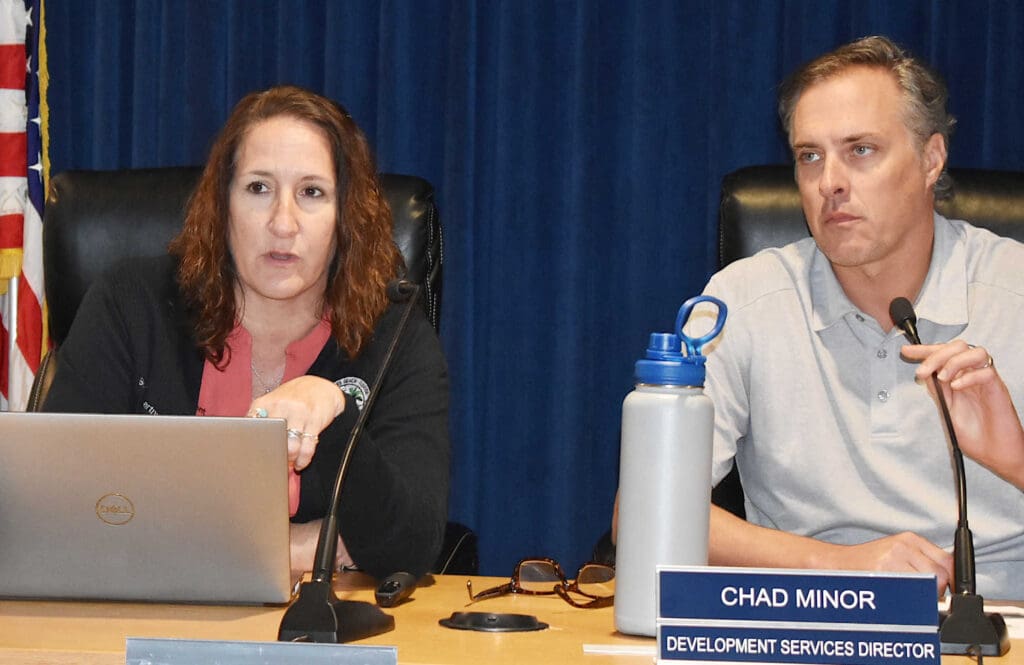
Kim Charron and Chad Minor spoke about repair permitting requirements. – Joe Hendricks | Sun

“This is why we require permits for all storm recovery work,” Development Services Coordinator Kim Charron added. “We have to track any repair costs and submit it to FEMA. Any repairs for storm damage have to be documented with a building permit.”

Development Services Director Chad Minor said hurricane repairs and restorations done without a permit can still be remedied.

“There is a way to get it done right,” he said. “Come in and talk to us. We can assist with those issues. We can right the ship.”

Below are the presentations given during the hurricane preparedness workshop:

Holmes Beach Police Department

WMFR Lithium-Ion battery information

Holmes Beach Public Works Department 

Holmes Beach Building and Code Compliance Department

Holmes Beach storm surge information

Separating hurricane debris

FEMA – How to prepare for a hurricane

FEMA – National Florida Insurance Program Resources

Related coverage:
AMI Sun Hurricane Guide 2025


ty, not FEMA, will remove condemned buildings

City, not FEMA, will remove condemned buildings

BRADENTON BEACH – City commissioners voted to use the city’s Code Enforcement department pro­cess rather than go through FEMA to remove buildings condemned after Hurricanes Helene and Milton if property owners fail to remove them.

“We have approximately 16 proper­ties, these are the ones that are down and compromised,” Police Chief and Public Works Director John Cosby told commissioners on Feb. 20. “We already sent out letters and asked people to respond back within 45 days with whatever their intent is. As of today we have received seven responses back, that they’re going to request to move forward to remove those properties.”

Cosby said if property owners don’t remove the buildings, the city will have to remove them using one of two options.

“The first is we could do it through Code Enforcement where we go after the property owner and cite them through code once they hit the number of days the limit is for the code,” Cosby said. “It’s brought before a special master, the special master makes a ruling and then we take them to court, obviously track­ing the time, then we put a lien on the property to get reimbursed. Then we would go in and have the court order them to take the property down.”

The second option involves FEMA.

“We can go through FEMA and get the necessary paperwork in to them and then we have a right to enter, we could go in and just take it,” Cosby said. “The issue with doing it through FEMA is then the city is going to be responsible for 12.5% of that cost.”

He said the average cost for removal is between $25,000 and $30,000.

“So when we get to this point if we have to, which route do you want to go?” Cosby asked commissioners. “Do you want to continue to try to force the property owner to take care of their own property or do you want to expend city tax dollars to force them to do it?

“I think we should go with the code route, just the normal legal process we would follow. I think people would respond to that, eventually they would take care of it,” Commis­sioner Deborah Scaccianoce said.

Commissioner Ralph Cole asked if FEMA would help homeowners with the cost of removing their house.

“No. FEMA will give them a grant of $30,000 to bring it up to code,” Cosby said. “I don’t know what it costs to put a house up on stilts, but I would say $30,000 isn’t going to be a lot of money.”

Commissioner Scott Bear noted that by going through Code Enforce­ment, the city retains the ability to recover costs.

Federal, state funds can help elevate ground-level homes

Federal, state funds can help elevate ground-level homes

ANNA MARIA – Federal and state funds may be available to help Anna Maria homeowners elevate their ground-level homes.

During the Anna Maria City Com­mission’s Jan. 9 meeting, the city’s contracted FEMA and floodplain consultant, Del Schwalls, gave a 56-minute flood prevention presenta­tion that included information about the soon-to-be-initiated Elevate Florida program that is expected to provide grants and low-interest loans to those who own ground-level homes in designated flood zones.

Federal, state funds can help elevate ground-level homes
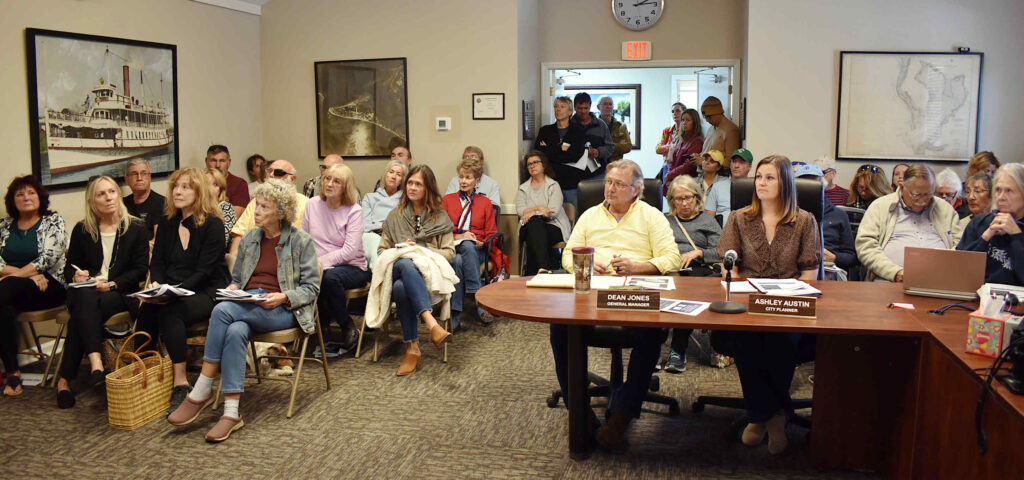
Interested property owners filled city hall to hear Del Schwalls’ presentation. – Joe Hendricks | Sun

Schwalls made his presentation at the request of Mayor Mark Short and the commission chamber was filled to standing room only capacity during the presentation.

The Elevate Florida program was announced in early December during the Florida Chamber of Commerce Insurance Summit in Orlando.

Manatee County government recently issued an Instagram message that said, “The Florida Division of Emergency Management has an­nounced the first statewide residential mitigation program – Elevate Florida – to help homeowners implement preventative measures to reduce potential damage caused by natural disasters. More information about how and when to apply is coming soon. To learn more about eligible project types, please visit floridadisas­ter.org/residentialmitigation.”

Fourteen minutes into his multi-topic presentation, Schwalls ad­dressed the Elevate Florida program. He noted that it is not yet in effect and an exact start date has not been announced.

Schwalls said there are a lot of FEMA and state funding options to help mitigate and reduce flood damage.

“They look at how much money FEMA spent and they give a percent­age of that and that money is available for grants,” he said.

The grant programs fund eleva­tion projects, acquisition projects, stormwater projects and other mitigation projects that help reduce flood damage.

He said FEMA funds are available to elevate a ground-level home or relocate a ground-level home outside of a flood zone. He noted the entire city of Anna Maria (and the rest of Anna Maria Island) is designated flood zone.

He also said, “FEMA will provide money for the city to acquire your house and demolish it and leave it as open space. If there’s no house there, it can’t get damaged.”

Funds are also available for business and restaurant owners to make their businesses more flood resistant.

“All these projects can be funded by FEMA,” Schwalls said.

Regarding elevating a home, he said, “There’s a common misconception that you can’t elevate block homes. You can elevate any house.”

Federal, state funds can help elevate ground-level homes
According to FEMA consultant Del Schwalls, any ground-level home can be elevated.- Joe Hendricks | Sun

He said elevating a home costs between $20,000 up to $100,000 or more, depending on the location, and FEMA will cover 75% of the elevation costs. The remaining 25% must be provided by the homeowner or other non-federal funding sources and Schwalls said there are many ways to shrink the remaining costs. He said FEMA will cover 90-100% of the cost to elevate a ground-level home that has suffered repeated flood damage and is included on the repetitive loss list.

Schwalls said the city must apply for the FEMA funds on behalf of the homeowner and it may take two or three years to receive the funds. The Elevate Florida program hopes to expedite the funding process by removing the city from the application process and removing some of the red tape that slows the process.

Similar to FEMA, the Elevate Florida program will fund elevation projects, repair and elevation projects and acquisition projects.

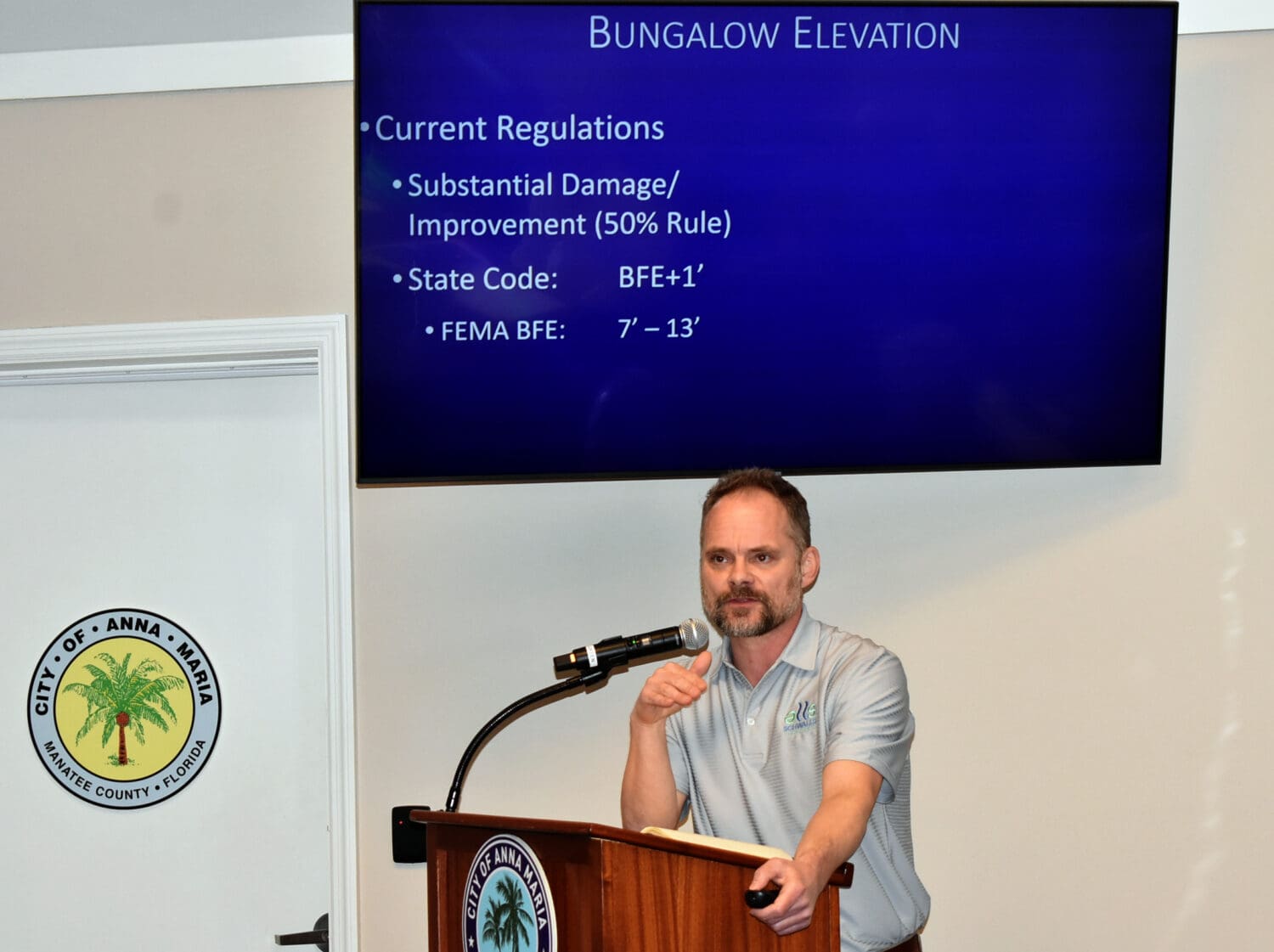
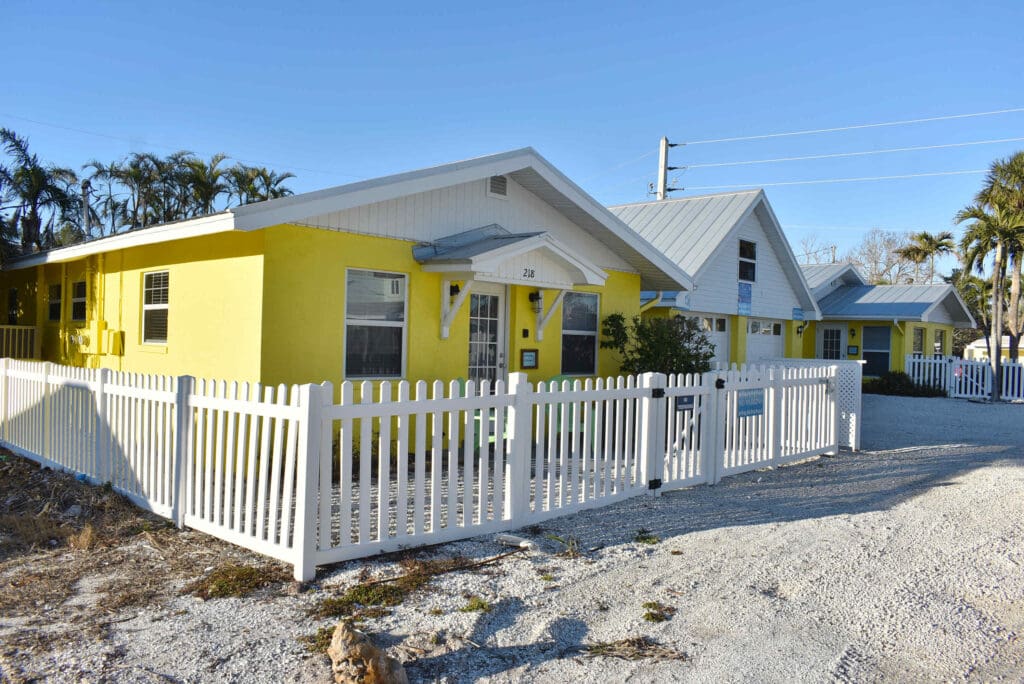
Schwalls said older, wooden, ground-level bungalows that suffer hurricane and/or flood damage are often demolished and replaced with an elevated home.

“We want to preserve this character. Some of these houses are generational homes, they’ve been in the family,” he said.

“The current regulations may not work for preserving these, so we’ve been chewing on some other options. The current regulations say if your home gets damaged by more than 50% you’ve got to bring the home into compli­ance with today’s regulations. If I’m going to improve it more than 50%, federal law and state law says you’ve got to elevate it.”

Federal, state funds can help elevate ground-level homes
Several ground-level bungalows still stand in Anna Maria. – Joe Hendricks | Sun

In response to a question from Commissioner Chris Arendt, Schwalls said FEMA might prioritize primary resi­dences but second homes and vacation rentals statewide are also eligible for FEMA funds.

In response to a question from Commissioner Kathy Morgan-Johnson, Schwalls said FEMA won’t reimburse a homeowner for work done before FEMA approves the work and the approval process might take 6-8 months.

Local contractor Kevin Hutchinson said he’s currently working on a project that entails abandoning the ground-level living space, converting it to garage and storage space and building new living space above it. He asked Schwalls if it would be more cost effective to raise the whole house instead.

Schwalls said he’s not a contractor and can’t provide a cost comparison, but he said FEMA will help fund those types of elevation projects too.

Hutchinson questioned the accuracy of Schwalls’ estimated elevation costs. He said an elevation contractor he spoke with said elevating a wood-framed home costs $100-$160 per square foot and elevating a concrete block home costs $300 per square foot.

Schwalls acknowledged elevation costs vary depending on location and he said the estimates he provided came from companies he’s familiar with in New Orleans and New Jersey.

The city asks those interested in the pursuing FEMA funds to elevate their homes to contact City Planner Ashley Austin at amplanner@cityofannamaria.com. She will compile a list of interested homeowners and future public meetings and/or information sessions will be scheduled.

The video of Schwalls’ presentation can be viewed here.

Did FEMA leave a gift under the tree?

It’s Christmas, and I hope you and your loved ones are enjoying some peace of the season after the harrowing few months we all have experienced. Unfortunately, for many, we’re not done with the restoration and/or rebuilding and understanding Manatee County’s procedures and FEMA’S 50% rule is confusing, to say the least.

Manatee County defines “substantial damage” as “damage of any origin sustained by a building or structure where the cost of restoring the building or structure to its before-damaged condition would equal or exceed 50%.”

They go on to say that if a building is substantially damaged or improved it must be brought into compliance with flood damage prevention regulations. This includes elevating the building to Flood Protection Elevation or Design Flood Elevation. Likewise, all electrical and mechanical equipment, bathrooms and laundry rooms must be elevated as well or removed.

They also indicate that the county, following the National Flood Insurance Program requirements, has the responsibility to determine “substantial damage” and “substantial Improvement.” If it is determined that the FEMA 50% rule applies, then the county will estimate market value by using the tax assessment value of your structure, excluding land and features.

This is a good time to point out that on the Manatee County Property Appraiser website (ManateePAO.gov) there is a new addition in red that will tell you what the FEMA value for your property is. These values are as of Jan. 1, 2024, so they are within a year old, but I can’t guarantee that this is the exact number that the county will consider.

I am no expert on FEMA’S 50% rule and a close reading of Manatee’s post-storm guidance can make your eyes glaze over. This is meant to be a guideline and hopefully I hit on some of the major points in an otherwise complex program. Do yourself a favor and don’t read it on Christmas Day.

We do have the November sales statistics available to report on from the Realtor Association of Sarasota and Manatee: Manatee County closed 15.5% more single family homes compared to last November. The median sale price was $430,000, down 11.5% from last year and the average sale price was $559,764, down 9.4%. The median time to contract was 45 days compared to 24 last November. New listings were up 14% and the month’s supply of available properties was 3.9 months, up 14.7%.

Manatee County condos closed 17.7% fewer properties compared to last November. The median sale price was $309,900, down 11.8% and the average sale price was $345,065, down 12.3%. The median time to contract was 53 days compared to 31 days last year, new listings were up 17.5% and the month’s supply of available properties was 6.6 months, up 50%.

Next week I’ll do a deeper dive into these numbers and what the realtor association’s opinion is. However, as you can see, with the exception of single family homes, all other segments are negatively impacted.

A few weeks ago, I went to the Manatee River holiday boat parade and was so happy and proud that this community has pulled itself together and chose to celebrate rather than dwell on the negative. It was a great turnout and the boat owners should be congratulated for lifting all of our spirits.

As a friend of mine perfectly said, “Let’s not allow the circumstances to steal our joy during this beautiful time of the year.” Have a merry Christmas!

New information for Cortez mobile home owners

New information for Cortez mobile home owners

CORTEZ – Many residents in local mobile home parks received substantial damage assessments from Manatee County following water intrusion from Hurricane Helene’s storm surge. Those residents attended a Nov. 6 meeting with Manatee County, FEMA and Florida Department of Emergency Management (FDEM) officials for answers about the next steps in the recovery process.

More than 100 Cortez mobile homeowners attended the informational meeting held at the Bridge Church to hear a presentation by officials outlining FEMA guidelines, including the 50% rule; county ordinances and its participation in, and adherence to, the National Flood Insurance Program (NFIP) as well as timeframes for inspections and disaster assistance contacts.

“This past month has been difficult for everybody,” Manatee County Building Official and Floodplain Manager Bill Palmer said in opening remarks. “A lot of people lost their homes and a lot of houses were abandoned. Everybody wants to repair their homes and get back as quick as possible and get their lives back as normal as possible.”

Discussion on regulations

“Manatee County participates in the National Flood Insurance Program (NFIP) so, when you rebuild or do repairs to homes, we must have guidelines on how you can rebuild. There are regulations so we want to make sure you have all the knowledge to move forward and be able to rebuild or decide which direction you want to go in,” Palmer said.

Palmer said there has been some misinformation circulated about the process.

“I’ve seen things that say we’re going to go in and condemn all the mobile home parks,” he said. “That’s just not true. We’re not going to do that.”

Manatee County Floodplain Manager Cheryl Bagby explained floodplain regulations.

“There are federal, state and local regulations that state if a home is damaged 50% of the value of the structure, or if it is improved 50% value of the structure, then the entire structure must be brought to current floodplain compliance,” she said. “This is commonly known as the FEMA 50% rule. What that means is if you sustain damage and the cost to bring your home back meets or exceeds 50% of the value of the structure, then the entire structure has to come up to current flood compliance, which includes elevating the structure.”

Bagby said the county’s disaster assessment team has gone out to the communities for an initial damage assessment.

“A lot of times they were unable to get inside. They took a look at the buildings and they did a data collection of how much observed damage there was to the building. They took that data and brought it back to us and we’re going to calculate that to see how substantially damaged that is,” she said.

She said Sunny Shores, Paradise Bay and Cortez Park are all located in a floodplain and all are subject to the 50% rule.

Bagby said the county receives the mobile home’s value from the Manatee County Property Appraiser.

“If you go on the property appraiser website, type in your address, it is currently labeled FEMA market value,” she said. “It’s not a value from FEMA, it’s a value that has been calculated for the structure. If you meet or exceed 50% of that the entire structure has to come into compliance.”

Bagby said homeowners have the right to hire a private appraiser to assess the pre-damage value of the home.

“We will take the higher of the two,” she said.  “It should be reproduction value minus physical deterioration.”

Renovation, permits

Bagby said homeowners may remove damaged building materials but an application is required to make repairs.

“Even if you’re in a mobile home, there’s still an application to build back,” she said. “Take out that drywall, take out those contaminated materials, that’s okay. But before you build back you have to submit an application so we know whether or not you need to elevate your home. Don’t go spending money, because you might have something that ultimately has to be elevated and cost you a lot more.”

Homeowners wishing to do repairs to the mobile home must apply to the county for a storm mobile home review.

“You’ll need to submit paperwork with costs,” Bagby said. “If you’re under the 50% we’re going to sign off, say go ahead, you’re approved for repairs. If you’re over 50% we’ll tell you what your options are from there.”

She noted that because mobile homes are not subject to the Florida Building Code, people may think they don’t need permits to make repairs.

“It is, however, subject to floodplain regulations,” Bagby said. “Therefore that 50% rule still applies.”

For most storm damage repairs, permit fees are being waived.

“When you apply you need a contract or a cost breakdown. If you’re doing it yourself we need the material cost so we can get an accurate assessment of what this is going to cost,” Bagby said. “We need documentation validating the values. Labor is counted. For homeowners, it’s $30 an hour for labor. You have to assign a value to donated materials.”

She said with the 50% rule there is a one-year cumulative value. If any permits were pulled within and closed within the last year, or are older and still open, those values count toward the 50% value of the structure.

“The whole point of elevating is so you don’t have to go through this again, so you are protected against these storms because they are happening stronger and more frequently,” Bagby said.

FEMA and Small Business Administration (SBA) representatives attended the meeting via Zoom.

“Manatee County participates in the National Flood Insurance Program,” Tammy Hanson with FEMA Flood Plain Management said. “When the community joined the program, they agreed to adopt and enforce floodplain management requirements. What that allows is the ability for flood insurance through the National Flood Insurance Program.”

One of the things she said is misunderstood is that FEMA or the state is coming in to do assessments. That is not the case.

“That is not how the program works,” Hanson said. “There are federal, state and local requirements. It’s through the enforcement of local regulations where the determinations of damage assessment are made.”

 Timeframe for inspections

“Our team is very short-staffed right now,” Bagby said. “We have a lot of applications coming in, plus we’re out in the community doing this disaster recovery work. Make sure any application you do submit, have it clearly state hurricane or storm damage so that it gets prioritized. The turnaround time for storm damage is a few days.”

Disaster assistance: FEMA and SBA

“The individual and household programs (IHP) provide assistance to eligible individuals and households who have uninsured, or underinsured necessary expenses that are a result of the disaster,” FEMA representative Millie Diaz said. “The IHP is not a substitute for insurance and cannot compensate all those losses.”

IHP has two specific provisions, one is for housing assistance and the other is for needs assistance,

“We also have displacement assistance for those who cannot return to their house and childcare assistance,” Diaz said.

Deadlines for assistance applications are Nov. 12 for Hurricane Debby, Nov. 27 for Hurricane Helene and Dec. 11 for Hurricane Milton.

Here are some helpful contact numbers:

FEMA disaster assistance – 800-621-3362

FEMA community services program – 833-514-2940

Disaster unemployment assistance – 800-385-3920 or www.Floridajobs.org

Crisis counseling – 800-985-5990

Small Business Administration – www.lending.sba.gov or 800-659-2955

A second meeting

To assist in answering questions about individual circumstances, a second meeting is being planned for Wednesday, Nov. 13 to include the following break-out areas:

FEMA:

  • DSA: Disaster Survivor Assistance
  • Individual Assistance
  • SBA: Small Business
  • Hazard Mitigation/Floodplain Management
  • NFIP (insurance)

Manatee County:

  • Zoning, 1 person
  • Floodplain Management
  • Building Official
  • Code Enforcement

Details about a time and location for the Nov. 13 meeting are to be determined.

Sandpiper Resort evaluating mobile home ruling

Sandpiper Resort evaluating FEMA guidelines, damage assessments

BRADENTON BEACH – Residents of Sandpiper Resort Co-Op are questioning FEMA guidelines that deem some mobile homes with flood damage uninhabitable. City Building Official Darin Cushing said during an Oct. 17 city commission meeting that those FEMA guidelines identify the hurricane-related damage as substantial damage, making the homes uninhabitable.

“We assumed this would be on a case-by-case basis, by the 50/50 rule,” Tracy Moon, Sandpiper manager said on Oct. 18. “Some of the units only got a couple inches of water, some got maybe 15-16 inches, but people can live in them. It’s a matter of replacing floors and some drywall, not a blanket condemnation of the whole co-op.”

Moon said the co-op is receiving legal advice and an attorney representing Sandpiper will be reaching out to the city for clarification of the FEMA rules.

Sandpiper Resort evaluating mobile home ruling
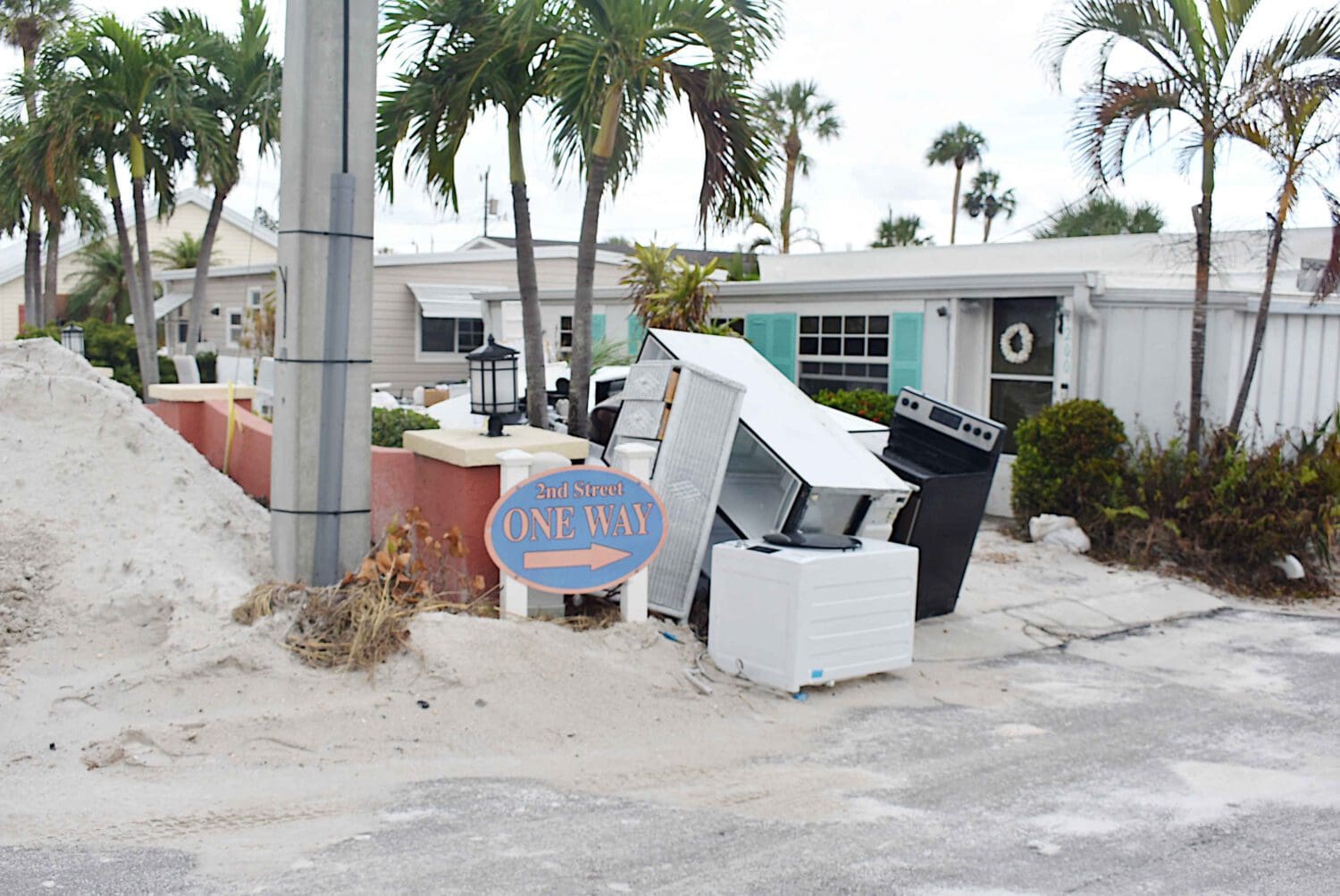
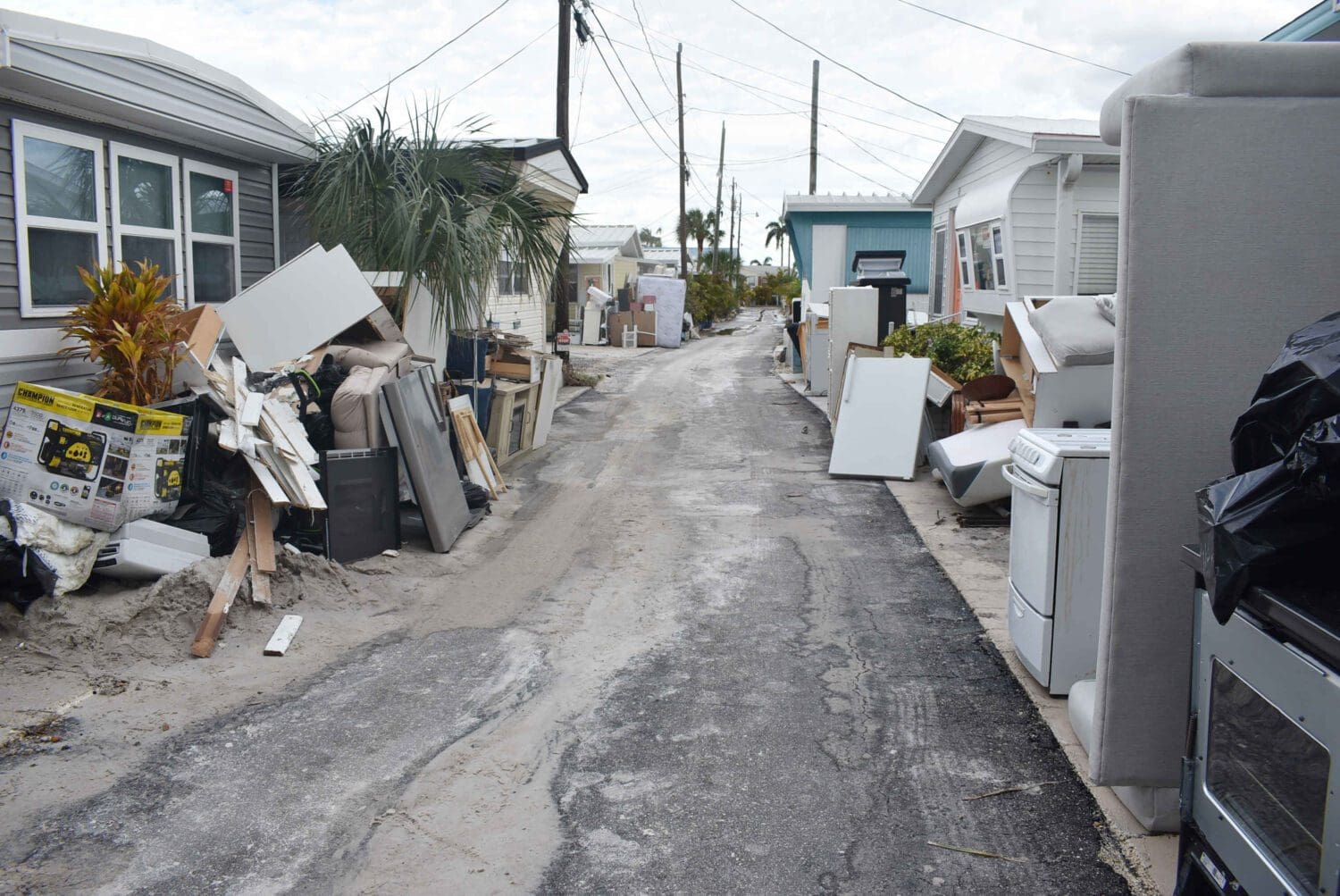
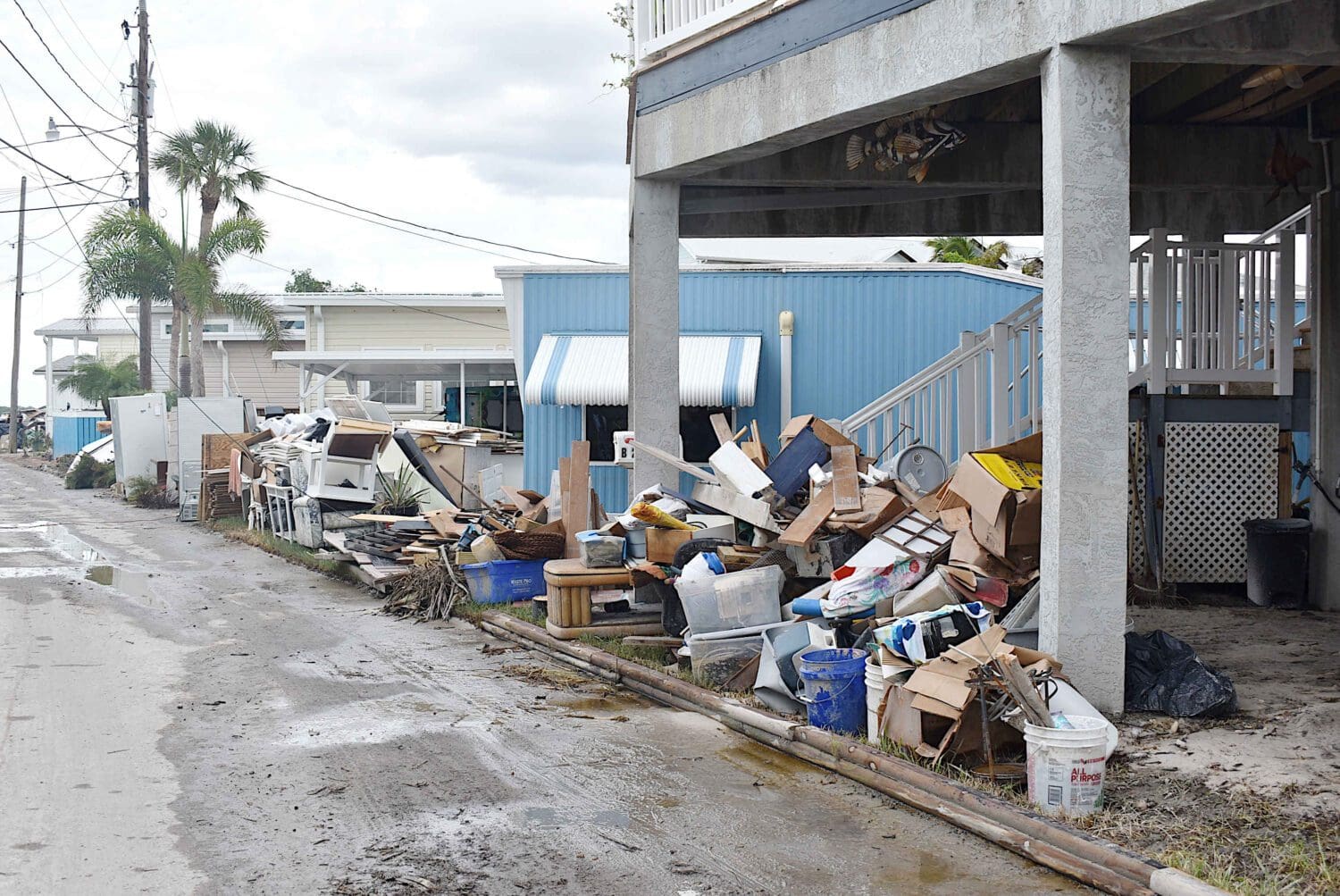
Debris lined the streets of the Sandpiper mobile home park after Hurricane Helene. – Joe Hendricks | Sun

“We were completely caught off guard by the city’s interpretation of the FEMA ruling of substantial damage,” Moon said.

Cushing had read the following at the Oct. 17 meeting, “In accordance with FEMA’s damage assessment guide, there are different degrees of damage when it comes to mobile homes, or as they call them manufactured homes, and those different degrees of damage are affected, minor, major and destroyed. By these degrees of damage, all of the mobile homes in the Pines and many in the Sandpiper, but not all, have major damage by that guideline.”

He said that major damage is determined when water covers the floor system and enters the living space of the residence but is below the ceiling.

Sandpiper Resort evaluating mobile home ruling
Hurricane Helene debris was placed alongside this elevated mobile home in the Sandpiper mobile home park. – Joe Hendricks | Sun

“There was some question whether major damage is the same as substantial damage. In speaking with FEMA representatives yesterday in person, that’s what they considered,” Cushing said at the Oct. 17 meeting. “By this description, according to FEMA, the structure is considered to be substantially damaged and in accordance with the city of Bradenton Beach flood ordinance it says if an existing manufactured home has incurred substantial damage as the result of a flood it shall be elevated such that the bottom of the frame is at the Base Flood Elevation (BFE) plus three feet.”

According to Cushing, the BFE at Sandpiper is seven or eight feet depending on the section of the park.

The 50/50 rule says if damages to a structure are to a level such that it would cost 50% or more of the value of the structure to bring it back to its original condition, it has to be elevated to flood compliance and Florida Building Code, according to Cushing at the Oct. 17 meeting.

Moon said there are 166 mobile homes at the co-op. Of those, 120 are shareholders and own the land in its entirety. The other 46 mobile homes are rented.

Cushing said approximately 150 of those mobile homes were impacted by flooding.


Sun reporter Joe Hendricks contributed to this story

Related coverage:


Pines, Sandpiper homes deemed uninhabitable

Pines, Sandpiper homes deemed uninhabitable

Pines, Sandpiper homes deemed uninhabitable

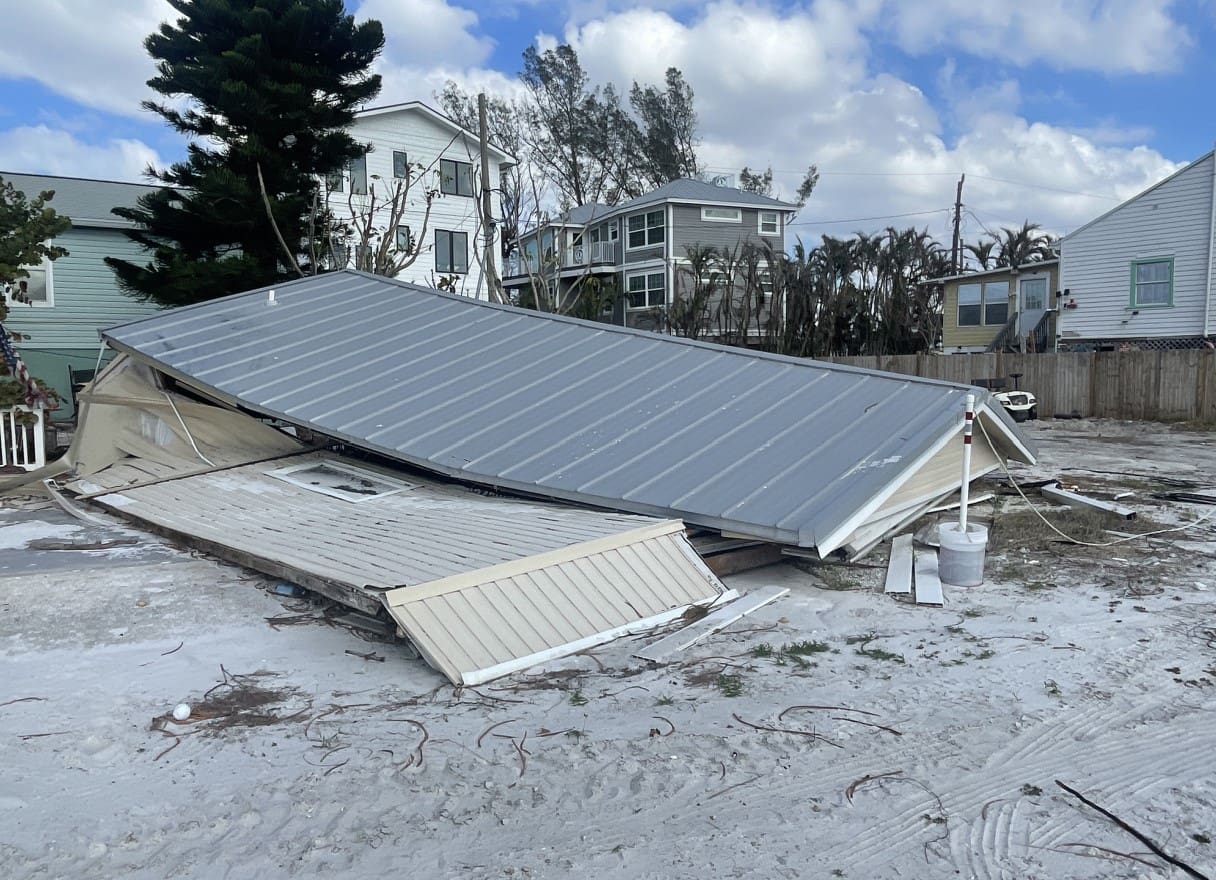
BRADENTON BEACH – At an Oct. 17 city commission meeting, Bradenton Beach Building Official Darin Cushing delivered the news he never wanted to give and mobile home residents never wanted to receive – that FEMA guidelines related to water intrusion from hurricanes have rendered the mobile homes at Pines and Sandpiper mobile home parks uninhabitable. Based on the city’s flood plain ordinance, the mobile homes could only remain if elevated to a height of up to 12 feet – an alternative Cushing said would likely not be economically or structurally feasible.

Cushing addressed the anxious residents who packed city hall chambers at the noon commission meeting.

“I’ve spoken with a lot of you out in the streets and over the phone and via text and emails for the last few days and weeks, we’ve gone back and forth a few times trying to find some way to get a good answer and a good solution, and this is not just the Pines but Sandpiper,” he said.

He then read his notes outlining FEMA guidelines:

“In accordance with FEMA’s damage assessment guide, there are different degrees of damage when it comes to mobile homes, or as they call them manufactured homes, and those different degrees of damage are affected, minor, major and destroyed. By these degrees of damage, all of the mobile homes in the Pines and many in the Sandpiper, but not all, have major damage by that guideline,” he said.

He said that major damage occurs when water covers the floor system and enters the living space of the residence, but is below the ceiling.

“There was some question whether major damage is the same as substantial damage. In speaking with FEMA representatives yesterday in person, that’s what they considered,” he said. “By this description, according to FEMA, the structure is considered to be substantially damaged and, in accordance with the city of Bradenton Beach flood ordinance, it says if an existing manufactured home has incurred substantial damage as the result of a flood it shall be elevated such that the bottom of the frame is at the Base Flood Elevation (BFE) plus three feet.”

The BFE at the Pines is nine feet. The BFE at the Sandpiper is seven or eight feet, depending on the section. Plus three feet would mean that homes at the Pines would need to be elevated to 12 feet with homes at the Sandpiper raised to 10-11 feet, depending on the section they’re located in.

“It would have to be on columns, on pilings into the ground, and all the other engineering that goes along with that. It appears to me that the engineering involved alone would cost more than the value of the structures,” Cushing said.

He said all utilities would have to be raised and stairs would have to be included. Permitting would be the responsibility of the property owner. In the case of the Pines, that would be local developer Shawn Kaleta and other unnamed investors.

“I don’t believe there’s a unit over there that structurally could withstand being 12 feet up in the air,” Cushing said.

The Pines has 86 units and Sandpiper Resort has 166.

Residents react

Residents’ reactions to the news ranged from strong emotions to offering alternative suggestions.

One Pines homeowner said she and her husband had bought a unit as an investment earlier this year.

“Are you telling me all that money is gone?” she asked.

“This is going to look like Pensacola, all the units will be in the air,” Eric Janson said.

“So according to your guidelines, every single-story structure that had water covering the floor is condemned?” James Hughes asked.

“This is specifically for manufactured homes,” Cushing said. “If a single-story home reaches that category of substantial damage, yes, they’re going to have to elevate. Commercial buildings have the option of flood-proofing.”

Elaine Armaniaco asked if the local ordinances could be changed.

“You’re redesigning the entire town,” she said. “Couldn’t you all get in some room and say hey, we need to rethink this? There has to be a little more brainstorming and a little more effort put into the creative process here of how we can save the entire character of this town, including the mobile parks, because based on what you’re saying now Bradenton Beach doesn’t exist. Let’s call this what it is. This is disastrous.”

“We did recently augment it,” Cushing said. “This ordinance was rewritten just in the last couple of years just for that very reason, to save this town, to save the buildings.”

Cushing said the buildings that are compliant with the floodplain ordinance received very little damage during recent hurricanes.

“We’ve all been here a long time and over the years, the building requirements have changed for everybody,” Mayor John Chappie said. “Everybody has been affected by the FEMA rules by the flood insurance guidelines.”

Cushing explained those guidelines.

“The city participates in what is called the community rating system, along with every city and county in the state of Florida for sure, and the rest of the country that has coastal water flood zones,” Cushing said. “It’s a system in which the city is graded by the federal government, FEMA and NFIP, the National Flood Insurance Program. Every year they come through to make sure that we’re following the rules that were sent down by the feds. If we were going to change rules they wouldn’t get less restrictive, they’d get more restrictive.”

The better the rating a city gets, the flood insurance rates are lowered, he said.

“It’s not something we just do arbitrarily. We have to follow those rules,” Cushing said.

50 Percent rule

“Basically their definition of substantial damage is – you’ve heard of the 50% rule,” Cushing said. “That rule says if damages to a structure are to a level such that it would cost 50% or more of the value of the structure to bring it back to its original condition, it has to be elevated to flood compliance and Florida Building Code.”

Cushing said as a flood plain manager, he is tasked with making that determination by either the property appraiser’s value or obtaining a private appraisal from the property owner.

“I get the flood insurance issue. These mobile homes, nobody has flood insurance,” Brett Williams said. “Two days ago you were going to come out to do a 50/50 assessment. All of a sudden you all decided you weren’t going to play it that way?”

Cushing said would take ownership of that, but that he was required to attend a Manatee County meeting with the Florida Division of Emergency Management (FDEM) and FEMA about damage assessment.

“At 8:30 yesterday morning I went to that training because it was required,” Cushing said. “Every building official in the entire county was there as well as multiple inspectors. There was a representative from FDEM and from FEMA.”

Cushing said he raised his hand at that meeting and asked specifically about mobile homes on the Island.

“The guy from FEMA told me if they got any water in them, that’s it, they’re toast. That’s basically what he told me,” Cushing said. “I don’t want to be the one to make this decision, but I am and I feel terrible for all of you and that’s where we are.”

City attorney Ricinda Perry said that every municipality in the state of Florida was given the same directive and requirements from FEMA.

“Will Manatee County be going to the trailer parks and mobile home parks that were affected by flood waters and having the exact same discussion about not being able to rebuild perhaps within the 50%?” Perry asked. “Is your information different from what Manatee County is going to be giving those parks?”

Cushing said the only differences would be related to each municipality’s and county’s floodplain ordinance.

“They’re all very similar,” he said. “I’ve lost sleep for the last three nights trying to figure out a way to make it so I didn’t have to tell you this, but this is what I have to tell you.”

Perry said the city is required to adopt a floodplain ordinance.

“The overriding purpose of the flood plain management regulations is to ensure that the participating communities take into account flood hazards to the extent that they are known in all official actions relating to land management or use,” Cushing said.

It’s not just Bradenton Beach, it’s all the communities, Chappie said.

At a resident’s suggestion that the Pines could be annexed from the rest of the city, Perry replied, “This is hard for all of us. I know our history and I know where all these mobile home parks came from. This isn’t something we take lightly. It’s my job to make sure we are following the laws even if we don’t like them. We have to abide by federal laws, federal regulations. The sovereignty of a municipality is absolutely trumped every single time by federal rules and law.”

FEMA will penalize the city if the city does not execute what is necessary to enforce their rules, she said.

Nearby communities

Genevieve McDonald asked about other nearby communities affected by flooding.

“It’s all starting to hit me all at once, but basically what you’re saying is all the mobile home parks in Manatee County are probably going to be condemned at some point?” she asked.

“I would say all the ones on the Island,” Cushing said. “The stuff on Cortez close to the river got the water we got on this side. I spoke to the Holmes Beach building official and he said any mobile homes there were gone.”

“The county is going to start their assessment of the three trailer parks right over the bridge this week, so they’re about to get the same news,” Police Chief John Cosby said.

Residents next steps and timeline

The residents in the park have paid their October lot fees.

“I was wondering if there was any way to get our money back from the owner,” one resident said. “Our places are unlivable. Every penny counts to us.”

Pine’s owner Shawn Kaleta’s representative Sam Negrin spoke.

“It seems there’s a misconception there is just one owner, there are over 10,” Negrin said. “It’s an investment conglomerate.”

Negrin said the mortgage holders for the property have been unwilling to provide any relief.

“We cashed the October rent checks because we still have to pay our very high mortgage on the property,” Negrin said. “This will have to come up for discussion and there will be compassion shown.”

He said he cannot provide answers to the mobile home residents pending discussion with the owners.


Power, mail restored in Bradenton Beach, new storm concerns emerge

Power, mail restored in Bradenton Beach, new storm concerns emerge

BRADENTON BEACH – On Friday morning, (Oct. 4), City Attorney Ricinda Perry provided an update on the ongoing hurricane recovery efforts taking place in the city.

When speaking to The Sun, Perry addressed power restoration, new tropical weather concerns, debris collection, mail delivery, access to and from Longboat Key, FEMA assistance, and the arrival of FEMA and a Manatee County assessment team.

Power restoration

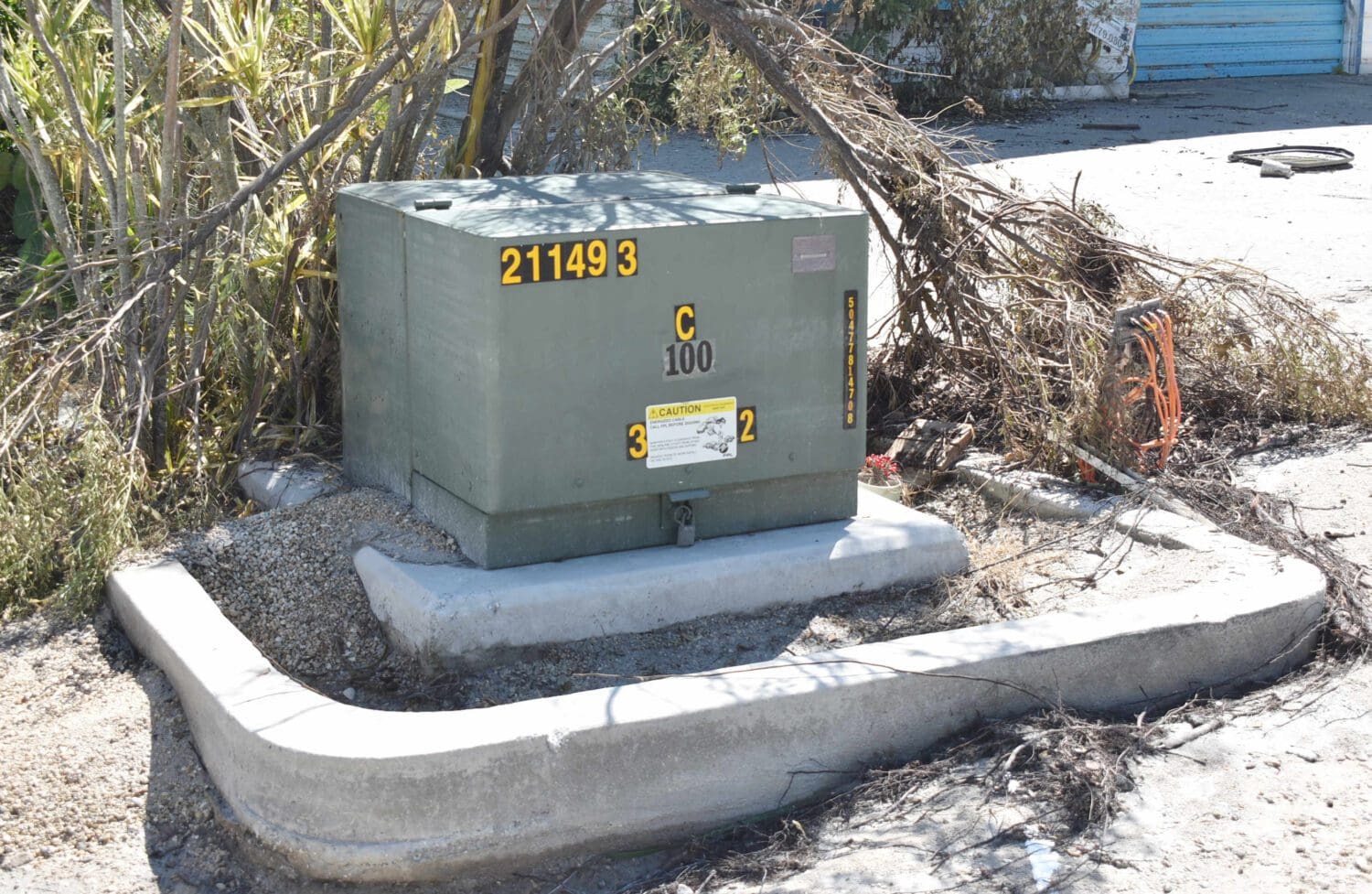
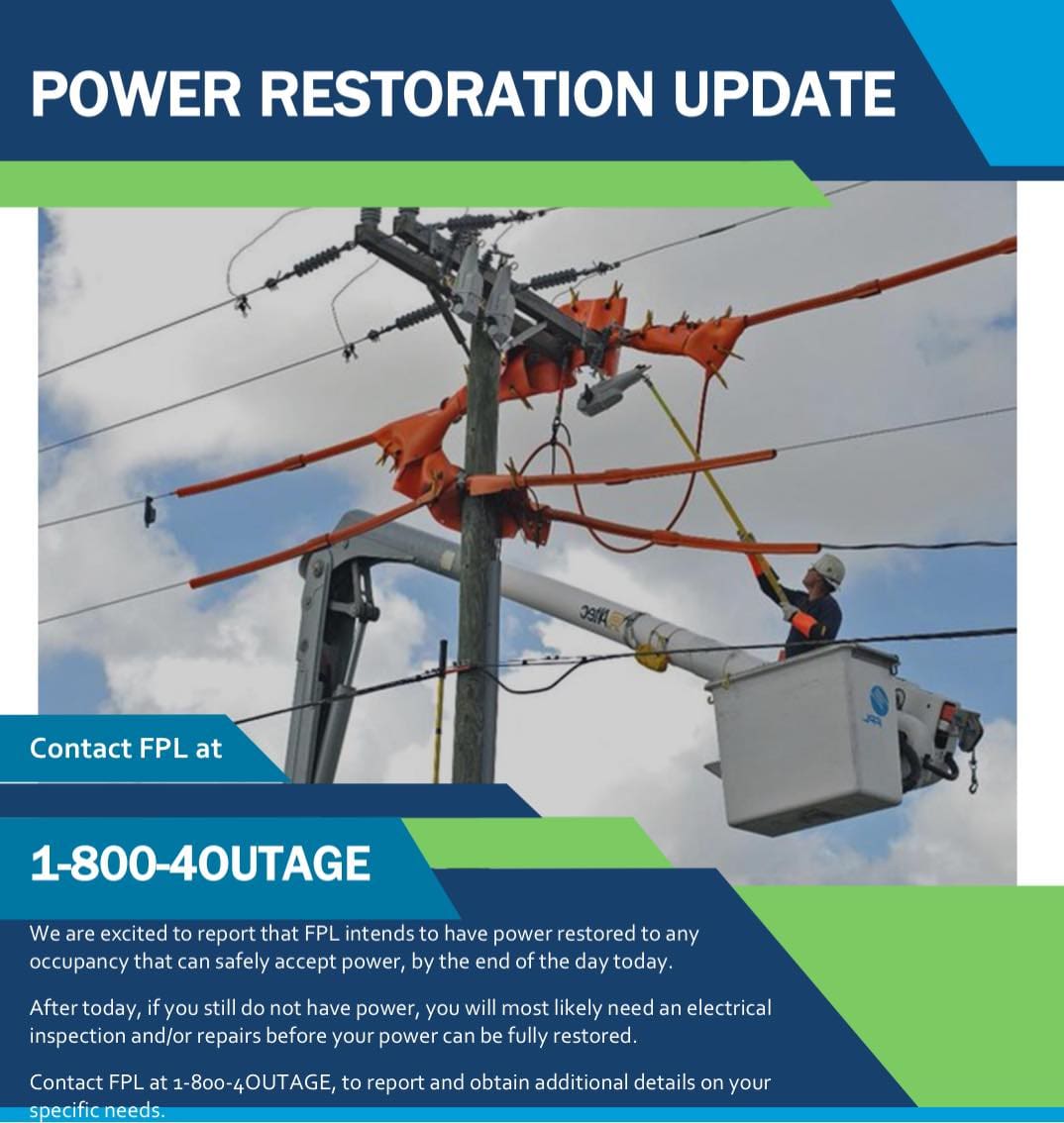
According to the Florida Power & Light update the city received this morning (Oct. 4), Wilco had restored all but three lateral undergrounded power lines on the south end of the city, with work on the remaining three lateral lines ongoing. Wilco is the company that installed many of Bradenton Beach’s underground power lines south of the Cortez Bridge.

Perry said FPL has restored power to 98% of the city as of late Friday morning. FPL is releasing its power restoration resources for reassignment elsewhere and shutting down the FPL staging area at Coquina Beach.

Power, mail restored in Bradenton Beach, new storm concerns emerge
The Bradenton Beach Police Department shared this FPL update Friday morning. – FPL | Submitted

Perry said some properties are still without power and some property owners have damaged electrical systems that prevent them from receiving power.

When asked if electrical service is being restored to the residential properties south of Bridge Street, Perry said, “Yes. Mayor Chappie has power at his house (on 12th Street South).”

Most, if not all, of the businesses along Bridge Street had power as of this morning.

Tropical concerns

Perry said city officials are monitoring the tropical weather activity predicted to start as early as Saturday and potentially produce more heavy rain on the Island. The city is expected to release additional information regarding those weather concerns later today.

Today, Manatee County included this statement in a recovery-related press release: “An additional state of emergency declaration was signed earlier today allowing for preparations to occur for the upcoming weather systems. With some rainfall forecast models approaching or having an even greater potential impact than Hurricane Debby earlier this year, county emergency leaders are encouraging citizens to monitor the weather and make any needed preparations for their property.”

The potential for more heavy rain comes at a time when the city’s storm drains have not yet been cleared of Hurricane Helene debris.

“FDOT is finishing up their street and right of way clearing efforts today and will resume activity on Monday. FDOT has not cleaned out our storm drains yet. FDOT and the city can’t get to the storm drains yet,” Perry said, noting that could impact drainage.

The city hopes to place empty sandbags and shovels near the comfort station on Bridge Street and the comfort station at the north end of the city by the Circle K convenience store, but as of 1 p.m. the county had not yet delivered them.

“Upon arrival, you can pick up your sandbags and use the sand on your property,” Perry said.

Debris collection

Perry said the city’s contract with its emergency debris removal company, Ashbritt, only provides for two city-funded hurricane debris pickups.

“We want to get as much debris out to the curb as we can before our first pickup,” she said.

Power, mail restored in Bradenton Beach, new storm concerns emerge
Hurricane debris collection has not yet begun in Bradenton Beach. – Joe Hendricks | Sun

The debris must be sorted and cannot be placed in a single pile. Debris needs to be sorted into three piles: Household/construction debris (mattresses, furniture, siding, fences, etc.), white goods (appliances) and landscaping debris.

“We only get two city-funded pickups and we need to allow time for people to return to the city and clean their houses up,” Perry said.

Waste Pro serves as the city’s regular trash and recycling collection company and those collection activities have resumed.

 Mail delivery

“Mail to delivery started today to anyone who has a mailbox. If you don’t have a mailbox your mail will be held at the Longboat Key post office,” Perry.

Perry said cleanup efforts are underway at the Bradenton Beach post office but it’s not yet known when service will resume at that location.

Longboat Key access

Perry said per an agreement between both cities, vehicular access between Bradenton Beach and Longboat remains closed to motorists with a checkpoint still in place.

“We’re turning away people who are trying to get to Longboat Key for work or to collect their mail. It’s a joint agreement between Longboat Key and Bradenton Beach. We both support that,” Perry said.

FEMA/county assistance

Perry said three FEMA representatives arrived in Bradenton Beach Friday morning and began going door-to-door, starting at the Pines Trailer Park, using mobile devices to help hurricane-impacted residents file FEMA claims. The FEMA reps will continue from there and a FEMA Corps team will be joining those outreach efforts.

“They will go door-to-door to every single house and structure in the city, starting at The Pines,” Perry said she’s still trying to get a mobile FEMA site established on Bridge Street.

Perry said a Manatee County needs assessment team consisting of 20 individuals and four vehicles will begin going around the city today, starting at The Pines.

“They’re going to ask the people that live here what they need. Do they need fuel, groceries, gloves, etc.?” Perry said. “Residents are going to see two different teams approaching them: the county needs assessment team and FEMA.”

Related coverage


Commissioners receive update on Hurricane Helene recovery


Castles in the Sand

Bigger waterfront homes, bigger insurance

Have you forgotten the collapse of the condo in Surfside, Florida yet? Those of us who live on the water in Florida may never get over it, it will just keep coming back like a bad dream. The good thing is the unfortunate collapse of the building and the death of so many residents appears to be more unique to the building’s construction and maintenance than many first thought. Nevertheless, living on barrier islands with direct ocean and Gulf exposures leaves you vulnerable in many other ways.

Last week I talked about the changes being made by the Federal Emergency Management Agency (FEMA) to the federal National Flood Insurance Program they manage. The program went into effect on Oct. 1 and will start to impact homeowners who have flood insurance through the government’s National Flood Insurance Program as their renewals come due. But there are a lot of moving parts to flood insurance, especially for high-end waterfront homes.

First of all, if you are part of FEMA’s National Flood Insurance Program, your coverage is a maximum of $250,000 in damages. FEMA does make additional funds available if a disaster is declared, which is one reason why governors of states quickly declare disasters after significant storms in order to help individual property owners as well as make states eligible for funds in a declared disaster situation.

Of course, $250,000 is not a lot of money to repair damage from a storm in a property worth over $1 million, which almost all waterfront properties in Florida are valued at. The answer is to purchase excess flood insurance coverage. As waterfront property values increase, there is a growing sector of private insurers who are filling the gap with a variety of policies. These policies could be a supplement to homeowner’s policies or could stand alone. They could be combined with the National Flood Insurance Program policy, which also offers excess flood insurance coverage. However you structure the insurance you need to meet your lender’s flood insurance requirements as well as protecting your home and investment should be reviewed with a flood insurance professional.

In addition, private flood insurance policies can go beyond what’s covered under the National Flood Insurance Program’s coverage. This might include reimbursing you for loss of income, additional living expenses coverage and even the costs of flood prevention, such as sandbags. All of the coverages available vary by the insurer, as do the rates, so purchasing excess flood insurance coverage is an important part of waterfront living and needs to be addressed with a competent insurance broker who is a specialist in flood insurance, particularly on expensive barrier islands and other waterfront regions.

Another caveat is to determine the true replacement cost for your property. Costly high-end finishes may be difficult to put a value on after a storm. Homeowners should document every detail of the home that could be in dispute if it became a total loss. Pictures and videos created before an event will become valuable when the insurance adjuster shows up.

Just to add to your stress a little more, the First Street Foundation, a nonprofit that advocates for more transparency in flood risk and climate change, predicts the following: In the next 30 years, economic damage due to changing environmental conditions is estimated to jump to 7.5 times the current average insurance payout, up from 4.5 times.

You can’t dwell on things you can’t change, like a once-in-a-lifetime building collapse, but you can prepare for your own individual circumstance. Know what you need and get the best possible advice to protect your home and family because no one wants to move inland.

Castles in the Sand

Get ready for sticker shock with flood insurance 2.0

It’s October, and the Federal Emergency Management Agency’s (FEMA) new program, called Risk Rating 2.0 Equity in Action, went into effect on Oct. 1. For many homeowners, this may be the annual October surprise, even though it was well-publicized by FEMA.

This overview of flood insurance premium rate increases was delayed from last year after the agency received pressure from Congress to delay the increases because of COVID-19 and other financial considerations. Remember that Florida is in the crosshairs of FEMA, which always runs a deficit, since approximately 35% of their policies are in the state of Florida.

FEMA is responsible for the National Flood Insurance Program, which is sold through individual insurance brokers. Generally, properties with mortgages – especially federally backed mortgages – are required to carry flood insurance based on the home’s flood zone.

FEMA’s new pricing methodology is intended to create a more equitable way to share the risk. Since the 1970s, a home’s flood insurance cost was based on its elevation and zone within a FEMA Flood Insurance Rate Map. FEMA says a one-size-fits-all rate policy means that policyholders with higher-valued homes are paying less than their share of the risk. Conversely, policyholders with lower-valued homes are paying more than their share of the risk. FEMA says that Risk Rating 2.0 will work similar to existing property insurance policies in which every homeowner receives an individualized price quote. In addition to elevation and flood zone, FEMA says a 2.0 coverage quote will also consider flood frequency, multiple flood types and distance to a water source along with other property characteristics such as the cost to rebuild.

Although when first announced FEMA did not provide specifics relative to rates, they have given an overview of the changes to Florida residents. One out of five Florida homeowners (19.8%) should see a decrease in their yearly insurance cost. One out of 25 (4.2%), however, should see a yearly rate increase greater than $240. Also, FEMA says homebuyers don’t have to suffer sticker shock after closing since the new system will be more transparent. And the National Flood Insurance Program premium can still be transferred, including discounts from a seller to a buyer when the home sells.

Southwest Florida has some of the highest numbers of homes in the 100-year flood zones in the state. Monroe County leads the state with 89.1%, Sarasota has 26.3% and Manatee has 15.7%. Sarasota and Manatee numbers don’t, however, segregate the barrier islands. In addition, Pinellas, Miami-Dade, Charlotte, Lee, Brevard and Sarasota counties also appear in the top 10 nationally for the total value of real estate at risk.

What FEMA is trying to do is put more responsibility on those choosing to live in flood zones and then continuing to do so as the ramifications from global warming intensify. Their goal is to compensate for five decades of mispriced insurance. The way FEMA calculates flood insurance premiums is historic in its concept, going back to 1968.

There are also new FEMA flood maps that took effect in August. This could potentially change flood insurance premiums further in addition to the FEMA 2.0 changes. The bottom line is there are a lot of flood insurance changes going on, and it’s important that homeowners who live in a flood zone be aware of how it will affect your insurance premium at renewal time. At least we’re almost done with hurricane season.

Castles in the Sand

Examine your condo flood insurance

Last week, I reviewed a fairly new nonprofit called First Street Foundation, established to help homeowners understand FEMA flood zones and potential flood zones not yet recognized by FEMA. I also pointed out what I feel is a valuable addition to realtor.com for potential homeowners called the Flood Factor, which provides valuable information to all homeowners and potential homeowners about the flood risk of a particular property.

But what if you live in a condominium complex or are considering purchasing a condo that is in an established flood zone?

Condominium flood insurance is a different animal than flood insurance for a single-family home. The principals are the same, but the requirements and responsibility for condo flood insurance are completely different.

Recognized condominium associations – the corporate entity responsible for the management and operation of a condominium – is eligible to purchase flood insurance for all common property located in a special flood hazard area. The boards of directors of condominium associations typically are responsible under their bylaws for maintaining all forms of property insurance necessary to protect the common property of the association against all hazards, including flooding.

The cost to cover the condo association’s flood insurance is included in each individual homeowner’s fees and is something that condo owners who live in a flood zone should be proactive in understanding. If the association does not carry adequate insurance or is negligent in allowing it to lapse, the owners will be responsible for the damage in the event of a flood.

In addition, condo owners who have a mortgage on their unit will be required to give proof on an annual basis to their lender that the condo association does provide adequate insurance for the association’s property. If this proof cannot be provided, mortgage lenders could purchase a policy on the owner’s behalf to protect their investment.

Many condo owners have additional flood insurance for their individual units. This, in my opinion, is a gray area as to whether or not it’s necessary and what exactly it covers, especially if the property is well above typical flooding for the location. My personal experience is that obtaining personal flood insurance is not as easy as it sounds. I was asked to provide elevation certificates and pictures of the building I live in and one time after I had paid the premium, it was refunded, and the insurance turned down. However, per FEMA’s manual, this is a conversation you should have with a qualified insurance broker who sells flood insurance for FEMA if you want to add a flood policy to your condo.

Another confusing area of flood insurance is what it covers or doesn’t cover. Damage caused by moisture or mildew that could have been prevented by the homeowner is not covered; living expenses or temporary housing, damaged vehicles, business interruption and other fine print areas are not covered. Also, if water gets into your condo during a storm there could be an issue as to where the water came from and if the damage is covered by your homeowner’s insurance or your flood insurance policy.

Condo flood insurance is one of the most misunderstood areas of flood insurance in general. It’s important that you know and understand what your condominium association covers and that they are competent in their decisions on your behalf. If you think adding a personal flood policy is beneficial, this is something where you will need to get additional advice.

We seem to be making better progress in understanding flood insurance and since our hurricane season is just about over, it’s easy to put out of our minds, but something you need to stay on top of. Stay safe.

Castles in the Sand

FEMA not the last word on flood risk estimates

We’re getting close to the official end of hurricane season and the accompanying flooding that comes with hurricanes. Every homeowner reading this column already knows they live in a flood zone or very close to one. Nevertheless, there is some new technology that is able to provide more flood information for homeowners and potential homeowners.

According to First Street Foundation, a non-profit research firm, nearly six million properties across the United States have a substantial risk of flooding that isn’t disclosed by the federal flood maps. The foundation released their own flood maps in June compiled by researchers, modelers and scientists who are advocates for providing homeowners with more information about flooding and climate change.

The Federal Emergency Management Agency’s (FEMA) flood maps outline flood zones and have long been used by homeowners and developers to determine which properties have at least a 1% annual risk of flooding. The First Street analysis suggests that millions of American homeowners could be more vulnerable to flooding than FEMA’s maps indicate. They go on to say their maps show more properties with a 1% flood risk than FEMA because they include parts of the country that FEMA hasn’t mapped and use current climate data and rainfall-related flooding.

Their position is their maps do not conflict with FEMA’s, rather they complement one another and give homeowners a more accurate picture. First Street projects that by 2050 the total number of contiguous U.S. properties with a 1% annual flooding risk will increase to 16.2 million, or 11.4% of total properties.

Since mortgage lenders require homeowners to purchase flood insurance based on FEMA’s flood zones, this is important information for the real estate industry. Millions of American homeowners could be more vulnerable to flooding than they realize and may not have the option to purchase flood insurance or have the resources to rebuild in the event of a flood.

The former chief executive of the National Flood Insurance Program agrees that FEMA’s maps are a snapshot in time that can change with time. Also, in the past three years, more than 40% of flood claims have been for properties that are not mapped by FEMA or are outside FEMA’s annual risk zones.

Although First Street Foundation’s analysis is meant to help homeowners and insurers, not all floodplain experts around the country agree with their research methods and conclusions. Nevertheless, the First Street Foundation’s findings are now a part of realtor.com’s website. Properties listed on realtor.com now display a “Flood Factor” indication providing FEMA’s flood zone for the property as well as other information regarding flooding.

This is the first of its kind flood data on realtor.com and will give home shoppers and existing homeowners easy access to information that previously was not as available about the flood risk of a specific property. There is more information on First Street Foundation’s website, which is helpful to those of us living in existing flood zones, as well as a further explanation of their research. It’s estimated that 23% of all properties have a major to an extreme risk of flooding, and that flooding risk will increase by almost 800,000 properties during the next 30 years, much of it due to new construction along the country’s coasts.

We live here and we understand flooding, but there are many areas around the country that border lakes, rivers and creeks that have the potential of flooding. Many of these property owners aren’t aware of the risk until it happens, so any additional information that can be provided to them can only be a good thing. Stay dry and stay safe.

Planning commissioners talk future flooding

Planning commissioners talk future flooding

HOLMES BEACH – The city’s planning commissioners voted unanimously June 5 to find an ordinance amending the existing flood plain ordinance as consistent with the comprehensive plan. They didn’t come to that decision without first expressing some concerns about how the move could affect homeowners and their flood insurance policies.

The proposed ordinance alters the city’s flood plain ordinance to remove the duties of flood plain manager for the city from the building official’s duties. Though the new Building Official Neal Schwartz is a certified flood plain manager, Schwartz told planning commissioners that he believes the city commission’s plan is to appoint City Engineer Lynn Burnett as the flood plain administrator. He said he will provide backup as needed to Burnett.

With the duties of flood plain administrator given to Burnett, Schwartz said he is free to concentrate on the building department and turning around permit applications in a reasonable timeframe.

“I think Lynn’s very qualified,” commission Chair Chuck Stealey said, adding that he’s glad Schwartz will be working to make the permit process faster for residents and local contractors.

Commissioner Barbara Hines agreed with Stealey. “I do think the city is going in the right direction,” she said to Schwartz. “I think that what you’re doing is a good thing.”

Commissioner Scott Boyd expressed concern that because a contract employee, like Burnett, typically has many clients to answer to that a full-time city employee might be a better choice for the position. He asked that his concern be taken to city commissioners when they continue discussions on the subject at a future meeting.

The proposed ordinance also addresses city leaders’ concerns regarding permit-to-permit construction on homes built below FEMA’s base flood elevation. The change would require homeowners who improve their ground-level homes to adhere to the 50 percent rule for a period of one year from certificate of completion.

Under the rule, homeowners are allowed to improve their home up to 50 percent of the home’s assessed value. Any repairs or renovations over 50 percent require the house to be lifted to the base flood level or torn down and rebuilt to current codes.

In Holmes Beach, an issue identified by FEMA as permit-to-permit construction has been allowed in the past and commissioners are worried that with FEMA’s attention on the matter it will negatively impact the city’s flood insurance rating, resulting in higher premiums for homeowners. In permit-to-permit construction, a homeowner can improve or renovate the house up to 50 percent of the assessed value. Once a certificate of completion is received, the homeowner can have the home’s value reassessed and begin a new phase of construction valued at up to 50 percent of the home’s new value.

If the ordinance passes city commission vote, what’s currently being discussed is not allowing a home built under the base flood elevation to be improved more than once up to 50 percent of the home’s assessed value for a period of one year from receipt of a certificate of completion. The ordinance does include a provision for storm or other involuntary damage to the structure.

While damage from a storm wouldn’t count against a homeowner who had recently completed renovations up to the 50 percent rule, it would allow for repairs up to 50 percent of the home’s assessed value due to involuntary damage. If the repairs to the structure from the storm were found to be above 50 percent, the home would still be required to be elevated or torn down and rebuilt to current standards.

Boyd asked that if a homeowner has private flood insurance, instead of flood insurance through FEMA which will only reimburse a homeowner up to $250,000 of the property’s value, why would the 50 percent rule still apply. Schwartz said that FEMA doesn’t give an exception for one home. If one home was given an exception to the rule, then it would invalidate the city’s flood insurance rating and the city as a whole, including all properties therein, would be unable to participate in the national flood insurance program or seek disaster relief from FEMA.

A moratorium is currently in place and is up for consideration for extension to September 11 while city commissioners work out the details of the ordinance and put it up for a vote. The moratorium extension is scheduled to be voted on by city commissioners June 11.

Attorney Scott Rudacille, appearing on behalf of the owners of 502 74th Street, requested that when planning commissioners give their recommendation on the ordinance to city commissioners that they consider also recommending a grandfathering provision for any property where renovations were already in progress under the previous rules.

He said his clients met with the previous building official, Jim McGuinness, and were assured that they could complete extensive renovations on the exterior and interior of their ground level home before they even purchased the property. After receiving assurances and assistance from McGuinness, he said his clients purchased the home and began renovations more than a year before the moratorium went into effect Jan. 9, 2019. Now the exterior renovations on the home are being completed but his clients may have to wait a year to get permits to complete the planned renovations on the interior of the home.

Previously, City Attorney Patricia Petruff said she knew of one other homeowner in a similar situation.

While Stealey said he’s sympathetic to the homeowners’ situation, he asked Rudacille to take the issue up with city commissioners. He added that planning commissioners are only tasked with determining if proposed ordinances are compatible with the comprehensive plan and land development code. They cannot change a proposed ordinance.

With planning commission approval, the ordinance now goes back to city commissioners for a vote.

Related coverage

Changes proposed for flood prevention policy

Protecting Holmes Beach from rising tides

Flood insurance rates changing

Flood insurance rates changing

ANNA MARIA ISLAND – Flood insurance premiums soon will be changing for better or worse for Island property owners, depending on where their property is located.

The Federal Emergency Management Agency (FEMA) has published new Flood Insurance Rate Maps (FIRMs), changing the base flood elevation for many properties in Manatee County, including the Island.

Check your address here.

Base flood elevation is an estimate of whether properties are in areas of high, moderate or low flood risk, and is the basis for elevation and flood insurance requirements – and for setting flood insurance premiums.

The old maps were based on studies done 30 to 40 years ago, before new technology improved data collection, FEMA’s Mark Vieira said.

The new, more accurate maps show elevations going up for some properties and down for others, with some staying the same, he said.

For example, the base flood elevation decreased from 11 to 9 feet at Bradenton Beach City Hall and from 9 to 8 feet at The Sun office in Anna Maria, and remained at 8 feet at the fire station in Holmes Beach.

Some flood zones also changed, from VE – the highest, most expensive flood rating – to AE, the second highest, less expensive rating, and vice versa.

New maps take into account wave action, not just the height of floodwaters, Manatee County floodplain manager Sandy Tudor said. VE flood zones could have waves of 3 feet or higher, while AE flood zone waves are likely to be less than 3 feet.

“They are both high risk,” she said.

Even if elevations decrease and flood zones improve on properties, Island property owners still should buy flood insurance, Vieira said.

“They’re on an island,” he said. “If you have a federally-backed mortgage, you have to have flood insurance, but even if you don’t, you still need insurance to be on the safe side.”

The new maps are subject to a public comment period and subsequent adjustment before they go into effect. Property owners can report anything from incorrect addresses to elevation certificates that differ from the map during the public comment period. The process already has begun, with FEMA representatives and county officials holding two meetings last week to answer questions about the maps.

When the comment period ends, local governments will decide whether to adopt the new maps. If they don’t adopt the maps, flood insurance will not available in the community, Vieira said.