If you want to know the value of your property, just go around the corner and see what recently sold. This was one of the first tenets of determining real estate value I learned more years ago than I care to say, but it was true then and is truer today.
As we look around at the real estate landscape this first day of a new year, all Manatee County and Sarasota County coastal property owners are wondering the same thing, how much impact have the storms had on property values. The answer to this question will take a while longer to answer, but I can report the key trends and the Realtor Association of Sarasota and Manatee’s comments.
Essentially, there has been a decrease in sales in both counties in November for single family and condo properties with the exception of single-family homes in Manatee.
The median sale price is declining in all segments, single family and condos, for both counties.
The median time to sell is taking longer, and the inventory is growing.
The optimistic spin on this from the Realtor Association is seeing a return to a more balanced condition where buyers and sellers have equal opportunities in the market. They go on to say that this will result in a healthier and more stable housing market in the long run.
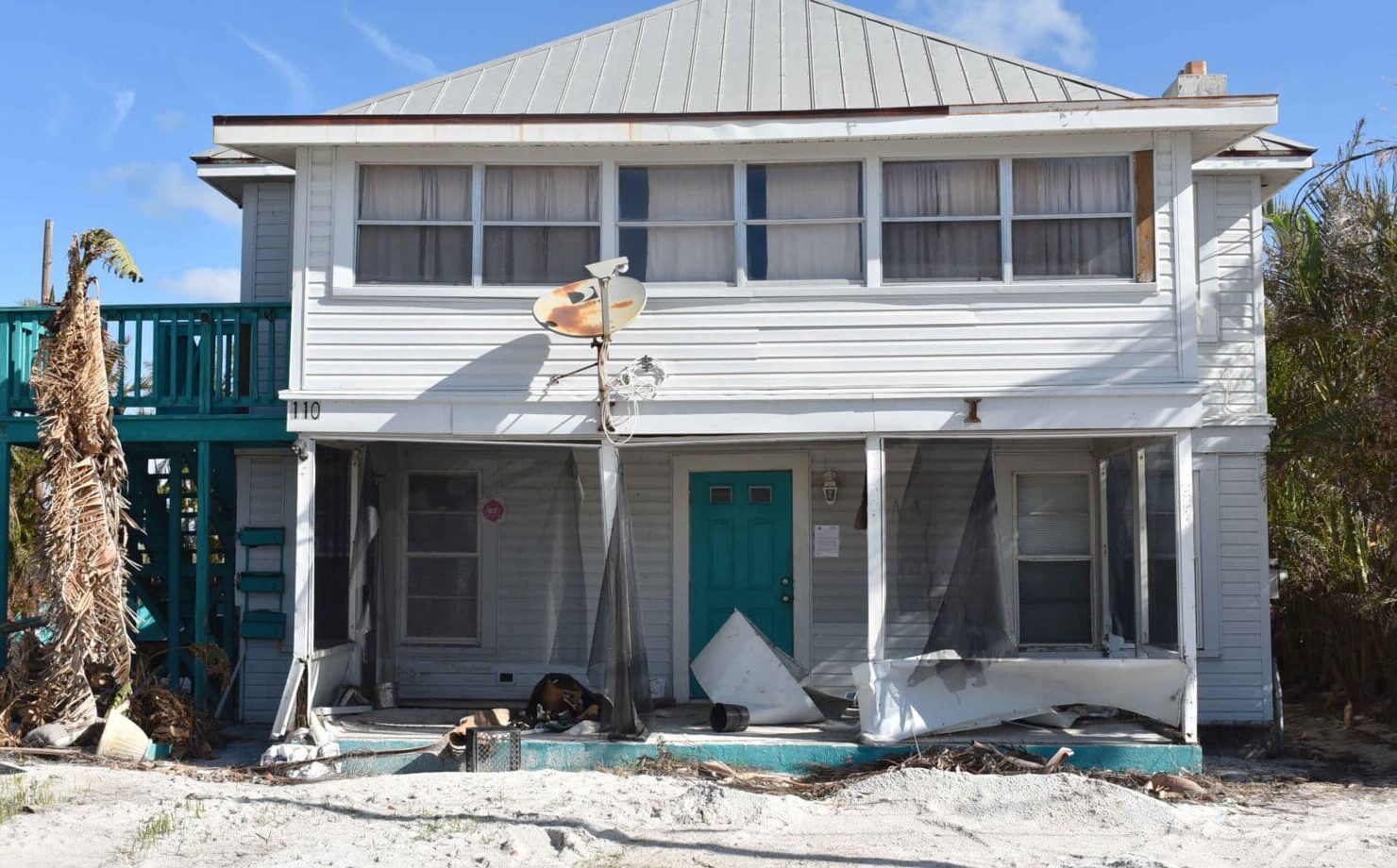
Yes, in a normal market, more inventory is healthy but going back to the all real estate is local theory, Anna Maria Island and Manatee County’s coastal communities are far away from anything resembling “normal.” Looking at the properties for sale, a large portion of them have greatly reduced listing prices and the pictures show severe damage.
Many owners are cashing out what they can, working with FEMA and moving off the Island. This will significantly change the makeup of Anna Maria Island, however, in my opinion it likely will not change values once the dust has settled and new owners have moved on to the Island.
Manatee County has also put in place a property tax abatement for eligible homeowners whose homes were uninhabitable for at least 30 days due to the catastrophic events. The claims can be filed Jan. 1, and there are more details on the Manatee County website under Catastrophic Event Information.
Nationally, according to The National Association of Realtors, home sales rose in November, resulting in the biggest year-over-year gain in more than three years. However, for the year, home buying activity remains slow for the second straight year and sales of previously owned homes in 2024 are on track to hit their lowest level since 1995.
Home prices continue to stay near recorded highs with the inventory of homes for sale extremely low. The national median existing home price in November was $406,100 compared to Manatee County’s median single-family November sale price of $430,000. Again, national statistics don’t tell the story for our area but it’s still interesting to throw into the real estate value pot.
No matter how the Realtor Association spins the statistics, it will be a challenging first half of the new year and maybe longer. Most of us survived the worst of it; now we have to settle into a new order of business. Wishing you and your families a safe and happy new year moving forward.
The United States has been living the American dream of home ownership since roughly the end of World War II. Obviously, there were homeowners before then, but the end of the war brought a surge of homebuilding, prosperity and buyers anxious to get on with their lives.
Many of us were raised with the assumption that we would eventually own a home of our own, and for the most part, that was true. However, many have reset their priorities, and a large portion of the population is remaining renters, a significant shift in our culture.
In my view, this is happening because of a combination of lifestyle and finance. Almost always, two people in a relationship or singles work full time jobs, even if they have children. In addition, so many people are self-indulgent and owning a home with all of the financial and maintenance negatives attached to it may not fit their desired lifestyle.
There are, however, plenty of people who want to buy a home, but the numbers aren’t working for them. We have had a slight dip in interest rates for mortgages, but it’s not enough to justify giving up the freedom and flexibility of renting.
For example, let’s assume the average rate for a 30-year, fixed-rate mortgage is 6%. If you are able to find a home in Manatee County for $500,000, which in this market is difficult, and are in a position to put down 20%, you would be looking at a $400,000 mortgage. The monthly payment at 6% is $2,398 not including property tax and insurance, which I would estimate to be at least another $600 a month, totaling about $3,000 a month, not including home maintenance.
The benefits if you own your own home are that you will accrue value by paying off your mortgage and enjoying appreciation and a possible tax advantage. Certainly, if you plan on living in your home long term, typically at least five years, which is considered the break-even point, buying will work to your advantage. Owning your own home has always been the major vehicle to build wealth for the average person.
Zillow tells me the median rental in Bradenton is $2,500.
Every potential buyer has a different scenario. Not everyone has $100,000 available and putting down a smaller amount would increase the mortgage, carrying charges and also adds private mortgage insurance (PMI) on any home purchase putting down less than 20%.
This makes renting even more attractive and encourages people to remain in their rentals. Renters are choosing to stay put; 62% of renters renewed their leases in the second quarter of this year, up from 60.5% a year ago. Even with rents going up and in short supply especially after the hurricane damage this year, some people may still calculate that renting is better for them than owning.
I have always been a pro-homeownership person; that’s what I was taught and what I learned in the many years I was involved in the real estate market. But I’m starting to believe that we are in the middle of a shift in philosophy relative to lifestyle and home ownership. If that’s true, it makes me really sad and puts a huge dent in the American Dream.
ANNA MARIA ISLAND – At a time when some Anna Maria Island property owners are trying to save their hurricane-damaged homes, developer Shawn Kaleta is seeking investors to help him redevelop Anna Maria Island with a focus on luxury accommodations.
On Nov. 8, The Sun obtained a copy of a prospectus-like document containing the title: “Anna Maria Island Development Fund.” The seven-page PDF document that references Kaleta and his business endeavors includes the following quote: “Our vision is to revitalize and elevate Anna Maria Island, enhancing its appeal as a premier luxury destination. Similar Destinations: Naples, Florida.”
The document also states, “Outdated homes have been impacted in the storms, leaving room for only new, safer luxury construction.”
AMI Development Fund
The second page of the AMI Development Fund document bears the title “Developer Shawn Kaleta and Team” and states: “Leading the Island Development Fund is Shawn Kaleta, a seasoned 20+ year Anna Maria Island real estate developer who owns over 1 Billion in real estate assets and is Anna Maria’s largest real estate holder. Over the past 20 years, Shawn has owned, developed and constructed over 1000 homes on the island and has played an integral role in building Anna Maria into the luxury vacation destination it is today. On top of his personal holdings and developments, Shawn and his companies own and operate many businesses on Anna Maria including 3 property management companies, 3 hotels, 2 restaurants, a real estate brokerage, and a marina as well as many other businesses in Key West, Siesta Key, Lido Key and Casey Key.
“Due to Shawn’s insatiable appetite for the continued improvement and growth of Anna Maria Island, property values will continue to rise as they have under his influence for the past 20 years while he continues to transform the island into one of the top vacation destinations in the country.”
The third page, titled Market Outlook and Future Vision, states in part: “Growth of Real Estate Prices on Anna Maria: The vast improvement of housing quality on the island will lead real estate values to appreciate rapidly. Projected FED (federal) interest rate reductions will see an increase in property values of real estate at a 15-20% rate. Vacation Rental market provides high rental rates for end users to capitalize on.”
Page 4, titled “Investment Details,” notes that the goal is to raise $50 million in the next 3 to 3.5 years, with 10% of the funding to come from the general partner (Kaleta) and 90% to come from the limited partner investors with a 50-50 general partner/limited partner profit split. Apparently, in exchange for his 10% investment, Kaleta would receive 50% of the profits and the other investors would share the remaining 50% of the profits.
Page 4 contains the following bullet points:
“Investment and returns to be distributed upon sale of each home;
Each home treated as its own individual deal;
Sale of home for investment and leisure purposes;
Investments will be redistributed at a first in first out basis;
No management fee.”
Page 4 also states: “18-22% expected yearly IRR” regarding the internal rate of return on the investment.
Targets
Page 5 contains a cash flow analysis for two residential properties located on Anna Maria Island.
The cashflow analysis of the first property is for an “Inland Lot – New Build” at 110 Ninth St. N. As of Nov. 4, the 110 9th St LLC was registered as a Florida Limited Liability Company with the Florida Division of Corporations. The LLC lists attorney Louis Najmy as its registered agent and Kaleta as its manager.
This home at 110 Ninth St. N. in Bradenton Beach suffered hurricane damage. – Joe Hendricks | Sun
According to the Manatee County Property Appraiser’s Office, the only property with that address on Anna Maria Island is located in Bradenton Beach, not Anna Maria, as the prospectus claims. The FEMA market value of that home was $787,128 as of Jan. 1. The owner is listed as the Constance C. Novak Trust.
FEMA market value is the improvement value (the structure or structures on the property) plus 15%, according to Bradenton Beach Building Inspector Darin Cushing.
The cost analysis lists a $900,000 land purchase price, an additional $10,000 in closing costs and $910,000 as the capital required. Regarding the construction costs, the cashflow analysis lists $50,000 for design and permitting, $1.325 million for hard costs and $325,000 for soft costs, totaling $1.7 million on construction costs.
The cashflow analysis includes an additional $170,000 in construction loan interest expenses, bringing the total estimated construction cost to $2.78 million, with an estimated sale value of $4.5 million. The cashflow analysis does not provide any additional details on the design and permitting costs or the hard costs and soft costs.
The home at 709 Fern St. in Anna Maria sold for $855,000. – Joe Hendricks | Sun
The cashflow analysis for the second property is for an “Inland Lot – Renovation” at 709 Fern St., Anna Maria. As of Nov. 4, the 709 Fern LLC was registered with the Florida Division of Corporations. The LLC lists Najmy as its registered agent and Kaleta as its manager.
According to the Manatee County Property Appraiser’s office, that property contains a ground-level, single-story residential structure with a FEMA market value of $626,678 as of Jan. 1. The owner is listed as the Karen E. Sparks Declaration of Trust.
The cost analysis lists an $800,000 land purchase price, with an additional $10,000 in closing costs totaling $810,000 for the capital required. According to the Stellar MLS listing, the home and property at 709 Fern St. sold on Nov. 8 for $855,000, which is $55,000 more than the purchase price listed on AMI Development Trust document.
The MLS listing includes this note: “Storm damaged selling as is. Options available: remove structure and build new on a beautiful island location or maybe restore this charming beach cottage to its original state adding flood proofing technology.”
The cashflow analysis for the 709 Fern St. property lists $5,000 for design and permitting, $50,000 for hard costs and $95,000 for soft costs, totaling $150,000 for projected construction costs. The analysis lists $960,000 as the total project cost, with an estimated sale value of $1.5 million.
For the 110 Ninth St. property, the “Investor IRR Analysis” lists no anticipated capital return in year one and a $1.202 million capital return in year two. Regarding the 709 Fern St. property, the Investor IRR Analysis lists a $729,000 investment and a $961,500 capital return in year one.
The final page of the seven-page document is a “build gallery” that contains six renderings of interior views and patio and pool views of a non-specified property or properties.
On Friday afternoon, The Sun reached out to Kaleta and Najmy seeking seeking comment on the Anna Maria Island Development Fund. No response was given.
Asset amendments
The AMI Development Fund document states that Kaleta owns three property management companies and a real estate brokerage.
According to the Florida Division of Corporations, the Prime Vacations LLC created for that property management company in 2021 still listed Kaleta as its LLCs authorized person and Najmy as its registered agent as of April 25.
On Oct. 30, an amendment to the articles of organization for the Prime Vacations LLC was filed and now lists the Plantation, Florida-based CT Corporation System as LLC’s current registered agent and the New York City/Park Avenue-based GSP Prime Buyer LLC as the LLC’s manager. Kaleta’s managerial status with Prime Vacations LLC is now listed as “removed.”
On April 25, the AMI Locals LLC associated with the AMI Locals real estate company listed Kaleta as its manager and Najmy as its registered agent. On Oct. 30, those articles of organization were amended in a similar manner which now lists CT Corporation System as the LLCs current registered agent and GSP Prime Buyer LLC as the LLC’s manager, with Kaleta’s managerial status “removed.”
It is not known what, if any, ownership share Kaleta still has in AMI Locals and Prime Vacations.
Hopefully, Debby with her rain, Helene with her surge and Milton with his wind are in our rearview mirrors by now, not forgotten, but we survived. Next, we can look forward to more mundane real estate issues like insurance.
What if you were ready to close on a new property and the possibility of a named storm was on the horizon? This situation could be the ultimate inconvenience since there is a very good chance you may not close your sale on time, costing money and delays with movers, utilities, and possibly short-term living arrangements. This is an important thing to keep in mind when you live in a hurricane zone like we do. Since both buyers and sellers are in a real estate transaction together, they both should be motivated to give allowances if this is happening.
This sometimes little-known insurance issue is called a moratorium, also known as a binding prohibition. They are issued by insurance companies for certain high-risk areas. During hurricane season, insurance companies wait until 24 to 48 hours before the impact to issue a moratorium on buying new policies. This could delay a closing since the insurance companies will not bind or cover the property in question until the storm has passed. If this happens to you, there is almost nothing you can do about it short of closing the property without property insurance – a non-starter if you are financing any part of the sale.
Since we’re talking insurance, there have been some recent problems in the area of title insurance. Just to review, when you take out a mortgage, one part of your closing costs will be title insurance. If you aren’t taking out a mortgage, you will not be required to purchase title insurance, but most buyers do and all lenders insist on it and expect buyers to pay. The premium for title insurance is a one-time charge and the policy protects the lender. You also can purchase owner’s title insurance to protect yourself but that is optional.
Title insurance covers third-party claims on a property that don’t show up in the initial title search and arise after the closing. The title company searches for public records related to your home to try to find any title defects that could affect the lender’s or buyer’s property rights such as liens, including tax liens or unpaid bills; easements that give others the right to use your property; and encumbrances like zoning laws and covenants imposed by homeowner associations. A “cloud” on the title can usually get resolved with the cooperation of the previous owner and/or the entity placing the lien.
In the wake of the National Association of Realtors settlement over real estate brokerage commissions, government officials are looking at compensation paid to real estate professionals who recommend title companies. This is happening without the knowledge or disclosure to the buyers who are paying the fees, therefore, potentially elevating the fees charged for the title insurance. The title insurance industry is under scrutiny by the federal government in an effort to lower the upfront costs of obtaining a mortgage.
The crackdown on partnerships with title companies is the same general trend as addressing brokers’ commissions. Just to be clear, this partnership arrangement with title companies is not happening all over, and carefully analyzing the title fees before you close a property is a wise thing to do.
Title insurance is just one more type of insurance a property owner needs to be aware of. We’ve turned the corner and it’s time to pick up the pieces and move on.
If you loved shoulder pads, Cabbage Patch Kids and the Rubik’s Cube, you probably loved the 80s. But one thing not to love about the 80s was the home buying affordable rate, which has just been outdone this past June.
Today’s housing market is the most difficult in decades. This has been an ongoing frustration for first-time home buyers in the Gen Z and Millennial generations. Home buying affordability dropped last fall to the lowest level since September 1985, and it fell near that level again in June.
The good thing for the mid-80s buyers is they had much more housing supply. Homes became more affordable as mortgage rates fell in subsequent years, adding to the inventory. In September 1985, 72% of consumers said it was a good time to buy a home, according to the University of Michigan’s consumer sentiment survey. In June 2024, just 12% said the same.
And it gets worse. According to the National Association of Realtors’ affordability index, in January 2021, a family needed an income of $49,152 to afford the median-priced single-family home with a 20% down payment. In June 2024, just three years, the family would need an income of $110,544 to make the same purchase. Added to this is the cost of property taxes, home insurance, car insurance and a list of other expenses related to homeownership that have increased.
In addition to the affordability rate, there is the number of home sales. The existing home sales slid in 2023 to the lowest level since 1995 and have held at lower levels in the first half of 2024.
There is a group of buyers, however, who are somewhat unfazed by the affordability rate that first-time buyers are facing. And those, of course, are the wealthy. The high-end market is doing a lot better than the 30-year-olds looking for their first home. Wealth allows people to care more about having their ideal home than holding on to a 3% mortgage rate. They know they can always refinance later if the rates drop. But nonluxury buyers typically finance their purchases and are more sensitive to interest rates.
The Federal Reserve met last week and took action on interest rates for the first time in several years, cutting their rate by half a percentage. This does not always translate into lower mortgage rates, which have been going down and are now just above 6%, but it might, and it could also have a positive effect on restoring confidence in the market.
Now it’s time for the August Manatee County home sales, reported by the Realtor Association of Sarasota and Manatee. Single-family homes closed 0.2% fewer this August compared to last August. The median sale price was $494,000, down 5.9%, and the average sale price was $609,789, down 14.8%. There were 3.6% more new listings and the month’s supply of available properties was 3.9 months, up 39.3%.
Condos closed 11.2% fewer this August. The median sale price was $329,990, down 8.1%, and the average sale price was $385,931, down 2.0%. New listings were up 3.8% and the month’s supply of available properties was 5.7 months, up 7.27%.
If I were spinning, I could say it’s summer and it’s always slow, condo buyers are still cooling off in their northern homes and more new listings is a good thing. But I won’t insult your intelligence; the market is slow, and I think we have a few more months before we can get a real read on what’s going on.
No one really wants to go back to the 80s – didn’t we all hate Cabbage Patch Kids? Hopefully, an adjustment in mortgage rates will benefit non-luxury buyers and move the market up. A rising tide lifts all boats.
My mother had a favorite expression regarding fashion. “You need to shop where you won’t see yourself coming and going,” meaning, seek out stores with a unique selection of goods.
The same can be said for remodels, where, these days, it seems that every kitchen is white, every bathroom has bowl sinks, and every wall is some tone of grey. I happen to like those combinations, and they are neutral and very good for resale but for individuals who want a little spice in their remodels, there are other venues.
Eco-friendly techniques and materials are becoming more commonplace in renovations and new construction. According to the National Association of Home Builders, many buyers consider green home features to be either essential or desirable. This includes Energy Star-rated windows, triple pane insulating windows, sustainably harvested lumber and components made of recycled materials.
These products are improving indoor air quality and reducing everyone’s carbon footprint in a continued effort to reduce global warming. However, eco-friendly remodels do not lower renovation costs. Prices have come down, but homeowners should still expect to pay a premium for green materials. This could be a good return on investment down the road because sustainable materials are often more durable, require less maintenance and are in demand.
Taking it a step further, and keeping my mother’s theory in mind, searching out reusable and sustainable products to do your renovation can save a considerable amount of money. This can also apply if you donate your old cabinets, appliances and sinks, taking the tax write-off.
Proponents of repurposed products say using reclaimed products is taking something that would otherwise be wasted and giving it new life. These days, when everyone is obsessed with everything new, finding recycled elements for your remodel is not only easy but, in many cases, surprisingly lightly used.
A quick internet search of architectural salvage stores will reveal several right in our backyard. And don’t let the word salvage discourage you; the salvaged or vintage items range from 1920s file boxes to trendy slab dining tables with wooden slabs recycled from their previous life. There are enormous supplies of small items like former moldings and vintage fans that haven’t seen the light of day in decades and are just waiting to add a little interest to your remodeled kitchen.
I had so much fun browsing the websites of these salvage stores I almost forgot what I was actually looking for. My absolute favorite was an Electronic Diagnosis Engine Tester from some era way before computer chips were invented, and the magic vibrating chair looked like it belonged in San Quentin. If you’re lucky enough to find fixtures, cabinets and decorative tiles for your renovation, not only will you save a ton of money, but likely get a better-quality product.
I found three stores specializing in architectural salvage in two minutes: Sarasota Architectural Salvage, Décor Direct Wholesale Warehouse, both in Sarasota, and Schiller’s Architectural Design Salvage in Tampa. These types of salvage stores have an ongoing incoming and outgoing supply of items, so if you’re looking for something specific that is not currently available, stay in touch with the owners and tell them what you need.
We all should do our best to recycle and purchase eco-friendly products. Most of us are somewhere between buying almost nothing to complete a renovation and hiring the most expensive contractor we can find. Even recycling your own cabinets for use somewhere else in your home helps.
And remember, when you go salvage, you’ll never see your kitchen coming and going.
Remember The Champlain Towers South condominium in Surfside, Florida? Probably haven’t heard that name in a while, but it was the very shocking collapse of the tower with loss of the building and loss of life. The event profoundly impacted the condominium market in the state and is still having an influence on the condo market.
A condo termination, also known as a condominium deconversion, refers to the process in which a condominium association legally dissolves. Condo terminations occur for several reasons including economic, aging or the desire of unit owners to capitalize on the real estate market. It can also happen when a developer gradually buys up units within the association in an effort to gain the number of condo units necessary to control the future of the building.
Typically, because of a lack of prime property, usually waterfront, developers are pursuing older buildings, taking control and tearing them down. Although this can happen anywhere in the state, it is more common on the east coast where there are many more older buildings and very little land left.
These buildings have become targets for developers after the state passed a law that requires certain older buildings to undergo safety inspections that often require special assessments that can run to more than $150,000 per unit, making it impossible for the majority of owners to pay.
Many of the older buildings have elderly residents who have lived there for many years and have not voted, along with their board members, to perform the necessary maintenance due to the high costs. Because of this deferred maintenance, it is leading to deteriorating building conditions and failure of the Florida state inspections.
The only way for residents to continue living in their units is to pay special assessments for work required to pass the state inspections. In addition, insurance costs have increased due to the increased risk of natural disasters, adding to the financial burden on owners and associations and leaving an opening for more condominium terminations.
Condo owners frequently welcome the price developers are willing to pay to sell, which are generally above market value. Savvy owners also understand they likely will not be able to afford the special assessments necessary to maintain the buildings and are happy to get out from under the albatross that can become an older condo building.
However, in March of this year, a small group of residents refused to sell their units, preventing a developer takeover, and they were upheld in the appeals court. This was a stunning outcome for Florida east coast developers who have borrowed funds to buy the buildings. They will, of course, appeal the decision and bring it to the Florida Supreme Court if the appeals court does not reconsider.
Nevertheless, until this is settled, there is a hold on condo terminations unless the owners all agree based on their condominium documents, or until the developers are successful in purchasing enough units to change the documents.
With land value along Florida’s coastline exceeding the value of the buildings, don’t expect this to end soon. It’s a sad situation for older residents who have to find a new home, but the reality is they may have no other option and accepting a developer’s offer will save them years of stress.
It may take more than the Federal Reserve throwing us a lower interest rate bone this month to make everyone happy. Nevertheless, when it comes to lower rates, we’ll take what we can get, but will it solve the real market problem?
Even though mortgage rates in the country are at the lowest level in more than a year (6.5% on average for a 30-year fixed rate mortgage), it may not make much of a difference for homebuyers. With record housing prices and limited inventory, a one quarter lower blip in rates for most buyers can’t make up for the higher prices and lack of inventory.
There are homeowners with low-rate mortgages who are still reluctant to sell and move on as much as they may want to. A quarter point or even a half point is just not enough encouragement for them to give up a once-in-a-lifetime 3% mortgage. So, the market continues to be locked up with prices still pushing up for those properties that come on the market, and there aren’t too many of them.
However, there are still benefits to lower rates, especially for a first-time borrower.
For a $500,000 mortgage, the difference between a 6.5% rate and an 8% rate is $509 a month, enough to qualify many buyers at the lower rate to be approved for financing. There is speculation that the movement for a lower rate has already been figured in and another rate cut this month may not have a big impact.
Based on the July sales statistics in Mantee County, there are 10% more single-family properties available than July of last year but only 0.4% more condos on the market. Since condos are more of a seasonal sale, it’s not surprising to have fewer available properties than single-family.
Here on Anna Maria Island and all of the other coastal communities in the area, including our neighbor, Cortez, buyers in these areas are less affected by mortgage rates. Therefore, the market for high-end properties will be less influenced by mortgage rates than by the overall economy.
Many if not most high-end buyers are all cash and even if they decide on a mortgage to free up more cash, they will likely not decide on buying because of a quarter or even a half point reduction. They’re eyeing the health of the general economy and the position of the lawmakers, particularly in Congress, on business and the stock market.
Nevertheless, a healthy real estate market generally is good for all of the market. There is a trickle-up effect of a robust lower-end market positively impacting all price points in the marketplace.
Finally, last week we talked about the revision of broker compensations. There are any number of ways for real estate professionals to adapt to the National Association of Realtors’ new ruling and if you’re buying or selling a property, you will be exposed to a variety of opinions and operating guidelines. As always, choose a real estate company and individual you trust and are comfortable with and roll with it; eventually it will become clearer.
Will the Federal Reserve move the needle on rates or will it just be more of the same old, same old? Stay tuned.
Starting this month, the rules have changed for governing real estate commissions. We’ve been talking about this since the National Association of Realtors (NAR) voted on this change to the commission structure in March, a structure that has been in place for over 30 years.
By now, most real estate professionals have positioned their real estate wheels to work within the new regulations. They have likely also developed a dialogue to have with both buyers and sellers in this market. So, let’s go over some of the significant points.
Typically, sellers paid the agents on both sides of a transaction, selling and buying. This was a percentage stated at the time the property was listed. Sellers will still agree on a listing commission with their agent, however, now have more flexibility to decide whether to offer a commission to a buyer’s agent and what that commission will be. There is no commitment on the seller’s part to automatically offer a commission to the buyer’s agent and the buyer’s agent is free to request a commission fee at the time they present an offer. Like everything in a real estate transaction, it becomes a negotiable point.
The sticking point here is your listing agent may tell you that if you don’t offer a selling commission, selling agents won’t bring buyers to the property. There is of course some truth to that, however, if the buyer’s agent’s commission becomes part of the negotiation, then the agent has no reason not to bring buyers. Also, on popular properties, a buyer may even step up and pay their agent directly if a buyer’s commission cannot be satisfactorily negotiated.
You also need to set guidelines with your listing agent relative to their commission should they find the buyer for your property. Traditionally, when a buyer didn’t have an agent, the seller’s representative often kept the commission offered to the buyer’s agent. Again, this should be agreed upon at the beginning of the listing agreement.
So while you’re thinking about this new round of chaos, let’s go over the July sales for Manatee County published by the Realtor Association of Sarasota and Manatee.
Single-family homes closed 9.9% more properties compared to last July. The median sale price was $499,000, lower by 3.1%, and the average sale price was $661,104, up 3.0%. The median time to contract was 52 days this year compared to 29 last year. There are 10% more listings this July, making the month’s supply of available properties 3.9 months compared to 2.7 last year.
Condos closed 9.6% fewer properties this year. The median sale price was $329,000, down 6% and the average sale price was $354,404 down 8.8%. The median time to contract was 77 days this year compared to 47 last year. New listings were up 0.4% and the month’s supply of available properties was 5.6 months compared to 3.2 months last year.
Per the Realtor Association, both Sarasota and Manatee counties experienced a shift in the market in July. Median prices declined and we are experiencing longer times to sell. Basically, they feel the market is balancing out and buyers have more purchasing power.
The National Association of Realtors says it’s too soon to speculate on how the market will change and I certainly agree. Some of the early feedback around the country where agents have already started with the new regulations is that total commissions appear to have come down. Some of the commissions could be reflective of the value of the property and the level of marketing required.
It’s hard to say at this point, but we do live in a very high real estate price point environment and agent commissions could reflect that.
Aug. 9 was an interesting day. Manatee County was still cleaning up from the flooding and record-breaking rain from Debby and the mortgage rates hit the lowest level in over a year. What’s the connection? Well, you can’t predict a storm and you can’t predict mortgage rates.
We’ve been waiting for a long time for the day when we see interest rates decrease in any meaningful way. Well, it happened, but will it stick and will it shepherd in more rate cuts?
The average 30-year fixed mortgage rate declined significantly in August since hitting a 2024 high of 7.44% to start May. The average rate on the benchmark 30-year mortgage dropped 26 basis points from 6.73% to 6.47% for the week ending Aug. 8, according to Freddie Mac. This was the sharpest weekly decline in about nine months. A basis point is one one-hundredth of a percentage point.
The key factors here are that home prices nationally fell last year to their lowest level in nearly three decades and 2024 has not been much of an improvement. In addition, mortgage rates have roughly doubled since the Federal Reserve began its campaign to curb inflation in early 2022. This increase in rates has pushed up the monthly cost to borrow for a home, blocking buyers who do not qualify for the additional monthly cost. Finally, the other elephant in the real estate room is the inventory of homes for sale. They have been slowly rising but they remain well below historical averages.
Some mortgage advisors say this is happening faster than expected and predict the central bank will approve one rate cut later this year. This should prompt a gradual easing of mortgage rates, but Freddie Mac still expects mortgage rates to remain above 6.5% through the end of the year and then decrease below 6.5% in 2025.
Fannie Mae predicts the rates will average 6.8% in the third quarter and 6.7% in the fourth quarter. They feel this downward trend will continue into the next year, averaging 6.5% in the first quarter of 2025.
The National Association of Realtors thinks rates will average 6.9% in the third quarter and 6.5% for the fourth quarter, going up to 6.7% by the end of the year. In addition, Chief Economist Lawrence Yun says the second half of 2024 will experience moderately lower mortgage rates, higher home sales and stabilizing home prices.
The Mortgage Bankers Association says rates will average 6.8% in the third quarter, going down to 6.6% in the fourth quarter and continue trending downward next year.
All the above is pretty much in agreement, but one of the most interesting opinions came from Melissa Cohn, regional vice president at William Raveis Mortgage, who was interviewed by a Forbes advisor. She hopes mortgage rates will hover in the 5% range next year, but says the presidential election could factor into it, something I have also heard from local brokers. Fiscal policies could impact inflation, which hopefully can stick at 2%, allowing for reduced interest rates for the next five years.
Nevertheless, she feels that when the rates come down, there will be another hot housing market where there are more buyers than sellers, jacking up prices since the problem of low inventory has not been resolved.
Everyone is still holding their breath for the next several months and waiting to see what the Federal Reserve is signaling for next year. Aug. 9 hit a low and a 6.5% rate may not be 3.5%, but it’s better than 7.5% and may just be enough to get everyone moving. Now on to the next storm.
One of the things I love about writing this column is that while I’m doing my research, I frequently stumble on things I never heard of and likely never would in my day-to-day life. This month I learned a new word, “brat.” Brat, of course, is not a new word; it generally refers to someone spoiled or childish. However, this version of it started with an English singer who I had never heard of either.
So, what does this have to do with real estate? If you don’t know, just ask any real estate professional who has worked with fussy buyers who have champagne taste on a beer budget. Dare I say, “brats.”
Part of the reason these buyers feel entitled is because the cost of starter homes has soared in many areas of the country to $1 million. There are more than 200 U.S. cities where buyers will find a price tag of $1 million or more on the typical starter home. The housing shortage that worsened over the pandemic has helped drive the cost of all homes to new heights.
Starter homes are generally defined as being those properties in the lowest third of home values in a given region. Currently, 237 cities in the country fall into this category with starter homes starting at $1 million. This is the most ever; five years ago, there were only 84 such cities.
Nationwide, the typical starter home is worth approximately $196,611, which is comfortably affordable for a median-income home. However, starter home values have grown 54.1% over the past five years, even more than the typical U.S. home in the same time frame, which shows 49.1% growth. This increase in value has delayed the first home purchase for many with the median age of a first-time buyer last year at 35, a year older than in 2019.
This research is from Zillow, which also gave us the names of the top five states with cities where you can find all these $1 million stater homes. The top of the list is California with 117 such cities; New York has 31 cities; New Jersey has 21 cities; and Florida and Massachusetts both have 11 cities each in this category.
Even though our property values are starting to level off, Manatee County, according to the June statistics, had single-family homes averaging $736,322. We’re definitely getting into brat territory. In general, homebuyers could have some good news after years of too much competition with an emerging balanced market. Interest rates for the first time are starting to get below 7% and builders are busy all over, adding to available properties.
If you just want to enjoy living your life and you don’t care what anyone else thinks, you’re a brat. If you’re carefree, messy and bold, you’re a brat. If you know what “brat coded” means, you are so a brat. And if you don’t get the “brat” thing, you are so out of it. Let’s hope our buyers aren’t brats and understand the value of our area where there are still a lot of carefree people living their lives on the beach who never heard of “brat.”
For some reason, I’m finding this summer more uncomfortable than in past years. I considered that I’m just getting older, but I can’t believe that, or maybe reading the sales statistics every month is getting me hot under the collar.
The June nationwide and local sales statistics both came out the same day on July 23, too late for last week’s paper. The numbers are, to say the least, cool if not frigid. It’s no wonder I’m feeling the heat.
Since the national report is printed in most national newspapers you may have already seen it, but it’s my mission to make sure all my readers don’t miss anything. So, these are the nationwide numbers, and the Manatee County statistics will follow for June:
The national numbers are based on existing single-family homes. The median sale price nationally was $426,900 for June which was up 4.1% from last June. The month’s supply of available properties was 4.1 months.
Manatee County single-family home sales were down 4.1% from last June. The median sale price was $518,950, down 1.2%, and the average sale price was $736,322, up 8.4%. The median time to contract was 57 days compared to 37 days last year. The number of active listings was up 56.6% from last June and the month’s supply of available properties was 4.0 months compared to 2.8 last year.
Condos in Manatee County closed 17.2% fewer units. The median sale price was $344,495, down 6.9%, and the average sale price was $416,198, down 11.6%. The median time to contract was 73 days compared to 34 days last year, and active listings were up 72.3%. The month’s supply of active listings was 5.8 months compared to 3.4 months last year.
The National Association of Realtors reports on the nationwide statistics on their website and the Manatee County numbers are on the Realtor Association of Sarasota and Manatee’s website. As you can see, the national median sale price is considerably lower than Manatee County’s, even though they report a 4.1% increase from last June.
Manatee County shows a slowdown in the housing market, as does Sarasota. Markets are influenced by a variety of multifaceted factors – rising interest rates, economic uncertainty, seasonal factors, market saturation with available listings, buyer choices and affordability. The opinion of the Realtor Association is that there are more opportunities for buyers right now, and serious sellers need to adjust their strategies and expectations.
The Federal Reserve has given some indication that interest rates could be falling before the end of the year, which should remove part of the interest rate negative. And with the end of summer and hurricane season, there could also be some pressure lifted off sellers. A real estate broker recently told me when the first snowfall happens in the north, that’s when you start to see the market moving.
Whatever statistics show, it’s still a moment in time, or at least a month in time, and could change next month. Our economy and national conversation is a moving target and could and likely will change with the next news cycle. Therefore, there’s no reason to get hot under the collar. October is just around the corner and I’m not getting older.
The last time I did a column about property appraisals was almost four years ago in the middle of the COVID-19 pandemic when the real estate market was all over the place and a fair appraisal was difficult to achieve. Fast forward to 2024 and things haven’t changed that much. An accurate appraisal is still difficult for some of the same reasons.
In 2020, property values were soaring as a result of people relocating to Florida during COVID and inventory was scarce. We still have some of that going on with values up and inventory low, although the inventory aspect is beginning to level off.
Whether you are buying a new home, refinancing your existing home loan, or selling your home, it’s important to assess the value of the property. A buyer’s lender uses an appraisal not only to assess the value of the property but also to determine such things as your interest rate and required down payment.
The property appraiser is only looking at the value of the property. Whether or not a buyer personally qualifies for the mortgage being applied for is secondary to the value of the property. However, the appraiser’s final value determination has a very profound effect on the mortgage being approved. For example, if the appraisal comes in short it will dictate the amount of mortgage the buyer will be approved for. In this case, the lender may ask for additional funds as a down payment from the buyer or ask the buyer to renegotiate the sale price, lowering the amount of the required mortgage. This is why the job of an independent appraiser is so important.
The appraisal fee is billed to the buyer and becomes part of their closing costs. The buyer is also entitled to a copy of the appraisal, which should be reviewed by the buyer for accuracy. Although appraisers are professionals who generally stand by their final analysis, they can make mistakes in square footage, lot size, updates, omissions and other provable details that could influence the property’s value.
In addition, one of the biggest disagreements on property appraisals is the comparable properties the appraiser has used to support the value. Since appraisers rarely go into a property for sale or one that has just closed, they can only decide by driving by and reading listing information. If you feel the value is incorrect and the appraiser will not make an adjustment, there are government resources where a complaint can be filed, especially if this is preventing the mortgage from being approved.
According to the National Association of Realtors, a critical issue impacting appraisals is appraiser shortages, similar to so many other job-related shortages businesses are experiencing. There are stringent educational requirements and regulations that add to the ability to recruit more appraisers. However, I recently read that appraisers are among the highest-paying trade jobs this year with a median income of over $64,000. I have met many appraisers and, in my opinion, it is a very nice career, especially if you have an interest in the real estate market, have a friendly personality and are computer savvy.
Appraisers are mandated to develop a report that is impartial, objective and represents an independent opinion of the value of the property. This is why home appraisals have always been more of an art than a science, now more than ever.
Realtor.com is part of my everyday life. I check it for new listings, sold listings, open houses and sometimes just to look at the pictures on what may be an otherwise slow day.
Sometimes I even learn something I didn’t know, like their recent story about the 10 most affordable beach towns.
Before you get all excited, all three cities on Anna Maria are not on this list. In fact, they are so far off the list that the median list price for number 10 on Realtor.com’s list couldn’t buy you a garage on Anna Maria Island. Nevertheless, knowing there are other beach towns and barrier islands in the country where properties are available within walking distance of the water will give you a new or continued appreciation of this country’s real estate diversity.
So, let’s start with Realtor.com’s list. Number 1 is Pascagoula, Mississippi on the Gulf coast, with a median list price of $164,900. Number 2 is Atlantic City, New Jersey, with a median list price of $239,000. Number 3 is Deerfield Beach, Florida, with a median list price of $239,950. Number 4 is Dennis Port, Massachusetts on Cape Cod, with a median list price of $277,500. Number 5 is Myrtle Beach, South Carolina, with a median list price of $299,500. Number 6 is Corpus Christi, Texas on the Gulf coast, with a median list price of $315,000. Number 7 is Sunset Beach, North Carolina, with a median list price of $340,000. Number 8 is Grand Isle, Louisiana, a barrier island in the Gulf, with a median list price of $375,000. Number 9 is Newport, Oregon, with a median list price of $399,950. And finally, number 10 is Ocean Shores, Washington, with a median list price of $425,000.
I find these numbers fascinating and some of them surprising. If I could, I would take a field trip to each of them to understand how their sand and water differs from Anna Maria’s. Anna Maria Island is a 7-mile-long barrier island with pristine beaches and aqua Gulf of Mexico water – we all know that. We also have retained a quaint beach community vibe despite the increase of visitors and developers building mega homes, all of which have brought in more high-quality restaurants and upscale shops. The flurry of annual street fairs, parades and entertainment on the Island continues the small-town feel. The annual Easter egg hunt on the beach behind the Sandbar Restaurant is something to be seen, as well as the fishing boats coming in to unload the day’s catch at the Cortez docks.
Anna Maria Island is a stone’s throw away from the Sarasota-Bradenton International Airport, which is expanding and adding flights almost daily. We’re also within 10 miles of some of the best professional live theatres in the state. Let’s not forget access to the city of Sarasota with its fabulous waterfront, high-end restaurants and more shops and museums. Even little old downtown Bradenton is starting to shine with new hotels, a farmers market and street fairs.
Anna Maria Island, for all the changes it has gone through this century, is still a special place we have to protect at any cost. When people cross the bridge for the first time and wonder what it would be like to live here, we can all tell them, it’s great.
Tomorrow is July 4, a festive day for the country and Anna Maria Island, where small-town vibes and celebrations still happen. Flags flying, parades, fireworks and barbecues will be on full display, but what about the display of your home if you’re planning on selling it soon? This is where you may want to talk about home staging.
Reading about home staging reminded me of my three-month sofa. When we were selling our New York home and moving to Florida our family room sofa was, you might say, a little odorous. It had barely survived the puppyhood of our dog and there was no way I was embarrassing myself and Duffy in front of the real estate community.
The problem was quickly resolved at one of the discount furniture stores where the furniture was up on racks. When the salesman asked us what we were looking for, I said a three-month sofa. He got it and two days later Duffy’s puppy mistakes were history, and I could boast that we were leaving a brand-new sofa.
Sorry if this was a little long-winded, but the point is don’t have anything nasty in your house when you sell because, believe me, that’s the only thing the buyer will remember. Buyers will also wonder what else in the property has not been maintained if something as simple as a sofa is trashed.
My sofa saga was an easy and inexpensive fix, but homeowners go to great lengths to make their homes presentable for sale. Home staging has gone from catering to high-end properties to sellers in all price ranges who are starting to understand the value of appearances. Requests to hire home staging companies have increased 10% in the first quarter of this year alone and the average cost to stage a home rose 10% to $1,816 compared with the year before the pandemic per Thumbtack, an online service professional platform.
Similar to all professions, staging has a menu of options for homeowners ranging from a one-day consultation to help declutter to a 60-day contract involving new high-end furniture. According to the National Association of Realtors, Realtors can personally stage the home for a minimal fee of around $400.
Virtual staging is currently the cost-cutting option, using software to show what the space could look like at a cost of approximately $100 a room. This could, however, backfire when the buyer is disappointed that the sleek color-coordinated look is not actually in the home when they tour it.
Is it worth the money? Most real estate professionals say yes, it is and that staging a home increased the volume of offers between 1% to 5%. It’s also a built-in way to get ready to move when all your stuff and personal things get stored away.
There are a couple of downsides to staging. The obvious is the cost, but staging can also delay a home getting on the market until the staging is completed. And it may not be as comfortable having to live in a staged home, especially if the selling process continues to take longer.
While you’re watching the fireworks be thankful for our freedoms. The freedom to discuss anything you want to and the freedom to control your assets. Your home is likely your largest investment and this country gives you the freedom to do with it as you like. Not every country in the world lives with that creed; we are among the very fortunate. Happy Independence Day.