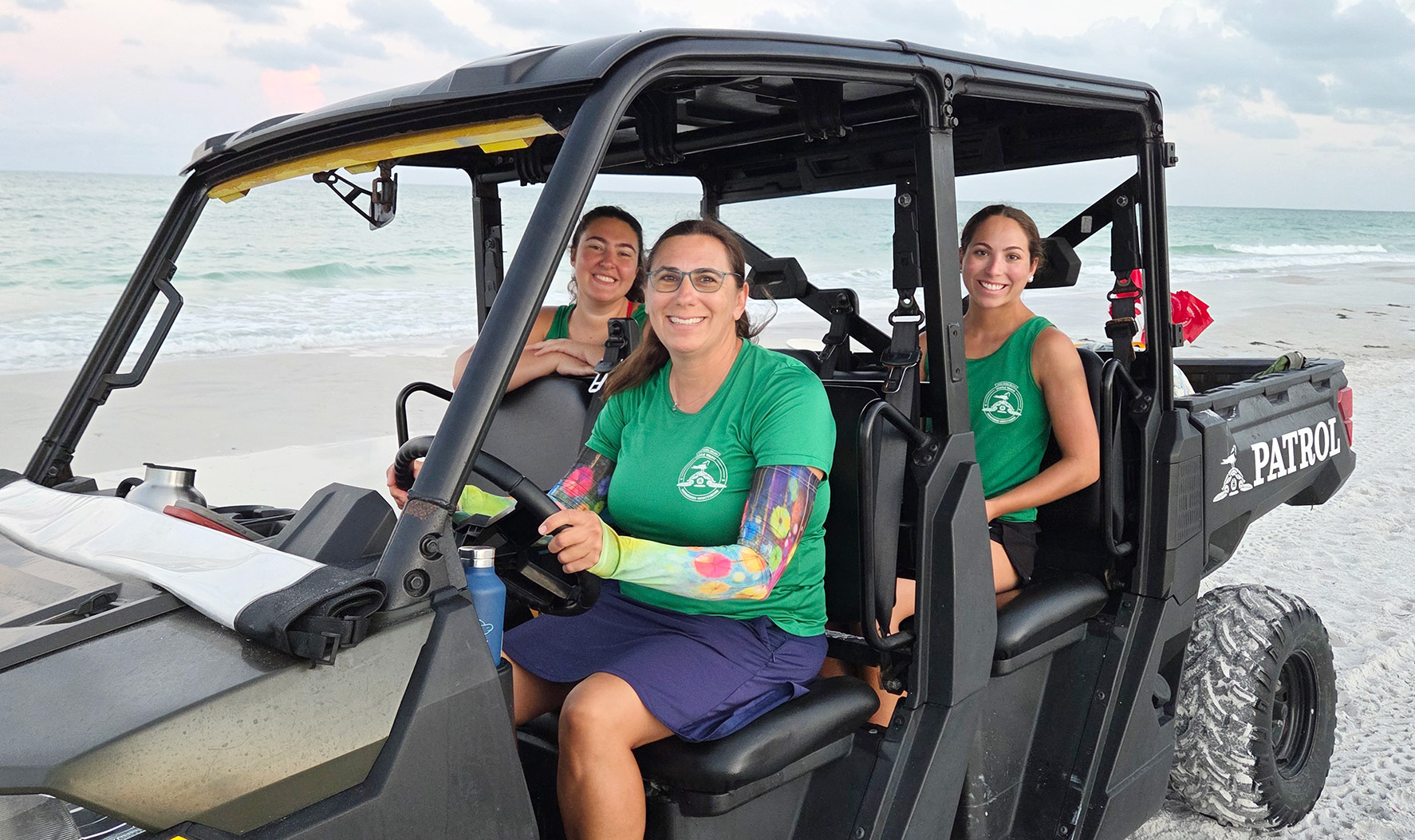
ANNA MARIA ISLAND – The sky was still dark when Kristen Mazzarella and her volunteers rolled onto the sand.
By the time the first beachgoers spread their towels, the Anna Maria Island Turtle Watch and Shorebird Monitoring teams had already covered nearly seven miles of Gulf and bayside shoreline on ATVs and on foot, cataloguing the night’s sea turtle activity, marking new nests and recording data that feeds into four decades of conservation science.
During the June 25 patrol, seven nests were discovered on the Island – six were found along the Gulf shoreline and one was discovered on the bayside.
When asked how often the patrols go out, Mazzarella, the Turtle Watch executive director, said, “Every single day.”
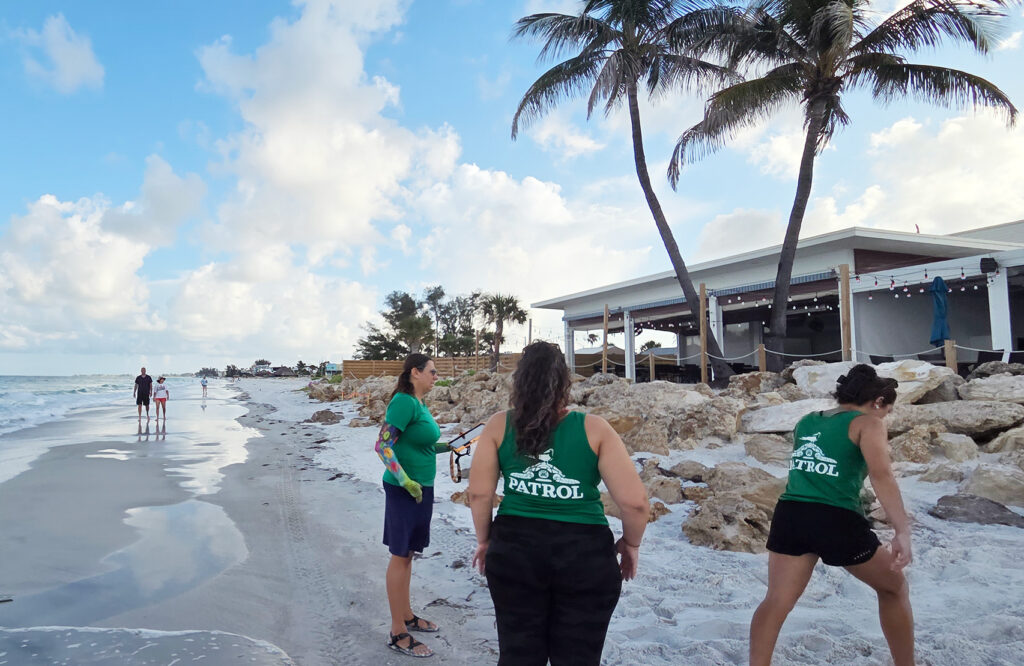
The work is meticulous by necessity. Mazzarella has spent nearly 30 years in sea turtle conservation and has developed protocols for identifying a true nest from a false crawl. A false crawl is the trail a sea turtle leaves when she emerges from the water but turns back without laying her eggs.
The crawl marks left behind by a loggerhead turtle allow the Turtle Watch volunteers to locate and mark the new nests each morning. If those tracks are crossed or obscured before the patrol arrives, a new nest can be missed entirely.
As part of the daily routine, the Turtle Watch team has adapted patrol routes and coordinates closely with multiple agencies that share the beach. Those agencies include Manatee County Beach Patrol, local law enforcement agencies and the county’s beach cleaning operations that entail a large John Deere tractor towing a beach rake along Coquina Beach and Manatee Beach. During nesting season, which runs through Oct. 31, the beach raking routines are adjusted to avoid disturbing active nests.
NESTING CHALLENGES
The 2026 nesting season is already proving remarkable. Across the Island’s monitored shoreline, Turtle Watch has recorded nearly 300 loggerhead nests – a pace that reflects a healthy nesting population and the daily discipline of Turtle Watch teams that never miss a morning.
This season, that discipline is being tested by an added complication: Since the sea turtle nesting season officially began on May 1, Turtle Watch volunteers have relocated 39 nests in anticipation of a smaller beach renourishment project that is expected to commence at Coquina Beach and Cortez Beach in August. The smaller renourishment project will be followed by a significantly larger beach renourishment project that’s expected to begin in November, after turtle nesting season ends.
Mazzarella said relocating turtle nests is a labor-intensive process that requires careful documentation and state permits. She said beach renourishment projects, while necessary for maintaining the beach, can alter
\the slope, temperature and compaction of the sand in ways that affect nesting success.
Among the most critical phases of the season is hatchling emergence, which runs July through September. Each hatchling must navigate from nest to Gulf in darkness, guided by moonlight and starlight reflecting off the water. Artificial light from coastal properties can disorient them fatally, drawing them inland toward roads and predators. During nesting season, Turtle Watch maintains a nighttime retrieval and rescue team that responds to calls around the clock.
“We can get woken up in the middle of the night,” Mazzarella said.
ORGANIZATIONAL NEEDS
The permit governing volunteer activity caps the patrol team at 24 permitted members. Mazzarella said she can train additional volunteers and rotate them onto the permit over time, but the real need is having a consistent group of volunteers who can commit two to three days a week, and not just on weekends.
She said the organization’s greatest current need is not equipment but the education efforts used to reach beachgoers before problems occur. She said most people come out and they just see the beach, but they don’t recognize the beach is a habitat for turtles and shorebirds. Turtle Watch asks beachgoers to remove their beach chairs, toys and beach gear before sunset; to fill in any holes dug in the sand; and to keep the lights off or use amber-filtered lights after dark.
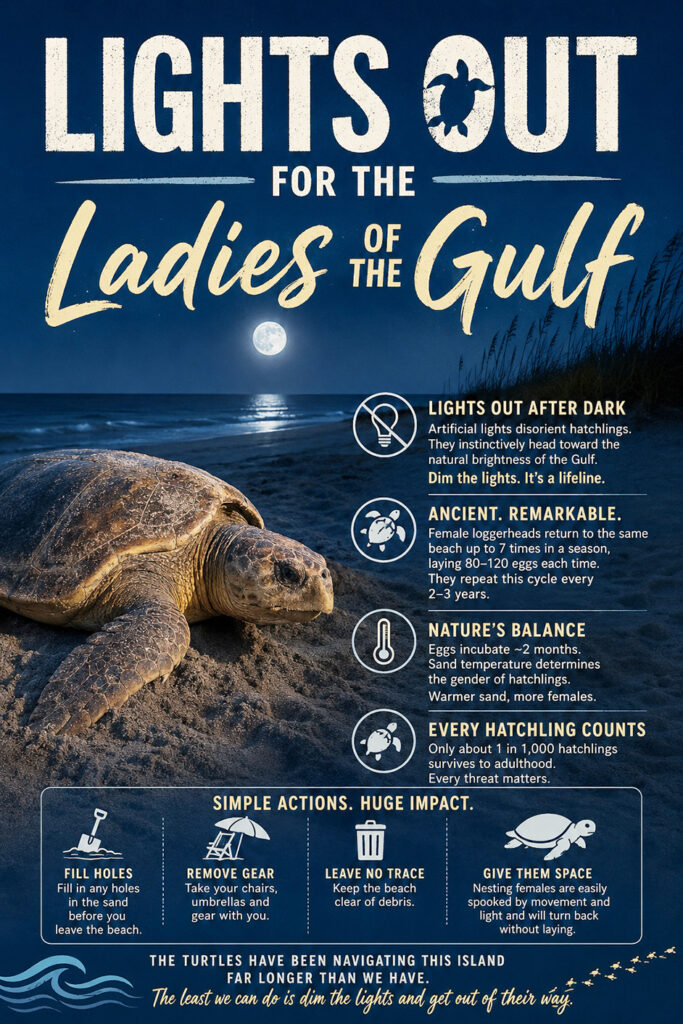
Residents and visitors who encounter a nesting turtle or her hatchlings are asked to stay at least 50 feet back and avoid flash photography. If you see a dead, injured, distressed or disoriented sea turtle or hatchling, please call Turtle Watch at 941-301-8434.
According to the Turtle Watch website, since 1983 Anna Maria Island Turtle Watch has monitored more than 20,800 turtle activities, protected more than 10,000 nests, and shepherded hundreds of thousands of hatchlings to the Gulf. Manatee and Sarasota counties together host the highest density of loggerhead nests in the Gulf.
Learn more at the AMI Turtle Watch website.