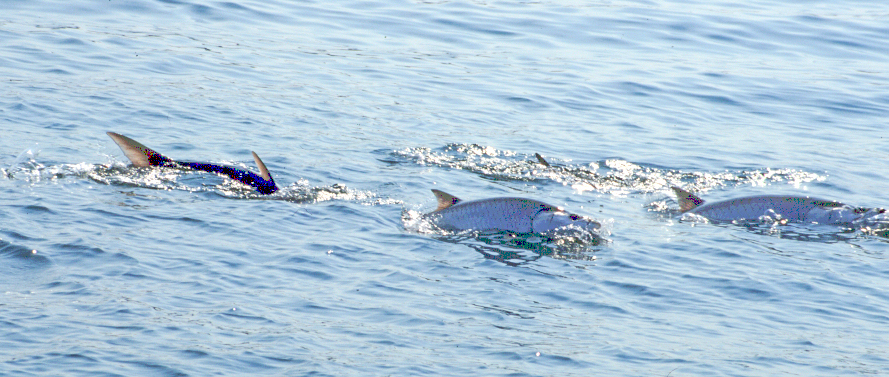
It’s that time of the year again when schools of tarpon conduct their annual migration and mating ritual off Anna Maria Island beaches. It’s also an annual ritual for anglers who pursue the “silver king,” arguably one of angling’s most exciting and challenging targets.
In high season, around the new and full moons of June, as schools of fish mass in the local waters, it’s not uncommon to find huge clusters of the fish and the anglers who fish along the beaches and passes. Groups of boats can be seen along the beaches and off local passes as they jockey for a presentation to schools of rolling and daisy-chaining fish.
During this time, in the excitement of the hunt, tempers can flare as anglers, caught in the passion of the moment, forget to respect their fellow anglers. There are also those new to the sport who don’t understand the process of pursuing schools of tarpon in a manner that gives everyone a fair shot at success. It’s a formula intended to keep the experience safe and enjoyable, while ensuring the tarpon fishery remains healthy for everyone who shares it. Good manners on the water make for a better fishery.
The first rule is simple: Pay attention and never motor up to a school of fish that other anglers may be in line to make a presentation to. If you watch closely, experienced anglers will position themselves well ahead of a moving school, often making fine adjustments with an electric trolling motor. After a school passes, they will wait before starting engines and then make a wide loop to repeat the process. Cutting through another’s boat line or drift and motoring up to fish will spook them, cause them to sound and ruin the chances for everyone. If you are new to the sport, it pays to watch quietly for a few minutes before joining in. That small pause can tell you everything about speed, spacing and the path fish are taking.
While fishing, pay special attention to fly anglers who anchor or pole the bars and local passes. These seasoned anglers pay attention to the movement of tarpon in shallow water, often positioning themselves on an edge that tarpon move along. Cutting across that line or motoring in shallow water can ruin everyone’s chances.
Courtesy in tarpon season is not only about other anglers, but also about respecting the fish. It’s good to remember that tarpon are here to reproduce and not for the sport of the angler. Florida law states that tarpon is a catch-and-release-only fishery and that tarpon over 40 inches must remain in the water unless an angler is pursuing a record with a required tag. Keeping tarpon in the water and minimizing handling time is critical. Anglers should also use tackle that’s stout enough to shorten the fight, leaving them the reserves to survive the sharks that frequent the waters during the season and are their main predators.
The best advice is to spend a few minutes watching the behavior and movement of the fish and anglers before attempting to approach a school of fish. That will give everyone a better chance at success and an enjoyable day on the water. It’s only common sense, although in the heat of the moment common sense often isn’t so common!