Tag: Anna Maria Island

Castles in the Sand

Home prices, new construction soaring

It seems like new home construction and home renovations are taking over Manatee County. If you dare to take a ride east of the beach, you’ll run into new construction starting on Cortez Road, then on El Conquistador Parkway, and don’t even ask about Lakewood Ranch and Parrish. Even the new construction and major renovation projects on Anna Maria Island are making the traffic out here worse than in recent years.

There is a lot of construction activity not only here in Florida, where it seems everyone wants to move, but also around the country. This demand is adding to a shortage of lumber and an increase in lumber prices. The National Association of Home Builders reported that there has been an unprecedented spike in lumber prices, adding more than $24,000 to the price of the average new single-family home and $9,000 to the price of a multi-family home.

Basically, there is a shortage of domestic lumber since lumber mills have closed because of COVID-19. There is also a shortage of Canadian lumber because of COVID as well, but also because of a recent United States tariff on imports from Canada. In addition, although builders have increased activity in the past year, they are hampered by shortages of labor as well as all materials – not just lumber.

A deficit of new construction, as well as the continuing shortage of resale properties, has made the U.S. housing market 3.8 million short on single-family homes. This figure was determined by Freddie Mac after a recent analysis. This single-family home shortage is especially damaging for entry-level buyers who can’t keep up with the ever-increasing sale prices and competition from cash buyers.

Across the country, housing prices are climbing at the fastest pace in 15 years. The January average national home price grew 11.2% from last year. The S&P CoreLogic Case-Schiller National Home Price index reported the price growth rate in two major cities in Florida. Tampa’s prices increased 11.9% and Miami increased 10.4% for single-family homes since last year.

We’re certainly not immune to any of this, as you can see from the March sales statistics for Manatee County reported by the Realtor Association of Sarasota and Manatee.

March single-family properties closed 37.8% more than last March. The median sale price was $395,000, up 23.6%, and the average sale price was $536,981, up 37.4%. The median time to contract was nine days, 79.5% less than last year, and the month’s supply of properties is 0.7% months, 79.4% less than last year.

March condos closed 63.7% more than last March. The median sale price was $245,000, up 14% above last year, and the average sale price was $299,824, 19.4% higher than last year. The median time to contract was 19 days, 55.8% less than last year, and the month’s supply of properties was 0.8 months, 81.8% less than last year.

Cash sales were up for both single-family homes and condos – 75.4% for single-family homes and 40.3% for condos. Unfortunately, this makes buyers who require financing less competitive, resulting in a serious negotiating disadvantage.

The Manatee County housing market continues to surpass all pre-pandemic levels for March, according to the Realtor Association of Sarasota and Manatee. They go on to say that half of all single-family homes are closing above list price, and lack of inventory continues to be the biggest challenge to our real estate market.

If the amount of new construction and the soaring sales prices bring a little shiver to your spine, you’re not alone. I spend several days a week wondering where exactly we’re headed; as always, be careful what you wish for. Stay safe.

Reel Time: Get ready and get involved

Reel Time: Get ready and get involved

Tarpon were the sirens that lured the first tourists to Florida, and their mystique is still in full sway today.

While fly fishing for tarpon holds a mystique of its own, the vast majority of anglers pursue them with conventional tackle. The go-to bait for spin anglers is a live crab. Small blue crabs can be purchased at most bait shops during tarpon season and pass crabs can be dipped from the local passes on a falling tide. Other effective baits include pinfish, threadfin herring and pilchards. Artificial lures like the DOA Bait Buster and the 4- and 6-inch shrimp, jigs and even top water plugs can be effective.

Patience is a critical factor when fishing for tarpon, especially when fly fishing. The most successful anglers find the edge of a sand bar or other underwater feature that tarpon track, anchor in casting range and wait. Sometimes tarpon come at a steady rate, but just as often there are long periods of time when the only thing to look at is the water and the bottom. This really separates the great anglers from the good anglers. There are times when you need to move but knowing when and where is a skill that is developed, if never mastered.

Once set up, the angler must be able to make a 40- to 50-foot cast to a location the size of a dinner plate. Placement of the fly cannot be overemphasized, because tarpon will seldom vary a foot or two from their path to eat a fly. Although there is always the rare exception, a fly must never travel in a path towards the intended target. A tarpon’s prey species wouldn’t survive long if it moved toward its aggressor, and tarpon know it. Besides moving away from the fish, the fly must move at the proper pace, be at the proper depth and never slow down when a tarpon is tracking it. Conversely, you can’t move the fly too fast, taking it out of a tarpon’s range.

Conventional anglers usually look for rolling fish in the near-shore Gulf and motor well ahead of them to intercept their path. Trolling motors can be effective for following a school in deep water but will spook them in the shallows. Knowledgeable guides that have “mastered” multiple presentations to a school of moving fish provide their clients some spectacular results. One thing that all tarpon anglers should practice is courtesy. Often a boat has been working long and hard to get properly set up for a shot and a boat running up on the fish will spoil the day for everyone.

Fortunately, once a tarpon decides to eat, there’s no need to make a lightning-fast hook set. The right set is called a “strip strike” in fly fishing, which involves letting the line come tight and immediately setting the hook with a combination of the line hand and the rod. Conventional anglers should also have the patience to let the line come tight before attempting to hook the fish. Then the angler must at once work to set the hook in the cement-like jaw while being ready for the fish to bolt away from the boat. Tarpon are not trout, and attempting to raise the rod to set the hook is a cardinal mistake.

After a fly angler sets the hook, attention must go immediately to clearing the line (getting the loose line off the deck). In most cases, the angler has been stripping in line when the fish bites and the hook is set. That line can easily foul on the angler, the rod or the reel. Disciplined anglers (successful ones) take their attention from the fish to the line at your feet. They know to hold the rod away from their body and let the excess line pass through their stripping hand with a circle made with the thumb and the forefinger. Once the line is “on the reel,” the hook is set again with several more strip strikes. Conventional anglers often use circle hooks, which don’t require a hook set. Conventional hook sets also require letting the line come tight with the addition of several quick jabs to set the hook. In all cases, the tarpon cannot be aware of the angler before the hook set.

While it’s important to exert maximum pressure on the tarpon during the fight, anglers must yield on jumps. On the jump, the standard maneuver is to thrust the rod forward to relieve pressure on the line. This prevents the tarpon from breaking off if it lands on a taut line. This maneuver is known as “bowing to the king.”

It’s customary to start the engine and get as close to the tarpon as possible after the initial and subsequent long runs. This allows the angler to apply maximum pressure. If a tarpon is a hundred yards from the boat, the stretch of the line makes it impossible to apply any real pressure. Keep the pressure on throughout the fight, but don’t clamp down and try to force the fish to the boat.

The thought that these next few months, the highlight of mine and many other angler’s year, might be sacrificed to the onslaught of a harmful algae bloom is a painful reminder. While there are many bad actors to blame for this misfortune, if we don’t speak up and act, nothing will change until after a disaster. Piney Point is the perfect example. Call your elected officials, attend commission meetings, write letters to the editor, and more importantly, become an active advocate.

Perhaps the best strategy of all is to get excited about, look forward to and get ready for a magical time of the year. While we’re at it, we’ll let the passion fuel our determination to protect it.

More fines added to treehouse owners’ tab with Holmes Beach

More fines added to treehouse owners’ tab with Holmes Beach

HOLMES BEACH – Lynn Tran and Richard Hazen are no strangers to having issues with city leaders after having ongoing litigation for nearly a decade over their beachfront treehouse. Now, those issues are carrying an even heavier price tag.

During an April 21 code compliance special magistrate hearing, the couple was once again before Holmes Beach special magistrate Michael Connolly, this time for Connolly to assess fines over non-compliance with the city’s codes.

In March, Connolly heard a case from city code officers where the couple, owners of the Angelinos Sea Lodge, were accused of renting their four vacation rental units without a vacation rental certificate. Despite arguments from the couple’s attorney, Bruce Minnick, Connolly found that they were in violation of the city’s codes and warned that if renting of the units continued without valid VRCs they would face fines. During the April hearing, Connolly ruled that they were still in violation of city codes and handed out a fine of $125 per day from March 18 until the property can be brought into compliance. This new fine is on top of a longstanding $50 per day code fine that, as of the March 17 special magistrate hearing, topped out at $198,485.17, according to City Treasurer Lori Hill. Now that total is more than $200,000, not including the additional $125 per day along with legal fees.

Though the issue of short-term rental units without VRCs is now a code problem on the property, the primary issue is the beachfront treehouse at Angelinos Sea Lodge, which has been a point of contention between Tran and Hazen and the city for years. City leaders allege the treehouse was built without permits, not in compliance with city building codes and on the erosion control line, which is not allowed without prior authorization from the Florida Department of Environmental Protection. Tran and Hazen argue that they went to the city building department before constructing the treehouse to ask what permits they needed and were told by an employee at the time that none were needed. Practically since it was built, the fate of the two-story structure has been wrapped up in litigation.

The only way, according to city code compliance officers, to clear up the code issues on the property is to remove the treehouse and pay all outstanding fines and costs against the property. Once that is done, the owners can start the process of having their VRCs renewed by the city to rent the four vacation units.

Before Connolly made his ruling, Minnick appealed to him for leniency for his clients, saying that continuing to fine them without giving them a way to make a living was creating a no-win situation for both parties.

Litigation concerning the treehouse is still ongoing with cases before the the 12th Judicial Circuit Court in Manatee County and another before the U. S. Supreme Court to determine if that body will hear the case.

Speaking on behalf of the city, attorney Erica Augello said the two code issues were separate and have no bearing on each other except that they exist on the same property. She added that the code fines against the treehouse were not a subject of litigation. Minnick argued that they do intermingle because the VRC issues cannot be resolved without first resolving the treehouse issue and that by not allowing his clients to rent the units, the city is taking away their ability to generate income.

While he said he could convince his clients to pay the special magistrate hearing costs of $127.24, they would be unable to pay for the hefty fines attached to their property due to the ongoing code issues and would be unable to even sell the property because the code fines would be transferred to a new owner. Minnick said that if the special magistrate chose to assess additional fines and city leaders were not willing to work on a settlement agreement with his clients that litigation would continue between the two parties.

“Let my people go,” Minnick pleaded. “I’m on bended knee. Let my people go.”

In an email to The Sun after the hearing, Tran said that if the petition to the Supreme Court failed that the couple will continue to pursue all other available legal recourse.

“The city is giving us no choice, taking away our basic rights and liberty and treating us like criminals,” she said in the email.

If all legal options fail, Tran said the couple would remove all of the trees and the treehouse on their property, seek out investors, build a “monster luxury three-story multi-family wedding cake place” and sell to someone else to pay the fees and fines levied against the property.

During the hearing, Augello said the time for settlement talks was over.

The next hearing in the 12th Judicial Circuit Court in Manatee County concerning the treehouse is scheduled for May 3.

Related coverage


Treehouse owners get harassing calls


Treehouse owners get no relief from special magistrate


Treehouse owners clash with city over VRC renewals

Manatee County to close COVID-19 vaccine site

MANATEE COUNTY – With the demand for COVID-19 vaccine first doses lessening, Director of Public Safety Jacob Saur says the county is shutting down its vaccine efforts to focus on the looming hurricane season.

“The county-operated vaccine sites have been extremely successful and I’m proud of the teams of people who helped make Manatee County’s field operation a model for the entire state to follow,” Saur said. “But with the demand for doses declining, the public safety staff who have been coordinating the logistics for our drive-thru operations need to turn their focus toward hurricane season, which begins June 1.”

Manatee County began offering COVID-19 vaccines in late December 2020. Now a drive-up event at the Tom Bennett Park vaccination site will be the final time that Florida residents can get a first dose of a COVID-19 vaccine from the county, though there are plenty of other vaccination opportunities in the area.

The event is scheduled to take place on Wednesday, April 28 from 3 to 7 p.m. at Bennett Park, 400 Cypress Creek Blvd. in Bradenton. No appointments are required, just drive up and get the shot while remaining in your vehicle. Anyone who attends the drive-up event will have their second shot of the Moderna vaccine at the park on May 26. Anyone who can show proof of Florida residency and is age 18 or older is eligible for a first vaccine dose through Manatee County. Vaccines will be distributed on a first-come-first-served basis.

Anyone who has already received a first dose of the vaccine at the county-run site and has not been scheduled for a second dose at the Public Safety Center location will receive their second dose approximately 28 days after the first dose at Bennett Park. The Public Safety Center vaccination site is planned to close before the end of April.

Saur said only about 330 people attended the first drive-up vaccination clinic at Bennett Park held April 21, though the county had vaccine doses to distribute to up to 1,000 people.

“As someone who has volunteered, it takes an army to man it,” Manatee County Commissioner Carol Whitmore said of the vaccination site. “This week’s walk-up was dismal. If something changes, I am sure we will reconsider. I am referring to all pharmacies, Health Department and MCR Health.”

As of April 22, about 134,000 people had been vaccinated through the Manatee County vaccination sites so far, with an estimated 161,326 Manatee County residents vaccinated in total. In 2020, the U. S. Census Bureau said that there were 412,119 residents in Manatee County.

“I am concerned that it is soon,” Holmes Beach Mayor Judy Titsworth said of the vaccination site’s closure. “I do not have enough information to provide a very educated opinion, for example, staffing availability, etc. I would hope that there could be pop-up sites as an alternative throughout the county to reach out to all citizens in need.”

If you can’t make it to the April 28 vaccination clinic but still need your first dose of a COVID-19 vaccine, there are still plenty of options available.

The Department of Health in Manatee County will continue booking vaccination appointments into the summer. Call 941-242-6646 to make an appointment. The DOH is located at 410 Sixth Ave. E. in Bradenton.

The DOH also is working with partner organizations to reach those Manatee County residents who are home-bound, migrant workers and others. Any organization interested in partnering with the DOH to distribute COVID-19 vaccines can call 941-748-0747 for more information.

Locally, vaccines also can be obtained through CVS, Publix, Walgreens, Walmart and Winn-Dixie pharmacy locations.

To find out where a nearby vaccination site is, visit the Florida Department of Health’s vaccine locator online.

“If they’re not going to give the vaccines anymore they should take the responsibility for continuing to advertise that’s it available elsewhere,” said Cortez resident Mary Green, adding that she adheres to the CDC’s recommendation that vaccinated people continue to wear masks when they’re with other people.

As of April 25, Manatee County has had 37,553 COVID-19 cases and 655 COVID-related deaths.

Related coverage


County to close vaccine appointments, site


Manatee County offers vaccine registration to those 18 or older


Vaccination eligibility dropping to age 40 and older

Reel Time: Tarpon time

Reel Time: Tarpon time

Tarpon season is one of the most anticipated times of the year on local waters. While I’ve encountered tarpon occasionally most every month of the year, April through July is the time eager anglers turn their sights to these silver-armored adversaries. Their arrival in numbers worth pursuing is generally water temperature-dependent. The magic number is debatable, but when water temperatures reach into the 70s, ardent anglers take notice. When that number reaches the high 70s to 80s they take action. Hopefully, there will be a season.

I thought long and hard about the subject of this week’s article. The condition of local waters has worried me the past few years as regular readers of this article will no doubt be aware. The resilient marine ecosystem that has amazed me in the past has not recovered after the 2017-18 red tide. On top of this, the disaster at Piney Point puts massive amounts of nutrients into Tampa Bay just as waters start to warm and red tide reports creep up the coast. But let’s be optimistic.

We are blessed with some of the best tarpon fishing in the world and the local bars and inshore waters host some of the finest fly and spin fishing to be found anywhere. For most anglers this isn’t a numbers game, it’s the hunt and the action that keep them pinned to the bow in the sizzling summer sun.

Tackle should match the size of the quarry with most anglers opting for a 20- to 30-pound spin outfit and/or 11- to 12-weight fly outfit. A heavy bite tippet is required because of the size of tarpon and their rasp-like mouth. Fly anglers generally use 60- to 80-pound tippet while spin anglers choose 70- to 100-pound test. While it might seem like a difficult task to land a tarpon on the fly, or any tackle for that matter, an angler who knows the limits of her gear can actually land a tarpon in a surprisingly short period of time. The key is to apply maximum pressure from the hookup and never let up. Too many anglers “baby” their tarpon in a misguided attempt to land them. The truth is that the longer you fight a tarpon the better chance you have of losing it.

A properly (IGFA approved) tied tarpon leader used by fly fishers usually runs between 10 and 12 feet and is tapered to accurately deliver the fly. The leader includes a class tippet (weakest link) from 16 to 20 pounds that is doubled at both ends to soften the (shock) impact to the class tippet and bite tippet. Key to the whole equation is to have a very sharp hook, as tarpon have extremely tough mouths. Conventional leaders vary from angler to angler, but a doubled standing line tied to a leader and then to the bite “tippet” with a blood knot or Albright Special won’t fail you.

Flies vary from the classic splayed feather “Key’s” style to more complex designs like the “Toad,” various baitfish imitations and worm flies. Some fly anglers are not concerned with landing a tarpon, preferring to just enjoy the hunt, the hookup and the jumps that usually follow the hook set. They use light bite tippets which allows the tarpon to work through the leader with their abrasive mouths. The key to landing tarpon on the fly is accuracy. The fly must be placed perfectly, move in a precise direction relative to the fish and be at the proper (fishes’) depth. Even when all of these factors come together, there’s still about a 50% chance that the tarpon will reject the fly, assuming that the condition of local waters doesn’t repel them first.

It’s happened before and while some would have you believe it’s natural and there’s nothing to be done, if there’s any silver lining in all this, it’s that it wakes us up to what we can and must do to protect our passion. But more on both fronts next week. To learn more and lend support visit Suncoast Waterkeeper.

Horses gallop onto CME agenda

Horses gallop onto CME agenda

BRADENTON – The horses ridden in the waters off the side of the Palma Sola Scenic Highway made their way back onto the agenda for the Corridor Management Entity’s April meeting and were a point of contention among members and the people who gathered in person and online for the meeting.

The conversation that began as lively soon became acrimonious as people on both sides of the issue attempted to argue their point to either keep the horse riding in Palma Sola Bay going or remove the horses.

The co-chair of the committee, Craig Keys, interrupted the debate several times to remind all those gathered that the CME has no jurisdiction over whether horse riding can continue or be banned from the causeway. He added that the group is not even an advisory committee to any governing body.

The group’s primary purpose is beautification and maintenance of the side of the roadway along the designated scenic highway, currently from 75th Street in Bradenton west along Manatee Avenue to the intersection with East Bay Drive in Holmes Beach. There is an application being submitted by the group to the Florida Department of Transportation to extend the Palma Sola Scenic Highway to the end of Manatee Avenue at Manatee Beach and to the north from East Bay Drive to the Holmes Beach city border with Bradenton Beach.

Some members of the CME and the public made the argument that the horses are a danger to the public by blocking access to sidewalks and preventing multi-modal transportation through the area on the northeast side of the causeway. There also were environmental concerns such as horse excrement in the water, damage to seagrasses and damage to trees due to tying the horses to palm trees along the sidewalks.

Representatives from Beach Horses, C Ponies and other supporters of horse riding on the causeway said the horses do not adversely affect the environment. Carmen Hanson, of C Ponies, suggested horse-riding operators be allowed to install hitching posts for their personal use along the causeway at their own expense to alleviate the issue of damaging trees to which the horses are tied.

Co-chair Ingrid McClellan said one of the objectives of the CME is to maintain a pet-friendly recreational area along the causeway, including users with horses. She said that along the causeway, different types of users have different areas where they can enjoy their favorite recreational activities, from horse riding to biking, use of small watercraft and swimming, among others.

McClellan said the city of Bradenton has legal jurisdiction over the causeway beach and members of the Bradenton City Council had, in late 2020, instructed their attorney, Scott Rudacille, to investigate what their options are, if any, concerning the horse-riding operations on the causeway. As of press time for The Sun, an update had not been placed on the city’s council’s agenda for discussion.

Keys encouraged everyone with concerns about the horses to contact their elected officials, including city council members and county commissioners, to discuss their issues.

In other business, Darryl Richard said he would work with FDOT and Manatee County to address erosion along the causeway beaches before other members of the CME worked to restore bollards knocked over along the corridor by tidal waters and vehicles.

McClellan said it was back to the drawing board for Manatee County representatives trying to create a plan to revitalize Kingfish Boat Ramp in Holmes Beach. She said the group working on the project hit a roadblock with the landscaping plans and is starting the design work over from scratch before resubmitting plans for permits from FDOT. Richard, the CME’s representative from FDOT, said the plans are not yet ready for official permit review by the department.

Related coverage


Bradenton City Council joins horse debate


Scenic Highway CME talks horses on the causeway


Scenic Highway group seeks to solve horse problems

Illuminated sign vote on hold

Illuminated sign vote on hold

HOLMES BEACH – Commissioners are skipping a vote on the city’s new sign ordinance, at least for the time being, while they make allowances for suggested changes by city staff and get legal advice on the settlement of a lawsuit.

During an April 13 meeting, Holmes Beach city commissioners were scheduled to take the first of two votes on an ordinance limiting the use of signs in the A1 and R4 residential districts. Under the proposed ordinance, the use of backlit illuminated signs in the districts would be prohibited with three existing signs required to be brought into compliance with new regulations within six months and another to have a five-year sunset period. The new regulations would allow for a sign with a single spotlight to light the sign from above or below, requiring a retrofit of the four backlit signs.

While a permit was given to the sign at the Anna Maria Beach Resort by a previous building official, it was given in error, resulting in the consideration of a five-year sunset clause for that sign. After that, the sign would have to be retrofitted to meet city regulations for the district. The reason for the sunset clause was to allow the resort’s owners to recoup some of the cost for the installation of the sign, about $40,000. Because the roadside sign, LED board and neon lettered sign on the portico were permitted by the city, though erroneously, they are the subject of an ongoing lawsuit between the resort’s ownership and the city.

The sign that started commissioners’ review of the city’s sign ordinance is one of the reasons for the delay in a vote on a new sign ordinance. – Submitted | Google Maps

Resort owners’ attorney, Aaron Thomas, said the proposed five-year sunset period was not enough time for his clients to recoup their investment in the sign. Rather than continue litigation, Thomas proposed a settlement agreement to commissioners.

In the settlement proposal, Thomas said that the sign on the portico would remain and remain in use. The LED board on the roadside sign would remain on the sign but not be used unless requested by the city for public address, such as an evacuation notice. The roadside sign itself would remain lit daily but be turned off at 11 p.m. and illuminated to only 25% of its maximum light output capacity.

Commissioners said they would need to review the proposed settlement agreement with their legal counsel handling the lawsuit before responding to Thomas’s offer. Thomas warned that if the settlement agreement is not accepted, his clients would continue with the litigation against the city.

City Planner Bill Brisson recommended several changes to the proposed ordinance, enough that it may have to be significantly modified and readvertised for a first reading and public hearing at a future meeting.

Upon further research into the issue, Brisson said there were several things he couldn’t identify, including if the three other backlit signs in the A-1 and R-4 district were ever permitted by the city, how long they’d been there, when the city had prohibited illuminated signs in a residential district and when the A-1 district was incorporated as a residential district.

Due to the confusing nature of the appearance of the other three signs, he suggested that if commissioners approve a five-year sunset period it should extend to the other three backlit signs while prohibiting any more from being constructed. He also suggested commissioners consider allowing signs to be double-sided and lit with a single spotlight on both sides.

Commissioners took a vote and agreed to incorporate both of those suggestions in the proposed ordinance. They also agreed on some wording changes to the ordinance to make the new regulations clearer.

Due to the pending ordinance changes and the proposed lawsuit settlement, City Attorney Patricia Petruff recommended commissioners delay the first vote on the sign ordinance until the document could be amended and commissioners receive appropriate legal advice.

Related coverage


Commissioners close in on illuminated sign regulations


Special magistrate rules on seven code issues


Lighting up the neighborhood

Piney Point spill may have ripple effect on tourism

Piney Point spill may have ripple effect on tourism

ANNA MARIA ISLAND – The potential harm from the Piney Point wastewater spill could go beyond impacting water quality and wildlife to affecting tourism.

Some soon-to-be visitors from around the country are reconsidering their vacation plans due to fears brought on by the lack of solid information about the potential of a serious red tide event in the near future.

Piney Point is a closed phosphate plant in northern Manatee County with retention ponds built into gypsum stacks that contain polluted wastewater. A leak in one of these ponds was discovered last month, prompting a response from multiple state and federal agencies, including the EPA and the Army Corps of Engineers. Officials identified a leak in a containment wall that put the structure at risk of collapsing, resulting in Gov. Ron DeSantis declaring a state of emergency and the county ordering the evacuation of more than 300 homes and businesses in the area for fear that a total collapse could cause a major flooding event.

Concerns among residents, environmental officials, and now, tourists, center around a potential red tide algae bloom. Red tide can kill marine life, cause the water to be murky and have an unpleasant odor, and pose a health threat to humans.

The Sun asked three people from three states about the Piney Point spill’s effect on their travel plans.

“We had to cancel last summer’s vacation to Anna Maria Island due to COVID. This summer we have a reservation for two weeks, and we may have to cancel it. I’m starting to think I’m bad luck for the Island,” said Darrah Gohring, of Marion, Ohio.

Gohring has been following the local and national news related to Piney Point very closely. Her family has been looking forward to what she described as “two weeks in paradise” ever since having to cancel last year. They are first-time visitors, and have already paid in advance for their rental near Bean Point.

“This probably wouldn’t be as much of an issue if it weren’t for the fact that both me and my daughter are severely asthmatic, and we really don’t want to wind up in the hospital,” Gohring said, emphasizing how excited her daughter has been over this family trip.

For now, the Gohring family is going to see if the rental owner will refund their payment. The owner doesn’t appear to be legally obligated to refund the payment, but Gohring is hoping the owner will be sympathetic to their unique situation. For now, the family will continue to follow the news, and intends to make a decision soon.

A father of two young children from Atlanta asked that we only use his first name, Clay. Along with his wife and two children, ages 2 and 5, Clay’s family vacation to the Bradenton Beach area is scheduled for June 26-July 3 and will be their first trip to the Island. Like others, Clay said the possibility of a red tide bloom due to the Piney Point spill is of serious concern to his family.

“We’ve done Panama City and some other beaches farther north, but this will be our first time to Anna Maria,” Clay said. When asked why he and his family chose AMI for this vacation, he said it was totally random. They Googled Florida beaches with white sand, clear water and a laid-back atmosphere, and Anna Maria Island kept popping up. It was enough for Clay to book with a good deal of confidence he had found the right place for his family to relax and enjoy the sun.

lay said that even though they are watching the situation closely, and may change their decision, for now, the trip is a green light and they plan to visit as scheduled. While Clay and others purchased travel insurance, it appears that as long as beaches are open and no evacuation order has been put in place, the insurance will not cover a cancellation.

Kim Reynolds, of Detroit, Mich., and her husband and college-age son and daughter are already here enjoying their vacation in Holmes Beach. The Reynolds family will be heading home Saturday, April 17.

“I feel really bad for people who have to make the tough decision of whether to risk it, and hope for the best, or possibly lose a lot of money canceling a non-refundable beach rental here on the Island. God knows it’s not cheap!” she said. “I’m a public school teacher, and we save our money all year to stay at a nice place and eat at nice restaurants when we visit Anna Maria. Suffering through the brutal Michigan winters is a little easier when the light at the end of the tunnel is a tropical paradise like this. I honestly don’t know what we would do if we were in that situation, but I have a feeling we would come regardless, and hope for the best.”

Gohring expressed a sentiment common among all three visitors – a genuine concern for local residents.

“I feel so bad for you guys; we are just coming for a couple of weeks, but you live there, this is your home,” Gohring said. “I really hope everything is ok and it’s far better than a worst-case scenario.”

Related coverage


Tourism statistics

Parks members set sights on former bank property

Parks committee members set sights on former bank property

HOLMES BEACH – Members of the city’s Parks and Beautification Committee are working on a proposal which, if approved by city commissioners, could create an acre of green space at the city’s commercial center.

A recent business casualty in the area, the permanent closure of the city’s Wells Fargo branch, has given parks committee members the idea of turning the old bank property into a city park. Unfortunately for the city, the project could carry a hefty price tag.

After briefly discussing the possibility of acquiring the vacant property during their March meeting, member Alec Graham said that he’d done some research into obtaining the property and turning it into a city park. He estimates the cost of demolition for the current building to be about $500,000. He suggested city leaders could use part or all of the estimated $1.8 million expected from federal COVID-19 relief funds to purchase the property. After sending his suggestions to Mayor Judy Titsworth, Graham said he hadn’t yet received a reply.

City Commissioner Carol Soustek, the commission’s liaison to the parks committee, said that she understands that the land, located at a prime intersection on the Island, is very valuable and doesn’t believe that it will be for sale long. She added that while the city’s leaders are looking at making land acquisitions, most of those are for greenspace and preservation of wetlands that can be primarily left in as-is condition without the need for construction or demolition. In contrast, Soustek said the Wells Fargo property would be “a massive undertaking” for the city.

“It’s not undoable,” she said, “but it’s a dream you have to work on.”

The Wells Fargo bank property, 5327 Gulf Drive, is for sale through JLL, a realty company, for $2.4 million. The 1.66-acre site is situated on two parcels with a two-story bank building and 71 parking spaces, some of which are rented to the adjacent marina and Waterline resort. The property is zoned C3 for high-density commercial use.

Parks members meet on Wednesday, May 5 at 10 a.m. Holmes Beach City Hall for their final meeting before their customary summer break.

Castles in the Sand

Are we in a boom or a bust?

Happy tax day! Well, maybe not, since tax day has been extended another month. With so much going on in the world and in the country, it’s easy to forget about some things that are traditional and ingrained in our psyche, like April 15 being the most dreaded day on the calendar.

Until a few years ago, April 15 represented a real benefit to homeowners with mortgages. Mortgage interest on primary homes and secondary homes has always been a staple of the real estate industry. Buy a home, take out a mortgage and deduct the interest at the end of the year. However, because of a change in the tax code, deducting mortgage interest may not be as attractive now to homeowners with an increase in the standard deduction and a cap on the deductible amount of mortgage interest.

Believe me, this is not a reason not to purchase a home and take out a mortgage. Mortgage rates are historically low, even if they have ticked up in the last two months. But finding a home to purchase right now will be a challenge with or without a mortgage.

Today’s real estate market is making history every day, breaking records on sales prices and eating up every single property that comes on the market. Are we in a boom, or are we getting ready for a bust? Typically, you could ask five different economists and get five different answers, but most of them now will say that longer-term trends are at play that should keep the housing market hot.

Why is this? For one thing, even with the pandemic on the brink of being over, COVID has forced the workforce to rethink where they live and why they live there. People who moved last year weren’t just thinking of a temporary place to escape during the pandemic, but a real re-evaluation of their lives, and that’s not going to change.

Millennials are also a big influence in the future real estate markets. They are chomping at the bit to buy a home, start families and settle down in a community. But unless their grandparents’ generation finally sells their forever homes, there will be no forever for this generation.

Countries around the globe that are experiencing the same type of housing market have the same worries about the same type of bubble. However, the consensus is that the buying is being driven by real demand rather than speculation, with families looking to upgrade to larger properties in suburban areas as they work more from home.

What’s going on now is the inverse of the previous housing boom in the mid-2000s. At that time, lending standards were downgraded, allowing buyers to purchase properties beyond their means using risky mortgage products.

According to the National Association of Realtors, between 2006 and 2014, about 9.3 million households went through foreclosure, gave up their home to a lender or sold as a distress sale. We are nowhere near that type of activity; in fact, mortgage qualification standards are at the highest they have been in most of our memories. The biggest threat to the housing market now is mortgage rates going up substantially and a serious lack of inventory, which will slow down sales considerably.

At least for this year, you can put off the only thing besides death where you have no choice. As for me, I’m facing it dead on and paying up on April 15, but that’s me – why spend another month thinking about the inevitable? Stay safe.

County to close vaccine appointments, site

MANATEE COUNTY – If you’ve been waiting to get a COVID-19 vaccine at the county-run Tom Bennett Park vaccination site, your chances to get that first shot are about to be limited.

In an April 7 press release, county officials announced that with vaccine doses becoming available through local pharmacies and doctors’ offices, they’re closing the standby waiting pool for vaccine appointments. The final patients still in the waiting pool who respond to the automated phone call, text and email sent on behalf of Manatee County will be scheduled for first vaccine appointments April 13-15 at Tom Bennett Park.

Registration for the standby waiting pool will be closed at 5 p.m. on Monday, April 12.

If you miss your opportunity to get an appointment for your first vaccination through Manatee County, officials will be hosting a first-come-first-served vaccination clinic from 8 a.m. to noon on Wednesday, April 21. Anyone receiving a first vaccine dose during the April 21 event will receive their second dose on May 19.

For anyone who’s already had their first dose of a COVID-19 vaccine through Manatee County, the second dose vaccination site at the Manatee County Public Safety Center will remain open through the end of the day April 30. After that, the remaining second doses will be administered at Tom Bennett Park.

For more information on receiving a second vaccine dose through Manatee County, or to download a consent form, visit the second dose site online.

To receive a second dose at one of the Manatee County sites, patients must show their card showing the first dose of the vaccine, valid photo identification and a completed copy of the vaccine consent form available to download online.

For more information on receiving a first dose of a COVID-19 vaccine through Manatee County, visit the COVID-19 vaccine website or call 311.

All Florida residents aged 18 and older are eligible to receive a vaccine through Manatee County.

County officials will continue to monitor the demand for first dose administration at the Tom Bennett Park site through the end of the month to determine if that site needs to remain open for COVID-19 vaccination first doses.

COVID-19 vaccines are available for ages 16 and older, with parent or guardian permission for those under 18, through area CVS, Publix, Walgreens, Walmart and Winn-Dixie locations.

For a vaccine appointment at CVS, visit the pharmacy online.

Appointments at area Publix locations open at 7 a.m. on Monday, Wednesday and Friday each week. Appointments booked on Wednesdays are for the Johnson & Johnson vaccine. Appointments booked on Mondays and Fridays are for the Moderna vaccine. For more information, visit them online.

For appointments through Walgreens locations, visit the pharmacy’s website.

To book an appointment at a local Walmart pharmacy, visit their COVID-19 vaccine webpage.

Appointments at Winn-Dixie locations can be booked online.

Related coverage


Manatee County offers vaccine registration to those 18 or older


More people eligible to receive COVID-19 vaccine


Here’s where to get vaccines in Manatee County

Worshippers brave cold sunrise service

Worshippers brave cold Easter sunrise service

HOLMES BEACH – More than a thousand people braved chilly temperatures at Manatee Beach to celebrate the resurrection of Jesus Christ at the 56th Annual Easter Sunrise Service.

The annual event was organized by the Kiwanis Club of Anna Maria Island and performed by members of Roser Memorial Church, the Episcopal Church of the Annunciation, Harvey Memorial Church and CrossPointe Fellowship.

Russell Brier and Morgan Lawson provided music for the service with help from Chuck Caudill.

Worshippers brave cold sunrise service
Rev. Edward Moss, from CrossPointe Fellowship, delivered the sermon, “The Relevance of the Resurrection.” – Tom Vaught | Sun

Last year, the Kiwanis Club canceled the service due to the COVID-19 pandemic and attendees this year were urged to observe social distancing as they found a place to sit. There was an advisory in the program telling them they assumed liability for their actions and held the organizers harmless.

After the service, Kiwanis member Dave Miner was enthusiastic, saying the turnout was larger than expected and may have been a record.

Record or not, some saw it as a return toward normalcy that was shattered by the coronavirus more than a year ago.

Castles in the Sand

No inventory, no sales?

Remember last March – the week the country shut down – and you raced to the supermarket to stock up on food and toilet paper? My biggest shock was going to Publix on March 17 and seeing about a quarter of the usual supply of fresh meat in the store’s coolers and empty shelves for paper products. I thought, “This is America; where is all the food?” and realized then that life can turn on a dime, or, in this case, on a virus.

Thankfully, we’re almost out of the COVID crisis, but the fallout from this past year will go on for some time, changing lifestyles, work habits and in particular, the real estate market. By now everyone knows that the COVID year has been abnormally good for the housing market. The combination of the ability to work remotely, record-low mortgage rates and the desire for individuals and families to move into less densely populated areas has flooded the market with buyers racing to find a new home.

In addition, working remotely was largely available to higher-income workers who generally make up the majority of homebuyers. Unfortunately, lower-income workers who may not be able to do their jobs remotely have suffered, as well as young millennials who have become priced out of buying their first home.

Florida has benefited from the migration from other states this year – particularly people moving from the northeast who were hit badly by the virus and have endured strict lockdowns. Also, the Florida Realtors Association has recently reported their agents across Florida are seeing a higher number of new clients from California looking for a less expensive lifestyle with the benefit of the good weather they’re accustomed to. Orlando is seeing a flood of buyers from California as well as Miami attracting venture capitalists and finance companies.

The downside of all of this activity is, of course, the lack of inventory. As reported last week, the supply of single-family homes in Manatee County at the end of February was below one month at .09 compared to February 2020, which was 3.4 months, down 73.5% from last year. The National Association of Realtors reports the inventory level nationally was down 29.5% from last February, therefore, Manatee County is way down compared to the national level. The number of sales in Manatee County in February was up by 12.8% compared to the national number of 9.1%, proving that our inventory is being gobbled up as soon as homes hit the market.

Thrown into this potpourri of housing shortage and pent-up buyers is the fact that the mortgage rates have ticked up. The average rate for a 30-year fixed mortgage has risen to 3.09% recently from 2.65% earlier this year, according to Freddie Mac. In addition, they anticipate it is likely to head higher still. Nevertheless, most economists feel this is just a blip in what will continue to be a great housing market that can tolerate an uptick in rates, which will likely remain historically low.

In addition, economists project that Americans have saved during the pandemic – as well as improving their credit positions – and are sitting on a nice pile of cash. As more segments of the economy keep opening and the economy improves, more buyers will be in a strong position to purchase homes even with slightly higher mortgage rates.

I personally never want to see empty shelves in supermarkets again, but I would also like to see an improvement in our level of inventory. As previously stated, prices will go up and sales will go down unless we can convince homeowners across the country that now is the time to list. Stay safe.

Reel Time: Zen and fishing

Reel Time: Zen and fishing

It dawned on me recently as I was wading a local flat that I was experiencing what I have written about over the past few years, namely the common ground that angling and Zen share.

Zen’s focus on “a state of calm attentiveness in which one’s actions are guided by intuition rather than by conscious effort” mirrors the way my fishing has evolved. It’s taken a long time, but rather than trying to reason where fish might be, I often find it more effective to spend less time searching and more time observing. Over the years I’ve written about staking out holes on the flats and letting the fish come to you. More and more I’m reminded that this is an effective way to locate and approach fish. It also leads to a more relaxing experience. It’s astonishing what clues you pick up when you slow down and become attentive. Wherever you might be.

It was actually one day on a North Georgia mountain stream that I had an epiphany. It required that I didn’t have a fly rod with me. Over the years I’ve fished Dukes Creek, a trophy trout stream that runs through Smithgall Woods State Park and is managed by the state of Georgia. Fishing is only allowed three days a week, but the park is also an excellent place to bike. During a recent trip, I was biking on a day when anglers weren’t on the water. Several times I parked the bike near the stream and just sat next to a tree and observed. It only took about five minutes for the section of stream I was sitting by, seemingly devoid of fish when I arrived, to suddenly come alive. On a fishing day, I would have probably waded into the stream slowly but not mindfully. Then and there I resolved to change my fishing procedure both in Georgia and in my home waters around Longboat Key and Anna Maria Island.

Now when I’m wading or poling a flat, I’m making the experience more about just observing than catching fish. The interesting part is that it often leads to catching more fish. Whether you’re in a boat or wading, standing in place motionlessly where you have a good view of the flat is essential. It’s critical to make as little noise as possible, so don’t shuffle your feet or rock the boat. Fish in shallow water react to motion and pressure waves many anglers are not even aware they’re making. I like to anchor well away from an area I intend to fish and wade within casting range where I can also observe life on the flat. When fishing from a boat I like to drift or pole within range and anchor the boat from the stern so I can set up on the bow. In both cases, I station myself over a dark area where I’m not as obvious. When you’re fishing from a boat you’ll have a higher profile so it’s even more important to be mindful of any motion that might alert your prey to your presence. Keep casts low and be prepared to make a roll cast to any “unannounced visitors” that inevitably sneak up on you.

Call it what you will, but try slowing down and taking the time to observe an area before moving on. There are no sure things of course and often it may feel it’s a case of knowing where the fish aren’t. Even fishless days, mindfully observed, can lead to success on subsequent outings. As a bonus, even on a tough day, you’ll be more relaxed and insightful.

Wish You Were Here

Wish You Were Here

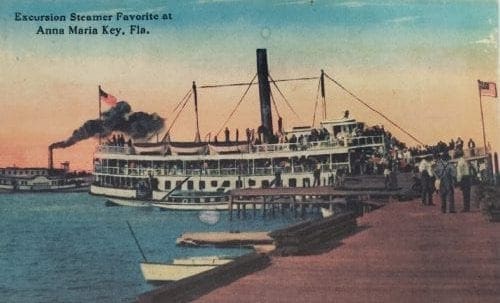
Things were different on Anna Maria (then pronounced Mar-EYE-ah) Island in the old days. Within the lifetimes of our eldest residents, there was no bridge leading to the Island, and people took a ferry across the Intracoastal Waterway. Even earlier, they arrived at the Anna Maria City Pier by steamship from Tampa. Ladies’ swimsuits included hats. Roads were made of seashells.
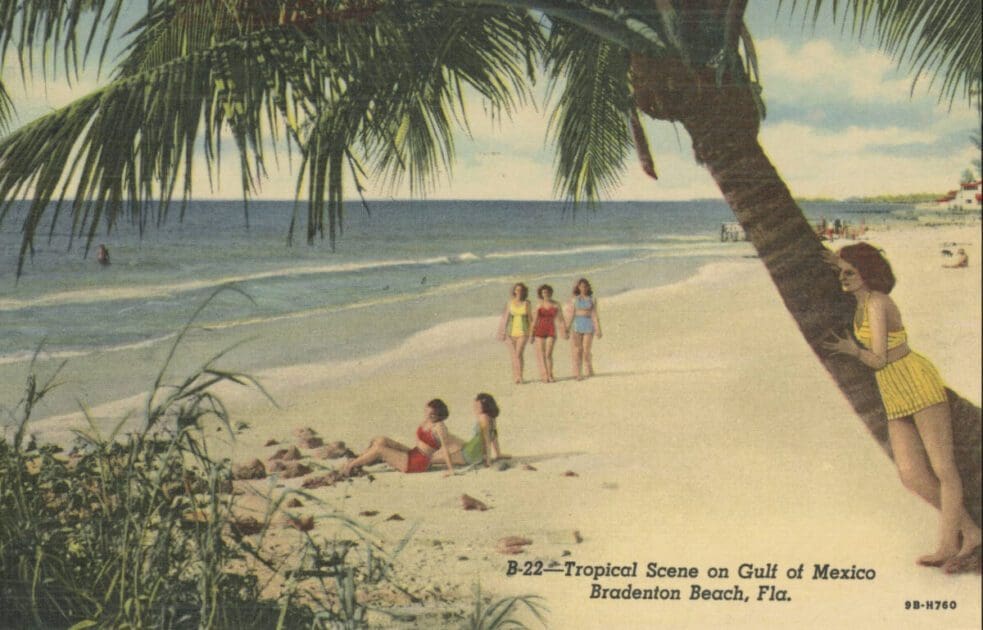
But some things remain the same, like the surf, the sand, the sun, and the postcard sentiment, “Wish you were here.”

Romie Hall seeks some shade on Anna Maria Island circa 1947-48, posted by her daughter, Toni Herdman, on the “Florida, See it Like a Native” Facebook page.

Romie Hall seeks some shade on Anna Maria Island circa 1947-48, posted by her daughter, Toni Herdman, on the “Florida, See it Like a Native” Facebook page.

Anna Maria Beach walk from Tampa Bay to Gulf of Mexico, postmarked March 30, 1912

Anna Maria Beach walk from Tampa Bay to Gulf of Mexico, postmarked March 30, 1912

Gulfside bath house, Anna Maria Beach

Gulfside bath house, Anna Maria Beach

Commercial fishermen, Anna Maria Island

Commercial fishermen, Anna Maria Island

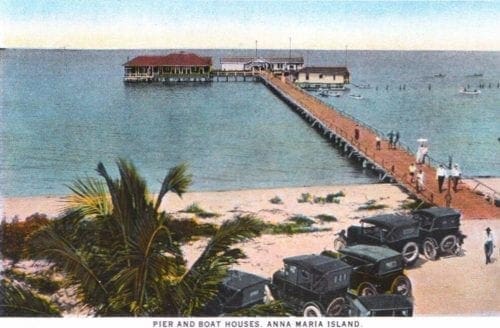
Anna Maria Pier, Anna Maria

Anna Maria Pier, Anna Maria

Mira-Mar Pavilion, Bradenton Beach

Mira-Mar Pavilion, Bradenton Beach

Anna Maria Island Bridge, Bradenton Beach

Anna Maria Island Bridge, Bradenton Beach

Bradenton Beach business district

Bradenton Beach business district

Anna Maria Beach surf bathing

Anna Maria Beach surf bathing

Manatee Beach, Holmes Beach

Manatee Beach, Holmes Beach

Bridge Street, Bradenton Beach

Bridge Street, Bradenton Beach

Anna Maria City Pier

Anna Maria City Pier

Rod and Reel Motel, Anna Maria

Rod and Reel Motel, Anna Maria

Roser Church, Anna Maria

Roser Church, Anna Maria

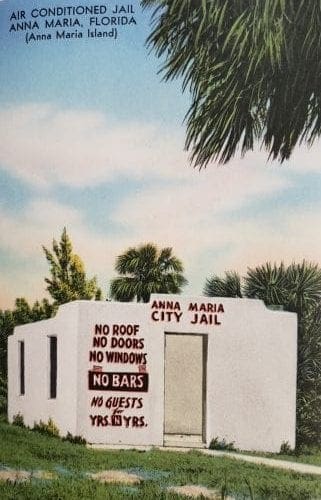
Air-conditioned jail, Anna Maria, Florida

Air-conditioned jail, Anna Maria, Florida

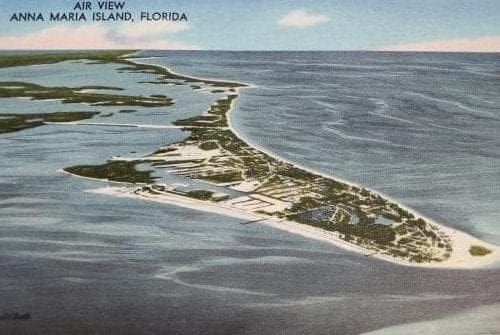
Air view, Anna Maria, Florida

Air view, Anna Maria, Florida

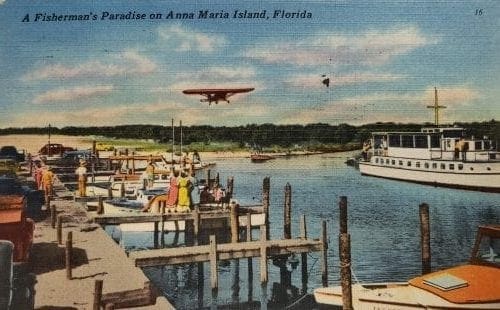
A Fisherman's Paradise on Anna Maria Island, Florida

A Fisherman's Paradise on Anna Maria Island, Florida

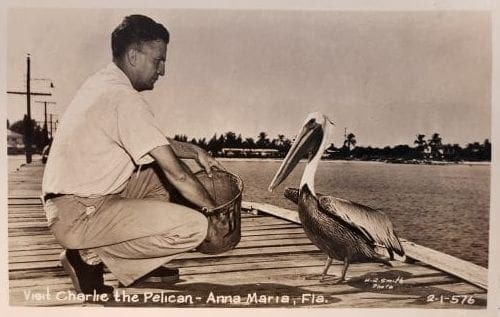
Visit Charlie the pelican, Anna Maria, Florida

Visit Charlie the pelican, Anna Maria, Florida

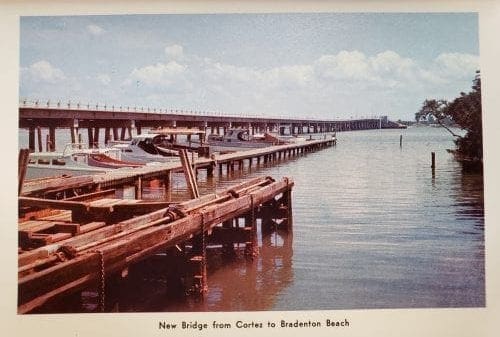
New bridge from Cortez to Bradenton Beach

New bridge from Cortez to Bradenton Beach

Our mail man, Anna Maria Island, Florida

Our mail man, Anna Maria Island, Florida

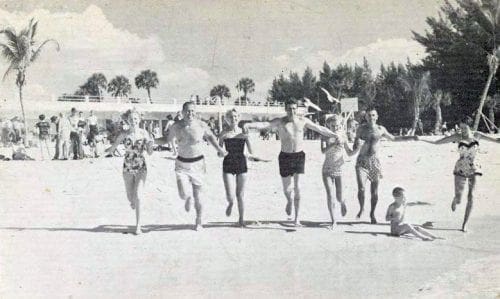
Popular fun on the beach, Anna Maria Island, Florida

Popular fun on the beach, Anna Maria Island, Florida

Tropical view, Anna Maria Island, Florida

Tropical view, Anna Maria Island, Florida

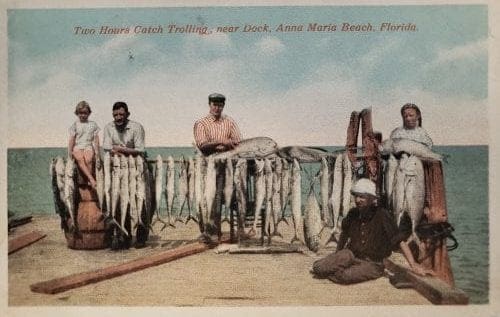
Two hours catch trolling, near dock, Anna Maria Beach, Florida

Two hours catch trolling, near dock, Anna Maria Beach, Florida

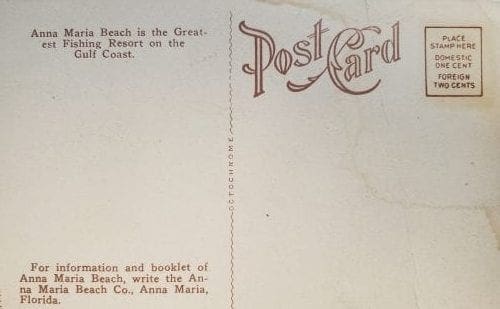
Anna Maria Beach is the greatest fishing resort on the Gulf Coast

Anna Maria Beach is the greatest fishing resort on the Gulf Coast

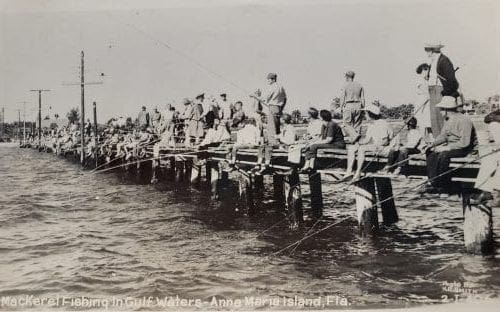
Mackerel fishing in Gulf waters, Anna Maria Island, Florida

Mackerel fishing in Gulf waters, Anna Maria Island, Florida

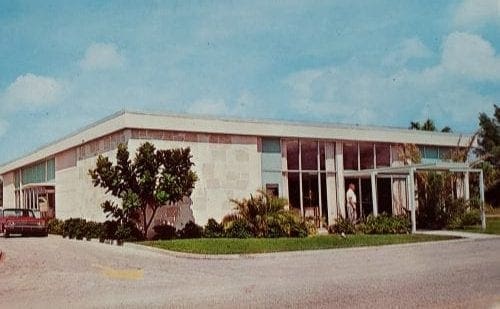
Island Bank, Holmes Beach

Island Bank, Holmes Beach

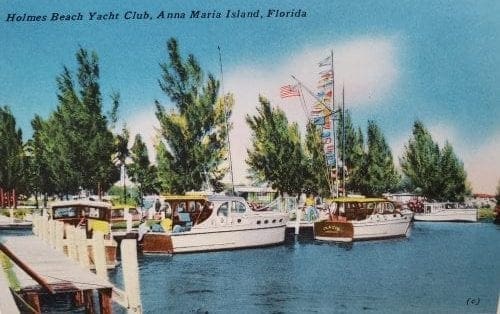
Holmes Beach Yacht Club, Anna Maria Island, Florida

Holmes Beach Yacht Club, Anna Maria Island, Florida

Fishing pier, Anna Maria Island, Florida

Fishing pier, Anna Maria Island, Florida

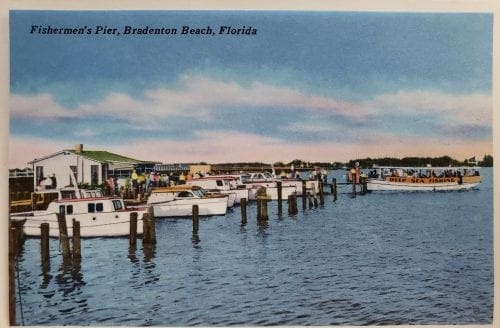
Fishermen's Pier, Bradenton Beach, Florida

Fishermen's Pier, Bradenton Beach, Florida

Excursion steamer Favorite at Anna Maria Key, Fla.

Excursion steamer Favorite at Anna Maria Key, Fla.

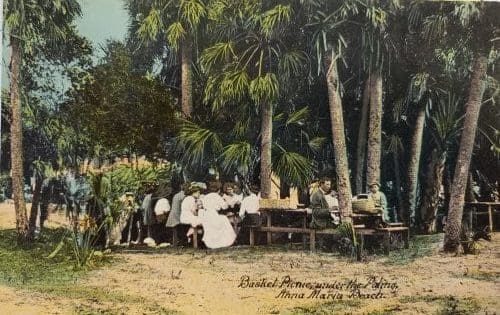
Basket picnic under the palms, Anna Maria Beach

Basket picnic under the palms, Anna Maria Beach

Bradenton Beach Tourist Guide cover

Bradenton Beach Tourist Guide cover

The Holmes Beach airstrip was located in the present-day city field.

The Holmes Beach airstrip was located in the present-day city field.

Some postcards donated to the Manatee County Historical Records Library by Rev. Herbert Loomis and in the private collection of Keith Otzen.