Tag: Reel Time

Volunteers clean up Egmont Key

Volunteers clean up Egmont Key

Egmont Key, located just north of Anna Maria at the mouth of Tampa Bay, has a rich and diverse history. For centuries, it was a landmark for native peoples and Spanish explorers on Florida’s Gulf coast.

Due to increased shipping in the area and numerous groundings, a lighthouse was built in 1848. When the Great Hurricane of 1848 struck that September, tides 15 feet above normal washed over the island and damaged the lighthouse.

Another storm did additional damage, prompting Congress to appropriate funds to rebuild the lightkeeper’s residence and the lighthouse. In 1858, the lighthouse was reconstructed to “withstand any storm.” That lighthouse stands today as one of Florida’s oldest.

During the Third Seminole War in the 1850s, the island was used as a military outpost. In the Civil War, Confederate forces briefly occupied it before Union troops took control. During the Spanish-American War of 1898, Egmont gained importance when Fort Dade was constructed as a massive coastal defense system designed to protect Tampa Bay. Gun batteries, brick roads and buildings which thrived with military activity were abandoned by 1923.

Egmont’s history also had an ignoble chapter when it served as a holding site for Seminole Indian prisoners before their forced removal west. Today, most of the island is a National Wildlife Refuge and state park, preserving both its natural beauty and historic ruins while also providing sanctuary for birds, gopher tortoises and sea turtles.

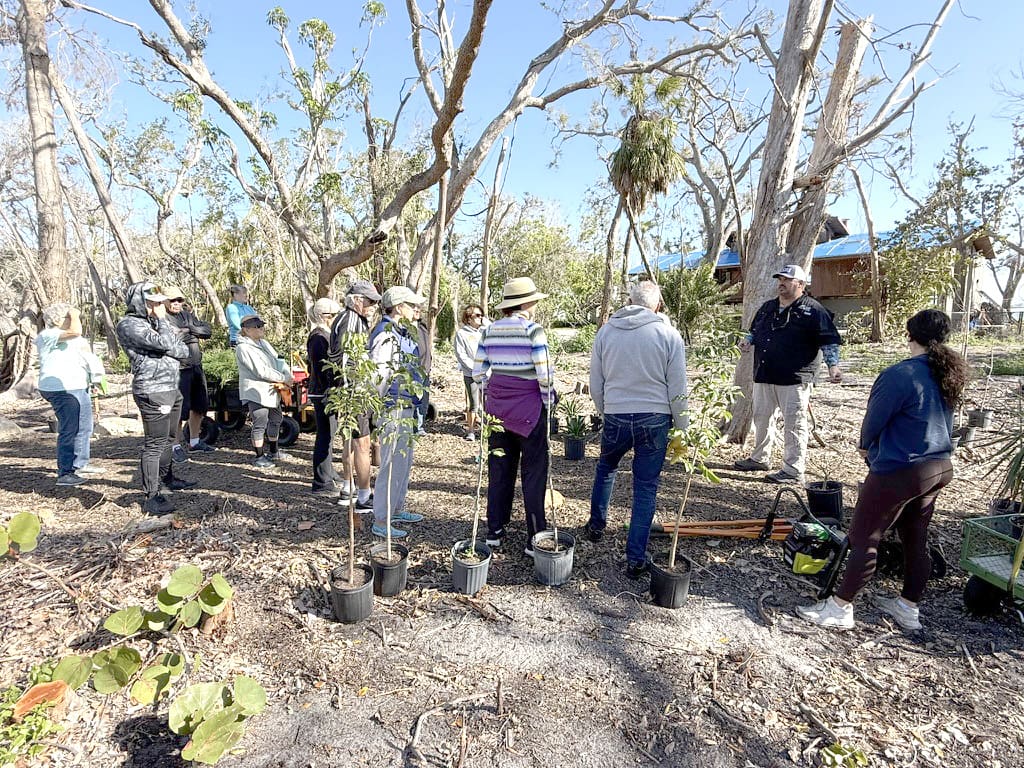
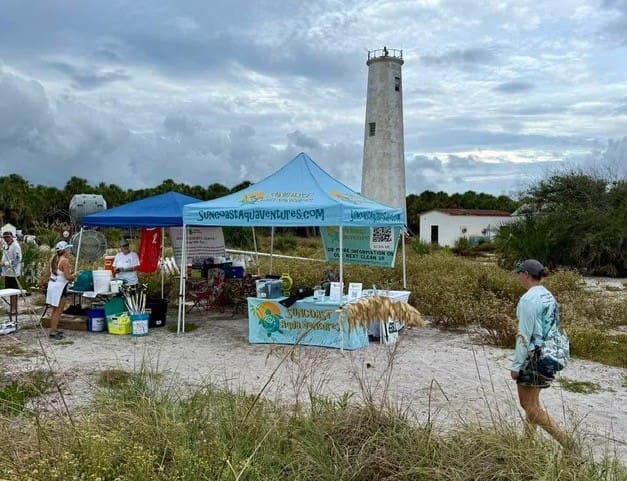
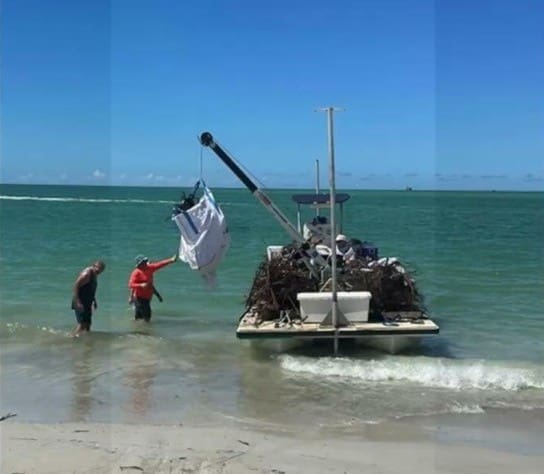
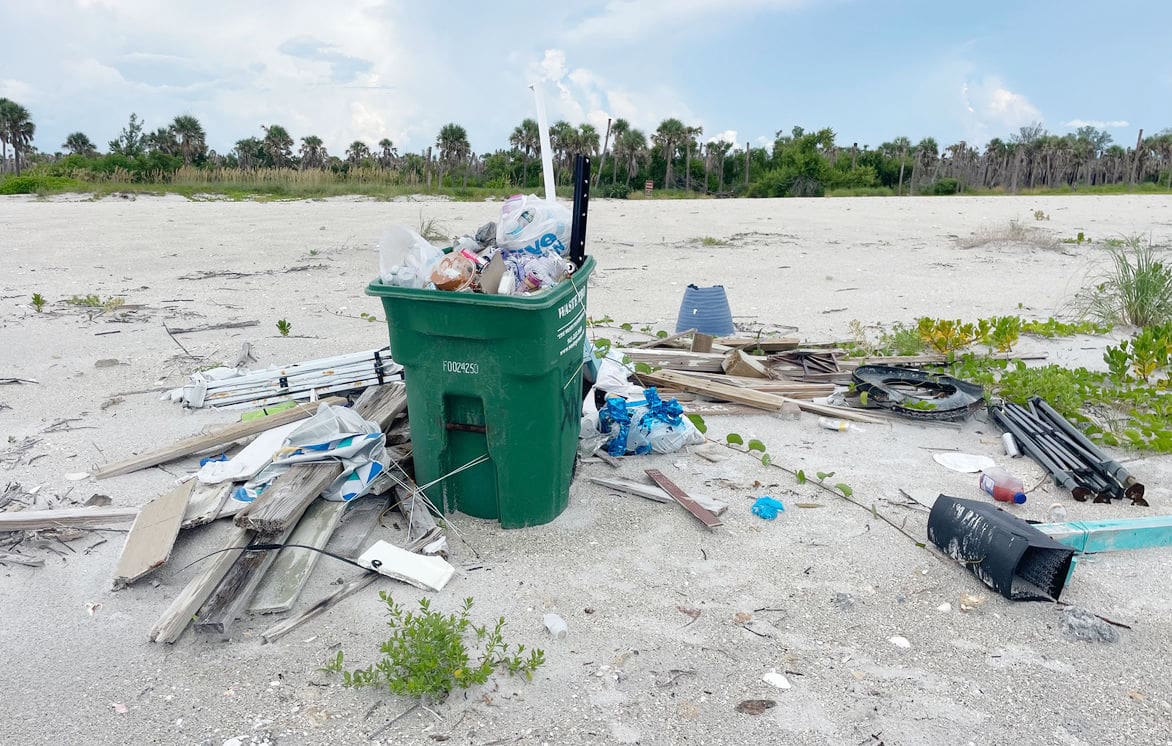
On Sept. 27, Suncoast Aqua Ventures (SAV) helped preserve this rich ecosystem by conducting the Great Egmont Key Cleanup. Suncoast Aqua Ventures, along with The Tampa Bay Estuary Program and Egmont Key Alliance, had collaborated for three months to plan this large scale and desperately needed cleanup. Most of the debris removed from the island was storm-related debris washed ashore during Hurricanes Helene and Milton last year. In total, volunteers removed over 23,240 pounds of debris.

Volunteers clean up Egmont Key
The Great Egmont Key Cleanup netted more than 11 tons of debris and trash. – Rusty Chinnis | Sun

Unfortunately, seeing the piles of debris people had collected and staged over the past year in anticipation of the cleanup prompted some weekend visitors to add their daily picnic trash to these piles. Seeing the bins, upright with trash in them, gave the illusion that there was a regular trash pick out there, which there isn’t! In fact, there have been no park rangers or harbor pilots living on the island since the storms. Their small communities were completely destroyed.

Visiting the Island frequently and watching these piles grow week to week prompted SAV President Cheryl Huntsinger to start reaching out to Tampa Bay area partners for assistance. The three organizations came together with local citizens, including many from Anna Maria, to pull off the largest one day cleanup of Egmont Key in many years.

Over 250 volunteers registered to ride out on three different ferries, including Anna Maria Dolphin Tours. In addition, over 100 people came on private vessels. Numerous partners provided support with dumpsters, barges and boats to haul the trash and two boats with cranes to lift the heavy bags from the beach to transport vessels. SAV provided all the supplies needed, transportation for over 120 passengers and a fantastic free lunch as a reward for our volunteer efforts.

A great deal of the cleanup was accomplished with volunteers filling three dumpsters and boats making a total of nine trips to the mainland with trash. Unfortunately, building sea conditions in the afternoon halted progress, so there are still piles of debris on the beach that needs to be removed. SAV is watching weather conditions and coordinating with their partners to return and remove the remaining debris from the west side of the island.

SAV also hopes to be allowed access to the bird sanctuaries before nesting season starts again. These areas were off limits to volunteers but needs attention as well.

All in all, it was a great day for everyone who participated. Islanders who enjoy Egmont are encouraged to take their trash home with them and help remove the remaining debris.

It’s for the birds

It’s for the birds

I was reminded this past week that it’s a good time to remind anglers about the importance and protection of seabirds. Knowledgeable anglers know that these birds are valuable, but some beginning anglers (I’m being kind) should learn a few valuable lessons early on to keep them safe.

Besides being an integral part of the marine ecosystem and beautiful to watch, they help us locate fish. An observant angler notices where birds congregate on a low tide. They know the birds are feeding on marine organ­isms that fish will seek out when the flat is covered with water on a rising tide. They point us to schooling fish, often indicating action much farther away than we can see. Anglers who fish the coastal waters of Florida will invariably come into contact with the seabirds that inhabit local waters. The encounter can be deadly to seabirds if anglers don’t know the basics of caring for them.

The inspiration came as I was fly casting to Spanish mackerel (my target) and blue runners (an incidental but fun catch). My top water gurgler attracted observant birds on almost every cast, and I couldn’t take my eye off them for 10 seconds. Around me, a couple of other boats were chumming, and I noticed birds picked up hooked baits a couple of times.

The fall run is just beginning, and a lot of effort will be put into fishing for breaking fish on the beaches. The encounter can become deadly if a bird becomes entangled in fishing line and takes some of it back to their roosts. The birds are also put in harm’s way when they come into contact with fishing line that careless anglers leave in the water and in the mangroves from an errant cast.

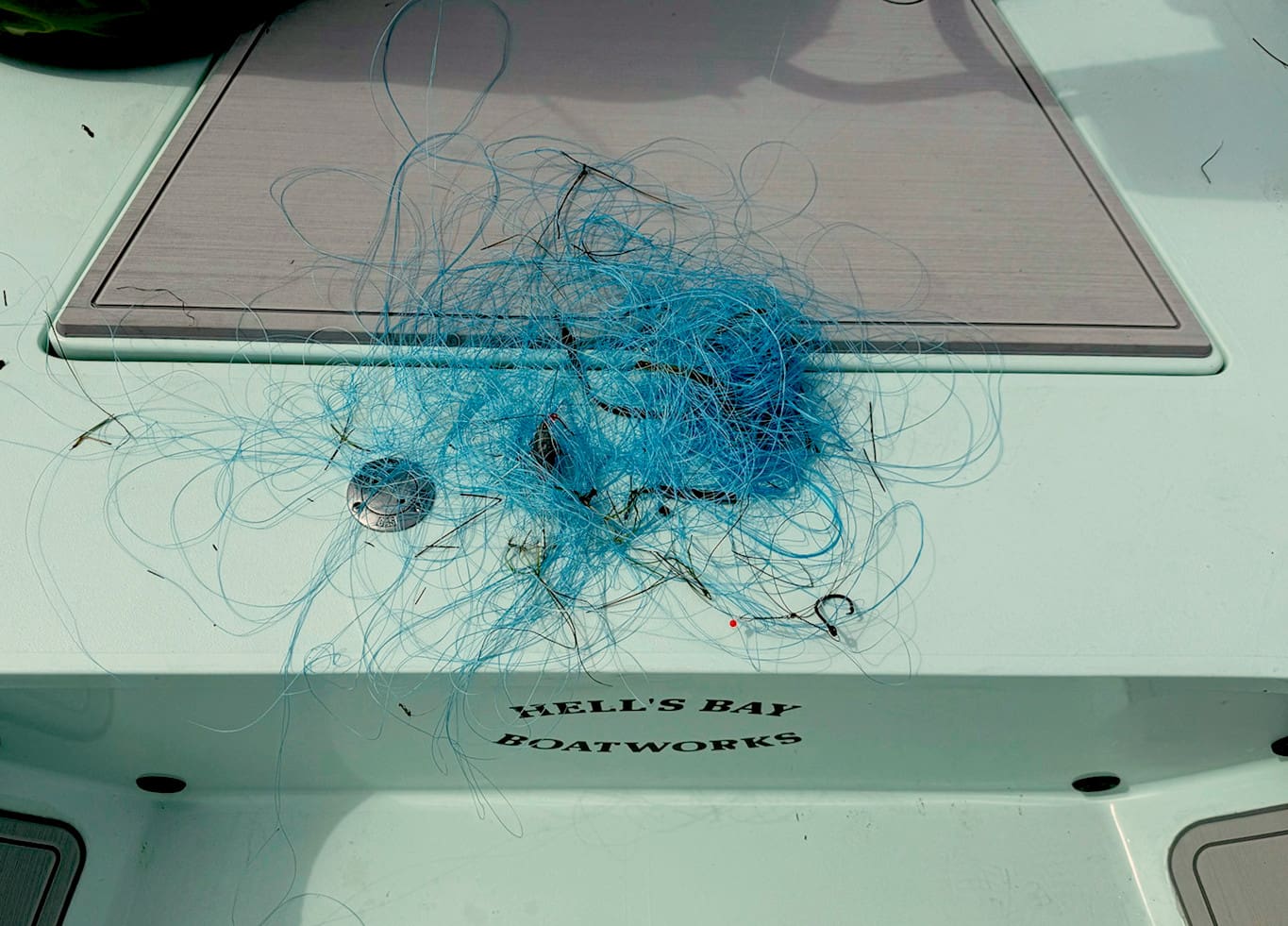
That same day as I was waiting for the tide to change and drift­ing the west side of Jewfish Key, I noticed a braided fishing line trailing behind me. After about 30 minutes, I managed to retrieve 100-plus yards of bright blue 100-plus-pound line. It was chilling to imagine how many birds and other wildlife that might have impacted.

If a bird is hooked while fishing, it’s important to bring them to the boat with a properly set drag to prevent the line from breaking. It can be a death sentence when they return their mangrove roost trailing it. Eventually, most anglers will hook a bird, even if they’re being diligent to avoid them. When it does happen, work them to the boat carefully as you would a big fish, then throw a towel over their head to calm them before removing the hook.

Care should be taken with all birds, especially ones that have sharp beaks. They don’t know you’re trying to help them. Handle birds carefully as they have very light, hollow bones. Cau­tiously remove the line from their body, wings and feet and check them thoroughly before releasing them. If you see a hooked or tangled bird in an active rookery during nesting season, it’s important not to approach them as their young may be startled and fall from the nest.

You can reduce the chance of hooking birds by fol­lowing a few simple rules. First, never feed birds, as this will teach them to look for a handout, a practice that is dangerous to the birds. Second, while you’re fishing, keep an eye out for birds that might be hover­ing, getting ready to dive on your offering.

Taking care of the wildlife that inhabit our coastal estuaries is everyone’s and especially angler’s responsibility. If you see a bird in distress and can’t help it, call Save Our Seabirds at 941-388-3010 or Audubon Coastal Island Sanctuaries at 813-623-6826.

Manatee County joins SB 180 lawsuit

Manatee County joins SB 180 lawsuit

If you don’t know about Senate Bill 180 and its implications to anglers who fish Sarasota Bay and Anna Maria Sound, let me explain. The bill prohibits counties and municipalities (including Manatee County and the three Anna Maria Island cities) from adopting new, more restrictive land use or zoning regulations, or imposing development moratoriums, within certain timeframes after a hurricane.

This applies even if the changes aren’t related to recovery from the storm, which is the original intent of the law. It becomes draconian because the new state law allows anyone to sue local governments if they violate this provision – creating a chilling effect on local planning and resilience efforts.

As mentioned, this law was originally conceived to protect homeowners af­fected by the twin hurricanes: Helene and Milton. The law extends the life of existing development permits, streamlines the permitting process for rebuilding, waives or reduces certain fees for like-kind reconstruction and allows temporary accommodations for displaced residents. It would also provide clarity and uniformity throughout the state so property owners and builders have foreseeable rules to rely on after disasters and it will help keep homeown­ers from getting bogged down in permit­ting or zoning delays during recovery.

Unfortunately, as the bill moved through the state legislature, ad­ditional land use restrictions placed on local governments were added. These changes prevent counties and cities from adopting new development regulations or moratoriums after a disaster (unless directly tied to recovery) and give “any person” the right to sue local governments that try to impose stricter restrictions.

The additions went well beyond the original disaster-recovery intent and shifted the law into the realm of limit­ing local control of overgrowth, zoning and environmental protections.

So how might that affect anglers? In the last election, Manatee County resi­dents made it clear that the wetland protections removed by the former commissioners were not popular. That was evidenced by the voters’ removal of the county commissioners seeking reelection who voted to remove the county’s setbacks requirements that were more restrictive than those allowed by state statutes.

When the current commission recently considered voting to reinstate the more restrictive wetland setback requirements, they were threatened by the implications of Senate Bill 180 – which State Sen. Jim Boyd and State Rep. Will Robinson Jr. both voted for earlier this year.

I’ve heard from a number of sources that Manatee County developer Pat Neal may have been an influential and key figure behind the more restrictive land use provisions included in SB 180. I contacted Neal to give him a chance to respond but he did not reply.

In response to this change, a coalition of local governments that includes Manatee County, Orange County and the cities of Alachua, Deltona, Stuart, Weston, Windermere, Naples, Delray Beach and others are joining in the lawsuit that will challenge the law created by SB 180.

On Sept. 2, county commissioners voted 6-1 in favor of joining the lawsuit, with Commissioner Mike Rahn voting no. I was at the meeting and numerous citizens showed up to support the commission in joining the suit. No one spoke in opposition to joining the suit.

Political maneuvers like this hit at the very heart of the democratic process and threaten to negate the votes of citizens working to protect the environment in their region by encouraging sustainable building practices. Unfortunately, it appears that greed is attempting to prevent citizens from enacting common sense rules and regulations at the expense of future generations.

I would encourage everyone who wants to protect the integrity of our local marine environment to write letters to elected officials demanding common sense laws.

Contact Senator Boyd by email at boyd.jim.web@flsenate.gov, by letters sent to his Bradenton district office at 717 Manatee Ave. W., Suite 100, Bradenton, Fl. 34205, or by phone at 941-742-6445.

Contact Representative Robinson by email at will.robinson@flhouse.gov, by regular mail sent to his Bra­denton district office at 1051 Manatee Ave. W., Suite 305, Bradenton, Fl. 34205-7801 or by phone at 6941-242-8430.

I’ll continue to update readers on the progress of the lawsuit as it unfolds.

Reel Time: The Great Egmont Key Cleanup

Reel Time: The Great Egmont Key Cleanup

Suncoast Aqua Ventures’ (SAV) work can be summed up in three words: “Dive. Preserve. Serve.” But this group of divers does so much more. Their work in cleaning up our coastal islands, shorelines and underwater reefs cannot be overstated. Now Anna Maria residents have the opportu­nity to join in a cleanup in their own “backyard.”

On Saturday, Sept. 27, they will set their sights on Egmont Key, which is still littered with trash after the 2024 hurricane season. Join in an effort to clean up debris and restore this treasured island! This event is not like the usual beach cleanups they host. This cleanup will be focusing on removing large debris from the interior and shoreline of the island and hauling it away on barges. Volunteers should be aware that there are no services, including bathrooms, on the island. Volunteers must be 16 years or older and physically able to withstand four-plus hours in the Sep­tember heat. SAV will have a reprieve station set up at check-in where volunteers can grab some shade, Gatorade, snacks and water refills.

Volunteers can meet on Egmont Key with their own boat or get a free ride to the island from one of the follow­ing vessels:

  • Hubbard’s Marina Ferry (departing from Fort De Soto, Tierra Verde, Florida);
  • Riverside Tours (departing from Regatta Point Marina, Palmetto, Florida); and
  • AMI Dolphin Tours (departing from Waterline Villas and Marina, Anna Maria Island, Florida).

Registration aboard the ferries is free but limited, so sign up each individual in your party as soon as possible. Volunteers will not be able to board without a valid registra­tion. To board the ferry, you must be physically capable of disembarking from a semi-mobile ramp on the shoreline or climbing down a ladder. Information about meeting time and other ferry logistics will be communicated through email, so be sure to register with an email that you check regularly.

Free lunch and snacks will be provided for all volunteers as payment for their hard work.

For more information, email Cheryl Huntsinger at suncoastaquaventures@gmail.com or Sheila Scolaro at sscolaro@tbep.org.

For more information about Egmont Key, visit: https://www.floridastateparks.org/parks-and-trails/egmont-key-state-park.

Opportunity meets preparedness

Opportunity meets preparedness

Whether you’re fishing for reds, snook and trout in Sarasota Bay or Anna Maria Sound, stalking bonefish in the Bahamas, stripers in the Northeast, or casting to rising trout on a mountain stream in Montana, you’ll be spending more time anticipating the adventure than actually fishing. That’s the perfect time to prepare so you’ve addressed the things you have control over in advance. When you do get on the water, you will inevitably encounter unpredictable forces like wind, rain, clouds and any number of other conditions.

With so many unavoidable pitfalls facing anglers, there is often a propensity to just hope for the best and then take what you get. How many of us have waited for months to take that trip of a life­time, had perfect conditions and then found our casting abilities no match for our prey? The old saying that luck is “opportunity meeting preparedness” is especially true for fishers. Why not develop the mindset from the beginning that everything we do (on the water and off) contributes to turning odds into opportunities?

Preparation comes in many forms, and the most important for anglers are:

  • Short, numerous practice sessions throughout the year;
  • having tackle in top form; and
  • knowing how to tie proper knots and choose baits that imitate your prey’s food.

Casting skills are developed over a lifetime, and practice should not be saved for fishing trips, or even the days leading up to a trip. The best practice is on grass, throwing to targets placed at different distances and angles. If you are a fly fisher, don’t make the mistake of judging your casting ability by how long a line you can throw. Learn to make a tight, accurate 40-foot cast first, and then work on distance.

While I’ve been blessed to learn from some of the industry’s leading experts, I’ve found the best instructor, after mastering the basics, is experience. As a fly fisherman, one of the first and most important lessons I’ve learned is to see the wind as friend, not foe. If you’re new to the game, don’t put off a fly fishing trip because the wind is blowing. On my first trip to the Bahamas I was face to face with a large school of bonefish just 40 feet away into a 25 mph head­wind! All those days of avoiding the wind meant that I didn’t have the skills to get the job done! Now I value the windy days because I know that if I can make the cast, I can benefit from the conditions. Fish are far less spooky and will more readily take the fly or lure when the waves riffle the surface. The waves also provide windows into the water. If you can make an accurate cast into a 15-knot wind, you’ll be golden on those days when the wind is in your favor.

Being mentally prepared and employing techniques like visualization gives you the ability to form a mental picture of the outcome you desire by seeing the quarry in exquisite detail and imagining yourself making the perfect presentation, setting the hook and feeling the line and the pressure on the rod as the fish streaks for the horizon. The athletes in all sports know how to plan and visualize their outcome. They’re prepared when opportu­nity presents itself as “luck.”

Pine Island Redfish: Sustainable aquaculture

Pine Island Redfish: Sustainable aquaculture

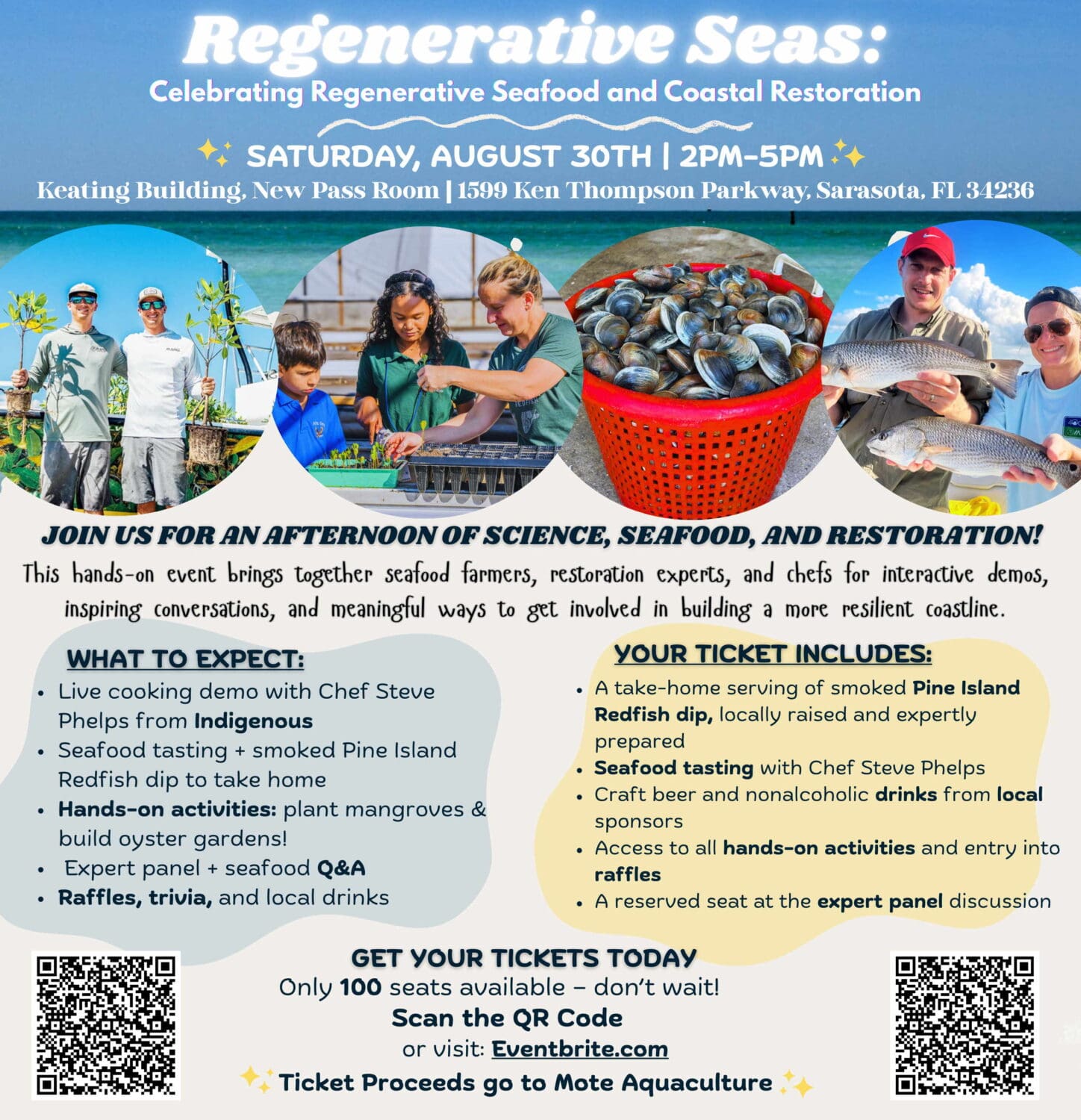
When I first heard about Pine Island Redfish, I contacted owner Megan Sorby about a tour. I had assumed that the operation was on Pine Island but when I reached out to Megan by phone, she informed me that they were located at the Mote Aquacultural Park in Sarasota, refining their operations while they built out their vision on Pine Island. Check out their excellent video at www.pineisland­redfish.com for an introduction to see the operation and learn about their plans.

Sorby has worked in commercial aquaculture around the world for the past 20 years.

“I actually had my first internship in the field right here at Mote Aquaculture Park and was hooked ever since,” she related. “Together with my partner, Tom, we focus on the development of new species for aquaculture, beginning with broodstock all the way through to harvest. We saw a real need for our sector to communicate our process more with the public so that seafood farming was seen as just that – farming – and something that offers great opportunity for coastal communities, working waterfronts and transparency in food supply. In that, we also wanted to be the model for how all our food systems must be for the future, which is regenerative.”

Pine Island Redfish’s intention is to produce food in harmony with the environ­ment and, when possible, in a way that gives back.

The company was founded in late 2023 by Sorby. They’re developing a land-based Recirculating Aquaculture System (RAS) on Pine Island, Florida, to sustainably farm a food fish that’s been off limits to com­mercial fishing since 2007 due to severe overfishing rightly or wrongly attributed to the blackened redfish craze of the early 2000s.

Pine Island Redfish is the first company in the U.S. to successfully farm red drum using RAS technology. In March 2025, they achieved their first commercial harvest and now their farmed redfish are available at select Publix supermarkets in Sarasota and in several regional restau­rants, including Indigenous, an elegant and trendy Sarasota eatery. The company uses the waste generated by the fish farm to grow mangroves and halophytic (salt-tolerant) plants like sea purslane that contribute to coastal restoration and ecological health.

Building on their initial success, Pine Island Redfish intends to develop a full-scale facility capable of producing around 800 metric tons of redfish annually, and growing nearly 50,000 mangroves each year.

What instantly excited me about Pine Island Redfish was the fact that their farm­ing method combines sustainable seafood production with habitat restoration, which minimizes their environmental footprint while enhancing coastal ecosystems. If suc­cessful, Pine Island Redfish could serve as a blueprint for climate-conscious aquaculture practices nationwide, eliminating concerns of organizations like Suncoast Waterkeeper with proposed local offshore operations that threaten pollution and potential negative effects on native fish stocks.

To learn firsthand from the people behind this exciting technology and to sample their product (redfish) prepared by proprietor and chef Steve Phelps of Indigenous, come to Mote Marine Labora­tory’s Keating Building on Saturday, Aug. 30 from 2-5 p.m.

Join the Great Scallop Search

Sarasota Bay Watch (SBW) is seeking volunteers for a citizen science event to collect data on shellfish, animals and seagrass in Sarasota Bay.

The Great Scallop Search will be on Saturday, August 23 from 8:30 a.m. to noon. Participation helps scientists assess the health of the bay and is part of a larger effort along Florida’s west coast to gather information on marine life and water quality.

Join the Great Scallop Search
Young volunteers proudly show the scallops they found during an earlier search. – Rusty Chinnis | Sun

Volunteers’ efforts during the search will help identify areas of interest for investigation. Using the provided scallop survey equipment, participants will set up an observation area with buoys and ropes. Volunteers then work in teams to record any sea life found within this perimeter. The event allows snorkelers to survey the study area and report their findings to a volunteer who will stay on the surface and document the observations on a data sheet. Once the observa­tion area has been thoroughly surveyed, the team will retrieve their equipment and proceed to the next site.

Kayakers will focus on very shallow areas near the shore. Working in pairs, one volunteer will snorkel while the other records data. Kayakers will be responsible for transporting their survey equipment to these locations.

Boat captains will cover deeper areas working with their designat­ed crew and snorkelers to record life on the bottom. Boat captains are responsible for transporting their survey equipment to these areas. Crew are volunteers who have a boat captain prior to the event. Snorkelers will be paired with boat captains who have additional space on their vessels, space permitting.

All participants (except boat captains) should be prepared to snorkel and must provide their own snorkeling gear.

Choose between two Scallop Search locations: North (Long­boat Key) or South (Sarasota Sailing Squadron). Upon arrival, volunteers will check in, collect their scallop survey equipment from SBW and join their desig­nated groups. Groups will receive instructions from SBW, then depart to search for scallops and return the equipment afterward. You must return to the Scallop Search location you started at to return your equipment. Lunch will be provided at the south location.

Experienced boat captains, kayakers and swimmers are preferred for this event.

Tips for participants

  • Wear heavy, closed-toed shoes that can get wet like sneakers, water shoes or boots to protect your feet;
  • Opt for clothing that covers your arms and legs to ensure comfort and protection;
  • Bring a reusable water bottle to stay hydrated and reduce waste;
  • Don’t forget essentials like sunglasses, sunscreen and a hat for sun protection;
  • Use a dry bag to safeguard your valuables;
  • Only scallop survey equipment will be provided (clipboards, ropes, buckets, etc.). Volun­teers must provide all other equipment that they need (snorkels, kayaks, fins, etc.).

Launch locations are: North location – Coquina North Boat Ramp: 1507 Gulf Drive S., Bradenton Beach; South location – Sarasota Sailing Squadron: 1717 Ken Thompson Parkway, Sarasota.

The event is one of Sarasota Bay Watch’s longest and most popular events. It is a great family fun/educational event and also a great way to get friends and family together on the water.

According to SBW Executive Director Ronda Ryan, “When people see what is in and under the water, they can relate to the need to protect this habitat. Seeing is believing!”

Scallop searches are held along the west coast of Florida during the summer months when the scallops are the largest. All the information collected during the searches is shared with scientists at the Florida Fish and Wildlife Conservation Commission.

The Scallop Search is a great example of citizen science at work and an opportunity for the public to interact with marine scientists.

Complete your online registra­tion at the event website to secure your spot and stay informed about updates.

Reel Time on The Road: The Center for Coastal Studies

Reel Time on The Road: The Center for Coastal Studies

On a trip to Cape Cod for a fam­ily wedding in July, my wife, Christine, and I were invited by Jeanne Leszczynski to tour the Center for Coastal Studies in Provincetown. Leszczynski, a friend from Longboat Key, is a longtime supporter of the Center and serves on the executive committee.

Founded in 1976 by Dr. Graham Giese, Dr. Charles “Stormy” Mayo, and Dr. Barbara Shuler Mayo, the three scientists brought together their expertise in geology and marine biology to establish a member supported nonprofit dedicated to understanding, preserving, and protecting marine ecosystems and coastal environments through applied research, education and public policy.

The Center grew from a small attic-based science program in 1971 to a 12,000-square-foot state-of-the-art marine laboratory that employs 40 staff members and is sustained by dozens of adjunct and citizen scien­tists today.

During that time the Center has branched out from wave and erosion studies to seabed mapping, whale biology, seal and fisheries monitoring, water quality monitoring, marine debris response and entanglement rescue. Some of the CCS’s premier focus is currently on whale research and includes:

  • Humpback Whale Studies: One of the world’s longest-running baleen whale monitoring programs;
  • Right Whale Ecology: Critical work studying North Atlantic right whales, a species with critically low population numbers (fewer than 372 individu­als). They see 80% of them annually in Cape Cod Bay;
  • MAER (Marine Animal Entangle­ment Response): Globally recognized whale-and-sea-turtle disentanglement team operating 24/7; they train other nations’ responders and design tools used worldwide; and
  • Marine Debris and “Ghost Gear” Removal: CCS coordinates cleanups across Cape communities, tracks trash via “Beach Brigade” volunteers and received $2.7M NOAA funding for debris recovery across the Gulf of Maine.

Another focus of the Center is on education and community engagement. They offer guided nature programs like “Science in the Harbor” aboard Dolphin Fleet boats blending sonar map­ping, marine wildlife, habitat data and coastal history. They also host public outreach events (e.g. Massachusetts Right Whale Day), winter lecture series, school programs and hands-on field walks reaching over 20,000 people annually.

The tour was led by the Center’s Development Director Sue Nickerson, who has been very instrumental in the organiza­tion’s outreach and growth. “As luck would have it” Suncoast Waterkeeper’s newest board member and the new development committee chair Tom Waite (who has a summer home in Mashpee) was able to join us for the tour.

The Center, located at Five Holway Avenue in Provincetown, houses the Hiebert Marine Laboratory and features an impressive 37-foot skeleton of a humpback whale named Spinnaker. The whale, which was found dead after being disentangled multiple times by the Center’s staff is a poignant reminder of the Center’s critical work.

During the tour we got an inside look at the Center’s current work and were hosted by the lead scientists in the different depart­ments. Everyone was impressed by the dedication of the those work­ing there and the science being done. If you’re on the Cape, a visit to the Center is an experience you won’t soon forget, one that will inspire you to be part of the effort to preserve our marine world for current and future generations.

Mangrove Rangers celebrate

Mangrove Rangers celebrate

In 2024, Suncoast Waterkeeper (SCWK) launched its Mangrove Rangers program to train local volunteers as community scientists using drones to survey and map the health of these essential coastal “forest” in vulner­able areas of Manatee County. SCWK realized the importance of educating the public and policy makers on the fact that mangroves continue to face strain from unchecked development, habitat destruc­tion, and rising sea levels.

Mangroves are essential nurseries for most commercial and recreational fisheries, are habitat for birds, maintain water quality, sequester carbon and protect coastal properties against wind, storm surges and waves generated by hurricanes. Despite their importance, mangroves continue to be strained by unsustainable coastal growth, habitat destruction, and rising sea levels.

With the generous support of the Charles & Margery Barancik Foundation, the program is now entering its second year, and the Rangers are now sharing the data from their surveys.

“Mangrove forests are among the most vital and productive ecosystems on the Suncoast.

Recognizing their importance, state law protects mangrove trees, but protection on paper is not enough,” explains Dr. Abbey Tyrna, executive director and waterkeeper of Suncoast Waterkeeper. “These ecosys­tems are under mounting pressure from development, seawall construction, sea level rise and increased runoff. Ongoing, consistent monitoring is crucial for understanding how mangroves respond to these threats and for ensuring their continuing health for future generations.”

The data was unveiled on July 26 on World Mangrove Day at a celebration party for volunteers at the Sarasota Sailing Squadron on City Island. The data, which revealed the reduced function of trimmed mangroves, offer residents, advocates and policymakers an updated picture of the health, vulnerability and extent of mangroves in Manatee County.

The hope is that by establishing real, localized data on mangrove forests, everyone can better understand what is being lost and help enact laws that better protect what remains. According to SCWK’s research, Manatee County has already lost many acres of mangroves, which are often replaced with seawalls, fill and turfgrass. While Florida’s Mangrove Trimming and Preservation Act of 1996 has curbed violations, significant gaps remain in protecting these ecosystems from further degradation.

For the Mangrove Rangers, this data is part of a broader push to move from reac­tive enforcement to proactive conservation and securing the future of Manatee County mangroves before it’s too late.

This program and its findings should be a wake-up call for local anglers on the importance of getting involved in protecting this critical habitat that is essential to preserving the future of fishing for future generations, i.e., our children and grandchildren. To learn more about the Mangrove Rangers Program, visit and consider joining and becoming a part of this forward looking work.
Learn more about the program at the Suncoast Waterkeeper website.


In fishing, as in life, just be nice

In fishing, as in life, just be nice

When was the last time you got upset when you were on the water? Was it when someone cut you off while you were poling a shoreline, or maybe when they motored up to that school of tarpon you had been positioning yourself well ahead of? Maybe it was someone who had gotten a little too close to where you’re anchored and fishing, i.e., in your “comfort zone.”

If you were like me, your first reaction might have been to get upset or even to throw your hands up and yell expletives. It took a long time for me to realize that strategy only upset me and often made the situation worse. To give you an example, I would be set up on a line on the beach waiting for tarpon when a Jet Ski would appear and run back and forth right on the line the tarpon were traveling. My first response was to get upset, throw my hands up in a one finger salute and yell something like, “Hey, ******* it’s a big Gulf of Mexico out there!” That kind of a response was most often met with a return of my salute and multiple close passes just out of casting range.

Now, I wave them over and tell them what a nice day it is to be on the water. Then I explain what I’m doing and politely ask them to stay clear of my fishing lane. Almost always they respond with an apology and explain that they didn’t realize what I was doing.

The same goes for those times when I’m fishing inshore and another angler gets in my “comfort zone.” It’s important to realize that we have no idea what’s going on with the other anglers we’re sharing the water with. They could be fishing to eat, indulging a passion, finding solace from a traumatic experi­ence, enjoying a day with friends and family, or just getting some relaxation. We all get caught up in our fishing at times and let our awareness drift as we stalk a school of fish or head to the next spot we’re going to target. Most anglers start out with areas in mind where they’ve caught fish before, and more often these days we either find someone there or nearby. All too often, this can mean that fishermen get crowded together, which has the potential to ruin everyone’s experience. There are lots of places to fish, so if you find someone else nearby, move on to another location. You may even find that you discover fish or a fishing spot you didn’t know about.

I generally hunt fish by poling in shallow water or in schools along the beaches. When I encounter another angler, I either ask them if it’s OK to pass or just give them a wide berth. Most everyone appreciates this gesture and will tell you to proceed, but sometimes they want you to stay completely away, even if there’s little chance of disturbing the action. If this is the case, I don’t argue, I just move on. Even though I don’t fish offshore, I know that many anglers work hard to find a ledge or hard bottom where they target fish and they carefully guard it, never overfishing it. One of the worst things they experience is anglers who look for spots that others are fishing. Most often they don’t have the same respect as the original angler and mark the spot on their GPS, returning later to catch every fish they can. If care isn’t taken, it’s possible to ruin a good hole by overfishing it.

Fishing schooling species like tarpon, Spanish mackerel, little tunny and kingfish requires a stealthy approach; savvy anglers work the edges of a school where they know predators patrol for prey. They understand that a careful approach is their best chance of success. Anglers who don’t know the ropes often troll right through schools of baitfish and breaking fish, causing them to sound and ruining the action for everyone. When anglers take the time to consider others on the water, everyone wins.

Fishing should be fun, and with a little consider­ation, it can be. When you’re on the water, make it a habit to stay well away from other anglers and if you encounter someone who isn’t playing by those rules, move on. Show them the courtesy they don’t show you.

Who will protect our children’s future?

Who will protect our children’s future?

Every time I hear a new angler say, “Wow, this place is paradise,” it takes me back to the early 80s when I met Capt. Scott Moore and began fishing Suncoast waters. I had much the same response so many years ago, and while this place is still a paradise, I’m all too aware of the changes I’ve seen over four-plus decades and how they’ve im­pacted the fishing and habitat that brought us here in the first place.

Those changes haven’t all been bad because prior to environ­mental regulation (1940s-70s), canal dredging, port expansion, causeway construction, spoil islands, seawalls, marina con­struction and urban runoff had contributed to an estimated loss of over 6,000 acres of seagrass in Sarasota Bay and 40,000 acres in Tampa Bay.

Neighborhoods like Key Royale on Anna Maria Island, County Club Shores on Longboat Key and Bird Key in Sarasota are just a few of the developments that filled seagrass meadows, destroyed mangroves and increased turbidity in bay waters, blocking light from remaining seagrass beds.

From the early 80s through the early 90s, recovery began with the creation of the Tampa Bay Na­tional Estuary Program (TBEP) in 1983. The start of coordinated nitrogen reduction plans began in Tampa Bay in 1987. In 1991, the Sarasota Bay National Estuary Program (SBEP) was established and in 1995, regional agencies adopted a seagrass restoration goal of 38,000 acres which was based on 1950s mapping.

Early results from these efforts included improved wastewater treatment, fertilizer and stormwa­ter regulations as well as a public and political focus on the health of local estuaries. At the peak of the recovery between the early 2000s and 2015, Tampa Bay recovered over 40,000 acres of seagrass, which exceeded the restoration goals. Meanwhile Sarasota Bay experienced a steady increase in seagrass coverage to over 13,000 acres by 2016.

During this same period, alarmed anglers organized and formed the Florida Conservation Association (now the Coastal Conservation Association), which began establishing chapters in Florida to lobby for protection of species like trout, redfish and snook. That effort began locally in 1985 with the establishment of the Manatee chapter, and in 1986 with the Sarasota chapter, the state’s fifth and sixth chapters. Those years between the early 80s and 2016 gave anglers a reason to celebrate achievements that included redfish’s designation as a protected species in 1991 and the Florida net ban in 1995.

Unfortunately, those improvements ended between 2016 and 2020 when warming waters, high rainfall, algae blooms, development pressures and hurricanes like Irma contributed to increased runoff and turbidity. That trend only intensified from 2020 to 2024 and resulted in an estimated loss of 2,000-plus acres in Sarasota Bay (a nearly 20% decline) and over 10,000 acres in Tampa Bay. While there were many factors that contributed to the loss, the 2021 release of over 200 million gallons of nutrient-rich water from Piney Point exacerbated an already serious decline.

At a time when there should have been serious measures enacted to reverse this decline, just the opposite occurred when commissioners in Manatee County voted (against the will of the citizens) to actually reduce wetland setbacks for developers. This blatant disregard of the public resulted in the replacement of commissioners that voted at the will of developers when they were up for reelection in 2024.

When the newly-formed commission attempted to reverse the rule reducing wetland setbacks, they were challenged by state agencies while the Florida Legislature was in the process of enacting SB170/HB 1515 in May 2025. Dubbed “The Mother of All Preemptions,” the bill automatically suspends any local ordinance as soon as it’s legally challenged, even before courts decide on its validity. This bill allows developers or businesses to sue local govern­ments and seek reimbursement for legal costs (up to $50,000), creating a deterrent against passing locally driven rules.

This isn’t or shouldn’t be a political issue, but it clearly shines a light on the need for every citizen to be informed about and involved in decisions being made at the local, state and national level that affect them and future generations. Call it “enlightened self interest.” The choice determines who directs the future of the natural resources that form the basis of our environmental and economic future. We either get involved and vote for leaders who protect a future for our children or let our inaction fuel the greed and power struggles that will dominate in our absence.

Invest in catch and release

Invest in catch and release

The ethic of catch and release isn’t a new concept. Even in the early part of the 20th century, far-sighted anglers could see the potential for depleted fisheries. Over the last couple of decades, I thought it should be apparent to today’s anglers that there isn’t an inexhaustible well of fish in our waters. We’ve worked to make redfish a gamefish and fought battles to limit netting while making a commitment to be better stewards by agreeing to reasonable restrictions on size and bag limits. We’ve been better educated in the press and at the docks about limiting our catch and being less concerned about catching our limit.

After all the time and energy that concerned anglers spent in the 90s and early 2000s fighting to protect our fisheries, it seemed we had “rounded a corner.” Now it’s apparent that the job is never done as an influx of anglers, loss of habitat, climate change and water quality issues continue to pressure Florida’s fisheries. This makes it even more important to educate everyone on the importance of protecting the marine environ­ment, and anglers in particular on catch and release tools.

For anglers who worked hard in the past to protect fisheries, the job is never done. It’s important that we make sure the “release ethic” continues by inspiring new generations of anglers. It’s also important to continue to educate anglers on proper release techniques so they can release fish that are out of season, unwanted or undersized. Effective tools and procedures exist to assure that when properly handled, the major­ity of fish we release will survive to reproduce and fight again.

A fish’s chances of survival will be greatest if they are played to the boat and released quickly without removing them from the water. One of the easiest ways to assure this is to flatten the barbs on hooks. If constant pressure is applied during a fight, the hook will not back out. Once the fish is at boat side, it can be easily released without ever touching it using a “dehooker.”

Use proper tackle, de-barb hooks and be prepared to release fish quickly. Fishing is a great experi­ence and deserves to be passed along to future generations. Catch and release is a good investment in a prosperous fishing future, but it’s an ethic that needs to be passed along to new generations of anglers.

Jack crevalle - the ultimate underappreciated adversary

Jack crevalle – the ultimate underappreciated adversary

Jack crevalle are often underappreciated but are one of the toughest targets an angler will encounter. These tenacious juggernauts are not sought after by most anglers.

The majority of jacks are caught by anglers fishing for trout, redfish, snook and other species. Small jack crevalle are even considered “trash” fish by many anglers. Once they hook one over 5 pounds, they usually have a new apprecia­tion of these “bulldogs” of the sea.

During the summer months, it’s not uncommon to see large schools of big jack crevalle along local beaches when tarpon fishing. They cruise in packs, pursuing schools of baitfish. While even small jacks can put up a feisty battle, larger members of the species are incredibly challenging.

A big jack on the west coast will run about 15-20 pounds and can put up an awe-inspiring fight. It’s not uncommon for a 10- to 15-pound fish to wage a long battle even on a 12-weight fly rod used for tarpon.

Over the years, I’ve come to appreciate these marauders, and while I don’t usually target them, I never turn down a cast at a big fish. When you encounter large schools of fish, the best choice of lures is a popper. There’s something about the disturbance on the surface that drives them wild. Catching one on a fly meant for a tarpon is another challenge, but there’s a trick to enticing them.

On numerous occasions, I have fished the edges of a school of feeding jacks only to have them inspect and turn down my flies. After a little experimenting, I found the “secret” was to toss the fly into the center of the school and to strip as fast as possible. The fact that the fly is surrounded by jacks seems to kick in competition and the fly is usually taken after only a couple of strips. Once the hook is set, jack crevalle make long head-shaking runs before settling into a circling pattern where they use their wide bodies to put up as much resistance as possible. The battle is usually won when the angler is able to get their heads out of the water, robbing them of much of their power. Even after an exhausting battle, they are easily revived and seem relatively unscathed by the experience.

On occasion, local anglers will encoun­ter big jacks schooled under local bridges to the Gulf. They will attack a plug, popper or other noisy lure with a ferocity that’s awe inspiring but are tough to control before they can make a run under the structure and are lost on the barnacle-studded bridge pilings.

A trick anglers can employ is having a fellow angler toss a hook-less ‘teaser” under the bridge to pull them away from the structure. Then it’s possible to get them under “control” before they can reach structure. Jacks don’t have teeth, so a heavy leader isn’t necessary, but they don’t seem to be particularly leader shy. When one is hooked, it needs to be fought just like a tarpon, with maximum pressure from the time of the take until they are ready to land. When they travel the beach, they are usually in large schools; while inshore, they are more likely to roam in pairs or small schools.

If you think jacks aren’t worth the effort, cast a popper to a school of big fish sometime and try to keep it away from them. I guarantee you’ll have a new appreciation for this underappreci­ated predator.

The apex of angling: Part two

The apex of angling: Part two

Last week we discussed the basics of fly fishing for tarpon; now we want to discuss the all-important details.

Once set up, the angler must be able to make a 40- to 50-foot cast to a location the size of a dinner plate. Placement of the fly cannot be overemphasized because tarpon will seldom vary a foot or two from their path to eat a fly.

Although there is always the rare exception, a fly must never travel in a path towards the intended target or stop when a tarpon gives chase. A tarpon’s prey species wouldn’t survive long if it moved towards its aggressor or stopped during pursuit and tarpon know it. Besides moving away from the fish, the fly must move at the proper pace and be at the proper depth. Conversely you can’t move the fly too fast, taking it out of a tarpon’s range. It’s a matter of learning to “read” the fish.

If all this wasn’t demanding enough, once a tarpon decides to eat the fly, the angler’s mettle is tested. Tarpon are not trout and attempting to raise the rod to set the hook is a cardinal mistake. Fortunately once a tarpon decides to eat the fly, there’s no need to make a lighting fast hook set. The right set is called a “strip strike” which involves letting the line come tight and immediately setting the hook with a combination of the line hand and the rod. The angler must at once work to set the hook in the cement-like jaw while being ready for the fish to bolt away from the boat.

After the initial hook set, attention must go im­mediately to clearing the line (getting the loose line off the deck). In most cases the angler has been stripping in line when the fish bites and the hook is set. That line can easily foul on the angler, the rod or the reel. The angler must take their attention from the fish to the line at their feet. By holding the rod away from your body and letting the excess line pass through the stripping hand through a circle made with the thumb and the forefinger, there is less chance of the line fouling. Once the line is “on the reel,” the hook should be set with several more strip strikes, using the rod.

If this wasn’t enough to remember, it’s critical to apply maximum pressure to the tarpon during the fight, yielding only on jumps when the angler thrusts the rod forward to relieve pressure on the line. This prevents the tarpon from breaking off if it lands on a taut line. This maneuver is known as “bowing to the king.”

It’s customary to start the engine and get as close to the tarpon as possible after the initial and subsequent long runs. This allows the angler to apply maximum pressure. If a tarpon is 100 yards from the boat, the stretch of the line makes it impossible to apply any real pressure.

If you’re looking for a good jump shot, here’s a great tip: When a tarpon makes any long run, motor to it, applying only enough pressure to make sure the hook doesn’t dislodge. As soon as you are in place, frame the shot you want and then have the angler apply maximum pressure. Most times the tarpon will make a jump that’s close enough to the boat to get the angler and the fish in the shot. It’s not a sure thing, but when it works it can present an awesome photographic opportunity.

Finally, don’t try and rush the tarpon when it gets near the end of the fight. Keep the pressure on but don’t clamp down and try to force the fish to the boat. Catching a tarpon on the fly is a challenging endeavor, one of angling’s ultimate tests, and well worth the effort when you finally get that first fish boatside for a photograph.

Related coverage:
The apex of angling: Part one

The apex of angling

The apex of angling

Tarpon, the premier gamefish that swim local waters in late spring and summer, can weigh over 200 pounds and average from 80-100 pounds. While most anglers pursue them on conventional tackle, a grow­ing number of fly fishers are targeting them in Tampa Bay along the shallow Gulf coast and the local sandbars that bookend the local passes. Tarpon on fly tackle isn’t a game of numbers and the anglers who pursue them often spend hours on the bow in the hot summer sun for a chance at a hookup.

Fly tackle should be stout enough to challenge these powerful gamefish that are renowned for their spectacular aerial acrobatics and long fast runs. Serious anglers hoping to land one opt for an 11- or 12-weight outfit and carefully tied leaders with 60- to 80-pound bite tippet. While it might seem like a difficult task to land a tarpon on the fly, someone who knows the limits of their tackle can actually land a tarpon in a surprisingly short time. The key is to apply maximum pressure from the hookup and never let up. Too many anglers “baby” their tarpon in a misguided attempt to land them. The truth is that the longer you fight a tarpon the better chance you have of losing them.

A properly tied tarpon leader usually runs between 10-12 feet and is tapered. It includes a class tippet from 16-20 pounds that is doubled at both ends to soften the (shock) impact of the larger leader (40-60 pounds) it’s tied to. Flies vary from the classic splayed feather “Key’s” style to more complex designs like the “Toad,” and the wildly popular Palolo worm fly. Although the worm hatch is a Florida Keys phenomenon, tarpon everywhere seem attracted to them. This fly and many others are best presented to a tarpon with a two-handed strip. Some fly anglers are not concerned with actually landing a tarpon, preferring to just enjoy the hunt, the hook up and the jumps that usually follow the hook set. They use light bite tippets which allow the tarpon to work through the leader with their abrasive mouths. The key to getting the bite is a properly tied fly that tracks naturally and the accuracy of the cast. The fly must be placed perfectly, move in a precise direction relative to the fish and be at the proper (fishes’) depth. Even when all of these factors come together, there’s still about a 50% chance that the tarpon will reject the fly.

Patience is another critical factor when fly fishing for tarpon. The most successful anglers find the edge of a sandbar or other underwater feature that tarpon track, deploy a release anchor in casting range and wait. Sometimes tarpon come at a steady rate, but just as often there are long periods of time when the only thing to look at is the water and the bottom. This really separates the great anglers from the good anglers. There are times when you need to move but knowing when and where is a skill that is developed, if ever mastered. There are times when poling might be more effective but experience has taught me to only move when a school of fish requires a short distance off anchor for a shot. Next week: Part Two.