Tag: fishing

Reel Time: Angler’s action guide

I’ve written a lot lately about the critical issues facing our local waters and the need for anglers (everyone really) to get involved in efforts to protect them. What does it mean to get involved? How can you best accomplish your goals? Good questions. I realized late in life the power and necessity to make my voice heard and exercise my power at the polls. That’s why I wanted to share the information I’ve gleaned by asking those very questions.

Complaining about something we have some control over and doing nothing about it works against your interests. Unfortunately, inaction often becomes glaringly apparent when it’s too late. Learning how to exercise your rights effectively and efficiently is more critical than ever.  Here are a few ways I’ve found to be efficient and links you can use to get your voice heard.

Reel Time
A lyngyba algae bloom stretches from the Manatee River to Perico Island on Monday, May 3. Capt. Justin Moore | Submitted

Write letters. I’ve found writing letters to the editor of the local newspapers is a terrific way for the average citizen to be heard. Chances are the people who need to hear what you’re saying are paying attention. Locally I submit letters to the Anna Maria Island Sun, The Observer Group, The Bradenton Herald and the Sarasota Herald-Tribune. Each of these same papers may allow you to submit a guest editorial. Also consider writing letters and perhaps asking for a meeting with a legislator.

Attend meetings and speak out. The slogan, “Think globally, act locally” is powerful and locally perhaps the most effective way to make a real difference. Attend local commission meetings and either speak in person or have your comments read to commissioners. Check on how to do this by using search terms like address the Anna Maria  (substitute your city) City Commission. The same goes for Manatee County or whatever county you may reside in. If you’re concerned about an issue that affects you and your children’s future and you don’t act, there’s one thing you can count on – others will be making the decisions based on interests that might support them financially but have a negative effect on you.

Nothing makes that point as dramatically as the recent debacle at Piney Point where inaction over decades led to the dumping of 215 million gallons of phosphate process water containing 10 times the nitrogen of raw sewage.

I think you’ll find taking action is empowering. By taking action you’ll soon realize that you have a voice and that voice has power. But only if you use it.

Reel Time: Get ready and get involved

Reel Time: Get ready and get involved

Tarpon were the sirens that lured the first tourists to Florida, and their mystique is still in full sway today.

While fly fishing for tarpon holds a mystique of its own, the vast majority of anglers pursue them with conventional tackle. The go-to bait for spin anglers is a live crab. Small blue crabs can be purchased at most bait shops during tarpon season and pass crabs can be dipped from the local passes on a falling tide. Other effective baits include pinfish, threadfin herring and pilchards. Artificial lures like the DOA Bait Buster and the 4- and 6-inch shrimp, jigs and even top water plugs can be effective.

Patience is a critical factor when fishing for tarpon, especially when fly fishing. The most successful anglers find the edge of a sand bar or other underwater feature that tarpon track, anchor in casting range and wait. Sometimes tarpon come at a steady rate, but just as often there are long periods of time when the only thing to look at is the water and the bottom. This really separates the great anglers from the good anglers. There are times when you need to move but knowing when and where is a skill that is developed, if never mastered.

Once set up, the angler must be able to make a 40- to 50-foot cast to a location the size of a dinner plate. Placement of the fly cannot be overemphasized, because tarpon will seldom vary a foot or two from their path to eat a fly. Although there is always the rare exception, a fly must never travel in a path towards the intended target. A tarpon’s prey species wouldn’t survive long if it moved toward its aggressor, and tarpon know it. Besides moving away from the fish, the fly must move at the proper pace, be at the proper depth and never slow down when a tarpon is tracking it. Conversely, you can’t move the fly too fast, taking it out of a tarpon’s range.

Conventional anglers usually look for rolling fish in the near-shore Gulf and motor well ahead of them to intercept their path. Trolling motors can be effective for following a school in deep water but will spook them in the shallows. Knowledgeable guides that have “mastered” multiple presentations to a school of moving fish provide their clients some spectacular results. One thing that all tarpon anglers should practice is courtesy. Often a boat has been working long and hard to get properly set up for a shot and a boat running up on the fish will spoil the day for everyone.

Fortunately, once a tarpon decides to eat, there’s no need to make a lightning-fast hook set. The right set is called a “strip strike” in fly fishing, which involves letting the line come tight and immediately setting the hook with a combination of the line hand and the rod. Conventional anglers should also have the patience to let the line come tight before attempting to hook the fish. Then the angler must at once work to set the hook in the cement-like jaw while being ready for the fish to bolt away from the boat. Tarpon are not trout, and attempting to raise the rod to set the hook is a cardinal mistake.

After a fly angler sets the hook, attention must go immediately to clearing the line (getting the loose line off the deck). In most cases, the angler has been stripping in line when the fish bites and the hook is set. That line can easily foul on the angler, the rod or the reel. Disciplined anglers (successful ones) take their attention from the fish to the line at your feet. They know to hold the rod away from their body and let the excess line pass through their stripping hand with a circle made with the thumb and the forefinger. Once the line is “on the reel,” the hook is set again with several more strip strikes. Conventional anglers often use circle hooks, which don’t require a hook set. Conventional hook sets also require letting the line come tight with the addition of several quick jabs to set the hook. In all cases, the tarpon cannot be aware of the angler before the hook set.

While it’s important to exert maximum pressure on the tarpon during the fight, anglers must yield on jumps. On the jump, the standard maneuver is to thrust the rod forward to relieve pressure on the line. This prevents the tarpon from breaking off if it lands on a taut line. This maneuver is known as “bowing to the king.”

It’s customary to start the engine and get as close to the tarpon as possible after the initial and subsequent long runs. This allows the angler to apply maximum pressure. If a tarpon is a hundred yards from the boat, the stretch of the line makes it impossible to apply any real pressure. Keep the pressure on throughout the fight, but don’t clamp down and try to force the fish to the boat.

The thought that these next few months, the highlight of mine and many other angler’s year, might be sacrificed to the onslaught of a harmful algae bloom is a painful reminder. While there are many bad actors to blame for this misfortune, if we don’t speak up and act, nothing will change until after a disaster. Piney Point is the perfect example. Call your elected officials, attend commission meetings, write letters to the editor, and more importantly, become an active advocate.

Perhaps the best strategy of all is to get excited about, look forward to and get ready for a magical time of the year. While we’re at it, we’ll let the passion fuel our determination to protect it.


Reel Time: Zen and fishing

Reel Time: Zen and fishing

It dawned on me recently as I was wading a local flat that I was experiencing what I have written about over the past few years, namely the common ground that angling and Zen share.

Zen’s focus on “a state of calm attentiveness in which one’s actions are guided by intuition rather than by conscious effort” mirrors the way my fishing has evolved. It’s taken a long time, but rather than trying to reason where fish might be, I often find it more effective to spend less time searching and more time observing. Over the years I’ve written about staking out holes on the flats and letting the fish come to you. More and more I’m reminded that this is an effective way to locate and approach fish. It also leads to a more relaxing experience. It’s astonishing what clues you pick up when you slow down and become attentive. Wherever you might be.

It was actually one day on a North Georgia mountain stream that I had an epiphany. It required that I didn’t have a fly rod with me. Over the years I’ve fished Dukes Creek, a trophy trout stream that runs through Smithgall Woods State Park and is managed by the state of Georgia. Fishing is only allowed three days a week, but the park is also an excellent place to bike. During a recent trip, I was biking on a day when anglers weren’t on the water. Several times I parked the bike near the stream and just sat next to a tree and observed. It only took about five minutes for the section of stream I was sitting by, seemingly devoid of fish when I arrived, to suddenly come alive. On a fishing day, I would have probably waded into the stream slowly but not mindfully. Then and there I resolved to change my fishing procedure both in Georgia and in my home waters around Longboat Key and Anna Maria Island.

Now when I’m wading or poling a flat, I’m making the experience more about just observing than catching fish. The interesting part is that it often leads to catching more fish. Whether you’re in a boat or wading, standing in place motionlessly where you have a good view of the flat is essential. It’s critical to make as little noise as possible, so don’t shuffle your feet or rock the boat. Fish in shallow water react to motion and pressure waves many anglers are not even aware they’re making. I like to anchor well away from an area I intend to fish and wade within casting range where I can also observe life on the flat. When fishing from a boat I like to drift or pole within range and anchor the boat from the stern so I can set up on the bow. In both cases, I station myself over a dark area where I’m not as obvious. When you’re fishing from a boat you’ll have a higher profile so it’s even more important to be mindful of any motion that might alert your prey to your presence. Keep casts low and be prepared to make a roll cast to any “unannounced visitors” that inevitably sneak up on you.

Call it what you will, but try slowing down and taking the time to observe an area before moving on. There are no sure things of course and often it may feel it’s a case of knowing where the fish aren’t. Even fishless days, mindfully observed, can lead to success on subsequent outings. As a bonus, even on a tough day, you’ll be more relaxed and insightful.

Reel Time: The promise of spring

Spring is here, I can feel it, even if the fish haven’t given a clear signal yet. The Tree of Gold next door is in full bloom and I recently heard the first whippoorwill trilling in the pre-dawn darkness. These have proven to be sure signs of spring and are welcome harbingers to local anglers.

Although the calendar says it’s the first day of spring, I know that another cold snap could be lurking just around the corner. Experience has shown me that fish have their own internal calendar, governed more by the angle of the sun and the length of the day than the temperature and the predictions of the weatherman. Savvy anglers know that when water temperatures hover in the 70s, fish come out of their winter haunts, even when it feels like winter one day and spring the next.Reel Time: The promise of spring

The Tampa Bay shipping channel is one of the first places schools of baitfish and pelagic predators show up in the spring. This is the time of the year to start looking for snook to appear in the surf and for the wheeling, diving sea birds that feast on schools of baitfish gathering off local beaches in their seasonal, primal ritual of renewal. Seasoned anglers know from experience that schools of bonito, Spanish mackerel, cobia and kingfish won’t be far behind.

In the bay, trout, redfish, and snook will be roaming the flats in search of pilchards, shrimp and glass minnows to replenish themselves from their winter fast. Spring is the time when anglers have a host of piscatorial choices and some of the best conditions to pursue them.

Of course, it can all seem just an illusion as another front riles the Gulf, sending chill winds and muddy water into the bay, forcing us to put on sweatshirts. It’s a sort of swing time and the kind of weather that plays with the emotions of the winter-weary. Yet hope springs eternal, and we know from experience that it won’t be long before our intuitions are confirmed. That’s why it’s time to be prepared, with flies tied and tackle organized for that day when it’s no longer a question of when it will happen, but what species we’ll fish for!

I like this time of year, even if it can be exasperating. One day the flats and Gulf can be barren and the next the action can be red hot. That’s why it’s so important to be ready for just about anything. Having a rig on board that can handle a big cobia or kingfish makes good sense and having wire at hand in case the toothy kings make an appearance can make the difference between frustration and success. It’s a game of search and discover, and the anglers who are persistent will eventually be rewarded. If bait isn’t showing, try fishing the areas they’re attracted to. Many times I’ve worked a topwater plug or fly over structure and found fish where there was no outward sign of their presence.

In the bay, work the areas of the flats that hold fish during the season, particularly the seams adjacent to sand areas and the potholes. Pay particular attention to the deep grass that’s often present at the end of a hole and work your casts into the area by casting short and then progressing right over the hole. I think topwater plugs and flies are particularly effective when you’re hunting for fish and can be an invaluable aid in finding action.

Whatever your fishing style or whether you like fishing the Gulf or bays, take advantage of this swing time and eventually you’ll be rewarded with the promise of spring.

Reel Time: The importance of tides

Reel Time: The importance of tides

Having a good working knowledge of the tides in your area will greatly increase your angling odds. While I always like to follow the axiom, “The best time to go fishing is whenever you can,” understanding and being able to track tidal fluctuations is invaluable. Let’s start with a quick primer.

While there are numerous factors that influence the tides, it’s the gravitational pull of the moon on the water that has the greatest effect. The moon also affects the Earth’s mass. This means that the oceans on opposite sides of the Earth experience high tides as the Earth is pulled away from the water.

The other object in the solar system that influences the tide is the sun, which has approximately one-half the influence of the moon. When the sun and the moon line up at the full and new moon, their combined influence creates a greater pull, and we experience strong, or “spring,” tides. When the sun and moon are at right angles to each other, during the moon’s first and last quarter, they interfere with each other and we experience weak, or “neap,” tides. In addition, the tidal ranges are greater when the moon and sun are at perigee, or closest to the Earth. Experience will teach the angler how to benefit from the myriad tidal factors that produce good fishing.

I learned a valuable lesson about tides on trips to the Bahamas in search of bonefish. My first several trips were planned to coincide with a full or new moon in order to take advantage of the increased feeding activity that generally takes place during these times. Instead, I found that the bonefish I was stalking would disappear into the mangroves as the tide rose, giving me a shorter window to pursue them along the mangrove fringes. Based on that information, I planned subsequent trips when “neap tides” slowed the progress and size of the tide, providing many more opportunities for sight fishing bones.

Just the opposite is true when I explore local waters. While I still fish whenever I have the opportunity, I target days of extreme high and low tides because I know they stimulate feeding and concentrate fish. Depending on the time of year and the temperature, you can use the tide to take advantage of the season. In the winter when the waters chill down, I like to seek out locations where a late afternoon falling tide brings warm water off the flats. The holes, slues and channels the water drains into attract gamefish and can provide some excellent action.

When fishing the flats, working from the deep water to shallow on the falling tide and in reverse on the rising tide is a very effective way to target fish. Very low tides (during “spring tides”) provide an excellent opportunity to scan the flats for channels, slues and holes on the flats where fish congregate. Armed with this knowledge, anglers can return when the flats are covered with water and benefit from that awareness. Tide charts are valuable because the tide can be varying heights depending on whether you’re fishing in the Gulf or far up a bay.

Planning your day to take advantage of these variations can make a real difference in action. No matter what species you target, you’ll have a better chance at success if you understand and track the tides. They can tell you where to concentrate your effort and help you avoid other less productive areas. Pick up a tide chart at your local tackle shop or download one of a number of excellent apps on your smartphone.

Reel Time: Focus on the fun of fishing

To many anglers, fishing is simple. It’s no more complicated than dangling a shrimp or fishing a jig in any likely spot. Like other human activities, the level of involvement ranges from the simple to the insane. Most fishermen fall somewhere in between. Some live and breathe life on the water. They dream of rigging rods and reels, sharpening hooks, consulting charts and exploring tackle shops. They regularly consult YouTube videos and online forums for intel on the next great lure or fly. What we should all strive for is keeping our fishing fun.

Reel Time: Focus on the fun of fishing
Stu Apt works with a young cancer survivor, teaching that fishing is fun and rewarding. – Rusty Chinnis | Sun

Some anglers steadily graduate from cane poles to graphite spinning rods and fly tackle. Some never consider killing a fish, epitomizing the catch and release ethic. Others sport stickers on the back of their trucks with epitaphs like: “I Kill Fish.” Once again, most of us fall somewhere in between, content with our fishing method, respecting our catch and enjoying an occasional fresh fish dinner. Fishing develops into an individual passion, one that’s much more than catching. Some of us can have a great day on the water and never catch a fish, others may be disappointed if they don’t fill the cooler, but we all benefit from our time on the water.

Whether we’re just relaxing on the boat or are in a constant state of alert, the oceans and bays sharpen our senses and take us away from our day-to-day lives. Whatever kind of fisherperson we might be, everyone profits from being immersed in the natural world. The important thing is to enjoy the experience and come back to shore in a better mood than we left.

Of course, not every day on the water is as relaxing and enjoyable as we’d like it to be. Sometimes the weather doesn’t cooperate, the fish don’t bite and engine and tackle problems intrude on our reverie. A fishing trip, after all, isn’t immune to the unpredictable. The best advice is to expect the best and be prepared for the worst. Be flexible. I know anglers who wouldn’t think of picking up anything other than a fly rod, and while I might have been one of them, these days there’s usually a spinning rod in my rod rack. After more than my share of frustrating days, I learned a valuable lesson and flexed. Now I seldom venture onto the water without a spinning rod or two, outfitted with a jig and/or a topwater plug. When the wind makes it just too much work to fly fish, I switch to my spinning tackle, a move that has paid dividends more than once.

If you are a live bait fisherman, try artificial lures, particularly topwater plugs. Sometimes when the pinfish are stealing your hard-won bait faster than you can get them on the hook, artificial lures can save the day. The important part is to make the best of your day on the water. Be okay if the catch is less than you hoped for, because if you keep your eyes open, you’ll learn lessons that will pay dividends on future trips.

Taking a kid fishing is a great way to break out of a narrow focus on catching. They’ll be thrilled to land fish but will also notice the rays, dolphins, manatees, birds and other creatures that inhabit our watery world. Whatever your experience, make sure that you’re able to focus on fun.

Reel Time: A catalyst for change

Reel Time: A catalyst for change

When I asked Jon Thaxton, Vice President of Community Investment at the Gulf Coast Community Foundation (GCCF), about the “backstory” of the foundation’s newly-released online Water Quality Playbook, he was characteristically self-effacing. While he correctly claimed that such a document wasn’t an original idea, he and the GCCF should be lauded for the creation of this very important and timely effort.

Thaxton, a fourth-generation Floridian from Osprey, has been a champion of business and the local environment for more than four decades. A founding member of the Venice High School Ecology Club in 1974, he has been a lifelong advocate for sustainability. Thaxton served three terms as a Sarasota County commissioner (he was term-limited out) and joined the Foundation in 2012. He has earned accolades from diverse environmental groups including the Nature Conservancy and 1,000 Friends of Florida and was featured in National Geographic Magazine for his work with endangered species. During his career, Thaxton gained a reputation as a politician, businessman and environmentalist who crossed “traditional boundaries.” Listening to both business and environmental interests makes Thaxton’s experiences unique and, I think, critical to the area’s environment and economic viability. While I believe his experiences as a Realtor, politician and public servant have been critical, it was his love of the water and fishing, like many of us, that were foundational to the realization of the critical need to protect our local waters.

When developing the concept, Thaxton (chair of the initiative), true to his reputation, reached out to diverse segments of the local community including Dave and Jennifer Shafer of Shafer Consulting, Sandy Gilbert of Solutions To Avoid Red Tide,  Steve Suau, principal of Progressive Water Resources, agriculturalist Alan Jones,  business groups like the Argus Foundation, and various government officials including Sarasota’s Sustainability Manager, Stevie Monte Freeman and John Ryan, Sarasota County’s environmental manager. Thaxton credits Dave Shafer with the concept of the online adaptive format and Suau and the Shafers with researching and writing the playbook.

Composed of 10 chapters and 43 recommended activities, the playbook focuses on the ways Sarasota County can address water quality in local bays and estuaries. While written for Sarasota, the playbook was intentionally designed to be customizable and adaptive for use by other municipalities. According to Thaxton, “This Community Playbook for Healthy Waterways focuses, prioritizes, and coordinates critical activities we must undertake to realize our community’s vision for clean and healthy waters.”

The importance of addressing the degradation of our waterways cannot be overstated. As I’ve written in this column many times, our waters are at a critical crossroads and time is of the essence. Efforts like this give stakeholders a vital tool and framework for change, but your voice is critical to its success. I encourage everyone to engage local politicians and decision-makers, demanding common-sense actions to assure our coastal waters are clean, clear, healthy and sustainable. Consider joining, donating to and working with local environmental and advocacy non-profits like Suncoast Waterkeeper and Sarasota Bay Watch. This is an achievable goal but requires the political will of our elected officials. We either address this now or push it down the road as a much larger burden to our children. Our fishing and economic future and that of future generations depends on it.

For more information, contact Greg Luberecki at gluberecki@gulfcoastcf.org or 301-466-9594.

Reel Time: Get wet

The author caught this pompano while wading a windswept flat last week.

For the first time in a few years, we’re having an “actual” winter. When anglers consider their options this time of year many never consider getting out of the boat and wading. That’s unfortunate because cold water can produce some fantastic results. Like any time of the year, wading provides some distinct advantages overfishing from a boat. Wading puts you in the fish’s realm, gives you the advantage of a low profile and a silent approach. This can be particularly important during the winter when the water can be gin-clear making gamefish extremely wary.

The key to comfortable winter wading is staying warm and dry. A good pair of waders, wading boots, sweat pants and insulating socks will do the trick on the coldest day. Add a pair of polarized glasses, a hat with a dark under-brim, a wade vest or pack, and you’re in business. You won’t need heavy tackle unless you’re fishing docks or other structures. Under most conditions, an eight-pound test tackle will be sufficient. You can go even lighter if conditions permit. Fly anglers generally opt for six/ eight weight outfits unless wind or other conditions warrant upsizing.  Make sure reels have plenty of line for long smooth casts and make sure the drag is properly set. I generally opt for a 30-pound bite tippet but downsize to 20 and even 18-pound test when fishing clear water, high sun and spooky fish. You’ll risk being cut off should you encounter a big snook but I always err to getting the bite, risking a cut-off for the increased action. A longer bite tippet allows anglers to change lures and flies more often without having to re-leader. When constructing leaders and tippets I use 100% fluorocarbon material.

If the visibility isn’t great, or you’re fishing early or late, blind cast the edges where grass and sand meet. These sandy areas (the seams) and potholes are perfect ambush spots for the predators you’re targeting. Start with presentations about two feet short of the area your working towards, then in and past your target. Make sure you cover deep grass often found at the ends of the potholes.

During the winters you’ll often find big trout on the flats on cold mornings. The fish will come into some extremely shallow potholes to feed on an incoming tide. Work your way through potholes, always staying vigilant for surface action, tails, wakes or feeding birds.

If fish are particularly spooky or hard to see try standing still and waiting for them to come to you. Try this approach if fish see you just before you see them. Anchor well away from the area you intend to fish, get out of the boat and stake out a pothole or sandy area where you have visibility. By staying a long cast away, you can easily see the fish when they enter a hole or pass across a patch of sand. Position yourself off to the side in the grass where you’re less visible, keep a low profile and be still. Just waiting them out gives you a big advantage when targeting reds, trout, snook and other game fish as they wander the flat. When you make a presentation, don’t make any quick moves, and make your casts low and slow. It takes patience but can be productive when all else fails.

Give winter wade fishing a try. Look for likely spots on charts or go online to programs like Google Earth. When you “get wet” you’ll discover some excellent angling opportunities, and as a bonus, get some exercise. Get wet.

More Reel Time:

Reel Time: Fishing with Captain Nick Angelo

Reel Time: Push pole pointers

Reel Time: Make your New Year’s resolutions

Reel Time: Fishing with Captain Nick Angelo

Fishing has always presented challenges. For me, 2020 proved the most challenging in recent memory. Consider the inherent conditions that combine in mysterious ways to affect fish behavior: wind, weather, tides and moon phases. Add to that dwindling habitat and water quality combined with the COVID-19 pandemic and it seems we’re weathering a perfect storm of poor fishing and fishing opportunities.

Nature Coast redfish
Captain Nick Angelo with a “Nature Coast” redfish. – Rusty Chinnis | Sun

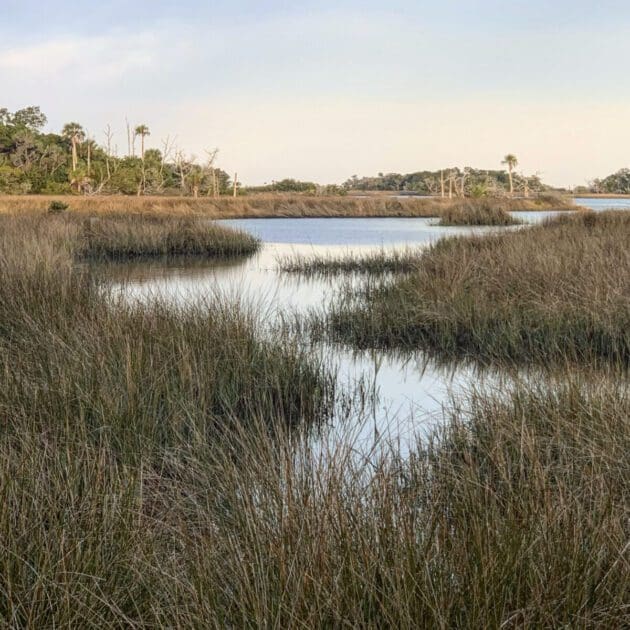
Fortunately, there are some bright spots. Last week I experienced one when I traveled to Crystal River to fish the Nature Coast with Captain Nick Angelo. I first met Angelo over a decade ago through a mutual friend when we fished for tarpon off Anna Maria and Longboat Key. In the ensuing years, I had kept track of him but hadn’t connected on the water. After a phone conversation in December, we made a plan to reconnect and fish his home waters, an area aptly named the Nature Coast. Stretching from the Chassahowitzka National Wildlife Refuge near Homosassa north to Waccasassa Bay, the coastline is sparsely populated and is fed by several wild rivers and numerous springs. It’s one of the few places in Florida where you feel you’ve gone back in time. Its relative remoteness and shallow Gulf water are studded with oyster bars and limestone outcroppings, a magnet for many species, including the redfish we targeted on fly.

I booked a room at the Hampton Inn in Crystal River where I reserved a first-floor room next to the back entrance. Through the Hilton Honors App (Hilton owns the Hampton Inn chain) I was able to check in and out and access the hotel and room with a digital key, avoiding human contact, a challenge during the ensuing pandemic.

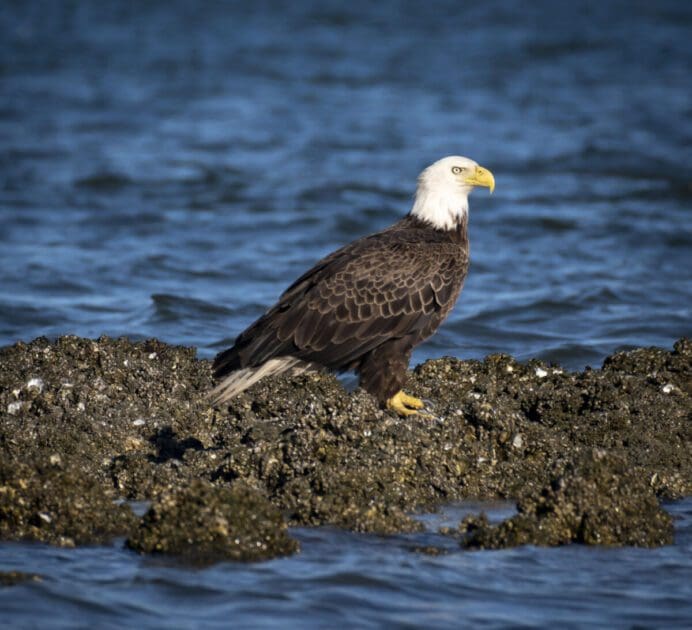
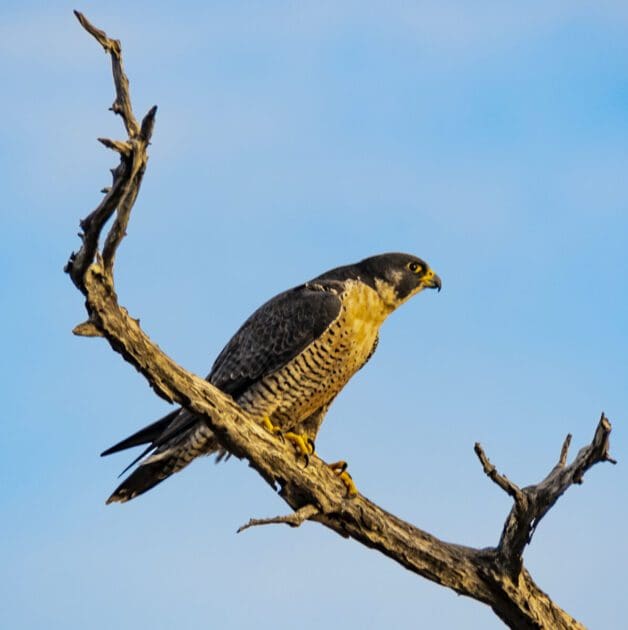
While the weather wasn’t perfect, we still had two excellent days sight-fishing big redfish in less than 2 feet of water. Since we were both avid photographers, we kept our cameras at hand and were rewarded with images of bald eagles and a peregrine falcon. During our first day, an unusually low tide kept us from fishing the exposed mangrove shorelines Angelo prefers. Instead, we fished creek mouths and the edges of oyster bars. That proved to be a winning strategy and it wasn’t long before Angelo positioned me for a cast to a big redfish sitting in about 6 inches of water.  My first cast was off target but the fish didn’t spook and on my next presentation, the fish inhaled the fly on the second strip. In my world, I consider this the “apex of angling,” watching a fish pushing 35 inches open its mouth and turn on its side to take the fly! We had numerous shots and hookups that day and I was impressed with the stamina of the fish that made numerous long runs well into the backing.

The tide wasn’t as low on our second day and we were able to work the edges of the area’s extensive mangrove islands. Angelo prepped me to concentrate on sunken mangrove roots that extended out from the shoreline. His words proved prophetic, and it wasn’t long before we were encountering groups of fish just as he had predicted. Once again we were able to feed individual fish and took turns casting and poling. Besides the obvious pleasure of sight casting to large redfish, I reveled in the isolation of the place. In two full days, we saw only two airboats and two other skiffs, both at a considerable distance.

If you haven’t experienced this part of Florida, I highly recommend it. It’s a place where you can immerse yourself in nature and excellent fishing opportunities. This is truly a special place, but it’s an area where you’ll want the expertise of an experienced guide. The many oyster bars and limestone reefs are a magnet for fish but can also destroy the boat of the uninitiated!

You can contact Captain Nick Angelo by phone at 813-230-8473 or by visiting his website.

Bald eagle - Rusty Chinnis | Sun

Bald eagle - Rusty Chinnis | Sun

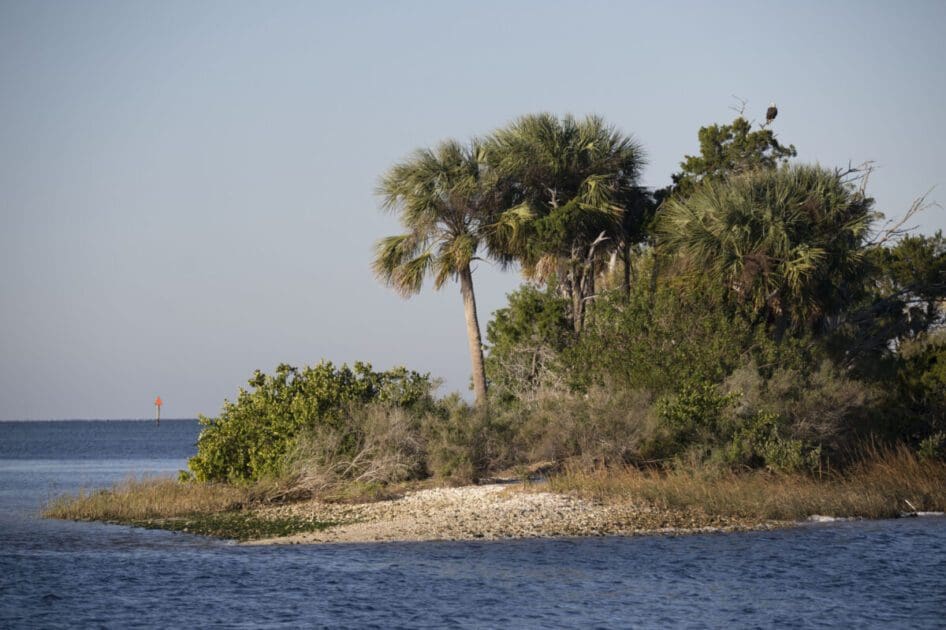
Eagle Island - Rusty Chinnis | Sun

Eagle Island - Rusty Chinnis | Sun

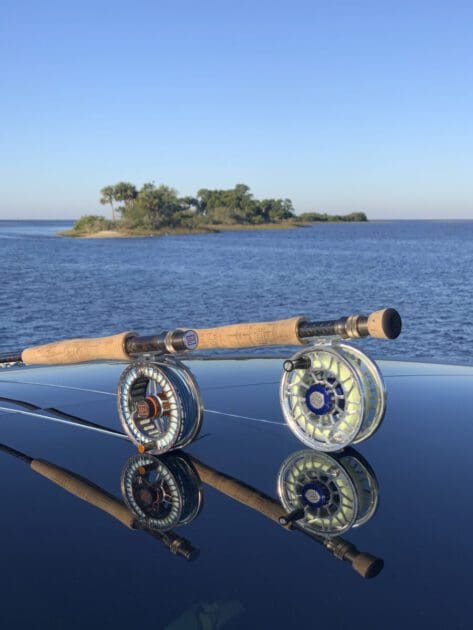
Fly reels - Rusty Chinnis | Sun

Fly reels - Rusty Chinnis | Sun

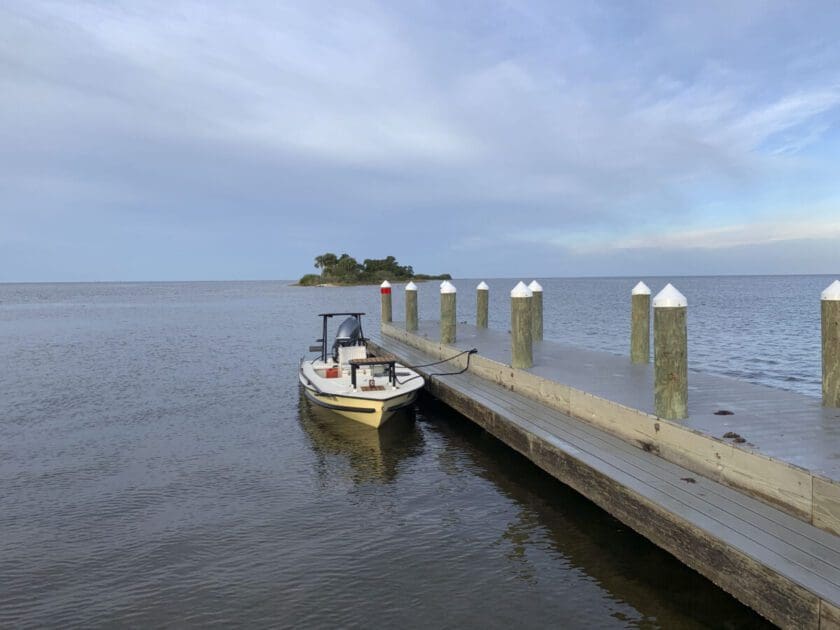
Ready to explore - Rusty Chinnis | Sun

Ready to explore - Rusty Chinnis | Sun

Peregrine falcon - Rusty Chinnis | Sun

Peregrine falcon - Rusty Chinnis | Sun

Withlacoochee Bay - Rusty Chinnis | Sun

Withlacoochee Bay - Rusty Chinnis | Sun


Reel Time: Push pole pointers

Push poles have come a long way. They’ve evolved from wooden poling oars hewn from tree limbs to technological wonders constructed of carbon fiber, Kevlar and graphite. In the early years of flats fishing, short poles were all that were needed. In those days, anglers pursued fish by poling from the deck, standing on coolers and from the top of their boat’s motor. As boat design advanced, elevated platforms were built to allow guides a better view of the fish they were pursuing. That required longer poles to reach the bottom, which proved too cumbersome.

Lightweight push poles make getting into the shallows easy.        – Rusty Chinnis | Sun

Enter Miami angling innovators Dick Snyder, Lee Cuddy and John Emory to search for lighter materials to propel them across the flats. Fiberglass vaulting poles were tried and proved too heavy so lighter versions were developed. According to Miami outdoor writer Bob Sterns, the first person to make dedicated push poles from fiberglass was Bill Marks. Marks had a “backyard” company that he called Moonlighter Marine.

As rod design advanced from fiberglass to graphite, push poles followed suit. Graphite was lighter, allowing anglers to pole their skiff faster and expending less energy. Graphite also stores more energy under a load, giving it a much faster recovery rate. That translates into more energy to propel the boat. Graphite also allowed manufacturers to create a more dynamic product that was stiff and used less material.

Initially, these new poles were crafted of pure graphite, but due to the cost and issues with breakage, products were developed that blended graphite with fiberglass. The new push poles incorporated the strength of fiberglass with the lightness and dynamics of graphite. It also lowered the price point of the pole. Modern push poles are manufactured with cutting edge materials including Kevlar, carbon fiber and resins.

The points and forks of most major push poles do not vary significantly. Most are made from a specially formulated abrasion-resistant plastic for longer wear. The majority of forks are a simple “Y” design. A better option is a fork with a tapered “mud bar” that runs between the legs of the fork. The best are cupped, widened in the center for support, and designed to shed mud better than standard forks. They allow the angler more latitude when poling over soft bottom, so less effort is expended pulling the pole out. Anglers who pole over hard bottom can opt for a metal tip that screws into the end of the point. The tip grabs the bottom, wears longer, and is easier to push into the bottom to hold the boat.

Push poles are one of the most important components of the modern flats boat. The best poles have a price tag north of $1,000, and they’re worth it for ardent sight fishers. The type and length of the push pole is best determined by the depth of the water, the height of the poling platform and the amount of time you’ll be using it.  Eighteen to 24-foot poles are most common.

The two most popular brands on the market today are crafted by Stiffy Push Poles and Carbon Marine. Visit their sites for detailed information at www.stiffypushpoles.com and www.carbonmarine.com. Push poles help you approach fish quietly, which is a big advantage as more and more boats ply the flats, making fish more skittish and harder to approach. A quality pole will last a lifetime so get the best one you can afford. Poling is a wonderful way to amp up your fishing experience and expand your angling horizon into your quarry’s home.

Reel Time: Make your New Year’s resolutions

New Year’s resolutions have spawned more jokes than life changes. Still, it’s a good idea to look back on the past year and reflect on what worked and what didn’t.

An example might be remembering a fish lost to a failed knot. Resolve to always carefully tie knots, wetting them and carefully tightening them. The same applies to sharpening hooks, checking the drag and inspecting line for nicks and abrasions.

Tackle and organization are certainly places to start, but extend that same thinking to other equipment like your boat and motor, waders, push pole, trolling motor and wading boots. As experience teaches us, it’s the little things that we overlook that come back to haunt us. On the water, consider thinking out of the proverbial “box” by altering your routine strategy. Many anglers go fishing with a plan and never deviate from it. They start at one spot and hit all the usual “holes” during the day. A different option? Try planning to fish only places you’ve never explored before. I’ve done this and been amazed at how many unique areas and new opportunities I’ve found. Make a note of the moon phase, tide stage, wind direction and water temperature. Looking at the same places with this information and “new eyes” can be revealing.

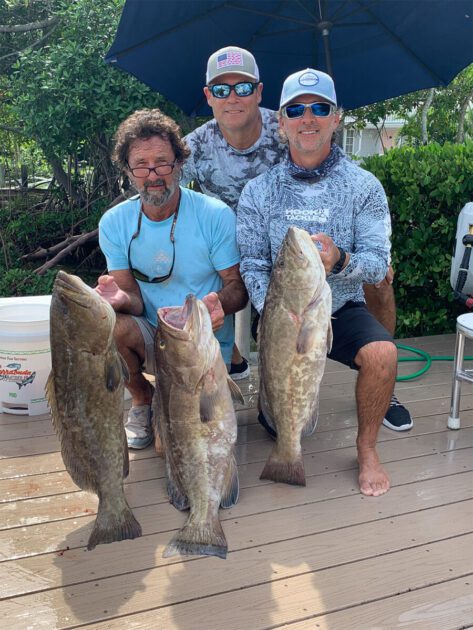
Mark McBride, Bobby Lopez and Dan Madole found these impressive grouper in Tampa Bay. – Rusty Chinnis | Sun

Also consider trying a new place altogether. There are lots of beautiful and productive destinations within a few hours north and south of Anna Maria. Drive two hours north and you can explore the Chassahowitzka National Wildlife Refuge and just north of there, Homosassa, Crystal River, and Yankeetown.  Less than two hours south and you’re in Charlotte Harbor and adjacent to Pine Island Sound. Too far? Anyone with a boat can leave Anna Maria and be fishing in fresh water in less than an hour. The Manatee and Braden rivers provide anglers with a variety of fish from tarpon to catfish, redfish to bass. Both rivers also have numerous launch sites for boats, kayaks and paddleboards.

It might even prove useful to review how you approach fishing. If you’re a fly caster, look at ways you might improve your casting and consider learning how to cast with your non-dominant hand and tie flies. Anglers who use conventional tackle might want to try artificial lures instead of always relying on live bait.

I have a final suggestion that might be the most important. Get involved in working to keep our waters fishable and swimmable. Join with like-minded individuals, write letters to policymakers, attend commission meetings and lobby state officials to protect our water quality, habitat and fisheries. All the well-intended resolutions won’t amount to much if we don’t. No matter how long you’ve been fishing or what your level of competency, there’s always room for improvement. Environmental advocacy, a general review of your tackle, technique and the opportunities available to you can only improve your enjoyment of fishing moving into 2021 and beyond. Happy New Year!

Reel Time: Threatened seagrass has trickle-down effect

The seagrass beds that carpet Sarasota Bay harbor a tremendous array of living creatures. This critical and diverse ecosystem is generally out of sight except at extreme low tides.

Seagrasses are actually underwater flowering plants that serve a number of important functions. They produce oxygen, bind sediments and baffle wave action while cleansing the water column. Seagrass roots, their leaves, and the epiphytes and microalgae that cling to them clean water by converting dissolved nutrients into plant matter. Besides giving us clean and clear water, seagrasses are home to the organisms that provide food and shelter for fish, crustaceans, shellfish and wading birds. They also are food sources for manatees, sea turtles and various fish and crustaceans. Because they flower, seagrasses require sunlight and are limited to clear, shallow waters.

Harmful algae blooms like this occurrence of lyngbya on the east side of Anna Maria Sound are indicative of poor water quality and smother seagrasses. – Submitted

Of the 52 species of seagrasses worldwide, only seven are found in Florida. Three main species are found on Florida’s southwest coast. They include turtle grass (Thalassia testudinum), shoal grass (Halodule wrightii) and manatee grass (Syringodium filiforme). The historical loss of these species has been extensive throughout Florida. Tampa Bay has lost 81% of its historical seagrasses, Sarasota Bay 35% and Charlotte Harbor 29%.  Poor watershed management (stormwater runoff and sewage disposal) dredge and fill operations and scarring from boat propellers have taken a heavy toll on Florida’s seagrasses.

Through the elimination of small, poorly-maintained regional sewage systems and the work of organizations like the Sarasota Bay Estuary Program, Tampa Bay Estuary Program, and Tampa Bay Watch, programs were instituted that began to turn the tide on water quality.

Anglers, from experience, are aware of the importance of these prolific, shallow beds. They experience firsthand the myriad interactions that produce fertile fisheries. They may not understand the intricate web of existence that proceeds from the microscopic level to the fish on the end of their line, but they reap the benefits nonetheless. Government scientists (NOAA) consider seagrasses to be of such importance that they have adopted a “no net loss” policy to manage them. Despite this pronouncement, seagrasses remain under assault.

Preventing the loss of valuable seagrasses must be a high priority. Watershed management, replanting, avoidance of direct impacts to existing grasses, and mitigation are avenues to reach those goals. Mitigation involves the replacement of seagrasses impacted by residential and commercial development. Unfortunately, the literature reveals that the effectiveness of mitigating seagrass damage is considered, even among the leading wetland scientists, as marginal at best.

In recent years, seagrass rebounded in Sarasota Bay. Unfortunately, that trend reversed after the red tide of 2018, and now there have been reports by local fishing guides including Captain Justin Moore and Captain Todd Romine that acres of once-lush seagrasses have been reduced to sand flats. It is a foregone conclusion that development will continue to impact coastal areas and their seagrass resources. It is vital that decisions are made that will accommodate unavoidable development while protecting the quality of our most valuable local resources. Enlightened citizens, anglers and their interest groups must take part in this decision-making process.

Cost considerations often eclipse concerns for seagrasses, but research reveals the true value of these resources. A study (Virnstein and Morris 1996) conducted in the Indian River Lagoon estimated the value of seagrass to be $12,500 per acre, per year, based solely on economic values derived from recreational and commercial fisheries. In the last few years, the effects of rampant development, antiquated and failing infrastructure, and associated stormwater runoff are feeding red tide events and algae blooms, and threatening the very existence of the bay’s seagrass system.

Groups like Suncoast Waterkeeper and Tampa Bay Waterkeeper, with the Sarasota Bay Estuary Program, alarmed at the prospect of a potential collapse of the bay (like the one that has plagued the Indian River Lagoon) have sprung into action to alert the public through education, effective policy and in the case of the Waterkeeper Groups, hold governments accountable under the rules of the Clean Water Act of 1972.  It is imperative that citizens let leaders know they will hold them responsible to protect the resources that form the basis of our quality of life as well as the local economy.

Reel Time: Choosing line and leader

While most of the advertising and branding of fishing tackle targets rods, reels, lures and accessories, lines and leaders are an integral part of the equation.

The choices of line are varied but are mostly limited to monofilament, braid and fluorocarbon. While fluorocarbon, monofilament and braided lines were created to spool reels, monofilament and fluorocarbon along with wire are most often used as leader material. Each has its advantages and disadvantages and you’ll want to choose them based on how they perform in different fishing scenarios.

Monofilament has been around for decades and is the most commonly used line. It has many advantages and a few disadvantages. Chief among its advantages are affordability and the fact that it sinks slowly and is more forgiving (stretches) making it less likely to break when shocked. Its disadvantages include the fact that is less durable, stretches, and has a larger diameter.

Braided lines have made significant inroads since their introduction in the early ’90s. They are constructed of a special blend of polyethylene fibers. Some brands are wound loosely while others are fused. Braided lines are extremely durable, with no stretch. The unfused lines are generally suppler, while the fused ones are stiffer but less likely to wrap around guides and form knots during casting, one of the disadvantages of braided lines. When using braid, it’s important to be aware that no loops form on your reel, a sure sign of trouble to come. It’s also wise to raise the rod tip to tighten the line after a cast and before retrieving.

Braided lines are much stronger than mono lines, so pound for pound they have a much smaller diameter. In order to get the line to spool on the reel like mono, it is necessary to choose a matching diameter, which will be much stronger than the equivalent an angler is used to. Most anglers choose to go with a matching line test (i.e. smaller diameter line) and add a base of mono on the spool. That way you don’t have to use extra braid that will never see the light of day. The major advantage of braided lines is the lack of stretch which makes it easier to feel a bite and to set the hook on a fish. This is a big advantage when bottom fishing and targeting fish with subtle bites.

Fluorocarbon lines are expensive, and most anglers use them for leaders. Its most important advantage over monofilament is being less visible in the water. In addition, it is denser, sinks faster and is more abrasion-resistant. It’s important to carefully seat all knots after wetting them and this is especially true with fluorocarbon.

Wire leaders are used for toothy fish like Spanish mackerel, king mackerel and barracuda that can easily cut mono or fluorocarbon line. Traditional wire leader is hard to tie and kinks easily. While still being used, most anglers opt for wire that can be tied. These wires don’t kink readily and don’t require any other hardware like swivels.

Most choices are common sense. If you’re fishing shallow water or light floating flies and lures, you’ll want to opt for monofilament, which sinks slowly. If you’re interested in getting your offering down quickly, fluorocarbon would be a better choice. Fluorocarbon would also be a better choice for wary species like permit and bonefish. Generally speaking, you can get away with it earlier and late in the day when the sun is low or the water is off-color.

There are, of course, exceptions to all these rules, so my advice is to seek out local knowledge from anglers and tackle shops and try different lines and leader combinations to see which suits your fishing style.

Reel Time lines and leaders
Fluorocarbon leader material is advised for snook, whose raspy mouth can more easily abrade through monofilament line. – Rusty Chinnis | Sun

Reel Time: What happened to catch and release?

Catch and release used to be a topic that came up often in fishing circles. The idea was to educate anglers that fish populations are finite and not the bottomless resource that they were once thought to be. For a time it seemed the idea was relatively commonplace. Now a look at Instagram and Facebook posts might have you wonder what happened.

Lately, a lot of posts of dead fish are appearing that seem to be taken more to impress others and get likes than to provide a meal. With increased angling pressure, burgeoning populations and serious water quality issues, proper catch and release methods are more important now than ever. Fish that aren’t headed to the dinner table should be given the best chance of living, reproducing and sustaining threatened populations.

Releasing a tarpon
Keeping big fish like tarpon in the water is critical. Andy Mill measures a tarpon while Captain Doug Kilpatrick assists. – Rusty Chinnis | Sun

When we get cut, bruised or break a leg, we can head for the local drug store, or, in more extreme cases, the emergency room. Not so for fish. For them, it’s heal or die, and in their world, it’s the sick and wounded that first fall prey to predators. What a shame to do the right thing, releasing a big, speckled trout full of roe, only to have it eaten by a shark, barracuda or other predator because it wasn’t handled properly.

Fishermen have been criticized because catch and release fishing is seen by some as playing with fish. Anglers, unlike hunters, can pursue their passion and release their prey.
Most anglers I know who practice catch and release have no problem with killing fish occasionally to take home for dinner. Responsible anglers and hunters are often on the front lines protecting the habitat and welfare of fish and animals. It’s more about enjoying the sport and trying to be proactive in helping it to remain healthy and viable.

There are many species, notable among them, tarpon, that anglers seldom, if ever, kill. Catch and release is not just about releasing fish that you don’t want, it’s also about properly releasing undersized fish or species that aren’t valued at the table. Catch and release in any form is a wise use of the resource, but unfortunately, many anglers don’t know how to properly handle fish.

Here are a few tips. First, make sure you match the tackle to the species you’re fishing for. Trying to land a big tarpon on 20-pound tackle might be OK if you’re experienced, but to the uninitiated, it’s like announcing a free meal to sharks. Enjoy the action, but land the fish as quickly as possible. Once you have the fish subdued, if possible, never take them out of the water.  If you’ve been fighting them for a long time (think tarpon) make sure you revive them sufficiently. If you can reach the water over the gunwale, slowly move the boat forward while holding the fish. This forces water and oxygen through their gills. They’ll let you know when they’re ready to go.

The hook is probably the next most important consideration. A barbless hook is best for fish and anglers alike. The key to keeping fish on a barbless hook is to keep the line tight. The other important factor you should consider is hooking yourself. A barbless hook is far easier to remove from a finger or an ear. Another option is a circle hook that helps prevent “gut” hooking fish.

A de-hooker is a tool anglers should always have at hand. It keeps your hands clean and prevents you from inadvertently harming the fish. Fish have a viscous coating that covers their scales and skin and acts as a defense against the invasion of bacterial, parasitic and fungal pathogens. De-hookers come in various shapes depending on how they’re used. The simplest is J-shaped and removes hooks in or near the jaw. A circular-shaped longer version allows anglers to remove hooks that are deep in the throat of a fish.

Anglers who fish for reef fish like snapper and grouper need to learn how to “vent” fish. Reeling fish from deep water inflates their swim bladders. Unless this bladder is punctured the fish is unable to swim back to the bottom. Search YouTube for the Florida Sea Grant video that explains the venting procedure.

Taking the time and having the tools and knowledge to release fish mindfully is one way to help ensure we have a healthy population of fish now and into the future. Let’s bring catch and release back as a topic of conversation.

Reel Time: Take a kid fishing

I don’t have any children of my own, but I was one, and one of my fondest memories was of my father tapping me on the shoulder at 5 o’clock in the morning and saying, “Bud, you going?” The answer to that question was a foregone conclusion to this 5-year-old boy, as it is for most children if they’re given a proper introduction!

When I arrived on the Suncoast almost four decades ago, I was fortunate to meet Captain Jonnie Walker. Walker, a fishing “institution” in Sarasota, loved taking kids fishing and his counsel, “Take a kid fishing and someday they might take you,” has always resonated with me. I’ve written many of these words before but if something bears repeating, this is it!

Captain Justin Moore and his wife Jenny (photographer) capture memories with their children that will last a lifetime. From left are Jase (6), June (9) and Jordon (12). – Jenny Moore | Submitted

Nothing is more important than how we introduce children to fishing. Experiences on the water leave indelible memories and they should be uncomplicated and as much fun as possible. Creating realistic expectations can be the key to kindling a passion for the outdoors in children. The basics of fishing are not complicated to learn, are easy to teach children and don’t require expensive equipment. If there’s a cardinal rule to getting kids interested in fishing, it’s to make sure to keep them engaged. Children are naturally curious, they love to play in and on the water and are fascinated by the creatures that inhabit the natural world. Catching fish isn’t their main objective and you shouldn’t make it the focus of an outing. It’s important to plan a trip that includes other activities such as swimming, snorkeling and wildlife identification.

Being on the water provides an excellent opportunity to teach kids about their environment and boating safety skills. You could also make a game out of learning basic nautical terms such as port, starboard, bow and stern. Every child I’ve ever had on the boat wants to drive, so let them, even if it’s just sitting on your lap with their hands on the wheel! Consider giving them something to be in charge of, such as making sure everyone knows where the safety equipment is. It’s also a great way to interject a stealth lesson in responsibility!

Try and think like a kid when fishing. Children would rather catch a dozen pinfish in a half-hour than wait for the Big One. Action is paramount because kids are easily bored and distracted. Kids might actually be more interested in collecting shells, counting crabs or looking for manatees or dolphins than fishing, so be sensitive to what’s bringing them pleasure.

Consider starting kids fishing with an ultra-light outfit that fits them. Rig with a small popping cork that they can watch for signs of action. If you can start teaching kids that the enjoyment of the adventure isn’t measured by the number or size of the fish you catch, you’ll teach them an important lesson that many anglers never learn.

It’s also important to emphasize safety by bending down barbs and making them aware of fish with sharp teeth or barbs like catfish and stingrays. The first experiences on the water are very important so consider options in advance in case the fishing isn’t great. The last thing you want to do is bore kids by sitting on a spot too long. Keep your eyes and ears open and they might just teach you a lesson in seeing the world with new eyes.

For more information, visit this Beginner fishing with kids video.

Captain Jonnie Walker can be reached at 941-232-4970, and check out his website.