EGMONT KEY – Twenty-year-old Victoria Zardoya later died after sustaining serious injuries when she fell from the ruins of old Fort Dade on Egmont Key on Friday, July 24.
Several media outlets reported Zardoya died on July 26.
According to Hillsborough County Sheriff’s Office Public Relations Coordinator Hannah Oliveto, “Victoria Zardoya, 20, was pronounced deceased on July 27, 2026.”
The heavily redacted general offense report provided by the sheriff’s office references an active criminal investigation and states the death investigation is complete. The redacted report provides no additional details.
Victoria Zardoya was a student at the University of Tampa. – Victoria Silberbusch/Instagram | Submitted
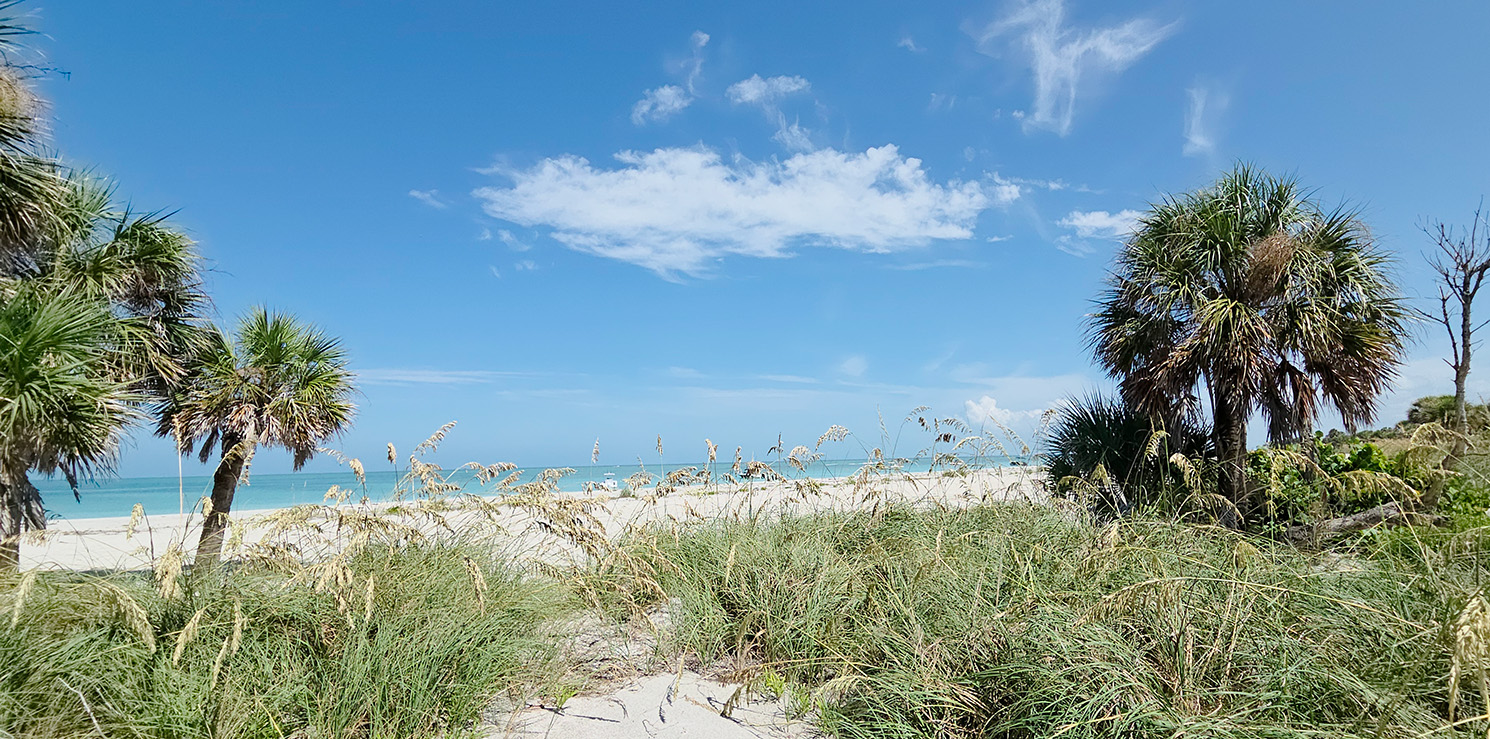
Egmont Key is a Florida state park located on an island at the mouth of Tampa Bay, about 3 miles off the north end of Anna Maria Island. Egmont Key is only accessible to the public by boat, personal watercraft or the Egmont Key ferry.
Zardoya’s friend, Victoria Silberbusch, shared her firsthand account of the tragedy on her “thevictorianvision” Instagram page. According to her Facebook page, Silberbusch is a real estate agent who lives in Sarasota.
Several media outlets reported Zardoya was a longtime friend of Milania Giudice, the daughter of “Real Housewives of New Jersey” star Teresa Giudice.
In her Instagram post, Silberbusch wrote, “This post is being shared at the request of Victoria Zardoya’s family.
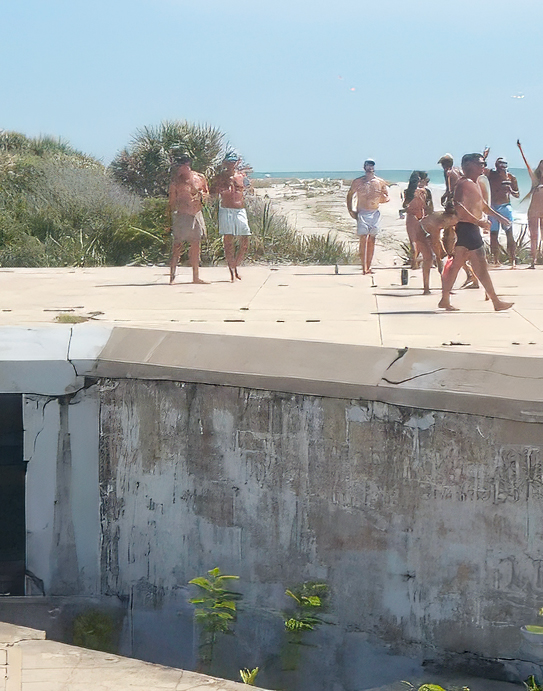
“On July 24, what began as a fun, innocent day on the water with both old and new friends ended in an unimaginable and unexpected tragedy. A beautiful 20-year-old woman named Victoria Zardoya, who had flown to Florida for the weekend to visit friends, sustained fatal injuries due to a devastating fall while we were all exploring the historic ruins at Fort Dade on Egmont Key. We had actually been getting ready to leave and head to another spot when it all happened,” she wrote.
“At first, we thought Victoria had fallen only one level. We ran to the edge, calling out to her, but quickly realized she had fallen much farther than we first believed. We immediately began climbing down to reach her while others called 911. Friends back at the boats launched flares to help first responders locate us as quickly as possible, and additional calls were made to communicate just how urgent the situation was,” she wrote.
“No one hesitated. Not one person. Every single one of us jumped into immediate action. Every single person responded instinctively. Everyone did everything they possibly could to help. Her injuries from the fall were brutal.
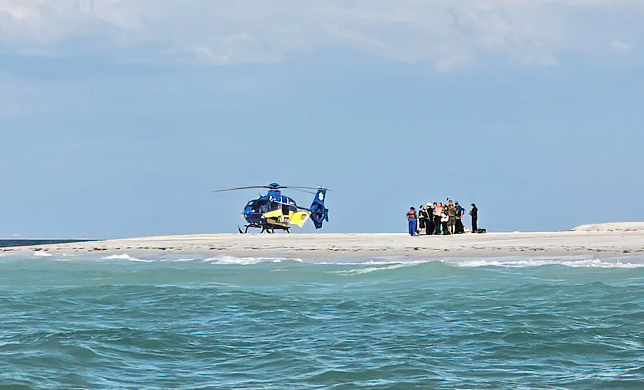
A helicopter transported the injured woman. – Victoria Silberbusch/Instagram | Submitted
“We stayed with Victoria and held her, trying to make her as comfortable as possible while we waited for first responders to arrive. Paramedics responded by boat, and a medical helicopter was eventually able to transport her to the hospital after an incredibly difficult rescue,” Silberbusch wrote.
SAFETY IMPROVEMENTS REQUESTED
On her Instagram page, Silberbusch shared a form letter to be emailed to the Florida Department of Environmental Protection, with the subject: “Urgent safety improvements requested at Fort Dade, Egmont Key – in memory of Victoria.”
The accident happened among the ruins of old Fort Dade. – Victoria Silberbusch/Instagram | Submitted
The email addresses listed are EgmontKeySP@floridadep.gov, FSP.Feedback@floridadep.gov and crystalriver@fws.gov.
“Dear Egmont Key State Park and U.S. Fish and Wildlife Service Leadership,” the letter begins.
“I am writing following the reported fatal fall at the Fort Dade ruins on Egmont Key this past weekend, which tragically claimed the life of a young woman named Victoria (Zardoya). I respectfully ask the Florida Park Service and the U.S. Fish and Wildlife Service to work together to investigate and address the elevated portion of the fort where the deadly fall reportedly occurred. The area contains a severe drop that may not be sufficiently obvious to visitors approaching or walking across the structure,” the letter says.
“I am specifically requesting that the responsible agencies:
“Conduct an immediate, documented safety inspection of the location.
“Install conspicuous temporary warning signs and a secure temporary barrier while a permanent solution is evaluated.
“Install a permanent, corrosion-resistant railing, guardrail or other effective fall-prevention barrier designed to respect the fort’s historic character.
“Inspect the other accessible Fort Dade structures for similar unprotected drops or deteriorated walking surfaces.
“Clearly designate any areas that are unsafe for public access and ensure that warnings are visible from every reasonable approach.
“Publicly explain what corrective actions will be taken and provide an estimated timeline for completion,” the letter says.
“Egmont Key’s historic structures should remain available for the public to experience, but preservation and visitor safety do not have to be competing priorities. Thoughtfully designed barriers and warning signs can preserve the appearance and historical importance of Fort Dade while reducing the risk of another devastating fall,” the letter says.
“This request is not intended to assign blame. It is a good-faith request for practical action following a heartbreaking loss. A warning sign, barrier or railing cannot undo what happened to Victoria, but it may prevent another family from suffering the same tragedy,” the form letter says.
EGMONT KEY – Egmont Key is a narrow barrier island and national wildlife refuge at the mouth of Tampa Bay, less than 3 miles from the north end of Anna Maria Island.
Reachable only by boat, it’s home to a historic lighthouse, the ruins of an old fort, nature trails, shorebirds, gopher tortoises and more.
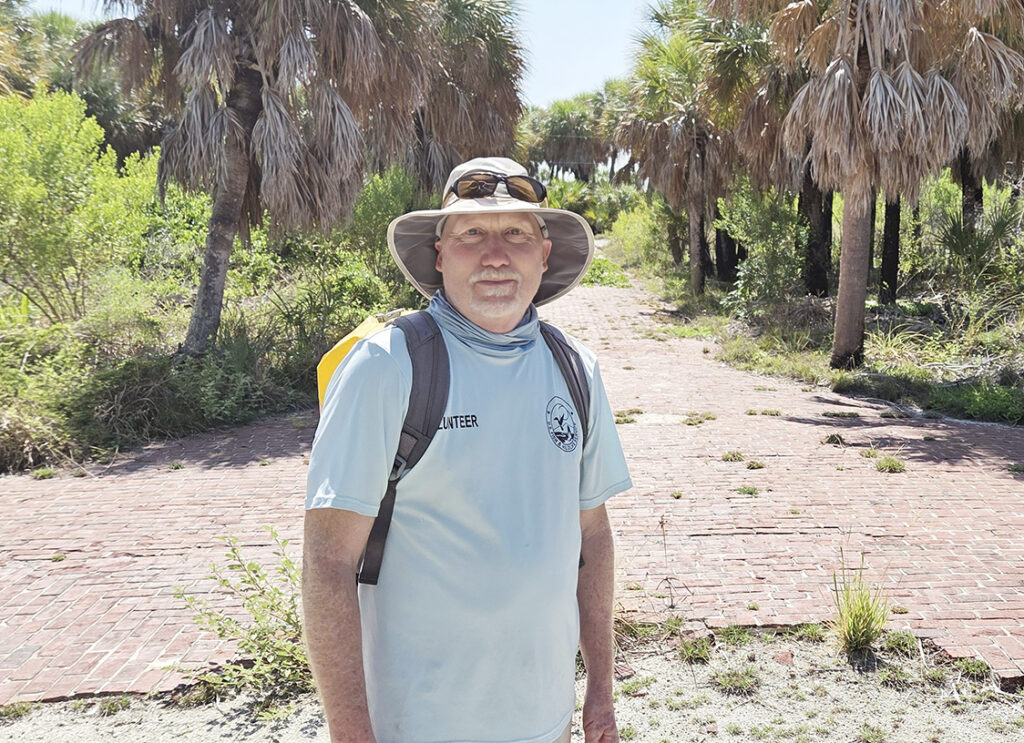
Pat Mundus is the president of the Friends of the Tampa Bay National Wildlife Refuges group. The first time he set foot on Egmont Key, he made himself a promise: “I said to myself, we’ve got to take care of this place,” he said.
Pat Mundus walks the brick paths of old Fort Dade on Egmont Key. – Ernie Vanderwalt | Sun
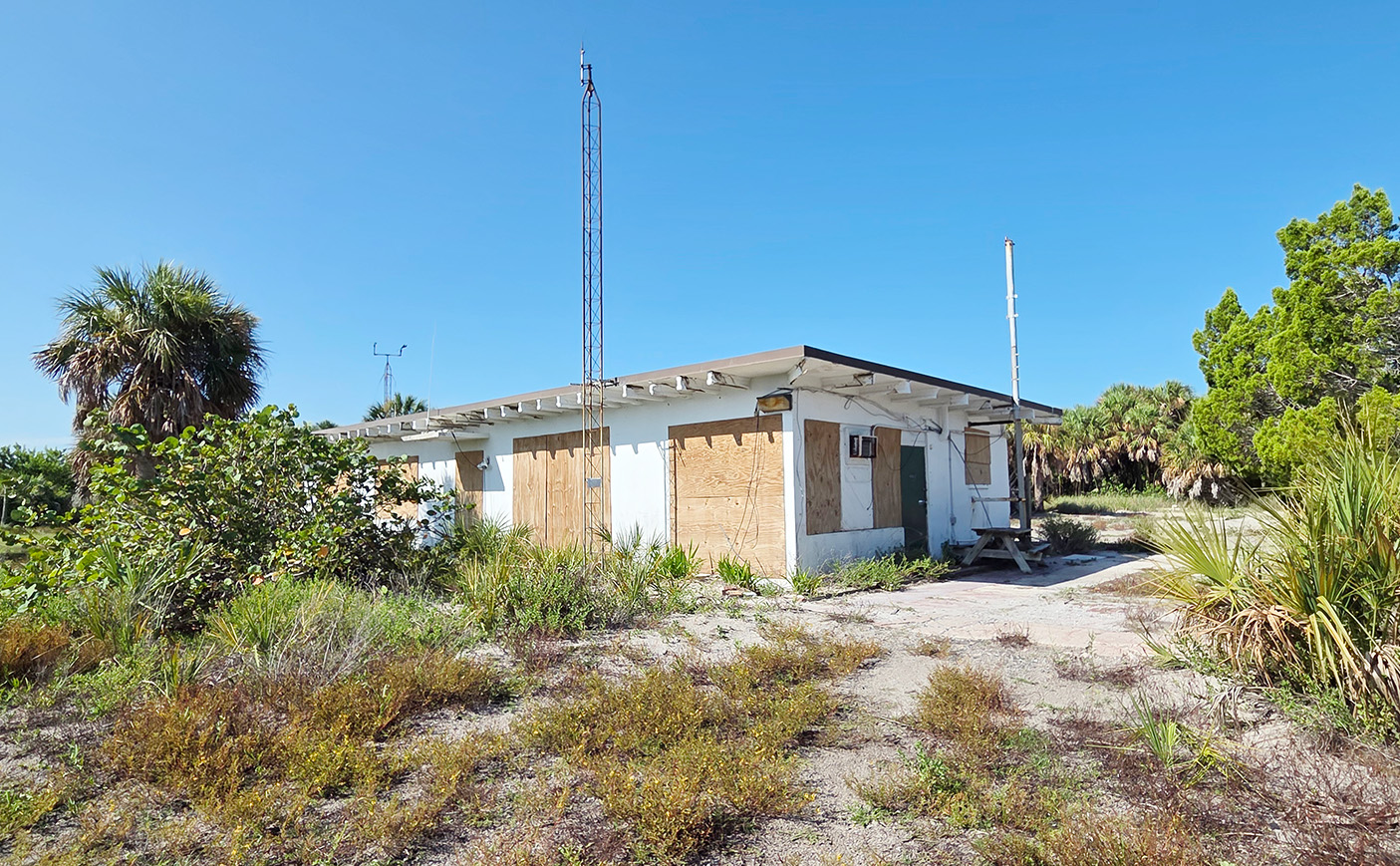
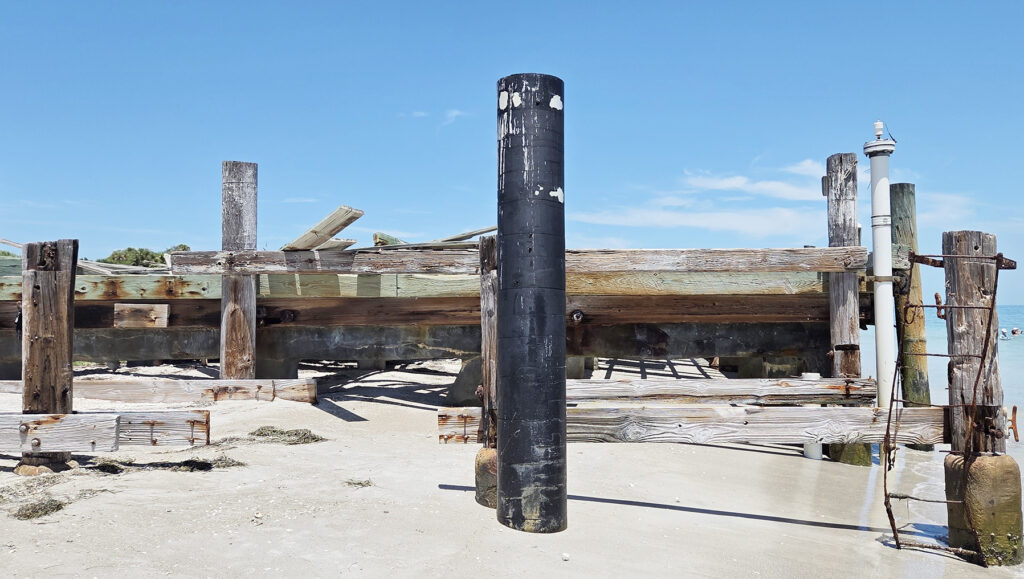
That promise is being tested. The back-to-back hurricanes in 2024 tore through Egmont Key and further reduced its human presence. The Florida Park Service ranger’s cabin was destroyed. The hurricanes wrecked the cottage compound that was nearly 100 years old. Before the hurricanes struck, the cottages housed the Tampa Bay harbor pilots who board incoming cargo ships and cruise ships to guide them through the bay’s channels. Because of the hurricane damage, the pilots no longer operate from Egmont Key.
Wreckage from destroyed docks litters Egmont Key’s bayside shoreline. – Ernie Vanderwalt | Sun
Many structures on Egmont Key were damaged or lost. The old guardhouse survived unscathed and now doubles as a historical site. The guardhouse is a restored 1899 Fort Dade building that once held prisoners.
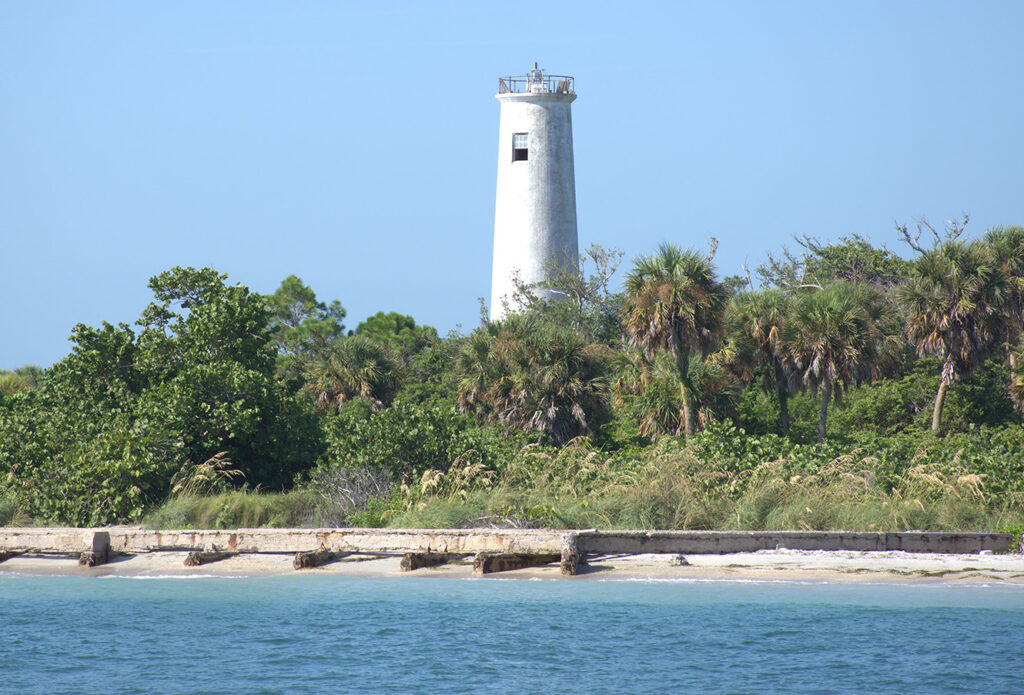
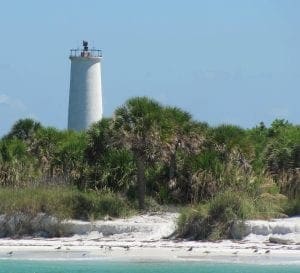
The lighthouse still stands and its light still works. Automated in 1990, the lighthouse light still flashes every 15 seconds, guiding ships into Tampa Bay.
Egmont Key’s historic lighthouse still stands. – Ernie Vanderwalt | Sun
“There’s no longer a 24/7 presence on the island,” Mundus said. “The biggest hit we took was we lost our full-time presence of somebody on that island.”
In the 1950s, Egmont Key covered approximately 500 acres. Today, it’s closer to 250 acres, according to the U.S. Fish and Wildlife Service. The erosion rate has increased and Egmont Key has grown thinner.
“It’s getting very skinny,” Mundus said. “I’m just not sure the island can survive without renourishment.”
He also said Egmont Key’s wildlife habitats are shrinking.
A short-term fix is in the works. The U.S. Army Corps of Engineers recently awarded a dredging and renourishment contract and that work is scheduled to begin soon. Approximately 700,000 cubic yards of dredged sand will be placed on Egmont Key’s eroding western beach as part of the renourishment project to be completed in November or December.
On a larger scale, the Army Corps of Engineers plans to deepen the Tampa Harbor shipping channel and use that sand to renourish the Egmont Key shoreline. Army Corps’ Public Affairs Officer J.P. Rebello said the federal agency plans to place an estimated 4.4 million cubic yards of dredged sand on Egmont Key between October 2029 and December 2030.
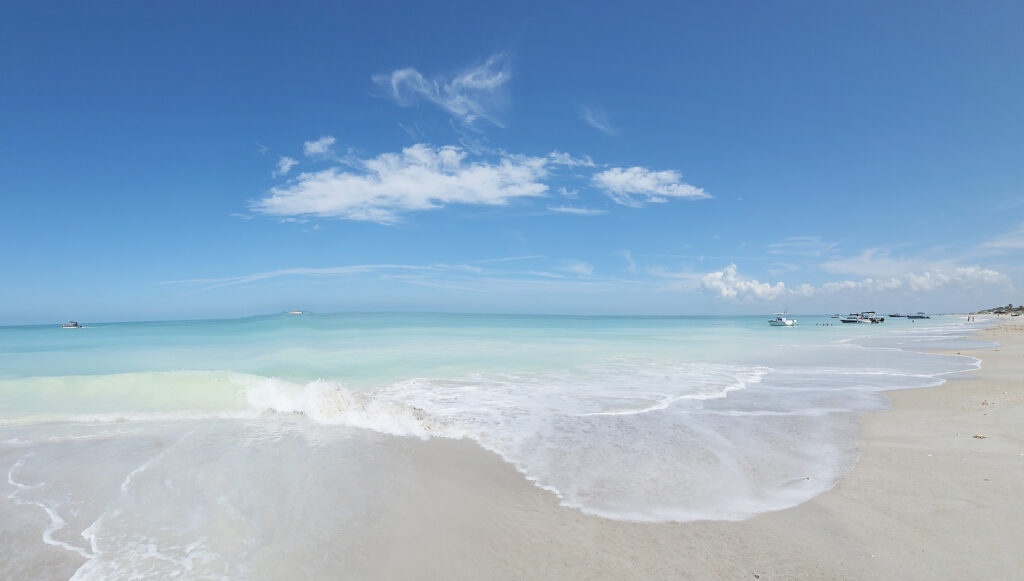
The Egmont Key shoreline. – Ernie Vanderwalt | Sun
Erosion is only half the challenge. The southern third of Egmont Key is closed to the public and is designated as a protected bird sanctuary. Without a park ranger patrolling Egmont Key daily, enforcement of its restricted or closed areas has decreased and some visitors bring their dogs onto beach areas marked off for nesting birds.
Vandals have targeted the lighthouse, the buildings and the still-functioning, still-utilized vehicles that remain on Egmont Key. To help prevent vandalism, the Friends group is funding a shipping container to secure a golf cart and an ATV to be left on Egmont Key.
“It looks kind of abandoned. So, people don’t care,” Mundus said.
The group also works closely with the U.S. Fish and Wildlife Service, and Mundus said the wildlife numbers also reflect the strain being felt on Egmont Key.
Mundus said there were approximately 100 black skimmer nests on Egmont Key last year, and this year there have been about 10. He said royal terns and laughing gulls are still present but they are not nesting in meaningful numbers.
On a positive note, Mundus said the gopher tortoise population has rebounded faster than expected after the 2024 hurricanes. Eckerd College has tracked Egmont Key’s tortoise population since the early 1990s, and a survey conducted last summer found a strong adult population, but few young gopher tortoises.
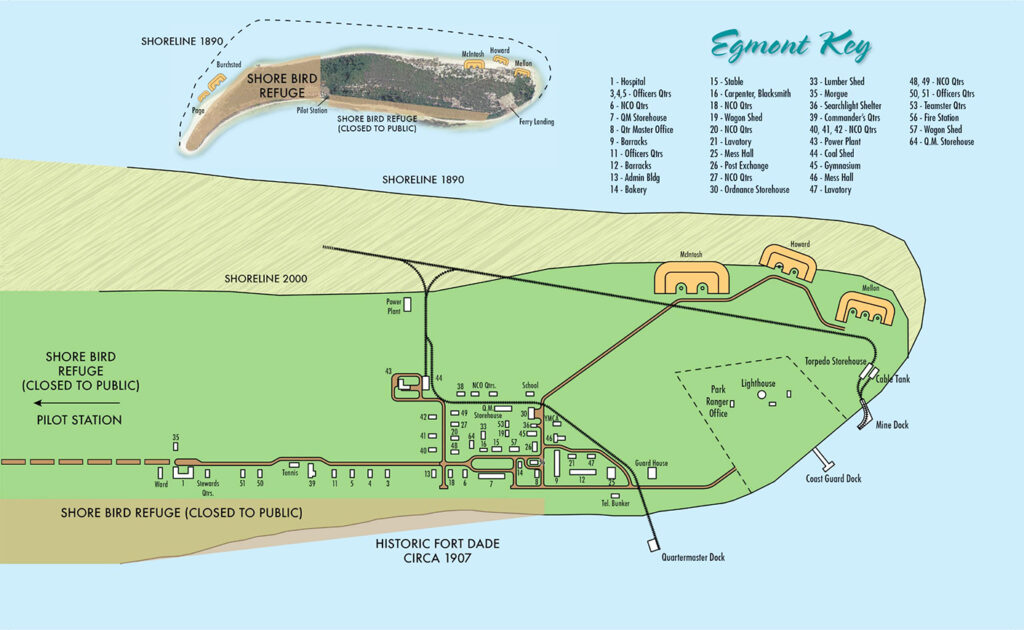
This map illustrates some of what’s on, or used to be on, Egmont Key. – Hubbard’s Marina | Submitted
Egmont Key remains open to the public year-round and visitors can reach it by private boat or aboard the Egmont Key Ferry that originates from Fort De Soto Boat Ramp in St. Petersburg daily. Ferry rides can be booked online at www.hubbardsmarina.com/egmont-key-ferry-cruise. Tickets are $45 for those who are 12 or older, $25 for ages 3-11 and free for those who are 2 or younger. Parking is $5.
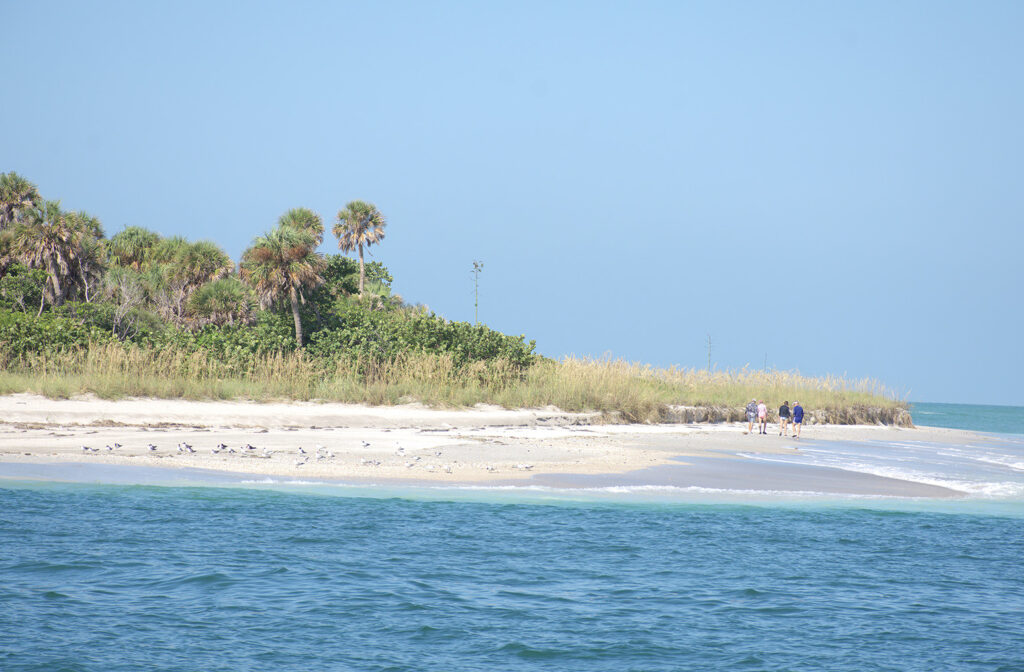
Egmont Key visitors enjoy walking along the shoreline. – Ernie Vanderwalt | Sun
“Due to the remote nature of the island, there is no drinking water on the island and there are no stores. Please remember to bring water, food and sunscreen when you visit,” the state park website says.
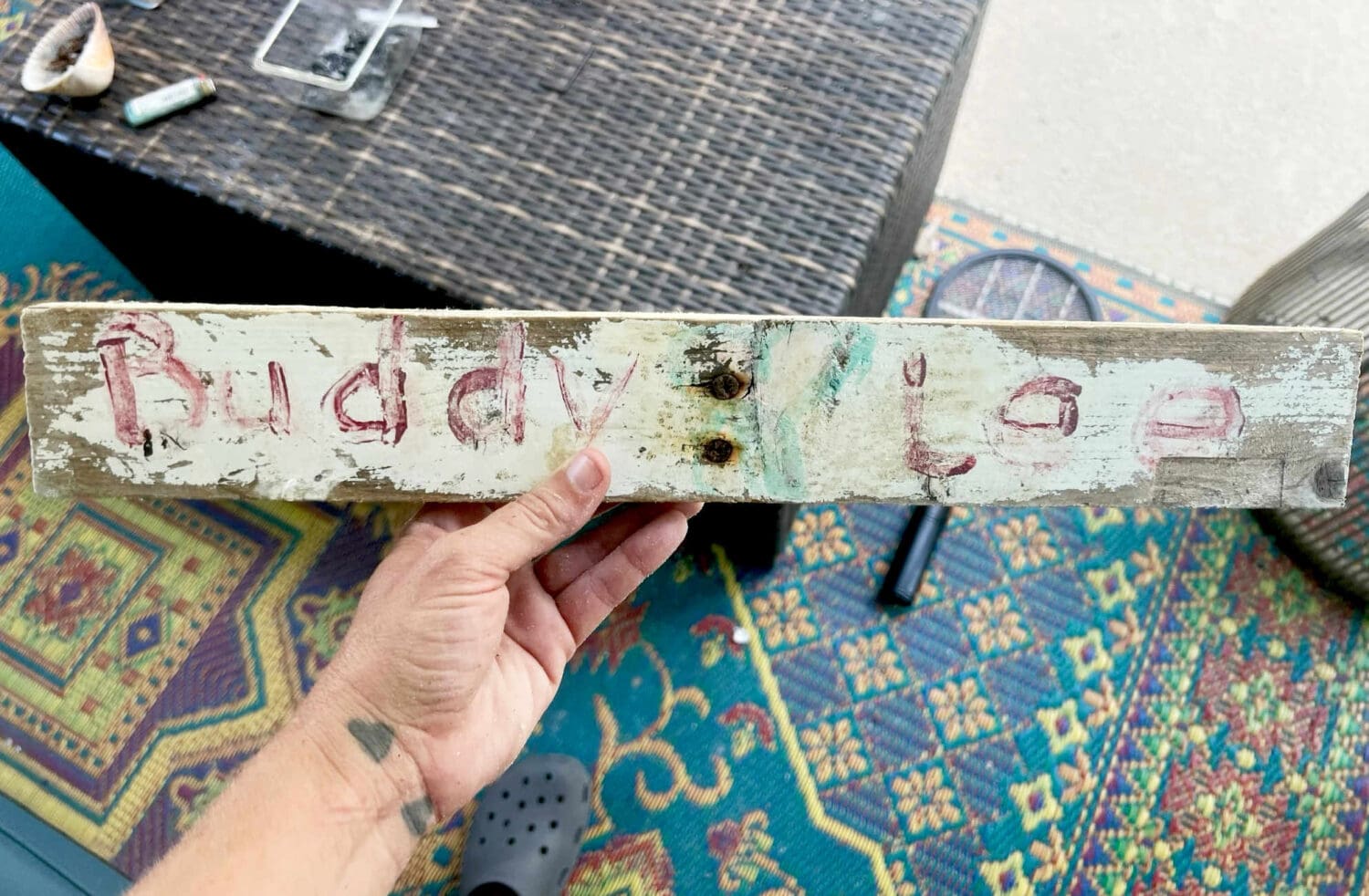
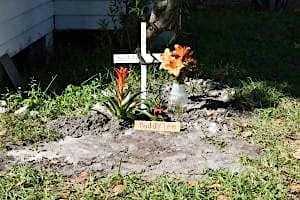
BRADENTON BEACH – The hurricane-displaced grave marker for an infamous and beloved Bradenton Beach dog, Buddy Lee, was recently discovered on Egmont Key and returned to his former owner and “dog mom,” Claudia Lee.
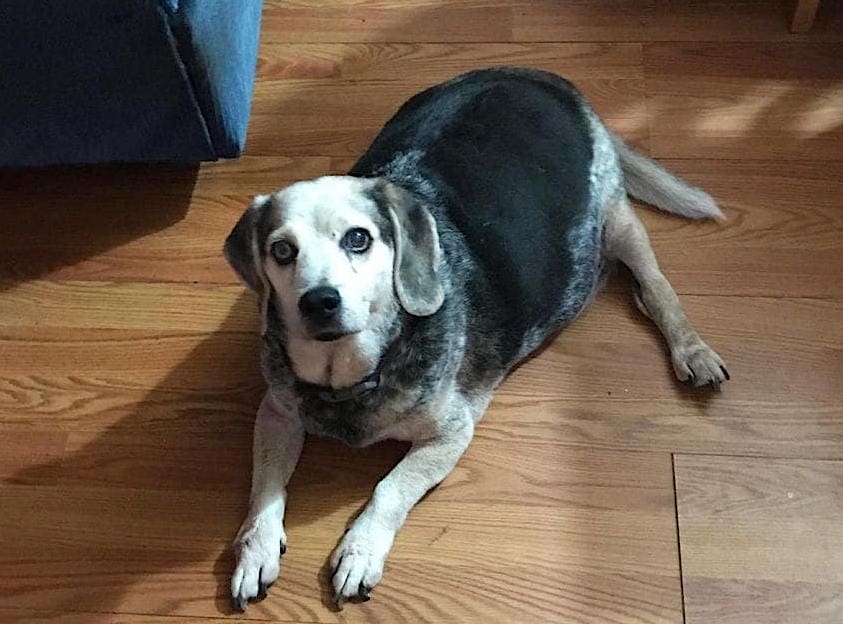
Buddy Lee passed away in 2018. – Claudia Lee?Rip VanFossen | Submitted
Buddy Lee was well known on Bridge Street and beyond for his wandering ways that brought him to his favorite watering holes and other locales in Bradenton Beach and Longboat Key.
After Buddy passed away on Nov. 5, 2018, a memorial marker was placed in the front yard of the Third Street South home Lee and Rip VanFossen lived in at the time, just around the corner from the Bridge Tender Inn.
Buddy’s marker stood with this cross in the yard of a home on Third Street South in Bradenton Beach. – Claudia Lee/Rip VanFossen | Submitted
On July 31, charter Capt. Laura King found Buddy’s grave marker on Egmont Key. King owns and operates the Holmes Beach-based Anna Maria Charters and is also a commercial stone crabber for A.P. Bell Fish Co. in Cortez.
In her free time, King and her son, Wilder, take hurricane debris salvage trips to Egmont Key. Among their discoveries is a commercial cooler King later determined came from an ice cream shop in Bradenton Beach.
Laura King found this commercial cooler on Egmont Key between Hurricanes Helene and Milton. – Laura King | Submitted
“There’s so much stuff out there. I should make a lost and found page. It’s not useful stuff but it’s interesting and distinctive,” King said.
Laura King’s son, Wilder, made this sign with wood and a working permanent marker he found during a salvage trip to Egmont Key. – Laura King | Submitted
“I met Buddy a long time ago and I’ve known Rip forever. I used to work at the Anchor (Inn) many moons ago,” she said.
King texted VanFossen a few days after she found Buddy’s marker. After returning from a scallop hunting excursion, she returned the marker to Lee, a longtime Bradenton Beach resident and decades-long employee at Hurricane Hank’s in Holmes Beach.
“I was so surprised. I’m glad to have it back,” Lee said. “The night before I found out about it, I made him another marker. I was shaking when I heard about this. It’s too strange. I used to say Buddy went on more vacations than I did.”
Because work is currently being done on the house that Lee, VanFossen and Buddy used to live in, Buddy’s marker now hangs inside Lee’s home in a residential unit on the Bridge Tender Inn property.
When contacted by phone, VanFossen said he now lives in Melbourne after spending nine years living on a bridge-less island similar to Jewfish Key and located between Melbourne and Sebastian, where he did a major remodeling job on his sister’s house.
“We had to take a boat back and forth,” he said of his time living on that east coast Florida island.
When discussing Buddy’s marker and the journey it took, VanFossen said, “Isn’t that a hoot? We can’t get rid of him. He keeps finding his way home. He went underneath the Cortez Bridge and the Manatee Bridge and out to Egmont Key. Laura texted me and said, ‘Does this look familiar?’ I said, ‘Yes, that’s definitely Buddy’s grave marker from the yard.’
“At one time, Buddy knew everybody on the Island and everybody knew that dog; but now I don’t know if there’s anybody left. It’s a great memory of the little guy though,” VanFossen said.
A 2018 story about Buddy Lee’s life and passing can be found online here.
Extending approximately 5 miles from Anna Maria Island to St. Petersburg, the mouth of Tampa Bay is fronted by the barrier islands of Egmont Key and Passage Key. The surrounding waters are beautiful, ecologically important and provide anglers with some excellent fishing opportunities. The history surrounding the islands is rich and, in the case of Egmont, goes back some 2,000 years. They seasonally hold some of angling’s prized species, including tarpon, snook and permit.
Egmont Key is a Florida State Park and a National Wildlife Refuge. Steeped in history, the entire island is listed on the National Register of Historic Places. Artifacts and pottery dating back two millennia have been found on the island. The first recorded landing there dates back to a Spanish explorer in 1757 and its recent history spans from the Spanish-American War to World War II. The island is home to the Tampa Bay Pilots and has miles of old brick roads, a holdover from a time when there were over 70 buildings and 300 people living there. It has a functioning lighthouse, rebuilt in 1857 after a hurricane destroyed the original structure. Ever changing, Egmont Key was once 50% larger than it is today.
Passage Key, the southernmost island, is uninhabited and also a National Wildlife Refuge. It was first established as a bird sanctuary in 1905 by President Theodore Roosevelt. At the time, it was a 60-acre island and had a freshwater lake. That all changed in 1921 when it was decimated by a hurricane and has never been the same. Over the past decade, Passage Key has been little more than a constantly changing sandbar but is building back. In the 1970s, the island was designated as a wilderness area. Together the islands hold nesting colonies of all Florida seabirds including the largest concentration of royal and sandwich terns in Florida.
In the spring and summer, schools of tarpon and permit can be sight fished on the vast clear white sand flats that surround Passage Key. During the warm months of the year, there are also schools of sharks and large houndfish on the flats. In the cooler months, trout, redfish and pompano can be found on the edges of the flats and the grass beds to the east side of the key. Houndfish, which resemble large needlefish, gather in schools and, while they are not often pursued by anglers, they’re great sport on flies and light tackle. Small white clousers and lures that resemble baitfish can elicit some explosive strikes.
Egmont Key has a much more varied habitat and also has excellent fishing for tarpon, snook, permit and sharks. Old structures, vestiges of the Spanish-American War, can be seen along the western side of the Key, many of which are submerged. They provide a perfect habitat for species including pompano, trout and sheepshead as well as other pelagic species that swim these waters. On the east side, the pilot’s dock holds sheepshead, black drum, trout and redfish. Extensive grass flats there are home to trout, pompano, Spanish mackerel and redfish. A ship’s channel north of the key provides access to Port Manatee and the Port of Tampa. This deep waterway holds a plethora of gamefish including kingfish, Spanish mackerel and little tunny. The exposed ledges along the channel are also home to mangrove snapper, grouper and sheepshead.
If you haven’t explored these historical islands, a trip there will be eye-opening, and, whether you’re swimming in the clear Gulf waters, exploring the rich history or angling for a trophy, you’ll find these islands enchanting.
ANNA MARIA – Seventy-year-old pianist, composer and part-time Anna Maria resident Rob Grant released his debut album, “Lost at Sea,” in June and it went to number one on the United Kingdom’s Official Charts in the Classical Artist Albums category.
Twelve of the album’s 14 nautical-themed songs are instrumental compositions featuring Grant on piano and additional orchestration composed and recorded by Luke Howard. The soothing, ethereal and somewhat haunting instrumentals include “The Poetry of Wind and Waves,” “Setting Sail on a Distant Horizon,” “The Mermaids Lullaby,” “Song of the Eternal Sea” and “Reflections of Light on Water.”
Rob Grant creates his compositions while playing the piano. – Chuck Grant | Submitted
The songs “Lost at Sea” and “Hollywood Bowl” feature Grant’s daughter on vocals, 11-time Grammy nominee Lana Del Rey. The two singles featuring Del Rey charted in the top five of the UK’s Official Charts and a techno-inspired remix of “Lost at Sea” created by the Brazilian DJ “Anna” is doing well on various music streaming services.
Lana Del Rey and her dad, Rob Grant, make beautiful music together. – Rob Grant | Submitted
Grant and his wife, Patty, bought a home in Anna Maria 20 years ago and have been seasonal residents since, with their primary home still in the Adirondack mountains in upstate New York.
Grant recently discussed his music, his love of the water, his well-known daughter and his successful entrepreneurial career while piloting his 19-foot Parker powerboat around Egmont Key.
“Being out on the water is what inspired the album. We came out here and anchored the boat by this beautiful sandbar with the breaking waves in the background and shot several promotion videos. We had this huge school of stingrays sweep in under the boat and it made for a really cool video,” he said.
Grant began playing piano as a teenager but didn’t pursue a music career. Instead, he worked as copywriter for a major advertising firm in New York City where he came up with the “Thank Goodness It Fits” marketing slogan for Playtex bras.
“That became a $100 million advertising campaign,” he said.
Before burning out in the hyper-competitive world of advertising, Grant transitioned into his current role as a real estate broker. In the 1990s, when the internet was still in its infancy, he was also an early and highly successful worldwide investor in then-unused internet domain names related to the auto industry, education, music, publishing and especially real estate. Years later, he sold the TorontoRealEstate.com domain for $140,000 and he just recently sold the TampaRealEstate.com domain.
LOST IN MUSIC
“I never had a piano lesson. I can’t read sheet music and I play entirely by ear. I begin to hear chords and notes that I like and I’ll intuitively put them together to create an interesting composition. Often my music has been described as almost sad and haunting, but it’s very relaxing,” Grant said.
Grant and Del Rey wrote their first song together in 2021.
“I was in the living room of Lana’s house and I was just randomly playing a song I was improvising. She came down and said do it again. She asked if could create a bridge so I fooled around for a minute, created a bridge and she began to sing. Within 35-40 minutes we had written ‘Sweet Carolina,’ the last track on her ‘Blue Banisters’ album,” Grant said.
Released in 2021, “Sweet Carolina” earned Grant a songwriting credit and he played piano on the recording.
Seeking feedback on some of his other compositions, Grant sent five instrumental songs to Ben Mawson and Ed Millet at the TAP Management firm that manages his daughter.
“I didn’t really have any intention of doing a record deal, because I didn’t think I could do a record. A day later, Ben called and said, ‘Rob, this is beautiful. I can get you a record deal.’”
He then signed a two-record deal with Decca Records, which is affiliated with Interscope Records, the label Lana is on.
“The song ‘Lost at Sea’ happened when we were in the Henson recording studio, where Jim Henson recorded the Muppet movies. I was recording with Jack Antonoff and Laura Sisk and Lana’s watching me through the glass. Lana told Jack to get a microphone out and she began to sing. As I’m playing, she’s improvising these lyrics and within an hour we’d written this beautiful, hypnotic song,” Grant said. “The way I play, which is essentially improv and spontaneous, is essentially the way Lana creates lyrics. When you put us together, you get this fascinating chemistry.”
The “Lost at Sea” music video features Grant and Del Rey on a 55-foot sailboat in the Pacific Ocean and includes old VHS footage of the Grant family.
“Hollywood Bowl” was composed in Del Rey’s Los Angeles home and includes the lyric “Twice I sang at the Hollywood Bowl and my dad plays just like Billy Joel.”
Regarding that song, Grant said, “I told her I’ve got this new song I wanted to play for her. She’s got a baby grand in her living room. I sat down and began to play and right away she got a mic and began to sing. She looked around her living room and saw an old picture of the Hollywood Bowl. She incorporates that into her lyric. And then, what rhymes with Hollywood Bowl? Billy Joel,” Grant said.
Joining the interview by phone from Los Angeles, Del Rey said she hasn’t yet performed “Lost at Sea” or “Hollywood Bowl” in concert yet, but she hopes to perform “Hollywood Bowl” someday with her dad on piano. “I think him sitting in would be really fun,” she said. “Hollywood Bowl would probably be a fun one to do.”
“With a song like ‘Hollywood Bowl,’ I heard him play a few chords and I was looking at my old black and white picture of the Hollywood Bowl and I just started singing everything that was on my mind,” she said.
The lyrics for “Lost at Sea” include the lines, “I was lost at sea ‘til you found me … Happily, I was found, lost at sea.”
“Maybe there’s an element of making lemonade out of lemons by choosing some of those words,” Del Rey said. “Also, he is out on the ocean so much of the time. Water really is his happy place. As a realist, I also think it serves as a warning to not isolate.”
Rob Grant’s happy place is on the water. – Joe Hendricks | Sun
Del Rey treasured the extra quality time she got to spend with her dad while writing and recording “Lost at Sea” and “Hollywood Bowl.”
“At first it felt kind of like an extension of everything we do, because we’ve done so many little non-musical things together. It could just be playing a song or taking a walk, because no time spent together is ever lost on me. So, that was very special. And Dad’s had the wind at his back. He’s had a better experience putting out a record than anyone I know,” she said.
The “Lost at Sea” album is available on CD and vinyl and the “Hollywood Bowl” 45 single is available on transparent red vinyl with “The Poetry of Wind and Waves” on the B-side. – Submitted
In closing, Grant said he takes great pride in the fact that he embarked on this musical journey later in life. “I hope my story gives inspiration to other people my age who have hidden talents they never pursued. I would encourage anyone who’s got artistic ability, and hasn’t pursued it, to go do it.”
Rob Grant received this keepsake after “Lost at Sea” charted #1 in the Classical Artist Albums category. – Rob Grant | Submitted
The “Lost at Sea” album and CD, and the “Hollywood Bowl” single are available at Amazon.com, the Decca Records website, the Interscope Records website. You can also visit RobGrantMusic.com.
Egmont Key State Park and National Wildlife Refuge, an island at the mouth of Tampa Bay off the north end of Anna Maria Island, is accessible only by boat but well worth the trip.
Named for John Perceval, the second Earl of Egmont and a member of the Irish House of Commons in 1763, it was used by the U.S. Army to detain Seminole prisoners at the end of the third Seminole War in 1858.
Both Confederate and Union troops occupied the island during the Civil War, and Fort Dade was later built on it to defend against Spanish attack during the Spanish-American War. Parts of the fort are still intact; some have fallen into the Gulf of Mexico.
The lighthouse, which dates to 1858, replaced the original lighthouse built 10 years earlier and is still operated by the U.S. Coast Guard as an aid to navigation.
The island was owned by the U.S. Department of War, then the Department of Defense until 1974, when it became the property of the U.S. Department of the Interior.
The Tampa Bay Pilots maintain quarters on the island, an ideal place to dock the pilot boats used to transport harbor pilots to tankers entering and leaving Tampa Bay.
I often joke that I took up fly fishing so I wouldn’t catch many fish, and it seems to be working pretty well. While uttered in jest, I wouldn’t suggest that anyone take up fly fishing to catch more fish. Still, I haven’t run into any seasoned fly anglers that decided to go back to fishing with live bait.
Hunter Parrish with a nice fly-fishing catch. – Rusty Chinnis | Sun
Fly fishing is first and foremost fly casting, and that’s what appealed to me – that and the thrill of casting to an individual target and working a fly to fool them into hitting. Adding to the satisfaction of a sight-fished tarpon, redfish or tripletail is tying the fly that fools them. Committing to catching fish on the fly is challenging, no doubt about it, and even the most accomplished fly angler started with the basics and a dose of frustration.
This past week I had the pleasure of having longtime friends Benny and Hunter Parrish on the boat. The father and son duo are both committed to learning the art of fly casting. Hunter recently relocated to Ft. Collins, Colorado, where he’s catching the “fever” on western trout streams. Benny has had an interest in fly fishing for years, but it was this past summer while fishing with Hunter in Colorado that he discovered the most important element, a compelling reason – the opportunity to share this art with his son.
The day after Thanksgiving when we planned our outing, we were greeted with the best weather we’ve seen locally in more than a month – bright blue skies, light winds and clear Gulf waters. We started the morning running crab trap lines off Anna Maria Island as we made our way north towards the mouth of Tampa Bay. About halfway there, we ran across a really nice tripletail laying on its side with its nose right on a crab trap line. Coming off plane, I dropped the trolling motor and headed back towards the float as Hunter got ready with his 8-weight outfit and shrimp fly. The fly was rigged with a weed guard to prevent a hookup on the float or line. Tripletail are ambush feeders and lay on their sides to mimic seaweed that’s often trailing from the floats. Unlike most species, you need to strip the fly right into their face for the best chance at a bite.
Hunter got a take on the first cast but missed it, so we motored back around for another pass. This time the tripletail wouldn’t move off the line to take the fly, so I had Hunter make a cast that brought the fly right to its face. Even fish reluctant to feed can’t resist just having to open their mouth for an easy meal. It took a couple of casts but when the fly entered the “sweet spot,” the fight was on. The tripletail made a strong run when it felt the hook and jumped clear of the water before making another run. It was a team effort as Hunter worked on line management issues as the fish ran back towards the boat and loose fly line wrapped around angler and boat. Our luck held and after getting the fish back on the line, we were able to land it.
We saw a couple of smaller tripletail that day but were unable to get them to bite. Continuing with our plan, we poled the edges of a flat on Egmont Key where we found schools of snook. Once again, Hunter was on the bow and made a perfect cast to a group of cruising snook. As the fly passed in front of the fish, one 24-inch snook broke from the ranks and attacked the baitfish pattern. This time Hunter cleared the line as the snook made its first run and then played the fish on the line, enjoying several strong runs and jumps. We fished the school a little longer, but the tide changed and they lost interest in biting, so we decided to call it a day.
While this was a great day of catching, it had its share of frustrations as father and son both struggled at times with the new tackle. I assured them that every fly caster has experienced the same and it’s sort of a “rite of passage” learning experience. It’s what every angler experiences if they are committed to learning to fly.
ANNA MARIA ISLAND – Those who went boating on Saturday near Anna Maria Island were among the first to do so following the executive order the Florida Fish and Wildlife Conservation Commission (FWC) issued Friday afternoon.
Issued at the direction of Florida Governor Ron DeSantis in response to the coronavirus (COVID-19) pandemic, FWC Executive Order 20-09 sets forth temporary conditions that now apply to boaters using Florida waterways.
While the order remains in effect, recreational vessel occupancy is limited to no more than 10 persons per vessel and recreational boaters must maintain a minimum distance of 50 feet from other vessels.
“This distance provision does not apply to permitted mooring fields, public or private marinas or any other permanently installed wet slips, and does not apply to vessels underway unless they are tied, rafted or moored to another vessel,” the FWC executive order says.
“This shall expire when the Governor’s Executive Order 20-52, expires unless rescinded or superseded at a sooner date,” the FWC order says.
Applicable statewide, the FWC order was issued on Friday, March 27 – one day after the public boat ramps in Manatee County closed.
The Manatee County boat ramp closures provide exceptions for the commercial fishermen still allowed to use the Coquina South Boat Ramp in Bradenton Beach and the Riverside Boat Ramp in Palmetto.
“Commercial fishing operations with a Florida Saltwater Products License (SPL) for commercial fishing will be allowed to launch at the two boat ramps,” said the Wednesday, March 25 press release issued by Manatee County.
The county boat ramp closures do not provide any exceptions for charter captains.
Manatee County officials also closed Beer Can Island – also known as Greer Island – which is actually a peninsula extending under the Longboat Key bridge.
With the FWC executive order and the county boat ramp closures now in effect, many recreational boaters gathered legally offshore of Jewfish Key on Saturday afternoon.
These boaters gathered near the northern tip of Jewfish Key on Saturday afternoon. – Joe Hendricks | Sun
From the vantage point of the Longboat Pass Bridge, there appeared to be fewer boats in that area than there were on Sunday, March 22. The boats gathered Saturday were less densely clustered and more spread out than what was witnessed during the previous weekend.
The Manatee County Sheriff’s Office Marine Unit patrolled the Intracoastal Waterway waters near Jewfish Key on Saturday afternoon, and there were no boats beached at Beer Can Island.
Boaters gathered between the City Pier and the Rod & Reel Pier in Anna Maria on Saturday afternoon. – Joe Hendricks | Sun
At the north end of Anna Maria Island, boaters gathered offshore near the City Pier and the Rod & Reel Pier in Anna Maria.
And large numbers of boaters gathered near Passage Key and Egmont Key, north of Anna Maria Island.
Large numbers of boaters gathered near Passage Key on Saturday afternoon. – Joe Hendricks | Sun
Sarasota boat ramps closed
On Saturday evening, the city of Sarasota announced the closing of two city-owned public boat ramps.
According to the press release the city of Sarasota issued Saturday evening, the city-owned 10th Street Boat Ramps, the City Island Boat Ramps and the Bird Key Park parking lot were closing to the public at 6 a.m. on Sunday, March 29.
The press release noted the closure was “part of emergency orders related to the COVID-19 public health emergency.”
When contacted Saturday evening, city of Sarasota Senior Communications Manager Jan Thornburg was asked if the Manatee County boat ramp closures impacted the city’s decision to close its public boat ramps.
“We’ve seen an increase with boaters who aren’t following the CDC’s social distancing guidelines. We’re not sure where they are from,” Thornburg said.
Thornburg was asked if commercial fishermen will still be allowed to use the two boat ramps closed to recreational boaters.
“Right now, the interpretation is that all commercial fishermen will be exempted. The city attorney may consider revising this emergency order to include this exemption,” Thornburg said.
According to the press release, “Those who do not voluntarily comply with the new emergency orders related to the closure of the boat ramps and the Bird Key Park parking lot may be issued a citation by a sworn Sarasota police officer. A violation would be considered a second-degree misdemeanor.”
EGMONT KEY – Come to historic Egmont Key State Park on Saturday, Nov. 9 and Sunday, Nov. 10 and “Discover the Island.”
The event is an annual fundraiser for the Egmont Key Alliance, a non-profit citizen support organization dedicated to protecting, restoring and preserving the key, off the northern tip of Anna Maria Island in Tampa Bay.
Egmont Key lighthouse – Cindy Lane | Sun
Egmont Key has been a prison for Seminole Indians and Confederate soldiers, a refuge for runaway slaves, a hideout for bootleggers during Prohibition and a wartime landing field. It’s now a harbor pilot base, a recreational boating destination and a bird, sea turtle and gopher tortoise refuge.
Watch Civil War re-enactors set up camp, demonstrate drilling maneuvers and engage in skirmishes, and see the Spanish-American war exhibit sponsored by the Tampa Rough Riders.
Visit the 1858 working lighthouse, which replaced one built in 1848 that was destroyed by storms. The light, which once ran on whale oil and lard, is now electric. Talk to the lighthouse keeper reenactor, and see an exhibit by the Florida Lighthouse Association and the Anclote Key Lighthouse Group.
Learn about the island’s unique gopher tortoise population from expert Betty Rossie at the Battery Howard. Enjoy a presentation about the sea life around Egmont Key including shorebirds and sea turtles, and see the Boyd Hill birds of prey exhibit. A geocaching exhibit and kids’ fossil pit will be set up at the guardhouse.
Egmont Key Fort Dade – Cindy Lane | Sun
Take group or self-guided tours about plants, wildlife, beach dynamics and military history, including the ruins of the U.S. Army Fort Dade Military Reservation and the USS Narcissus, a sunken warship just offshore from the island.
The Egmont Key Shanty Singers will sing folk music, and hot dogs, drinks and souvenirs will be available for purchase.
A presentation, “Remembering the Histories of Egmont Key: The Seminole Experience,” and a silent auction are on Saturday only.
Shuttle ferries will be leaving Fort DeSoto Bay Pier in Tierra Verde in Pinellas County (NOT DeSoto National Memorial in Bradenton) from 9 a.m. to 2 p.m., with the last ferry leaving Egmont Key at 4 p.m.
Ticket sales open at 8:30 a.m. Boarding begins at 9 a.m. Ferry and admission prices are adults, $25; ages 12-18, $15; ages 6-11, $10; children 5 and under, free.
For more information, visit the Egmont Key Alliance website.
EGMONT KEY – The renourishment of Egmont Key’s critically-eroded beaches is at a standstill because the project resulted in the deaths of six sea turtles, the maximum allowed.
The $10 million project, which began last month and was suspended on Dec. 2, is expected to resume in late spring or early summer, before hurricane season, said Susan Jackson, with the U.S. Army Corps of Engineers’ Jacksonville corporate communications office.
Egmont Key, home of historic Fort Dade, lies north of Anna Maria Island in Tampa Bay. Its western shore was set to get sand dredged from 17 miles of the Tampa Harbor Egmont and Mullet Key channel cuts.
Egmont Key beach renourishment is halted due to turtle deaths. – Katie Field | Sun
The dredge removed about 100,000 cubic yards of material from the channel, completing about 25 percent of the dredging project. About 40,000 cubic yards of sand was placed on the beach at Egmont Key from Nov. 26 to Dec. 2, she said, adding that the channel is not yet in critical need of dredging, so the delay is not expected to cause problems with shipping.
Six turtles were “taken,” or killed, including three loggerheads and three Kemp’s ridleys, between Nov. 25-30 during the Tampa Harbor project, and were identified by two endangered species observers on board the dredge around the clock, she said.
The word “take,” defined by the federal Endangered Species Act, means to “harass, harm, pursue, hunt, shoot, wound, kill, trap, capture, or collect, or to attempt to engage in any such conduct.”
Egmont Key beach renourishment is stalled until spring or summer. – Katie Field | Sun
The Corps is permitted to take four loggerheads and three Kemp’s ridleys in all its Gulf of Mexico dredging projects from Oct. 1, 2018 through Sept. 30, 2019 under NOAA’s National Marine Fisheries Service regulations, Jackson said. Most takes are caused by dredge suction.
Egmont Key is a nesting ground for sea turtles, gopher tortoises and shorebirds, and is protected by state and federal law as Egmont Key State Park and Egmont Key National Wildlife Refuge.
Sea turtles broke nesting records on Egmont the past two years, with the 2018 season that ended on Oct. 31 producing 150 nests, according to the Egmont Key Alliance.
The project was timed for winter in part to avoid sea turtles and allow wave action to naturally sort the sand and silt to make it suitable for the 2019 turtle nesting season, which begins May 1.
EGMONT KEY – The U.S. Army Corps of Engineers is supplying the weapons in the only battle Fort Dade has ever seen – the one against erosion.
Historic Egmont Key is slated to receive sand to shore up what’s left of the 1899 fort when the Tampa Bay shipping channel is dredged for maintenance beginning this month.
The $10 million project should take about five months to complete.
Egmont’s beaches will not get the high-quality white beach sand recently collected from shoals to its north; that is being used to renourish Pinellas County beaches, according to Pinellas County spokeswoman Ashley Johnson.
Egmont Key, north of Anna Maria Island, will get the sand dredged from 17 miles of the Tampa Harbor Egmont and Mullet Key channel cuts, according to Susan Jackson, of the Corps’ Jacksonville corporate communications office.
The sand will be placed in the middle of Egmont Key’s west side, which faces the Gulf of Mexico, then the project will move to the north end of the island and make its way south, according to the project description.
The dredged material “can be beneficially placed on Egmont Key rather than at a dredge disposal site,” she said.
Nature preserve
The key is protected by both state and federal law as Egmont Key State Park and Egmont Key National Wildlife Refuge, and is a nesting ground for shorebirds and sea turtles, as well as a gopher tortoise preserve.
But the animals don’t seem to mind about the quality of the dredged sand, said Richard Sanchez, president of the Egmont Key Alliance, a citizens’ group working to restore and preserve the key.
Egmont has been renourished with dredged material from the shipping channel before, and sea turtles broke nesting records the last two years, with the 2018 season that ended on Oct. 31 producing 150 nests, he said.
Placing the sand in the early part of the winter season provides time for wave action on the beach to naturally sort the sand and silt, project biologist Aubree Hershorin said, adding, “This is important, because it ensures the beach is as suitable as possible for nesting sea turtles that will begin using the area in April.”
Erosion problem
Egmont Key was used by the U.S. Army to detain Seminole prisoners at the end of the third Seminole War in 1858, and was occupied by both Confederate and Union troops during the Civil War. It later became the site of Fort Dade, begun in 1899 to defend against Spanish attack during the Spanish-American War.
The fort, completed in 1906, served its defensive purpose so well that no battles were ever fought there.
But it has been losing the battle against the Gulf and its storms; parts of the fort are submerged.
The dredge project “will put another Band-Aid on it,” Sanchez said.
Erosion control geotubes installed on the north end of Egmont seem to be holding the Gulf at bay there, he said, although Hurricane Irma moved some of the sand off the north tip in 2017.
A $13 million Corps plan to control erosion and renourish Egmont Key has been in limbo for years, he said. Despite all the required agency approvals being in place, it’s hard to justify funds for a largely-uninhabited nature preserve when people need funds to rebuild from hurricanes, he said.
The island is a temporary home for the Tampa Bay Pilots who maintain living quarters at their docks, where pilot boats transport them to tankers entering and leaving Tampa Bay.
A lighthouse keeper also has quarters on the key. The working lighthouse dates to 1858, and replaced the original lighthouse built 10 years earlier. It is operated by the U.S. Coast Guard as an aid to navigation.
Egmont Key was named for John Perceval, the second Earl of Egmont and a member of the Irish House of Commons who died in 1770. The title “Earl of Egmont” died with the death of the childless Thomas Frederick Gerald Perceval, the 12th Earl of Egmont, in 2011.
The island has been the property of the U.S. Department of the Interior since 1974. Prior to that, it was owned by the U.S. Department of Defense, previously known as the U.S. Department of War. The key has been on the National Register of Historic Places since 1978.
A local historical landmark has landed Egmont Key on the Florida Trust for Historic Preservation’s 2017 “Florida’s 11 to Save” list.
The small island located to the north of Anna Maria Island at the mouth of Tampa Bay is threatened by erosion, something which could eventually see the historic site completely underwater. The island is home to a historic lighthouse, which is still in use, an oil house, guardhouse, park ranger residence and ruins of artillery aiming towers once part of Fort Dade.
Being on this year’s list is an attempt to draw more attention to the island in the hopes of saving it from the encroachment of the sea. The properties listed in the 11 to Save program are among the most threatened historic properties in Florida. Joining Egmont Key on this year’s list are the Mosley Plantation in Brandon, Jackson House in Tampa, the Coconut Grove Playhouse in Dade County and the Firestone Building in Tallahassee, among others. Egmont Key is the only historic site on the list threatened by erosion.
Down by half
Once estimated to be approximately 580 acres in size, the island is now about 250 acres, according to the Egmont Key Alliance. Some of the island’s historic sites have already been claimed by the sea and now are a snorkel and dive site located 100 yards offshore. Erosion of the island places all of the historic structures in danger of being damaged or completely lost to rising tides due to storms, despite beach renourishment efforts.
A 2014 National Climate Assessment report conducted by the U. S. Global Change Research Program predicts global sea level rises of 12 to 48 inches by 2100. The report notes that global sea level has risen approximately 8 inches since 1880, when reliable record keeping began. Part of this rise is attributed to atmospheric heat from emissions.
It’s estimated the oceans absorb about 90 percent of this increased heat, resulting in thermal expansion of the water. Another contributing factor is the slow melting of glaciers and ice sheets. The report notes that sea level rise is expected to continue past 2100, regardless of heat emissions produced from human activity because the oceans respond slower to climate change than land masses.
The history of Egmont Key dates back to pre-Columbian times and the early Spanish explorers. It also has a rich military history.
During the Third Seminole War, the island was used as a deportation site. It was occupied by Confederate blockade-runners and later was a staging point for the Union Navy during the Civil War, served during the Spanish-American War as a quarantine area and was a World War I training area.
Once home to about 300 residents in 1910, the island was listed on the National Register of Historic Places and became a wildlife refuge in 1974. Its current incarnation as Egmont Key State Park began in 1989, though the United States Coast Guard still owns and maintains the lighthouse and 55 acres on the north end of the island. The park is accessible only by boat and is managed by the Florida Park Service.
BRADENTON – Mark Green stands at a grave marker at the Fogartyville cemetery, refers to an old, hand-drawn map and walks a few paces, ducks under a moss-draped tree, passes a bench and several headstones, finally reaching a patch of grass near the roadway that meanders through the historic graveyard.
There are no flowers, no inscriptions, not even a headstone or marker, but according to the map, it must be the place.
Third Place
Investigative Reporting
2015
The probable resting place of Azaline Bahrt at the Fogartyville Cemetery, Bradenton. – Cindy Lane | Sun
Green, the family historian for the Cortez Green and Fulford families, thinks it’s the grave of several Fulford family members, including Capt. Carl William Bahrt, a ship captain from Key West, born in Denmark in 1835.
It’s been a long road to Fogartyville, beginning at a historic cemetery on Egmont Key, an island off the north end of Anna Maria Island that was once a military fort, but is sparsely inhabited today by a lighthouse keeper and on-duty Tampa Bay harbor pilots.
Egmont Key lighthouse – Cindy Lane | Sun
Earlier this year, the Anna Maria Island Sun uncovered the history of many of the people buried on Egmont Key in the late 1800s whose remains were relocated in 1909 to the St. Augustine National Cemetery in northeast Florida. They included “Indian (Unknown),” thought to be a Seminole chief, one of Teddy Roosevelt’s Rough Riders, so-called “colored” military hospital workers, a Tampa man’s formerly long-lost great-great-grandfather, Azaline M. Bahrt, the daughter of an Egmont Key lighthouse keeper named Coons, and her daughters, Marie Bahrt and infant Carlotte Bahrt.
Online in Washington state, William Bahrt saw the names of the three Bahrt family members in one of the stories in the series, prompting a call to The Sun and a renewed effort to learn more about his family history, including sorting out the identities of the family’s two Azaline Bahrts.
“Azaline Bahrt is a mystery, and I have been looking since 2007 and can find hardly anything about her or her family,” William Bahrt wrote in an e-mail to his relative, Mark Green.
“One mystery is exactly who the Azaline Bahrt was that had daughters buried on Egmont Key,” Green wrote.
The Sun shared evidence uncovered in the series that Azaline Bahrt and her two girls likely died from yellow fever on Egmont Key, where William Bahrt fondly recalls spending his childhood summers in the 1930s with his harbor pilot father and their family.
Grateful for the new information, Bahrt was inspired to resume researching the whereabouts of the grave of the man he thinks was Adaline’s husband, Capt. Carl William Bahrt.
“I am still mystified by the story of Carl Bahrt and his connection with Azaline Marie Coons, the daughter of the Egmont Key lighthouse keeper,” he wrote Green, who shouldered the quest this year during visits to Cortez to see his mother, Mary Fulford Green.
After some research, Green concluded that the captain was buried at his home in 1899 and his remains later relocated to the Fogartyville cemetery in Bradenton, along with several other family members. But none of the graves in the Fogartyville cemetery list the Bahrt name.
Green located a 1920s survey map of the cemetery that showed a plot for the Bahrt family near some plots that are marked with early Bradenton family names, including Fogarty.
He invited The Sun to help him canvass the graveyard, following the map like Indiana Jones.
“This must be it,” he said, pointing to an empty area that corresponds with the Bahrt plot on the survey map, bringing to rest the search for the captain’s grave, at least until more information is uncovered.
In a nutshell years in the making, “We think Capt. Bahrt married Azaline Coons, she got sick from yellow fever and died with her two girls on Egmont Key, they were buried on Egmont and moved to the St. Augustine cemetery. He later married my grandmother, Catherine Davison, and they had a daughter they named Azaline Marie, after the first Azaline, and he and Catherine were buried in Fogartyville,” Bahrt said from his Washington home last week. “That second Azaline Marie Bahrt is my aunt, who ended up an O’Brien in California, and that’s all I know. I would love to be able to follow up on that line in the family.”
But it’s Christmas, and the doorbell is ringing, and the dog is barking, and as the descendants of the Bahrts of Egmont Key gather for their holiday celebrations, there’s no time to dwell on Auld Lang Syne just yet.
“Gotta go, the family’s here,” Bahrt said. “Merry Christmas!”
ST. AUGUSTINE – When Rob Whitehurst began looking for the grave of his great-great-grandfather, the Internet was new, with scant information, and research was challenging.
When he learned that John Alexander Whitehurst was buried on Egmont Key in the cemetery next to the lighthouse, it was like striking gold. He recorded his findings on a website, Findagrave.com and laid his search to rest.
Third Place
Investigative Reporting
2015
Years passed. Then in 2015, research by The Sun about the people buried in the Egmont Key cemetery uncovered a handwritten ledger on Ancestry.com showing that 12 people, including Spanish-American War soldiers, an “Indian (Unknown),” and Whitehurst’s great-great-grandfather, had been relocated in 1909 from Egmont Key to the St. Augustine National Cemetery.
St. Augustine National Cemetery records about Egmont Key grave relocations.
The website also pointed to Findagrave.com, and “Rob,” no last name, who was listed as the author of a brief biography of his ancestor. A 50-50 shot that his last name was Whitehurst paid off, and one Google search and two e-mails later, Rob Whitehurst felt like he had struck gold again.
His family had always heard the story that a family member’s remains had been moved, he said, but Whitehurst thought it was probably Daniel Scott Whitehurst, who died in 1862 in Pinellas County at the hands of Confederate forces who attacked him and his cousin, John Whitehurst – both Union sympathizers – while they were getting provisions on the mainland to take back to Egmont Key.
In the attack, John Whitehurst was wounded, escaped to his boat and was rescued at sea two days later and taken to Egmont Key, where he had been living with his family under the protection of the Union Navy that occupied the island.
He died from his wounds and was laid to rest in the Egmont Key cemetery, until 106 years ago.
Reunion
The St. Augustine National Cemetery and its dead lie enclosed within a low, white stone wall in the historic Old Town section of the oldest city in the U.S.
Like a mini-Arlington, uniform white headstones make straight rows under the shade of moss-draped oaks.
The American flag whipped briskly in the breeze off the Matanzas River as Whitehurst walked down the central sidewalk one chilly day last week, getting his bearings. The Google Earth image he had consulted showed the back of most of the headstones, with the inscriptions on the opposite side, but he knew the grave was in section A, and he had a landmark to navigate by.
Three pyramids and an obelisk drew Whitehurst toward the south end of the cemetery. The monument is the resting place of Major Francis L. Dade and most of his regiment, killed in the Second Seminole War in 1835. Fort Dade, on Egmont Key, was named for him.
Walking toward the monument, Whitehurst called off numbers on the headstones, walking faster as he neared the number he sought. A headstone without a number, naming John O’Neil, stalled him for a moment. Then, he stopped.
He bent down to read 248, and the name, and placed his right hand on his great-great-grandfather’s headstone.
“Here he is,” he said.
Neighbors
The simple stone’s only inscription is “Whitehurst.”
To the right of the grave is a newer headstone, which replaced one like Whitehurst’s.
Both have shields traced around the inscription, like others in the cemetery. According to the headstone, Trooper John O’Neil, of New Mexico, fought with the 1st U.S. Volunteers cavalry regiment, E Troop, in the Spanish-American War, with Teddy Roosevelt’s Rough Riders.
During the war, O’Neil was transported by ship from Cuba to Egmont Key for medical treatment, but there was a lack of medical facilities on the island and he was sent back to the ship, where he died, according to the book, “Egmont Key: A History.” His remains were among the 12 burials relocated to St. Augustine. The Tampa-based Rough Riders organization placed the new headstone in 2004.
That gave Whitehurst the idea to investigate replacing John Whitehurst’s headstone, but he discovered the cost would be prohibitive without assistance from a historical organization, he said.
Still, Whitehurst’s headstone has more information than some of the other relocated Egmont Key dead.
Many headstones in the St. Augustine cemetery read “unknown” or are blank. “Indian (Unknown),” as listed on the St. Augustine cemetery ledger, is nowhere to be found. Neither is Azaline M. Bahrt, of the Egmont Key lighthouse keeper’s family, whose name is listed on a plaque at the Egmont Key cemetery, although her daughter, Marie Bahrt, is recorded at No. 316 and a related infant, Carlotte Bahrt, is at No. 287.
Private J.A. Brainerd, Company A, 26th Michigan Infantry, is at No. 283. Infantryman James Shannon, listed as Joseph Shannon on the Egmont Key plaque, is at No. 274. Seaman Robert Bentson, of the U.S. Lighthouse Tender “Laurel,” listed as Benton on the St. Augustine ledger, is at No. 276.
Like “Indian (Unknown),” “Colored Soldier (Unknown)” is nowhere to be found. Charles Williams, at No. 279, was listed as a “colored” soldier on the Egmont Key plaque, but may have been misidentified; his name appears on the St. Augustine ledger directly above the entry “Colored Soldier (Unknown);” the two lines appear to have been mistakenly combined on the Egmont Key plaque.
A few steps away from Whitehurst, at No. 256, is William Rull, who is listed as Rull/Ruth in the St. Augustine ledger, and is identified as a “colored” hospital attendant with the U.S. Marine Hospital Service on the Egmont Key plaque. Southern cemeteries in the 20th century often separated black and white burials, but not here. Whitehurst said his great-great-grandfather, a Southern resident who was a Union sympathizer and scouted for the Union Army, “was right about slavery.”
John Whitehurst’s dying wish was that his three sons, 12, 8 and 6, enter the naval service, according to a report by Lieutenant J.C. Howell, who ordered his burial. The older two were accepted the month after his death, but his youngest, Harney Butler Whitehurst, was not. He became the great-grandfather of Rob Whitehurst.
Whitehurst has visited a dozen or so cemeteries to visit family members’ graves, but this one is special.
“I didn’t really think about it until now,” Whitehurst said, looking at the headstone. “If it wasn’t for him, I wouldn’t be here.”
EGMONT KEY – Underneath Egmont Key, there’s even more history than its century-and-a-half-old lighthouse, the ruins of its Spanish-American War fort and its 1905 red brick road, now used mostly by gopher tortoises.
Underneath Egmont are real people who really made history in the 1800s.
Third Place
Investigative Reporting
2015
From Anna Maria Island’s north end, you can see the key’s landmark lighthouse, which stood watch as Colonel Teddy Roosevelt and his Rough Riders left for the Spanish-American War in 1898.
Just beyond the picket fence surrounding the lighthouse keeper’s home is one of two cemeteries on the island.
Another, older one used from 1903-1912 near Fort Dade, on the western side of the island facing the Gulf of Mexico, has been reclaimed by the sea along with some of the ruins of the fort, with no known records of its location or occupants.
But the “new” one, used in the last half of the 19th century, is well kept. Covered in clean white sand, an American flag flies overhead, and white crosses approximate the locations of gravesites. The crosses bear no names, but two plaques list the dead whose names are known, and describes those who are not.
A brick road on Egmont Key. – Cindy Lane | Sun
Among the 40 occupants – and former occupants – of the Egmont Key Lighthouse Cemetery is the descendant of one of the Mayflower Pilgrims, a Seminole Indian chief, a Rough Rider, a Southerner who was a Union sympathizer and many victims of yellow fever and typhoid fever who died on Egmont during the Civil War (1861-65).
More Civil War dead lie aboard the wreckage of the Naval vessel U.S.S. Narcissus, which sank offshore at the end of that war and was dedicated last month as an archeological preserve and recreational dive site.
Egmont Key lighthouse – Cindy Lane | Sun
The key has seen other wars. Fort Dade was built to defend Tampa Bay during the Spanish-American War. In the 1920s and 1930s, it was a hideout for bootleggers during the war against alcohol – Prohibition. During World War II in the 1940s, it was used as a training base.
But the first wars involving Egmont Key were the Seminole Wars.
The Seminoles
In the 1840s and 1850s, the U.S. Army detained Seminole Indian prisoners on Egmont Key, a natural fortress because of its limited accessibility.
One escaped, one committed suicide, and some died from disease and other causes.
The Egmont Key jail. – Cindy Lane | Sun
Each of the two plaques at the cemetery lists the names of 20 people who are or were once buried there. On one plaque, five members of the Seminole tribe and their dates of death on Egmont Key are listed: Chief Tommy (Sept. 5, 1857); Seminole child, 12 months (April 24, 1852); Seminole child, 6 months (June 12, 1852); Seminole boy (July 27, 1852); and Seminole girl (1857).
In an ornate, but apparently hastily handwritten ledger at the St. Augustine National Cemetery, 12 of the 20 people whose names are on that plaque are listed as having been relocated from Egmont Key to St. Augustine and reburied on June 2, 1909.
One of them is referred to as “Indian (Unknown),” possibly Chief Tommy.
The Seminole Tribe does not discuss where its deceased tribe members are buried, spokesman Gary Bitner said. But the tribe’s Historic Preservation Office does not consider the Egmont plaques accurate records.
“Most of what exists was originally recorded by U.S. Army soldiers, who did not speak the language of the Seminoles and who were holding the Seminoles against their will – not a situation likely to foster the accurate transfer of information,” he said. “As a result, no one really knows who is buried there.”
The U.S. Fish and Wildlife Service also vacillated on that point in a 2007 report on Egmont Key, writing that the cemetery was “the most likely location of any Seminole burials.”
Despite what the plaque says, Chief Tommy was a Muskogee Indian, not a Seminole, according to Don and Carol Thompson in their book, “Egmont Key: A History.”
But a Seminole leader imprisoned on Egmont, Tiger Tail, also may have been buried in the cemetery, according to the book, in which they repeat a legend that he ate ground glass and died rather than remain in jail.
Without acknowledging the existence of any burial sites on Egmont, Seminole tribe members visited there in 2013 in commemoration of a successful escape. In 1858, a year after the death of Chief Tommy and one Seminole child on Egmont, Seminole Polly Parker was taken from Egmont to join the Trail of Tears, the U.S. government’s deportation of Native Americans to Oklahoma and elsewhere. She escaped in north Florida.
That same year, Seminole leader Billy Bowlegs, who led the last Indian uprising against federal troops, also was briefly detained on Egmont after he surrendered.
The St. Augustine twelve
The 12 people who were buried at Egmont Key and reburied at St. Augustine National Cemetery lie in the same cemetery as Major Francis L. Dade, who was killed in an ambush in Florida with most of his regiment in the Second Seminole War in 1835. He is memorialized with a pyramid monument at the St. Augustine cemetery, and at the fort named for him on Egmont Key.
Ten of the 12 Egmont dead who were relocated were soldiers, sailors, a hospital worker, a Seminole Indian, and family members of the lighthouse keeper. The handwritten St. Augustine ledger lists them as:
Indian (Unknown), which corresponds with the only adult Seminole listed on the Egmont plaque, Chief Tommy
William Rull, a so-called “colored” hospital attendant, who is listed as Rull or Ruth in the St. Augustine ledger
Infantryman Joseph Shannon, listed as James Shannon on the St. Augustine ledger
Seaman Robert Bentson of the U.S. Lighthouse Tender “Laurel,” list as Benton on the St. Augustine ledger
Charles Williams, who is listed as a “colored” soldier on the Egmont plaque, but not on the St. Augustine ledger, where his name is directly above the following entry
Colored Soldier (Unknown)
Private J.A. Brainerd, Company A, 26th Michigan Infantry
Child of Azaline M. Bahrt, listed on the Egmont plaque as Marie Bahrt, of the lighthouse keeper’s family
Azaline M. Bahrt
Infant, listed on the Egmont plaque as Carlotte Bahrt
The Rough Rider
One of two remaining names on the St. Augustine ledger is listed only as O’Neil.
According to the Egmont plaque, that’s Private John O’Neil, 1st U.S. Volunteers, Cavalry – Teddy Roosevelt’s regiment. O’Neil was a Rough Rider in the Spanish-American War.
O’Neil was transported by ship from Cuba to Egmont Key for medical treatment, but due to a lack of medical facilities on the island, he and other wounded and sick soldiers were sent back to the ship, where he died, according to “Egmont Key: A History.”
The Tampa-based Rough Riders charitable organization placed a grave marker on O’Neil’s grave in St. Augustine in 2004.
The Union sympathizer
The last of the 12 on the St. Augustine ledger is, simply, Whitehurst.
On the Egmont plaque that lists Civil War burials, his name is set apart from the other 19, who served in Union forces in the Civil War.
John E. Whitehurst is prominently labeled a “Civilian and Union Sympathizer.”
That does not sit well with the descendants of the Whitehursts, who were mostly Southern sympathizers during the Civil War, said his great-great-grandson, Rob Whitehurst, 63, a retired production sound mixer from Tampa who has worked on Christian films including Courageous, Fireproof and Facing the Giants.
His ancestor died of gunshot wounds in 1862, according to the plaque.
Here’s the rest of the story, compiled from Rob Whitehurst’s family history search and other sources.
John Whitehurst, whose middle initial actually was A. for Alexander, was a Union sympathizer who occasionally served as a civilian scout for the Union Army. Before the war, he was a farmer, according to the 1860 U. S. Census for Hillsborough County, Florida.
He and his family were among 200 or so Union sympathizers living on Egmont Key, which was under the protection of the Union Navy that occupied the island with the Union Army as part of the blockade of the South.
The island had first been held by Confederate forces, which hid the lighthouse lens so the Union forces couldn’t find Southern blockade runners approaching the coast, leaving the Union to use the lighthouse only as a watchtower, according to the Thompsons’ book.
Whitehurst and his family had been transported to Egmont aboard the sloop, Mary Nevis, which made mail, freight and passenger runs from the Manatee River to Fort Brooke in Tampa.
The family was safer on Union-occupied Egmont because they did not want to secede from the Union and were opposed to slavery, a dangerous political position to have in the South, said Richard Sanchez, president of the Egmont Key Alliance, a non-profit citizen support organization dedicated to protecting, restoring and preserving the key.
But it wasn’t totally safe.
One night in 1862, Whitehurst and his cousin, Daniel Scott Whitehurst, and a third man named Arnold left Egmont in a boat to get provisions at John’s Pass in Madeira Beach. Confederate forces opened fire on the men, and Daniel fell dead while John managed to get to their boat and into open water. But he had been shot and was mortally wounded, and “laid two days in the boat exposed to the rays of an August sun,” according to a report of Lieutenant J.C. Howell, the commander of the U.S.S. Tahoma.
He was rescued “by a refugee named Clay,” and brought to Egmont, where he died at age 46 in early September. Howell ordered the burials of both Whitehurst men, Arnold being unaccounted for, but did not specify where they were laid to rest.
His report on John Whitehurst continues: “His dying request was that his three little sons should be received into the United States naval service.” The muster rolls of the U.S.S. Tahoma show that two of his sons, Christopher Columbus Whitehurst, 12, and Winfield Scott Whitehurst, 8, lied about their ages and enlisted on Oct. 4, 1862. The former was lost at sea; the latter was discharged from the ship Ino, which was the ship of Coxswain Michael J. Sullivan, 19, the last Civil War sailor to be buried in the Egmont cemetery. He had been in pursuit of Confederates when his musket accidentally discharged, fatally wounding him.
The youngest son, Harney Butler Whitehurst, who at about 6 had no hope of joining the Navy, is the great-grandfather of Rob Whitehurst, who said that he had heard that the remains of a family member had been unearthed and buried elsewhere, but did not know for sure whose remains they were, or where they were relocated.
Now, with the name Whitehurst appearing on the St. Augustine ledger above the other 11 names from the Egmont plaque, he does.
“This is awesome, and I thank you for contacting me concerning John,” he said. “He was right. He was right about slavery, and he gave his life in those beliefs.”
The pilgrim’s progress
On the same Egmont plaque as Whitehurst is William H. Bradford, listed as an Acting Master’s Mate, who died on July 29, 1864 at age 22 of yellow fever, along with 14 others on Egmont in July and August of that year.
He was unmarried and had no children, said his sixth cousin twice removed, Brice Bradford, of Alexandria, Va., a self-described “geek” who fortuitously left his trail on www.ancestry.com.
He and William H. (Hopkins) Bradford both descended from William Bradford VI (1718-1781), the great-grandson of William Bradford, who came to America from England on the Mayflower in 1620 and became governor of the Plymouth colony the following year.
“Gov. William Bradford had but one son, Maj. William Bradford IV (1624-1703), who fathered four sons, all of whom saw military service. It is no surprise, then, that even several generations later, William Hopkins Bradford chose to serve in the Navy. Even my own grandfather, Gilbert Lee Bradford (1922-2010), chose to serve in the U.S. Coast Guard based on his inherited love of the open sea and the spirit of discovery instilled from his Bradford pedigree,” Bradford said.
Gov. William Bradford kept a journal that is preserved at the Pilgrim Hall Museum in Plymouth, Mass. A passage about the pilgrims who died in the New World could almost speak for those buried on Egmont Key.
“But their condition was not ordinarie; their ends were good & honourable; their calling lawfull, & urgente; and therfore they might expecte ye blessing of God in their proceding. Yea, though they should loose their lives in this action, yet might they have comforte in the same, and their endeavors would be honourable. They lived hear but as men in exile, & in a poore condition; and as great miseries might possibly befale them in this place… ther was nothing but beating of drumes, and preparing for warr, the events wherof are allway uncertaine.”
According to a family Bible, the writer’s family is descended from Confederate Gen. Robert E. Lee, who surveyed Egmont Key in 1849.
Privacy choicesWe use Google Analytics to understand readership and improve the website. Analytics cookies are optional and can be accepted or declined.Privacy Policy