MANATEE COUNTY – Suncoast Waterkeeper seeks up to 100 volunteers to submit water samples to be tested for harmful PFAS chemical compounds.
According to the June newsletter posted at the Suncoast Waterkeeper website, suncoastwaterkeeper.org, the Sarasota-based clean water advocacy organization is expanding its Forever Free PFAS testing program to residents of Manatee and Sarasota counties. The free testing program was initially offered to Bradenton residents only.
According to the June newsletter, “PFAS (per- and polyfluoroalkyl substances) are a group of harmful synthetic chemicals used in everyday products like cookware and clothing. A 2023 statewide study by Dr. John Bowden and researchers at the University of Florida found PFAS in 70% of Sarasota County surface water samples, with North Port showing the highest number of PFAS compounds detected and the highest concentrations in our region.”
Through the Forever Free testing program, Suncoast Waterkeeper will provide free drinking water sampling kits to residents of Manatee and Sarasota counties. The organization’s goal is to collect 100 samples from the region. So far, 39 samples have been tested and several PFAS compounds have been identified.
“Once you sign up, you’ll receive a testing kit with everything you need, including sampling materials and a prepaid shipping label to send your sample to a certified laboratory. After testing is complete, the lab will send your results to Suncoast Waterkeeper, and we’ll provide you with a personalized results packet explaining what was found in your water. You’ll also have an option to review your results with a PFAS advisor on our team. For residents experiencing financial hardship, we also have tested water dispensers with a one-year supply of filters available to help reduce potential PFAS exposure,” the newsletter says.
The online newsletter notes that residents on well water systems are not eligible for participation at this time.
To receive a free testing kit, visit the Suncoast Waterkeeper website.
PFAS
“Suncoast Waterkeeper is dedicated to monitoring and advocating for the removal of toxic substances, such as per- and polyfluoroalkyl substances (PFAS), from the Suncoast’s waterways,” the newsletter says. “PFAS are a group of synthetic chemicals created for their ability to repel oil and water. Due to their unique ability, PFAS do not degrade in nature and have been coined ‘forever chemicals.’ Persistent in the environment, PFAS can pose significant health risks to humans and animals.”
“Despite being recently classified as hazardous substances, efforts to regulate these contaminants have been stalled. As a result, our community lacks access to affordable testing, information and water filtration. That’s why Suncoast Waterkeeper launched Forever Free to help residents better understand what’s in their water, and to build local data to guide future solutions,” the newsletter says.
“Early results have shown that levels in tested samples have remained below the federal drinking water standards but above the maximum contaminant level goal. Federal rulemaking is currently underway to roll back, delay and provide exemptions for these standards before they can even be implemented. That is why Suncoast Waterkeeper is bridging the gap to gather local data. We aim to not only understand local trends but also to provide people with the information they need to protect themselves,” the newsletter says.
The Forever Free program is funded by the Charles and Margery Barancik Foundation.
Last September, Bowden and two of his students provided this PFAS presenation to the Holmes Beach Clean Water Ad Hoc Committee.
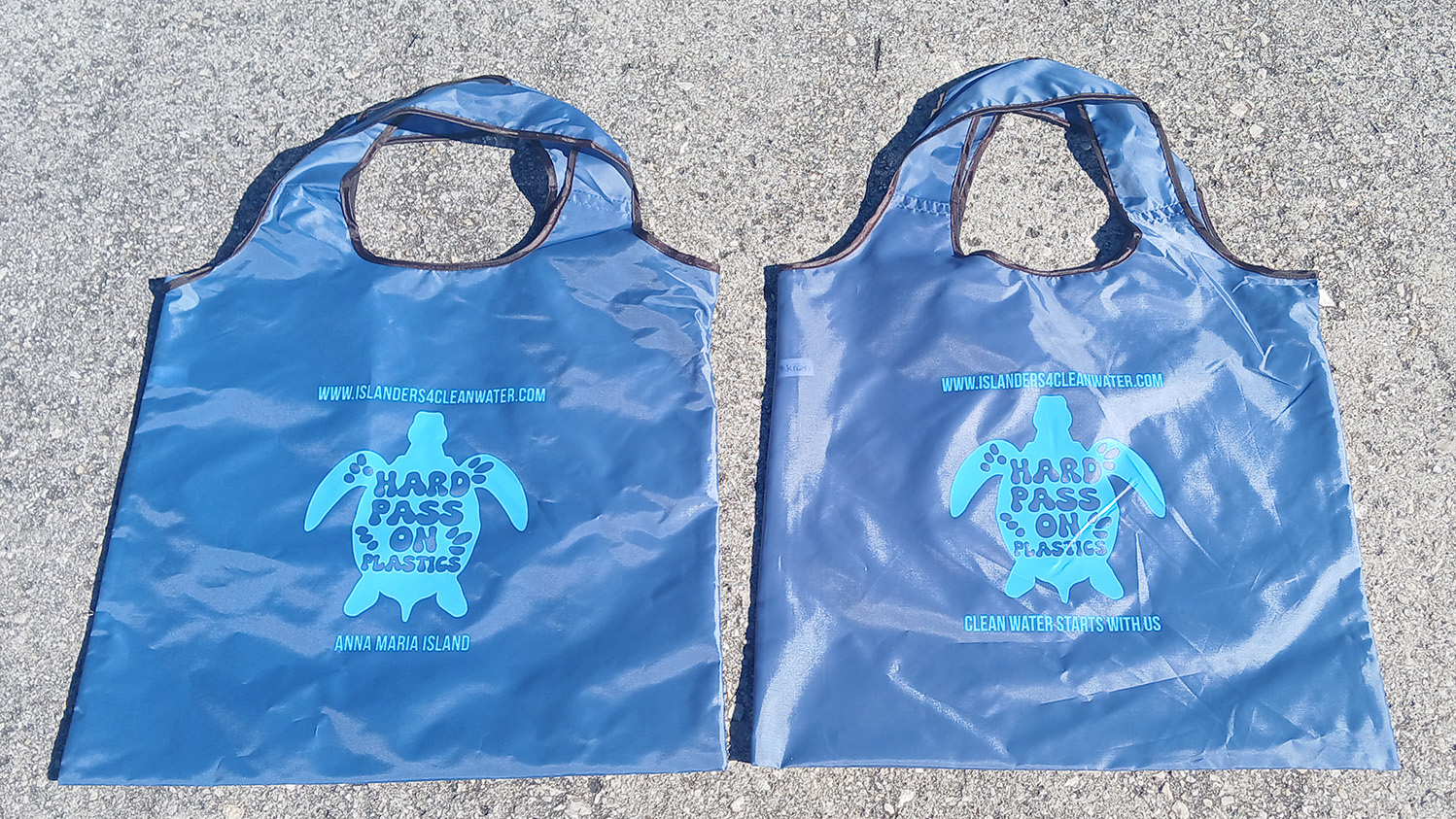
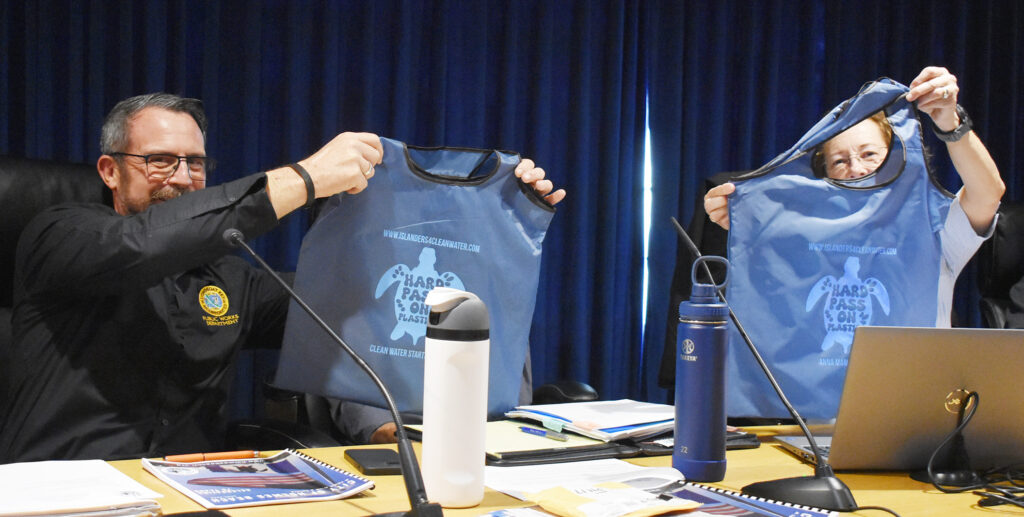
The Clean Water Ad Hoc Committee’s “Hard Pass On Plastics” free reusable bags are available at various locations in Holmes Beach, Anna Maria and Longboat Key. Some of the bags also reference Anna Maria Island and those intended for Longboat Key and beyond do not.
Funded by the city of Holmes Beach for approximately $5,000, the reusable bags are part of the Clean Water Committee’s ongoing efforts to protect and enhance the Island’s water quality – and removing plastic bags from the natural waterways and canals is part of those efforts.
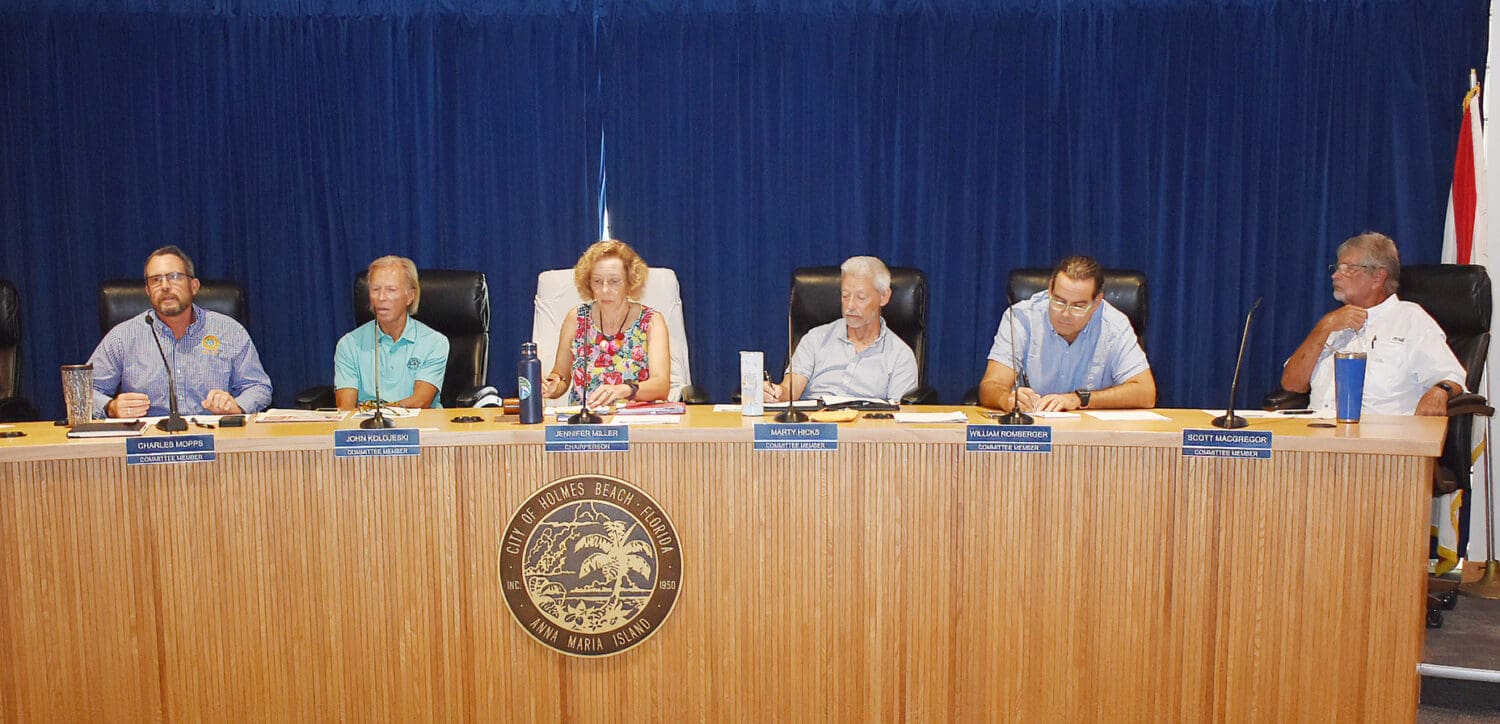
Clean Water Committee members Charlie Mopps and Jennifer Miller displayed the new reusable bags during their January meeting. – Joe Hendricks | Sun
Designed for shopping and other uses, the free reusable bags are now available at Holmes Beach City Hall, the Anna Maria Island Chamber of Commerce office in Holmes Beach and the Anna Maria Island Historical Museum in Anna Maria.
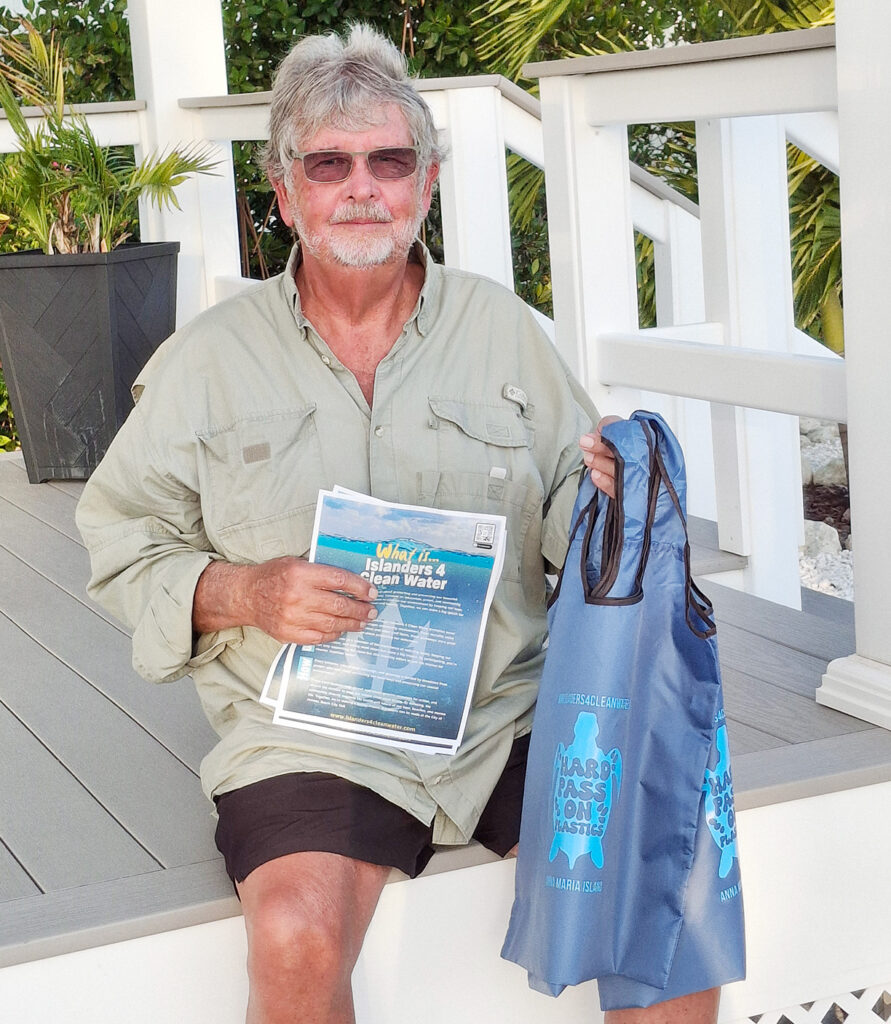
Clean Water Committee member Scott MacGregor distributed the free bags during the Jan. 20 Anna Maria Community Farmers Market held at the Roser Church property in Anna Maria and he planned to be there again on Tuesday, Jan. 27.
Clean Water Committee member Scott MacGregor handed out the “Hard Pass On Plastic” bags during the Anna Maria Community Farmers Market. – Scott MacGregor | Submitted
If your business, vacation rental management company or organization would like to help distribute the reusable bags, please contact the Holmes Beach city clerk’s office at 941-708-5800.
HOLMES BEACH – The Holmes Beach-based Clean Water Ad Hoc Committee heads into 2026 riding a wave of positive momentum created in 2025.
Working in unison with the city-funded Islanders 4 Clean Water initiative, the city-funded volunteer committee is chaired by Holmes Beach resident and retired chemist, Dr. Jennifer Miller. The committee includes Holmes Beach residents Marty Hicks, Mike Pritchett and Bill Romberger, Anna Maria residents John Kolojeski and Scott MacGregor and Longboat Key Public Works Director Charlie Mopps.
City Commissioner Terry Schaefer serves as the commission’s committee liaison. He attends the committee’s monthly meetings at city hall and later provides the commission with meeting recaps.
Adopted in September, the city’s 2025-26 fiscal year budget contains $15,000 for Clean Water Committee expenditures.
Each committee member brings different water-related expertise and experience to the committee. Mopps, who was appointed to the committee in mid-2025, along with MacGregor (a retired marine biology teacher), provides the committee with a wealth of knowledge about water-related and environmental issues and the inner workings of municipal governments.
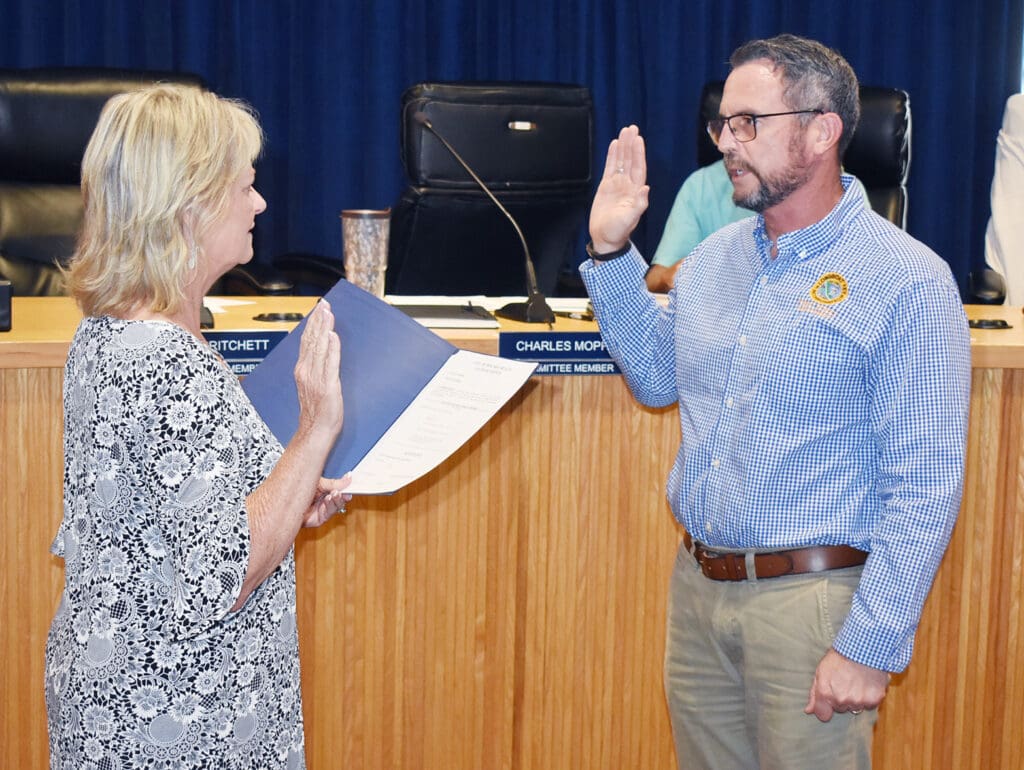
City Clerk Stacey Johnston swore Charlie Mopps in as a Clean Water Ad Hoc Committee member. – Joe Hendricks | Sun
Dating back to its 2021 inception, the committee’s primary mission remains: “To research means by which to sustain and improve upon the condition and purity of the natural waters and drinking water around Anna Maria Island.”
The Clean Water Ad Hoc Committee’s monthly meetings sometimes feature guest presenters and the 2025 presenters included Sarasota Bay Estuary Program Executive Director Dave Tomasko in May and a trio of University of Florida researchers in September who spent nearly two hours discussing in great detail the PFAS chemicals present in drinking water and natural waters.
PFAS
The University of Florida researchers provided the committee with a 59-page presentation on the “forever chemicals” known as PFAS (Per- and Polyfluoroalkyl Substances).
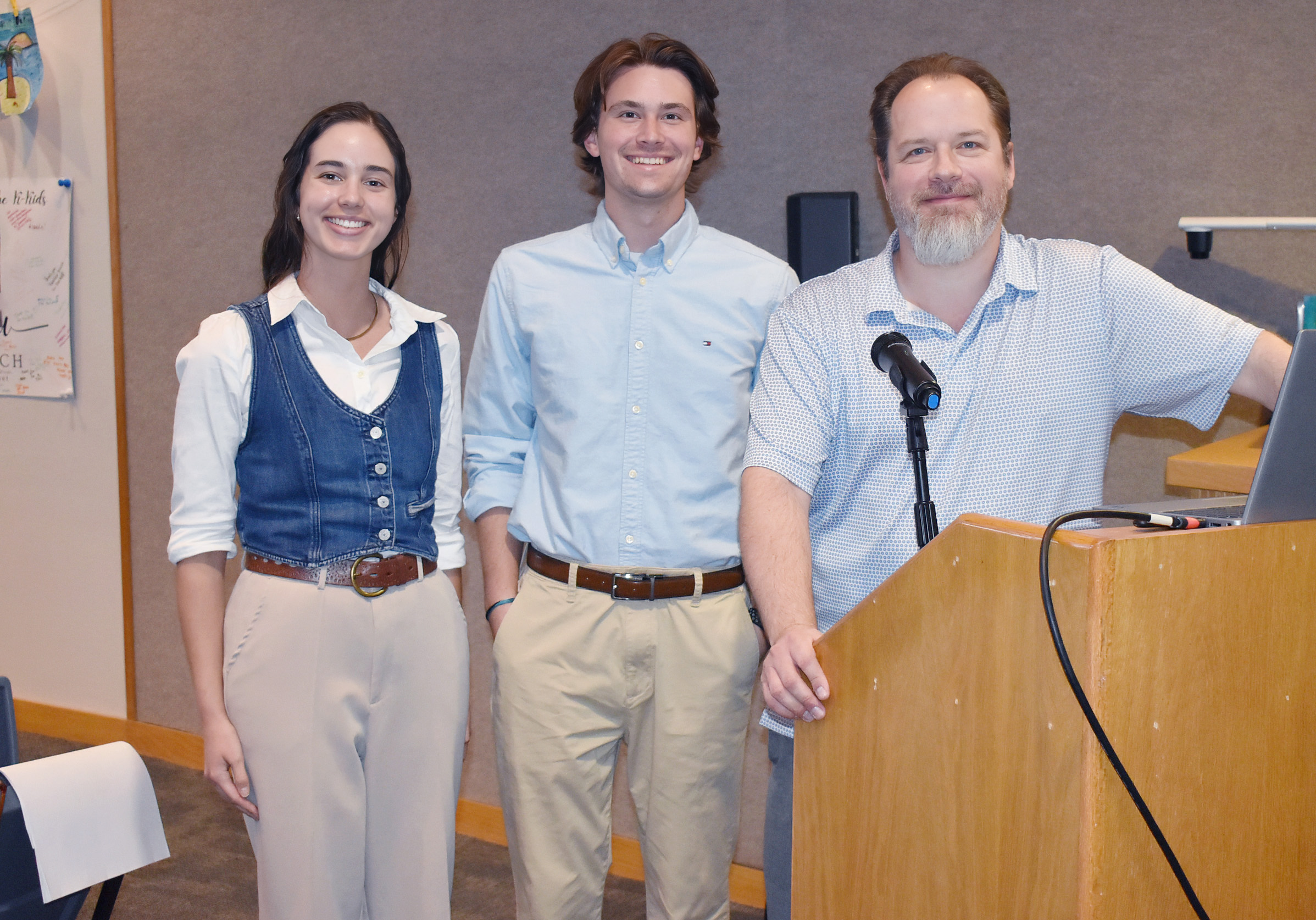
The trio included Dr. John Bowden, an associate professor at the University of Florida and the founder and namesake of the university’s Gainesville-based Bowden Laboratory. He was joined by fourth-year PhD candidate Tommy Sinkway and second-year PhD Student Isabella Cioffi. Much of their work involves collecting and analyzing drinking water samples and natural water samples. They also collect and analyze flesh samples taken from fish.
University of Florida researchers Isabella Cioffi, Tommy Sinkway and Dr. John Bowden addressed the Clean Water Committee in September. – Joe Hendricks | Sun
According to their presentation, 98% of the U.S. population has PFAS in their bodies. PFAS chemicals are found in tap water and natural waters and the potential health hazards include higher cholesterol, liver damage, kidney cancer, a higher risk of testicular cancer, developmental effects for unborn children, lower birth weight and reduced response to vaccines and more.
Bowden said PFAS chemicals have been around since the 1930s and their early uses include non-stick cookware and the the development of the hydrogen bomb as part of the Manhattan Project.
PFAS chemicals are now used in pesticides, propellants in various sprays, fast food packaging and wrappers, pizza boxes. clothing, cosmetics, popcorn bags, candy wrappers, shampoo, cleaning products, weather resistant clothing, non-stick cookware, nail polish, paints and solvents, eye makeup, dental floss, Band-Aids, toilet paper, plastic watchbands and much more.
“We don’t like products that leak, we don’t like things that stain. Because of this demand, all these chemicals were made. Unfortunately, once we’re done using those products they get disposed, end up in landfills, get reduced to run-off and wind up in our environment,” Bowden said.
He said the chemical bonds in PFAS are among the strongest in chemistry. He said the chemical properties that make PFAS great for the products they’re used in also make them bad for the environment because they take a very long time to break down and essentially stick around forever.
He said the most egregious use of PFAS is probably the fire-fighting foam used at airports and military bases to extinguish intense fires. Through rain and runoff, the PFAS contained in the foam later makes its way into the natural waterways.
Bowden said in the past 20 years or so scientists began researching the negative health effects of PFAS; and in the past decade or so, PFAS has been identified in drinking water sources.
“We’re exposed through our drinking water, we’re exposed through our food,” he said.
Bowden said water treatment plants only remove about 10% of the PFAS chemicals and a lot of PFAS-contaminated affluent materials end up in natural waterways too.
Bowden said he’s also growing increasingly concerned about airborne PFAS, because high levels of PFAS have been found in dust collected in air conditioning filters. He said the higher quality filters remove more of the potentially harmful airborne PFAS.
“There are a lot of concerns for PFAS. This is a problem that’s not going to go away,” he said. “Everybody in this room has PFAS in them. What’s unknown is what that means for your health.”
Bowden said the researchers use crowdsourcing to increase public awareness and garner assistance from volunteers. Bowden’s team developed standard operating procedures that instruct volunteers how to collect drinking water samples using kits provided by the Bowden Lab.
The presentation included several color-coded maps that identify PFAS hot spots, frequent spill areas and more. The maps show the Tampa Bay area as a PFAS hot spot and Bowden and his team plan to study the greater Tampa Bay area, which by proximity also includes Manatee County and Anna Maria Island.
Bowden and Kolojeski noted one of the drinking water taps with the highest concentration of PFAS was found at Manatee Beach in Holmes Beach.
Mopps noted Manatee County provides the drinking water to Longboat Key and the three Anna Maria Island cities. He suggested testing the drinking water at the mainland point of origin and testing the water again when it comes out of the residential taps on the barrier Island cities to see if the PFAS levels increase as the water travels through the county’s water pipes.
Mopps said the drinking water transferred to Longboat Key spends time in holding tanks and the town further enhances the water treatment done by the county.
“I have plenty of public drinking spots where you can collect samples of your own at our parks,” Mopps told Bowden.
Kolojeski, a longtime proponent of in-home reverse osmosis water filtering systems, said, ‘I would never allow a child or anyone of child-bearing age, male or female, to drink my tap water until I had reverse osmosis to eliminate the PFAS.”
When asked if plastic water bottles release PFAS into the water they contain, Bowden said, “That’s a good question. I don’t know if it’s from the water or the bottle.”
Kolojeski recommends drinking water bottled by companies that use reverse osmosis. He said those companies include Coca-Cola, Pepsi-Cola and Nestle.
“Some of those ‘so-called’ very expensive spring waters do not use reverse osmosis. You’re paying a lot of money and you’re still getting PFAS,” Kolojeski said.
Sinkway’s portion of the presentation focused primarily on the increased presence of pharmaceuticals, prescription drugs and “drugs of abuse” found in natural waters. His research also focuses on the greater Tampa Bay region – an area he said includes multiple airports, a military base and has been subjected to multiple sewage spills.
“That heat map is bright red,” he said of the Tampa Bay area.
Fish & PFAS
Cioffi’s research focuses primarily on the presence of PFAS in fish consumed in the United States, and particularly in Florida.
Cioffi noted commercial and recreational fishing and seafood consumption is a large part of the Florida economy and the national economy – providing more than 121,000 full and part-time jobs and an estimated $24 billion economic impact.
“There’s not a lot of information on PFAS and fish,” Cioffi said. “I fish. I grew up fishing. That’s a big part of my life. I don’t want us to stop eating fish. I want us to be able to eat fish in a way that’s healthy. We have healthy fish and Florida should be known for having healthy fish.”
“We just want people to know which fish are safe to eat.” Bowden added.
“We still eat fish with mercury in it, but we have consumption advisories that say only eat this type of fish once a month, every two weeks or whatever it is,” Cioffi said, noting that her goal is to one day see data-supported, risk assessment-based consumption advisories issued for fish species containing high levels of PFAS.
Cioffi’s research includes analyzing 86 species of fish found in Florida waters. She said recreational anglers, charter captains and seafood markets have been contacted and crowdsourcing is being used to gather additional fish samples from anglers.
Cioffi said the lab has already collected 4,000 fish samples and she still seeks more. Her portion of the presentation included a chart of the 86 species to be analyzed. She already has enough samples for 45 of those species but she still seeks additional samples for the remaining species; and she particularly seeks additional samples of four species: Atlantic tripletail, mahi-mahi, Gulf flounder and southern flounder.
Cioffi said the fish samples only need to be 2-3 grams per fish and should be taken from the fatty muscle tissues rather than the organs.
The collected fish samples shipped to the Bowden Lab at the lab’s expense are freeze-dried, pulverized, extracted and concentrated as part of the data processing efforts.
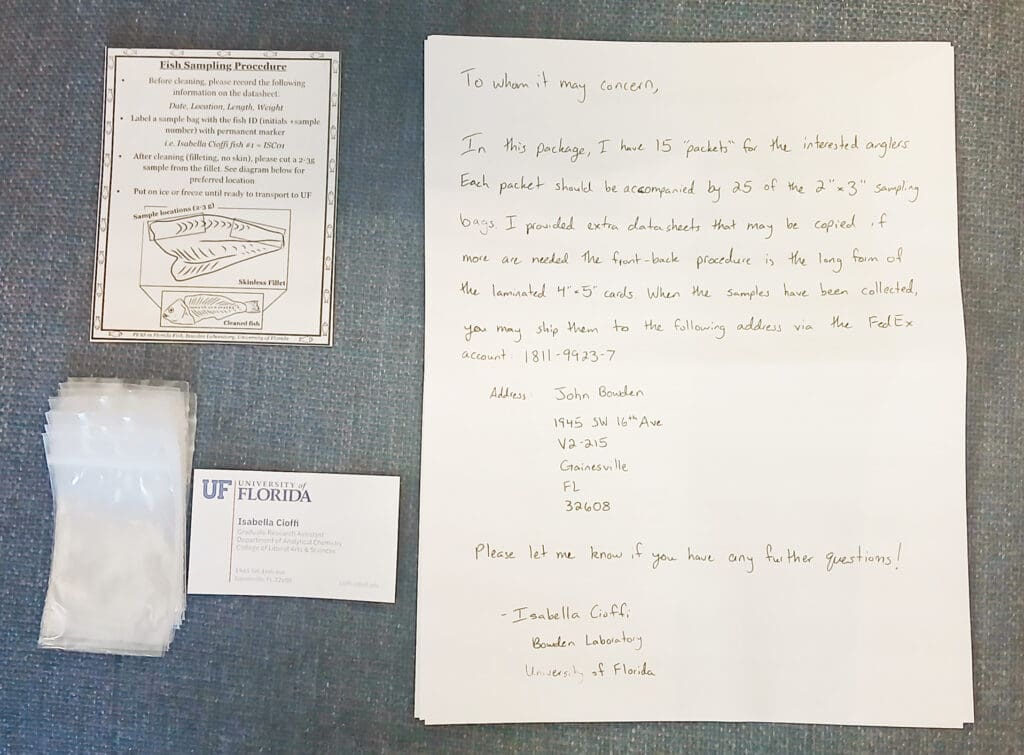
Romberger suggested the Bowden Lab send the city fish sampling kits to be made available to local anglers. A short time later, the Holmes Beach city clerk’s office received a couple dozen sampling kits that are now available to local anglers and fishing captains at no cost. Interested angers can learn more at www.bowdenlaboratory.com/florida-fish.
Fish sample kits are available at the Holmes Beach city clerk’s office. – Joe Hendricks | Sun
“We need more knowledge on this,” Cioffi said
Regarding PFAS as a whole, Bowden said, “If we have a better educated community, you can better educate your politicians and maybe get them to understand why this isn’t just a flavor of the month. This is something that’s going to affect your kids, it’s going to affect your pets, it’s going to affect anything exposed to them.”
HOLMES BEACH – With two new members and a relatively new chairperson, the Clean Water Ad Hoc Committee remains committed to their primary objective: “To research means by which to sustain and improve upon the condition and purity of the natural waters and drinking water around Anna Maria Island.”
On May 27, city commissioners appointed Anna Maria resident Scott MacGregor and Longboat Key Public Works Director Charles Mopps as the committee’s newest members.
Scott MacGregor was appointed to the committee on May 27. – Joe Hendricks | Sun
According to his application, MacGregor is a retired marine biology teacher and a boat captain for the past 15 years. When addressing the city commission, he said, “I’m looking forward to serving on the committee and I was very interested in the meeting that I attended a couple weeks ago. Hopefully, my background – marine biology and being a captain – will serve the committee well.”
According to his application, Mopps’ water-related community activities include serving as a Sarasota Bay Estuary Program board member, a director of the Florida Shores and Beach Preservation Association board and a member of the Sarasota County Coastal Advisory Committee. His application says he can share with the Clean Water Committee information he’s learned from other organizations and he can share information from the committee meetings with Longboat Key town officials and the town-affiliated “green team.”
Comprised of Holmes Beach residents, Anna Maria residents and a Longboat Key town employee, the reconfigured committee meets next on Wednesday, June 18 at 9 a.m.
City Commissioner Terry Schaefer serves as the commission’s Clean Water Committee liaison. Before making the motion to appoint MacGregor and Mopps, Schaefer said when the committee was formed in 2021, membership was not limited to Holmes Beach residents. He said the goal has always been to include members from all three Anna Maria Island cities and the town of Longboat Key. He praised the “incredible backgrounds and expertise” that past, present and future members have to offer.
Sarasota Bay Estuary Program Executive Dave Tomasko addressed the committee on May 14. – Joe Hendricks | Sun
On May 14, founding member and original committee chair Ron Huibers participated in his final meeting, which included a detailed and informative presentation given by Sarasota Bay Estuary Program Executive Director Dave Tomasko. Tomasko stressed the need for the city of Bradenton to address its sewage discharges into the Manatee River and the need for state legislators to provide the $22 million Bradenton needs to replace its wastewater treatment facilities.
Tomasko also stressed the need to protect the seagrasses that support manatees and other marine life and enhance water quality in Anna Maria Sound – the body of water east of Holmes Beach that carries an “impaired” designation from the Florida Department of Environmental Protection.
Huibers left the committee without accomplishing his top priority: the city’s purchase of an aquatic skimmer that could be used to remove algae blooms and dead fish from the Holmes Beach waterways and canals.
In January, Huibers voluntarily relinquished the chairperson’s position and nominated committee member Dr. Jennifer Miller as his successor.
Dr. Jennifer Miller addressed the TDC members on April 21. – Joe Hendricks | Sun
As the new committee chair, Miller appeared before the Manatee County Tourist Development Council (TDC) on April 21 and provided a concise overview of the committee’s efforts, priorities and the importance water quality plays in attracting tourists to Anna Maria Island and Manatee County.
HOLMES BEACH – Clean Water Ad Hoc Committee founding member and longtime Chair Ron Huibers is leaving the committee after its May 14 meeting.
In January, Huibers relinquished the chair’s position and nominated board member Dr. Jennifer Miller to succeed him, a nomination the other committee members unanimously supported. On April 9, Huibers announced he’s leaving the committee after the May meeting.
Established in December 2021, the committee currently includes Huibers, Miller, fellow Holmes Beach residents Marty Hicks, Bill Romberger, Mike Pritchett and Jeffery Drinkard and Anna Maria resident John Kolojeski.
The committee’s vision is “To ensure that waters will meet their designated human uses for recreation, swimming, fishing and drinking while sustaining healthy natural ecosystems that support natural processes and reliant plant and animal communities.” The committee’s objective is “To research means by which to sustain and improve upon the condition and purity of the natural waters and drinking water around Anna Maria Island.”
When announcing his departure, Huibers said, “The next meeting will be my last meeting. I’m going to step down after 3 1/2 years. I’ve been thrilled and honored to do it but it’s time for somebody else to maybe take a different swing of the bat and see if they can get more done than I did.”
Huibers will leave the committee with one unfulfilled goal that he tirelessly pursued – securing the city, county and/or state funds needed for the city to buy an aquatic harvester to be used to remove harmful algae blooms and dead fish and marine life from the city’s canals and other waterways. Despite his perseverance, the quest for that $100,000 piece of equipment remains elusive. Huibers said he learned it’s much easier to accomplish things in the private sector than it is in the public/local government sector. He also said the committee is in good hands under Miller’s leadership.
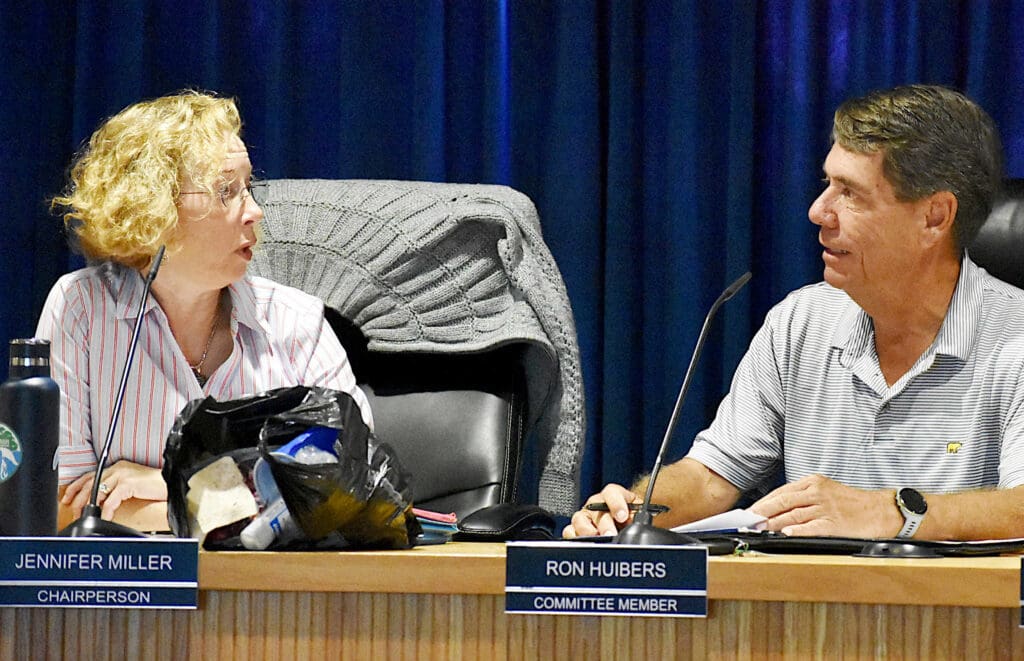
Jennifer Miller succeeded Ron Huiber as the committee chairperson. – Joe Hendricks | Sun
Commissioner Terry Schaefer helped form the committee and serves as the city commission liaison to the committee, and he faithfully attends the committee’s monthly meetings.
“Ron, you’ve led the charge for three and a half years,” he said. “You’ve done a phenomenal job of staying focused and identifying the greatest needs. I think the committee has been as successful as it has because of many of your initiatives and the cohesiveness of the group. Everyone on the committee is a contributor and it takes good leadership to keep it focused. On behalf of the entire city, we thank you for your efforts.”
Huibers thanked Schaefer for his help in forming a committee that was never shy about making its recommendations.
“The reason we’re doing it is we all want clean water. As a concerned citizen, you can count on me to help out where I can,” Huibers said.
Clean Water Ad Hoc Committee membership is not restricted to Holmes Beach residents and anyone interested in serving on the committee can contact City Clerk Stacey Johnston by email at cityclerk@holmesbeachfl.org or by phone at 941-708-5800 ext. 226.
Before Huibers made his announcement, the April 9 meeting included discussions about sea grass scarring, the committee-affiliated Islanders4CleanWater organization’s “Pass on Plastics” theme for April, monitoring water-related news stories (including Mote Marine being awarded a $710,473 FDEP grant for nutrient reduction using Microbe Lift) and state legislation (including CS/HR 661, a bill proposing a one water approach to water resource management), Huibers’ participation in a water testing program and Miller’s pending appearance before the Manatee County Tourist Development Council (TDC) on April 21.
Seagrass scarring
Hicks said he’s concerned about boats near his house speeding and damaging seagrass in the shallow water. Miller said she sees the same from her balcony and she wonders whether rental boats are contributing to the problem.
“Don’t be an idiot. Don’t drive boats on seagrass,” she said.
Huibers said a state statute allows those who damage seagrass to be ticketed. Attending City Commissioner Dan Diggins suggested the committee reach out to local boat rental companies and ask them to educate their clients about seagrass protection and preservation.
Pass on Plastics
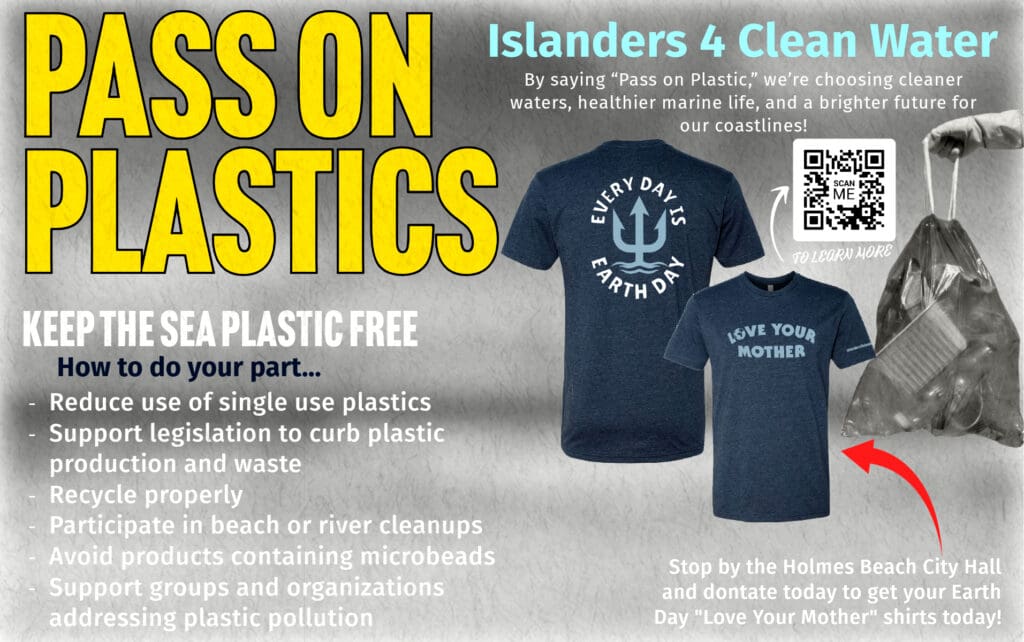
Produced and funded by the city, the Islanders4CleanWater 2025 calendar features a different theme each month. The April theme is “Pass on Plastics.” The message contained on the calendar says, “Keep the sea plastic free” and it suggests reducing the use of single-use plastic products (water bottles, shopping bags, drinking glasses, straws and more), supporting legislation to curb plastic production and waste, proper recycling, participating in beach and river cleanups, avoiding products containing the plastic microbeads found in some cosmetics, beauty products, cleaners and toothpastes and supporting groups and organizations that address plastic pollution.
“Pass on Plastics” is this month’s Islanders4CleanWater calendar theme. – Islanders4CleanWater | Submitted
Microplastics and pharmaceutical particles in drinking water and natural waters are frequent topics of discussion at the committee meetings and both can be harmful to humans and wildlife.
Huibers said he collected eight local water samples and submitted them to the University of Florida as part of the university’s research on pharmaceutical particles in natural waters.
TDC presentation
The committee members reviewed and refined the presentation Miller was scheduled to make at the April 21 TDC meeting. Miller’s TDC meeting appearance was the first by a Clean Water Committee member. The goal of Miller’s introductory presentation was to inform TDC members about the committee’s efforts and the need to protect the natural waters that attract so many tourists to Anna Maria Island and Manatee County. Miller wasn’t seeking any specific tourist development tax funds at the time but the committee may seek county commission-approved tourist tax revenues in the future.
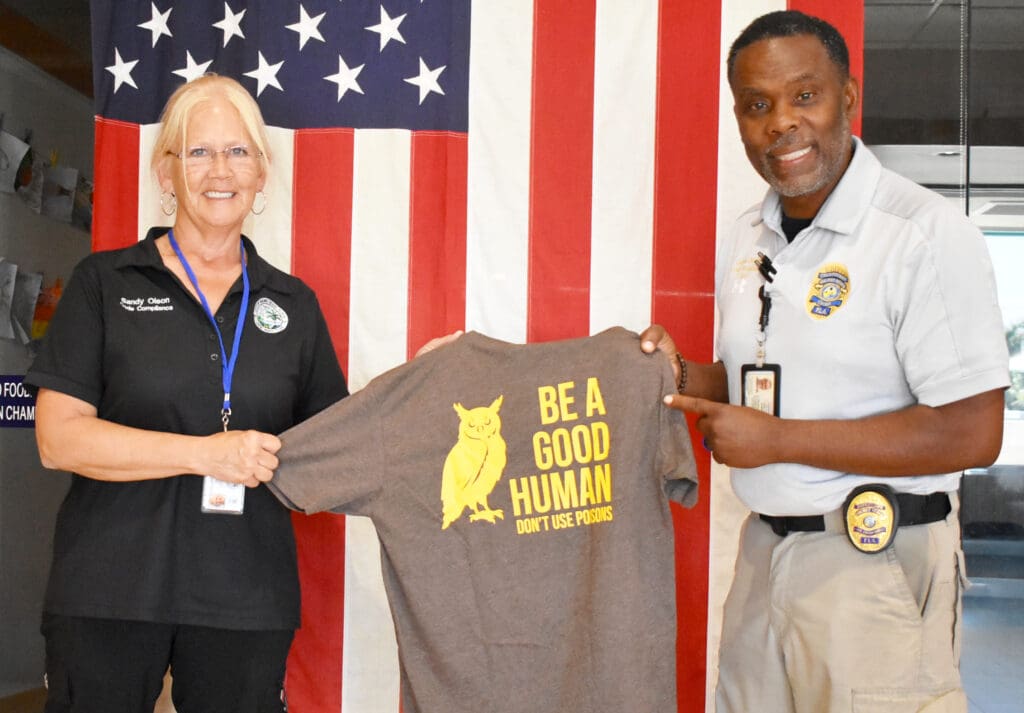
Code Compliance Officer Sandy Olson and Code Compliance Chief James “JT” Thomas displayed one of the Islanders4CleanWater T-shirts. – Joe Hendricks | Sun
Free Islanders4CleanWater calendars, stickers, koozies and other items are available inside the city hall lobby and stylish, message-bearing T-shirts can be obtained from Code Compliance Chief James “JT” Thomas for a donation, or for engaging in a cleanup effort or other activity beneficial to the clean water cause. Contact Thomas by email at jthomas@holmesbeachfl.org or by phone at 941-932-6426. Learn more at the Islanders4CleanWater website.
Privacy choicesWe use Google Analytics to understand readership and improve the website. Analytics cookies are optional and can be accepted or declined.Privacy Policy