

When winter arrives with cold winds and plunging water temperatures, it’s time to change your angling strategies. While winter fishing can be challenging, there are opportunities for some excellent action if you use your senses and think like a fish. While there are no “magic bullets,” awareness and persistence really pays dividends when the thermometer begins to plunge.

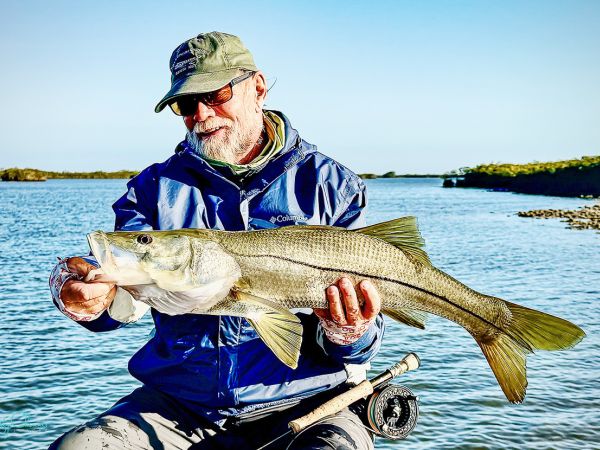
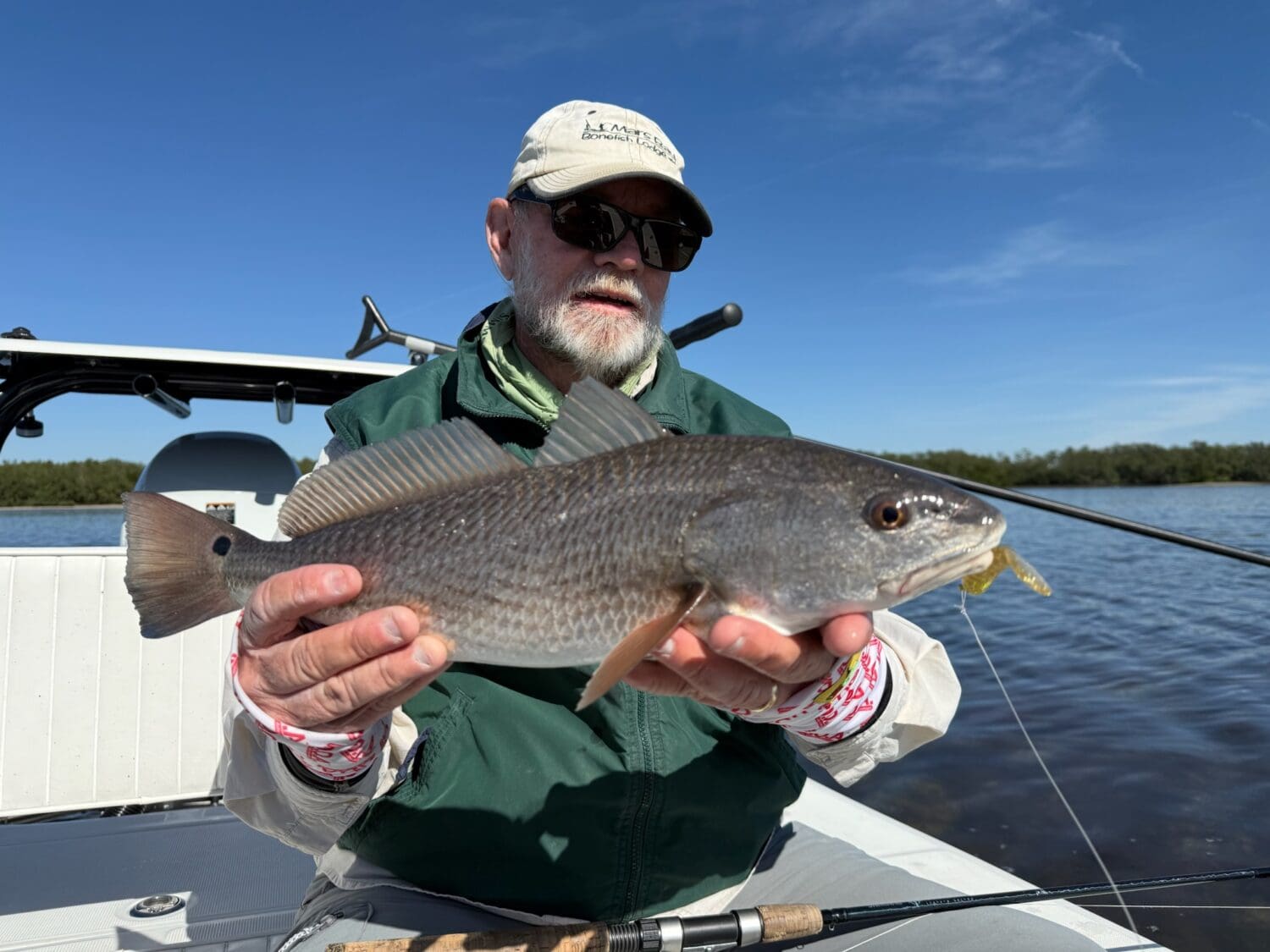
The most popular species (snook, redfish and trout) will often concentrate in areas where the surrounding waters are more moderate. Snook are most sensitive to the changing water temperature and will migrate to rivers, canals and protected channels. Explore areas where dark bottom absorbs the heat of the sun and warms the surrounding water. Shallow bays and bayous that heat up quickly on sunny days and flush warm water on late afternoon outgoing tides can be particularly productive. Even the seawalls that line residential areas can warm up the water and attract fish on cold days. It doesn’t take much of a temperature difference to attract fish. You’ll know these areas because they’ll feel warm to you as well as to fish.
When fishing a particular area, pay attention to the exposure that receives the most sun during the day. Areas protected from a cold north wind will be more desirable to fish. The wind moves the water, keeping it from absorbing the sun’s rays and warming. A combination of sun exposure, depth and the color of the bottom will all figure into the warm water equation.
When the weather prevents the sun from warming the water, look for deeper pockets to harbor fish. The deeper areas warm more slowly, but they also cool more slowly. Channels, holes under big boats in canals, deep pot holes on the flats and boat basins are all potential refuges for fish during cold weather. Rivers and creeks are also good sanctuaries depending on the conditions.
While many local species are negatively affected by the cold water, many, like trout and redfish, have a high tolerance. Others actually thrive on it. The best example is the sheepshead. These fish, while shunned by some anglers, are hard fighting, challenging to hook and excellent to eat. Target sheepshead around structure where they feed on barnacles. One way to attract sheepshead is to scrape barnacles from pilings on an outgoing or incoming tide. A small live shrimp is hard for them to turn down; fiddler crabs are also prime baits. A small, stout and sharp hook is necessary for their tough mouths and you have to be quick setting the hook. It’s often said that you need to set the hook a split second before they bite!
Once you find the ideal conditions, remember to slow your presentation. Lures and bait fished slowly, and close to the bottom, (low and slow) will generally draw more strikes than a quick retrieve. Use your senses, experiment and be persistent, and you can experience some very good fishing during our cooler winter months.