

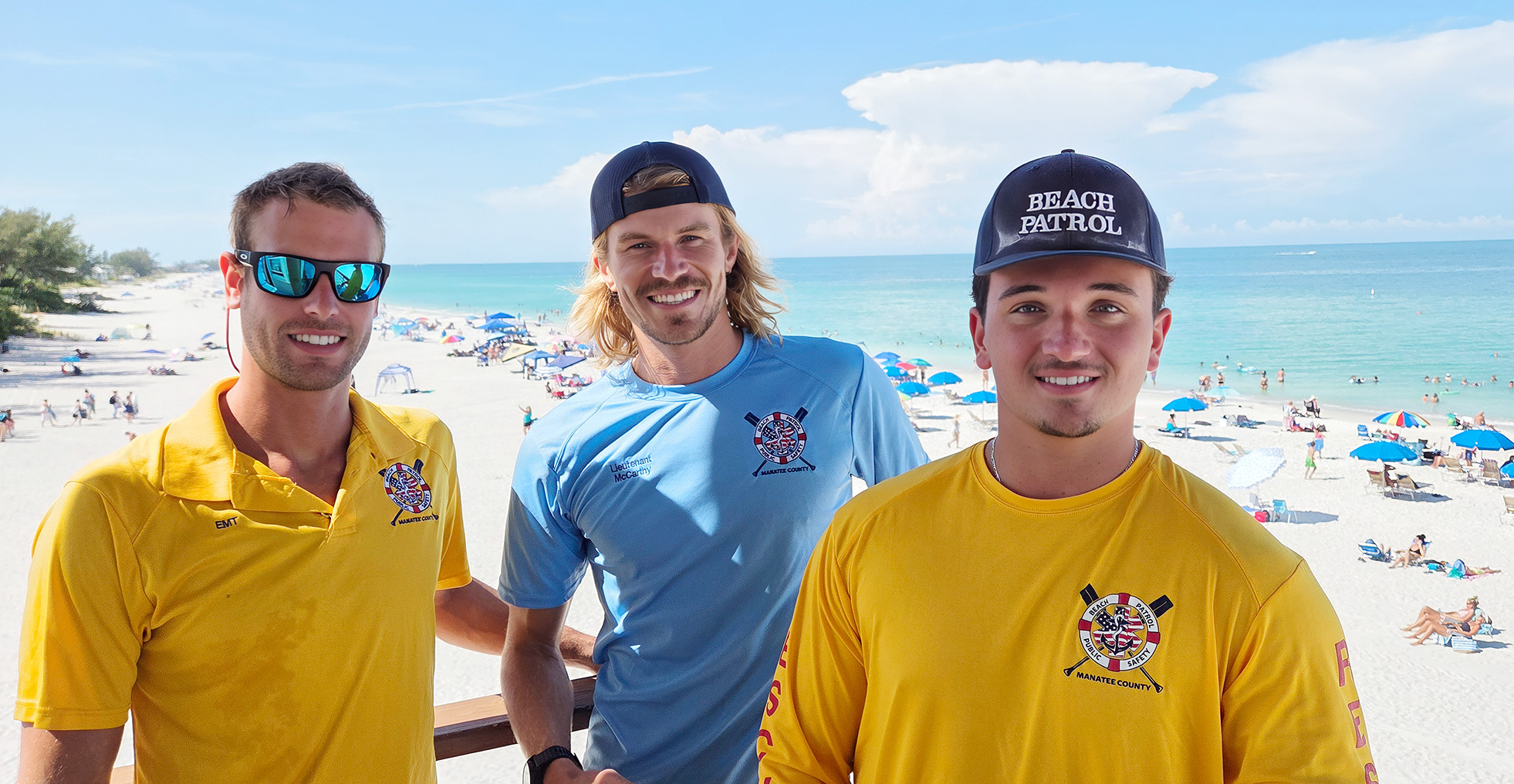
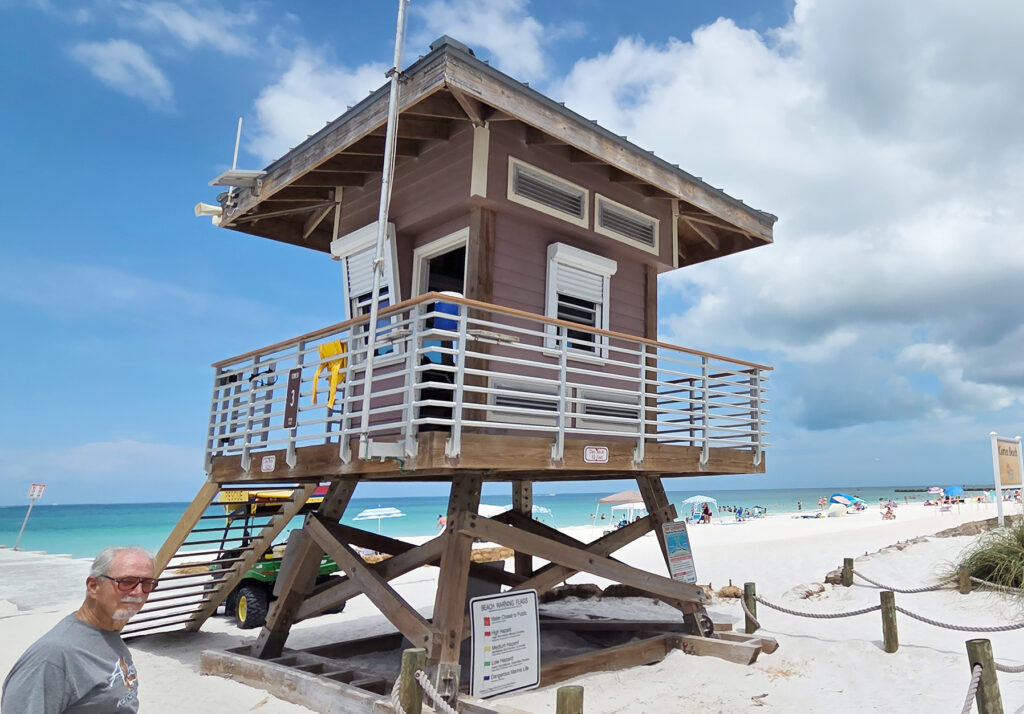
ANNA MARIA ISLAND – Lifeguards with the Manatee County Beach Patrol work 365 days a year, from 9 a.m. to 5 p.m., watching over 11 lifeguard towers spanning Manatee Beach, Cortez Beach and Coquina Beach.
The lifeguards say the Gulf’s calm appearance can mask real dangers, including rip currents, lightning and heat.
A.J. Nelson has been with Manatee County Beach Patrol for more than eight years and has been lifeguarding for over a decade. He grew up in Punta Gorda as a competitive swimmer, coached swim teams, taught lessons and lifeguarded at the pool where he trained before coming to Anna Maria Island at age 19.
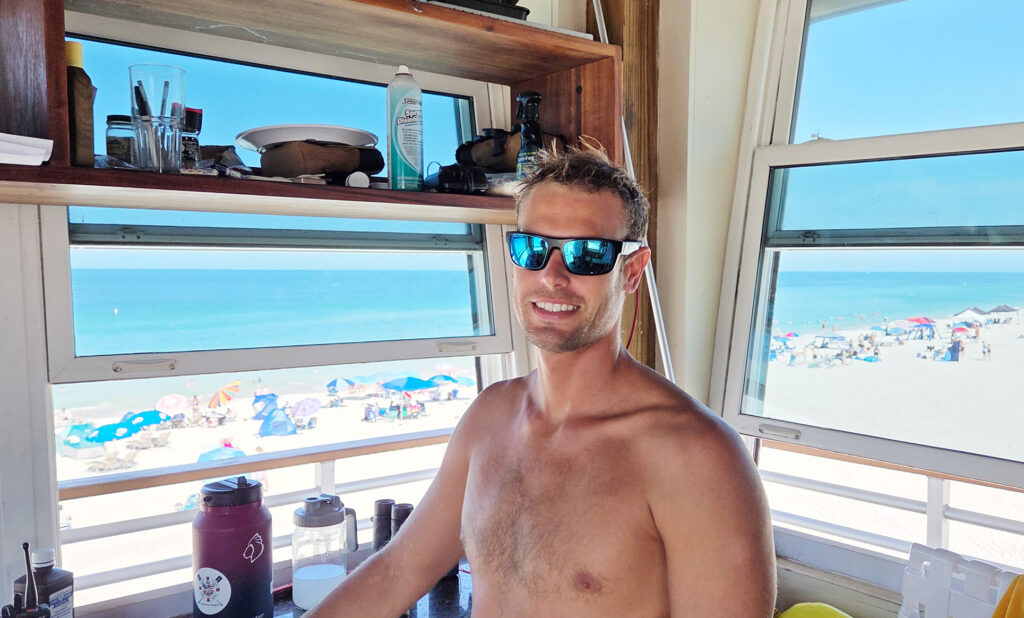
He still trains like an athlete. During an interview at Tower 1, he pulled out a cantaloupe, which he said helps regulate his blood sugar, alongside a bottle of kombucha, a probiotic drink rich in antioxidants, organic acids and B vitamins.
Nelson said he’s in the water every day and loves swimming, paddling and competing. He is one of six Manatee County lifeguards heading to the United States Lifesaving Association’s James P. “Mac” McCarthy Regional Surf Lifesaving Championships this month in Gulf Shores, Alabama, where they will compete against teams from Georgia, Florida, Alabama and Texas.
He credits the Beach Patrol department’s leadership for the team’s success.
“A lot of it comes down to our leadership here and just the opportunities that we’ve been given,” Nelson said. “With our chief, he really looks out for us, and they’re always looking to give us the best gear. The public safety director has really had our backs these last couple years.”
Roughly half of Beach Patrol staff are EMT-certified, and several are paramedics, meaning the same person who pulls you out of the water can also treat you once you’re on the sand.
Nelson said not every day is a crisis and part of what keeps him in the job is the sheer unpredictability of it.
“Dealing with the hectic situations, sometimes it’s so crazy that it’s kind of hilarious,” he said. “We run into lots of interesting things out here.”
LIGHTNING PROTECTION
Last August, the county installed a Thor Guard lightning prediction system at Manatee Beach in Holmes Beach, and another atop the Beach Patrol station near Coquina Beach in Bradenton Beach. The system is designed to warn beachgoers before the first lightning strike hits, rather than after.
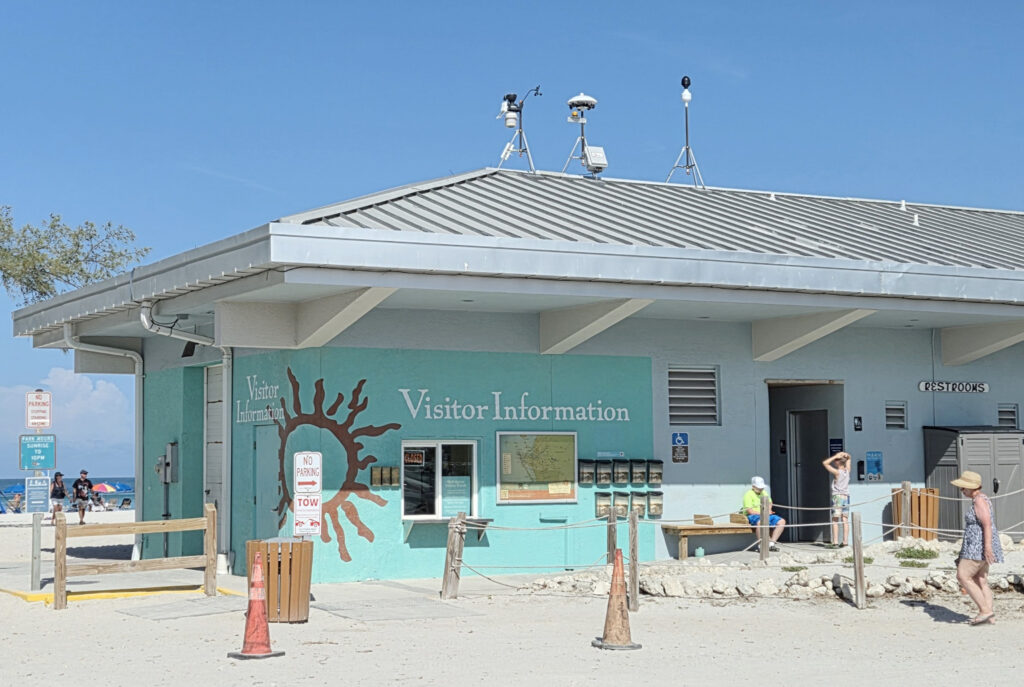
Nelson explained how it works: “It automatically goes off if there’s lightning within five miles. It’s on a 30-minute timer to clear after it detects lightning. It’ll do three long blasts to clear.”
Three long blasts mean the beach is safe to reopen.
Florida leads the nation in lightning fatalities, according to National Weather Service data. Ignoring the warning horn on county beaches isn’t just risky; it can carry serious consequences.
“If you’re not listening to us and you’re not getting off the beach, that’s grounds for being trespassed,” Nelson said. “And if you don’t listen longer than that, then that’s an arrestable offense.”
MCCARTHY’S JOURNEY
Lt. Josh McCarthy grew up lifeguarding in Manly, Australia. He started in a junior program at age 8 and was patrolling a beach by age 12. He joined the Manatee County Beach Patrol in 2021 and was promoted to lieutenant in January.
McCarthy said his first year on Anna Maria Island brought more rescues than his entire career in Australia.
“I had two in Australia. And then in my first month out here, I had about seven. And then, by the end of the year, I had 42,” McCarthy said. “Which is bizarre, right? You’d never think that, especially on the Gulf Coast.”
McCarthy said the Gulf’s flat, glassy surface is what makes it dangerous and misunderstood.
“The misconception for a lot of people is understanding what a rip current is,” he said. “It’s the wave that just pushed the water onto shore, and that water needs to get back out to sea so another wave can generate itself. A rip current will only ever take you out to the last breaking wave.”
His advice, if you’re caught in one, is to stop fighting it.
“The best thing that people can do is float, calm down, raise one arm and call for help,” he said.
McCarthy said a rip current might last for two minutes and it might last for five to 10 minutes; and he doesn’t blame swimmers for panicking.
“You’re watching someone who is in absolute shock,” McCarthy said. “Every bad thought is rushing into their brain. So, it’s not anyone’s fault that they panic in those sorts of situations.”
McCarthy said the days when the water is flat bring a quieter threat: Swimmers who reach a sandbar with energy to spare but don’t have enough energy to swim back to shore.
“Those are a lot harder to predict than rip current rescues,” McCarthy said. “You just never know when they’re going to get too tired. It’s very common that they just slip under and then you don’t even see them. Everyone swims out there. They’re all in a big group and they don’t realize one person’s gone down.”
DIFFERENT PATHS, SAME MISSION
Nelson and McCarthy came to Anna Maria Island by very different routes: Nelson through local swimming programs in Punta Gorda, and McCarthy by way of a lifelong lifeguarding career on Australia’s surf beaches. Both ended up watching the same stretch of the Gulf for the same reason.
“Use common sense,” Nelson said. “Pay attention to the flags and the conditions. If you hear a whistle, pop your head up, look at what’s going on. We may be trying to get your attention.”
The lifeguards’ advice costs nothing and, according to the people who are paid to watch this stretch of the Gulf Coast every day, it can save lives that would otherwise be lost to nothing more than a red flag someone didn’t see.
Related coverage: Beach Patrol logs 136 water rescues in three days