BRADENTON BEACH – To recover from sand loss on local beaches due to multiple hurricanes, two beach renourishment projects are scheduled for this year.
The first project, beginning in August, will reconstruct the beach sand losses from Hurricane Idalia in 2023 on Cortez Beach and Coquina Beach in Bradenton Beach. That project will draw sand from nearby Longboat Pass.
In a June 25 email to The Sun, Manatee County Director of Natural Resources Charlie Hunsicker wrote, “There was a small but measurable sand loss along this part of the beach and FEMA (Federal Emergency Management Agency) has agreed to (eventually) repay 75% of the cost of this project, with the state reimbursing 12.5% of the total cost and the county’s TDC (Tourist Development Council) beach renourishment fund paying for the remaining 12.5%. Due to the small amount of sand and proximity of the borrow area this project should take less than a month to complete.”
Hunsicker said there was also measurable sand loss from Hurricane Idalia across the federal portion of the beach.
“The Corps (U.S. Army Corps of Engineers) has decided to include Hurricane Idalia’s sand losses into the larger project they hope to begin in November 2026 and extend into April or May of 2027,” Hunsicker wrote. “The Corps will be combining Hurricane Idalia, Debby, Helene and Milton sand losses in their project. When they conclude their project at the federal limits and continue into the Cortez and Coquina beach segments (likely in the 2027 timeframe of the project), the amount of sand renourishment they will be delivering there will be the loss amounts documented from Hurricanes Debby, Helene and Milton.”
Turtle nest relocations
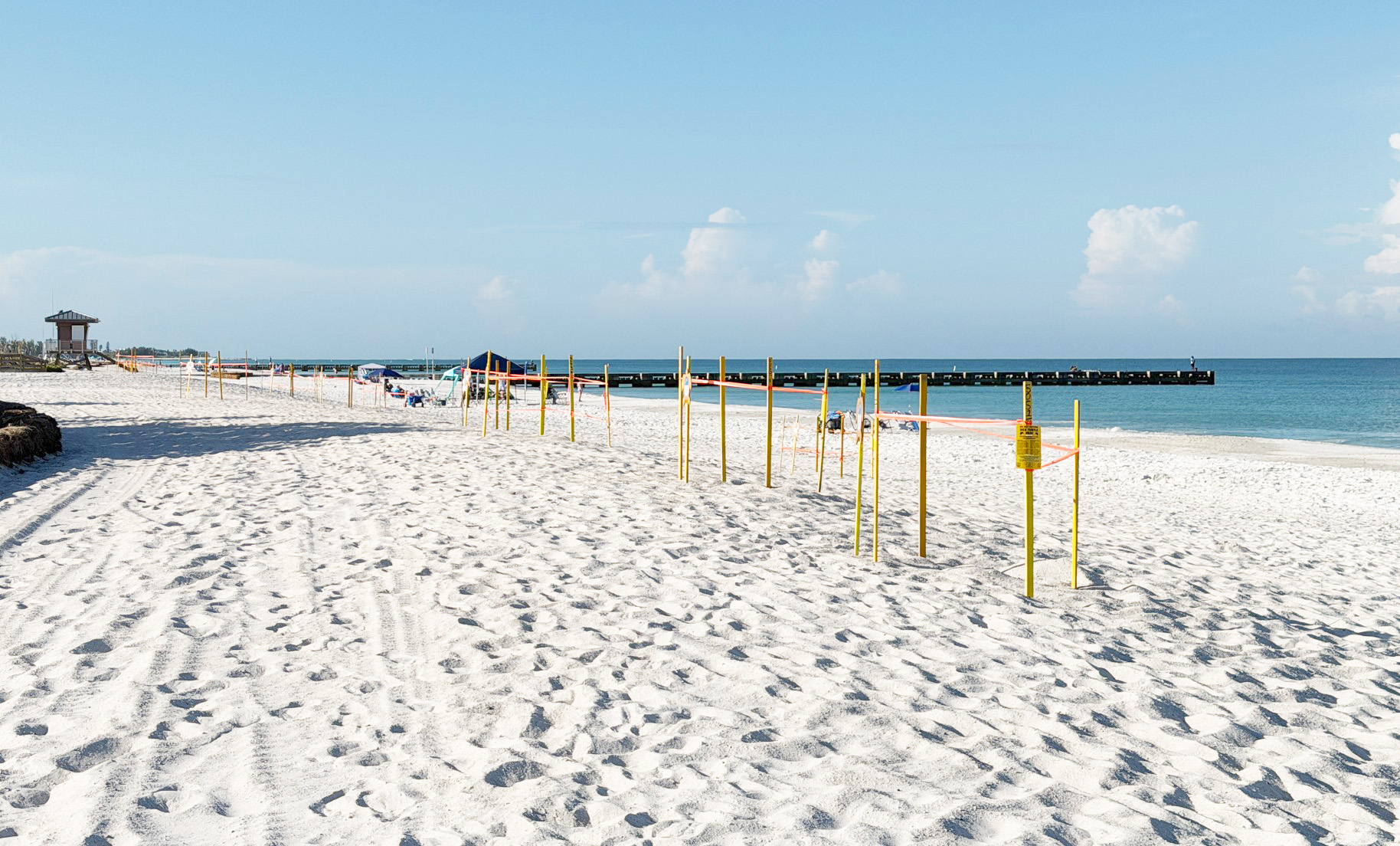
Preliminary work has not yet started on either renourishment project, but Anna Maria Island Turtle Watch and Shorebird Monitoring volunteers have been busy relocating sea turtle nests in the project area.
“As of today, we have relocated 42 nests for the Coquina renourishment project,” Turtle Watch Executive Director Kristen Mazzarella wrote in a July 2 email to The Sun.
The relocation of the nests involves an effort to recreate the depth and width of natural sea turtle nests before placing the eggs inside.
“We are working with Turtle Watch on nest relocations in advance of the Coquina/Cortez renourishment project set to begin in about two months from now,” Hunsicker wrote. “Anna Maria Island Turtle watch is under contract with the Natural Resources Department. That’s how we are working together, giving the organization specific tasks which the county is paying for.”
The source of funding for the contract payments to Turtle Watch is the beach renourishment fund portion from the tourist development tax.
Renourishment funds
Regarding the larger renourishment project slated to begin in November, Hunsicker said, “As in the Idalia-only project, FEMA will again be reimbursing 75% of the total cost of the Cortez and Coquina beach segments and the state will be reimbursing 12.5% and the County Tourist tax fund for beaches making up the remaining 12.5%.”
According to Hunsicker, the U.S. Army Corps will be funding practically 100% of the renourishment costs within their federally authorized area.
“The county payment of $6,181,600 to the Corps is to cover the cost of the work they will be completing on the county’s behalf at our request over the Cortez Beach and Coquina beach area,” Hunsicker wrote. “I say ‘practically’ because the county will also be covering (at a county and state 50/50 cost share) a small amount of sand added into the federal project that did not meet the federal criteria for their payment, requiring a county payment of $276,000 for this sand in the federal project area – not really enough funding to make a difference when describing the incredible cost savings to the county and state for this federal cost share commitment is likely to exceed $22 million.”