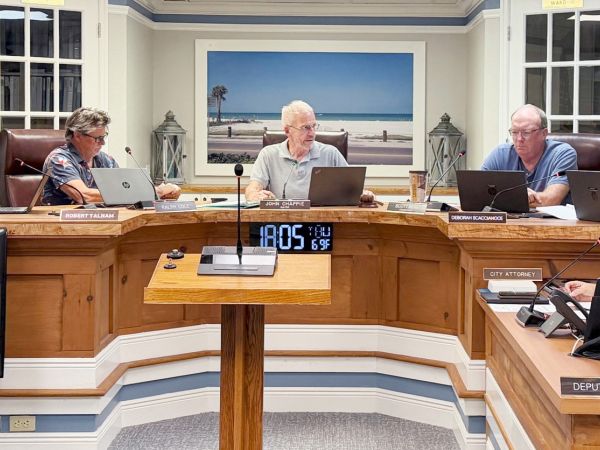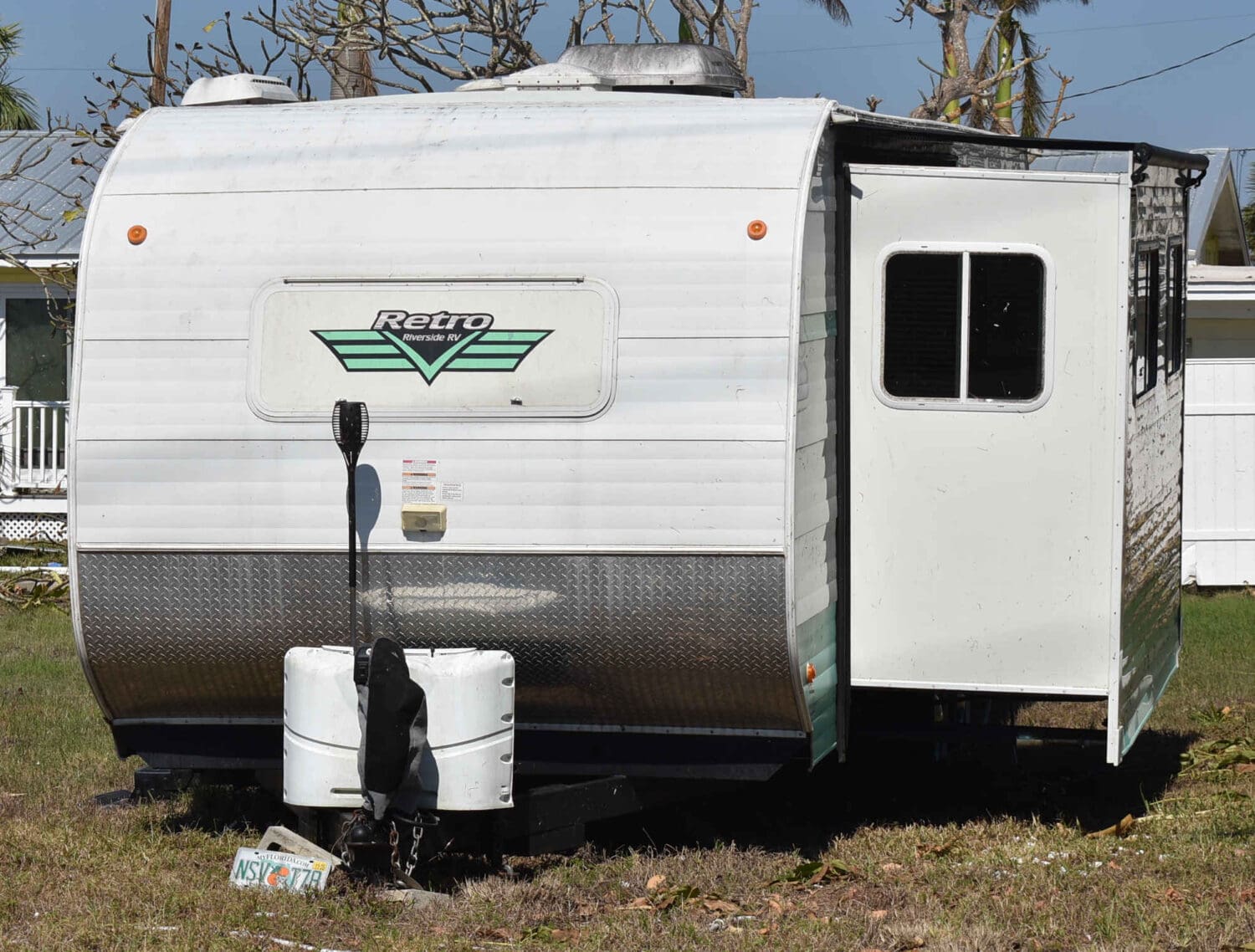
BRADENTON BEACH – The city commission discussed a Florida law at its Feb. 20 meeting that allows hurricane-impacted homeowners to place a temporary shelter, including an RV or trailer, on their residential property for up to three years following the governor’s declaration of a state of emergency.
“A lot of people in our community have been displaced from their homes and what’s been happening is the FEMA money to supplement the cost of a hotel is running out, so where are our people going to go?” Mayor John Chappie said. “They have a perfectly good lot, the house is being repaired, or, hopefully not, but unfortunately in some cases, probably demo’d (demolished).”
Florida Statute 125-023 outlines the following stipulations that allows homeowners to place a temporary structure on their property as their home is being repaired following storm damage:
“1. For the purposes of this section, the term “temporary shelter” includes, but is not limited to, a recreational vehicle, trailer or similar structure placed on a residential property.
- Notwithstanding any other law, ordinance, or regulation to the contrary, following the declaration of a state of emergency issued by the Governor for a natural emergency as defined in s. 252.34(8) during which a permanent residential structure was damaged and rendered uninhabitable, a county may not prohibit the placement of one temporary shelter on the residential property for up to 36 months after the date of the declaration or until a certificate of occupancy is issued on the permanent residential structure on the property, whichever occurs first, if all of the following circumstances apply:
(a) The resident makes a good faith effort to rebuild or renovate the damaged permanent residential structure, including, but not limited to, applying for a building permit, submitting a plan or design to the county or obtaining a construction loan.
(b) The temporary shelter is connected to water and electric utilities and does not present a threat to health and human safety.
(c) The resident lives in the temporary structure.”
“People are paying taxes on their residential properties that have been destroyed. I would like to make it clear to the public that this is allowed,” Chappie said.
City Attorney Ricinda Perry called into the meeting by telephone.
“You have to have some type of form prepared through the building department, and I would have a suggestion for language on there that follows the statutory requirements,” Perry said. “One, that it’s a primary structure, two that it was damaged, three it’s uninhabitable. The question is who makes that determination and that’s something staff would have to discuss.
In my opinion, it would be conditioned upon a valid application for repairs that is deemed both complete as well as in compliance with floodplain development standards, specifically substantial damage repair costs on any and all other improvements, and if authorized the motor home must be for a primary resident. Because I don’t think the intent when I read the statute, is for rentals. There should be tie down for winds and hooked up to utilities then I think you could force it’s for temporary use only, not for permanent residence and not for vacation rentals. There’s nothing in the statute that prohibits the city from regulating size, location and I think that you could even establish reporting inspections and timeframes for the use of that temporary housing.”
Chappie noted that he spoke with the city’s new floodplain manager, Sandy Tudor.
“The only comment she made was something to the effect if there’s a storm coming to get it out at the appropriate time,” Chappie said. “I’m hopeful the commission will allow our city attorney to work with our new building official and floodplain manager to put something together as quickly as possible so we can help people out.”
Commissioner Deborah Scaccianoce said Holmes Beach already has this in place.
“(They are) following this statute and I’m a firm believer in not reinventing the wheel and maybe we reach out to Holmes Beach and say we’re considering allowing this, what’s your process and what’s your requirements and we can build off of that,” Scaccianoce said.
Chappie asked Scaccianoce to work with Perry and the building department and reach out to Holmes Beach and bring back the results of that discussion to the commission.