BRADENTON – The cheesesteaks were sizzling on the grills once again as the long-awaited Bradenton Boiler Room opened its doors on July 2.
Under new ownership and with a new name, the former Boiler Room Bar and Grill at 5600 Manatee Ave. W., owned by Matt Lavallee from 1984 until its closure in 2020, has reopened under the partnership of Cortez business owner Karen Bell and Cortezians Josh and Staci Wilkinson.
Bradenton’s Boiler Room opened for business on July 2. – Leslie Lake | Sun
“This is something that the town has missed, at a time of a lot of growth, redevelopment and change we’re kind of trying to bring back something that everybody loves, a time-honored tradition,” Staci Wilkinson told The Sun on July 3. “We’re trying to honor the way that it once was and put our own little flair on it as well.”
Bell, owner of A.P. Bell Fish Co., Star Fish and co-owner of Tide Tables Restaurant in Cortez, partnered with the Wilkinsons, both of whom are Cortez residents and had been employees at her restaurants.
Bradenton Boiler Room co-owners, Cortez residents Josh and Staci Wilkinson, along with Karen Bell (not pictured), take a quick break from serving patrons at their busy bar and restaurant, – Leslie Lake | Sun
“I met Josh at Tide Tables almost 11 years ago and he was in the kitchen, and I was a bartender, and we worked together as friends for a year, and we fell in love and the rest is history. We’ve been married six years,” Staci said. “We’ve been under one of Karen’s umbrellas for that amount of time. Josh moved over to Star Fish the last two years, so between the two restaurants we’ve worked for her for over a decade.”
The new restaurant layout looks similar the old Boiler Room, with a few changes that include flat screen televisions and one pool table where there had once been two. The menu features cheesesteaks, seven different types of wings, sandwiches, kids’ meals and soups and salads.
The menu description of the cheesesteaks, a staple of the old Boiler Room, states: “What the Boiler Room was known for! In keeping up with that tradition we offer a cheesesteak with ribeye steak, cheese, onions and peppers all on an Amoroso roll.”
The Bradenton Boiler Room is located at 5600 Manatee Ave, – Leslie Lake | Sun
The opening of the restaurant, which had been slated for 2024, was stalled following a series of hurricane-related challenges.
“Right in the middle of trying to get this restaurant up and running, we were really hard hit by the hurricanes,” Staci said. “We live in Cortez and our house was under 4 feet of water, so obviously what we went through and what Karen went through put us behind. We’re just really excited. It’s been a year and a half in the making.”
Patrons can shoot pool at the Bradenton Boiler Room while enjoying the food and drinks. – Leslie Lake | Sun
The menu recounts the story of the restaurant opening: “After more than a year of challenges – from replacing plumbing and exhaust systems to weathering a tropical storm and two hurricanes – we’re proud to finally open our doors. This milestone wouldn’t have been possible without the relentless dedication of partners Josh and Staci Wilkinson and Karen Bell as well as the unwavering support of Matt LaVallee’s original Boiler Room fans who have followed the reopening of this iconic location.”
The Boiler Room was a large part of Josh Wilkinson’s early years.
“My husband grew up right around the corner from here and came here his entire life,” Staci said. “I’m from Orlando and never made it to the Boiler Room. The week that they announced they were closing he brought me here once to see the staple item of his childhood, so I had a steak sandwich one time and saw a big part of his childhood before they closed the doors forever and ever. But never say never.”
The Bradenton Boiler Room is open seven days a week from 11 a.m. to 11 p.m.
ANNA MARIA – The city will receive a $1.25 million state appropriation that will assist in the replacement of the Anna Maria City Pier walkway that sustained significant damage during Hurricane Milton last year.
Gov. Ron DeSantis did not veto the city’s appropriation request before signing Florida’s $117.4 billion 2025-26 fiscal year budget on June 30. Before signing the budget, DeSantis vetoed $567 million in line-item funding requests.
According to Mayor Mark Short, the city will have access to the $1.25 million when the state and city’s new fiscal years begin on Oct. 1.
The Local Funding Initiative Request form that Sen. Jim Boyd (R-Bradenton) filed on the city’s behalf in early February originally sought $2.5 million, but that amount was reduced by 50% during the Florida Legislature’s 2025 session.
“Hurricane Milton destroyed the walkway of the Anna Maria City Pier, including all sewer, electrical and several pilings and has made the building at the end of the pier inoperable,” Boyd’s request form said. “The businesses and organizations that occupy the pier, including Mote Marine’s Educational Center, the Gulf Islands Ferry and the City Pier Grill are unable to provide any services due to the damage from the storm’s direct impacts.”
As part of his efforts to secure the $7 million to $9 million needed to complete the pier replacement project, Short anticipates Manatee County commissioners approving a $2 million funding request on July 29 when that Tourist Development Council-supported request is presented to county commissioners. If approved, the $2 million would come from tourist development tax revenues generated by the 6% tax the county levies on hotel, motel, resort and vacation rental stays of six months or less.
Short and the city also hope to receive up to $4 million in federal FEMA funds as reimbursement for the pier damage, but those funds are not guaranteed and remain uncertain.
The estimated pier replacement costs include approximately $800,000 to repair and remediate the flood-damaged but structurally sound city-owned buildings at the T-end of the pier. The pier buildings are currently leased to the City Pier Grill operators and Mote Marine and neither entity has officially confirmed their return to the pier when it reopens.
When meeting with Short and some of the city commissioners, Manatee County Commission Chair George Kruse expressed his personal support for the county fronting the city the additional funds needed to complete the pier project, especially if the FEMA funds are not received. Speaking for himself only, Kruse said the city would then be expected to repay some or all of those additional funds to the county.
Short told Kruse, county officials and TDC members that he hopes to complete the pier replacement project by October 2026.
Quality Marine recently demolished and removed what remained of the pier walkway. At some point soon, the city is expected to issue a request for proposals seeking bids from marine construction companies interested in building the new pier walkway and concrete support structure.
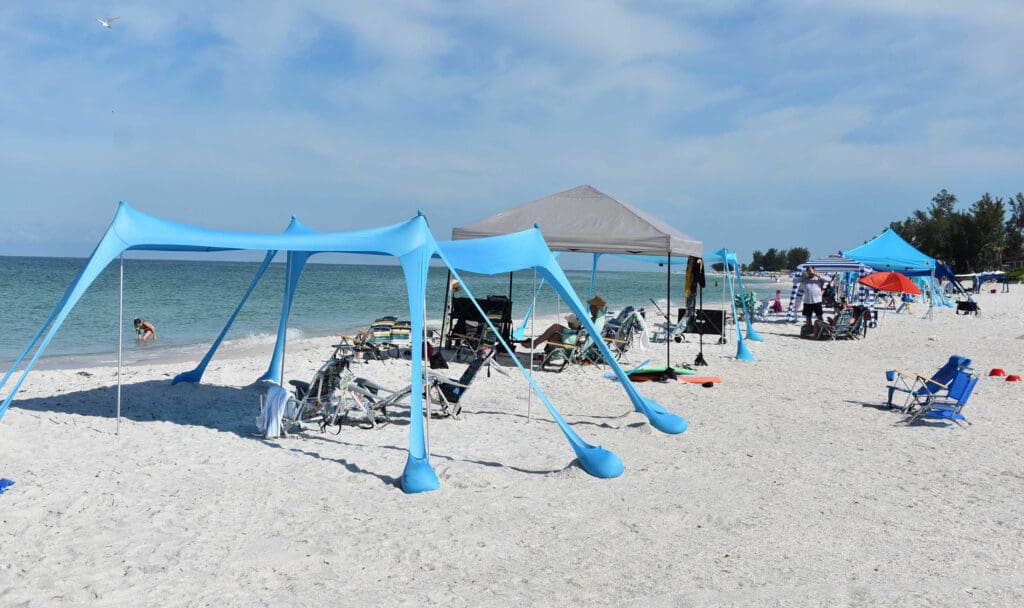
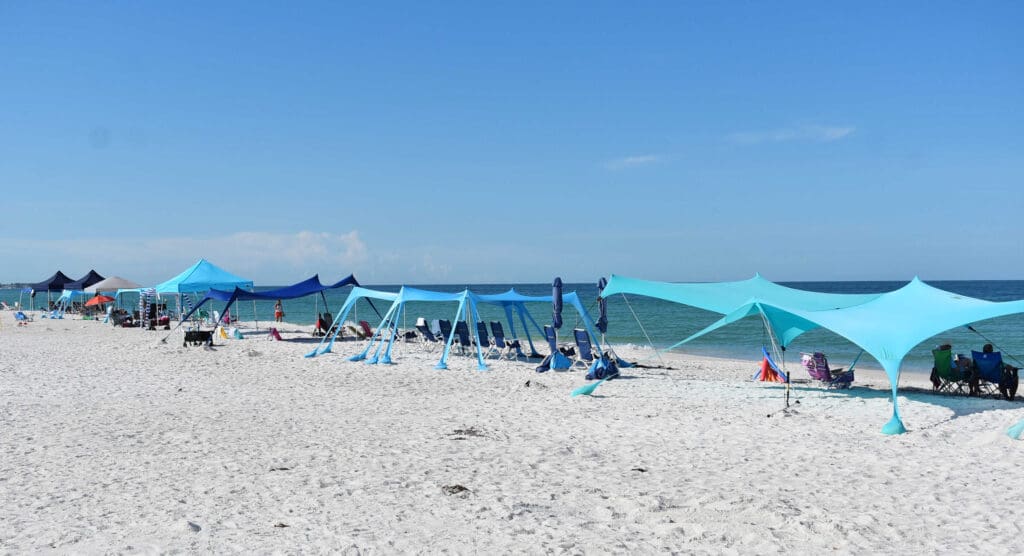
HOLMES BEACH – Mayor Judy Titsworth is concerned about beach cabana rental signage and cabanas being placed in prime beach locations before they’re rented.
Titsworth shared these concerns during the June 24 Holmes Beach City Commission meeting. She said it was brought to the city’s attention that company logos and website references appeared on rented beach cabanas.
“You’re not allowed to have signs on the beaches and it’s advertising for businesses. There’s not supposed to be commercial use on preservation (zoned) land,” she said.
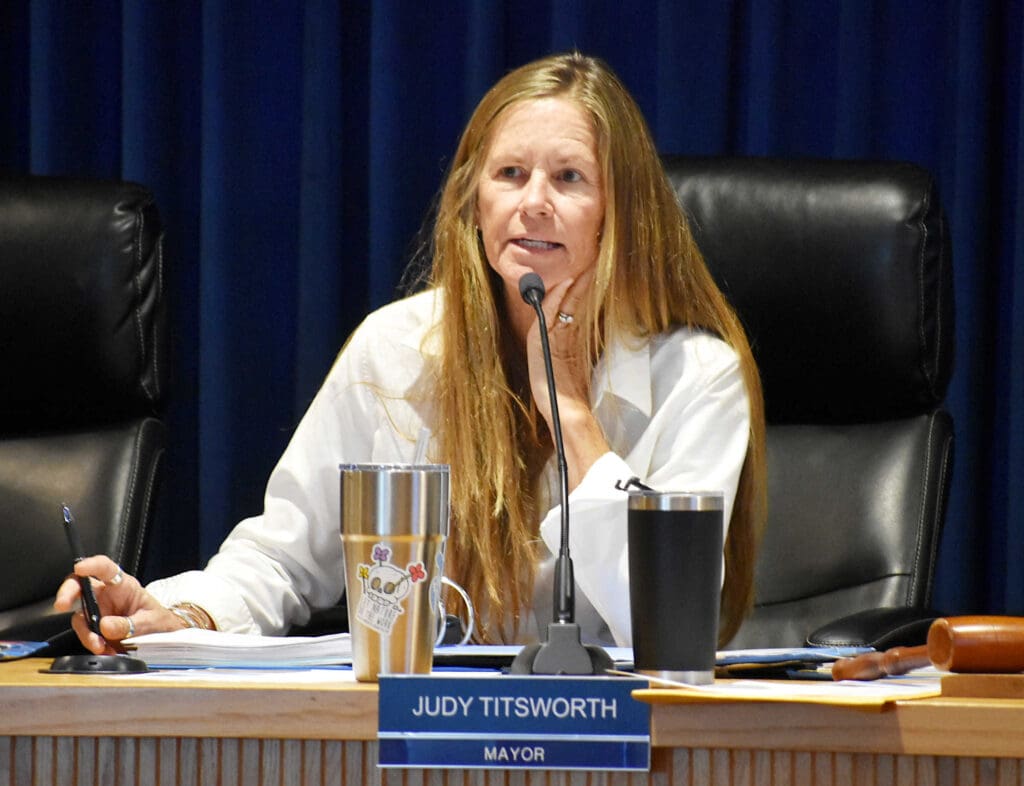
Mayor Judy Titsworth is concerned about commercial activity on public land. – Joe Hendricks | Sun
According to Holmes Beach city code: “Any sign to be located on property designated as preservation shall require the approval of the city commission prior to the issuance of a permit with the fee for such sign to be set by the city commission.”
“It was an eyesore, so we asked them to remove all of their advertisements and signage off their cabanas,” Titsworth said.
Cabana rental companies were given until June 27 to remove the signage and advertising from their cabanas before police officers and code compliance officers began issuing citations.
Titsworth noted that federal law prohibits the city from regulating what the signs say but the city can regulate their placement, size and style.
Staking a claim
Titsworth said that eliminating cabana signage addresses one concern but the city also received complaints about cabana rental companies staking out prime beach locations by placing cabanas and chairs in those locations before they are reserved and rented.
“Some of these companies are actually going out first thing in the morning and putting out a lot of their cabanas in a lot of really great spots and they’re claiming them before other people can get to them and they’re not rented,” Titsworth said.
She said some non-reserved cabanas have QR codes on them that allow someone to rent them after they’ve been placed on the beach without a reservation.
“They’re making money off of it and this is public land. How do we allow them to commercialize and make money on public sand when we don’t allow other people?” Titsworth said of the cabana rentals in general.
“We’re looking at these different types of things that could potentially move in there. My goal is that our beaches don’t become the causeway,” Titsworth said in reference to the Palma Sola Causeway along Manatee Avenue in west Bradenton. In recent years, the east end of causeway has become heavily saturated with commercial activities that include horseback rides, personal watercraft rentals and more.
Titsworth said city code prohibits commercial transactions in public spaces but most of those transactions are now conducted through company websites or online payment services like Venmo and Zelle.
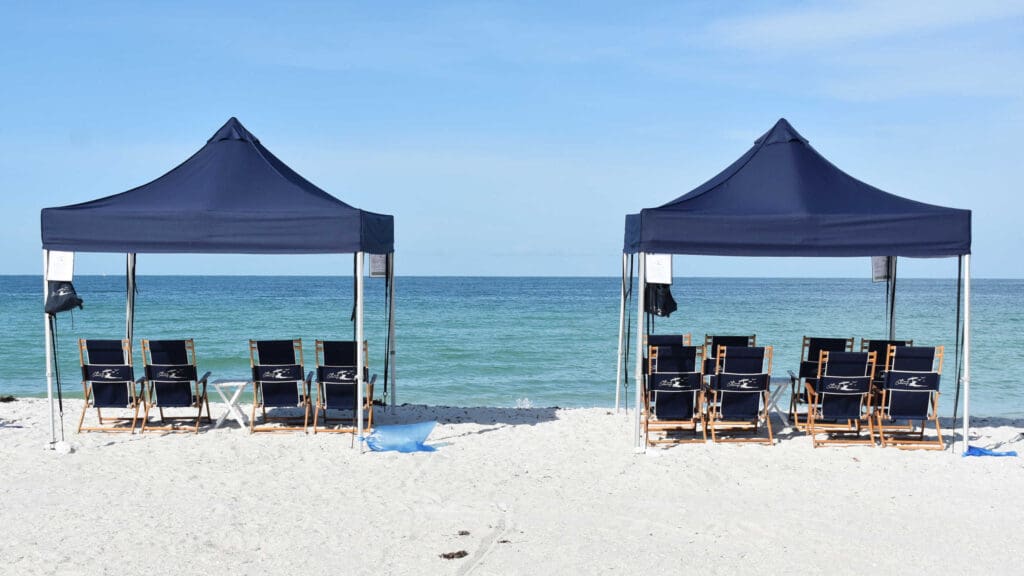
These beach cabanas contained no exterior signage and had been reserved in advance. – Joe Hendricks | Sun
Titsworth said she, City Attorney Erica Augello, Development Services Director Chad Minor and Code Compliance Chief James Thomas are researching what more can be done to regulate commercial activities on the beaches and how other coastal communities address these concerns.
“It gets harder and harder to enforce. Everybody’s trying to make money and they’re doing it now on public land and we’ve got to reel it in,” Titsworth said. “And there’s more things people are going to be coming up with in order to profit off the beaches. What would prevent someone from dropping off 25 kayaks and a QR code and pick them up at the end of the day?”
Commissioner Carol Whitmore questioned whether the use of state and federal funds to renourish the beaches might limit the city’s ability to regulate commercial beach activities, asking whether a city-issued occupational license is required.
Titsworth said occupational licenses pertain to ‘brick and mortar’ businesses that have actual physical locations but some cabana companies don’t have a primary physical location in Holmes Beach.
Beach cabanas provide beachgoers with shade and shelter from the sun. – Joe Hendricks | Sun
Commissioner Dan Diggins asked whether Manatee County has any regulations that address commercial activities at the county-owned Manatee Beach. Titsworth said she’s not aware of anything other than the county sign restrictions.
According to county code, “Private vendors, concessionaires providing concession services or activities in county parks may only do so by obtaining a concessionaire permit for such activity, or a franchise license agreement, and paying a franchise license fee.”
Manatee County uses the same contracted beach concessionaires at Manatee Beach in Holmes Beach and at Coquina Beach in Bradenton Beach.
Commissioner Terry Schafer asked whether the city’s goal is to prohibit beach cabana rentals. Titsworth said that wasn’t the intent, but she questions how the city can allow beach cabana rentals on preservation-zoned public land when other commercial activities are not allowed.
“It’s a fine line. We’ve got to do some more work,” Titsworth said.
On June 26, beach cabanas occupied a significant portion of the 68th Street beach access shoreline. – Joe Hendricks | Sun
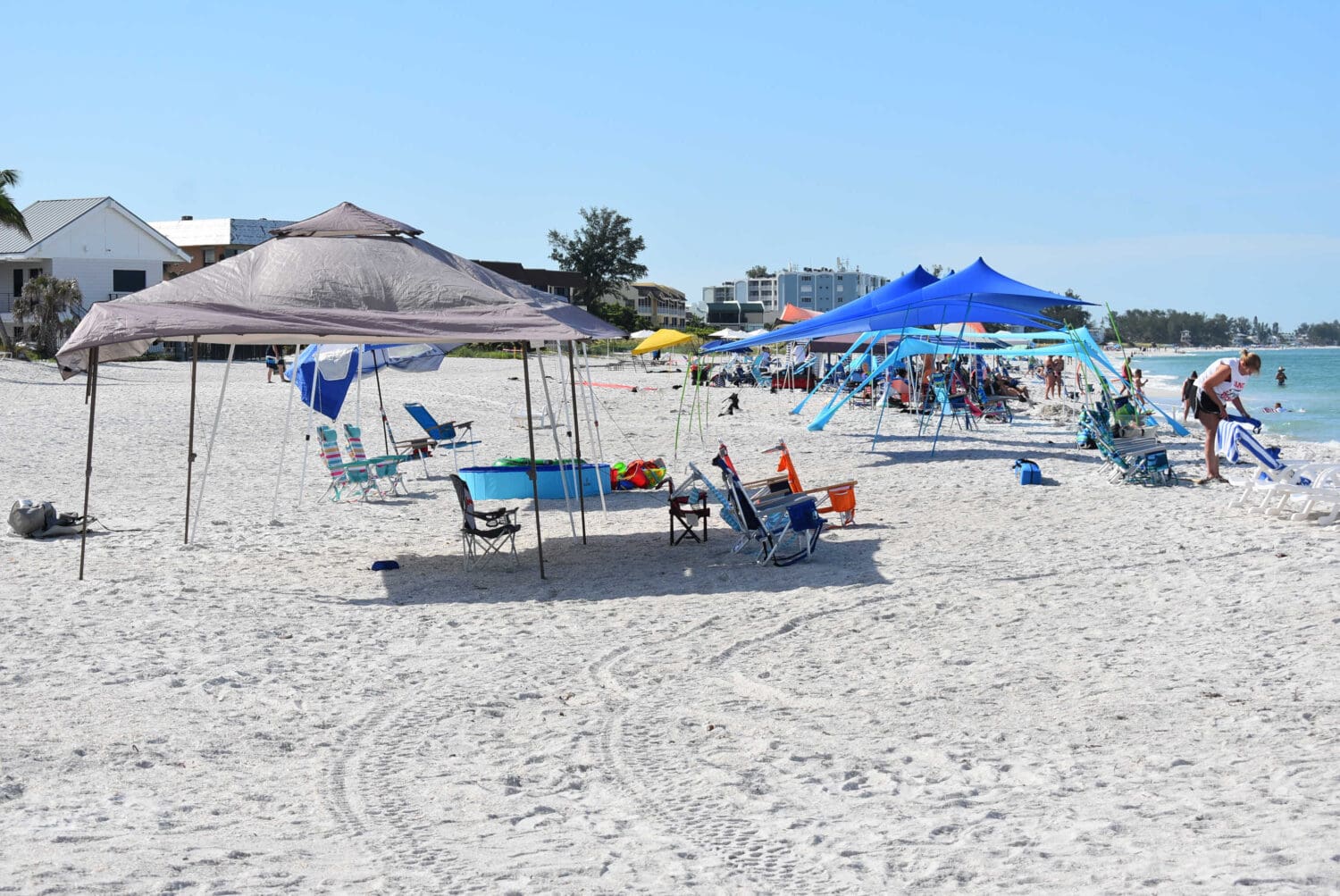
A visit to the 68th Street beach access at 10 a.m. on June 26 (a Thursday) revealed beach cabanas lining the shoreline in both directions and occupying much of the area closest to the water. Some cabanas were occupied, some were not and it was not clear which cabanas were rentals and which were not.
BRADENTON – C&D Properties of AMI has not appealed a judge’s ruling in favor of the West Manatee Fire and Rescue District’s (WMFR) right to levy annual assessments on short-term vacation rental properties at a higher commercial rate rather than a lower residential rate.
The 2024 lawsuit pertained to two condo units 101 67th St. in Holmes Beach owned by C&D Properties. On May 22, 12th Judicial Circuit Court Judge Edward Nicholas issued his written order in favor of WMFR, followed by his final order on May 29. C&D Properties then had 30 days to file an appeal and did not.
On July 2, WMFR issued a written statement that addressed the lawsuit.
“The West Manatee Fire and Rescue District has prevailed on all counts in a legal challenge brought by a short-term residential property owner over the district’s higher non-ad valorem assessment rates for such properties. The plaintiff did not appeal the ruling and the appeal period has now expired,” according to the statement. “The plaintiff argued that the district’s imposition of a higher ‘commercial’ assessment rate on short-term vacation rental properties was an unlawful regulation and preempted by Florida Statutes. The court rejected those claims, upholding the district’s authority to increase assessments based on property usage – particularly where such use demands higher service levels and resource allocation from the fire department.
“Florida’s Fire Prevention Code requires elevated life safety standards, inspections and enforcement from fire departments for short-term rentals compared to traditional single-family residential properties. The court confirmed the district lawfully applied its special assessment powers to equitably apportion costs among properties requiring more extensive fire and safety services,” according to the statement.
The statement notes the higher commercial rate is also applied to residentially-zoned assisted living facilities and daycare centers that are also subject to stricter fire code standards.
“Importantly, the court found that the district’s assessments did not constitute a regulation and did not prohibit or limit vacation rental operations, nor regulate the duration or frequency of such rentals,” according to the statement.
“The Fire Commission has never opposed short-term vacation rentals within the district,” Fire Chief Ben Rigney said in the statement. “The Fire Commission believes property owners have the right to choose how they use their homes. However, if they opt to operate a vacation rental, they should bear the additional costs for the inspections and life safety enforcement required by the Florida Fire Prevention Code.”
WMFR is an independent special fire control district that operates three fire stations and serves Anna Maria, Bradenton Beach, Holmes Beach and the unincorporated areas of Cortez, Palma Sola and northwest Bradenton.
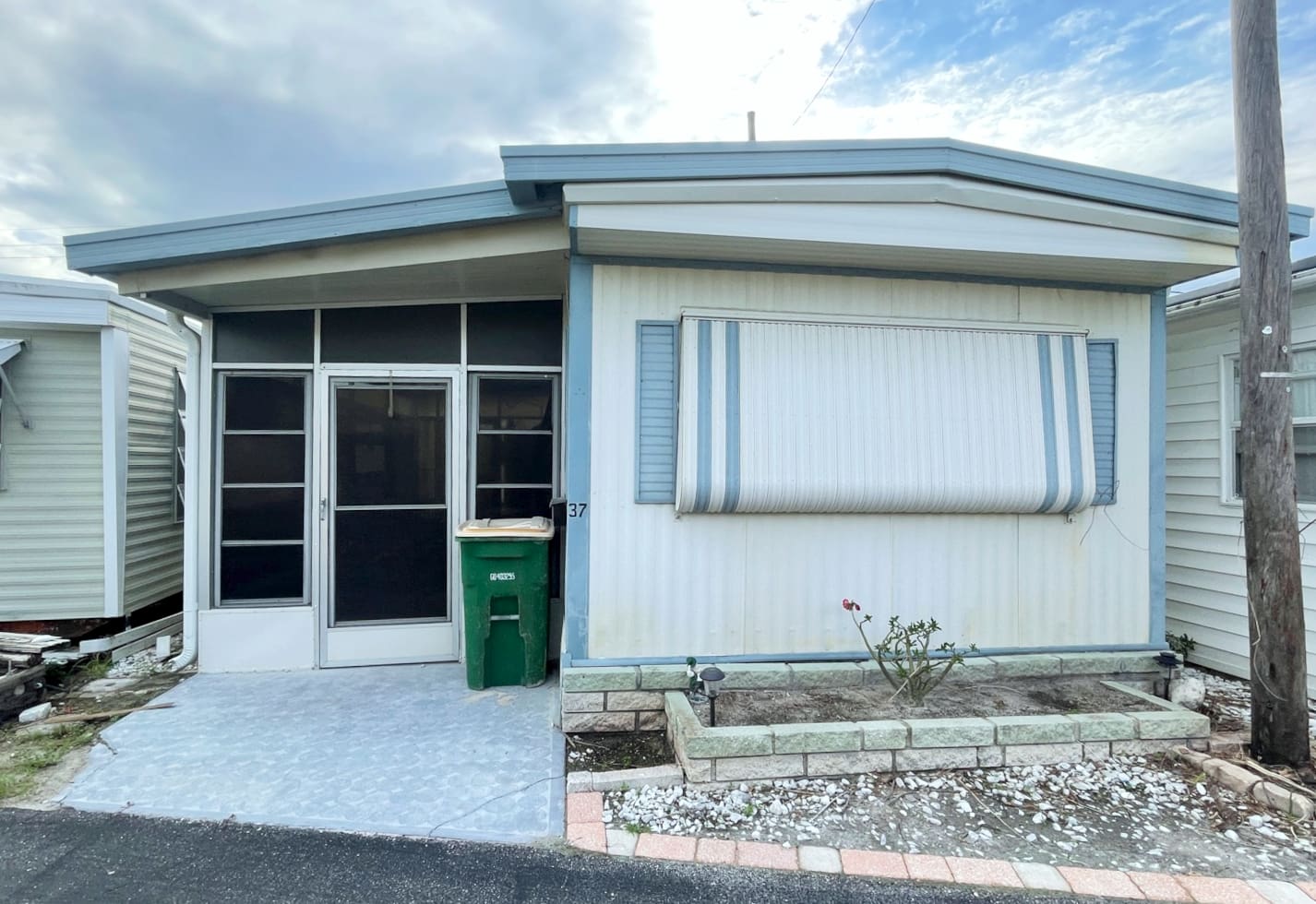
BRADENTON BEACH – Pines Trailer Park homeowners are expressing frustration about the lack of communication as a possible park closure date looms on July 31.
A Feb. 4 email to homeowners from Fort Lauderdale-based property acquisition company The Urban Group stated in part: “As you have been previously informed, and as a direct result of the community-wide damage dealt by Hurricanes Helene and Milton, coupled with non-payment of lot rent, Pines Trailer Park is no longer sustainable as a trailer park, and must be closed, with an official park closure date of July 31, 2025.”
That email also offered homeowners some options, which included turning over title to the mobile homes in exchange for extended tenancy until January 2026 along with state statute-required compensation for abandoned units.
Several Pines homeowners have told The Sun that there has been no confirmation of the closing date either from park owners or The Urban Group.
Pines Homeowners Association President Neil Lind told The Sun on July 2 that the attorneys for the HOA and Pines owners Pines Park Investors LLC are currently “in negotiations” but said he was not authorized to elaborate.
“I have not heard a thing,” Pines homeowner Mary Mox stated by text on July 3. “No one is talking.”
The Sun emailed Sarasota-based Attorney David Fredericks of Anderson, Givens and Fredericks P.A., who represents the HOA, for comment about the park closure on July 2, but did not receive a response.
The HOA filed a lawsuit in March in part to stop park closure and evictions. Park owners made a motion for the dismissal of that lawsuit. A hearing is scheduled on the motion on Monday, July 28.
Pines homeowners react to park closure
Debbie Bouts’ family has a long history with Pines Trailer Park. Her grandparents bought into the park in the 1970s and her parents traveled from Ohio to spend five months there each year for many years.
She said after the 2024 hurricanes, they drove two days from Ohio to replace floorboards in a unit with no electricity and hired someone to clean the trailer out.
“He’s (Shawn Kaleta) keeping us hostage in a way,” Bouts said. “I think this was the perfect storm for him to have the land grab. He was able to take it over. This is breaking our hearts, it’s such a part of the community and he has taken so much from us.”
Bouts is concerned that when people see the current unkempt condition of the park, they will think the homeowners didn’t care.
“We have tried to do a lot even without electricity and plumbing,” she said. “There are a lot of us who are willing to fight for what’s ours.”
Bouts said she would like a decision on the future of the park to be made soon.
“We’ve paid rent for a year on a place we’re not able to use and we can’t get an answer,” she said. “Our dream is to get our place back. There weren’t any services and we’ve been paying over $1,500 a month. We should have the basic amenities. This is a perpetual whirlpool I find myself in.”
Lorraine D’Agostino and her husband purchased a trailer in the park in 2020 as a vacation getaway from their home in New York. She has a flight booked at the end of July in case the park closure necessitates cleaning out their unit.
She said she would like to say to Kaleta, “Why couldn’t you be honest and communicate with us? If you had really sat down with us and talked to us, you would have gotten a response.”
Another Pines homeowner, who asked not to be named, wrote the following in a text to The Sun which reads in part: “For decades, Pines Trailer Park has been a safe haven – a quiet, close-knit community nestled in the heart of one of Florida’s most picturesque coastal towns. Generations of families have called this place home, with neighbors watching out for one another, sharing tools, memories and a deep-rooted sense of belonging. But today, that spirit is being tested like never before.”
The homeowner described a change in tone after Hurricanes Helene and Milton and wrote that 80 families were left waiting for clarity and guidance, but instead heard silence.
“Nothing from Mr. Kaleta, the man behind the LLC that now owns our park. Nothing from his investors. Just cold legal notices and whispers of evictions and threats.”
The homeowner said local municipalities seemed paralyzed to challenge Kaleta and seniors on fixed incomes in the parks don’t have the resources to fight back.
“When the new owners bought Pines Trailer Park, we understood that the sale contract included a stipulation: the park was to remain a mobile home community for five years. That was our safety net, our lifeline. And now it seems it’s being ripped away. Is anyone listening?
“Pines Trailer Park isn’t just land. It’s our home. It’s our history. It’s the place where our neighbors became family. We are not just property to be bought, bulldozed and sold off to the highest bidder. We are 80+ families and we deserve to be heard.”
That homeowner said on July 2 that he was told by The Urban Group that no lot rent payments would be accepted after July 31, as more than 80 homeowners wait for official confirmation of a closure date.
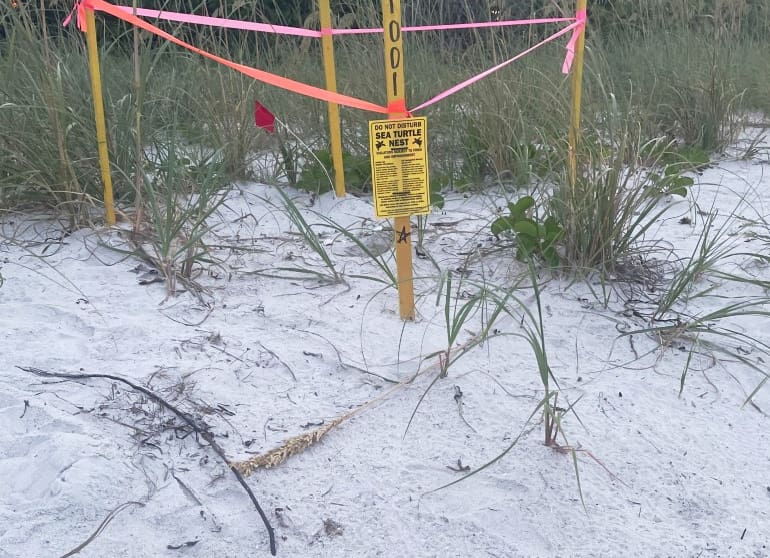
ANNA MARIA ISLAND – Sea turtle hatchling season has officially begun with two nests laid on the Island that hatched on July 3.
“Both were good hatches that appeared to go directly to the water,” Anna Maria Island Turtle Watch and Shorebird Monitoring Executive Director Kristen Mazzarella wrote in a July 4 email to The Sun.
“Now that hatching season has begun, if you see a hatchling turtle going towards the water, please let it crawl so it can get its body stretched out and ready for a long swim,” she wrote.
If you spot a hatchling going away from the water or in danger of any kind, please call the Turtle Watch hotline at 941-301-8434 and a permitted volunteer or staff member will respond 24/7 during hatching season.
“Please do not handle hatchlings unless you are taking them out of danger and please do not put turtles directly in the water as they are air-breathing reptiles, and if they are injured or tired, they may not be able to swim,” Mazzarella wrote.
Hatching season also means that it’s time for nest inventories. Turtle Watch conducts nest inventories three days after a nest hatches. Volunteers dig up the contents of the nest to determine how many eggs hatched and sometimes will find a straggler hatchling in the nest.
“If you see us on patrol and we are conducting a nest inventory, feel free to come up and watch and we’ll be happy to answer any questions you may have,” Mazzarella wrote. “These are fun to watch as you never know what you’ll find.”
There are a lot of bridges on the coastline of Florida. They serve as an important function to transport vehicles and people to our beautiful beaches and restaurants. However, there is another type of bridge which also serves an important function – a bridge loan.
Bridge loans are short-term loans that can be used to bridge the gap between buying a new home and selling your previous home. For example, you found the home of your dreams, but you need the equity in your current home for the down payment and closing costs in order to go forward and close on your new home.
Bridge loans can be acquired in less time than mortgage loans but aren’t offered by banks or credit unions, they’re usually only offered by specialized lenders
Bridge loans can often be available within 72 hours, as opposed to mortgage loans, which can take 30 to 45 days for approval. They run from six months to three years with a variety of repayment arrangements. You can have a monthly payment, interest-only payment or end with a balloon payment. Bridge loans are also used for investment property when the property is purchased, renovated and flipped or resold for a profit.
Qualifying for a bridge loan is similar to qualifying for a conventional home mortgage. Lenders will check your debt-to-income ratio, the amount of equity in your current home, credit score and income. Having a large percentage of equity and a high credit score are essential to getting approved.
Having an approved bridge loan could make your offer more competitive since there will not be any further mortgage contingencies, practically a guarantee to a seller. It’s also faster than a conventional mortgage, which could be attractive to a seller as well.
The flip side of bridge loans are the higher interest rates, which are beneficial to the lender for short-term loans. Remember, the higher interest rates and fees are out of pocket money, so be prepared with some extra cash. In addition, you are essentially paying two mortgage fees until you sell your property and are able to close out the bridge loan.
If a bridge loan sounds too risky or you’re worried about qualifying, there are two other ways to pull the equity out of your home. Cash out refinance allows you to borrow against the existing equity in your home by taking out a new mortgage in excess of what you need to close on the new property. Home equity line of credit (HELOC) also lets you borrow against the available equity in your home. Most lenders will also limit the amount you can borrow to 80% of your home’s appraised value. Either way you still need adequate equity in your current home to move forward.
Applying for a bridge loan may be beneficial depending on your financial situation and where you are in the buying and selling process. But make sure to weigh your options and consider alternatives like cash out refinance and home equity loans.
Bridge loans are challenging and should be undertaken only by buyers who are fairly confident they can sell their current residence and have the funds to make the bridge loan payments until such time as it can be closed. It’s also important that you have the personality that will sustain the stress that this financial endeavor will likely create. If not, stick to the physical bridges in and around Anna Maria Island; they don’t cost a penny and the views are spectacular.
Every time I hear a new angler say, “Wow, this place is paradise,” it takes me back to the early 80s when I met Capt. Scott Moore and began fishing Suncoast waters. I had much the same response so many years ago, and while this place is still a paradise, I’m all too aware of the changes I’ve seen over four-plus decades and how they’ve impacted the fishing and habitat that brought us here in the first place.
Those changes haven’t all been bad because prior to environmental regulation (1940s-70s), canal dredging, port expansion, causeway construction, spoil islands, seawalls, marina construction and urban runoff had contributed to an estimated loss of over 6,000 acres of seagrass in Sarasota Bay and 40,000 acres in Tampa Bay.
Neighborhoods like Key Royale on Anna Maria Island, County Club Shores on Longboat Key and Bird Key in Sarasota are just a few of the developments that filled seagrass meadows, destroyed mangroves and increased turbidity in bay waters, blocking light from remaining seagrass beds.
From the early 80s through the early 90s, recovery began with the creation of the Tampa Bay National Estuary Program (TBEP) in 1983. The start of coordinated nitrogen reduction plans began in Tampa Bay in 1987. In 1991, the Sarasota Bay National Estuary Program (SBEP) was established and in 1995, regional agencies adopted a seagrass restoration goal of 38,000 acres which was based on 1950s mapping.
Early results from these efforts included improved wastewater treatment, fertilizer and stormwater regulations as well as a public and political focus on the health of local estuaries. At the peak of the recovery between the early 2000s and 2015, Tampa Bay recovered over 40,000 acres of seagrass, which exceeded the restoration goals. Meanwhile Sarasota Bay experienced a steady increase in seagrass coverage to over 13,000 acres by 2016.
During this same period, alarmed anglers organized and formed the Florida Conservation Association (now the Coastal Conservation Association), which began establishing chapters in Florida to lobby for protection of species like trout, redfish and snook. That effort began locally in 1985 with the establishment of the Manatee chapter, and in 1986 with the Sarasota chapter, the state’s fifth and sixth chapters. Those years between the early 80s and 2016 gave anglers a reason to celebrate achievements that included redfish’s designation as a protected species in 1991 and the Florida net ban in 1995.
Unfortunately, those improvements ended between 2016 and 2020 when warming waters, high rainfall, algae blooms, development pressures and hurricanes like Irma contributed to increased runoff and turbidity. That trend only intensified from 2020 to 2024 and resulted in an estimated loss of 2,000-plus acres in Sarasota Bay (a nearly 20% decline) and over 10,000 acres in Tampa Bay. While there were many factors that contributed to the loss, the 2021 release of over 200 million gallons of nutrient-rich water from Piney Point exacerbated an already serious decline.
At a time when there should have been serious measures enacted to reverse this decline, just the opposite occurred when commissioners in Manatee County voted (against the will of the citizens) to actually reduce wetland setbacks for developers. This blatant disregard of the public resulted in the replacement of commissioners that voted at the will of developers when they were up for reelection in 2024.
When the newly-formed commission attempted to reverse the rule reducing wetland setbacks, they were challenged by state agencies while the Florida Legislature was in the process of enacting SB170/HB 1515 in May 2025. Dubbed “The Mother of All Preemptions,” the bill automatically suspends any local ordinance as soon as it’s legally challenged, even before courts decide on its validity. This bill allows developers or businesses to sue local governments and seek reimbursement for legal costs (up to $50,000), creating a deterrent against passing locally driven rules.
This isn’t or shouldn’t be a political issue, but it clearly shines a light on the need for every citizen to be informed about and involved in decisions being made at the local, state and national level that affect them and future generations. Call it “enlightened self interest.” The choice determines who directs the future of the natural resources that form the basis of our environmental and economic future. We either get involved and vote for leaders who protect a future for our children or let our inaction fuel the greed and power struggles that will dominate in our absence.
HOLMES BEACH – A pickup truck collided with a low-speed vehicle (LSV) on Gulf Drive on Tuesday evening, resulting in two of the seven LSV passengers being transported to a walk-in emergency room for non-incapacitating injuries.
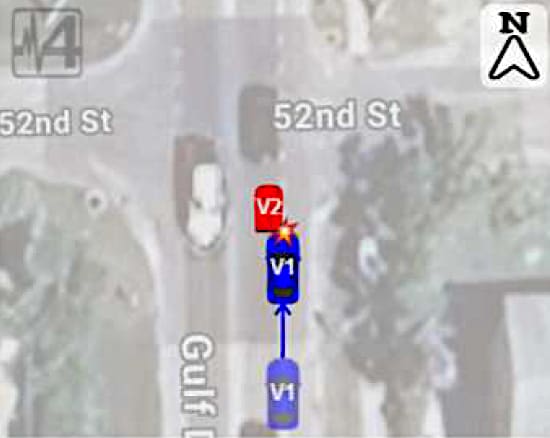
The accident occurred at the Gulf Drive and 52nd Street intersection at approximately 6:53 p.m. on July 1.
According to the report obtained from the Holmes Beach Police Department, Vehicle 1 (V1) was a 2004 Chevy Silverado pickup truck owned by a Bradenton man whose age is not listed in the report. The pickup truck was carrying one passenger.
Vehicle 2 (V-2) was a six-passenger 2025 HDKP-brand electric low-speed vehicle (LSV) owned by Just 4 Fun beach rentals in Holmes Beach. The LSV was driven by a 46-year-old man from Tampa, whose birthday it was, according to the birthdate listed on his driver’s license.
According to the police report, the pickup truck and the LSV were both traveling northbound on Gulf Drive. The LSV was stopped in traffic and attempting to make a left turn onto 52nd Street when the pickup struck the passenger-side rear of the LSV.
“I spoke with D1 (Driver 1) about what had happened and he stated that he was talking to his friend in the front passenger seat and he looked over at him during conversation and when he looked back V2 (the LSV) was stopped in traffic and he could not stop in time. D1 was deemed to be at fault and was issued a citation for careless driving,” according to the reporting officer.
The name of the person who received the citation is redacted in the report.
According to the report, no one was ejected from the LSV but two passengers were transported by Manatee County EMS to a Manatee Memorial walk-in emergency room with non-incapacitating injuries.
Alcohol use was not suspected as a contributing factor and the LSV sustained minor damage estimated to be approximately $500. Both vehicles were able to leave the scene under their own power.
Tuesday’s accident occurred one day after a 15-year-old girl fell out of a golf cart in Anna Maria and suffered traumatic head and chest injuries and was transported by helicopter to Tampa General Hospital.
ANNA MARIA – City Pier tenant requests, increased parking fines and ongoing service issues with Waste Management were among the topics discussed during the June 26 Anna Maria City Commission meeting.
The meeting began with Manatee County Emergency Operations Center (EOC) Chief Matt Myers giving a short presentation at the request of Mayor Mark Short. Short said he plans to take full advantage of EOC resources this storm season and do a better job of communicating with the county’s emergency operations team regarding hurricane preparation and response.
Window coverage
The commission approved on first reading an ordinance that upon second reading and final adoption will increase from 20% to 80% the window coverage businesses are allowed for window signs and other promotional materials. The ordinance requires businesses to maintain a 6-inch vertical visibility strip on each window so first responders can look inside before entering.
Anna Maria businesses will soon be allowed to cover 80% of each window with signage and other messaging. – Joe Hendricks | Sun
Parking fines
The commission adopted a resolution that increases the city’s parking ticket fine from $50 to $75 in an effort to discourage beachgoers and other motorists from viewing a $50 parking ticket as an acceptable price to pay to park for the day. Now in effect, the resolution also increases the fine for parking in a handicapped space from $225 to $250. Violators of any parking offense in Anna Maria can be ticketed every two hours for the same ongoing violation.
Pier tenants
The commissioners shared with the mayor their opinions on several requests recently presented by City Pier Grill tenants Brian Seymour, Vic Mattay and Nick Graham.
The City Pier buildings remain stranded with no pedestrian walkway. – Joe Hendricks | Sun
The pier tenants’ initial five-year lease expires on Dec. 31 but can be automatically extended for an additional 15 months or so to account for the time lost to the damage caused by Hurricane Milton. Short hopes to reopen the pier in October 2026 and the pier tenants also have to decide if they want to renew their lease for another five years.
The commissioners support placing a permanent, open-air roof structure over the uncovered T-end seating area, but they want the roofline to match the roofline of the adjacent building occupied by Mote Marine so people can still fish off the far end of the pier.
The commissioners support drink rails being attached to the inside of the roof covering support beams but Commissioner Kathy Morgan-Johnson doesn’t want the additional seating provided by the rail stools to be used to obtain a liquor license. Johnson is OK with the existing beer and wine sales, but she doesn’t support liquor being served in a public area often populated by children.
The commission supports leaving the pier open 24 hours a day when it reopens rather than closing it at 10 p.m. as has been the case since the new pier opened in 2020.
Regarding Seymour’s comment about paying $400 per square foot to lease the city-owned pier space and paying $40 per square foot to lease his privately-owned Anna Maria General Store space, Commissioner John Lynch noted the city only charges Seymour and his partners for the interior pier building space and does not charge them for the outdoor area that provides seating for their customers.
Short said he will take the commissioners’ insights into account during future pier lease discussions with Seymour.
Waste management
The mayor, commissioners and residents continue to express displeasure with the residential trash collection services provided by Waste Management. The primary concern is Waste Management is not adequately providing the side door service required for non-homesteaded residential properties (including short-term vacation rentals) and paid for by those property owners. On several recent occasions, Short and others have complained about Waste Management employees not returning the trash and recycling receptacles to the side of the residential structure after emptying them.
Waste Management wants to change Anna Maria’s trash collection days. – Joe Hendricks | Sun
Short also made commissioners aware of a new concern. He said a member of the Waste Management team will appear before the commission on July 10 seeking commission authorization to switch trash collection days from Monday and Thursday to Tuesday and Friday and switch recycling collections from Monday to half of the city on Tuesday and half on Friday, with yard and landscaping collection continuing on Monday.
Short said Waste Management made the request after securing a contract with Manatee County for trash collection services in the unincorporated portions of the county. Johnson and Commissioner Gary McMullen oppose giving up Monday trash collections because of the heavy trash accumulation that occurs during weekends. Lynch suggested Waste Management is trying to manage its margins and pick up additional business without increasing its capacity and the trucks and equipment needed.
BRADENTON BEACH – Tasked by city commissioners in May to conduct a code compliance review of the parking lot at 205 First St. N. historically used by Pines Trailer Park residents and the 101 Bridge St./219 Gulf Drive parking lot, city building official Bill Palmer presented his report at the June 27 city commission work meeting.
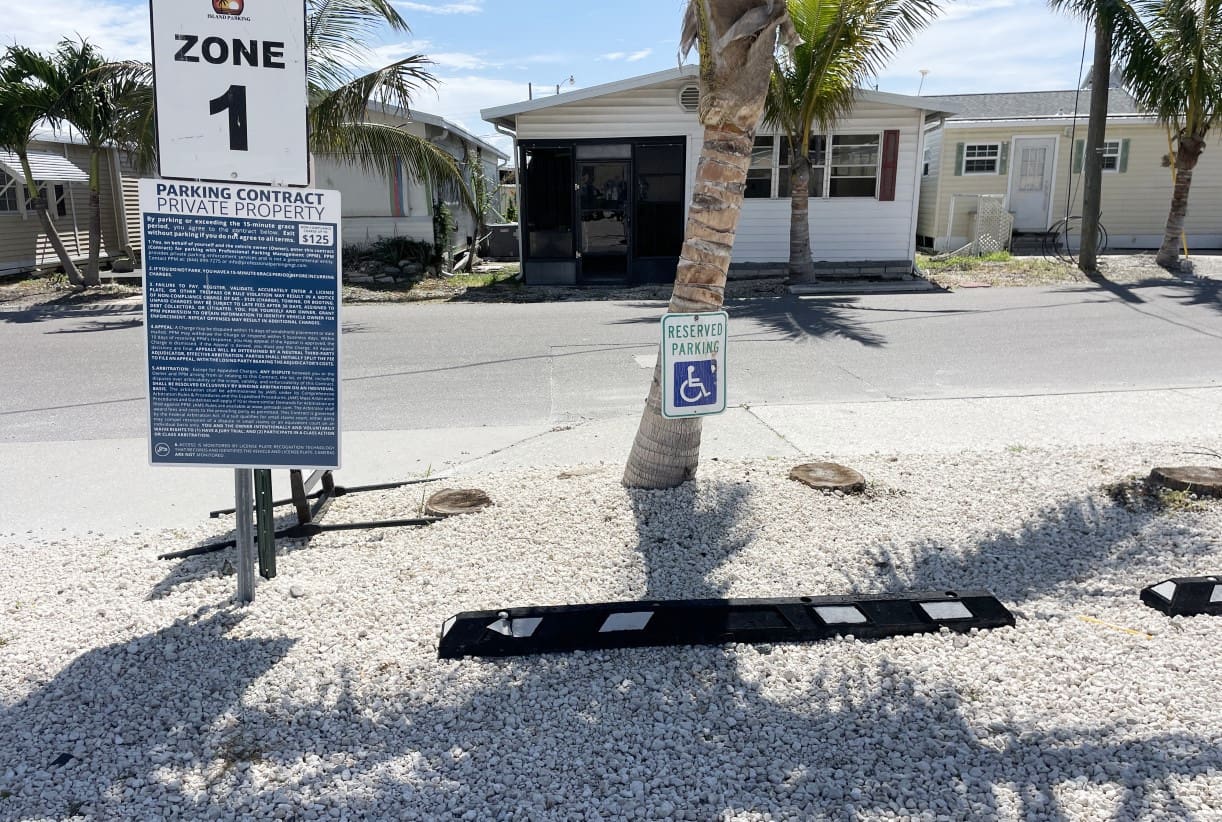
Palmer enumerated a list of issues that are not in compliance at both public paid parking lots, including improper accessible signage and surfaces.
“We have a professionally drawn site plan for Bridge Street parking lot and I was given a new plan for Pines,” Palmer said. “I did an onsite inspection of the parking lots and compared them to make sure they were in compliance with Florida Statutes, Florida Building Code and our Land Development Code.”
“The first item at the Pines parking lot was the handicapped accessible spaces,” Palmer said. “Florida Statute has regulations on the signage and the striping that shows the 5-foot width next to the vehicle. Also, we need handicapped signs that have a certain verbiage on them. The ones at the parking lot now don’t meet Florida Statute.”
The accessible parking spaces and routes must be on slip-resistant material, he said. The parking lot currently has a loose stone surface throughout.
“The spots for the handicapped parking must be on a stable, firm and slip-resistant surface such as asphalt or concrete. That’s per Florida Statute,” Palmer said. “Neither of the parking lots have that – the Pines or Bridge Street.”
Palmer handed commissioners the following list of compliance review issues that he found at the parking lots:
Handicap accessible spaces must be properly marked and striped to define the width with signage per the details on approved plans;
Handicap spaces and accessible routes must be level, stable, firm and slip-resistant with concrete or asphalt coverings;
Trash receptacles must be located at each entrance and exit points;
Parking lot surface other than handicapped spaces and accessible routes must be soft shell/crushed shale sand pavement;
Bollards need to be installed;
Parking lot general signage needs to be installed;
Any hazardous debris needs to be removed;
Install new sidewalks and parking lot entry access;
Provide a parking lot light plan for approval;
Provide a drainage and stormwater management plan; all off-street parking lots shall be graded and drained in accordance with applicable stormwater management requirements;
New landscaping vegetation; and
Provide landscaping (Bridge Street only).
“I sent this list to applicant (Shawn Kaleta, manager of Pines Park Investors LLC) to review,” Palmer said. “The comment back to me was he doesn’t want to do improvements until he gets a Temporary Use Permit, but that parking lot is being in use now. Tourists are using that lot. On the Bridge Street parking lot the applicant had made comment to me there should be some exceptions because it’s a temporary lot. I don’t agree with that.”
The parking lot, commonly known as the Pines parking lot, was converted to public paid parking in December 2024. The use of that property as a paid parking lot is under review by the commission.
Stephen Thompson, the attorney for Pines Park Investors LLC, the owners of the parking lot at the Pines Trailer Park, said at a May 1 special commission meeting that Pines residents who pay their rent may continue to use the lot for free while the city commission considers the owners’ request to charge for parking at the lot.
“At the last meeting, there was concern that we were taking away the parking from tenants,” Thompson said. “In talking to Mr. Kaleta, we want to roll back and allow the tenants to once again park on that lot. Just like they have done for years. Not that it’s a requirement or a legal obligation for us to do it, but I think that may bring a resolution to this issue.”
It was at that May meeting that commissioners directed the building official to review regulations as they pertain to the parking lot at 205 First St. N.
Commissioner Scott Bear said the lot appears to be fully usable for paid public parking, and suggested signs reserving some spots for Pines residents.
“They’re not fulfilling what they told the board they’re going to do,” Bear said. “I think that needs to be added to this list.”
Palmer said the owners could cordon off an area and post “Pines residents only” signs.
“If they are using even three spaces for paid parking, it needs to comply with your list,” Commissioner Deborah Scaccianoce said. “They need to follow all the rules. If that’s mixed use with paid parking and Pines residents I think that’s irrelevant. The relevant part is they’re getting money, they need to comply with what we told them they had to do. I think they’re skirting the issue and just hoping nobody notices.”
Mayor John Chappie said, “If you want to keep part of it as paid parking, you have to follow the rules.”
Pines homeowner Sandy Suever said there are a few Pines homeowners using the parking lot currently.
The parking lot at 101 Bridge St./219 Gulf Drive was approved for a 106-room resort hotel in December 2023.
“To me, temporary is 90-180 days,” Palmer said. “This parking lot is going to be there for a long time. I’m sure there will be no development on that lot for a year or more. If temporary or not, everybody should have the opportunity to use it safely.”
HOLMES BEACH – By a 3-2 vote, city commissioners have denied a second request to reduce the treehouse-related $188,621 code enforcement lien the city placed on the Angelinos Sea Lodge.
Owned and operated by Holmes Beach residents Lynn Tran and Richard Hazen, the beachfront resort is located at 2818 Avenue E.
The lien is the result of the $125-per-day code enforcement fine the resort owners incurred for 14 years while contesting the city’s request to remove the beachfront treehouse that was built without a city-issued building permit. After a long, costly legal battle, the treehouse was removed on Aug. 29, 2024. At that point, the daily fines for the unpermitted treehouse stopped accumulating, but they remain unpaid.
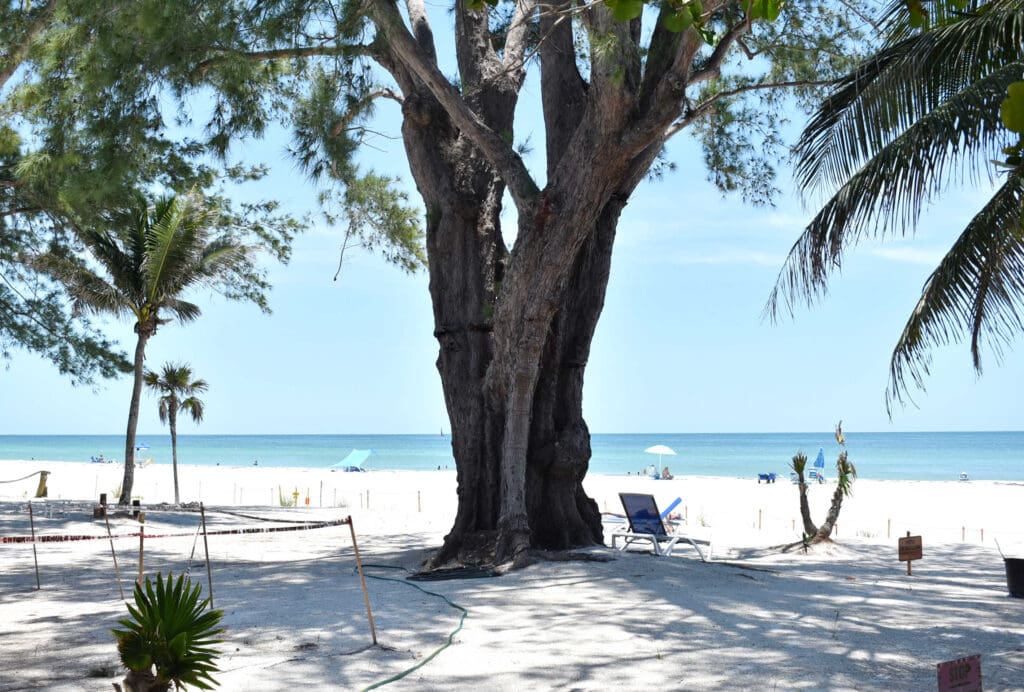
The infamous Holmes Beach treehouse was removed from this tree in August 2024. – Joe Hendricks | Sun
A lien associated with an unpaid debt can prevent or delay the sale of property and in some cases enable the lienholder to take possession of the property.
Lien reduction denied
On May 27, the commission voted 5-0 against reducing the treehouse-related lien requested by Tran and Hazen, with Tran suggesting $18,000 as a reduced amount to consider.
On June 24, Tran and Hazen again asked the commission to reduce the lien.
Commissioner Carol Whitmore made a motion to reduce the lien to $80,000, payable within 90 days. Whitmore said she never supported the treehouse or the legal actions and expenses the city was subjected to, but she wants the long-running saga to end. Commissioner Dan Diggins seconded Whitmore’s motion.
In response to a question from Commissioner Steve Oelfke, City Attorney Erica Augello said the city spent more than $200,000 on the treehouse lawsuits and appeals.
“The city had to file an injunctive action and expend public dollars to affirmatively get a court order after several years to have the treehouse removed,” Augello said.
Oelfke said he sympathizes with the resort owners, but their decisions resulted in the legal costs incurred by the city.
“I can’t support any reduction,” he said.
Commissioner Carol Soustek said she can’t support a lien reduction because Hazen and Tran chose to battle the city in court rather than work with the city to resolve the case.
“That was the choice made, so I cannot support any reduction,” she said.
Commissioner Terry Schaefer said, “The amount of the lien as a result of those accumulating fines is a direct result of a continual 14-year period of resistance. As I said at the last meeting, we hope that you can continue to be a part of our community, but to capriciously reduce our lien – when it’s a direct result of your actions, not the city’s – would make a mockery of our system and would set an ugly precedent. For those reasons, I cannot support reduction of the lien.”
Angelinos Sea Lodge owners Richard Hazen and Lynn Tran have twice had their lien reduction requests denied.
When addressing the commission, Tran said, “We didn’t do the treehouse out of malice.”
She said the building official at that time told them they didn’t need a permit for the treehouse and they later spent $19,000 in an unsuccessful effort to obtain an after-the-fact building permit.
Regarding the lengthy legal battle, Tran said, “We listened to our attorney. Please don’t say we chose to be in court for 14 years.”
Mayor Judy Titsworth said, “The choice to appeal was your choice. Unfortunately, 14 years added up. You knew that it was a daily fine but you continued to fight. I’m sorry, but it’s the consequences for the choices that were made.”
Diggins said, “I’m just looking at it from a compassionate point of view. $80,000 is a lot. $188,000 is a lot more. We’re not disputing the validity of the fines. We’re not disputing the lien. We are saying be compassionate to help a citizen.”
“This is a lot of money. I don’t think anyone up here today can write a check for $180,000,” Whitmore said.
Whitmore’s motion failed with a 3-2 vote, with commissioners Oelfke, Schaefer and Soustek opposing the lien reduction.
Soustek then made a motion to deny the lien reduction and that motion passed by a 3-2 vote, with Whitmore and Diggins in opposition.
Vacation rental fines
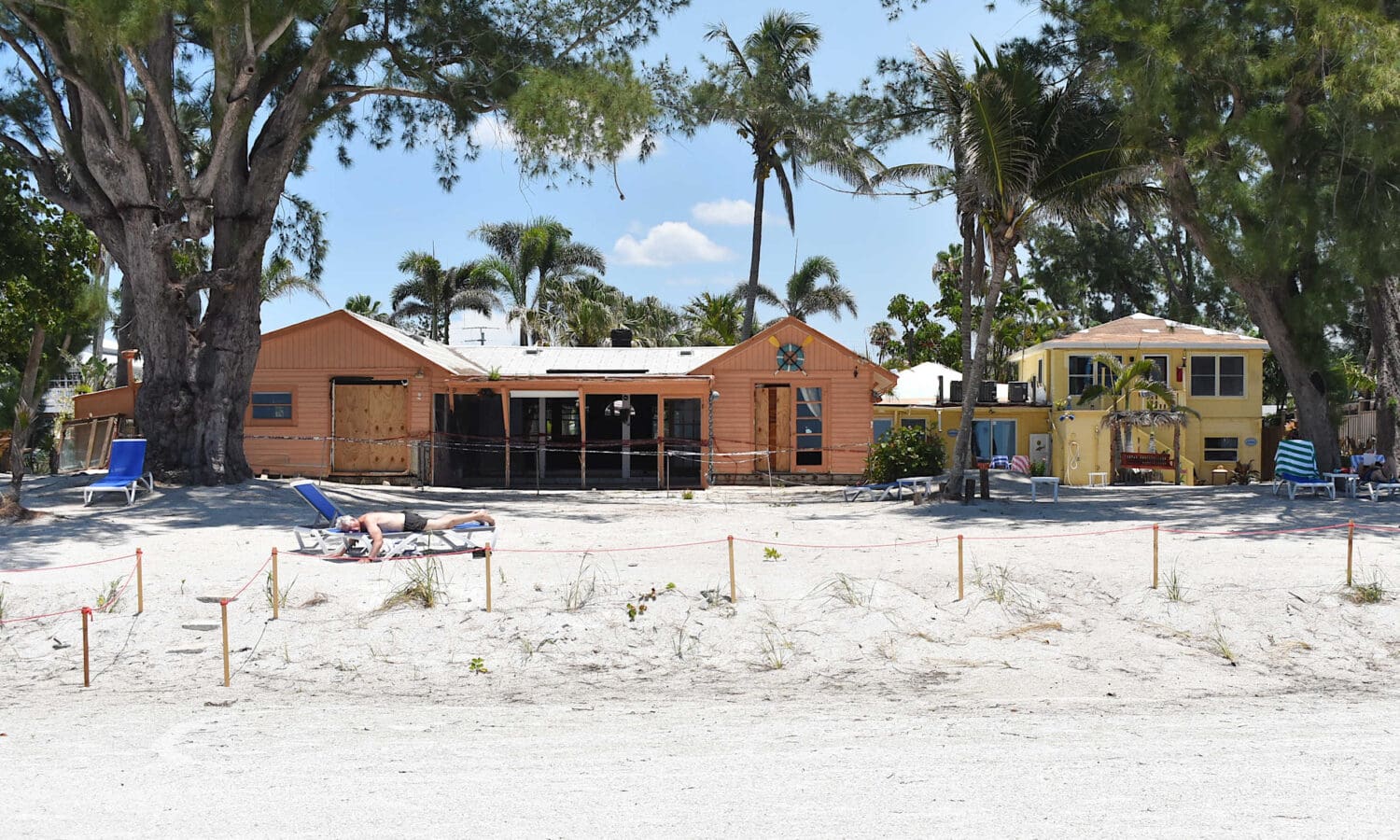
Tran and Hazen continue to incur a separate $125-per-day fine for operating their resort without a city-issued vacation rental certificate. Those fines now total approximately $190,000.
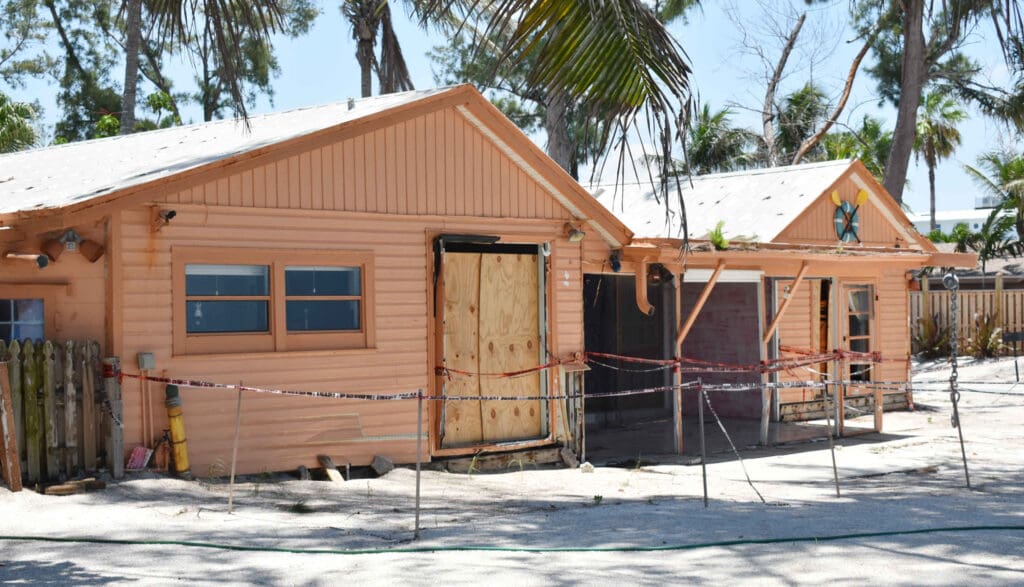
The hurricane-damaged Angelinos Sea Lodge structures closest to the Gulf remain boarded up. – Joe Hendricks | Sun
On May 27, Augello said the resort owners could have applied for a vacation rental certificate when the treehouse was removed but they didn’t; and to obtain a vacation rental certificate now, they must bring their property into compliance by temporarily suspending their rental activities and passing a city inspection.
This two-story structure is also part of the Angelinos Sea Lodge. – Joe Hendricks | Sun
“They’re not compliant because they’re continuing to rent their property in violation of code. They haven’t come into compliance,” Augello said on June 24 when Whitmore asked about the resort owners’ recent attempt to obtain a rental certificate.
HOLMES BEACH – City property owners may soon see their annual stormwater assessment fee increase by as much as 205%, rising from $2.95 per 100 square feet of property to $4.95 or $9 per 100 square feet.
Stormwater fee revenues are used to maintain and improve the city’s stormwater and drainage systems that help the city recover from heavy rains, high tides and flooding.
At $2.95 per 100 square feet, the owner of a 7,500-square-foot property currently pays a $221 annual stormwater fee. At $4.95, that fee would increase to $371. At $9, it would increase to $675 per year.
At $2.95 per 100 square feet, the owner of a 5,000-square-foot property currently pays a $148 annual stormwater fee. At $4.95, that fee increases to $248. At $9, it increases to $450.
City commissioners expect to vote on the proposed fee increase during their Tuesday, July 22 meeting and public input is sought before and during the meeting that starts at 2 p.m. The city has until the first week of August to notify the property appraiser’s office of a stormwater fee increase.
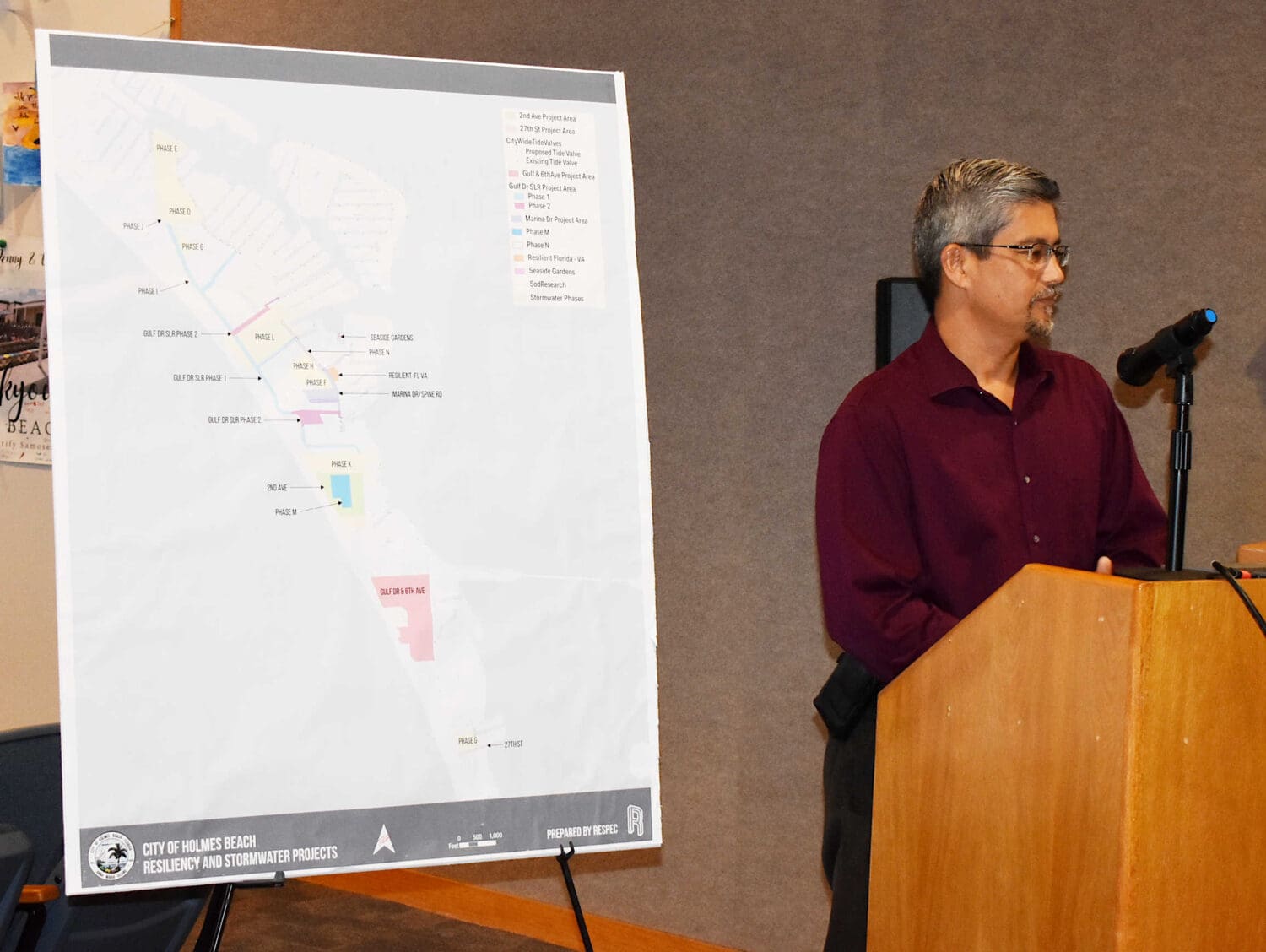
Public Works Director Sage Kamiya presented the proposed fee increase for preliminary, non-voting discussion during the city commission’s June 24 work session.
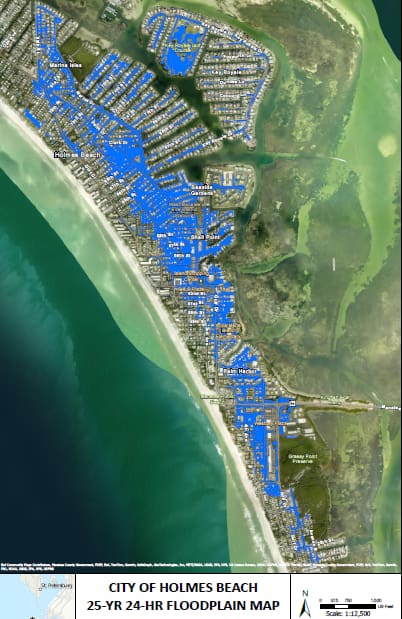
Kamiya said five extremely heavy rain and flooding events occurred during the second half of 2024 alone, including Hurricanes Debby, Helene and Milton, and his presentation included a once in every 25 years/24-hour rain event floodplain map in which most of the city was highlighted in blue.
“Currently, if we get that kind of rain event, everything in blue is covered in water,” he said.
The areas highlighted in blue would likely flood during a once in every 25 years/24-hour rain event. – City of Holmes Beach | Submitted
Kamiya said the city spends about $300,000 a year maintaining the stormwater system that currently includes about 4 miles of vertical infiltration trenches, 10 miles of drainage pipes, drainage ditches and swales, WaStop check valves and more. He said the infiltration trenches are designed primarily to clean and filter the water before it’s discharged into the surrounding natural waters, but the trenches held reduce flooding, too.
Kamiya said drainage and flooding complaints have increased in recent years and the city needs to do more to address those concerns.
He also mentioned sea level rise and rising tides: “We know sea level is rising, the tides are getting higher and they’re getting more frequent. All of these projects don’t necessarily solve that, but all these projects have a component that can help that.”
Mayor Judy Titsworth said stormwater and drainage improvements help protect property values.
Projected expenses
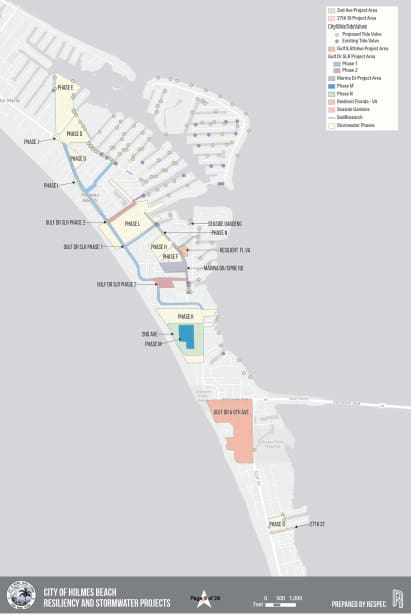
Kamiya’s presentation included a detailed breakdown of the $21.9 million for proposed stormwater maintenance and improvement projects he believes are needed during the next five years. He said without a rate increase, some improvements might be discarded or spread out over a much longer period. He said even at the $9 rate, the city might still be a couple million dollars “in the red” after five years if all those projects are pursued.
This map illustrates some of the recent, current and future stormwater improvement activity in Holmes Beach. – City of Homes Beach | Submitted
Kamiya said his $21.9 million estimate assumes about half of those costs being covered by matching grants. Some grants require a 20-30% match from the city, many require a 50% match and grant funds do not cover maintenance costs.
According to Kamiya, the city currently has about $1.86 million available for stormwater-related expenses and maintaining the $2.95 fee would generate $850,000 in stormwater fees during the 2025-26 fiscal year. The $4.95 rate would generate $1.4 million and the $9 rate would generate $2.59 million.
According to Kamiya, the average stormwater fee is currently $195. A $4.95 fee would result in a $296 average fee and a $103 average increase. A $9 fee would result in a $506 average fee and a $314 average increase.
Commission Terry Schaefer said the stormwater fee on his latest property tax bill was $331, which he noted was only a small fraction of his total tax bill.
“In my opinion, we ought to go to the max ($9) right now because the needs are not going to be any less and further storms are going to create greater problems,” he said.
According to the Manatee County Property Appraiser’s Office, Schaefer’s property is 11,238 square feet. At the $9 assessment rate, his stormwater fee would increase by $680 to $1,011.
Regarding the political implications of a fee increase, Schaefer said, “I can’t think of a better time to present to our constituents the need to do this. I think everyone who’s been here for the last year realizes the importance of stormwater abatement and the city doing everything it can.”
Commissioner Steve Oelfke noted the city’s stormwater management efforts and improvements provide property owners with a flood insurance discount that will increase to 25% on Oct. 1 due to the city’s upgraded Community Rating System rating. He also noted the public works department is trying to repair or replace drainage components that have been ignored for 10 or 20 years.
Commissioner Dan Diggins said most of the calls he receives from residents and property owners pertain to stormwater, drainage and flooding.
Maintaining the vertical infiltration trenches are a part of the city’s stormwater maintenance efforts. – Joe Hendricks | Sun
Commissioner Carol Whitmore suggested the city launch a publicity campaign to make property owners aware of the potential fee increase. Titsworth said the city will follow the same public noticing requirements used for the annual budget process and it’s up to the residents and property owners to make themselves aware of what’s happening in their city. That said, the mayor and commissioners do want to hear from residents and property owners about the proposed rate increase before or during the July 22 meeting and their email addresses are available at the city website, www.holmesbeachfl.org.
After the meeting, Kamiya said he supports the $9 rate.
Other Island cities
A few years ago, the Anna Maria City Commission raised that city’s stormwater assessment fee from $1 per 100 square feet to $2 per 100 square feet. When contacted last week, City Treasurer LeAnne Addy said the $2 rate remains in effect but the mayor and commissioners will discuss raising it during their upcoming budget sessions. At $2, the owner of a 7,500-square-foot property pays a $150 annual stormwater fee.
Bradenton Beach City Treasurer Shayne Thompson said the city is considering switching to a per-hundred-square-feet stormwater fee calculation formula and away from the current variable-based formula devised by the city’s previous stormwater engineer.
According to the property appraiser’s office, the 2024 stormwater fee for a 7,500 square foot residential property on Fifth Street South was $330.
HOLMES BEACH – The owners of the Gloria Dei Lutheran Church property did not accept the city’s $3 million offer to purchase the church building and property at 6608 Marina Drive.
On June 25, Taylor Rahdert, the real estate agent representing the property owners, sent Holmes Beach Director of Development Services Chad Minor an email that said, “The Florida Bahamas Synod Council has reviewed the letter of intent regarding the purchase of Gloria Dei and property. The council has a fiduciary respon sibility to sell the property based on the appraisal that represents the value at its best usage. The council is open to further negotiation based on the appraised value of $9.9 million. Thank you for your consideration.”
The property owners received a $9.9 million appraisal. – Joe Hendricks | Sun
The property owners’ $9.9 million asking price is based on the appraisal they received that assumes the property will be rezoned for retail or commercial development, which would require city commission approval.
On May 27, the commission authorized Titsworth to offer the Synod Council $3 million and engage in further negotiations if needed, with the caveat that a higher negotiated purchase price would require city commission approval.
After receiving a copy of Rahdert’s email, Mayor Judy Titsworth asked City Clerk Stacey Johnston to send it to the city commissioners.
“Unfortunately, I do not see a path forward on an acquisition at this time,” Titsworth stated in her email.
Commissioner Carol Whitmore wrote, “Knew this would happen.”
During recent commission discussions, Whitmore expressed doubts that the property owners would accept an offer that was significantly lower than the $9.9 million appraised value.
The city’s $3 million offer was based on the two valuation appraisals the city recently received. The city’s $2.1 million and $2.77 million appraisals assumed the church building and property would retain the existing Public/Semi-Public (PSP) zoning and future land use designations that do not allow for residential or commercial development.
According to the city’s land development code, “The PSP zoning district is consistent and compatible with, and is intended to implement, the public/semi-public land use category set forth in the comprehensive plan. This district is intended to implement the public/semi-public land use category by recognizing identifiable areas of the community that support public, municipal and semi-public centers, community services and facilities including churches and schools, both public and private.”
City officials hoped to use the church property for public green space and recreational purposes. – Joe Hendricks | Sun
City officials hoped to use the church building and property for public purposes beneficial to city residents. The potential uses include providing space inside the church building for non-profit groups, charitable organizations, art groups and the School for Constructive Play preschool that was displaced from the church building by the 2024 hurricanes. The potential outdoor uses include a children’s playground, park space, green space, outdoor market space and more.
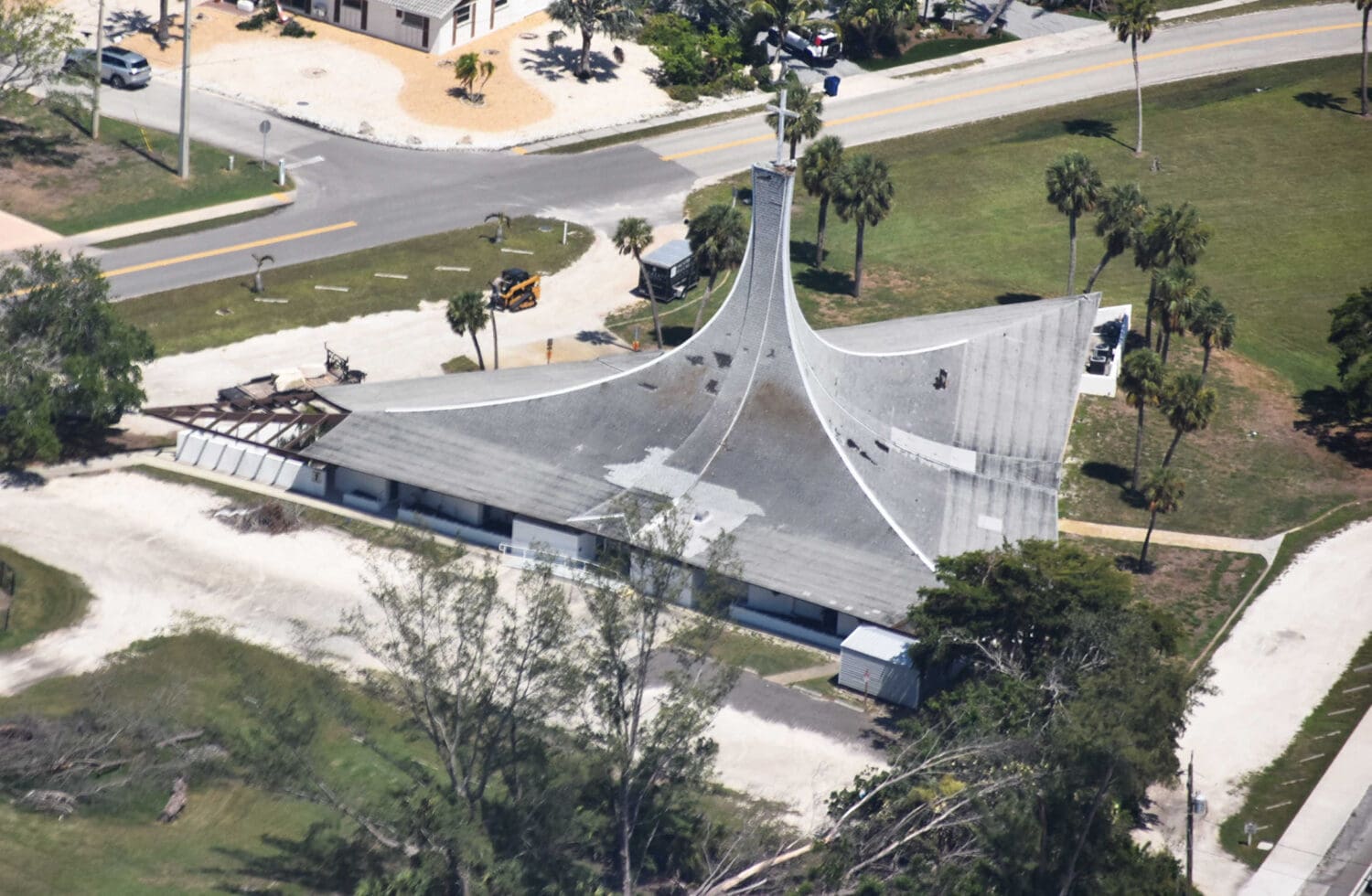
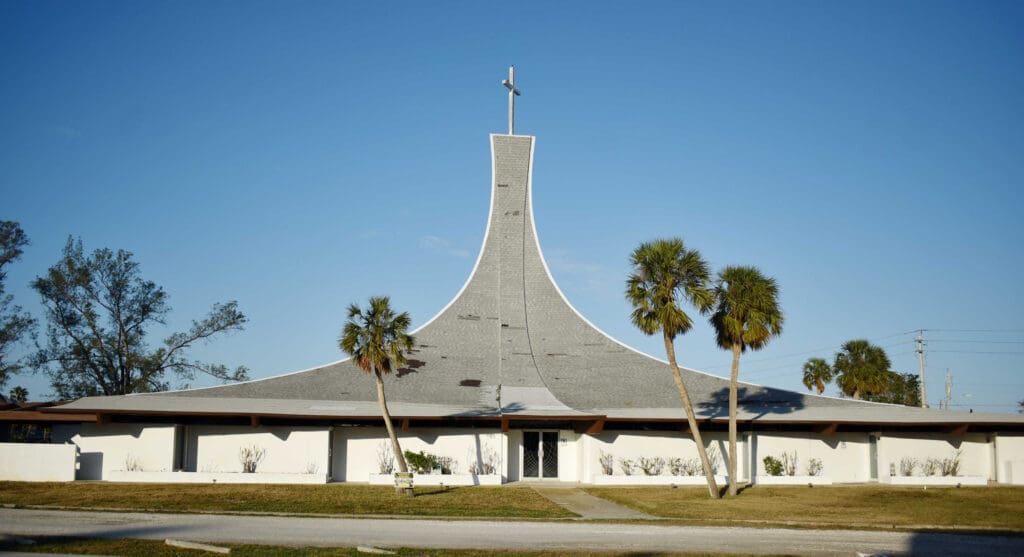
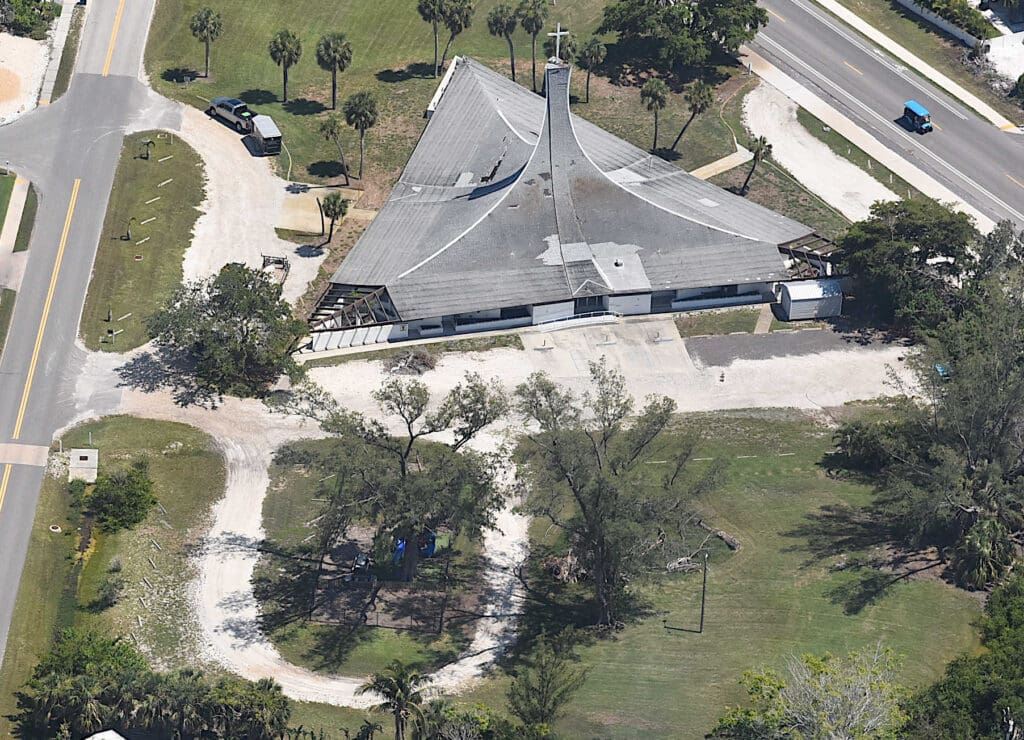
Built on a 3-acre property in 1960, the triangular-shaped church building was designed by renowned Sarasota architect Victor Lundy. Church operations ceased in January, due in part to a shrinking congregation. During a recent commission meeting, city resident Gale Tedhams noted the iconic and recognizable church building would likely be demolished if purchased by a developer.
Rahdert’s email was received the day after the June 24 commission meeting and the mayor and commissioners have not yet publicly discussed the declined offer. The commission meets on Tuesday, July 8 at 2 p.m. to discuss the 2025-26 city budget.
Rezoning challenges
If the church building and property are purchased with the PSP zoning and future land use designations still in place, the use of the property would remain restricted to what’s currently allowed by city code, unless the property is rezoned. The current owners could also try to rezone the property before selling it.
In 2016, city commissioners denied a comprehensive plan amendment sought by church officials who wanted to change the future land use designation to R-2 (two-family residential) for the two undeveloped parcels and rezone those parcels in the same manner. Church officials hoped to sell the rezoned parcels for development and use the sale proceeds to fund the continued church operations. In 2018, city officials discussed purchasing the undeveloped portions of the church property but not the church building, but that sale never transpired. During recent discussions, neither the mayor nor any of the commissioners have expressed support for rezoning the property.
When contacted by The Sun on June 26, Minor said it would take the support of the commission majority (at least three members) to rezone the church property and/or amend the future land use designation for residential development. When asked if the church property could be rezoned for commercial development, Minor said that would be more difficult because the church property is surrounded by residentially-zoned properties.
The surrounding properties on the same side of Marina Drive as the church are zoned R-1 (single-family residential) and the properties on the other side of Marina Drive are zoned R-2. According to city code, properties zoned R-1 can be used for vacation rentals with a 30-day minimum stay and properties zoned R-2 can be rented on a weekly basis.