Month: August 2025

CRA members discuss 2025-26 budget

CRA members discuss 2025-26 budget

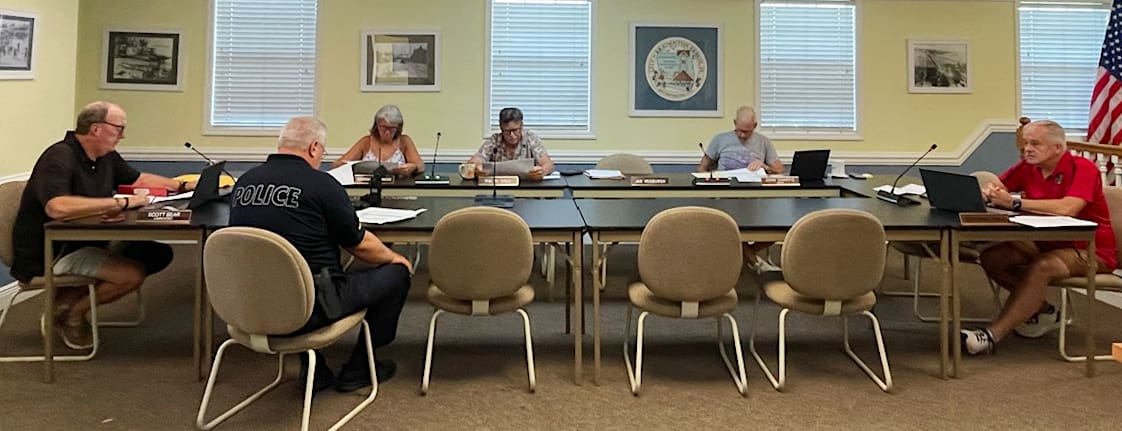
BRADENTON BEACH – Com­munity Redevelopment Agency members discussed the proposed 2025-26 budget of $2,231,070 at a work meeting on Aug. 6 in prepara­tion for the next steps in the budget process – two public hearings before final approval.

City Treasurer Shayne Thompson introduced the proposed budget.

“We carried some things forward that were in last year’s budget, for example, some undergrounding and pavers,” he said. “Beyond that, it’s kind of placeholders for the projects to come.”

CRA Vice Chair Ralph Cole said he would like to see the underground­ing projects continue.

Thompson said $300,000 for undergrounding from the previous year’s budget was carried forward.

“I don’t want to say placeholder values can change, but direction can change, priorities can change, so what’s in the budget doesn’t necessarily mean it has to stay where it is,” Thompson said. “If during the course of the year, let’s say, for example, undergrounding isn’t something we can accomplish, those funds can remain for a future time or be reallocated to a new priority project.”

Thompson said some projects such as pier improvements became tied to the storms and were funded differently.

“Do we still have to allocate all that money 100% each year?” Cole asked.

“We have to demonstrate the need to use the funds,” Thompson said. “This budget does that.”

Police Chief and Public Works Director John Cosby outlined some proposed projects in the CRA district, particularly on Bridge Street.

“We have an unbelievable amount of foot traffic in the CRA district, and we need to look at widening the sidewalks in the main thoroughfare areas,” Cosby said.

Cosby discussed building projects from the ground up beginning with wiring for lighting, irrigation systems and then moving on to the next level including paving, concrete and sidewalks.

“In the past we’ve put stuff in and had to dig it out and we don’t want to do that,” Cosby said. “We want to revitalize what we have there and try to make it more pedestrian friendly.”

Cosby suggested scheduling a work meeting to get input from residents and businesses.

“The hurricane has taken so much out it does give us the op­portunity to do this,” he said. “You can see the age of the street when you look at how nice the pier is and the docks and the pergola and you look at the rest of the street and that age really comes out.”

Cosby addressed flooding in the district following heavy rains.

“The rain that we had yesterday that lasted 45 minutes, every­thing in the CRA district was underwater and it’s because of the system that was put in. The pipe is clogged, and we’ve got to clear that out. We had a conversation with our stormwater engineer about putting in the baskets to collect the silt. It may not look pretty for a little while because we’ve got to get started from the bottom and work our way up.”

Mayor John Chappie said the CRA board could talk about putting out an RFP (request for proposal) at a future meeting.

“Maybe not all in one year or two years, but we could plan that out in stages,” Chappie said. “In the budget we have $675,000 for the CRA enhancements and another $450,000 for district improvements along with the $300,000 for undergrounding and streetlights. There’s quite a nice amount of money in there.”

Chappie said undergrounding has never been on the back burner.

“It’s always been in the forefront and that’s part of the foundation before you start doing the other work on top of the ground,” he said.

“If we have a project that can’t be completed in the coming fiscal year we can plug it into the budget for the following, so we’re still demonstrating using it at a future time,” Thompson said.

CRA member Deborah Scacci­anoce said that standing water in the district is a problem and she would like to take steps to move forward with repairs.

“Yesterday when it was raining and with the blockages on Bridge Street, the water was bubbling up out of the storm system because it was so overwhelmed,” Cosby said. “Everything that way is blocked and I want to use that money to fix what’s broken before we move forward and put money into other areas.”

He said the standing water will eventually undermine the roads.

“The pipes are good; the main issue is this damming system that was put in to try to force the water to flow slower and percolate into the ground,” Cosby said. “We’re on a barrier island – that’s not going to happen. When we get that fixed that will take care of that.”

Two public hearings will be held in September for the fiscal year 2025-26 CRA budget prior to final approval.
Holmes Beach clarifying dock, mooring regulations

Holmes Beach clarifying dock, mooring regulations

HOLMES BEACH – Director of Development Services Chad Minor presented planning com­missioners with a draft version of a new docking and mooring ordinance to review during their Aug. 6 meeting.

When presenting the first draft of proposed Ordinance 25-06, Minor said, “Before you today is a completely new draft of the or­dinance. We’ve essentially taken the existing dock code and ripped it apart and put it back together again – much like we did with the sign code, the fence code, the pool code. We essentially deleted everything and started over fresh using some of the concepts in the original code, but making it more readable,” Minor said.

Minor said it’s been challenging for the current city staff, and previous city staffs, to administer the dock ordinance as currently written.

“It’s time to address some of the deficiencies our current code has and create a comprehensive ordinance that addresses not just one of the dock scenarios in the city, but all of the docking scenarios in the city. We have quite a few,” he said.

Holmes Beach clarifying dock, mooring regulations
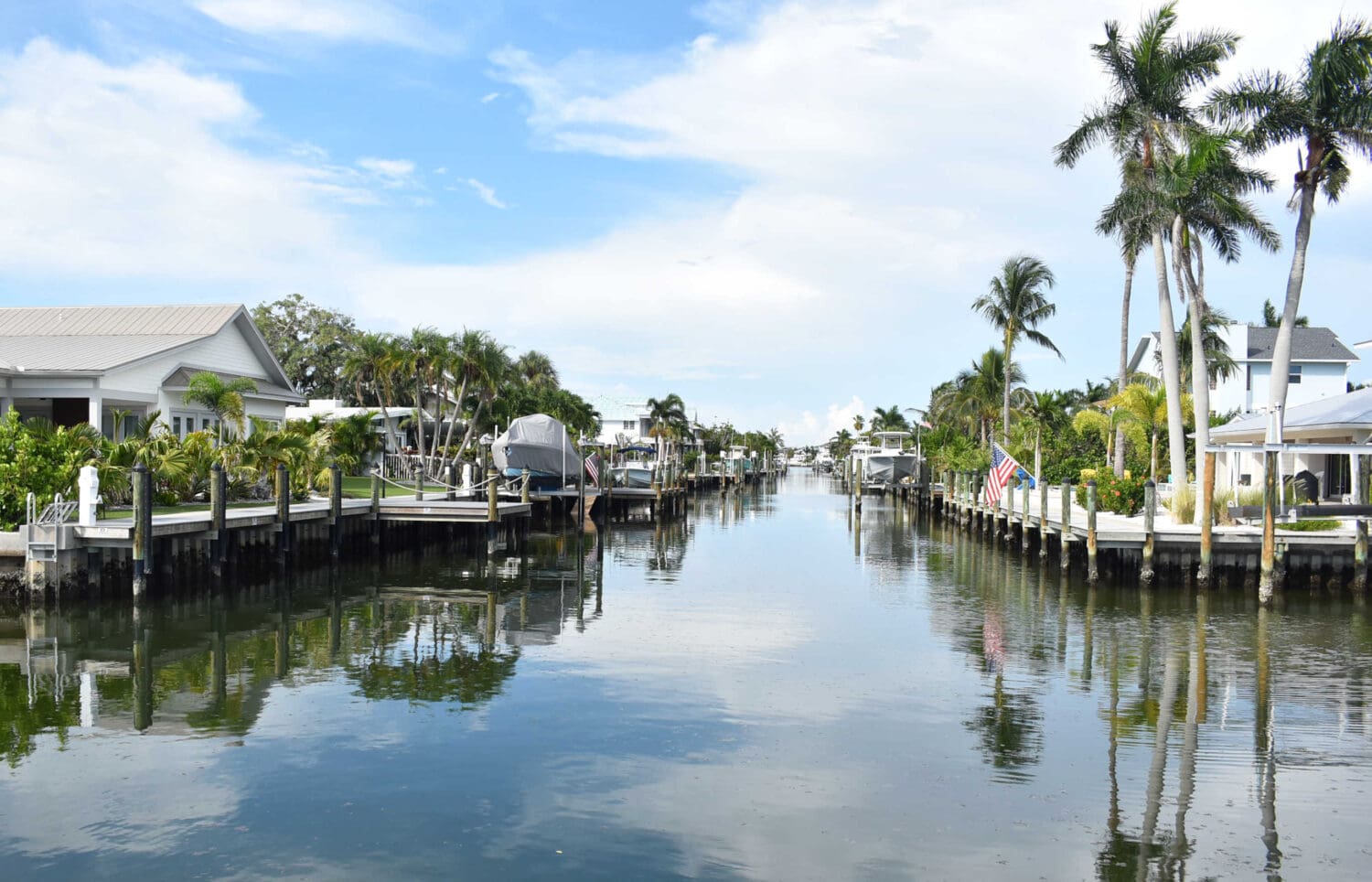
The wide canal that ends at Marina Drive, across the street from the Gloria Dei Lutheran Church property, is known as the “grand canal.” – Joe Hendricks | Sun

Minor said many provisions included in the draft ordinance were taken from the city’s existing dock and mooring regulations and some were inspired by regulations in effect in the city of Marco Island.

“There’s some really good provisions in here that aren’t in violation of Senate Bill 180. We’re not making things more restrictive. This is just clarifying our standards,” Minor said in reference to a new state law created by the Florida Legislature earlier this year that prohibits hurricane-impacted local governments from enacting more restrictive or burdensome building regulations.

Going page by page, Minor guided Planning Commission Chairperson Gale Tedhams and attending planning commission­ers Richard Brown, Tom Costan­tini, Jim McIntyre and Lisa Pierce through the first draft of the proposed 21-page ordinance that will be subject to additional planning commission and city commission reviews before being presented to city commissioners for final adoption.

Sec. 66-112 of the draft ordinance includes definitions for access dock, boat lift, dock, live-aboard vessel, main access dock, mooring area, per­sonal watercraft, riparian rights, shoreline, shared dock, terminal platform, vessel, watercraft, wet slip and more.

According to Sec. 66-113, “Docks, boat lifts and mooring facilities shall be permitted as an accessory use on any waterway lot for which the boat dock facility is customary and incidental to the proposed use of the property.”

According to Sec. 66-116, “A city building permit must be obtained prior to the construction, installa­tion, modification or replacement of any boat docking facility.”

Sec. 66-117 specifies that an ex­isting docking facility, pier, piling or private slip deemed unsafe by the building official shall be posted as unsafe for use and the user will be notified and given a reasonable time to bring the unsafe conditions into compliance.

According to Sec. 66-119, no vessel shall be docked or anchored adjacent to residential property in a manner that causes it to extend beyond the required setback lines; all docking facilities shall have coinciding house numbers at least 4 inches tall facing outward toward the water; docks in residential districts shall be used only for recreational, non-commercial activities; and no dock projecting into a waterway shall be more than 4 feet above the mean high-water line.

City code does not and will not allow boat houses or dock canopies.

The revised code will continue to limit the length of a dock to 60 feet unless otherwise permitted by the Florida Department of Environmental Protection (FDEP), and a dock with more than 500 square feet of total area requires FDEP approval.

For waterfront properties with more than 65 feet of shoreline frontage, Minor proposes reducing the current 25-foot setback requirement to 20 feet to make it less difficult to install a code-compliant platform, dock and boat lift in the allowed space.

Holmes Beach clarifying dock, mooring regulations
Shared docks might be allowed in the Seaside Gardens community where space is tight for some property owners. – Joe Hendricks | Sun

Minor proposed, and the planning commissioners support, allowing shared docks in the Seaside Gardens community where many properties feature duplexes built on small lots that may not provide enough space for two code-compliant separate docks.

The draft ordinance includes aerial photos that illustrate the different and unique docking scenarios that exist throughout the city, including docking in various residential canals and “dead-end canals” and docking at boat slips owned by the city and leased to boat owners.

Holmes Beach clarifying dock, mooring regulations
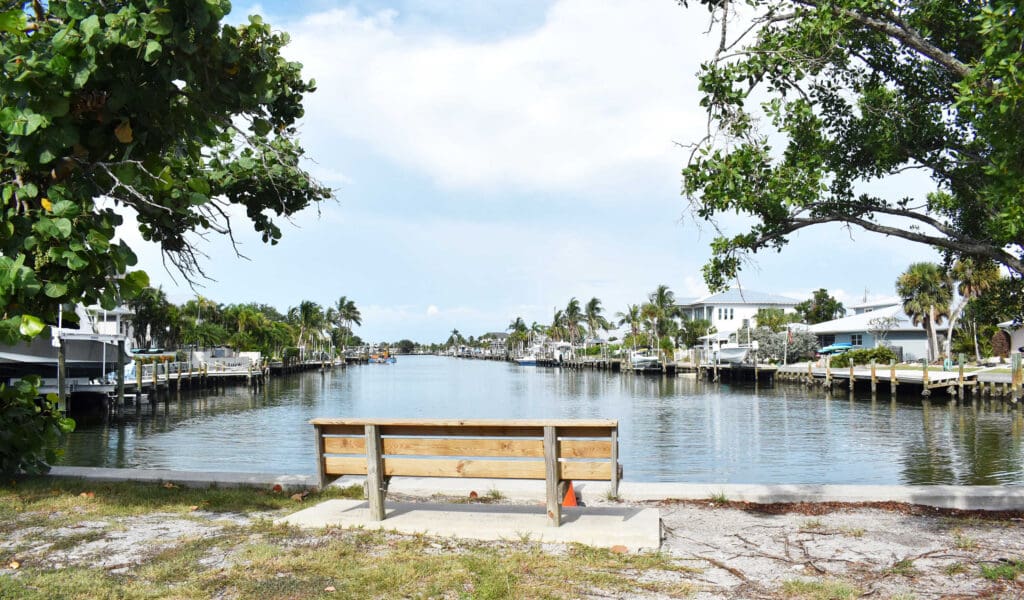
This stranded sailboat rests near the end of the dead-end canal just north of the Marina Drive and 77th Street intersection. – Joe Hendricks | Sun

Minor said he’d make the minor changes proposed by the planning commissioners and bring the draft ordinance back for a second planning commission review on Wednesday, Sept. 3 at 3:30 p.m. The proposed ordinance will then be presented to city commissioners for their preliminary review during a commission work session.

SB 180

On Tuesday, Aug. 26, City At­torney Erica Augello is expected to provide city commissioners with a detailed overview of the potential consequences the city faces due to a new state law that applies for a one-year period to any municipality located entirely or partially within 100 miles of the track of a storm declared to be a hurricane by the National Hurricane Center.

During that one-year period, a local government may not propose or adopt a moratorium on construction, reconstruction or redevelopment of any prop­erty; may not propose or adopt a more restrictive or burdensome amendment to its comprehensive plan or land development regulations; and may not propose or adopt a more restrictive or burdensome procedure concern­ing review, approval or issuance of a site plan, development permit or development order.

Concerns have already been raised about the one-year restrictive period being extended for another year every time the city falls within a hurricane storm track, which has become a frequent occurrence in recent years.

Join the Great Scallop Search

Sarasota Bay Watch (SBW) is seeking volunteers for a citizen science event to collect data on shellfish, animals and seagrass in Sarasota Bay.

The Great Scallop Search will be on Saturday, August 23 from 8:30 a.m. to noon. Participation helps scientists assess the health of the bay and is part of a larger effort along Florida’s west coast to gather information on marine life and water quality.

Join the Great Scallop Search
Young volunteers proudly show the scallops they found during an earlier search. – Rusty Chinnis | Sun

Volunteers’ efforts during the search will help identify areas of interest for investigation. Using the provided scallop survey equipment, participants will set up an observation area with buoys and ropes. Volunteers then work in teams to record any sea life found within this perimeter. The event allows snorkelers to survey the study area and report their findings to a volunteer who will stay on the surface and document the observations on a data sheet. Once the observa­tion area has been thoroughly surveyed, the team will retrieve their equipment and proceed to the next site.

Kayakers will focus on very shallow areas near the shore. Working in pairs, one volunteer will snorkel while the other records data. Kayakers will be responsible for transporting their survey equipment to these locations.

Boat captains will cover deeper areas working with their designat­ed crew and snorkelers to record life on the bottom. Boat captains are responsible for transporting their survey equipment to these areas. Crew are volunteers who have a boat captain prior to the event. Snorkelers will be paired with boat captains who have additional space on their vessels, space permitting.

All participants (except boat captains) should be prepared to snorkel and must provide their own snorkeling gear.

Choose between two Scallop Search locations: North (Long­boat Key) or South (Sarasota Sailing Squadron). Upon arrival, volunteers will check in, collect their scallop survey equipment from SBW and join their desig­nated groups. Groups will receive instructions from SBW, then depart to search for scallops and return the equipment afterward. You must return to the Scallop Search location you started at to return your equipment. Lunch will be provided at the south location.

Experienced boat captains, kayakers and swimmers are preferred for this event.

Tips for participants

  • Wear heavy, closed-toed shoes that can get wet like sneakers, water shoes or boots to protect your feet;
  • Opt for clothing that covers your arms and legs to ensure comfort and protection;
  • Bring a reusable water bottle to stay hydrated and reduce waste;
  • Don’t forget essentials like sunglasses, sunscreen and a hat for sun protection;
  • Use a dry bag to safeguard your valuables;
  • Only scallop survey equipment will be provided (clipboards, ropes, buckets, etc.). Volun­teers must provide all other equipment that they need (snorkels, kayaks, fins, etc.).

Launch locations are: North location – Coquina North Boat Ramp: 1507 Gulf Drive S., Bradenton Beach; South location – Sarasota Sailing Squadron: 1717 Ken Thompson Parkway, Sarasota.

The event is one of Sarasota Bay Watch’s longest and most popular events. It is a great family fun/educational event and also a great way to get friends and family together on the water.

According to SBW Executive Director Ronda Ryan, “When people see what is in and under the water, they can relate to the need to protect this habitat. Seeing is believing!”

Scallop searches are held along the west coast of Florida during the summer months when the scallops are the largest. All the information collected during the searches is shared with scientists at the Florida Fish and Wildlife Conservation Commission.

The Scallop Search is a great example of citizen science at work and an opportunity for the public to interact with marine scientists.

Complete your online registra­tion at the event website to secure your spot and stay informed about updates.

What investors are eyeing now

The old expression “follow the money” can be applied to several different as­pects of life. Sometimes it’s as simple as tracking trades in the stock market and sometimes following the money can disclose corruption in government at all levels. But for the sake of this column, we’ll follow the real estate money – and it’s taking a new, surprising turn.

As we briefly discussed last week, the housing market, with some exceptions, is slow all over the country. The much-anticipated spring selling season has become a complete dud and everyone in the industry is pinning their hopes on a large interest rate cut in September.

Nevertheless, single-home investors are alive and well and are dominating the real estate market so far this year. The interesting thing is the profile of investors has changed significantly. Previously, investment buyers were predominantly large private equity firms, however, the majority of buyers for these properties now are small investors; small investors are defined as owners with 100 or fewer properties.

According to Cotality, a property analytics firm, so far in 2025, investors have made up about 30% of purchases of both existing and newly built single-family homes, the highest share on record. In addition, in the first half of the year, small investors made up about 25% of investment home purchases, while large investors accounted for about 5%.

The question is, why is this happening? Obviously, small investors are not deterred in spite of high prices and high interest rates; they still see a pathway to maximize their investment. Smaller investors also have the ability to take more risk since they are making their own decisions without the oversight of a board of directors. It also works for them since so many traditional homebuyers have stepped back waiting for some signal that the market is improving.

Based on what is going on with the condo market across the country, some of those investment buyers would be smart to take a look at advantageous buying options on condo properties. Condo sellers haven’t faced a market this weak in more than a decade. Prices are down, supply is up and sellers often feel lucky to get an offer.

This is particularly true in the south and naturally, Florida condos – which play a major role in our housing market – are being impacted the most. The Florida condo market accounts for 16% of all home sales compared with just 10% of home sales nationwide. Coastal condos, as we know, are hurting the most as home insurance and new safety regulations have increased HOA fees.

All of this is true and there is no denying it. However, although I don’t have statistics to prove my theory, I do believe the east coast of Florida is suffering more with condo sales than the west coast. This, I believe, is a reflection of the Surfside build­ing collapse in 2021 and also the age of the buildings and the deferred maintenance on so many of the oceanfront properties. I hear much less about condos in our area failing the milestone structural inspections mandated by the state and ones that have appeared to be on a smaller scale.

Even though single-family homes are selling at a stronger pace than condos, remember, Florida loves condo living – it’s why people came here. Certainly, marketing a strong, storm-survived condo building will be beneficial to your sale and of course should be on your listing information.

Follow the money, and the money is with small investors. Watch what they’re buying and keep an eye on those condos.

LaPensee Plumbing, Pools and Air celebrates 40th anniversary

LaPensee Plumbing, Pools and Air celebrates 40th anniversary

HOLMES BEACH – LaPensee Plumbing, Pools and Air celebrated its 40th anniversary on Aug. 1.

Speaking by phone the fol­lowing day from her summer home in Jasper, Georgia, semi-retired company president Karen LaPensee said, “I’m so proud that this business has been a true part of the Island community for the last 40 years. The employees stayed with us long term and they helped us build this business into what it is. I couldn’t be more proud of them.”

Karen’s husband, Mike LaPensee, founded LaPensee Plumbing in 1985.

LaPensee Plumbing, Pools and Air celebrates 40th anniversary
Karen and Mike LaPensee founded LaPensee Plumbing and enjoyed 47 years of marriage before Mike’s passing in 2024. – Karen LaPensee | Submitted

“Mike had been a plumber for many years. He hurt his back and as his injury got chronically worse he got to the point where he didn’t want to work for other people. He really wanted to start his own business,” Karen said. “I was pregnant with Shawn and about six months after she was born I joined him in the business. He had this cute little blue Datsun truck that was just the right size for him and the products he used. Our hope was to have a good family business that could support us and allow Mike to have a successful career. I was working in nursing and the business allowed me to stay home and raise the children.”

LaPensee Plumbing, Pools and Air celebrates 40th anniversary
Mike LaPensee drove this Datsun truck when he started his plumbing business in 1985. – Shawn Shields | Submitted

The couple operated their upstart plumbing company from their Anna Maria home for 2½ years before moving into the Holmes Beach Busi­ness Center, where they stayed for about eight years. Then then moved across the street to a space in the S&S Plaza now occupied by AMI Health & Fitness.

LaPensee Plumbing, Pools and Air celebrates 40th anniversary
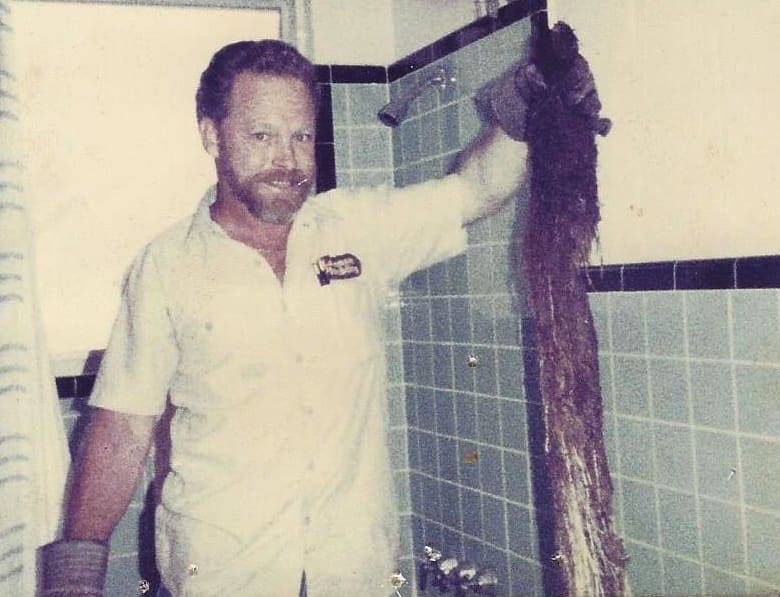
Mike LaPensee loved being a plumber. – Shawn Shields | Submitted

In 2008, LaPensee Plumbing moved to its current company headquarters and product showroom at 401 Manatee Ave. in Holmes Beach. The company began offering swimming pool remodeling, resurfacing, repair and maintenance services in 2008; and for a time, offered pool construction services. LaPensee Plumbing and Pools added air conditioning services and repairs in 2015 and they also offer water heater sales and installations.

LaPensee Plumbing, Pools and Air services Anna Maria Island, Bradenton, Lakewood Ranch, all of Manatee County and northern Sarasota County and also serves as a plumbing subcontractor for other custom home builders.

After Mike retired in 2009, Karen and their son, Greg LaPensee, ran the company until Greg passed away in 2021 due to complications from the COVID-19 virus. Mike then passed away in 2024.

Shawn Shields and General Manager/Vice-President Chad Schweitzer now oversee the company’s daily operations, with Todd McCol­lum guiding the air condition­ing department and Karen still weighing in on high-level decisions as needed.

Regarding the milestone anniver­sary, Karen said, “The customers have made us what we are. We have some truly loyal business and residential clients that have been very supportive. It makes me proud that we have good friends that are also our clients. Supporting the community has also always been extremely important to us and the community center (The Center of Anna Maria Island) has always been a big focus for us.”

The company’s support of The Center includes hosting the annual fundraising Greg LaPensee Bowling Tournament that will take place on Saturday, Sept. 6, and again benefit The Center – with Karen in attendance.

Next generation

As a small token of appreciation, the LaPensee employees were treated to lunch catered by Mission BBQ on Friday. While sitting in her office before lunch was served, Shields discussed the family business.

LaPensee Plumbing, Pools and Air celebrates 40th anniversary
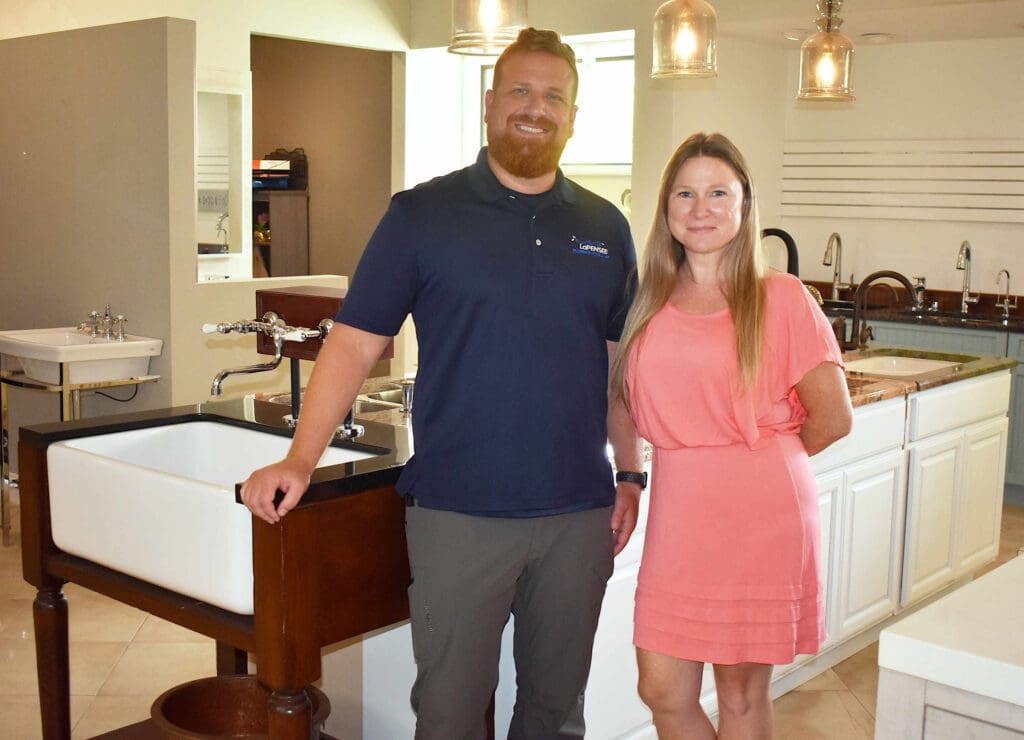
General Manager/Vice-President Chad Schweitzer and Shawn (LaPensee) Shields now lead the LaPensee Plumbing, Pools and Air operations. – Joe Hendricks | Sun

Serving as the company secretary, Shields assumed many of the duties previously handled by her mom, including employee payroll and benefits, property management and more. She first worked in the family business from 2008 through 2011 and then got married and moved to the Caribbean for a few years. She returned to the area and the family business in 2015 and later this year she’ll celebrate her own 40th birthday.

“The business and I are the same age. It’s a big year for both of us,” she said.

Regarding the changes that occurred in recent years, Shields said, “Greg’s passing was a shock and that took some readjustment. My dad was already retired and Greg and my mom were running the business. We had to get used to some new normals without Greg being here. Chad’s been with us for 18 years. He was Greg’s right hand and he oversaw the plumbing division, so it was a natural choice to move Chad into the role of general manager. He handles all the day-to-day operations regarding the personnel, issues in the field and issues with customers. He also holds our pool license and our plumbing license – and plumbing is still our bread and butter.”

LaPensee Plumbing, Pools and Air celebrates 40th anniversary
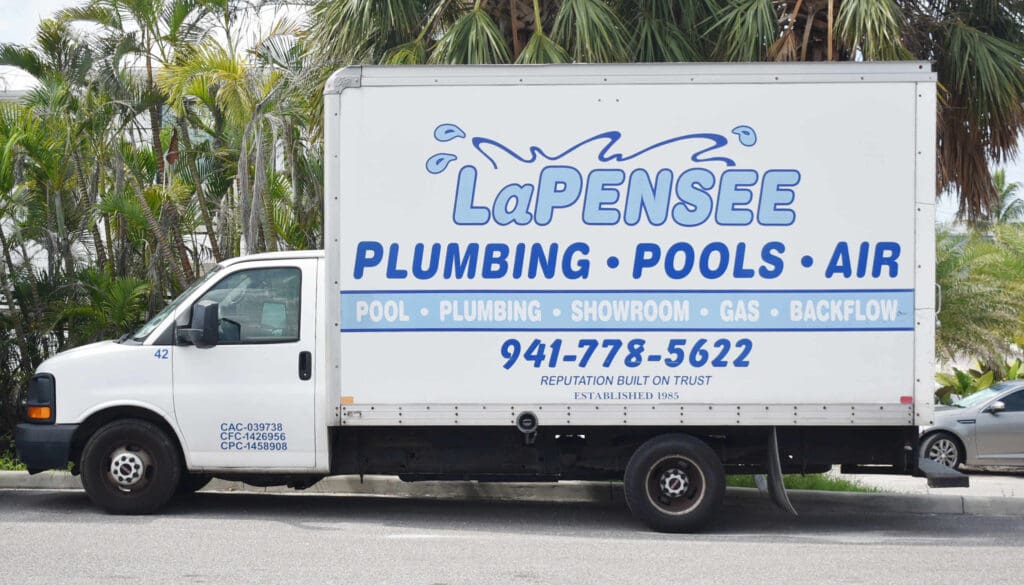
LaPensee Plumbing, Pools and Air serves Anna Maria Island and all of Manatee County. – Joe Hendricks | Sun

LaPensee Plumbing, Pools and Air currently has 53 employees and Shields said they’d be fully staffed with 60.

“We couldn’t do it without our employees. They are our backbone. Without good employees, you won’t make it far,” she said.

LaPensee Plumbing, Pools and Air celebrates 40th anniversary
Faucets and toilets on display in the LaPensee showroom. – Joe Hendricks | Sun

While standing in the showroom area that features a wide variety of sinks and faucets, Schweitzer said, “I’m impressed with the overall growth of the business and by how much the company has done for the community during the past 40 years. I’ve been here for 18 years and when I started it was at the other location, next to Minnie’s (Beach Café). Call us for any and everything that has to do with plumbing, pools and air.”

“We’re thankful and grateful to this community for keeping us going for 40 years and here’s to another 40,” Shields said.

Learn more about LaPensee Plumbing, Pools and Air at www.lapenseeplumbing.com or call 941-778-5622.

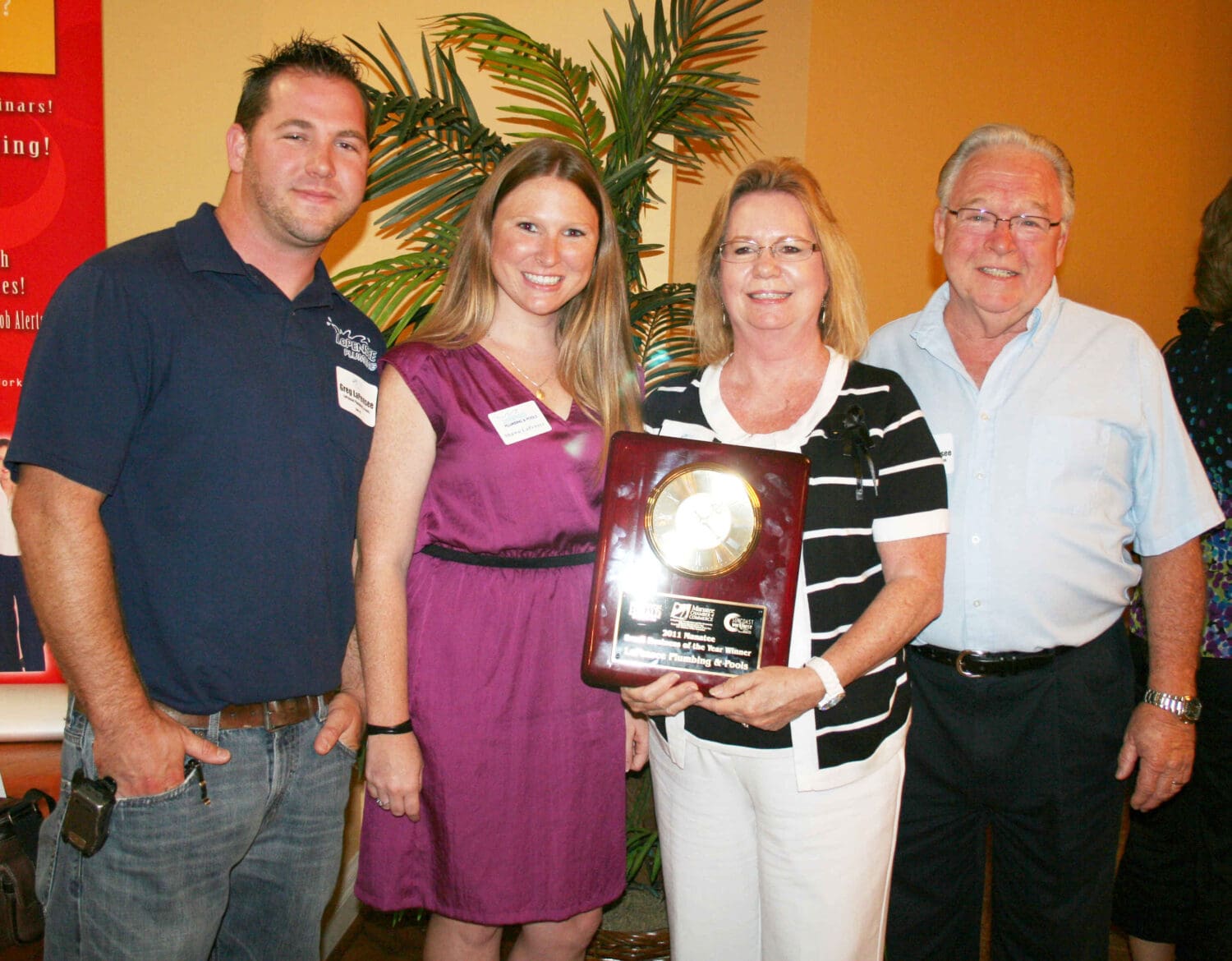
Greg, Shawn, Karen and Mike LaPensee received the Manatee County Chamber of Commerce’s Small Business of the Year award in 2011. - Shawn Shields | Submitted

Greg, Shawn, Karen and Mike LaPensee received the Manatee County Chamber of Commerce’s Small Business of the Year award in 2011. - Shawn Shields | Submitted

Shawn, Mike, Karen and Greg LaPensee in 2015. - Shawn Shields | Submitted

Shawn, Mike, Karen and Greg LaPensee in 2015. - Shawn Shields | Submitted

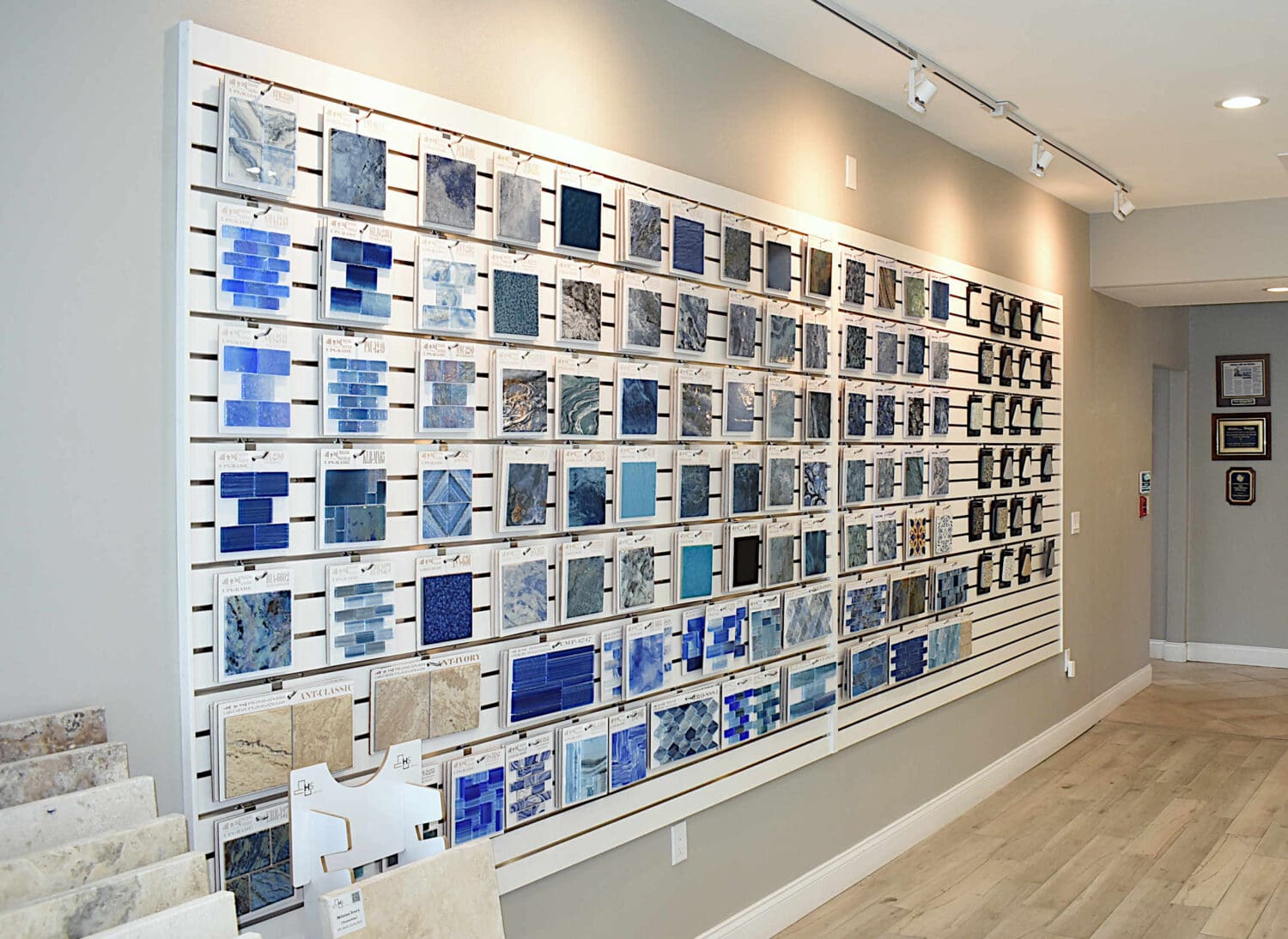
Tile and other coverings on display in the LaPensee showroom. - Joe Hendricks | Sun

Tile and other coverings on display in the LaPensee showroom. - Joe Hendricks | Sun

Sinks and fixtures on display in the LaPensee Plumbing, Pools and Air showroom. - Joe Hendricks | Sun

Sinks and fixtures on display in the LaPensee Plumbing, Pools and Air showroom. - Joe Hendricks | Sun


Florida DOGE auditing Manatee County

Florida DOGE auditing Manatee County

MANATEE COUNTY – The Florida Department of Government Ef­ficiency (DOGE) is auditing Manatee County’s finances.

Gov. Ron DeSantis announced the audit during his July 24 visit to Bra­denton, during which he mentioned the steep property tax increases in Manatee County in recent years.

The same day, Manatee County Commission Chairman George Kruse received a letter from DOGE that began by saying, “The Florida DOGE team, in partnership with Chief Financial Officer Blaise Ingoglia and the Office of Policy and Budget, have identified Manatee County for further review and an on-site visit. Although Manatee County has taken steps to reduce the county-wide millage rate in recent years, rising property values have pushed annual property tax col­lections up by over $200 million since 2019, according to your published budgets. This increased burden on property owners has helped Manatee County increase the county’s net an­nual budget by almost $600 million since 2020 – an increase in spending of 80% during that period.”

County Administrator Charlie Bishop was copied as a recipient of the DOGE letters. Hillsborough County, Pinellas County, the city of Orlando and the city of Jacksonville are among the other Florida counties and cities that recently received similar DOGE letters.

In addition to paying county property taxes, Anna Maria, Bra­denton Beach and Holmes Beach property owners also pay annual city property taxes at a much lower millage rate than the county’s millage rate. Property owners in Bradenton, Palmetto and the northern portion of Longboat Key also pay city and county property taxes. Property owners in unincorporated areas, including Cortez, don’t pay city property taxes.

“Having entrusted their governments with the power to tax, the citizens of Florida have a right to expect that their elected officials will spend the collected funds responsibly, not recklessly, and on truly necessary programs,” the DOGE letter says. “Through the DOGE effort, Gov. DeSantis has charged us to identify and report on this type of excessive spending at the county and municipal level.”

The letter also says, “We hereby request access to your county’s physical premises, data systems and responsive personnel on Aug. 5 and Aug. 6, at the county administration building and such other locations that you identify as necessary to comply with these requests. You should note that financial penalties may accrue for your failure to comply with each of the following requests for access on those dates.”

The letter is signed by Ingoglia, DOGE Team Leader Eric Soskin and Office of Policy and Budget Director Leda Kelly.

On July 31, county commissioners voted 5-1 in favor of setting the county’s tentative millage rate at the same 6.0826 mills in effect for the current fiscal year. Subject to revision before final adoption in September, Manatee County’s $2.54 billion 2026 fiscal year budget currently includes $1.38 billion in newly generated revenues, including property tax revenues. The $2.54 billion total also includes debts and other financial obligations being carried over from the 2025 fiscal year that ends on Sept. 30.

DOGE requests

The two-page DOGE letter was accompanied by six pages of specific requests for detailed financial information, including capital expenditures, operating costs and funding sources for the county-contracted Gulf Islands Ferry service that operates between downtown Bradenton and Anna Maria Island, the Riverwalk Day Dock in downtown Bradenton and the Bradenton Beach Pier in Bradenton Beach that cur­rently serve as ferry stops. Because of the hurricane damage that Hurricane Milton inflicted on the City Pier in 2024, ferry service in Anna Maria remains suspended until a new City Pier walkway is built.

The DOGE letter also requests in­formation about the county’s property management efforts and the purchase or sale of any public-owned property, specifically, the county’s recently an­nounced $24 million purchase of an existing building in Lakewood Ranch to be used for expanded county govern­ment operations. The July 24 letter was received before county commissioners’ unanimous July 29 decision to buy the 39-acre Mixon Fruit Farms property and wedding venue in east Bradenton for $13.5 million.

DOGE also seeks detailed informa­tion about:

  • county procurement processes and policies;
  • contracts awarded in excess of $10,000 and the vendors awarded those contracts;
  • compensation paid to county employees;
  • the county utilities system;
  • the county’s diversity, equity and inclusion programs and efforts;
  • county expenditures related to climate change, emissions reduction or carbon reduction, including the purchase of battery-powered electric vehicles;
  • grants and matching grants received by the county;
  • the county’s rules and policies re­garding government vehicle allowances, including a list of all county personnel making use of a take-home vehicle;
  • the county’s Government Relations department, including job descriptions and departmental expenditures to date;
  • project descriptions, budgeted costs, actual costs and cost overruns or savings for county transportation-related capital projects that began, remain ongoing or have been completed since Jan. 1, 2023;
  • the installation, initial costs and maintenance costs and estimated life cycle for all traffic calming devices, included but not limited to speed tables, speed humps, raised intersections, curb extensions and chokers; and
  • homeless services provided by the county, the effectiveness of those efforts and any grant funds provided to other agencies that assist the homeless.
Anna Maria Elementary speed zone cameras installed

Anna Maria Elementary speed zone cameras installed

HOLMES BEACH – Prior to the start of the new school year on Monday, Aug. 11, new speed zone cameras have been installed near Anna Maria Elementary school.

According to Police Chief Bill Tokajer, the automated speed detection devices will only be operational when the yellow caution lights are flashing during the morning and afternoon student drop-off and pickup periods. Tokajer said a 30-day grace period will be in effect to give motorists time to adjust to the new automated speed detection activities. During the grace period, warning notices will be issued. After the 30-day grace period expires in early September, violators who exceed the posted 15 mph speed limit by 10 mph or more will be issued speeding tickets that carry a $100 fine.

Anna Maria Elementary speed zone cameras installed
Speed zone cameras and new fences were recently installed at Anna Maria Elementary in Holmes Beach. – Joe Hendricks | Sun

The Florida Legislature’s adoption of House Bill 657 in 2023 authorized the use of speed detection systems to ticket drivers exceeding the school zone speed limit by more than 10 mph.

In August 2024, the Manatee County Commission-approved school speed zone camera program was launched but speed cameras were not installed at Anna Maria Elementary. In February, public outcry about the speed cameras being operational during the entire school day prompted county commissioners to adjust the program’s operational hours to 30 minutes before and 30 minutes after the start and end of regularly scheduled school sessions. On March 4, county commissioners voted to end the speed camara program entirely. The program ended on March 6 and all citations issued through March 5 remained valid.

Anna Maria Elementary speed zone cameras installed
The Anna Maria Elementary school zone speed limit is 15 mph when the yellow caution lights are flashing. – Joe Hendricks | Sun

According to the county press release, the county’s school speed zone program resulted in 55,243 notices of violation being issued to motorists. As of March 4, 22,292 drivers paid the $100 fine. At the time, 4,051 violations were still awaiting law enforcement review and 45 violations were to be addressed during a special magistrate hearing held later that month.

New fencing

New security fencing now surrounds the AME property at 4700 Gulf Drive. Most of the fencing installed along the front of the school property is black metal rail fencing that stands between waist and chest high.

Anna Maria Elementary speed zone cameras installed
Black rail fencing was installed along most of the front of the Anna Maria Elementary property. – Joe Hendricks | Sun
Anna Maria Elementary speed zone cameras installed
Black chain link fencing was installed at the north end of the Anna Maria Elementary property. – Joe Hendricks | Sun

The north end of the front of the school property features higher, black metal chain link fencing. The rest of the property is surrounded by higher, silver, chain link fencing. According to Tokajer, the Parent Teacher Association helped fund the more decorative rail fencing installed along the front of the school property.

New book revisits 1980 Kingfish boat ramp murders

New book revisits 1980 Kingfish boat ramp murders

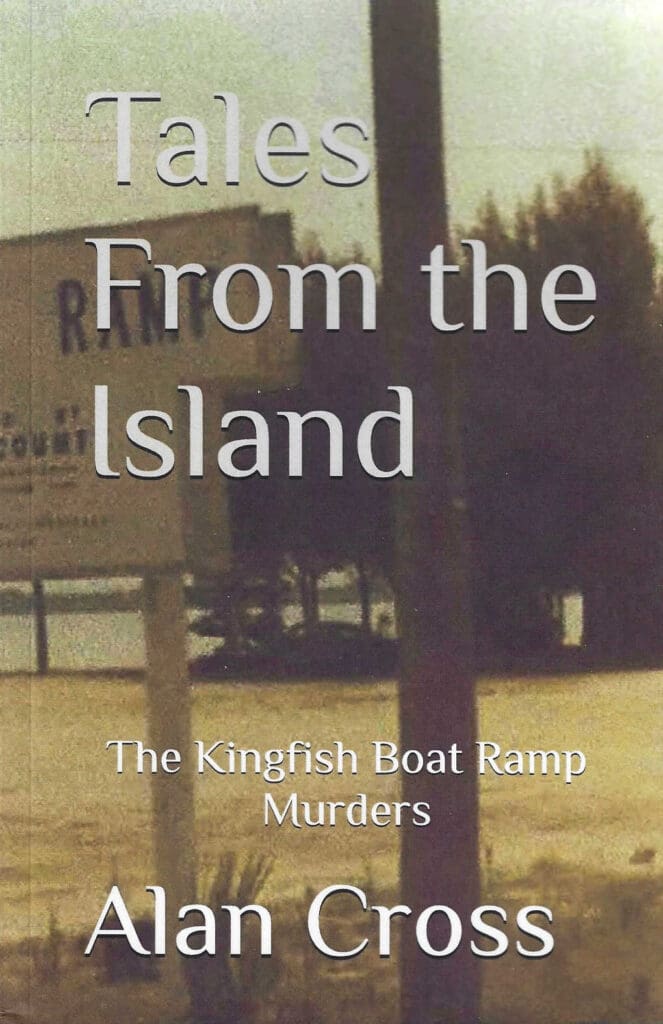
HOLMES BEACH – On the 45th anniversary of the unsolved Kingfish Boat Ramp murders, Bradenton resident Alan Cross released his self-published non-fiction book, “Tales from the Island: The Kingfish Boat Ramp Murders.”

Released on Aug. 1, Cross’s book is available lo­cally at Ginny’s and Jane E’s Café in Anna Maria, The Beach Shop in Cortez, Three Island Monkeys in Longboat Key and online at Amazon.com.

New book revisits 1980 Kingfish boat ramp murders
“Tales from the Island: The Kingfish Boat Ramp Murders” is for sale locally and can also be purchased at Amazon.com. – Alan Cross | Submitted

Cross’s book examines the Aug. 1, 1980, murders of Tampa physician Dr. Juan Dumois, 47, his sons Eric, 13, and Mark, 9, and the shooting of  his brother-in-law Raymond Barrows, who was visiting from Miami, survived being shot and later provided an eyewitness account of what happened. Not related to the Dumois family, retired Air Force Col. Robert Matzke encountered the shooter minutes later at the nearby Foodway supermarket – where Publix is now located – where he was shot and killed before the shooter escaped in a car driven by an accomplice.

The shootings

According to Cross’s book, the Tampa-based Dumois family was vacationing in Holmes Beach when the shootings occurred and Dumois’ wife, Maria, and their two other children, Anna Maria and Juan Dumois III, decided to not go fishing that fateful day. When interviewed on July 31, Cross said Maria, now in her 80s, and Dr. Juan Dumois III, a practicing infectious disease physician, still live in Tampa but he didn’t have the heart to contact them about the murders of their loved ones.

According to the book, when the Holmes Beach Police Depart­ment interviewed Barrows at Blake Hospital in Bradenton, Barrows said they were pulling Dumois’ boat from the water when a stranger approached and said he’d injured his ankle and needed a ride to a nearby condominium. After placing his bicycle in the boat, the stranger took a seat in the back of Dumois’ station wagon. As Dumois drove west on Manatee Avenue toward Manatee Beach with Barrows in the passenger seat, it’s believed the shooter first shot Barrows from behind, then shot the two boys in the back seat and then shot Dr. Dumois as he drove and turned around to confront the gunman.

New book revisits 1980 Kingfish boat ramp murders
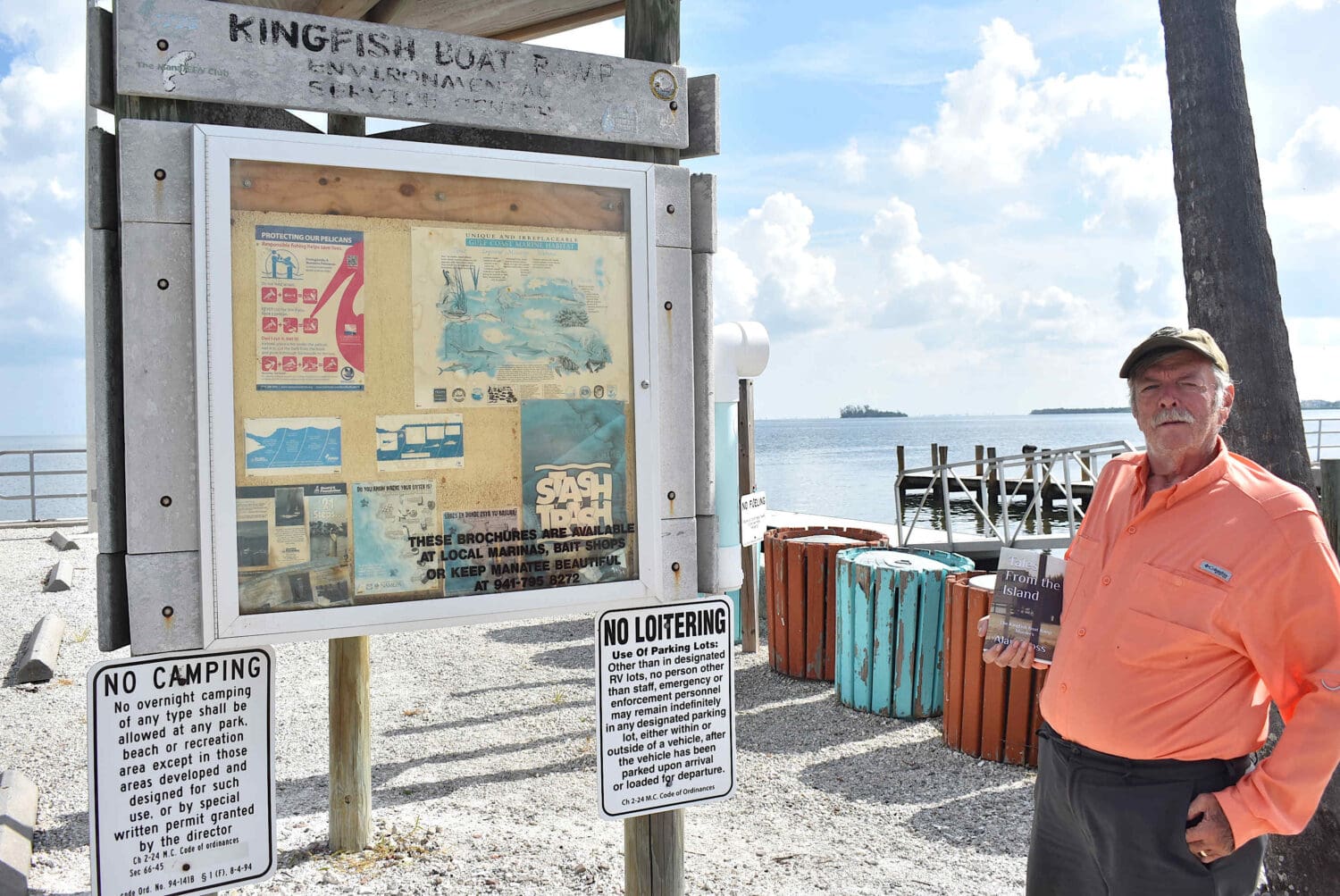
Holding his new book, Alan Cross points to 1980 crash scene photos taken near the entrance of the Westbay Cove condominium complex near where the shooting victims’ car crashed. – Joe Hendricks | Sun


After Dr. Dumois was shot, the station wagon crashed into a tree along the north side of the road by the entrance of the nearby Westbay Cove condominiums and the boat trailer came to rest jack-knifed against the car. Ac­cording to the book, the killer fled across the street to the Foodway supermarket on his bicycle, where he encountered Matzke, who confronted him but then tried to flee in his Fiat convertible when he saw the man was armed. The gunman shot Matzke in the back of the head as he drove away and Matzke’s car crashed into another vehicle. Police said the crime scene evidence was completely compromised by bystanders and those who tried to assist the shooting victims.

Cold case

Cross, a retired respiratory therapist, first heard about the fatal shootings when a local TV station did a mini-documentary about 10 years ago and he also read newspaper stories that revisited the 1980s shooting spree. Approaching it like a college research paper, he started his research about two years ago and spent endless hours on the internet, searching library and historical records, reviewing police interview transcripts and eyewitness accounts, reading old newspaper stories and viewing old newspaper photos. Cross said there’s a lot of information out there about the shootings and his book is an attempt to compile that information in a single source.

New book revisits 1980 Kingfish boat ramp murders
Featured in Alan Cross’s book, this old wanted poster features an artist’s rendering of the suspected shooter. – Alan Cross | Submitted

Holmes Beach Police Chief Bill Tokajer, Det. Josh Fleisher and Holmes Beach resident and city commissioner Carol Whitmore are among those acknowledged at the front of the book. Cross said Whitmore helped him gain access to Holmes Beach Police Department evidence box that still contains evidence from the 1980 shootings. He was allowed to view, but not open, the sealed evidence bags. He was also allowed to access folders and photographs contained in the evidence box and he said the police department provided him with a flash drive containing additional information.

“They were very helpful,” Cross said.

He said the heinous nature of the shootings didn’t really hit home until he examined the evidence box: “That made it very real. Seeing the evidence shut me down for about a week. I had to process it all.”

Cross also obtained photos from the Florida Department of Law Enforce­ment and other sources. His book also includes crime scene sketches, autopsy report diagrams and a copy of a wanted poster that featured an artist’s rendering of the shooting suspect.

The book details and theorizes about the investigative efforts that ensued to no avail, including Holmes Beach Police Chief Tom Shanafelt turning to a psychic and a hypnotist for assistance.

In 1982, Barrows died of a heart attack in the Miami area and the book addresses the possibility of drugs and mob involvement playing a role in the shootings.

“There’s a mob connection, a connection with the ‘cocaine cowboys’ of the 80s and there was speculation of a drug connection,” Cross said.

According to the book, in 1993 the Manatee County Sheriff’s Office received a tip that lead them to interview confessed and incarcerated mafia hitman Donald Frankos. The book includes a transcript of the interview conducted by the sheriff’s office, during which Frankos provided the names of the Cuban men he said ordered and carried out the Holmes Beach shootings because Barrows allegedly stole 55 kilos of cocaine. That interview did not lead to any arrests. Cross’s book doesn’t attempt to solve the murders but it does express his belief that the murders were a targeted attack and Barrows was the likely target.

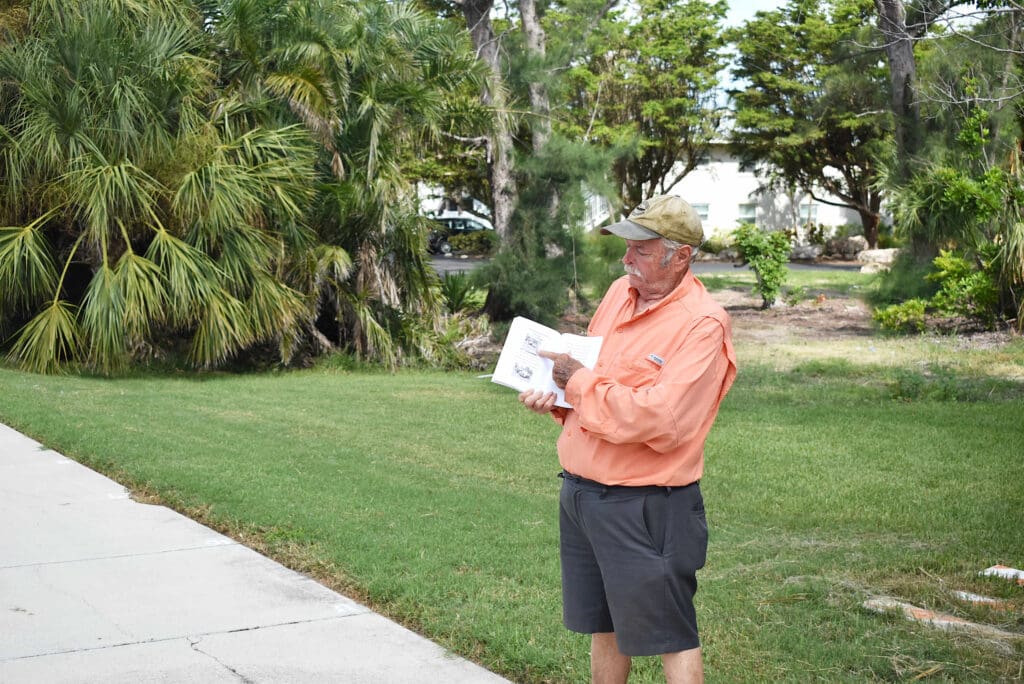
On Aug. 1, Cross met The Sun at the Kingfish Boat Ramp for a photo session and he retraced approxi­mately where the initial encounter with the killer occurred, the scene of the shootings and the crash scene that followed.

New book revisits 1980 Kingfish boat ramp murders
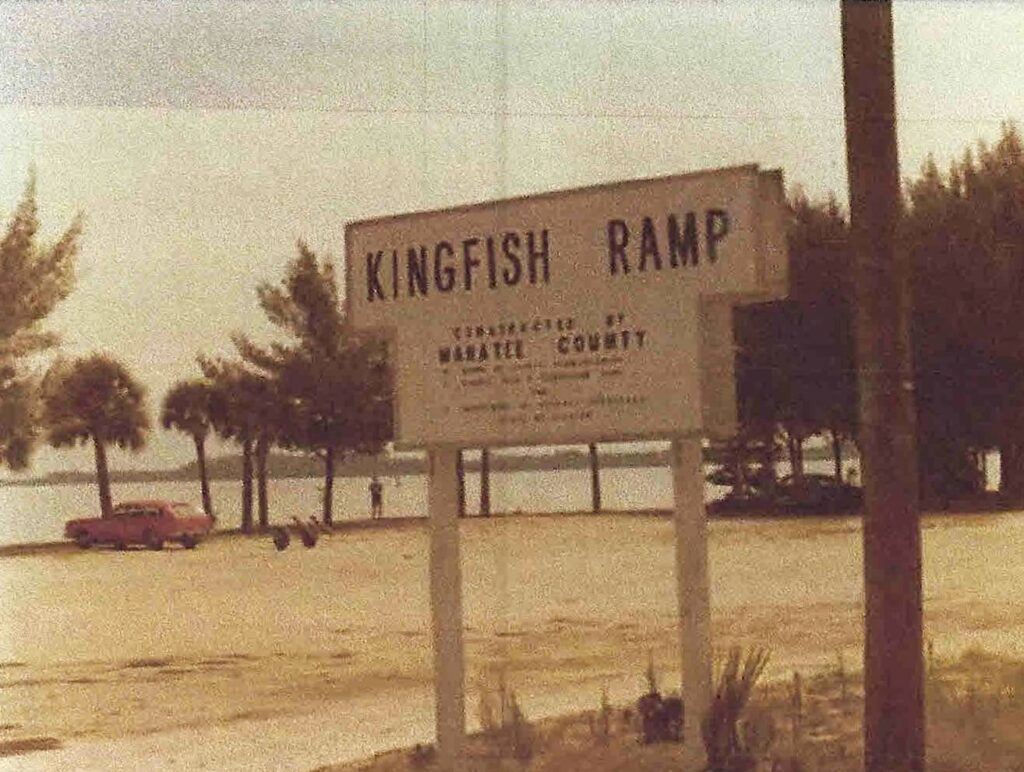
This old photo of the “Kingfish Ramp” appears in Alan Cross’s book. – Alan Cross | Submitted

The “Kingfish Boat Ramp Murders” is the second book in Cross’s “Tales of the Island” series. The first is “Tales of the Island: The Naming of the Ugly Grouper and Other Lies From Anna Maria Island.” Available at the same sales points, the first book offers Cross’s whimsical and fictional takes on how the Holmes Beach restaurant got its name, how his son, Adam – a local bartender – got his nickname, “Duck,” and other re-imaginings of Island lore.

Appeal hearing held on Bungalow Beach Resort parking

Appeal hearing held on Bungalow Beach Resort parking

BRADENTON BEACH – Attorneys for Luper Enterprises and the city of Bradenton Beach presented their opposing cases at a July 29 appeal hearing of a city commission’s deci­sion banning resort fee-based parking at the Bungalow Beach Resort.

Special Master Marisa Powers presided over the quasi-judicial hearing and has 15 days from that date to make a decision and issue a written order on the appeal.

Appeal hearing held on Bungalow Beach Resort parking
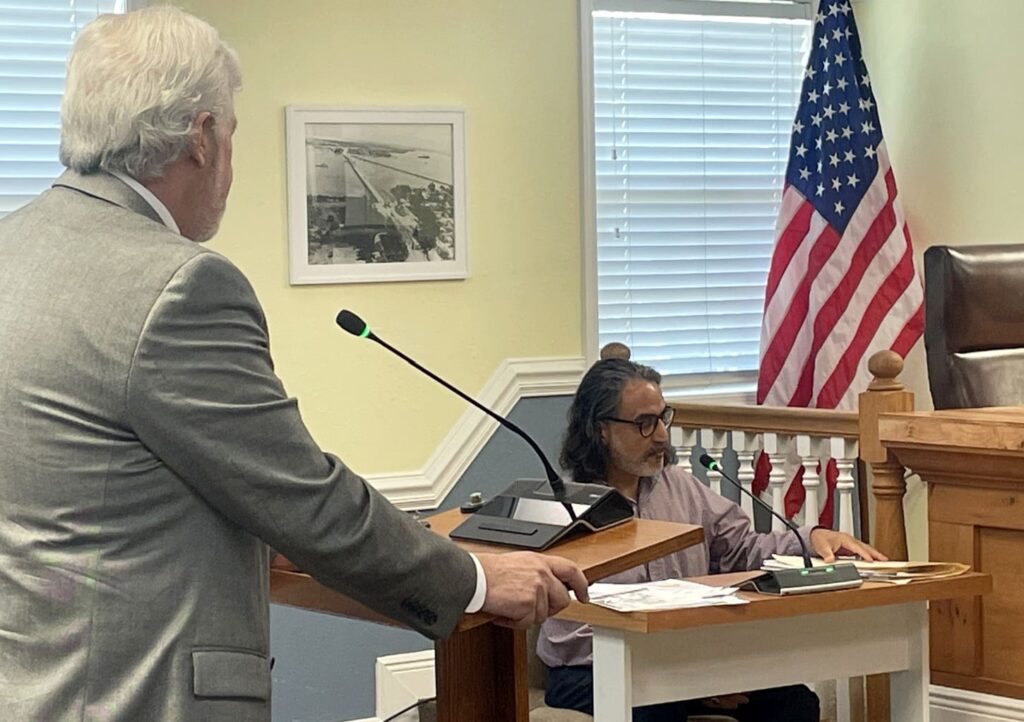
Special Master Marisa Powers presided over the quasi-judicial hearing. – Leslie Lake | Sun

The appeal was based on the April 17 city commission decision to require Gayle Luper, the owner of Bungalow Beach Re­sort, to obtain a temporary use permit for parking with several restrictions. Luper maintains that despite the bungalows being destroyed in Hurricanes Helene and Milton last year, the resort’s other two parcels were continually operational and that she is entitled to sell resort passes that include parking, as she said she did prior to the hurricanes.

Timeline

  • Hurricane Helene reduced the original older cottages at Bungalow Beach Resort to rubble. The buildings were condemned.
  • By Feb. 1, the razed parcels were cleared of debris.
  • Luper was advised by the city that she must file a parking permit to continue to charge a resort fee for parking. Luper said that City Planner Luis Serna advised her that a permit was not necessary.
  • On March 14, a portion of the parking lot was reopened for parking at the rate of $50 per car per day. City Code Enforcement Officer Evan Harbus told the Lupers that all parking at the razed parcels must cease as they were in violation of the city code.
  • On March 16, Luper applied for temporary parking.
  • At an April 17 hearing, the city commission placed the following stipulations on the property:
    • Parking at the razed parcels (the lot where the bungalows were) is permitted for a period of one year or 30 days from the issuance of a building permit;
    • Parking at the razed parcels is limited to 17 parking spaces per TPLE (Transient Public Lodging Establishment) license;
    • No trailers, recreational vehicles, campers, or buses are al­lowed to park at the razed parcels, and no tailgating, overnight parking, or paid parking shall be conducted;
    • Only employees, agents, or registered guests of the resort are allowed to park at the razed parcels; and
    • Parking at the razed parcels is limited to 7 a.m. to 9 p.m. enforced by a towing service secured by Luper.

Luper Enterprises filed a law­suit against the city of Bradenton Beach on April 25 and the city filed a request for dismissal of that lawsuit on May 21.

Opening statements

“We had a city commission meeting that occurred on April 17 on the question of a parking permit that was going to be a temporary permit,” said attorney John Anthony of Tampa-based Anthony and Partners, representing Luper. “Our client requested of (Bradenton Beach City Planner) Luis Serna to opine or whether or not it was required because as a practical matter under the Land Development Code where involuntary destruc­tion occurs like the hurricanes you can build back so long as you haven’t stopped continuous activity We originally heard verbally that was not going to be a problem and why the city went back on that, we don’t know, but it should not have.”

Anthony said the resort website never went down and the duplex continued to have guests.

“She spent all the money to clear that rapidly with the idea that she was going to park there,” Anthony said. “It wasn’t just parking for parking sake, but parking to keep the business going. To say you need a permit to do what you’ve already been doing, that to me is capricious and inconsistent.”

He said the city commission has an “irrational fear” that the park­ing lot will remain permanently.

“The Luper parties have ob­tained the financing, have gotten the plans, have even run the plans as far back as 2017 in the event of a hurricane,” Anthony said. “They did everything they could to secure build back better before there was even a hurricane.”

Appeal hearing held on Bungalow Beach Resort parking
Attorney Robert Lincoln and City Planner Luis Serna spoke on behalf of the city. – Leslie Lake | Sun

Attorney Robert Lincoln, representing the city, characterized Bungalow Beach Resort as “marketing fiction that encompasses the way that they are marketed and operation that spans multiple properties and parcels with different uses and different licensing.”

“The two parcels at 2000 Gulf Drive are licensed by the state as a hotel, the two units that are in the structure at 2104 Gulf Drive are licensed by the state as a transient apartment and the duplex across the street is licensed by the state as a vacation rental. The single-family parcel that is north at 2108 is licensed by the state as a transient apartment,” Lincoln said. “You have a situation where it’s not only physically separated but in the case of the duplex parcel, it’s physically separated and has a different zoning clas­sification.”

Lincoln said the distinction is important because nothing has continued to operate on the razed parcels.

“All the structures were seri­ously damaged by the hurricanes and then demolished,” he said. “There isn’t a resort for zoning purposes. The code is clear; you don’t get to use your land when it’s vacant. There are no accessory uses to a vacant parcel of land. There are no primary uses to a vacant parcel of land so there’s no right to park there as an accessory use to the prior hotel activities.”

“They were told clearly by staff you need a temporary use permit to use the property. They don’t like the conditions. The conditions are reasonable and need to be upheld,” Lincoln said. “What their argument comes down to is we want to make money off the property while there’s no resort running on it and we want to assert we have a right to do that.”

Public comment

Angela Rodocker, owner of hotels at 100 Bridge St. and 1301 Gulf Drive N., read from a statement that stated in part: “As a hotelier on Bradenton Beach, I see this decision regarding Bungalow Beach Resort as potential for future concern for any hotelier located in a R3 Zone, which are many.”

Rodocker noted that the Bungalow Beach Resort has never stopped operating and intends to continue operating as a hotel over all parcels of land and said other hotels on and around Anna Maria Island sell day passes to guests without rooms.

“I believe that the commissioners, with the city’s best interest at heart, made a terrible mistake.”

She said the resort fee parking is critical for the Bungalow Beach Resort at a time when the beachside buildings are obviously not bringing in income.

Approximately 40 emails were sent to the city clerk in support of Luper. Runaway Bay resident Marilee Erickson spoke in favor of maintaining the city’s April decision.

Luper testifies

Luper said that prior to the hurricanes, every resort guest has been charged a resort fee.

She described the devastation from Hurricane Helene to the waterfront bungalows.

“We found parts of our hotel five or six blocks away, it just devastated the buildings,” Luper said. “All the sand went into the bungalows to the point if you pulled the sand out the buildings would have fallen down.”

She said she let her staff know that she had submitted plans to the city in 2017 to rebuild in the event of a hurricane and that she would now complete those plans.

Luper said she planned to continue the resort fees she had been charg­ing to generate income to help with salaries and rebuilding.

She said she was first told by the city permit clerk that a parking permit was needed and then was told by the city planner that she didn’t need one.

“We opened parking March 14 for just a couple hours and Evan Harbus shut us down,” Luper said.

The commission’s April 17 decision by default precludes Luper’s family and friends from using the parking area, Luper said.

Luper estimated she lost about $200,000 in resort fee parking that would have been used toward rebuilding.

City staff testimony

Harbus said that upon seeing the paid parking sign on the property, he told Luper’s son, Jason, that he needed to clear the property of cars and he would need to come down to city hall and apply for a temporary use permit.

Harbus said he has enforced similar parking violations in unpermitted paid parking lots.

Anthony: “Do you write the code?”

Harbus: “No.”

Anthony: “Do you construe the code like a lawyer?”

Harbus: “I follow the city ordinance and land development code and property maintenance code.”

Anthony: “You were asked whether or not you did the same thing for this property as you do for other properties that are in a code violation. Give an example of a code violation where you towed or shut down a property.”

Harbus: “We’ve had numerous pop up paid parking lots appear in the city in the past and we’ve had to shut them down. I’ve dealt with that with the old building official before Bill Palmer.”

City Planner Luis Serna testified that he didn’t recall granting approvals or giving specific direction.

“They’re seeking to redevelop the site,” Serna said. “They made the major development application; it hasn’t been reviewed.”

Related coverage:
Bradenton Beach requests dismissal of Luper lawsuit
Parking lot owner files lawsuit against city


The property closing dance

There are all kinds of issues that can arise between signing a contract for sale and the actual closing. Realtors always say don’t spend your commis­sion ‘til the check is in your hand, and that is good advice.

The first thing as both a seller and buyer you should do if the buyer has a mortgage contingency is to get a full prequalification of the buyer’s financial position and their ability to get a mortgage. The next stumbling block is the property appraising, again if there is a mortgage contingency. Lenders will not loan money for a property that does not have the value that was agreed upon between the buyer and seller. If this happens, a compromise can be reached by the buyer upping their down payment or the seller reducing the price of the home.

The dreaded home inspection applies to all sales and is where everyone in the transaction holds their breath. Licensed inspectors are checking primarily for structural damage to the property, wood destroying organisms and mold. In addition, home inspectors also check systems including septic, electrical, plumbing, heating and air conditioning and appliances. Frequently issues that come up in a home inspection are the result of deferred maintenance.

Usually, an agreement can be made be­tween buyer and seller to either repair the defect or to give the buyer the funds to do the repairs. However, if an agreement can’t be reached, the transaction is canceled and the parties go their separate ways. It’s not uncommon for sellers to obtain their own home inspection at the time the property is placed on the market as an enhanced marketing tool and a heads up for sellers if there are potential problems.

The final step prior to closing is purchasing title insurance. There are two types of policies: One is the owner’s policy, which protects the owner if there are any future title issues, and the other is the lender’s policy protecting the lender, required if you are getting a mortgage. The premium for title insurance is a one-time fee issued only after the title company has conducted a search of the public records and cleared the title for any liens or restrictions that would affect ownership.

After you’ve finished the closing dance, the closing paperwork will be concluded, the deed recorded and the new owner usually walks away with the keys to the property and takes possession immedi­ately. Like every aspect of a property sale, it sounds more complicated than it is. There are a variety of professionals along the way to help and advise you, and the majority of the time everything goes smoothly.

A final note about the national sales statistics for June reported by the National Association of Realtors. The number of properties sold were at a nine-month low, completely decimating the spring sales season. However, sale prices rose to $435,300, a record in data going back to 1999. As a comparison, Manatee County single-family home median home sale price for June was $440,000, down 15.2% from last June.

With the home prices high and interest rates not moving, buyers are sitting back and not making purchasing decisions. The one glimmer of hope is a possible rate cut in September at the Federal Reserve’s next meeting.

Meanwhile, if you are fortunate enough to be in contract on a property, be aware of all the pitfalls that can creep up before you get to the closing table. And if you’re not, chill out at the beach.

Reel Time on The Road: The Center for Coastal Studies

Reel Time on The Road: The Center for Coastal Studies

On a trip to Cape Cod for a fam­ily wedding in July, my wife, Christine, and I were invited by Jeanne Leszczynski to tour the Center for Coastal Studies in Provincetown. Leszczynski, a friend from Longboat Key, is a longtime supporter of the Center and serves on the executive committee.

Founded in 1976 by Dr. Graham Giese, Dr. Charles “Stormy” Mayo, and Dr. Barbara Shuler Mayo, the three scientists brought together their expertise in geology and marine biology to establish a member supported nonprofit dedicated to understanding, preserving, and protecting marine ecosystems and coastal environments through applied research, education and public policy.

The Center grew from a small attic-based science program in 1971 to a 12,000-square-foot state-of-the-art marine laboratory that employs 40 staff members and is sustained by dozens of adjunct and citizen scien­tists today.

During that time the Center has branched out from wave and erosion studies to seabed mapping, whale biology, seal and fisheries monitoring, water quality monitoring, marine debris response and entanglement rescue. Some of the CCS’s premier focus is currently on whale research and includes:

  • Humpback Whale Studies: One of the world’s longest-running baleen whale monitoring programs;
  • Right Whale Ecology: Critical work studying North Atlantic right whales, a species with critically low population numbers (fewer than 372 individu­als). They see 80% of them annually in Cape Cod Bay;
  • MAER (Marine Animal Entangle­ment Response): Globally recognized whale-and-sea-turtle disentanglement team operating 24/7; they train other nations’ responders and design tools used worldwide; and
  • Marine Debris and “Ghost Gear” Removal: CCS coordinates cleanups across Cape communities, tracks trash via “Beach Brigade” volunteers and received $2.7M NOAA funding for debris recovery across the Gulf of Maine.

Another focus of the Center is on education and community engagement. They offer guided nature programs like “Science in the Harbor” aboard Dolphin Fleet boats blending sonar map­ping, marine wildlife, habitat data and coastal history. They also host public outreach events (e.g. Massachusetts Right Whale Day), winter lecture series, school programs and hands-on field walks reaching over 20,000 people annually.

The tour was led by the Center’s Development Director Sue Nickerson, who has been very instrumental in the organiza­tion’s outreach and growth. “As luck would have it” Suncoast Waterkeeper’s newest board member and the new development committee chair Tom Waite (who has a summer home in Mashpee) was able to join us for the tour.

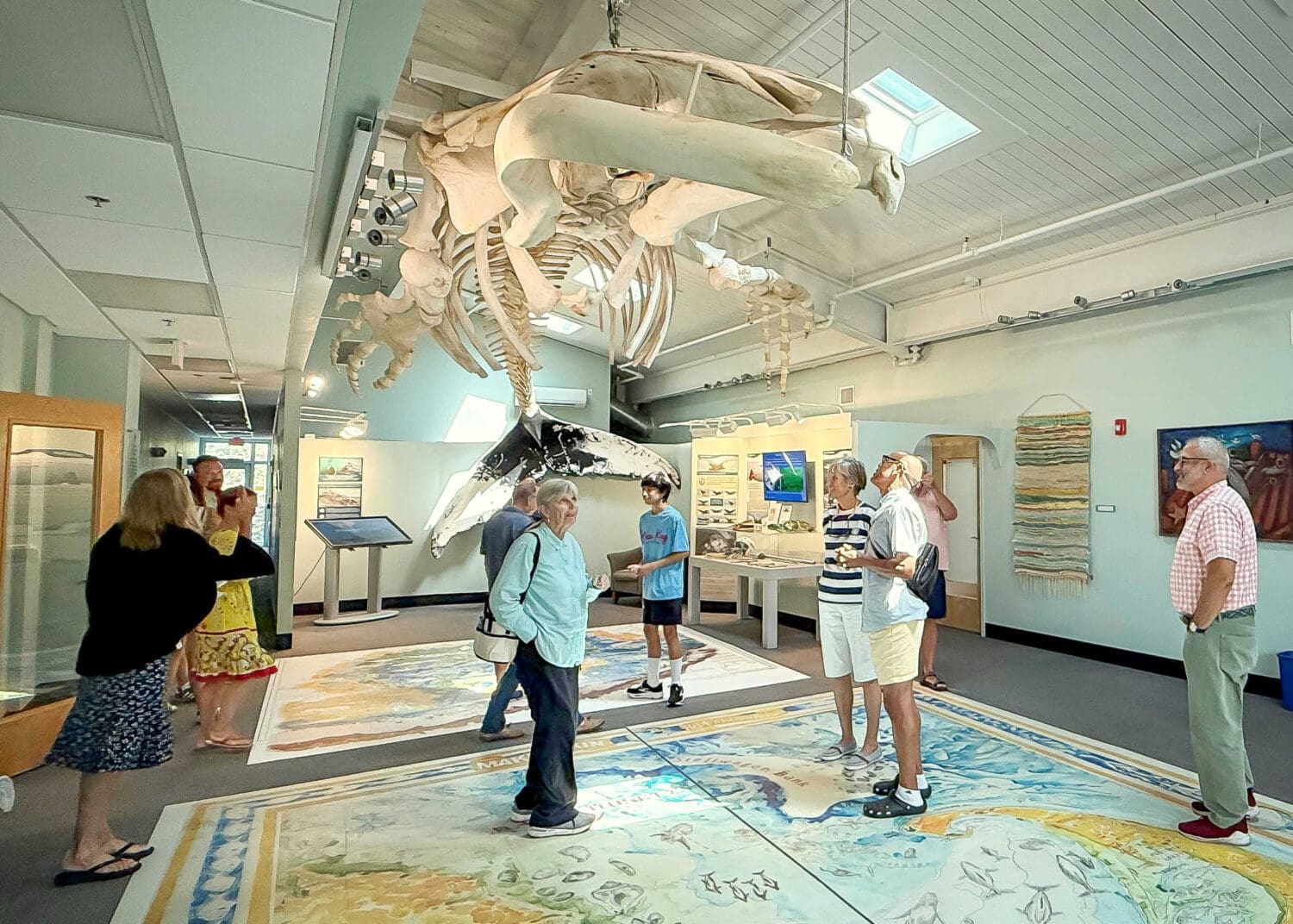
The Center, located at Five Holway Avenue in Provincetown, houses the Hiebert Marine Laboratory and features an impressive 37-foot skeleton of a humpback whale named Spinnaker. The whale, which was found dead after being disentangled multiple times by the Center’s staff is a poignant reminder of the Center’s critical work.

During the tour we got an inside look at the Center’s current work and were hosted by the lead scientists in the different depart­ments. Everyone was impressed by the dedication of the those work­ing there and the science being done. If you’re on the Cape, a visit to the Center is an experience you won’t soon forget, one that will inspire you to be part of the effort to preserve our marine world for current and future generations.

Flesh-eating bacteria reported in Manatee County

Flesh-eating bacteria reported in Manatee County

MANATEE COUNTY – The Florida Department of Health (DOH)-Manatee County is report­ing one confirmed case of vibrio vulnificus, commonly known as flesh-eating bacteria, in Manatee County this year.

Two deaths from the bacteria were reported in Manatee County, one in 2023 and one in 2024.

The DOH warns against entering the water if you have fresh cuts or scrapes, as vibrio vulnificus can cause an infection of the skin when open wounds are exposed to warm seawater; these infections may lead to skin breakdown and ulcers.

“The bacterium can invade the bloodstream, causing a severe and life-threatening illness with symptoms like fever, chills, decreased blood pressure (septic shock) and blistering skin lesions. Vibrio vulnificus bloodstream infections are fatal about 50% of the time,” according to DOH.

Individuals who are immuno­compromised – for example, those with chronic liver disease, kidney disease or a weakened immune system – should wear proper foot protection to prevent cuts and injury caused by rocks and shells on the beach, according to DOH.

A recent study showed that people with these pre-existing medical conditions were 80 times more likely to develop vibrio vulnificus bloodstream infections than healthy people.

Wound infections may be more serious in people with weakened immune systems. The wound may heal poorly and require surgery. Sometimes an amputation may be needed for recovery.

Between 1988 and 2006, the Centers for Disease Control and Prevention (CDC) received reports of more than 900 vibrio vulnificus infections from the Gulf coast states, where most cases occur.

People can also get infected with vibrio vulnificus when they eat raw shellfish, particularly oysters.

The DOH offers the following tips to prevent infection:

  • Do not eat raw oysters or other raw shellfish. Cook shellfish thoroughly.
  • For shellfish in the shell, either a) boil until the shells open and continue boiling for five more minutes, or b) steam until the shells open and then continue cooking for 9 more minutes. Do not eat those shellfish that do not open during cooking. Boil shucked oysters at least three minutes, or fry them in oil at least 10 minutes at 375°F.
  • Avoid cross-contamination of cooked seafood and other foods with raw seafood and juices from raw seafood.
  • Eat shellfish promptly after cooking and refrigerate leftovers.
  • Avoid exposure of open wounds or broken skin to warm salt or brackish water, or to raw shellfish harvested from such waters.
  • Wear gloves when handling raw shellfish.