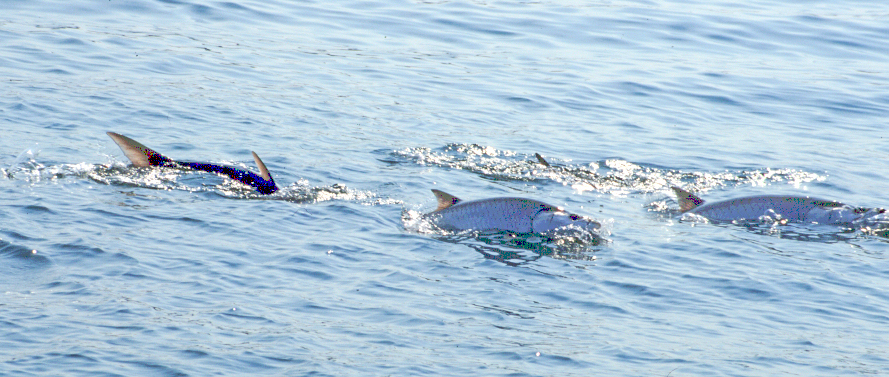
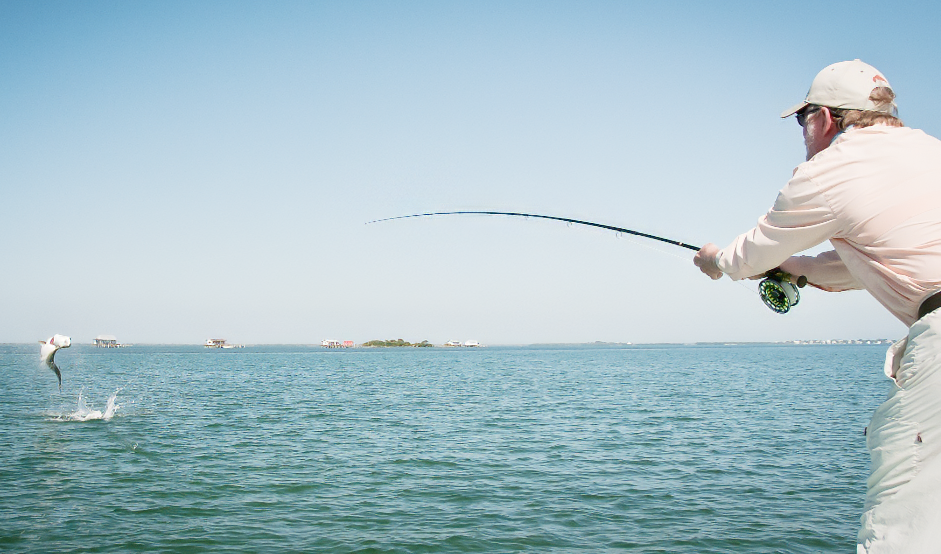
It’s that time of the year again when schools of tarpon conduct their annual migration and mating ritual off Anna Maria Island beaches. It’s also an annual ritual for anglers who pursue the “silver king,” arguably one of angling’s most exciting and challenging targets.
In high season, around the new and full moons of June, as schools of fish mass in the local waters, it’s not uncommon to find huge clusters of the fish and the anglers who fish along the beaches and passes. Groups of boats can be seen along the beaches and off local passes as they jockey for a presentation to schools of rolling and daisy-chaining fish.
During this time, in the excitement of the hunt, tempers can flare as anglers, caught in the passion of the moment, forget to respect their fellow anglers. There are also those new to the sport who don’t understand the process of pursuing schools of tarpon in a manner that gives everyone a fair shot at success. It’s a formula intended to keep the experience safe and enjoyable, while ensuring the tarpon fishery remains healthy for everyone who shares it. Good manners on the water make for a better fishery.
The first rule is simple: Pay attention and never motor up to a school of fish that other anglers may be in line to make a presentation to. If you watch closely, experienced anglers will position themselves well ahead of a moving school, often making fine adjustments with an electric trolling motor. After a school passes, they will wait before starting engines and then make a wide loop to repeat the process. Cutting through another’s boat line or drift and motoring up to fish will spook them, cause them to sound and ruin the chances for everyone. If you are new to the sport, it pays to watch quietly for a few minutes before joining in. That small pause can tell you everything about speed, spacing and the path fish are taking.
While fishing, pay special attention to fly anglers who anchor or pole the bars and local passes. These seasoned anglers pay attention to the movement of tarpon in shallow water, often positioning themselves on an edge that tarpon move along. Cutting across that line or motoring in shallow water can ruin everyone’s chances.
Courtesy in tarpon season is not only about other anglers, but also about respecting the fish. It’s good to remember that tarpon are here to reproduce and not for the sport of the angler. Florida law states that tarpon is a catch-and-release-only fishery and that tarpon over 40 inches must remain in the water unless an angler is pursuing a record with a required tag. Keeping tarpon in the water and minimizing handling time is critical. Anglers should also use tackle that’s stout enough to shorten the fight, leaving them the reserves to survive the sharks that frequent the waters during the season and are their main predators.
The best advice is to spend a few minutes watching the behavior and movement of the fish and anglers before attempting to approach a school of fish. That will give everyone a better chance at success and an enjoyable day on the water. It’s only common sense, although in the heat of the moment common sense often isn’t so common!
Tarpon are one of the premier gamefish that swim local waters and are a noble adversary on any tackle. The fish that frequent our beaches during the months of May through August can weigh over 200 pounds and average from 80 to 100 pounds.
I’ll always remember the way John Kip, a guide I fished with in the Keys, described fly-fishing for tarpon as the “Apex of Angling.”
Local anglers are blessed with some of the finest tarpon fishing in the world and local sandbars, beaches and bays host worldclass fly-fishing for these silver-plated giants. Our region is also bookended by the legendary flats of Homosassa to the north and Charlotte Harbor to the south, providing fly anglers a proliferation of promising prospects. This isn’t a game of numbers; and to the anglers who pursue tarpon on the fly, it’s the pursuit and the possibility of pulse-pounding action that keeps them on the bow for hours in the sweltering summer sun.
Fly tackle should match the size of the quarry and most anglers opt for a 12-weight outfit and 70-to-80-pound bite tippet. While it might seem like a difficult task to land a tarpon on the fly, an angler who knows the limits of their tackle can actually land a tarpon in a surprisingly short time. The key is to apply maximum pressure from the hookup and never let up. Too many anglers “baby” their tarpon in a misguided attempt to land them. The truth is that the longer you fight a tarpon the better chance you have of losing them.
A properly knotted and tapered tarpon leader usually runs between 10 and 12 feet and includes a class (weakest link) tippet from 16 to 20 pounds. Flies vary from the classic splayed feather “Key’s” style to more complex designs like the Toad and Palolo worm. Key to the whole equation is a razor-sharp hook that can penetrate a tarpon’s rock-hard mouth. Many seasoned tarpon anglers are not concerned with actually landing a tarpon, preferring to just enjoy the hunt, the hook up and the jumps that usually follow the hook set. They use light bite and class tippets which allows the tarpon to work through the leader with their abrasive mouths.
The key to hooking a tarpon on the fly is accuracy. The fly must be placed perfectly and moved in a precise direction relative to the fish and at the proper depth (the fish’s depth). Even when all of these factors come together, there’s still about a 50% chance that the tarpon will reject the fly.
Patience is a critical factor when fly-fishing for tarpon. Some anglers prefer to locate the edge of a sandbar or other underwater feature that tarpon track, anchor in casting range and wait. Other anglers prefer to be on the poling platform to make short moves to give their anglers a better angle for a presentation. Sometimes tarpon come at a steady rate, but just as often there are long periods of time when the only thing to look at is the water and the bottom. This really separates the great anglers from the good anglers. There are times when you need to move but knowing when and where is a skill that is developed, if never mastered.
Once set up, the angler must be able to make a 40-to-60-foot cast to a location the size of a dinner plate. Placement of the fly cannot be overemphasized, because tarpon will seldom vary a foot or two from their path to eat a fly. Although there is always the rare exception, a fly must never travel in a path towards a fish. A tarpon’s prey species wouldn’t survive long if it moved towards its aggressor, and the tarpon know it. When a tarpon is tracking their fly, seasoned anglers know how to read the fish by moving the fly to attract their attention and then varying the speed to keep them interested.
Note – This story was previously published in 2025.
Tarpon are one of the premier gamefish that swim local waters and are a noble adversary on any tackle. The fish that frequent our beaches during the months of May through August can weigh over 200 pounds and average from 80-100 pounds.
We are blessed with some of the best tarpon fishing in the world, and the local bars and inshore waters host some of the finest fly and spin fishing to be found anywhere. This isn’t a game of numbers and, to the anglers who pursue tarpon, it’s the hunt and the action that keeps them on the bow for hours in the hot summer sun.
Tackle should match the size of the quarry and most anglers opt for a 20- to 30-pound spin outfit and an 11- to 12-weight fly rod, line and reel. A heavy bite tippet is required because of the size of tarpon and their rasp-like mouth. Fly anglers generally use 60- to 80-pound tippet, while spin anglers choose 80- to 100-pound test.
While it might seem like a difficult task to land a tarpon on the fly, or any tackle for that matter, an angler who knows the limits of his/her tackle can actually land a tarpon in a surprisingly short time. The key is to apply maximum pressure from the hookup and never let up.
Too many anglers baby their tarpon in a misguided attempt to land them. The truth is that the longer you fight a tarpon the better chance you have of losing it.
A properly (IGFA-approved) tied tarpon leader used by fly fishers usually runs between 10-12 feet and is tapered to properly deliver the fly. The leader includes a class tippet (weakest link) from 16-20 pounds that is doubled at both ends to soften the (shock) impact to the class tippet and bite tippet.
Key to the whole equation is to have a very sharp hook as tarpon have extremely tough mouths. Conventional leaders vary from angler to angler, but a doubled standing line tied to a leader and then to the bite tippet with a blood knot or Albright Special is recommended.
Flies vary from the classic splayed feather Key’s style to more complex designs like the Toad, and various baitfish imitations. Some fly anglers are not concerned with actually landing a tarpon, preferring to just enjoy the hunt, the hookup and the jumps that usually follow the hook set. They use light bite tippets, which allow the tarpon to work through the leader with their abrasive mouths.
The key to landing tarpon on the fly is accuracy. The fly must be placed perfectly, move in a precise direction relative to the fish and be at the proper (fishes’) depth. Even when all of these factors come together, there’s still about a 50% chance that the tarpon will reject the fly.
The go-to bait for spin anglers is a live crab. Small blue crabs can be purchased from many bait shops and pass crabs can be dipped from the local passes on a falling tide. Other effective baits include pinfish, threadfin herring and pilchards. Artificial lures like the DOA Bait Buster and the 4- and 6-inch shrimp, jigs and even topwater plug can be effective.
Patience is a critical factor when fishing for tarpon, especially when fly fishing. The most successful anglers find the edge of a sandbar or other underwater feature that tarpon track, anchor in casting range and wait. Sometimes tarpon come at a steady rate, but just as often there are long periods of time when the only thing to look at is the water and the bottom. This really separates the great anglers from the good anglers. There are times when you need to move, but knowing when and where is a skill that is developed if never mastered.
Although tarpon can be one of the most exciting gamefish to engage, they are also one of the most demanding and exhausting. It’s not uncommon to hear stories of epic two-hour-plus battles, which are not good for the angler or the tarpon.
After experiencing the thrill of the catch, many anglers, not concerned with landing a tarpon again, prefer the hunt, the hook-up and the jumps that usually follow a hook set. They use light bite tippets which allow the tarpon to work through the leader with their abrasive mouths. The key to landing tarpon, especially on fly, is accuracy. While there are exceptions to every rule, the fly must be placed perfectly, move in a precise direction relative to the fish and be at the proper (fish’s) depth. Even when all these factors come together, there’s still about a 50% chance that the tarpon will reject the fly.
The go-to bait for spin anglers is a live crab. Small blue crabs can be purchased at bait shops and pass crabs can be dipped from the local passes on a falling tide. Other effective baits include pinfish, threadfin herring and pilchards. Artificial lures like the DOA Bait Buster and the 4- to 6-inch shrimp, jigs and even topwater plugs can be effective. Patience is a critical factor when fishing for tarpon, especially when fly fishing. One strategy used by fly anglers is to find the edge of a sand bar or other underwater feature that tarpon track, anchor in casting range and wait. Sometimes tarpon come at a steady rate, but just as often there are long periods of time when the only thing to look at is the water and the bottom. This really separates the great anglers from the good anglers. Others use their push pole to intercept their target. There are times when you need to move to a different area altogether, but knowing when and where is a skill that is developed, if never mastered.
Once set up, the angler must be able to make a 40- to 50-foot cast to a location the size of a dinner plate. The placement of the fly cannot be overemphasized because tarpon will seldom vary a foot or two from their path to eat a fly. Although there is always a rare exception, a fly must never travel in a path towards the intended target. A tarpon’s prey species wouldn’t survive long if it moved toward its aggressor and tarpon know it. If all this wasn’t demanding enough, once a tarpon decides to eat the fly, an angler’s mettle is really tested.
Tarpon phenom Andy Mill demonstrates the technique of “bowing to the king.” – Rusty Chinnis | Sun
Conventional anglers usually look for rolling fish in the nearshore Gulf and motor well ahead of them to intercept their path. Trolling motors can be effective for following a school in deep water but will spook them in the shallows. One thing that all tarpon anglers should practice is courtesy. Often a boat has been working long and hard to get properly set up for a shot at an approaching school and a boat running up on the fish will spoil the day for everyone. Tarpon are not trout and attempting to raise the rod to set the hook is a cardinal mistake. Fortunately, once a tarpon decides to eat the fly there’s no need to make a lightning-fast hook set. The right set is called a “strip strike” which involves letting the line come tight and immediately setting the hook with a combination of the line hand and the rod. Conventional anglers should also have the patience to let the line come tight before attempting to hook the fish. After the initial hook set fly, the angler’s attention must go immediately to clearing the line. In most cases, the angler has been stripping in line when the fish bites and the hook is set. That line can easily foul on the angler, the rod or the reel. Once the line is on the reel, it’s time to set the hook with several more strip strikes, using the rod.
Conventional anglers often use circle hooks which don’t require a hook set. They just need to let the line come tight and enjoy the action. In any case, the tarpon cannot be aware of the angler on the other end until the hook is set. While it’s important to exert maximum pressure on the tarpon during the fight, anglers must yield on jumps. On the jump, the standard maneuver is to thrust the rod forward to relieve pressure on the line. This prevents the tarpon from breaking off if it lands on a taut line. This maneuver is known as “bowing to the king.”
If you’re looking for a good jump shot, here’s a great tip. When a tarpon makes any long run, motor close to it, applying only enough pressure to make sure the hook doesn’t dislodge. As soon as you are in place, frame the shot you want and then have the angler apply maximum pressure. Most times the tarpon will make a jump that’s close enough to the boat to get the angler and the fish in the shot. It’s not a sure thing, but when it works it can present an awesome photographic opportunity. Finally, don’t try and rush the tarpon when it gets near the end of the fight. Keep the pressure on but don’t clamp down and try to force the fish to the boat.
Good action can be found right through July for fly anglers, while the best month for conventional anglers is generally June. Tarpon fishing is a challenging endeavor, but it’s well worth the effort when you finally get that first-scale rattling jump. If you’re looking for fly tackle for tarpon, a local guide or timely advice seek out AMI Outfitters on Pine Street in Anna Maria. There’s no substitute for local knowledge!
Tarpon season is one of the most anticipated times of the year in local waters. While I’ve encountered tarpon occasionally most every month of the year, April through July is the time ardent anglers turn their sights to these beautiful fish. Their arrival in numbers worth pursuing is generally water temperature dependent. The magic number is debatable and a moving target, but as a general rule, when water temperatures hit the 80s, it’s time to get serious.
The tarpon that frequent our waters in numbers from May through August can weigh over 200 pounds and average from 80-100 pounds. We are blessed with some of the best tarpon fishing in the world and the local beaches and inshore waters host some of the finest fly and spin fishing to be found anywhere. This isn’t a game of numbers, and to the anglers who pursue tarpon, it’s the hunt and the action that keep them on the bow for hours in the hot summer sun.
The tackle should match the size of the quarry and most anglers opt for a 20- to 30-pound spin outfit and an 11- to 12-weight fly rod, line and reel. A heavy bite tippet is required because of the size of the tarpon and its rasp-like mouth. Fly anglers generally use a 60- to 80-pound tippet while spin anglers choose an 80- to 100-pound test. While it might seem like a difficult task to land a tarpon on the fly, or any tackle for that matter, an angler who knows the limits of their tackle can land a tarpon in a surprisingly short time. The key is to apply maximum pressure from the hookup and never let up. Too many anglers baby their tarpon in a misguided attempt to land them. The truth is that the longer you fight a tarpon the better chance you have of losing it.
A properly (IGFA-approved) tied tarpon leader used by fly fishers usually runs between 10-12 feet and is tapered to properly deliver the fly. The leader includes a class tippet (weakest link) from 16-20 pounds that is doubled at both ends to soften the (shock) impact on the class tippet and bite tippet. The key to the whole equation is to have a very sharp hook as tarpon have extremely tough mouths. Conventional leaders vary from angler to angler, but a doubled standing line tied to a leader and then to the bite tippet with a blood knot or Albright Special is recommended.
Flies vary from the classic splayed feather Keys style to more complex designs like the Tarpon Toad and various baitfish imitations. Recently, the Palolo Worm fly-fished with a double-handed retrieve has taken the fly-fishing world by storm. These worms that hatch en masse in the Keys are reported to have an aphrodisiac effect on tarpon. Although they do not occur locally, tarpon readily take a well-presented worm fly. Next week, Tarpon primer: Part Two.
Tarpon season is one of the most anticipated times of the year for local anglers. While it’s possible to encounter tarpon occasionally most every month of the year, May through July is the time savvy anglers turn their attention to pursuing them along area beaches. Their arrival in numbers is generally dependent on water temperature and the length of days. The magic number is debatable, but when water temperatures reach into the 70s ardent anglers take notice. When that number reaches the high 70s to low 80s, they mobilize.
For most anglers this isn’t a numbers game, it’s the pursuit, the surroundings and the spectacular fight that keeps them pinned to the bow. Tackle should always match the size of the quarry and it’s particularly important when fishing for Tarpon. Most anglers opt for a 20- to 30-pound spin and/or 11-12 weight fly outfits. A heavy bite tippet is required because the tarpons rasp-like mouth. Fly anglers generally use 60- to 80-pound tippet while spin anglers choose 70 to 100-pound test. While it might seem like a difficult task to land a tarpon on the fly, or any tackle for that matter, anglers who know the limits of their gear can land a tarpon in a surprisingly short period of time. The key is to apply maximum pressure from the hookup and never let up. Too many anglers “baby” their fish in a misguided attempt to land them. The truth is that the longer the fight, the better chance you have of losing.
Captain Justin Moore prepares to release a tarpon landed recently off Longboat Key by angler Brian Neslund of Lakeland. – Submitted | Drew Russell
A properly (IGFA approved) tied tarpon leader used by fly fishers is tied and tapered to accurately deliver the fly. The leader includes a class tippet (the weakest link) from 16-20 pounds that is doubled at both ends to soften the (shock) impact to the class tippet and bite tippet. Key to the whole equation is to have a very sharp hook as tarpon have extremely tough mouths. Conventional leaders vary from angler to angler, but a doubled standing line tied to a leader and then to the bite tippet with a blood knot or Albright Special is common.
Flies vary from the classic splayed feather Key’s style to more complex designs like the Toad, various baitfish imitations and Paolo worm flies. Some fly anglers are not concerned with landing a tarpon, preferring to just enjoy the hunt, the hookup and the jumps that usually follow the hook set. They use light bite tippets which allows the tarpon to work through the leader with their abrasive mouths. The key to landing tarpon on the fly is accuracy. The fly must be placed perfectly, moved in a precise direction relative to the fish and be at the tarpon’s depth, preferably right on their nose. Even when all these factors come together, there’s still about a 50% chance that the tarpon will reject the fly.
A key point is to be aware of your surroundings and courteous when tarpon fishing. Don’t try to run down a school of tarpon. If another boat is working a school, find another or hopscotch wide around for a shot. Tarpon fishing is all catch and release unless you’ve purchased a special tarpon tag. It is also illegal to take tarpon over 40 inches out of the water. Try tarpon fishing on your own or, better yet, hire one of the many excellent local guides. That will be money well spent.
Tarpon season is one of the most anticipated times of the year on local waters. While it’s possible to encounter tarpon occasionally most every month of the year, April through July is the time savvy anglers turn their attention to these silver piscatorial gladiators. Their arrival in numbers worth pursuing is generally dependent on water temperature. The magic number is debatable but when water temperatures reach into the 70s, ardent anglers take notice. When that number reaches the high 70s to low 80s, they mobilize.
Locally we have some of the best tarpon fishing in the world. For most anglers this isn’t a numbers game, it’s the pursuit, and it’s the surroundings and the action that keeps them pinned to the bow. Tackle should match the size of the quarry. Most anglers opt for a 20- to 30-pound spin and/or 11- to 12-weight fly outfits. A heavy bite tippet is required because of the size of tarpon and their rasp-like mouth. Fly anglers generally use 60- to 80-pound tippet while spin anglers choose 70- to 100-pound test. While it might seem like a difficult task to land a tarpon on the fly, or any tackle for that matter, an angler who knows the limits of her gear can actually land a tarpon in a surprisingly short period of time. The key is to apply maximum pressure from the hookup and never let up. Too many anglers “baby” their tarpon in a misguided attempt to land them. The truth is that the longer you fight a tarpon the better chance you have of losing it.
Tarpon fishing can be a feast for the eyes. – NO MOTOR ZONE! | Submitted
A properly (IGFA-approved) tied tarpon leader used by fly fishers usually runs between 10-12 feet and is tapered to accurately deliver the fly. The leader includes a class tippet (weakest link) from 16-20 pounds that is doubled at both ends to soften the (shock) impact to the class tippet and bite tippet. Key to the whole equation is to have a very sharp hook as tarpon have extremely tough mouths. Conventional leaders vary from angler to angler, but a doubled standing line tied to a leader and then to the bite “tippet” with a blood knot or Albright Special won’t fail you.
Flies vary from the classic splayed feather “Keys” style to more complex designs like the “Toad,” various baitfish imitations and Paolo worm flies. Some fly anglers are not concerned with landing a tarpon, preferring to just enjoy the hunt, the hook up and the jumps that usually follow the hook set. They use light bite tippets which allows the tarpon to work through the leader with their abrasive mouths. The key to landing tarpon on the fly is accuracy. The fly must be placed perfectly, move in a precise direction relative to the fish and be at the proper (fishes’) depth. Even when all of these factors come together, there’s still about a 50% chance that the tarpon will reject the fly, assuming that the condition of local waters don’t repel them first.
The most important thing I would like for you to take away from this article is to be courteous when tarpon fishing. Don’t try to run down a school of tarpon. If another boat is working a school, find another or hopscotch wide around for a shot. Tarpon fishing is all catch and release unless you’ve purchased a special tarpon tag. It is also illegal to take tarpon over 40” out of the water. Try tarpon fishing on your own, or better yet, hire one of the talented local guides listed in these pages to show you the ropes.
The weather hasn’t cooperated in a long time but as soon as it does, I’ll be out hunting tarpon. It’s a little early for the migration but while I’m waiting for the weather to change, I’ll be planning for the season. The boat is getting cleaned up, I just got the trolling motor tuned up and the outboard serviced. I’m rerigging my spin and fly tackle and tying flies in anticipation of one of my favorite times of the year. Tarpon are one of the premier gamefish that swim local waters and a noble adversary on any tackle. The migration gets into full swing during the month of May and generally runs into August and September for die-hard anglers. These fish are a test of any angler and tackle, running to over 200 pounds. The average runs an astounding 80 to 100 pounds.
We are blessed with some of the best tarpon fishing in the world and the local bars and inshore waters host some of the finest fly and spin fishing to be found anywhere. This isn’t a game of numbers and to the anglers who pursue tarpon it’s the hunt and the action that keep them on the bow for six to eight hours in the hot summer sun.
Tackle should match the size of the quarry and most anglers opt for a 20- to 30-pound spin outfit and 11 to 12 weight fly rod, line and reel. A heavy bite tippet is required because of the size of tarpon and their rasp-like mouth. Fly anglers generally use a 60- to 80-pound tippet while spin anglers choose 80- to 100-pound test. While it might seem like a difficult task to land a tarpon on the fly, or any tackle for that matter, anglers who knows the limits of their tackle can actually land a tarpon in a surprisingly short time. The key is to apply maximum pressure from the hookup never letting up. Neophyte anglers have a tendency to “baby” their tarpon in a misguided attempt to land them. The truth is that the longer you fight a tarpon the better chance you have of losing it.
A properly (IGFA approved) tied tarpon leader used by fly fishers usually runs between 10 and 12 feet and is tapered to properly deliver the fly. The leader includes a class tippet (weakest link) from 16 to 20 pounds that is doubled at both ends to soften the (shock) impact to the class tippet and bite tippet. Key to the whole equation is to have a very sharp hook as tarpon have extremely tough mouths. Conventional leaders vary from angler to angler, but a doubled standing line tied to a leader and then to the bite tippet with a blood knot or Albright Special is recommended.
Flies vary from the classic splayed feather “Keys” style to more complex designs like the “Toad,” and various baitfish imitations. Some fly anglers are not concerned with actually landing a tarpon, preferring to just enjoy the hunt, the hook up and the jumps that usually follow the hook set. They use light bite tippets which allow the tarpon to work through the leader with their abrasive mouths. The key to landing tarpon on the fly is accuracy. The fly must be placed perfectly, move in a precise direction relative to the fish and be at the proper (fishes’) depth. Even when all of these factors come together, there’s still about a 50% chance that the tarpon will reject the fly.
The go-to bait for spin anglers is a live crab. Small blue crabs can be purchased from bait shops and pass crabs can be dipped from the local passes on a falling tide. Other effective baits include pinfish, threadfin herring and pilchards. Artificial lures like the DOA Bait Buster and the 4- and 6-inch shrimp, jigs and even top water plugs can be effective. Patience is a critical factor when fishing for tarpon, especially when fly fishing. The most successful anglers find the edge of a sand bar or other underwater feature that tarpon track, anchor in casting range and wait. Sometimes tarpon come at a steady rate but just as often there are long periods of time when the only thing to look at is the water. This really separates the good anglers from the great anglers. There are times when you need to move but knowing when and where is a skill that is developed and never mastered.
Once set up, the angler must be able to make a 40- to 50-foot cast to a location the size of a dinner plate. Placement of the fly cannot be overemphasized, because tarpon will seldom vary a foot or two from their path to eat a fly. Although there is always the rare exception, a fly must never travel in a path towards the intended target. A tarpon’s prey species wouldn’t survive long if it moved towards its aggressor, and tarpon know it. Besides moving away from the fish, the fly must move at the proper pace, be at the proper depth and never slow down when a tarpon is tracking it. Conversely you can’t move the fly too fast, taking it out of a tarpon’s range. If all this wasn’t demanding enough, once a tarpon decides to eat the fly an angler’s mettle is really tested.
Conventional anglers usually look for rolling fish in the near-shore Gulf and motor well ahead of them to intercept their path. Trolling motors can be effective for following a school in deep water but will spook them in the shallows. One thing that all tarpon anglers should practice is courtesy. Often a boat has been working long and hard to get properly set up for a shot and a boat running up on the fish will spoil the day for everyone. Tarpon are not trout and attempting to raise the rod to set the hook is a cardinal mistake. Fortunately, once a tarpon decides to eat there’s no need to make a lightning-fast hook set. When fly fishing, the right set is called a “strip strike,” which involves letting the line come tight and immediately setting the hook with a combination of the line hand and the rod. Conventional anglers should also have the patience to let the line come tight before attempting to hook the fish. Then the angler must at once work to set the hook in the cement-like jaw while being ready for the fish to bolt away from the boat.
After a fly angler’s initial hook set, attention must go immediately to clearing (getting the loose line off the deck) the line. In most cases the angler has been stripping in line when the fish bites and the hook is set. That line can easily foul on the angler, the rod or the reel. The protocol is to take your attention from the fish to the line at your feet. Hold the rod away from your body and let the excess line pass through your stripping hand in a circle made with the thumb and the forefinger. Once the line is “on the reel” set the hook with several more strip strikes, using the rod. Conventional anglers often use circle hooks which don’t require a hook set. They just need to let the line come tight and enjoy the action. In any case, a tarpon cannot be aware of the angler on the other end until the hook set.
While it’s important to exert maximum pressure on the tarpon during the fight, anglers must yield on jumps. On the jump the standard maneuver is to thrust the rod forward to relieve pressure on the line. This prevents the tarpon from breaking off if it lands on a taught line. This maneuver is known as “bowing to the king.”
It’s customary to start the engine and get as close to the tarpon as possible after the initial and subsequent long runs. This allows the angler to apply maximum pressure. If a tarpon is a hundred yards from the boat, the stretch of the line makes it impossible to apply any real pressure.
If you’re looking for a good jump shot here’s a great tip. When a tarpon makes any long run, motor close to it, applying only enough pressure to make sure the hook doesn’t dislodge. As soon as you are in place, frame the shot you want and then have the angler apply maximum pressure. Most times the tarpon will make a jump that’s close enough to the boat to get the angler and the fish in the shot. It’s not a sure thing, but when it works it can present an awesome photographic opportunity. Finally, don’t try and rush the tarpon when it gets near the end of the fight. Keep the pressure on but don’t clamp down and try to force the fish to the boat. In the end it’s a game of odds. Every time I think I’ve discerned a pattern, the tarpon teach me a new lesson! Good action can be found right through July and beyond for fly anglers while the best month for conventional anglers is generally June. Tarpon fishing is a challenging endeavor, but it’s well worth the effort when you finally get that first scale-rattling jump.
Now repeat after me, “I’ll remember all this, learn it and reread so I don’t make any mistakes.” Good luck with that, but I guarantee you those are some of the most exciting mistakes you’ll ever make.
It seems that we have to work harder all the time for a day on the water that includes catching fish. That’s after actually having the chance for a day on the water fishing. It’s a fact for most anglers that those days are far apart and it’s all too easy in our haste to just grab our gear, put it on the boat and head for the water. All too often we forget to check some of the most basic things that make the difference between fishing and catching a fish. A little forethought and preparation will help assure that you turn your opportunities into success.
It’s a good idea to have a checklist to follow before you ever make the first cast. These are the major reasons why we lose fish and with some due diligence, it can be easily avoided.
A sharp hook is obviously one of the most important components of an effective rig. It’s also one of the easiest things to forget to check. A hook can be razor-sharp the last time you used it and can become dulled with contact to the rub rail of the boat, objects in the water, guides and many other things. Test it every time you step to the bow and you’ll have a better chance at catching that fish you searched long and hard for. I like to check the hook on my fingernail. If I put it there and it doesn’t slip, I know it’s sharp enough. Still, it’s a good idea to have a hook sharpener on hand and touch up the point several times during any outing.
Even a well-stretched fly line can create a disaster if it gets too hot. This knot was created by a tarpon! – Rusty Chinnis | Sun
Knots are probably the second leading reason fish are lost. Even the best-tied knot will break if it’s not tightened well. You may tie perfect knots, but there’s a chance they could loosen between trips. Always make sure you moisten knots before tightening them and draw them up very tight. The first place a line will break is at a knot when it slips.
Checking the drag is, of course, one of the most important things you can do. I would suggest having the drag set so you don’t have to touch it while fighting a fish. Make sure your drag is smooth. You’ll know it needs attention if there’s any jerking motion when line leaves the spool.
Checking leader and line for nicks and abrasion is another must. It’s easy to cut off a small section of leader and re-tie than to lose a good fish to an imperfect line. Fly anglers can avoid a lost fish by always stretching their fly line. Fly line has memory and will come off the spool in small loops that can tangle easily, causing you to break off a fish. Strip off the line you’ll be casting, make a cast and gently stretch it as you retrieve it. On hot summer days, it’s a good idea to wet the line occasionally to keep it from getting hot and sticky.
Each time you step to the bow make sure you check all the components that lead to success. You’ll find it will make a big difference at the end of your fishing day. On the days when you get the opportunity to catch a fish, you don’t want to end up with pulled hooks or a break-off because you didn’t check your drag or leader.
While you’ll always lose fish even when everything is right, you’ll definitely have a better chance at success if you’re prepared when the opportunity presents itself. Sharp hook, smooth leader, properly set drags, stretched line and tight properly secured knots. Tight lines!
Tarpon are one of the premier gamefish that swim local waters and are a noble adversary on any tackle. The fish that frequent our beaches during the months of May through August can weigh over 200 pounds and average from 80 to 100 pounds.
We are blessed with some of the best tarpon fishing in the world, and the local bars and inshore waters host some of the finest fly and spin fishing to be found anywhere. This isn’t a game of numbers and, to the anglers who pursue tarpon, it’s the hunt and the action that keeps them on the bow for hours in the hot summer sun.
Tackle should match the size of the quarry and most anglers opt for a 20- to 30-pound spin outfit and an 11- to a 12-weight fly rod, line and reel. A heavy bite tippet is required because of the size of tarpon and their rasp-like mouth. Fly anglers generally use 60- to 80-pound tippet, while spin anglers choose 80- to 100-pound test.
While it might seem like a difficult task to land a tarpon on the fly, or any tackle for that matter, an angler who knows the limits of his/her tackle can actually land a tarpon in a surprisingly short time. The key is to apply maximum pressure from the hookup and never let up.
Too many anglers baby their tarpon in a misguided attempt to land them. The truth is that the longer you fight a tarpon the better chance you have of losing it.
A properly (IGFA approved) tied tarpon leader used by fly fishers usually runs between 10 and 12 feet and is tapered to properly deliver the fly. The leader includes a class tippet (weakest link) from 16 to 20 pounds that is doubled at both ends to soften the (shock) impact to the class tippet and bite tippet.
Key to the whole equation is to have a very sharp hook as tarpon have extremely tough mouths. Conventional leaders vary from angler to angler, but a doubled standing line tied to a leader and then to the bite tippet with a blood knot or Albright Special is recommended.
Flies vary from the classic splayed feather Key’s style to more complex designs like the Toad, and various baitfish imitations. Some fly anglers are not concerned with actually landing a tarpon, preferring to just enjoy the hunt, the hookup and the jumps that usually follow the hook set. They use light bite tippets, which allow the tarpon to work through the leader with their abrasive mouths.
The key to landing tarpon on the fly is accuracy. The fly must be placed perfectly, move in a precise direction relative to the fish and be at the proper (fishes’) depth. Even when all of these factors come together, there’s still about a 50% chance that the tarpon will reject the fly.
The go-to bait for spin anglers is a live crab. Small blue crabs can be purchased from many bait shops and pass crabs can be dipped from the local passes on a falling tide. Other effective baits include pinfish, threadfin herring and pilchards. Artificial lures like the DOA Bait Buster and the 4 and six-inch shrimp, jigs and even topwater plug can be effective.
Patience is a critical factor when fishing for tarpon, especially when fly fishing. The most successful anglers find the edge of a sandbar or other underwater feature that tarpon track, anchor in casting range and wait. Sometimes tarpon come at a steady rate, but just as often there are long periods of time when the only thing to look at is the water and the bottom. This really separates the great anglers from the good anglers. There are times when you need to move, but knowing when and where is a skill that is developed if never mastered.
Once set up, the angler must be able to make a 40- to 50-foot cast to a location the size of a dinner plate. Placement of the fly cannot be overemphasized because tarpon will seldom vary a foot or two from their path to eat a fly. Although there is always the rare exception, a fly must never travel in a path towards the intended target. A tarpon’s prey species wouldn’t survive long if it moved towards its aggressor and tarpon know it.
Besides moving away from the fish, the fly must move at the proper pace, be at the proper depth and never slow down when a tarpon is tracking it. Conversely, you can’t move the fly too fast, taking it out of a tarpon’s range. If all this wasn’t demanding enough, once a tarpon decides to eat the fly an angler’s mettle is really tested.
From left, Hunter Parrish prepares to release a tarpon he caught with his dad, Benny Parrish, in Longboat Pass. – Rusty Chinnis | Sun
Conventional anglers usually look for rolling fish in the near-shore Gulf and motor well ahead of them to intercept their path. Trolling motors can be effective for following a school in deep water but will spook them in the shallows. One thing that all tarpon anglers should practice is courtesy. Often a boat has been working long and hard to get properly set up for a shot and a boat running up on the fish will spoil the day for everyone.
Tarpon are not trout and attempting to raise the rod to set the hook is a cardinal mistake. Fortunately, once a tarpon decides to eat the fly there’s no need to make a lightning fast hook set. The right set is called a strip strike, which involves letting the line come tight and immediately setting the hook with a combination of the line hand and the rod. Conventional anglers should also have the patience to let the line come tight before attempting to hook the fish. Then the angler must at once work to set the hook in the cement-like jaw while being ready for the fish to bolt away from the boat.
After the fly angler’s initial hook set, attention must go immediately to clearing the line, getting the loose line off the deck. In most cases, the angler has been stripping in line when the fish bites and the hook is set. That line can easily foul on the angler, the rod or the reel. The discipline is to take your attention from the fish to the line at your feet.
Hold the rod away from your body and let the excess line pass through your stripping hand in a circle made with the thumb and the forefinger. Once the line is on the reel, set the hook with several more strip strikes using the rod. Conventional anglers often use circle hooks which don’t require a hook set. They just need to let the line come tight and enjoy the action. In any case, the tarpon cannot be aware of the angler on the other end until the hook set.
While it’s important to exert maximum pressure on the tarpon during the fight, anglers must yield on jumps. On the jump, the standard maneuver is to thrust the rod forward to relieve pressure on the line. This prevents the tarpon from breaking off if it lands on a taut line. This maneuver is known as bowing to the king.
It’s customary to start the engine and get as close to the tarpon as possible after the initial and subsequent long runs. This allows the angler to apply maximum pressure. If a tarpon is 100 yards from the boat the stretch of the line makes it impossible to apply any real pressure.
If you’re looking for a good jump shot, here’s a great tip: when a tarpon makes any long run, motor close to it, applying only enough pressure to make sure the hook doesn’t dislodge. As soon as you are in place, frame the shot you want and then have the angler apply maximum pressure. Most times the tarpon will make a jump that’s close enough to the boat to get the angler and the fish in the shot. It’s not a sure thing, but when it works it can present an awesome photographic opportunity. Finally, don’t try and rush the tarpon when it gets near the end of the fight. Keep the pressure on, but don’t clamp down and try to force the fish to the boat.
Tarpon fishing was excellent in the early season but has proven challenging so far in June due to finicky fish and persistent west winds. As of this writing, conditions have improved, and anglers report some spectacular days interspersed with slow action. My experience has proven the old adage, “The best time to go fishing is whenever you can.” Every time I think I’ve discerned a pattern the tarpon teach me a new lesson.
Good action can be found right through July for fly anglers, while the best month for conventional anglers is June. Tarpon fishing is a challenging endeavor but it’s well worth the effort when you finally get that first scale-rattling jump.
It was in the mid to late 70s when the floodgates opened up in the area. It was a time when the world’s greatest fly anglers and guides made an annual May migration to Homosassa. Billy Pate, Joe Robinson, Al Pflueger, Captain Eddie Whiteman, Carl Navarre, John Emory, Captain Bill Curtis, Captain Dale Perez, Captain Steve Huff, Captain Jim Brewer, Tom Evans, Captain Cecil Keith Jr., baseball legend Ted Williams, Captain Nat Ragland and Captain Lee Baker were regulars. The fishing was so incredible that world records never made it to the IGFA record books because they were broken day after day.
Billy Pate, the most visible angler fishing Homosassa, was one of the first Keys anglers on the scene. Pate had been guided by Captains Hank Brown and Lee Baker in the late 70s before Captain Nate Ragland became his guide. Ragland remembers the parties Pate would throw at the Riverside Inn, the gathering place for the Keys guides and their clients. Pate’s seven-day stints in Homosassa would include six days of fishing and one day off.
One of the many large tarpon caught on fly off Homosassa in the late 70s and early 80s. – Submitted | Sun
Ragland fished Pate over the course of 13 years. Ragland remembers some incredible days when there were few anglers and thousands of tarpon. One of Ragland’s clearest memories is of the day Pate fished with a broken foot from a water skiing accident. They hadn’t been seeing much until they happened on a laid up tarpon on a rock pile – laid up tarpon were rare.
Pate made three unusually bad casts, lining the fish three times. The tarpon ate the fly on the third cast even though it had been lined. When Ragland noticed the fly line going under the boat, Pate jumped down from the platform just as the boat pitched bringing him down on the bad foot and breaking two more bones as well as the handle off the reel. Not to be defeated, Pate had his wife Patti remove the handle from another reel and replaced it. To make matters worse, as Ragland was chasing the fish, his push pole-caught in the bottom, and he lost it. After turning the boat around with the electric motors, they chased the fish down and caught it.
Another day that really stands out in my memory is the day Pate hooked six fish out of a seven fish string, says Ragland. Ragland and Pate’s favorite flies included the Dirty Nellie, Purple Pimpernel, Black Death and the Little Brown.
Anglers fishing Homosassa used tackle and techniques developed in the Florida Keys. The rod of choice was the Scientific Anglers Great Equalizer. The most popular reels were the #3 Fin-Nor Wedding Cake, the Sea Master anti-reverse and the Emory reel, developed by Miami’s John Emory.
Flies were big by today’s standards, tied Keys’ style, based on the Homer Rhode Divided Wing Shrimp Fly, on Eagle Claw 4/0 to 6/0 254 SS hooks. Anglers experimented with color combinations tied with three splayed grisly hackles on each side, palmered hackles, and an orange fluorescent head. The big rods required a large line. The most popular was a yellow Scientific Angler #13 with a green sink tip. Bite tippets were generally 100 to 125-pound test. In 1976, Evans backed John Emory to design and build his fly reel.
“I guarantee you that the Emory reel caught more large tarpon than any ever built,” says Evans. “I know because we caught them.”
It took them two plus years to sell 220 reels.
“If I had known that the worse the fishing gets the more reels you could sell, I would have gone in the business,” he relates with a laugh.
This was a time when boats were evolving and the first anglers poled off of the cowling of their motors or backward from the bow. Eventually, boats with poling platforms and trolling motors appeared on the scene. Sidewinders, Makos, and Challengers gave way to Hewes Bonefishers, Dolphin Super Skiff, Shipokes, Mavericks and Silver Kings.
Local Homosassa guides began fishing tarpon from modern flats boats. Captain Mike Locklear learned the trade from Freddy Archibald, builder of the Shipoke and of St. Petersburg. He remembers Archibald loaning him a Shakespeare Wonder Rod and practicing fly casting a few days before he got his first opportunity.
“I had five tarpon eat the fly before I ever jumped one,” says Locklear. “He would just laugh and let me try again. I was trying to set the hook like I had a bass on.”
Other local guides including John Bazo, Earl Waters, Steve Kilpatrick, Jimmy Long and Billy Hampton also began leading anglers to tarpon in the 80s and 90s.
Probably no other angler has experienced more of the evolution of Homosassa tarpon fishing than Tom Evans. From 1977 to 1980, Evans and Captain Steve Huff fished three weeks every May, a time that produced six world records on four different line classes.
“I’ll never see fishing like that again in my life,” says Evans. “Homosassa gave me the best fishing I’ve ever experienced, and recently, the worst fishing I’ve ever seen.”
The numbers Evans reports reveal the weight of his words. “In the 70s we landed 200 tarpon a season, in the 80s 100 fish, during the 90s the number dropped to 50 and within the last 10 years numbers have fallen to five to seven fish.”
Evans calculates that 10 percent of the tarpon he caught were 150 pounds or larger. By his calculations, he has landed 300 plus fish over 150 pounds.
Evans doesn’t know what’s wrong with the fishery now. “There’s no pressure,” he relates. Evans still puts in time on the flats every year with Captain Al Dopirak. “There are no Jet-Skis, few boats, no bait and very few fish.”
The tarpon still come to the Homosassa area during May and June, but their numbers are down exponentially from the 70s. Theories abound as to why they don’t return in the great numbers seen then. Some think the pressure of the ever-increasing boat traffic kept the tarpon from the shallow inshore waters. Others think the increase in shrimp boats off the coast was responsible for a reduction in the available forage food.
Probably the most credible explanation is that the outflows from the local springs are down by as much as 75 percent. Captain Dale Perez remembers when every fish they landed in the 70s spit up pieces of crabs. That doesn’t happen now according to Evans. Perhaps the mixing action of fresh and saltwater that created the perfect habitat for crabs is the problem.
One thing is for sure, we will never know why the fish stopped showing up in great numbers. Seasoned anglers know that there are cycles happening that are far beyond our comprehension. Next year, the large schools of the tarpon could return. If fly fishing has its Camelot, the waters around Homosassa were unquestionably a place where a magical time of almost mythological action is forever etched into angling’s collective consciousness.