Tag: redfish

Reel Time: The lure of reds

Redfish are a favorite target for local anglers and late summer and early fall is a great time to target this versatile gamefish. Redfish are a sort of everyman’s fish in the sense that they take readily to (well presented) live bait, lures and flies. They are also challenging, and when hooked, put up a determined fight.

The flats are one of the best areas to find redfish. During high tides, reds will congregate near the mangroves that line the shore. As the tide begins to fall, they work the edges of the roots searching for minnows, crabs and other crustaceans. As the tide falls they move out with the tide, following the contours of channels, slues and potholes that funnel water off the flats. The reverse happens as the tide rises.

Redfish can also be found in channels and passes near docks, jetties, groins and other structure. Canals that lace the barrier islands also hold redfish. Concentrate on docks with large boats and the beginning and end of the channels. These areas are usually a bit deeper than the surrounding water and are a magnet for redfish. If there is structure, oyster bars or grass nearby, your odds improve.

Although they have a downturned mouth, redfish will often attack a topwater plug.

Anglers who are patient can find reds as they work on and off the flats. Artificials, including topwater plugs, jigs, gold spoons and jerk baits are effective in shallow water. Shrimp, pilchards, and pinfish are good live baits. They are best when free-lined or under a popping cork.

Redfish are an excellent target for fly anglers. They frequent shallow water, are extremely challenging to stalk, tail when conditions allow and take well-presented flies readily when they’re in the mood. One of the best areas to target reds on the fly is shallow grass beds with exposed white sand holes. These areas provide ease of wading and allow the fly angler to spot reds as they move across the flats in search of food. Top flies include baitfish, shrimp and crab patterns.

Redfish in shallow water are spooky creatures, rivaling bonefish as a cagey target. Accurate casts that lead the fish by about 2-3 feet are a must. The fly must be close enough for the fish to see but not too close or they’ll spook. When they spot the fly, keep it in their field of vision, but moving away. If they approach the fly, never slow it down! Match their speed, increasing the strip if they rush the fly.

Unless you’re fishing for reds around structure, you won’t need heavy tackle. Spinning and baitcasting rigs in the 8-10 pound range are just right. Fly anglers can use a 7-9 weight outfit depending on the wind and the size of the fly they’re using. Redfish provide a great challenge and some exciting action. The late summer run is just beginning, so get out there. There’s never been a better time to stalk, catch and release them. Redfish are currently catch-and-release (carefully) only July 16-Oct. 11, 2021 in Manatee waters north of State Road 64/Manatee Avenue.

Reel Time: Fishing with Captain Nick Angelo

Fishing has always presented challenges. For me, 2020 proved the most challenging in recent memory. Consider the inherent conditions that combine in mysterious ways to affect fish behavior: wind, weather, tides and moon phases. Add to that dwindling habitat and water quality combined with the COVID-19 pandemic and it seems we’re weathering a perfect storm of poor fishing and fishing opportunities.

Nature Coast redfish
Captain Nick Angelo with a “Nature Coast” redfish. – Rusty Chinnis | Sun

Fortunately, there are some bright spots. Last week I experienced one when I traveled to Crystal River to fish the Nature Coast with Captain Nick Angelo. I first met Angelo over a decade ago through a mutual friend when we fished for tarpon off Anna Maria and Longboat Key. In the ensuing years, I had kept track of him but hadn’t connected on the water. After a phone conversation in December, we made a plan to reconnect and fish his home waters, an area aptly named the Nature Coast. Stretching from the Chassahowitzka National Wildlife Refuge near Homosassa north to Waccasassa Bay, the coastline is sparsely populated and is fed by several wild rivers and numerous springs. It’s one of the few places in Florida where you feel you’ve gone back in time. Its relative remoteness and shallow Gulf water are studded with oyster bars and limestone outcroppings, a magnet for many species, including the redfish we targeted on fly.

I booked a room at the Hampton Inn in Crystal River where I reserved a first-floor room next to the back entrance. Through the Hilton Honors App (Hilton owns the Hampton Inn chain) I was able to check in and out and access the hotel and room with a digital key, avoiding human contact, a challenge during the ensuing pandemic.

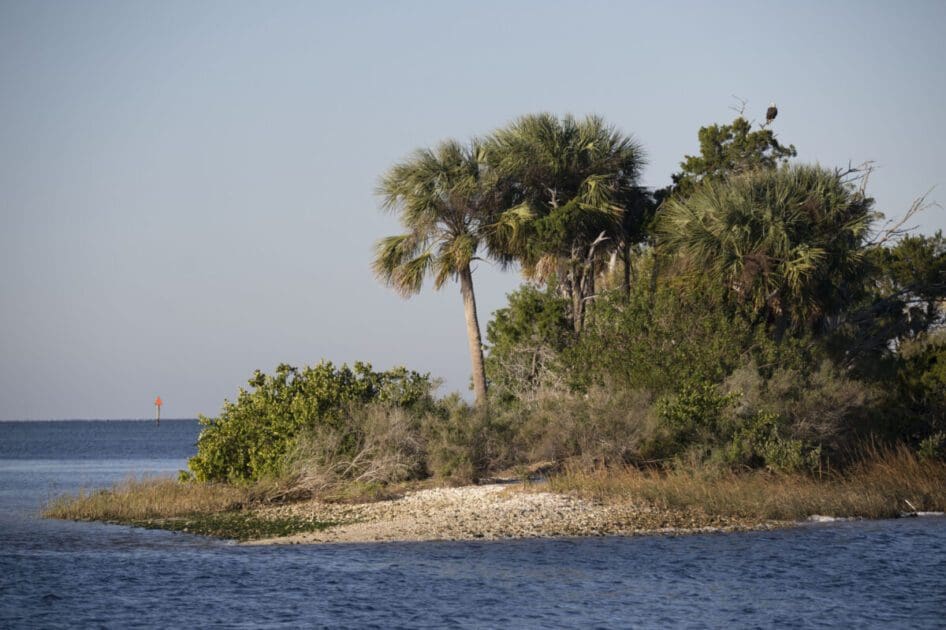
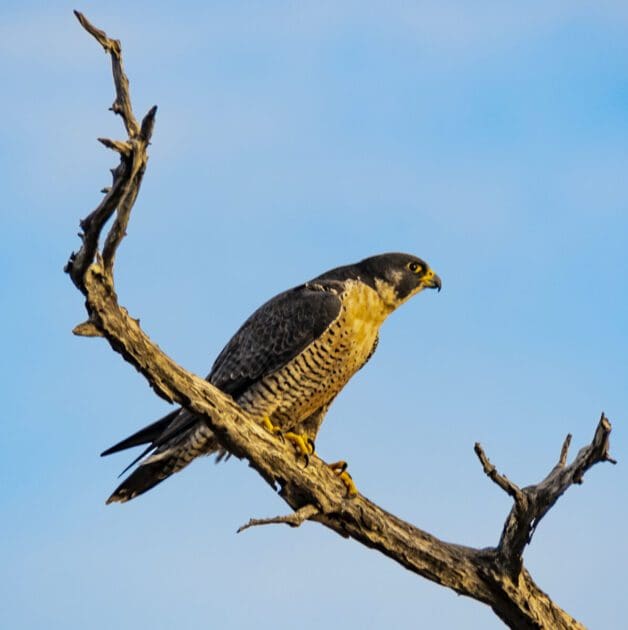
While the weather wasn’t perfect, we still had two excellent days sight-fishing big redfish in less than 2 feet of water. Since we were both avid photographers, we kept our cameras at hand and were rewarded with images of bald eagles and a peregrine falcon. During our first day, an unusually low tide kept us from fishing the exposed mangrove shorelines Angelo prefers. Instead, we fished creek mouths and the edges of oyster bars. That proved to be a winning strategy and it wasn’t long before Angelo positioned me for a cast to a big redfish sitting in about 6 inches of water.  My first cast was off target but the fish didn’t spook and on my next presentation, the fish inhaled the fly on the second strip. In my world, I consider this the “apex of angling,” watching a fish pushing 35 inches open its mouth and turn on its side to take the fly! We had numerous shots and hookups that day and I was impressed with the stamina of the fish that made numerous long runs well into the backing.

The tide wasn’t as low on our second day and we were able to work the edges of the area’s extensive mangrove islands. Angelo prepped me to concentrate on sunken mangrove roots that extended out from the shoreline. His words proved prophetic, and it wasn’t long before we were encountering groups of fish just as he had predicted. Once again we were able to feed individual fish and took turns casting and poling. Besides the obvious pleasure of sight casting to large redfish, I reveled in the isolation of the place. In two full days, we saw only two airboats and two other skiffs, both at a considerable distance.

If you haven’t experienced this part of Florida, I highly recommend it. It’s a place where you can immerse yourself in nature and excellent fishing opportunities. This is truly a special place, but it’s an area where you’ll want the expertise of an experienced guide. The many oyster bars and limestone reefs are a magnet for fish but can also destroy the boat of the uninitiated!

You can contact Captain Nick Angelo by phone at 813-230-8473 or by visiting his website.

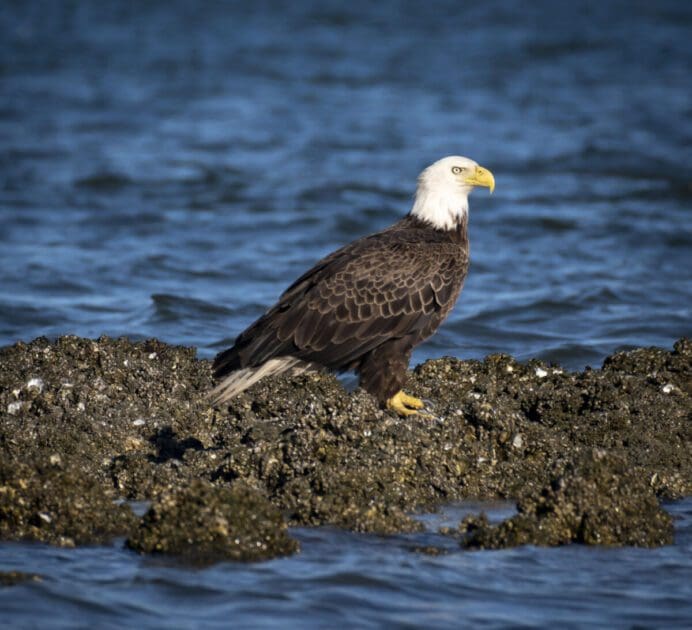
Bald eagle - Rusty Chinnis | Sun

Bald eagle - Rusty Chinnis | Sun

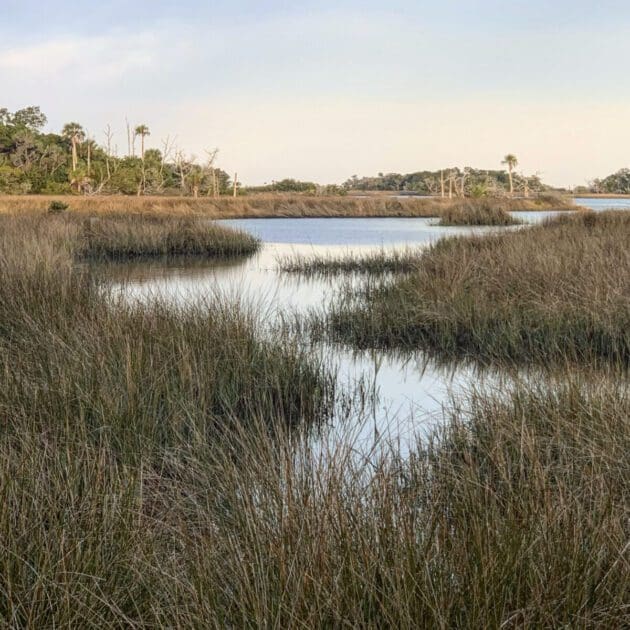
Eagle Island - Rusty Chinnis | Sun

Eagle Island - Rusty Chinnis | Sun

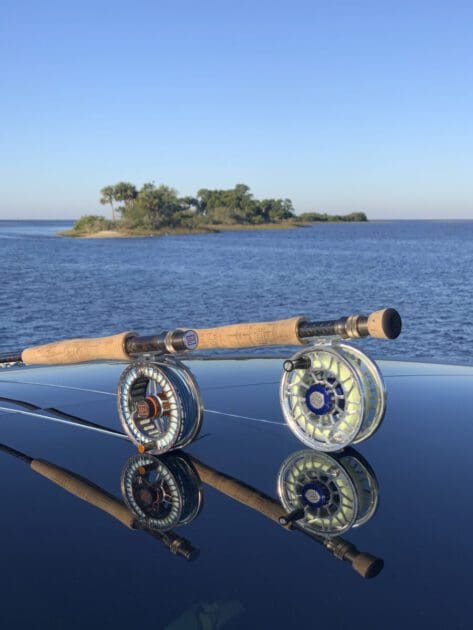
Fly reels - Rusty Chinnis | Sun

Fly reels - Rusty Chinnis | Sun

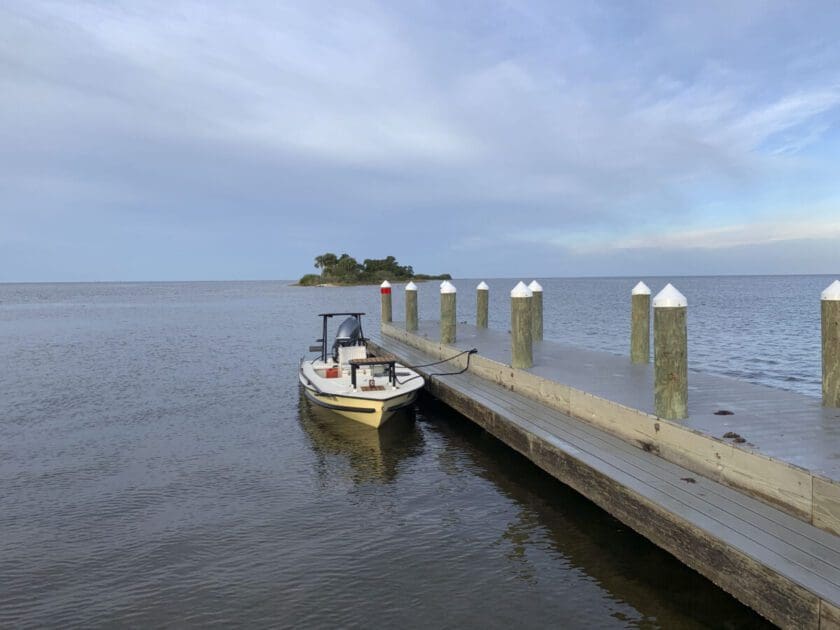
Ready to explore - Rusty Chinnis | Sun

Ready to explore - Rusty Chinnis | Sun

Peregrine falcon - Rusty Chinnis | Sun

Peregrine falcon - Rusty Chinnis | Sun

Withlacoochee Bay - Rusty Chinnis | Sun

Withlacoochee Bay - Rusty Chinnis | Sun


Redfish released for red tide recovery

BRADENTON – More than 2,000 juvenile redfish and 31 hefty adults were released this morning in the waters of Robinson Preserve to restock the fishery, decimated by six months of red tide.

Local waters have been mostly free of the toxic algae for more than a month, making this a good time to maximize the survival of the gamefish, according to officials at the Crystal River Mariculture Center at Duke Energy, where the fish were raised.

The large, satellite-tagged fish were released one at a time, carried in bags by different participants in the project from the holding tanks to the center’s Rhett Gehring, who guided them gently into the water. Medium-sized fish were transported by hand in small tubes and released.

Juvenile fish had quite a different journey, pushed through a black pipe from the holding tanks to the water. They swim against the “current” inside the pipe during the transit so they are not banging against each other, Gehring said.

One last straggler in the holding tank was carried by hand to the water at the Robinson Preserve kayak launch.

[embedyt] https://www.youtube.com/watch?v=_tmYZDAd16A[/embedyt]


A few dozen people watched the release at Robinson Preserve, a Manatee County park. Robinson’s waters are a healthy ecosystem with sheltered waters that are an excellent choice for the juvenile fish to mature, according to Melissa Nell, division manager of programming and education for the county Parks and Recreation Department.

More than 8,000 juvenile and adult redfish donated by the center already have been released in cooperation with the Florida Fish and Wildlife Conservation Commission and the Coastal Conservation Association Florida in Sarasota, Pinellas, Hillsborough and Pasco counties. More releases are planned in Charlotte, Lee and Charlotte counties in March.

Duke Energy officials hope anglers will practice catch-and-release of the redfish, a popular gamefish.

“Duke Energy is committed to environmental stewardship,” Eric Latimer, Duke Energy Florida Mariculture Center manager, said in a press release. “Fish mortalities associated with the current red tide bloom in southwest Florida have broad impacts, both to our state’s interconnected biological systems and to the people that make a living from and enjoy our natural resources. We are proud to play a small part in the solution by restocking fish that will contribute to the overall restoration of the affected areas.”

“We’re all aware of the devastation the red tide has caused our fisheries and we’re thrilled to partner with Duke Energy for this amazing redfish stock enhancement initiative,” said Brian Gorski, CCA Florida executive director.

“We appreciate the valuable support from CCA Florida and Duke Energy in helping enhance our world-class redfish fishery,” Eric Sutton, FWC executive director, said in a press release. “This team effort will benefit conservation, outdoor recreation and the state’s economy in many ways.”

The FWC’s latest report shows background traces of red tide – a normal occurrence – statewide, but no discernable effects on people or marine life are predicted.

The bloom began in Southwest Florida waters in October 2017, reaching local waters in August 2018.

Rhett Gehring of the Crystal River Mariculture Center at Duke Energy releases redfish at Robinson Preserve to restock the fishery after red tide. – Cindy Lane | Sun

Rhett Gehring of the Crystal River Mariculture Center at Duke Energy releases redfish at Robinson Preserve to restock the fishery after red tide. – Cindy Lane | Sun

One last straggler is carried by hand to the water during the redfish release. - Cindy Lane | Sun

One last straggler is carried by hand to the water during the redfish release. - Cindy Lane | Sun

Related coverage

Red tide forecast clear

Redfish

Redfishing at its best

Late summer and early fall provide some of the area’s best opportunities for redfish. September is one of the premier months, a time when reds congregate in spawning schools on area flats. These schools can provide anglers with fast action and an exciting spectacle. When they are disturbed or moving en mass, big schools “hump up” as they travel through shallow water. When they settle down they can disappear as suddenly as they appeared. Sometimes even a jet taking off or an angler making noise in the boat is enough to cause them to move. Occasionally they can be spotted feeding on a flat. One of my most exciting memories of schooling fish was watching a large group of reds moving across a flat as baitfish, shrimp and small pinfish sprayed to the surface in an attempt to flee the voracious school.

When fishing for redfish on the flats anglers who opt for light tackle have a better chance at success. An eight-pound spinning outfit or a seven-weight fly rod and reel are sufficient. Besides being more sporting, light spin and fly tackle is easier to carry, more fun and less likely to spook fish. When the weather isn’t ideal and the wind is strong, anglers using conventional tackle can still benefit from light tackle. Fly anglers may want to switch to an eight or even nine weight outfit to help with a cast into the wind. A change of leader may also be needed by fly anglers. Under light winds and clear skies a long leader to 12 feet allows for a stealthier presentation. When the wind puts a chop on the water redfish are less wary and a shorter leader, eight to nine feet, is all that’s needed. The one thing anglers using conventional tackle might want to do is use spoons and jigs in lieu of plugs and lighter lures that are adversely affected when casting into a stiff breeze.

A wide variety of flies, plugs and spoons are effective depending on the stage of tide and the depth of the water column. In the morning, if you’re prospecting deep edges, use a quick sinking Clouser or jigs and work them close to the bottom. When it’s time to move up on the flats try shrimp and crab patterns, spoons, top water plugs and flies. Over shallow grass on low tides, poppers and flies that float or suspend in the water column like seaducers or bend backs work best.

Look for flats with a good sand and grass mixture. Start fishing the shallows adjacent to deep water “staging areas” on the edge of the flat. As the tide floods in, explore points, troughs, slues and bars that “funnel” fish onto the flat. These areas act as side roads, feeder lanes and highways that fish use to enter and leave a flat with a rising and falling tide. Reverse this strategy on a falling tide. Savvy anglers pay close attention to the lanes that are exposed on low tides, making mental notes and marking charts. They can use this knowledge under low light conditions on subsequent fishing trips.

Local flats use to get a lot more pressure than they do now. Commercial fishermen, anglers and even some guides ran the flats looking for fish. This practice drove many schools off the flats and made the remaining fish very wary. Fortunately, most local flats are now signed as “no-wake” zones close to shorelines which has reduced the problem and helped fishing.

Local redfish can still be a challenge. If you find fish that are spooky, try this tactic: Get out of the boat and position yourself about 30 feet away from an area where you have good visibility and wait. Reds forage over the flats and will eventually cross potholes and light bottom. This requires patience, but is extremely effective when stalking wary fish.

When fishing extremely spooky fish in clear water, calculate where you think a fish might show up and then put your fly, spoon or jig there ahead of time. If you have the lure waiting at the intercept point as fish approach, the odds of a hook up are greatly increased.

Tampa Bay and Sarasota Bay are two of Florida’s largest estuaries.  Although progress has taken a toll on these areas, new environmentally-friendly practices and awareness of the resource has improved water quality and increased sea grass coverage and fish stocks. Redfish are not an easy target, especially for fly fishers, and can be extremely challenging. Anglers will need to be up on their game to be successful, but quality late summer and early fall fishing for redfish will be at its best.