

Tag: oyster

Reel Time: Rebuilding oyster habitat

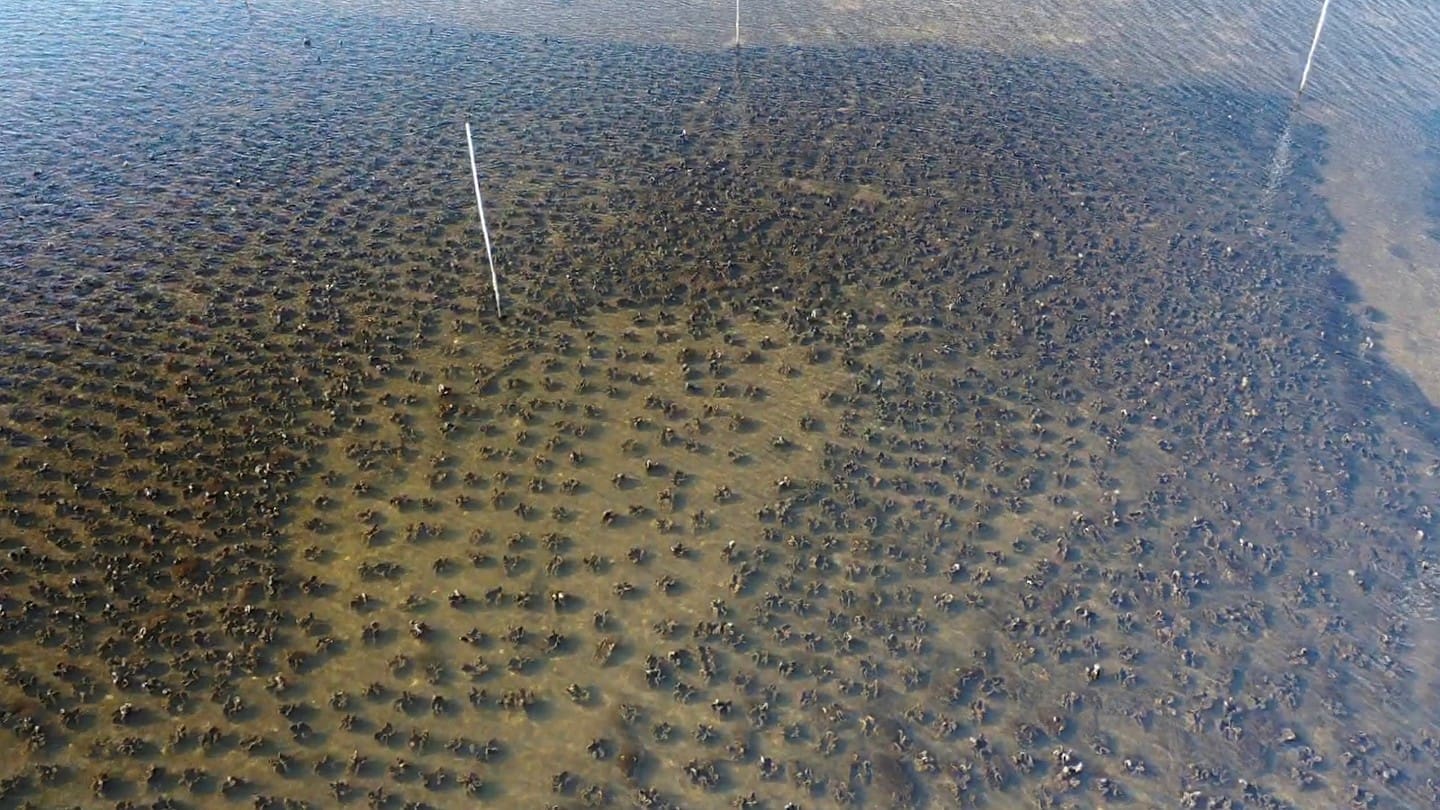
On Dec. 20, Oyster River Ecology (ORE) board member Rob Brown and I participated in an ORE rag pot installation in the upper Manatee River near Redfish Point. The volunteer event, a partnership with the Tampa Bay Estuary Program (TBEP), was a hands-on restoration work day that focused on rebuilding oyster habitat in the Manatee River.

The event, scheduled from 8 a.m. to noon at the Eileen Reef near Parrish, brought together volunteers passionate about marine conservation and ecosystem recovery. In an hour and 15 minutes, the volunteers installed approximately 2,000 rag pots that mimic the complex habitats that oysters form naturally, helping to enhance local reef structure, improve water quality through filtration and support diverse aquatic life.

The rag pots were the brainstorm of ORE Founder and Executive Director Damon Moore and provide a cost-effective and ecologically friendly reef substrate that establishes new surfaces for oyster larvae to settle and grow. The oyster rag pots (ORPs) are made by dipping cotton rags in a cement mixture and shaping them into pot-like forms.

Volunteers launched kayaks along the river in Parrish and paddled approximately half a mile to the reef site. Once there, they received training and were divided into small teams led by ORE staff. Teams worked within pre-marked zones to install the ORPs at 1-foot intervals, a process that maximizes habitat coverage while minimizing disturbance to the river bottom.

The event was scheduled to coincide with an extremely low tide which ensured a water level (about 6–18 inches) that was more accessible and safer for volunteers to work in the tidal flats. Work included carrying materials, placing the rag pots and collecting tools and materials before paddling back to shore.

Besides restoration work, the installation day served as a community-building experience. Following the installation, volunteers gathered for a tailgate lunch provided by TBEP that offered volunteers a chance to celebrate their achievement, connect with fellow conservationists and learn more about ORE’s efforts to enhance the local marine environment.

Oyster River Ecology’s efforts are part of a broader movement to restore degraded oyster reefs, habitats that once flourished along Florida’s coasts but have been diminished by overharvesting, pollution and habitat loss. ORE’s mission is to engage volunteers in practical, science-based restoration techniques like rag pot installation. ORE not only helps rebuild vital marine ecosystems but also educates and empowers the community to take part in meaningful environmental stewardship.

To learn more about ORE’s mission, discover insight into local history (the Manatee River was originally named the Oyster River) and to be part of this game-changing movement, visit ORE’s website.

Film to feature local oyster recycling program

Film to feature local oyster recycling program

PERICO BAYOU – A film crew followed about 75 volunteers on the last day of National Estuaries Week Saturday as they worked in Perico Bayou, laying oyster shells collected by local restaurants for recycling.

The scenes are slated for a documentary, “Unfiltered: The Truth about Oysters,” which will spotlight the history of oysters from Chesapeake Bay to Apalachicola Bay, including farming efforts, research studies at Florida A&M University, Florida State University and the University of Florida, and the local Gulf Coast Oyster Recycle and Restoration Project.

Film to feature local oyster recycling program
Oyster shells from local Chiles Group restaurants are now in Perico Bayou, forming new oyster beds. – Manatee County | Submitted

The project, a partnership between START (Solutions To Avoid Red Tide), the Manatee County Parks and Natural Resources Department and the Chiles Group restaurants, recycles oyster shells collected from restaurants, sun-cures them at Perico Preserve and “plants” them, creating new oyster habitats at Perico and Robinson Preserves.

The project is designed to clean area waters, decreasing nutrients that feed red tide and blue-green algae.

Oysters siphon water through their bodies to obtain food, cleaning the water by removing excess nutrients. With each oyster filtering up to 50 gallons of water per day, every acre of restored oyster reef filters nearly 40 million gallons of water each day, according to the Manatee County Parks and Natural Resources Department.

“More oysters mean cleaner water, and cleaner water promotes more oysters,” Education Division Manager Aedan Stockdale said. “These oysters will provide food and habitat for fish, which will, in turn, attract a diversity of birds and other animals as well as provide recreational and commercial opportunities for people.”

Oysters are increasingly threatened, according to film producer Chucha Barber.

Film to feature local oyster recycling program
From left, Chucha Barber, Josh McLawhorn and Hope Childree are working on a film about oysters that will feature the Gulf Coast Oyster Recycle and Restoration Project in Manatee County. – Cindy Lane | Sun

“Oyster cultivation dates back hundreds of years,” she said. “The most consumed live animal in the world is now experiencing global decimation. When harvested, both the animals and the habitat (the shells) are removed from nature.”

Barber hopes the film will spread the oyster recycling idea nationwide.

“There isn’t anything like this in Apalachicola,” she said.

For more information on the film, visit www.oyster.film.

Chiles Earth Day

Culinary Celebration to help build oyster reefs

ANNA MARIA – Tickets are now on sale for the START (Solutions to Avoid Red Tide) Culinary Celebration at The Studio at Gulf and Pine in Anna Maria on Sunday, April 22.

The public is invited to attend the culinary celebration taking place from 5-7 p.m. at 10101 Gulf Dr.

Attendees can mix and mingle while sampling culinary creations and tropical libations created by chefs and staff from The Sandbar, BeachHouse and Mar Vista restaurants. Local art will serve as the backdrop, and there will be plenty of free parking.

Tickets are $30 each and can be purchased online or by phone at 941-713-3105. There will be a special door prize and the opportunity to bid on silent auction items that include Anna Maria Island products, gourmet meals and vacation opportunities.

The Earth Day event will help support the local Gulf Coast Oyster Recycling and Renewal (GCORR) program taking place in Manatee County’s coastal waters. Oyster shells from local area restaurants are recycled and turned into new oyster reefs.

“Since more than 90 percent of the oyster beds in our area have been destroyed, START and its partners are working on this important project to build new reefs to restore our coastal waters,” according to the Chiles Group press release.

“The idea is to keep used oyster shells out of landfills and use them instead as the hard bottom base needed to grow new oyster reefs. This reduces the shells going to landfills and the need to dig up fossil shells as a base for new oyster reefs.

“In the first year of the program, we recycled 20 tons of used oyster shells. Because GCORR began as a one-year pilot program, START is now raising additional funding to support the program through 2018 and beyond.”

Restaurant employees remove used oyster shells from the tables, store them in bins and transport them to Perico Preserve. The Manatee County Parks and Natural Resources Department stores the shells and enlists local volunteers to bag and affix the shells to mats for planting in the designated reef area.

The Sun is the media sponsor of the event. For more information on START, contact Colleen at 941-951-3400 or colleen@start1.org.