
BRADENTON – At a time when red tide levels recently increased in Anna Maria Island waters and a Bradenton man recently lost his leg to flesh eating bacteria (vibrio vulnificus) after wade fishing in Sarasota Bay, the city of Bradenton discharged an estimated 825,000 gallons of partially treated or raw wastewater and/or sewage into the Manatee River in November.
The city of Bradenton also discharged more than 2,000 gallons of raw wastewater into Wares Creek.
Past events
In August, during and after Tropical Storm Debby, the city of Bradenton’s water reclamation facility discharged an estimated 25 million gallons of partially treated or raw sewage into the Manatee River. The neighboring city of Sarasota discharged an estimated 18 million gallons of partially treated or raw sewage into Sarasota Bay. Combined, the Bradenton and Sarasota water reclamation facilities discharged an estimated 43 million gallons of partially treated or raw sewage into local waterways.
Recent events
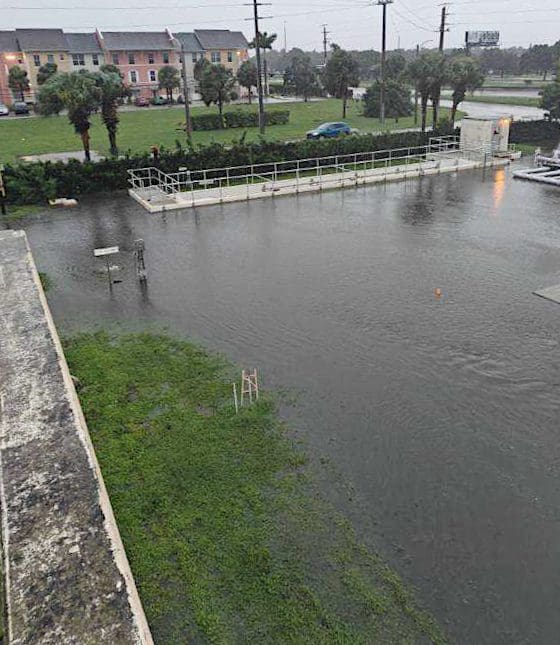
According to the Wastewater Digest website, the headworks of a wastewater treatment plant is the initial stage of a complex process. According to the noncompliance report posted at the city of Bradenton website, on Nov. 6, the emergency stop button or switch was hit at the headworks at the water treatment facility (WTF) at 17th Avenue West triggering an alarm in the supervisory control and data acquisition system. The alarm was acknowledged but not investigated. When the evening operator did the plant check, it was found the headworks was overflowing. The overflow occurred for about 15 minutes. The operator reset the panel and everything started working. The area affected was a grassy area at the headworks and the roadway at 17th Avenue West, including the storm drain. According to the report, at least 6,000 gallons of wastewater were discharged into the Manatee River via the storm drain.
On Nov. 17, there was a period of high chlorine demand due to a backwash and the operator on duty reacted incorrectly, resulting in the residual chlorine falling below the limit in contact chamber #2. The effluent (wastewater) was not fully disinfected during that time. The incoming operator noticed it and corrected the issue by putting the bleach back into the automated system. The total estimated volume of partially treated wastewater discharged into the Manatee River at the water reclamation facility outfall was 297,000 gallons.
On Nov. 21, there was again a period of high chlorine demand due to a backwash and the operator on duty again reacted incorrectly, resulting in the residual chlorine falling below the limit in contact chamber #2. The effluent was not fully disinfected during that time. The incoming operator noticed it and corrected the issue by putting the bleach back into the automated system. The estimated volume of partially treated wastewater discharged into the Manatee River at the water reclamation facility outfall was 525,000 gallons.
“This was an operator error in their response to the high chlorine demand. The WRF (water reclamation facility) acting superintendent/chief operator created a troubleshooting SOP (standard operating procedure) for these types of instances. The city has contracted with Jacobs Engineering to provide on-the-job training to all operators. This will help in ensuring that all operators have similar base knowledge,” according to the noncompliance report.
On Nov. 24, Lift Station #7, near Eighth Avenue West, had a variable frequency drive and radio malfunction due to the uninterruptible power system faulting which caused the lift station to stop functioning but did not trigger an alarm. There are three manholes at the crossing of Eighth Avenue West and 17th Street West and citizens called to report the manholes were overflowing. The estimated volume of raw wastewater that spilled into Wares Creek was 2,000 gallons.
The noncompliance information posted at the city of Bradenton website is also posted at the Florida Department of Environmental Protection’s Pollution Notice webpage, along with other pollution-related incidents reported statewide.
BRADENTON – During and after what was then Tropical Storm Debby, the city’s water reclamation facility discharged an estimated 25 million gallons of raw and partially treated sewage into the Manatee River, according to department officials.
The neighboring city of Sarasota discharged nearly 18 million gallons of raw and partially treated sewage into that city’s stormwater system, which connects to Sarasota Bay, according to department officials.
In total, the Bradenton and Sarasota water reclamation facilities discharged nearly 43 million gallons of sewage into local waterways.
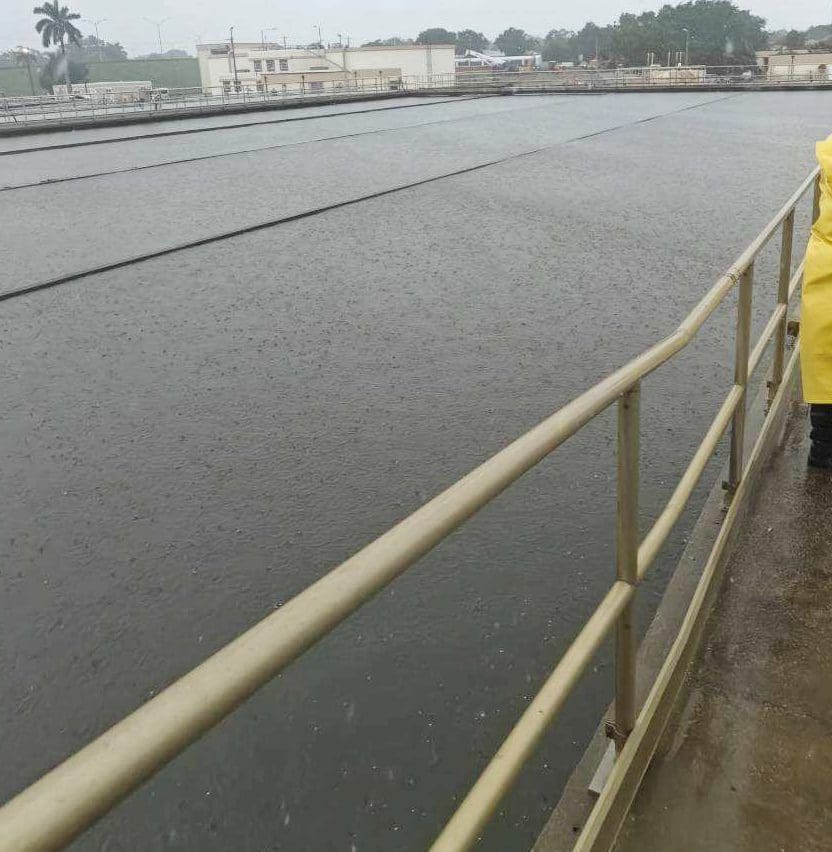
The rain associated with Tropical Storm Debby exceeded the Bradenton water reclamation facility’s storage capacities. – City of Bradenton | Submitted
Despite the influx of sewage into waters surrounding Anna Maria Island, the enterococcus bacteria levels in most areas were deemed “good” when last tested by the Florida Department of Health (FDOH) on Aug. 13.
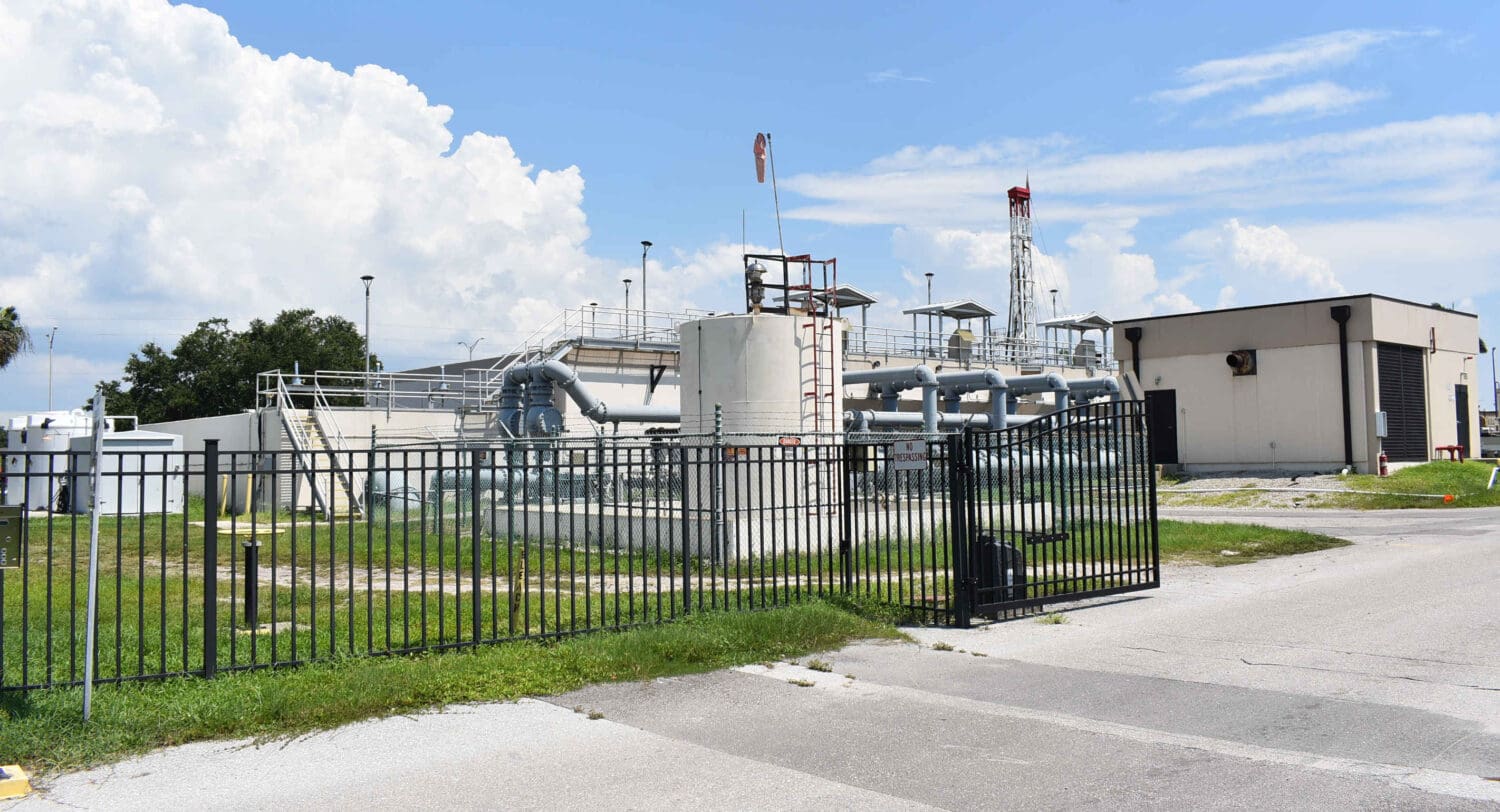
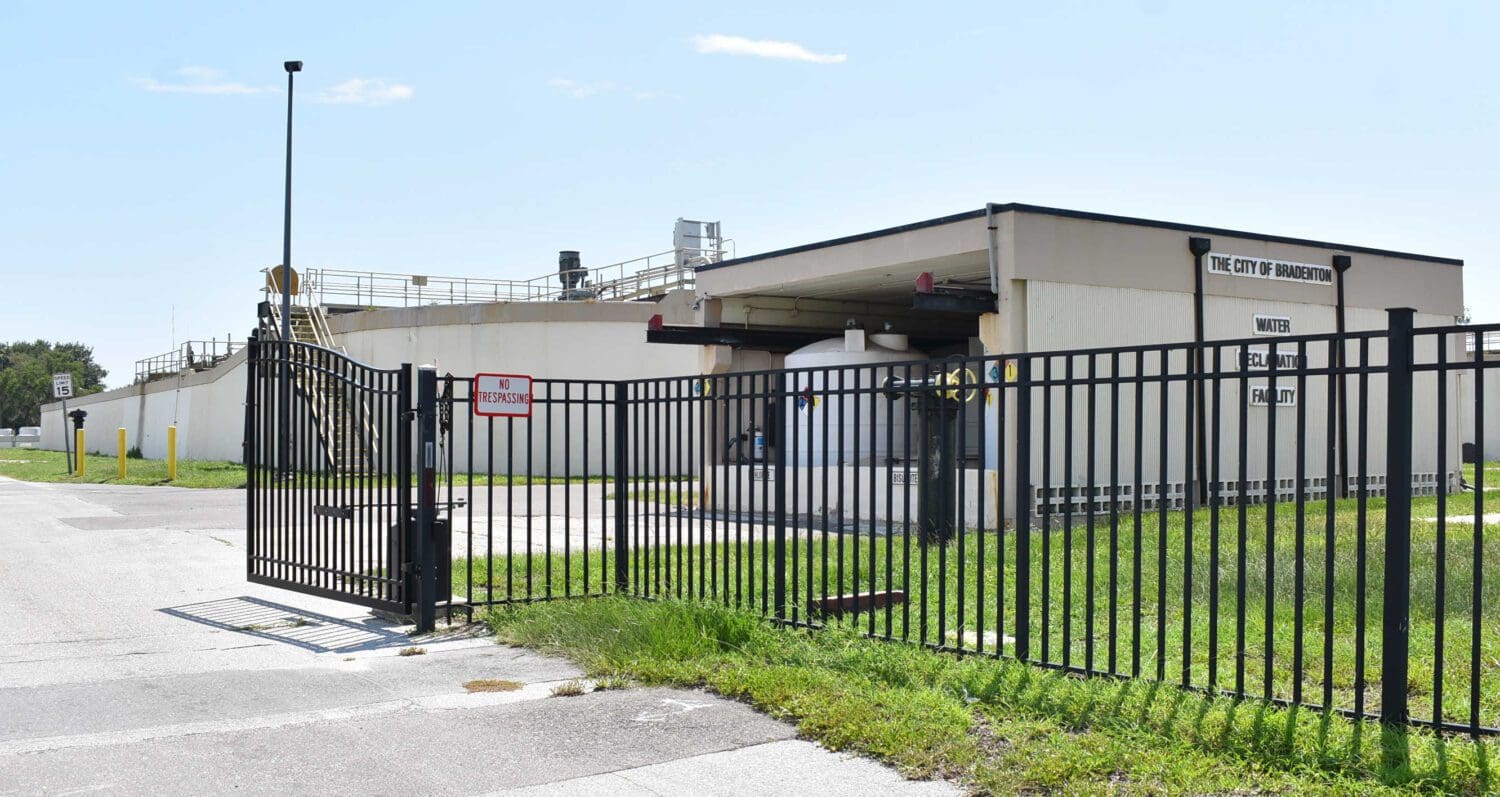
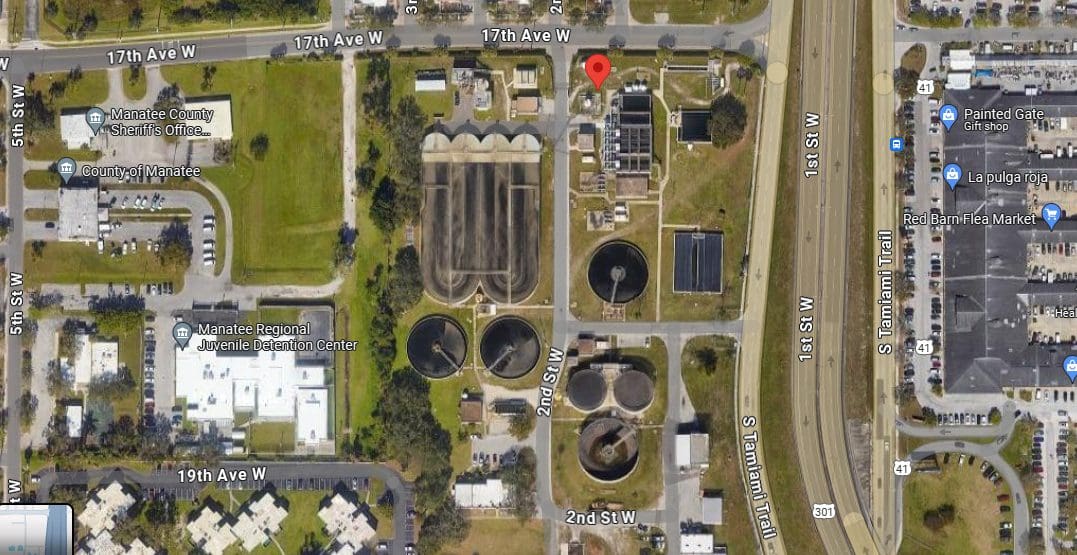
The Bradenton water reclamation facility is located across the street from the Red Barn Flea Market. – Google Maps | Submitted
According to the city’s report, “It’s estimated that the total volume bypassed from 08/04 – 08/07 was 25MG (million gallons).”
When contacted by The Sun on Aug. 12, Suncoast Waterkeeper board member and attorney Justin Bloom said, “According to the city’s own records, in which they’re reporting sewage spills to FDEP (the Florida Department of Environmental Protection), they discharged, directly to the Manatee River 25 million gallons of sewage between August 4th and August 7th. Suncoast Waterkeeper is concerned about the impact this significant amount of sewage will have on the Manatee River.”
The Bradenton water reclamation facility was overwhelmed by rain associated with Tropical Storm Debby. – City of Bradenton | Submitted
The mouth of the Manatee River empties into Tampa Bay near the northern tip of Anna Maria Island.
The city’s report states, “The event was caused by the heavy rain and high flow associated with Hurricane Debby and was unavoidable. As with utilities state-wide, the WRF staff did everything possible to not have to bypass, but with between 17-19 inches of rain during the storm it was unavoidable.”
The city’s report also includes the following information:
“On 08/04, the aerators were taken offline at 2 p.m. in anticipation of high flow.
On 08/04, the WRF experienced extremely high flow into the plant beginning around 17:00. By 18:30, the aerators, headworks, clarifiers, and filters began overflowing and bypass began.
On 08/05, the WRF bypassed the filters and wet well due to continual heavy rain and high flow.
Manatee River spill sample collection began on 08/06.
On 08/06, the plant experienced random high flow events causing the outfall and clear well to overflow.
On 08/08, two aerators were turned back online.”
In addition, report notes: “Sample collection is ongoing, preliminary results from 08/06 have been received but no official laboratory report has been. The city will continue to update FDEP as data is received and upon the conclusion of sampling.”
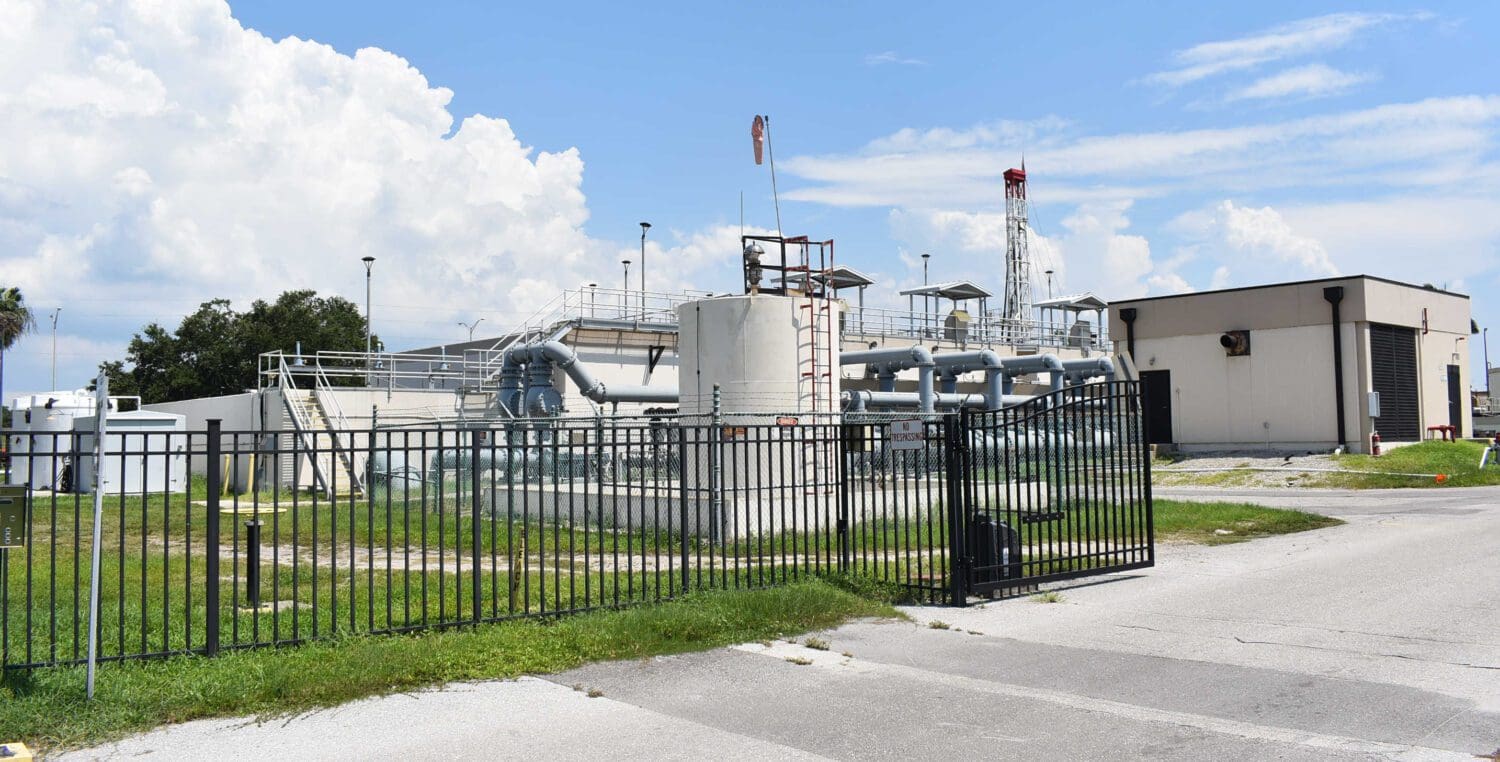
Bradenton’s water reclamation facility features numerous wastewater treatment and storage components. – Joe Hendricks | Sun
In an email exchange with Bradenton resident and concerned citizen Ernie Vanderwalt, FDEP Southwest District Office Director Kelley Boatwright acknowledged the sewage discharge.
“Department staff confirmed that the city of Bradenton had sanitary sewer overflows that total approximately 25,000,000 gallons due to Hurricane Debby. Staff are tracking the reports, evaluating the data, and will determine next steps,” Boatwright stated in his Aug. 12 email to Vanderwalt.
Sarasota overflow
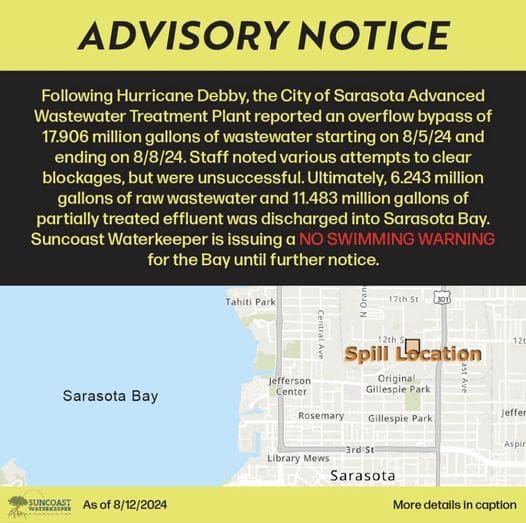
According to the incident description report provided by the city of Sarasota, “During the event, approximately 6.243 million gallons of raw wastewater was discharged to Sarasota Bay. In addition, approximately 11.483 million gallons of partially treated effluent was discharged to Sarasota Bay. Samples will be collected.”
According to the incident description, “The city of Sarasota’s advanced wastewater treatment plant was severely impacted by excessive flow from Hurricane Debby. Operations staff did everything in their power to control the flow coming into the facility. Due to the incredible flow volume coming to the plant, up to 44.29 MGD (million gallons daily) in a single day, plant staff were unable to prevent spills from the headworks at the treatment plant. Staff made every effort to contain and control the spill, but the volume was too significant to avoid the mixture of rainwater and untreated sewage entering the stormwater collection system.”
Water quality tests
According to the FDOH website, “Enterococci are enteric bacteria that normally inhabit the intestinal tract of humans and animals. The presence of enteric bacteria can be an indication of fecal pollution, which may come from stormwater runoff, pets and wildlife and human sewage. If they are present in high concentrations in recreational waters and are ingested while swimming, or enter the skin through a cut or sore, they may cause human disease, infections or rashes.”
FDOH analyzes water samples for total bacteria counts and rates the results as good, moderate or poor.
Good: 0–35.4 enterococci per 100 milliliters of marine water
Moderate: 35.5–70.4 enterococci per 100 milliliters of marine water
Poor: 70.5 or more enterococci per 100 milliliters of marine water
If the results indicate poor water quality, FDOH issues public notices and may post warning signs at impacted beaches that state swimming or other water activities are not recommended.
According to FDOH water quality testing results, the enterococcus levels in the water at Bayfront Park in Anna Maria were listed as good for Aug. 7, 11 and 13. Before Tropical Storm Debby, the enterococcus levels at Bayfront Park tested poor on July 22, July 29 and July 31. FDOH issued a water quality notice for Bayfront Park on July 31 but has not issued any additional Bayfront Park notices.
On Aug. 7, 11 and 13, the enterococcus levels at Manatee Beach in Holmes Beach were listed as good. When tested on Aug. 7, 11 and 13, the enterococcus levels at Coquina Beach North, Coquina Beach South and Cortez Beach (all in Bradenton Beach) were all listed as good.
When tested on Aug. 7, 11 and 13, the enterococcus levels at the Broadway Beach Access in Longboat Key were listed as good.
When tested on Aug. 7, 11 and 13, the enterococcus levels at Palma Sola Causeway South were listed as poor on each of those days, and also on July 29 and July 31. FDOH advisories were issued on July 31 and Aug. 7, 11, and 13.
According to FDOH, several locations in Sarasota were tested on Aug. 12 and the enterococcus levels at those locations were listed as good.
On Facebook, some Island residents and visitors reported strong odors and possible human waste discovered in the waters along some Anna Maria Island beaches.
On Aug. 12, the Suncoast Waterkeeper organization issued a “No Swimming” warning for Sarasota Bay that was to remain in effect until further notice.
On Aug. 12, The Suncoast Waterkeeper organization issued a no-swim advisory for Sarasota Bay. – Suncoast Waterkeeper | Submitted
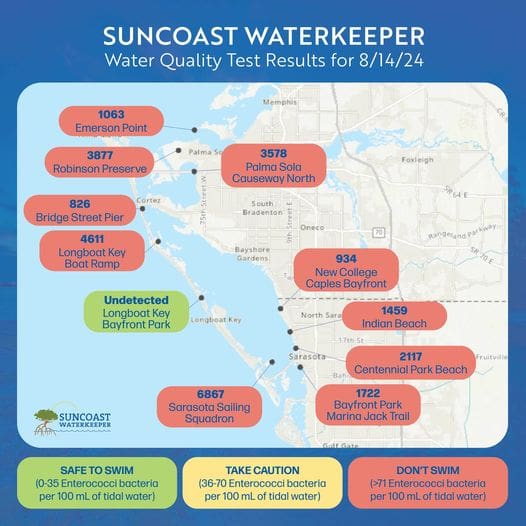
On Aug. 16, Suncoast Waterkeeper posted a Facebook message that said, “On August 14th, the enterococci survey was conducted during a falling tide. Salinity levels ranged from 18-29 ppt. The impact from Debby was still evident in the water quality on Wednesday and will likely continue throughout the weekend.”
Suncoast Waterkeeper released this water quality test results map on Aug. 16. – Suncoast Waterkeeper | Submitted
The Aug. 16 Facebook post was accompanied by a water quality test result graphic that indicated 10 locations in Bradenton, Anna Maria Island and Sarasota that Suncoast Waterkeeper considered to be “Don’t Swim” areas, including the Bradenton Beach City Pier on Bridge Street, Palma Sola Causeway North, Robinson Preserve and the Longboat Key boat ramp.
As of Aug. 19, The Sun was unable to obtain any additional water quality testing results from FDEP.
BRADENTON – Following the release of more than a million gallons of partially treated wastewater from Bradenton’s water reclamation facility in February, the Florida Department of Environmental Protection (FDEP) is continuing its investigation, which could result in financial penalties to the city.
“While our investigation is still ongoing, early information from the facility indicates that approximately 1.2 million gallons of partially treated wastewater was released following an operational failure. Please note, this water had undergone partial treatment and was not raw sewage,” FDEP spokesperson Brian Humphreys wrote in a March 9 email to The Sun.
According to FDEP, shortly after noon on Feb. 28, the filter system at the city’s water reclamation facility at 1810 First St. W. had a blockage, causing the bypass of the water into the Manatee River. The bypass was closed at 5:10 p.m. and the river sampling was started. The river flows to the Intracoastal Waterway and the Gulf of Mexico.
“The overflow did reach the nearby Manatee River, so water quality samples were taken by the city of Bradenton to monitor any bacteria levels. Advisory signs were posted around the affected area. DEP is committed to enforcing Florida’s environmental laws and holding environmental polluters accountable,” Humphreys wrote.
A Feb. 29 City of Bradenton Instagram post stated the following:
“City of Bradenton’s Wastewater Treatment Facility faced an operational failure, leading to a 90-minute tank overflow due to blockages. A seized bypass valve was manually reopened, and the surrounding curb and gutter area on 17th Avenue, approximately 200 yards, swiftly returned to normal after cleaning and treatment. The city is investigating the system malfunction and collaborating with environmental agencies on discharge and drainage issues.”
“As part of our investigation, DEP issued a warning letter to help collect the necessary facts to determine any violations or necessary penalties or enforcement actions, and our regulatory review of their response is ongoing,” Humphreys wrote.
In that March 4 warning letter from FDEP Southwest District Director Kelley Boatwright to Dean Jones, director of the City of Bradenton Public Works and Utilities department, Boatwright wrote in part, “Please be advised that this warning letter is part of an agency investigation, preliminary to agency action in accordance with Section 120.57 (5), Florida Statutes. Violations of Florida Statutes or administrative rules may result in liability for damages and restoration, and the judicial imposition of civil penalties, pursuant to Sections 403.121 and 403.161, Florida Statutes.”
Boatwright’s letter also references previous unauthorized discharges.
“Additionally, during the months of January through February 2024, the department was notified by the City of Bradenton and the SWO (State Watch Office) that your facility had several unauthorized discharges or unpermitted SSOs (Sanitary Sewer Overflow) totaling approximately 19,970 gallons. These instances are in potential violation of Chapter 403, Florida Statutes, and Chapter 62-620, Florida Administrative Code.”
BRADENTON – Shortly after noon on Feb. 28, the City of Bradenton’s water reclamation facility experienced an operational failure, causing 1.2 million gallons of partially treated wastewater to be discharged into the Manatee River, according to a Florida Department of Environmental Protection (FDEP) pollution notice.
The mouth of the Manatee River flows into the Intracoastal Waterway and the Gulf of Mexico at the north end of Anna Maria Island.
According to FDEP, the filter system at the facility at 1810 First St. W. had a blockage, causing the bypass of the water into the river. The bypass was closed at 5:10 p.m. and river water sampling was started.
City staff cleaned the areas affected and normal operation resumed, according to FDEP.
A Feb. 29 City of Bradenton Instagram post stated: “City of Bradenton’s Wastewater Treatment Facility faced an operational failure, leading to a 90-minute tank overflow due to blockages. A seized bypass valve was manually reopened, and the surrounding curb and gutter area on 17th Avenue, approximately 200 yards, swiftly returned to normal after cleaning and treatment. The city is investigating the system malfunction and collaborating with environmental agencies on discharge and drainage issues.”
“At a time when cities are working to reduce nitrogen overflow into the waters to curb red tide and algae blooms, this spill of partially treated wastewater is high nitrogen water filled with bacteria entering a public water body,” Suncoast Waterkeeper Executive Director Anney Tyrna said.
In 2022, Suncoast Waterkeeper and other environmental groups sued the City of Bradenton following a prior spill. The settlement stipulated that the city improve the wastewater treatment system.
“The city is working toward improving the infrastructure so this doesn’t happen again,” Tyrna said. “The infrastructure is old and in need of repair. Repairs are long overdue, but it takes time to make these repairs.”
Tyrna said with the latest spill, and based on the 2022 settlement terms of the lawsuit, there may be stipulated penalties due from the city to the Tampa Bay Estuary Program.
MANATEE COUNTY – Elected officials, invited guests and media members took a cruise on the Gulf Island Ferries on Monday afternoon.
The county-funded ferries are expected to begin service on Friday, Dec. 8, pending final Coast Guard certification. The covered pontoon boat ferries will initially run Fridays, Saturdays and Sundays from 10 a.m. to 9 p.m. The ferry service will include stops at the Anna Maria City Pier, the public dinghy dock near the Bradenton Beach Pier, the North or South Coquina boat ramp (yet to be decided) and the Riverwalk Day Dock in downtown Bradenton. The initial fare will be $8 per one-way trip, with discounts provided for seniors, children and toddlers.
The Miss Anna Maria and the Downtown Duchess departed from the Riverwalk Day Dock in downtown Bradenton. – Joe Hendricks | Sun
The Nov. 20 ferry ceremonies at the Bradenton Riverwalk began with 10th grade Manatee School of the Arts student Marley Holmes singing “God Bless America,” followed by an opening prayer led by Senior Pastor Dirk Rodgers from Roser Memorial Community Church in Anna Maria.
Senior Pastor Dirk Rodgers blessed the Gulf Island Ferry fleet. – Joe Hendricks | Sun
County Commission Chair Kevin Van Ostenbridge said the ferry service has been desired and discussed for decades and is now becoming a reality. He noted that until the Cortez Bridge was built in the 1920s, ferries and boats were the only mode of transportation to the Island.
“100 years later, we have these two ferries,” he said, before Pastor Rodgers conducted the ancient tradition of the blessing of the fleet.
County Commission Chairman Kevin Van Ostenbridge is glad to see the ferry service becoming a reality. – Joe Hendricks | Sun
Bradenton Area Convention and Visitors Bureau Executive Director Elliott Falcione said that once the initial service is operational, the county will explore grant opportunities in hopes of purchasing an enclosed high-speed ferry that will carry passengers between downtown Bradenton and the Anna Maria City Pier. The two pontoon boats would then be used to ferry passengers between the three Anna Maria Island destinations. And at some point next year, the county hopes to initiate free ferry service for those who work on the Island and live on the mainland.
At approximately 1 p.m., the Miss Anna Maria departed the Riverwalk Day Dock and headed west down the Manatee River, followed by the Downtown Duchess.
Once up to speed, the Miss Anna Maria traveled the Manatee River at approximately 12 knots per hour. – Joe Hendricks | Sun
The Miss Anna Maria turned around about halfway down the river and the Downtown Duchess continued its 40-minute trip to the City Pier in Anna Maria. The ferry didn’t dock at the existing City Pier landing area that’s still awaiting the attachment of two composite pilings needed for ferry dockage.
The sloped City Pier landing area to the left of the pier building will serve as a Gulf Island Ferry stop. – Joe Hendricks | Sun
During the return trip, Tourist Development Council board member Eric Carnes said, “This is absolutely fantastic. This is a great day for Anna Maria Island and a great day for the city of Bradenton. The visitors and employees that come to the Island on the ferries will have a great experience.”
Each ferry can carry 49 passengers, a captain and one crew member. – Joe Hendricks | Sun
Anna Maria Mayor Dan Murphy said, “We’ve got seaworthy vessels. It was a smooth ride and the captain knows what he’s doing. The seats are comfortable and the ride was enjoyable. It’s a nice relaxing way to get out to our Island, with no traffic.”
Elliott Falcione and Mayor Dan Murphy enjoyed their cruise to the Anna Maria City Pier and back. – Joe Hendricks | Sun
As the Downtown Duchess docked, Falcione said, “It was my first time on this river. It was more than just a ferry service. The water is an experience that will help showcase that ‘real authentic Florida’ to our visitors.”
BRADENTON – Blue-green algae persists in Robinson and Perico Preserves, and has caused its first fish kill.
“Blue-green algae and brown algae have become pervasive in the Lower Manatee River, Perico Bayou and Perico Preserve, resulting in a modest fish kill, primarily mullet, as a result of heavy algae bloom concentrations,” according to the latest report from the Manatee County Environmental Protection Department.
Manatee County crews skimmed and contained floating blue-green algae mats near Robinson Preserve’s waterway connection to the Manatee River and directed it back into the river on an outgoing tide, according to a recent email update to county commissioners from Charlie Hunsicker, director of the Manatee County Parks and Natural Resources department.
From left, Will Robinson, for whose family Robinson Preserve is named, Manatee County Commissioner Carol Whitmore and Congressional Rep. Vern Buchanan were among several officials at Robinson Preserve on Monday to see the algae bloom up close. Carol Whitmore | Submitted
“A floating turbidity boom, normally set in place to protect surface waters from turbidity and sedimentation, was deployed under the footbridge at that tidal connection to keep additional floating algae mats from coming back into the preserve on the incoming tides. This will not prevent all algae mats from entering the preserves from other Manatee River or Perico Bayou connection points, however, this will reduce the algae coverage in what the media has photographed to be the worst places where algae build-up has occurred,” according to Hunsicker.
“These efforts will have a positive effect on reducing the build-up of additional algae in the preserve and reduce, but not prevent, the accumulation of additional marine detritus which will continue to degrade at the bottom of many of Robinson’s internal waterways linked by tides to the outside bays and Manatee River,” according to Hunsicker.
Non-toxic algae blooms were detected in 18 water samples along the Manatee River in June, according to a Friday, June 28 Florida Department of Environmental Protection (DEP) report.
Parts of the river, and Robinson Preserve, which borders it to the south, are “experiencing a large bloom of the cyanobacteria species Aphanizomenon flos-aquae,” which so far has tested non-toxic, according to the report. No samples were taken off Anna Maria Island this week.
Red tide did not show up in any water samples in Manatee County last week, according to the Friday, June 28 Florida Fish and Wildlife Conservation Commission (FWC) report.
Filamentous cyanobacteria (Lyngbya-like) was first detected in Holmes Beach waters on Thursday, May 9 in Anna Maria Sound at Key Royale and in the Intracoastal Waterway south of Grassy Point, and in Palma Sola Bay near San Remo Shores.
The algae found in Manatee County waters are not the same species that has plagued Lake Okeechobee, the toxic Microcystis aeruginosa, according to DEP.
Blue-green algae can be blue, green, brown or red and emit a foul, rotten egg odor caused by the production of hydrogen sulfide gas, according to DEP, which advises staying out of water where algae are visible as specks, mats or water is discolored pea-green, blue-green or brownish-red. Additionally, pets or livestock should not come into contact with the algal bloom-impacted water, or the algal bloom material or fish on the shoreline.
Even non-toxic blooms can harm the environment by depleting oxygen levels in the water column and reducing the amount of light that reaches submerged plants, according to DEP.
The growth of blue-green algae typically increases in the spring and summer months when water temperatures and daylight hours increase.
To help keep algae growth at bay, Florida law bans the use of phosphorus and nitrogen fertilizers during the rainy season, June 1 through Sept. 30.
Report algae blooms to DEP at 855-305-3903. Report fish kills to FWC at 800-636-0511.