

Tag: Holmes Beach lake

Spring Lake recovery slow

Spring Lake recovery slow

HOLMES BEACH – The city’s leaders are hopeful for the recovery of Spring Lake’s waters but warn residents that a full recovery is going to take some time.

Mayor Judy Titsworth briefly touched on the issue in her state of the city address Oct. 8 during a commission meeting, saying that she feels the lake is on the road to recovery, though recovery will be slow.

Though the newly-installed aeration system is running 24 hours a day now, Development Services Director Eran Wasserman said the lake is expected to improve more rapidly but that it will still take time to see the water begin to clear. He asks that lakeside residents just be patient with the process as the city’s staff and contractors work to oxygenate the water and mix the water column using the aeration system to make it a healthier environment for fish and for good bacteria to grow to help eat away at the “muck” on the bottom of the lake, comprised primarily of decayed organic matter.

During public comment, commission candidate Terry Schaefer said he feels the city needs more expert information on the water quality at Spring Lake in order to address the toxicity issues in the water. Speaking on behalf of an anonymous friend who previously worked for the EPA for 30 years, Schaefer offered the friend’s services as a water quality expert to the city at no cost. He asked only that all previous reports on the water quality at Spring Lake be shared with his friend if the city’s leaders decided to work with him.

Titsworth said that the city is currently under contract for water testing at Spring Lake and suggested that Schaefer or his friend contact newly-appointed Wasserman to see if a different expert opinion could be beneficial to the cleanup efforts.

“We appreciate you bringing this to our attention,” she said to Schaefer.

Lakeside resident Tim Gibson also spoke during public comment, saying that he hopes city leaders will consider opening the WaStop valve in the pipe from Spring Lake to the grand canal. Opening the valve would allow for more tidal flow in and out of Spring Lake, replenishing the water. Titsworth said during a previous commission meeting that she’s uncomfortable allowing the toxic water in Spring Lake to filter into the healthy water in the bay. City Engineer Lynn Burnett previously said that opening the valve, which blocks some tidal waters from entering the lake, would make the surrounding residential properties more vulnerable to flooding with exceptionally high tides and king tides.

During an Oct. 2 discussion with The Sun, Wasserman said that there are some tidal waters coming into Spring Lake, but he’s unsure of how many gallons move in and out of the lake per day.

For now, city leaders say they plan to stay the course and give the aeration system time to work while city staff considers additional options for clearing the lake waters.

Related coverage

Officials hope for Spring Lake recovery

Problems plague Spring Lake residents

Aeration plans take shape for Spring Lake

Officials hope for Spring Lake recovery

Officials hope for Spring Lake recovery
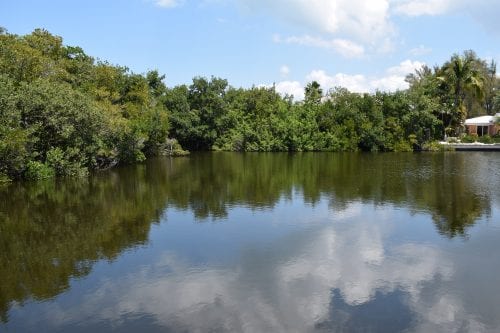
HOLMES BEACH – Spring Lake may still have some brown water for now, but newly appointed Director of Development Services Eran Wasserman is hopeful that continuing to aerate the lake will result in clean, clear water soon.

Wasserman said that he is observing the lake visually every day and providing updates to city commissioners. What he’s looking for in these observations is water clarity, fish kills, if there’s any odor and how strong the order is, if present.

Also, he is working with representatives from Aquatic Systems to determine what the best way forward is to monitor the water quality in Spring Lake. During a September meeting, commissioners instructed him to work with City Engineer Lynn Burnett and Aquatic Systems representatives to develop a comprehensive recovery plan for the lake.

“What we see is a tremendous improvement,” Wasserman said. “There are no more fish kills as of Tuesday (Sept. 24), I can say for sure.”

The fish kill that took place over the weekend of Sept. 20-22 Wasserman said was the worst that residents could have expected to happen. Now that it’s over and there are a few fish jumping in the lake, he said the focus is on getting the water clear.

Since it’s been almost two weeks since a fish kill was observed in the lake, Wasserman said he would be recommending to city commissioners to go from running the newly installed aeration system overnight to running it 24 hours a day to speed up the oxygenation process for the toxic water lurking on the bottom of the lake. After speaking with a representative from the Florida Department of Environmental Protection, he said he doesn’t believe there was anything more that could’ve been done to prevent the fish kill in September and that they’re on the best course of action to help clean up the lake. Though he did add that he’s open to considering any additional ideas to help clear the lake water, if it’s a method that would be approved by FDEP and if it can logistically be applied to Spring Lake.

“We are monitoring this, we do see improvement, but it’s unlikely to see a rapid improvement in water quality due to the fact that we are dealing with the lake and organic matter that was accumulated over there for the past 50 years or so,” he said. “So, this is where we are right now. So, all in all, we see a positive improvement and we are going to monitor this with our specialists that eventually will come up and will figure out whether there is an improvement and whether the aeration system works.” He added that among experts the aeration system is the best way to deal with the toxicity levels in Spring Lake. A contract for water testing with Aquatic Systems is expected to be presented to commissioners at a future meeting.

In the meantime, Wasserman did address two concerns from residents, one concerning the WaStop valve that prevents tidal waters from traveling from Grand Canal to Spring Lake via an outflow pipe and the second regarding the infiltration trenches surrounding the lake.

Wasserman said that the WaStop valve is still in place, but that Spring Lake receives tidal waters through two other smaller pipes coming into the lake. He said that the seawall where the WaStop valve is located is compromised, causing a safety hazard with accessing the valve. He said that he doesn’t know how many gallons of water come and go with the tides in the lake.

“This lake at this time is not completely sealed from the Bay,” he said.

To address resident concerns that the stormwater infiltration trenches around the lake are harming the lake water, Wasserman said it’s untrue.

The infiltration trenches were designed to capture stormwater runoff from the homes surrounding the lake. During a Sept. 24 commission meeting, one resident said that the trenches were having the opposite effect, filling with water and pushing stormwater and sediment into the lake.

Wasserman said that the concerns were unfounded and that he provided a letter to city officials stating that the type of infiltration trenches installed capture the pollutants that might otherwise find their way into the lake.

Another update on the condition of Spring Lake is expected at the Oct. 8 commission meeting, after press time for The Sun.

Related coverage

Problems plague Spring Lake residents

Aeration plans take shape for Spring Lake

Spring Lake cleanup options presented

Problems plague Spring Lake residents

Problems plague Spring Lake residents

HOLMES BEACH – Residents turned out in force during a Sept. 24 commission meeting to protest the city’s plans to clean up the waters in Spring Lake after the installation of an aeration system resulted in brown water and a fish kill.

A long-planned bubbling aeration system was turned on with a test start for 30 minutes on Wednesday, Sept. 18, according to engineer Eron Wasserman. He added that when a smell was noticed during the test run from the water, it was decided to turn the aeration system on only for a short time during the early morning hours, working up to running it 24 hours per day. By Saturday morning, calls were coming into the city from the residents surrounding the lake that not only was there a smell, there also was water discoloration and hundreds of dead fish floating on the lake.

Wasserman said that once he received a phone call, he arrived at Spring Lake within an hour and called public works employees to remove the accessible fish from the lake, a task he said was completed on Monday.

The system was turned off until further direction could be received from city leaders.

Environmental expert Chris Byrne, a consultant who helped City Engineer Lynn Burnett develop the city’s remediation plan for Spring Lake, said that the ammonia on the bottom layer of the lake was 10 times higher than it should be and that there is no oxygen in the bottom layer. With the aeration system, the bubbles forced into the lake through the system push the toxic layer of water up to the surface where the toxins escape into the air and the water is oxygenated. By mixing the water column continuously, Byrne said the water would once again become the healthy lake it was before it was polluted by waste spills in 2015 and 2016 from a nearby lift station. In some instances, where the lake is as bad as Spring Lake, fish kills do happen, he said.

Holmes Beach Spring Lake prior condition
Prior to the installation of an aeration system, the waters of Spring Lake appeared clear, though an ammonia layer of water that lacked oxygen lurked beneath the surface. – Kristin Swain | Sun

“The bottom of the lake is a sewer,” resident Carol Grayson said, adding that she has asthma and the smell coming off the lake was causing breathing problems. Her husband, Boyd Grayson, suggested that city leaders take another look at the drainage trench dug around the lake to stop runoff from surrounding homes. He said that rather than help the situation, the trenches are making runoff problems in the lake worse.

Resident Tim Gibson said he wants a solution to the issues at Spring Lake and for it to once again be a thriving home to fish and other marine life.

“It was a beautiful, beautiful part of this Island,” he said, adding that he doesn’t feel the city’s engineers understand what the previous condition of the lake was before the sewage spills polluted the water.

Holmes Beach Spring Lake brown water
After an aeration system designed to help clear the water at Spring Lake was turned on, the rising toxins from the bottom of the lake turned the water brown and resulted in fish kills. – Kristin Swain | Sun

Commissioners agreed that something needs to be done to help lessen the impact on residents and restated their commitment to cleaning up Spring Lake.

Rather than slowly ramp up to a 24-hour run cycle for the aeration system, commissioners agreed to run the system for a longer period at night for up to two weeks, moving to a 24-hour run time, to expedite the circulation and oxygenation of the water on the bottom of the lake. They also requested daily updates from Wasserman and for the water to be tested weekly with a comprehensive plan on how to bring the water quality back to a clear, healthy condition. Additionally, once the water quality begins to return, Byrne said healthy bacteria will form or can be artificially introduced to the lake’s ecosystem that will slowly eat away at the organic “muck” on the bottom of the lake.

One question that remained for residents and city leaders alike is whether or not to remove the WaStop valve blocking Spring Lake from receiving tidal flows from Bimini Bay.

The valve was installed by Burnett to prevent flooding through the lake’s water rising due to abnormally high tide events, such as king tides. Nearby residents and Commissioner Rick Hurst questioned whether or not it would be a good idea to open the pipe back up and allow the seawater in to help flush out Spring Lake. Mayor Judy Titsworth said she didn’t think it would be a good idea to expose the bay to the toxic water in Spring Lake. Byrne and Wasserman both said they could not address the issue, with Wasserman adding that Burnett would be needed to provide an expert opinion.

Burnett did not respond to requests for comment.

“The aeration will take time,” Titsworth said to the assembled concerned residents. “It’s going to be bad, but we lived through red tide and we will live through this. We all want to make it right.”

Related coverage

Aeration plans take shape for Spring Lake

Spring Lake cleanup options presented

Deciding the future of Spring Lake