
Tag: fishing gear

Using a Power-Pole

Using a Power-Pole

I have a confession to make. When I first saw a boat with the novel (at the time) Power-Pole, I remember thinking, “That will never get off the ground.” Boy, was I wrong. Not only are these mechanical “anchors” present on most inshore fishing boats, now there’s also one on my boat! The originator of this game-changing accessory for anglers was John Oliverio, a Sarasota native. The concept was hatched one day in 1998 when he was fishing Sarasota Bay’s Longbar with Sweet Lady Vidalia, his dog and favorite fishing partner. He noticed that when he spotted fish, they often spooked before he could stop his boat with an anchor or push pole. According to Oliverio, “I wanted something I could lower from anywhere on the boat without taking my eye off the fish.” It didn’t take Oliverio long to also realize the environmental benefits of his invention too. A friend who was monitoring seagrass on popular flats areas had noticed that anglers’ anchors dragging in those beds had left scars.

In 2008, Power-Pole added a new innovation to their invention that was quickly catching on with tournament anglers in salt and fresh waters alike. Oliverio had the environment in mind again with his next advancement of the product. The original Power-Pole was designed never to leak, but Oliverio realized that it was inevitable that with continued use in all conditions, the petroleum-based hydraulic fluid that powers the device would find its way into the water.
“I was thinking we needed to do the right thing here,” Oliverio said. “These guys using Power-Poles are in the best places to fish. The worst thing that could happen would be to spill out a quart of hydraulic fluid in your favorite fishing hole.” He made the decision to develop a bio-degradable fluid that wouldn’t harm the environment if a Power-Pole did begin to leak hydraulic fluid.

Since their introduction, Power-Pole anchors have had a huge impact on inshore fishing, first in saltwater and then in fresh water. Produced by JL Marine Systems in Tampa, Power-Pole anchors are available through over 3,500 dealers, retailers and boat manufacturers.

But don’t expect to hear from Oliverio about how he alone made this concept so successful. “I didn’t bring this company to the level of success we enjoy today all by myself,” he said. “It’s been with the efforts of all the employees associated with the company. Everyone has worked together to make Power-Pole anchors a leader in the marine industry.”

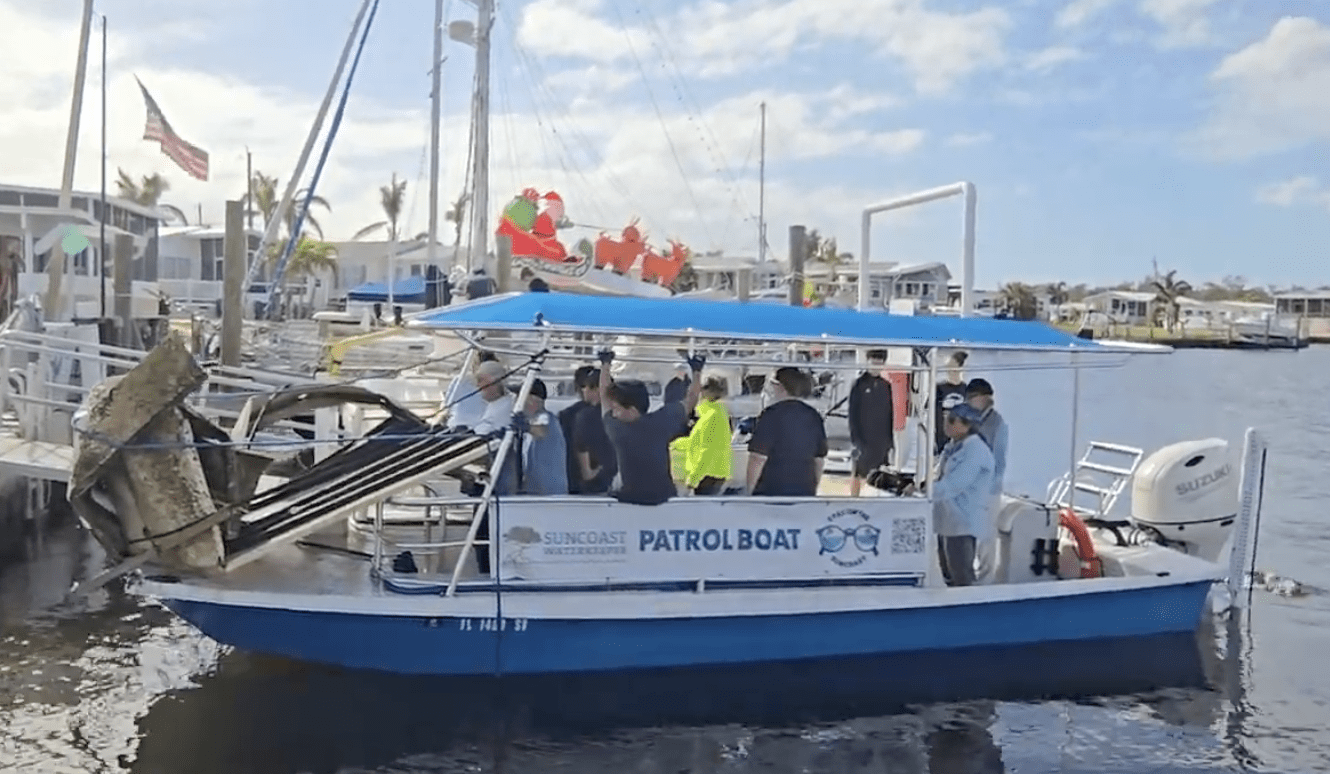
When Suncoast Waterkeeper obtained its patrol boat, the board quickly recognized the value of an innovative “green product” like Power-Pole. Much of the organization’s work is done on the shallow grass beds around Sarasota Bay. Whether it’s monitoring water quality, conducting debris cleanups after storms, flying drones to assess mangrove health or participating with Kids for Clean Water to monitor sea grass health, the Power-Pole is the perfect partner. Ever the environmental ambassador, Power-Pole provided us with an anchor. That’s what led me to see the benefits of the device and put one on my boat. I highly recommend this innovative accessory for the ease of use and practicality and its value to protecting the angler’s greatest resource, our grass flats. To learn more about this product and get one for your boat, check out a dealer near you.

Catch and release

Taking care when we release fish we don’t intend to keep has never been more important. While most anglers are aware that fish populations are vulnerable and not the endless resource we once thought them to be, shrinking habitats and fish populations make the process all the more important. Fishermen who fish mostly for fun have been criticized because many see catching and releasing fish as playing with fish. Anglers, unlike hunters, can pursue their passion and release their prey. Both hunters and anglers are generally great champions of their respective passions and invest their time and money in protecting the habitat and well-being of fish and animals.

Most anglers I know who practice catch and release have no problem with taking an occasional fish home for dinner. It’s more about enjoying the sport and trying to be proactive in helping it to remain healthy and viable. There are many species, notable among them, tarpon, that anglers seldom, if ever, kill. Catch and release is not just about releasing fish that you don’t want, it’s also about safety releasing undersized fish or species that aren’t valued at the table. Catch and release in any form is a wise use of the resource, but unfortunately, many anglers don’t know how to properly handle fish.

When we get cut, bruised or battered, we can head for the local drug store or in more extreme cases, the emergency room. Not so for fish. For them, it’s heal or die, and in their world, it’s the sick and wounded that first fall prey to predators. What a shame to do the right thing, releasing a big, speckled trout full of roe, only to have it eaten by a shark, barracuda or other predator because it wasn’t handled properly.

The first step I would suggest is to make sure you match your tackle to the fish you are pursuing. Trying to land a big tarpon on a 20-pound tackle might be okay if you’re experienced, but to the uninitiated, it’s like announcing a free meal to the sharks that ply local waters looking for weak or injured quarry. Enjoy the action but land the fish as quickly as possible. Once you have the fish subdued, the best course is to never take them out of the water. If you’ve been fighting them for a long time (think tarpon) make sure you revive them properly. If you can reach the water over the gunwale, slowly move the boat forward while holding the fish firmly but lightly. This forces water and oxygen through their gills and helps them recover from oxygen depletion. They’ll let you know when they’re ready to go.

Catch and release
It’s illegal and bad practice to remove big tarpon from the water. Here Andy Mill measures a tournament fish as his guide, Doug Kilpatrick, holds it by the jaw before releasing it. – Rusty Chinnis | Sun

The hook is probably the next most important consideration. Either a circle hook or a barbless hook is usually best for anglers and their fish. The key to keeping fish on a barbless hook is to keep the line tight. Circle hooks are recommended for inexperienced anglers and on fish that tend to swallow the hook, like speckled trout. When you do handle a fish, understand and respect their vulnerabilities. Fish secrete a protective coating that covers their scales and skin. This slime coat acts as a defense against invasion by bacterial, parasitic and fungal pathogens. Whatever hook you use, a de-hooker will keep your hands safe and clean, preventing you from inadvertently harming the fish’s protective slime coat and protecting hands from sharp gills and teeth. De-hookers come in various shapes depending on how they’re used. The simplest is J-shaped and removes hooks in or near the jaw. A circular-shaped longer version allows anglers to remove hooks that are deep in the throat of a fish or the jays of a big fish like a barracuda. Anglers who fish for reef fish like snapper and grouper need to learn how to “vent” fish with inflated swim bladders. Bringing the fish up from deep depths fast bloats the bladder, which must be punctured to allow the fish to reach the bottom. A good presentation of the process is available online.

Anglers that release a trophy-sized fish may want to take home a picture. Here are a few tips that will help you record your catch. Set your exposure in advance and have an idea where in the boat you want to take the picture. The best picture for the fish would be when it’s still in the water, but if you do remove the fish, hold it horizontally with one hand near the head and the other hand under the fish’s belly to support its weight. Holding a fish vertically puts a strain on the internal organs and can potentially dislocate its jaw. This is particularly important with large fish. Lastly, eliminate any extraneous objects like rods and focus on the subject.

By being prepared we can get the fish back in the water fast, thus ensuring its chances of survival. Taking the time and having the tools and knowledge to release fish mindfully is a great way to help ensure we have a healthy population of fish now and into the future.

Reel Time: Successful fishing trip planning

Planning any fishing trip can be a challenge given the peculiarities of weather and the idiosyncrasies of fish. Add a few thousand miles, a different language and an exotic species or two, and some serious planning is advisable.

Chances are you’ve been looking forward to this trip for a long time and, finally, you’ll have the opportunity to do nothing but eat, fish, sleep and repeat for a week or more. More than likely, it’s taken a tremendous amount of time and money to get this opportunity, so it makes good sense to develop a plan to assure that you have the best possible chance of success.

Deciding where to go and when are the first decisions you’ll make. While it’s not impossible to book your own trip, knowing the best time, tides and lodging can be daunting. In addition, juggling the details of plane reservations, transfers, accommodations and guides can increase the challenge of putting together a self-guided trip.

A knowledgeable outfitter or travel host can provide you with the experience and insider information that will allow you to immerse yourself in the experience instead of the details. Even when using an outfitter, you’ll need to do some research to assure you’ve matched your angling needs and expectations to your chosen destination. There are a lot of resources online, including some great groups on Facebook, but you’ll need to vet those sources.

When choosing an outfitter or destination host, be aware that knowing what you want from your trip and asking the right questions are important to fulfilling your expectations. For example, some of the best fishing is available at sites that have the least amenities. If you require a certain level of service or are traveling with non-fishers, you’ll want to research locations that offer specific conveniences as well as good fishing. While you won’t want to plan your trip based on secondhand information, you’ll find it can be helpful to talk to others who have made the trip you’re planning. Ask the outfitter or host for a number of references and question them carefully. Make sure they have been to the location recently and at the time of the year you plan to visit.

In foreign countries (the Bahamas is a foreign country), you’ll be hard-pressed to replace items you forgot to pack, particularly fishing tackle. This is one case when it’s probably better to pack more than you think you’ll need, within reason. Making a packing list and checking it before your departure will pay dividends. Most destinations provide lists that you can use to make sure you don’t forget anything important. While their recommendations are a good place to start, customizing your own travel list can help ensure that you have what you need while streamlining the amount of baggage you take.

Reel Time: Successful fishing trip planning
A knowledgeable guide can take you to fish. It’s your responsibility to put a fly where the fish can see it. – Rusty Chinnis | Sun

Many tropical fishing destinations are very near the equator, so anglers need to pay special attention to the sun. Long-sleeved pants and shirts (with sun protection) are advisable along with a high SPF waterproof sunscreen. Polarized glasses with glare guards and a fishing hat with a dark (under) brim are mandatory and a second pair of each should accompany you. For many of my fishing adventures, I’ve used a full-face mask and gloves for sun protection. Recently, I started wearing a fishing hoodie with thumb holes that protect my face, hands and wrists. I find hoodies much more comfortable and invested in several that have bamboo fibers woven in. Invest in a good pair of flats wading boots and a sling or fanny pack with a water bottle holder and you’ll be good to go.

You can be a consummate planner and still fail to properly plan if you aren’t comfortable with your cast. Pay special attention to casting into the wind and being able to place an accurate 40-foot cast. Practicing these skills well in advance on grass will greatly increase the pleasure of your adventure.

The success or failure of any fishing adventure will vary due to conditions beyond your control, but being mindful of the things you do have control over can make or break your trip. Be prepared, practice casting and do your homework up front, ask good questions of knowledgeable sources, and be flexible. The time and effort you expend in planning the trip will pay in dividends of tight lines and lasting memories.

Reel Time: Anatomy of a fishing rod

 Reel Time: Anatomy of a Fishing Rod

Every angler’s fishing rod, be it a spinning rod, a fly rod or a casting rod, is constructed in a similar way and has the same basic parts. Have you ever wondered why one rod is more expensive than another? Knowing the basic components of a rod will help you understand their construction, action and why one rod costs what it does. This is valuable information in determining which rod is best for you.

A rod’s blank is constructed from a product known as prepreg. This fibrous material is impregnated with resin and wrapped around a mandrel, which is removed after the blank is formed, giving the rod its basic round shape. This blank holds the guides, ferrules, handle, reel seat and fighting butt.

Prepreg has fibers that have a unidirectional (straight) orientation. The fibers can be made of different materials including fiberglass, graphite, boron or Kevlar. Some rods are made (laid up) from a prepreg that has additional fibers that run around or at an angle to the unidirectional fibers. This gives the rod additional strength and influences flex, stiffness – and price.

A rod’s scrim refers to a lightweight material that forms an additional lining under the primary fibers and helps in working the material when it is wrapped around the mandrel. Scrim can be straight or woven and adds what is known as “hoop strength” to the finished rod.

The parts of a rod consist of a blank with a butt section, a fixed hood, a reel seat, a sliding hood, a locking ring, handle, guides, ferrules and a tip. The butt section is the cork part of the rod behind the reel seat that fits into a fighting harness or into the stomach when playing a fish. On a spinning and casting rod, it’s where the non-dominant hand holds the rod. The reel seat is where the reel foot is placed either on or near the blank, while the hoods secure the reel to the rod. The fixed hood is the metal receiver where one end of the reel foot is placed. The sliding hood is the rear receiver that holds the other end of the reel foot. The locking ring is a nut that puts pressure on the sliding hood and holds the reel securely in place. The cork handle is where the dominant hand is placed. Guides hold the line along the length of the blank. The ferrules connect the sections of a rod. The tip, as the name implies, is the section at the top of the rod.

You may also have heard the term “taper.” A rod’s taper refers to the diameter of a rod from the butt to the tip. The taper affects the rod’s action. Most rods have either a fast action (stiff) or a slow action (flexible).

When you’re shopping for a new outfit, knowing the parts and construction of a rod will help you make an informed decision. The most important part of the rod and the one that most affects its price, and your buying decision, is the blank. The materials and the method of construction of the blank determine its price. The least expensive rods are made from fiberglass while the expensive ones are constructed with graphite, boron and Kevlar. While fiberglass may be good for a beginner, the more expensive rods are a better choice for the seasoned angler. Armed with this information you’ll have the knowledge you need to determine how much you spend on a rod. This decision can positively affect your angling efficiency and enjoyment.

Reel Time: Master the basics

Reel Time: Master the basics

Today’s anglers are barraged by the constantly changing “state-of-the-art” innovations in the angling world. Side scan fish finders, spot lock trolling motors and even lures with cameras might improve your odds at catching fish, but there’s no substitute for learning and applying what might be called the basics, the foundations that successful angling is built on.

Fishing means different things to different people. To some, it’s the simple pleasure of being on the water where catching is optional. To others, it’s serious business and the outcome can make or break a day on the water. For others, it’s the search for a meal or just an opportunity to share time with friends or family.

Whatever fishing means to you, it doesn’t have to be complicated. In fact, I’m convinced that the less complicated, the better your chance of success. That might not be apparent when browsing the tackle department at your nearest sporting goods store or tackle shop.

There is a plethora of gear lining the shelves meant to dazzle and “lure” anglers. Even the basics like line and hooks come in a wide variety of shapes and colors, each promising the angler an advantage over the fish. In truth, experience has taught me that there’s no special magic to finding the right gear for angling success. Instead, concentrating on a few basic time-tested techniques will improve the luck of even the greenest angler.

Most important is the essential outfit – rod, reel and line. Pick the best quality tackle you can afford, but not the most expensive available. I’m talking about gear that is solidly made and able to survive the rigors of saltwater. Whether you’re using spinning tackle, fly tackle or bait casting gear, get an outfit that’s balanced and appropriate for the kind of fishing you’ll be doing. A balanced outfit means that the weight is evenly distributed when held just forward of the reel on the cork of the rod. This isn’t an exact science, but you’ll be able to feel if one component is oversized.

An appropriate outfit is one that is up to the task of catching the fish you’re targeting, but no heavier than necessary. An 8- to 10-pound rig is perfect for snook, trout, redfish and other inshore species while a 20- to 40-pound outfit works best for anglers hunting kingfish and cobia along the beach or bottom fishing for grouper, snapper or amberjack over offshore ledges and wrecks. The line should also match the outfit you’re using and fill the spool of the reel. The most common problem I see is reels with too little line. This severely hampers the angler’s casting accuracy and distance.

When it comes to deciding whether to use live bait or artificial lures, I think artificial lures are a better choice, especially for beginning anglers. First and foremost, lures are less of a hassle. Live bait takes time to acquire, must be kept healthy and usually stays close to where it’s cast. Artificial lures by contrast don’t have to be changed often and aren’t affected by pests like pinfish. At worst it only involves changing the body of a jig occasionally. Using lures will allow you to cover more water, testing various water depths and retrieval speeds.

My personal favorite is a jig and, while I now use mostly weighted jigs with plastic bodies, the original with bucktail skirts are still a great choice. My second choice would be a top water plug. These lures require a bit of practice to master “walking the dog” but allow the angler to cover a lot of water and attract fish with their sound and surface disturbance.

Consult your local tackle shop when choosing an outfit. They know the area, have a wealth of experience and can be trusted to get you off to a good start. While big box stores might seem a good place to shop, you’re not as likely to get the professional advice of a local shop. Do some homework before shopping so you can pick the best rig for the fishing you intend to do. There is no doubt that innovations appear that you want to be aware of, but your overall experience will be enhanced if you master the basics first.

Reel Time: Planning a successful fishing trip

Reel Time: Planning a successful fishing trip

Planning any fishing trip can be a challenge given the peculiarities of weather and the idiosyncrasies of fish. Add a few thousand miles, a different language and an exotic species or two, and some serious planning is advisable.

Chances are you’ve been looking forward to this trip for a long time and finally, you’ll have the opportunity to do nothing but eat, fish, sleep and repeat for a week or more. More than likely, it’s taken a tremendous amount of time and money to get this opportunity so it makes good sense to develop a plan to assure that you have the best possible chance of success.

Deciding where to go and when are the first decisions you’ll make. While it’s not impossible to book your own trip, knowing the best time, tides and lodging can be daunting. In addition, juggling the details of plane reservations, transfers, accommodations and guides can increase the challenge of putting together a self-guided trip.

A knowledgeable outfitter or travel host can provide you with the experience and insider information that will allow you to immerse yourself in the experience instead of the details. Even when using an outfitter, you’ll need to do some research to assure you’ve matched your angling needs and expectations to your chosen destination. There are a lot of resources online, including some great groups on Facebook, but you’ll need to vet those sources.

On recent trips to the Bahamas and Montana, I traveled with groups hosted by Capt. Rick Grassett of Sarasota. While I’ve planned my own trips around writing assignments for years and am familiar with many of the destinations I’ve traveled to with him, having all the arrangements, including air travel, coordinated by someone else is a big asset.

When choosing an outfitter or destination host, be aware that knowing what you want from your trip and asking the right questions is important to fulfilling your expectations. Some of the best fishing is available at sites that have the least amenities. If you require a certain level of service or are traveling with non-fishers, you’ll want to research locations that offer specific conveniences as well as good fishing. While you won’t want to plan your trip based on secondhand information, you’ll find it can be helpful to talk to others who have made the trip you’re planning. Ask the outfitter or host for several references and question them carefully. Make sure they have been to the location recently and at the time of the year you plan to visit.

In foreign countries, (the Bahamas is a foreign country) you’ll be hard-pressed to replace items you forgot to pack, particularly fishing tackle. This is one case when it’s probably better to pack more than you think you’ll need, within reason! Making a packing list and checking it before your departure will pay dividends. Most destinations provide lists that you can use to make sure you don’t forget anything important. While their recommendations are a good place to start, customizing your own travel list can help ensure that you have what you need while streamlining the amount of baggage you take.

Many tropical fishing destinations are very near the equator, so anglers need to pay special attention to the sun. Long-sleeved pants and shirts with sun protection are advisable along with a high SPF waterproof sunscreen. Polarized glasses with glare guards and a fishing hat with a dark under brim are mandatory and a second pair of each should accompany you. For years I’ve used a full-face mask and gloves for sun protection. Recently, I started wearing a fishing hoodie with thumb holes that protect my face, hands and wrists. I find hoodies much more comfortable and invested in several that have bamboo (very comfortable) fibers woven in. Invest in a good pair of flats wading boots and a sling or fanny pack with a water bottle holder and you’ll be good to go.

The success or failure of any fishing adventure will vary due to conditions beyond your control but being mindful of the things you do have control over can make or break your trip. Be prepared, do your homework up front, ask good questions of knowledgeable sources and be flexible. The time and effort you expend in planning the trip will pay in dividends of tight lines and lasting memories.

Reel Time: Reframe adversity as opportunity

Reel Time: Reframe adversity as opportunity

On those winter days when fronts blow away your fishing adventures, turn those lost opportunities into future successes. Reframe the disappointment into an opportunity by using your “found” time to sharpen your game. Reorganize your tackle, and make sure all systems are in perfect order when conditions improve. This is the perfect time to service your outboard, trailer and all the other myriad components that combine for success.

Check all rods and reels for signs of wear and tear, clean fly lines and maybe even spool on some fresh line. This is a chance to correct mistakes before they happen. There’s nothing more frustrating than finally getting on the water, hooking a good fish and losing it to a sticking drag, dull hook or frayed line. Sitting down and making a checklist can help with the organization process and assist you in remembering those items that might get overlooked.

Starting with the tackle box or tackle system, go through and make note of any lures or flies that you haven’t used. Put them in a backup box or throw them away. Especially look for corrosion on hooks. It might not be apparent, but even a spot of rust might be a harbinger of disaster. More than once I’ve watched a fish eat my fly, wonder why I missed the hookup only to find the hook was broken.

In the scheme of things, line is inexpensive and warrants a close look. If you have any question about wear and tear or are considering making changes to a new line, this is a good time to take the plunge. Generally, with spinning tackle, it’s only a small amount of line that sees the light of day. It’s a good idea to check line carefully for nicks, corrosion or other signs of wear. If you have any question at all about the condition of the line, change it. It’s probably the cheapest and one of the most important pieces of the equation. Even if you wash your tackle after every use, it’s a good idea to unspool a couple of hundred feet of line to check for any issues. There’s a good chance that the fresh water you used didn’t penetrate deep into the line or backing. When you do wash tackle, it’s a good idea to use a light stream of water rather than a sharp spray. The water pressure can actually drive salt into the remaining line on the spool.

Reels should be thoroughly cleaned and lubricated once or twice a year depending on how much they’re used. Rod maintenance should include a wipe down with silicone on a clean rag and a close inspection and cleaning of ferrules and reel seats. Make sure to check guides closely for any sign of nicks or cracked ceramic inserts. I like to lightly sand cork grips to remove the dirt and oils that can make them slick and hard.

No matter how good you are about maintaining your gear, a close look at all systems is advisable. It might just reveal an overlooked element. Think of those cold windy days as a prelude and a vital part of your future fishing success.  Today’s adversity can equal the opportunity of a lifetime.

Reel Time: Polarized glasses

Reel Time: Polarized glasses

Polarized sunglasses are essential for serious anglers. They serve multiple purposes including protecting the eyes from damaging UV light, cutting the surface glare and keeping eyes from tearing in the wind while running. Enhancing the visibility below the waters’ surface is an indispensable advantage when looking for signs of fish while sight fishing.

Many anglers choose their glasses according to style, not realizing that the color of the lenses and other factors determine their real effectiveness. Color is important, but it’s just one of the choices that you will need to make to get the most from your sunglasses.
After choosing a frame that’s comfortable and fits your face, lens color is the most important component.

Anglers who fish blue water and spend long hours over the open sea generally prefer grey lenses. Grey provides natural contrast and minimizes color distortion in offshore waters. Brown/amber lenses are the common choice for flats fishermen who sight fish in shallow water. Brown/amber lenses offer a brighter field of vision, better visual acuity, and excellent color contrast. Many dedicated anglers own more than one pair of glasses. The color vermillion and light copper heighten visual acuity and enhance color in low and flat lighting conditions. When the sun is out and bright, they switch to the darker grey, brown or amber lens. Anglers also have the option of choosing sunglasses that feature interchangeable lenses.

The reduction of glare has another beneficial component. The eye functions like a camera and must adjust to varying light levels. On a bright day, the pupil constricts, muting light levels. Polarized lenses help eliminate reflected glare, so the remaining light falls in a much narrower range of intensity. The eyes can then relax, allowing greater depth perception and truer color contrast.

When choosing polarized glasses you have a number of options: cheap versus expensive, glass versus (polycarbonate) plastic, cast versus laminated polarized lenses and color. The lowest quality glasses are the so-called “rack glasses,” the kind you find in the local pharmacy. These are better than no sunglasses, but you should buy the best pair you can afford. As a rule, a quality pair of polarized sunglasses are expensive but they’re well worth the money.

One of the major decisions is choosing glass or polycarbonate (an advanced plastic) lenses. Glass lenses provide better visual acuity (clarity) than plastic and are more scratch-resistant. However, glass lenses are heavier and can fatigue the ears and nose after many hours. If you purchase glass lenses make sure you buy a quality pair with a broad, comfortable nose piece.

Whether you choose glass or plastic lenses, your primary considerations will be frame style and lens color. Choose a frame that is comfortable and one that helps block out extraneous light. Some glasses wrap around the side of the face, while others have separate side shields.

Several of the top manufacturers of sunglasses feature technologies that further increase the effectiveness of polarized lenses. Some offer photochromic lenses that lighten or darken as light levels vary during the day. Lens coatings are another consideration. High-quality sunglasses often come with some type of coating. Hydrophobic coatings repel water so that the occasional water droplet doesn’t affect your vision. Lenses may also be coated with a chemical to make it fog proof. These options can be particularly valuable for humid environments. Some brands also include flotation assuring the glass will float, a good option for your considerable investment.

If you wear prescription lenses with or without bifocals, make sure your sunglasses have them too. Trying to tie on a lure or fly after gazing at the water for a long time can be frustrating and put you at a distinct disadvantage. You can get prescription lenses with bifocals in both glass and polycarbonate.

When you choose a pair of polarized glasses, follow the guidelines above while experimenting to find the color that works best in your fishing situation. By choosing a quality product with the proper color you’ll greatly expand your fishing horizon while protecting your most valuable asset, your vision.

Some of the more popular brands you might want to consider are made by Smith Optics, Costa Del Mar and Amphibia. Choose your sunglasses carefully; they’re one of the angler’s most valuable tools!

More Reel Time:

Reel Time: Autres poisson

Reel Time: A home away from home

Reel Time: Spain – Seville and Andalusia

Reel Time: Trade show features fishing gear

On Wednesday, July 11, I attended ICAST, the International Convention of Allied Sportfishing Trades held in Orlando, Fla. I made the trip with Steve Traves, owner of AMI Outfitters, and Capt. Casey Lamb, of Longboat Key. The convention which is the largest fishing trade show was held in two mammoth conference halls at the Orange County Convention Center. The event held over four days showcased the latest innovations in fishing gear, accessories and apparel.

Open to qualified members of the sportfishing trade, which included retailers, exhibitors and media, it was an excellent opportunity for me to get some hands-on experience with new fly rods, reels, clothing and accessories that wouldn’t be available to anglers until after the show, and, in some cases, not until the 2019 season. The show is roughly divided between companies aligned with fly fishing and those whose main focus is conventional angling.

I spent the majority of the day in the fly fishing section with forays to visit Mark Nichols, of DOA Lures, and to ogle some of the extensive offerings of clothing, sunglasses and other unconventional tackle.  I took the opportunity to test and compare new fly rod designs. Over the course of the day, I cast rods by Hardy, Sage, Orvis, Thomas and Thomas and RL Winston.

I made a point of casting each company’s high-end fly rod to compare their claims and determine which I considered the best. There were many impressive designs, but Hardy’s new Wraith and Zephrus rods impressed both Traves and me. In addition to casting the new rod, I was able to learn about the technical design from Hardy Rod Ambassador and friend Andy Mill. The new rods feature strong, ultralight, slim blanks designed to help reduce fatigue and slice through the wind.

While casting with the rods, I tried a number of fly lines. Two standouts were by Rio and Cortland’s. Both companies have numerous lines designed for different fishing scenarios such as short accurate casts and wind.

I had the pleasure of once again spending some time discussing fly line designs with Cortland President Jim Wilson and Regional Sales Manager Frank Catino. I remembered last year when Wilson had personally demonstrated the Cortland line and was eager to share with them my experience with a Cortland line this tarpon season.

Reel Time AMI Outfitters
Steve Traves, of AMI Outfitters, casts a Hardy Zephrus fly rod with Andy Mill, Hardy Ambassador and winner of five Gold Cup Invitational Fly Tournaments. – Rusty Chinnis | Sun

During the day, I once again sat in on a couple of meetings with Traves and enjoyed learning about some new and innovative products coming this year and next from Simms Fishing Products, an industry-leading company that has a comprehensive line of fishing products including clothing, waders, packs, boots, and accessories. Other standouts were Fish Pond, a manufacturer of innovative travel packs and accessories; Tibor Reels, a small Florida based company that produces exquisite hand-tooled fly reels, arguably the industry’s best; and Renzetti Vices, another Florida-based company that manufactures the industry leading rotating fly tying vice.

I spent the majority of the show in the fly fishing arena but made a point of previewing some innovations in conventional tackle. It was an eye-opening experience as I went row after row through hundreds of exhibitors. The products ran the gamut from boats, motors, tackle, accessories, clothing, kayaks, paddleboards, chairs, destinations and included a drone that can lift an 8-pound bait and drop a sonar unit to locate fish.

One of the other pleasures of attending the ICAST trade show was the opportunity to reconnect with old associates and acquaintances. I ended up running into a number of friends and colleagues I hadn’t seen in years.

We left as the show closed for the day. It was a delightful and productive day, one that resulted in new contacts and exposure to a wealth of new products.

Related Coverage

Protecting and preserving the Gulf

Sarasota Bay Watch restoring clams

The evolution of Homosassa tarpon fishing