

The summer heat of August and September is always a challenge for local anglers. This year’s frequent heat domes have made fishing even more difficult.
Temperatures that reach into the high 90s, with heat indexes over 100, add to the challenge due to the effect of the heat on anglers and fish. Some of the ways anglers deal with these conditions include fishing early in the day, when the water and air temperatures are more moderate, and fishing during the rising tides that bring cooler waters from the Gulf into our bays.
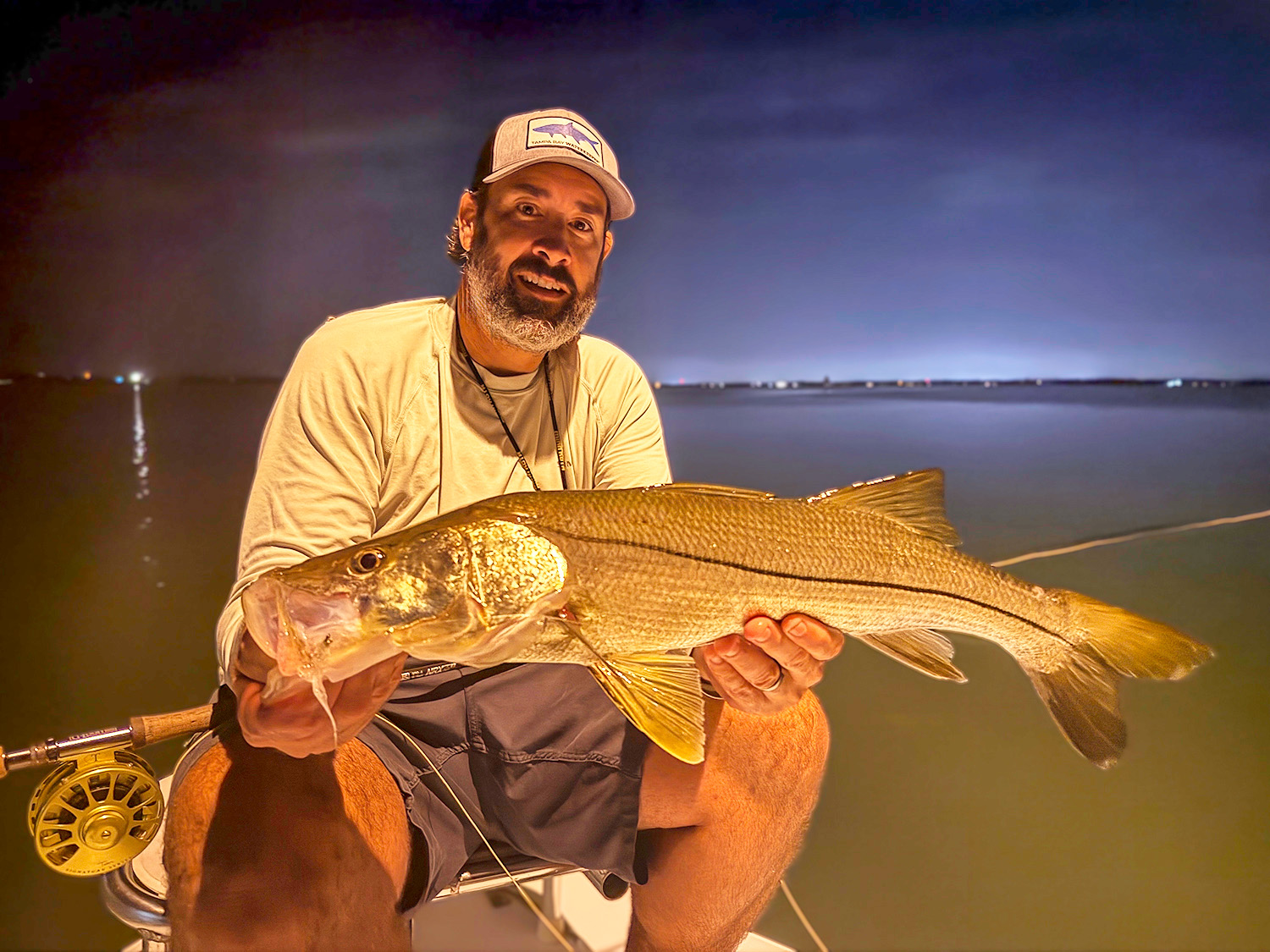
For those anglers who can carve out the time, the best fishing under these conditions is at night.
Night fishing actually has two advantages. Besides the obvious advantage of cooler temperatures in the evening hours, many species of local gamefish are nocturnal feeders, especially snook and tarpon. While both species can be found in their daytime haunts, the best opportunities are found around lights where they concentrate to feed on the baitfish and shrimp that are attracted to the illumination.
While anglers can catch fish under the lights with an array of methods that include live bait and artificial lures, one of the most effective is fly fishing.
Whatever method you use, there are some approaches that increase your odds, and chief among them is stealth.
There’s a lot less activity at night, both on land and water, making fish you’ll encounter around lights wary. Cut your motor at least 200 yards from a light you intend to fish and close the gap with a trolling motor, push pole, paddle or drift. If possible, approach a light from down tide so you have better control of your approach. When working a light, you’ll know the fish have been disturbed when they slowly sink out of sight in the water column. When the fish become wary, it’s time to move, but if there was good action and lots of fish, come back after trying a few other spots.
When choosing your bait, lure or fly consider the old adage “match the hatch.” Size your presentation and color to match the size of shrimp and baitfish that are around the lights. Start presentations short of the shadow line a light forms and work into the circle of light. Many of the larger gamefish patrol the edges of a light looking for prey.
Tackle should be stout enough to move fish from structure when hooked, but light enough to make the pinpoint presentations you’ll often encounter. If you’re on a boat, backing the boat away from the structure after a hookup gives you some additional space. If you’re land based and walking a dock to approach the lights, move slowly and with a light step. Fish are sensitive to the vibrations, and you’ll know you’ve alerted them when they slowly sink out of sight.
I enjoy night fishing most of the year but especially during the dog days of late summer. In addition to being more comfortable for you and the fish, you won’t have much competition from other anglers and the action just might surprise you.