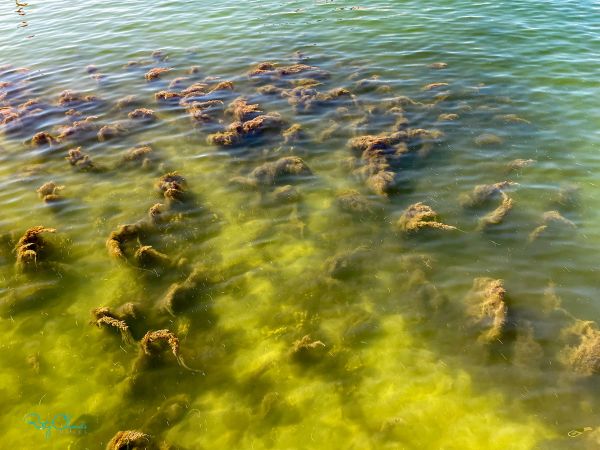


As I reported in a story earlier this year, I was alerted by Capt. Scott Moore and his son, Capt. Justin Moore, last year about a large loss of seagrass in Anna Maria Sound.
I, like Scott and Justin, remember when the sound was lush with seagrass, but when I recently flew my drone to investigate, I was shocked by what I saw. Large areas of the sound were devoid of grass and dotted with large areas of bare sand. Seagrass, which is mostly hidden from view, is a vital link in the web of life that supports water quality and the fish, birds, manatees, dolphins and economy of the region.
Concerned, I quickly alerted Suncoast Waterkeeper (SCWK) Executive Director Dr. Abbey Tyrna, who passed the information and drone video on to Tampa Bay Estuary Program (TBEP) Executive Director Ed Sherwood. Areas of the bay, north of the Manatee Avenue Bridge to Holmes Beach, are covered by the Tampa Bay Estuary Program.
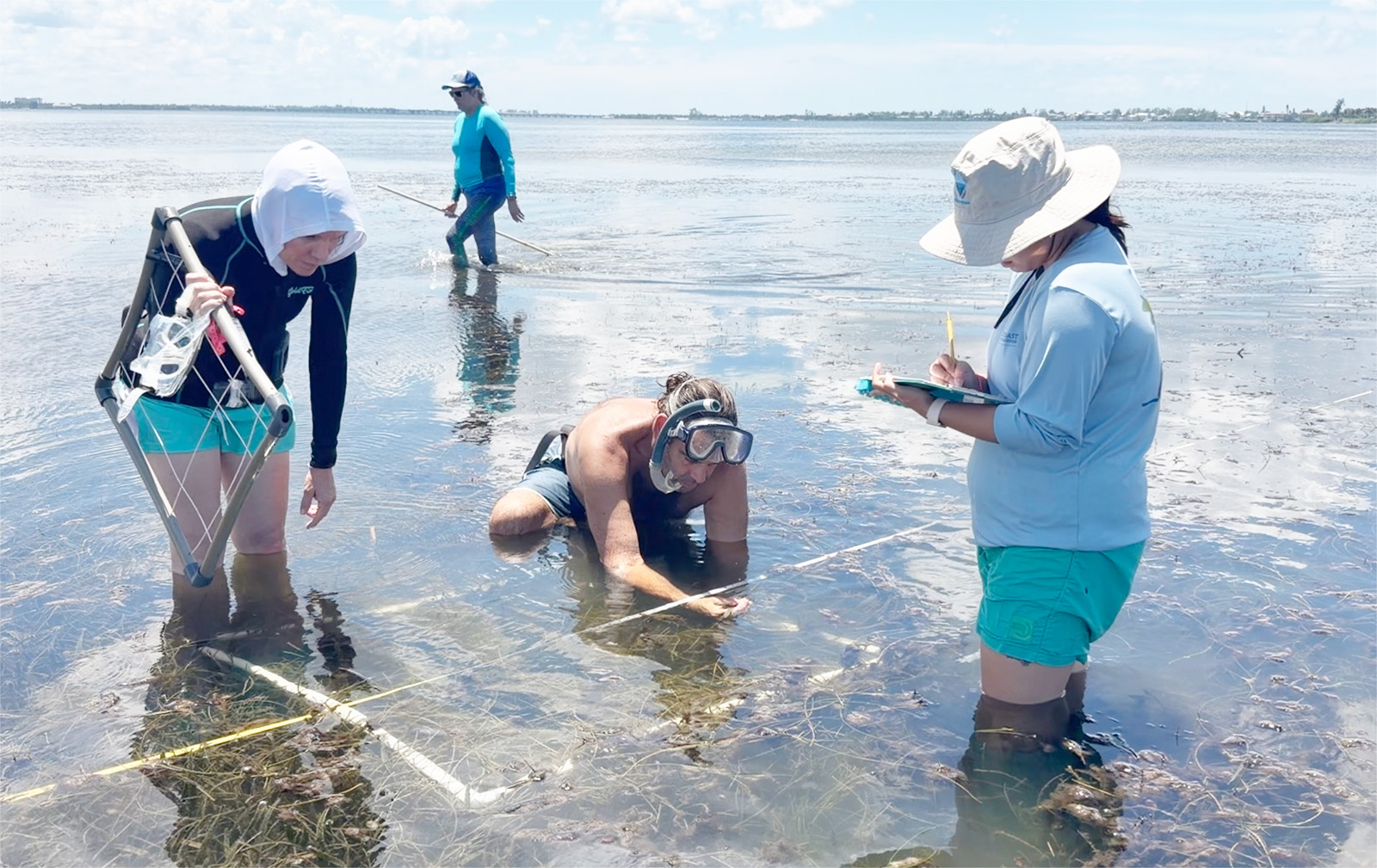
On Aug. 6, Sherwood, TBEP Restoration Ecologist Kerry Flaherty Walia, TBEP Community Programs Scientist Sheila Scolaro Moffatt and Holmes Beach Ad Hoc Clean Water Committee member Bill Romberger joined Dr. Tyrna, me and SCWK Water Quality and Pollution Specialist Pia Ronquillo-See on the Suncoast Waterkeeper boat to set up a transect similar to more than 60 others that have been established in Tampa Bay by their estuary program since the late 1990s.
The Tampa Bay Estuary Program has a seagrass transect dashboard that provides a way for interested parties to view and download results for all transect data in Tampa Bay. Assessments include an overall summary of seagrass trends in different segments of Tampa Bay. The transects are linear and use three different sizes of square sampling frames, called quadrats. A 1-meter-square frame is the primary grid size. Our team placed this square frame every 25 meters along the transect line to estimate overall percentage cover, evaluate sediment and identify seagrass species. This work is vital to give scientists and advocates an idea of the health of seagrasses so they can spot problem areas quickly.
The Holmes Beach Ad Hoc Clean Water Committee is an advisory group to the city commission that is focused on improving and sustaining local water purity. Chaired by Jennifer Miller, the committee meets monthly at city hall (5801 Marina Drive) to discuss water strategies and collaborate with regional estuary programs, with a focus on improving drinking water quality the quality of our coastal waters. Romberger joined us as part of the city of Holmes Beach’s commitment to improving water quality.
The video of our recent seagrass monitoring efforts can be viewed at my YouTube channel.
To get involved and follow the progress of these efforts, join Suncoast Waterkeeper. Learn more at the Suncoaster Waterkeeper website.