

TALLAHASSEE – Florida Senator Jim Boyd (R-Bradenton) filed an amendment to Senate Bill302 that if fully adopted might make it more challenging to do the dredging needed to accommodate a proposed Knott-Cowen Cruise Port in the Terra Ceia Aquatic Preserve.
Boyd filed his amendment on Feb. 18. The following day, the Florida Senate voted 38-0 in favor of adding that additional language to the previously filed Senate bill.
As of mid-day Monday, Feb. 23, a similar amendment had not been introduced in the Florida House of Representatives. Without a matching bill supported by the House, the Senate bill, as now amended, would fail to become new state law. The Florida Legislature’s 2026 legislative session is scheduled to end on March 13.
The Florida Senate website lists House Bill 1035 as the rebill to SB 302. As of Feb. 23, the most recent amendment to the House Bill occurred on Feb. 16, and that amendment was not similar to Boyd’s amendment.
In January, Tampa-based Slip Knott LLC and cruise ship terminal operator SSA Marine announced they were exploring the development of a multi-berth cruise ship port in northwest Manatee County on the Knott-Cowen tract of land near Rattlesnake Key and the Sunshine Skyway Bridge.
That announcement was met with petitions, protests and significant public backlash against the proposed cruise port that has not yet been subjected to any public hearings as part of the permitting process that would entail the Manatee County Commission at some point.
THE AMENDMENT
Boyd’s senate-supported amendment says, “No further dredging or filling of the submerged lands of the Terra Ceia Aquatic Preserve shall be approved or tolerated by the board except:
“(a) Such minimum dredging and spoiling as may be authorized for public navigation projects or for such minimum dredging and spoiling as may be constituted as a public necessity.
“(b) Such other alteration of physical conditions, including the placement of riprap, as may be necessary to enhance the quality and utility of the preserve.
“(c) Such dredging as is necessary for the purpose of eliminating conditions hazardous to the public health or for the purpose of eliminating stagnant waters, islands and spoil banks, the dredging of which would enhance the aesthetic and environmental quality and utility of the preserve and be clearly in the public interest as determined by the board.
“(d) Such minimum dredging and filling as may be authorized for the creation and maintenance of marinas, public boat ramps, piers and docks, and their attendant navigation channels and access roads. Such projects may be authorized only upon a specific finding by the board that there is assurance that the project will be constructed and operated in a manner that will not adversely affect the water quality and utility of the preserve. This paragraph may not be construed to authorize the connection of upland canals to the waters of the preserve.
“Any dredging and filling pursuant to paragraph (a), paragraph (b) or paragraph (c) shall be approved by the board only after public notice as provided,” the amendment says.
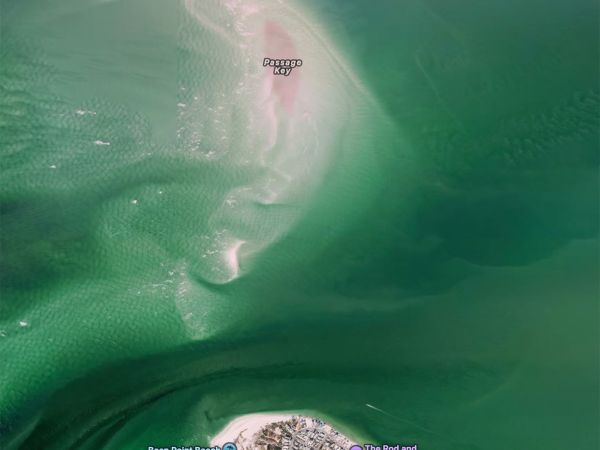
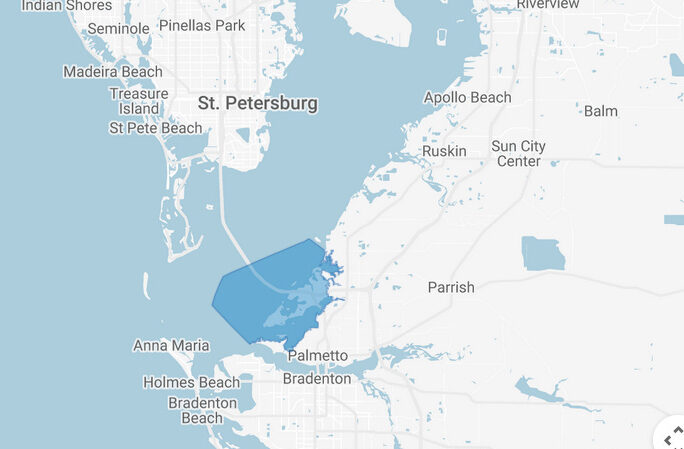
According to the Florida Department of Environmental Protection, “The boundary of the Terra Ceia Aquatic Preserve starts at the south end of Port Manatee and extends out into Tampa Bay. The preserve extends as far south as Emerson Point, on the northern bank of the Manatee River. Terra Ceia Aquatic Preserve includes several embayments such as Terra Ceia Bay and Bishop Harbor, along with tidal creeks like Frog Creek and McMullen Creek.”
SB 302
SB 302 addresses “Coastal Resiliency.” According to the bill summary listed at the Florida Senate website, the bill addresses “Prohibiting the board of Trustees of the Internal Improvement Trust Fund from approving the dredging or filling of the submerged lands of the Terra Ceia Aquatic Preserve unless such dredging and filling occurs for certain reasons; authorizing certain dredging and filling of submerged lands and placement of certain shorelines and seawalls within the Biscayne Bay Aquatic Preserve; authorizing the erection of certain structures within aquatic preserves; requiring the Department of Environmental Protection, by a specified date, to develop guidelines and standards for nature-based methods to address coastal resiliency and to adopt rules, subject to legislative ratification, for a statewide permitting process for such coastal resiliency, etc.”
SIDDIQUE’S INSIGHTS
On Feb. 19, Manatee County Commissioner Tal Siddique mentioned Boyd’s amendment in his “Making Waves” Substack blog titled, “New Legislation Protecting the Terra Ceia Aquatic Preserve.”
In that blog, Siddique wrote, “This amendment would enshrine additional protections for the Terra Ceia Aquatic Preserve to limit large-scale dredge & fill projects – the kind a certain cruise terminal project would use.”
Regarding SB 302 as a whole, Siddique wrote, “SB 302 began its life, in my view, as a great piece of legislation creating a statewide framework for how Florida can use nature-based solutions to improve coastal resilience. Projects such as mangrove replanting and living shorelines would be formalized in state statutes and grant funding would be provided through the Resilient Florida Grant Program. This issue focuses on the Aquatic Preserve, the amended language, and how you can advocate for it.”
When asked about the potential impact Boyd’s amendment might have on the cruise port, Siddique said, “What will be interesting though is whether the bulkhead rights become preempted by this legislation or not. Those rights predate any aquatic protections. Attorneys and a court would have to decide that.”