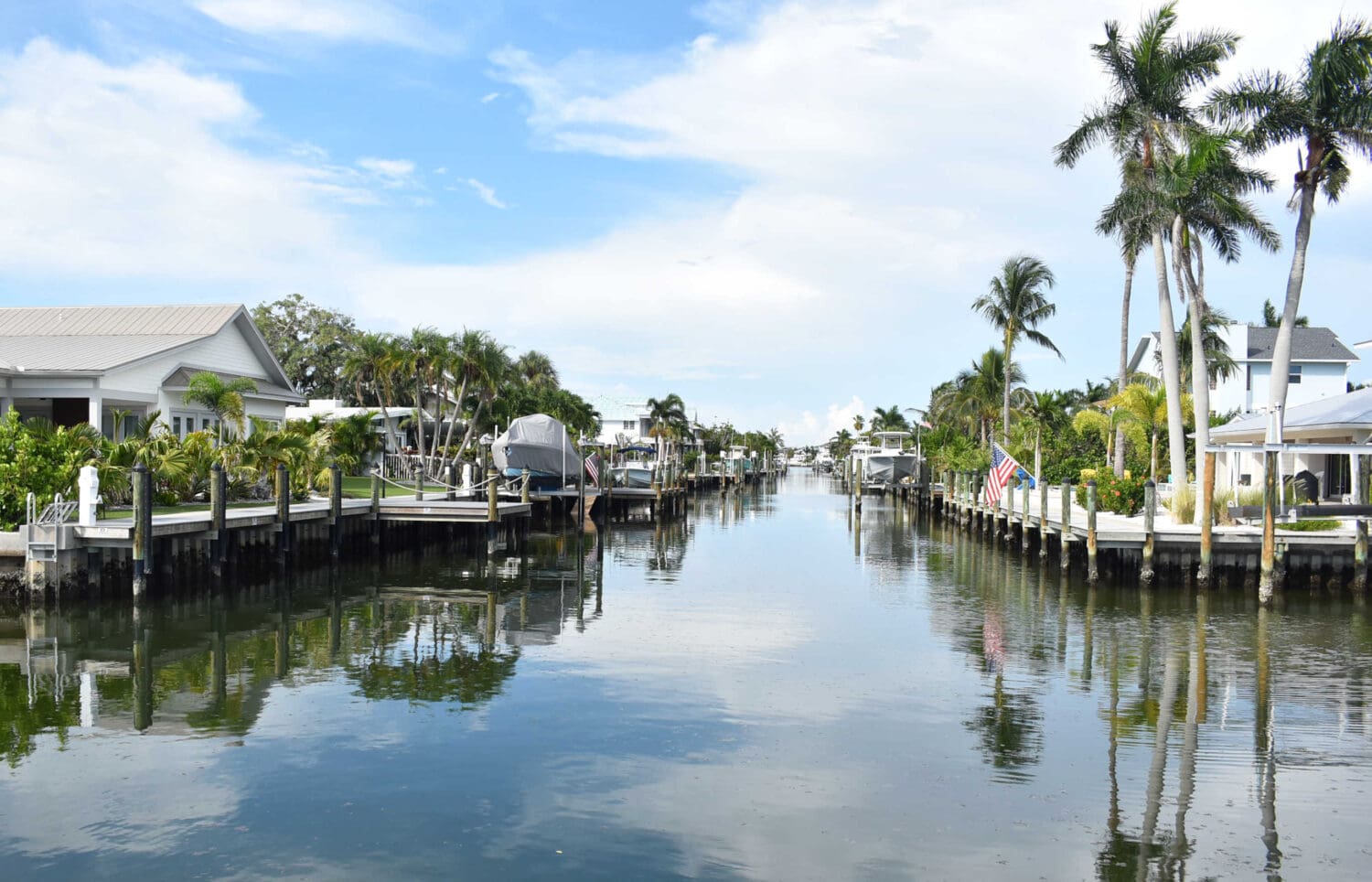
HOLMES BEACH – Director of Development Services Chad Minor presented planning commissioners with a draft version of a new docking and mooring ordinance to review during their Aug. 6 meeting.
When presenting the first draft of proposed Ordinance 25-06, Minor said, “Before you today is a completely new draft of the ordinance. We’ve essentially taken the existing dock code and ripped it apart and put it back together again – much like we did with the sign code, the fence code, the pool code. We essentially deleted everything and started over fresh using some of the concepts in the original code, but making it more readable,” Minor said.
Minor said it’s been challenging for the current city staff, and previous city staffs, to administer the dock ordinance as currently written.
“It’s time to address some of the deficiencies our current code has and create a comprehensive ordinance that addresses not just one of the dock scenarios in the city, but all of the docking scenarios in the city. We have quite a few,” he said.
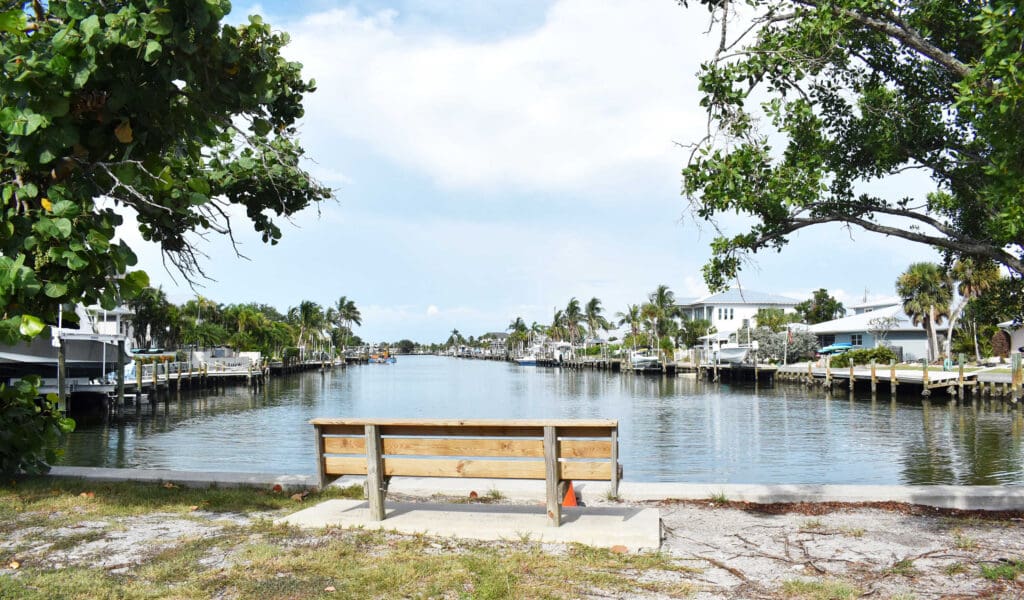
Minor said many provisions included in the draft ordinance were taken from the city’s existing dock and mooring regulations and some were inspired by regulations in effect in the city of Marco Island.
“There’s some really good provisions in here that aren’t in violation of Senate Bill 180. We’re not making things more restrictive. This is just clarifying our standards,” Minor said in reference to a new state law created by the Florida Legislature earlier this year that prohibits hurricane-impacted local governments from enacting more restrictive or burdensome building regulations.
Going page by page, Minor guided Planning Commission Chairperson Gale Tedhams and attending planning commissioners Richard Brown, Tom Costantini, Jim McIntyre and Lisa Pierce through the first draft of the proposed 21-page ordinance that will be subject to additional planning commission and city commission reviews before being presented to city commissioners for final adoption.
Sec. 66-112 of the draft ordinance includes definitions for access dock, boat lift, dock, live-aboard vessel, main access dock, mooring area, personal watercraft, riparian rights, shoreline, shared dock, terminal platform, vessel, watercraft, wet slip and more.
According to Sec. 66-113, “Docks, boat lifts and mooring facilities shall be permitted as an accessory use on any waterway lot for which the boat dock facility is customary and incidental to the proposed use of the property.”
According to Sec. 66-116, “A city building permit must be obtained prior to the construction, installation, modification or replacement of any boat docking facility.”
Sec. 66-117 specifies that an existing docking facility, pier, piling or private slip deemed unsafe by the building official shall be posted as unsafe for use and the user will be notified and given a reasonable time to bring the unsafe conditions into compliance.
According to Sec. 66-119, no vessel shall be docked or anchored adjacent to residential property in a manner that causes it to extend beyond the required setback lines; all docking facilities shall have coinciding house numbers at least 4 inches tall facing outward toward the water; docks in residential districts shall be used only for recreational, non-commercial activities; and no dock projecting into a waterway shall be more than 4 feet above the mean high-water line.
City code does not and will not allow boat houses or dock canopies.
The revised code will continue to limit the length of a dock to 60 feet unless otherwise permitted by the Florida Department of Environmental Protection (FDEP), and a dock with more than 500 square feet of total area requires FDEP approval.
For waterfront properties with more than 65 feet of shoreline frontage, Minor proposes reducing the current 25-foot setback requirement to 20 feet to make it less difficult to install a code-compliant platform, dock and boat lift in the allowed space.

Minor proposed, and the planning commissioners support, allowing shared docks in the Seaside Gardens community where many properties feature duplexes built on small lots that may not provide enough space for two code-compliant separate docks.
The draft ordinance includes aerial photos that illustrate the different and unique docking scenarios that exist throughout the city, including docking in various residential canals and “dead-end canals” and docking at boat slips owned by the city and leased to boat owners.

Minor said he’d make the minor changes proposed by the planning commissioners and bring the draft ordinance back for a second planning commission review on Wednesday, Sept. 3 at 3:30 p.m. The proposed ordinance will then be presented to city commissioners for their preliminary review during a commission work session.
SB 180
On Tuesday, Aug. 26, City Attorney Erica Augello is expected to provide city commissioners with a detailed overview of the potential consequences the city faces due to a new state law that applies for a one-year period to any municipality located entirely or partially within 100 miles of the track of a storm declared to be a hurricane by the National Hurricane Center.
During that one-year period, a local government may not propose or adopt a moratorium on construction, reconstruction or redevelopment of any property; may not propose or adopt a more restrictive or burdensome amendment to its comprehensive plan or land development regulations; and may not propose or adopt a more restrictive or burdensome procedure concerning review, approval or issuance of a site plan, development permit or development order.
Concerns have already been raised about the one-year restrictive period being extended for another year every time the city falls within a hurricane storm track, which has become a frequent occurrence in recent years.