

ANNA MARIA – Planning and Zoning Board members are reviewing the city’s parking regulations with an emphasis on reducing visibility challenges created by parked vehicles.
Joined by City Planner Ashley Austin and General Manager Dean Jones, Anna Maria Planning and Zoning Board members David Haddox, Dusty Crane, Doug Copeland and Jeff Rodencal participated in parking regulation-related workshops on Aug. 21 and Sept. 19. The board recommendations produced during the workshops will be reviewed again on Oct. 31 before being presented for city commission consideration.
The board and city staff recommend regulation revisions that include prohibiting parking on multi-use paths and designated bike lanes and parking within a visibility triangle at a street intersection. Board members and staff also discussed prohibiting street-side parking within 10 feet of a driveway.
Driveway concerns
Earlier this year, the board members and city staff assumed city code prohibited street-side parking within 10 feet of a driveway, but they later learned no such prohibition exists.
When discussing a possible driveway-related parking prohibition in August, Copeland said, “When people park directly up to your driveway, you cannot see to get out.”
He noted the lack of visibility experienced when pulling out of a driveway presents a danger to families walking down the street and makes it difficult to see oncoming motorists.
Rodencal agreed but questioned how the city would enforce such a prohibition and notify residents and visitors of that new restriction.
Rodencal also questioned whether eliminating numerous public parking spaces located within 10 feet of a driveway impacts the city’s ability to provide the number of public parking spaces required to qualify for county and state-funded beach renourishment projects. He said city staff would need to review the city’s parking plan and determine how many parking spaces would be eliminated.
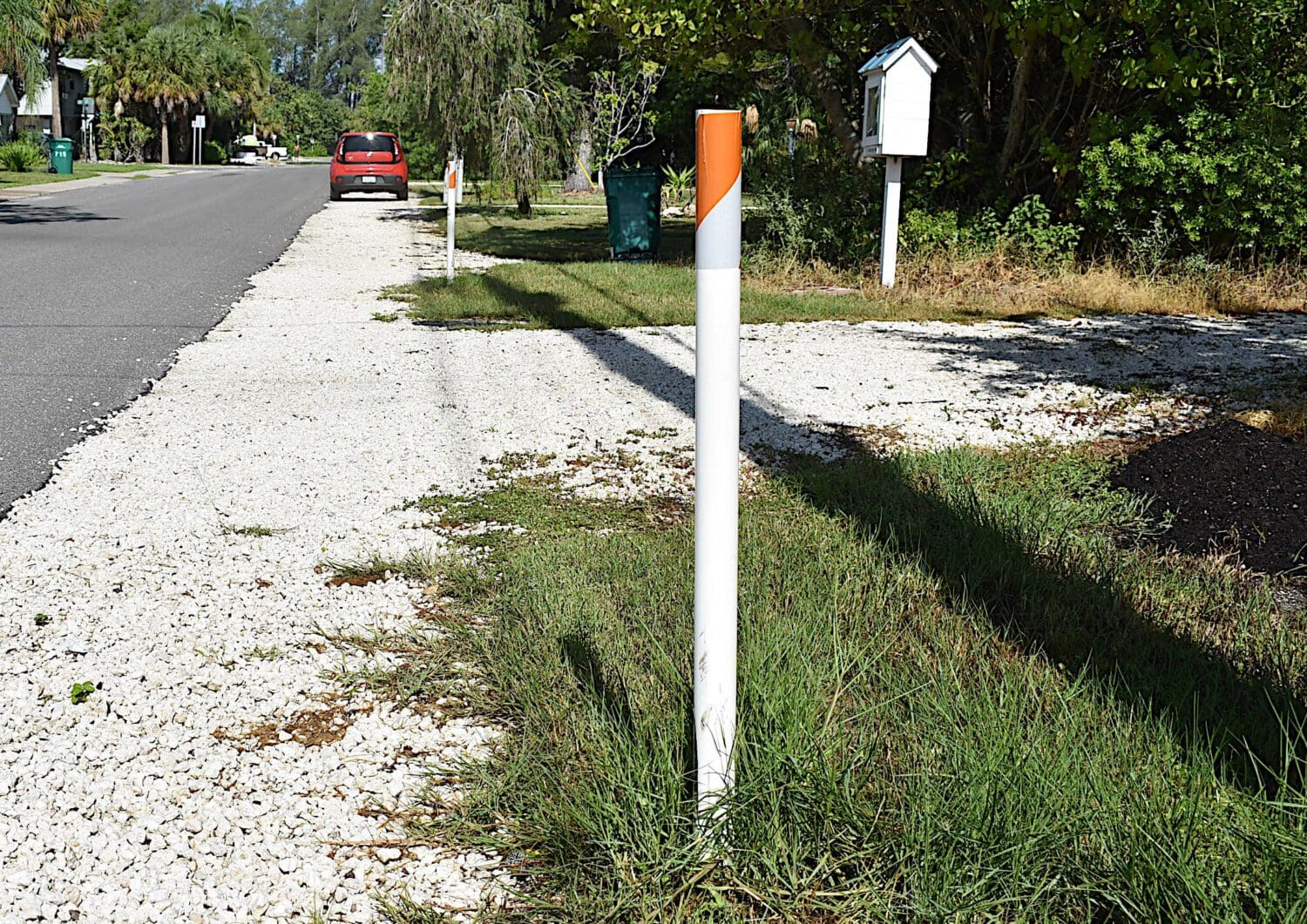
Copeland said he previously asked the city to install traffic delineators on each side of his driveway entrance. The delineators consist of a white and orange plastic sleeve slipped over a metal fence post. The delineators limit the available parking space and make it difficult to park without the vehicle’s tires encroaching onto the street pavement, which is a parking violation.
The board expressed concerns about the visual aesthetics of installing parking delineators at every residential driveway, and there is no desire to install more “No Parking” signs in the city’s residential areas.
“Obviously we don’t want to put up two parking signs at every driveway, but the plastic bollards are really not that offensive and they’re fairly effective,” Copeland said during the August workshop.
Jones said the city would incur the costs of installing and maintaining the parking delineators.
“It’s a great idea, but how do you execute it out in the field?” he asked.
During the Sept. 19 workshop, Jones proposed asking the city commission to consider allowing the public works department to install driveway parking delineators only as requested by residential property owners.
Visibility concerns
During the September workshop, Copeland said he received a call from a resident who expressed concerns about a rental business on Pine Avenue parking their golf carts in the street-side parking spaces located in the city-owned right of way. Austin said that’s not allowed and she would look into that.
Haddox expressed a similar concern about a small commercial truck that’s frequently parked in a city-owned parking space along Pine Avenue. Haddox said the parked truck creates a visibility challenge when exiting the post office parking lot. Crane said a sign located on or near the post office property also limits visibility.
Jones said he would diplomatically share the board’s concerns with those business owners.
Crane reiterated her previously stated concerns about the visibility challenges created by parked vehicles, fences and residential landscaping at the North Bay Boulevard and Poinsettia Road intersection. She said the landscaping at the North Bay and Jacaranda Road intersection also impedes visibility.
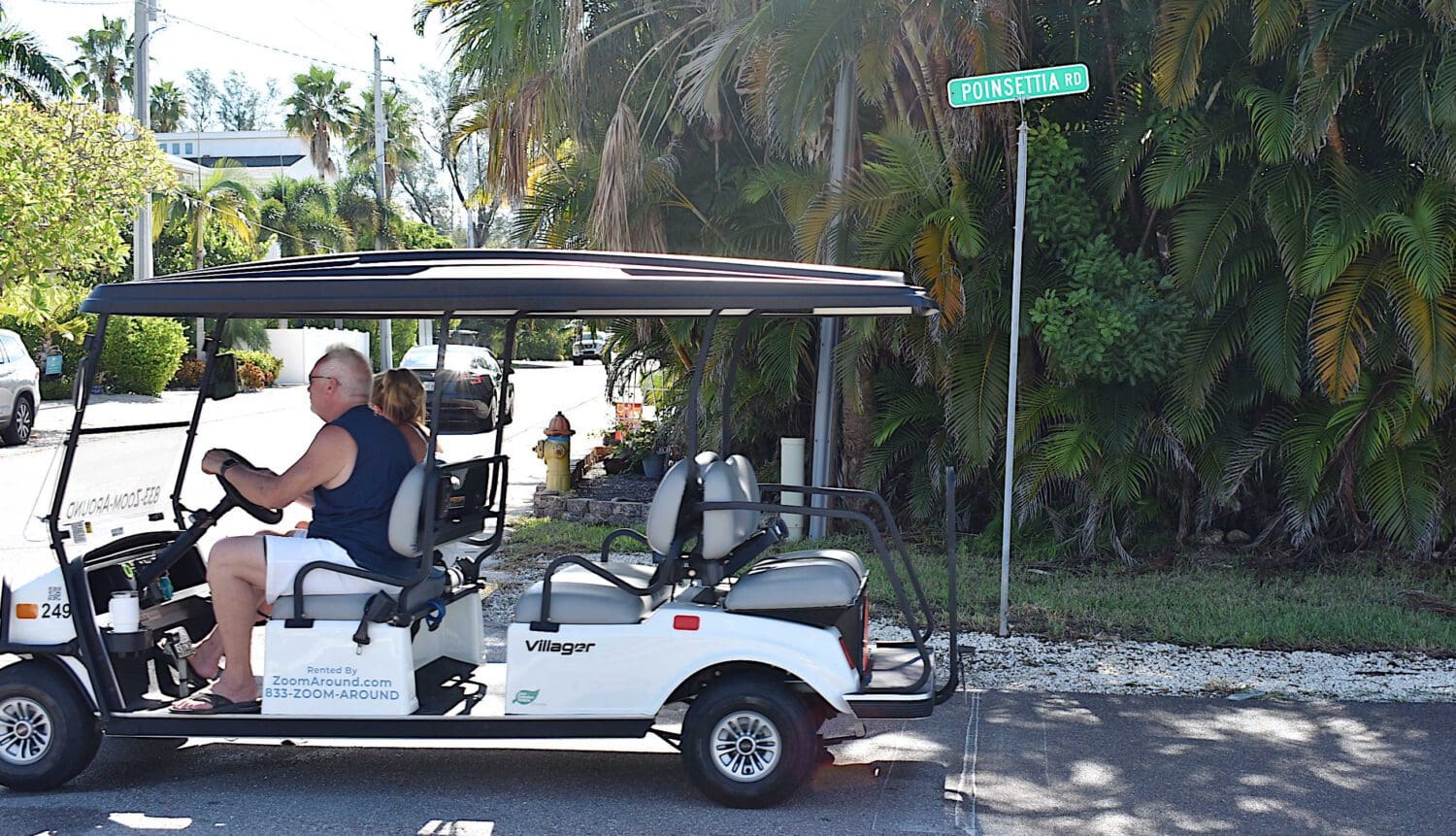
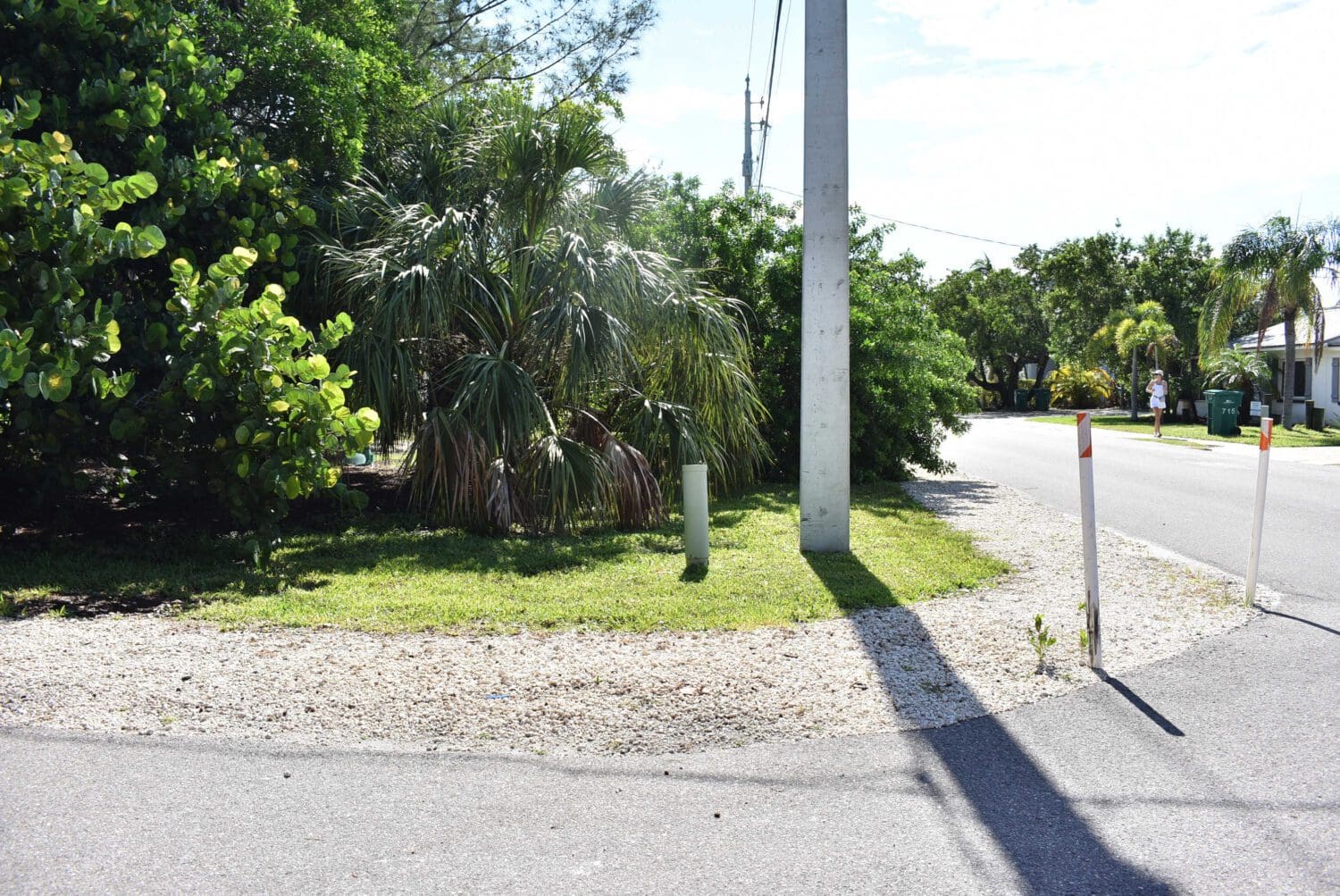
Crane expressed concerns about the reduced visibility created by the landscaping at the Magnolia Avenue and South Bay Boulevard intersection.
“I agree, that’s a really dicey intersection,” Haddox added. “There’s just too much foliage there when you’re trying to execute a right-hand turn.”
Existing city code says, “On a corner lot, there shall be no parking or loading spaces, structure or planting which materially obstructs the vision of vehicular traffic within 20 feet of the two intersecting street right-of-way lines.”
Rodencal said similar visibility challenges exist throughout the city, and he asked what’s hindering the city’s efforts to address those concerns. Jones said he would research the board’s concerns.
Board member needed
The Anna Maria Planning and Zoning Board seeks a new volunteer member. Serving as an advisory board and recommending body to the city commission, the commission-appointed board meets one Wednesday morning per month to discuss and review matters pertaining to land use, building, development, construction, permitting and more.
To obtain an application, visit www.cityofannamaria.com/residents and click on “forms & permits,” email amclerk@cityofannamaria.com or call 941-708-6130.
Related coverage: Fences, visibility triangles, parking discussed