

Tag: Sen. Jim Boyd

Boyd amendment could impact proposed cruise port 

TALLAHASSEE – Florida Senator Jim Boyd (R-Bradenton) filed an amendment to Senate Bill302 that if fully adopted might make it more challenging to do the dredging needed to accommodate a proposed Knott-Cowen Cruise Port in the Terra Ceia Aquatic Preserve. 

Boyd filed his amendment on Feb. 18. The following day, the Florida Senate voted 38-0 in favor of adding that additional language to the previously filed Senate bill. 

As of mid-day Monday, Feb. 23, a similar amendment had not been introduced in the Florida House of Representatives. Without a matching bill supported by the House, the Senate bill, as now amended, would fail to become new state law. The Florida Legislature’s 2026 legislative session is scheduled to end on March 13. 

The Florida Senate website lists House Bill 1035 as the rebill to SB 302. As of Feb. 23, the most recent amendment to the House Bill occurred on Feb. 16, and that amendment was not similar to Boyd’s amendment. 

In January, Tampa-based Slip Knott LLC and cruise ship terminal operator SSA Marine announced they were exploring the development of a multi-berth cruise ship port in northwest Manatee County on the Knott-Cowen tract of land near Rattlesnake Key and the Sunshine Skyway Bridge. 

That announcement was met with petitions, protests and significant public backlash against the proposed cruise port that has not yet been subjected to any public hearings as part of the permitting process that would entail the Manatee County Commission at some point. 

THE AMENDMENT

Boyd’s senate-supported amendment says, “No further dredging or filling of the submerged lands of the Terra Ceia Aquatic Preserve shall be approved or tolerated by the board except:

“(a) Such minimum dredging and spoiling as may be authorized for public navigation projects or for such minimum dredging and spoiling as may be constituted as a public necessity.

“(b) Such other alteration of physical conditions, including the placement of riprap, as may be necessary to enhance the quality and utility of the preserve.

“(c) Such dredging as is necessary for the purpose of eliminating conditions hazardous to the public health or for the purpose of eliminating stagnant waters, islands and spoil banks, the dredging of which would enhance the aesthetic and environmental quality and utility of the preserve and be clearly in the public interest as determined by the board.

“(d) Such minimum dredging and filling as may be authorized for the creation and maintenance of marinas, public boat ramps, piers and docks, and their attendant navigation channels and access roads. Such projects may be authorized only upon a specific finding by the board that there is assurance that the project will be constructed and operated in a manner that will not adversely affect the water quality and utility of the preserve. This paragraph may not be construed to authorize the connection of upland canals to the waters of the preserve.

“Any dredging and filling pursuant to paragraph (a), paragraph (b) or paragraph (c) shall be approved by the board only after public notice as provided,” the amendment says.

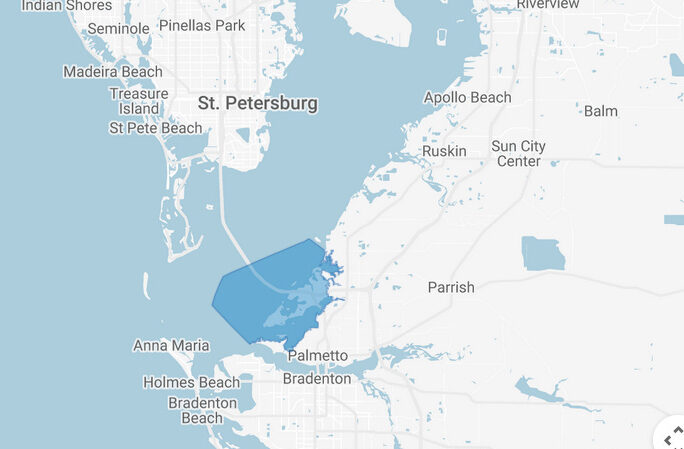
According to the Florida Department of Environmental Protection, “The boundary of the Terra Ceia Aquatic Preserve starts at the south end of Port Manatee and extends out into Tampa Bay. The preserve extends as far south as Emerson Point, on the northern bank of the Manatee River. Terra Ceia Aquatic Preserve includes several embayments such as Terra Ceia Bay and Bishop Harbor, along with tidal creeks like Frog Creek and McMullen Creek.”

SB 302

SB 302 addresses “Coastal Resiliency.” According to the bill summary listed at the Florida Senate website, the bill addresses “Prohibiting the board of Trustees of the Internal Improvement Trust Fund from approving the dredging or filling of the submerged lands of the Terra Ceia Aquatic Preserve unless such dredging and filling occurs for certain reasons; authorizing certain dredging and filling of submerged lands and placement of certain shorelines and seawalls within the Biscayne Bay Aquatic Preserve; authorizing the erection of certain structures within aquatic preserves; requiring the Department of Environmental Protection, by a specified date, to develop guidelines and standards for nature-based methods to address coastal resiliency and to adopt rules, subject to legislative ratification, for a statewide permitting process for such coastal resiliency, etc.”

SIDDIQUE’S INSIGHTS

On Feb. 19, Manatee County Commissioner Tal Siddique mentioned Boyd’s amendment in his “Making Waves” Substack blog titled, “New Legislation Protecting the Terra Ceia Aquatic Preserve.”

In that blog, Siddique wrote, “This amendment would enshrine additional protections for the Terra Ceia Aquatic Preserve to limit large-scale dredge & fill projects – the kind a certain cruise terminal project would use.” 

Regarding SB 302 as a whole, Siddique wrote, “SB 302 began its life, in my view, as a great piece of legislation creating a statewide framework for how Florida can use nature-based solutions to improve coastal resilience. Projects such as mangrove replanting and living shorelines would be formalized in state statutes and grant funding would be provided through the Resilient Florida Grant Program. This issue focuses on the Aquatic Preserve, the amended language, and how you can advocate for it.”

When asked about the potential impact Boyd’s amendment might have on the cruise port, Siddique said, “What will be interesting though is whether the bulkhead rights become preempted by this legislation or not. Those rights predate any aquatic protections. Attorneys and a court would have to decide that.”

City asks governor to veto proposed legislation

City asks governor to veto proposed legislation

ANNA MARIA – The mayor and city commission are asking Gov. Ron DeSantis to veto Senate Bill 620, also referred to as the Local Business Protection Act.

The commission took this action when adopting City Resolution 22-777 on April 14. As of April 18, DeSantis had not yet signed SB 620 into law, nor had he vetoed the proposed legislation.

If signed into law, the Local Business Protection Act would authorize certain businesses to claim business damages from a county or municipality that enacts or amends certain ordinances or charter provisions that results in lost revenues.

The proposed state law was sponsored by Sen. Travis Hutson and supported by the majority of the Florida Senate and House of Representatives. Representing Manatee County, Sen. Jim Boyd and Rep. Will Robinson Jr. both voted in support of the legislation.

Senate Bill 620 proposes: “A private, for-profit business may claim business damages from a county or municipality if the county or municipality enacts or amends an ordinance or a charter provision that has or will cause a reduction of at least 15 percent of the business’ profit as applied on a per location basis of a business operated within the jurisdiction; and the business has engaged in lawful business in the jurisdiction for the three years preceding the enactment of or amendment to the ordinance or charter.”

According to the adopted city resolution first suggested by Commissioner Robert Kingan, “Senate Bill 620 allows businesses to threaten local governments with lawsuits paid for by taxpayers. Senate Bill 620 will lead to a number of financially motivated and malicious lawsuits, costing local governments millions annually because local governments will be forced to increase taxes or reduce services to cover legal fees. Senate Bill 620 would hinder the governing body at the local level and would overall be detrimental to communities. Senate Bill 620 can provide national companies with the ability to exploit the bill for their advantage against local ordinances.”

In closing, the city resolution says, “The city of Anna Maria hereby urges the Honorable Governor Ron DeSantis to veto Senate Bill 620.”

The city’s ongoing opposition efforts also include a request for concerned citizens to email DeSantis using form letters provided on the “Take Action” page at the Home Rule Florida website.

State legislation threatens ability to adopt local ordinances

State legislation threatens ability to adopt local ordinances

ANNA MARIA – City officials remain concerned about the potential ramifications of two proposed state laws pertaining to the adoption of city ordinances and the related recovery of attorneys’ fees.

They’re also concerned about proposed legislation that would limit annual vacation rental registration fees to $50.

Senate Bills 280 and 620 were both introduced by State Sen. Travis Hutson, a Republican from Palm Coast.

State legislation threatens ability to adopt local ordinances
Sen. Travis Hutson has proposed legislation that could significantly impact city and county governments’ ability to adopt local ordinances. – Florida House | Submitted

House Bill 403 is the companion bill to SB 280 and was co-introduced by Rep. Mike Giallombardo, a Republican from Lee County, and Rep. Daisy Morales, a Republican from Orange County.

HB 569 is the companion bill to SB 620 and was introduced by Rep. Lawrence McClure, a Republican from Hillsborough County.

The two Senate bills work hand in hand with one another, as do the two House bills.

Bill language

Senate Bill 620 contains language that says, “A business that has engaged in a lawful business in this state for at least three years may claim business damages from a county or municipality if the county or municipality enacts or amends an ordinance or a charter that will cause a reduction of at least 15% of the business’ revenue or profit.”

According to the bill, a city or county would not be liable for business damages caused by an ordinance or charter provision that’s required to comply with state or federal law; for local emergency ordinances and orders adopted under the State Emergency Management Act; a temporary emergency ordinance that remains in effect for no more than 90 days or an ordinance or charter provision that increases economic freedom.

HB 569 contains similar language.

SB 280 works in unison with SB 620 by providing for the recovery of attorneys’ fees for lost business revenues.

As of Monday, the latest amended version of SB 280 contained the following language: “If a civil action is filed against a local government to challenge the adoption of a local ordinance on the grounds that the ordinance is arbitrary or unreasonable, the court may assess and award reasonable attorney fees and costs and damages to the complainant if successful. An award of reasonable attorney fees or costs and damages may not exceed $50,000.”

HB 403 contains similar language.

For a bill to become state law, matching House and Senate bills must pass through their respective committees, be supported by a majority vote of their respective legislative bodies and be signed into law by the governor.

Bills progressing

On Nov. 30, the Senate Judiciary Committee ruled favorably on SB 620 by a 7-4 margin. Republican Sen. Jim Boyd of Manatee County was among those who voted in support of the bill being ruled favorable and advanced to its next committee.

State legislation threatens ability to adopt local ordinances
Sen. Jim Boyd has already voted in favor of Senate Bill 620. – Florida Senate | Submitted

SB 280 passed through the Senate’s Community Affairs Committee by a 6-2 vote and has been placed on the Senate Rules Committee’s Thursday, Jan. 20 agenda. Boyd is also a member of the Rules Committee.

As of Monday, both House bills were making their ways through their preliminary subcommittees.

City concerns

Anna Maria staff member Amy Moriarty serves as the city’s legislative liaison. Working with lobbyist Chip Case, Mayor Dan Murphy and City Attorney Becky Vose, Moriarty is closely monitoring the 60-day legislative session scheduled to end on March 11.

Moriarty provided the city commission with a legislative update on Thursday, Jan. 13.

“It’s not good. I’m sorry to say Senate Bill 280, after passing its first committee yesterday, was removed from one of its committees and has been fast-tracked,” Moriarty told the commission.

She said SB 620 was also fast-tracked.

State legislation threatens ability to adopt local ordinances
City staff member Amy Moriarty is monitoring the legislative actions. – Joe Hendricks | Sun

“These bills are major preemption priorities for Senate leadership. What 280 and its House counterpart will do is remove your ability to set common set ordinances without publishing a business impact statement – and you have to publish the business impact statement at the same time that you post on the agenda that you will be considering an ordinance. Which means you have to have a staff member look at any impact the ordinance would have on businesses – not just the businesses here in your community, but businesses from outside of your community that would come in and do business here,” Moriarty explained.

She noted this legislation would pertain to the annual setting of the city’s property tax millage rate. She also said the city may have to hire an expert to provide business impact statements, and that expert may be called to testify in court if a business owner challenges a proposed ordinance.

“This is going to not only limit your ability as commissioners to set policy in the community, it’s also going to cost a lot of money,” Moriarty said.

Moriarty said there is unfulfilled hope that SB 280 and HB 403 will be amended in a manner that would require a business owner to first come before the city commission to express their concerns before filing a legal challenge.

Vacation rental bills

City officials are also concerned about two vacation rental bills, SB 512 and HB 325, which propose limiting annual vacation registration fees to $50 per unit.

Anna Maria’s 2021 annual registration fees were based on $58.52 per year for each occupant allowed. The registration fee for a one-bedroom vacation rental with two additional guests was $234. The annual fee for a six-occupant rental was $351, and $585 for a 10-occupant rental.

Call to action

Moriarty and Murphy urge residents and concerned citizens to contact state legislators and implore them to amend or abandon these harmful legislative efforts. Murphy said legislative staffs keep close tabs on the number of emails received in opposition or in favor of specific legislation and legislators are well aware of where public opinion stands.

“These are onerous bills, but we are not sitting back and wringing our hands saying the sky is falling,” Murphy said.

“There is a tool to fight back,” he added, in reference to the city-owned and managed Home Rule Florida website, which provides easy access to state legislators and provides templates for email letters.