Tag: sea turtle nesting

Every nest counts for AMI Turtle Watch

ANNA MARIA ISLAND – The sky was still dark when Kristen Mazzarella and her volunteers rolled onto the sand.

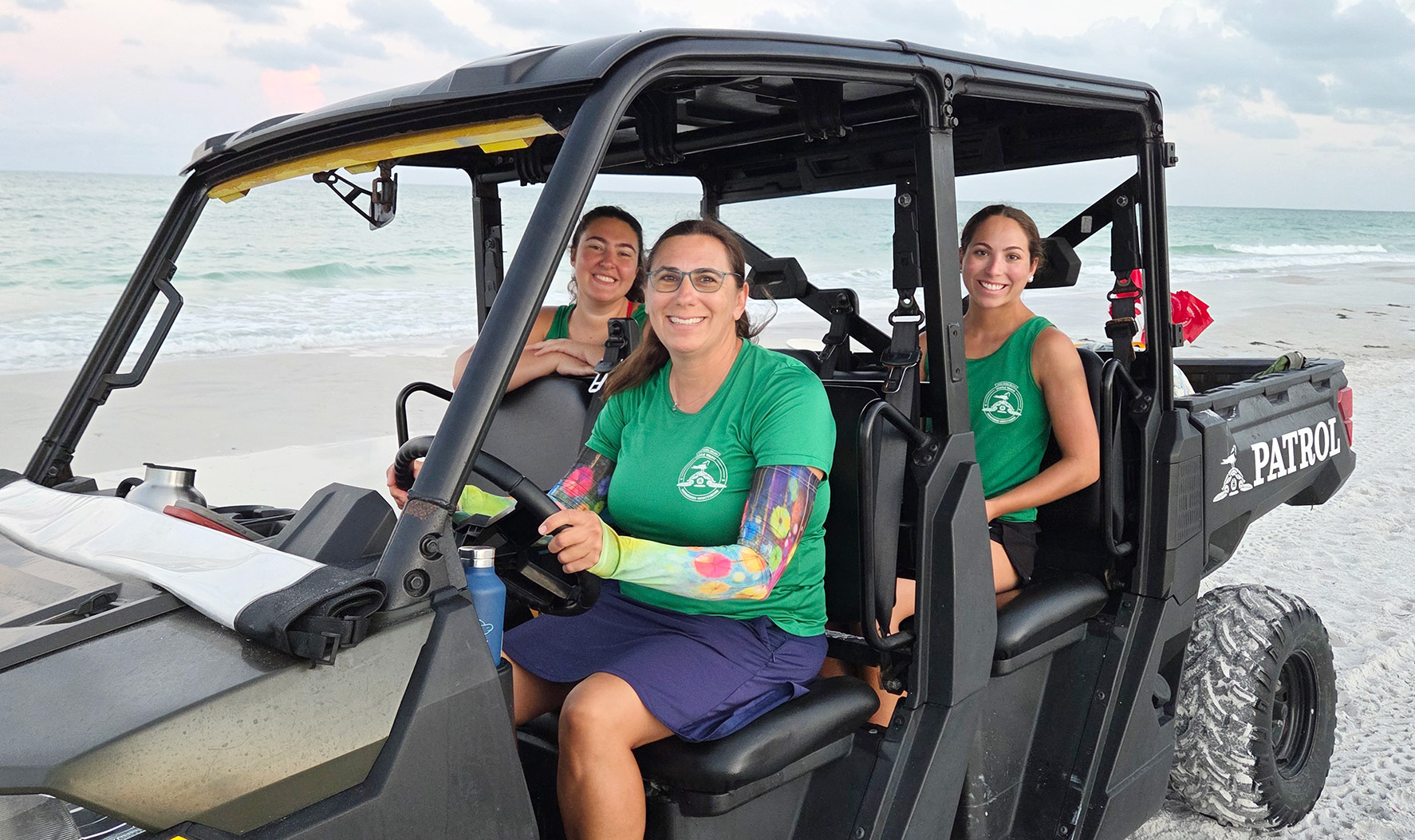
By the time the first beachgoers spread their towels, the Anna Maria Island Turtle Watch and Shorebird Monitoring teams had already covered nearly seven miles of Gulf and bayside shoreline on ATVs and on foot, cataloguing the night’s sea turtle activity, marking new nests and recording data that feeds into four decades of conservation science.

During the June 25 patrol, seven nests were discovered on the Island – six were found along the Gulf shoreline and one was discovered on the bayside.

When asked how often the patrols go out, Mazzarella, the Turtle Watch executive director, said, “Every single day.”
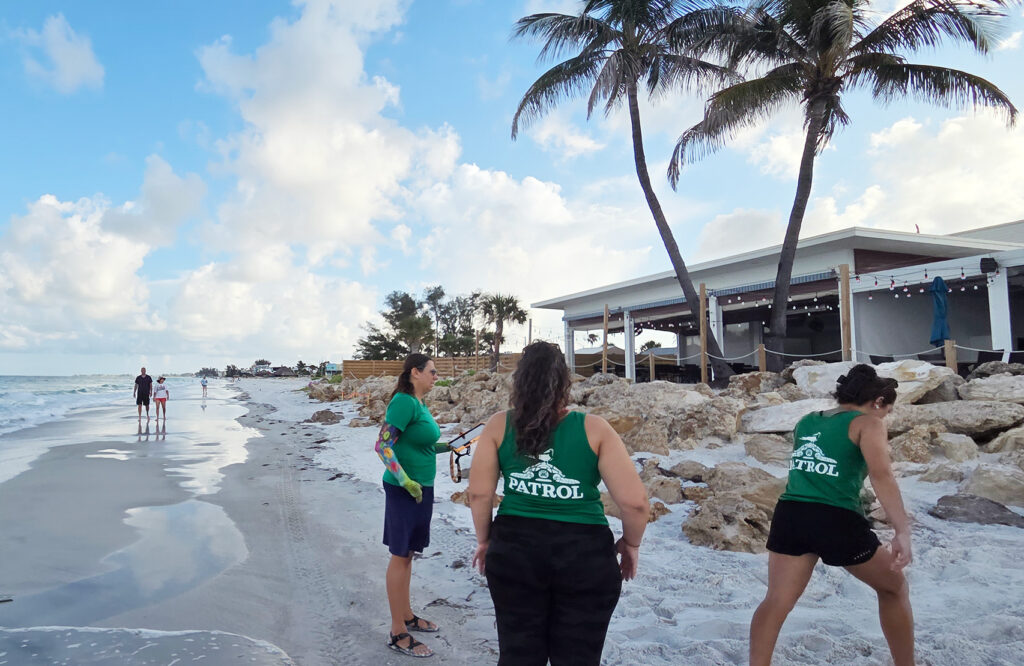
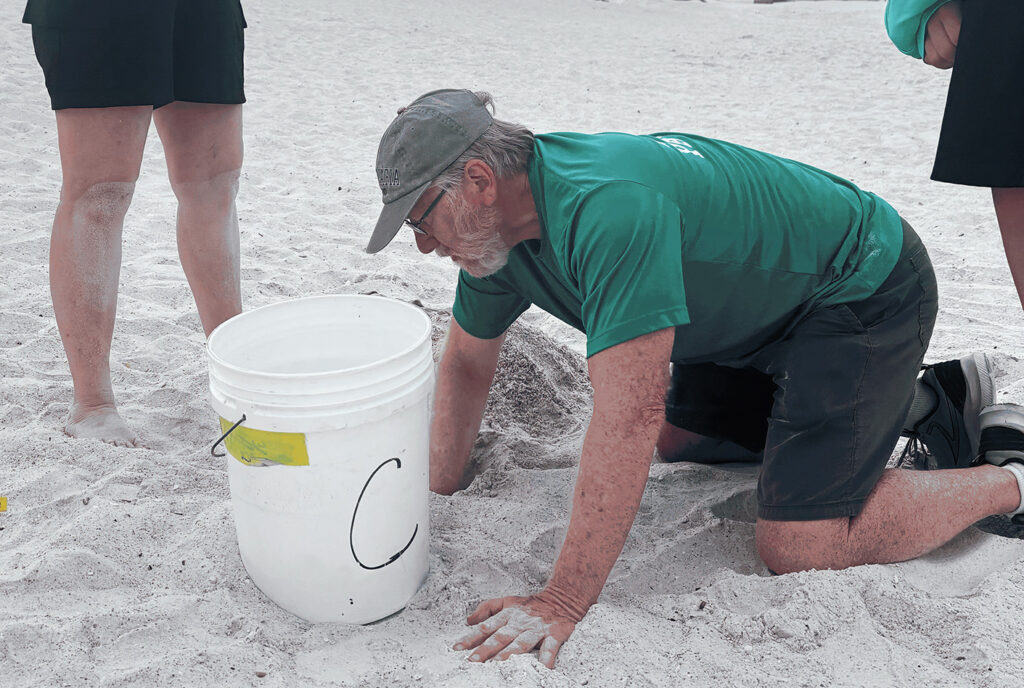
Turtle Watch members examined the beach area near the BeachHouse restaurant in Bradenton Beach. – Ernie Vanderwalt | Sun

The work is meticulous by necessity. Mazzarella has spent nearly 30 years in sea turtle conservation and has developed protocols for identifying a true nest from a false crawl. A false crawl is the trail a sea turtle leaves when she emerges from the water but turns back without laying her eggs.

The crawl marks left behind by a loggerhead turtle allow the Turtle Watch volunteers to locate and mark the new nests each morning. If those tracks are crossed or obscured before the patrol arrives, a new nest can be missed entirely.

As part of the daily routine, the Turtle Watch team has adapted patrol routes and coordinates closely with multiple agencies that share the beach. Those agencies include Manatee County Beach Patrol, local law enforcement agencies and the county’s beach cleaning operations that entail a large John Deere tractor towing a beach rake along Coquina Beach and Manatee Beach. During nesting season, which runs through Oct. 31, the beach raking routines are adjusted to avoid disturbing active nests.

NESTING CHALLENGES

The 2026 nesting season is already proving remarkable. Across the Island’s monitored shoreline, Turtle Watch has recorded nearly 300 loggerhead nests – a pace that reflects a healthy nesting population and the daily discipline of Turtle Watch teams that never miss a morning.

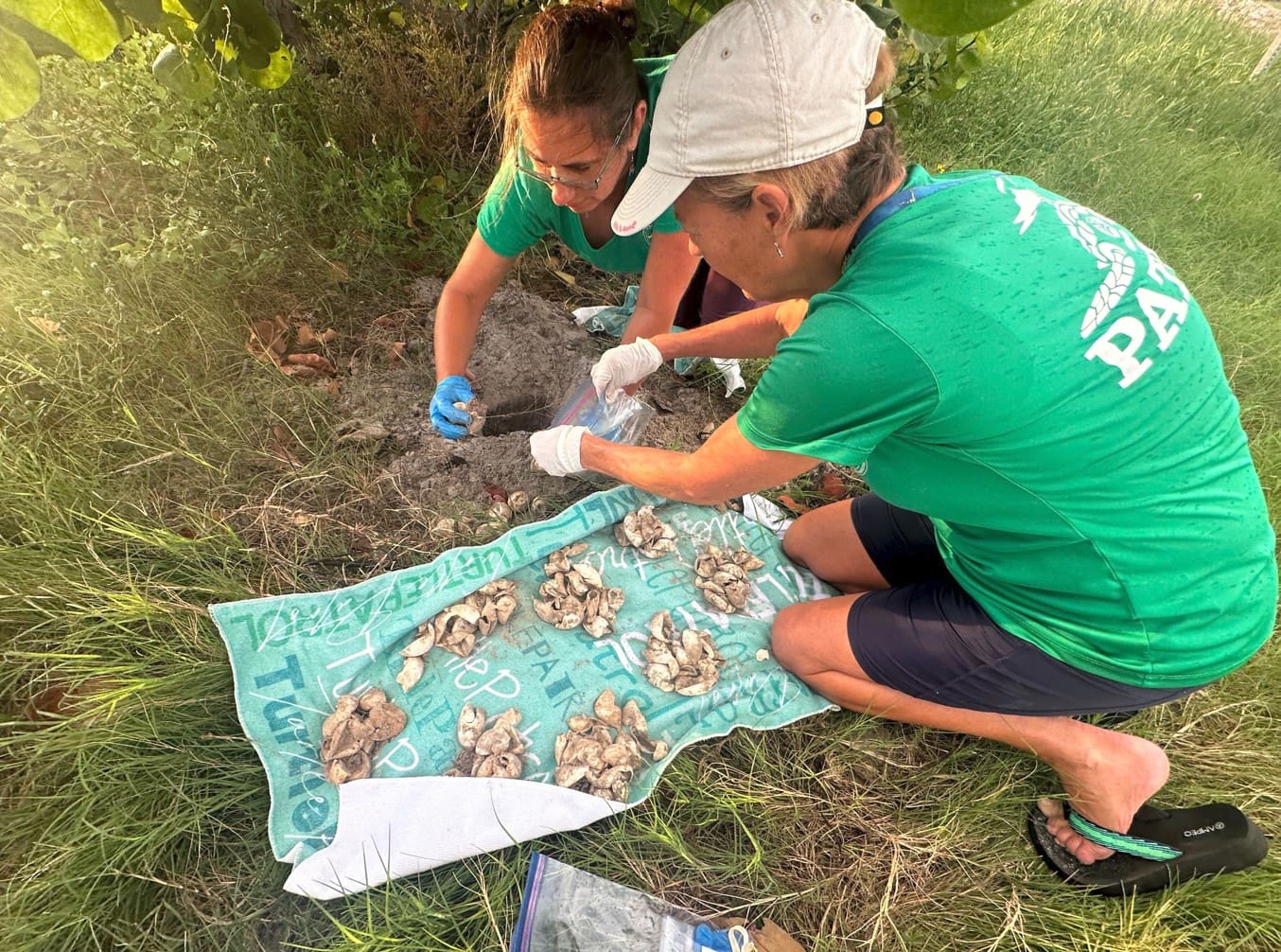
This season, that discipline is being tested by an added complication: Since the sea turtle nesting season officially began on May 1, Turtle Watch volunteers have relocated 39 nests in anticipation of a smaller beach renourishment project that is expected to commence at Coquina Beach and Cortez Beach in August. The smaller renourishment project will be followed by a significantly larger beach renourishment project that’s expected to begin in November, after turtle nesting season ends.

Mazzarella said relocating turtle nests is a labor-intensive process that requires careful documentation and state permits. She said beach renourishment projects, while necessary for maintaining the beach, can alter 

\the slope, temperature and compaction of the sand in ways that affect nesting success. 

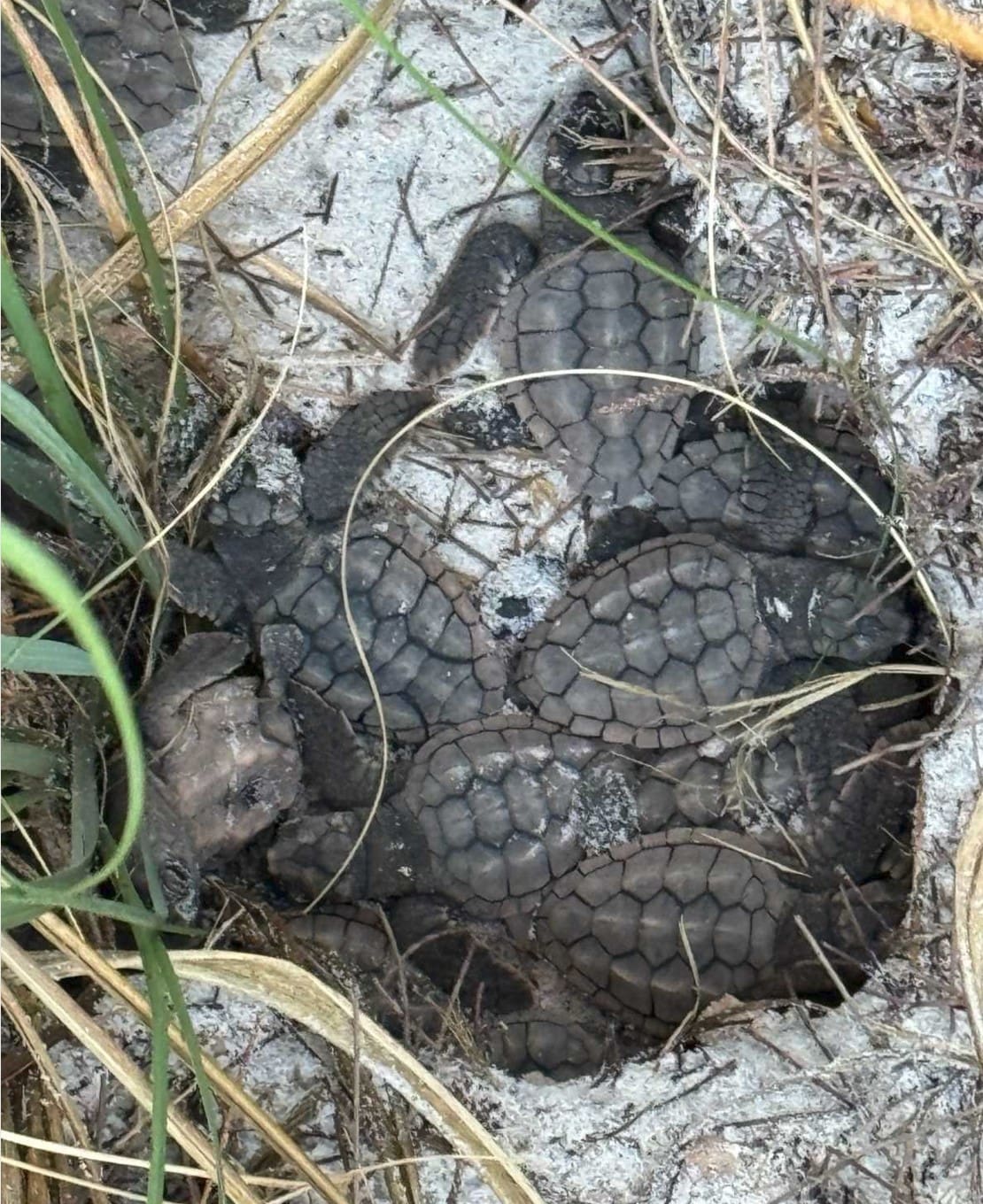
Among the most critical phases of the season is hatchling emergence, which runs July through September. Each hatchling must navigate from nest to Gulf in darkness, guided by moonlight and starlight reflecting off the water. Artificial light from coastal properties can disorient them fatally, drawing them inland toward roads and predators. During nesting season, Turtle Watch maintains a nighttime retrieval and rescue team that responds to calls around the clock.

“We can get woken up in the middle of the night,” Mazzarella said.

ORGANIZATIONAL NEEDS

The permit governing volunteer activity caps the patrol team at 24 permitted members. Mazzarella said she can train additional volunteers and rotate them onto the permit over time, but the real need is having a consistent group of volunteers who can commit two to three days a week, and not just on weekends.

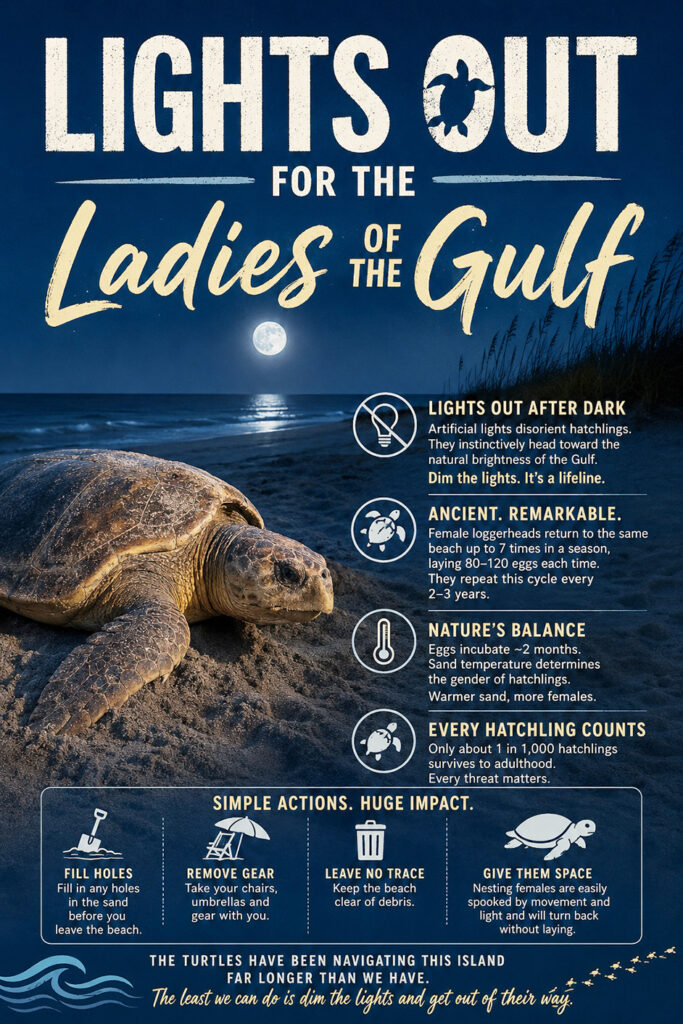
She said the organization’s greatest current need is not equipment but the education efforts used to reach beachgoers before problems occur. She said most people come out and they just see the beach, but they don’t recognize the beach is a habitat for turtles and shorebirds. Turtle Watch asks beachgoers to remove their beach chairs, toys and beach gear before sunset; to fill in any holes dug in the sand; and to keep the lights off or use amber-filtered lights after dark.
Ernie Vanderwalt | AI Generated

Residents and visitors who encounter a nesting turtle or her hatchlings are asked to stay at least 50 feet back and avoid flash photography. If you see a dead, injured, distressed or disoriented sea turtle or hatchling, please call Turtle Watch at 941-301-8434.

According to the Turtle Watch website, since 1983 Anna Maria Island Turtle Watch has monitored more than 20,800 turtle activities, protected more than 10,000 nests, and shepherded hundreds of thousands of hatchlings to the Gulf. Manatee and Sarasota counties together host the highest density of loggerhead nests in the Gulf. 

Learn more at the AMI Turtle Watch website.
First loggerhead sea turtle nest of season found

ANNA MARIA ISLAND – The first loggerhead sea turtle nest of the season has been located in Bradenton Beach by volunteers from the Anna Maria Island Turtle Watch and Shorebird Monitoring organization.

Although sea turtle nesting season begins officially on May 1, Turtle Watch volunteers started patrolling the Island beaches on April 15 to ensure finding any early nests.

“We have been awaiting our first nest for a few weeks and are excited to see that sea turtle nesting has finally begun on Anna Maria Island,” Turtle Watch Executive Director Kristen Mazzarella wrote in a May 15 email. “We look forward to another productive nesting season.”

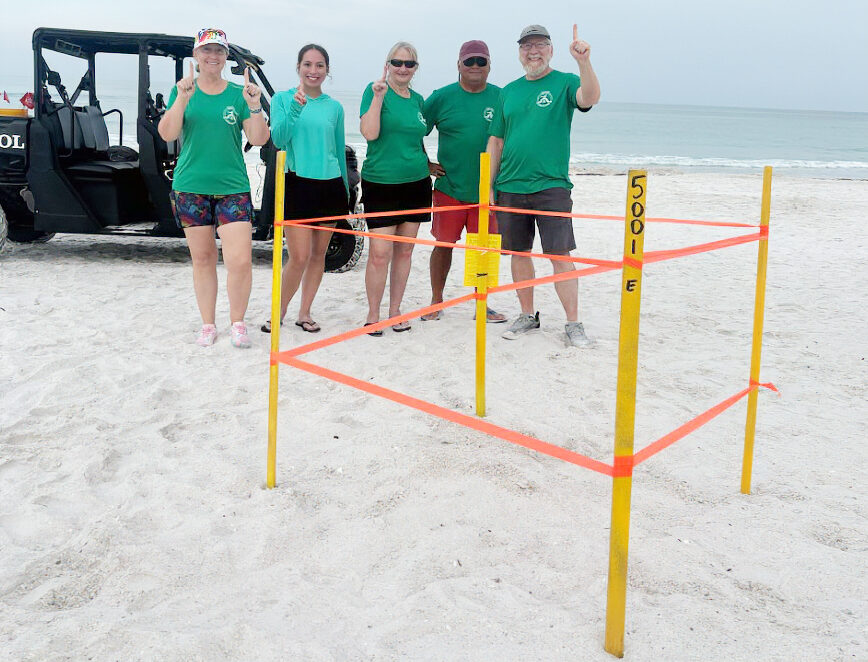
Turtle Watch volunteers relocated this sea turtle nest. – Danielle Kimberly | Submitted

The nest laid in Bradenton Beach was relocated to a location nearby to prevent it from being in the project area of an upcoming beach renourishment project. The nest relocations are conducted by trained personnel authorized by Florida Fish and Wildlife Conservation Commission Marine Turtle Permit MTP-087, per special permit conditions, according to Mazzarella. 

According to Turtle Watch volunteer Karen Anderson, relocated nests are recreated to the same specifications of depth, diameter and size to those the nesting turtles created.

NESTING NEWS

Turtle nests laid: 8 (8 loggerhead, 0 green)

False crawls: 17 (17 loggerhead, 0 green)

Nests hatched: 0

Hatchlings produced: 0 

Hatchling nest disorientations: 0

Adult disorientations: 0

Source: Anna Maria Island Turtle Watch and Shorebird Monitoring

Related coverage: Learn about sea turtles at weekly Turtle Talks

Learn about sea turtles at weekly Turtle Talks

HOLMES BEACH – Sea turtle hatchlings face an uphill battle to reach adulthood with obstacles including disorientation caused by artificial lights, becoming trapped in holes in the sand, predators and ingested litter. 

The Anna Maria Island Turtle Watch and Shorebird Monitoring organization is offering weekly seminars to educate the public about sea turtle nesting in hopes of increasing the turtles’ chances for success – not only for the tiny hatchlings, but for their nesting mothers too. 

Turtle Talks are held each Monday from 10 to 11 a.m. at Holmes Beach City Hall, 5801 Marina Drive. They are free and open to the public. 

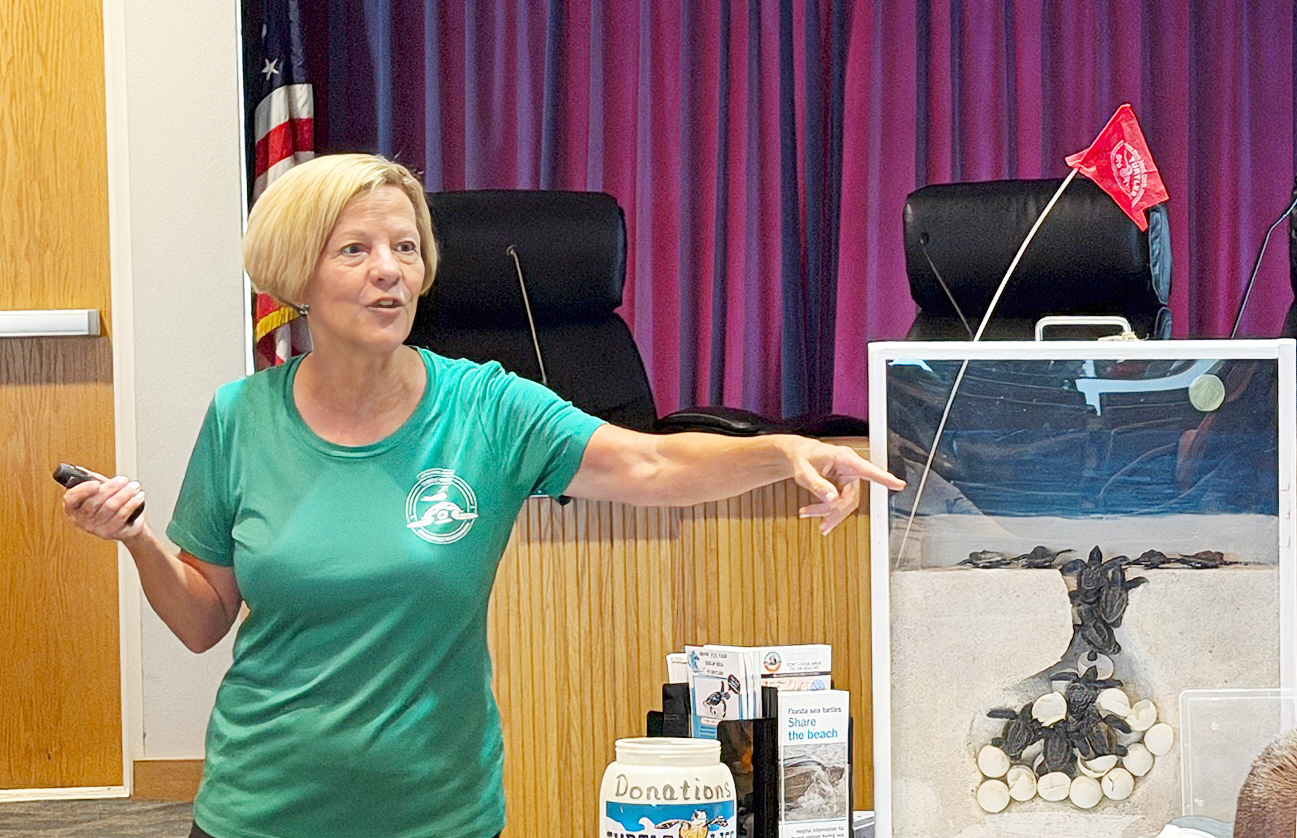
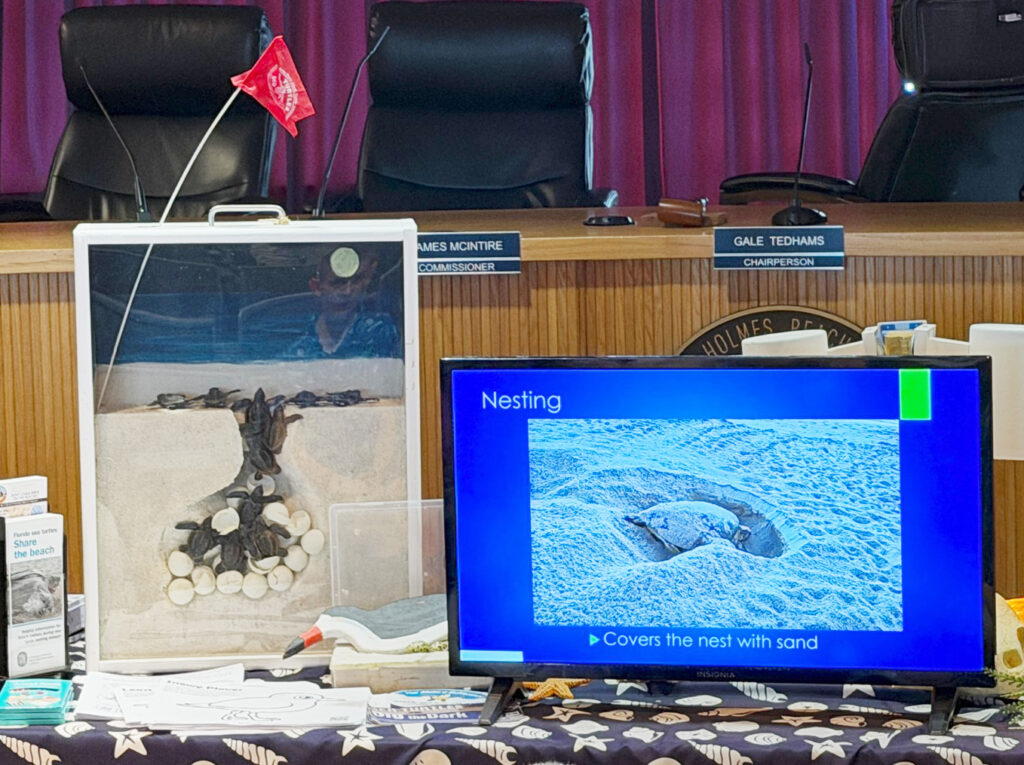
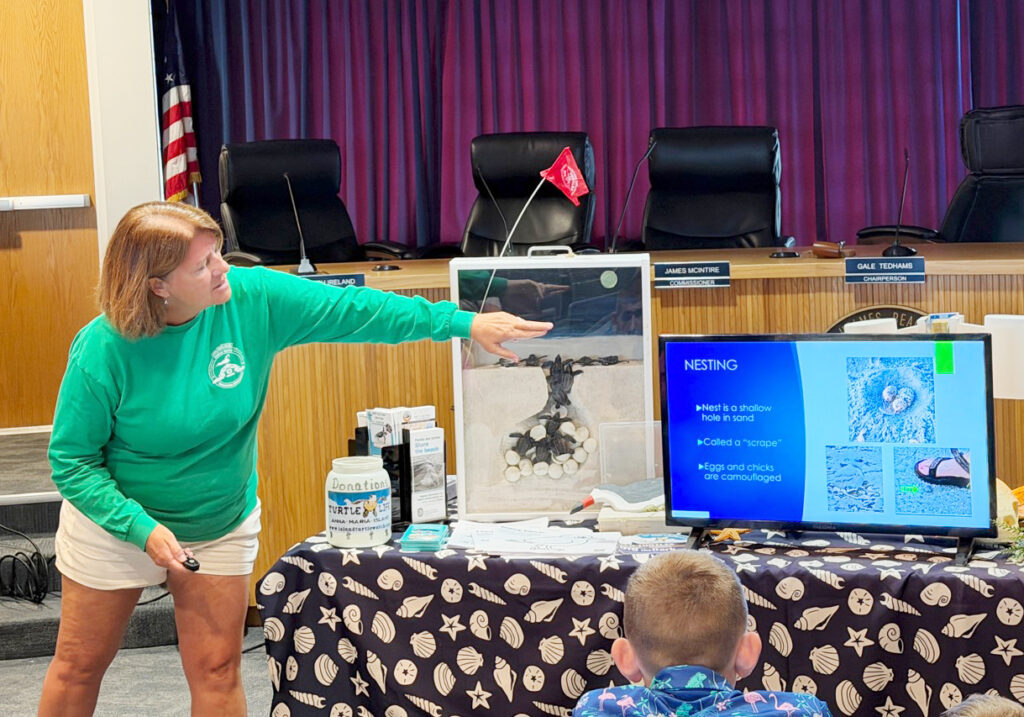
A video shown during the May 11 Turtle Talk explained the nesting process. – Leslie Lake | Sun

“What we hope to do today is to provide you with some fun facts and some interesting information about our sea turtles and our shorebirds and to increase awareness of the threats that they face,” Turtle Watch volunteer Peggy Welch said during the May 11 presentation. 

The primary sea turtles that nest on Anna Maria Island are loggerheads, which at adulthood weigh between 200 and 300 pounds. They nest between April and August and their hatchlings appear from July to October.

“Sea turtles have been around for 110 million years. They outlived the dinosaurs,” Welch said. “Now they’re facing threats. There are threats in the water with boat strikes and marine debris. On land, there’s habitat loss from storms. There are obstacles on the beaches, holes in sand, predators and artificial lighting.”

Welch said trash is a huge problem. 

“They will eat anything that looks like it could be food source. Plastic bags floating look like jellyfish and they eat jellyfish,” she said. 

She described the nesting process, which typically happens at night. 

“The moms want it dark and quiet. It cuts down on predators and it’s also cooler at night,” she said.

Welch said it may take a sea turtle between one and a half to three hours to nest and deposit an average of 100 eggs.

“It’s only the females that come out of the water. When she’s finished, she’ll go back to the water,” Welch said, noting the mother turtle carries an additional 200 eggs and will come up and nest every two weeks or so during nesting season.

“She won’t come back to nest again for another 2-3 years. It’s a huge process for her. Turtles we get this year are not the ones from last year,” Welch said.

Andrea Cramer also spoke during the May 11 Turtle Talk. – Leslie Lake | Sun

Turtle Watch volunteers are on the beaches 30 minutes before the sun rises, looking for turtle crawls and nests. The nests are marked and documented.

“Turtle tracks tell us a lot,” Welch said. “We don’t like to see tracks that show us turtles have been disoriented and go back to the water before nesting. We call that a false crawl. That could be caused by lights, noise or animals.”

She said nesting sea turtles and hatchlings are very sensitive to bright light.

“They’re looking for the reflection of the moon and the stars on the water – that should be the brightest horizon,” Welch said. “When there’s bright lights in the background that can disorient them. They’re not as sensitive to that orange-red part of the spectrum, so we hope businesses and homeowners use turtle-friendly amber lighting.”

Related coverage: First loggerhead sea turtle nest of season found

AMI approaching turtle nesting record

AMI approaching turtle nesting record

ANNA MARIA ISLAND – Anna Maria Island’s nesting sea turtles are approaching a record with 541 nests laid this year, two short of the 2019 record of 543.

Another record was set last week when the first turtle nest documented at Emerson Point Preserve hatched, with 81 of 98 eggs hatching, giving the nest an 83% hatch success rate.

Anna Maria Island Turtle Watch and Shorebird Monitor­ing Executive Director Kristen Mazzarella reports that 22,311 hatchlings have successfully hatched this year.

“This is more hatchlings than we produced in 2024 (20,633), and almost as many that were produced in 2023 (22,713) – and the season is not over yet,” Mazzarella wrote in an Aug. 21 email.

“With all these hatchlings be­ing produced, we want to make sure they successfully reach the water. Hatchlings use light as a cue. They go away from dark backgrounds and towards the bright night sky over the water. We are urging everyone to do their best to keep light from reaching the beach and disorienting hatchlings.

  • No cell phone or flashlights (even red lights) on the beach at night;
  • Close blinds so interior lights cannot be seen from the beach;
  • Use turtle-friendly lighting (red or amber LEDs) with shields or turn off lights that can be seen from the beach; and
  • Report any non-turtle friendly lights that can be seen from the beach to your local code enforcement.

If you find a hatchling in danger, in the road, in a pool or off the beach, here’s what to do:

  • Pick up the hatchling to get it out of danger;
  • Place it in a bucket/con­tainer (you can put a little sand in the bucket but no water);
  • Call AMITW’s Hotline 941-301-8434 for more instruc­tions;
  • Do not release hatchlings on your own. If they are sick or injured, they may not be able to swim.
Sand dune loss may affect sea turtle nesting

Sand dune loss may affect sea turtle nesting

ANNA MARIA ISLAND – With the loss of sand dunes from Hurricanes Helene and Milton last year, Anna Maria Island Turtle Watch and Shorebird Monitoring Executive Director Kristen Mazzarella is concerned about a possible increase in sea turtle disori­entation in this year’s upcoming season.

“Without dunes as a barrier, hatchling and adult sea turtles that head towards artificial light may find their way into the road,” Maz­zarella wrote in a March 25 email to The Sun. “This is definitely a concern and we are in contact with FWC (the Florida Fish and Wildlife Conservation Commission), FPL (Florida Power and Light) and the municipalities on AMI to let them know about this concern such that light­ing issues may be addressed prior to the start of sea turtle nesting season on May 1st.”

In addition to serving as a shield from artificial lights, Mazzarella wrote that the dunes provide a dark background that is a critical cue for sea turtles.

“They go away from dark shadows and towards bright horizons. Sea turtles need the dark background of dunes and vegetation to contrast with the light of the night sky over the water, so they don’t get confused about which direction to go to head to the Gulf,” she wrote. “If the background is as bright as or brighter than the night sky over the water, they will not know which direction to go and will either travel in circles or head towards the brightest light, which is often the artificial light.”

In advance of the official start of nesting season on May 1, Turtle Watch volunteers will begin patrols on Tuesday, April 15 to look for any new nests.

“We have not seen any turtle activity yet,” Mazzarella wrote. “On AMI, we generally get nesting loggerhead and green turtles which do not usually start nesting until late April or May. Leatherbacks have started nesting already in Florida but we have never had a leatherback nest on AMI… yet.”

She also said that there have been no sight­ings of nesting shorebirds on Anna Maria Island so far this year.

“Not yet, but we are always watching,” she wrote.

Mazzarella offered the following tips for anyone who may see a sea turtle nest or a turtle in distress.

  • Please call AMITW at 941-301-8434 as soon as possible if you see a nesting turtle or turtle nest prior to April 15. Once patrols begin, volunteer turtle patrols will survey the entire island every morning and will locate all the turtle crawls and mark the ones that are nests with protective stakes and flagging tape.
  • Remember that sea turtles are protected by the Endan­gered Species Act. If you see a sick, injured or dead sea turtle on the beach or in the water, please also call AMITW or FWC. AMITW’s stranding team is standing by to help rescue sick and injured sea turtles and collect important information on dead sea turtles.
  • If the turtle is painted with an X, that means that someone from our team has already attended to the turtle and it will be disposed of by the local authorities.

Turtle nesting record broken

ANNA MARIA ISLAND – A 42-year record for sea turtle nests was shattered on July 2 when Anna Maria Island Turtle Watch and Shorebird Monitoring volunteers counted 2024’s 546th nest, exceeding the 2019 record of 544 nests for the whole season.

“We broke our all-time annual nest number count this week, and considering turtles should be nesting through late August/early September, we will be breaking it by quite a bit by the end of the nesting season,” Executive Director Kristen Mazzarella wrote in a July 5 email. “We are very excited about this.”

The sea turtle nesting season extends from May 1 to Oct. 31, but began early.

Mazzarella said that Turtle Watch volunteers have been putting in extra hours on the beach and painting nest stakes to mark the new nests.

“We are excited that so many sea turtles have decided to nest on Anna Maria,” she said. “We can thank the conservation efforts of patrollers that protected nests 25 years ago for producing the hatchlings that are coming ashore (as adults) to nest in such high numbers this year.”

Loggerhead sea turtles take 25-35 years to reach maturity.

Turtle Watch recorded the first nest hatch of this season on June 29 in Anna Maria, and, as of July 5, there have been seven nest hatches.

“When they emerge from the sand, baby turtles (hatchlings) follow the brightest horizon to find their way to the water. Artificial lighting that can be seen from the beach can draw hatchlings away from the Gulf and into harm’s way,” according to Mazzarella. “In order to ensure that this incredible number of nests results in a record number of hatchlings making it to the water, we need to do our best to provide a turtle-friendly beach.”

Hurricane ends turtle season early

Hurricane ends turtle season early

ANNA MARIA ISLAND – Turtle nesting season is over early this year, with Hurricane Idalia having left a large dent in nesting numbers.

“Hurricane Idalia had a major impact on our nesting season, causing the loss of 18.5% of this season’s nests,” Anna Maria Island Turtle Watch and Shorebird Monitoring Executive Director Kristen Mazzarella said. “Only one of the nests remaining after the storm hatched and only four hatchlings emerged from that nest.”

Mazzarella said she was grateful that more than 80% of nests – 405 total – had already hatched before the Aug. 31 storm.

“Overall, we did very well with hatchling production this summer,” she said. “Our last nest was inventoried on Oct. 14. The final numbers are still being reviewed and compiled.”

Turtle season officially ends on Oct. 31, but with no more nests on the beach, Turtle Watch is preparing for the 2024 turtle season.

“We have removed all our equipment from the beach, cleaned it and are working on repainting stakes and restocking equipment for next season,” Mazzarella said. “We are double-checking all the data and compiling reports for the county and the state.”

She said Turtle Watch is currently working with the City of Bradenton Beach, Manatee County, and Florida Power and Light to identify problem streetlights and get them switched to turtle-friendly fixtures before next nesting season.

Known as light pollution, lighting near the shore can discourage females from nesting and cause hatchlings to become disoriented, as at least 3,270 hatchlings on the Island did this season.

“Artificial lighting on the beach discourages female sea turtles from nesting. Instead, turtles will choose a less-than-optimal nesting spot, which affects the chances of producing a successful nest,” according to the Sea Turtle Conservancy. “Excess lighting from the nearshore buildings and streets draw hatchlings toward land, where they may be eaten, run over or drown in swimming pools.”

One of the primary goals of Turtle Watch is education and outreach.

“We will be updating our educational materials, working with local schools on creating new ones, and printing enough to distribute to all the local properties and businesses on AMI in March 2024,” Mazzarella said.

Turtle Watch volunteers will staff an educational booth at the City of Anna Maria Farmers Market at City Pier Park on Tuesdays from 8:30 a.m. to 2 p.m. through May 7, 2024.

Turtle nesting down on AMI

ANNA MARIA ISLAND – As sea turtle nesting winds down this season, nesting statistics are down from last year’s record of 544 nests to 332 nests.

Among the possible reasons – COVID-19.

When the coronavirus arrived on the Island, Anna Maria Island Turtle Watch and Shorebird Monitoring Director Suzi Fox decided to sharply reduce the number of volunteers who walk the beaches finding and staking off nests and excavating them after they hatch to count the eggshells.

“We have to be safe,” she said, asking that beachgoers avoid approaching Turtle Watchers on the beach and call 941-778-5638 instead.

With a reduced workforce, Fox decided not to count turtle nests or hatchlings in the city of Anna Maria this year, only keeping statistics on Holmes Beach and Bradenton Beach nesting and hatching. The permit under which Turtle Watch operates does not require the organization to keep nesting statistics for beaches that are not renourished, she said, and Anna Maria is not included in the beach renourishment project now underway and scheduled to end in October or November.

Renourishment replaces sand on the beach that has been lost to erosion, protecting it from future erosion from storms, and protecting upland buildings and roads.

Nests laid on the bayside of the Island – which is also not being renourished – are not being counted either, and may account for another 50 to 60 nests, she estimated.

Turtles also may be avoiding nesting on the Island’s beaches when they sense renourishment activities, which includes heavy equipment working 24 hours a day under bright lights at night, when turtles nest. Sea turtles typically avoid lights, often returning to the Gulf of Mexico without nesting if they see lights from beachfront buildings, parking lots or streets.

While nesting is not approaching last year’s record, it is still above the 20-year average of 252 nests, according to Turtle Watch statistics.

Statistics on hatchings also are down from record numbers at the start of hatchling season, with 3,095 hatchlings documented so far as having made it to the Gulf from their nests. The record, set in 2018, is 35,788 hatchlings. The 20-year average is 13,123.

The renourishment project has necessitated relocating turtle nests in Holmes Beach and Bradenton Beach to one beach in Anna Maria unaffected by renourishment, but Fox said that should not affect the number of hatchings.

The hatchlings have three more months to go to catch up – sea turtle season lasts from May 1 to Oct. 31 on Anna Maria Island.

Related coverage


Nesting News