Tag: Sarasota Bay Watch

Scallopalooza 2026: “Taking Action to Preserve Our Bay”

On Saturday night, March 7, Sarasota Bay Watch will hold its 16th annual major fundraising event, Scallopalooza. This year’s theme is “Taking Action to Preserve Our Bay.”

Scallopalooza is an annual fundraising gala that directly supports Sarasota Bay Watch’s mission to protect and restore Sarasota Bay through habitat restoration, water quality improvement, marine debris removal and environmental education programs.

Scallopalooza 2026 will be held at the Sarasota Municipal Auditorium and the doors open at 5:30 p.m.

Held annually in Sarasota, each year’s Scallopalooza brings together supporters, community members and conservation advocates for an evening of fundraising and celebration.

Individual tickets are $150 and the price decreases for tickets purchased for groups of six, eight or 10. Tickets can be purchased at www.sarasotabaywatch.org.

Your Scallopalooza ticket gives you access to the full gala experience, including an open bar, craft cocktails, great food, silent auction, raffles and the opportunity to support Sarasota Bay Watch’s conservation initiatives.

The event is a coastal casual gala-style event. Guests are encouraged to wear relaxed yet stylish attire suitable for an evening by the bay. Coastal casual may include sundresses, linen shirts, lightweight button-downs, polos, dressy sandals or loafers. Comfortable, breathable fabrics and beach-inspired colors are perfect for this fundraising event.

Besides individual participation, Scallopalooza offers multiple sponsorship opportunity tiers for businesses and organizations that want to support Sarasota Bay Watch while gaining visibility in the community. Sponsorship packages include event recognition, marketing exposure and additional benefits.

All guests can participate in the silent auction and raffles during the event. These fundraising activities help generate additional support for Sarasota Bay Watch’s conservation programs.

If you would like to get involved with the work Sarasota Bay Watch is doing to protect Sarasota Bay, and support their mission, visit the Sarasota Bay Watch website.

Make sure you take note of the organizations that are major sponsors of this important fundraising effort. As their motto says, “A healthy bay is everybody’s business,” literally and figuratively! I hope to see you there.

The promise of philanthropy

The promise of philanthropy

Philanthropy in Sarasota and Manatee counties is a well-organized network of foundations and active donors with a strong focus on community resilience, enhancing nonprofits’ capacity to grow and responding to local challenges.

Two of the main nonprofits that work to protect the waters and marine habitat of the area, Sarasota Bay Watch and Suncoast Waterkeeper, have both been able to make a larger impact thanks to grants from local foundations like the Barancik Foundation, the Manatee Community Foundation, the Community Foundation of the Gulf Coast, the Mote Scientific Foundation and the Community Foundation of Sarasota County (CFSC).

In April, CFSC awarded $322,450 to 29 nonprofit orga­nizations to enhance operations, support technology upgrades and strengthen strategic planning in the region.

The Charles & Margery Barancik Foundation played an important role in capacity build­ing for Sarasota Bay Watch and awarded a two-year, $200,000 grant to Suncoast Waterkeeper. In addition, the Mote Scientific Foundation (not related to Mote Marine Laboratory) has been the driving force behind Suncoast Waterkeepers’ ongoing water quality testing.

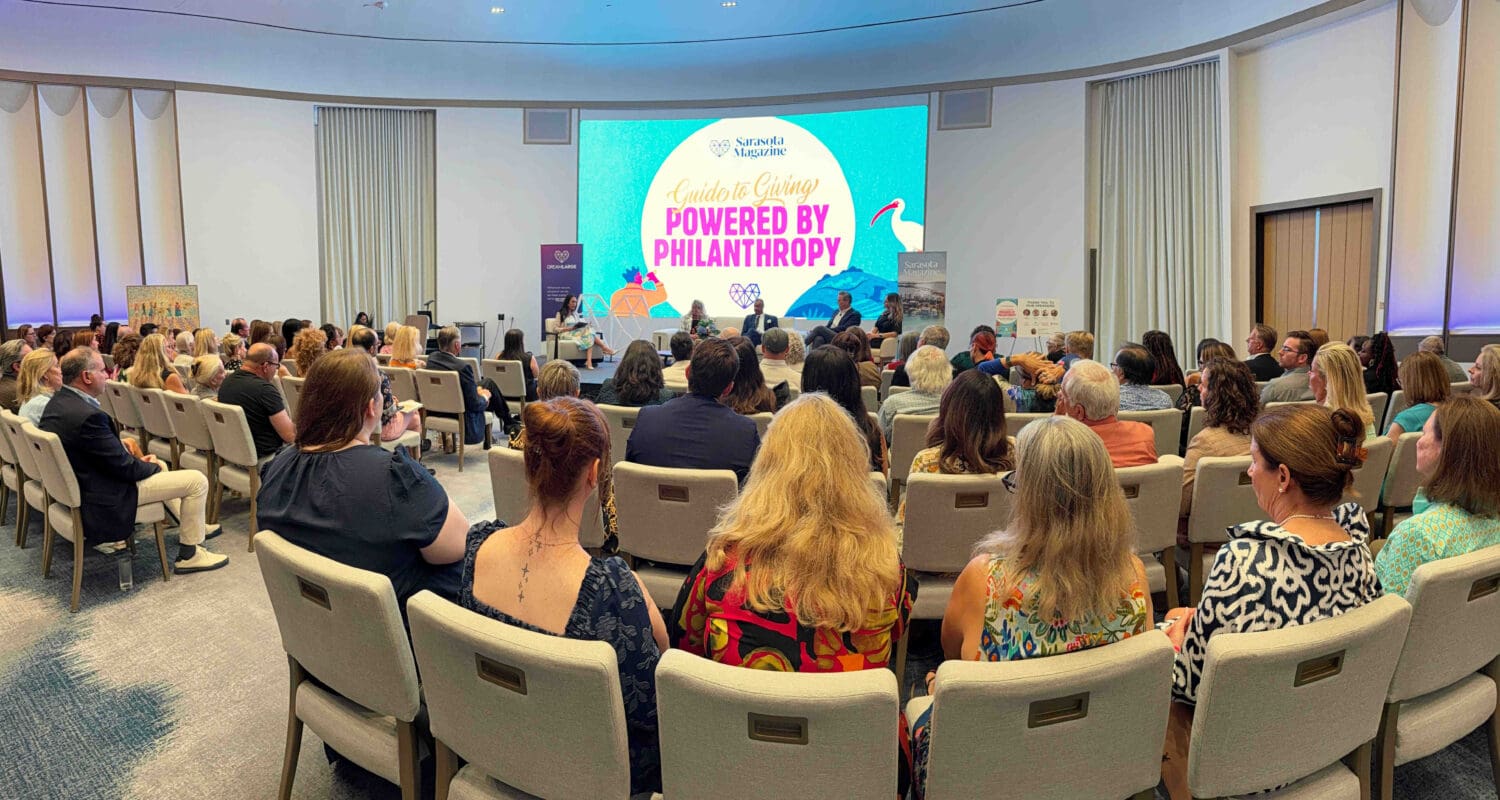
Last week I had the pleasure of attending an event at the new St. Regis Resort on Longboat Key that was organized by Sarasota Magazine. Sarasota Magazine supports local philanthropic works by highlighting the work of nonprofit organizations, fundraising events and com­munity initiatives across Sarasota and Manatee counties. Through its editorial features and digital outreach, the magazine amplifies the work of nonprofits, raising awareness of their missions, highlighting donor opportunities and celebrating impactful partnerships. By doing so, Sarasota Magazine helps connect the philanthropic community with causes in arts, education, health, environment and human services, enhancing visibility for organizations that might other­wise struggle for recognition.

The St. Regis was the perfect venue for this event. Hotel Manager Kara Hardiman welcomed guests and pointed out that their commitment to the larger community was best summed up by a quote from Lora Whitney (Whitney Beach): “We are determined to create a space of sanctuary that celebrates the natural beauty of our region at the same time as it encour­ages education, exploration and implores us to slow down and make memories with each other.”

Besides expressing pride in being part of a women-led management team, the resort commissioned a painting by Lauren Marshall entitled, “Matriarchs of The St. Regis Longboat Key Resort.” The paint­ing honors (and they named their exquisite suites after) women who were in their words “… trail­blazers whose impact shaped the region’s cultural, scientific and philanthropic landscape.” They include Caroline Astor, the undisputed queen of New York society in the gilded age and Eugenie Clark, the pioneering marine biologist who founded Mote Marine Laboratory in 1955 and broke barriers for women in science. Others include Lora Whitney, Marie Selby, Mable Ringling, Irene Colson (a vital figure in Sarasota’s early African American community), and Katherine Klauber, the president and general manager of the Colony Beach Resort, now home to the St. Regis.

The resort features an “Under the Sea Lagoon” – a 500,000-gallon saltwater habitat containing reef fish, rays and other marine animals, guided by a staff of resident marine biologists/aquarists who educate guests about the ecosystem. Their children’s club, called the Reef Rangers, offers a “marine explorer camp” where younger guests engage with aquatic life and learn about local marine environments and species.

A highlight of the evening was a panel discussion among the leaders of local foundations that centered on the challenges facing nonprofits and the area’s most vulnerable citizens they serve due to federal funding cuts. A part of the discussion centered around strategies to continuing serving the needs of environmental nonprofits that support the basis of the region’s appeal, and those most in need. The evening was an inspiration and a terrific opportunity to get to know and mingle with the region’s most engaged philanthropists.

Join the Great Scallop Search

Sarasota Bay Watch (SBW) is seeking volunteers for a citizen science event to collect data on shellfish, animals and seagrass in Sarasota Bay.

The Great Scallop Search will be on Saturday, August 23 from 8:30 a.m. to noon. Participation helps scientists assess the health of the bay and is part of a larger effort along Florida’s west coast to gather information on marine life and water quality.

Join the Great Scallop Search
Young volunteers proudly show the scallops they found during an earlier search. – Rusty Chinnis | Sun

Volunteers’ efforts during the search will help identify areas of interest for investigation. Using the provided scallop survey equipment, participants will set up an observation area with buoys and ropes. Volunteers then work in teams to record any sea life found within this perimeter. The event allows snorkelers to survey the study area and report their findings to a volunteer who will stay on the surface and document the observations on a data sheet. Once the observa­tion area has been thoroughly surveyed, the team will retrieve their equipment and proceed to the next site.

Kayakers will focus on very shallow areas near the shore. Working in pairs, one volunteer will snorkel while the other records data. Kayakers will be responsible for transporting their survey equipment to these locations.

Boat captains will cover deeper areas working with their designat­ed crew and snorkelers to record life on the bottom. Boat captains are responsible for transporting their survey equipment to these areas. Crew are volunteers who have a boat captain prior to the event. Snorkelers will be paired with boat captains who have additional space on their vessels, space permitting.

All participants (except boat captains) should be prepared to snorkel and must provide their own snorkeling gear.

Choose between two Scallop Search locations: North (Long­boat Key) or South (Sarasota Sailing Squadron). Upon arrival, volunteers will check in, collect their scallop survey equipment from SBW and join their desig­nated groups. Groups will receive instructions from SBW, then depart to search for scallops and return the equipment afterward. You must return to the Scallop Search location you started at to return your equipment. Lunch will be provided at the south location.

Experienced boat captains, kayakers and swimmers are preferred for this event.

Tips for participants

  • Wear heavy, closed-toed shoes that can get wet like sneakers, water shoes or boots to protect your feet;
  • Opt for clothing that covers your arms and legs to ensure comfort and protection;
  • Bring a reusable water bottle to stay hydrated and reduce waste;
  • Don’t forget essentials like sunglasses, sunscreen and a hat for sun protection;
  • Use a dry bag to safeguard your valuables;
  • Only scallop survey equipment will be provided (clipboards, ropes, buckets, etc.). Volun­teers must provide all other equipment that they need (snorkels, kayaks, fins, etc.).

Launch locations are: North location – Coquina North Boat Ramp: 1507 Gulf Drive S., Bradenton Beach; South location – Sarasota Sailing Squadron: 1717 Ken Thompson Parkway, Sarasota.

The event is one of Sarasota Bay Watch’s longest and most popular events. It is a great family fun/educational event and also a great way to get friends and family together on the water.

According to SBW Executive Director Ronda Ryan, “When people see what is in and under the water, they can relate to the need to protect this habitat. Seeing is believing!”

Scallop searches are held along the west coast of Florida during the summer months when the scallops are the largest. All the information collected during the searches is shared with scientists at the Florida Fish and Wildlife Conservation Commission.

The Scallop Search is a great example of citizen science at work and an opportunity for the public to interact with marine scientists.

Complete your online registra­tion at the event website to secure your spot and stay informed about updates.

Get involved this summer

With summer fast approaching, there’s time on the horizon when we have the freedom from school schedules, extracurricular activities and many of our daily routines and have the time to fish more and to get involved in worthwhile projects.

We’re blessed here to have a community of organizations, anglers and individuals who care for and appreciate this amazing place we call home. If you have some time on your hands and/or are looking for ways to help protect, defend and nourish our local waters and habitat, here are a few of the organizations that have that mission and provide those opportunities. Add these links to a list of your favorites to join and check in regularly to see and get involved in their good works. Getting involved not only provides a sense of “doing the right thing” but can offer an opportunity to meet others with similar interests. Here is a list of a few of the major players in our watershed and a link to their websites.

Suncoast Waterkeeper’s (SCWK) mission is to protect and restore the waters on the Florida Suncoast for the benefit of all through community and stakeholder engagement, environmental monitoring, advocacy, and responsible legal action. Their priorities are to ensure that appropriate laws are being followed and to take corrective action when they are not. SCWK’s work is supported by science, the appropriate statutes and environmental ethics, while always seeking to prevent environmental damage wherever possible. The main focus of the group is scientific environmental monitoring, community engagement, advocacy, and, when necessary, taking responsible legal action.

Sarasota Bay Watch (SBW) is dedicated to restoring coastal ecosystems through citizen participation. You can become an active participant by joining as a member and volunteering in Sarasota Bay Watch’s ongoing effort to protect and restore this valuable natural resource. SBW believes a sustainable ecosystem to be one that most closely resembles its natural state absent human influences, and to the greatest extent possible, one that maintains its balance of species and habitat quality in harmony with human communities. This requires both the education and active stewardship of our human communities. SBW works towards its mission with youth education, cleanups, clam restoration and much more.

Suncoast Aqua Ventures (SAV) stated mission is to keep our coastal and underwater ecosystems free from human trash and debris. They initiate and participate in numerous cleanups throughout the year to promote this cause. In the past SAV hosted the Gene Cloud Memorial Spearfishing Tournament. Those events raised over $82,000 to benefit All Children’s Hospital and Shriners Hospital for Children. Their efforts are now focused entirely on cleanup events. They partner with numerous organizations like Keep Manatee Beautiful, Sarasota Bay Watch, Sarasota Bay Estuary Program and Suncoast Reef Rovers with their planned cleanup events.

Oyster River Ecology (ORE) serves Manatee, Sarasota, Hillsborough and Pinellas Counties on Florida’s Gulf Coast. ORE’s mission is to restore ecosystems and preserve ecological functions while increasing the understanding of the natural systems on which we all rely. ORE is a results-focused 501(c)(3) non-profit organization of ecologists, restoration practitioners, and environmental educators. They are dedicated to habitat (primarily oysters) restoration, stewardship, beautification and understanding the environment to benefit the quality of life for humans and wildlife alike, both now and for generations to come. ORE’s focus is on high quality impactful projects that make a meaningful difference for the future of our area. This can range from multi-million dollar large-scale restoration (such as oyster restoration in the Manatee River) projects to backyard bioswales. ORE provides planning, design and implementation expertise to complete meaningful projects.

This is just a snapshot of the work being done by these organizations and I encourage you to explore their websites for a full picture of their missions, events and ways you can get involved while accomplishing meaningful work, meeting new, like-minded individuals and having some summer fun!

Get involved in keeping Sarasota Bay healthy

Get involved in keeping Sarasota Bay healthy

Spring is a great time to enjoy our coastal waters while work­ing to keep them healthy. Two upcoming events in April provide a terrific opportunity to do this vital work and meet others who share the passion.

The first of these events is the 8th Annual Reef and Beach Clean Up scheduled for April 5-6 at Sea Breeze Park in Terra Ceia. This event was previ­ously scheduled last September but postponed due to impacts from Hurricane Helene. The event combines environmental steward­ship with friendly competition.

Hosted by Suncoast Aqua Ven­tures, this year’s event promises to be bigger and better than ever, offering participants a chance to win cash prizes while making a tangible impact on our coastal environment. Suncoast Aqua Ventures is a community-driven organization dedicated to preserv­ing and protecting Florida’s coastal and underwater environ­ments through hands-on clean-up events, educational programs and advocacy.

The Reef and Beach Clean Up is not your typical beach clean-up. This unique event turns trash collection into a competitive sport, with cash prizes awarded in several categories, including Most Recyclables, Most Tires, Most Anchors and Most Shoes. Whether you’re a land lover or a certified SCUBA diver, there’s a way for everyone to participate. Those with access to a boat can clean up underwater, ensuring our reefs are as pristine as our beaches and mangrove coastlines.

Since its inception in 2016, Suncoast Aqua Ventures has mobilized over 2,200 volunteers who have collectively removed an astonishing 182,000 pounds of trash from our beautiful coastline and underwater environments. What began as a small local effort has blossomed into a movement that has brought together commu­nity members, environmentalists and outdoor enthusiasts from all walks of life.

Cheryl Huntsinger, President of Suncoast Aqua Ventures, reflects on the origins of the event: “We started this organization after witnessing the sheer amount of human debris littering our coast­lines and underwater habitats. We knew something had to be done, and what better way to tackle the problem than by bringing people together in a fun, competitive family-friendly environment? It’s incredible to see how much we’ve ac­complished in just a few short years.”

The 8th Annual Reef and Beach Clean Up is more than just a day of trash collec­tion—it’s a celebration of community, conservation and the power of collective action. Whether you’re here for the competition or to enjoy a day by the water, your participa­tion helps protect our coastal environment for future generations. To register, visit https://suncoastaquaven­tures.com/event/8th-annual-reef-beach-cleanup/.

The second event just a week later on Saturday, April 12, is the Annual Sister Keys Cleanup. Since 2009, Sarasota Bay Watch has been dedicated to caring for our “adopted islands” – the stunning Sister Keys.

This event invites you to be a part of this important mission to protect and maintain the natural diversity of this incredible space. Whether you’re passionate about marine life, conservation, or simply love spending time on the water, your help ensures that Sister Keys remains a thriving sanctuary for genera­tions to come. We’re looking for enthusiastic volunteers!

Whether you prefer to walk the shoreline collecting debris, captain a boat to ferry volunteers, or capture the action as a photographer, there’s a role for everyone! Boaters will transport volun­teers to the cleanup site, as well as haul collected trash. Have a kayak? Bring it along and paddle your way to the cleanup site. Your support makes a huge difference!

Continuing a tradition first started in 2009 by the Chiles Group, previous owners of Mar Vista on Longboat Key and the Beach House and Sandbar restaurants on Anna Maria Island, Beachside Hospitality will provide a complimentary boxed lunch after the cleanup.

If you’ve never been to the Mar Vista, come and see what true coastal dining is all about while enjoying the new look and an unparalleled view of the Sister Keys. Come make a difference, enjoy the great outdoors, and connect with others who share a passion for conservation!

For more information, call Ronda Ryan at 941-232-2363 and register at sarasotabaywatch.org.

First-ever Hudson Bayou cleanup successful

First-ever Hudson Bayou cleanup successful

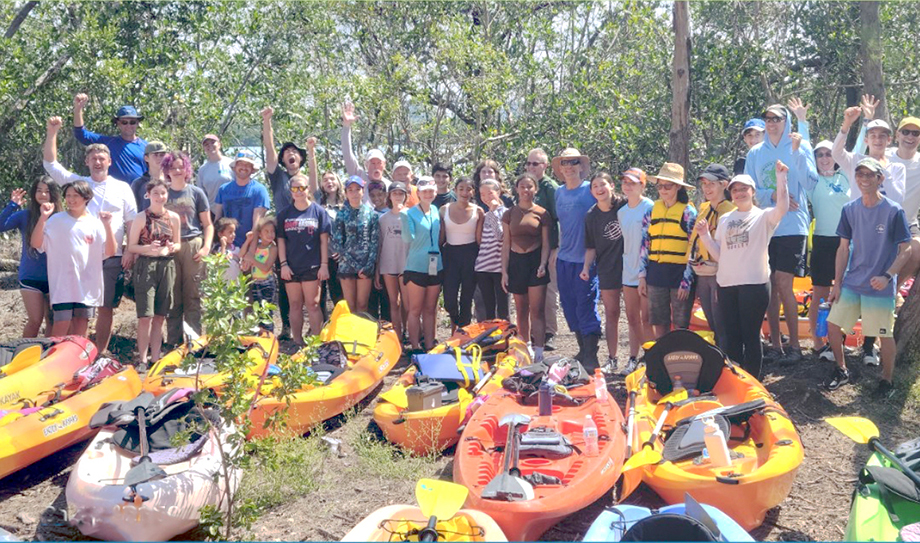
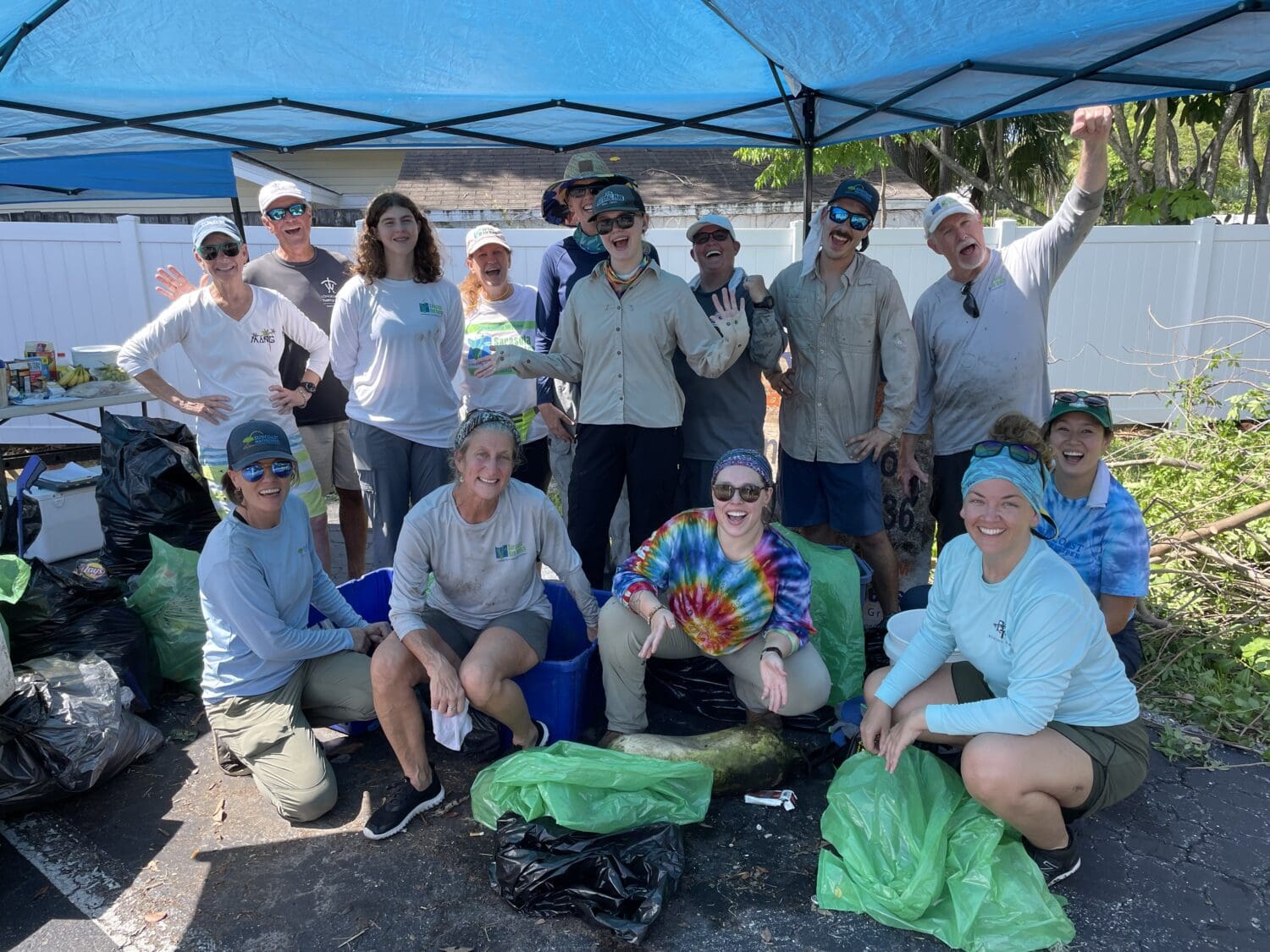
It was a fantastic way to spend a Sunday! On July 28, Sarasota Bay Watch was the lead organization in the new Resilience Incubator’s first community cleanup at Hudson Bayou in Sarasota. With the help of Suncoast Waterkeeper, 35 Incubator volunteers manned 13 kayaks and one jon boat. With the additional efforts of 10 shoreline volunteers, the group collected 604 pounds of trash and 1,200 pounds of invasive trees and bushes for a haul of 1,804 pounds total. Sarasota Bay Watch’s Executive Director Ronda Ryan described the event as “a gift of environmental stewardship to celebrate our shared home.” After the cleanup, volunteers gathered to sort the debris and recyclable items, have lunch provided by South Face and enjoy the camaraderie.

Executive Director Dr. Abbey Tyrna explained the creation of the Incubator at the event’s ribbon cutting.

“Justin (Bloom, Suncoast Waterkeeper founder) often reminisces about the early days when local environmental nonprofits worked hand-in-hand to drive real change. Today, we face a multitude of environmental challenges that demand even stronger collaboration. This is why Justin enthusiastically embraced Amber’s vision of creating a shared space for small non-profits, aptly named the Resilience Incubator.

“But what is resilience? Resilience is the ability of a system to recover from stressors or disturbances. It is built through strategies like diversifying resources, enhancing ecosystem functions, increasing social cohesion, adapting and strengthening built structures, and closing the loop on waste.

“The Resilience Incubator aims to build social-ecological resilience, ensuring our community can sustainably meet its needs while preserving the ecosystems we rely on. Together, we are creating a future where both our community and environment can thrive, facing today’s threats and preparing for tomorrow’s challenges.

Suncoast Waterkeeper is committed to this mission and, with community support, we can make a lasting impact. Join us in building a resilient future for all.”

To get involved, stop by the Resilience Incubator’s offices above the blood bank on Mound Street in Sarasota and consider joining Suncoast Waterkeeper, Sarasota Bay Watch or any of the other nonprofits working to make our home more resilient.

View a video of the cleanup here.

Scallopalooza: We’re making waves

Reel Time – Scallopalooza: We’re making waves


On Saturday night, Feb. 24, Sarasota Bay Watch (SBW) is holding its 14th Annual Scallopalooza: We’re Making Waves. The event is a major fundraiser for the organization. This year Sarasota Bay Watch is celebrating its multidimensional approach to water quality and healthy habitats. This approach includes a wide variety of programs headlined by its clam restoration program. Clams are a key focus of SBW because of their filtration properties (last year SBW obtained Florida’s first lease for restoration purposes). Another big focus of the group is the cleanup efforts of marine debris.

This past year, SBW volunteers actively cleaned local waters from Manatee County to the Myakka River in Charlotte County. In cooperation with local dive groups, over 39,900 pounds of debris were removed. This included rubble that entangles and entraps birds and marine animals, as well as damaging sensitive habitats. Island restoration at Jim Neville Marine Preserve is another focus of SBW. Their Youth Legacy Project (in partnership with Sarasota County) engages with students to remove invasive plants and install native flora to attract pollinators and birds, enriching the habitat value of the preserve while training and engaging the leaders of tomorrow. Their work also includes a youth leadership program for local high school students. This program provides leadership opportunities for the high school students who then work with SBW teaching marine science in an eight-week after-school program for fourth and fifth graders.

This year’s Scallopalooza will help support and fund the organization’s many worthwhile projects. Join other engaged community members for a happy hour, dinner, silent auction and entertainment.

If you would like to get involved with the work SBW is doing to protect Sarasota Bay and support its mission, visit www.sarasotabaywatch.org. Make sure you take note of the organizations that are major sponsors of this important fund-raising effort. As their motto says, “A healthy bay is everybody’s business,” literally and figuratively! I hope to see you there.

Reel Time: New Year’s resolutions

New Year’s resolutions are an annual ritual. It’s a time to look back and reflect on what matters most, how we feel about our lives, and what changes might improve our situation. It’s also a time to consider what positive actions and fresh adventures might be planned for the new year. Anglers can glean some valuable insight by reviewing their year in fishing, examining what they learned from their days on the water, what their experiences revealed and assessing how this knowledge might lead to improved success and enjoyment in 2024.

I’m not suggesting that we write down hard and fast resolutions that don’t give any wiggle room. Instead, think back on even the small things that when done differently might have had a bigger impact than you ever imagined. An example might be remembering when you hooked a nice fish only to lose it to a failed knot, that tell-tale squiggle on the end of your line where the hook used to be attached. This resolution might read, “Always remember to carefully tie my knots, inspecting and testing them before I start fishing.” The same applies to sharpening hooks, checking the drag, and inspecting the line for nicks and abrasions. Reflections like this can be the start of a general review of all your rigging, the state of your tackle and lures and the condition of the line you have on your reels.

Tackle and organization are certainly places to start but extend that same thinking to other equipment like your boat and motor, waders, push pole and trolling motor. Experience teaches us that it’s the little things that we overlook that come back to haunt us. On the water, consider thinking out of the proverbial box by altering your routine strategy. Many anglers go fishing with a plan and never deviate from it. They start at one spot and hit all the usual holes during the day. A different option is to try planning to fish in places you’ve never explored before. I’ve done this and been amazed at how many areas there are that have proven to be productive. Looking at the same place with new eyes can be revealing.

New Year's resolutions
A concerned Anna Maria resident reported this illegal, after-hours mangrove destruction at 111 Gull Drive, now under investigation by city, state and federal agencies. – Submitted

Also, consider trying a new destination. There are lots of beautiful and productive fishing adventures within a few hours’ drive of Anna Maria Island, both north and south. Drive two hours north and you can explore the Chassahowitzka National Wildlife Refuge and, just north of there, Homosassa, Crystal River and Withlacoochee Bay. Less than two hours south and you can discover Charlotte Harbor and Pine Island Sound. Don’t want to go that far? Anyone with a boat can leave Anna Maria Island and be fishing in fresh water in less than an hour. The Manatee River and Braden River provide anglers with a variety of fish from tarpon to catfish, redfish to bass. Both rivers also have numerous launch sites for boats, kayaks and paddleboards.

It might even prove useful to review how you approach fishing. If you’re a fly caster, look at ways you might improve your casting and consider learning how to cast with your non-dominant hand. Anglers who use conventional tackle might want to try artificial lures instead of always relying on live bait. No matter how long you’ve been fishing or what your level of competency there’s always room for improvement. A general review of tackle, techniques and the opportunities available to you can only improve your enjoyment of fishing moving into 2024.

Lastly and even more important, consider getting involved in protecting the resource that determines our fishing today and in the future. Fishermen have the most to lose by not addressing the degradation of our local waters and habitat. There are so many ways to make a difference no matter your circumstance. Keep an eye out and report illegal mangrove trimming and pick up trash on the water. Employ enlightened self-interest by vetting your local, state and national politicians on how they voted on matters that affect the water we drink and swim in and the fish we pursue. If we vote party line rather than on the issues that affect our fishing, we’re working against our self-interest. Write letters, attend commission meetings and join and donate to organizations like Sarasota Bay Watch, Vote Water and Suncoast Waterkeeper who work to protect our watery world. A resolution to act this year will protect what we value most for today and future generations. Happy New Year!

Cleaning up the Sister Keys

Reel Time: Cleaning up the Sister Keys

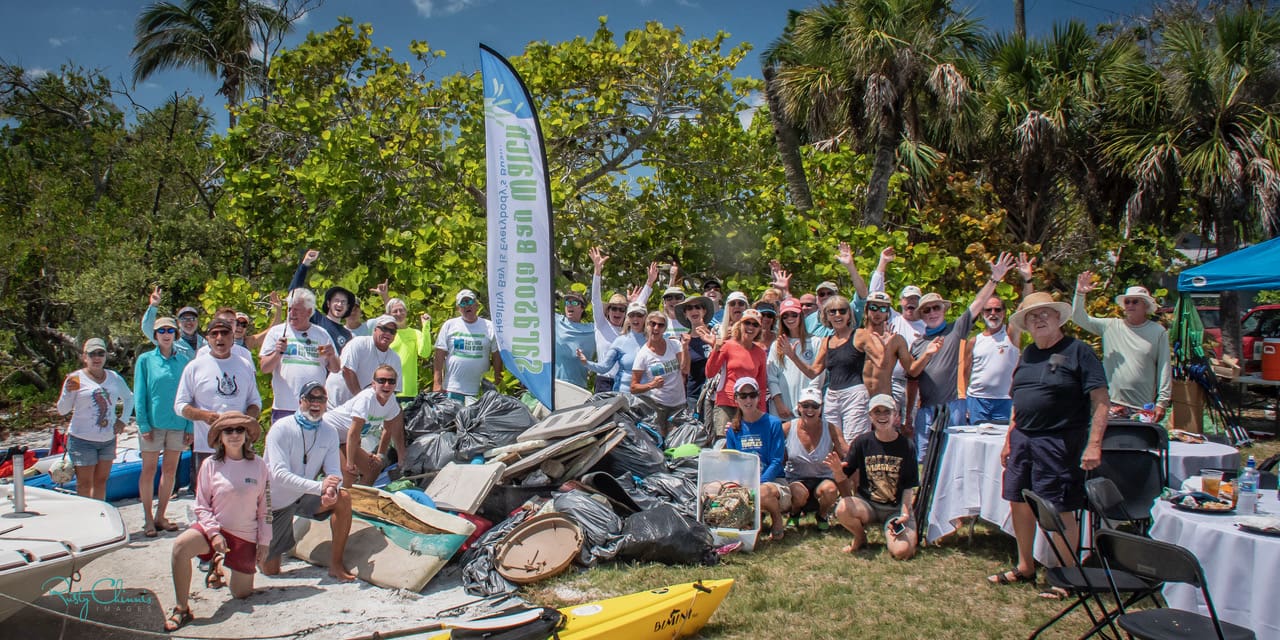
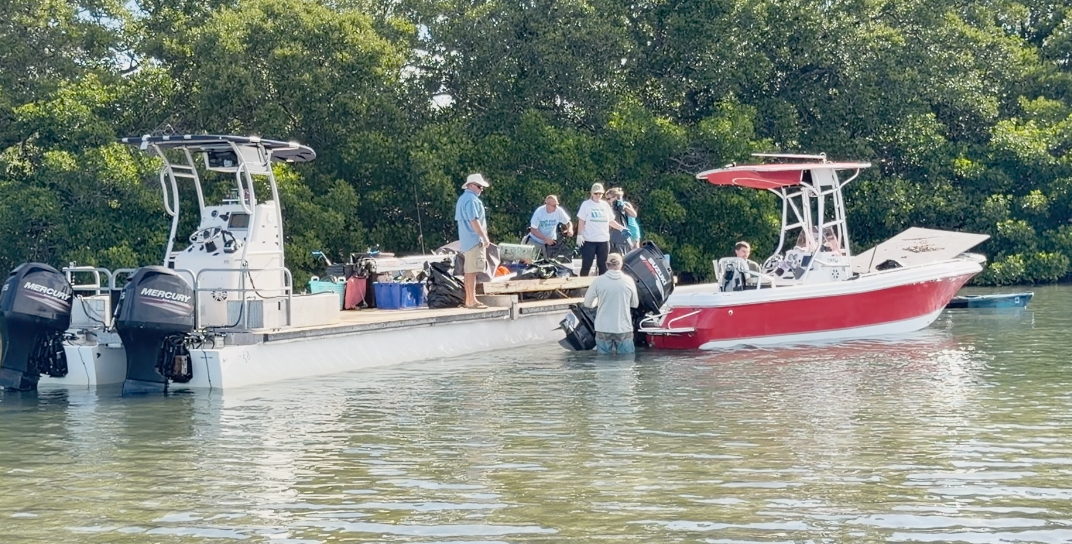
Suncoast Waterkeeper teamed up with Sarasota Bay Watch last weekend when they conducted their 2023 Annual Sister Keys Cleanup. The event was a collaboration of the two non-profit organizations, the Town of Longboat Key and Mar Vista Dockside Restaurant. Close to 50 volunteers worked for four hours on the island and around the mangrove fringes collecting trash and recyclable items. This year’s harvest was especially large, fueled by the storm surge that hit the area during Hurricane Idalia. One of the most unusual items in the cleanup’s 15-year history was uncovered during the event, an 18-foot wooden “sharpie” sailing craft. John Hoover made another impressive find when he uncovered a blown glass sphere. In all, volunteers collected over 1,000 pounds of trash from the islands.

The Sister Keys were originally slated for development in the early 60s as the Shangri Isle Club and were once again threatened in 1989 when they went up for sale at $1 million. That spurred a group of citizens to form the Sister Keys Conservancy to buy and preserve the islands as a nature preserve. The Town of Longboat Key purchased the islands in 1994 with a stipulation that the keys would never be developed.

The islands underwent a million-dollar mitigation in 2007 that removed all invasive species, planted native flora and created a 2-acre wetland. Today, mature mangroves dominate the waterways and are rich with crustaceans, minnows, juvenile finfish and wading birds. Native species planted on uplands, first created from the dredging of the Intracoastal Waterway in the late 1800s, have matured, making the islands one of the best examples of a thriving native marine environment in coastal Florida.

The cleanup is part of a continuing two-pronged effort to clear the islands of trash and prevent the resurgence of invasive species.

Kayakers and those without a boat were ferried to the island by volunteer boaters Benny Parrish, Mark McBride and Tim Thurman.

Back at the Longboat Key Boat Ramp, event volunteers loaded the debris to be retrieved by the town’s public works employees. All plastics and cans were collected in separate green bags provided by SBW and recycled. The volunteers were treated to a box lunch and beverages provided by the Mar Vista Dockside Restaurant and the Chiles Group, who have been supporters of the event from the beginning.

The Sister Keys Clean Up is just one of many projects that SBW is involved in. In 2021, SBW planted clams in the bay in an ongoing restoration effort. Other cleanups are conducted at various locations throughout the bay, including an annual monofilament cleanup and more.

Suncoast Waterkeeper is a Sarasota-based advocacy non-profit committed to protecting and restoring Florida Suncoast’s waterways through enforcement, fieldwork, advocacy and environmental education for the benefit of the communities that rely upon these precious coastal resources. Their efforts have been responsible for major initiatives to hold municipalities responsible for mandates established in the landmark 1982 Clean Water Act. SCWK also conducts bi-monthly water testing of inland coastal waters. For more information on the groups’ missions and to become a member, visit their websites, www.sarasotabaywatch.org and www.suncoastwaterkeeper.org.

Sarasota Bay Watch Scallop Search resumes

Sarasota Bay Watch Scallop Search resumes

Sarasota Bay Watch, a local nonprofit, is dedicated to educating and enlisting the Sarasota Bay community to act to preserve and protect our waters. Some community efforts include cleanups, above and below the water’s surface, to remove trash and entangling debris, and initiate vegetative and shellfish restoration. The organization also creates programs that promote youth education and leadership.

Sarasota Bay Watch has been conducting its annual Scallop Search for over 13 years. Unfortunately, in recent years, COVID-19 and red tides have canceled the searches.

Why are scallops important? Scallops serve as canaries in the coal mine, providing a good indicator of water quality since they are affected by storms, water salinity, red tide and predation. In addition, during the search, a great deal of information is collected on various shellfish like clams, seagrasses, and other marine organisms.

This citizen science approach (community information gathering) not only benefits the organization but also educates the community on life in our waters. Changes in populations, temperatures, and pollution are reflected in the marine environment. Educating the community with this hands-on activity is the goal of the search. To be a proponent of water quality protection, a basic understanding of the marine environment is essential. This is one of the event’s main objectives.

Last Saturday, Sarasota Bay Watch hosted this year’s Scallop Search at the Sarasota Sailing Squadron. Participants in the family-friendly boating event were tasked with collecting information on the state of Sarasota Bay from north to south. Boaters were essential to the success of the event, bringing their crews and additional volunteers out on the bay.

Students received community service hours for their involvement in the search. Participants were assigned to an area and provided equipment. They then snorkeled in their designated area and recorded what they saw.

Gathering for lunch after the event was a wonderful opportunity to meet and be inspired by like-minded individuals.

More information can be found at the Sarasota Bay Watch website.

Join a community that understands and embraces its water!

Join in the cleanup

Reel Time: Join in the cleanup

Have you been looking for a way to meet new friends who share your passion for the environment and work to keep it healthy? An upcoming event will provide you with that opportunity. Join Sarasota Bay Watch, Suncoast Aqua Ventures and Suncoast Waterkeeper on Saturday, Feb. 25 from 8 a.m. to 1 p.m. at the Harbor Cove Community, 499 Imperial Drive in North Port. Hurricane Ian blew a tremendous amount of debris into the Myakka River, our area’s premier wild and scenic river. Join the effort in removing debris and restoring this natural treasure.

You can sign up at the Sarasota Bay Watch website. The event starts at 8:15 a.m. with a safety meeting followed by the cleanup, which begins at 8:30 a.m. Lunch will be provided at noon at the end of the cleanup. Fourteen kayaks will be provided for those who want to participate but don’t own a kayak. Sign up early to reserve a seat. Participants can, of course, bring their own kayak or shallow draft boat. Work gloves, trash bags, maps and equipment will be provided. Non-boaters are needed to retrieve trash or clean areas from land. Parking is limited, so carpool if possible. If you have questions, contact Ronda Ryan at 941-232-2363. Other sponsors include North Port Friends of Wildlife and the Harbor Cove Community.

As you may be aware, Hurricane Ian had a huge impact over a wide swath of waterways across the state. While the news has moved on to more immediate stories, the debris left by the storm remains in some of the Suncoast’s most important natural areas. On their first event held on Dec. 11, 2022, the organizations cleaned up the waterways in the community of Holiday Estates. A particularly hard-hit area on the Suncoast, Lemon Bay sits at the southern end of the watershed monitored by Suncoast Aqua Ventures, Sarasota Bay Watch and Suncoast Waterkeeper. With the assistance of Lemon Bay Conservancy and the Coastal and Heartland National Estuary Program, they worked to clean up the canals of Ainger Creek, a major tributary of Lemon Bay.

This is a great opportunity to learn about and participate in the important work of these organizations, as well as an opportunity to spend a day making a difference and meeting new friends. Join in to keep the Suncoast the special place it is for this and future generations.

Reel Time: Scallopalooza - Welcome to the Clam Jam

Reel Time: Scallopalooza – Welcome to the Clam Jam

On Saturday night, Feb. 11, Sarasota Bay Watch (SBW) will hold its 13th annual major fundraising event, “Scallopalooza: Welcome to The Clam Jam,” at the Sarasota Hyatt Regency Hotel. Last year’s event was a sellout with over 400 community supporters in attendance and, if history is any indication, this year will be too.

SBW’s Executive Director Ronda Ryan, who has been with Sarasota Bay Watch since 2007, continues to spearhead the group’s education and restoration efforts. Sarasota Bay Watch’s shellfish restoration efforts resulted in nearly 1 million clams being released in 2022 alone. Their work highlights the need for action to protect the local marine ecosystem. As a part of that “natural system,” clams filter algae that have been growing in excess and affecting water quality and clarity in the bay. Reduced water quality and clarity negatively affect seagrass growth, a necessary component for a healthy ecosystem. Seagrass beds provide essential habitat and food to all creatures in the bay, including humans.

Sarasota Bay Watch Board President Brandon Taaffe and members of the event committee, Brian Jung, Al Jeffery, John Ryan and Ernesto Lasso De La Vega, helped Ryan organize an event that highlights the importance of and support for local nonprofits stressing the significance of clean water.

The evening’s activities will include live music, an open bar and a large silent auction that includes artwork, event tickets, and merchandise of every description. After dinner, a live auction will feature packages including travel, fishing trips and much more.

One of the best parts of the event is the opportunity to mingle with some of the region’s most passionate environmental supporters and to share the common mission for protecting Sarasota Bay. De La Vega, who leads the clam restoration efforts, will be back to update participants on SBW’s projects, which include the first-ever clam lease in Sarasota Bay that is dedicated to restoration.

To get involved with the work SBW is doing to protect Sarasota Bay and support their mission, visit the group’s website. As their motto says, “A healthy bay is everybody’s business,” literally and figuratively!

Reel Time: The price of inaction

Reel Time: The price of inaction

Red tide. They’re probably the two words that nobody on or near Florida’s west coast wants to hear and I can understand why, sort of.

Someone who owns a resort hotel, has a restaurant on or near the beach or runs a business that takes people fishing or sightseeing depends on clean, healthy water for their livelihood. It’s easy for the average person to see that these businesses are negatively affected by red tide or even the mere mention of it.

What’s less obvious is that poor water quality affects everyone, from fishing guides to developers, realtors and builders, right down to the plumber sweating pipes in Lakewood Ranch. Humans seem to focus only on the things that directly impact us in the present, finding it easier to “kick the can down the road.” I suggest looking your children and grandchildren in the eye and asking yourself, “What part am I taking in creating and protecting the world they will inherit?”

We only must look back at the last five years for two haunting cases in point, starting with the harmful red tide algae bloom that devastated coastal waters from Naples to St. Petersburg and rendered Sarasota Bay a virtual wasteland. The result? In the last five years, Sarasota Bay lost most of the seagrass than had regrown in the past 20 years plus, if not more.

As if we needed another example, the disastrous release of over 200 million gallons of polluted process water from the legacy phosphate facility at Piney Point in late March 2021 led to the worst algae bloom in Upper Tampa Bay since the 1970s, killing thousands of tons of sea life. Piney Point is the perfect example of kicking the can down the road and running out of road.

Resident anglers have seen firsthand the decrease in water quality and the resulting loss of habitat, seagrass and its negative effect on local fisheries. Unfortunately, anglers and residents who recently relocated here see “the new normal.” Is it possible that we might consider what we’re leaving for future generations instead of how it affects self-interest in the here and now? This is not a new problem and I’m sure there were others saying the same thing when we first arrived here. But this is now and the time to act is slipping away.

If you want to see how the officials we elect represent us in enacting rules and regulations to protect our natural resources, consult the League of Conservation Voters.

The LCV is non-partisan and tracks the voting records of members of the Senate and Congress on environmental issues in its National Environmental Scorecard. This is a clear indication of how those tasked with representing our interests actually vote. Who we elect is critical to facing this problem. Politics is more divisive now than I can remember, but it’s critical that we elect politicians who represent our interests, not those with no vision who are concerned with division.

In the end, we all suffer the consequences. Vote, and consider joining and working with advocates like Suncoast Waterkeeper, Vote Water and Sarasota Bay Watch, groups working to educate the public, get them involved and hold politicians and municipalities accountable for their votes and action or inaction.

The time to act is the only time there ever is, right now. It won’t happen overnight, but it’s critical we begin now.

Reel Time: The Sister Keys - the restorative power of nature

Reel Time: The Sister Keys – the restorative power of nature

“Never doubt that a small group of thoughtful, committed citizens can change the world. Indeed, it is the only thing that ever has.” – Margaret Mead, anthropologist (1901-1978)

In the 1890s, the first leg of the Gulf Intracoastal Waterway was created to transport produce from Sarasota to the Tampa Bay market. The project skirted two large mangrove islands called the Otter Keys and would generate the spoil that would be the basis of the uplands we now call the Sister Keys.

At one point, a disgruntled owner bulldozed many of the mangroves because he wasn’t allowed to build on the islands. During World War II, the flats surrounding the islands were used by bombers for target practice and craters still exist as deep blue holes on the grass flats. In the 1960s, the islands were owned by a group of investors that intended to create a tropical resort they dubbed Shangri Isles. The development would have transformed the keys with a marina, 18-hole championship golf course, luxury homes, a hotel and an airport. Fortunately, economics dictated a different course for the islands and the plants and animals that called them home.

Over the next two decades, the islands would remain essentially the same except for seeds and flotsam brought there by birds, wind and tides. In the late 80s, the islands went on sale again, this time advertised as a “tropical paradise” where 80 acres could be developed. This was during a period of regional growth when a spurt of development came to the area and Tidy Island on the east shore of Sarasota Bay sprouted homes at the expense of the native habitat. An adjacent island, Jewfish Key, was also undergoing development and blue septic tanks that would be buried for future homes dotted the shore on platted lots.

This activity caused a group of citizens to ask the question, “Wouldn’t it be nice to have at least one island in the bay that didn’t have a house on it?” In 1989, those progressive citizens created the Sister Keys Conservancy and lobbied for two years to raise money and awareness to buy and protect the islands.

A logo was created, an anthem was composed and area environmental groups, including the Longboat Key Garden Club, Mote Marine Laboratory, The Sierra Club, The Trust for Public Lands and Florida Audubon, were enlisted to further the cause. The group lobbied politicians and hosted fundraisers, a Music in the Park series, bake sales and speaking engagements to spread the word.

Despite all of their efforts, the funds to purchase the islands seemed out of range until the Town of Longboat Key voted to fund the purchase on July 10, 1992. In October of that year, the Sister Keys Conservancy’s co-founders traveled to Washington D.C. where they were presented with the Theodore Roosevelt Conservation Award for their efforts.

The islands were protected with a covenant in the deed that requires any changes to the status of the islands (renewed for 20 years this year) to be sanctioned by Florida Audubon and remained essentially unchanged until 2006. At that point, the town was approached by the developers of Perico Island, who needed mitigation credits for some dredging they were proposing. When the town leaders agreed, the islands were transformed by a project that removed all invasive plants, replaced them with native species and created an almost two-acre wetland.

In 2010, Sarasota Bay Watch adopted the Sister Keys and committed to helping keep the islands free of trash and the inevitable regrowth of invasive plants. Annual trash and invasive cleanups have been done every April since the completion of the mitigation with the help of the Longboat Key Public Works Department, Longboat Key residents, the Longboat Key Garden Club and Suncoast Waterkeeper, which now partners with these groups periodically as well as annually.

The Sister Keys of today are an extraordinary example of what can be done to protect and enhance the Sarasota Bay ecosystem and a remarkable future vision of the restorative power of nature.

To learn more about the Sister Keys, visit www.sisterkeys.org.

Reel Time: Sister Keys Cleanup reaps benefits

Reel Time: Sister Keys Cleanup reaps benefits

Suncoast Waterkeeper teamed up with Sarasota Bay Watch this past weekend when they conducted the 2022 Annual Sister Keys Cleanup.

The event was a collaboration with the Town of Longboat Key and the Mar Vista Dockside Restaurant. Close to 40 volunteers worked for four hours on the island and around the mangrove fringes collecting trash and recyclable items.
The Sister Keys were originally slated for development in the early ’60s as the Shangri Isle Club and were once again threatened in 1989 when they went on sale for $1 million. That spurred a group of citizens to form the Sister Keys Conservancy in an attempt to buy and preserve the islands as a nature preserve. The Town purchased the islands in 1994 with a stipulation that the keys would never be developed.

The islands underwent a million-dollar mitigation in 2007 that removed all invasive species, planted native flora and created a 2-acre wetland. Today mature mangroves dominate the waterways and are rich with crustaceans, minnows, juvenile finfish and wading birds. Native species planted on uplands created from the dredging of the Intracoastal Waterway in the late 1800s have matured, making the islands one of the best examples of a thriving native marine environment in coastal Florida. The cleanup is part of a continuing two-prong ongoing effort to clean the islands of trash and the resurgence of invasive species.

The Longboat Key Marine division patrolled the Intracoastal Waterway to slow boaters as volunteers embarked for the island and brought bags of trash and recycling back to the edges of the ICW. Kayakers and those without a boat were ferried to the island by volunteer boaters.

Back at the Longboat Key Town Boat Ramp after the event, volunteers loaded the debris into a truck provided by the Town of Longboat Key Public Works. All plastics and cans were collected in separate green bags provided by SBW and recycled. The volunteers were treated to lunch by the Mar Vista Dockside Restaurant, a longtime supporter of the event.

Reel Time: Sister Keys Cleanup reaps benefits
SBW’s Ronda Ryan holds a letter in a bottle found by Benny Parrish on the Sister Keys. – Rusty Chinnis | Sun

The Sister Keys Cleanup is just one of many projects that SBW is involved in. In 2021, SBW planted clams in the bay in an ongoing restoration effort. Other cleanups are conducted at various locations throughout the bay, as well as an annual monofilament cleanup and much more.

Suncoast Waterkeeper is a Sarasota-based advocacy non-profit committed to protecting and restoring the Florida Suncoast’s waterways through enforcement, field work, advocacy and environmental education for the benefit of the communities that rely upon these precious coastal resources. Their efforts have been responsible for major initiatives that hold municipalities responsible to mandates established in the landmark 1982 Clean Water Act. SCWK also conducts bi-monthly water testing of inland coastal waters.

For more information on the groups’ missions and to become a member, visit their websites, Sarasota Bay Watch and Suncoast Waterkeeper www.sarasotabaywatch.org and www.suncoastwaterkeeper.org.