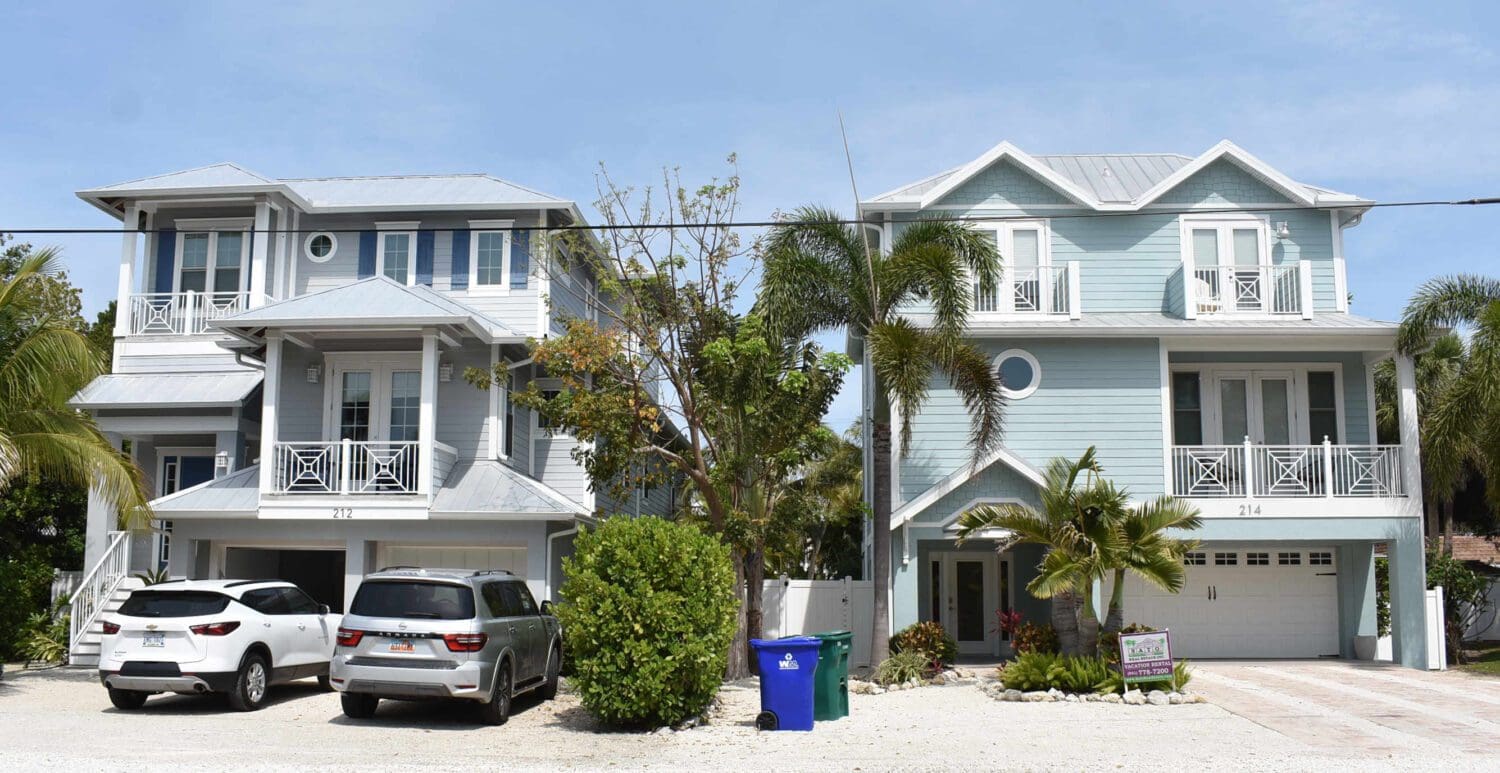
TALLAHASSEE – The Florida Legislature has failed in its efforts to preempt the regulation of short-term vacation rentals to the state.
During the 60-day legislative session that concluded on May 5, the Florida Senate and House of Representatives both proposed preempting the regulation of short-term vacation rentals (also known as transient public lodging establishments) to the Florida Department of Professional and Business Regulation (DBPR).
Doing so would have severely limited city and county governments’ ability to regulate and inspect short-term vacation rentals at the local level. The proposed legislation would have prohibited city and county governments from imposing and enforcing occupancy limits and would have also ended their ability to regulate and enforce short-term vacation rental advertising by online platforms such as Airbnb and Vrbo.
Florida law defines a transient public lodging establishment as any unit, group of units, dwelling, building or group of buildings rented to guests more than three times in a calendar year for periods of less than 30 days or one calendar month, whichever is less; or which is advertised or held out to the public as a place regularly rented to guests.
On April 27, the Senate adopted SB 714 on third and final reading by a 28-10 margin. Sen. Jim Boyd (R-Bradenton) and Sen. Joe Gruters (R-Sarasota) voted in favor of the proposed legislation.
On May 3, the House voted 73-39 in favor of adopting on third reading an amended version of House Bill 833. Rep. Will Robinson Jr. (R-Bradenton) voted in favor of the proposed legislation.
According to Anna Maria Mayor Dan Murphy, a last-minute amendment made to the House bill would have prohibited local governments from suspending for any reason a locally issued vacation rental registration or license.
Anna Maria Mayor Dan Murphy led the city’s opposition efforts. – Joe Hendricks | Sun
T
The House amendment resulted in HB 833 no longer being an identical companion bill to SB 714, which in turn resulted in the non-matching House and Senate vacation rental bills both dying. If matching House and Senate bills had passed through their respective governing bodies, the legislation would have been sent to Gov. Ron DeSantis for him to veto or sign into new state law.
Using the city’s contracted lobbyist and the city-owned Home Rule Florida website, Murphy, the Anna Maria City Commission and City Clerk LeAnne Addy led the statewide opposition to the proposed vacation rental legislation. According to Addy, the Home Rule Florida website generated and resulted in approximately 40,000 opposition emails being sent to state legislators during the past two months.
City Clerk LeAnne Addy manages the city’s Home Rule Florida website. – Joe Hendricks | Sun
When contacted Friday, Murphy shared his thoughts on the failed legislation.
“We are pleased that the vacation rental legislation died a natural death. It was poorly thought out and would have been unenforceable by the state,” he said.
“At the same time, we realize this issue will come back again even stronger next year. So, we’re preparing for that fight now. HomeRuleFl.com served a vital role in getting the word out, not just locally, but across the state as well. We plan to expand our coverage over the next few months so as to have greater coverage and an even more diverse universe of users interacting with our website,” Murphy said.
ANNA MARIA – Local governments, including those on Anna Maria Island, are in danger of losing their ability to regulate short-term vacation rentals at the local level.
Using a contracted lobbyist and the city-owned Home Rule Florida website,the city of Anna Maria is at the forefront of the statewide opposition to the Florida Legislature’s efforts to preempt short-term vacation rental regulations to the state; and specifically, to the Department of Business and Professional Regulation (DBPR) that already requires short-term vacation rentals to be registered with the state.
On April 27, the Florida Senate adopted by a 28-10 margin the final amended version of Senate Bill 714. Sen. Jim Boyd (R-Bradenton) and Sen. Joe Gruters (R-Sarasota) supported SB 714.
The matching and accompanying House bill, HB 833, is scheduled for a final vote of the House members this week. During a previous committee stop, State Rep. Will Robinson Jr. (R-Bradenton) supported the bill.
If the House joins the Senate in adopting the proposed legislation, the matching bills will be sent to Gov. Ron DeSantis to veto the legislation or sign it into new state law that would take effect July 1.
The state preemption of vacation rental regulation would apply to short-term vacation rentals, also known as transient public lodging establishments, rented for less than 30 days more than three times a year, or advertised as such.
Commission concerns
During the Anna Maria Commission’s April 27 meeting, Mayor Dan Murphy referenced a late amendment made to SB 714 before the Senate adopted it.
The amended Senate bill would allow a local government to suspend, terminate or refuse to issue or renew a locally-issued vacation rental registration if the vacation rental premises, owner or operator has been found by a local code enforcement board to have violated a registration requirement.
The registration could also be suspended if two more violations of a local law or regulation that does not apply solely to vacation rentals occur within a 90-day period. This would include noise ordinance violations. The local government would be required to first issue a written warning or notice and provide the rental owner or management company the opportunity to cure the violations before suspending or terminating the rental registration.
Anna Maria Mayor Dan Murphy has been at the forefront of the city’s vacation rental-related legislative battles this year and in years past. – Joe Hendricks | Sun
“It’s a glimmer of hope. You could suspend a vacation rental registration for two violations of noise, two violations of our code over a 90-day period,” Murphy said.
A vacation rental registration could also be revoked if a city or county lien has been placed on a vacation rental property and the lien remains unpaid and unaddressed.
Murphy planned to meet with City Attorney Becky Vose the following day to get a better understanding of how these amendments would impact the city’s vacation rental enforcement efforts if the legislation is enacted as state law.
With the Senate bill already adopted, and the House bill scheduled for a final vote, Murphy said the city’s best hope may lie with DeSantis vetoing the legislation.
Commissioner Charlie Salem, a former congressional aide, suggested asking the city’s lobbyist to provide the city with a list of DeSantis’ top supporters so the city and its supporters can ask them to encourage the governor to veto the legislation.
Anna Maria Commissioner Charlie Salem suggested appealing to Gov. Ron DeSantis’ top supporters. – Joe Hendricks | Sun
“I think the only way we get this vetoed is if the top supporters of his go to him physically and tell him this is a terrible idea,” Salem said.
Potential impacts
The legislation proposed by SB 714 and HB 833 would eliminate or reduce a city’s ability to regulate short-term vacation rental occupancy limits. It would also eliminate or reduce a city’s ability to monitor, enforce and eliminate fraudulent online advertising by advertising platforms such as Airbnb and Vrbo and the city’s ability to annually inspect short-term vacation rentals.
The proposed legislation would also cap the annual registration fee imposed by local governments.
According to SB 714, “Local governments may charge a fee of no more than $150 for processing an individual registration application or $200 for processing a collective registration application for up to a total of 25 individual vacation rentals.”
The city of Anna Maria currently imposes occupancy-based registration fees that range from $336 per year for a vacation rental that allows four occupants, $1,010 for vacation rental that allows 12 occupants and $2,440 for a vacation rental that allows 29 occupants.
During the current fiscal year, Anna Maria’s registration fees are expected to produce approximately $415,000 in annual revenues for the city. Registration revenues are only supposed to be used to enforce the city’s vacation rental ordinance. Those revenues fund code enforcement officers and vehicles, annual inspections, monitoring of online advertising platforms and the administrative and legal costs associated with enforcing the city’s vacation rental ordinance.
Opposition efforts
On Saturday and Sunday, the Home Rule Florida website issued email calls to action to its subscribers. The emails and the website note HB 833 is headed to the House of Representatives for a final vote.
“Nobody wants to live next door to a ‘Party House’ and this bill allows Airbnb, Vrbo and any other vacation rental marketing platform to cram as many people into a house as they see fit! The bill waters down, and in many cases, strips away your local government’s ability to register, inspect, control occupancy or regulate false advertising in the burgeoning vacation rental industry. Please let the House of Representatives know how you feel by sending an email to them. Join your neighbors in opposing this bill,” the email says.
The email letter template posted at the Home Rule Florida website for immediate distribution to the House members echoes those sentiments.
The 2023 legislative session is scheduled to end on Friday, May 5.
ANNA MARIA – Longtime community members and city officials Carol and Bob Carter are moving to Sarasota County in December.
The Carters moved into their Anna Maria home in 2001. Carol’s departure will create an 11-month vacancy on the city commission to be filled by commission appointment.
Bob’s departure will create a vacancy on the city’s Planning and Zoning Board. In 2019, he and Dick York received Anna Maria’s Distinguished Citizen of the Year award for their work with the Home Rule Florida organization and website.
On Saturday, Nov. 12, Carol submitted her resignation letter to Mayor Dan Murphy.
“Bob and I will be relocating in December to south Sarasota County for a quieter life – at 26 feet above sea level – nearer our sons and their families in Naples,” she wrote.
“It’s been an honor for me to serve and represent the residents of our city and Anna Maria since Nov. 14, 2013, when I was sworn in as a commissioner for my first two-year term. Now, five terms and almost 10 years later, I resign my position on the Anna Maria City Commission as of Dec. 16. If acceptable, my final commission meeting would be Dec. 15,” she wrote.
In December, Carol Carter will leave the city commission she’s been a member of since 2013. – Joe Hendricks | Sun“It is difficult to express how much this experience, with its responsibilities, has changed my life. I will forever value the trust relationships that have developed for me with my fellow elected officials and the Anna Maria city staff members both past and present. That learning curve of all the inner workings between local, county and state officials, our local ordinances, county and state laws and the indominable state of Florida Sunshine Law continued for all my years in office,” she wrote.
“Thank you, Mayor Murphy and commissioners Short, Crane, Sebring and Kingan for your support and confidence during our years working together for the greater good of our Island community. I hope I am leaving this special place better prepared to meet the challenges ahead,” she stated in her letter.
In his response to Carol’s resignation letter, Murphy wrote, “It is with a great deal of regret that we accept your letter of resignation. Thank you for all that you have done for our city and our Island community to make it a better place to live. You have left a positive and indelible mark on Anna Maria through your many contributions.”
On Friday, the couple attended the city’s “Old Soldiers & Sailors” Veterans Day parade and the recognition ceremony at City Pier Park. When asked about their pending move, Bob said he and Carol both grew up in rural areas and want to return to a more rural lifestyle.
“Carol and I have lived on the Island for over 20 years. We’ve really enjoyed it but as we look to where we want to spend the next 10 or 20 years it’s going to be in a more peaceful place. We’re looking at five acres out east in south Sarasota County. We’ll probably have a few animals and invite some of our friends from the Island to come to our ‘petting zoo,’ ” Bob said.
“We’re really looking forward to this chapter of our lives together. We will miss the Island and we’ll be happily and peacefully watching from the sidelines. When we bought here this was a very different place. It was over 70% residential then and now we’re in the low 20%. That was fine for the period that we were here, but we’re looking forward to a new chapter in our lives together. We have friends in Sarasota and I’m still within 27 minutes of my office in Sarasota,” Bob said.
When contacted later in the week, Carol said, “We look forward to the next phase of our lives and changing gears for the next 10-15 years if we’re fortunate and our good health continues. I’m 75 and I think it’s time to regroup and do some different things to keep me invigorated,” she said.
As a soon-to-be-resident of unincorporated Sarasota County, Carol doesn’t anticipate running for a county commission seat, but she may volunteer to assist the county government in some other fashion.
She also hopes to get involved with the Conservation Foundation of the Gulf Coast, working on wetland and land conservation and preservation.
“I come from an agricultural background and I hope to get more involved in that type of thing,” she said.
The couple has joined the Church of the Redeemer Sarasota and they plan to get involved in some of the many endeavors taking place there, including the ongoing Hurricane Ian recovery efforts that include repairing and replacing damaged homes and churches. Carol said the church has also helped displaced Afghan refugees get settled in southwest Florida.
“They have all kinds of outreach activities that I’m going to get involved in. I think it’s important to stay active and I want to do that, reinventing myself for the next 10-15-20 years,” she said.
Carol was asked what she’ll miss most about living in Anna Maria.
“I certainly will miss the involvement representing people in our city and having them come to me with issues that are important to them. I’ll miss being a commissioner and working with the constituents. I also miss riding my bike or walking up the street to Ginny’s and Jane E’s to have a cup of coffee or tea and chatting with people I know. I’ll miss going to the community center too,” Carol said.
Carol was asked if there’s anything she won’t miss about living in Anna Maria.
“The golf carts, the bicyclists that don’t abide by the rules of the road and the pedestrians that don’t abide by the rules,” she said.
ANNA MARIA – The mayor and city commission are asking Gov. Ron DeSantis to veto Senate Bill 620, also referred to as the Local Business Protection Act.
The commission took this action when adopting City Resolution 22-777 on April 14. As of April 18, DeSantis had not yet signed SB 620 into law, nor had he vetoed the proposed legislation.
If signed into law, the Local Business Protection Act would authorize certain businesses to claim business damages from a county or municipality that enacts or amends certain ordinances or charter provisions that results in lost revenues.
The proposed state law was sponsored by Sen. Travis Hutson and supported by the majority of the Florida Senate and House of Representatives. Representing Manatee County, Sen. Jim Boyd and Rep. Will Robinson Jr. both voted in support of the legislation.
Senate Bill 620 proposes: “A private, for-profit business may claim business damages from a county or municipality if the county or municipality enacts or amends an ordinance or a charter provision that has or will cause a reduction of at least 15 percent of the business’ profit as applied on a per location basis of a business operated within the jurisdiction; and the business has engaged in lawful business in the jurisdiction for the three years preceding the enactment of or amendment to the ordinance or charter.”
According to the adopted city resolution first suggested by Commissioner Robert Kingan, “Senate Bill 620 allows businesses to threaten local governments with lawsuits paid for by taxpayers. Senate Bill 620 will lead to a number of financially motivated and malicious lawsuits, costing local governments millions annually because local governments will be forced to increase taxes or reduce services to cover legal fees. Senate Bill 620 would hinder the governing body at the local level and would overall be detrimental to communities. Senate Bill 620 can provide national companies with the ability to exploit the bill for their advantage against local ordinances.”
In closing, the city resolution says, “The city of Anna Maria hereby urges the Honorable Governor Ron DeSantis to veto Senate Bill 620.”
The city’s ongoing opposition efforts also include a request for concerned citizens to email DeSantis using form letters provided on the “Take Action” page at the Home Rule Florida website.
ANNA MARIA – As the Florida Legislature winds to a close, city officials are watching several bills closely.
The 60-day 2022 legislative session began on Jan. 11 and was scheduled to end its 3-day extension on Monday, March 14.
Anna Maria officials remain concerned about legislation that, if signed into law by Gov. Ron DeSantis, would allow businesses to sue cities and counties for lost revenues incurred as a result of local governmental actions.
They’re pleased that legislation failed that would have capped vacation rental registration fees and legislation that would have required city and county governments to prepare a business impact analysis before adopting a new ordinance.
The Legislature also appears to support two state appropriations requested by the city of Anna Maria for a total of approximately $1.4 million.
State appropriations
During the March 10 city commission meeting, Mayor Dan Murphy said state legislators supported the city’s $1.28 million request for state funds to assist with the Reimagining Pine Avenue sidewalk, crosswalk and lighting improvements. Murphy said current and future funding requests for the Reimagining Pine Avenue project could eventually total $5 million, depending on what that project ultimately entails.
State legislators also supported the city’s $207,450 request to help develop a plan for a new and extended Lake La Vista jetty. Murphy said the jetty would extend further out into Tampa Bay and alleviate the need to dredge the channel entrance every two or three years at an average cost of $200,000-$300,000.
Murphy said the initial jetty funds would be used for design and engineering. Future funding requests for the construction of a new jetty could potentially bring the total project-related funding requests to about $3 million, he said.
Murphy noted both funding requests are subject to DeSantis’ budgetary approval.
“Nothing’s a done deal, but our lobbyist feels very confident the governor will sign them,” Murphy told the commission.
Commission Chair Carol Carter said two other legislative acts, if supported by DeSantis, would return more control to local municipalities regarding tree removals and tree protections and would also allow cities and counties to ban smoking on public beaches.
Local Business Protection Act
Senate Bill 620 and its matching bill in the House of Representatives were adopted by the majority vote of the respective legislative bodies. If signed into law by DeSantis, this legislation would allow businesses to sue city and county governments for lost revenues resulting from the adoption or amendment of local ordinances or charter provisions.
According to the matching bills adopted by the Senate and House, “A private, for-profit business may claim business damages from a county or municipality if the county or municipality enacts or amends an ordinance or charter provision that has or will cause a reduction of at least 15 percent of the business’ profit, as applied on a per location basis within the jurisdiction, and the business has engaged in lawful business in the jurisdiction for the three years preceding the enactment of or amendment to the ordinance or charter.”
The proposed Local Business Protection Act notes cities and counties would not be liable for business damages caused by an ordinance or charter provision that’s required to comply with state or federal law; local emergency ordinances or orders adopted under the State Emergency Management Act; a temporary emergency ordinance that remains in effect for no more than 90 days; an ordinance or charter provision relating to growth policies, county and municipal planning and land development regulation, or an ordinance or charter provision related to the adoption of a budget or budget amendment.
Representing Manatee County and a portion of Hillsborough County, Sen. Jim Boyd voted in favor of the legislation. Representing Manatee County, State Rep. Will Robinson Jr. also voted in favor of the legislation. If signed into state law, the legislation would take effect July 1.
Potential impacts
City Attorney Becky Vose said the proposed state law could make it more difficult for some cities and counties to regulate adult entertainment businesses and other less-desired business activities. She noted Anna Maria’s code of ordinances already prohibits adult entertainment establishments.
Regarding the legislation’s potential impacts, Murphy said, “The biggest potential impact is in the building department. We do all of our codes by ordinance. If we change an ordinance and a builder sees that it’s having an impact on his revenue, not only can the homeowner come after us on a Bert Harris claim but then the builder can come after us.”
Murphy noted the proposed law, if enacted, would only apply to new ordinances, ordinance amendments or charter provisions and would not apply to existing city ordinances and charter provisions.
Mayor Dan Murphy expressed some concerns about the Local Business Protection Act’s potential impacts. – Joe Hendricks | Sun
Carter said a reduction of hours in which landscapers and other service providers are allowed to operate within the city could result in a business owner suing the city for lost revenues.
Through its Home Rule Florida website, www.homerulefl.com, the city of Anna Maria encourages concerned citizens to send emails or letters to DeSantis requesting that he veto the proposed legislation.
“It’s going to go to the governor’s desk, so we’re going to ask him to veto it,” Carter said.
Commissioner Robert Kingan suggested the commission, at a future meeting, adopt a city resolution to be sent to DeSantis in opposition of the proposed law.
Failed legislation
Senate Bill 280 proposed cities and counties be required to prepare a business impact analysis before adopting a new local ordinance or amending an existing ordinance. This failed legislation would have potentially subjected local governments to the significant costs associated with preparing budget impact analyses or paying outside firms to prepare them. The Senate bill also proposed making local governments responsible for the suing entity’s attorney fees if the suing party prevailed in court.
Another piece of failed legislation, Senate Bill 512, proposed the annual registration fee for vacation rentals be limited to $50 for an individual or $100 for a collective vacation rental registration.
Bradenton Beach appropriation
According to Bradenton Beach City Attorney Ricinda Perry, the state Legislature supports Bradenton Beach’s $3 million appropriation request. If approved by DeSantis, the state funds will be used for the ongoing efforts to underground utility lines throughout the city.
ANNA MARIA – City officials remain concerned about the potential ramifications of two proposed state laws pertaining to the adoption of city ordinances and the related recovery of attorneys’ fees.
They’re also concerned about proposed legislation that would limit annual vacation rental registration fees to $50.
Senate Bills 280 and 620 were both introduced by State Sen. Travis Hutson, a Republican from Palm Coast.
Sen. Travis Hutson has proposed legislation that could significantly impact city and county governments’ ability to adopt local ordinances. – Florida House | Submitted
House Bill 403 is the companion bill to SB 280 and was co-introduced by Rep. Mike Giallombardo, a Republican from Lee County, and Rep. Daisy Morales, a Republican from Orange County.
HB 569 is the companion bill to SB 620 and was introduced by Rep. Lawrence McClure, a Republican from Hillsborough County.
The two Senate bills work hand in hand with one another, as do the two House bills.
Bill language
Senate Bill 620 contains language that says, “A business that has engaged in a lawful business in this state for at least three years may claim business damages from a county or municipality if the county or municipality enacts or amends an ordinance or a charter that will cause a reduction of at least 15% of the business’ revenue or profit.”
According to the bill, a city or county would not be liable for business damages caused by an ordinance or charter provision that’s required to comply with state or federal law; for local emergency ordinances and orders adopted under the State Emergency Management Act; a temporary emergency ordinance that remains in effect for no more than 90 days or an ordinance or charter provision that increases economic freedom.
HB 569 contains similar language.
SB 280 works in unison with SB 620 by providing for the recovery of attorneys’ fees for lost business revenues.
As of Monday, the latest amended version of SB 280 contained the following language: “If a civil action is filed against a local government to challenge the adoption of a local ordinance on the grounds that the ordinance is arbitrary or unreasonable, the court may assess and award reasonable attorney fees and costs and damages to the complainant if successful. An award of reasonable attorney fees or costs and damages may not exceed $50,000.”
HB 403 contains similar language.
For a bill to become state law, matching House and Senate bills must pass through their respective committees, be supported by a majority vote of their respective legislative bodies and be signed into law by the governor.
Bills progressing
On Nov. 30, the Senate Judiciary Committee ruled favorably on SB 620 by a 7-4 margin. Republican Sen. Jim Boyd of Manatee County was among those who voted in support of the bill being ruled favorable and advanced to its next committee.
Sen. Jim Boyd has already voted in favor of Senate Bill 620. – Florida Senate | Submitted
SB 280 passed through the Senate’s Community Affairs Committee by a 6-2 vote and has been placed on the Senate Rules Committee’s Thursday, Jan. 20 agenda. Boyd is also a member of the Rules Committee.
As of Monday, both House bills were making their ways through their preliminary subcommittees.
City concerns
Anna Maria staff member Amy Moriarty serves as the city’s legislative liaison. Working with lobbyist Chip Case, Mayor Dan Murphy and City Attorney Becky Vose, Moriarty is closely monitoring the 60-day legislative session scheduled to end on March 11.
Moriarty provided the city commission with a legislative update on Thursday, Jan. 13.
“It’s not good. I’m sorry to say Senate Bill 280, after passing its first committee yesterday, was removed from one of its committees and has been fast-tracked,” Moriarty told the commission.
She said SB 620 was also fast-tracked.
City staff member Amy Moriarty is monitoring the legislative actions. – Joe Hendricks | Sun
“These bills are major preemption priorities for Senate leadership. What 280 and its House counterpart will do is remove your ability to set common set ordinances without publishing a business impact statement – and you have to publish the business impact statement at the same time that you post on the agenda that you will be considering an ordinance. Which means you have to have a staff member look at any impact the ordinance would have on businesses – not just the businesses here in your community, but businesses from outside of your community that would come in and do business here,” Moriarty explained.
She noted this legislation would pertain to the annual setting of the city’s property tax millage rate. She also said the city may have to hire an expert to provide business impact statements, and that expert may be called to testify in court if a business owner challenges a proposed ordinance.
“This is going to not only limit your ability as commissioners to set policy in the community, it’s also going to cost a lot of money,” Moriarty said.
Moriarty said there is unfulfilled hope that SB 280 and HB 403 will be amended in a manner that would require a business owner to first come before the city commission to express their concerns before filing a legal challenge.
Vacation rental bills
City officials are also concerned about two vacation rental bills, SB 512 and HB 325, which propose limiting annual vacation registration fees to $50 per unit.
Anna Maria’s 2021 annual registration fees were based on $58.52 per year for each occupant allowed. The registration fee for a one-bedroom vacation rental with two additional guests was $234. The annual fee for a six-occupant rental was $351, and $585 for a 10-occupant rental.
Call to action
Moriarty and Murphy urge residents and concerned citizens to contact state legislators and implore them to amend or abandon these harmful legislative efforts. Murphy said legislative staffs keep close tabs on the number of emails received in opposition or in favor of specific legislation and legislators are well aware of where public opinion stands.
“These are onerous bills, but we are not sitting back and wringing our hands saying the sky is falling,” Murphy said.
“There is a tool to fight back,” he added, in reference to the city-owned and managed Home Rule Florida website, which provides easy access to state legislators and provides templates for email letters.
Privacy choicesWe use Google Analytics to understand readership and improve the website. Analytics cookies are optional and can be accepted or declined.Privacy Policy