
Tag: Herb Raybourn

City seeks TDC, county support for tide valve project 

 HOLMES BEACH – The city of Holmes Beach seeks $344,500 of the county’s tourist development tax (TDT) revenues to install 92 tide valves throughout the city over a five-year period. 

The city proposes splitting the total estimated $689,000 cost of the tide valve project with the county. 

Already used by all three Anna Maria Island cities, tide valves are one-way valves attached to the end of a drainage pipe that discharges stormwater and rainwater into Anna Maria Sound, residential canals and other outfall areas. Tide valves also help prevent king tides and high tides from causing localized flooding. 
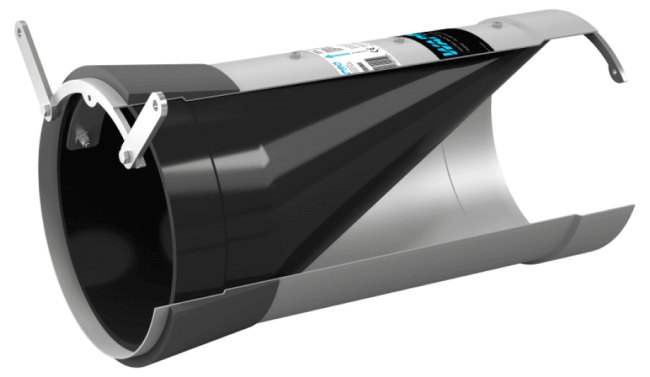
WaStop is one of several companies that manufactures tide valves. – WaStop.com | Submitted

The city is asking the Manatee County Tourist Development Council (TDC) to recommend Manatee County Commission approval of the city’s request to use county commission-controlled tourist development tax revenues generated by the 6% tourist development tax levied on all known hotel, motel, resort and vacation rental stays of six months or less in Manatee County.

In 2024, the county’s annual tourist tax revenues exceeded $30 million for the first time. State law restricts and regulates how the tourist tax revenues can be used, and in general, tourist tax revenues can only be spent to promote or enhance tourism.

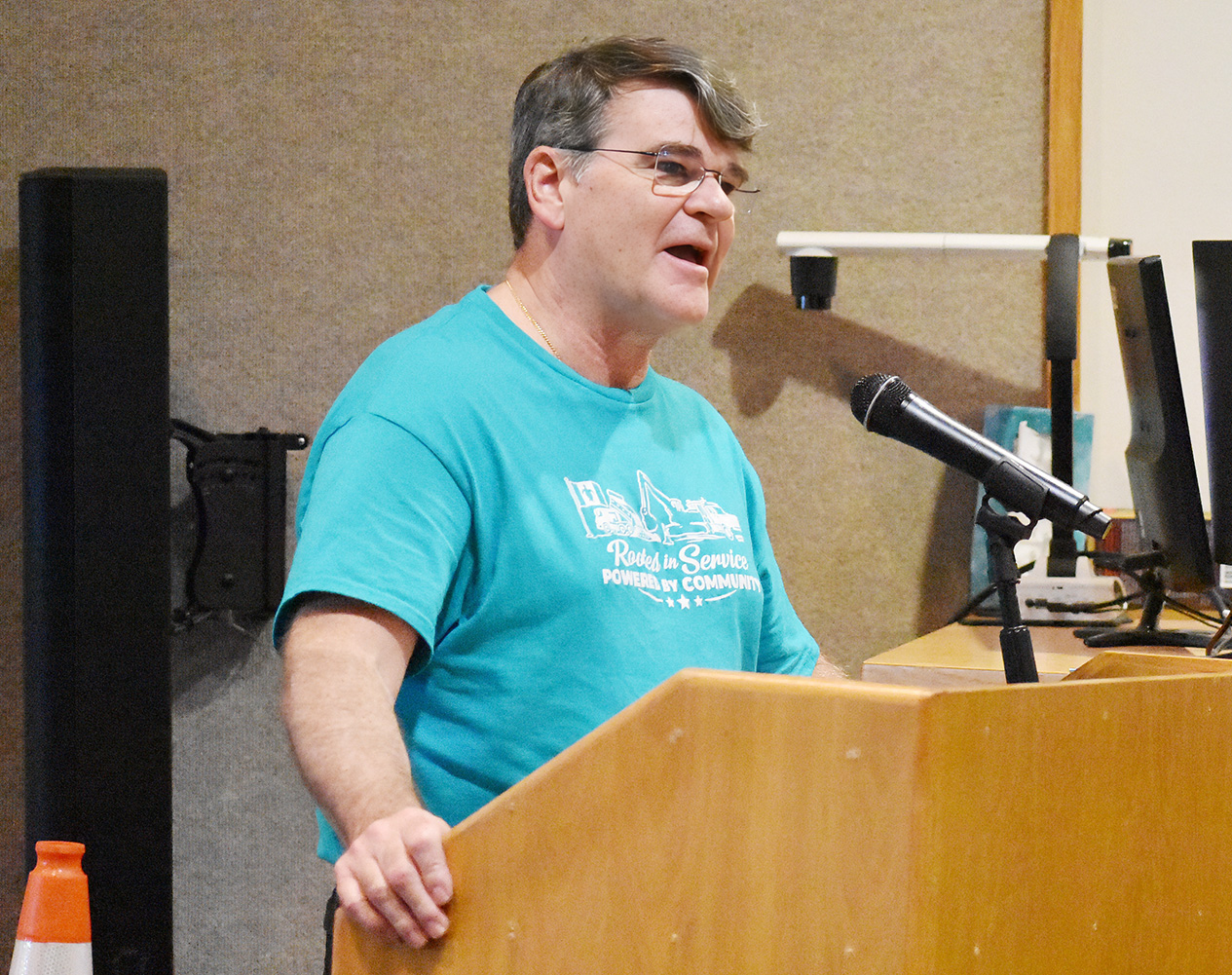
Holmes Beach Public Works Director Herb Raybourn presented the city’s $344,500 funding request to the TDC members during the council’s Monday, Aug. 17, meeting at The Center of Anna Maria Island.

The TDC members expressed preliminary support for the funding request, but they also raised questions and concerns about using tourist tax revenues for an infrastructure-related project. No final recommendation was made, and the TDC members agreed to continue the discussion during their next meeting in October.

CITY’S REQUEST

On Aug. 14, Holmes Beach Mayor Judy Titsworth formalized the city’s pending funding request in an email she sent to Bradenton Area Convention and Visitors Bureau (CVB) Executive Director Elliott Falcione. Although he doesn’t serve as an appointed TDC member, Falcione has a great deal of input on TDC funding recommendations.
Dan Diggins assisted in getting the funding request to the Tourist Development Council. – Manatee County | Submitted

Holmes Beach City Commissioner and current mayoral candidate Dan Diggins also serves as a county commission-appointed TDC member. When introducing Raybourn to the TDC members, Diggins noted the long-held and often stated belief among city and county officials that tourist tax revenues cannot be used to help fund city infrastructure projects that include street and road improvements and stormwater and drainage improvements.

Diggins told the TDC members that Holmes Beach City Commission candidate Mark Hebden researched the state laws that restrict tourist development tax expenditures. Hebden’s research indicated that stormwater and drainage improvements could be funded by TDT revenues if those improvements enhanced tourism in a coastal community like Holmes Beach.

LEGAL MEMO

In response to Hebden’s conclusions, the county attorney’s office provided a legal memorandum that supported his findings, and that memo was later referenced during the TDC discussion.

In part, the memo says, “The proposed improvement aims to mitigate tidal backflow flooding, enhance drainage and safeguard public infrastructure crucial for beach tourism and related businesses located within the city of Holmes Beach.”

Regarding the legality of using tourist development tax revenues for a city drainage project, the memo says, “Yes, if the County’s Board of County Commissioners finds that this proposed improvement, i.e. tidal valve installation, is needed to increase tourist-related business activities in the county, the improvement has a life expectancy of five or more years, and if other specific statutory conditions are met.”

Florida Statutes state no more than 70% of the proposed improvement’s total cost can be paid for using TDT revenues, and the remaining funding sources must be identified and confirmed by the county commission as part of the approval process.

The legal memo notes state law mandates that at least 40% of all TDT revenues collected in Manatee County must be spent to promote and advertise tourism in Manatee County. That has long been the primary use of Manatee County’s TDT revenues, but in recent years the TDC has supported and county commissioners have approved millions of dollars of TDT funding being used twice to replace the Anna Maria City Pier after sustaining hurricane damage in 2017 and again in 2024. TDT revenue has also helped fund improvements and hurricane-related repairs to the Bradenton Beach Pier and the floating dock next to the pier.

RAYBOURN PRESENTATION

Raybourn said most of the Island is flat, with elevations ranging from about 13.5 feet to half a foot. Because those land elevations are often lower than incoming high tides, tidal waters often back up into streets that would otherwise stay dry. He said this prompted the city to conduct a quick study of its 143 drainage pipe outfalls. He said the city wants to use tourist tax revenues to install 92 tide valves throughout the city.

Raybourn said tide valves are manufactured to the specific dimensions and character of each outfall pipe.

“Not every 24 inch pipe is identical. Not every situation is identical,” he said.

Regarding the installation timeline, he said it’s easier to install tide valves during low tides.

He said tide valves help mitigate flooding and a 1-foot tidal rise can cause flooding in some areas of Holmes Beach.

“As you increase to one and a half feet, two feet, two and a half feet, three feet, that increase in tide just creates more flooding in the streets, sidewalks, bike lanes, people’s yards and other infrastructure around the city,” he said.

Raybourn said barnacles that form on and in the drainage pipes create additional maintenance issues.

He said protecting the city’s infrastructure helps protect the businesses and the homeowners’ too. 

Regarding storm surges, he said, “There’s not much that you can do about it. But those smaller storm surges, having tide valves really would be beneficial for the city as well.”

He said tide valves also protect against the compound flooding that occurs when it rains during a high tide.

He said tide valves help prevent water from the Gulf, the bay and the sounds from entering the drainage pipes and bringing that water into the city, rather than out of the city.

Raybourn said FEMA conducted a case study in Key West in 2021.

“The city of Key West installed tide valves because they were having very similar problem. And what FEMA found in their case study was that prior to the installation of tide valves there was disruption of daily life and disruption to business associated with tidal flooding, very similar to what we see.”

Raybourn said the Key West tide valves drastically reduced tidal flooding and maintenance and cleanup associated with tidal events.

“FEMA estimated that was a savings of $143,000 per year, not only to the city, but also to the local businesses in the area,” Raybourn said.

He concluded his presentation by showing the TDC members an example of what a functioning tide valve looks like.

He also showed them a video of an area where tide valves have already been installed.

“If the water is going into the inlet, that’s great. If it’s coming out of the inlet, that’s not so great,” he said, noting the water shown in the video was flowing into the inlet.

TDC RESPONSE

Cedar Cove Resort manager and TDC member Eric Cairns said tide valves and drainage improvements are needed at the south end of Holmes Beach, near the Bradenton Beach border.

In response, Raybourn said he agreed and the city was already looking at a couple of drainage projects for that southern quadrant of the city.

Hotelier and TDC member Jiten Patel asked if flooding was an Islandwide concern and if similar tide valve studies were conducted in Anna Maria and Bradenton Beach. He said it might be better to approach the tourist development tax funding request as an Islandwide project, with all three cities involved. He said that might be more efficient in regard to addressing flooding on a larger scale.

He also noted there are low areas in Palmetto that experience similar flooding issues and he wondered if a countywide project might be needed.
Bradenton Mayor Gene Brown expressed both support and concerns about the proposed tide valve funding request. – Manatee County | Submitted

Bradenton Mayor and TDC member Gene Brown said during his dozen or so years in office he’s learned a lot about flooding, drainage and stormwater systems. He said tide valves can be helpful but they’re not the “silver bullet” that solves all flooding issues.

He said when the tide valves work, people are happy, but when they don’t work, city officials get blamed for not better addressing flood prevention. He said the city of Bradenton has tide valves that work one day and don’t the next. He also noted barnacle growth and intrusion often diminish a tide valve’s effectiveness.

Brown expressed his preliminary support for the Holmes Beach funding request, but he also said he’s concerned about spending tourist development tax revenues on something that may not fully succeed.

He also said the five other cities in Manatee County would likely follow suit and ask the TDC to recommend tourist development tax revenues be used for the other cities’ drainage projects too.

County Commissioner and TDC Chair Amanda Ballard expressed a similar concern.

Citing state law, Ballard also said, “We can potentially spend 60% of TDT funds on infrastructure. If we start moving in that direction, that is what will happen. I’m not necessarily opposed to this project. I think it’s necessary. I think it’s a good thing, but I think it’s a policy question. Do we want to spend 60% of our TDT funds on infrastructure? It definitely impacts tourists.”

Ballard agreed with Patel’s suggestion for an Islandwide tide valve project.

“I think to truly impact tourism in the most positive way, we need an Islandwide solution,” she said.

Ballard noted state law requires a TDC-funded independent study of a proposed project and its benefits on tourism. Diggins said the city paid for a technical study, but he doesn’t know if that qualifies as an independent study.

TDC member Tony DeRusso asked Falcione how much revenue the tourist development tax typically generates per year. Falcione said it’s currently about $38 million.

DeRusso said the TDC members need to make sure tourist tax revenues are being spent on projects that truly affect tourism.

Holmes Beach stormwater fee discussions continue

HOLMES BEACH – On May 26, city officials continued the stormwater fee assessment discussion that began on May 12. 

No decisions have been made regarding a potential fee increase for the 2026-27 fiscal year that begins on Oct. 1. The stormwater fee discussions will continue until late July or early August. 

Following a hard rain on May 28, a trolley passenger stood on the trolley stop bench alongside Marina Drive while waiting for the trolley to arrive. – Joe Hendricks | Sun

The current stormwater fee rate is $2.95 per every 100 square feet of property, regardless of what sits on the property and how the property is used. The $2.95 fee was adopted in 2019. 

During the city commission’s May 12 meeting, Public Works Director Herb Raybourn proposed increasing the annual stormwater fee by 40 cents per 100 square feet of property for the next 10 years, beginning with a 40-cent increase in the coming fiscal year. 

During the May 26 meeting, Raybourn said he didn’t have a lot of new information to provide, but he referenced a memo that was previously sent to the commissioners and included in the meeting packet.

His memo addressed the diminished buying power of the $2.95 stormwater rate adopted in 2019. 

“When the assessment rate was raised in 2019 to $2.95, the buying power of that assessment was approximately $860,000. Seven years later, our 2019 buying power is around $200,000 less. With the same amount of revenue that we generate, we’re essentially only able to do $660,000 worth of work. Stretching it out over a 10-year period, that’s going to continue to get worse,” Raybourn said.

The city commission will determine the stormwater rate for the coming fiscal year. – Joe Hendricks | Sun

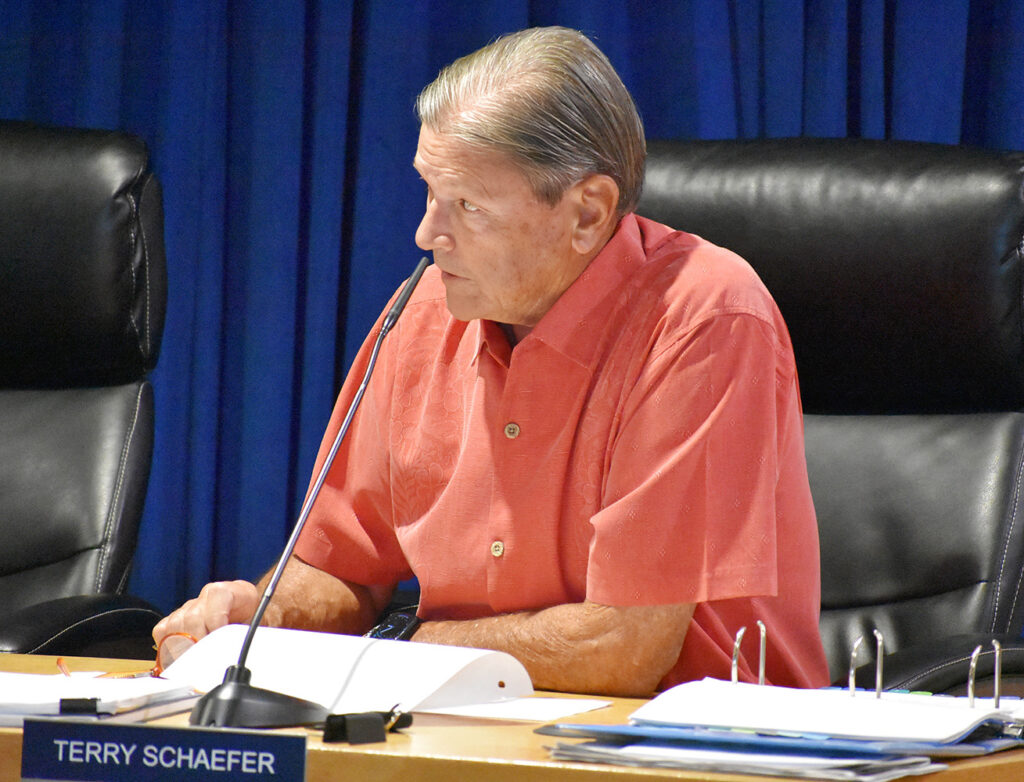
Commissioner Terry Schaefer asked Raybourn when the commission needs to set the annual stormwater fee for the 2026-27 fiscal year that begins Oct. 1.

Raybourn said that the decision needs to be made in August so that information can be sent to the property appraiser’s office. 

Schaefer, who was involved in the 2019 fee establishment, suggested increasing the stormwater rate by $1, $1.50 or $2 for the coming fiscal year. He said a $1 increase would generate an additional $287,000 in stormwater fee revenues. He said a $2 increase would generate an additional $574,000 and a $1.50 increase would raise an additional $430,000. Schaefer suggested the “middle ground” of a $1.50 increase as a good compromise. 

Any rate increase adopted by the commission this year would remain in effect for future years, unless it is increased or decreased by the commission during a future fiscal year.

Commissioner Carol Whitmore said she wants more input from the public before deciding on a potential rate increase.

Mayor Judy Titsworth reminded the commission that the money generated by the annual stormwater fee assessments provides the matching funds that allow the city to pursue grants that often cover up to 75% of the cost of stormwater and drainage improvement projects. 

She said the city owes it to the property owners to protect their homes and properties from flooding.

On May 28, a “Slow Speed – No Wake” sign was placed along 56th Street, near Marina Drive, because of the flooding that occurred after a heavy rainfall. – Margie Motzer | Submitted

Schaefer said it would be “unconscionable” for the commission to do nothing this year to increase the city’s ability to address stormwater and drainage concerns.

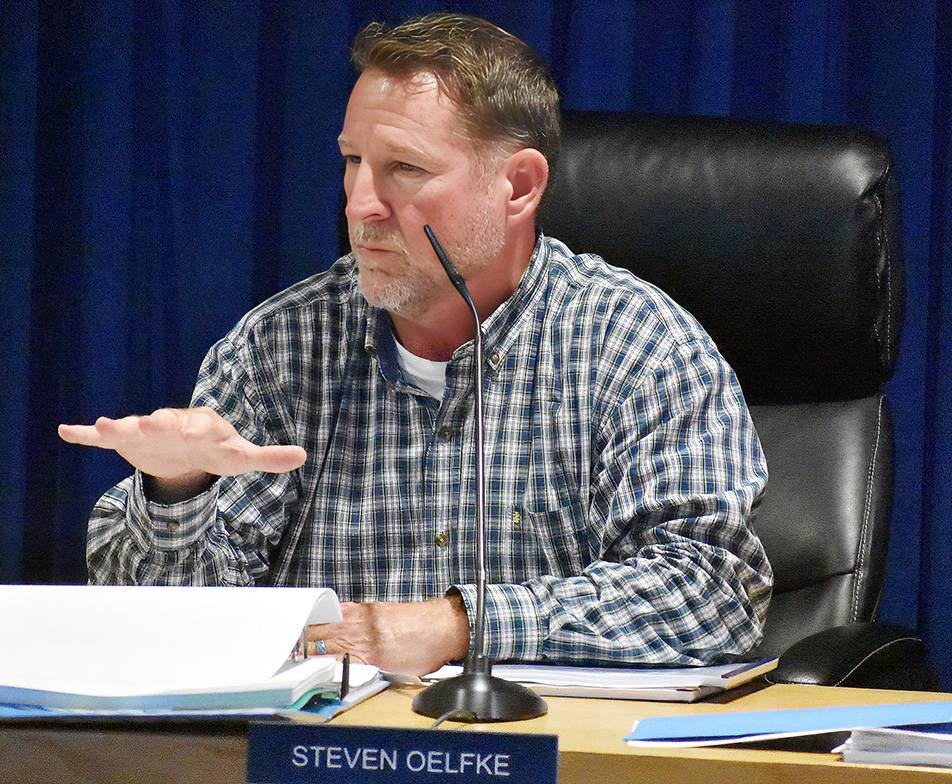
As he did during the May 12 discussion, Commissioner Steve Oelfke said he wants vacation rentals and commercial properties to carry more financial burden than the full-time residents and the owners of second homes not used as vacation rentals.

He again mentioned the vehicle trip counts the city of Fort Lauderdale uses as part of its stormwater fee calculations. Oelfke said using trip counts results in vacation rental home owners paying higher fees than those paid by full-time residents.

Schaefer noted vacation rental owners do not receive property tax-related homestead exemptions and they are also subject to the 6% resort tax Manatee County levies on all accommodations of six months or less. 

Commissioner Dan Diggins said, “We need a reality check here.” 

He said a $2 per 100 square foot increase for a 5,000 square foot home would result in a property owner’s annual stormwater assessment increasing by approximately $100 per year. He said the fee for a 7,500 square foot lot would increase by about $150.

“We’re not talking a whole lot of money here,” Diggins said.

Diggins said increasing the fee by $2 per 100 square feet would provide the city with the matching funds needed to pursue another million dollars in grants. 

As he did on May 12, Diggins again noted the city of Anna Maria is developing a new stormwater fee calculation methodology to be implemented in the coming fiscal year that will be based on the property’s impervious surface coverage rather than the property’s total square footage. Anna Maria is shifting away from the $4 per 100 square foot fee calculation method currently in place. 

Oelfke said during last year’s stormwater fee discussions he asked for the city to revisit its stormwater fee calculation method but that has not happened. 

Whitmore said she likes the idea of following Anna Maria’s lead and starting that process this year, so a new calculation method can be implemented next year. She suggested not increasing the fee this year while using the current calculation method.

Titsworth said property owners expect the city to address stormwater and drainage issues and she does not get many phone calls or emails from property owners who oppose a stormwater fee increases. She said a $100-$200 fee increase is about as much as a couple would spend for a nice dinner at a restaurant. 

Commissioner Jessica Patel said she currently favors maintaining the current $2.95 fee for another year and taking the steps needed to change the calculation method for the 2027-28 fiscal year.

Holmes Beach resident Mark Hebden urged city officials to communicate with residents regarding the stormwater fees and needs. – Joe Hendricks | Sun

Holmes Beach resident and city commission candidate Mark Hebden suggested the city send a letter to property owners informing them how to calculate their stormwater fees. He said most Holmes Beach residents don’t realize that stormwater fee revenues help the city obtain grant funding. He said the city needs to explain this to the taxpayers and do a better job of communicating with them.

“Don’t rely on the citizens to come to these meetings. You need to communicate, communicate, communicate,” Hebden said. 

“It has to be pared down and also simplified. People listen to this whole discussion and it’s just too much. Put out something simple that summarizes it in a way that the average person can grasp it,” Hebden said.

Public works supervisor provides rainfall, flooding update

This story was updated at 7 p.m. on May 29 regarding Dan Diggin’s suggested stormwater fee calculation method.

HOLMES BEACH – On Thursday, May 28, Holmes Beach Public Works Director Herb Raybourn distributed an email to the mayor and city commissioners regarding the heavy rainfall and flooding that occurred earlier that morning. 

“At about 2:40 a.m. this morning, it started raining with an intensity of about 2.4 inches per hour and stopped at about 4:40 a.m.,” Raybourn stated in his email.

Raybourn’s email referenced the North American Vertical Datum of 1988 (NAVD 88). NAVD 88 is the official vertical datum of the United States and it serves as a reference system for surveyors, engineers and mapping professionals to measure and relate elevations to the Earth’s surface. A tidal datum is a standard elevation framework used to track local water levels as measured by a tidal gauging station. 

“The tide measured at the Key Royale Bridge was between about 0.54 ft and 0.26 ft (NAVD 88). The low tide measured at the Key Royale Bridge was about 0.21 ft (NAVD 88) at 5 a.m. The peak tide since this morning was about 1.39 ft (NAVD 88) at 10:20 a.m. This led to flooding in various areas around Holmes Beach and Anna Maria Island, causing road and facility closures, including Manatee County closing the southern parking at Coquina Beach,” Raybourn wrote.

“Public Works responded to the flooding and was onsite at about 5 a.m., working with the police department to implement safety measures, assess flooding around the city and begin recovery efforts,” Raybourn wrote. 

A “Slow Speed – No Wake” sign was placed along 56th Street, near Marina Drive. – Margie Motzer | Submitted

“I would like to provide an update to the situation along Marina Drive,” Raybourn wrote. “The stormwater infrastructure improvement project under construction has not been completed. Therefore, the existing stormwater system provides the only available drainage capacity along Marina Drive in the area of the library. While the existing system has been connected to the new outfall constructed as part of the aforementioned improvements, the undersized pipes and their condition (e.g., fouled with barnacles, sediments, etc.) limit the ability of the system to discharge.

“Flooding at the intersection of 56th Street and Marina Drive was exacerbated by the rainfall intensity, high tide and limited discharge, as well as the area low, about 1.75 ft (NAVD 88). The stormwater infrastructure improvement contractor, Harris McBurney, has a pump at the discharge point to help with the discharge. Unfortunately, it could not discharge the volume of water experienced this morning,” Raybourn wrote.

A trolley passenger stood on the trolley stop bench in front of the Island Branch Library while waiting for the trolley to arrive. – Joe Hendricks | Sun

“To help alleviate the flooding along Marina Drive, Public Works contacted Manatee County to request an additional pump. Because of the expected rain over the next few days, the county was not comfortable lending Holmes Beach a pump. So, this morning Public Works rented a pump and it is expected to be delivered by the close of business today. Our plan is to keep the rental pump through the next two weeks as they are expected to bring large volumes of high-intensity rainfall to the city,” Raybourn wrote.

Stormwater fees

The not-uncommon localized flooding occurred two days after Raybourn and the city commission continued their ongoing discussion about potentially increasing the annual stormwater assessment fee, which is currently $2.95 per 100 square feet of property. The annual stormwater fee is currently applied equally to all properties in Holmes Beach. The fee revenues are used to maintain and improve the existing stormwater system. The stormwater fee revenues also provide the matching funds the city must contribute when pursuing and receiving state grants for stormwater-related projects.  

Raybourn recently proposed a 40-cent per 100 square foot rate increase per year for the next 10 years, beginning with a 40-cent increase for the 2026-27 fiscal year that begins Oct. 1.

During the commission’s May 26 meeting, Commissioner Terry Schaefer proposed a $1 to $2 per hundred square foot increase for the coming 2026-27 fiscal year.

Commissioner Dan Diggins said he would support a fee increase of some sort. He also said he would be in favor of eventually switching to an impervious surface-based stormwater fee calculation method similar to what the city of Anna Maria expects to implement for the coming fiscal year.

Commissioner Steve Oelfke said he’s open to a stormwater fee increase, but he would like to eventually switch to a stormwater fee calculation method that takes into account vehicle trip counts for residential properties used as vacation rentals and/or the impervious surface calculation method Diggins mentioned.  

Commissioners Carol Whitmore and Jessica Patel currently oppose enacting a stormwater fee increase for the coming fiscal year.

Patel supports eventually switching to an impervious surface-based calculation method that takes into account a property’s impervious surface area. Schaefer also supports changing the current calculation method before the 2027-28 fiscal year fees are established during the 2027 calendar year.

Thursday’s rains flooded several residential properties on 56th and 57th street, near Marina Drive. – Margie Motzer | Submitted

Holmes Beach stormwater fee discussions begin 

HOLMES BEACH – Preliminary discussions have begun, but no decisions have been made, regarding the stormwater fee assessments to be levied on Holmes Beach property owners during the 2026-27 fiscal year that begins Oct. 1. 

Preliminary discussion has also begun about possibly switching to a more equitable, impervious surface-based method of stormwater fee assessment calculations. The stormwater fee discussions will continue in the coming months as the city’s 2026-27 fiscal year budget is crafted. 

The current stormwater fee rate is $2.95 per every 100 square feet of property, regardless of what sits on the property, how the property is used and how much of the property is covered with impervious surfaces that inhibit drainage. The $2.95 fee was adopted in 2019. 

During the city commission’s May 12 meeting, Public Works Director Herb Raybourn proposed increasing the annual stormwater fee by 40 cents per 100 square feet of property for each of the next 10 years. 

In a May 18 email to The Sun, Raybourn said the estimated stormwater revenues for fiscal year 2026-27 are $862,000 without a fee increase and $978,881 with a 40-cent per 100 square foot increase. 

He said if the city commission decides not to fund any additional stormwater projects in the coming fiscal year, the estimated stormwater budget would be $1.21 million. 

“This amount covers the currently planned projects, the stormwater infrastructure project along 56th Street and Holmes Boulevard, as well as developing a watershed masterplan, which is expected to add an additional 5% reduction in flood insurance rates. The potential grants that we are confident we will win are not included in the $1.21 million. The costs associated with our general stormwater maintenance next fiscal year is expected to be about $720,500. The total for the next fiscal year that includes the identified work is $1.33 million.”

Commissioner Terry Schaefer said the current $2.95 rate is inadequate. – Joe Hendricks | Sun

During the May 12 meeting, Commissioner Terry Schaefer said the current $2.95 per hundred square foot fee is “woefully deficient” in terms of solving the city’s drainage problems. Mayor Judy Titsworth said when the $2.95 fee was adopted in 2019, the expectation was the fee would increase each year incrementally, but it hasn’t.

AVERAGE FEES

The average lot size in Holmes Beach ranges between 5,000 and 7,500 square feet. At the current $2.95 per 100 square foot rate, the owner of a 5,000- square-foot lot pays an annual stormwater fee of $147.50. The owner of a 7,500-square-foot lot pays $221.25

If the fee is increased by 40 cents for the coming 2026-27 fiscal year, the stormwater fee for a 5,000-square-foot lot would increase to $167.50. The fee for a 7,500-square-foot lot would increase to $251.25.

If the fee is increased by 40 cents per year for 10 years, the resulting stormwater fee would be $6.95 per 100 square feet. At that rate, the owner of a 5,000-square-foot lot would pay a $347.50 stormwater assessment fee. The owner of a 7,500-square-foot lot would pay $521.25.

Last year, the city commission voted 3-2 in opposition to then-Public Works Director Sage Kamiya’s recommendation to increase the $2.95 per 100 square feet fee to $4.95. The commission’s reluctance to increase the stormwater fee last year stemmed in large part from the fact that many property owners were still recovering from the 2024 hurricanes.

UNFUNDED PROJECTS

Included in the May 12 meeting packet was a memo in which Raybourn listed several possible but currently unfunded stormwater and drainage projects and improvements that have been identified by citizens and city officials as areas to potentially address. 

Raybourn said the projects on that list have not been pursued because there’s no current path to grant funding for them. Those areas include 27th Street, 39th Street and 3rd Avenue, 42nd Street, 6th Avenue, Avenue C, Haverkos Court and Old Gulf Drive.

Raybourn said Florida Hazard Mitigation Grants help fund the city’s drainage and stormwater improvements. He said those grants cover 75% of the approved project costs and the city covers 25%. He noted the city has to pay the total project costs upfront and wait for reimbursement from the state, which usually takes at least six months.

The annual stormwater fee revenues help cover the city’s share of the grant-funded project costs. The annual fees also cover the maintenance costs for the existing drainage and stormwater systems.

CALCULATION METHODS

During the 2025 stormwater fee discussions, Commissioner Steve Oelfke was among those who requested future discussion and consideration of a shift from the square footage-based fee calculation method to a method that considers drainage-related pervious and impervious surfaces and the structures that cover a property.

Commissioner Steve Oelfke believes the stormwater fee calculation method should be revised. – Joe Hendricks | Sun

During the May 12 meeting, Commissioner Dan Diggins noted a Holmes Beach property owner with half the amount of impervious surfaces is paying the same stormwater fee rate as a property owner with greater impervious surface coverage. 

Diggins also noted the city of Anna Maria is currently developing a new stormwater fee calculation methodology with the intent of discontinuing the current $4 per 100 square foot assessment fee adopted last year and replacing it with a calculation method based on impervious surface coverage. 

Diggins asked Raybourn if he sees any value in the city of Holmes Beach pursuing a similar calculation method. Raybourn said changing the calculation method would require some effort and could eventually be accomplished by city staff with some likely assistance from a consulting firm.

Mayor Judy Titsworth said the city doesn’t have the staff available to take on that additional work and she encouraged the commission to continue with the square footage-based calculation method.

Oelfke said many residents are growing frustrated with having to bear the cost of the increased infrastructure burdens caused by the influx of large vacation rental homes.

Oelfke said the city of Fort Lauderdale incorporates vehicular trip counts in its stormwater fee calculations and trip counts are generally lower for permanent residences than they are for vacation rentals. 

The city of Fort Lauderdale website says, “Depending on the type of parcel, the stormwater utility fee structure considers total square footage of the parcels or dwelling units and the trips generated by various property types.” 

Oelfke said vacation rental owners can pass their fee increases on to their renters, but a permanent resident can’t. 

Schaefer said the current calculation method provides consistency for all property owners and those with smaller lots pay lower stormwater fees and those with larger lots pay higher stormwater fees – but he agreed more discussion about the the calculation method is needed.

Commissioner Jessica Patel said when she was running for office last year many people she spoke with expressed their opposition to increasing the annual stormwater fees. Echoing Oelfke’s comments, Patel said the newer homes are being developed with more impervious surface areas that don’t absorb water and provide drainage.

Commissioner Carol Whitmore said she hopes citizens and other property owners participate in the ongoing stormwater fee discussions. Whitmore said she likes Raybourn’s suggestion to gradually implement smaller fee increases over an extended period of time. 

In response, Schaefer said, “Pay me now or pay me later. The projects and the needs are not going to go away. They’re only going to increase.”

Raybourn said the commission has until August to decide what the stormwater fee will be for the new fiscal year. Titsworth said the commission should make that decision during its last meeting in July.

Related coverage: Stormwater fee increases may be inevitable, but are they fair?