HOLMES BEACH – Preliminary discussions have begun, but no decisions have been made, regarding the stormwater fee assessments to be levied on Holmes Beach property owners during the 2026-27 fiscal year that begins Oct. 1.
Preliminary discussion has also begun about possibly switching to a more equitable, impervious surface-based method of stormwater fee assessment calculations. The stormwater fee discussions will continue in the coming months as the city’s 2026-27 fiscal year budget is crafted.
The current stormwater fee rate is $2.95 per every 100 square feet of property, regardless of what sits on the property, how the property is used and how much of the property is covered with impervious surfaces that inhibit drainage. The $2.95 fee was adopted in 2019.
During the city commission’s May 12 meeting, Public Works Director Herb Raybourn proposed increasing the annual stormwater fee by 40 cents per 100 square feet of property for each of the next 10 years.
In a May 18 email to The Sun, Raybourn said the estimated stormwater revenues for fiscal year 2026-27 are $862,000 without a fee increase and $978,881 with a 40-cent per 100 square foot increase.
He said if the city commission decides not to fund any additional stormwater projects in the coming fiscal year, the estimated stormwater budget would be $1.21 million.
“This amount covers the currently planned projects, the stormwater infrastructure project along 56th Street and Holmes Boulevard, as well as developing a watershed masterplan, which is expected to add an additional 5% reduction in flood insurance rates. The potential grants that we are confident we will win are not included in the $1.21 million. The costs associated with our general stormwater maintenance next fiscal year is expected to be about $720,500. The total for the next fiscal year that includes the identified work is $1.33 million.”
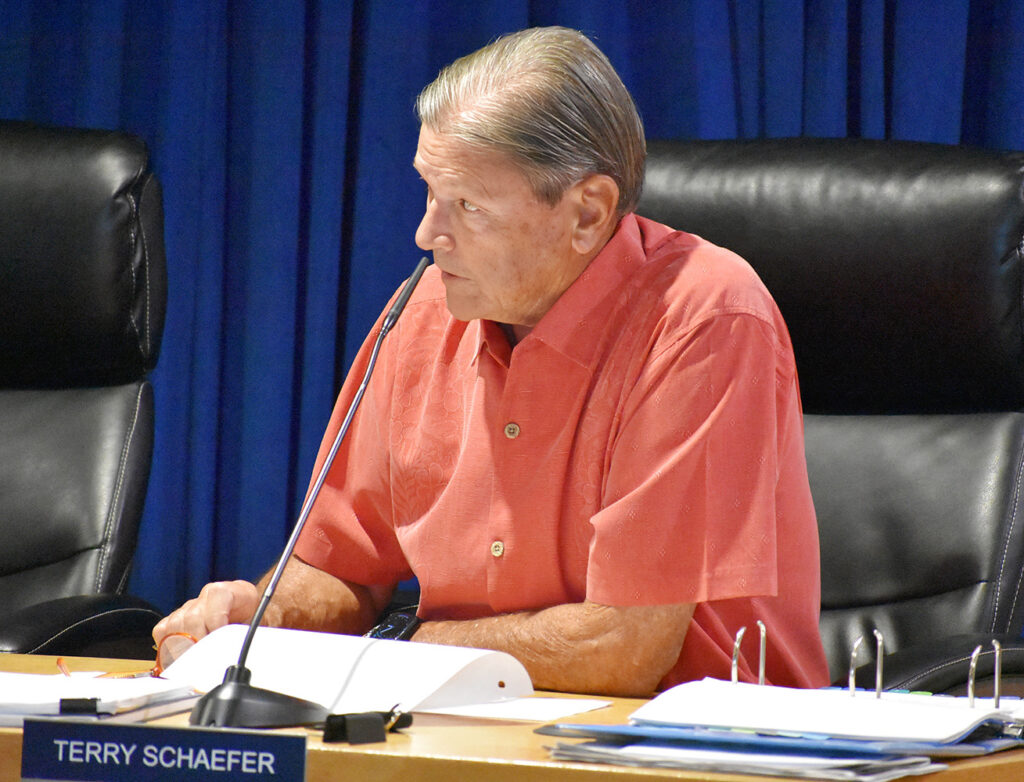
During the May 12 meeting, Commissioner Terry Schaefer said the current $2.95 per hundred square foot fee is “woefully deficient” in terms of solving the city’s drainage problems. Mayor Judy Titsworth said when the $2.95 fee was adopted in 2019, the expectation was the fee would increase each year incrementally, but it hasn’t.
AVERAGE FEES
The average lot size in Holmes Beach ranges between 5,000 and 7,500 square feet. At the current $2.95 per 100 square foot rate, the owner of a 5,000- square-foot lot pays an annual stormwater fee of $147.50. The owner of a 7,500-square-foot lot pays $221.25
If the fee is increased by 40 cents for the coming 2026-27 fiscal year, the stormwater fee for a 5,000-square-foot lot would increase to $167.50. The fee for a 7,500-square-foot lot would increase to $251.25.
If the fee is increased by 40 cents per year for 10 years, the resulting stormwater fee would be $6.95 per 100 square feet. At that rate, the owner of a 5,000-square-foot lot would pay a $347.50 stormwater assessment fee. The owner of a 7,500-square-foot lot would pay $521.25.
Last year, the city commission voted 3-2 in opposition to then-Public Works Director Sage Kamiya’s recommendation to increase the $2.95 per 100 square feet fee to $4.95. The commission’s reluctance to increase the stormwater fee last year stemmed in large part from the fact that many property owners were still recovering from the 2024 hurricanes.
UNFUNDED PROJECTS
Included in the May 12 meeting packet was a memo in which Raybourn listed several possible but currently unfunded stormwater and drainage projects and improvements that have been identified by citizens and city officials as areas to potentially address.
Raybourn said the projects on that list have not been pursued because there’s no current path to grant funding for them. Those areas include 27th Street, 39th Street and 3rd Avenue, 42nd Street, 6th Avenue, Avenue C, Haverkos Court and Old Gulf Drive.
Raybourn said Florida Hazard Mitigation Grants help fund the city’s drainage and stormwater improvements. He said those grants cover 75% of the approved project costs and the city covers 25%. He noted the city has to pay the total project costs upfront and wait for reimbursement from the state, which usually takes at least six months.
The annual stormwater fee revenues help cover the city’s share of the grant-funded project costs. The annual fees also cover the maintenance costs for the existing drainage and stormwater systems.
CALCULATION METHODS
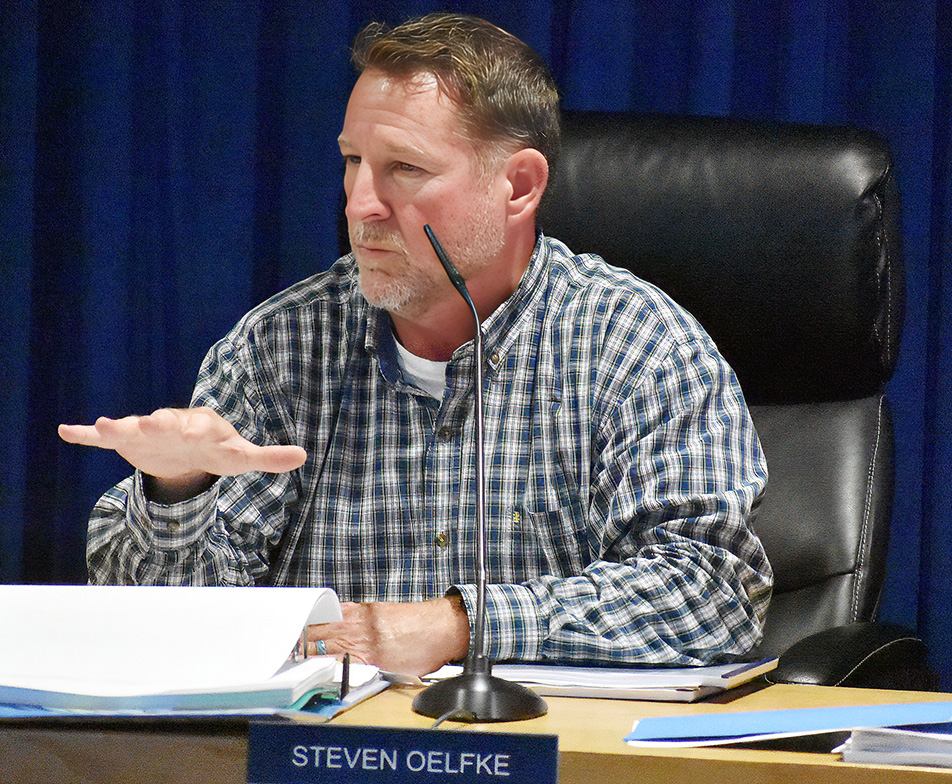
During the 2025 stormwater fee discussions, Commissioner Steve Oelfke was among those who requested future discussion and consideration of a shift from the square footage-based fee calculation method to a method that considers drainage-related pervious and impervious surfaces and the structures that cover a property.
During the May 12 meeting, Commissioner Dan Diggins noted a Holmes Beach property owner with half the amount of impervious surfaces is paying the same stormwater fee rate as a property owner with greater impervious surface coverage.
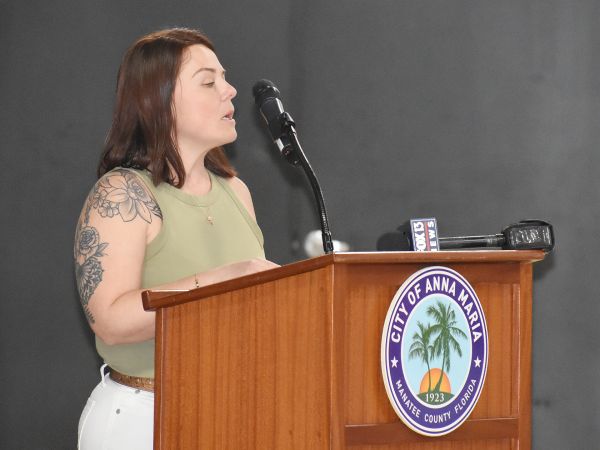
Diggins also noted the city of Anna Maria is currently developing a new stormwater fee calculation methodology with the intent of discontinuing the current $4 per 100 square foot assessment fee adopted last year and replacing it with a calculation method based on impervious surface coverage.
Diggins asked Raybourn if he sees any value in the city of Holmes Beach pursuing a similar calculation method. Raybourn said changing the calculation method would require some effort and could eventually be accomplished by city staff with some likely assistance from a consulting firm.
Mayor Judy Titsworth said the city doesn’t have the staff available to take on that additional work and she encouraged the commission to continue with the square footage-based calculation method.
Oelfke said many residents are growing frustrated with having to bear the cost of the increased infrastructure burdens caused by the influx of large vacation rental homes.
Oelfke said the city of Fort Lauderdale incorporates vehicular trip counts in its stormwater fee calculations and trip counts are generally lower for permanent residences than they are for vacation rentals.
The city of Fort Lauderdale website says, “Depending on the type of parcel, the stormwater utility fee structure considers total square footage of the parcels or dwelling units and the trips generated by various property types.”
Oelfke said vacation rental owners can pass their fee increases on to their renters, but a permanent resident can’t.
Schaefer said the current calculation method provides consistency for all property owners and those with smaller lots pay lower stormwater fees and those with larger lots pay higher stormwater fees – but he agreed more discussion about the the calculation method is needed.
Commissioner Jessica Patel said when she was running for office last year many people she spoke with expressed their opposition to increasing the annual stormwater fees. Echoing Oelfke’s comments, Patel said the newer homes are being developed with more impervious surface areas that don’t absorb water and provide drainage.
Commissioner Carol Whitmore said she hopes citizens and other property owners participate in the ongoing stormwater fee discussions. Whitmore said she likes Raybourn’s suggestion to gradually implement smaller fee increases over an extended period of time.
In response, Schaefer said, “Pay me now or pay me later. The projects and the needs are not going to go away. They’re only going to increase.”
Raybourn said the commission has until August to decide what the stormwater fee will be for the new fiscal year. Titsworth said the commission should make that decision during its last meeting in July.
Related coverage: Stormwater fee increases may be inevitable, but are they fair?