






Rules change regarding derelict vessels
“Derelict” boats in local waters have been a problem that I’ve been questioned about over the years.
Being on the water myself for almost four decades, it’s been disheartening to see the numbers of these boats steadily increase. They are unsightly for sure but the damage they do to the local grass flats is hidden from the view of most casual boaters.
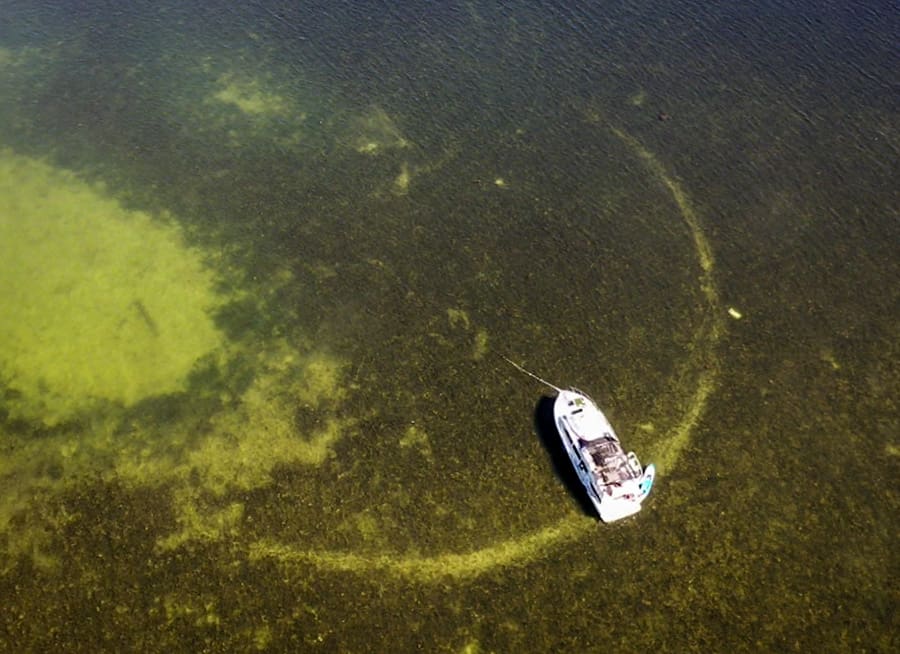
This wasn’t the case for Capt. Justin Moore, who knows the importance of the grass flats and sees the damage derelict boats do in real time. A boat anchored on a grass flat from a distance might be floating on a high tide but often is resting on and killing grass on a low tide.
The next high tide floats it again, it shifts with the wind, and it settles in a new spot. Last week Moore sent me a video of several “derelict” boats that had recently shown up on the grass flats just off Cortez Key, known in the village of Cortez as Kitchen Key.
The timely video showed the damage and encouraged me to investigate. What I found out was heartening and something I want to pass along. Florida law has defined “derelict” vessels broadly in the past and legislation has made it egregious to address these vessels. But recent legislation enacted this year (Senate Bill 164) introduced stronger requirements around anchoring, long-term mooring permits, clearer authority for law enforcement and greater flexibility for removal funds.

Now the law defines these vessels as “at risk,” so those which might not yet be derelict but show signs that they may become so can be addressed. Vessels can be considered at risk when they:
- Are taking on water without the ability to de-water;
- Have open or unsealed enclosed spaces;
- Have broken loose from anchor or are a mooring risk;
- List because of water intrusion; or
- Lack effective propulsion.
The “at-risk” category lets FWC and other law enforcement intervene earlier to prevent more serious deterioration.
As the FWC website explains, “Recent legislative changes (effective as of July 1, 2025) strengthened the tools available to FWC. These include:
- Clarified ownership definitions: A valid vessel title now acts as prima facie evidence of ownership;
- Enhanced requirements for “effective means of propulsion” evaluations if requested by law enforcement;
- Public nuisance designations: three citations within 24 months for any at-risk condition can allow a vessel to be declared a public nuisance, which allows removal as if derelict;
- Noncriminal infractions expanded (e.g., anchoring long term, expired registrations) to allow mailed citations;
- Penalties for repeat offenses escalated: Misdemeanor to felony depending on the number of offenses.
FWC has several programs aimed at preventing vessels from becoming derelict, as well as removing ones already in bad condition:
- Vessel Turn-In Program (VTIP): Allows owners of at-risk vessels (with at least one warning or citation) to voluntarily surrender the vessel. FWC then disposes of it at no cost to the owner. This aims to reduce future derelict vessel numbers and legal exposure for owners;
- Derelict Vessel Removal Grant Program: Provides funding (100% reimbursement) to local and county governments for removing derelict vessels;
- Rapid Removal Grants: Cases that meet certain criteria and need more urgent removal can access a faster track for grants;
- Block Grant Option: For local governments that have demonstrated capacity (e.g., removed many vessels over past years), FWC allows block grants so they can remove eligible vessels without individual pre-approval for each removal.
FWC law enforcement (along with state, county and local officers) conducts investigations and inspections. When an at-risk vessel is identified, owners may receive warnings or citations. If conditions persist, the vessel may be declared a public nuisance or derelict, triggering removal actions. The law also provides penalties (fines, potential criminal charges) for abandonment or intentional improper disposal.
Ryan Gandy, the incoming executive director of the Sarasota Bay Estuary Program, provided me a link to file a report, and I was pleasantly surprised when I made a call and was promptly connected with a case officer who promised to visit the site and report back. It appears that we finally have some resources that take these nuisance vessels seriously.
On its website, the FWC clarifies the process: “Overall, FWC’s approach is multi-pronged: Defining and distinguishing between “at-risk” and “derelict” vessels; using preventive programs (especially voluntary surrender under VTIP) to reduce the number of vessels sliding into dereliction; leveraging grants (including block grants) to assist local governments; strengthening legal tools and enforcement; and tightening ownership/title responsibilities. The aim is to protect waterways, navigation, habitat, safety and keep state and local costs down by intervening earlier when possible.”
If you know of any vessels that might fall under these definitions, I encourage you to report them. Our marine habitat and the quality of our fishery depend on citizens taking action!

