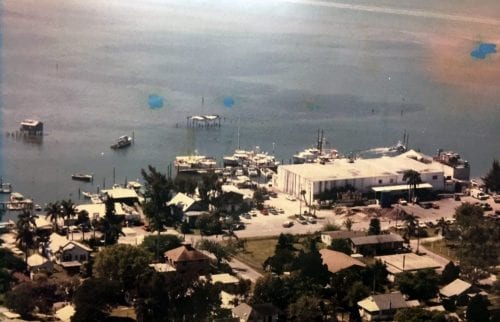

Tag: A.P. Bell Fish Co.

Mullet fishermen reporting a good season

Mullet fishermen reporting a good season

CORTEZ – Fish house employees and fishermen are calling this mullet season one of the best in recent memory as Cortez fish houses are filling up with mullet brought in by private fishermen. 

Two of those fishermen, Seth Miller and Wyatt Walker, were pulling in mullet for two straight days to sell at one of the two the Cortez fish houses: Cortez Bait & Seafood and A.P. Bell Fish Co. 

Mullet fishermen reporting a good season
Fishermen Wyatt Walker and Seth Miller sell their haul of mullet to Cortez Bait & Seafood. – Leslie Lake | Sun

“We didn’t sleep for the last two days,” Miller said on Dec. 31. “It’s been pretty good this year. We’ve been catching fish in the bay and offshore. We caught some up north last night.”

Miller said it seemed like the season got off to a late start and could go until February. 

Private fishermen such as Miller and Walker can be seen in local waters pulling up nets full of mullet. Once their boats are loaded, they’re driven to either Cortez Bait & Seafood or A.P. Bell Fish Co., where the catches are weighed and the fishermen are paid. 

“I’ve been doing this for 17 years and I would say this is the best mullet season I’ve seen in at least 10 years,” said Linda, an employee of Cortez Bait & Seafood, as she oversaw the weighing of the fish brought in by local fishermen. “There’s been no hurricanes and no red tide, so I think that’s why it’s been really good.”

She said on Jan. 1 that Cortez Bait & Seafood was taking a break for several days before accepting any more mullet.

“We’re so full right now,” she said. “We have no place to put any more fish. We’ll probably start up again next Monday (Jan. 5).”

Linda said the prices paid to the fishermen fluctuate, but a premium is paid for mullet with red roe and the rate was currently at $1.30 per pound. The red roe mullet is sent out to European and Asian markets. 

Mullet fishermen reporting a good season
The mullet with red roe is the most desirable and is shipped to European and Asian markets. – Leslie Lake | Sun

Karen Bell, owner of AP Bell Fish Co., closed on Jan. 1 to give her employees the day off, but that fish house started accepting fish again on Jan. 2.

“We have fish staged in coolers right now,” Bell said on Jan. 1. “Tomorrow we will be taking fish from fishermen who have been selling to us this year.”

Adult striped mullet typically weigh about three pounds. The Florida Fish and Wildlife Conservation Commission (FWC) has strict guidelines about how they can be caught.

“The use of any gear other than cast nets (no more than 14 feet long, and no more than two per vessel), beach or haul seines (no larger than 500 square feet, and no more than two, may be fished per vessel), hook and line gear; and by spearing is prohibited,” according to FWC.

Thousands flock to Cortez for FISH Festival

Thousands stream to Cortez Commercial Fishing Festival

CORTEZ – There was something “fishy” going on in Cortez on Saturday as thousands of people streamed to the 42nd Annual Cortez Commercial Fishing Festival. Although heavy rain forced the cancellation of Sunday festivities, Saturday was cool and rain-free, and the party was in full swing.

Thousands flock to Cortez for FISH Festival
The Fisherman’s Fashion Show was a big hit with the festival crowd on Saturday. – Jason Schaffer | Sun

“It was really warm last year, but this is fantastic,” Janelle Applegate said. “We love this little fishing town, and come down for this every year from Clearwater. Cortez is as real as it gets. I can’t imagine there are too many places like this left in Florida; these people are real. They work hard, there can’t be anything easy about this way of life, but it seems like they wouldn’t have it any other way.”

For only $5, visitors had acres of the historic Cortez fishing village to roam and find plenty to excite all five senses. There was just about any kind of seafood and beverage to satisfy taste, arts and crafts for the eyes, smells of everything from crab traps to funnel cakes, the chance to touch live sea creatures in the “Dock Talks” area and the sounds of live music on the main stage that had the large crowd on their feet.

Thousands flock to Cortez for FISH Festival
there was no shortage of seafood at this year’s Cortez Commercial Fishing Festival. – Jason Schaffer | Sun

Awards were given at this year’s festival to people who have made an impact on the Cortez fishing community. The Pioneer of the Year Award was presented to Kaye Bell, and the First Annual John Stevely Memorial Award was given to Linda Molto as the person who best represents the values of FISH. The Volunteer of the Year Award went to Bob Hooper, and a special FISH Community Service Award was given to the Cortez Trailer Park in honor of their support for all of FISH’s endeavors and the large number of residents who volunteer for this event each year. Finally, Cortez fisherman Tommy Killoran was crowned the winner of the popular Fisherman’s Fashion Show which was judged by crowd applause on the main stage.

The huge festival is put together by a small group of people made up of members of the Florida Institute for Saltwater Heritage (FISH) and some local residents who volunteer their time throughout the year to plan and execute the event. To handle the task of doing all the work, they rely heavily on volunteers who donate their time to do everything from selling tickets to working parking lots and picking up trash.

Thousands flock to Cortez for FISH Festival
The Eric Von Band had the crowd on their feet on Saturday. – Jason Schaffer | Sun

Proceeds from the Festival will be used to maintain and make improvements to the FISH Preserve, 98 acres of environmentally sensitive land immediately east of Cortez. The festival has been dubbed “a party with a purpose,” since the money will assure future generations will be able to not only fish but also educate others about the importance of commercial fishing and its importance to the coastal Florida way of life for so many that rely on these natural resources to both survive and thrive.

Stone crab season is back, are they worth the hype?

Stone crab season is back

CORTEZ – Some people wait months for the return of the claw, the local signature delicacy, while others can’t wrap their head around the love of the pricey stone crab.

While some seafood aficionados clammer for bluefin tuna or their favorite caviar, if you’re in Cortez or on Anna Maria Island between Oct. 15 and May 1, it’s stone crab you covet.

Stone crabs are caught in traps that are baited with fish, and, unlike unluckier crabs, only the claws are harvested. It is legal in Florida for fishermen to remove both claws if they are large enough, but some only remove one claw to give the crabs a better chance at survival. After a legal-sized claw is removed, the crab is returned to the water where the lost claw will regenerate after a few molts. Because young crabs molt up to three times each year, they are more likely to successfully regrow their claws than an older crab that only molts once a year.

The harvest can vary greatly each year depending on a multitude of factors, including weather and environmental conditions.

“In the season of 2018-19 when we had red tide really bad, we didn’t have any stone crabs that season,” said Karen Bell, president of A.P. Bell Fish Co. in Cortez. “This year the catches have been steady, mainly enough for local consumption. We’re shipping a little bit out, like north Florida, we shipped a few hundred pounds yesterday. About 600 pounds are being shipped to Atlanta tomorrow.”

Bell says they are getting an average of 400 pounds of claws a day on average, although they have seen as much as 1,000. According to Bell, red tide doesn’t seem to be much of a factor in this year’s harvest, although it could be playing a small part in harvest numbers that are below those of previous seasons.

One thing that has not changed this season is the incredible demand for a delicacy that is among the most expensive you are likely to find at any seafood counter. Other than bluefin tuna, some rare caviar and less than a handful of other exotic seafood, stone crab claws are some of the most expensive sea treats anywhere. Prices this season range from around $30 a pound for the smallest claws to well over $55 a pound for the largest size, known as ‘colossal’ claws. When you factor in the fact that around 65% of the claw is shell and not edible, the actual price of meat yielded will range from $60 to well in excess of $100 per pound. If you order at a restaurant, you could add as much as 40% above the retail price, depending on the establishment.

“I don’t care what they cost, stone crab claws are as much a part of south Florida as people driving with their left blinker on,” joked Martin Evans, who had just finished a meal at Anna Maria Oyster Bar with his fiancée, both of whom shared a stone crab claw appetizer. “It’s not something you order every time you go out, but they’re here and we love them, so today we treated ourselves.”

Bell says A.P. Bell is selling the claws as fast as they can get them and even though the price is up this season, demand is bigger than ever.

“Our prices are up $4 or more a pound from last year and people don’t seem to even blink at that,” said Bell. “I don’t understand it, but the demand is huge and the boats are doing really well because of it.”

If high-priced stone crab isn’t your cup of tea, there’s another fish that keeps Cortez boats busy in the winter months. After the cooler weather moves in, mullet season begins in south Florida.

According to Bell, mullet is the fish that built Cortez.

“Most of the families that came here from the Carolinas were mullet fisherman in North Carolina that came here in the late 1800s; it’s just always been a staple here. Every Friday the families ate mullet,” said Bell.

It’s not just the meat of the fish that makes mullet a favorite in many cultures; the roe (eggs) is considered a delicacy in cultures around the world. Cortez mullet roe is shipped to Taiwan, Italy, Spain and even Egypt.

Bell also noted that while mullet is seen as a low-grade fish by many in the U.S., that is not the case. Mullet is high in omega oils, and in general is a very healthy fish. A great deal of the fish caught in Cortez go to Haiti, Columbia and other destinations south of Florida. Mullet season typically runs from November to January.

It’s stone crab season on the Island, and although the harvest is not what it has been in years past, they are back to the delight of locals and tourists alike.

Legislature last resort for net camp

CORTEZ – Raymond Guthrie Jr. has 60 days to convince the Florida Legislature to save the net camp he built in Sarasota Bay off the commercial fishing village before a court order to demolish it takes effect.

Manatee County 12th Judicial Circuit Court Judge Ed Nicholas ruled today that if the Legislature decides before it adjourns 60 days from the session’s start on March 2 that the structure should be protected, “that would certainly be a factor that the court would take into consideration.”

There is no harm in seeing “if the Legislature wants to consider the potential to grandfather this camp, as it appears they have done to others at some point throughout the state,” Nicholas said in his ruling on Guthrie’s motion to stay the Florida Department of Environmental Protection (DEP)’s Oct. 8, 2020 order to demolish the structure by Jan. 24, 2021.

The order resulted from DEP prevailing in its claim that the state owns the submerged land under Guthrie’s structure and that its construction was illegal.

Guthrie built the stilt structure in 2017 on what he says is the site of his family’s three former net camps, built over 70 years in Sarasota Bay.

A.P. Bell Fish Co. manager Karen Bell recently asked local legislators to request that DEP stay its demolition order, giving them time to draft legislation to protect the camp during the session. Legislators advised her to seek a stay in court.

“I’m happy,” she said. “Now it’s time to talk to the Legislature and see if they can help.”

Bell previously appealed in vain to Gov. Ron DeSantis to overturn the demolition, writing, “These camps are iconic to this community. Artists come from all over the world and have memorialized these structures in their work. I do not understand how my state is not supportive of our history.”

“I think there’s a failure to appreciate the historical nature of this,” Guthrie’s Bradenton attorney, Robert Schermer, told the court. “This is, in our view, no different than the historic school in Cortez, the historic museum; this is a part of the history of the village.”

Cortez is on the National Register of Historic Places.

Net camps, which once dotted the Cortez waterfront in Sarasota Bay, were used to clean, dry and store cotton nets. They declined in use when net makers began using more durable fibers and were made virtually obsolete by the 1994 Florida gill net ban.

Today, only Guthrie’s structure and a historic net camp remain off Cortez, the latter restored by the not-for-profit group, the Florida Institute for Saltwater Heritage (FISH).

Bell also previously intervened unsuccessfully in the lawsuit, claiming the structure has existed on the spot since at least the early 1900s and was protected by the 1921 Butler Act. DEP said the Butler Act did not protect the most recent structure because it had been allowed to deteriorate beyond use.

Net camp reroofed as suit planned to stop demolition

Net camp reroofed as suit planned to stop demolition

CORTEZ – Karen Bell has directed her lawyer to sue to stay the order to demolish a stilt structure known as a net camp just offshore of her commercial fish house, A.P. Bell Fish Co.

After the Manatee County legislative delegation offered verbal support for the net camp at a public meeting on Jan. 6, Florida Sen. Jim Boyd (R-Manatee), Rep. Tommy Gregory (R-Manatee) and Rep. Will Robinson (R-Manatee) made it clear to Bell that their hands are tied on extending the demolition deadline of Sunday, Jan. 24, won by the Florida Department of Environmental Protection (DEP) in the 12th Judicial Circuit Court on Oct. 8, 2020.

Bell had intended to ask the legislators to request that DEP grant a 120-day extension on the demolition order, allowing the Florida Legislature time to draft legislation to protect the camp during the session that begins on Tuesday, March 2.

The delegation made it clear almost immediately that the request was futile.

“Because it’s a court order, they have no authority. I was told to ask the judge for a stay,” Bell said.

Meanwhile, back at the net camp, a work crew appeared on the roof the day after the hearing, prompting rumors to fly about whether the stilt structure was in the process of being demolished as ordered.

It was not.

Guthrie, who built the camp in 2017 and claims ownership based on prior net camps his family built on the spot, instead reroofed the structure last Thursday, Bell said.

Net camps, which once dotted the Cortez waterfront in Sarasota Bay, were used to clean, dry and store cotton nets. They declined in use when netmakers began using more durable fibers, and were made virtually obsolete by the 1994 Florida gill net ban.

Today, only Guthrie’s structure and a historic net camp remain, the latter restored by the not-for-profit Cortez group, the Florida Institute for Saltwater Heritage (FISH).

The 12th Judicial Circuit Court has ruled that the state owns the submerged land under Guthrie’s structure, and that the construction was unpermitted and therefore illegal.

Bell appealed in vain to Gov. Ron DeSantis to overturn the demolition order by Manatee County Circuit Court Judge Edward Nicholas, saying that the Guthrie camp had been rebuilt in the same spot as previous Guthrie camps and on some of the same pilings.

Previously, Bell had unsuccessfully intervened in the lawsuit, floating the argument that the structure has existed on the spot since at least the early 1900s, and, with the submerged lands, is protected by the 1921 Butler Act.

The act awards title of submerged lands to adjacent waterfront property owners who made permanent improvements on the submerged lands. Repealed in the 1950s, the act continues to affect title to submerged lands that were “improved” with construction prior to its repeal.

DEP conceded that aerial images show that a smaller, dilapidated structure existed where Guthrie built his structure, but said the Butler Act did not protect it because it had been allowed to deteriorate and become unusable.

Other stilt structures stand on state submerged lands in Charlotte, Lee and Pasco counties, but DEP maintains that those structures were not allowed to collapse before being rebuilt.

Bell said she is hopeful that her most recent lawsuit to stay the demolition order will be heard before the Jan. 24 deadline to tear down the net camp.

As she wrote to Gov. DeSantis: “These camps are iconic to this community. Artists come from all over the world and have memorialized these structures in their work. I do not understand how my state is not supportive of our history.”

Bell named Agriculturist of the Year

CORTEZ – Karen Bell, manager of A.P. Bell Fish Co., is Manatee County’s Agriculturist of the Year.

The Manatee County native was surprised with the honor at the county’s Farm-City Week Kiwanis luncheon on Nov. 19 at the Manatee Performing Arts Center.

“I was invited to give a presentation on the mullet fishing industry,” Bell said, adding that she expected Scott Moore to receive the honor. The local charter boat captain was instead named to the Agriculture Hall of Fame.

“I was shocked,” Bell said. “They told my family and nobody told me.”

Bell was recognized for her lifelong community service protecting coastal and native habitat and spearheading historic preservation in the fishing village of Cortez.

Bell named Agriculturist of the Year
Karen Bell is Manatee County Agriculturist of the Year.

She was a founding member of FISH, the Florida Institute for Saltwater Heritage, and the lead negotiator on the purchase of the 100-acre FISH Preserve east of the village. Bell also has served as chair of the annual Cortez Commercial Fishing Festival, which raises funds to support the FISH Preserve.

Bell also serves on local and national boards representing the fishing industry and gives tours of the packinghouse founded by her grandfather, A.P. Bell.

After gill nets were banned 20 years ago in Florida, mullet landings fell by at least half, according to the narrative provided by the committee that elected Bell: “Through her creative thinking, sheer determination and willingness to take risks, she was ultimately able to grow her business interests through diversification. Her business leadership and example instilled others with courage to take similar risks as the community was weathered each challenge.”

Bell said her father discouraged her from coming back home to Cortez after completing college and serving an internship with IBM, warning her about increasing regulations and tough fishermen. She eventually took over the business from him.

“Dad would be proud,” she said. “I think he’d be proud I stuck it out here.”

Fish house owner in Catch-22

Fish house owner in Catch-22

CORTEZ – As the Florida Legislative session winds down this week, Karen Bell, of A.P. Bell Fish Co., is caught in a “Catch-22” – she says she’s not allowed to talk to her state elected official about resolving an issue in his district because she is a party in litigation on the issue.

Bell said she has tried to set up an appointment with Florida Senate President Bill Galvano (R-Bradenton) to discuss sponsoring legislation to allow Raymond Guthrie Jr.’s stilt structure to remain standing in Sarasota Bay just south of her fish house.

Second Place

Headline Writing

2019

Guthrie built the structure in 2018 on the location of several former Guthrie family net camps, which were used by commercial fishermen to clean, dry and store nets, Bell said.

The Florida Department of Environmental Protection (DEP) says it owns the submerged land under the net camp and has ordered Guthrie to demolish the structure, but Bell says her company owns the submerged land pursuant to the 1921 Butler Act, which awarded submerged lands to upland property owners who made improvements, such as building structures, to the submerged lands.

She is trying to prove ownership in court. But because of her pending suit against the DEP, Bell said she was told by Galvano’s assistant that he can’t speak to her.

“It was suggested by DEP staff who came to Cortez and met with us that we talk with our local delegation about submitting special legislation to allow the camp to remain. They told us that other counties (Pasco, Lee and Charlotte) had done this successfully,” Bell wrote in a February email to Galvano’s legislative assistant, Amanda Romant.

Romant replied by email that “Our office has reached out to the Department of Environmental Protection for information regarding the status of the Guthrie Net Camp case. Based on the details they shared, you are involved in pending litigation in the 12th Judicial Circuit that prevents our office from getting involved. If these legal issues are resolved in the future and you would like to update our office again, please feel free to do so.”

Bell responded to Romant that she had no other choice than to intervene legally to prevent the camp from being destroyed, but that she would be willing to “drop the legal opposition if we can get a bill to protect the camp.”

She also noted that the Manatee County Commission passed a resolution last year in support of allowing the building to remain.

The Sun contacted Galvano’s office for an interview on the issue and was told in an email from assistant Katherine Betta that Galvano would respond. Instead, he asked his staff for an update from DEP, she wrote in a subsequent email. That update consisted of a history of court dates in the case, and advised that the next hearing is on June 4.

The Manatee County Clerk of the Circuit Court’s website lists the next hearing as June 3.

“This is ridiculous,” Bell said. “I don’t understand why a lawsuit should prevent me from talking to my elected representative.”

Bell Guthrie aerial

Bell submits Butler Act evidence

CORTEZ – The A.P. Bell Fish Co. submitted 44 pieces of evidence on Friday to the Florida Department of Environmental Protection (DEP) that a net camp built by Raymond Guthrie Jr. in May 2017 on submerged land is protected by the Butler Act.

The DEP ordered Guthrie to demolish the 1,200-foot structure last summer, saying it was built on state submerged lands without a permit.

When he did not, the DEP sued him, requesting in February that the 12th Judicial Circuit Court in Manatee County issue an injunction requiring him to remove the structure and pay $16,500 in penalties plus attorney fees and court costs.

The A.P. Bell Fish Co. sued DEP in May asserting its ownership of both the structure, which Guthrie calls a net camp or fish camp, and the submerged land under the structure, which lies just offshore of the fish house. The camps were used for cleaning, drying, mending and storing cotton nets, now obsolete, and sometimes served as homes for fishermen.

Bell also filed a motion to intervene in DEP’s case against Guthrie, claiming that the structure dates to at least the early 1900s, and, with the submerged land, is protected by the 1921 Butler Act.

The act awards title of submerged lands to adjacent waterfront property owners who made permanent improvements on the submerged lands. The law was repealed in the 1950s but continues to affect title to submerged lands that were improved with construction prior to its repeal.

“We have to prove under the Butler Act that the camp existed before May of 1951,” said Joanne Semmer, president of Ostego Bay Environmental Inc. of Fort Myers, a consultant for Bell in the case.

Semmer’s submission, made on Bell’s behalf, contains historic aerial photographs and passages from books showing that a net camp existed in the same place as Guthrie’s as far back as the 1920s, she said. She added that the exhibits also include surveys documenting its existence through the 1940s.

Guthrie historic net camp
An historic photo of the remains of the previous net camp, far right, facing south. – A. P. Bell Fish Co. | Submitted

The Butler Act does not apply even if the structure was built before the repeal of the act because the net camp was never “continuously connected to the upland property,” according to Marianna Sarkisyan, DEP senior assistant general counsel, in her June answer to Bell’s lawsuit.

Semmer says that’s not so, and that the camp was connected to the Bell fish house by a dock, according to her research.

DEP also claims that the “unauthorized enclosed docking structure in dispute is not the original ‘Guthrie Fish Camp,’ ” but a “newly constructed unauthorized structure,” making Bell’s lawsuit a “sham pleading.” Under the Florida Rules of Civil Procedure, a plea is considered a sham when it is “palpably or inherently false, and from the plain or conceded facts in the case must have been known to the party interposing it to be untrue,” according to the document.

While the net camp was rebuilt differently each time it was damaged by a storm, depending on available materials and finances, it remained in the same place and is subject to the Butler Act, Semmer said.

The DEP’s answer also charges that Bell is trespassing on state submerged land and asks the court to enjoin Bell from further trespass, eject Bell from the submerged land and rule that the state owns the submerged land.

Hearings have not yet been set in the cases.

Related Coverage

Bell claims ownership of disputed Guthrie property

Guthrie denies DEP allegations

County supports Guthrie net camp

Guthrie ordered to remove building in bay

Cortez Guthrie

Bell claims ownership of disputed Guthrie property

CORTEZ – A third party has joined the legal battle over the net camp that Raymond Guthrie Jr. built in 2017, and the disputed submerged lands under it in Sarasota Bay.

A.P. Bell Fish Co., north of the structure, filed suit against the Florida Department of Environmental Protection (FDEP) on May 3 in 12th Judicial Circuit Court in Manatee County, asserting its ownership of both the net camp and the submerged lands.

FDEP sued the wrong party when it filed a complaint against Guthrie in February ordering him to remove the 1200-square-foot structure, claiming he built it without permission on sovereign state-owned submerged lands, according to Bell Fish Co. Manager Karen Bell, who also sued to intervene in the DEP vs. Guthrie case.

“We’re claiming that we have title to the net camp and the submerged lands, and we are intervening because they’re impacting our ownership,” she said. “We own it. We want it there. We’re not going to make him leave.”

In the motion to intervene in the action between FDEP and Guthrie filed on May 4, Bell claims the structure has existed since at least the early 1900s, and, with the submerged lands, is protected by the 1921 Butler Act, which awards title of submerged lands to adjacent waterfront property owners who made permanent improvements on the submerged lands. The law was repealed in the 1950s but continues to affect title to submerged lands that were “improved” with construction prior to its repeal.

FDEP concedes that historic aerial images show a smaller structure where Guthrie built his structure, but the smaller structure became dilapidated, negating a Butler Act claim, according to spokeswoman Shannon Herbon.

The motion to intervene traces Bell’s ownership of the real estate to the 1800s when Guthrie, Fulford and other families from North Carolina settled the area. By the early 1900s, wooden structures built on pilings – called “net camps” or “fish camps” – were numerous in the bay off Cortez, used for supply storage, net mending, and living quarters, and were connected to the mainland by piers, according to the lawsuit.

Bell asserts it is entitled to a disclaimer from the Board of Trustees of the Internal Improvement Trust Fund of the State of Florida, named as a co-defendant in the lawsuit, acknowledging Bell’s ownership.

“A.P. Bell will suffer irreparable harm if BOT and its agent, FDEP, are allowed to continue in their quest to remove and destroy the historic Guthrie Fish Camp structure under the guise that it is on sovereignty submerged lands without this circuit court’s determination of A.P. Bell’s Butler Act ownership claims, in violation of A.P. Bell’s property and due process rights under the Federal and Florida Constitutions,” the lawsuit asserts.

A hearing has not yet been set in the case.