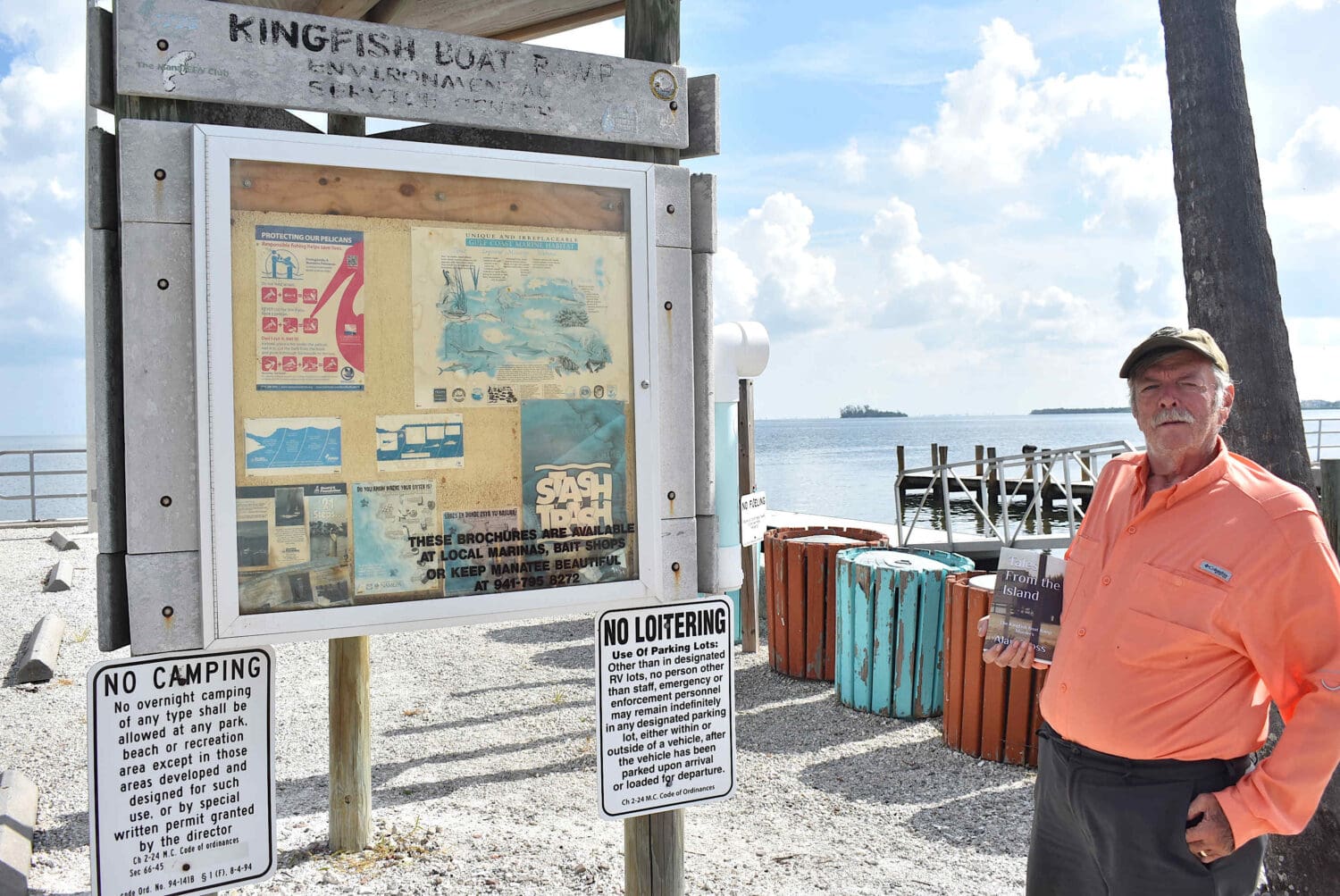
HOLMES BEACH – On the 45th anniversary of the unsolved Kingfish Boat Ramp murders, Bradenton resident Alan Cross released his self-published non-fiction book, “Tales from the Island: The Kingfish Boat Ramp Murders.”
Released on Aug. 1, Cross’s book is available locally at Ginny’s and Jane E’s Café in Anna Maria, The Beach Shop in Cortez, Three Island Monkeys in Longboat Key and online at Amazon.com.
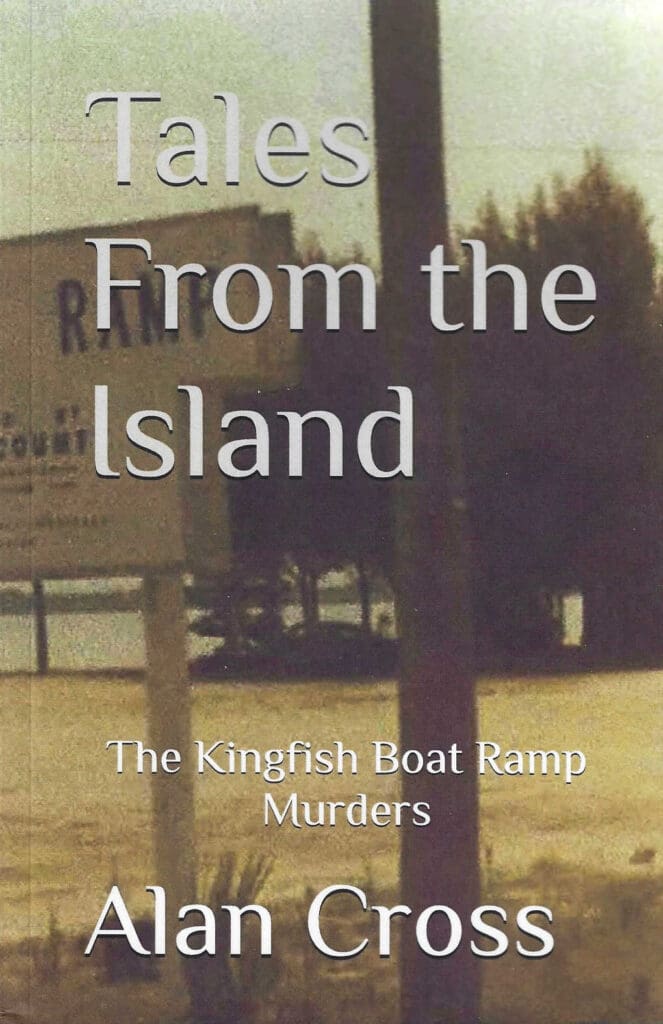
Cross’s book examines the Aug. 1, 1980, murders of Tampa physician Dr. Juan Dumois, 47, his sons Eric, 13, and Mark, 9, and the shooting of his brother-in-law Raymond Barrows, who was visiting from Miami, survived being shot and later provided an eyewitness account of what happened. Not related to the Dumois family, retired Air Force Col. Robert Matzke encountered the shooter minutes later at the nearby Foodway supermarket – where Publix is now located – where he was shot and killed before the shooter escaped in a car driven by an accomplice.
The shootings
According to Cross’s book, the Tampa-based Dumois family was vacationing in Holmes Beach when the shootings occurred and Dumois’ wife, Maria, and their two other children, Anna Maria and Juan Dumois III, decided to not go fishing that fateful day. When interviewed on July 31, Cross said Maria, now in her 80s, and Dr. Juan Dumois III, a practicing infectious disease physician, still live in Tampa but he didn’t have the heart to contact them about the murders of their loved ones.
According to the book, when the Holmes Beach Police Department interviewed Barrows at Blake Hospital in Bradenton, Barrows said they were pulling Dumois’ boat from the water when a stranger approached and said he’d injured his ankle and needed a ride to a nearby condominium. After placing his bicycle in the boat, the stranger took a seat in the back of Dumois’ station wagon. As Dumois drove west on Manatee Avenue toward Manatee Beach with Barrows in the passenger seat, it’s believed the shooter first shot Barrows from behind, then shot the two boys in the back seat and then shot Dr. Dumois as he drove and turned around to confront the gunman.
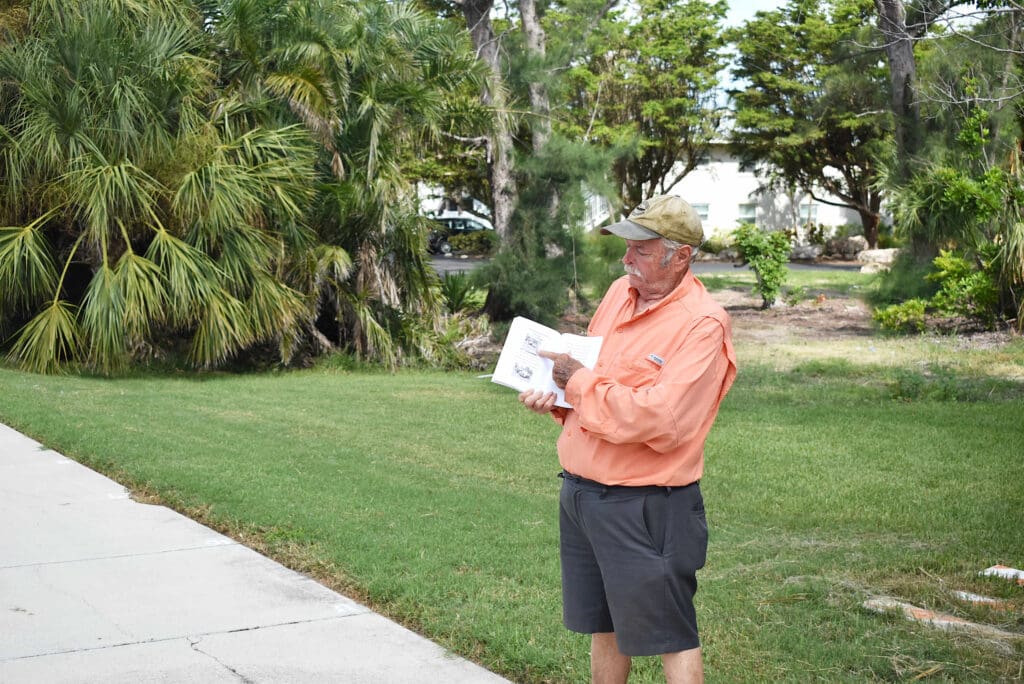
After Dr. Dumois was shot, the station wagon crashed into a tree along the north side of the road by the entrance of the nearby Westbay Cove condominiums and the boat trailer came to rest jack-knifed against the car. According to the book, the killer fled across the street to the Foodway supermarket on his bicycle, where he encountered Matzke, who confronted him but then tried to flee in his Fiat convertible when he saw the man was armed. The gunman shot Matzke in the back of the head as he drove away and Matzke’s car crashed into another vehicle. Police said the crime scene evidence was completely compromised by bystanders and those who tried to assist the shooting victims.
Cold case
Cross, a retired respiratory therapist, first heard about the fatal shootings when a local TV station did a mini-documentary about 10 years ago and he also read newspaper stories that revisited the 1980s shooting spree. Approaching it like a college research paper, he started his research about two years ago and spent endless hours on the internet, searching library and historical records, reviewing police interview transcripts and eyewitness accounts, reading old newspaper stories and viewing old newspaper photos. Cross said there’s a lot of information out there about the shootings and his book is an attempt to compile that information in a single source.
Holmes Beach Police Chief Bill Tokajer, Det. Josh Fleisher and Holmes Beach resident and city commissioner Carol Whitmore are among those acknowledged at the front of the book. Cross said Whitmore helped him gain access to Holmes Beach Police Department evidence box that still contains evidence from the 1980 shootings. He was allowed to view, but not open, the sealed evidence bags. He was also allowed to access folders and photographs contained in the evidence box and he said the police department provided him with a flash drive containing additional information.
“They were very helpful,” Cross said.
He said the heinous nature of the shootings didn’t really hit home until he examined the evidence box: “That made it very real. Seeing the evidence shut me down for about a week. I had to process it all.”
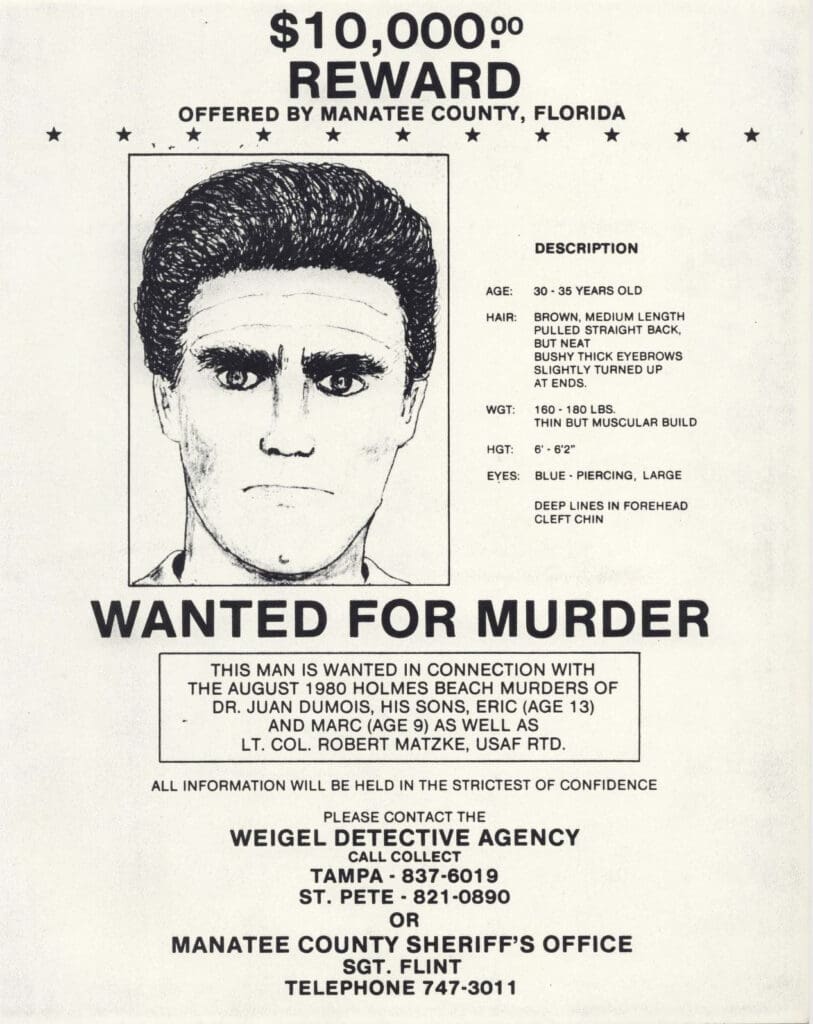
Cross also obtained photos from the Florida Department of Law Enforcement and other sources. His book also includes crime scene sketches, autopsy report diagrams and a copy of a wanted poster that featured an artist’s rendering of the shooting suspect.
The book details and theorizes about the investigative efforts that ensued to no avail, including Holmes Beach Police Chief Tom Shanafelt turning to a psychic and a hypnotist for assistance.
In 1982, Barrows died of a heart attack in the Miami area and the book addresses the possibility of drugs and mob involvement playing a role in the shootings.
“There’s a mob connection, a connection with the ‘cocaine cowboys’ of the 80s and there was speculation of a drug connection,” Cross said.
According to the book, in 1993 the Manatee County Sheriff’s Office received a tip that lead them to interview confessed and incarcerated mafia hitman Donald Frankos. The book includes a transcript of the interview conducted by the sheriff’s office, during which Frankos provided the names of the Cuban men he said ordered and carried out the Holmes Beach shootings because Barrows allegedly stole 55 kilos of cocaine. That interview did not lead to any arrests. Cross’s book doesn’t attempt to solve the murders but it does express his belief that the murders were a targeted attack and Barrows was the likely target.
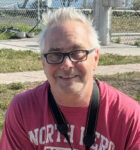
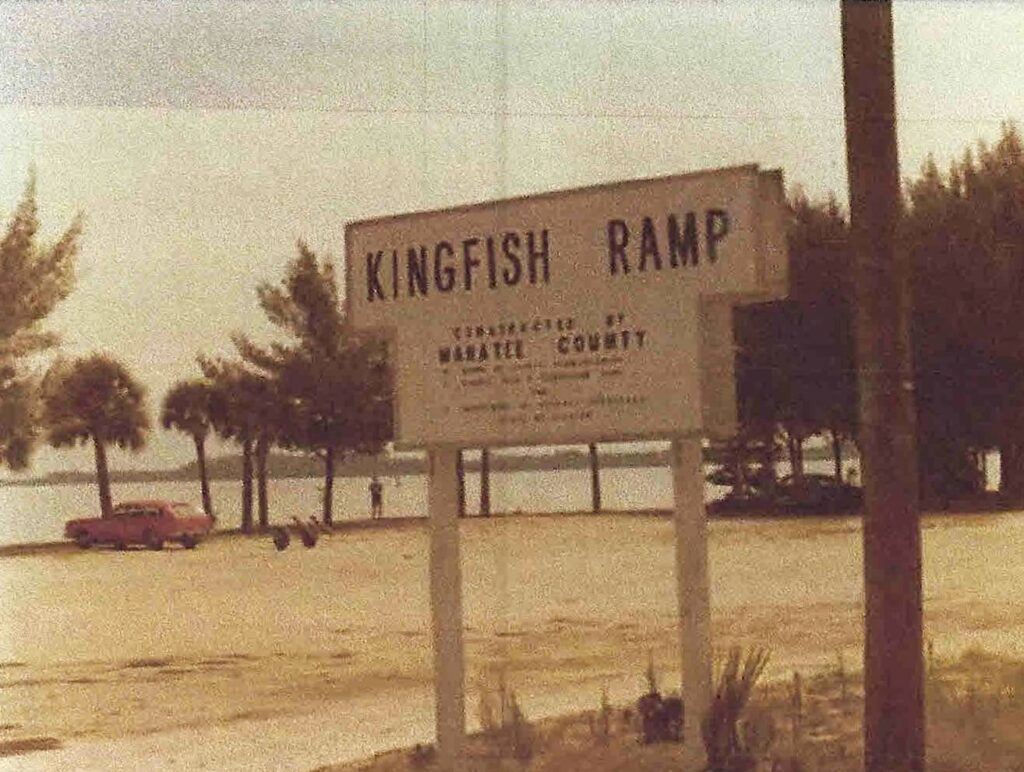
On Aug. 1, Cross met The Sun at the Kingfish Boat Ramp for a photo session and he retraced approximately where the initial encounter with the killer occurred, the scene of the shootings and the crash scene that followed.
The “Kingfish Boat Ramp Murders” is the second book in Cross’s “Tales of the Island” series. The first is “Tales of the Island: The Naming of the Ugly Grouper and Other Lies From Anna Maria Island.” Available at the same sales points, the first book offers Cross’s whimsical and fictional takes on how the Holmes Beach restaurant got its name, how his son, Adam – a local bartender – got his nickname, “Duck,” and other re-imaginings of Island lore.