
Tag: The Fudge Factory

Mingo’s restaurant coming to Holmes Beach

Mingo’s restaurant coming to Holmes Beach

HOLMES BEACH – Three years ago, Ben Sato opened his gRub tropical barbeque restau­rant in Anna Maria. He now plans to open Mingo’s Rooftop Restau­rant and Sports Bar in Holmes Beach with his brother, Jason Sato, as his business partner.

Mingo’s name is derived from the word flamingo and a flamingo holding a tropical drink is featured in the restaurant logo.
Mingo’s restaurant coming to Holmes Beach
The Mingo’s logo includes a flamingo enjoying a tropical drink in a tropical setting. – Ben Sato | Submitted

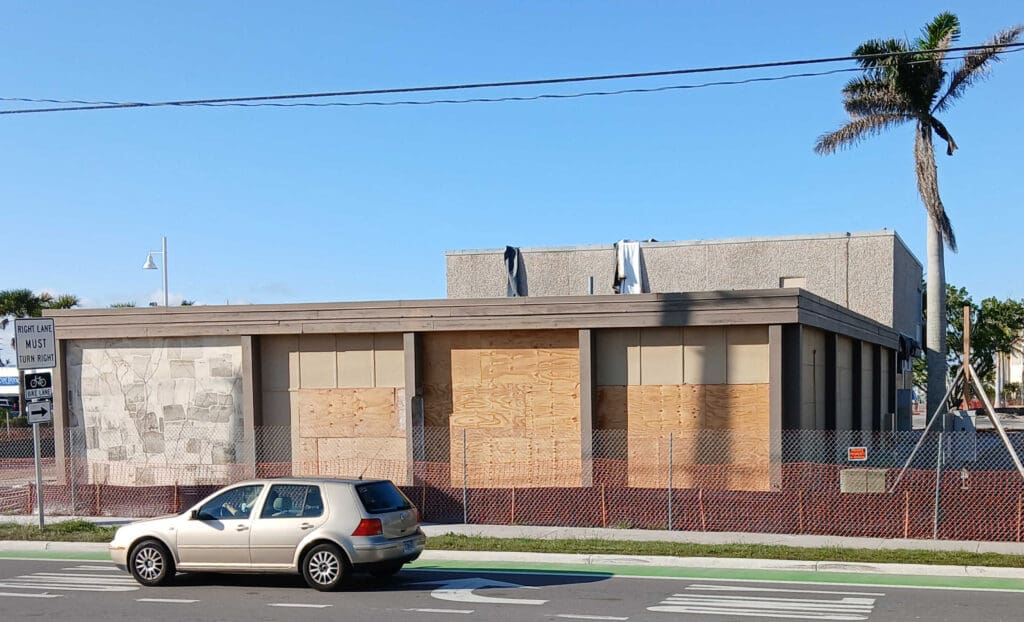
The 125-seat, family-friendly restaurant and bar will occupy the second floor of the former Wells Fargo bank building at the corner of Gulf Drive and Marina Drive, at 5327 and 5325 Gulf Drive.

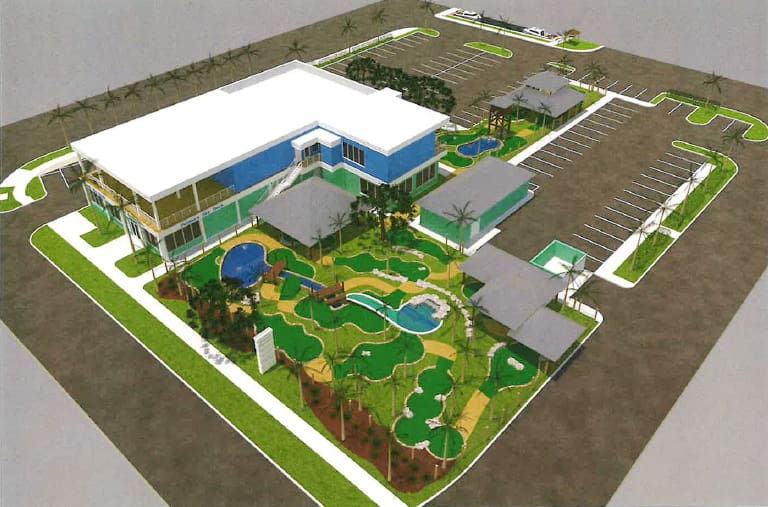
The former bank building and properties are being redeveloped by Island businessman Jake Spooner. The space leased to Mingo’s will sit atop Spooner’s ground-level Island Bazaar retail store and the space leased to The Fudge Factory candy and ice cream shop. Spooner’s business operations will also include a miniature golf course on the east side of the property and a small, stand-alone arcade.
Mingo’s restaurant coming to Holmes Beach
The diagram illustrates how the Island Bazaar property will be developed. – Smith Architects | Submitted

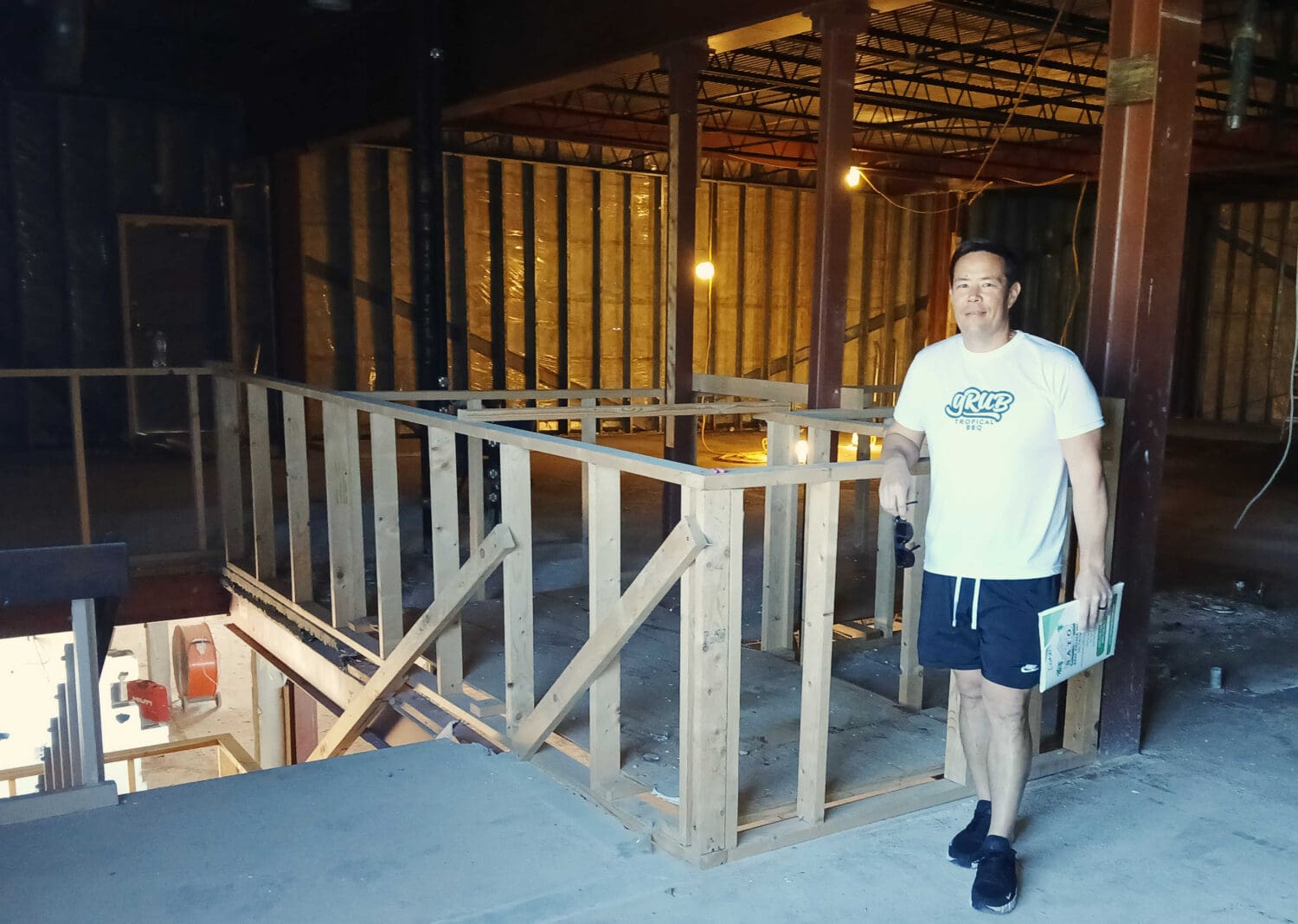
Ben will oversee the pending interior buildout of the restaurant space and the day-to-day business operations when Mingo’s opens in late 2025 or early 2026. He recently gave The Sun a tour of the vacant space to be trans­formed into Mingo’s.

“I’ve known Jake forever. We grew up on the Island together. It’s a great location and being up top here will give us great visibility,” he said.
Mingo’s restaurant coming to Holmes Beach
The wall behind Ben Sato will be removed and a new wall will be built about where he stands. – Joe Hendricks | Sun

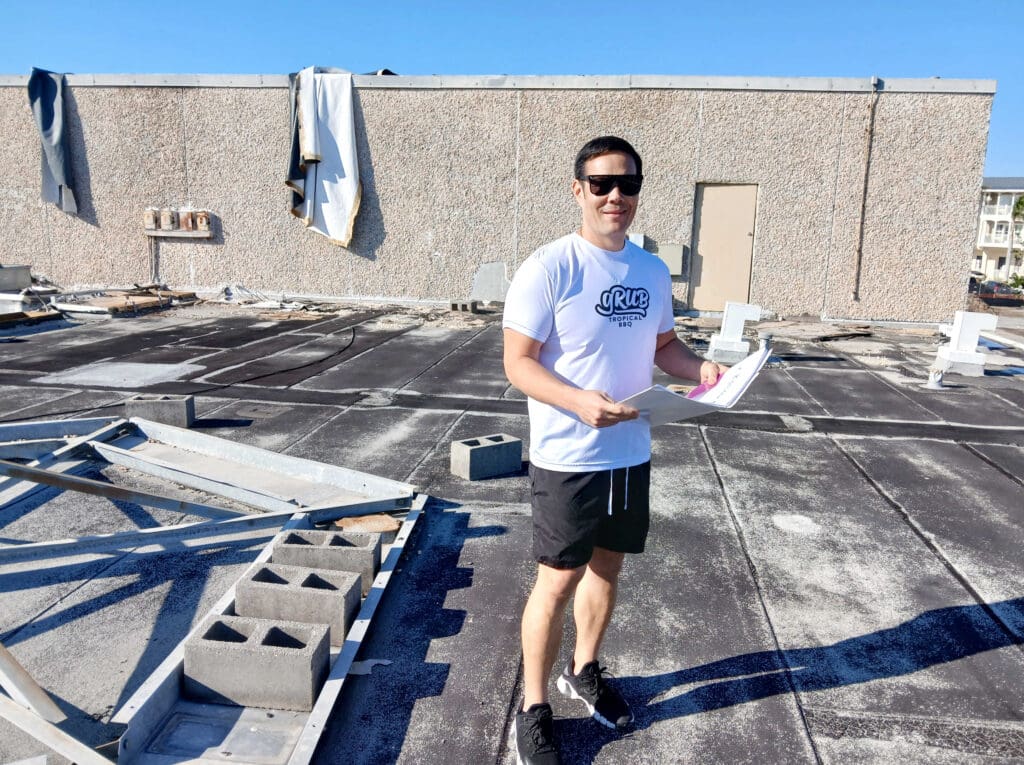
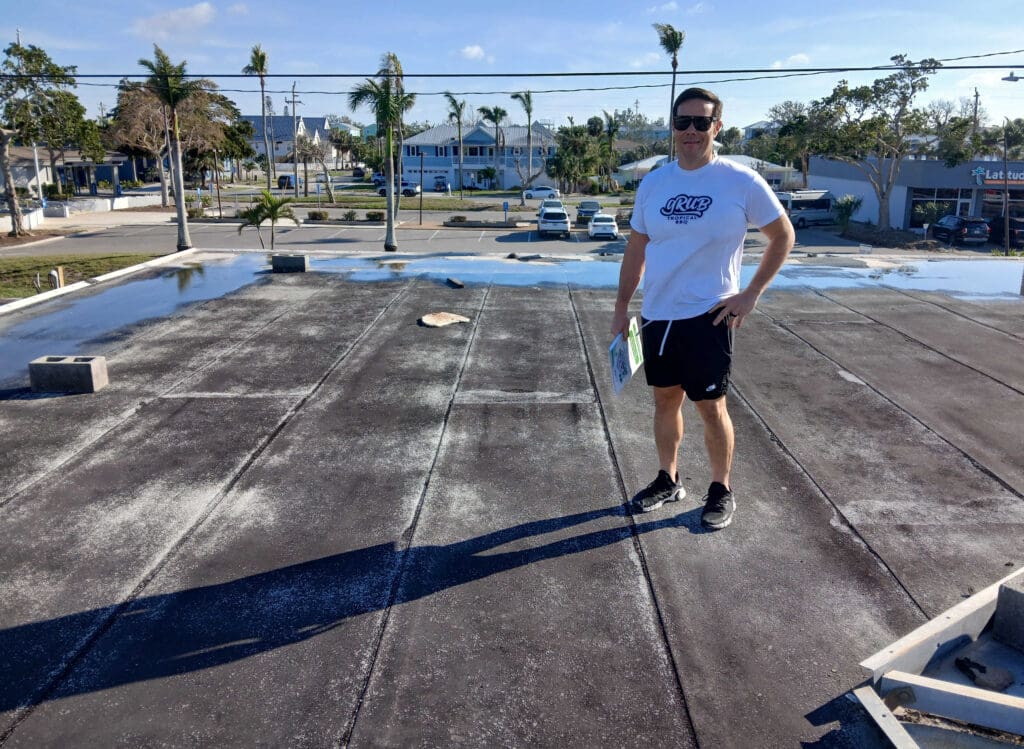
The exterior wall at the south end of the Mingo’s space will be removed so the interior restaurant space can be extended further south towards Gulf Drive, leaving enough space for a covered deck at the south end of the building. In the center of the deck area will be an artificial turf-covered play area where cornhole and other games can be played.
Mingo’s restaurant coming to Holmes Beach
The cinder blocks indicate where the covered deck will be. – Joe Hendricks | Sun

“The footprint of the building’s going to be the same. We’ll have a fun vibe with a turf area outside for the kids to play,” Sato said. “The restaurant concept is elevated bar food – bar food with a little twist on it.”

The Mingo’s menu will include “Tachos” (nachos made with tater tots), other types of nachos, chicken wings, seafood tacos, flatbreads, salads and more. gRub sells beer and wine but not liquor, so liquor service will be a new experience for Sato; and he’s already developing some signature frozen cocktails with a focus on tequila-based drinks.

“We’ll have full liquor but it’s not going to be a party atmo­sphere. This concept will be more focused on kids because of the miniature golf course and that’s how I approached the menu, the layout and the vibe,” he said.

Mingo’s will open at 11 a.m. and close at 10 p.m., when the miniature golf course closes.

“We won’t have late-night hours,” he said.
Mingo’s restaurant coming to Holmes Beach
The former Wells Fargo bank building will be transformed into the Island Bazaar, The Fudge Factory and Mingo’s. – Joe Hendricks | Sun

The south end of the expanded interior space will feature an accordion-style door that can be opened to create an open-air feel inside the restaurant.

“We’ll open it up so it’s basically indoor-outdoor seating with a breeze,” Sato said.

Mingo’s will have a tropical appearance and feel that high­lights the pink and teal colors often associated with Florida. The exposed “wave ceiling” will have cloth hanging from it that creates a wave effect when the breeze moves it.

“I learned a lot opening gRub and I’m excited to open Mingo’s,” Sato said.


Candy cane-making tradition will be demonstrated at Fudge Factory

Candy cane-making tradition will be demonstrated at Fudge Factory

BRADENTON BEACH – A sweet holiday tradition that began with Peter Vriner’s grandfather in 1898 in Champaign, Illinois lives on in Bradenton Beach.

Using his grandfather’s recipe and original equipment, Vriner will demonstrate the 125-year-old candy cane-making techniques at the Fudge Factory, 117 Bridge St. on Friday, Nov. 17 at 6 p.m.

“It’s exactly the same way it was done in 1898,” Vriner said.

His grandfather, Peter George Vrinios, a Greek immigrant who changed the family name to Vriner, opened Vriner’s Confectionary in Champaign, and over the years, the business was run by generations of the Vriner family. The building was placed on the National Register of Historic Places in 1983 and was visited by many celebrities.

“President Kennedy gave a speech in the back of a railroad car right there by the confectionary,” Vriner said. “He had one of our candy canes and said it was the best he ever had.”

He said Al Capone had been a regular customer who enjoyed marshmallow sundaes. Eleanor Roosevelt enjoyed their chocolate sodas. Roger Ebert visited almost daily when he worked at the News-Gazette, and REO Speedwagon’s R.E.O./T.W.O. album cover was photographed at the confectionary shop.

The shop closed in 1997, and when Vriner decided to move to Florida in 2004, he couldn’t bear to leave the candymaking equipment behind.

“I didn’t know what I was going to do with a 100-pound marble table, copper kettles and gas burners, but I didn’t want to drop the tradition, so I brought it all with me,” he said.

He said he approached Ben Kaminecki at the Fudge Factory in 2004 and asked if he would be interested in working as a team on the candy canes during the holiday season.

“He said yes and we’ve been partners ever since,” Vriner said.

Vriner begins with cooking the mixture and after 30 minutes, pours it out onto the same 100-pound 6×4-foot marble slab that his grandfather used.

Candy cane-making tradition will be demonstrated at Fudge Factory
The final step of the traditional candy cane making process will take more than an hour and yield about 100 candy canes. – Jason Schaffer | Sun

“Then I add the peppermint flavor and ball it up, then I use a hook to turn it,” he said. “I put the three colors together on a heated table and pull out about 100 canes.”

The public is invited to watch the demonstration, and children may form their own candy canes for purchase.

Peppermint permeates parade party

Peppermint permeates Bridge Street

BRADENTON BEACH – Onlookers called it the sweetest tear gas ever, as fourth-generation candymaker Peter Vrinios returned to the Fudge Factory on Bridge Street on Dec. 3 for one of this month’s demonstrations of the old-fashioned way of making quality candy canes.

When Vrinios adds pure peppermint extract to the molten hot candy cane base that is still in liquid form, many onlookers had to step back to avoid the minty fumes, that – while harmless – make many gasp for breath. The end result, however, would be delicious.

Peppermint permeates parade party
Three separately prepared slabs of candy are dyed separately then twisted together with enormous force by the skilled hands of Peter Vrinios, the way his family has been doing it since 1898. – Jason Schaffer | Sun

Vrinios’ grandfather built and established a confectionary in 1898 on Main Street in Champaign, Illinois after immigrating to the U.S. from Greece. That confectionary not only stood the test of time, churning out ice cream and candy for 120 years, but was added to the National Registry of Historic Places in 1983. Though the confectionary no longer operates in Champaign, the building has not changed and now operates as a wedding venue.

When he decided to move to Florida in 2004, Vrinios knew he had to bring his 107-year-old marble candy-making table so he could continue to do what he loves upon arrival.

When Vrinios arrived in Florida, he contacted Ben Kaminecki, who was making chocolate in his chocolate factory on St. Armands Circle in Longboat Key. Kaminecki said he would love to have Vrinios make candy, so they started the tradition of making candy canes there.

Peppermint permeates parade party
From left, Erica Ostrander and Millie Aguirre assist with this year’s candy cane making demonstration at the Fudge Factory in Bradenton Beach. – Jason Schaffer | Sun

Making candy canes is hard labor, and would exhaust even the most physically fit people. Vrinios has hands that feel like bricks when you shake them, and throughout the more than hour-long process of making a single batch, he has no option for a single second of rest. If the mixture isn’t molded by hand before it cools and hardens, the intense process is a total loss. For this reason, very few people in the world possess his unique skill set.

“I won’t admit I’m old until I can’t do this anymore,” Vrinios said. “Candy canes started in Biblical times. It started with children crying and being restless in church. The priests began making peppermint sticks to hand out to children to pacify them during the services. The red was later added to represent the blood of Jesus, then the hook was added to represent the staff of Christ. I really enjoy the history and the process.”

While the ingredients of sugar, water and peppermint extract are very simple, the process is far from it. It begins with a large copper pot slowly cooking the sugar and water. When it’s ready to take off the heat is a secret Vrinios is keeping to himself, but he has it down to the second. No guesswork is involved, he just seems to know. When it’s time, lifting the kettle off the heat to pour onto the pre-oiled marble table is a two-person job. With the candy still in a mostly liquid form, the master candymaker adds the peppermint extract, a process that immediately makes the air almost unbreathable.

The key to the process is not allowing the mixture to harden. From the time the hot liquid sugar hits the marble slab and the time it is too hard to work with, multiple helpers have to perform their roles simultaneously or the batch is busted. The batch is cut into three large chunks and while Vrinios pulls a third of the mixture on a metal hook attached to the wall, one helper adds red dye to their section and the other adds green.

The final stage of the process involves the candymaker using the side of his hand to make four shallow ridges, one on each side of the large square of candy. The green and red cigar-shaped pieces are each cut in half and added to the shallow ridges, alternating color on each ridge. This huge piece of candy is then hand-rolled on one end which gives the colors the swirl you are used to seeing as the size is pressed and rolled from about 8 inches to the quarter-inch candy cane that is the final product. Assistants cut each cane by hand then continue the final rolling to get the proper size. The signature hook is bent, then the candy canes are placed on a tray to cool.

There will be demonstrations on Saturday, Dec. 10 and Friday, Dec. 16 at 6:30 p.m. at the Fudge Factory, so there’s still time to see this amazing confectionary work of art being made in person. Watch through the front window, or if adventurous, come inside and get the full nose- and throat-burning experience (recommended).

Candy canes take center stage on Bridge Street

Candy canes take center stage on Bridge Street

BRADENTON BEACH – From Main Street, Champaign, Illinois in 1898 to Bridge Street, Bradenton Beach, Florida in 2021, a fourth-generation candy maker is making candy canes the old-fashioned way.

A peek through the front window of The Fudge Factory on Bridge Street reveals a large marble slab that has been the base for handmade candy in Peter Vrinios’ family for 122 years. During the month of December, Vrinios has been making candy canes in the front of the store once a week, and the public is invited to watch.

Vrinios’ grandfather built and established a confectionary in 1898 on Main Street in Champaign, Illinois after immigrating to the United States from Greece. That confectionary not only stood the test of time churning out ice cream and candy for 120 years, but was added to the National Registry of Historic places in 1983. Though the confectionary no longer operates in Champaign, the building has not changed and now operates as a wedding venue.

In 2004, Vrinios decided the warm Florida climate was calling him, so he packed up his family’s 106-year-old marble slab candy-making table and made the move south.

“I got down here to Florida and I looked up Ben Kaminecki who was making chocolate in his chocolate factory in St. Armands,” said Vrinios. “He said he would love to have me make candy, so we started the tradition of making candy canes there.”

Candy canes take center stage on Bridge Street
Peter Vrinios prepares to pour the liquid candy cane on the marble table that has been in use by his family since 1898. Jason Schaffer | Sun

Kaminecki now owns the Fudge Factory in Bradenton Beach and the tradition of making candy canes by hand made its way to this location and will continue far into the future if Peter Vrinios has anything to say about it.

While making candy canes by hand may seem like your typical holiday baking project, the truth is a much different story. Shake hands with Vrinios and you will think you’re shaking hands with a man that has spent his life laying bricks, not creating sweet treats. The truth is, making candy canes the old-fashioned way is hard labor that would break down most physically fit people before the process even got started, and that process goes back a very long time.

“Candy canes go back to Biblical times,” said Vrinios. “It started with children crying and being restless in church. The priests began making peppermint sticks to hand out to children to pacify them during the services. The red was later added to represent the blood of Jesus, then the hook was added to represent the staff of Christ.”

While nobody is certain about how long the current process of hand-making candy canes dates back, Vrinios says it goes back at least to the 19th century. The basic ingredients are pretty simple: sugar, water and peppermint extract. 

The process begins with a large copper pot slowly cooking the sugar and water. When it’s ready to take off the heat is a secret Vrinios is keeping to himself, but he has it down to the second. No guesswork is involved, he just seems to know. When it’s time to come off the heat, lifting the kettle off the heat to pour onto the pre-oiled marble table is a two-person job. Still in a mostly liquid form, the master candy maker adds the peppermint extract, a process that immediately makes the air almost unbreathable. While not dangerous, it could be best described as peppermint tear gas.

Candy canes take center stage on Bridge Street
Peter Vrinios makes candy canes at The Fudge Factory in Bradenton Beach in a method that hasn’t changed in over a hundred years. – Jason Schaffer | Sun

There’s no time for Vrinios’ assistants to catch their breath as the candy quickly begins to harden as it cools. The candy maker uses metal putty knives to work the candy and mix in the flavoring. The candy is brown at this point; it gets its white color from being hung from a hook on the wall where it is pulled by hand for about 10 minutes. During this process, the candy looks like a blonde wig as the air is pulled out, giving it a white color. 

Candy canes take center stage on Bridge Street
Peter Vrinios pulls the air out of the candy, which changes the color from brown to white. – Jason Schaffer | Sun

Once the candy has the proper texture and color, two large chunks are cut off and each is handed to an assistant. One assistant adds red food dye and works it in, rolling their section into a large cigar shape about 18 inches in length. The second assistant executes the same process using green food dye. While the assistants create the colored sections, Vrinios works the large white slab into a shape and size resembling a square watermelon.

Candy canes take center stage on Bridge Street
Dye is added to make the red and green stripes of the candy canes. -Jason Schaffer | Sun

The final stage of the candy cane-making process involves the candy maker using the side of his hand to make four shallow ridges, one on each side of the large square of candy. The green and red cigar-shaped pieces are each cut in half and added to the shallow ridges, alternating color on each ridge. This huge piece of candy is then hand-rolled on one end which gives the colors the swirl you are used to seeing as the size is pressed and rolled from about 8 inches to the quarter-inch candy cane that is the final product. Assistants cut each cane by hand then continue the final rolling to get the proper size. The signature hook is bent, then the candy canes are placed on a tray to cool.

Candy canes take center stage on Bridge Street
The final step of the traditional candy cane making process will take more than an hour and yield about 100 candy canes. – Jason Schaffer | Sun

If you would like to see this impressive process from start to finish, you still have time. Peter Vrinios and his assistants will be doing live demonstrations at The Fudge Factory on Bridge Street on Friday, Dec. 17 and Sunday, Dec. 19 at 5:30 p.m. both days. Space is limited for viewing, so get there early for the best vantage point.