

Tag: seagrass

seagrass

Reel Time: The importance of seagrass

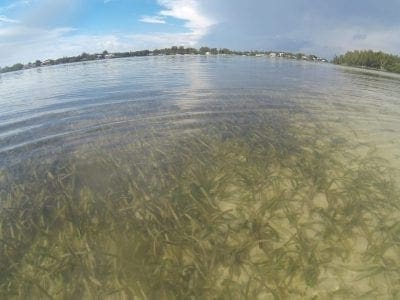
The seagrass beds that carpet Sarasota Bay harbor a tremendous array of life, a critical and diverse ecosystem that is out of sight to most except on lunar low tides.

Seagrasses are actually underwater flowering plants that serve a number of important functions. They produce oxygen, bind sediments and baffle wave action while cleansing the water column. Seagrass roots, their leaves and the epiphytes and microalgae that cling to them clean water by converting dissolved nutrients into plant matter. Besides giving us clean and clear water, seagrasses are home to the organisms that provide food and shelter for fish, crustaceans, shellfish and wading birds. They also are food sources for manatees, sea turtles and various fish and crustaceans. Because they flower, seagrasses require sunlight and are limited to clear, shallow waters.

Of the 52 species of seagrasses worldwide, only seven are found in Florida. Three main species are found on Florida’s southwest coast. They include turtle grass (Thalassia testudinum), shoal grass (Halodule wrightii) and manatee grass (Syringodium filiforme). The historical loss of these species has been extensive throughout Florida. Tampa Bay has lost 81% of its historical seagrasses, Sarasota Bay 35% and Charlotte Harbor 29%. Poor watershed management (stormwater runoff and sewage disposal), dredge and fill operations and scarring from boat propellers have taken a heavy toll on Florida’s seagrasses.

Through the elimination of small, poorly-maintained regional sewage systems and the work of organizations like the Sarasota Bay Estuary Program, Tampa Bay Estuary Program and Tampa Bay Watch, programs were instituted that began to turn the tide on water quality.

Anglers, from experience, are aware of the importance of these prolific, shallow beds. They experience firsthand the myriad interactions that produce fertile fisheries. They may not understand the intricate web of existence that proceeds from the microscopic level to the fish on the end of their line, but they reap the benefits nonetheless. Government scientists (NOAA) consider seagrasses to be of such importance that they have adopted a “no net loss” policy to manage them. Despite this pronouncement, seagrasses remain under assault.

Preventing the loss of valuable seagrasses must be a high priority. Watershed management, replanting, avoidance of direct impacts to existing grasses, and mitigation are avenues to reach those goals.

Mitigation involves the replacement of seagrasses impacted by residential and commercial development. Unfortunately, the literature reveals that the effectiveness of mitigating seagrass damage is considered, even among the leading wetland scientists, as marginal at best.

In recent years, seagrass rebounded in Sarasota Bay. Unfortunately, that trend reversed after the red tide of 2018. While it is a foregone conclusion that development will continue to impact coastal areas and their seagrass resources, it’s critical that decisions are made that will demand accountability and smart development while protecting the quality of our most valuable local resources. Enlightened citizens, anglers and their interest groups must take part in this decision-making process.

Cost considerations often eclipse concerns for seagrasses, but research reveals the true value of these resources. A study (Virnstein and Morris 1996) conducted in the Indian River Lagoon estimated the value of seagrass to be $12,500 per acre, per year, based solely on economic values derived from recreational and commercial fisheries. In the last few years, the effects of rampant development, antiquated and failing infrastructure and associated stormwater runoff are feeding red tide events and algae blooms, and threatening the very existence of the bay’s seagrass system.

Groups like Suncoast Waterkeeper and Tampa Bay Waterkeeper, with the Sarasota Bay Estuary Program, alarmed at the prospect of a potential collapse of the bay (like the one that has plagued the Indian River Lagoon), have sprung into action to alert the public through education, effective policy and in the case of the Waterkeeper groups, hold governments accountable under the rules of the Clean Water Act of 1972. It is imperative that citizens let leaders know they will hold them responsible to protect the resources that form the basis of our quality of life as well as the local economy. Next week: “Where Did The Grass Go?”

Reel Time: Dangerous seagrass bill advances

Florida Senate Bill 198 (Sen. A. Rodriguez, R- Doral) would allow permits that will impact seagrass and allow for replacing them elsewhere in state waters. Why is that a problem?

I posed that question to Dave Tomasko, the executive director of the Sarasota Bay Estuary Program. Tomasko has more than 30 years of experience in water quality assessments and the development of science-based natural resource plans in the Gulf of Mexico and internationally. With a Ph.D. in biology from the University of South Florida, a Master of Science in marine biology from the Florida Institute of Technology, and a Bachelor of Science in biology from Old Dominion University, Tomasko is uniquely qualified to accurately assess these kinds of proposals.

Dangerous seagrass bill advances
Manatees feed on seagrass, which is theatened by state legislation in Tallahassee this month. – Rusty Chinnis | Sun

“The biggest issue is that the track record of transplanting seagrasses is poor,” Tomasko said. “Even if transplant areas gain some seagrass after planting, those that survive typically have lower densities than what they replaced. Typically, seagrass grows where it can, and for someone to grow new seagrass, something has to change – water quality must improve (very hard) or areas have to be made shallow enough to support seagrass (expensive) or wave attenuation devices have to be installed (also expensive and a nuisance to navigation). Many believe we can’t afford more losses, and so a system that makes it seem ‘acceptable’ for impacts because they can be ‘mitigated’ is not thought to be supportable by the facts or track record of such efforts. Seagrass restoration efforts in Florida have had a history of being both expensive and complex, with few success stories.”

The bill would make the destruction of seagrass permittable in Florida with mitigation banks. The bill might also open the door to allow healthy, undisturbed seagrass areas to be impacted by the construction of boat basins and navigation channels that the Florida Department of Environmental Protection (FDEP) has routinely denied for more than 30 years. There are many other mitigating factors. Considering the massive losses of seagrass in Tampa Bay and Sarasota Bay, as well as statewide, and the unprecedented death of manatees in the Indian River Lagoon, this bill seems almost laughable to this author. Besides holding the potential of being a virtual death sentence for manatees, advancing legislation like this is unwise. To advocate planting seagrass without fixing the underlying impaired water affecting seagrasses statewide seems absurd.

Dangerous seagrass bill advances
Seagrass in the Intracoastal Waterway/Sarasota Bay could be impacted by proposed state legislation. – Cindy Lane | Sun

Despite all these issues, coupled with the apprehensions of environmentalists, the bill was approved by the Environment and Natural Resources Committee by a vote of 3 to 2 on Jan. 18. A House companion bill, HB 349, filed by Rep. Sirois (R-Merritt Island), passed its first committee of reference on Dec. 6, 2021, and is now headed to the Agriculture and Natural Resources Subcommittee.

I had a firsthand experience recently that drove home the potential harm of legislation like this on a trip to the east coast when my friend and fellow conservationist Captain Rodney Smith, of Satellite, took me to a popular manatee viewing area at DeSoto Park in Satellite Beach. The sight of hundreds of manatees grouped together in a shallow canal was mesmerizing. When I expressed my delight at seeing so many manatees at one time, nearby environmental filmmaker Dylan Hansen informed me that just a few years ago there were twice as many manatees there. Suddenly the plight of these manatees came into sharp focus.

Citizens who care about water quality both as a quality of life issue and from an economic perspective must speak out. The best way to do that is to contact your state Senator and your state Representative and encourage them to vote “no” on these potentially disastrous bills. It might have been argued at one time that we need to strike a balance on issues like this, but that time has passed. We’ve kicked the can down the road until we’ve run out of road. Either we take the initiative or we suffer the consequences that inaction may bring.

Reel Time: All clams on deck

Reel Time: All Clams On Deck

This past Saturday, Jan. 15, I attended a press conference at the Mar Vista Dockside Restaurant on Longboat Key for the All Clams on Deck clam restoration initiative hosted by restaurateur and Anna Maria environmental leader Ed Chiles.

This initiative aims to support ecosystem sustainability and resilience by attempting to restore imperiled seagrass meadows and planting native clam populations. The pilot project hopes to demonstrate that clams will improve water quality, reduce algal blooms and create healthier habitats while supporting commercial and recreational fisheries along Florida’s Gulf coast. Its focus is two-fold, including a way for clam farmers’ products to be used for restoration purposes when water quality events, including red tide, prevent them from selling their products for human consumption.

This project will focus on restoration initiatives that, over the pilot project period of 3-5 years, will provide the research and proof of concept needed to support the use of bivalves for reducing nutrient loading. The innovative approach aims to fund critical science that can be applied to large-scale water quality improvements and inform ongoing efforts to restore and protect estuarine ecosystems. Supporters point to the sobering note that in 2021, more than 1,100 manatees perished – more than twice the number that typically die annually. A big contributor to this year’s mortality has been starvation from lack of sufficient seagrass. These critical seagrass beds have been declining statewide due to degraded water quality in Florida’s bays and estuaries.

The organization’s website points out that fishing, tourism and recreation on Florida’s Gulf coast supports 304,000 jobs and a $17.5 billion economy. Looking statewide, about 47% of the economy is reliant on coastal tourism, generating significant tax dollars that fund a full continuum of public infrastructure, schools, roads, health and community services that in turn are essential for keeping the region’s economy humming. The continued health and prosperity of the region is at serious risk from incidents like the release of 215 million gallons of phosphoric acid-contaminated water from Piney Point into the Gulf on April 20, 2021. Unfortunately, that was just one of many insults that create dangerous public health risks and portend an economic crisis that threatens the “golden goose” of tourism on Florida’s shores, and specifically in the Gulf region.

Officials attending the event included Florida State Rep. Will Robinson and Florida Sen. Jim Boyd. Also in attendance were Manatee County Administrator Scott Hopes, Longboat Key Mayor Ken Schneider and Vice Mayor Mike Haycock as well as Curt Hemme, owner and managing director of Bay Shellfish Company in Terra Ceia, and other stakeholders. For more information visit All Clams on Deck.

Related coverage


Commission considering clam, seagrass restoration request

Reel Time: A New Year’s resolution

I’m guessing that when it comes to making and keeping New Year’s Resolutions, your average isn’t much better than mine. When I look back, I don’t sweat most of them. Resolutions like losing weight or exercising more aren’t so critical. Then there are other resolutions that one just can’t take for granted or put on hold anymore. The resolution to work to protect the habitat and water quality of the Suncoast rises to that level.

If you think that’s an overstatement, I encourage you to speak to any one of the professional fishing guides, like Captain Justin Moore, a second-generation guide on Anna Maria Island who spends over 200 days on the water every year. As a keen observer by trade and nature, Moore is alarmed with what he’s seeing. It was Moore and his dad, Captain Scott Moore, who first alerted me to the fact that vast stretches of Sarasota Bay had lost seagrasses after the devastating red tide of 2018. How did they know almost a year before the official notice was released by the Sarasota Bay Estuary Program? He saw it with his own eyes, thousands of acres of lush grasses that he had fished for decades were suddenly just bare sand. I heard the same concerns from veteran anglers like Captain Todd Romine, who has been fishing Sarasota Bay for over three decades. Romine was so concerned, he sacrificed a day of fishing to take Sarasota Bay Estuary Program Executive Director Dave Tomasko to show him. Tomasko made an initial determination that day that grass beds that had been in water 5 feet or deeper were essentially gone.

This was six months before the results from the Southwest Florida Water Management District seagrass survey documented an 18% decline in seagrass across Sarasota Bay, Roberts Bay and Little Sarasota Bay from 2018 to 2020. The decline equates to a loss of 2,300 acres of seagrass. The total acreage of seagrass coverage in the area is down from 12,853 in 2018 to 10,540 in 2020. By comparison, seagrasses in the 1950s covered about 10,246 acres, a low after dredge and fill operations and sewage systems devastated a once-vibrant ecosystem. The coverage steadily built from there as municipalities converted to central sewer systems and stormwater runoff began to be managed. Now the loss we’ve experienced in two years means the area basically has to start over.

Tampa Bay, linked directly to Anna Maria Sound, didn’t fare much better, losing 13% of its seagrass, more than 5,400 acres. When you consider that 2.5 acres of seagrass supports up to 100,000 fish and 100 million invertebrates like clams, crabs, starfish and snails, the impact of the loss becomes more evident.

If that wasn’t enough to alarm observers of the bay, the debacle at Piney Point – which released over 200 million gallons of phosphate process wastewater into Tampa Bay in the spring of 2021 – should have been. That release likely led to the most devastating red tide event in upper Tampa Bay in more than 30 years, killing more than 1,711 tons of sea life.

On top of these devastating events, two years of massive and unprecedented lyngbya (cyanobacteria) blooms in Anna Maria Sound and Tampa Bay in 2020 and 2021 blanketed thousands of acres of seagrass with a foul-smelling mass that blocked life-giving light.

While local waters have become clear as they cool during the winter, keen observers will notice that the bay is still chocked with a variety of algae. Why is that a problem? For an answer, we only have to look to the east coast of Florida and the sad saga of the Indian River Lagoon (IRL). Once one of the most vibrant marine ecosystems on the planet, the IRL in recent years has seen massive die-offs of marine life and most recently an unprecedented loss of Florida manatees.

This is not an issue that should concern only fishermen, but has the potential to devastate an economy that depends on clean water and a vibrant ecosystem. People move to our area and buy homes because of the water and natural environment. It’s time for realtors, developers, builders, anglers and every segment of our community to pull together to demand accountability, purchase and protect vulnerable habitat and demand improvements in infrastructure that protect this environmental engine of progress. There are solutions if we can affect the political will. Yes, they will be expensive, but if we don’t act, the cost in the future will be overwhelming and may be too late. Resolve to be part of the solution.

“If you work to save the world and the world is lost, no regrets.” – The Dalai Lama.

Reel Time: My witness statement

I’ve been a resident of the Suncoast for 40 years. For 35 years of those years, I ran a contracting business and have seen firsthand the effects of harmful algae blooms on the environment and the economy. I have never been more concerned than I am today and fear we may be near a point of no return.

I believe that there is a real possibility that our coastal waters may be in the process of converting from a seagrass-based system with clean, vibrant waters to an algae-based system that supports very little life and creates milky green water.

This is an economic and environmental disaster in the making. We only have to look as far as The Indian River Lagoon on Florida’s east coast as a cautionary tale. Once one of the most vibrant ecosystems on Earth, manatees there are dying of starvation due to a lack of the seagrasses they graze on.

https://youtu.be/1kSCc_tddtc

I am no scientist, but I have been fishing and recreating on Sarasota Bay, Tampa Bay and Anna Maria Sound since I moved here in 1980, and can honestly say I fear for the future of our waters and the generations of future residents who will inherit the legacy of our inaction. I truly believe that this rises to the level of a “moral obligation.”  I would encourage you to face this challenge. Let’s all work together to see that future generations have some of the same opportunities that we’ve had.

What can you do? Contact your elected officials (local and state) and demand action, write letters, attend commission meetings, join with groups like Suncoast Waterkeeper and Tampa Bay Waterkeeper, don’t fertilize during the rainy season, keep yard clippings from our waterways and encourage your neighbors and friends to speak out.

The sad truth is that if we are silent, we will reap the unfortunate rewards. I’m reminded of a quote by the American Cultural Anthropologist Margaret Mead, “Never doubt that a small group of thoughtful, committed citizens can change the world; indeed, it’s the only thing that ever has.”

The truth is that if we don’t, nobody will, and our children will inherit a world no one would wish for them. We can do this but only by acting, now, before it’s too late.

Reel Time: Threatened seagrass has trickle-down effect

The seagrass beds that carpet Sarasota Bay harbor a tremendous array of living creatures. This critical and diverse ecosystem is generally out of sight except at extreme low tides.

Seagrasses are actually underwater flowering plants that serve a number of important functions. They produce oxygen, bind sediments and baffle wave action while cleansing the water column. Seagrass roots, their leaves, and the epiphytes and microalgae that cling to them clean water by converting dissolved nutrients into plant matter. Besides giving us clean and clear water, seagrasses are home to the organisms that provide food and shelter for fish, crustaceans, shellfish and wading birds. They also are food sources for manatees, sea turtles and various fish and crustaceans. Because they flower, seagrasses require sunlight and are limited to clear, shallow waters.

Harmful algae blooms like this occurrence of lyngbya on the east side of Anna Maria Sound are indicative of poor water quality and smother seagrasses. – Submitted

Of the 52 species of seagrasses worldwide, only seven are found in Florida. Three main species are found on Florida’s southwest coast. They include turtle grass (Thalassia testudinum), shoal grass (Halodule wrightii) and manatee grass (Syringodium filiforme). The historical loss of these species has been extensive throughout Florida. Tampa Bay has lost 81% of its historical seagrasses, Sarasota Bay 35% and Charlotte Harbor 29%.  Poor watershed management (stormwater runoff and sewage disposal) dredge and fill operations and scarring from boat propellers have taken a heavy toll on Florida’s seagrasses.

Through the elimination of small, poorly-maintained regional sewage systems and the work of organizations like the Sarasota Bay Estuary Program, Tampa Bay Estuary Program, and Tampa Bay Watch, programs were instituted that began to turn the tide on water quality.

Anglers, from experience, are aware of the importance of these prolific, shallow beds. They experience firsthand the myriad interactions that produce fertile fisheries. They may not understand the intricate web of existence that proceeds from the microscopic level to the fish on the end of their line, but they reap the benefits nonetheless. Government scientists (NOAA) consider seagrasses to be of such importance that they have adopted a “no net loss” policy to manage them. Despite this pronouncement, seagrasses remain under assault.

Preventing the loss of valuable seagrasses must be a high priority. Watershed management, replanting, avoidance of direct impacts to existing grasses, and mitigation are avenues to reach those goals. Mitigation involves the replacement of seagrasses impacted by residential and commercial development. Unfortunately, the literature reveals that the effectiveness of mitigating seagrass damage is considered, even among the leading wetland scientists, as marginal at best.

In recent years, seagrass rebounded in Sarasota Bay. Unfortunately, that trend reversed after the red tide of 2018, and now there have been reports by local fishing guides including Captain Justin Moore and Captain Todd Romine that acres of once-lush seagrasses have been reduced to sand flats. It is a foregone conclusion that development will continue to impact coastal areas and their seagrass resources. It is vital that decisions are made that will accommodate unavoidable development while protecting the quality of our most valuable local resources. Enlightened citizens, anglers and their interest groups must take part in this decision-making process.

Cost considerations often eclipse concerns for seagrasses, but research reveals the true value of these resources. A study (Virnstein and Morris 1996) conducted in the Indian River Lagoon estimated the value of seagrass to be $12,500 per acre, per year, based solely on economic values derived from recreational and commercial fisheries. In the last few years, the effects of rampant development, antiquated and failing infrastructure, and associated stormwater runoff are feeding red tide events and algae blooms, and threatening the very existence of the bay’s seagrass system.

Groups like Suncoast Waterkeeper and Tampa Bay Waterkeeper, with the Sarasota Bay Estuary Program, alarmed at the prospect of a potential collapse of the bay (like the one that has plagued the Indian River Lagoon) have sprung into action to alert the public through education, effective policy and in the case of the Waterkeeper Groups, hold governments accountable under the rules of the Clean Water Act of 1972.  It is imperative that citizens let leaders know they will hold them responsible to protect the resources that form the basis of our quality of life as well as the local economy.

Pinellas County bans water horses

County moves to regulate horses in bay

PALMA SOLA BAY – Taking a cue from Pinellas County, Manatee County commissioners have voted 7-0 to have the county attorney’s office investigate regulating horseback riding in sensitive waters in the county, including Palma Sola Bay.

Pinellas commissioners banned horses from aquatic preserves in that county last month, impacting several tourism businesses, including C Ponies, which also rents horses at Palma Sola Causeway.

They were persuaded by evidence, including aerial photos, that horses trample fragile seagrass in the aquatic preserve in Tampa Bay near the Sunshine Skyway Bridge where horses are rented, and that horse manure and urine in the water pose a risk to human health.

Second Place

In-Depth Reporting

Lucy Morgan Award

2020

Google Maps shows similar seagrass damage in Palma Sola Bay in Manatee County, and the bay has had poor water quality based on enterococcus bacteria from fecal contamination on the south side of the bay four times in the past five weeks, according to the Florida Department of Health’s Healthy Beaches Program.

Manatee County Commissioner Betsy Benac made the request on Thursday, Nov. 7.

“I want to know if it’s something we can do,” she said. “We’ve been told previously we can’t do that. Well, I don’t believe that.”

Commissioners had been advised that regulation was not possible based on ancient precedent protecting the use of horses as a mode of travel to convey people and goods, Manatee County Attorney Mitchell Palmer said, adding that “horses being used for recreational purposes in a sensitive body of water” is not the same thing.

“There’s little doubt in my mind that we can regulate horseback riding for purposes of water quality,” said Palmer, who suggested the “sensitive waters” language to avoid impacting horseback riding in rivers and lakes in east Manatee County and elsewhere.

“We have a copy of the Pinellas County ordinance,” Palmer said, explaining that his office had already begun looking into the issue prior to Thursday’s vote, and has requested the last five years’ worth of Palma Sola Bay water quality records from the Manatee County Health Department.

“I think it’s very important that this be done because the (sea)grass is being trampled,” Commissioner Vanessa Baugh said. “The grass helps to keep the water clear and is also food for the manatees.”

Palma Sola Bay has seagrass beds on both sides of the causeway as of last year’s survey, including in the northeastern section where most commercial horseback rentals occur, according to the Sarasota Bay Estuary Program, which has expressed concern about the issue in recent months, along with Keep Manatee Beautiful, the Palma Sola Scenic Highway Corridor Management Entity, the Manatee Council of Governments and Sarasota Audubon.

Related coverage

Pinellas County bans water horses

Palma Sola water quality compromised

Concerns raised over horse waste in bay

Letters: Horses on the causeway

Reel time seagrass

Seagrass: Rainforests of the sea

The seagrass meadows that surround Anna Maria Island are mostly hidden from view and are only exposed on extreme low tides during the full and new moons. Magical and mysterious like a tropical rainforest, they harbor and support a tremendous array of life.  And while we have a limited understanding of this web of life, it is responsible for much of the beauty and diversity of the area.

Seagrasses are flowering plants that serve a number of important functions. Since they flower, they require sunlight and are limited to clear, shallow waters. They produce oxygen, bind sediments and baffle wave action, while cleansing coastal waters.

Seagrass roots, their leaves, and the epiphytes and microalgae that cling to them, clean water by converting dissolved nutrients into plant matter. Besides giving us clean air and clear water, seagrasses are home to a vast array of organisms that provide food and shelter for fish, crustaceans, shellfish, manatees and wading birds.

While there are 52 species of seagrasses worldwide, only seven are found in Florida.  Locally they include turtle (Thalassia testudinum), shoal (Halodule wrightii) and manatee grasses (Syringodium filiforme). The loss of these species has been extensive throughout Florida.

At one time Tampa Bay had lost 81 percent of its historical cover, Sarasota Bay 35 percent and Charlotte Harbor 29 percent.  Poor watershed management (storm water run-off and sewage disposal) dredge and fill operations and scaring from boats have taken a heavy toll on Florida’s seagrasses.

Fortunately, the influence of citizens through organizations like Sarasota Bay Watch,  Tampa Bay Watch, the Tampa Bay National Estuary Program and the Sarasota Bay Estuary Program have instituted programs that are beginning to turn the tide on water quality. The increase in water quality has led to a resurgence in local seagrass coverage. In Tampa Bay, sea grass coverage has reached 41,655  acres, surpassing a goal of 38,000 acres set in 2014.

Anglers, from experience, are aware of the importance of these seagrasses. They experience first hand the myriad interactions that produce fertile fisheries. They may not understand the intricate web of existence that proceeds from the microscopic level to the fish on the end of their line, but they reap the benefits none the less. Government scientists (NOAA) consider seagrasses to be of such importance, that they have adopted a no net loss policy to manage them.  Despite this noble pronouncement, seagrasses remain under assault.

The loss of valuable seagrass beds must be a higher priority. Fortunately watershed management, replanting, avoidance of direct impacts to existing grasses and mitigation are helping to approach those lofty and critical goals.

It is a foregone conclusion that development will continue to impact coastal areas and their seagrass resources. It is vital that decisions are made that will allow needed development while forming policies that will protect the quality of our most valuable local resource, the Gulf, bay and its seagrass beds. To reject proper growth management is to squander the birthright our children and future generations. Enlightened citizens, anglers and their interest groups must take part in this decision-making process.

Cost considerations often eclipse concerns for seagrasses, but research reveals the true value of these resources. A  study (Virnstein and Morris 1996) conducted in the Indian River Lagoon estimated the value of seagrass to be $12,500 per acre, per year, based solely on economic values derived from recreational and commercial fisheries.

Having established the importance both ecologically and economically of seagrasses, it is crucial that we develop rules and procedures that assure we maintain (no net loss) the current standing stock. A wiser decision would be to enact management policies mandating an increase in these rainforests of the sea.