The day you close on your home, whether it’s your first or fifth, is always a happy day – almost as happy as the day your mortgage commitment is approved – but that’s just the beginning of homeownership.
As any homeowner can tell you, the expenses of owning a home in recent years have risen to the point where the mortgage payment, in spite of elevated interest rates, is frequently less than the combination of other monthly expenses.
Last week, we talked about insurance, and that, of course, is probably the biggest expense after the mortgage payment. Buyers should shop around for insurance quotes prior to committing to a property to purchase, especially in areas of the country like ours that are prone to natural disasters. According to the International Exchange, the cost of $1,000 of coverage in areas prone to hurricanes and wildfires is more than three times the national average.
Property taxes are also a large portion of your monthly carrying charges and can increase as the value of your property appreciates. In Florida we have homestead exemptions for full-time Florida residents, which lock in the value of your property, but this is not true in other regions of the country. This is one of the reasons why Florida still imports new residents from other parts of the country with much higher property rates. It’s also why so many Florida homeowners, many of whom have second homes here, convert to full-time residents.
For potential condo owners, association fees in the form of monthly fees and special assessments is a big-ticket item. The monthly fees are disclosed in the real estate listing, however, special assessments for storm damage or large repairs that haven’t been anticipated will likely be funded by special assessments that generally do not appear on the real estate listing.
Special assessments that have been approved by the board but not yet assessed to the owners will appear in the minutes of the board meeting from the date of the vote. However, there could be other discussions about potential assessments that are still in the decision-making stage that are also in the board of directors meeting minutes that will be important to a potential buyer.
Utility bills are frequently underestimated when budgeting; electricity, gas, oil and water bills are increasing yearly. Water bills are a special concern in Florida, especially during our dry season, and nationally, the average water bills are nearly $1,000 a year.
It goes without saying that routine maintenance is an ongoing expense when you purchase a property. You never really know when you might need to replace an appliance or take care of landscaping problems and heaven forbid the air conditioning/heating system decides to blow up during August. Zillow estimates that an average of about $500 a month should be anticipated for home maintenance, a number that smart buyers will allocate in a cash account.
You hear a lot of homeowners say, “We could never afford this house today,” and this is not their imagination. According to Redfin in January 2012 the household income required to afford the typical home in the United States was $39,223. As of November 2024, home buyers need to earn $126,764 annually to purchase the average home, a 223% increase.
Florida’s success as a retirement and relocation destination is threatened by the by-product of increased expenses. It’s not your parents’ Florida anymore; the bar has been raised for the good or bad.
At the risk of having all of Anna Maria Island and most of Manatee County mad at me, it looks like our current housing market is a bit of a pig. Pigs can be adorable, or they can be nasty, so I hope that our pig is trending to the adorable side.
The Realtor Association of Sarasota and Manatee published its year-end real estate market report a few weeks ago. Their job is to analyze the Sarasota and Manatee region and to put the best possible spin on the data.
Their position is that the market is transitioning toward a balance following the significant disruptions of the pandemic years. Certainly, there is increased time on the market and higher inventory. Nevertheless, this is a sign of normalization of the market similar to the pre-pandemic market of 2019.
They point to median sale prices being well above 2019 levels but there are still price declines from 2023. Transactions are slower with longer time to sale and longer time to contract increasing year-over-year. As we know, inventory has increased, shifting toward a more buyer-favorable market. According to the National Association of Realtors, existing home sales fell 0.7% in 2024 from the prior year.
Nationwide, U.S. existing home sales fell in 2024 to the lowest level since 1995. Much of this is due to higher interest rates, which just topped 7% a couple of weeks ago, a psychological tipping point. Higher home insurance rates all over the country and property taxes are adding to the pain of buyers, and we are yet to see the effect that the storms and fires will have on homeowner insurance.
Since the country is still trying to dig out of a recession, the weak housing market is just adding to that problem. Everyone in the real estate industry – including contractors, furniture retailers and appliance stores – is hurting. It will also have an impact on the Federal Reserve’s decision on lowering interest rates.
I’ve talked about this many times, but although to a lot of buyers 7% interest rates are incredibly high, they’re not. The real estate market has survived years with double digit rates and people still bought houses. The financial markets are very fluid and homeowners can always refinance down the road if there is a drop in rates.
One other piece of news I found that I thought was worth mentioning is California residents looking to Florida as either a temporary or permanent relocation. There has been a flurry of California transplants trickling into Florida for a while to escape high taxes, so it’s not surprising this may be increasing.
Brokers have reported a lot of inquiries from California residents who need immediate housing or some who were already interested in the Florida market and are now getting serious after the wildfires. Florida is one of the top locations the fire victims are looking at for refuge along with Texas, the Carolinas, Tennessee and Nevada.
Anna Maria Island in many ways is perfect for California residents with our beautiful beaches and many available properties to invest in. If indeed we see this activity, keep in mind these buyers are high-end buyers and are smart, so don’t overprice properties.
My usual optimistic outlook about real estate is waning a little. I’m probably suffering the same malaise as so many of us. However, after four months, it’s time to get back on the horse or the pig and move forward.
Everyone likes to speculate on what the real estate trends will be going forward. The problem is we are in uncharted territory, so making predictions could be a fool’s errand.
What is it that we do know? We know we have lived through a devastating hurricane season, leaving homes all over Manatee County damaged. Anna Maria Island and other coastal communities bear the brunt of the damage but homeowners fronting the Manatee River have experienced their fair share of damage.
We also know the mortgage interest rates; the Federal Reserve lowering its rates in December did nothing to improve mortgage interest rates, just the opposite – they went up. On Jan. 17, mortgage rates rose above 7% for the average of a 30-year fixed rate mortgage for the first time since mid-2024 per Freddie Mac.
This uptick in rates was totally missed by housing executives and economists who incorrectly predicted that mortgage rates would come down. Six months ago, the prediction was that interest rates would be reduced slowly through 2025, and mortgage rates would reach the mid- to high-5% range. For our region, the combination of damaged properties and high interest rates that may also make investors take pause leaves us with a double whammy of uncertainty.
So, what’s the good news? I guess it depends on how you look at it, however, the Florida Demographic Estimating Conference predicts that Florida’s population growth will slow down. In 2024, the conference reported over 23 million in population, an increase of 1.62%. Their estimated growth rate for 2025 decreases to 1.43% and in 2026 down further to 1.33% and keeps declining. Nowhere in their estimates does it show that growth will be reversed; in fact, in 2033, Florida will likely reach well over 25 million residents.
As far as Manatee County’s position in this growth, in 2024 the population increased to just over 452,000 residents and by 2028 will potentially reach almost 485,000 residents. Looks like the slowdown won’t be an issue in Manatee County – not surprising based on the avalanche of new construction all over the county.
Let’s take a look at the December real estate statistics reported by the Realtor Association of Sarasota and Manatee:
Single-family homes in Manatee County closed 6.2% more properties this December compared to last December. The median sale price was $492,045, down 1.6%, and the average sale price was $675,263, down 2.8%. The median time to contract was 56 days compared to 35 days last year and the number of new listings was up 19.3%. The month’s supply of available properties was 4 months compared to 3.3 months last December.
Condos in Manatee County closed 24.9% more properties this December compared to last year. The median sale price was $327,000, down 6.6%, and the average sale price was $361,827, down 4.3%. The median time to contract was 56 days compared to 38 days last year and the number of new listings was up 43.5%. The month’s supply of available properties was 6.9 months compared to 4.6 months last year.
More next week about what these numbers may mean and the overall yearly trends.
Uncharted territory is probably an understatement since it’s almost impossible to get a firm answer about the future other than an overall feeling that everything will come back. As always, everyone needs to make decisions based on their personal needs, uncharted or not.
We’re living through the time of Murphy’s Laws. Murphy’s Laws encompass a series of life’s lessons, all of them meant to be a warning not to get too comfortable with the way things are.
Florida residents were victims of some of Murphy’s Laws last year. One of them, “Nature always sides with the hidden flaw,” and “If there is a possibility of several things going wrong, the one that will go wrong is the one that will cause the most damage.”
Did we on the central west coast of Florida get too comfortable with our relationship to hurricanes, and did we start believing the old Indian sacred burial ground stories? Maybe, but as Murphy’s Laws state, “If everything seems to be going well, you have obviously overlooked something.”
Now in the aftermath of the storms and the effort to rebuild, we have a new set of issues to deal with. Hiring workers to help rebuild has become a cottage industry for island and coastal residents trading stories, names and phone numbers. The first call I received from a neighbor after the storm passed was did I know a sheetrock contractor, the first of many who would ask that question.
Practically everyone I know is looking for painters, finishers, shutter repair companies and, most of all, hairdressers who are open and running. Even after the electricity was restored, Wi-Fi was slow and intermittent, preventing residents from researching and filing claims. Parents with school age children had additional stress when AMI Elementary was closed.
In the midst of all this uncertainty, most of us still had to deal with the normal everyday issues of life; shortages in the grocery stores, car breakdowns and relatives who want to come down for their winter vacation and don’t or can’t really appreciate the level of damage we were living through.
The first day of the California wildfires, I was sitting in my living room looking at my still not fully repaired loft ceiling feeling sorry for myself and was suddenly jolted into reality about the important things in life. Unfortunately, Los Angeles County has experienced possibly the worst human tragedy imaginable. As terrible as a strong hurricane is, at least you have a home or part of a home to go back to. Californians in most of the fireball areas have literally nothing to go home to.
In my mind, everything is always about real estate, and I’m not far off since homes represent the majority of wealth that Americans accrue. Many of the residents of these burnt-out properties will eventually sell to developers and investors, which will change the complexion of their neighborhoods much like I expect Anna Maria Island will change.
In addition, Los Angeles is victim to another of Murphy’s Laws, the one that says, “In any field of endeavor, anything that can go wrong, will go wrong.” Again, unfortunately for the residents of Los Angeles, their elected and appointed officials appear to have dropped the ball in several areas. We in Manatee County should forever be grateful for the fast action of both the county and the state governments in getting us back to normal quickly. I won’t forget how I felt a couple of days after the storm when I saw our governor standing next to 5 feet of sand in Bradenton Beach.
Finally, Murphy’s Law says, “Left to themselves, things always go from bad to worse.” The lesson here is to take action and control in order to get your lives back. The real estate market will come back with a vengeance because we have something to sell that few areas do.
Thoughts and prayers to the residents of Los Angeles.
If it’s costing you more to live these days, it may not be just your grocery bills; there are additional expenses in almost all aspects of our lives. Basically, better get out your calculators and see where you can stem the tide before you start drowning.
One of the biggest increasing costs for homeowners is property insurance. Insurers have been raising rates to compensate them for losses from natural disasters for several years now, but after this year’s expenses are calculated, the increase in premiums could be staggering.
Keep in mind this has nothing to do with flood insurance, which is managed by the federal government, and have been kept artificially low. This may come to an end soon since the government is now looking at their losses in coastal areas and attempting to mitigate that loss.
Last year, FEMA changed the way it calculates flood insurance prices. Instead of relying on old flood zone maps covering broad areas, it’s now basing premium prices on a wider range of factors, like an individual property’s distance from the ocean, rainfall levels and the cost to rebuild a home. This system sure looks a lot like the model private insurers use to determine their premiums.
The second major factor facing homeowners is an increase in property taxes. In September, 32% of the average single-family mortgage payment went to property taxes and home insurance. This is the highest since 2014, and in many metro areas this number reaches 50%.
The triple threat of rising taxes, homeowners’ insurance and fluctuating mortgage interest rates is keeping homebuyers out of the market. This is keeping the number of sales down, but the prices are still high. With sellers’ fears escalating, there could easily be an adjustment in selling prices.
Many senior homeowners on fixed incomes are having difficulty keeping up with the increase in expenses and are facing the possibility of a relocation to a less expense lifestyle. In addition, young families who bought at the margin of what they could afford are also struggling with the additional homeowner expenses, school costs, gasoline and food.
In spite of all of the increase costs, homeowners still want to give their homes a facelift, either to prepare for sale or just for personal enjoyment. If you’re thinking of this there are a few upgrades you would want to skip: Kitchen remodeling with anything but the most neutral materials is not going to get you money back; home extensions like oversized primary suites may make purchasers swoon, but they won’t pay more for it; and expensive or custom exterior upgrades like roofs and trim should be replaced with the moderately priced choices that look new.
There are plenty of low-cost items that can be upgraded and will give you good value for your money: The big one is paint, it’s cheap and leaves a clean appearance; replace old carpets, wash windows, clean the bathrooms of anything that looks like mold and declutter.
We’re all in this together since housing is so much a part of our lives and economy. And as far as calculators are concerned, I suggest you get a nice big one with oversized numbers to go with your oversize expenses.
Happy New Year, although this year may not be so happy for homeowners and worse for potential homeowners. Both groups are getting hit with increasing costs they never assumed would come. More next week about the growing expense of owning a home.
On Dec. 18, the Federal Reserve enacted a quarter point reduction in interest rates. Sometimes financial markets and mortgage rates react favorably to rate reductions and sometimes they don’t. This time, both the stock market and the mortgage markets didn’t like it. The stock market took a dive, losing more than 1,100 points for the Dow and the mortgage rates for the following two weeks went up.
The reason for this is the Federal Reserve signaled earlier that inflation was under control and they anticipated further rate reductions going forward. Well, we all know that we probably won’t see 3% mortgage interest rates again, but buyers and investors were anticipating at least a little relief on rates. The Federal Reserve backed off their “inflation is under control” narrative and didn’t leave much hope for future rate adjustments.
Mortgage rates for a 30-year fixed rate mortgage went up to about 6.7% from around 6.4% or 6.5%. It doesn’t seem like a lot, but every increase results in lowering the amount of home purchasers can afford.
The projection for 2025 isn’t much better, either, in spite of the fact that in January 2023 some analysts thought rates would be around 4.5% by the end of 2024, obviously a major overstatement. Federal Reserve Chair Jerome Powell says: “Forecasts are highly uncertain, forecasting is very difficult.” This is where my head started to explode.
Nevertheless, the big brains of finance who admit to the difficulty in forecasting are still forecasting for the new year. So, here’s what some of them are saying.
Fannie Mae’s chief economist says, “Long-run interest rates have moved upward over the past couple of months following a string of continued strong economic data and disappointing inflation readings.” They are putting the average 30-year fixed rate at 6.5% in the beginning of 2025, declining to 6.1% in 2026.
The Mortgage Bankers Association (MBA) in its 2025 finance forecast indicates that mortgage rates will gradually slide from 6.6% at the beginning of 2025 to 6.3% through 2026.
The National Association of Home Builders is forecasting 6.12% in 2025 and 5.71% in 2026. The National Association of Realtors (NAR) is predicting 5.9% in 2025 and 6.1% in 2026. And, finally, realtor.com is saying only that in 2025 the range will be between 6.2% and 6.3%. It is interesting that the organizations involved in actually selling homes are more optimistic than the financial institutions.
Getting back to Fannie Mae, they are saying the 30-year fixed rate mortgage rate is now expected to stay elevated between 6% and 6.5% for the next two years. But since “forecasting is difficult,” who really knows?
My advice to potential homeowners who require a mortgage is act now, since you really won’t know what the rates will be going into 2025. If you find a home you like that you can afford, putting it off waiting for a better mortgage rate is a bad decision. You’ll never catch up with the market just waiting for a ½ point decline or even a full point decline. Live your life now, buy your home and get a crystal ball.
If you want to know the value of your property, just go around the corner and see what recently sold. This was one of the first tenets of determining real estate value I learned more years ago than I care to say, but it was true then and is truer today.
As we look around at the real estate landscape this first day of a new year, all Manatee County and Sarasota County coastal property owners are wondering the same thing, how much impact have the storms had on property values. The answer to this question will take a while longer to answer, but I can report the key trends and the Realtor Association of Sarasota and Manatee’s comments.
Essentially, there has been a decrease in sales in both counties in November for single family and condo properties with the exception of single-family homes in Manatee.
The median sale price is declining in all segments, single family and condos, for both counties.
The median time to sell is taking longer, and the inventory is growing.
The optimistic spin on this from the Realtor Association is seeing a return to a more balanced condition where buyers and sellers have equal opportunities in the market. They go on to say that this will result in a healthier and more stable housing market in the long run.
Yes, in a normal market, more inventory is healthy but going back to the all real estate is local theory, Anna Maria Island and Manatee County’s coastal communities are far away from anything resembling “normal.” Looking at the properties for sale, a large portion of them have greatly reduced listing prices and the pictures show severe damage.
Many owners are cashing out what they can, working with FEMA and moving off the Island. This will significantly change the makeup of Anna Maria Island, however, in my opinion it likely will not change values once the dust has settled and new owners have moved on to the Island.
Manatee County has also put in place a property tax abatement for eligible homeowners whose homes were uninhabitable for at least 30 days due to the catastrophic events. The claims can be filed Jan. 1, and there are more details on the Manatee County website under Catastrophic Event Information.
Nationally, according to The National Association of Realtors, home sales rose in November, resulting in the biggest year-over-year gain in more than three years. However, for the year, home buying activity remains slow for the second straight year and sales of previously owned homes in 2024 are on track to hit their lowest level since 1995.
Home prices continue to stay near recorded highs with the inventory of homes for sale extremely low. The national median existing home price in November was $406,100 compared to Manatee County’s median single-family November sale price of $430,000. Again, national statistics don’t tell the story for our area but it’s still interesting to throw into the real estate value pot.
No matter how the Realtor Association spins the statistics, it will be a challenging first half of the new year and maybe longer. Most of us survived the worst of it; now we have to settle into a new order of business. Wishing you and your families a safe and happy new year moving forward.
The United States has been living the American dream of home ownership since roughly the end of World War II. Obviously, there were homeowners before then, but the end of the war brought a surge of homebuilding, prosperity and buyers anxious to get on with their lives.
Many of us were raised with the assumption that we would eventually own a home of our own, and for the most part, that was true. However, many have reset their priorities, and a large portion of the population is remaining renters, a significant shift in our culture.
In my view, this is happening because of a combination of lifestyle and finance. Almost always, two people in a relationship or singles work full time jobs, even if they have children. In addition, so many people are self-indulgent and owning a home with all of the financial and maintenance negatives attached to it may not fit their desired lifestyle.
There are, however, plenty of people who want to buy a home, but the numbers aren’t working for them. We have had a slight dip in interest rates for mortgages, but it’s not enough to justify giving up the freedom and flexibility of renting.
For example, let’s assume the average rate for a 30-year, fixed-rate mortgage is 6%. If you are able to find a home in Manatee County for $500,000, which in this market is difficult, and are in a position to put down 20%, you would be looking at a $400,000 mortgage. The monthly payment at 6% is $2,398 not including property tax and insurance, which I would estimate to be at least another $600 a month, totaling about $3,000 a month, not including home maintenance.
The benefits if you own your own home are that you will accrue value by paying off your mortgage and enjoying appreciation and a possible tax advantage. Certainly, if you plan on living in your home long term, typically at least five years, which is considered the break-even point, buying will work to your advantage. Owning your own home has always been the major vehicle to build wealth for the average person.
Zillow tells me the median rental in Bradenton is $2,500.
Every potential buyer has a different scenario. Not everyone has $100,000 available and putting down a smaller amount would increase the mortgage, carrying charges and also adds private mortgage insurance (PMI) on any home purchase putting down less than 20%.
This makes renting even more attractive and encourages people to remain in their rentals. Renters are choosing to stay put; 62% of renters renewed their leases in the second quarter of this year, up from 60.5% a year ago. Even with rents going up and in short supply especially after the hurricane damage this year, some people may still calculate that renting is better for them than owning.
I have always been a pro-homeownership person; that’s what I was taught and what I learned in the many years I was involved in the real estate market. But I’m starting to believe that we are in the middle of a shift in philosophy relative to lifestyle and home ownership. If that’s true, it makes me really sad and puts a huge dent in the American Dream.
ANNA MARIA ISLAND – At a time when some Anna Maria Island property owners are trying to save their hurricane-damaged homes, developer Shawn Kaleta is seeking investors to help him redevelop Anna Maria Island with a focus on luxury accommodations.
On Nov. 8, The Sun obtained a copy of a prospectus-like document containing the title: “Anna Maria Island Development Fund.” The seven-page PDF document that references Kaleta and his business endeavors includes the following quote: “Our vision is to revitalize and elevate Anna Maria Island, enhancing its appeal as a premier luxury destination. Similar Destinations: Naples, Florida.”
The document also states, “Outdated homes have been impacted in the storms, leaving room for only new, safer luxury construction.”
AMI Development Fund
The second page of the AMI Development Fund document bears the title “Developer Shawn Kaleta and Team” and states: “Leading the Island Development Fund is Shawn Kaleta, a seasoned 20+ year Anna Maria Island real estate developer who owns over 1 Billion in real estate assets and is Anna Maria’s largest real estate holder. Over the past 20 years, Shawn has owned, developed and constructed over 1000 homes on the island and has played an integral role in building Anna Maria into the luxury vacation destination it is today. On top of his personal holdings and developments, Shawn and his companies own and operate many businesses on Anna Maria including 3 property management companies, 3 hotels, 2 restaurants, a real estate brokerage, and a marina as well as many other businesses in Key West, Siesta Key, Lido Key and Casey Key.
“Due to Shawn’s insatiable appetite for the continued improvement and growth of Anna Maria Island, property values will continue to rise as they have under his influence for the past 20 years while he continues to transform the island into one of the top vacation destinations in the country.”
The third page, titled Market Outlook and Future Vision, states in part: “Growth of Real Estate Prices on Anna Maria: The vast improvement of housing quality on the island will lead real estate values to appreciate rapidly. Projected FED (federal) interest rate reductions will see an increase in property values of real estate at a 15-20% rate. Vacation Rental market provides high rental rates for end users to capitalize on.”
Page 4, titled “Investment Details,” notes that the goal is to raise $50 million in the next 3 to 3.5 years, with 10% of the funding to come from the general partner (Kaleta) and 90% to come from the limited partner investors with a 50-50 general partner/limited partner profit split. Apparently, in exchange for his 10% investment, Kaleta would receive 50% of the profits and the other investors would share the remaining 50% of the profits.
Page 4 contains the following bullet points:
“Investment and returns to be distributed upon sale of each home;
Each home treated as its own individual deal;
Sale of home for investment and leisure purposes;
Investments will be redistributed at a first in first out basis;
No management fee.”
Page 4 also states: “18-22% expected yearly IRR” regarding the internal rate of return on the investment.
Targets
Page 5 contains a cash flow analysis for two residential properties located on Anna Maria Island.
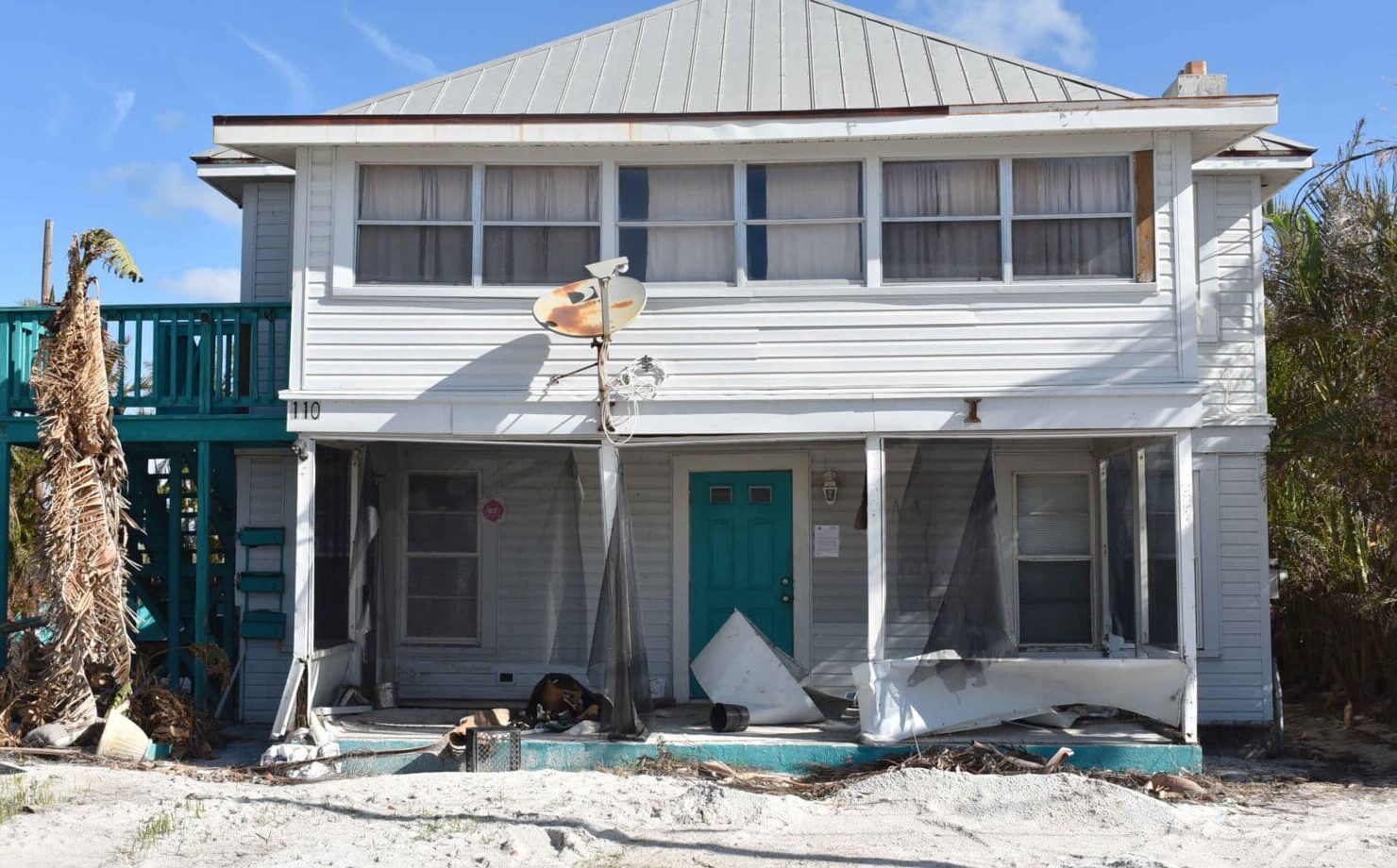
The cashflow analysis of the first property is for an “Inland Lot – New Build” at 110 Ninth St. N. As of Nov. 4, the 110 9th St LLC was registered as a Florida Limited Liability Company with the Florida Division of Corporations. The LLC lists attorney Louis Najmy as its registered agent and Kaleta as its manager.
This home at 110 Ninth St. N. in Bradenton Beach suffered hurricane damage. – Joe Hendricks | Sun
According to the Manatee County Property Appraiser’s Office, the only property with that address on Anna Maria Island is located in Bradenton Beach, not Anna Maria, as the prospectus claims. The FEMA market value of that home was $787,128 as of Jan. 1. The owner is listed as the Constance C. Novak Trust.
FEMA market value is the improvement value (the structure or structures on the property) plus 15%, according to Bradenton Beach Building Inspector Darin Cushing.
The cost analysis lists a $900,000 land purchase price, an additional $10,000 in closing costs and $910,000 as the capital required. Regarding the construction costs, the cashflow analysis lists $50,000 for design and permitting, $1.325 million for hard costs and $325,000 for soft costs, totaling $1.7 million on construction costs.
The cashflow analysis includes an additional $170,000 in construction loan interest expenses, bringing the total estimated construction cost to $2.78 million, with an estimated sale value of $4.5 million. The cashflow analysis does not provide any additional details on the design and permitting costs or the hard costs and soft costs.
The home at 709 Fern St. in Anna Maria sold for $855,000. – Joe Hendricks | Sun
The cashflow analysis for the second property is for an “Inland Lot – Renovation” at 709 Fern St., Anna Maria. As of Nov. 4, the 709 Fern LLC was registered with the Florida Division of Corporations. The LLC lists Najmy as its registered agent and Kaleta as its manager.
According to the Manatee County Property Appraiser’s office, that property contains a ground-level, single-story residential structure with a FEMA market value of $626,678 as of Jan. 1. The owner is listed as the Karen E. Sparks Declaration of Trust.
The cost analysis lists an $800,000 land purchase price, with an additional $10,000 in closing costs totaling $810,000 for the capital required. According to the Stellar MLS listing, the home and property at 709 Fern St. sold on Nov. 8 for $855,000, which is $55,000 more than the purchase price listed on AMI Development Trust document.
The MLS listing includes this note: “Storm damaged selling as is. Options available: remove structure and build new on a beautiful island location or maybe restore this charming beach cottage to its original state adding flood proofing technology.”
The cashflow analysis for the 709 Fern St. property lists $5,000 for design and permitting, $50,000 for hard costs and $95,000 for soft costs, totaling $150,000 for projected construction costs. The analysis lists $960,000 as the total project cost, with an estimated sale value of $1.5 million.
For the 110 Ninth St. property, the “Investor IRR Analysis” lists no anticipated capital return in year one and a $1.202 million capital return in year two. Regarding the 709 Fern St. property, the Investor IRR Analysis lists a $729,000 investment and a $961,500 capital return in year one.
The final page of the seven-page document is a “build gallery” that contains six renderings of interior views and patio and pool views of a non-specified property or properties.
On Friday afternoon, The Sun reached out to Kaleta and Najmy seeking seeking comment on the Anna Maria Island Development Fund. No response was given.
Asset amendments
The AMI Development Fund document states that Kaleta owns three property management companies and a real estate brokerage.
According to the Florida Division of Corporations, the Prime Vacations LLC created for that property management company in 2021 still listed Kaleta as its LLCs authorized person and Najmy as its registered agent as of April 25.
On Oct. 30, an amendment to the articles of organization for the Prime Vacations LLC was filed and now lists the Plantation, Florida-based CT Corporation System as LLC’s current registered agent and the New York City/Park Avenue-based GSP Prime Buyer LLC as the LLC’s manager. Kaleta’s managerial status with Prime Vacations LLC is now listed as “removed.”
On April 25, the AMI Locals LLC associated with the AMI Locals real estate company listed Kaleta as its manager and Najmy as its registered agent. On Oct. 30, those articles of organization were amended in a similar manner which now lists CT Corporation System as the LLCs current registered agent and GSP Prime Buyer LLC as the LLC’s manager, with Kaleta’s managerial status “removed.”
It is not known what, if any, ownership share Kaleta still has in AMI Locals and Prime Vacations.
Hopefully, Debby with her rain, Helene with her surge and Milton with his wind are in our rearview mirrors by now, not forgotten, but we survived. Next, we can look forward to more mundane real estate issues like insurance.
What if you were ready to close on a new property and the possibility of a named storm was on the horizon? This situation could be the ultimate inconvenience since there is a very good chance you may not close your sale on time, costing money and delays with movers, utilities, and possibly short-term living arrangements. This is an important thing to keep in mind when you live in a hurricane zone like we do. Since both buyers and sellers are in a real estate transaction together, they both should be motivated to give allowances if this is happening.
This sometimes little-known insurance issue is called a moratorium, also known as a binding prohibition. They are issued by insurance companies for certain high-risk areas. During hurricane season, insurance companies wait until 24 to 48 hours before the impact to issue a moratorium on buying new policies. This could delay a closing since the insurance companies will not bind or cover the property in question until the storm has passed. If this happens to you, there is almost nothing you can do about it short of closing the property without property insurance – a non-starter if you are financing any part of the sale.
Since we’re talking insurance, there have been some recent problems in the area of title insurance. Just to review, when you take out a mortgage, one part of your closing costs will be title insurance. If you aren’t taking out a mortgage, you will not be required to purchase title insurance, but most buyers do and all lenders insist on it and expect buyers to pay. The premium for title insurance is a one-time charge and the policy protects the lender. You also can purchase owner’s title insurance to protect yourself but that is optional.
Title insurance covers third-party claims on a property that don’t show up in the initial title search and arise after the closing. The title company searches for public records related to your home to try to find any title defects that could affect the lender’s or buyer’s property rights such as liens, including tax liens or unpaid bills; easements that give others the right to use your property; and encumbrances like zoning laws and covenants imposed by homeowner associations. A “cloud” on the title can usually get resolved with the cooperation of the previous owner and/or the entity placing the lien.
In the wake of the National Association of Realtors settlement over real estate brokerage commissions, government officials are looking at compensation paid to real estate professionals who recommend title companies. This is happening without the knowledge or disclosure to the buyers who are paying the fees, therefore, potentially elevating the fees charged for the title insurance. The title insurance industry is under scrutiny by the federal government in an effort to lower the upfront costs of obtaining a mortgage.
The crackdown on partnerships with title companies is the same general trend as addressing brokers’ commissions. Just to be clear, this partnership arrangement with title companies is not happening all over, and carefully analyzing the title fees before you close a property is a wise thing to do.
Title insurance is just one more type of insurance a property owner needs to be aware of. We’ve turned the corner and it’s time to pick up the pieces and move on.
If you loved shoulder pads, Cabbage Patch Kids and the Rubik’s Cube, you probably loved the 80s. But one thing not to love about the 80s was the home buying affordable rate, which has just been outdone this past June.
Today’s housing market is the most difficult in decades. This has been an ongoing frustration for first-time home buyers in the Gen Z and Millennial generations. Home buying affordability dropped last fall to the lowest level since September 1985, and it fell near that level again in June.
The good thing for the mid-80s buyers is they had much more housing supply. Homes became more affordable as mortgage rates fell in subsequent years, adding to the inventory. In September 1985, 72% of consumers said it was a good time to buy a home, according to the University of Michigan’s consumer sentiment survey. In June 2024, just 12% said the same.
And it gets worse. According to the National Association of Realtors’ affordability index, in January 2021, a family needed an income of $49,152 to afford the median-priced single-family home with a 20% down payment. In June 2024, just three years, the family would need an income of $110,544 to make the same purchase. Added to this is the cost of property taxes, home insurance, car insurance and a list of other expenses related to homeownership that have increased.
In addition to the affordability rate, there is the number of home sales. The existing home sales slid in 2023 to the lowest level since 1995 and have held at lower levels in the first half of 2024.
There is a group of buyers, however, who are somewhat unfazed by the affordability rate that first-time buyers are facing. And those, of course, are the wealthy. The high-end market is doing a lot better than the 30-year-olds looking for their first home. Wealth allows people to care more about having their ideal home than holding on to a 3% mortgage rate. They know they can always refinance later if the rates drop. But nonluxury buyers typically finance their purchases and are more sensitive to interest rates.
The Federal Reserve met last week and took action on interest rates for the first time in several years, cutting their rate by half a percentage. This does not always translate into lower mortgage rates, which have been going down and are now just above 6%, but it might, and it could also have a positive effect on restoring confidence in the market.
Now it’s time for the August Manatee County home sales, reported by the Realtor Association of Sarasota and Manatee. Single-family homes closed 0.2% fewer this August compared to last August. The median sale price was $494,000, down 5.9%, and the average sale price was $609,789, down 14.8%. There were 3.6% more new listings and the month’s supply of available properties was 3.9 months, up 39.3%.
Condos closed 11.2% fewer this August. The median sale price was $329,990, down 8.1%, and the average sale price was $385,931, down 2.0%. New listings were up 3.8% and the month’s supply of available properties was 5.7 months, up 7.27%.
If I were spinning, I could say it’s summer and it’s always slow, condo buyers are still cooling off in their northern homes and more new listings is a good thing. But I won’t insult your intelligence; the market is slow, and I think we have a few more months before we can get a real read on what’s going on.
No one really wants to go back to the 80s – didn’t we all hate Cabbage Patch Kids? Hopefully, an adjustment in mortgage rates will benefit non-luxury buyers and move the market up. A rising tide lifts all boats.
My mother had a favorite expression regarding fashion. “You need to shop where you won’t see yourself coming and going,” meaning, seek out stores with a unique selection of goods.
The same can be said for remodels, where, these days, it seems that every kitchen is white, every bathroom has bowl sinks, and every wall is some tone of grey. I happen to like those combinations, and they are neutral and very good for resale but for individuals who want a little spice in their remodels, there are other venues.
Eco-friendly techniques and materials are becoming more commonplace in renovations and new construction. According to the National Association of Home Builders, many buyers consider green home features to be either essential or desirable. This includes Energy Star-rated windows, triple pane insulating windows, sustainably harvested lumber and components made of recycled materials.
These products are improving indoor air quality and reducing everyone’s carbon footprint in a continued effort to reduce global warming. However, eco-friendly remodels do not lower renovation costs. Prices have come down, but homeowners should still expect to pay a premium for green materials. This could be a good return on investment down the road because sustainable materials are often more durable, require less maintenance and are in demand.
Taking it a step further, and keeping my mother’s theory in mind, searching out reusable and sustainable products to do your renovation can save a considerable amount of money. This can also apply if you donate your old cabinets, appliances and sinks, taking the tax write-off.
Proponents of repurposed products say using reclaimed products is taking something that would otherwise be wasted and giving it new life. These days, when everyone is obsessed with everything new, finding recycled elements for your remodel is not only easy but, in many cases, surprisingly lightly used.
A quick internet search of architectural salvage stores will reveal several right in our backyard. And don’t let the word salvage discourage you; the salvaged or vintage items range from 1920s file boxes to trendy slab dining tables with wooden slabs recycled from their previous life. There are enormous supplies of small items like former moldings and vintage fans that haven’t seen the light of day in decades and are just waiting to add a little interest to your remodeled kitchen.
I had so much fun browsing the websites of these salvage stores I almost forgot what I was actually looking for. My absolute favorite was an Electronic Diagnosis Engine Tester from some era way before computer chips were invented, and the magic vibrating chair looked like it belonged in San Quentin. If you’re lucky enough to find fixtures, cabinets and decorative tiles for your renovation, not only will you save a ton of money, but likely get a better-quality product.
I found three stores specializing in architectural salvage in two minutes: Sarasota Architectural Salvage, Décor Direct Wholesale Warehouse, both in Sarasota, and Schiller’s Architectural Design Salvage in Tampa. These types of salvage stores have an ongoing incoming and outgoing supply of items, so if you’re looking for something specific that is not currently available, stay in touch with the owners and tell them what you need.
We all should do our best to recycle and purchase eco-friendly products. Most of us are somewhere between buying almost nothing to complete a renovation and hiring the most expensive contractor we can find. Even recycling your own cabinets for use somewhere else in your home helps.
And remember, when you go salvage, you’ll never see your kitchen coming and going.
Remember The Champlain Towers South condominium in Surfside, Florida? Probably haven’t heard that name in a while, but it was the very shocking collapse of the tower with loss of the building and loss of life. The event profoundly impacted the condominium market in the state and is still having an influence on the condo market.
A condo termination, also known as a condominium deconversion, refers to the process in which a condominium association legally dissolves. Condo terminations occur for several reasons including economic, aging or the desire of unit owners to capitalize on the real estate market. It can also happen when a developer gradually buys up units within the association in an effort to gain the number of condo units necessary to control the future of the building.
Typically, because of a lack of prime property, usually waterfront, developers are pursuing older buildings, taking control and tearing them down. Although this can happen anywhere in the state, it is more common on the east coast where there are many more older buildings and very little land left.
These buildings have become targets for developers after the state passed a law that requires certain older buildings to undergo safety inspections that often require special assessments that can run to more than $150,000 per unit, making it impossible for the majority of owners to pay.
Many of the older buildings have elderly residents who have lived there for many years and have not voted, along with their board members, to perform the necessary maintenance due to the high costs. Because of this deferred maintenance, it is leading to deteriorating building conditions and failure of the Florida state inspections.
The only way for residents to continue living in their units is to pay special assessments for work required to pass the state inspections. In addition, insurance costs have increased due to the increased risk of natural disasters, adding to the financial burden on owners and associations and leaving an opening for more condominium terminations.
Condo owners frequently welcome the price developers are willing to pay to sell, which are generally above market value. Savvy owners also understand they likely will not be able to afford the special assessments necessary to maintain the buildings and are happy to get out from under the albatross that can become an older condo building.
However, in March of this year, a small group of residents refused to sell their units, preventing a developer takeover, and they were upheld in the appeals court. This was a stunning outcome for Florida east coast developers who have borrowed funds to buy the buildings. They will, of course, appeal the decision and bring it to the Florida Supreme Court if the appeals court does not reconsider.
Nevertheless, until this is settled, there is a hold on condo terminations unless the owners all agree based on their condominium documents, or until the developers are successful in purchasing enough units to change the documents.
With land value along Florida’s coastline exceeding the value of the buildings, don’t expect this to end soon. It’s a sad situation for older residents who have to find a new home, but the reality is they may have no other option and accepting a developer’s offer will save them years of stress.
It may take more than the Federal Reserve throwing us a lower interest rate bone this month to make everyone happy. Nevertheless, when it comes to lower rates, we’ll take what we can get, but will it solve the real market problem?
Even though mortgage rates in the country are at the lowest level in more than a year (6.5% on average for a 30-year fixed rate mortgage), it may not make much of a difference for homebuyers. With record housing prices and limited inventory, a one quarter lower blip in rates for most buyers can’t make up for the higher prices and lack of inventory.
There are homeowners with low-rate mortgages who are still reluctant to sell and move on as much as they may want to. A quarter point or even a half point is just not enough encouragement for them to give up a once-in-a-lifetime 3% mortgage. So, the market continues to be locked up with prices still pushing up for those properties that come on the market, and there aren’t too many of them.
However, there are still benefits to lower rates, especially for a first-time borrower.
For a $500,000 mortgage, the difference between a 6.5% rate and an 8% rate is $509 a month, enough to qualify many buyers at the lower rate to be approved for financing. There is speculation that the movement for a lower rate has already been figured in and another rate cut this month may not have a big impact.
Based on the July sales statistics in Mantee County, there are 10% more single-family properties available than July of last year but only 0.4% more condos on the market. Since condos are more of a seasonal sale, it’s not surprising to have fewer available properties than single-family.
Here on Anna Maria Island and all of the other coastal communities in the area, including our neighbor, Cortez, buyers in these areas are less affected by mortgage rates. Therefore, the market for high-end properties will be less influenced by mortgage rates than by the overall economy.
Many if not most high-end buyers are all cash and even if they decide on a mortgage to free up more cash, they will likely not decide on buying because of a quarter or even a half point reduction. They’re eyeing the health of the general economy and the position of the lawmakers, particularly in Congress, on business and the stock market.
Nevertheless, a healthy real estate market generally is good for all of the market. There is a trickle-up effect of a robust lower-end market positively impacting all price points in the marketplace.
Finally, last week we talked about the revision of broker compensations. There are any number of ways for real estate professionals to adapt to the National Association of Realtors’ new ruling and if you’re buying or selling a property, you will be exposed to a variety of opinions and operating guidelines. As always, choose a real estate company and individual you trust and are comfortable with and roll with it; eventually it will become clearer.
Will the Federal Reserve move the needle on rates or will it just be more of the same old, same old? Stay tuned.
Starting this month, the rules have changed for governing real estate commissions. We’ve been talking about this since the National Association of Realtors (NAR) voted on this change to the commission structure in March, a structure that has been in place for over 30 years.
By now, most real estate professionals have positioned their real estate wheels to work within the new regulations. They have likely also developed a dialogue to have with both buyers and sellers in this market. So, let’s go over some of the significant points.
Typically, sellers paid the agents on both sides of a transaction, selling and buying. This was a percentage stated at the time the property was listed. Sellers will still agree on a listing commission with their agent, however, now have more flexibility to decide whether to offer a commission to a buyer’s agent and what that commission will be. There is no commitment on the seller’s part to automatically offer a commission to the buyer’s agent and the buyer’s agent is free to request a commission fee at the time they present an offer. Like everything in a real estate transaction, it becomes a negotiable point.
The sticking point here is your listing agent may tell you that if you don’t offer a selling commission, selling agents won’t bring buyers to the property. There is of course some truth to that, however, if the buyer’s agent’s commission becomes part of the negotiation, then the agent has no reason not to bring buyers. Also, on popular properties, a buyer may even step up and pay their agent directly if a buyer’s commission cannot be satisfactorily negotiated.
You also need to set guidelines with your listing agent relative to their commission should they find the buyer for your property. Traditionally, when a buyer didn’t have an agent, the seller’s representative often kept the commission offered to the buyer’s agent. Again, this should be agreed upon at the beginning of the listing agreement.
So while you’re thinking about this new round of chaos, let’s go over the July sales for Manatee County published by the Realtor Association of Sarasota and Manatee.
Single-family homes closed 9.9% more properties compared to last July. The median sale price was $499,000, lower by 3.1%, and the average sale price was $661,104, up 3.0%. The median time to contract was 52 days this year compared to 29 last year. There are 10% more listings this July, making the month’s supply of available properties 3.9 months compared to 2.7 last year.
Condos closed 9.6% fewer properties this year. The median sale price was $329,000, down 6% and the average sale price was $354,404 down 8.8%. The median time to contract was 77 days this year compared to 47 last year. New listings were up 0.4% and the month’s supply of available properties was 5.6 months compared to 3.2 months last year.
Per the Realtor Association, both Sarasota and Manatee counties experienced a shift in the market in July. Median prices declined and we are experiencing longer times to sell. Basically, they feel the market is balancing out and buyers have more purchasing power.
The National Association of Realtors says it’s too soon to speculate on how the market will change and I certainly agree. Some of the early feedback around the country where agents have already started with the new regulations is that total commissions appear to have come down. Some of the commissions could be reflective of the value of the property and the level of marketing required.
It’s hard to say at this point, but we do live in a very high real estate price point environment and agent commissions could reflect that.
Privacy choicesWe use Google Analytics to understand readership and improve the website. Analytics cookies are optional and can be accepted or declined.Privacy Policy