Fall is in the air. It may be a subtle change, but the sun angle, shorter days and cooler temperatures herald some of the best inshore and nearshore fishing in area waters.
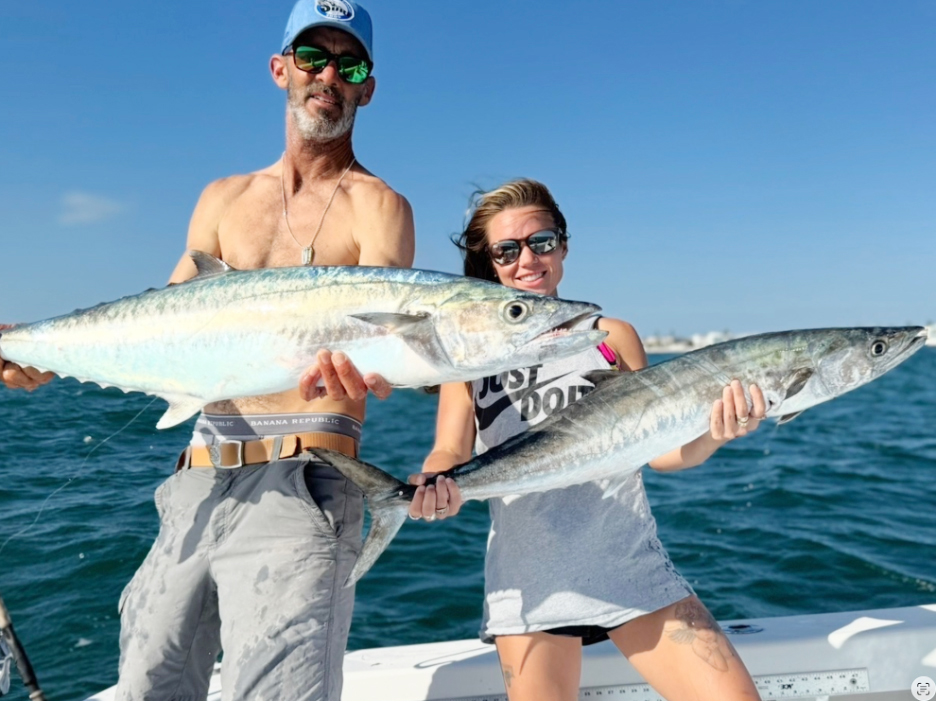
These subtle seasonal changes bring schools of bait into the waters where pelagic species such as king mackerel, Spanish mackerel, false albacore (little tunny), cobia and tripletail feast on the bounty. When they attack the bait, the pilchards, glass minnows and other prey species are driven to the surface in spectacular feeding frenzies that attract local seabirds and quicken the pulse of local anglers.
While some surface action is being reported, the unmolested bait will often remain deep in the water column where it’s safe from feeding seabirds. It’s only a matter of time before the action peaks, so it’s a good time to have tackle in order, rods rigged and racked, and a keen eye on the horizon.
All these fall species will take live bait, lures or flies and can be caught on spinning, baitcasting or fly tackle. Except for larger king mackerel and cobia, most can be landed with light tackle, which adds to the fun and the challenge.
Rigging will depend on the species you’re targeting, and multiple outfits are a good idea. Options include wire, monofilament, fluorocarbon, long-shank hooks or some combination of those. It’s possible to catch a king mackerel or Spanish mackerel without wire, but your odds aren’t good. Most species shy from wire, especially in clear water and when the sun is high. That’s the time to switch to a long-shank hook or a heavy (40- to 60-pound) fluorocarbon leader.
When using wire, an 8- to 12-inch trace can be tied to the leader using an Albright Special knot (which is best) or a swivel. If you use a swivel, use black instead of silver to prevent fish from mistaking it for forage. American Fishing Wire, Orvis and Rio make an extremely flexible, knottable wire.
This wire can be knotted to your lure, hook or fly like fluorocarbon or monofilament, and it provides greater flexibility and less stretch than monofilament. Umpqua makes a product that’s ideal for fly anglers. Its Re-Twistable Haywire Twist wire is reusable and will allow you to change flies in a snap. This is the quickest and most painless way to rig for toothy fish.
One of the most effective ways to find schooling fish in the fall is to look for surface action and diving birds in the inshore waters of the Gulf.
When you find feeding fish, you can approach them by trolling, drifting or using a trolling motor. Whatever method you employ, never let your boat pass through or get too close to the action, because the fish are likely to sound and move away when disturbed. If trolling, make wide turns so only your lures pass through the fish.
Live-bait anglers target fish by anchoring up current from structure and feeding fish. They then toss wounded live baits or deploy a chum bag to draw fish into casting range. Those who prefer artificial lures find spoons, jigs such as the DOA CAL and topwater models such as the MirrOlure Top Dog particularly effective.
Fly fishing is also an effective and exciting way to target all fall species. The same rigging applies, and topwater flies such as the Gartside Gurgler can produce some memorable strikes. Keep a 10- or 11-weight rod rigged with a big black fly in case a migrating cobia appears.
Whatever your fishing style, take advantage of the great action you’ll find in area waters this fall.