

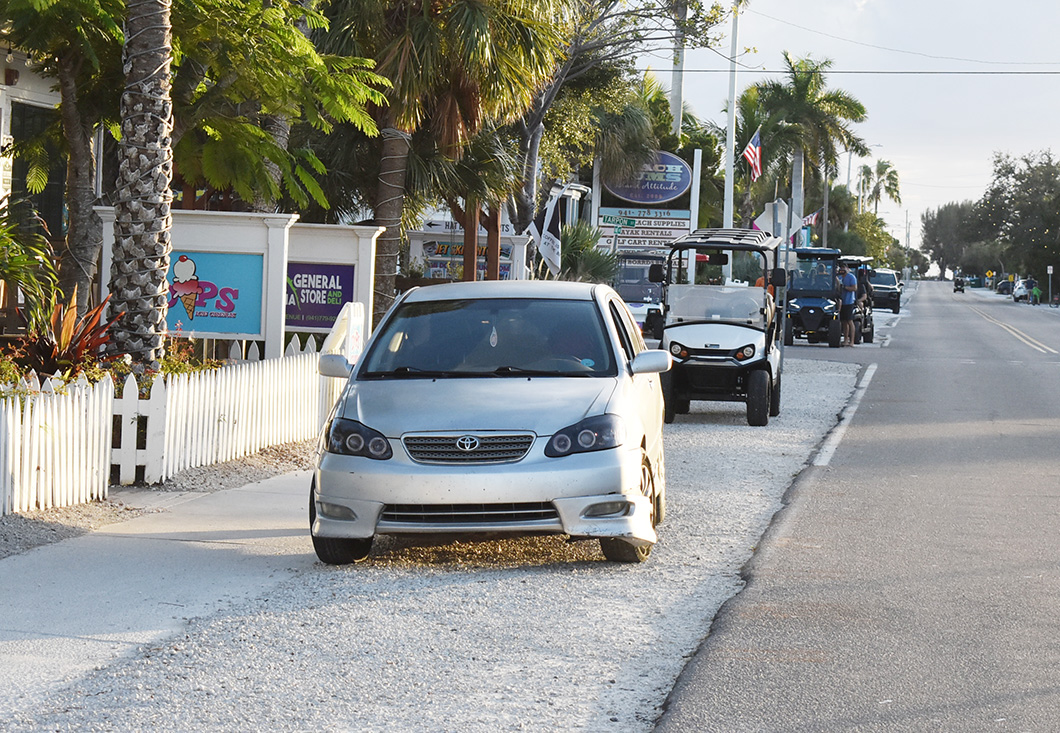
ANNA MARIA – The mayor, city commissioners, planning and zoning board members and the public spent two hours discussing the city’s ongoing efforts to implement a new parking strategy in Anna Maria.
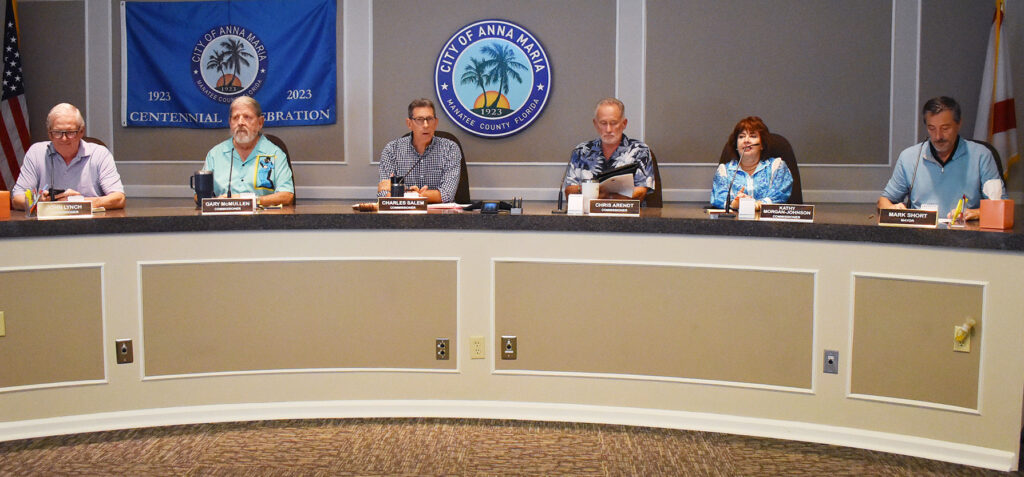
On Tuesday, Oct. 27, the city hosted a joint meeting for the commission and planning board members to discuss the proposed parking program that includes resident permit parking, timed free parking along the main business corridors, designated employee parking, and paid parking near some of the city’s beach access points.
Mayor Mark Short said the meeting was meant to provide an update on the parking plan, and to gather input from the city commissioners, planning and zoning board members and residents. He said no decisions or commitments would be made that day.
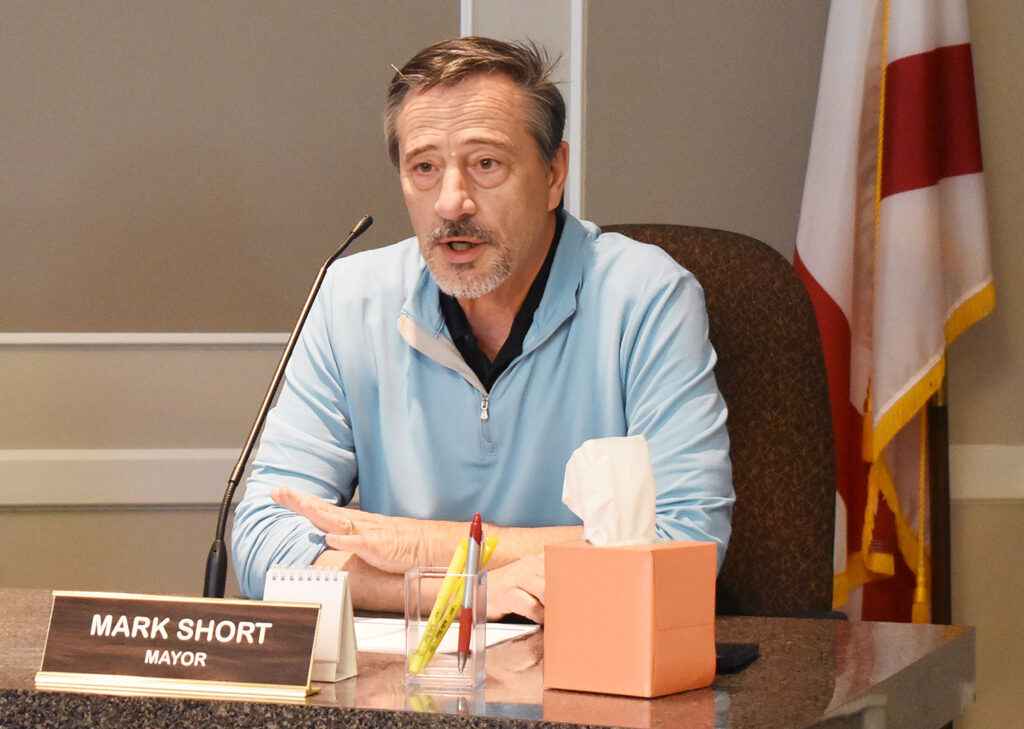
Short said he and city staff have been working through various parking scenarios and the concerns previously shared by residents, business owners and others. He said he wanted the commissioners to become more familiar with the planning and zoning board’s recent parking-related efforts that have included discussions about the city’s restaurant parking requirements.
Using an 11-page slide presentation to illustrate his talking points, Short spent about 45 minutes reviewing the proposed parking plan.
Regarding the city’s parking priorities, the presentation says:
“Overall safety: Maintain a parking infrastructure to minimize risks to pedestrians, property owners, commercial businesses and visitors. Ensure emergency response teams can freely navigate the city when needed.
“Residential: Preserve the look and feel of neighborhoods. Protect private property. Minimize neighborhood disruptions.
“Commercial: Provide adequate parking to promote commercial activity. Provide areas for employee parking.
“Visitors: Provide parking availability in areas easily accessible to the public.”
The parking plan is expected to incorporate four parking zones: property owner permit-only parking, pay-to-park, free time-limited parking in the commercial areas and employee parking.
The existing Passport parking enforcement system would be used to support the new parking plan. Short said the first-year capital investment costs would be around $250,000 and the recurring operating expenses would be about $100,000 per year. The first-year implementation costs would include the purchase of two enforcement vehicles equipped with license plate readers.
Short said the WSP consulting firm that helped develop the parking plan has essentially completed its work.
He said the city has met with representatives of The Center and the Island Players to discuss their parking needs and met with Manatee County representatives regarding parking at the city-owned, county-maintained Bayfront Park. Short said the county is OK with paid parking at Bayfront Park as long as the county receives a share of those parking revenues.
Short and the commission also discussed asking the county to extend the free trolley service to the Bean Point area – an area currently not served by the free trolley system.
P&Z CONSIDERATIONS
When given the opportunity to speak, planning and zoning board chair Jeff Rodencal asked City Planner Ashley Austin to recap the planning board discussions that occurred in recent months.
Austin said some food service business operators have come to the planning and zoning board about not being able to expand their seating allowances.
She said current city code doesn’t consider an establishment with eight or fewer seats to be a restaurant. Once a business adds a ninth seat, it becomes a restaurant and the city’s parking requirements apply. Those requirements include one parking space for every three seats, plus additional spaces for employees. Austin said many of these businesses can’t grow because they have no room to add more parking.
The planning board members discussed keeping the one parking space per three seats ratio but exempting the first 20 seats from any parking requirements. They also discussed eliminating the existing employee parking requirement because employee parking is part of the city’s proposed parking plan.
Commissioner Gary McMullen said he liked the planning board’s 20-seat proposal.
PUBLIC INPUT
During public input, Magnolia Avenue resident Doug Ruggles asked about the implementation timeline. Short said he’d like to have the new parking program in place by March 1, in time for the peak tourist season, but he doesn’t yet know if that goal can be met.
Ruggles asked how much the city now expects to generate in paid parking revenues.
Short said, “Our estimates right now are the revenue could be between $400,000 to $600,000 annually.”
Short said the city would likely net between $300,000 and $400,000, or more, after covering the ongoing annual expenses that would include the administration and enforcement of the parking program.
When WSP Senior Planner Christine Fanchi first presented the parking study in mid-August, she estimated the city’s annual paid parking revenues could be in the $11 million range. That initial figure was based on a greater number of paid parking spaces and an initial parking study map that was deemed inaccurate by the mayor and others.
McMullen noted the revenue generated would depend on the hourly parking rate and the number of paid parking spaces used. McMullen said he’s heard a $4.50 hourly rate discussed and a $3 hourly rate discussed.
Short said the $400,000 estimate he provided was based on a rate of $3 an hour or $20 per day and that would increase to $450,000 if the paid parking rate were $4 an hour or $30 per day. Short said he used those rates to provide an estimated revenue range and his estimates were based on a specific number of parking spaces. Short did not say how many paid parking spaces his estimates were based upon, but it’s about 50% fewer paid parking spaces than initially anticipated.
Commissioner John Lynch noted the commission has not yet decided what the hourly parking rate will be.
Judy Adams said she’s lived in Anna Maria since 1960 and she’s watched the city become a tourist town. She asked the mayor and commissioners to keep residents in mind when developing the parking program.
“Overcrowding Anna Maria is destroying the nature of our city. Our charm is going down the tubes. I’m challenging you to consider the residents,” she said.
Lakeview Drive resident Sharon Wisniewski noted her street is located across the street from Bayfront Park.
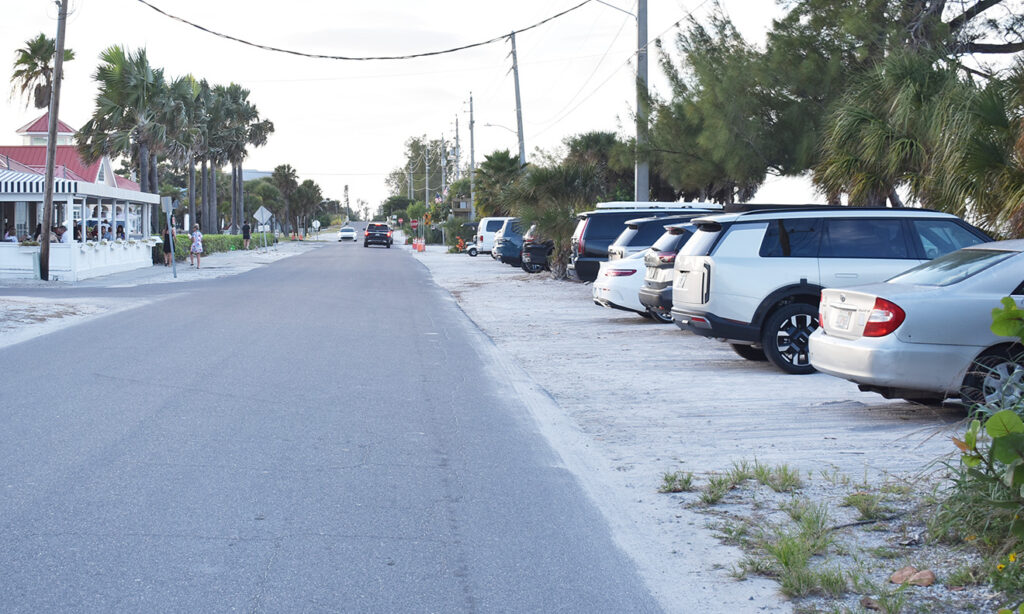
She expressed concerns that paid parking at Bayfront Park would result in motorists seeking parking spaces along the nearby side streets.
“I’ve had people come up to me and ask to park in my driveway,” she said.
Short said the plan is for those side streets to be designated as resident permit parking only and paid parking would not be offered along those residential streets.
Speaking as a resident, and not as a planning and zoning board member, Don Buswell-Charkow said when people visit St. Armand’s Circle and St. Petersburg, they expect to pay to park, even if it’s for an hour or less.
He said there are two primary parking needs in Anna Maria’s business district. The short-term parking need is picking up a cake at Hometown Desserts or running into the Anna Maria General Store to grab some needed items.
“You’re there for 15 minutes, maybe 20, and then you’re gone,” he said.
He said the other primary parking need is for those who visit Pine Avenue as a destination and spend several hours strolling Pine Avenue and visiting the various businesses and restaurants.
He said he’s OK with 20 minutes of free parking, but he questions the need for free, three-hour parking. He said as soon as beachgoers realize they can park free for three hours, they’ll park along Pine Avenue and walk four or five blocks to the beach areas.
“And I will guarantee you that’s going to be on social media in two weeks,” he said.
Collen Geller said, “I am a business owner on Pine Avenue. I own the North Shore Café with my husband, Scott. We also live on Coconut in the north end of Anna Maria, and we are raising our family here, as well as have adult children in the household with cars. So, I fit almost every box of conversation that’s happening.”
Geller said she’s attended city meetings for several years and it’s often been stated that pedestrian safety is a top priority. She noted the pedestrian safety-related Reimagining Pine Avenue project resulted in the completion of the phase one sidewalk installations, but the multi-phase project then stalled.
She said the city is now trying to address pedestrian safety with paid parking. She suggested completing the City Pier reconstruction project and the Reimagining Pine Avenue sidewalk installation projects before taking on a new citywide parking program.
Geller thanked the planning and zoning board for reviewing the city’s parking-to-seating ratio, and she said many Anna Maria businesses cannot satisfy the city’s current parking requirements. She said the proposed 20-seat provision would help some small businesses, but she encouraged the commission to rewrite the business parking regulations on a broader basis.