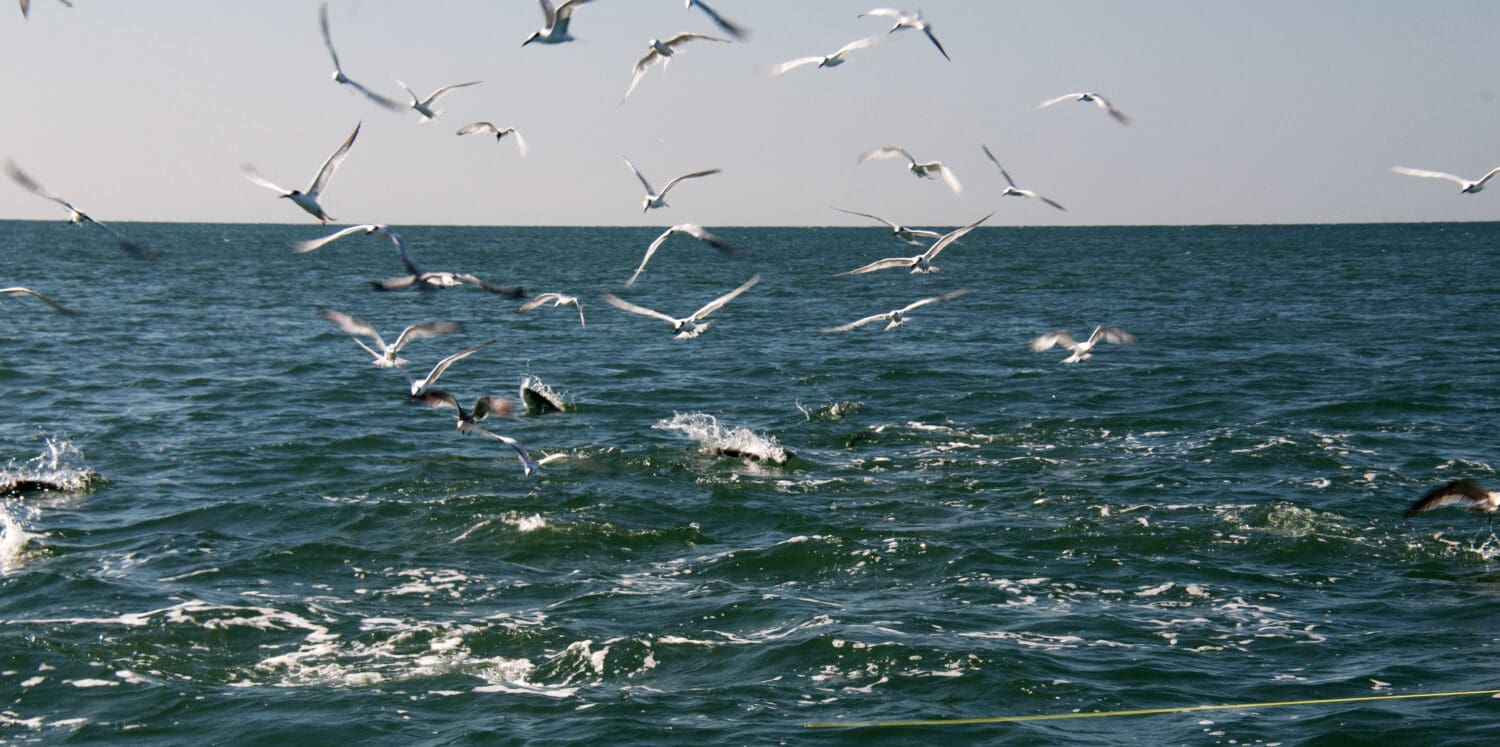
Seabirds are an angler’s friend. Besides being an integral part of the marine ecosystem and beautiful to behold, they help us locate fish.
An observant angler notices where birds congregate on a low tide. They know the birds are feeding on marine organisms that fish will seek out when the flat is covered with water on a rising tide. They point us to schooling fish, often indicating action much farther away than we can see. Anglers who fish the coastal waters of Florida will invariably come into contact with the seabirds that inhabit local waters.

The encounter can be deadly to seabirds if anglers don’t know the basics of caring for them.
Birds can become entangled in fishing line and take it back to their roosts. The birds are also put in harm’s way when they come into contact with fishing line that careless anglers leave in the mangroves from an errant cast.
If a bird is hooked while fishing, it’s important to bring it to the boat with a properly set drag to prevent the line from breaking. This can be a death sentence for the birds when they return to a mangrove roost trailing line. If a bird becomes hooked or entangled in your line while fishing, work them to the boat carefully as you would a big fish, then throw a towel over their head to calm them and grab them securely by the beak while removing the hook. Care should be taken with all birds, especially ones that have sharp beaks. They don’t know you are trying to help them. Handle birds carefully as they have very light, hollow bones. Cautiously remove the line from their body, wings and feet and check them thoroughly before releasing them. If you see a hooked or tangled bird in an active rookery during nesting season, it’s important not to approach them as their young may be startled and fall from the nest.
You can reduce the chance of hooking birds by following a few simple rules. First, never feed birds, as this will teach them to look for a handout, a practice that annoys anglers and is dangerous to the birds. Second, while you’re fishing, be aware of birds that might be targeting your bait or lure. It’s easy to pull the lure out of harm’s way at the last second a gull or tern dives on it. If they do become hooked, a barbless hook is easier to remove from the bird and the angler.
Taking care of the wildlife that inhabits our coastal estuaries is every angler’s responsibility. If you see a bird in distress and can’t help it, call Save Our Seabirds at 941-388-3010 or Audubon Coastal Island Sanctuaries at 813-623-6826.